
Gemini refers to both the Winklevoss-founded crypto exchange and Google DeepMind's AI model family. This explainer covers their regulatory history, AI integration, and growing convergence with crypto infrastructure.
+11 sources across the wider coverage universe
 New York sues Coinbase Financial Markets and Gemini Titan over alleged state law violations, escalating regulatory pressure on major crypto platforms amid ongoing enforcement actions2026-04
 Solana Foundation and Google Cloud launch Pay.sh, enabling AI agents to discover, access, and pay for APIs like Gemini and BigQuery using stablecoins in a breakthrough for machine-native commerce2026-05
 CFTC sidelined staff as Trump-linked Crypto.com, Polymarket, and Gemini pushed into prediction markets2026-05
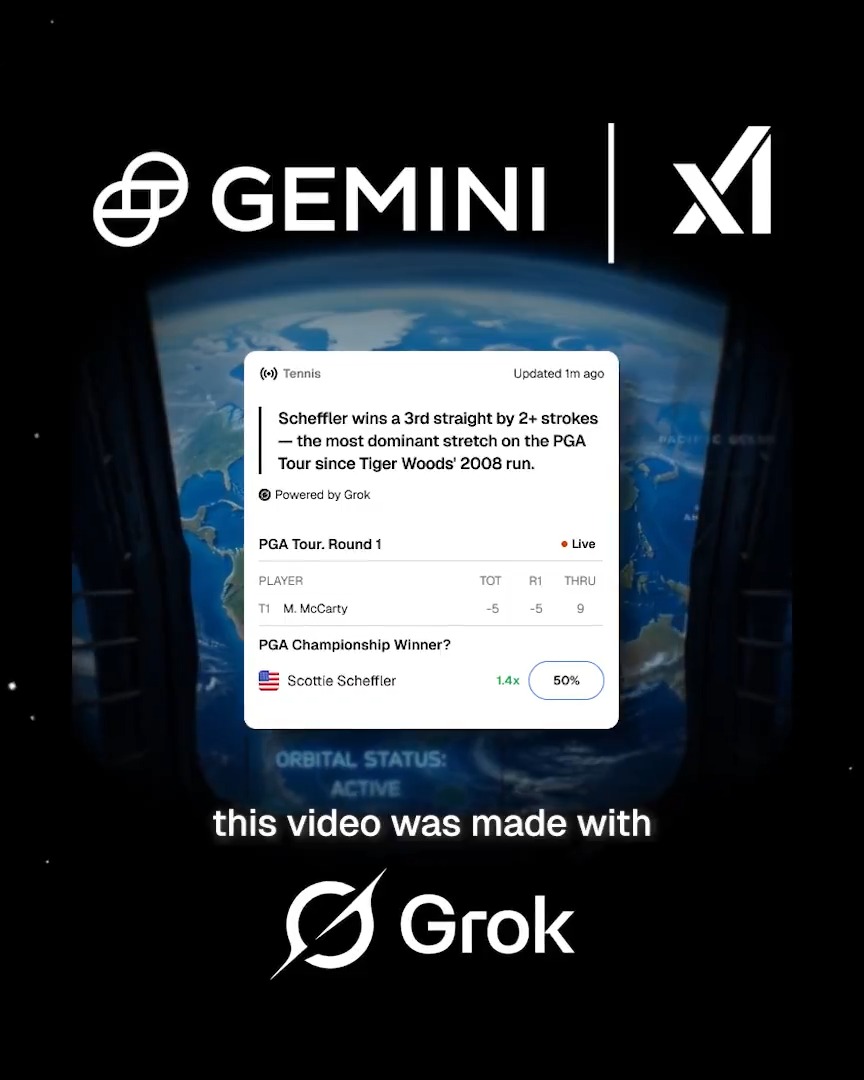 Gemini launches SpaceXAI-powered Command Center for personalized prediction market signals2026-05
 CFTC moves to void Gemini’s $5M settlement, saying 2022 enforcement case should not have been filed2026-05
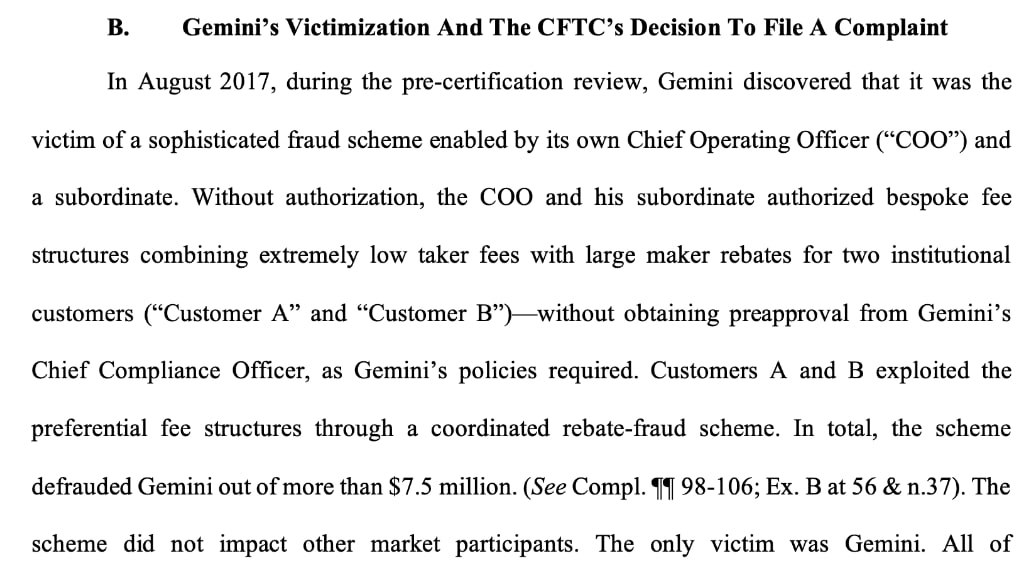 The CFTC, after reviewing its Gemini case and new federal crypto enforcement standards, now says the complaint should not have been filed and is jointly asking the court to vacate remaining prospective consent‑order provisions.2026-05
The name "Gemini" now refers to two distinct and influential forces in the technology landscape: a regulated U.S. cryptocurrency exchange founded by Tyler and Cameron Winklevoss, and Google DeepMind's flagship family of large language models. For anyone tracking crypto markets and the convergence of AI with decentralized finance, understanding both—and how they increasingly intersect—is essential.
Gemini the Exchange: Origins and the Winklevoss Vision
Tyler and Cameron Winklevoss launched Gemini Trust Company in 2014, positioning it from the outset as a compliance-first alternative to the largely unregulated crypto trading venues of the era. The pair, best known publicly for their legal dispute with Mark Zuckerberg over the origins of Facebook, brought institutional credibility and an explicit regulatory strategy to an industry that was still largely operating in legal gray zones.
Gemini became one of the first crypto exchanges to receive a New York State Department of Financial Services (NYDFS) BitLicense and to operate as a New York trust company. That posture—embracing oversight rather than evading it—differentiated Gemini from contemporaries like Coinbase, which pursued its own regulatory path, and from offshore venues that dominated volume but carried counterparty risk. Gemini has consistently courted retail and institutional customers who prioritize custody safety and regulatory clarity over raw liquidity or token selection breadth.
The exchange offers spot trading, derivatives, a retail app (Gemini's mobile interface), custody services, and its own dollar-pegged stablecoin, GUSD (Gemini Dollar). It has also operated Gemini Earn, a yield product that became the center of a painful legal episode tied to the Genesis/DCG collapse in 2022–2023, when customer funds were frozen for months. That episode strained trust and led to litigation, though Gemini ultimately returned funds to Earn customers through a settlement arrangement.

Google Cloud showcases four patterns for real-time AI voice agents that can see, talk, think and code using Gemini 3.8 Live and the Agent Development Kit
The CFTC Saga: A $5 Million Settlement Reversed
One of the more unusual regulatory reversals in crypto history unfolded in mid-2026 when the U.S. Commodity Futures Trading Commission (CFTC) moved to vacate its own 2022 enforcement action against Gemini. The original complaint alleged that Gemini had made false or misleading statements to the CFTC in 2017 during the approval process for bitcoin futures contracts. The agency extracted a $5 million civil penalty through a consent order.
Then, under the Trump administration's reconfigured approach to digital asset enforcement, the CFTC reversed course. The agency filed a joint motion with Gemini asking the court to vacate the remaining prospective provisions of the consent order, stating that the complaint "should not have been filed." Legal observers described the move as "extraordinarily unusual"—former CFTC chairs noted that agencies rarely concede an enforcement action was wrong after collecting a penalty and moving on.
The reversal fits a broader pattern: under political pressure and following new federal crypto enforcement standards articulated by the current administration, regulators have pulled back from several crypto enforcement positions. The CFTC has been notably receptive to letting prediction markets and crypto derivatives platforms—including Polymarket and Crypto.com—operate with fewer constraints, reportedly sidelining career staff who pushed for tougher stances. For Gemini, the vacatur was a meaningful vindication, removing a regulatory cloud that had complicated its positioning as a compliance-first venue.
The episode also illustrates how susceptible crypto regulation remains to changes in political leadership—a structural risk that any serious market participant must price.
Gemini readers aren't clicking on exchange mechanics or product launches — they're tracking a drawn-out creditor power struggle between the Winklevosses and DCG, where each negotiating move (missed payments, open letters, rival recovery proposals) generated more engagement than any regulatory action or IPO filing.
Gemini's AI Pivot: Prediction Markets and the Grok Integration
Even as the regulatory drama played out, Gemini the exchange made a notable strategic turn toward artificial intelligence as a product differentiator. In 2026, Gemini launched what it branded a "Command Center"—an AI-powered interface for its prediction markets product that delivers personalized signals and insights.
The integration is built on Grok, the AI model developed by xAI (Elon Musk's AI company). Gemini taps Grok to generate personalized prediction market feeds, surfacing relevant markets, summarizing sentiment, and helping users track outcomes in a format tuned to individual trading patterns. The move positions Gemini as a hybrid platform where traditional exchange infrastructure meets AI-native features—a direction the broader crypto industry is moving in rapidly.
This is not purely a marketing play. Prediction markets require synthesizing large amounts of real-time information—news events, probabilities, resolution criteria—and AI models are genuinely useful for condensing that information into actionable feeds. Gemini's choice of Grok, rather than Google Gemini or Anthropic's Claude, is notable given the ecosystem politics involved, but the underlying thesis is consistent across the industry: AI as a layer on top of financial infrastructure.
Coinbase, Gemini's most direct U.S. competitor, has pursued a parallel strategy, integrating AI tools into its interface and developer stack. Both exchanges are competing to capture users who expect AI-native experiences from financial products, not just basic order books.
IPO Speculation and Market Positioning
Gemini has long been rumored as an IPO candidate. Coinbase went public via direct listing in April 2021 at a valuation exceeding $85 billion at peak; the subsequent crypto bear market eroded that dramatically before a partial recovery. Gemini, which is private and has not disclosed financials, is generally assumed to be smaller but comparably positioned in terms of regulatory standing.
The Winklevoss twins have periodically signaled interest in going public, and the improved regulatory climate under the current U.S. administration has made the prospect more credible. A more permissive CFTC, a SEC that has shifted posture on crypto ETFs and broker-dealer registration, and clearer legislative signals from Congress have collectively reduced the regulatory risk discount that crypto exchanges have historically carried in private-market valuations.
For context: Kraken, another major U.S.-based exchange, has also been discussed as an IPO candidate. The competitive dynamics between Gemini, Coinbase, and Kraken in a post-regulatory-clarity environment will partly determine which platform captures institutional flow as crypto adoption continues in traditional finance.
Gemini stock down 80% from IPO as buyers weigh its costly-to-replicate licenses

Google Gemini: The AI Model Family
Separately—though increasingly relevant to crypto—Google DeepMind's Gemini models represent the culmination of decades of AI research. Demis Hassabis, DeepMind's co-founder and CEO, has described the Gemini series as the direct evolution of the same research agenda that produced AlphaGo and AlphaFold. The models are multimodal, handling text, images, audio, and code within a single architecture, and they are integrated across Google's product suite.
Gemini models—including Gemini 1.5 Pro, Gemini 2.0 Flash, and the newer Gemini 3.5 Flash—compete directly with OpenAI's GPT series and Anthropic's Claude. Gemini 3.5 Flash, available in mid-2026, offers a 1-million-token context window, multimodal input, function calling, structured outputs, and reasoning capabilities. Apple integrated Google Gemini into Siri for certain tasks, announced at WWDC 2025, which accelerated mainstream exposure to the brand.
The phishing risk has grown with that exposure: Google has sued a Chinese criminal organization for operating phishing campaigns that impersonated Gemini AI services to steal credentials and funds from users—a pattern that mirrors the fake exchange and fake wallet scams that have plagued crypto for years.
- 01DCG/Genesis Earn recovery saga
The multi-year fight over repaying Gemini Earn customers — from missed $630M payments to competing reorganization plans offering 70–110% recovery — gave readers a serialized accountability drama with named villains and evolving stakes.
- 02IPO financials and viability
Readers were drawn to the tension between Gemini's public-market ambitions and its disclosed losses, with Nasdaq's $50M strategic stake and a $3B valuation set against shrinking revenue and the Winklevosses' 94.5% voting grip.
- 03UK travel-rule access restrictions
Gemini blocking UK customers from transacting with unregistered counterparties like Binance framed a concrete, user-facing consequence of fragmented global crypto compliance.
- 04CFTC prediction market opposition
Gemini joining Coinbase and Crypto.com against a CFTC proposal threatening Polymarket signaled that US exchanges now treat prediction market regulation as an existential product-line threat, not a niche issue.
- 05MAGA/Trump political alignment
Coverage of the Winklevosses' Fairshake donations, Gulf bitcoin summit appearances, and positioning Gemini inside Trump's crypto orbit resonated as a strategy story about regulatory arbitrage through political access.
- 06NYAG and SEC enforcement resolution
The arc from NYAG fraud complaint through a $37M fine and $1B customer repayment, then SEC dismissal with prejudice, gave readers a complete regulatory lifecycle to follow on a high-profile exchange.
Google Gemini in Crypto and Web3 Infrastructure
The intersection of Google Gemini (the AI) with crypto infrastructure is moving quickly. Developers are building autonomous agents using Gemini models connected to blockchain networks. Frameworks from Fetch.ai and others allow Gemini-powered agents to participate in "agentic economies"—executing on-chain transactions, querying DeFi protocols, and interacting with smart contracts autonomously.
The $PROS token ecosystem has integrated Google Gemini (alongside Claude, ChatGPT, and others) into a Model-as-a-Service payment layer, where users pay for AI inference using $PROS or USDC. This is a concrete example of crypto-native payment rails intersecting with AI infrastructure—a use case that would have seemed abstract two years ago but is now operational.
ZetaChain has integrated Gemini 3.5 as part of a decentralized memory layer experiment, where user preferences and interaction history are stored on-chain rather than on a centralized server. Image generation platforms have added Gemini alongside ByteDance and xAI models for on-demand creation. These are early-stage integrations, but they reflect a genuine trend: AI models being accessed and paid for via crypto rails, with outputs stored or verified on distributed ledgers.
Regulatory and Competitive Context
The dual existence of "Gemini" creates an unusual situation in crypto media and search—users may be seeking information about the exchange or the AI model, and coverage of one frequently bleeds into coverage of the other. This ambiguity itself reflects something real: the crypto industry and AI are converging faster than most taxonomies can track.
From a regulatory perspective, the two Geminis operate in very different environments. Google Gemini faces EU AI Act scrutiny, questions about training data provenance, and competition policy attention. Gemini the exchange faces FinCEN reporting requirements, potential SEC jurisdiction over any tokens classified as securities, and the evolving CFTC framework for crypto derivatives. Both face trust questions specific to their domains.
The Winklevoss exchange's cleaner regulatory record—post-CFTC vacatur, post-Earn resolution—positions it reasonably well for the next phase of institutional crypto adoption. But scale remains a challenge; Coinbase's public-company disclosures, name recognition, and product breadth make it the default choice for many new institutional entrants.
- 2022-11regulatory
FTX collapse freezes Genesis, halting Gemini Earn withdrawals
- 2023-01governance
Cameron Winklevoss publishes open letter accusing DCG CEO of fraud
- 2023-07regulatory
Gemini says Genesis parent DCG missed $630M payment deadline
- 2023-10regulatory
NYAG files fraud complaint against Gemini, Genesis, and DCG
- 2024-01regulatory
Gemini agrees to return $1B+ to customers, pay $37M NYDFS fine
- 2024-06regulatory
Genesis sues Gemini to recover $689M in preferential transfers
- 2025-04regulatory
SEC dismisses Gemini Earn civil action with prejudice
- 2026-06milestone
Gemini raises $425M in heavily oversubscribed Nasdaq IPO at $3B valuation
Outlook
Both entities named Gemini are entering a period of meaningful change. For the exchange, the combination of regulatory tailwinds, AI product integration, and potential IPO momentum creates a path toward greater market relevance—though competition from Coinbase, Kraken, and international platforms remains intense.
For Google's Gemini AI, the trajectory is toward deeper embedding in both consumer products and developer infrastructure, including crypto applications. As AI agents increasingly interact with financial protocols, the question of which models power those agents—and which crypto payment networks settle those interactions—will matter more than it does today.
The coincidence of the name captures something genuine about where technology is: the boundaries between artificial intelligence and financial infrastructure are dissolving, and "Gemini" sits squarely at that fault line, in both of its meanings.
Latest Gemini news
Community notes
Spot something off or out of date? Drop a note. Editors review topic notes daily and roll accepted fixes into the explainer — contributors are recognized in the monthly $SQUID drop.
Loading notes…
Help improve this topic
Have a story or tip about this topic? Submit it. See something missing? Leave a note. Editors review daily; accepted submissions and fixes count toward the monthly $SQUID drop.