
In-depth explainer on how encryption underpins crypto: from Bitcoin keys and end-to-end messaging to FHE, zero-knowledge proofs, and quantum-safe upgrades, plus the policy battles and practical pitfalls shaping the future of secure digital assets.
+12 sources across the wider coverage universe
 Fhenix bets Fully Homomorphic Encryption will power confidential finance, enabling private stablecoins, MEV-resistant DeFi, and encrypted smart contracts2026-06
 Tether releases PearPass, a local password manager, a free peer-to-peer app that stores passwords locally and syncs them encrypted across devices without any central servers. It features a password generator, end-to-end encryption via Libsodium, user-key recovery, and full open-source code on GitHub, plus an independent audit by Secfault Security.2025-12
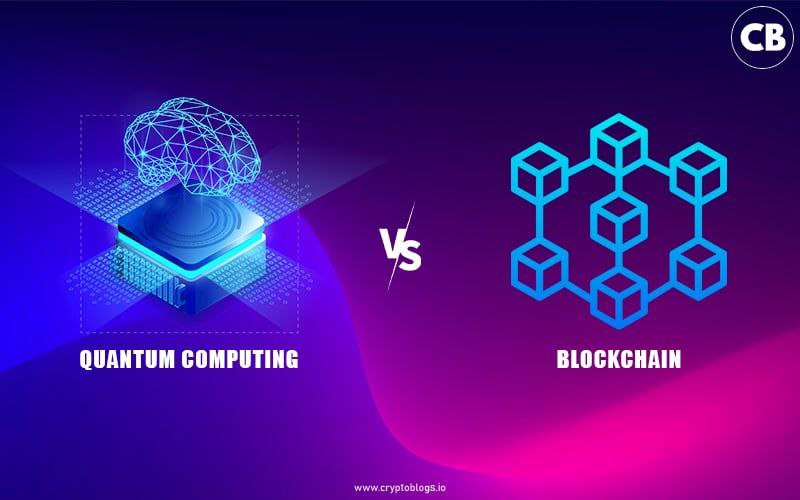 Quantum computing threats to blockchains are widely overstated, but urgent migration to post-quantum encryption is needed due to harvest-now-decrypt-later risks. Signature upgrades, however, require slower, deliberate adoption—especially for Bitcoin.2025-12
 Secure encryption and online anonymity are now at risk in Switzerland2025-04
 U.S. Federal agencies link China to massive 'Salt Typhoon' hack targeting AT&T, Verizon, and government officials, urging end-to-end encryption for protection.2024-12
 Going Dark: The war on encryption is on the rise. Through a shady collaboration between the US and the EU2024-05
Encryption in Crypto: The Definitive Guide
In digital systems, the process of scrambling data so that only intended parties can read it is known as encryption, and it underpins virtually every serious attempt to secure cryptocurrencies, blockchains, and privacy-preserving applications today. From Bitcoin’s elliptic-curve signatures to end-to-end encrypted chats and emerging quantum-safe schemes, understanding how encryption works—and where it can fail—is now a core literacy for anyone serious about crypto.
Foundations: What Encryption Means in Crypto
Encryption is a cryptographic transformation that converts readable information, called plaintext, into an unreadable form, called ciphertext, using a mathematical algorithm and a secret value known as a key. When the right key is applied through a corresponding decryption algorithm, the original plaintext is recovered, ideally with no loss of information and no leakage to unauthorized parties. This simple idea—only someone with the correct key can reverse the transformation—gives encryption its power as a tool for confidentiality in both data storage and communication. In modern digital systems, encryption also interacts with related primitives such as digital signatures and cryptographic hashes to support integrity, authenticity, and non-repudiation, all of which are essential to secure cryptocurrencies and financial infrastructure.
In practice, encryption is deployed at multiple layers of the crypto ecosystem. Wallets encrypt private keys on your local device; peer-to-peer networks encrypt traffic between nodes; messaging apps use end-to-end encryption so intermediaries cannot read your conversations; and layer-2 or off-chain systems often encrypt data to protect trading strategies or sensitive business logic. The same broad families of algorithms—symmetric ciphers, public-key (asymmetric) systems, and increasingly post-quantum constructions—appear again and again in these contexts, even when the marketing language is very different. For the crypto audience, it is crucial to understand that while blockchains themselves rely more on signatures and hashing than on bulk encryption, the overall security of your assets and communications depends on how encryption is used around those chains.
Conceptually, encryption is best thought of as one building block in a broader security architecture rather than a magic shield. A system can use state-of-the-art ciphers and still be insecure if keys are exposed, endpoints compromised, or metadata left unprotected. As recent incidents around supposedly secure messaging apps, misconfigured “end-to-end” offerings, and wallet breaches show, the difference between theoretical cryptographic security and real-world protection often lies in implementation details and threat modeling rather than algorithm choice alone. In that sense, this explainer focuses both on the mathematical primitives and on how they are embedded—well or poorly—into real crypto products, from Bitcoin wallets to Elon Musk’s “Bitcoin-style” X Chat, and from fully homomorphic DeFi tools to quantum-safe upgrades.
From Plaintext to Ciphertext
At the heart of every encryption scheme is a function that is easy to compute in one direction (encrypt) but hard to reverse without a key (decrypt). For symmetric ciphers such as AES, this function is typically a sequence of substitution and permutation steps designed so that flipping one bit of the key or the input completely scrambles the output in an unpredictable way. For public-key systems such as RSA and elliptic-curve cryptography (ECC), the “one-way” property is tied to hard mathematical problems, such as factoring large integers or solving discrete logarithms on elliptic curves. These hardness assumptions are what quantum computing directly attacks, but in the classical world they have held up for decades.
From a user’s perspective, the encryption process is usually invisible: you type a password into a wallet app, and it unlocks; you send a message, and it appears on your friend’s phone. Under the hood, however, the software is managing keys, deriving subkeys, choosing initialization vectors, and negotiating protocols with peers, all while trying to avoid side-channel leaks and implementation bugs. In crypto environments, these details matter because adversaries are sophisticated, motivated by direct financial gain, and often well funded. For example, nation-state actors have been linked to massive cyber operations against telecom providers and government officials, prompting U.S. federal agencies to stress the importance of strong end-to-end encryption to protect sensitive communications in transit. In such settings, sloppy protocol design or poor key handling can be just as catastrophic as using an outdated cipher.
It is also essential to distinguish encryption from related primitives. Cryptographic hash functions, such as SHA-256 in Bitcoin, are one-way functions without keys: given an input, you can compute a hash, but there is no notion of decrypting it. Digital signatures, by contrast, use asymmetric-key techniques to bind a message to a private key, allowing anyone with the corresponding public key to verify authenticity without learning the private key itself. Blockchains lean heavily on hashing and signatures for consensus and transaction validation, but they still rely on encryption for securing network connections, wallets, and application-layer protocols.
Symmetric vs Asymmetric Keys
The primary distinction in classical encryption is between symmetric and asymmetric (public-key) schemes. In symmetric-key encryption, the same secret key is used to encrypt and decrypt data, meaning both parties must somehow share that key securely before any communication takes place. This model is extremely efficient: modern symmetric ciphers like AES can encrypt vast amounts of data with minimal CPU cost, which is why they are used for disk encryption, VPN tunnels, and bulk data protection in many crypto-related services. However, the key distribution problem—how to securely get the shared secret to all parties—is a significant challenge, especially in open networks.
Asymmetric encryption solves the distribution problem by introducing key pairs: a public key, which can be shared widely, and a private key, which must be kept secret. Data encrypted with the public key can only be decrypted with the corresponding private key, which is why protocols can safely publish public keys in certificates or on-chain without compromising security. Elliptic-curve systems such as secp256k1, used in Bitcoin and many cryptocurrencies, are particularly attractive because they provide strong security with relatively small key sizes, which reduces bandwidth and storage requirements. In practice, asymmetric encryption is slower and more resource-intensive than symmetric encryption, so real protocols combine the two: they use public-key techniques to establish a shared secret, then switch to symmetric ciphers for bulk data.
The following table summarizes key properties of symmetric and asymmetric encryption in a form relevant to crypto use cases.
| Property | Symmetric Encryption | Asymmetric Encryption |
|---|---|---|
| Keys | Single shared secret key | Public key / private key pair |
| Typical use in crypto | Local wallet storage, VPNs, disk encryption | Key exchange, digital signatures, address generation |
| Performance | Very fast for large data volumes | Slower; higher computational overhead |
| Key distribution | Requires secure out-of-band sharing | Public key can be shared openly |
| Example algorithms | AES, ChaCha20 | RSA, ECDSA over secp256k1, Diffie–Hellman, ElGamal |
In blockchain contexts, users encounter asymmetric cryptography most directly through public addresses and signing transactions, but symmetric encryption sits behind the scenes in wallet software that protects private keys with a passphrase. Both are indispensable; losing either would compromise security.
End-to-End Encryption as a Design Pattern
End-to-end encryption (E2EE) is not a separate cipher but a deployment pattern for encryption. In an E2EE system, messages are encrypted on the sender’s device and only decrypted on the recipient’s device, with no intermediary—such as a messaging server—ever having access to the plaintext or to the keys needed to decrypt it. The two “ends” of the communication are the user devices; routers, servers, and service providers in the middle merely forward opaque ciphertext. When implemented correctly, E2EE ensures that even the operator of the service cannot read user messages, which is why it has become central to privacy debates and law-enforcement concerns.
In crypto and Web3, E2EE shows up in chat apps, collaboration tools, and sometimes wallet-to-wallet messaging protocols. The promise is that you do not have to trust the platform with your sensitive conversations; only you and your peer have decryption keys. However, this guarantee depends critically on correct implementation and key storage. If keys are backed up unencrypted to the cloud, stored in readable form on disk, or accessible to insiders, the system may be E2EE in name only. As we will see later, products like XChat have faced criticism for exactly this kind of gap between marketing and reality, illustrating why crypto users should look beyond slogans like “Bitcoin-style” encryption to the actual cryptographic design.
Importantly, E2EE protects data in transit but not necessarily at rest on endpoints. Once a message reaches the recipient device and is decrypted, its security depends on local protections: disk encryption, operating-system access controls, and user behavior. If an attacker gains control of a phone or laptop, they may read chat histories even if the transport layer was perfectly encrypted. This is why serious threat models in crypto—whether for whistleblowers using privacy coins or traders coordinating secret DeFi strategies—must address endpoint security alongside encryption protocols.

Fhenix bets Fully Homomorphic Encryption will power confidential finance, enabling private stablecoins, MEV-resistant DeFi, and encrypted smart contracts
How Blockchains Actually Use Encryption
A common misconception is that blockchains such as Bitcoin “encrypt” transactions on-chain. In reality, Bitcoin’s ledger is largely transparent, and the core protocol relies more on digital signatures and hash functions than on encryption of transaction data. What is cryptographically protected are the control of funds (via private keys) and the integrity of blocks and transactions (via hashing and Merkle trees), while the data itself is public. Nevertheless, encryption is heavily used in the broader Bitcoin and blockchain ecosystem: for securing wallets, peer-to-peer communication, sidechains, and privacy layers built on top.
Public-Key Cryptography and secp256k1 in Bitcoin
Bitcoin and many other cryptocurrencies use elliptic-curve cryptography over a specific curve known as secp256k1. This curve is defined over a large finite field with prime modulus \(p\) and satisfies the equation
\[ y^2 = x^3 + 7 \pmod p \]
which specifies the points that lie on the curve. A private key in Bitcoin is essentially a large random integer, and the corresponding public key is a point on secp256k1 computed by multiplying a standardized base point by that private integer. The security of this scheme rests on the elliptic-curve discrete logarithm problem: given the base point and the public point, it is computationally infeasible for classical computers to recover the private key.
Bitcoin uses the Elliptic Curve Digital Signature Algorithm (ECDSA) over secp256k1 to sign transactions. When you authorize a transfer of BTC, your wallet constructs a transaction and then uses your private key to generate a signature that proves you control the funds without revealing the key itself. Nodes verify these signatures using the public key (or its hash), ensuring that only validly signed transactions are included in blocks. In this sense, public-key cryptography plays the role of authentication and access control rather than encryption of content.
Despite that distinction, the same elliptic-curve machinery can be and is used for encryption in related systems. For example, peer-to-peer communication protocols between nodes often use elliptic-curve Diffie–Hellman key exchange to derive shared secrets and then switch to symmetric encryption for the actual data. Likewise, Bitcoin’s reliance on secp256k1 is exactly why it is considered vulnerable to a future quantum computer running Shor’s algorithm, which can solve discrete logarithms efficiently and thereby recover private keys from public ones. This is the core of the quantum threat we will examine later.
Wallets, Seed Phrases, and Local Encryption
While transactions themselves are not encrypted on-chain, your ability to sign them depends entirely on safeguarding your private keys or seed phrases. Most non-custodial wallets therefore encrypt local key material with a password-derived key, using symmetric algorithms such as AES. The idea is that even if someone gains access to the raw wallet file on disk, they cannot use it without knowing your passphrase. Increasingly, wallets also integrate hardware security modules or secure enclaves so that private keys can be used to sign without being directly exposed to the operating system.
Password managers targeted at crypto users, such as Tether’s PearPass, extend this local-first model. PearPass is designed to store passwords entirely on the user’s device and sync them in encrypted form between devices using peer-to-peer connections rather than a central server. It relies on modern cryptographic libraries such as Libsodium for end-to-end encryption between a user’s own devices and is fully open source with an independent security audit, which allows the community to scrutinize its implementation. This approach reflects a broader trend in crypto tooling: shifting trust away from centralized infrastructure toward robust local encryption and verifiable code.
However, local encryption is only as strong as the keys that unlock it. Weak passphrases, phishing attacks that exfiltrate seed phrases, and malware that runs with high privileges on the device can all bypass or defeat encryption, even if the algorithms themselves are sound. In that sense, wallet and password managers must not only implement strong cryptography but also guide users toward secure operational practices, such as generating random passwords, avoiding reuse, and verifying software integrity.
Peer-to-Peer Networks and Transport Security
Most public blockchains are built on top of peer-to-peer (P2P) networks where nodes discover each other and gossip blocks and transactions. On these networks, transport encryption is used to prevent passive eavesdropping, traffic manipulation, and some classes of man-in-the-middle attacks. While specific implementations vary, common patterns include using TLS-like handshakes with elliptic-curve key exchange to derive symmetric session keys, or protocol-specific encryption layers that similarly combine public-key and symmetric cryptography.
Encryption at the transport layer is particularly important in environments where network operators or adversaries may be able to observe or interfere with traffic. For example, in the wake of revelations about state-sponsored hacking campaigns such as “Salt Typhoon” targeting telecoms and high-level officials, federal agencies have emphasized the role of encrypted communication to protect sensitive data from interception. Strong transport encryption does not hide the existence of blockchain traffic, but it can make it significantly harder to tamper with or selectively censor individual nodes and connections. This is especially relevant for systems that aim to remain censorship-resistant under hostile network conditions.
That said, transport encryption alone does not provide anonymity. Even when P2P links are encrypted, metadata such as IP addresses, timing, and message patterns can be analyzed to deanonymize users or locate high-value nodes. For deeper privacy, networks may integrate additional layers such as Tor routing or mixnets, which focus on metadata obfuscation rather than just content encryption. As with E2EE, distinguishing what is actually hidden (payloads) from what remains observable (metadata) is critical.
DeFi Protocols, Smart Contracts, and Encrypted Workflows
On-chain smart contracts generally operate on plaintext data: inputs, state, and outputs are visible to every node that executes the contract. This transparency is a feature for auditability but a bug for privacy and alpha protection in DeFi. Traders whose strategies can be inferred from mempool data, or whose orders can be front-run by MEV bots, have strong incentives to seek encryption-enhanced workflows. However, because every node must reach the same result, traditional encryption cannot be applied directly to core EVM execution without breaking consensus.
Instead, DeFi and Web3 applications are increasingly layering encryption around smart contract interaction. One approach is to perform sensitive computations off-chain over encrypted data and only commit the result on-chain with a proof. Fully homomorphic encryption (FHE) allows arbitrary computations on encrypted data without decrypting it, enabling scenarios where a DeFi protocol could process encrypted orders or positions and only reveal what is strictly necessary for settlement. Chainlink and others have highlighted how FHE could allow AI and machine-learning models to be trained on sensitive financial data without exposing the raw inputs, which is highly relevant for institutional DeFi.
Another approach is conditional or policy-based encryption. Projects like Fairblock are building infrastructure that allows blockchain transactions to be encrypted such that they only become decryptable if certain on-chain conditions are met, for example after a specific block height or contingent on a governance vote. This “pre-execution privacy” contrasts with zero-knowledge systems, which prove statements about data without revealing it, by instead encrypting the data itself until a trigger occurs. Both approaches illustrate the centrality of encryption, not just as a static lock but as a programmable component in complex crypto workflows.
Readers click encryption stories not for the cryptography but for the power struggle — every top headline frames encryption as a front line between state/corporate surveillance and individual sovereignty, with Bitcoin serving as the ideological benchmark for what 'real' security looks like.
End-to-End Encryption in the Crypto Ecosystem
If Bitcoin made public-key cryptography mainstream, the broader crypto ecosystem has helped normalize end-to-end encryption as the default for private communication. As users become accustomed to the idea that service providers should not have access to their messages or documents, a wave of E2EE chat apps, collaboration tools, and local-first software has appeared, including many projects that explicitly reference “Bitcoin-style” or “blockchain-grade” security in their branding. The quality and correctness of these implementations varies widely, making it essential to separate robust designs from marketing.
Messaging: From WhatsApp to “Bitcoin-Style” X Chat
Modern secure messengers such as Signal and WhatsApp have popularized E2EE, where messages are encrypted on sender devices and only decrypted on recipient devices using ephemeral keys derived from public-key exchanges. This model has been widely endorsed by privacy advocates and security experts because it structurally limits the ability of providers to read user content or to comply with mass surveillance demands. However, as crypto-native communities demand even more control and transparency, new entrants are positioning themselves as alternatives.
One notable example is Elon Musk’s announcement of X Chat, an encrypted messaging app that he has described as using “Bitcoin-style” peer-to-peer encryption, promising no ads or data sharing and aiming to rival incumbents like WhatsApp and Telegram. In later disclosures, X Chat was said to feature end-to-end encryption, disappearing messages, universal file sharing, and audio and video calls, built in Rust and branded as having “Bitcoin-level security.” The reference to Bitcoin is primarily rhetorical—Bitcoin’s network does not itself provide E2EE messaging—but it signals a desire to be associated with strong cryptography, open protocols, and the ethos of user-controlled keys.
For a crypto-savvy audience, the important questions are not whether a messenger uses fashionable algorithms, but whether its cryptographic protocol has been publicly specified, independently audited, and proven resilient against known attack vectors. Claims of “Bitcoin-style” encryption should prompt scrutiny: does the system rely on well-understood primitives like secp256k1 or modern curves with robust analysis, or on bespoke constructions? Are message keys forward-secure and post-compromise secure? Is the code open source, and is there a path to formal verification? These questions illustrate the mindset that crypto users increasingly bring to any product touching their communications or private keys.
When End-to-End Encryption Goes Wrong: The XChat Case Study
The gulf between E2EE claims and reality is illustrated by the case of XChat, a separate product from Musk’s X Chat but similarly marketed as a secure messenger. Security researchers and community members analyzing XChat’s Windows client discovered that, despite its promise of end-to-end encryption, the app exposed users to multiple risks. One issue was that images shared through XChat preserved EXIF metadata, which can include geolocation and device information, allowing recipients or attackers to infer sensitive details about the sender. Another issue involved key storage practices that left encryption keys more accessible than users might expect, undermining the overall security model.
These findings led experts to advise against using XChat for high-risk or confidential conversations and to recommend stripping metadata from files before sharing them. The core lesson for the crypto space is that E2EE is an architectural property, not a marketing checkbox. If an app encrypts message bodies but leaks sensitive metadata, stores keys insecurely, or integrates with cloud backups that bypass encryption, users may still face serious privacy and security threats. For individuals whose threat model includes state actors, corporate espionage, or targeted surveillance, such gaps can be life-changing.
For crypto users who routinely manage large digital asset positions or interact with sensitive DeFi protocols, this implies a need for careful tool selection. Reading security audits, community analyses, and technical documentation becomes part of responsible self-custody. It also underscores the value of open-source clients, reproducible builds, and verifiable claims, where outsiders can independently confirm that encryption is implemented as advertised.
Verifiable E2EE and Cryptographic Transparency
To address the trust gap between providers and users, some projects are experimenting with ways to prove that end-to-end encryption is correctly implemented. Venice AI, for instance, has showcased E2EE schemes whose correctness can be verified by any external party, aligning with Bitcoin’s ethos of “Vires in numeris” (strength in numbers) by making security a matter of public math rather than private assurances. While technical details vary, one promising direction is to use zero-knowledge proofs (ZKPs) to demonstrate that a messaging server or client is following the protocol spec without revealing keys or message contents.
ZKPs are cryptographic methods that allow a prover to convince a verifier that a statement is true without revealing any additional information beyond the truth of the statement. For a messaging system, a server might prove that it never sees plaintext messages or that it only routes correctly formed ciphertexts, while a client could prove that its key agreement follows an audited protocol. Properly designed, such proofs can satisfy the core properties of completeness (honest behavior is accepted), soundness (cheating is extremely unlikely to succeed), and zero-knowledge (no extra information leaks).
In the crypto world, ZKPs are already used extensively in privacy-focused blockchains and rollups, and extending them to encrypted messaging is a natural evolution. This convergence means that future wallets and dApps may not only encrypt user data but also provide machine-checkable evidence that their cryptographic implementations match published designs, reducing the gap between theory and what runs on user devices.
Collaborative Apps and Local-First Tools
Beyond messaging, a growing class of tools aims to bring end-to-end encryption to everyday workflows such as document editing and password management. Privacy-focused platforms like dDocs offer real-time collaboration with E2EE, allowing teams to work together on documents without the provider ever seeing the content. Similarly, Diode’s collaboration with the Internet Computer Protocol (ICP) showcases secure, private workspaces where E2EE is baked in and setup friction is minimized, making strong encryption more accessible to non-technical users.
On the credential side, PearPass represents a “local-first” design, where all password data is stored on the user’s device and never uploaded unencrypted to central servers. To support multi-device use, PearPass syncs data peer-to-peer between a user’s devices, encrypting it with Libsodium, a well-regarded modern cryptographic library. The application is fully open source and has undergone an independent audit, reflecting a security posture that aligns with crypto-native expectations. By avoiding centralized storage, PearPass reduces the risk of mass credential breaches, at the cost of placing more responsibility on users to secure their devices and backups.
These developments show how encryption is gradually migrating from specialized security products into the fabric of mainstream applications. For the crypto audience, this trend is encouraging, as it normalizes practices—like keeping keys local, relying on audited open-source libraries, and using end-to-end encryption by default—that the space has advocated for years. At the same time, it underscores that the hardest problems often lie not in choosing algorithms but in designing usable, failure-resistant systems that real people can operate safely.

Tether releases PearPass, a local password manager, a free peer-to-peer app that stores passwords locally and syncs them encrypted across devices without any central servers. It features a password generator, end-to-end encryption via Libsodium, user-key recovery, and full open-source code on GitHub, plus an independent audit by Secfault Security.

"PearPass is an open-source privacy-first password and identity manager that gives you full control over your sensitive information. It makes storing and managing your credentials simple, secure, and private, with all data encrypted and stored locally on your device. Unlike traditional password managers, PearPass is built on the Pear Runtime and leverages peer-to-peer technologies to sync your credentials, ensuring they remain private, secure, and always under your control."
Advanced Cryptography: ZKPs, FHE, and Conditional Encryption
As the crypto ecosystem matures, it is increasingly leveraging advanced cryptographic primitives that extend the capabilities of traditional encryption. Zero-knowledge proofs, fully homomorphic encryption, and conditional encryption schemes all aim to reconcile privacy with functionality, enabling complex operations on or about encrypted data while preserving confidentiality. These tools are central to emerging use cases such as private DeFi trading, compliant yet privacy-preserving identity, and programmable privacy policies.
Zero-Knowledge Proofs for Privacy and Compliance
Zero-knowledge proofs (ZKPs) allow one party, the prover, to convince another, the verifier, that a statement is true without revealing anything beyond the validity of the statement itself. A classic analogy is proving you know a password without revealing the password. In formal terms, a sound ZKP protocol must satisfy completeness (honest proofs are accepted), soundness (false statements are almost never accepted), and zero-knowledge (no extra information is leaked). ZKPs can be interactive, involving back-and-forth messages, or non-interactive, where a single proof is generated and later verified independently.
On blockchains, ZKPs underpin privacy-centric systems like Zcash, where users can prove that a transaction is valid (balanced inputs and outputs, no double spending) without revealing amounts or addresses. They are also central to zk-rollups on Ethereum and other chains, where a prover compresses many transactions into a succinct proof that can be verified on-chain much more cheaply than re-running all transactions. For compliance, ZKPs enable structures where a user can prove they satisfy a condition—such as being KYC’d by a regulated entity or staying within certain trading limits—without exposing the underlying identity data.
In the context of encryption, ZKPs complement E2EE and storage encryption by allowing verifiable claims about encrypted data. For example, a DeFi protocol might accept encrypted loan collateral but require a zero-knowledge proof that the collateral’s value exceeds a threshold, without ever seeing the actual asset composition. As we saw with Venice AI’s verifiable E2EE, ZKPs can also be used to prove correct operation of cryptographic protocols without giving adversaries a blueprint for exploitation.
Fully Homomorphic Encryption and Private DeFi
Fully homomorphic encryption (FHE) is a cryptographic technique that allows arbitrary computations to be performed directly on encrypted data, producing an encrypted result that, when decrypted, matches the result of performing the same computation on the plaintext. In other words, with FHE you can run algorithms on ciphertexts without ever decrypting them, which means a cloud service or blockchain node could process your data without seeing it. This is extraordinarily powerful for privacy, but computationally expensive, which is why practical FHE has only recently begun to move from theory toward deployment.
Chainlink and others emphasize that current standard encryption schemes require data to be decrypted before computation, exposing it to anyone with access to the processing environment. FHE overcomes this limitation, allowing, for instance, an AI or machine-learning model to be trained on encrypted user data or for DeFi protocols to execute strategies while inputs remain hidden. In a crypto trading context, FHE could be used to implement secret order books where matching engines operate on encrypted bids and asks, revealing only executed trades and final prices, thereby mitigating certain forms of MEV and front-running.
By 2026, several projects and tools have emerged promising FHE-enabled secret DeFi trading, though most are still constrained by performance and complexity. The likely path is a hybrid model combining FHE with other techniques: sensitive calculations are done homomorphically, while less sensitive or performance-critical operations use conventional encryption and ZKPs. For example, an on-chain contract might accept an FHE-encrypted state, modify it off-chain using FHE, and then post back an encrypted updated state plus a proof of correct computation. This encapsulates the core idea: encryption is no longer just a static lock but a medium within which computation itself happens.
Conditional Encryption and Pre-Execution Privacy
Conditional encryption, as explored by teams like Fairblock, focuses on when and under what conditions encrypted data may be decrypted on-chain. Instead of leaving decryption entirely under user control, ciphertexts are associated with on-chain conditions such as block heights, oracle events, or governance decisions. For example, a trader could encrypt a large order and specify that it should only be decrypted and executed once a certain price feed reaches a threshold, preventing others from seeing the order beforehand. Or a DAO might encrypt the contents of a proposal and set it to decrypt only after voting closes, reducing the risk of herd behavior and manipulation.
This approach offers a different trade-off than ZKPs. Rather than proving facts about hidden data, conditional encryption keeps data fully hidden until a trigger, after which it becomes plaintext. In pre-execution privacy scenarios, this gives market participants a window during which their strategies are opaque, followed by transparency post-settlement. In governance, it can balance secret ballots with eventual auditability. The cryptographic mechanisms often combine public-key encryption with threshold schemes, where multiple parties must cooperate to decrypt, and smart contracts that enforce conditions.
For the DeFi ecosystem, conditional encryption is attractive because it integrates cleanly with existing EVM-based workflows. Developers can keep using familiar languages and abstractions while gaining finer-grained control over when information becomes public. It also dovetails with growing institutional demand for trade secrecy and compliance, as encrypted workflows can be designed to reveal enough for regulatory oversight without exposing full strategy details.
How These Primitives Fit Together
Zero-knowledge proofs, FHE, and conditional encryption do not replace traditional encryption; they are built on top of it. ZKPs often rely on commitments and digital signatures that use classical or post-quantum primitives. FHE schemes define special-purpose encryption functions that still depend on hard mathematical problems, at least until quantum attacks are considered. Conditional encryption uses standard public-key cryptography combined with smart-contract logic. In practice, real-world crypto systems weave these tools together, choosing the right primitive for each part of the workflow.
For example, a private DeFi options platform might use E2EE to secure trader communications, FHE to evaluate payoff formulas on encrypted positions, conditional encryption to reveal trades at expiry, and ZKPs to prove solvency and compliance. Underlying all of this would be symmetric ciphers protecting local keys, public-key schemes for authentication, and eventually post-quantum algorithms to guard against long-term decryption threats. Understanding the basics of encryption is thus a prerequisite for appreciating how these more exotic techniques function and what their limitations are.
- 01Government backdoor battles↗
Switzerland, the US/EU 'Going Dark' collaboration, Apple's UK victory, and the Salt Typhoon attribution collectively dominated clicks because they show democratic governments actively dismantling the encryption they publicly endorse.
- 02Quantum threat to Bitcoin keys↗
Google's quantum AI research framing a concrete 2048-bit RSA cracking timeline injected urgency into a risk most readers considered theoretical, linking it directly to BTC holdings.
- 03X Chat Bitcoin-level encryption↗
Two separate Musk/X Chat headlines drew ~158 combined clicks because invoking 'Bitcoin-level' and 'Rust' security as marketing language lets readers test whether a mainstream app can match crypto-native privacy standards.
- 04Conditional and novel blockchain encryption↗
Fairblock's conditional encryption raise signaled a meaningful departure from ZK orthodoxy, attracting readers tracking the next cryptographic primitive likely to underpin private DeFi.
- 05Bitcoin privacy vulnerability reassessment↗
VanEck's public hedge toward Zcash revealed institutional doubt about Bitcoin's long-term encryption assumptions, a rare admission that pulled in readers holding both assets.
- 06Crypto-native E2E productivity tools↗
Tether's PearPass and dDocs demonstrated that the encryption ethos is expanding beyond wallets into everyday software, resonating with readers who distrust cloud-first incumbents.
Quantum Computing and the Coming Encryption Transition
No discussion of encryption in crypto is complete without addressing quantum computing. Quantum algorithms threaten many of the public-key systems that secure cryptocurrencies, particularly RSA and elliptic-curve schemes like secp256k1. While practical quantum computers capable of breaking Bitcoin’s cryptography do not yet exist, recent research has shortened estimated timelines and reduced resource requirements, sparking serious debate about when the ecosystem must migrate to post-quantum cryptography (PQC).
Why Quantum Computers Threaten Today’s Cryptography
Classical encryption schemes rely on problems believed to be computationally infeasible for conventional computers. RSA depends on the difficulty of factoring large integers, while ECC relies on the elliptic-curve discrete logarithm problem. Quantum computers, which manipulate quantum bits (qubits) that can exist in superposition and entanglement, can run algorithms that fundamentally change these hardness assumptions. In particular, Shor’s algorithm can factor large integers and compute discrete logarithms in polynomial time, effectively breaking RSA and ECC given a sufficiently powerful quantum computer.
Asymmetric systems are most directly threatened because their security involves a public value (like a public key) and a secret (the private key) linked by a hard math problem. Shor’s algorithm can invert that function. Symmetric ciphers like AES are more resilient; quantum algorithms such as Grover’s provide at most a quadratic speedup, which can be compensated by doubling key sizes. This means that while AES-256 remains considered safe in a quantum world, 256-bit ECC such as secp256k1 could be compromised once large-scale quantum computers exist.
For cryptocurrencies, the consequences would be dramatic. Attackers could derive private keys from exposed public keys, allowing them to spend others’ coins or forge signatures. Any UTXO whose public key has already been revealed on-chain, as in a spent output or certain address types, would be vulnerable to theft. Encrypted communications recorded today could be decrypted retroactively when quantum machines mature, which is the essence of the harvest-now-decrypt-later threat model.
Google and Academic Warnings on Bitcoin’s Encryption
In recent years, Google’s Quantum AI team and academic partners have published analyses refining estimates of the quantum resources required to break elliptic-curve cryptography at Bitcoin’s security level. Google’s whitepaper describes quantum circuits implementing Shor’s algorithm for the 256-bit elliptic-curve discrete logarithm problem (ECDLP-256), showing that it could potentially be solved with fewer qubits and gates than earlier work suggested. Specifically, they describe two circuits: one using fewer than 1,200 logical qubits and about 90 million Toffoli gates, and another using fewer than 1,450 logical qubits and around 70 million Toffoli gates. Under reasonable assumptions about error correction and hardware performance, they estimate that a superconducting-qubit quantum computer with fewer than 500,000 physical qubits could execute these circuits in a matter of minutes.
These technical findings have been amplified in media and crypto discussions. Some commentators have summarized them as indicating that a future quantum computer could crack Bitcoin private keys in roughly nine minutes, near the average block time. Other reports and academic voices, including those from institutions like Caltech, have warned that the horizon for quantum attacks on Bitcoin may be closer than many previously thought, perhaps on the order of a few years rather than decades. At the same time, cryptographers caution that building such a machine remains a massive engineering challenge and that extrapolating from current prototypes to hundreds of thousands of error-corrected qubits involves significant uncertainty.
An influential analysis by a16z Crypto argues that while sensational timelines are often overstated, the harvest-now-decrypt-later risk is already real and justifies immediate deployment of post-quantum encryption in contexts where long-term confidentiality matters. They note that signature upgrades for systems like Bitcoin, which affect fundamental consensus rules and a huge installed base of wallets and infrastructure, will necessarily be slower and more deliberate. Thus, the quantum debate in crypto is less about panic and more about planning: recognizing that migration will take years and must begin before a “Q-Day” crisis occurs.
Q-Day, Harvest-Now-Decrypt-Later, and Stored Bitcoin
The term Q-Day is often used to describe the moment when a cryptographically relevant quantum computer (CRQC) becomes capable of breaking widely used public-key systems like RSA and ECC at scale. Even if that day is years away, adversaries can prepare by harvesting encrypted data and public keys now, intending to decrypt them later when quantum machines mature. This harvest-now-decrypt-later (HNDL) threat is particularly acute for communications whose confidentiality must be preserved for long periods, such as diplomatic cables, sensitive financial contracts, or private keys embedded in long-lived infrastructures.
For Bitcoin, the primary HNDL concern is not encrypted traffic but the public keys already revealed on-chain. Many legacy outputs use script types that expose full public keys when spent, and some users reuse addresses, leaving public keys visible for extended periods. An adversary with a CRQC could scan the chain, derive private keys for exposed public keys, and sweep any unspent outputs, posing a direct risk to dormant or long-held coins. Estimates have suggested that millions of BTC, often in older addresses, could be at risk if not migrated to quantum-safe schemes before Q-Day.
France’s national cybersecurity agency, ANSSI, captured this logic in its policy decision to phase out security products lacking quantum-resistant encryption. The agency announced that from 2027 it would stop certifying products that do not use post-quantum cryptography and advised organizations to buy only quantum-safe products by 2030. Officials explicitly cited concerns that adversaries could steal encrypted data today and decrypt it later with quantum computers, making proactive migration essential. Although this policy is not specific to cryptocurrencies, it reflects the same HNDL mindset that crypto custodians and protocol designers must adopt.
Policy Responses: France, NIST, and the U.S. Government
Governments and standards bodies are increasingly formalizing strategies for the post-quantum era. The U.S. National Institute of Standards and Technology (NIST) has led a multi-year project to standardize post-quantum cryptographic algorithms suitable for general encryption and digital signatures. As of 2024–2025, NIST has finalized three primary standards: FIPS 203 for general encryption, based on the lattice-based key encapsulation mechanism originally known as CRYSTALS-Kyber and now called ML-KEM; FIPS 204 for digital signatures, based on CRYSTALS-Dilithium, now ML-DSA; and FIPS 205, another digital signature standard, based on the hash-based scheme SPHINCS+, now SLH-DSA. A fourth draft standard, FN-DSA, based on the lattice-based FALCON algorithm, is planned as an additional signature option.
These standards are intended to serve as drop-in replacements for classical algorithms in TLS, VPNs, and other critical protocols. NIST emphasizes that ML-KEM offers comparatively small keys and fast performance, making it suitable as a primary general-encryption tool, while ML-DSA is the primary signature algorithm, with SLH-DSA as a backup in case lattice-based schemes are later found vulnerable. Importantly, NIST states that these algorithms are ready for immediate use, encouraging early adopters to begin migration.
In the United States, policymakers are also working on a coordinated transition strategy. A bipartisan bill called the National Quantum Cybersecurity Migration Strategy Act directs the White House’s Office of Science and Technology Policy to develop a national roadmap for transitioning federal systems to post-quantum cryptography. The bill contemplates a pilot program where each federal agency must migrate at least one high-impact system to quantum-safe encryption, and tasks an interagency subcommittee with identifying systems needing urgent attention, setting performance measures, and defining what constitutes a “cryptographically relevant quantum computer.” This legislative push reflects the recognition that migration is a multi-year process requiring leadership and coordination.
France’s ANSSI policy adds another dimension, effectively setting a deadline for phase-out of non-quantum-safe products in high-assurance environments. For crypto companies operating in or serving such markets, these policies imply that custodial solutions, compliance infrastructure, and even messaging tools used by regulated entities will need to adopt PQC well before quantum computers arrive. As regulators and standards bodies converge on specific algorithms, the ecosystem will likely see a wave of PQC integrations across wallets, exchanges, and layer-2 networks.
Post-Quantum Cryptography and Blockchains
Post-quantum cryptography (PQC) refers to classical (non-quantum) algorithms designed to remain secure against quantum attacks. The leading PQC families include lattice-based schemes, code-based systems, multivariate polynomial cryptography, and hash-based signatures. NIST’s selections lean heavily on lattice-based designs for both encryption (ML-KEM) and signatures (ML-DSA, eventually FN-DSA) and on hash-based signatures (SLH-DSA) as a conservative, structurally different backup. For blockchains, the key questions are how to integrate these algorithms into existing protocols and how to manage the transition for billions of dollars in assets.
From a protocol perspective, blockchains will need to define new address and signature types that support PQC. For example, Bitcoin could introduce new script templates that use ML-DSA signatures instead of ECDSA, allowing users to move funds from old addresses to quantum-safe ones. Smart-contract platforms might offer PQC precompiles or native opcodes, enabling contracts to verify PQ signatures. New chains could launch as PQC-native from the start, though they would still need to interact with legacy systems via bridges and interoperability layers.
An a16z Crypto analysis argues that while encryption of off-chain data should move to PQC as soon as possible, blockchains must be more cautious with signature migrations, as these affect consensus and cannot be easily rolled back. The piece stresses that developers should start planning migrations now, including identifying which coins or contracts cannot be moved, designing upgrade paths, and simulating PQC performance under real-world conditions. Coinbase’s quantum advisory council and protocols like Stellar, which has unveiled a staged roadmap to migrate its XLM network to quantum-safe cryptography, are examples of this planning process in action: mapping out how to add quantum-resistant signers while preserving existing addresses and minimizing user disruption.
Bitcoin’s Particular Challenges and Investor Concerns
Bitcoin faces unique challenges in the quantum transition due to its immense market capitalization, conservative governance culture, and reliance on a single elliptic curve, secp256k1. Many coins are held in long-dormant addresses whose owners may no longer have access to keys or be actively monitoring developments. Upgrading the protocol to support PQ signatures would likely require a soft fork and extensive ecosystem coordination, after which users would need to proactively move funds to quantum-safe outputs before Q-Day.
Some institutional actors have publicly expressed concern about these dynamics. VanEck’s CEO, Jan van Eck, has suggested that unresolved questions about Bitcoin’s long-term encryption and privacy model could lead his firm to reconsider its exposure, and that some long-time Bitcoin holders are exploring privacy coins like Zcash as the market reassesses assumptions about durability and confidentiality. While such views are far from consensus, they illustrate that encryption is not just a technical issue but also a factor in asset allocation and long-term value narratives.
At the same time, many experts emphasize that there is still time for an orderly transition if the community begins planning now. The consensus among careful analysts is that quantum threats are serious but not immediate; the technical milestones required for a CRQC remain daunting, and there is no evidence that a nation-state has already built such a machine. Nevertheless, the combination of HNDL risks, government migration policies, and the complexity of protocol upgrades means that crypto ecosystems cannot afford complacency. Encryption, once an invisible background assumption, has become a front-and-center strategic consideration.
Quantum computing threats to blockchains are widely overstated, but urgent migration to post-quantum encryption is needed due to harvest-now-decrypt-later risks. Signature upgrades, however, require slower, deliberate adoption—especially for Bitcoin.
"By a “cryptographically relevant quantum computer” I mean a fault-tolerant, error-corrected quantum computer capable of running Shor’s algorithm at scales sufficient to attack elliptic curve cryptography or RSA within a reasonable timeframe (e.g., breaking secp256k1 or RSA-2048 with at most, say, one month of sustained computation). We are nowhere near a cryptographically relevant quantum computer by any reasonable reading of public milestones and resource estimates. Companies sometimes claim a CRQC is likely before 2030 or well before 2035, but publicly known progress doesn’t support those claims."
Law, Policy, and the “Going Dark” Debate
Strong encryption sits at the intersection of technical security, individual privacy, and law-enforcement access. As end-to-end encryption and local-first designs spread, policymakers in many jurisdictions worry that investigative capabilities are “going dark” because they can no longer intercept readable communications or access data on seized devices. The crypto ecosystem, which already pushes back against centralized control, finds itself deeply entangled in these debates, both as a champion of strong encryption and as a target of regulatory scrutiny.
Governments, Backdoors, and Fears of Losing Visibility
Law-enforcement agencies in the United States and Europe have long argued that widespread adoption of E2EE hinders their ability to investigate serious crimes, from terrorism to child exploitation. Initiatives under the “Going Dark” banner seek mechanisms for “lawful access” to encrypted data without, in theory, weakening privacy for everyone. However, cryptographers and civil liberties advocates consistently respond that creating backdoors for some inevitably creates vulnerabilities for all: any mechanism that lets government agencies decrypt messages could be discovered or abused by adversaries, whether foreign intelligence services or cybercriminals.
The tension is visible in policy battles. In the U.K., for example, proposals to mandate scanning of encrypted content or require companies to provide access were met with strong resistance from tech companies and privacy groups. Apple’s high-profile stance against backdoors, including threats to withdraw services if forced to weaken encryption, culminated in a significant victory when the U.K. backed away from some of its most aggressive demands, preserving robust E2EE for iMessage and other services. Similar debates play out in the EU and elsewhere, often framed as a conflict between child safety or national security and digital privacy.
Other countries have explored or enacted restrictions that indirectly affect encryption, such as limiting online anonymity or requiring identification to access certain services. Reports from Switzerland, for instance, highlight concerns that new regulations could curtail anonymous internet usage and raise risks for privacy tools, including strong encryption. For crypto users who rely on pseudonymous addresses and encrypted messaging to protect themselves in hostile environments, such policies are not abstract—they potentially threaten the fabric of self-custody and open participation.
Cyber Offense and the Push for Stronger Encryption
Paradoxically, the same governments that worry about going dark also face escalating cyber threats that can only realistically be mitigated by stronger encryption. The “Salt Typhoon” campaign, in which U.S. federal agencies linked China to large-scale hacking operations against American telecom providers and officials, underscores the vulnerability of legacy infrastructure. In response, agencies urged the use of end-to-end encryption and modern cryptographic practices to secure sensitive communications and reduce attack surface.
From a national-security perspective, post-quantum cryptography is equally important. Governments must protect classified information and critical infrastructure not just today, but decades into the future, making HNDL attacks especially worrying. This drives the adoption of NIST PQC standards and legislative initiatives like the National Quantum Cybersecurity Migration Strategy Act, which recognize that encrypted traffic captured now might be decrypted by future quantum adversaries. In this sense, governments are torn between two imperatives: maintaining investigative visibility and hardening their own systems against foreign quantum and classical threats.
For the crypto industry, these tensions create both risk and opportunity. On one hand, calls for backdoors or weakened encryption could spill over into regulations governing wallets, exchanges, and encrypted messaging apps used by crypto users, potentially undermining the security guarantees that attract people to the space in the first place. On the other hand, the state’s need for quantum-safe, robust encryption aligns with crypto’s push for verifiable, open, and privacy-preserving systems. There is a plausible future in which blockchain-based identity and financial networks become reference implementations for high-assurance, PQC-enabled infrastructure.
Why the Crypto Industry Cares About These Fights
The war on encryption is, in many respects, a war on self-custody and sovereign communication. If regulators succeed in mandating backdoors into messaging apps, cloud storage, or even hardware secure elements, the trust model that underpins DeFi, hardware wallets, and encrypted coordination channels would be fundamentally altered. For example, a requirement that all messaging apps provide law-enforcement access could compromise private coordination among DAO contributors or whistleblowers sharing evidence of corruption.
Crypto companies, from exchanges to wallet providers, thus have a direct stake in defending strong encryption. Many have joined broader tech coalitions advocating for E2EE and resisting blanket surveillance measures. Legal victories, like Apple’s success in rebuffing the U.K.’s backdoor demands, set important precedents that can be cited in future disputes. At the same time, the industry must confront legitimate concerns about misuse of encrypted platforms and work toward solutions that balance privacy with targeted, accountable law enforcement, perhaps leveraging tools like ZKPs to provide verifiable compliance without universal exposure.
The backdrop of escalating quantum threats adds urgency. As France phases out non-quantum-safe cryptography in high-assurance products and the U.S. federal government prepares migration roadmaps, the acceptability of non-PQC systems may diminish over time. Crypto protocols that lag in upgrading might find themselves at odds not only with security best practices but also with regulatory expectations, especially in institutional contexts. In this evolving landscape, encryption policy is no longer just a civil-liberties concern; it is a material factor in protocol design, market access, and long-term viability.
NIST releases first three finalized post-quantum encryption standards
US agencies attribute Salt Typhoon telecom hack to China, urge E2E encryption adoption
Google Quantum AI publishes responsible-disclosure research on breaking elliptic-curve cryptography
Fairblock raises $2.5M to deploy conditional encryption for blockchain transactions
UK drops demand for Apple encryption backdoor in major E2E policy reversal
Elon Musk announces X Chat with Bitcoin-style P2P encryption and Rust architecture
- 2025-10regulatory
Switzerland advances legislation threatening secure encryption and online anonymity
a16z crypto publishes analysis reframing quantum blockchain threat as migration-planning problem, not imminent crisis
Threat Models, Pitfalls, and Reading Encryption Claims
For individual crypto users and builders, understanding encryption at a conceptual level is only the first step. The more practical question is how to evaluate security claims, choose tools, and design systems that align with realistic threat models. Recent events—from XChat’s flawed E2EE to debates about “Bitcoin-level” security in messaging apps—highlight common pitfalls and the importance of informed skepticism.
Encryption is Not a Silver Bullet
One of the most pervasive myths is that using strong encryption automatically makes a system secure. In reality, encryption addresses specific problems—primarily confidentiality—and leaves many others unsolved. If an attacker can compromise your device, install malware, or obtain your passphrase via phishing, they may access decrypted data directly, rendering encryption moot. Likewise, side channels such as timing, power consumption, or error messages can leak information about keys even if the underlying math is sound.
In the XChat case, the presence of encryption did not prevent leaks of sensitive metadata or unsafe key storage practices. As security analysts noted, users were advised not to rely on XChat for high-risk conversations despite its E2EE marketing, illustrating that implementation flaws can negate theoretical guarantees. This is equally true in crypto wallets: a wallet that uses AES-256 to encrypt private keys but logs the passphrase in plaintext or transmits it to a remote server is fundamentally insecure, regardless of the algorithm’s strength.
For serious crypto participants, the takeaway is that encryption must be evaluated in context. Threat models should consider adversaries ranging from casual thieves and malware to sophisticated nation-state actors. Security measures should be layered, combining encryption with hardware protections, network hygiene, multi-factor authentication, and user education. Understanding that encryption is necessary but not sufficient helps avoid complacency and overconfidence.
Content vs Metadata: What Encryption Hides (and What It Doesn’t)
Another critical distinction is between protecting content and protecting metadata. E2EE primarily hides message bodies, but does not necessarily obscure who is communicating with whom, when, from which IP address, or with what file characteristics. In XChat, images retained EXIF metadata such as GPS coordinates, which could reveal where a photo was taken even if the image itself was encrypted in transit. Similarly, most messengers leak timing and size information that can be used for traffic analysis, and many retain contact graphs or other metadata on servers.
In blockchain contexts, transaction content may be encrypted in certain sidechains or privacy layers, but the mere fact that an address interacted with a protocol can be observable on the base chain. Even in privacy coins, network-level metadata can be exploited if users do not route through anonymizing layers. FHE and ZKPs help by allowing computations on encrypted data and proofs about hidden values, but they too must be combined with careful traffic and metadata obfuscation for full privacy.
Users should therefore be cautious about claims that an app “hides everything” or provides “total anonymity” merely because it uses strong encryption. A more honest description would specify what is protected (message contents, documents, keys) and what is not (IP addresses, timing, file sizes, some metadata). Tools that strip metadata from files before encryption, randomize packet sizes and timing, or route traffic through privacy networks provide stronger overall protection than those that only encrypt payloads.
Evaluating “Bitcoin-Level” or “Bank-Grade” Security Claims
Marketing language like “Bitcoin-level security” or “bank-grade encryption” is ubiquitous, but often poorly defined. When Musk’s X Chat was described as having “Bitcoin-style” encryption, savvy observers immediately asked what that meant in practice. Does the app use the same elliptic curve (secp256k1) as Bitcoin? Does it implement a well-reviewed protocol like the Signal Double Ratchet, or something bespoke? Are the cryptographic primitives and protocol details documented, and has the code undergone independent audit?
By contrast, products like PearPass take a more concrete approach to security claims. They specify that data is stored locally, not uploaded to external servers; that peer-to-peer syncing is used between a user’s devices; that encryption is implemented via Libsodium, a widely respected library; and that the code is fully open source and independently audited. These are meaningful facts that experts can verify. Similarly, NIST’s PQC standards provide clear, named algorithms (ML-KEM, ML-DSA, SLH-DSA) whose security properties are the subject of open, ongoing cryptographic review.
When evaluating any crypto product that touches private keys, messages, or financial data, users should look beyond buzzwords and ask specific questions. Which algorithms are used, and at what key sizes? Are the implementations open source? Has a recognized third-party security firm audited the code, and are reports public? How does the system handle key generation, storage, backup, and recovery? In the era of quantum threats, it is also increasingly relevant to ask whether post-quantum algorithms are supported, especially for long-term data.
Keys, Passwords, and Local Tools
Ultimately, encryption revolves around keys. Even the most sophisticated protocol reduces to who knows which keys and how hard it is for others to guess or derive them. For individual users, this translates into the management of passwords, seed phrases, hardware devices, and backups. Local-first tools like PearPass embody a philosophy where keys never leave the user’s control except in strongly encrypted form, synchronized peer-to-peer between personal devices. This minimizes reliance on central servers that could be hacked or subpoenaed, but increases the importance of securing endpoints and maintaining reliable backups.
Good key hygiene involves generating high-entropy passphrases, avoiding reuse across services, and using hardware security modules or hardware wallets where appropriate. From an encryption perspective, it is crucial that keys be derived using strong key-stretching algorithms and stored in secure enclaves or encrypted files without side-channel leaks. Password managers and wallets that embrace open standards, reuse well-reviewed libraries, and subject themselves to independent audits provide a more trustworthy foundation than closed, opaque systems with grandiose claims.
At the same time, users must guard against social engineering and UI-level attacks that circumvent encryption entirely. A phishing page that tricks you into entering your seed phrase gains full access regardless of how well your device encrypts its storage. For high-value crypto users, adopting a mindset similar to operational security in traditional finance—segregated devices, limited exposure, and routine threat modeling—can substantially reduce risk.
For Developers: Designing with Encryption in Mind
For builders in the crypto space, encryption should be treated as a core architectural consideration from day one rather than a feature bolted on later. This starts with clear threat modeling: understanding what data needs confidentiality, who the adversaries are, and how they might attack. Design decisions like whether to centralize key management, how to handle backups, and whether to support multi-device use all have profound implications for the encryption model.
Developers are increasingly advised to rely on mature libraries such as Libsodium rather than rolling their own cryptographic primitives. Protocols should be simple enough to analyze, avoiding unnecessary complexity that can hide subtle flaws. Where possible, designs should move toward verifiability, exposing cryptographic details and relying on public scrutiny, audits, and formal verification. For systems with long-term confidentiality requirements, integrating post-quantum algorithms early can reduce future migration pain.
Crucially, secure design must account for usability. If users are forced into insecure shortcuts—such as storing keys in screenshots or copying secrets into chat apps—because software is cumbersome or unclear, encryption will fail in practice. Thoughtful UX, clear messaging about threat models, and guardrails that prevent obviously unsafe behavior are indispensable complements to mathematical soundness.
Coordinated US/EU 'Going Dark' efforts and Swiss legislative pressure show a sustained policy push to mandate encryption backdoors, directly threatening self-custody wallet security and private messaging layers used by DeFi participants.
Google's research indicates a sufficiently large quantum computer could break elliptic-curve cryptography underpinning Bitcoin and most blockchain signing schemes, with harvest-now-decrypt-later attacks already posing a near-term risk to long-dormant wallets.
NIST finalized three post-quantum encryption standards in August 2024, but blockchain signature upgrades require social consensus and slow deliberate adoption, creating a dangerous window between threat maturity and protocol readiness.
End-to-end encrypted apps like X Chat still expose metadata and key-storage risks at centralized servers, meaning encryption at the message layer does not eliminate single points of failure that governments or attackers can target.
Fully homomorphic encryption and conditional encryption primitives are pre-production for most DeFi use cases, so current smart contract encryption risk is low but will rise as private on-chain computation layers deploy.
Institutional reassessment of Bitcoin's encryption durability, as flagged by VanEck, has not yet produced measurable capital rotation, but sustained quantum-threat headlines could compress long-term holding confidence.
Outlook
Encryption has always been a foundational technology for cryptocurrencies, but its role is expanding and evolving in ways that make it a central strategic concern rather than a background utility. On one front, the ecosystem is pushing toward more pervasive and sophisticated privacy, with E2EE messaging, FHE-powered DeFi, conditional encryption, and zero-knowledge proofs enabling new forms of private yet verifiable interaction. On another front, the looming advance of quantum computing is forcing protocols, governments, and enterprises to plan for a post-quantum transition, adopting NIST-standardized algorithms and rethinking long-lived cryptographic assumptions.
At the same time, the policy landscape remains adversarial and unsettled. Law-enforcement concerns about going dark, regulatory moves in jurisdictions like Switzerland, and periodic pushes for backdoors pose ongoing challenges to strong encryption. Yet high-profile wins, such as Apple’s resistance to the U.K.’s backdoor demands and France’s explicit embrace of quantum-safe cryptography, suggest that robust, user-centric encryption can prevail when backed by technical consensus and public support. Crypto-native tools like PearPass, verifiable E2EE schemes, and privacy-preserving DeFi platforms offer concrete examples of what that future could look like: systems where security is grounded in open math and code rather than unilateral trust.
For crypto users and builders, the path forward involves embracing encryption not just as a tool but as a discipline. Staying informed about quantum timelines, post-quantum standards, and implementation pitfalls will be as important as following price charts or protocol launches. As Bitcoin and other networks begin the long process of hardening themselves against quantum threats, and as advanced cryptographic primitives migrate from research papers into production, those who understand the nuances of encryption will be better prepared to navigate—and help shape—the next decade of digital finance.
Latest Encryption news
Fhenix bets Fully Homomorphic Encryption will power confidential finance, enabling private stablecoins, MEV-resistant DeFi, and encrypted smart contractsTether releases PearPass, a local password manager, a free peer-to-peer app that stores passwords locally and syncs them encrypted across devices without any central servers. It features a password generator, end-to-end encryption via Libsodium, user-key recovery, and full open-source code on GitHub, plus an independent audit by Secfault Security.Quantum computing threats to blockchains are widely overstated, but urgent migration to post-quantum encryption is needed due to harvest-now-decrypt-later risks. Signature upgrades, however, require slower, deliberate adoption—especially for Bitcoin. VanEck CEO Jan van Eck concerned about Bitcoin's encryption and privacy, says firm could walk away and that some longtime Bitcoin holders are examining Zcash as the market reassesses long-term assumptions.
 Elon Musk announced “X Chat,” an encrypted messaging app using Bitcoin-like peer-to-peer encryption, promising no ads or data sharing. The app aims to rival WhatsApp and Telegram with enhanced privacy and security.
 Privacy focused dDocs adds real-time collaboration with end-to-end encryption
Sources
20 records from 18 domains
geeksforgeeks.org
cloudflare.com
nervos.org
thequantuminsider.com
nist.gov
chain.link
fairblock.network
chainalysis.com
cryptonews.net
industrialcyber.co
facebook.com
research.google
a16zcrypto.com
vaneck.com
windowsforum.com
mullvad.net
tradingview.com
apps.apple.com
Community notes
Spot something off or out of date? Drop a note. Editors review topic notes daily and roll accepted fixes into the explainer — contributors are recognized in the monthly $SQUID drop.
Loading notes…
Help improve this topic
Have a story or tip about this topic? Submit it. See something missing? Leave a note. Editors review daily; accepted submissions and fixes count toward the monthly $SQUID drop.