
In crypto, “threat” spans malware, state-backed hacks, AI and quantum risks, as well as regulatory and systemic pressures on Bitcoin and stablecoins. This explainer defines threats, shows how they shape digital asset security, and outlines emerging defenses and migration plans.
+37 sources across the wider coverage universe
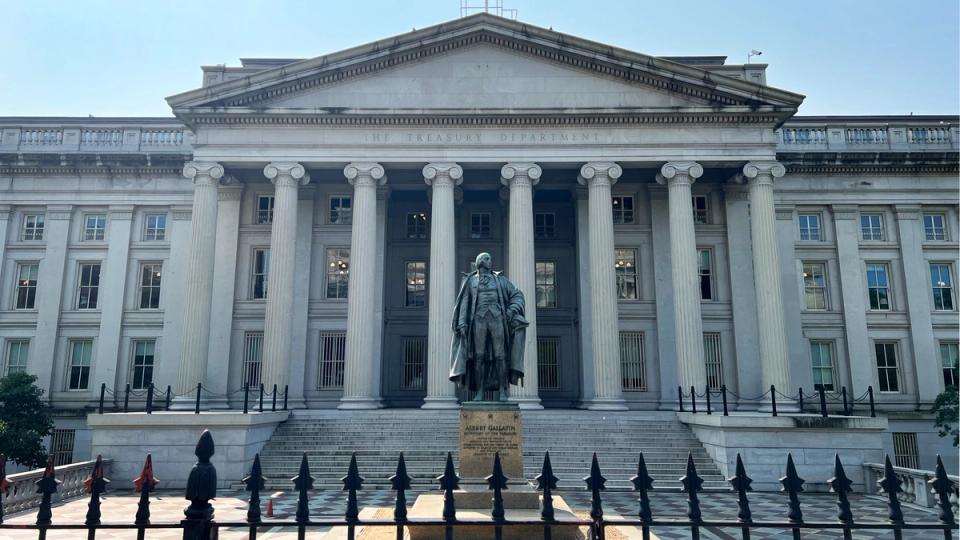 U.S. Treasury extends cyber threat alerts to crypto firms, closing gap with traditional finance2026-04
 BitMEX Research proposes “canary fund” mechanism to delay Bitcoin quantum freeze unless a real quantum threat is proven onchain2026-04
 Sei Network introduces SIP-5, creating a pathway for every account to upgrade into quantum-secure protection if future quantum threats emerge2026-07
 Tokenized Brent crude triggers $17M Hyperliquid liquidation, rivaling bitcoin as Trump Iran threats spike oil past $1072026-04
 Quantum threat debate intensifies as Bitcoin leans on gradual upgrades and Ethereum accelerates multi-layer defenses, signaling contrasting approaches to future-proofing blockchain security2026-04
 Bybit CEO Ben Zhou warns crypto security threats are a constant battle, reflecting on lessons from last year’s $1.5B hack and the need for stronger industry defenses2026-04
Threat in Crypto: How Risk Shapes Digital Assets
In crypto security, a threat is any potential event or actor that could harm digital assets, infrastructure, or users, whether through code exploits, quantum decryption, AI-enabled hacking, regulatory action, or geopolitical shocks. In practice, threats to Bitcoin, stablecoins, and the broader crypto ecosystem now span everything from clipboard-stealing malware and state-backed hacking groups to future quantum computers capable of breaking today’s cryptography.
Defining “Threat” In A Crypto Context
Security professionals use the word threat in a precise way that is worth understanding before diving into Bitcoin, DeFi, and stablecoins. The OWASP Foundation defines a threat as a potential or actual undesirable event that may be malicious, such as a denial-of-service attack, or incidental, such as a storage device failure. Threat modeling, in this sense, is a structured process for looking at a system and its environment through a security lens, identifying what could go wrong, and deciding what to do about it. When this vocabulary is carried over to blockchains, a “threat” is not just a scary headline; it is a defined category in a risk model that can be analyzed, prioritized, and mitigated.
It is equally important to distinguish threats from vulnerabilities and risks. A vulnerability is a weakness in a system, such as a smart contract bug or an overexposed private key, while a threat is the potential event or actor that might exploit that weakness. Risk, in turn, combines the likelihood that a given threat will successfully exploit a vulnerability with the impact if it does. For a crypto exchange, an undiscovered wallet misconfiguration is a vulnerability; a North Korean hacking group probing that infrastructure is a threat; the resulting chance of a billion‑dollar breach is the risk. Clear terminology helps project teams, regulators, and investors avoid conflating hypothetical worries with concrete, modelable danger.
In crypto, threats extend well beyond the classic confidentiality–integrity–availability triad that dominates enterprise security. Because Bitcoin, Ethereum, and stablecoins now intersect with macro markets, monetary policy, and sanctions enforcement, threats also include regulatory clampdowns, capital controls, and macro shocks that affect liquidity and price discovery. A high‑yield stablecoin might face technical threats to its smart contracts and custody, but it also poses a perceived threat to traditional bank deposits, which is why major institutions like JPMorgan and Citi are building their own tokenized deposit networks in response. Understanding “threat” in this expansive but structured way is essential for anyone trying to price risk or build resilient systems in digital assets.
To keep the terminology straight, it can help to visualize how threats, vulnerabilities, and risks relate in a crypto setting:
| Concept | Definition in security practice | Example in crypto |
|---|---|---|
| Threat | Potential or actual undesirable event or actor that could cause harm | State-backed group targeting a bridge with phishing and malware |
| Vulnerability | Weakness in design, implementation, or operation that can be exploited by a threat | Smart contract bug in a stablecoin bridge |
| Risk | Combination of likelihood a threat exploits a vulnerability and the impact if it succeeds | Probability–impact profile of a $1B exchange hack |

EU financial watchdogs warn quantum computing poses an imminent threat to blockchain encryption before commercial use

Core Cyber Threats To Crypto Users And Infrastructure
For most retail users, the most immediate threats remain mundane but highly effective: phishing, social engineering, and theft of private keys or seed phrases. Security researchers emphasize that as cryptocurrencies have gained popularity, threat actors have rushed to steal sensitive information that grants control over wallets, often by tricking users into entering credentials on fake websites or clicking malicious links in emails and messaging apps. Attackers also target two‑factor authentication codes, SIM cards, and password managers, seeking any foothold into a holder’s broader digital life. The result is that many crypto losses still start with a simple human mistake, even if the attack chain later involves sophisticated tooling.
Malware has evolved specifically to hunt crypto, and a recent Microsoft investigation into a Windows-based cryptocurrency clipper shows how far this specialization has gone. This malware family spreads through malicious shortcut files on removable media, installs without a traditional setup program, and launches a bundled Tor client that connects to a hidden command-and-control server. Once running, it continuously monitors the clipboard, looking for wallet addresses, seed phrases, and private keys, then silently replaces copied addresses with attacker-controlled ones or exfiltrates secrets over Tor. Because the clipper executes as scripts that spawn other processes, defenders are advised to watch for patterns like script engines launching curl, PowerShell, or unexpected binaries, as well as unusual localhost SOCKS proxy traffic on port 9050, rather than relying solely on static signatures.
At the institutional layer, exchanges, custodians, and DeFi bridges face threats that can translate into billion‑dollar losses. TRM Labs reports that a massive breach at Bybit in February alone accounted for around 1.46 billion U.S. dollars, roughly half of all funds stolen across the crypto ecosystem the prior year. CertiK’s Skynet 2026 Stablecoin Threat Intelligence Report similarly highlights that bridge-related incidents have already produced more than 328 million dollars in losses, with wallet compromise now overtaking pure code vulnerabilities as the leading exploit vector. The pattern is clear: attackers increasingly focus on the connective tissue of the system—bridges, key management services, and liquidity hubs—where a single compromise can cascade into huge, rapidly realized losses.
Recent attacks on cross-chain infrastructure illustrate how threats blend cybercrime with geopolitics. The exploit of the Kelp DAO bridge resulted in the theft of approximately 220 million dollars, and on-chain analysis later linked the operation to North Korean threat group TraderTraitor. According to reporting, the hackers have managed to launder nearly all of the unfrozen funds, effectively closing the recovery window for victims and underscoring how quickly stolen assets can be obfuscated through mixers and chain-hopping. From a threat-modeling perspective, this means that bridge operators must assume not just opportunistic criminals but disciplined, state-backed groups with sophisticated laundering pipelines as potential adversaries.
The broader role of the Democratic People’s Republic of Korea (DPRK) in crypto crime has become so significant that G7 leaders recently labeled its theft operations a growing global security threat. Chainalysis data cited in that discussion suggest that hackers linked to DPRK stole at least 2 billion dollars in 2025 alone, bringing their cumulative haul to roughly 7.35 billion dollars by 2026. In 2025, North Korean actors were estimated to account for 64% of all crypto stolen by value, a share that appears to have risen to around 76% of losses recorded in the early part of 2026. These funds have reportedly helped finance weapons programs, moving crypto hacking from a niche cybercrime issue into a domain that touches nonproliferation and international security. That shift has major implications for how regulators, intelligence agencies, and exchanges are likely to treat crypto-related threats in the coming years.
Readers click 'threat' stories not for technical mechanics but for adversary identity and institutional vulnerability: the dominant pull is knowing *who* is attacking (North Korea, named malware authors, PayPal) and *what* is being displaced (ETH, T-bills, credit cards, the dollar) — threat-as-power-shift, not threat-as-bug.
AI-Enabled Threats: From Phishing Kits To Protocol-Wide Vulnerabilities
Artificial intelligence is reshaping the threat landscape in both offensive and defensive directions. A recent joint analysis of AI-enabled cyber threats found that malicious actors are increasingly using AI not just to generate spam or low-level phishing, but in the later, more complex stages of their operations. That includes automatically rewriting malware to evade detection, generating convincing spear-phishing lures at scale, and using large language models to help navigate unfamiliar codebases or cloud environments. For crypto, this means that compromised developer accounts, misconfigured cloud wallets, and obscure protocol components may be probed by adversaries with a kind of on‑demand “copilot,” lowering the barrier to sophisticated attacks.
At the same time, attackers are weaponizing pop culture and hype cycles—often enhanced by AI-generated content—to spread malware that ultimately targets wallets. Cybersecurity vendors have warned that the excitement around releases like “GTA 6” has been used as bait, with fake game downloads or leaks hiding information stealers and clippers. In practice, the payloads may resemble the Tor-based cryptocurrency clipper described by Microsoft, silently harvesting clipboard data, seed phrases, and keys from any user who thought they were grabbing a legitimate torrent or trailer. AI-generated videos, deepfake voice messages, and synthetic social media accounts all provide new tools for social engineering, making the classic phishing‑driven crypto heist harder for average users to spot.
AI is also changing how vulnerabilities in blockchain protocols are discovered and triaged, in ways that blur the line between threat and defense. In one notable case, a security researcher working with the Zcash privacy project used Anthropic’s Claude model to uncover a critical vulnerability that had gone undetected for more than four years. Once the issue was disclosed in early June, the Zcash token plunged about 50% as traders reassessed the security assumptions underpinning one of the most prominent privacy networks. On one hand, this episode shows AI strengthening defense by making deep code audits faster and more thorough; on the other, it demonstrates that AI-accelerated discovery of latent flaws can itself be a market-moving threat if exploited or revealed suddenly.
The capacity of institutions to deal with AI-driven threats has become a geopolitical issue in its own right. Investigative reporting has highlighted how staff and budget cuts at key agencies such as the U.S. Cybersecurity and Infrastructure Security Agency (CISA) under the Trump administration limited their ability to sit at the center of federal AI cybersecurity planning. In a world where AI can help attackers sift through open-source code, infer wallet infrastructure from leaked metadata, and coordinate disinformation around protocol governance votes, under-resourced public defenders represent a systemic risk to both traditional financial infrastructure and crypto. The defensive use of AI—whether for anomaly detection on blockchains, automated triage of smart contract alerts, or dynamic threat intelligence sharing—will be crucial in determining whether AI acts more as a net threat or a net shield for digital assets.
Quantum Threats To Bitcoin, Crypto, And Classical Cryptography
Beyond AI, the most discussed long-horizon technological threat to Bitcoin and other cryptocurrencies is the eventual arrival of cryptographically relevant quantum computers. Most major blockchains today rely on elliptic curve cryptography (ECC) for digital signatures and key exchange, a family of schemes that are widely believed to be vulnerable to Shor’s algorithm once sufficiently powerful quantum machines exist. A recent Google whitepaper argued that future quantum computers may be able to break the elliptic curve cryptography that protects cryptocurrencies and many other systems using fewer qubits and gates than previously thought, shrinking the margin of error around migration timelines. If that prediction is borne out, the private keys underlying unspent outputs, multisig wallets, and even hardware wallets could become decryptable—not immediately, but within a planning horizon that matters for long-term holders.
The threat is not only about live wallets but also about data that adversaries can capture today and decrypt later. Security researchers describe this as “Harvest Now, Decrypt Later” (HNDL), in which attackers intercept and store encrypted network traffic now, anticipating that future quantum computers will be able to break the RSA or ECC used to protect it. A related concept, “Trust Now, Forge Later” (TNFL), refers to attackers collecting digital signatures, certificates, and identity materials today with the goal of forging or abusing them once quantum attacks become practical. For crypto networks, this raises concerns that historical encrypted traffic to exchanges, custody APIs, and key management services could be decrypted down the line, revealing wallet structures, transaction details, or even enough signing material to impersonate legitimate actors. ZeroTier and other network security firms emphasize that any data protected by quantum-vulnerable algorithms and intercepted today is potentially at risk of future decryption.
Industry timelines for this quantum threat are converging around the late 2020s and early 2030s, but with significant uncertainty. Google has publicly introduced a 2029 internal deadline to complete its migration to post-quantum cryptography, underscoring that such transitions are multi‑year efforts that must begin well before a large-scale quantum computer is built. In parallel, advances in quantum hardware, such as Microsoft’s announcement of a “1,000x more reliable” quantum chip, have raised concerns that the arrival of cryptographically relevant quantum machines might be pulled closer than conservative estimates suggest. Even if serious cryptanalytic attacks remain years away, the combination of HNDL strategies and the long lifetime of certain keys means that prudent crypto participants must treat quantum as an active planning problem now, not a purely speculative risk for the distant future.
On the defense side, the U.S. National Institute of Standards and Technology (NIST) has spent nearly a decade running a global competition to standardize quantum-resistant cryptography. In 2024, NIST finalized the first three Federal Information Processing Standards (FIPS) for post-quantum algorithms: FIPS 203, based on the CRYSTALS‑Kyber scheme and now known as ML‑KEM, as the primary standard for general encryption; FIPS 204, based on CRYSTALS‑Dilithium and renamed ML‑DSA, as the primary digital signature standard; and FIPS 205, based on SPHINCS+ and renamed SLH‑DSA, as a stateless hash-based digital signature backup in case ML‑DSA proves vulnerable. These standards are designed to protect a wide range of electronic information, from confidential email to e-commerce transactions, and NIST has stated they are ready for immediate use by government and industry seeking to harden systems against future quantum attacks. The agency’s National Cybersecurity Center of Excellence (NCCoE) stresses that migration requires organizations to first understand where quantum-vulnerable algorithms are used in their hardware, software, and services, then plan phased upgrades across that entire footprint.
For blockchains, the migration challenge is particularly thorny because the consensus rules and signature schemes are deeply embedded in protocol design and economic assumptions. Bitcoin, for example, relies on ECDSA signatures over the secp256k1 curve, and while not all public keys are directly exposed on-chain, any address that has spent coins at least once reveals enough information that a sufficiently advanced quantum attacker could, in principle, derive the corresponding private key. Meanwhile, multi-signature wallets, Lightning Network channels, and some sophisticated custody setups may expose more key material as they operate, increasing the attack surface. While some researchers interpret Google’s and NIST’s timelines to mean that the most serious quantum risk to public blockchains lies beyond 2029, the existence of HNDL and TNFL strategies implies that adversaries may already be recording relevant data today.
Not surprisingly, a number of blockchain projects are exploring proactive strategies to become “quantum-resistant.” The Algorand Foundation, for instance, has released a roadmap for quantum-resistant upgrades that it aims to execute between the end of 2027 and 2028, ultimately targeting full quantum resistance by roughly 2028. That plan envisions migrating core cryptographic primitives to post-quantum schemes while maintaining consensus security and performance, a non-trivial balancing act for any live network. Other ecosystems, including Stellar, have emphasized architectural advantages such as separating account identity from signing keys, making it easier to rotate keys or layer in hybrid classical–post-quantum signature schemes without forcing users to abandon long‑standing account identifiers. Across the industry, the pattern is clear: every blockchain will eventually need some form of post-quantum migration path, and the projects that threat-model this transition early may be better positioned to maintain user trust when quantum headlines intensify.
Stablecoins And Systemic Threats: Hacks, Banks, And Sanctions
Stablecoins occupy a unique place in the threat landscape because they combine traditional financial infrastructure (bank accounts, treasuries, payment rails) with on-chain programmability. CertiK’s Skynet 2026 Stablecoin Threat Intelligence Report identifies two converging threat vectors: opportunistic attacks on interconnected financial infrastructure, particularly cross-chain bridges and custody systems, and the deliberate construction of sanction-evasion networks by state-adjacent actors. Bridge-related incidents alone have already produced more than 328 million dollars in losses in 2026, and wallet compromise has overtaken pure code vulnerabilities as the leading exploit vector, reflecting the growing focus on keys and operators rather than just smart contract bugs. From a systemic standpoint, repeated bridge failures erode confidence not only in specific tokens but in the idea that a “dollar on any chain” is interchangeable.
The Kelp DAO exploit again provides a vivid illustration of these dynamics. Because Kelp DAO sat at the intersection of multiple chains and likely interacted with large stablecoin flows, its compromise presented both a technical threat to user funds and a regulatory threat in the form of sanctioned entities gaining leverage over U.S. dollar–linked instruments. Once North Korean group TraderTraitor was identified as the likely perpetrator and on-chain tracking showed nearly all of the unfrozen 220 million dollars being laundered, the episode reinforced the concern that stablecoin-based DeFi can function as an agile sanctions-evasion channel for hostile states. This dual nature—facilitating frictionless payments while also enabling cross‑jurisdictional laundering—ensures that stablecoins will remain near the center of regulatory threat assessments for years to come.
At the same time, policymakers and incumbent financial institutions increasingly talk about stablecoins as a competitive threat to the traditional bank deposit model. A consortium including JPMorgan Chase and Citigroup is preparing a shared tokenized deposit network that would allow commercial bank deposits to move between participating institutions in real time, with settlement available 24 hours a day. Reporting indicates that this network, targeted for launch around 2027, is explicitly designed to deliver crypto-like speed and programmability for bank money, thereby addressing the perceived “stablecoin threat” before nonbank issuers can displace core payments and treasury functions. Another account frames the initiative as an effort by JPMorgan, Citi, and Bank of America to build a shared blockchain that gives bank deposits the same perceived advantages as stablecoins, again with a mid‑decade launch timeline. In this sense, stablecoins are a threat both to the financial system (through hacks and illicit finance) and within it (by challenging incumbents’ business models).
Sanctions and geopolitics add another layer of complexity. As discussed earlier, G7 leaders now view North Korea’s crypto thefts and laundering operations as a global security threat, not just a law-enforcement issue, partly because stolen funds in assets like stablecoins can be used to bypass traditional controls. Governments are signaling that they may respond with stronger blockchain surveillance, tighter compliance requirements for exchanges and custodial wallets, and closer cross-border cooperation on tracking and freezing suspect flows. For stablecoin issuers and DeFi platforms, that means threats include not only hackers and quantum computers but also the possibility that key banking partners or jurisdictional licenses could be abruptly withdrawn if regulators judge their risk controls inadequate. At the same time, for populations under repressive regimes or facing currency collapse, the threat may look inverted: the danger lies in not having access to censorship-resistant stable value, which is precisely why these instruments have become contested terrain in international politics.
- 01North Korea state-actor attribution↗
Multiple high-click headlines named specific groups (Lazarus adjacents, UNC5342) and escalated to G7 diplomacy, making nation-state hacking feel like a geopolitical emergency rather than an IT problem.
- 02Malware and supply-chain hijacks↗
Clipper malware, trojanized GitHub repos, and AI-generated malware showed readers that the attack surface had expanded from smart contracts to dev tooling and clipboard itself.
- 03Stablecoin systemic displacement↗
Five separate headlines framed stablecoins as a threat to ETH, credit cards, money market funds, and dollar dominance, signalling that readers track stablecoins as an offensive financial weapon, not just a peg.
- 04Regulatory veto and MiCA exposure
FIT21 veto-threat coverage and MiCA MEV market-abuse risk pulled readers who wanted to know which policy move would legally constrain DeFi participants first.
- 05Offline and physical targeting
Wrench-attack surge and journalist death threats over Polymarket outcomes revealed that on-chain wealth creates off-chain physical danger, a risk vector most crypto coverage ignores.
- 06Quantum repricing of Bitcoin dormancy↗
BIP-361's proposal to freeze 5.6M dormant BTC against quantum attacks framed the quantum threat as an imminent market event with a specific worst-case price impact, not a distant research concern.
Geopolitical Threats, Markets, And The Politics Of “Threat” Language
The collision between crypto and geopolitics is perhaps most visible in the DPRK case, but it extends across a wider range of conflicts and political narratives. When G7 leaders issue a joint statement warning that North Korea’s crypto thefts now pose a global security threat, they are implicitly elevating certain kinds of blockchain activity into the same category as terrorism financing or proliferation networks. That reclassification may justify more aggressive financial sanctions, joint operations to seize or freeze on-chain assets, and even offensive cyber campaigns against infrastructure perceived to abet these flows. It also signals to exchanges, mixing services, and DeFi protocols that any tolerance of high‑risk counterparties could be framed not just as compliance failure but as complicity in national security threats.
Other flashpoints demonstrate how military tensions and macroeconomic data can themselves function as threats to crypto markets. In one widely discussed recent episode, Iran shot down a U.S. Apache helicopter over the Strait of Hormuz, prompting retaliatory strike threats from President Trump and raising fears of regional escalation. In the same trading window, U.S. inflation data printed above expectations, with CPI hitting its highest level in three years, and equity indices such as the S&P 500, Dow Jones Industrial Average, and Nasdaq 100 all slid modestly alongside a small pullback in Bitcoin, while oil prices spiked. For traders, the threat here was not a direct attack on blockchain infrastructure but a combination of war risk and monetary tightening that could reduce risk appetite across asset classes. Bitcoin’s behavior in such episodes tends to inform the ongoing debate over whether it functions more as “digital gold” or as a high-beta macro asset sensitive to the same threats as tech stocks.
Domestic politics also shape how threats are framed and responded to. Political leaders, including former President Trump, have at times labeled both foreign adversaries and domestic groups as “destructive” threats, language that can be used to justify expanded surveillance or law-enforcement powers. Simultaneously, commentators warn that rising authoritarian tendencies—the “threat to democracy”—could lead to more aggressive control over financial rails, including restrictions on self-custody, privacy tools, and decentralized infrastructure. Crypto advocates often argue that Bitcoin and censorship-resistant stablecoins are, in part, a hedge against such threats, while critics counter that they can weaken the enforcement of democratically enacted laws. In this arena, “threat” becomes a contested political label rather than a purely technical descriptor.
Finally, threats are not only about tanks and tariffs; they are also about control over digital infrastructure and narrative space. Concentration of power among a handful of AI companies, for example, has drawn criticism from religious and civic leaders, including the Pope, who has warned that the unchecked use of powerful AI systems could threaten human dignity and agency. The fact that such concerns are being voiced at high-profile AI conferences—sometimes framed with pop-cultural references from “Lord of the Rings” to emphasize the corrupting potential of power—highlights a broader anxiety about centralized control of critical technologies. For crypto, which is built on a decentralization ethos, the analogy is clear: just as a few AI firms could pose a systemic threat if their models are misused or fail, a handful of dominant centralized exchanges or stablecoin issuers could become single points of failure in an ostensibly decentralized financial web.
Threat Modeling For Crypto Projects And Investors
Against this backdrop of cyber, quantum, and geopolitical threats, threat modeling offers a disciplined way for crypto teams to prioritize defenses and for sophisticated investors to assess project resilience. OWASP describes threat modeling as a family of activities aimed at improving security by identifying threats and defining countermeasures, typically organized around four key questions: What are we working on? What can go wrong? What are we going to do about it? Did we do a good enough job? The process begins with scoping the system—anything from a small feature in a DeFi app to an entire blockchain protocol—then articulating assumptions that can be revisited as the threat landscape changes. This methodological structure is particularly valuable in crypto, where hype and jargon can obscure basic questions about who can steal what, and how.
Consider a cross-chain bridge as a concrete example. The system description might include smart contracts on multiple chains, off-chain relayers or validators, and a central service that mints and burns wrapped assets. Assumptions could include that a certain percentage of validators will be honest or that the underlying chains will not reorganize beyond a given depth. Threat identification would then explore ways those assumptions might fail: validator collusion or compromise, software vulnerabilities in the bridge contracts, governance attacks that change thresholds, or social engineering of the custody team, all under the realistic possibility that well-resourced state actors like DPRK-linked groups may be probing the system. Countermeasures might involve multi-layered signing schemes, formal verification of critical contracts, real-time monitoring for anomalous flows, and incident playbooks for freezing and unwinding bridged assets. The final step—assessing whether this is “good enough”—has to be revisited as new threats like AI-assisted exploit discovery or quantum attacks become more concrete.
A Bitcoin custody service offers a different but equally instructive case. Here, the system encompasses key generation hardware, cold storage vaults, operational procedures for withdrawals, staff devices, and customer authentication flows. Threats include phishing and malware on employee computers, insider collusion, physical theft of hardware wallets, supply-chain compromise of signing devices, and targeted malware such as Tor-based clippers that replace destination addresses during withdrawal initiation. Threat modeling forces the custodian to confront worst-case scenarios: What if attacker-controlled malware can see screens and clipboards on a staff machine, as described in Microsoft’s campaign analysis? What if an attacker gains partial but not full control over a multi-signature setup? Mitigations might include strict separation between internet-connected and signing environments, hardware security modules with enforced policies, out-of-band transaction verification for clients, and continuous training on phishing and social engineering. For institutional Bitcoin holders, understanding whether a custodian has done this kind of modeling is as important as reading its insurance brochure.
One of the most important lessons from OWASP’s guidance is that threat models are living documents, not one-time checklists. Assumptions that seemed safe five years ago—such as “ECC signatures cannot be forged without infeasible computation”—must be revisited in light of NIST’s post-quantum standards, Google’s accelerated migration timeline, and the steady progress of hardware firms like Microsoft. Similarly, the assumption that the most dangerous attackers are hobbyist hackers has been invalidated by the documented rise of state-backed actors stealing billions in crypto to fund weapons programs. Good threat modeling in crypto, therefore, is not just about applying frameworks like STRIDE or attack trees; it is about building the organizational habits and data pipelines needed to update models as AI, quantum, regulatory, and geopolitical realities evolve.
Managing And Mitigating Crypto Threats In Practice
For individual users, the most effective mitigations still revolve around basic but disciplined operational security, adapted to a world in which AI-enhanced phishing and malware are pervasive. Cybersecurity guidance tailored to crypto emphasizes the value of hardware wallets—devices that store private keys offline—as a primary defense, since keeping keys off internet-connected devices makes it much harder for malware or remote attackers to steal them. Users are also urged to treat unsolicited emails, direct messages, and links with suspicion, always verifying URLs and app publishers before entering sensitive data, and to rely only on official wallet and exchange applications. Regular wallet backups, stored in multiple secure locations, and carefully protected recovery phrases (seed phrases) are essential to balance the threat of online theft with the risk of permanent loss through forgotten credentials or physical disasters. Finally, keeping only a small trading float on centralized exchanges while moving long-term holdings into self-custody reduces exposure to platform hacks or freezes.
Defending against sophisticated malware campaigns like the Tor-based cryptocurrency clipper uncovered by Microsoft requires more technical controls, especially for high-net-worth individuals and institutions. Because this malware relies heavily on script hosts such as wscript.exe and cscript.exe, and launches renamed Tor binaries to route traffic through a local SOCKS5 proxy, defenders are advised to monitor for suspicious chains of script processes spawning command shells, curl, PowerShell, or unusual executables, as well as for unexplained traffic to localhost port 9050. Where operationally feasible, restricting the use of general-purpose script interpreters, disabling AutoRun and AutoPlay for removable media, and blocking the execution of shortcut files from USB drives can significantly reduce the attack surface. Endpoint protection tools like Microsoft Defender, which detect components of this threat under labels such as Trojan:Win32/CryptoBandits.A, can help, but security teams are repeatedly reminded that behavioral analytics—spotting clipboard inspection, frequent screen captures, or unexpected Tor usage—offer earlier and more robust detection signals than static signatures alone.
For exchanges, DeFi teams, and stablecoin issuers, mitigation strategies must extend into organizational design, supply-chain security, and incident response. The surge in supply-chain attacks, including recent poisoning of npm packages associated with major cloud providers, underscores that a protocol may be compromised not only through its own code but also via dependencies, devops tooling, and CI/CD pipelines. Integrating third-party audits, formal verification where feasible, and bug bounty programs can reduce vulnerabilities, but they must be complemented by robust monitoring of live deployments and carefully rehearsed incident playbooks. Threat intelligence from firms like CertiK and TRM Labs, which track evolving exploit typologies in bridges, stablecoins, and custodial services, should feed directly into updated controls rather than being treated as postmortem reading. Meanwhile, how projects disclose vulnerabilities—whether they follow coordinated disclosure practices or allow rumors and half‑understood leaks to drive markets—is itself a factor in whether AI-discovered bugs become threats to user funds, to token prices, or both.
Preparing for quantum and AI-era threats demands strategic, multi-year planning rather than one-off technical patches. ZeroTier’s guidance on post-quantum migration frames the process as phased and cross-functional: first, assemble the right internal stakeholders across security, networking, infrastructure, compliance, legal, and application teams; second, prioritize the network edge, VPNs, and external communications for post-quantum upgrades; third, identify and secure long-retention data and legacy PKI deployments that would be most valuable to HNDL attackers. NIST and the NCCoE similarly emphasize that organizations must inventory where quantum-vulnerable public-key algorithms are used across hardware, software, and services, then gradually deploy FIPS-compliant post-quantum algorithms like ML‑KEM and ML‑DSA in hybrid configurations. For crypto projects, this might mean designing new account types that support both ECDSA and a post-quantum signature scheme, testing migration in parallel networks, and building user interfaces that make key rotation comprehensible and safe. It also means recognizing that post-quantum cryptography is not a magic shield; AI-enabled attackers, state-backed hackers, and regulatory shifts will continue to generate new threat classes even after the underlying math is upgraded.
NIST releases first 3 finalized post-quantum encryption standards
G7 summit in Canada formally addresses North Korean crypto hacks as global security threat
Bloomberg reports 50% token wipeout in incident linked to AI-enabled hacking
Microsoft documents crypto-clipper malware using Tor worm-like propagation
CertiK publishes stablecoin threat intelligence report on systemic displacement risks
TRM Labs 2026 Crypto Crime Report released, quantifying nation-state and malware losses
Power, Culture, And The Meaning Of “Threat” In Crypto And AI
Beyond the technical and financial specifics, “threat” in the crypto era is also about power—who defines it, who wields it, and who is protected or exposed. Concerns over the concentration of power among a small number of AI companies, which have drawn commentary from religious leaders like the Pope and cultural references from “Gandalf” to “Mordor,” resonate strongly with crypto debates about centralization. When a handful of exchanges handle the majority of Bitcoin trading volume, or when a single stablecoin issuer becomes systemic to decentralized finance, the threat is not just a hack or regulatory ban but the possibility that these entities could fail, collude, or be coerced in ways that cascade across the ecosystem. Both AI and crypto communities are grappling with how to distribute control and accountability over systems whose failure modes are still poorly understood.
Language itself plays a strategic role in these battles. Labeling something a “threat” can mobilize resources and justify interventions: when G7 leaders call DPRK’s crypto thefts a global security threat, they create political space for more intrusive blockchain surveillance and international enforcement operations. When bank CEOs describe stablecoins as a threat to financial stability, they help build the case for strict regulation while simultaneously touting their own tokenized deposit solutions as safer alternatives. Conversely, crypto advocates often describe central bank digital currencies (CBDCs), capital controls, or aggressive KYC mandates as threats to financial privacy and democratic freedoms. Recognizing how the word “threat” is deployed—by whom, about what, and to what end—is essential for interpreting both policy debates and market narratives.
Finally, the culture around crypto threats is shaped by memes, games, and media as much as by whitepapers and standards documents. Headlines with titles like “Grand Theft Data” play on the GTA franchise to describe campaigns in which threat actors weaponize gaming hype to distribute malware, some of which may target wallets or exchange logins. Social media is awash with jokes about “exit liquidity,” “rug pulls,” and “code is law,” which can desensitize newcomers to the real, life-changing losses experienced in major exploits. At the same time, online communities produce sophisticated open-source tooling for on-chain forensic work and threat intelligence sharing, blurring the line between serious security research and meme-fueled speculation. In this environment, understanding crypto threats means paying attention not only to NIST standards and G7 communiqués but also to Discord channels, Telegram groups, and the cultural artifacts that signal emerging attack patterns before they appear in formal reports.
Outlook
Threats to Bitcoin, stablecoins, and the broader crypto ecosystem are multiplying and intertwining, spanning everything from Tor-based malware that silently replaces copied wallet addresses to state-backed hacking campaigns that fund weapons programs, and from AI-assisted code audits that reveal long-hidden bugs to quantum computers that may one day break today’s cryptography. Yet the same forces driving these threats—smarter automation, stronger cryptography, global connectivity—also enable more robust defenses, whether in the form of post-quantum standards like ML‑KEM and ML‑DSA, AI-enhanced anomaly detection, or coordinated international crackdowns on laundering networks. For builders and investors, the most durable advantage will not come from chasing the latest headline risk but from embedding rigorous threat modeling, transparent security culture, and flexible cryptographic design into the foundations of their systems.
As quantum timelines firm up, AI tools become ubiquitous, and geopolitical tensions from Iran to the Korean Peninsula continue to ripple through markets and regulation, the word “threat” will be attached to crypto in many different—and sometimes contradictory—ways. Some will emphasize the threat that Bitcoin and permissionless stablecoins pose to incumbent banks and monetary policy; others will focus on the threats those same institutions face from under-secured code, over-centralized infrastructure, and under-resourced public defenders. For a crypto-savvy audience, the challenge is to parse these narratives carefully, distinguish quantified risk from rhetorical flourish, and use a structured understanding of threats to make better decisions about technology, policy, and capital allocation in an increasingly complex digital financial system.
Latest Threat news
Sources
20 records from 17 domains
darktrace.com
research.google
blog.google
binance.com
bloomberg.com
x.com
coinpedia.org
microsoft.com
nccoe.nist.gov
zerotier.com
coinmarketcap.com
anthropic.com
certik.com
instagram.com
nist.gov
owasp.org
trmlabs.com
Community notes
Spot something off or out of date? Drop a note. Editors review topic notes daily and roll accepted fixes into the explainer — contributors are recognized in the monthly $SQUID drop.
Loading notes…
Help improve this topic
Have a story or tip about this topic? Submit it. See something missing? Leave a note. Editors review daily; accepted submissions and fixes count toward the monthly $SQUID drop.