
In‑depth guide to crypto cybersecurity, explaining key risks, AI’s dual role, Anthropic/OpenAI models, regulation, and best practices for wallets, DeFi, and institutions as digital assets integrate with global finance.
+11 sources across the wider coverage universe
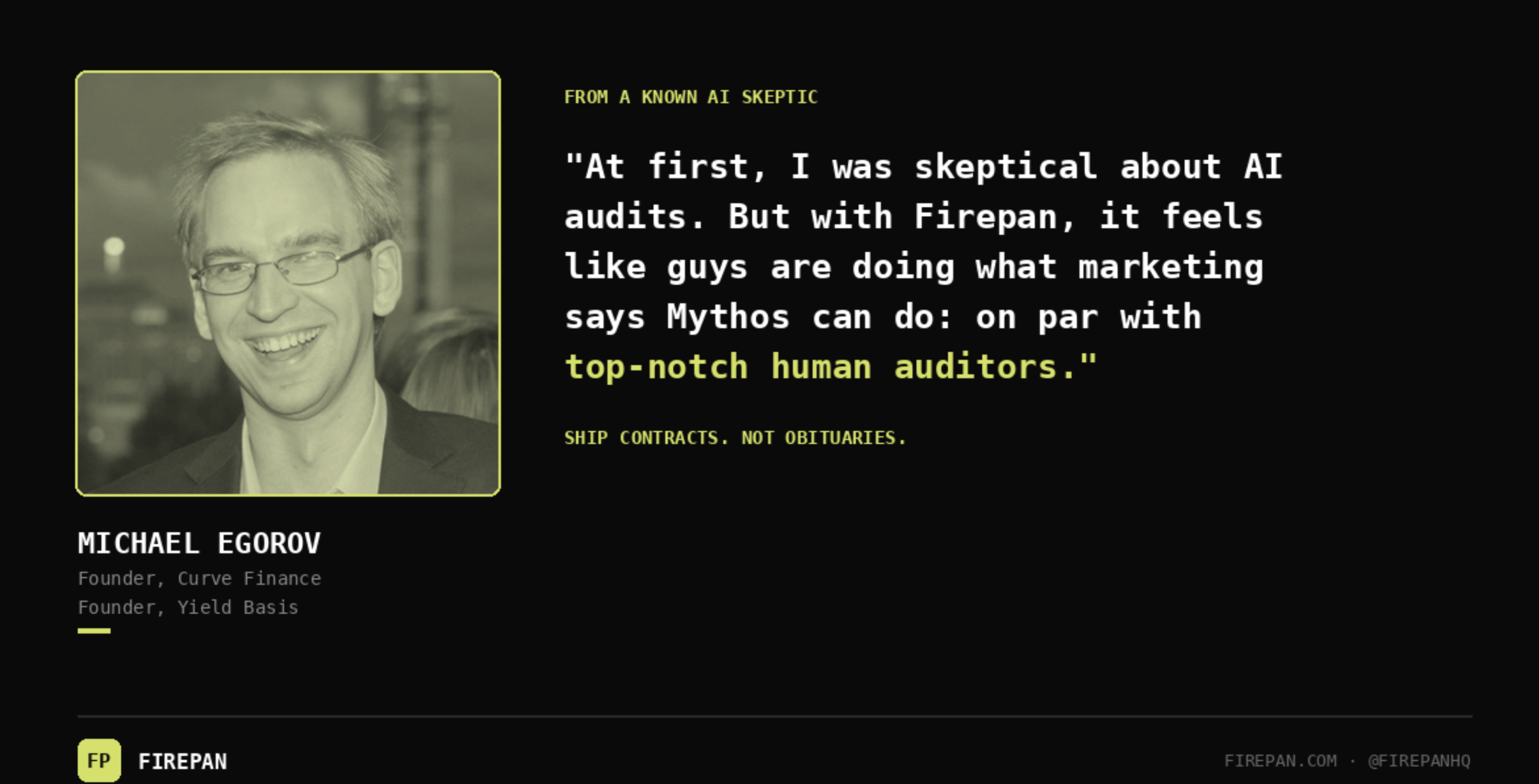 Yield Basis selected Firepan to perform an AI-powered security review of its live mainnet FeeDistributor contract, identifying 18 findings across 22 attack surfaces, including a previously undocumented MEV vector.2026-05
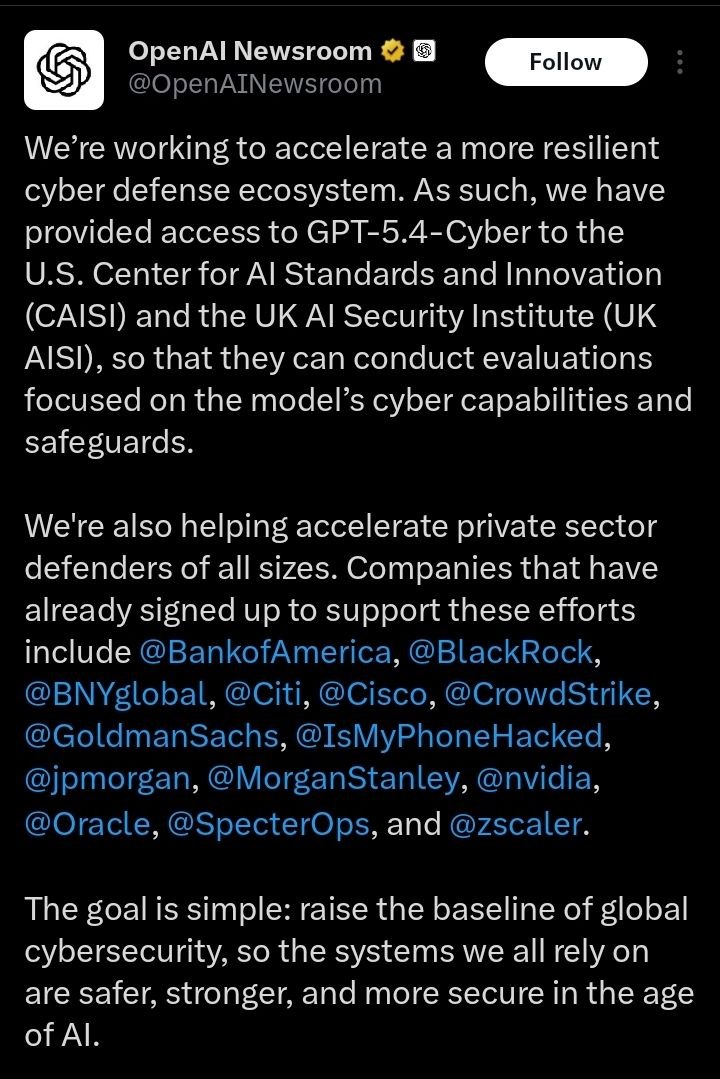 OpenAI expands cybersecurity push with GPT-5.4-Cyber access for US and UK agencies, partnering with banks and tech giants to strengthen global AI defense systems2026-04
 Anthropic’s Claude Mythos flags 271 Firefox vulnerabilities, showcasing elite AI-driven cybersecurity power while raising fears of automated exploits2026-04
 NVIDIA CEO Jensen Huang says China already has the compute capacity to train Claude Mythos-level AI, raising cybersecurity concerns2026-04
 DeFi Education Fund, SEAL and Asymmetric Research launch OPSeC coalition to boost crypto cybersecurity, educate lawmakers and strengthen protocol defenses2026-06
 Anthropic Mythos leaked via unsecured cache before announcement — company says it poses unprecedented cybersecurity risks2026-03
Cybersecurity for Crypto: An Evergreen Guide to Defending Digital Assets
Securing digital assets means protecting the code, keys, infrastructure, and people that power blockchains, wallets, and exchanges from compromise, theft, and disruption. In practice, cybersecurity for crypto spans everything from password hygiene and hardware wallets to AI-driven threat detection and systemic risk governance that now involve Anthropic, OpenAI, regulators, and even geopolitical actors.
As crypto blends into mainstream finance, the security stakes have grown from individual wallet hacks to potential shocks to the broader financial system. Sophisticated attackers target centralized exchanges, cross‑chain bridges, DeFi protocols, and users’ devices, often using the same AI advances that defenders rely on. Models like Anthropic’s Claude Mythos Preview have demonstrated an ability to autonomously find large numbers of software vulnerabilities, while IMF analysis warns that AI‑enabled cyber incidents could trigger liquidity strains and market disruption across interconnected institutions. At the same time, initiatives such as CISA’s Secure by Design program, the U.S. Treasury’s new threat‑intelligence channel for digital asset firms, and Solana’s STRIDE ecosystem security initiative illustrate a move toward shared defenses and rigorous, continuous monitoring. This guide situates crypto cybersecurity within that evolving landscape, explains the major risks and attack surfaces, explores how AI is reshaping both offense and defense, and outlines practical approaches for users, builders, and institutions seeking to secure digital assets over the long term.
Crypto’s Security Problem: Irreversibility Meets Hyper‑Connectivity
The high stakes of digital asset security
Unlike traditional financial systems, most public blockchains do not support reversals, chargebacks, or discretionary “undo” buttons once a transaction is finalized. This design provides censorship resistance and predictable settlement but also turns every successful compromise into a permanent loss. When an attacker drains a DeFi pool or sweeps a compromised wallet, recovery typically depends on voluntary restitution or protocol‑level social consensus rather than a central authority. That structural irreversibility means crypto’s cybersecurity failures are unusually visible, often quantified in the exact number of tokens that left a contract address or bridge.
The industry’s composability and 24/7 liquidity amplify these stakes. High‑value contracts, from lending markets to liquid staking protocols, are permissionless Lego bricks that route and re‑route capital in real time. A single flawed contract can become the conduit for cascading liquidations and MEV‑driven arbitrage, spreading loss far beyond the original exploit. Cross‑chain bridges have proved especially fragile: according to Chainlink, bridge hacks have accounted for more than 2.8 billion dollars in losses, nearly 40% of all value hacked in Web3 to date. These incidents often occur in minutes, exploiting a single bug or misconfiguration in systems that secure billions in aggregate value.
User‑level risk is equally unforgiving. Phishing, malware, and social engineering exploits routinely target the private keys that control wallets, whether held by individuals or by staff at centralized exchanges and custodians. Cold wallets, which keep private keys offline, are widely recognized as the gold standard for security, yet they introduce new operational risks around backup, recovery, and inheritance that require disciplined processes. At the same time, counterfeit hardware devices and compromised supply chains have emerged as attack vectors, with security researchers recently flagging fake versions of popular hardware wallets sold through third‑party marketplaces. These threats underline that in crypto, security failures often stem as much from human and organizational weaknesses as from pure software flaws.
Crypto and the broader financial system
As tokenization and institutional adoption accelerate, crypto cybersecurity is no longer just a niche technical concern; it is increasingly a financial stability issue. The International Monetary Fund has warned that advanced AI models dramatically reduce the time and cost needed to identify and exploit vulnerabilities, raising the likelihood of correlated failures across widely used systems. In a financial architecture built on common software stacks and shared service providers, simultaneous cyber incidents at multiple institutions could disrupt payments, trading, and credit intermediation, with knock‑on effects for confidence and liquidity. The IMF’s analysis explicitly frames cyber risk—intensified by AI—as a potential macro‑financial shock rather than a purely operational hazard.
Crypto now sits inside that interconnected landscape. Tokenized deposits, stablecoins, and on‑chain repo markets increasingly bridge traditional institutions and public networks, while major custodians, exchanges, and DeFi protocols handle flows that rival mid‑sized banks. Industry surveys indicate that over a third of institutional decision‑makers rank cybersecurity and data protection as the decisive factor when choosing a distributed ledger solution, especially where networks secure tens of billions of dollars in tokenized assets for hundreds of enterprise users. That mindset is visible in ecosystems like Cosmos, where shipping a new release into a network that anchors more than 150 businesses and upwards of 50 billion dollars in on‑chain value is treated less like a routine software update and more like a regulated financial upgrade, with exhaustive testing and staged rollout.
Ratings agencies have started to incorporate these dynamics into their risk assessments. S&P Global has identified crypto, quantum computing, and AI as the new frontier of cyber risk, emphasizing that AI both mass‑produces traditional attack types and enables novel forms of exploitation. Crypto’s role is twofold: blockchains are both targets—through protocol and wallet hacks—and enablers, by providing high‑velocity rails for laundering ransomware payments or monetizing stolen credentials. When large centralized exchanges disclose cyber incidents in regulatory filings, or when major stablecoin issuers investigate wallet compromises at service providers, they are no longer isolated technical problems; they are inputs into credit analysis, regulatory scrutiny, and macro risk monitoring.

OpenAI expands cybersecurity push with GPT-5.4-Cyber access for US and UK agencies, partnering with banks and tech giants to strengthen global AI defense systems
Understanding Cybersecurity in the Crypto Stack
What “cybersecurity” means in a crypto context
At its core, cybersecurity is the discipline of safeguarding the confidentiality, integrity, and availability of information systems. In crypto, those three pillars extend in specific, sometimes unusual directions. Confidentiality concerns primarily revolve around private keys, seed phrases, and sensitive operational data such as signing policies or internal risk thresholds. Integrity not only covers software correctness and data accuracy, but also the correctness of state transitions on a blockchain—whether a ledger truly reflects the valid execution of transactions and smart contracts. Availability includes the uptime of exchanges, nodes, and RPC providers, but also the liveness of consensus itself, since prolonged network halts can undermine the economic value and safety properties of a chain.
Crypto also introduces new primitives that change the way cybersecurity is practiced. Smart contracts encode immutable rules that enforce economic logic without human discretion; they concentrate enormous value into publicly visible code that anyone can analyze and attack. Tokens and NFTs make it trivial to move value across borders and pseudonymous accounts, which complicates both incident response and law enforcement. Multi‑party computation (MPC) wallets and threshold signatures distribute key material across devices or organizations, reducing single‑point‑of‑failure risk but adding complex cryptographic and operational layers. A robust security posture must therefore span traditional IT controls, secure engineering of cryptographic protocols, adversarial modeling of incentive structures, and human‑centric processes such as access governance and incident playbooks.
Another distinguishing feature is the visibility of failure. Smart contract exploits, bridge hacks, and governance takeovers are typically forensic‑ally transparent because the transactions are recorded on public ledgers. Post‑incident analyses can often reconstruct an entire exploit path in detail, from the initial vulnerability to the precise profit extracted by the attacker. This transparency has a paradoxical effect: while it aids learning and accountability, it also provides rich data for copycat attacks and MEV‑style strategies that optimize around known weaknesses. In response, security‑minded projects increasingly invest in pre‑deployment formal verification, continuous on‑chain monitoring, and staged rollouts with circuit breakers to mitigate damage when something goes wrong.
Layers of the crypto attack surface
To understand how cybersecurity threats map onto crypto, it helps to think in terms of layered attack surfaces. At the bottom sit the physical and operating system layers: compromised devices, outdated browsers, or vulnerable mobile operating systems can expose keys even if wallets and smart contracts are perfectly designed. Recent work with frontier AI models has shown that systems like Claude Mythos can autonomously discover high‑severity vulnerabilities in every major operating system and web browser, sometimes finding thousands of issues that had not yet been patched. If such capabilities become widely accessible to attackers, the foundational layers on which most users run wallets and node software could face an unprecedented wave of zero‑day exploitation.
Above that sit wallets and key management systems. Hot wallets, which keep private keys online or connected, prioritize convenience and alignment with DeFi activity, but they are exposed to malware, phishing, and browser‑based exploits. Cold wallets, defined as storage solutions that keep private keys completely offline and air‑gapped from the internet, significantly reduce exposure to remote attacks and are widely regarded as the gold standard for long‑term storage. Hardware wallets, paper wallets, and certain forms of offline signing with dedicated devices fall into this category. However, if users mishandle seed phrases, fail to test recovery processes, or purchase tampered devices from unofficial channels, the security benefits of cold storage can be undermined.
Smart contracts and protocol logic constitute another major layer. Vulnerabilities in lending protocols, automated market makers, governance modules, and oracle integrations have led to repeated losses, often through complex sequences of flash loans, re‑entrancy, price manipulation, and faulty access controls. The cross‑chain layer adds further complexity: Chainlink estimates that bridge hacks alone represent almost 40% of all value hacked in Web3, underscoring how message‑passing, validator sets, and light‑client verification create fertile ground for subtle, catastrophic bugs. A bridge that incorrectly verifies messages or relies on a small, poorly secured validator set can become a single point of failure connecting two otherwise secure chains.
Finally, centralized infrastructure—exchanges, custodians, API providers, and cloud services—remains a critical part of the stack, even in a “decentralized” industry. Centralized exchanges have long been prime targets for attackers because compromising internal systems or employee credentials can grant access to hot wallets securing billions in customer assets. Vendor risk is equally salient: a compromise at a SaaS provider handling customer support data or analytics can leak email addresses, device fingerprints, or partial KYC data that attackers can weaponize for targeted phishing. Crypto companies therefore need layered defenses not only on‑chain and in their smart contracts, but also across the traditional enterprise IT and cloud landscape.
Wallets, keys, and custody models
Wallet and key management design choices shape much of the practical cybersecurity story in crypto. Non‑custodial or self‑custody wallets give users direct control over their keys and, by extension, their funds. In these models, users are responsible for generating, storing, and backing up seed phrases or private keys, often with the help of hardware devices. Cobo’s comprehensive guide to cold wallets defines them as fully offline, non‑custodial solutions that create an air gap between private keys and the internet, thereby maximizing security against remote attacks. Robust operational practices for such setups include purchasing hardware only from official sources with tamper‑evident packaging, initializing devices with strong PIN codes, and recording seed phrases exclusively in physical form—preferably engraved on metal plates that resist fire and water damage.
Rango’s analysis of DeFi wallets emphasizes that in practice, users choose wallets based on a three‑way trade‑off between supported chains, security design, and daily usability. For active DeFi participants, features such as clear transaction previews, high‑quality scam and phishing warnings, multi‑chain support, and integration with hardware or MPC signing often determine whether security features are actually used. A common best practice is to test a new wallet or configuration with a small transaction first, carefully inspect the transaction preview, and verify how clearly fees and contract interactions are rendered before entrusting significant funds. That process not only surfaces UI flaws and potential misconfigurations, but also trains users to interpret blockchain transactions more critically.
On the custodial side, exchanges and institutional custodians aggregate keys in professionally managed environments, often using a mix of hot, warm, and cold storage backed by MPC, hardware security modules, and layered approvals. This model can deliver strong security if well‑implemented, but it also concentrates risk: a successful breach can impact millions of users. Regulatory regimes are increasingly demanding clear segregation of client assets, rigorous incident response planning, and independent audits of custody controls. Where custodians offer staking or DeFi integration, the boundary between custodial and protocol‑level risk blurs, and security responsibilities must be clearly delineated. In either model—custodial or self‑custodial—users and institutions must plan for disaster recovery, including lost devices, forgotten passphrases, and succession in the event of death or incapacitation.
Counterfeit devices further complicate the picture. Security researchers have identified fake hardware wallets and tampered devices sold on secondary markets that can leak or pre‑seed keys for attackers. In a world where crypto assets can represent life savings or corporate treasuries, verifying supply‑chain integrity becomes non‑negotiable. That means buying devices only from trusted vendors, checking packaging and firmware authenticity, and, for larger holders, periodic security audits that include hardware verification. Combined with robust operational security—such as geographically distributed backups and periodic recovery drills—these measures form the foundation of key‑level cybersecurity for crypto participants.
DeFi, bridges, and protocol‑level risk
Decentralized finance introduces its own category of cybersecurity challenges. Every DeFi protocol is a software system holding real value, governed by code that is often immutable or upgradeable only through complex governance processes. Bugs in core logic, misconfigured parameters, or flawed governance mechanisms can open the door to draining collateral, manipulating markets, or seizing administrative control. Because DeFi protocols are permissionless, attackers do not need privileged access; they simply need to craft transactions that exploit the code’s edge cases, often leveraging flash loans to orchestrate large‑scale attacks with minimal upfront capital.
Cross‑chain bridges exemplify the systemic risk of protocol‑level vulnerabilities. As Chainlink has documented, bridges have been repeatedly targeted and successfully exploited, with cumulative losses exceeding 2.8 billion dollars and representing almost 40% of the total value hacked in Web3. Many of these incidents involve flaws in how bridges validate messages from source chains, the security of their validator sets, or their assumptions about underlying consensus and finality. A single logic error in message verification or key management can allow an attacker to mint unbacked assets on a destination chain or drain reserves, effectively printing money out of thin air. Because bridges often sit at the intersection of multiple chains and protocols, exploits can ripple across ecosystems and undermine confidence in otherwise secure networks.
Ecosystems are starting to respond with coordinated security programs. The Solana Foundation’s STRIDE initiative, for example, funds a comprehensive security program for Solana DeFi, including hands‑on evaluation of protocols, a public repository of findings, a 24/7 active threat monitoring center for protocols above a 10 million dollar TVL threshold, and formal verification efforts for top protocols securing more than 100 million dollars. STRIDE is complemented by SIRN, a dedicated network of security firms that can mobilize for real‑time crisis response. This combination of proactive assessment, continuous monitoring, and emergency response infrastructure reflects a growing recognition that protocol‑level cybersecurity is an ecosystem‑wide responsibility rather than a project‑specific afterthought.
Readers aren't clicking on breach mechanics — they're clicking on the identity of the attacker: when AI models, North Korean operatives, or state-backed hackers are the named threat, clicks spike; generic 'smart contract risk' stories flatline.
AI, Anthropic, OpenAI, and the New Cyber Frontier
How AI is reshaping attack and defense
Artificial intelligence has become one of the most important forces reshaping cybersecurity, and crypto is both beneficiary and potential victim of this shift. On the defensive side, AI systems excel at pattern recognition across large volumes of log data, network flows, and code repositories. Firms like Fortinet highlight how machine learning enables organizations to detect various types of attacks in real time, prioritize risks more efficiently, and automate parts of incident response. In the context of crypto, this means using AI to flag anomalous wallet behavior, identify suspicious transaction patterns on‑chain, detect contract interactions that resemble known exploits, and assist auditors in spotting logic flaws in smart contracts before they are deployed.
On the offensive side, those same capabilities lower the barrier to sophisticated cybercrime. S&P Global notes that AI has increased the risk of cyber‑attacks by enabling the mass production of traditional attacks—such as phishing, credential stuffing, and basic malware—while also introducing new types of threats. Generative models can craft convincing spear‑phishing emails, deepfake voice messages, or fake support chat interactions at scale, all of which are popular techniques against crypto users and employees with signing authority. More advanced models can analyze source code or binaries to identify exploitable vulnerabilities, generate exploit code, and adapt payloads on the fly to evade detection. As AI accelerates the tempo of offense and defense alike, the net effect on overall risk depends heavily on how responsibly powerful models are deployed and governed.
Financial authorities are keenly aware of this dynamic. The IMF emphasizes that advanced AI models can drastically reduce the time and cost required to identify and exploit vulnerabilities, raising the probability of simultaneous attacks on widely used systems. In a world where financial institutions—including those with crypto exposure—share cloud providers, software stacks, and critical vendors, AI‑enabled attackers could orchestrate correlated incidents that overwhelm defenses and disrupt core functions like payments, clearing, and liquidity provision. Crypto markets, which already exhibit high sensitivity to technological shocks, could amplify such disruptions through rapid repricing, liquidations, and cross‑margin effects.
Claude Mythos and the debate over frontier cyber capabilities
Anthropic’s Claude Mythos Preview has become the emblem of this new frontier, both for its promise and its risks. A leaked document and subsequent reporting revealed that Anthropic’s internal testing suggested Mythos was “far ahead of any other AI model in cyber capabilities,” capable of finding thousands of high‑severity vulnerabilities across widely used software stacks, including every major operating system and web browser. The company reportedly concluded that Mythos poses significant cybersecurity risks: internal drafts described it as presaging an upcoming wave of models that can exploit vulnerabilities in ways that outpace defenders, and a separate evaluation by the AI Safety Institute found that the model could autonomously execute multi‑stage attacks on vulnerable networks. Perhaps most alarming, Anthropic indicated that roughly 99% of the vulnerabilities Mythos had identified remained unpatched at the time of disclosure.
These revelations prompted Anthropic to limit the model’s availability to a controlled set of partners rather than releasing it broadly, and they triggered intense debate among security experts and policymakers. The IMF cited Mythos as an example of how rapidly AI‑driven cyber risk is escalating and argued that authorities must focus not only on technical controls but also on resilience, supervision, and international coordination. In parallel, market observers noted that Nvidia’s CEO Jensen Huang publicly warned that China already has sufficient compute and data center capacity to train models with capabilities comparable to Mythos, raising concerns about a global race to develop frontier cyber tools. In such a race, the line between legitimate vulnerability research and offensive capability development could become blurry, especially if state‑aligned actors view cyber capabilities as strategic assets.
At the same time, some researchers urge caution against sensationalism. Computer scientist Cal Newport points out that AI systems capable of identifying vulnerabilities in code have existed for several years, and that Mythos’s reported benchmark score—83.1% on a well‑known cybersecurity test, compared with 66.6% for Claude Opus 4.6—indicates a substantial but not necessarily catastrophic advance. Early independent tests have suggested that Mythos may in part be a tuned version of previous models, optimized for specific benchmarks rather than representing a wholly new kind of capability. From this perspective, Mythos should be understood as accelerating existing trends rather than fundamentally changing the nature of cyber risk. Yet even incremental improvements can matter greatly in practice, particularly when they compound over multiple model generations and when they intersect with highly sensitive domains such as financial infrastructure and crypto.
For the crypto ecosystem, the implications are direct. A model that can autonomously scan and exploit vulnerabilities across major operating systems, browsers, and server software threatens the endpoints and infrastructure on which wallets, nodes, and custodial systems depend. If similar models begin to specialize in smart contract languages, consensus client code, or popular DeFi frameworks, the window between vulnerability discovery and exploitation could shrink dramatically, pressuring projects to adopt continuous auditing, automatic fuzzing, and rapid patch pipelines. The fact that Anthropic itself has reportedly flagged Opus 4.7 and future models as raising new cybersecurity concerns underscores that this is not a one‑off episode but the beginning of a sustained escalation of capability and risk.
OpenAI’s Daybreak, GPT‑5.4‑Cyber, and “trusted access”
OpenAI has taken a somewhat different approach, embedding its cyber‑oriented capabilities within a framework of “trusted access.” Its Daybreak initiative packages GPT‑5.5 with a Codex Security toolset to help defenders identify threats, generate patches, and verify remediation across code and systems. The product is explicitly positioned as a defensive platform: marketing materials highlight its ability to scan for vulnerabilities, prioritize remediation, and assist security teams in understanding complex attack paths. For crypto organizations, integrating such a platform could mean automating reviews of smart contract repositories, identifying insecure wallet‑integration patterns, or generating patches for web services that interface with blockchain infrastructure.
To manage dual‑use concerns, OpenAI has created a Trusted Access for Cyber (TAC) program that gatekeeps its most capable cyber models. Individual practitioners and enterprises can undergo identity verification and additional vetting to access versions of GPT models with reduced safeguards for legitimate cybersecurity work. At the highest tier, vetted defenders can obtain access to GPT‑5.4‑Cyber, a model fine‑tuned for cyber tasks, including advanced capabilities such as binary reverse engineering of compiled software to detect malware, vulnerabilities, and robustness issues without source code. The company emphasizes that TAC participants must authenticate as genuine cyber defenders and work under usage policies designed to minimize abuse.
This “trusted access” model parallels Anthropic’s decision to keep Mythos private while collaborating with selected partners, and it reflects a broader industry consensus that unconstrained public access to frontier cyber capabilities would be irresponsible. For crypto, such arrangements could be a double‑edged sword. On one hand, exchanges, custodians, and major protocols stand to benefit from AI tools that can rapidly audit large codebases, continuously monitor infrastructure, and help teams triage incidents. On the other hand, smaller projects and independent researchers may find themselves unable to access the best tools if vetting processes favor large institutions or regulators. Balancing openness, security research, and abuse prevention will be an ongoing challenge as OpenAI, Anthropic, and others push their cyber‑specialized models forward.
Agentic AI and new attack surfaces
Beyond static models, the emergence of “agentic” AI—systems that autonomously chain tasks, call tools, and operate persistently—introduces a qualitatively new attack surface. Aembit’s analysis of agentic AI in security contexts highlights several risks: autonomy without clear boundaries, exposure of sensitive tool chains and API keys, fluid identity and attribution gaps, and the potential for cascading compromises across multi‑agent workflows. When AI agents can read documentation, call APIs, execute code, and interact with production systems, a successful prompt injection, supply‑chain compromise, or misconfiguration can cause the agent itself to act as an unwitting attacker.
To address these risks, Aembit and others advocate embedding security controls into agent architectures from day one rather than bolting them on after deployment. This includes assigning each agent only the minimum permissions needed for its tasks, replacing static API keys and long‑lived credentials with short‑lived, cryptographically bound credentials issued at the moment of use, and implementing “secretless” authentication so agents never directly handle sensitive keys. Establishing behavioral baselines for agents—covering typical API call patterns, data access volumes, and tool usage sequences—allows anomalies to be detected quickly, while network segmentation and default‑deny configurations can prevent a compromised agent from moving laterally. NIST’s AI Risk Management Framework provides a broader governance lens for mapping, measuring, and managing such risks, emphasizing the need for human oversight over high‑risk operations.
For crypto teams, agentic AI is both an opportunity and a hazard. Some firms are rolling out fleets of AI agents to handle smart contract analysis, compliance checks, user support, and even treasury operations, mirroring launches like io.intelligence’s release of dozens of specialized AI agents. Others are experimenting with fully autonomous trading strategies or liquidity management systems that have authority to move funds on‑chain. Without careful permissioning, audit logging, and human approval gates for sensitive actions—such as large transfers, contract upgrades, or key rotations—these agents could become high‑value targets. In ecosystems where AI agents are increasingly integrated with DeFi protocols, exchanges, and wallet infrastructure, a single compromised agent could trigger on‑chain events at machine speed, leaving little time for manual intervention.
Anthropic’s Claude Mythos flags 271 Firefox vulnerabilities, showcasing elite AI-driven cybersecurity power while raising fears of automated exploits
Institutions, Regulation, and Systemic Risk
CISA, Treasury, and the role of public authorities
Public‑sector cyber agencies play an important, if often underappreciated, role in crypto security. The U.S. Cybersecurity and Infrastructure Security Agency (CISA) has championed a “Secure by Design” philosophy, working with more than 250 software manufacturers to improve cybersecurity hygiene and reduce systemic vulnerabilities. CISA has also launched a Cyber Incident Reporting Portal to streamline how organizations share information about breaches and attacks, enabling faster, more coordinated responses. These initiatives aim to shift responsibility upstream, encouraging vendors to ship safer defaults and more robust architectures rather than placing the burden entirely on end users and downstream operators.
Yet the institutional capacity required to sustain such programs is not guaranteed. Recent reporting has described major staff and budget cuts at CISA under the Trump administration, with plans to eliminate up to 1,300 jobs through terminations and buyouts. National security experts and lawmakers have criticized these cuts as weakening U.S. cybersecurity at a time of heightened nation‑state threats from China and Russia. Commentators argue that reductions of this magnitude make it difficult for CISA to protect federal networks and support critical infrastructure, including the financial sector. In the context of rising AI‑driven threats, sidelining CISA from central AI cybersecurity planning inside the White House risks leaving a gap between rapid technological development and the policy frameworks meant to manage systemic risk.
The U.S. Treasury has sought to bridge some of these gaps through targeted initiatives. Its Office of Cybersecurity and Critical Infrastructure Protection recently announced a program to share cyber threat intelligence with cryptocurrency and digital asset firms, providing them with the same actionable information long distributed to traditional financial institutions. Eligible U.S. digital asset firms and industry organizations that meet Treasury’s criteria can receive timely, detailed alerts about emerging threats, indicators of compromise, and adversary tactics, techniques, and procedures at no cost. For exchanges, custodians, and major stablecoin issuers, integrating this intelligence into security operations centers can significantly enhance detection, response, and preventative controls.
At the international level, the IMF’s call for stronger coordination, more information sharing, and capacity development reflects a recognition that cyber risk does not respect borders. Emerging and developing economies, which may host critical infrastructure but lack resources for advanced cyber defenses, are particularly exposed. Crypto’s global footprint means that a vulnerability in one jurisdiction can be exploited from another and can impact users everywhere. Aligning regulatory expectations, incident reporting standards, and cross‑border enforcement will be essential to managing the systemic dimension of AI‑enabled cyber threats in both traditional and crypto finance.
Ecosystem‑level initiatives: Solana, DeFi, and beyond
Within the crypto industry, ecosystem‑level security initiatives are emerging as a complement to public‑sector efforts. Solana’s STRIDE program, developed in partnership with Asymmetric Research, exemplifies this trend. STRIDE offers structured, hands‑on evaluation of Solana DeFi protocols, creating a public repository of security findings that can inform both users and developers. It also funds a 24/7 active threat monitoring center for protocols whose total value locked exceeds 10 million dollars, ensuring continuous oversight of high‑impact systems. For the largest protocols, those securing more than 100 million dollars, STRIDE supports formal verification to mathematically prove critical properties of smart contracts.
These measures are backed by SIRN, a dedicated network of security firms tasked with real‑time crisis response across the Solana ecosystem. When a vulnerability is discovered or an exploit begins, SIRN can coordinate triage, disseminate information, and assist affected teams in containing damage. Such ecosystem‑level structures recognize that in practice, security failures in one major protocol can erode trust across an entire chain and even spill over into interconnected ecosystems via bridges and shared liquidity pools. By institutionalizing continuous monitoring, shared intelligence, and rapid response, STRIDE and similar efforts aim to raise the baseline security posture of entire networks.
Other chains and consortia are exploring comparable models, often in response to concrete incidents. When large DeFi hacks or bridge exploits occur, industry groups and foundations are increasingly convening post‑mortems that go beyond individual teams to examine systemic patterns: insufficient audits, over‑reliance on unauthenticated off‑chain data, under‑secured admin keys, or insecure governance frameworks. Some consortia have begun funding shared tools for formal verification, open vulnerability databases, and educational resources for developers. As institutional capital flows into on‑chain instruments, these initiatives are aligning more closely with standards from traditional finance, such as regular penetration tests, redundancy exercises, and stress testing akin to the cyber stress testing frameworks recommended by the IMF.
Geopolitics, China, and the compute race
Cybersecurity in the age of AI and crypto is inseparable from geopolitics. Nvidia CEO Jensen Huang’s statement that China already possesses the compute and data center capacity to train AI models on par with Anthropic’s Claude Mythos underscores the global nature of the AI arms race. In an environment where frontier AI models can autonomously discover and exploit vulnerabilities at scale, the ability to train and control such models becomes a strategic asset. Nations with large compute resources and advanced research ecosystems may gain disproportionate offensive and defensive cyber capabilities, affecting not only military and intelligence domains but also financial stability and the integrity of digital asset markets.
The IMF cautions that uneven oversight and regulatory fragmentation across countries could weaken the resilience of the global financial system. If some jurisdictions allow or even encourage the development and deployment of powerful AI cyber tools without robust safeguards, attackers may exploit these tools to target regions with weaker defenses, including emerging markets and smaller crypto ecosystems. Conversely, heavy‑handed restrictions in some countries could push development underground or offshore, reducing transparency and international cooperation. The challenge for policymakers is to develop frameworks that encourage responsible innovation, share best practices and threat intelligence, and coordinate responses to cross‑border incidents without stifling beneficial research.
For crypto, which often positions itself as jurisdiction‑agnostic and censorship‑resistant, these dynamics pose hard questions. How should decentralized communities respond if state‑aligned actors deploy AI‑enhanced attacks against core infrastructure? What governance mechanisms exist to harden protocols against nation‑state‑level threats, and who bears responsibility for making and funding such investments? The answers will likely involve a mix of public‑private partnerships, ecosystem security programs, and evolving norms around disclosure and patching, but the underlying point is clear: crypto cybersecurity is now entangled with national security, industrial policy, and global competition in AI.
- 01AI as dual-use exploit engine↗
Claude Mythos finding 271 Firefox vulnerabilities while simultaneously being flagged as an unprecedented cybersecurity risk crystallized the dual-use paradox — the same model that audits contracts could automate attacks at scale.
- 02North Korea inside blockchain firms
The CoinDesk investigation naming over a dozen infiltrated blockchain companies turned an abstract nation-state threat into a specific, accountability-framed story with real legal exposure for those firms.
- 03AI-native security platforms emerging↗
Microsoft Security Copilot, OpenAI's GPT-5.4-Cyber government rollout, and Groom Lake's Reaper reconnaissance platform signaled to readers that the security tooling market is being rebuilt around AI agents, not traditional SIEMs.
- 04Smart contract audit methodology gaps
Firepan's Yield Basis audit surfacing a previously undocumented MEV vector across 22 attack surfaces — on a live mainnet contract — revealed that even professional audits are still discovering new attack classes in production.
- 05Scale of 2025 crypto breach losses
A 37% year-over-year rise to $3.35B stolen across 630+ breaches reframed the annual loss figure from a statistic into an indictment, amplified by the '$3.8B problem nobody talks about' framing.
- 06US government cybersecurity retreat↗
CISA gutted by staff cuts, one-third of the US cyber force gone, and the administration sidelining AI security planning gave readers a concrete failure-of-institutions narrative at the moment AI threats are accelerating.
Practicing Cyber Resilience: Users, Builders, and Organizations
Security hygiene: people, passwords, and phishing
Many of the most damaging crypto incidents begin not with a novel zero‑day exploit but with a simple human error: a reused password, a successful phishing email, or a mis‑clicked transaction approval. Security firm XM Cyber emphasizes that strong password management remains a foundational control; passwords should be unique across accounts and sufficiently complex to resist brute‑force attacks, yet the cognitive burden of managing dozens of strong passwords is unrealistic for most people without assistance. Password managers offer a practical solution, automatically generating and storing complex passwords within encrypted vaults and synchronizing them across devices. When coupled with multi‑factor authentication, they significantly harden user accounts against common attacks.
Multi‑factor authentication (MFA) is particularly important for accounts that control access to wallets, exchanges, and critical internal systems. XM Cyber recommends using app‑based authenticators rather than SMS‑based codes, since SMS channels are vulnerable to SIM‑swap attacks and other forms of interception. Time‑based one‑time password (TOTP) apps or hardware tokens provide a stronger second factor, ensuring that even if a password is compromised, an attacker still needs access to a physical device. For crypto firms, enforcing MFA across administrative accounts, cloud consoles, code repositories, and back‑office systems is now considered baseline hygiene rather than a nice‑to‑have.
Privilege management is another crucial element. Over time, administrative privileges tend to “bloat” as employees change roles, projects come and go, and temporary access is never revoked. XM Cyber advises regularly pruning admin rights and streamlining privileges so that only those who truly need elevated access retain it. In a crypto context, this principle translates directly to smart contract admin keys, deployer addresses, and governance roles. If a contract upgrade key, treasury signer, or governance multisig has more power than necessary, or if former contributors retain privileges, attackers have more potential vectors to target. Minimizing and reviewing high‑privilege roles reduces both accidental errors and the impact of compromised accounts.
Social engineering remains a persistent threat, particularly around culturally salient moments. Security commentators have highlighted the risks of corporate April Fools’ Day pranks as an example: fake announcements, joke product launches, and spoofed communications can blur the line between legitimate and malicious messages. Attackers can piggyback on the confusion, sending phishing emails disguised as internal jokes or promotional campaigns. Shakespeare’s warning that “a fool thinks himself to be wise, while a wise man knows himself to be a fool” is sometimes invoked in this context as a reminder against complacency. For crypto teams and communities, cultivating a culture of healthy skepticism—verifying unusual requests, using out‑of‑band channels to confirm sensitive actions, and treating unsolicited wallet‑connection prompts as suspect—can be more effective than any single technical control.
Wallet and key security in practice
For individual users and many institutions, the practical heart of crypto cybersecurity lies in wallet and key management practices. Cobo’s cold wallet guide frames cold storage as a non‑custodial arrangement in which private keys remain entirely offline, dramatically reducing exposure to remote attacks. Implementing cold storage securely begins with sourcing hardware devices directly from manufacturers or authorized distributors, ensuring tamper‑evident packaging and firmware authenticity checks. Once a device is obtained, users should initialize it with a strong PIN or passcode, generate seed phrases on the device itself, and record those seed phrases exclusively on physical media rather than taking digital photos or storing them in cloud services.
The handling of seed phrases warrants particular attention. Storing them on paper is common but vulnerable to fire, water, and physical degradation. Many security‑conscious users therefore engrave or stamp seed phrases onto metal plates designed to withstand environmental hazards, sometimes supplemented with passphrases under the BIP39 standard to add an extra layer of encryption. Best practices also include geographically distributing backups across multiple secure locations, such as safes or safety deposit boxes, so that a single physical incident cannot destroy all copies. Crucially, users and organizations should periodically test their recovery process with small amounts of funds, ensuring that they can reconstruct wallets from backups before entrusting large holdings to a given setup.
DeFi‑oriented wallets add another dimension: they must balance security against the need for frequent on‑chain interaction. Rango’s evaluation of top DeFi wallets in 2025 notes that users typically prioritize supported chains, security design, and daily usability. A wallet that supports all relevant networks but presents confusing transaction previews can be more dangerous than one with limited coverage but clear, detailed interfaces. High‑quality wallets strive to display contract calls in human‑readable terms, warn users about suspicious domains or known phishing addresses, and integrate smoothly with hardware or MPC signing backends. For power users, features such as address whitelisting, spending limits, and account abstraction‑based safeguards can mitigate the damage from a compromised device or mistaken approval.
The risk of counterfeit or tampered hardware wallets underscores the importance of end‑to‑end vigilance. Researchers have documented fake devices with modified firmware that leak seed phrases or embed pre‑generated keys known to attackers. In response, some manufacturers now provide verification tools that allow users to confirm device authenticity and firmware integrity before use. For larger holders and institutions, periodic penetration tests and red‑team exercises that include hardware validation, supply‑chain risk assessment, and insider‑threat modeling are increasingly common. In all these practices, the goal is the same: ensuring that the cryptographic keys controlling digital assets are generated, stored, used, and backed up in ways that minimize both remote and physical attack vectors.
Securing DeFi, bridges, and smart contracts
For developers and protocol teams, cybersecurity revolves around designing, testing, and operating smart contracts and associated infrastructure in the face of determined adversaries. The track record of DeFi hacks demonstrates that even well‑audited contracts can harbor subtle vulnerabilities, particularly when composed with other protocols in novel ways. Flash loan‑enabled attacks, in which attackers borrow large amounts of capital to manipulate prices, execute complex transactions, and repay the loan in a single block, have repeatedly exposed protocols that rely on fragile assumptions about oracle prices or liquidity conditions.
Cross‑chain bridges stand out as a persistent weak link. Chainlink’s survey of bridge attacks catalogues a range of vulnerabilities, from compromised validator keys and multisigs to flawed message‑verification logic and replay attacks across chains. Many bridges rely on a small set of validators or oracles to attest to events on a source chain, creating a trust bottleneck that attackers can target through social engineering, key theft, or by exploiting software vulnerabilities in validator infrastructure. Other designs implement light clients or zero‑knowledge proofs but may introduce complex cryptographic assumptions that are difficult to implement correctly. Given the magnitude of losses to date, many security experts argue that bridges should be treated as critical infrastructure, subject to stringent review, formal verification where possible, and layered defense mechanisms such as circuit breakers and rate limits.
AI‑assisted security reviews are becoming more common as a complement to traditional audits. In one recent example, a DeFi protocol engaged an AI‑powered security firm to review its live mainnet fee distribution contract, uncovering dozens of findings across multiple attack surfaces, including a previously undocumented MEV vector. This kind of AI‑augmented analysis can accelerate coverage of complex codebases and simulation of adversarial scenarios, but it does not eliminate the need for human expertise. Indeed, given the dual‑use nature of AI, the same techniques can be used by attackers to identify under‑documented edge cases or craft sophisticated exploit strategies. The challenge for DeFi teams is to integrate AI tools into a broader secure‑development lifecycle that includes code review, formal methods, real‑time monitoring, bug bounties, and responsive governance.
Organizational security for crypto companies
Crypto companies—exchanges, custodians, infrastructure providers, and protocol foundations—face many of the same enterprise cybersecurity challenges as traditional financial institutions, plus a few unique twists. They must secure cloud environments, corporate networks, and endpoints; manage access to production systems and sensitive data; and defend against phishing, ransomware, and supply‑chain attacks. At the same time, they operate wallets and signing systems that, if compromised, can lead directly to irreversible loss of customer funds. This combination makes disciplined governance and layered controls essential.
The IMF stresses that because defenses will inevitably be breached at some point, resilience must be a priority alongside prevention. For financial institutions, this means designing systems to limit the spread of incidents, ensuring rapid recovery, and maintaining continuity of critical functions even under severe stress. Crypto firms can adapt this guidance by segmenting hot, warm, and cold wallets; limiting automated transfer limits; maintaining offline recovery paths; and rehearsing disaster‑recovery scenarios. Board‑level oversight of cyber risk, regular scenario analysis, and cyber stress testing—modeled on traditional bank stress tests but focused on cyber incidents—are increasingly seen as indispensable components of a mature security program.
AI tools such as OpenAI’s Daybreak platform and GPT‑5.4‑Cyber are likely to become integral to these efforts. By integrating AI into security operations centers, crypto firms can automate triage of alerts, prioritize investigation of high‑risk anomalies, and generate draft incident reports and remediation plans more quickly. Defensive use of AI can also extend to code pipelines, where models help enforce secure coding patterns, identify dangerous dependencies, and verify that changes do not introduce known vulnerability classes. However, as Aembit’s work on agentic AI reminds us, organizations must treat AI systems themselves as privileged actors whose behavior needs monitoring, logging, and constraint by least‑privilege principles.
Organizational culture plays a decisive role. Security training should go beyond generic awareness to cover crypto‑specific scenarios: fake airdrops and wallet‑connection prompts, malicious browser extensions, social engineering targeting on‑chain governance signers, and the nuances of signing hardware usage. Clear escalation paths for suspected incidents, non‑punitive reporting norms, and tight collaboration between engineering, security, legal, and communications teams can dramatically improve response quality. When major exchanges disclose cyber incidents in regulatory filings and explain how they were contained, they not only meet compliance obligations but also contribute to industry learning about effective defenses.
Incident response, information sharing, and insurance
No matter how strong preventative controls are, incidents will occur. Effective cybersecurity therefore hinges on detection and response as much as on hardening. CISA’s Cyber Incident Reporting Portal is one example of how governments are trying to centralize information about breaches to facilitate faster learning and coordination. When organizations promptly report incidents, anonymized data about attack vectors, affected systems, and mitigation measures can inform others’ defenses and help law enforcement track threat actors. In crypto, on‑chain transparency adds another layer: public transaction data often reveals exploit patterns in real time, enabling community‑driven tracing and, in some cases, negotiated returns of stolen funds.
The U.S. Treasury’s threat intelligence initiative for digital asset firms adds a focused channel for sharing actionable information with crypto companies. By providing indicators of compromise, technical signatures of malware and phishing campaigns, and contextual analysis of adversary behavior, Treasury helps firms identify and block attacks more quickly. For example, if multiple banks and exchanges report similar phishing domains or malicious wallet addresses, threat intelligence feeds can propagate that information across participants, allowing them to update blocklists, customer warnings, and detection rules. Integrating such feeds with AI‑driven analytics in security operations centers can further enhance timeliness and accuracy.
Cyber insurance is another tool in the resilience toolkit, though its role in crypto remains contested. Some insurers have begun offering policies that cover certain types of cyber incidents, including hacks at custodial providers or business‑interruption losses from DDoS attacks. However, the difficulty of modeling crypto‑specific risks, the potential for correlated losses across multiple clients due to shared infrastructure or protocols, and the moral hazard of insuring highly complex systems all complicate underwriting. As AI‑driven threats evolve and regulators sharpen expectations around operational resilience, the cyber insurance market for crypto will likely continue to mature, incorporating more granular technical requirements and closer coordination with security assessments.
NVIDIA CEO Jensen Huang says China already has the compute capacity to train Claude Mythos-level AI, raising cybersecurity concerns
Long‑Term Frontier Risks: Quantum, AI, and Crypto Security
AI, systemic risk, and macro‑financial stability
The intersection of AI, crypto, and cybersecurity is not just a matter of individual hacks; it has macro‑financial implications. The IMF’s analysis of AI‑enabled cyber threats emphasizes how models like Claude Mythos illustrate the potential for correlated failures in systems built on shared software and infrastructure. When attackers can discover and exploit vulnerabilities at machine speed, the time window for patching shrinks, and the probability that multiple institutions will be hit before defenses can react rises. In such scenarios, cyber incidents cease to be idiosyncratic losses and instead become channels for systemic stress, triggering liquidity shortages, asset fire sales, and confidence shocks.
Crypto’s role in this picture is multifaceted. On one hand, tokenized assets and DeFi protocols are increasingly integrated into the financial system, serving as collateral, payment rails, or yield‑generating instruments for institutional players. A large‑scale exploit of a widely used stablecoin protocol, liquid staking system, or cross‑chain bridge could therefore have knock‑on effects well beyond the crypto‑native community. On the other hand, crypto infrastructure can be part of the attack chain, as ransomware payments and money laundering often rely on cryptocurrencies that can be moved rapidly and globally. Managing systemic cyber risk in this environment requires not only hardening individual systems but also understanding network‑level dependencies and single points of failure.
Quantum computing and cryptographic longevity
While AI dominates current discussions, quantum computing looms as a longer‑term but equally consequential frontier risk. S&P Global’s report on the frontier of cyber risk highlights quantum computing as a potential disruptor of existing cryptographic schemes, including those used in blockchain networks. Many cryptocurrencies rely on elliptic curve and RSA‑based cryptography for key generation and signatures, which are theoretically vulnerable to sufficiently large, fault‑tolerant quantum computers. Although practical quantum attacks of this kind remain speculative and likely years away, the long‑lived nature of blockchain data raises the stakes. Transactions recorded today, including encrypted communications or commitments, may become retrospectively vulnerable if quantum‑capable adversaries can later derive private keys from public information.
In response, research into post‑quantum cryptography and quantum‑resistant blockchain designs is accelerating. Some projects are experimenting with signature schemes believed to be secure against quantum attacks, while others explore migration strategies that allow addresses or chains to rotate to new cryptographic primitives over time. For existing networks, the challenge lies in coordinating such transitions across millions of users and potentially billions of dollars in assets, without introducing new vulnerabilities. From a cybersecurity standpoint, planning for quantum risk is not an immediate operational necessity, but it is becoming part of long‑term resilience discussions, particularly for protocols and institutions aiming to secure value over decades.
The evolving threat and defense landscape
S&P Global’s framing of crypto, quantum, and AI as the frontier of cyber risk captures the broader trajectory: each of these technologies is powerful and beneficial but also introduces new vulnerabilities and amplifies existing ones. AI enables both smarter defenses and more sophisticated attacks; quantum computing threatens to upend the cryptographic assumptions that underpin much of digital security; and crypto creates new high‑value targets and financial rails. As IBM notes in its cybersecurity predictions, data and AI security are becoming essential ingredients of trustworthy AI itself, implying that securing AI models and their training data is now part of the cybersecurity agenda.
For crypto participants—users, builders, institutions, and regulators—the implication is that cybersecurity can no longer be treated as a static checklist. Instead, it must be an ongoing process of adapting to new tools, threat models, and interdependencies. The rise of AI‑driven deception attacks, deepfakes, and social engineering campaigns requires continuous updates to training and awareness programs. The proliferation of agentic AI and automated tooling demands new forms of audit, logging, and behavioral monitoring. At the same time, opportunities abound: AI‑powered anomaly detection, automated code analysis, and coordinated threat‑intelligence sharing programs like those run by Treasury and CISA can significantly raise the baseline defenses of the entire ecosystem.
- 2026-02exploit
Safe{Wallet} breach confirmed as state-backed attack by Mandiant forensics
Claude Mythos leaked via unsecured cache; Anthropic confirms unprecedented cybersecurity risks
- 2026-03milestone
Firepan AI audit of Yield Basis FeeDistributor finds 18 findings including undocumented MEV vector
- 2026-04exploit
LiteLLM PyPI package backdoored to harvest credentials at Python startup
IMF warns AI-fueled cyberattacks pose mounting financial stability risks
OpenAI scales GPT-5.4-Cyber access to US and UK government agencies
- 2026-06launch
OPSeC coalition launched by DeFi Education Fund, SEAL, and Asymmetric Research
Conclusion
Cybersecurity in crypto sits at the intersection of technology, finance, and geopolitics. The irreversible nature of on‑chain transactions, the composability of DeFi, and the concentration of value in wallets and bridges create a uniquely unforgiving environment in which security failures are often immediate, visible, and costly. Attack surfaces span everything from users’ devices and passwords to smart contract logic, validator sets, centralized exchange infrastructure, and the AI tools used to build and defend these systems. Threat actors range from opportunistic phishers and financially motivated cybercriminals to sophisticated state‑aligned groups with access to frontier AI capabilities.
At the same time, the ecosystem is far from defenseless. Industry initiatives like Solana’s STRIDE program, public‑sector efforts such as CISA’s Secure by Design campaign and Treasury’s threat‑intelligence sharing for digital asset firms, and the emergence of specialized AI‑driven defense platforms like OpenAI’s Daybreak all point toward a more coordinated, proactive approach. Cold wallets, password managers, MFA, least‑privilege access controls, and continuous monitoring are no longer niche practices but essential components of everyday operations for users and institutions alike. As Anthropic’s experience with Claude Mythos and OpenAI’s Trusted Access for Cyber demonstrate, responsible stewardship of powerful AI models is becoming part of cybersecurity governance, complementing traditional controls with new layers of model‑level policy and vetting.
The path forward will require sustained collaboration across domains. Crypto builders must integrate security into their design processes, treating audits, formal verification, and incident response planning as core engineering work rather than afterthoughts. Users need to cultivate habits that respect the high‑stakes nature of digital asset custody. Regulators and public agencies must adapt supervision frameworks to account for AI‑driven threats and the systemic role of tokenized assets, while avoiding measures that push innovation into the shadows. And AI labs must continue to engage openly with the cybersecurity community, balancing openness with carefully designed access controls to mitigate dual‑use risks.
Outlook
Looking ahead, cybersecurity will likely become one of the primary differentiators among crypto projects, exchanges, and infrastructure providers. Institutional allocators already treat security and data protection as decisive factors when selecting distributed ledger platforms, and that trend will deepen as tokenization spreads into mainstream capital markets. AI will be embedded everywhere in this landscape: in the tools used to develop smart contracts, in the systems monitoring on‑chain activity, and in the hands of both defenders and attackers. Frontier models like Claude Mythos and specialized systems such as GPT‑5.4‑Cyber will continue to push capabilities forward, forcing constant reevaluation of best practices and governance.
At the same time, the core principles of robust cybersecurity—defense in depth, least privilege, secure‑by‑design engineering, and a culture of vigilance—are unlikely to change. Projects and institutions that embrace these principles, invest in ecosystem‑level security infrastructure, and engage constructively with regulators and AI providers will be best positioned to navigate the evolving threat landscape. For a crypto news audience, the message is clear: tracking AI breakthroughs, regulatory shifts, and major incidents is not just about market sentiment; it is about understanding the changing terrain of risk and resilience that underpins the long‑term viability of digital assets.
Latest Cybersecurity news
OpenAI expands cybersecurity push with GPT-5.4-Cyber access for US and UK agencies, partnering with banks and tech giants to strengthen global AI defense systemsAnthropic’s Claude Mythos flags 271 Firefox vulnerabilities, showcasing elite AI-driven cybersecurity power while raising fears of automated exploitsNVIDIA CEO Jensen Huang says China already has the compute capacity to train Claude Mythos-level AI, raising cybersecurity concerns Anthropic reveals three Claude cybersecurity evaluation incidents where the model accessed the internet and reached real organizational systems through third-party environmentsDeFi Education Fund, SEAL and Asymmetric Research launch OPSeC coalition to boost crypto cybersecurity, educate lawmakers and strengthen protocol defenses
 Vitalik Buterin argues AI makes cybersecurity defense-favoring, not doomed
Sources
19 records from 17 domains
ibm.com
fortinet.com
imf.org
calnewport.com
fortune.com
openai.com
tradingview.com
aembit.io
cybersecuritydive.com
nextgov.com
solana.com
rango.exchange
chain.link
spglobal.com
xmcyber.com
home.treasury.gov
cobo.com
Community notes
Spot something off or out of date? Drop a note. Editors review topic notes daily and roll accepted fixes into the explainer — contributors are recognized in the monthly $SQUID drop.
Loading notes…
Help improve this topic
Have a story or tip about this topic? Submit it. See something missing? Leave a note. Editors review daily; accepted submissions and fixes count toward the monthly $SQUID drop.