
In-depth explainer on crypto “standards” covering token formats, wallet and AI payment protocols, ETF and options listing rules, RWA tokenization data norms, and evolving capital, AML and governance frameworks shaping digital asset markets.
+23 sources across the wider coverage universe
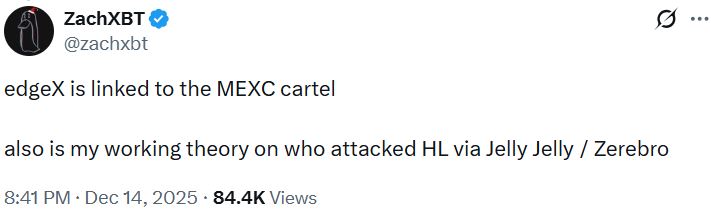 ZachXBT accuses edgeX of MEXC cartel ties in DeFi clash. The on-chain investigator pointed to suspicious volume surges on edgeX, suggesting fake trading activity and connections to manipulative networks tied to the MEXC exchange. edgeX co-founder KF.edge quickly denied the claims, stressing their partnership with Amber Group and commitment to professional standards.2025-12
 Global crypto regulation tightened in 2025 as the US shifted toward clearer rules and Europe fully enforced MiCA, pushing exchanges toward stricter licensing. Traders now face tougher KYC, tax reporting, and stablecoin compliance standards.2025-12
 South Korea plans bank-level liability for crypto exchanges after the Upbit hack, requiring no-fault compensation, tougher IT standards, and fines up to 3% of revenue for security failures.2025-12
 The UK Treasury plans to regulate crypto under FCA oversight by 2027, applying standards similar to traditional financial products. Officials say the move boosts consumer protection, transparency, and enforcement against scams and financial crime.2025-12
 GBBC’s GSMI 6.0 Report Warns That DeFi’s Next Era Hinges on Clear Governance Standards, True Decentralization, and User Protection Frameworks.2025-12
 Bitcoin core developers push for clear, minimal governance standards amid ongoing debate over expanding use cases.2025-05
Standards in Crypto: Why Common Rules Now Shape Everything from Tokens to ETFs
In digital asset markets, “standards” are the shared rules, formats, and thresholds that let blockchains, wallets, exchanges, regulators, and AI systems interoperate and trust one another, covering everything from token contract interfaces like ERC‑20 and TRC‑20 to SEC listing criteria for crypto ETFs, capital requirements for banks, anti‑money‑laundering obligations for stablecoin issuers, and emerging data and security norms for real‑world asset tokenization.
The Many Meanings of “Standards” in Crypto
The word “standards” gets used casually in crypto discourse, but it captures several distinct layers of coordination that are easy to conflate. At the most basic level, a standard can be a technical specification: a token contract interface like ERC‑20 on Ethereum or TRC‑20 on Tron that defines how balances, transfers, and approvals work so that wallets and dapps can handle different assets without custom code. At a different layer, standards can be regulatory: listing criteria for commodity‑based trust shares that hold crypto, or capital rules that determine how much loss‑absorbing capital banks must hold against bitcoin exposures. There are also “soft” standards—expectations around UX quality, audit practices, or ethical conduct—that are enforced more by market discipline and reputation than by law or code.
This multiplicity matters because the crypto industry tends to talk about standards in isolation: developers focus on token formats, lawyers on securities definitions, risk officers on Basel capital weights, and UX designers on wallet permission models. In practice, however, these layers interact. When a stablecoin issuer chooses to define its token as ERC‑20 or TRC‑20, it is implicitly deciding which wallets, bridges, and DeFi protocols can support it, which in turn affects where regulators see concentration and systemic risk and how exchanges design their listing rules. Conversely, when an exchange and the SEC agree on generic listing standards for crypto‑linked commodity trusts, that regulatory template shapes what products sponsors design and which tokens gain institutional liquidity. Standards are therefore neither purely technical nor purely legal; they are the connective tissue between code, markets, and policy.
It is also important to distinguish between de jure standards, which are codified in formal rules or published specifications, and de facto standards, which emerge because a particular approach gains overwhelming market share. ERC‑20, for example, began as an Ethereum Improvement Proposal but became truly standard only once most token issuers and wallets adopted it; today it functions as the default interface for fungible tokens across Ethereum and many EVM‑compatible chains. In contrast, prudential capital rules for digital assets published by the Basel Committee are explicitly codified and then transposed into national regulation, even if industry participants argue that certain elements, like the 1,250 percent risk weight assigned to many crypto exposures, are miscalibrated. Understanding who sets which type of standard, and how, is central to interpreting ongoing debates over “fair” treatment of digital assets in banking, market structure, and payments.
Finally, standards have a time dimension. Crypto markets evolve quickly, and what counts as “standard” in 2021 can look dangerously outdated by 2026. The rapid growth of tokenized treasuries and other real‑world assets is a good example: initial pilots each used bespoke legal structures, data models, and oracles, but as the space matured, reports from networks like Canton and analytics providers like RedStone began to call for consolidation around a smaller set of core standards to support institutional‑scale adoption. In this sense, standards are not a static achievement but an ongoing process of negotiation between experimentation and convergence.

ZachXBT accuses edgeX of MEXC cartel ties in DeFi clash. The on-chain investigator pointed to suspicious volume surges on edgeX, suggesting fake trading activity and connections to manipulative networks tied to the MEXC exchange. edgeX co-founder KF.edge quickly denied the claims, stressing their partnership with Amber Group and commitment to professional standards.

"@edgeX_KF Hello Zach, I am a founder of edgeX. We appreciate your contributions to the industry and have followed your posts. We note that your recent comment regarding edgeX is incorrect and may lead to unfounded speculations in the market. Therefore, we want to directly communicate with you and clarify the facts. edgeX was founded at the beginning of 2024, and Amber Group has been our sole institutional partner so far, supporting and incubating us from the very start. We are not aware of the so called “MEXC cartel”, and the statement that edgeX is part of such “cartel” is wrong. As builders in DeFi, we have worked hard to build our community by providing user friendly services while maintaining high professional standards. We have never engaged in or considered any form of hostile activity toward other protocols or users. If there is anything we can provide to support your research or clarify the situation, please feel free to let us know. We are more than willing to assist."
Token Standards: The Grammar of Digital Assets
For most users, the first encounter with “standards” comes when an exchange asks which network to use for a withdrawal: ERC‑20, BEP‑20, TRC‑20, SPL, and so on. Behind that intimidating drop‑down menu lies a simple concept. A token standard is a blueprint for how a class of tokens behaves on a particular blockchain, specifying functions like balance queries, transfers, and approvals, as well as events that wallets and applications can listen for. By adhering to this shared interface, independent developers can create tokens, wallets, and dapps that automatically interoperate within that ecosystem, without needing custom integrations for every new asset.
The ERC‑20 standard on Ethereum is the archetypal example. It defines a minimal set of functions like transfer, approve, and transferFrom, plus events like Transfer and Approval, that any compliant token contract must implement. Because these functions and events are predictable, wallets can display balances and send tokens, and DeFi protocols can interact with any ERC‑20 asset using generic code. The same logic holds for TRC‑20 on Tron, BEP‑20 on BNB Smart Chain, and SPL on Solana, even though the underlying execution environments differ. The substance of the tokens—whether they represent stablecoins, governance rights, or tokenized securities—varies widely, but the interface is standardized.
As stablecoins and exchange withdrawals have grown, the practical differences between token standards have become economically significant. A support article from the payments app Eco notes that TRC‑20 transfers of USDT on Tron typically cost between approximately 0.50 and 2 dollars, with roughly three‑to‑five‑second finality, while ERC‑20 transfers of the same USDT on Ethereum often cost several dollars to twenty dollars or more depending on gas prices. The underlying asset is notionally the same one‑dollar‑pegged Tether, backed by the same reserves, but the user experience and cost profile diverge sharply based on the network standard chosen. For frequent or low‑value transfers, the TRC‑20 rail often dominates, especially in emerging markets where users are highly fee‑sensitive, whereas ERC‑20 remains the default for deep DeFi liquidity and composability.
A concise way to see these trade‑offs is to compare major fungible token standards across dimensions like cost, ecosystem, and primary use cases. The following table does so at a high level, drawing on published descriptions from developer and user guides.
| Standard | Host Chain | Typical Fees (indicative) | Finality / Speed | Ecosystem Strengths |
|---|---|---|---|---|
| ERC‑20 | Ethereum | Higher; variable gas | Slower base layer | Deep DeFi, institutional adoption, rich tooling |
| BEP‑20 | BNB Smart Chain | Lower than Ethereum | Faster than Ethereum L1 | Retail trading, EVM compatibility |
| TRC‑20 | Tron | Low (≈$0.50–$2) | ≈3–5 seconds finality | Cheap P2P stablecoin transfers, emerging markets |
| SPL | Solana | Very low | High throughput, fast | High‑performance DeFi, consumer apps |
Beyond fungible tokens, non‑fungible token (NFT) standards like ERC‑721 and ERC‑1155 further illustrate how standardization enables new markets. While this report focuses primarily on fungible assets and securities, the same logic applies: by codifying how ownership, metadata, and transfers work, NFT standards allow marketplaces, wallets, and games to interoperate without custom integrations for each collection. This is particularly relevant as tokenization of real‑world assets begins to blur boundaries between fungible claims (such as tokenized treasury bills) and non‑fungible claims (such as unique real estate deeds or invoices), making interoperability across standards increasingly important.
From a securities‑law perspective, token standards also shape how regulators approach classification and oversight. When a tokenized fund or commodity‑based trust is implemented as an ERC‑20, for instance, that choice influences which exchanges can list it, which custodians can support it, and how easily it can plug into DeFi markets. That, in turn, has implications for the design of listing standards for exchange‑traded products, capital requirements for banks that hold them, and AML obligations for intermediaries that facilitate transfers. In this way, something as seemingly “technical” as choosing ERC‑20 versus a proprietary contract template can have downstream consequences for regulatory risk and market access.
Finally, token standards help manage operational risk for users. Educational materials from wallet providers emphasize that selecting the wrong network when withdrawing a token can result in the funds becoming effectively irretrievable, because the destination wallet may not support that standard or the address may not exist on the chosen chain. The insistence on matching the network of the token as held on the exchange with the network supported by the receiving wallet is not pedantry; it is recognition that standards are localized to specific chains. As multi‑chain interfaces proliferate and bridging becomes routine, user‑facing education about token standards becomes part of a broader standard of care for the industry.
Readers don't click 'standards' stories for policy architecture — they click when standards function as hard gates on market access (which coins get listed, which ETFs clear, which stablecoins get distributed) or when their absence produces a named, spectacular collapse like LIBRA.
Wallets, Connectivity, and UX Standards
If token standards are the grammar of digital assets, wallet and connectivity standards are the conversational protocol. Wallets mediate nearly every user interaction with blockchains, from signing transactions to connecting to dapps, and the expectations they set around security, permissions, and UX increasingly function as de facto industry norms. This is evident in the rise of projects like WalletConnect, which describes itself as “the connectivity layer for the financial internet” and operates a directory of wallets that adhere to what it calls the highest UX standards and excel in security, features, and overall quality. By curating and promoting a set of practices, WalletConnect is not only providing infrastructure but also setting expectations for how a “good” wallet should behave.
The WalletConnect protocol itself is a form of standard. It allows wallets and applications to communicate securely using a common messaging format, so that a user can, for example, connect a mobile wallet to a desktop dapp without exposing private keys. Because the protocol is widely implemented across chains and dapps, it creates network effects: developers who adopt it can tap into a broad base of wallet users, and wallets that support it can offer access to many dapps without bespoke integrations. Over time, such connectivity layers constrain what is considered acceptable UX. If most wallets provide clear transaction previews and granular approval prompts through standardized dialogs, wallets that shortcut these protections may be judged as failing to meet industry standards, even absent formal rules.
On the smart‑contract side, wallet standards are beginning to evolve beyond simple “sign this transaction” flows toward richer permission models, particularly as AI agents start to act on users’ behalf. On Arbitrum, for example, new wallet standards have been introduced that let agents and applications request scoped permissions from MetaMask users to execute transactions semi‑autonomously, within predefined limits. Rather than asking users to approve each call manually, a user can authorize an agent to operate against a smart contract with bounded authority, such as rebalancing a portfolio or paying gas fees up to a threshold. This creates a standardized interface between human intent, agentic behavior, and the wallet security model, reducing the risk of ad‑hoc, bespoke permission schemes that might be more error‑prone.
Standards also emerge around non‑functional characteristics like branding, education, and even physical presence. Commentary from events like WalletCon, where attendees jest about being “sick of crypto merch” yet still valuing high‑quality branded goods from infrastructure providers, hints at a maturing culture in which UX and aesthetic standards have risen alongside technical ones. In this environment, a wallet or protocol that delivers clunky UX or confusing security prompts might be punished not only by users leaving, but also by a reputational narrative that frames it as “below standard” for a professional, institutionally relevant ecosystem.
At the same time, there is an ongoing debate about how prescriptive wallet standards should be. Overly rigid requirements can stifle innovation in signature schemes, multi‑party computation, and account‑abstraction frameworks that might deliver better security or user experience. But complete fragmentation, where every wallet invents its own permission model and signing UX, can leave users exposed and developers overwhelmed. The emerging pattern in crypto mirrors that of the broader internet: relatively stable core standards (such as message formats and signing primitives) at the connectivity layer, combined with competition and experimentation at the interface and feature layers, bounded by soft norms around usability and safety.
Market and Listing Standards for Crypto Securities and ETFs
As crypto interfaces more directly with public securities markets, “standards” increasingly mean formal listing criteria and regulatory templates rather than merely technical formats. A striking example is the evolution of generic listing standards for exchange‑traded products that hold spot commodities, including digital assets. The U.S. Securities and Exchange Commission recently approved rule changes filed by several national securities exchanges to adopt generic listing standards for commodity‑based trust shares that hold spot commodities, such as precious metals and digital asset commodities. Under these standards, an exchange can list and trade a qualifying series of commodity‑based trust shares without submitting a separate rule filing for each product, provided the product meets predefined criteria.
The Nasdaq Stock Market’s proposal to amend Rule 5711(d) illustrates how detailed these standards can be. Nasdaq sought to adopt generic listing standards for commodity‑based trust shares so that it could list certain exchange‑traded products that physically hold commodities, including digital asset commodities, without a bespoke SEC rule filing each time. The proposal set out a definition of “Commodity‑Based Trust Shares,” clarified the permissible holdings of such trusts—such as commodities, commodity‑based assets, or certain securities that meet specified listing standards—and described initial and continued listing requirements, including minimum shares outstanding and surveillance procedures. It also contemplated that if a product fell outside these generic criteria, for example because it held a novel type of commodity exposure, the exchange would still need to file a separate proposed rule change.
Other exchanges have moved in parallel. Cboe has filed to permit certain crypto‑linked exchange‑traded funds, such as a Franklin Ethereum ETF, to list and trade under generic listing standards, thereby streamlining approvals and embedding crypto exposures within existing ETP frameworks. Simultaneously, options exchanges including MEMX, MIAX Sapphire, and MIAX Pearl have proposed rule changes to establish listing criteria and withdrawal standards for options on commodity‑based trusts that hold multiple crypto assets. These proposals typically aim to align options listing standards with those of the primary listing market for the underlying trust, while adding safeguards such as position limits, minimum float, and surveillance commitments tailored to crypto’s volatility and concentration risks.
The SEC’s own actions underscore the shift toward treating crypto exposures through the lens of standardized products. Alongside its approval of generic listing standards for commodity‑based trust shares, the Commission approved the listing and trading of the Grayscale Digital Large Cap Fund, which holds a basket of spot digital assets based on the CoinDesk 5 Index. It also approved the listing and trading of options on the Cboe Bitcoin U.S. ETF Index and on a mini version of that index, with standardized expirations and settlement conventions. Each of these steps embeds crypto benchmarks within familiar regulatory frameworks for ETFs and options, making it easier for institutional investors to gain exposure under existing mandates but also subjecting crypto to the same rigor around disclosure, surveillance, and investor protection.
From a standards perspective, the key is that these developments convert one‑off negotiations into reusable templates. Once generic listing criteria for digital‑asset‑backed commodity trust shares are in place, product sponsors can design offerings to fit those templates, knowing that if they satisfy the quantitative and qualitative requirements, they can expect relatively predictable approval. This reduces time‑to‑market, but it also concentrates design choices around what the standard allows. For example, if generic standards favor physically backed holdings with daily transparency and robust custody arrangements, synthetic or highly leveraged structures may be disfavored or pushed into bespoke approval processes. Over time, the standard becomes a channel through which regulators express their risk preferences and shape market structure.
At the same time, the emergence of options on multi‑crypto trusts raises new questions about how far generic standards can stretch. Multi‑asset products must grapple with index construction methodologies, correlations, liquidity disparities, and concentration risks that differ from single‑asset ETFs. Exchanges like MEMX and the MIAX venues are therefore crafting options listing criteria that incorporate not only the characteristics of the underlying trust but also the combined risk profile of the basket. As more complex collateral, including tokenized real‑world assets, finds its way into ETP structures, the line between “commodity‑based trust share” and “securities fund” may blur further, testing the adaptability of existing standards.

Global crypto regulation tightened in 2025 as the US shifted toward clearer rules and Europe fully enforced MiCA, pushing exchanges toward stricter licensing. Traders now face tougher KYC, tax reporting, and stablecoin compliance standards.
Capital, Compliance, and Stablecoin Standards
Standards in regulated finance are often most visible in capital and compliance rules, and crypto is no exception. One of the most consequential debates concerns how banking regulators should treat digital assets on balance sheets. In 2022, the Basel Committee on Banking Supervision issued prudential capital standards that, among other things, assigned a 1,250 percent risk weight to many digital asset exposures like bitcoin, effectively requiring banks to hold an amount of capital equal to the full exposure value. A group of U.S. senators led by Cynthia Lummis and Dan Sullivan has argued that this classification was not based on a calibrated assessment of actual risks, but rather operates as a de facto ban on banks holding this asset class, in tension with a technology‑neutral approach. In a letter to banking regulators, they urged agencies to build on recent progress in clarifying the capital treatment of tokenized securities and to move toward clear and fair capital standards for banks engaged in digital asset activities.
Their intervention highlights how capital standards can determine whether traditional financial institutions participate meaningfully in crypto markets. If risk weights are set punitively high without differentiation between, say, a fully reserved tokenized treasury fund and an unbacked speculative token, banks have little incentive to support even relatively low‑risk forms of tokenization. Conversely, overly lax capital treatment could encourage reckless balance‑sheet exposure to volatile assets, creating the very systemic risks regulators fear. The challenge is to design standards that are both granular and adaptable, recognizing differences among stablecoins, tokenized securities, and native crypto commodities, while maintaining comparability with traditional asset classes.
Compliance standards are undergoing similarly rapid evolution, particularly for stablecoin issuers. The U.S. Treasury has proposed a rule that would implement anti‑money‑laundering and countering‑the‑financing‑of‑terrorism obligations for “permitted payment stablecoin issuers,” jointly administered by the Financial Crimes Enforcement Network (FinCEN) and the Office of Foreign Assets Control (OFAC). The proposal would prescribe Bank Secrecy Act obligations such as customer due diligence, suspicious activity reporting, and recordkeeping, as well as sanctions compliance program requirements designed to ensure that issuers can block, freeze, and reject transactions associated with designated persons or jurisdictions. In effect, this would create a baseline compliance standard for stablecoin issuers wishing to operate at scale in the U.S. market, aligning their obligations more closely with those of banks and money services businesses.
Such standards have architectural consequences. If issuers are expected to implement controls that can identify and stop illicit transactions, their choices of token standard, chain, and wallet interoperability may be constrained by what compliance tools can support. Chains with mature analytics ecosystems and standardized event structures may be favored, while more privacy‑enhancing designs might face regulatory skepticism absent robust compensating controls. In addition, the requirement to operate sanctions compliance programs may push issuers toward standardized blacklisting or freeze functions in their smart contracts, which in turn raises governance questions about who controls those functions and under what procedures.
Beyond formal AML and capital rules, there is a growing web of soft compliance standards driven by international bodies like the Financial Action Task Force (FATF), which has promulgated a “Travel Rule” for virtual asset service providers, and by industry consortia that develop best practices for chain analytics, wallet screening, and transaction monitoring. While these are not always legally binding, they influence how regulators evaluate whether a firm’s overall compliance program is “up to standard.” For stablecoin issuers and exchanges, aligning with these expectations can become a condition for access to banking services or for listing on regulated exchanges, even if specific technical implementations vary.
The emerging convergence between capital, AML, and securities‑market standards underscores a broader point: in crypto, compliance is not a separate layer bolted onto technical systems, but an increasingly integral part of protocol design and market structure. Choices about token standards, wallet connectivity, and data oracles are now made with an eye not only to efficiency and composability but also to how well they can support demonstrable adherence to regulatory expectations. That shift may feel constraining to early crypto purists, but it also opens the door for deeper integration of digital assets into mainstream finance.
- 01global regulatory body mandates
IOSCO's 215-click lead shows readers treat international standards-setter rulings as the upstream signal that determines what every downstream regulator — SEC, MiCA, national agencies — will do next.
- 02Bitcoin governance minimalism
The 182-click debate over keeping Bitcoin's protocol scope narrow reframed standards as a values conflict between conservative security and use-case expansion, not a technical committee exercise.
- 03ETF listing and approval criteria↗
BlackRock's SEC meeting (121 clicks) and the SEC's published crypto ETP listing standards (58 clicks) pulled readers tracking which assets earn the institutional on-ramp that defines the next liquidity tier.
- 04stablecoin compliance thresholds↗
RLUSD's compliance-first launch (102), Bank of Italy's cross-border push (48), and Turkey's consumer-protection draft (63) collectively show readers watching stablecoin standards as the chokepoint for fiat-rail adoption.
- 05wallet and token technical standards
Walletbeat's scoring framework (110 clicks) and ERC-4626 vault strategies surviving xUSD turbulence (77 clicks) attracted readers seeking benchmarks — not narratives — for evaluating DeFi infrastructure quality.
- 06RWA tokenization interoperability↗
The $4.6T→$100T projection (76 clicks) and LlamaGuard NAV oracle for Aave (51 clicks) show readers tracking whether shared tokenization standards will actually unlock institutional capital at scale rather than remain vendor-specific.
Real-World Asset Tokenization and Data Standards
Real‑world asset (RWA) tokenization has emerged as one of the clearest arenas where the absence, and then gradual emergence, of standards is shaping market development. Tokenization refers to the representation of claims on off‑chain assets—such as government bonds, corporate debt, funds, or real estate—on a blockchain, typically via smart contracts that track ownership and facilitate transfers subject to legal and contractual constraints. According to a detailed report on the state of RWA tokenization published by the Canton Network, the total market value of on‑chain RWAs excluding stablecoins reached approximately 36.27 billion dollars by November 2025, reflecting exponential growth from a much smaller base in prior years. This growth has been driven by tokenized U.S. Treasuries, money‑market funds, and private credit, among other categories.
However, the same report emphasizes that this growth has occurred across a patchwork of platforms and legal structures, with limited interoperability and fragmented data standards. Some tokenization projects issue ERC‑20 tokens on public chains representing fund shares, others issue permissioned tokens on consortium ledgers, and still others use bespoke smart contracts integrated into custodial systems. Legal wrappers range from traditional funds to special‑purpose vehicles, each with different disclosure obligations and investor protections. A study summarized by The Cryptonomist notes that RWA tokenization is entering a new phase in which market growth will depend on resolving fragmentation, clarifying regulatory expectations, and building a robust interoperability layer that can support institutional‑scale adoption worldwide. The authors anticipate continued experimentation alongside gradual consolidation around a smaller set of core standards, both technical and legal.
Data standards are central to this consolidation. Institutions need consistent, verifiable information about the assets backing tokens—prices, valuations, net asset values (NAV), assets under management (AUM), and proof that reserves actually exist and remain unencumbered. To address this, Canton has integrated Chainlink’s oracle infrastructure as a “data standard” across its ecosystem, deploying Chainlink Data Streams, SmartData, and Proof of Reserve so that institutions can access real‑time pricing, valuation, and reserve attestations in a uniform format. This deployment is pitched as a way to accelerate “institutional‑grade tokenization at scale,” because participants can rely on standardized, battle‑tested oracles rather than each building its own data feeds. The logic is that if everyone uses the same high‑quality data standards, cross‑platform interoperability and risk management become easier.
Analytics providers and oracle projects have, in turn, begun to publish dedicated reports on RWA standards. RedStone’s “Tokenization & RWA Standards Report” examines how different protocols structure their tokenized assets, what data is exposed on‑chain, and how updates are governed, and it proposes best‑practice frameworks for representing yields, defaults, and collateralization in a standardized way. Although no single framework has yet achieved dominance, the very existence of such reports indicates a movement toward explicit standard‑setting rather than ad hoc design. Combined with regulatory initiatives clarifying when tokenized claims fall under securities or funds regulation, this points toward a future in which institutional investors can compare RWA tokens across platforms using comparable metrics, much as they now compare traditional funds.
Liquidity and collateral standards present another challenge. At industry events focused on RWA and payments, executives have warned that fragmented standards and shallow liquidity in many tokenized assets create substantial liquidity and rollover risks, especially if investors assume they can exit positions as easily as they would from large traditional funds. These concerns are echoed in analyses suggesting that market growth will require not only technical standardization but also agreement on how tokenized assets can be used as collateral in lending, margining, and derivatives, and what haircuts or risk weights they should attract. Without such shared standards, tokenized RWAs risk remaining a niche, siloed phenomenon rather than becoming a core component of financial plumbing.
Finally, RWA tokenization makes clear that standards must bridge on‑chain and off‑chain domains. Smart contracts can enforce rules about transfers and record‑keeping on a blockchain, but legal standards are needed to ensure that token holders have enforceable claims on underlying assets in the event of insolvency or operational failure. Reports from Canton and others emphasize the need for harmonized approaches to legal enforceability, custody, and investor protection to complement technical standards. As jurisdictions compete to attract tokenization business, regulatory standards that offer clarity without undue rigidity will likely become a key differentiator.
AI, Agentic Systems, and Emerging Payment Standards
As artificial intelligence systems become more “agentic”—capable of understanding objectives, planning multi‑step tasks, and autonomously interacting with digital services—the need for new standards in payments and crypto intensifies. An analysis from the International Monetary Fund describes agentic AI systems as ones that can interpret user goals, plan actions, and interact with digital services with limited human intervention, including initiating and routing payments. In a crypto context, this could mean AI agents that manage on‑chain portfolios, execute arbitrage, or pay for services directly from wallets. While such capabilities promise efficiency, they also raise questions about how to constrain and audit agents’ actions, and what standards should govern their access to financial infrastructure.
One emerging response is the development of standardized permission models at the wallet level. As noted earlier, on Arbitrum, MetaMask and ecosystem developers have introduced mechanisms whereby agents and applications can request scoped permissions to act on behalf of users, rather than blanket access to all funds. This approach, if widely adopted, functions as a standard for agent‑human interaction in wallets: agents must declare the scope of their authority in a machine‑readable way, wallets must present these scopes to users in understandable terms, and transactions executed under those scopes must be observable and revocable. Such standards are prerequisites for safe, mainstream deployment of agentic AI in crypto finance.
Another perspective comes from infrastructure projects like MultiversX, which argue that building payment infrastructure for agent commerce is fundamentally a “substrate problem” rather than simply a matter of higher‑level standards. In this view, the base layer must be designed to support large numbers of interacting agents with predictable latency, security, and state‑access patterns, and only then can more expressive agent standards be layered on top. This stance does not reject standards; rather, it reframes them as emergent properties of the underlying substrate’s capabilities. It also suggests that competition among chains and layers will extend beyond throughput and fees to include how well they support standardized agentic interactions.
Security standards are also being revisited in light of AI. As agents gain the ability to craft and sign transactions, the traditional model of a user reading and approving each transaction becomes unrealistic. Instead, there is pressure to develop standardized threat models, logging formats, and anomaly‑detection interfaces that allow both users and regulators to monitor agentic systems at a higher level of abstraction. The IMF analysis suggests that payments infrastructures will need to incorporate safeguards that can detect and halt runaway or malicious agent behavior, which in turn implies standardized hooks and control points in interfaces between agents, wallets, and settlement systems. Crypto networks, being programmable and transparent, are natural testbeds for such standards, but their global, permissionless nature also amplifies the stakes.
Interoperability is a further concern. If different chains or payment networks adopt incompatible agent standards, the vision of “agent‑to‑agent” payments across platforms fragments. This has prompted calls, in both industry blogs and policy forums, for universal agent standards that can operate across platforms, akin to how HTTP and TCP/IP standards allow different servers and clients to communicate on today’s internet. The challenge is to define these standards at the right level of abstraction: too low, and they ossify specific technical stacks; too high, and they provide little practical guidance for implementation. Crypto’s experience with token and wallet standards provides both cautionary and encouraging precedents.
South Korea plans bank-level liability for crypto exchanges after the Upbit hack, requiring no-fault compensation, tougher IT standards, and fines up to 3% of revenue for security failures.
"The Financial Services Commission (FSC) is reviewing new provisions that would require exchanges to compensate customers for losses stemming from hacks or system failures, even when the platform is not at fault, The Korea Times reported on Sunday, citing officials and local market analysts. The no-fault compensation model is currently applied only to banks and electronic payment firms under Korea’s Electronic Financial Transactions Act."
Governance, Ethics, and Soft Standards
Not all standards are written down in protocol documentation or regulatory filings. Crypto markets are also shaped by “soft” standards—norms around governance, transparency, and ethics that may lack formal enforcement mechanisms but nonetheless influence behavior. Debates about “double standards” in how regulators treat crypto versus traditional finance, or controversies over political donations from crypto billionaires, highlight how perceptions of fairness and propriety can shape the industry’s social license to operate. In some jurisdictions, high‑profile investigations into the conduct of public figures linked to crypto donors have triggered broader questions about standards of disclosure and conflict‑of‑interest management, even when no technical or regulatory breach is alleged.
Within crypto projects, governance standards determine how changes to protocols, tokenomics, or treasury allocations are proposed, discussed, and implemented. On‑chain governance frameworks often codify voting mechanics, quorum thresholds, and delegation, but the informal norms around documentation quality, conflict disclosure, and community consultation can be equally important. Projects that establish clear, repeatable processes for governance decisions, and that publish archives of proposals and rationales, set a higher standard than those that rely on ad hoc, opaque decision‑making. Over time, investors and partners may begin to treat such governance hygiene as a prerequisite for serious engagement, even absent formal regulation.
Audit and security practices provide another example of soft standards gradually hardening. In the early days of DeFi, independent smart‑contract audits were a differentiator; today, multiple audits, bug bounty programs, and formal verification efforts are increasingly expected for projects managing substantial value. Although no regulator mandates a specific number of audits, the market has developed an informal standard of care: a protocol that launches with unaudited contracts may be perceived as below standard, and exchanges or aggregators may be reluctant to list or integrate it. Industry organizations and insurance providers are also beginning to articulate baseline security standards for coverage eligibility, further reinforcing these norms.
Media and community discourse play a role in setting and enforcing soft standards. Investigative reporting on token allocations, undisclosed insider dealings, or aggressive marketing to unsophisticated users can trigger reputational penalties and, in some cases, regulatory scrutiny. Conversely, highlighting best practices—such as projects that voluntarily adopt higher disclosure standards than required, or exchanges that implement stricter market‑surveillance tools to prevent manipulation—can shift expectations across the ecosystem. The narrative that “standards are higher now” reflects both organic maturation and deliberate efforts by leading actors to differentiate themselves through better practices.
Ultimately, soft standards often presage formal ones. When enough market participants adopt a particular practice—be it proof‑of‑reserves reporting, detailed tokenomics disclosures, or standardized risk dashboards for lending protocols—regulators may later codify those practices as baseline requirements. The history of financial regulation is replete with examples where industry best practices were later enshrined in law. Crypto is likely to follow a similar trajectory, but with the added wrinkle that many practices are encoded directly in smart contracts or off‑chain services, making the boundary between “voluntary” and “mandated” standards more fluid.
- 2023-11regulatory
IOSCO publishes global crypto-asset markets policy recommendations
- 2024-06regulatory
EU MiCA Titles III & IV (stablecoin rules) enter force
- 2024-12launch
Ripple launches RLUSD globally with full USD backing and compliance-first positioning
- 2025-02exploit
LIBRA meme coin collapses after Milei promotion — absence-of-standards case study
US FinCEN finalizes AML/CFT rules for permitted payment stablecoin issuers
Exchange SROs (MEMX, MIAX, Cboe, Nasdaq) file amended listing standards for crypto ETP shares
Innovation, Competition, and the Politics of Standard-Setting
The relationship between standards and innovation is inherently ambivalent. On one hand, standards reduce coordination costs, enable interoperability, and expand markets. On the other, they can entrench incumbents, lock in suboptimal designs, and dampen experimentation. Crypto’s experience with token standards, wallet protocols, and exchange listing criteria illustrates both sides of this dynamic. ERC‑20’s dominance, for instance, spurred an explosion of token‑based projects and DeFi protocols but may also have constrained exploration of alternative architectures that could have been more secure or efficient. Only later did variants like ERC‑777 and ERC‑4626 gain traction for more specialized use cases, and even then, adoption has lagged ERC‑20’s ubiquity.
The politics of standard‑setting are particularly visible where regulatory standards intersect with competitive positioning among exchanges, custodians, and tokenization platforms. When Nasdaq, Cboe, MEMX, and MIAX exchanges propose generic listing standards for crypto‑linked products or options, they are not only responding to regulatory guidance; they are also vying to define the “default” way such products should look. A listing standard that favors physically backed, single‑asset trusts may benefit certain sponsors, while more permissive standards for multi‑asset or actively managed structures could advantage others. Likewise, platforms like Canton that deploy specific oracle providers such as Chainlink as “data standards” embed choices about data sources, update frequencies, and governance into the fabric of tokenization ecosystems.
Innovation at the frontier sometimes involves “pushing beyond standards.” In zero‑knowledge technology, for example, teams building zk‑VMs and novel memory models emphasize that existing benchmarks and best practices may underestimate what is possible, and that standardization too early could ossify designs in a still‑experimental field. Similarly, infrastructure projects like MultiversX argue that focusing narrowly on standards risks missing deeper substrate questions about scalability, agent coordination, and state management. These critiques do not reject standards outright, but they caution against mistaking current conventions for permanent optima.
At the same time, innovators rarely operate outside standards entirely. Even bleeding‑edge projects must interoperate with wallets, exchanges, and analytics tools that expect certain token interfaces and event formats, and they must navigate securities, AML, and consumer‑protection standards if they wish to access regulated markets. The practical challenge is therefore to design standards that are modular and extensible: robust enough to anchor interoperability, yet flexible enough to accommodate new features. Token standards that allow optional extensions, wallet standards that support pluggable security modules, and regulatory standards that focus on outcomes rather than prescribing specific technologies are all examples of this approach.
Standard‑setting also has geopolitical dimensions. Jurisdictions that set clear, proportionate standards for digital assets can attract capital, talent, and infrastructure, while those that remain ambiguous or overly punitive may see activity migrate elsewhere. The U.S. debate over Basel‑aligned capital standards for digital assets, reflected in the Lummis–Sullivan letter, exemplifies domestic political contestation over how strictly to implement international norms in a way that balances innovation and safety. Meanwhile, transnational bodies like FATF and the Basel Committee act as standard‑setters for much of the world, but their recommendations leave room for national discretion. Crypto’s borderless nature complicates these dynamics, but it does not nullify them; indeed, it heightens the importance of coherent, interoperable standards across jurisdictions.
Practical Implications Across the Crypto Stack
For practitioners—whether users, builders, or institutions—the abstractions discussed above translate into concrete decisions and risks. At the user level, understanding token standards and network differences is essential to avoid irreversible mistakes. Guidance from wallet educators emphasizes verifying that the network selected for a withdrawal matches both the representation of the token on the exchange and the capabilities of the receiving wallet. Sending USDT as TRC‑20 to an address that only supports ERC‑20, for example, can result in funds that are technically “on‑chain” but practically inaccessible to the user. Matching network, token type, and wallet support is therefore a basic standard of operational hygiene.
For builders, designing to established standards from the outset can dramatically widen potential reach and reduce integration friction. Implementing widely adopted token interfaces, supporting common wallet connectivity protocols like WalletConnect, and structuring data feeds according to emerging oracle standards can make it easier for projects to be listed on exchanges, included in aggregators, and integrated into DeFi protocols. At the same time, builders must keep abreast of evolving compliance and security standards, whether that means incorporating pausing or blacklisting capabilities to meet sanctions expectations for stablecoin issuers, or designing governance processes that meet institutional investors’ expectations for transparency and accountability.
Institutions face perhaps the most complex standard landscape. Banks considering digital‑asset services must navigate Basel‑aligned capital standards, domestic supervisory expectations, and evolving listing and custody standards for crypto‑linked securities. Asset managers launching tokenized funds or commodity‑based trusts must ensure that their products fit within generic listing standards or be prepared for bespoke regulatory processes. Corporates exploring tokenized treasuries or receivables must evaluate whether RWA standards around data, legal enforceability, and collateral treatment are mature enough to support the scale and liquidity they require. For all of these actors, standards are not merely compliance checklists but design constraints and strategic considerations.
Even in emerging domains like agentic AI and cross‑platform agent commerce, early standards are already influencing experimentation. Developers who wish to deploy AI agents that manage on‑chain assets must choose wallet frameworks that support scoped permissions, define logging and control interfaces that align with security standards, and anticipate how regulators might assess such systems’ compliance with AML and consumer‑protection rules. As Europe and other regions pilot agent‑to‑agent bank payments and AI‑driven financial services, the standards they adopt for agent identification, accountability, and interoperability will feed back into how crypto wallets and protocols design their own agent interfaces.
Across the stack, one theme recurs: aligning with robust, widely recognized standards can open doors, but it also imposes obligations. Projects that advertise themselves as “institutional grade” will be evaluated not only on technical merits but also on whether they adhere to prevailing standards in listing, capital treatment, AML, governance, and UX. Conversely, projects that explicitly situate themselves outside mainstream standards must articulate clearly what protections and guarantees, if any, they offer in lieu of those norms. For a maturing crypto ecosystem, such clarity is itself becoming a standard.
Outlook
The trajectory of standards in crypto points toward greater convergence and institutionalization, but not towards uniformity or stasis. On the technical side, token and wallet standards are likely to continue evolving incrementally, with new interfaces introduced for specialized use cases like yield‑bearing tokens, cross‑chain interoperability, and agentic control, while established standards like ERC‑20 and widely adopted connectivity protocols remain foundational. On the regulatory side, generic listing standards for crypto‑linked commodity trusts and options, stablecoin AML rules, and calibrated capital standards will increasingly define the contours of permissible innovation at scale, even as industry and policymakers debate their specifics.
Real‑world asset tokenization and agentic AI represent frontiers where standards are still fluid. Reports from networks like Canton and analytics providers like RedStone suggest that RWA tokenization is entering a phase of consolidation, with data and legal standards emerging as key enablers of institutional participation. Meanwhile, analyses from the IMF and infrastructure projects like MultiversX indicate that agentic payments will require both substrate‑level capabilities and higher‑level coordination on permissioning and safety standards. The interplay between these domains—tokenized real‑world assets managed by AI agents under standardized compliance and risk frameworks—may define the next era of digital finance.
For the crypto industry, the challenge will be to engage proactively in standard‑setting processes rather than treating them as exogenous constraints. Developers, exchanges, custodians, and users all have stakes in how standards evolve, from the minutiae of token interfaces to the architecture of global stablecoin regulation. The more that standard‑setting becomes a transparent, multi‑stakeholder process, the more likely it is to produce frameworks that support both innovation and resilience. In that sense, the maturation of standards is not a departure from crypto’s original ideals of open, interoperable networks, but their extension into a world where digital assets sit at the heart of mainstream finance.
Latest Standards news
ZachXBT accuses edgeX of MEXC cartel ties in DeFi clash. The on-chain investigator pointed to suspicious volume surges on edgeX, suggesting fake trading activity and connections to manipulative networks tied to the MEXC exchange. edgeX co-founder KF.edge quickly denied the claims, stressing their partnership with Amber Group and commitment to professional standards.Global crypto regulation tightened in 2025 as the US shifted toward clearer rules and Europe fully enforced MiCA, pushing exchanges toward stricter licensing. Traders now face tougher KYC, tax reporting, and stablecoin compliance standards.South Korea plans bank-level liability for crypto exchanges after the Upbit hack, requiring no-fault compensation, tougher IT standards, and fines up to 3% of revenue for security failures.The UK Treasury plans to regulate crypto under FCA oversight by 2027, applying standards similar to traditional financial products. Officials say the move boosts consumer protection, transparency, and enforcement against scams and financial crime.GBBC’s GSMI 6.0 Report Warns That DeFi’s Next Era Hinges on Clear Governance Standards, True Decentralization, and User Protection Frameworks.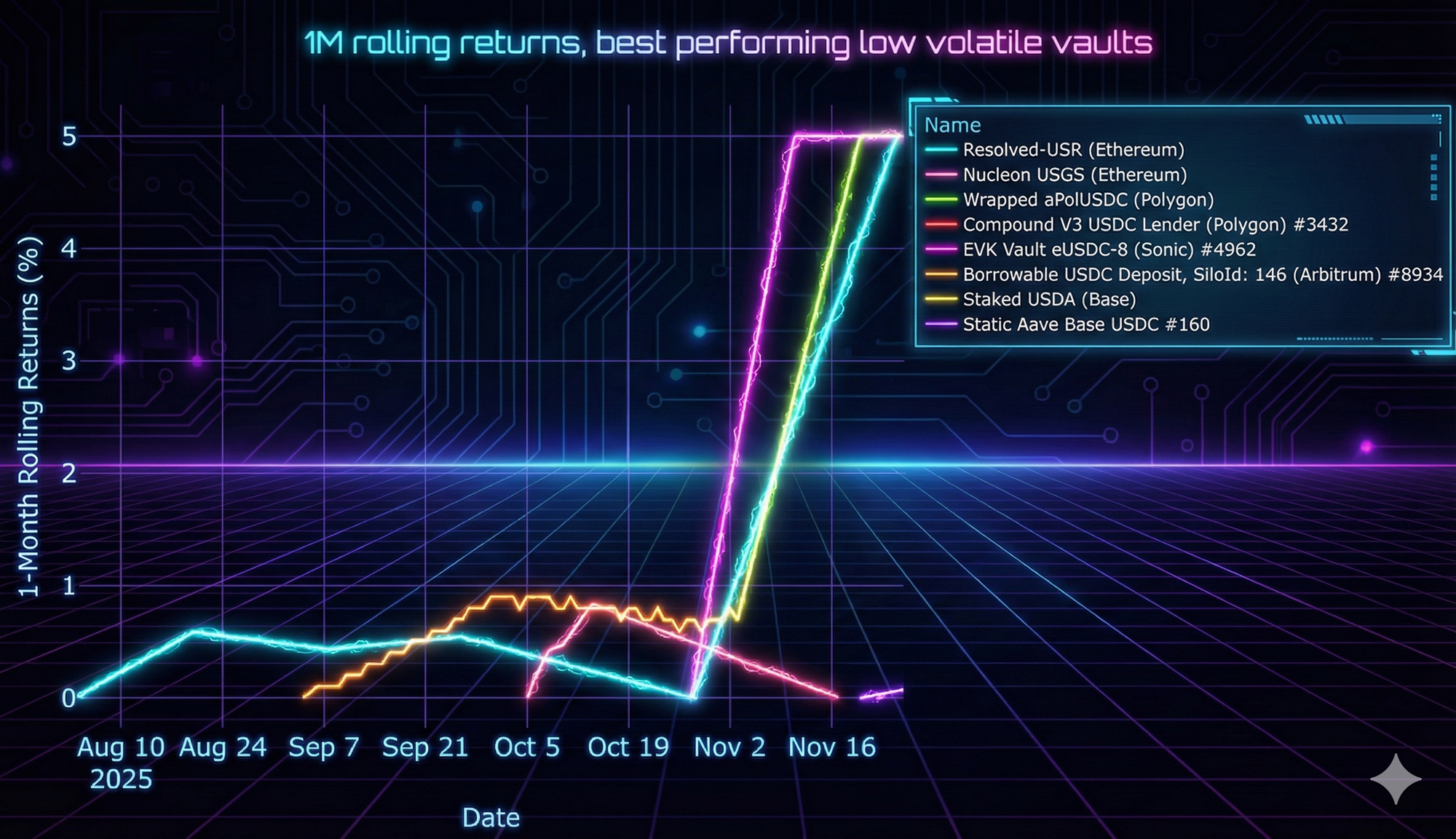 The top-performing stablecoin vaults of November 2025 show strong gains across new ERC-4626 strategies—even as xUSD turbulence wrecked dozens of vaults—amid expanding protocol support, real-time dashboards, and emerging DeFi risk-rating standards.
Sources
18 records from 15 domains
sec.gov
canton.network
federalregister.gov
- federalregister.gov· documents / 2026 / 04 / 10 / 2026-06963 / permitted-payment-stablecoin-issuer-ant…
- federalregister.gov· documents / 2026 / 06 / 09 / 2026-11484 / self-regulatory-organizations-memx-llc-…
- federalregister.gov· documents / 2026 / 04 / 16 / 2026-07353 / self-regulatory-organizations-miax-sapp…
- federalregister.gov· documents / 2026 / 04 / 16 / 2026-07352 / self-regulatory-organizations-miax-pear…
walletconnect.network
eco.com
elibrary.imf.org
cboe.com
lummis.senate.gov
multiversx.com
blog.arbitrum.foundation
coin98.com
en.cryptonomist.ch
prnewswire.com
blog.redstone.finance
listingcenter.nasdaq.com
Community notes
Spot something off or out of date? Drop a note. Editors review topic notes daily and roll accepted fixes into the explainer — contributors are recognized in the monthly $SQUID drop.
Loading notes…
Help improve this topic
Have a story or tip about this topic? Submit it. See something missing? Leave a note. Editors review daily; accepted submissions and fixes count toward the monthly $SQUID drop.