
In-depth explainer on Asymmetry Finance, covering its Liquity v2-based architecture, USDaf and ampUSD stablecoins, sUSDaf yield vaults, ASF governance, risk events and how its customizable, on-chain stablecoins fit into the evolving DeFi landscape.
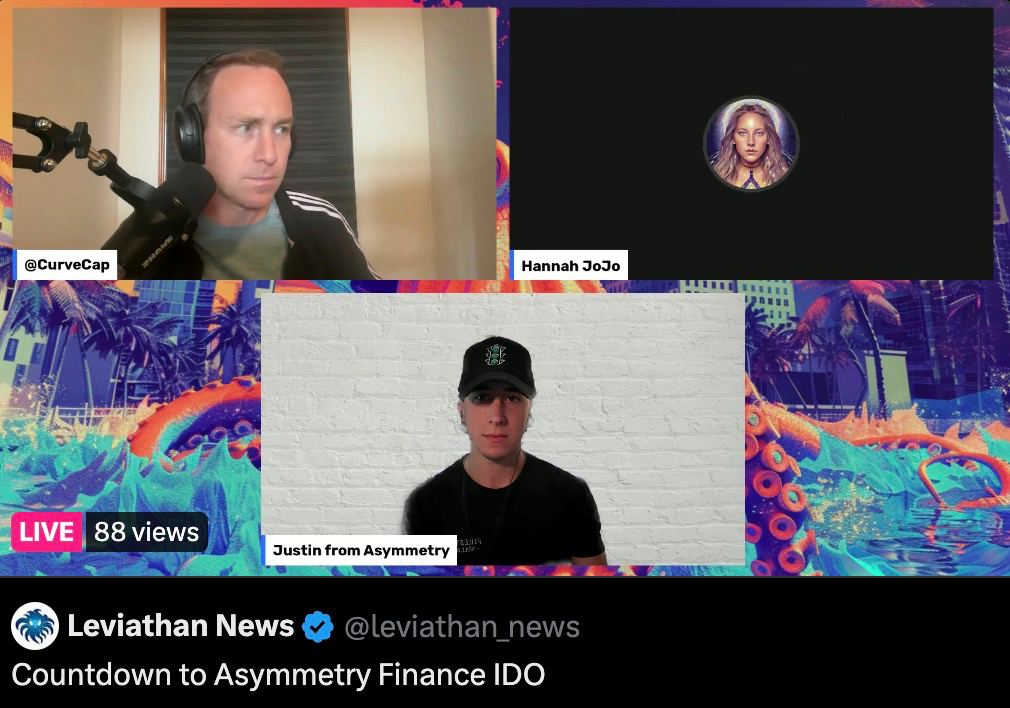 Livestream on the upcoming $ASF launch, with Asymmetry Finance2024-06
 $ASF and $USDaf Have Entered The Chat - with Asymmetry Finance2024-10
 Asymmetry FInance $afCVX goes live with all minting caps lifted2024-05
 Leviathan Livestream with Asymmetry Finance + Cryptovestor2024-03
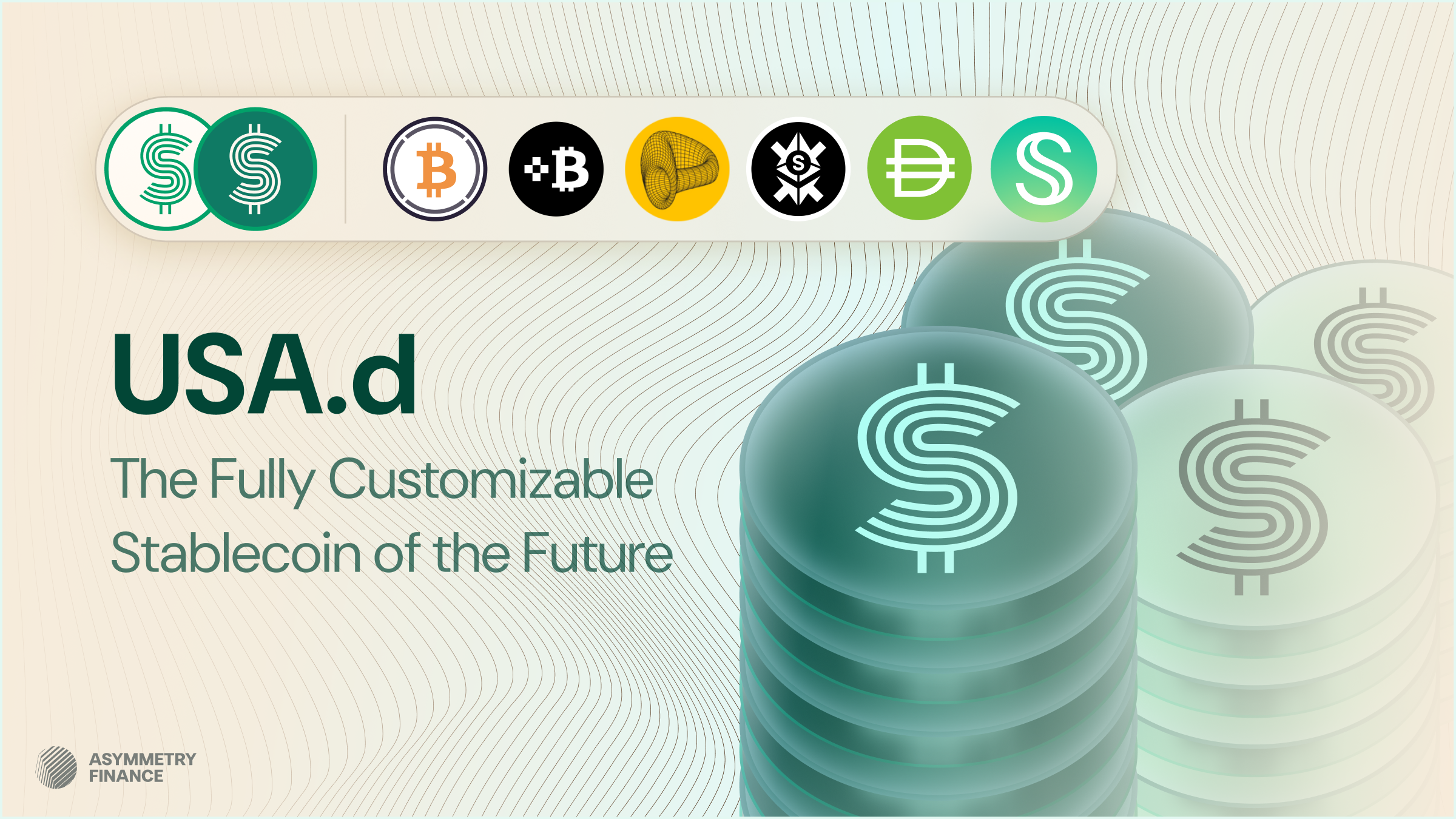 Asymmetry reveals collateral types for USA.d and a brand new UI2025-02
 ⚠️ Asymmetry Team halts USDaf deployment due to tBTC Oracle issue, urges users to close positions as redeployment plans emerge2025-06
Asymmetry Finance: Customized Stablecoins and Yield in DeFi
Asymmetry Finance is a decentralized finance protocol on Ethereum that builds customizable stablecoins and yield strategies on top of Liquity v2, aiming to offer transparent, on-chain interest rates, overcollateralized borrowing, and composable yield-bearing assets. It sits at the intersection of stablecoins, fixed-rate lending, and structured yield products, positioning itself as a home for “customized stablecoins” and sustainable on-chain returns.
What is Asymmetry Finance?
Asymmetry Finance is a DeFi protocol focused on borrowing, stablecoins, and yield generation, operating primarily on the Ethereum blockchain. At its core, the project uses the Liquity v2 framework to let users borrow against crypto collateral at customizable fixed interest rates, minting new stablecoins that are intended to be decentralized, over-collateralized, and fully transparent. Rather than relying on traditional off-chain assets such as U.S. Treasury bills or bank deposits, Asymmetry’s architecture emphasizes on-chain collateral and protocol-native mechanisms for generating yield. This approach is explicitly presented as an alternative to the rising class of off-chain and RWA-backed stablecoins that dominate centralized exchanges and institutional offerings.
The ecosystem is governed by the Asymmetry DAO through its native governance token, ASF, which is deployed on Ethereum and designed to coordinate decisions around parameters, incentives, and the evolution of the product suite. The protocol’s offering has grown to include the USDaf stablecoin, yield-bearing wrappers such as sUSDaf, and structured products around liquid staking and DeFi governance tokens, including afETH and afCVX. From its earliest public communications, the team has framed Asymmetry as a modular toolkit for stablecoin issuance and yield optimization rather than a single-asset project, positioning USDaf and its related products as part of a broader, composable “asymmetric finance” stack.
Asymmetry’s rise has coincided with renewed interest in decentralized stablecoins and their potential to offer yield without the counterparty risk of centralized issuers. In interviews and podcasts, team members such as Justin Garland and Hannah “HannahJoJo” have emphasized the evolution of DeFi yield from early liquidity mining experiments to more structured, risk-aware primitives, using Asymmetry’s products as an example of how to push yields transparently back on-chain. This narrative has resonated with DeFi-native users who are comfortable managing collateral risk but want to avoid opaque off-chain strategies or black-box fund managers. At the same time, Asymmetry highlights its institutional backers and partnerships, attempting to bridge the gap between crypto-native experimentation and more conservative capital allocators.
From a market perspective, Asymmetry has positioned itself as a complementary player within the broader stablecoin ecosystem. It does not aim to displace large centralized issuers such as USDT or USDC in everyday payments, but rather to provide a programmable, over-collateralized dollar that can be used as DeFi collateral, in leverage strategies, or as a yield-bearing asset within crypto-native portfolios. This niche is competitive, ranging from MakerDAO’s DAI to Liquity’s own stablecoins and newer entrants such as Ethena’s USDe and BOLD, but Asymmetry’s strategy rests on a few distinctive pillars: immutable contracts via Liquity v2, fully on-chain yield generation, and highly composable wrappers like sUSDaf that connect to existing DeFi infrastructure.
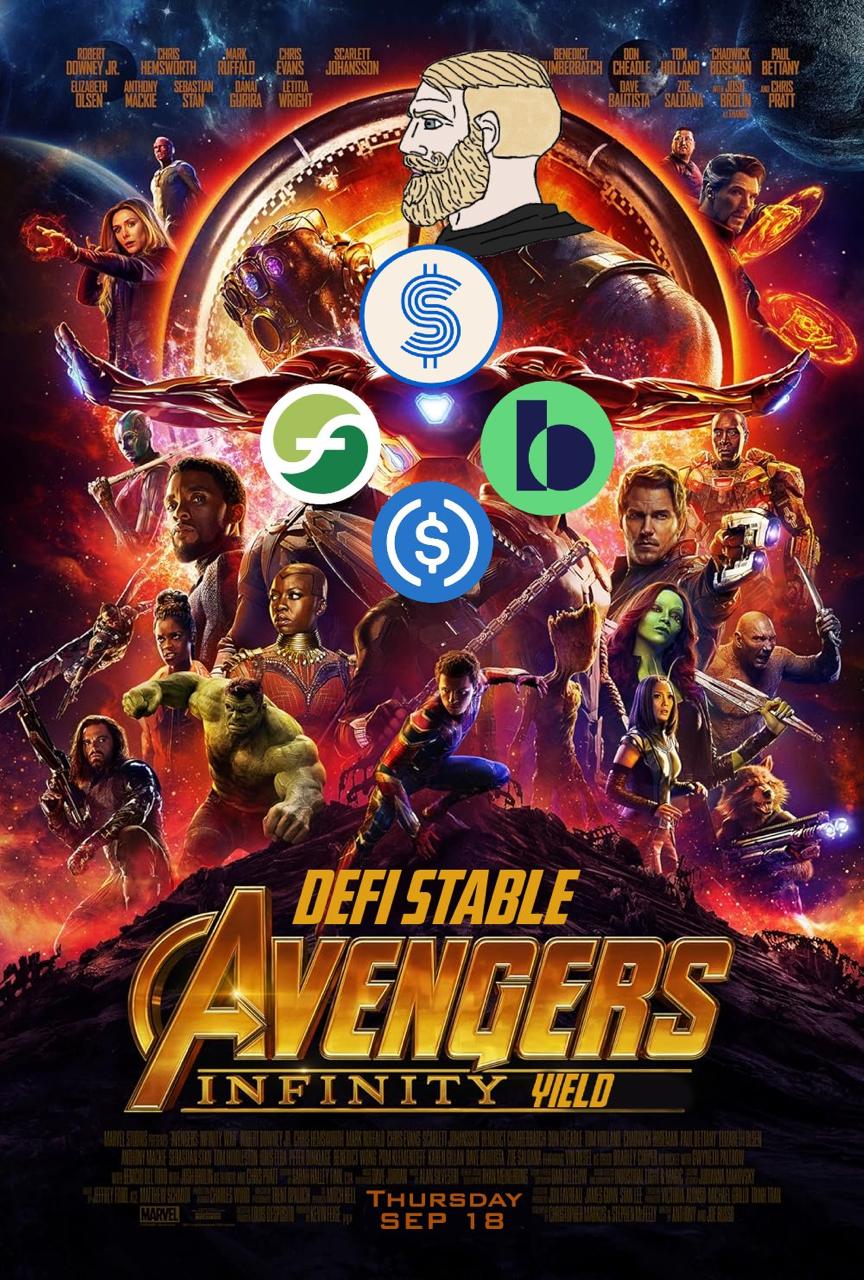
Asymmetry teases Thursday's launch of DegenBoxAF with the "DeFi Stable Avengers LP," a pool consisting of USDaf, USDC, BOLD, and fxUSD with efficient incentives

wat?
Core Architecture: Liquity v2 and Customizable Borrowing
The backbone of Asymmetry Finance is Liquity v2, an immutable lending framework that allows protocols to create over-collateralized stablecoin systems with built-in mechanisms for stability and liquidations. In this design, users deposit approved collateral assets into a vault, often referred to as a collateralized debt position, or CDP, and mint a stablecoin up to a certain percentage of the collateral’s value. The resulting stablecoin is intended to track the value of the U.S. dollar, while the system relies on liquidations and stability pools to remain solvent when collateral prices fall. Liquity v2 extends the original Liquity model by enabling additional design space, including customizable interest rates and new collateral types.
Asymmetry uses this framework to offer borrowing with customizable fixed interest rates, a feature it highlights as a key differentiator from many variable-rate DeFi money markets. Borrowers can choose their own fixed fee for borrowing USDaf against supported collateral, and these fees then flow back into the protocol as revenue that can be redirected to stability pools and yield-bearing wrappers. Because Liquity v2 is immutable and non-upgradeable, Asymmetry stresses that the core contracts cannot be paused, altered, or governed in a way that would change fundamental parameters after deployment, which is framed as a guarantee of trustlessness and censorship resistance. Governance via ASF focuses instead on peripheral aspects such as incentives, front-ends, and new product deployments rather than tinkering with the core protocol logic.
The choice of collateral types is central to the protocol’s risk profile. Asymmetry supports a mix of blue-chip assets and yield-bearing stablecoins as collateral for USDaf borrowing, including wrapped Bitcoin (wBTC), Threshold Bitcoin (tBTC), and several yield-bearing stablecoins such as sUSDS (Savings Sky Dollar), sfrxUSD (Staked Frax USD), scrvUSD (Savings Curve USD) and ysyBOLD (Yearn Savings BOLD). This design allows users to unlock liquidity from assets that themselves generate yield, effectively layering USDaf borrowing on top of existing yield strategies. The protocol has described its addressable market as over \(24\) billion U.S. dollars in these yield-bearing collateral assets, highlighting the size of the potential base for USDaf issuance.
The over-collateralization model aims to keep USDaf solvent and stable through market stress. Because borrowers must deposit more value in collateral than they mint in USDaf, and because positions below a certain collateralization ratio can be liquidated, the system is designed to remain backed even during sharp price moves in collateral asset markets. However, this relies heavily on accurate price oracles and deep liquidity for collateral assets, which is why Asymmetry’s later oracle-related incident – discussed below – is revealing. The protocol’s stability mechanisms are further reinforced by stability pools, where users can deposit USDaf and in return receive protocol revenue and liquidation proceeds, creating a backstop of liquidity ready to absorb under-collateralized positions.
One of Liquity v2’s selling points is its immutability and the absence of a traditional governance “kill switch,” which Asymmetry adopts wholesale. Immutability can be appealing in a sector wary of rug pulls or governance capture, but it also shifts the burden onto design-time risk management. Once a market is deployed, the team cannot easily change how it handles collateral or liquidations. This is one reason Asymmetry’s documentation stresses that the system is “entirely permissionless and non-upgradeable,” and why decisions about oracle providers and collateral onboarding are so critical. In practice, Asymmetry attempts to balance this rigidity by developing auxiliary products, such as yield wrappers and structured strategies, around the core protocol rather than inside it.
Finally, the Liquity-based architecture makes Asymmetry highly composable within DeFi. Because USDaf is an ERC-20 stablecoin and the protocol exposes stability pools and CDPs in a standard, permissionless way, other protocols can integrate USDaf as collateral, liquidity, or a yield source. This composability underlies the integrations with Curve’s “DeFi Stable Avengers LP,” Yearn’s vault infrastructure, and cross-stablecoin strategies involving BOLD and fxUSD, all of which build on the simplicity and predictability of Liquity-style stablecoin mechanics.
Asymmetry readers concentrated on Livestream on the upcoming $ASF launch, with Asymmetry Finance.
Stablecoin Suite: USDaf, ampUSD and the “U.S. Asymmetry Dollar”
Design Goals and SPOT Integration
USDaf is Asymmetry Finance’s flagship decentralized stablecoin, designed as a CDP-backed asset pegged to the U.S. dollar and issued against over-collateralized positions within the protocol. The team positions USDaf as a response to perceived shortcomings in both traditional CDP-based stablecoins such as DAI and newer synthetic-dollar designs like Ethena’s USDe. In particular, Asymmetry emphasizes that USDaf is fully on-chain and transparent in its yield generation, meaning that each component of its collateralization and revenue flows can be inspected on-chain without reliance on off-chain hedging strategies or opaque asset managers. This is intended to avoid the counterparty and basis risks associated with off-chain delta-hedging or treasury bill portfolios, while still providing competitive returns to USDaf holders and stakers.
A key technical underpinning of USDaf is its use of Ampleforth’s SPOT technology, which Asymmetry credits with enabling a more scalable and capital-efficient stablecoin architecture. SPOT introduces a mechanism for creating fully on-chain, inflation-resistant “unit of account” tokens, and Asymmetry leverages this technology to enhance the scalability and stability of USDaf relative to older CDP models. By building on SPOT, Liquity v2, and a diversified set of yield-bearing collateral assets, Asymmetry hopes to construct a stablecoin that is both decentralized and attractive enough to compete with centralized dollar tokens in DeFi-native contexts.
Beyond the core mechanics, the project has also highlighted institutional backing as a differentiator. Asymmetry is backed by F-Prime, the token venture arm of Fidelity Investments, which the team presents as a signal that USDaf is being built with institutional adoption and long-term sustainability in mind. This mix of crypto-native infrastructure and traditional capital markets backing reflects the broader trend of hybrid stablecoin projects that aim to satisfy both on-chain transparency demands and off-chain regulatory and investor expectations.
Collateral Types and Risk Parameters
The collateral backing USDaf includes both “hard” crypto assets and yield-bearing stablecoins, which introduces a layered risk and reward structure. On the one hand, assets such as wBTC and tBTC expose the system to Bitcoin price volatility and to oracle or bridge risks associated with wrapped forms of BTC. On the other hand, yield-bearing stablecoins like sUSDS, sfrxUSD, scrvUSD, and ysyBOLD bring in additional yield streams that can be passed to USDaf stakers and sUSDaf depositors, but they also transmit risks from the underlying protocols that issue those yield-bearing tokens. This collateral design makes USDaf a nexus of several DeFi risk surfaces, including liquid staking systems, stablecoin issuers, and bridges, all of which must function correctly to maintain USDaf’s over-collateralization.
The protocol itself sets borrowing constraints, including maximum loan-to-value ratios and minimum collateralization thresholds, to ensure that any sharp move in collateral prices can be handled via liquidations. When a borrower’s position falls below the required collateralization level, their collateral can be partially or fully liquidated, with USDaf from stability pools used to repay their debt. In return, stability pool depositors receive the liquidated collateral at a discount, as well as protocol fees, aligning their incentives with the long-term health of the system. This mechanism is inherited from the Liquity family of protocols and is central to the promise that USDaf will remain solvent without needing discretionary interventions.
Asymmetry’s public positioning stresses that USDaf is “decentralized” and “immutable,” but in practice the choice of collateral and oracle feeds introduces points of fragility, as later events with tBTC showed. The fact that many collaterals are themselves complex DeFi instruments, such as yield-bearing stablecoins or synthetic assets, adds further complexity to risk assessment. Nonetheless, this composition is also what allows Asymmetry to advertise an addressable collateral market in the tens of billions of dollars, with a correspondingly large potential supply for USDaf if market participants embrace the system.
Naming Evolution and Relationship to BOLD and fxUSD
Asymmetry’s stablecoin branding has evolved over time, reflecting both technical integrations and marketing considerations. Initially, the team promoted a concept called USA.d, branded as the “U.S. Asymmetry Dollar,” presented as a decentralized, over-collateralized stablecoin that would allow users to borrow against a large basket of cryptoassets while choosing their own interest rate, powered by Liquity v2. Over the following months, Asymmetry announced that the naming would change: USDaf would become ampUSD, aligning more explicitly with the Ampleforth/SPOT brand, while USA.d would be renamed USDaf and positioned as the main Asymmetry-branded stablecoin. This renaming aimed to separate the SPOT-aligned asset from the Liquity v2-based Asymmetry dollar while keeping the latter’s ticker recognizable in DeFi markets.
The evolving naming sometimes creates confusion for new users, especially because different articles, docs pages, and user interfaces may refer to USDaf or ampUSD at different points in this timeline. For evergreen understanding, it is useful to treat Asymmetry’s stablecoin suite as consisting of two related but distinct lines: a SPOT-aligned asset (ampUSD) and the Liquity v2-powered Asymmetry dollar (now called USDaf) that underpins the borrowing and yield strategies discussed here. Both are meant to be decentralized stablecoins, but they occupy slightly different positions in the product stack, with USDaf playing a more central role in the borrowing markets and sUSDaf strategies.
Asymmetry also interacts closely with other decentralized stablecoins, particularly BOLD from Liquity Protocol and fxUSD, through shared liquidity pools and yield programs. BOLD is Liquity’s own v2 stablecoin, and Asymmetry has collaborated with Liquity and others on the “DeFi Stable Avengers LP” on Curve, a multi-stable pool containing USDaf, USDC, BOLD, and fxUSD. This pool is designed as a hub of liquidity and incentives across several decentralized stablecoin ecosystems, with the goal of making it easier for users to move between them while earning yield on Curve. By aligning itself with BOLD and fxUSD in a shared pool, Asymmetry positions USDaf not as an isolated asset but as part of a broader alliance of decentralized stablecoins pursuing liquidity and composability in DeFi.
USDaf in Practice: Borrowing, Trading, and Use Cases
In practical terms, users can obtain USDaf in two main ways: by borrowing against eligible collateral in Asymmetry’s Liquity v2 markets, or by purchasing it on secondary markets such as decentralized exchanges. Borrowers who want to unlock liquidity without selling their BTC or yield-bearing stablecoins can open a vault, choose a fixed borrowing fee, and mint USDaf, which they can then deploy into other DeFi strategies, swap into other assets, or deposit into stability pools to earn protocol revenue. For users not interested in borrowing, Asymmetry’s documentation explicitly notes that USDaf can be acquired directly on the open market and then staked or deposited into yield strategies, without ever opening a loan.
The USDaf token circulates across various DeFi venues. On the Asymmetry app, users are directed to swap interfaces such as CoW Swap to trade between USDC and USDaf or to move into USDaf-ready collateral assets. On Curve, USDaf participates in the DeFi Stable Avengers LP alongside USDC, BOLD, and fxUSD, where liquidity providers can earn trading fees and additional incentive tokens. This cross-stable liquidity is essential for keeping USDaf close to its peg and ensuring that new entrants can easily buy or sell it at scale, a critical property for any stablecoin that aspires to become a meaningful medium of exchange or collateral in DeFi.
Over time, USDaf has seen periods of rapid growth in outstanding borrows and yield opportunities, with coverage noting that it has approached several million dollars in borrowing and at times offered very high incentive-driven yields in tokens such as CRV and DAI to users participating in the associated liquidity pools. These yields reflect not only the intrinsic revenue from borrowing fees but also external incentives provided by Asymmetry and partner protocols to bootstrap liquidity and adoption. While such high yields can be attractive, they are by nature variable and driven by token emissions, which means they should not be treated as static or guaranteed returns.

The new $USDaf from Asymmetry Finance is closing in on $5MM in borrows, with over 100% yield in $CRV and $DAI


What a time to be liquid staking! Earning on the asymmetric forms of a staked asset. Sweet!
Yield Strategies: sUSDaf, Stability Pools and the “DeFi Stable Avengers” LP
Stability Pools and Protocol Revenue
Stability pools are a core feature of Liquity-style protocols and form the foundation for Asymmetry’s yield strategies around USDaf. In essence, a stability pool is a smart contract into which users can deposit USDaf to help backstop the system in cases where borrower positions fall below the required collateralization ratio. When such under-collateralized positions arise, the protocol can cancel the borrowers’ debt using USDaf from the stability pool and transfer their collateral to the pool, typically at a discount. This process keeps USDaf fully backed while rewarding stability pool participants with liquidation gains.
In addition to liquidation proceeds, stability pools at Asymmetry receive a significant share of the borrowing fees paid by users minting USDaf. The documentation notes that when users borrow USDaf, they pay a fixed fee of their choice, with 75% of those fees directed to the stability pools. This makes stability pools a central conduit for protocol revenue, turning USDaf deposits into a source of native yield that is directly linked to borrowing activity. The more demand there is for USDaf loans, the more fees flow into stability pools, and the higher the potential return for USDaf depositors, all else equal.
However, managing deposits across multiple stability pools can be complex. Asymmetry’s architecture allows multiple collateral types and potentially multiple “markets,” each with its own stability pool dynamics and risk profile. A sophisticated user might try to allocate USDaf across these pools to maximize expected yield based on borrowing volumes and collateral volatility, but doing so manually would be time-consuming and error-prone. This complexity is precisely what sUSDaf aims to mitigate.
sUSDaf: One-Click Optimization with Yearn
sUSDaf is a yield-bearing, ERC-4626-compliant token that acts as a wrapper around USDaf deposits into Asymmetry’s stability pools. Built in partnership with Yearn Finance on Yearn v3, sUSDaf provides a one-click way for users to deposit USDaf and automatically gain exposure to the highest-yielding combination of stability pools, with yields auto-compounded over time. Technically, users deposit USDaf into the sUSDaf vault and receive sUSDaf tokens representing their share of the vault’s underlying assets and accrued yield. The vault, in turn, deploys the USDaf across available stability pools according to optimization strategies defined within Yearn’s infrastructure.
The documentation describes sUSDaf as “auto-compounding” and “auto-rebalancing,” with rebalancing and compounding occurring roughly hourly to keep allocations in line with yield opportunities. Without sUSDaf, a user seeking to optimize USDaf yields would need to monitor multiple stability pools, move funds between them, and manually harvest and re-deposit rewards. With sUSDaf, all of that is abstracted into a single ERC-4626 token, making the strategy more accessible to less active users while retaining full on-chain transparency via Yearn’s vault contracts. This structure also makes sUSDaf compatible with other DeFi protocols that understand ERC-4626 tokens, as it can be used as collateral or liquidity in systems that accept yield-bearing vault shares.
sUSDaf’s yield comes from three main sources: borrowing fees paid by USDaf borrowers, liquidation gains from under-collateralized positions, and external incentive tokens provided to stability pools or secondary liquidity pools where sUSDaf or its underlying USDaf are deployed. At times, Asymmetry and partner protocols have offered substantial incentives, such as CRV and DAI rewards, to sUSDaf-related pools on platforms like Curve and Pendle, pushing effective yields into triple-digit annualized ranges during early bootstrapping phases. While these headline yields can be attention-grabbing, they inherently depend on the scale and duration of incentive programs and should be understood as dynamic rather than structural features of the protocol.
sUSDaf itself can also be used in additional DeFi strategies. Asymmetry’s docs reference an sUSDaf liquidity pool on Pendle Finance, where users can trade future yield exposure or lock in yields over specific periods. This composability underscores a key design principle for Asymmetry: each product is built to be a Lego brick in the broader DeFi ecosystem, enabling layered strategies in which USDaf is borrowed, wrapped into sUSDaf for optimized stability pool yield, and then deposited into secondary markets for further yield or hedging possibilities.
Cross-Stable Liquidity: Curve’s DeFi Stable Avengers LP and DegenBoxAF
Liquidity is critical for any stablecoin to function effectively, and Asymmetry has leaned heavily on Curve Finance for USDaf’s liquidity footprint. The “DeFi Stable Avengers LP” is a Curve pool composed of USDaf, USDC, BOLD, and fxUSD, positioned as a hub for trading between multiple decentralized and centralized stablecoins while offering attractive yields to liquidity providers. Liquity Protocol itself has promoted this pool, describing its yields as “juicy” and noting that it is “tailor made” for users of BOLD and fxUSD, with Asymmetry’s USDaf completing the mix. The pool’s design leverages Curve’s metapool mechanics to keep slippage low for swaps between any of the constituent stablecoins, supported by a combination of trading fees and external incentives.
For Asymmetry, participation in the DeFi Stable Avengers LP serves two strategic goals. First, it deepens liquidity for USDaf, making it easier for users to enter and exit positions without moving the market, which is vital for maintaining the peg and fostering confidence. Second, it embeds USDaf within a network of allied decentralized stablecoins, notably BOLD and fxUSD, which share similar design philosophies and user bases. By routing incentives and liquidity to a shared pool, the involved projects can potentially achieve more robust liquidity than they might individually, particularly in the early stages of adoption.
Building on this, Asymmetry has teased a product called “DegenBoxAF,” framed as a strategy that will sit atop the DeFi Stable Avengers LP. While full technical details are still emerging, the conceptual idea is to create a leveraged or structured product that uses the Avengers LP as its base, enabling users to amplify their exposure to LP yields and incentives while managing downside risk. In line with Asymmetry’s overarching approach, such a product would likely integrate borrowing, stablecoin LP positions, and auto-compounding strategies, providing a packaged way for users to pursue higher returns without manually orchestrating complex transactions across multiple protocols.
Structured Products: afCVX and Liquid Staking Strategies
Asymmetry’s roots lie partly in structured products built around liquid staking and governance tokens. One of its flagship early offerings, afCVX, exemplifies this approach. afCVX is designed as a “one-click” way to maximize yield on the Convex Finance token, CVX, by handling the complexities of vote-locking and liquidity deployment on behalf of users. Convex’s standard mechanism involves locking CVX for long periods to gain boosted rewards and governance power, which many users are unwilling to do directly. afCVX abstracts that friction by accepting CVX deposits and executing a strategy that seeks to earn more CVX and other rewards without subjecting users to the full lock-up or management burden.
In a similar vein, Asymmetry has explored structured strategies around liquid staking derivatives such as afETH, which allow users to gain enhanced yield on staked ETH positions by routing them through DeFi governance and incentive systems. These structured products share a design philosophy with sUSDaf: they are yield-maximizing wrappers that take on operational and strategy complexity in exchange for offering users a simple token that represents a claim on a basket of carefully managed DeFi positions. The same know-how in building such wrappers informs the design of sUSDaf and likely future products in the USDaf and ampUSD ecosystem.
Governance, Tokenomics and Community
ASF: The Asymmetry Governance Token
Governance of the Asymmetry ecosystem is coordinated through the ASF token, which is live on Ethereum and used by the Asymmetry DAO. ASF is positioned as a traditional DeFi governance token, giving holders a say in protocol decisions such as parameter tweaks (where possible), collateral onboarding for new markets, incentive allocations, and potentially the deployment of new products across the Asymmetry suite. Because the core Liquity v2 contracts are immutable and non-upgradeable, governance focuses more on what is built around those contracts – for example, sUSDaf strategies, LP incentive programs, front-end configurations, and new structured products – rather than on altering fundamental borrowing mechanics.
The launch of ASF drew notable attention within the DeFi community. During its crowdsale on Fjord Foundry, ASF reportedly set a new record by raising around one million U.S. dollars in the first ten minutes, with more than two-thirds of the offered tokens sold in that early window. This rapid uptake suggests significant market interest in Asymmetry’s vision and in the governance rights attached to ASF. Later, ASF went live on Ethereum mainnet, allowing holders to trade, participate in DAO votes, and align economically with the long-term success of USDaf and related products.
Governance using ASF is complemented by a community of power users, liquidity providers, and content creators. Asymmetry has taken part in livestreams with outlets such as Leviathan News and creators like Cryptovestor, discussing topics ranging from the ASF launch to the design of USDaf and the role of customized stablecoins in the DeFi landscape. These community touchpoints, along with podcasts and AMAs, help inform users about the protocol’s mechanics and risks and provide informal feedback channels into governance deliberations. Over time, the locus of power is intended to shift more fully to the DAO, as is typical of DeFi projects that move from founder-led development to community stewardship.
Distribution, Incentives, and Investor Relations
ASF’s distribution mixes public sales, likely allocations to early backers and the team, and emissions or incentives tied to protocol usage, although specific tokenomics details are still evolving publicly. What is clear from the project’s communications is that it has made a point of aligning early investor incentives with the protocol’s long-term prospects. One notable move was the decision to postpone private investor unlocks by several months, with the stated aim of improving the project’s chances of listing on major centralized exchanges and giving the market more time to establish a fair price for ASF before significant new supply becomes liquid. This kind of adjustment reflects a growing awareness across DeFi that misaligned unlock schedules can destabilize token economies and damage community trust.
Beyond direct ASF distribution, Asymmetry uses a combination of ASF incentives, stablecoin liquidity rewards, and partner token emissions (such as CRV or BOLD-related incentives) to bootstrap usage of USDaf, sUSDaf, and associated liquidity pools. This multi-token incentive environment can be complex for newcomers but is a core mechanism for early-stage DeFi protocols to gain traction. One advantage of Asymmetry’s approach is that many of its yield-bearing wrappers, like sUSDaf and afCVX, are designed to compound rewards into the underlying strategies, making it easier for users to benefit from incentives without active management.
On the investor relations side, Asymmetry’s backing from F-Prime, the venture arm of Fidelity Investments, is often highlighted as a sign of institutional seriousness. This support does not immunize the project from risk, but it suggests a higher level of due diligence and strategic planning than is typical for purely grassroots DeFi experiments. Coupled with thoughtful adjustments to unlock schedules and a focus on long-term product-market fit, these investor relations choices contribute to Asymmetry’s positioning as a protocol that intends to straddle the line between DeFi-native experimentation and institutional-grade infrastructure.
Ecosystem, Media Presence, and Education
From its structured products like afCVX to its stablecoin innovations, Asymmetry has actively engaged with crypto media and educational platforms. Podcast appearances, including discussions with stakeholders such as Justin Garland and Hannah, have delved into topics like the evolution of DeFi yield, the importance of sustainable returns, and the trade-offs between various stablecoin architectures. Livestreams focused on the ASF launch and on USDaf’s integration into the DeFi Stable Avengers LP have served both as marketing events and as opportunities to explain complex topics like Liquity v2, stability pools, and ERC-4626 vaults in more accessible language.
Educational efforts also appear in Asymmetry’s written materials. For example, the Substack essay “Lessons Learned from Stablecoin Innovation” situates USDaf within a broader historical narrative of stablecoin experiments, from early over-collateralized models to algorithmic and basis-trading designs. The piece contrasts USDaf’s fully on-chain approach with Ethena’s partially off-chain basis-trade strategy and with MakerDAO’s increasing reliance on real-world assets, arguing that a transparent, CDP-based design remains attractive for users who want to minimize opaque counterparty risk. The project’s docs further reinforce these themes, providing detailed explanations of borrowing, collateral, stability pools, and the sUSDaf vault.
These media and educational activities help Asymmetry cultivate a community that understands both the potential and the risks of its products. In a DeFi environment where yield is often advertised without clear explanations of its sources, Asymmetry’s emphasis – at least in its official communications – on on-chain transparency and risk-aware design is noteworthy. Whether this narrative holds up in practice depends on the protocol’s operational track record and its response to incidents, which brings us to the tBTC oracle issue.

⚠️ Asymmetry Team halts USDaf deployment due to tBTC Oracle issue, urges users to close positions as redeployment plans emerge
Risks, Incidents and Regulatory Context
Oracle and Collateral Risks: The tBTC Incident
Despite its emphasis on immutability and decentralization, Asymmetry is not immune to operational risks, particularly those arising from oracles and collateral assets. A notable example came when the team announced an issue related to the oracle for Threshold Bitcoin (tBTC), one of the collateral types accepted for USDaf borrowing. According to Asymmetry’s communication, they were informed of a potential problem with the tBTC oracle that could affect USDaf’s safety, prompting the team to halt USDaf deployment and urge users to close positions while they evaluated and addressed the issue. This incident underscores how crucial accurate and reliable price feeds are for over-collateralized stablecoin systems.
In an immutable Liquity v2-based architecture, oracle misbehavior can be particularly dangerous, because the contracts rely on these external price inputs to determine whether positions should be liquidated and at what valuations. If an oracle overstates the value of tBTC, for example, borrowers could mint more USDaf than their collateral is truly worth, potentially leaving the system under-collateralized when the error is corrected. Conversely, if an oracle understates the price, it could trigger unnecessary liquidations, harming users who otherwise would have remained safely collateralized. Asymmetry’s decision to pause deployment and encourage user exits reflects a conservative approach to such risk, trading off short-term growth for long-term stability.
This episode highlights a tension inherent in immutable DeFi protocols. On the one hand, immutability and lack of upgradability help prevent governance attacks and sudden parameter changes that might harm users. On the other hand, they limit the protocol’s ability to react to unforeseen issues in critical dependencies like oracles and collateral bridges. As a result, much of the real governance happens before deployment, in the choice of oracle providers, collateral types, and protocol parameters. Asymmetry’s experience with tBTC will likely inform future collateral onboarding decisions and may lead the DAO to favor assets with more battle-tested oracle and bridge infrastructure.
Smart Contract, Peg Stability and Yield Risks
Like all DeFi protocols, Asymmetry is exposed to smart contract risks. Liquity v2 may be well-audited and widely used, but bugs or unforeseen interactions can never be entirely ruled out. Similarly, the integrations with Yearn v3 in sUSDaf, Curve in the DeFi Stable Avengers LP, and other external protocols add layers of composability that also increase systemic complexity. A vulnerability in any of these systems could cascade into losses for USDaf holders, sUSDaf depositors, or liquidity providers. Proper audits, bug bounties, and cautious deployment practices are therefore essential, even if immutability prevents post-deployment changes to core contracts.
Peg stability is another key concern. While over-collateralization and deep liquidity pools help keep USDaf near its dollar peg, several factors can still cause deviations. Large-scale liquidations, sudden collateral price crashes, or liquidity imbalances in major pools like the DeFi Stable Avengers LP could all push USDaf off-peg, at least temporarily. Moreover, high incentive-driven yields can draw in speculative capital that may exit quickly when rewards decrease, potentially leading to sharp shifts in liquidity and slippage conditions. As with many DeFi stablecoins, sustained, organic demand for USDaf’s utility – as collateral, as a unit of account for DeFi strategies, or as a yield-bearing asset through sUSDaf – is crucial for maintaining peg stability over the long run.
Yield risk is also non-trivial. sUSDaf’s returns depend on borrowing activity, liquidation events, and incentive programs. If borrowing demand falls, returns from fees will decline, and if incentives are reduced or reallocated, overall yields could drop substantially. Users who allocate capital based on past yields without understanding these dynamics may be disappointed or, in extreme cases, pushed to unwind positions in ways that stress the system. Asymmetry’s choice to focus on fully on-chain yield sources, as opposed to off-chain strategies like basis trades on centralized exchanges, does mitigate some systemic and counterparty risks, but it does not eliminate economic or market risks associated with changing DeFi conditions.
Regulatory and Macroeconomic Considerations
The rise of yield-bearing stablecoins has drawn increasing regulatory scrutiny, particularly from banking and financial stability authorities. A report highlighted by the Bank Policy Institute points out that any substantial migration of deposits from the traditional banking system into yield-bearing stablecoins could reduce bank deposits and lending capacity, raising potential concerns for credit availability and financial stability. While that report is not about Asymmetry specifically, it underscores a broader trend: regulators are paying attention to stablecoins that blur the line between payments instruments, investment products, and money-market fund substitutes.
Asymmetry’s model differs from many RWA-backed or off-chain-yield stablecoins in that it uses crypto collateral and on-chain mechanisms rather than Treasuries or commercial paper. This may spare it from some regulatory issues tied directly to holding and managing real-world financial instruments, but it does not automatically exempt it from securities, derivatives, or banking scrutiny, especially if USDaf or sUSDaf are marketed primarily as yield-bearing investment products. The presence of institutional backers like F-Prime also means that Asymmetry must navigate a regulatory landscape that is increasingly attentive to DeFi protocols with significant U.S. investor participation.
Moreover, macroeconomic conditions affect DeFi stablecoins indirectly. When interest rates on traditional bank deposits or Treasury bills are high, the relative attractiveness of DeFi yields may decline, particularly after adjusting for risk. Conversely, in low-rate environments, high on-chain yields may draw more capital into protocols like Asymmetry. The interplay between on-chain and off-chain rates can influence stablecoin adoption patterns, with research suggesting that yield-bearing stablecoins could divert capital away from banks when on-chain yields are significantly higher than traditional deposit rates. For Asymmetry, staying competitive in this environment likely means continuing to refine its on-chain yield mechanisms while ensuring that risk disclosures and transparency remain robust.
How Asymmetry Fits into the Stablecoin Landscape
CDP-Based, Delta-Hedged and RWA-Backed Models
The broader stablecoin ecosystem can be roughly divided into three archetypes: CDP-based stablecoins like DAI and USDaf, delta-hedged synthetic dollars like Ethena’s USDe, and RWA-backed tokens such as USDC or tokenized money-market funds. Each model has distinct risk and trust characteristics, and Asymmetry’s positioning is best understood in comparison with these alternatives. CDP-based stablecoins rely on over-collateralization with crypto assets and on-chain liquidation mechanisms, offering full transparency but limited capital efficiency. Delta-hedged stablecoins like USDe may hold collateral such as ETH or BTC while shorting equivalent notional exposure via perpetual futures, creating a synthetic dollar exposure but with significant reliance on centralized exchanges and off-chain derivatives markets. RWA-backed coins hold assets such as T-bills or cash-like instruments off-chain in bank or custodian accounts.
Asymmetry’s USDaf is firmly in the CDP camp, inheriting much of its design from Liquity-style architectures. The protocol’s Substack commentary explicitly contrasts USDaf’s on-chain yield with Ethena’s off-chain basis-trade model, arguing that USDaf avoids the custodial and exchange risks associated with that approach. At the same time, Asymmetry criticizes DAI’s increasing dependence on RWA and centralized stablecoins as collateral, framing USDaf as a purer crypto-native alternative that does not rely on opaque off-chain portfolios or discretionary governance interventions in collateral management.
Against RWA-backed stablecoins like USDC, Asymmetry’s primary differentiator is censorship resistance and transparency. USDaf is not redeemable from a centralized issuer for U.S. dollars; instead, its peg is maintained via arbitrage markets and the over-collateralized structure of the underlying protocol. This means holders of USDaf do not have a direct claim on real-world dollars but instead hold a claim on the value of collateral locked in smart contracts. For DeFi-native users who care about on-chain composability and resistance to blacklisting or account freezes, this trade-off can be attractive, even if it means giving up the legal redemption rights associated with centralized stablecoins.
Composability with Ethena, BOLD, fxUSD and Other Protocols
Even as Asymmetry differentiates itself on design grounds, it actively collaborates with other stablecoin projects in practice. The DeFi Stable Avengers LP on Curve is a prime example, bringing together USDaf, USDC, BOLD, and fxUSD in a single liquidity pool. BOLD, a Liquity v2-native stablecoin, shares many design principles with USDaf, while fxUSD adds another decentralized dollar to the mix. By pooling these assets, the involved protocols align themselves as part of a broader decentralization-focused stablecoin alliance, jointly working to deepen liquidity and make it easier for users to move between different decentralized dollars depending on their needs.
Asymmetry also engages with other yield-bearing stablecoins and structured products. Its acceptance of yield-bearing collateral such as sUSDS, sfrxUSD, scrvUSD, and ysyBOLD underscores how entwined it is with the broader DeFi stablecoin and LSD ecosystem. In addition, more recent integrations have included collateral such as Ethena’s sUSDe, effectively allowing users to borrow USDaf against a delta-hedged synthetic dollar while then potentially using USDaf in other strategies. This creates layers of exposure: a user might hold sUSDe, borrow USDaf, convert it to sUSDaf, and then deposit sUSDaf into secondary pools, combining off-chain and on-chain yield streams in a single, albeit complex, portfolio.
These composability patterns illustrate both the power and the risk of DeFi. On the one hand, they allow sophisticated users to construct unique risk/return profiles that are very difficult to replicate in traditional finance. On the other hand, they tie protocols together in ways that can transmit stress. A shock to Ethena’s USDe model, a bug in Curve, or an issue in Liquity v2 could all reverberate through Asymmetry’s ecosystem, impacting USDaf, sUSDaf, and ASF holders indirectly. As such, understanding Asymmetry’s role in the stablecoin landscape involves not only its internal mechanics but also its network of external integrations.
Outlook
Asymmetry Finance sits at an interesting crossroads in DeFi, combining a battle-tested CDP model via Liquity v2 with ambitious stablecoin and yield strategies that lean into full on-chain transparency. USDaf and sUSDaf aim to provide a decentralized, over-collateralized alternative to both centralized and off-chain-yield stablecoins, while integrations like the DeFi Stable Avengers LP and upcoming strategies such as DegenBoxAF highlight the protocol’s focus on composability and cross-ecosystem collaboration. The ASF token and the Asymmetry DAO give the community tools to steer incentives and product direction, although the immutable nature of the core contracts means governance must be especially careful in its ex ante decisions.
Looking ahead, Asymmetry’s trajectory will likely depend on several factors. First, the protocol’s ability to maintain resilient oracles and prudent collateral onboarding – particularly in light of the tBTC incident – will be crucial for preserving trust in USDaf as a stable, over-collateralized asset. Second, continued integration with blue-chip DeFi protocols such as Yearn, Curve, and others will determine how central USDaf and sUSDaf become in yield and liquidity strategies across the ecosystem. Third, regulatory developments around yield-bearing stablecoins and DeFi governance tokens could influence how easily institutional and retail capital can flow into ASF and USDaf-based strategies.
If Asymmetry can navigate these challenges, it has the potential to become a durable fixture in DeFi’s stablecoin landscape, offering a credible alternative for users who value on-chain transparency, customizable interest rates, and composable yield-bearing assets. For a crypto news audience and DeFi participants, the key metrics to watch will be USDaf’s outstanding supply and peg stability, sUSDaf’s adoption and yield sustainability, the evolution of ASF governance, and the protocol’s responses to future stress events. Together, these will determine whether Asymmetry’s promise of “customized stablecoins” translates into long-term relevance in an increasingly crowded and scrutinized stablecoin market.
Latest Asymmetry news
Asymmetry teases Thursday's launch of DegenBoxAF with the "DeFi Stable Avengers LP," a pool consisting of USDaf, USDC, BOLD, and fxUSD with efficient incentivesThe new $USDaf from Asymmetry Finance is closing in on $5MM in borrows, with over 100% yield in $CRV and $DAI⚠️ Asymmetry Team halts USDaf deployment due to tBTC Oracle issue, urges users to close positions as redeployment plans emerge Asymmetry Finance launches ‘sUSDaf’ with Yearn, offering one-click yield optimization for USDaf holders
 Asymmetry Finance launches USDaf, an immutable stablecoin borrowed at user-fixed interest rates
 Asymmetry Finance Introduces $sUSDaf, a yield bearing stablecoin designed to maximize earnings on $USDaf - built in partnership with Yearn Finance
Sources
19 records from 12 domains
castleisland.vc
x.com
sciencedirect.com
home.asymmetry.finance
bpi.com
afcvx.com
asymmetry.finance
usdaf.asymmetry.finance
reports.weforum.org
docs.asymmetry.finance
asymmetryfin.substack.com
iq.wiki
Community notes
Spot something off or out of date? Drop a note. Editors review topic notes daily and roll accepted fixes into the explainer — contributors are recognized in the monthly $SQUID drop.
Loading notes…
Help improve this topic
Have a story or tip about this topic? Submit it. See something missing? Leave a note. Editors review daily; accepted submissions and fixes count toward the monthly $SQUID drop.