
Deep dive explainer on vibe coding in crypto: how AI-driven natural-language development is reshaping onchain agents, DeFi, and games via platforms like COTI, 0G, YGG, and EVM IDEs, plus the security and governance challenges ahead.
+4 sources across the wider coverage universe
 Want to vibe code like Johnnyonline? A practical guide explains how “vibe coding” lets anyone build software by describing ideas to AI tools, iterating fast, and focusing on what to build rather than how to code, dramatically lowering the barrier to creating real apps.2025-12
 The vibe coding apocalypse. The uncomfortable truth the engineering world is trying to ignore: Software is no longer a craft; it is a content stream.2026-02
 Ethos announced its first-ever Vibeathon, a vibe-coding contest happening next week with $40k+ in prizes and 10M XP. Open to anyone using Ethos’ onchain reputation, with Claude credits, Base sponsorship, and live judging on X.2026-01
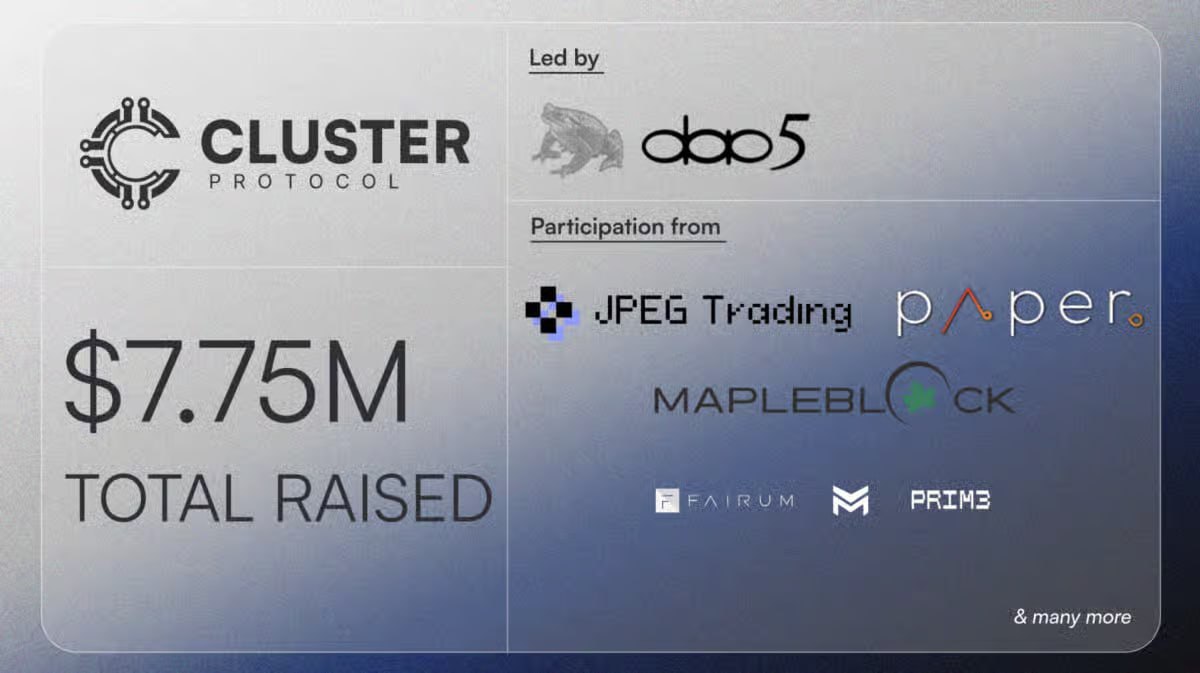 Cluster Protocol raises $5 million to accelerate CodeXero, a browser-native vibe coding AI IDE for EVM, bringing total funding to $7.75 million.2026-04
 NoahAI is hosting the first Solana Vibe Coding Hackathon, focused on shipping real products fast using AI. Builders join weekly SuperTeam sprints, deploy live apps, share progress, and compete for prizes, credits, and up to $100K in fundraising.2026-01
 I trust Coinbase more than most CEX, but seeing them embrace vibe coding to this extent is a good ti
Vibe Coding in Crypto: How AI-Built Apps Are Moving Onchain
Vibe coding is an AI-driven way of building software where you describe what you want in natural language and let an AI system generate most of the code and structure for you. In crypto and Web3, this approach is rapidly being applied to onchain agents, DeFi tools, and games, allowing both developers and non‑developers to launch functional apps, agents, and experiments on networks like COTI, EVM chains, and emerging AI-first platforms such as 0G with far less manual coding.
What Is Vibe Coding?
At its core, vibe coding is a style of software development in which natural‑language prompts replace a large portion of traditional hand-written code. Instead of manually specifying every function and data structure, the builder describes the desired behavior, interface, and “vibe” of the application in plain language, and an AI model generates code, configuration, and sometimes even deployment scripts to match that intent. Google’s AI Studio explicitly frames “vibe coding” as a way to build apps “using only your words instead of complex code,” where you simply describe the goal of a project and let the system assemble the implementation. Security researchers at Backslash describe the same phenomenon as “building software by describing what you want in natural language and letting AI generate the code,” emphasizing that the developer now guides outcomes through prompts and iteration rather than line-by-line syntax.
Although the phrase “vibe coding” originally circulated as a kind of in‑joke about fully surrendering to AI-generated code, it has since evolved into a serious label for an emerging development paradigm. Hugging Face’s exploration of “VibeGame” traces the term back to a viral tweet by Andrej Karpathy, characterizing vibe coding as “fully giv[ing] in to the vibes, embrac[ing] exponentials and forget[ting] the code even exists.” Over time this playful definition has been tempered into a more practical one, particularly in engineering and security circles, where vibe coding is now framed as a spectrum ranging from quick‑and‑dirty prototypes to rigorous AI‑assisted engineering workflows. This evolution matters in crypto, where code often directly controls financial value and onchain state, and where a purely carefree attitude to AI-written contracts would be untenable.
The practice of vibe coding usually involves iterative dialogue with one or more AI assistants that can read, write, and refactor code in real time. A builder might start a session by pasting a description of their idea, such as a “non‑custodial yield dashboard with private alerts,” then ask the AI to scaffold a front end, API layer, smart contracts, and tests. Advanced workflows, such as those demonstrated using repo2txt plus Google’s Gemini models, involve feeding an entire codebase to a large‑context model so it can debug complex issues across many files with a single high‑level prompt, rather than the developer manually tracing each error. This conversational loop of generating code, running it or simulating it, then refining the prompts based on observed behavior is what gives vibe coding its characteristic feeling of “steering” rather than “writing” software.
Importantly, vibe coding sits somewhere between traditional programming and fully no‑code tools. No‑code platforms usually constrain the user to predefined components and visual flows, while vibe coding, as defined in the Backslash and VibeGame discussions, harnesses general‑purpose AI models that can in principle generate arbitrary code in languages like Solidity, Rust, TypeScript, or Python. This means vibe coders can tap into almost the full expressiveness of conventional programming, but they often do so without needing to master the syntax themselves, relying instead on their ability to specify requirements clearly, to inspect AI output critically, and to define acceptance tests or constraints. For crypto builders, this duality—near‑full power with lower entry barriers—explains much of the enthusiasm around applying vibe coding to smart contracts, agents, and onchain games.

Want to vibe code like Johnnyonline? A practical guide explains how “vibe coding” lets anyone build software by describing ideas to AI tools, iterating fast, and focusing on what to build rather than how to code, dramatically lowering the barrier to creating real apps.

Not to be confused with Johnny's good vibes while he is coding haha, "you describe what you want. the ai writes code. you test it. you iterate. you repeat until it works. that's vibe coding."
From Meme To Method: How The Concept Evolved
The cultural trajectory of vibe coding mirrors broader shifts in how developers relate to AI assistance. Early adopters treated tools like GitHub Copilot or chatbot‑style assistants as productivity boosters inside traditional workflows, still writing most of the architecture and key logic by hand while letting AI fill boilerplate or translate between languages. As models improved, more ambitious experiments appeared in which builders would attempt to specify whole apps or games in conversational language and accept whatever code the system produced—essentially the “full vibe coding” mode. Projects documented by the VibeGame team, where people tried to “vibe code” games from scratch, show that this can work surprisingly well at the beginning but tends to break down as complexity grows and architectural decisions accumulate.
Security practitioners now formalize this diversity of practice as a continuum of modes rather than a single homogeneous idea. Backslash’s “Vibe Coding Spectrum” distinguishes between full vibe coding, where AI suggestions are accepted with minimal review; guided vibe coding, where developers prompt, inspect diffs at a high level, and make small conversational adjustments; and structured AI‑assisted engineering, which embeds AI deeply into professional workflows but insists on code review, tests, and governance. The paper argues that this spectrum is not purely academic; instead, which mode you choose should depend on how long the code will live, how much money or data depends on it, and whether the project is disposable experimentation or mission‑critical infrastructure. In a crypto context, that means the same developer might fully vibe code an internal analytics dashboard but insist on structured practices when shipping a smart contract that will hold user funds.
Prominent voices in crypto have acknowledged the promise of this approach for formal domains as well as for casual experimentation. Vitalik Buterin, for example, has written that he is becoming “increasingly bullish on just vibe‑coding the important things in Lean,” referring to the interactive theorem prover used in formal verification, including work on Verified zkEVM projects. Lean is far removed from consumer apps; it is used to express and verify mathematical proofs, so Vitalik’s comment hints at a future in which even extremely sensitive logic could be specified at a high level while AI handles much of the formalization. At the same time, his focus on Lean underscores that vibe coding does not necessarily mean abandoning rigor, but rather using natural‑language interfaces to drive more systematic tooling.
Game developers and AI researchers have surfaced complementary lessons from their experiences with vibe coding. The VibeGame project notes that pure vibe coding can generate playable prototypes extremely quickly, especially when the underlying engine and physics libraries are complex, but that without some structure the resulting codebases become brittle and unmaintainable. Their response was to create a high‑level declarative engine specifically tuned for AI, allowing vibe coders to describe scenes and behaviors while the engine mediates between human intent, AI output, and low‑level libraries like three.js and Rapier. Similarly, YGG Play’s embrace of vibe‑coded games for its Launchpad and distribution platform reflects a belief that AI assisted workflows can support a steady stream of lightweight, casual titles, while the platform infrastructure handles discovery, community curation, and ongoing support.
Overall, the evolution from meme to method reveals why vibe coding is so relevant to crypto today. As AI moves from quirky sidekick to central tool, the idea of “using AI as a high‑level programming language to build something,” in the words of VibeGame, meshes naturally with the needs of Web3 teams that must iterate quickly over experiments in DeFi, gaming, and onchain governance. The crucial question is not whether AI will be used in these workflows—it already is—but how explicitly builders will adopt vibe coding as a primary mode of production, and which safeguards and patterns will accompany it.
Readers split almost evenly between vibe coding as individual empowerment (the practical guide) and civilizational threat to engineering craft (the apocalypse piece), revealing that the real engagement driver is not the tooling itself but the identity crisis it forces on builders — especially in a Web3 culture that already romanticizes disruption.
Why Vibe Coding Matters For Crypto And Web3
Applying vibe coding to crypto changes who can build, what can be built, and how quickly ideas can be tested onchain. Traditional smart contract development has a steep learning curve: builders need to understand blockchain execution models, programming languages like Solidity or Rust, security pitfalls, and tooling for deployment and monitoring. By contrast, vibe coding environments aim to let someone describe an “onchain agent that rebalances across DeFi protocols based on yield and risk preferences” or a “privacy‑preserving prediction market with private stakes” in plain language, then rely on AI models plus pre‑packaged workflows to generate much of the implementation. COTI’s Vibe Code Challenge makes this promise explicit, encouraging participants to “vibe code” agents, agentic apps, automations, and infrastructure using AI tools and prompt packs, then launch them on the COTI network without requiring conventional coding skills.
The intersection with onchain agents is particularly significant. Many teams in the Web3 ecosystem foresee AI agents becoming major economic actors that can hold keys, execute trades, manage collateral, and participate in governance under human‑defined constraints. COTI frames its Agent Edition of the Vibe Code Challenge as an opportunity to “build the future of private AI agents,” tying vibe coding directly to the creation of autonomous components that live on privacy‑preserving infrastructure and interact with onchain protocols. Similarly, 0G promotes its app as “Your AI just went onchain,” combining AI chat with a vibe coding studio so that user prompts can create applications which are then executed within a trusted execution environment and integrated with blockchain backends. In both cases, vibe coding is not just a developer convenience but an enabling layer for a new class of onchain AI participants.
Vibe coding also lowers barriers for experimentation in DeFi, NFTs, and tokenized real‑world assets. The iExec Vibe Coding Challenge, for instance, invites builders to use ChainGPT’s AI infrastructure and APIs to create Web3 applications on top of Nox, a confidential computing environment that can support privacy‑sensitive DeFi and RWA use cases. With AI handling much of the boilerplate for smart contracts, front ends, and data flows, hackathon participants can focus on designing mechanisms, incentive structures, and user experiences rather than wrestling with framework setup. Coverage of vibe coding challenge winners celebrating DeFi and RWA innovation suggests that this pattern is already producing novel combinations of onchain finance and AI‑driven workflows, although security and production‑hardening remain challenging steps beyond the hackathon stage.
At a cultural level, vibe coding resonates with Web3’s ethos of permissionless innovation and community‑driven experimentation. Initiatives like the COTI Vibe Code Challenge and 0G’s Zero Cup global tournament deliberately wrap vibe coding into gamified, time‑bounded events where builders from varied backgrounds can compete to ship the most creative onchain agents or AI apps. The Zero Cup, organized around 0G Studio as a vibe coding environment inside the 0G App, invites participants to “turn an idea into an AI app with prompts” and then advance through a World Cup‑style bracket, translating technical experimentation into a shared narrative that non‑developers can follow. Yield Guild Games pushes the same narrative to its community by positioning the YGG Play Launchpad as the “central hub for vibe‑coded games,” explicitly inviting players to become creators by leveraging AI tools.
For crypto specifically, the consequences of this shift are profound. On one hand, vibe coding promises to enlarge the pool of people who can create onchain experiences, potentially accelerating the pace of innovation and diversifying the kinds of apps that appear on networks. On the other, the fact that AI‑generated code can directly interface with contracts holding user funds, or with privacy‑sensitive data in confidential computing environments, raises the stakes of any mistakes or oversights. The balance between speed and safety becomes more delicate when code is written by a probabilistic system that can hallucinate functions, mis‑handle edge cases, or misunderstand protocol semantics. This tension between empowerment and risk runs through almost every concrete application of vibe coding in Web3.

The vibe coding apocalypse. The uncomfortable truth the engineering world is trying to ignore: Software is no longer a craft; it is a content stream.
Well, agreed that some have been able to build good tools through vibe coding but regardless, you also need to be a dev to know the process
Key Platforms And Ecosystems
Several ecosystems have emerged as early focal points for vibe coding in crypto, each emphasizing different aspects of the stack, from user experience to privacy and execution environments. Their approaches hint at how mainstream this paradigm might become if current experiments succeed.
Google’s AI Studio represents a generalized, non‑crypto‑specific starting point that many builders use as their first taste of vibe coding. The platform allows users to describe applications in natural language and receive generated code, including front‑end templates and back‑end logic, which they can then modify or extend. Tutorials and community content show developers using large‑context models like Gemini 2.5 Pro to ingest entire repositories via tools such as repo2txt, enabling the AI to perform holistic debugging or refactors that would be tedious manually. While these workflows are not inherently onchain, many Web3 developers use them to prototype interfaces, off‑chain services, and even smart contract skeletons before integrating blockchain‑specific tooling.
COTI has been one of the most explicit Web3 projects in positioning itself around vibe coding as a route to onchain agents and privacy‑preserving apps. Its Vibe Code Challenge invites participants to “vibe code” an agent, agentic app, automation, or piece of infrastructure by selecting from AI tools, agents, and skills, then iterating until the idea is ready to launch. Builders are guided through a three‑step process: picking AI tools and designing a workflow, building the idea via prompts and iteration, and finally launching on the COTI network to ship a real agentic use case onchain. Importantly, COTI’s framing emphasizes private tokens and privacy‑powered agents, aligning vibe coding with a broader thesis about “Web4” in which AI and confidentiality‑preserving ledgers are tightly coupled components of user‑owned computing.
0G Labs approaches the same intersection from an AI‑infrastructure angle, offering a dedicated vibe coding studio embedded inside its onchain app. The 0G App combines an AI chat interface, a prompt‑to‑app pipeline, and execution within a trusted execution environment that runs a GLM‑5 model, positioning itself as a way to bring AI onchain without relying exclusively on centralized cloud providers. The Zero Cup, a global vibe coding tournament hosted by 0G, is built around this environment, challenging participants to describe ideas that the studio turns into AI apps, then competing through a knockout bracket that mirrors major sports tournaments. For crypto builders, the key innovation is the integration: the same interface that accepts free‑form prompts also provides pathways to deploy and interact with onchain components, making vibe coding and onchain deployment part of a single continuous flow rather than separate disciplines.
Yield Guild Games focuses on the content layer, using vibe coding as a way to accelerate the production and distribution of casual games. The YGG Play Launchpad has been framed as the central hub for vibe‑coded games in the YGG ecosystem, curating both titles from established studios and “select, premium vibe coded games.” Coverage highlights games like “Bank or Plank,” described as the first fully vibe‑coded game to be featured on the Launchpad, where players can engage with the game while completing quests and earning rewards. YGG Play positions itself as a direct‑to‑community distribution model, helping vibe‑coded and blockchain‑based games reach an engaged audience without relying solely on traditional app stores, thereby addressing discoverability and monetization challenges for small, AI‑assisted teams.
Cluster Protocol’s CodeXero exemplifies how vibe coding concepts are being pulled down into Ethereum‑specific developer tooling. Described as a browser‑native vibe coding AI IDE for EVM environments, CodeXero aims to make “everything easy with vibe coding” by letting users prompt for smart contracts, front ends, and deployment scripts rather than writing every line manually. Recent funding secured by Cluster Protocol to accelerate CodeXero suggests investor confidence that EVM ecosystems will increasingly rely on AI‑infused IDEs, especially as solidity patterns, protocol integrations, and audit requirements become more standardized. By focusing on browser‑based workflows, CodeXero also aligns with the trend of making development as accessible as possible to hobbyists and part‑time builders.
Finally, the iExec Vibe Coding Challenge hosted on DoraHacks showcases how infrastructure providers and AI platforms collaborate to seed new use cases. iExec’s Nox stack, a confidential computing platform for AI, provides the privacy‑preserving execution environment, while ChainGPT offers AI infrastructure and APIs tailored for Web3 applications. The hackathon challenges builders to vibe code use cases that leverage these capabilities, blending AI‑generated code with confidential onchain or off‑chain computation that could power DeFi, RWA tokenization, or other data‑sensitive applications. The resulting prototypes illustrate how vibe coding can be embedded into multi‑party ecosystems that include cloud compute providers, blockchain networks, and specialized AI services.
Across these platforms, a consistent pattern emerges: vibe coding is rarely presented in isolation. Instead, it is framed as the top layer of a stack that includes AI models, application templates, privacy or security primitives, and blockchain execution environments. This suggests that the future of vibe coding in crypto will be defined not just by how good the language models are, but by how well platforms integrate them into workflows that respect onchain constraints, security requirements, and economic realities.
- 01Zero-to-app democratization promise↗
The highest-clicked piece was a practical how-to framing vibe coding as a barrier-eliminator for non-engineers, tapping direct self-interest among the large non-developer segment of crypto audiences.
- 02Engineering craft extinction debate
The 'apocalypse' framing — software as content stream, not craft — pulled nearly as many clicks as the how-to, showing readers wanted the provocative counter-narrative, not just tutorials.
- 03Onchain hackathon prize pools
The Ethos Vibeathon ($40k+ prizes, Base sponsorship, Claude credits) and NoahAI Solana hackathon ($100k fundraising potential) drew sustained clicks because they convert the trend into immediate financial opportunity for readers.
- 04EVM tooling VC funding
Cluster Protocol's $5M raise for a browser-native AI IDE (CodeXero) signals institutional validation of vibe coding infrastructure, attracting readers tracking where smart money is deploying.
- 05AI-generated code security failures↗
The COTI Vibe Code Challenge ending 'amid security risks and debugging woes' was the only headline that concretely named failure modes in AI-written privacy/crypto code, making it a cautionary data point readers noticed.
- 06Developer productivity flow traps↗
The personal anecdote about losing track of time in Google AI Studio resonated as an authentic, non-promotional signal that vibe coding genuinely changes how builders experience work.
Use Cases: Games, DeFi, RWAs, And Onchain Agents
Vibe coding lends itself to rapid experimentation, which is why some of the earliest and most visible use cases in crypto are casual games and lightweight experiences. AI‑assisted tools enable solo creators or very small teams to prototype browser‑based games in days rather than weeks, handling mechanics, art integration, and basic UI with minimal manual coding. The VibeGame project, for example, reports that people trying to vibe code games often succeed at building early versions that feel magical, only to find that projects start to fall apart as complexity grows and requirements change. At the distribution level, YGG Play has responded to this dynamic by curating vibe‑coded titles, offering a Launchpad where experimental games can reach players while the platform manages discovery, feedback channels, and monetization structures.
The case of “Bank or Plank,” a fully vibe‑coded game highlighted by YGG Play as the first such title to appear on its Launchpad, illustrates how this pipeline works. A developer can lean heavily on AI tools to generate core gameplay, art integration, and web deployment, then rely on YGG Play’s quests and community engagement systems to attract players who are interested in AI‑powered experimentation. At the same time, the experience of VibeGame and others shows that sustaining these games beyond the prototype phase often requires more structured engineering, better separation of concerns, and sometimes specialized engines or frameworks that AI can target more reliably. For players, this means that vibe‑coded games may appear quickly, iterate rapidly based on community input, and occasionally be replaced or forked as experiments evolve.
In DeFi and RWA contexts, vibe coding is beginning to influence how prototype protocols and dashboards are assembled, though production deployments still demand careful audits and testing. The iExec Vibe Coding Challenge’s focus on confidential computing via Nox, combined with ChainGPT’s Web3‑oriented AI APIs, encourages participants to conceive of DeFi and RWA applications that handle sensitive off‑chain data or private computation while relying on AI to scaffold much of the application logic. Winners and prominent entries have emphasized innovative combinations of DeFi primitives and real‑world asset integration, showcasing how AI‑assisted workflows can make it easier to explore complex design spaces where regulatory, privacy, and financial considerations intersect. Even when such projects do not immediately go to mainnet, they can influence the direction of more formal protocol development.
Onchain agents represent perhaps the most ambitious and strategically important use case for vibe coding in crypto. COTI’s Agent Edition of the Vibe Code Challenge frames AI agents as central to the future of onchain activity, predicting that these agents will eventually trade at scale and become substantial economic actors. In this narrative, vibe coding provides the human‑readable layer where builders specify how an agent should behave: how it should interpret signals, which protocols it may access, what risk thresholds it must respect, and under which conditions it should pause or escalate to human oversight. AI models then translate these descriptions into concrete implementations, potentially including smart contracts, strategy modules, monitoring scripts, and integration glue for wallets or custody solutions. This fluid translation from narrative spec to onchain‑capable code is what makes the agent thesis feel tractable rather than purely theoretical.
Privacy‑preserving agents are a particular focus in the current wave of vibe coding experiments. COTI’s challenge materials emphasize creating “private agents, apps, and infrastructure,” while the network itself is pitched as a base layer for privacy‑powered AI applications. iExec’s Nox environment serves a similar role in other ecosystems, using confidential computing to ensure that AI models can operate on sensitive data without exposing raw inputs to external observers. 0G adds another dimension by running its GLM‑5 model inside a trusted execution environment and tying it closely to onchain logic, framing this configuration as a way to keep AI sessions and computations from being fully dependent on centralized cloud providers. Across these examples, vibe coding is the interface at which users express what they want private AI agents to do, while privacy technologies and blockchain consensus determine how those intentions can be executed safely.
Vibe coding also influences developer workflows around debugging, monitoring, and lifecycle management of crypto applications. Tutorials built around tools like repo2txt and Google’s Gemini models show how developers can feed entire codebases into a large‑context model, describe a bug or missing feature in natural language, and receive targeted suggestions that reference the correct files and modules. For a DeFi dashboard or NFT marketplace, this can dramatically shorten the time between noticing an issue and having a plausible fix ready to test, especially for smaller teams with limited engineering bandwidth. In more mature pipelines, AI‑generated code changes are combined with automated tests, static analysis tools, and manual reviews to ensure that rapid iteration does not come at the cost of stability or security. These workflows align closely with the structured end of the vibe coding spectrum, where AI is embedded deeply but does not replace diligence.
Taken together, these use cases demonstrate that vibe coding in crypto is not confined to a single niche. It touches games, DeFi, RWAs, agents, infrastructure, and developer experience, often connecting them in ways that were previously too costly or slow to attempt. The main open questions are how far vibe‑coded prototypes can be pushed toward production without substantial re‑engineering, and what patterns will emerge to make that journey safer and more predictable.
Ethos announced its first-ever Vibeathon, a vibe-coding contest happening next week with $40k+ in prizes and 10M XP. Open to anyone using Ethos’ onchain reputation, with Claude credits, Base sponsorship, and live judging on X.
Risks, Limitations, And Security Considerations
The convenience of vibe coding can obscure serious technical and security risks, particularly in domains like crypto where errors can cause irreversible financial loss. One of the most persistent limitations is architectural fragility: as seen in the VibeGame experiments, projects that start with AI writing large portions of the codebase without clear structure or boundaries often become difficult to extend or debug over time. Because the AI is not “aware” of higher‑level architecture beyond what is described in prompts, it can make changes that inadvertently couple components too tightly or introduce subtle side effects. When these patterns are applied to smart contracts or onchain agents, the cost of refactoring can be high, especially once contracts are deployed and cannot easily be upgraded.
Security researchers have begun to map these challenges more systematically. Wiz’s “Vibe Coding Security Fundamentals” characterizes vibe coding as an AI‑generated approach focused on rapid iteration and reduced friction between intent and implementation, while warning that at enterprise scale this can introduce significant vulnerabilities if not governed carefully. The piece recommends enforcing security guardrails early by adopting policy‑as‑code strategies, role‑based access controls, and data protection policies that apply across AI services and cloud resources. It also emphasizes the importance of embedding automated scanning and validation into CI/CD pipelines, including vulnerability scanning of dependencies, infrastructure as code checks, and artifact signing and provenance tracking aligned with frameworks like SLSA and NIST’s Secure Software Development Framework. For crypto teams, these practices are particularly relevant when vibe‑coded components interact with wallets, custody systems, or protocol admin keys.
The Backslash “Vibe Coding Spectrum” adds a complementary perspective by tying security posture to the mode of vibe coding employed. Full vibe coding, where AI output is accepted essentially as‑is, is described as appropriate only for disposable or exploratory work, and explicitly not recommended when “someone’s money or data depends on this working correctly.” Guided vibe coding introduces high‑level review and conversational adjustments but still carries risk if the generated code will be long‑lived or exposed to adversarial environments. Only structured AI‑assisted engineering, which pairs AI augmentation with robust code reviews, tests, and security assessments, is considered suitable for systems expected to remain in use and handle sensitive value. This mapping aligns closely with crypto best practices, suggesting that protocols and serious onchain agents should adopt structured patterns even if early experiments started in full‑vibe mode.
Secrets management and data privacy pose additional challenges in AI‑assisted workflows. Wiz warns against hardcoding secrets or feeding plaintext credentials, API tokens, or sensitive configuration files directly into AI applications, recommending instead the use of secrets management platforms like HashiCorp Vault, AWS Secrets Manager, or Azure Key Vault. In the context of vibe coding, where developers may be tempted to paste entire environment configurations into AI chats for debugging, this habit can create serious exposure if the AI service logs prompts or if output is shared inadvertently. For onchain systems, where keys control irreversible transfers or governance rights, mishandling secrets can be catastrophic. Platforms like 0G, which emphasize running AI models within trusted execution environments and bringing AI computation onchain, partially address these concerns by reducing reliance on opaque centralized providers, but they do not eliminate the need for disciplined key and data management.
Compliance and observability form a third pillar of responsible vibe coding in crypto. Wiz recommends embedding compliance checks into development pipelines and aligning controls with standards such as SOC 2, ISO 27001, and NIST’s frameworks, as well as sector‑specific regulations like GDPR and HIPAA when applicable. For AI‑driven crypto applications, maintaining audit trails of AI‑generated changes, prompt histories, and deployment decisions can become important both for internal accountability and regulatory scrutiny. If an exploit is traced back to AI‑generated code, organizations will need to reconstruct how that code entered production and whether reviews or tests were bypassed. Security tools that can correlate AI‑related risks with cloud identities, data flows, and infrastructure resources are therefore becoming a key part of the emerging AI‑in‑DevSecOps stack.
Finally, there are broader governance and economic risks associated with vibe‑coded agents and financial primitives. If onchain agents generated via vibe coding become significant market participants, questions will arise about liability for their actions, especially if they execute trades or governance votes that conflict with user intent. Vibe‑coded contracts may embed subtle biases or misinterpretations derived from the data on which the AI models were trained, potentially affecting how they allocate rewards, handle edge cases, or interpret ambiguous inputs. While these issues are not unique to vibe coding, the speed and opacity with which AI‑generated code can proliferate—especially through hackathons and open tournaments—heighten the urgency of developing norms and tooling to manage them.
COTI Vibe Code Challenge launched (30-day build window, 50,000 $COTI top prize)
COTI challenge extended to March end after slow submissions; privacy-app builds flagged for AI security drift
COTI Vibe Code Challenge closes amid reported security risks and debugging failures in AI-generated privacy builds
Vitalik Buterin publicly endorses vibe-coding Ethereum 2030 roadmap in Lean, calling it 'increasingly bullish'
- 2026-06milestone
Cluster Protocol raises $5M for CodeXero browser-native EVM vibe-coding IDE (total funding $7.75M)
- 2026-06launch
Ethos Vibeathon announced: first onchain-reputation-gated vibe coding contest, $40k+ prizes, Base-sponsored
- 2026-06launch
NoahAI launches first Solana Vibe Coding Hackathon with up to $100K in fundraising support via SuperTeam
How Builders Actually Vibe Code An Onchain App Today
Despite its futuristic aura, vibe coding as practiced by crypto builders today is grounded in fairly concrete workflows that blend AI tools with familiar DevOps and Web3 infrastructure. A typical journey might start with ideation in a general‑purpose AI environment like Google AI Studio or a browser‑based IDE such as CodeXero. The builder drafts a narrative description of the app: perhaps “a private AI agent that monitors DEX prices and rebalances a portfolio when volatility spikes, with a simple dashboard and Telegram alerts.” They then ask the AI to propose an architecture, including which smart contracts are needed, which off‑chain components should handle monitoring, and how the front‑end and wallet integration should be structured.
From there, the builder iterates through code generation and refinement. In environments like CodeXero, prompts can directly request Solidity contracts that conform to EVM standards, including ERC‑20, ERC‑721, or custom governance tokens, along with deployment scripts and test suites. Google AI Studio or similar tools might generate TypeScript‑based back‑end services and front‑end components, which the builder then adapts for integration with Web3 libraries and RPC endpoints. Throughout this phase, the human remains responsible for specifying constraints, such as gas efficiency, upgradeability patterns, and access control rules, even if the AI suggests concrete implementations. Once initial code is generated, the builder typically runs tests locally or on a testnet, feeding any errors or unexpected behaviors back into the AI as new prompts.
Debugging and optimization are where large‑context AI models shine. Using workflows demonstrated with repo2txt, a builder can extract their entire project into a text representation, paste it into a model like Gemini 2.5 Pro, and provide a high‑level description of a bug, such as “portfolio rebalancing fails when there are more than three assets, throwing a rounding error.” The model, armed with a comprehensive view of the codebase, can then identify the relevant functions and suggest precise changes to fix the issue, often across multiple files. The builder still needs to validate these changes, run tests, and ensure that the fix does not break other behaviors, but the time savings compared to manual tracing can be substantial.
When vibe‑coding specifically for onchain agents or privacy‑sensitive apps, platforms like COTI and 0G provide more specialized scaffolding. In COTI’s flow, a builder may select from predefined “skills” or agent templates, such as trade execution, data aggregation, or messaging, and then use AI prompts to customize behaviors and integrate them into an onchain agent that runs on COTI’s privacy‑preserving infrastructure. Launching involves connecting the AI‑assisted code to the COTI network, minting any necessary private tokens, and registering the agent so that it can interact with other contracts and users. In 0G’s ecosystem, the builder’s prompts flow through 0G Studio, which transforms them into AI apps that leverage the GLM‑5 model inside a trusted execution environment, with hooks for onchain interactions managed by the 0G App. This architecture allows AI‑driven apps to benefit from onchain guarantees while keeping sensitive inference workloads isolated from general‑purpose cloud infrastructure.
Throughout these workflows, human oversight remains central, especially in security‑critical components. Following guidance from security practitioners, responsible teams treat vibe‑generated code as a starting point that must pass through automated scanning, manual review, and sometimes external audits before mainnet deployment. Threat modeling exercises consider how AI‑generated components interact with identities, APIs, and cloud resources, as well as how onchain contracts might be abused by adversaries exploiting subtle bugs. Even Vitalik’s enthusiasm for vibe coding in Lean assumes that critical proofs will ultimately be checked by the theorem prover and peer reviewers, not merely accepted because an AI wrote them. The combination of AI‑accelerated iteration and rigorous verification is what differentiates professional vibe coding from personal tinkering.
Community events play an important role in disseminating best practices and normalizing these workflows. Hackathons and challenges like the COTI Vibe Code Challenge, the 0G Zero Cup, and iExec’s Vibe Coding Challenge give builders hands‑on experience with vibe coding tools, often under mentorship from platform teams and security experts. Participants learn not only how to prompt effectively and structure AI conversations, but also how to move from an idea to a working prototype within limited time, and how to communicate their design decisions to judges and potential users. For many, these experiences become the gateway to more ambitious projects built on the same foundations. Over time, as more codebases and case studies are published, a shared library of patterns, pitfalls, and mitigations is likely to emerge, making vibe coding in crypto more repeatable and less ad hoc.
Outlook
Vibe coding is moving from novelty to infrastructure across the crypto ecosystem, but its ultimate impact will depend on how well communities integrate speed with safety, and creativity with discipline. On the optimistic side, the combination of AI assistants, specialized IDEs, and onchain platforms promises to make it vastly easier for individuals and small teams to ship agents, games, and financial tools that would have been out of reach a few years ago. COTI’s emphasis on private agents, 0G’s push to bring AI computation onchain inside trusted execution environments, and YGG Play’s curation of vibe‑coded games all point toward a future in which AI‑driven code generation is woven into the fabric of Web3 rather than sitting at its edges. If realized responsibly, this could expand the diversity of applications, lower barriers for experimentation, and accelerate the pace at which crypto intersects with everyday user needs.
At the same time, the risks identified by security researchers and early practitioners suggest that vibe coding cannot be treated as a free lunch. The fragility of naive AI‑generated architectures, the potential for subtle vulnerabilities in production systems, and the challenges of managing secrets and compliance in AI‑infused pipelines all point to the need for robust guardrails and cultural norms. Tools that correlate AI risks with cloud identities, data, and infrastructure, as advocated by Wiz, and frameworks that clarify when full, guided, or structured vibe coding is appropriate, as outlined by Backslash, will be critical in preventing AI‑accelerated development from becoming AI‑accelerated technical debt or exploit surface. For crypto specifically, where smart contracts and agents directly mediate value and governance, the margin for error is small.
Looking ahead, several trends seem likely. First, the vocabulary and practices of vibe coding will probably become more formalized, with clearer distinctions between prototyping, internal tools, and production pathways, each with their own expectations for review and verification. Second, AI‑aware engines and frameworks—like VibeGame’s declarative layer for games or CodeXero’s EVM‑centric IDE—will proliferate, giving AI models more structured targets and reducing the incidence of brittle, ad hoc codebases. Third, as more AI‑generated agents operate onchain, questions of accountability, governance, and user consent will move from speculative discussions into concrete legal and technical design requirements. In this environment, builders who master both the art of prompting and the discipline of secure, verifiable deployment will be best positioned to harness vibe coding’s potential without falling prey to its pitfalls.
For a crypto news audience, the key takeaway is that vibe coding is no longer just a meme in developer circles; it is an emerging layer of the Web3 stack that is already influencing how games are launched, how DeFi and RWA experiments are prototyped, and how onchain agents are conceived and built. As platforms compete to offer the most capable vibe coding studios, tournaments, and challenges, and as security tooling catches up with the new workflows, this paradigm is likely to shape both the pace and character of innovation in the next phase of AI x Web3. Watching how ecosystems like COTI, 0G, YGG, and EVM‑based IDEs evolve their vibe coding strategies will provide an early window into which models of AI‑assisted onchain development prove most resilient—and which end up as cautionary tales.
Latest Vibe Coding news
Want to vibe code like Johnnyonline? A practical guide explains how “vibe coding” lets anyone build software by describing ideas to AI tools, iterating fast, and focusing on what to build rather than how to code, dramatically lowering the barrier to creating real apps.The vibe coding apocalypse. The uncomfortable truth the engineering world is trying to ignore: Software is no longer a craft; it is a content stream.Ethos announced its first-ever Vibeathon, a vibe-coding contest happening next week with $40k+ in prizes and 10M XP. Open to anyone using Ethos’ onchain reputation, with Claude credits, Base sponsorship, and live judging on X.Cluster Protocol raises $5 million to accelerate CodeXero, a browser-native vibe coding AI IDE for EVM, bringing total funding to $7.75 million.NoahAI is hosting the first Solana Vibe Coding Hackathon, focused on shipping real products fast using AI. Builders join weekly SuperTeam sprints, deploy live apps, share progress, and compete for prizes, credits, and up to $100K in fundraising. Misusing Fable 5 as a vibe coding tool could lead to flawed software and security risks
Sources
20 records from 10 domains
aistudio.google.com
stay.coti.io
x.com
- x.com· YieldGuild / status / 2066782709687660998
- x.com· YieldGuild / status / 2064654205026291740
- x.com· 0G_labs / status / 2066535183893856296
- x.com· keenn_eth / status / 2011040058350969046
- x.com· VitalikButerin / status / 2053868202443100265
- x.com· COTInetwork / status / 2067232807911412069
- x.com· 0G_labs
- x.com· 0G_labs / status / 2044847902623723806
dorahacks.io
youtube.com
backslash.security
podnews.net
huggingface.co
yggplay.fun
wiz.io
Community notes
Spot something off or out of date? Drop a note. Editors review topic notes daily and roll accepted fixes into the explainer — contributors are recognized in the monthly $SQUID drop.
Loading notes…
Help improve this topic
Have a story or tip about this topic? Submit it. See something missing? Leave a note. Editors review daily; accepted submissions and fixes count toward the monthly $SQUID drop.