
Deep dive on Russia’s evolving crypto regime, from domestic regulation and the digital ruble to sanctions, ruble stablecoins and Western crackdowns, helping investors and builders navigate one of crypto’s most geopolitically charged markets.
+28 sources across the wider coverage universe
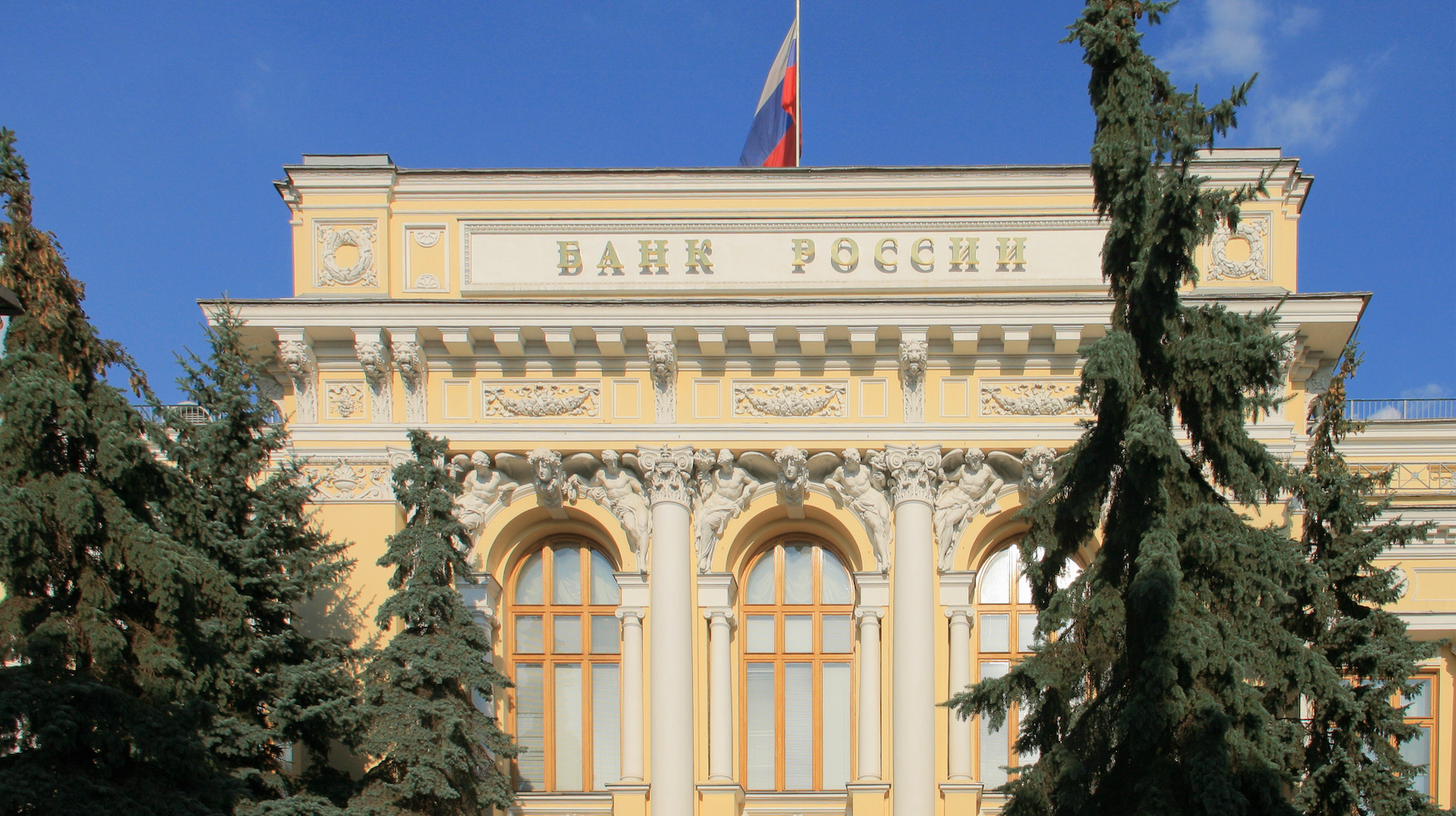 Russia unveils new digital depository rules requiring crypto platforms to hold up to $2.8M in liquid capital ahead of its nationwide digital asset framework launching in September2026-07
 Russia’s FSB charges Telegram founder Pavel Durov with facilitating terrorism, alleging the app failed to remove content used for sabotage and mass attacks, and issues an international arrest warrant.2026-07
 The EU adds HTX to its Russia sanctions list, banning EU individuals and companies from transacting with the crypto exchange starting August 232026-07
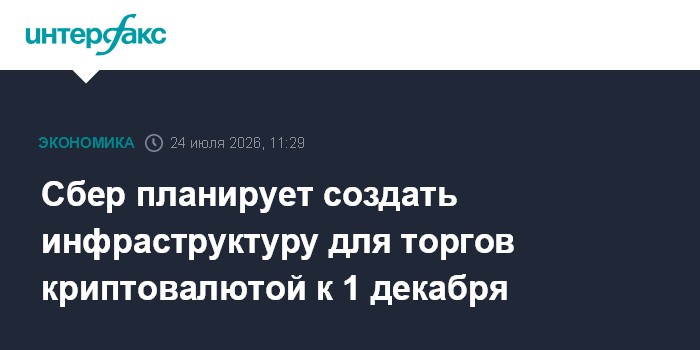 Sberbank targets Dec. 1 rollout of crypto trading rails and digital custody in Russia2026-07
 Russia moves to criminalize unregistered crypto services, requiring providers to register with the Bank of Russia or face fines and jail time2026-04
 Sberbank ready to offer crypto trading once Russia finalizes regulation, says SVP Vesterovsky at Moscow Exchange forum2026-04
Russia, Crypto, And Sanctions: An Evergreen Guide For Digital Asset Markets
Russia has become one of the most important, and most contested, jurisdictions in global crypto, combining relatively permissive domestic ownership rules with strict payment bans, an ambitious central bank digital currency project, and intense scrutiny over alleged sanctions evasion. For crypto investors, builders, and compliance teams, understanding how Russia’s legal framework, war-time economy, and geopolitical isolation intersect with digital assets is now essential rather than optional.
Russia’s role in crypto cannot be separated from its broader political and economic trajectory. Even before the full-scale invasion of Ukraine, Russian users were prominent in global trading, mining, and technical development, attracted by relatively cheap energy and a tradition of strong mathematics and engineering. After 2022, however, sweeping Western sanctions on banks, trade, and elites profoundly altered incentives on both sides of the equation: Russian authorities began looking to digital assets as one tool among many to mitigate isolation, while the United States, European Union, and United Kingdom moved rapidly to close any crypto channels that could function as a “shadow” financial system for sanctioned actors. For the digital asset industry, Russia has therefore become a test bed for how much crypto can actually do to route around state power—and how far regulators are prepared to go to limit that possibility.
At the domestic level, Russia occupies a legal middle ground that is easy to caricature but more subtle on closer inspection. A 2020 law on “digital financial assets” legalized the ownership and trading of cryptocurrencies and other digital assets, but it explicitly banned their use for paying for goods and services inside the country, reinforcing the ruble as the only legal tender. That framework has since been layered with tax rules, reporting obligations, and a series of new proposals that would license exchanges, segment investors into retail and professional tiers, and impose fees on “unfriendly” Western tokens, all aimed at pulling crypto out of a gray, offshore zone and into a domestically controlled infrastructure. At the same time, a separate track of legislation has opened the door for crypto and digital currencies to be used for cross-border payments, turning Russia into a high-stakes laboratory for crypto’s role in international trade under sanctions.
Overlaying this domestic architecture is an increasingly dense web of international constraints. Western authorities now see Russia not only as a traditional sanctions target in the banking and energy sectors, but also as a major crypto-related risk, with particular concern around a ruble-backed stablecoin called A7A5 and the wider “A7 network” alleged to be channeling tens of billions of dollars through Kyrgyz banks and offshore platforms. In response, the United Kingdom has imposed asset freezes on a group of exchanges and service providers, the European Union has proposed banning transactions on 11 crypto platforms linked to Russia, and investigative work on these flows has itself become a flashpoint, with Moscow adding a 17-year-old British researcher to its own sanctions list after he published a report on these networks. Against this background, Russia’s planned rollout of a retail-facing digital ruble and its tightening grip on licensed exchanges are not merely domestic policy choices, but moves that will shape how crypto markets evolve at the intersection of finance, technology, and geopolitics.
The following sections examine Russia’s crypto environment in detail, from legal foundations and the digital ruble to sanctions, market structure, and international comparisons with jurisdictions like China, Iran, and North Korea. The goal is not to take sides in the underlying conflicts, but to provide a clear, durable map for crypto professionals who need to navigate Russian exposure in a fast-changing and politically charged landscape.
Russia’s Place In The Global Crypto Landscape
Any analysis of Russia and crypto must begin with the scale and character of its participation in digital asset markets. Before the escalation of conflict in Ukraine, Russia was widely regarded as a significant, though not dominant, hub for crypto activity, especially in areas such as mining and software development. Abundant energy resources, particularly in Siberia and other regions with cheap electricity, supported the growth of industrial-scale mining farms, while a strong pool of cryptographers and programmers fed into both domestic and international projects. This created a paradoxical environment in which grassroots enthusiasm for decentralized technologies coexisted with a political system that increasingly prioritized central control.
The war and the resulting sanctions shock altered this landscape in ways that are still unfolding. The International Monetary Fund has characterized Russia’s invasion of Ukraine as a catastrophe for global peace and a major amplifier of pre-existing negative economic trends, including inflation, food insecurity, and deglobalization. For Europe in particular, the conflict has meant both a rapid reduction of dependence on Russian energy and a likely long-term increase in defense spending, effectively ending the “peace dividend” that had supported higher social expenditures. In this context, the incentives for Russia to explore alternative channels for trade and payments, including digital assets, have grown stronger, while the incentives for Western governments to monitor and restrict those channels have intensified accordingly.
For crypto markets, Russia’s trajectory matters for several reasons. The country is large enough, and integrated enough into global commodity and energy supply chains, that shifts in how it settles trade can create meaningful flows in stablecoins, Bitcoin, and other liquid assets. At the same time, its growing isolation makes it a natural ally for other heavily sanctioned states such as Iran and North Korea, which have already experimented with crypto-enabled sanctions evasion, whether through state-directed mining, illicit hacking, or the use of opaque offshore intermediaries. Although the specific mechanisms differ, regulators increasingly view these networks as part of a broader pattern in which digital assets are used to soften or circumvent restrictions on conventional finance.
The politics of Russia in Western domestic debates has also colored perceptions of crypto. After 2016, allegations of “Russia collusion” between Moscow and the Trump campaign dominated U.S. discourse, and major outlets such as The New York Times won prestigious awards for their coverage of this theme. Subsequent investigations led by Special Counsel Robert Mueller and, later, Special Counsel John Durham found no criminal conspiracy and concluded that U.S. authorities lacked a proper basis to open the original inquiry, raising questions about earlier reporting. For market participants trying to understand Russia’s actual use of crypto, this history is a reminder that political narratives often outpace the evidence, and that careful scrutiny of primary sources, enforcement actions, and legal texts is vital.
What distinguishes the current phase, however, is that Russia’s crypto story is no longer primarily about electoral interference or disinformation campaigns, but about the hard mechanics of money and sanctions. That shift has brought a different set of actors to the foreground—central banks, finance ministries, compliance officers, and transnational enforcement bodies—whose decisions now determine which Russian-linked flows can pass through exchanges and stablecoin issuers, and which are cut off. As the sections below show, Russia itself is simultaneously tightening domestic control over crypto and trying to exploit digital assets’ cross-border properties, making it a crucial case for understanding the future of regulated, geopolitically exposed crypto markets.

Sberbank forecasts Russia's regulated crypto exchanges could handle $46.4B in first-year trading volume after new rules take effect
The Legal Status Of Cryptocurrency In Russia
Russia’s legal framework for crypto is best understood as a layered system that permits ownership and investment while preserving the ruble’s central place in domestic payments. This balance was codified in a 2020 law on digital financial assets, which came into full effect in January 2021 and remains the backbone of Russian crypto regulation.
Evolution Of Russian Crypto Law
The 2020 law represented a pivotal moment in Russia’s engagement with digital assets. Before its passage, cryptocurrencies existed in a quasi-legal limbo: not explicitly banned, but also not recognized as property or a lawful subject of contracts. The law changed that by defining “digital financial assets” and legalizing transactions involving them, thereby providing a foundation for regulated exchanges, custodians, and investment services. From a legal-technical perspective, this marked an important step toward aligning Russia with broader trends in financial law, where many jurisdictions have moved to treat crypto as a kind of intangible property or financial instrument.
At the same time, the law drew a sharp line around payments. It explicitly prohibited the use of digital currencies to pay for goods and services within Russia, reinforcing the ruble as the sole lawful means of domestic settlement. This prohibition reflects the Bank of Russia’s longstanding concern that private cryptocurrencies could undermine monetary sovereignty and facilitate unmonitored capital flows if allowed to function as a parallel payment system. By separating investment activity from payment utility, Russian lawmakers sought to reap some of the benefits of crypto innovation while containing what they perceived as threats to financial stability and control.
Subsequent developments have layered further complexity onto this initial framework. As the economic impact of sanctions deepened, Russian policymakers began exploring ways to use digital currencies for cross-border trade without undermining the domestic payments ban. This culminated in a 2024 law that carved out a significant exception: while cryptocurrencies remain unusable as legal tender inside Russia, they can now be employed in international trade settlements under certain conditions, effectively creating two different legal regimes for the same assets depending on their use. This dual approach places Russia at the forefront of experiments in using crypto for sanctioned-state trade, even as it maintains a conservative stance at home.
Ownership, Trading, And Domestic Payments
Under current Russian law, private individuals and legal entities are generally allowed to own and trade cryptocurrencies, subject to tax and reporting obligations. Exchanges and brokers can, in principle, operate domestically provided they comply with licensing and oversight requirements, though as discussed later, many large platforms historically serving Russian users have been offshore entities and are now facing intense international pressure. For ordinary users, this means that holding Bitcoin or stablecoins is not itself unlawful, and trading on regulated venues will likely become more straightforward as Russia’s planned licensing regime comes into force.
The red line lies in using those assets as money for everyday transactions. The law explicitly prohibits using digital currencies to pay for goods and services on Russian territory, and violations can result in significant fines for both individuals and organizations. These penalties are designed to entrench the ruble’s status as the only legal tender and to prevent businesses from quietly adopting crypto as an alternative medium of exchange in response to inflation or capital controls. For merchants and payment processors, this creates a clear compliance obligation: even if customers hold crypto, accepting it directly as payment remains off limits.
Profit from cryptocurrency trading is, however, taxed. Russian residents are required to declare income from digital asset transactions and pay the applicable income tax rate, which places crypto within the general framework of taxable investment gains. Beyond taxation, there is also a specific reporting obligation: individuals and organizations must report to the tax authorities if the total value of their crypto transactions in a calendar year exceeds 600,000 rubles. This threshold-based reporting aims to give regulators visibility into larger flows without mandating full disclosure of every small transaction, though in practice enforcement will depend on exchanges, banks, and other intermediaries sharing data.
Mining sits in a more ambiguous position. The 2020 law did not explicitly regulate crypto mining, leaving it in a gray area where the activity is tolerated but not formally legalized or supervised. In practice, this has allowed substantial mining operations to operate on Russian soil, but it has also created legal uncertainty around their status, particularly in relation to energy use, taxation, and export of mined coins. Recent legislative proposals, discussed later, seek to remedy this by requiring mining operations to use domestic infrastructure and fall under a clearer regulatory umbrella. Until such measures are fully enacted, miners face a mix of opportunity and risk, operating in an environment where the state has so far chosen not to crack down but retains the legal latitude to do so.
Cross-Border Use And The 2024 Trade Exception
The most striking evolution in Russia’s crypto law since 2020 has been the shift toward permitting digital currencies in cross-border trade. As Western sanctions have tightened access to SWIFT, correspondent banking, and dollar and euro clearing, Russian companies and officials have looked for alternative mechanisms to settle imports and exports, especially with partners in Asia, the Middle East, and the Global South. Recognizing this, lawmakers passed a 2024 law that explicitly allows the use of digital currencies, including cryptocurrencies and stablecoins, in international trade transactions.
Under this framework, Russian companies can, at least in principle, pay foreign suppliers or receive payment for exports using digital assets, subject to regulation by the Bank of Russia and the Ministry of Finance. The goal is not to make Russia a crypto utopia, but to provide a legally sanctioned channel for trade that does not rely entirely on the heavily monitored and sanctionable banking system. In practice, uptake will depend on the willingness of counterparties—who may themselves be wary of attracting secondary sanctions—to accept such payments, as well as on the development of compliant infrastructure to manage these flows.
The duality between domestic prohibition and cross-border permission underscores the instrumental logic behind Russia’s crypto policy. Inside the country, where the state already controls the banking system and cash, crypto poses more risk than benefit from the authorities’ perspective, potentially enabling tax evasion and capital flight. Outside the country, by contrast, it offers a way to route around chokepoints dominated by the U.S. and EU, especially when used in combination with friendly or neutral jurisdictions in Asia, the Middle East, or the Caucasus. This logic is at the heart of both the legal trade exception and the more clandestine networks, such as those built around the A7A5 stablecoin, that Western regulators now accuse Russia of using to evade sanctions.
Classification, Tax, And Property Rights
Another important dimension of Russia’s legal treatment of crypto is its classification as property rather than money. A sweeping crypto regulation bill advanced in the State Duma classifies cryptocurrencies as a form of property, which means they can be the subject of legal disputes, collateral arrangements, and inheritance claims, even though they are barred from domestic payment use. This classification aligns with the approach taken in many common law and civil law jurisdictions, where courts have increasingly recognized digital assets as a type of property right capable of protection and enforcement.
From a tax perspective, this property classification underpins the treatment of gains as taxable income. Profits realized on sales or exchanges of digital assets are subject to income tax, and failure to report both income and large transaction volumes can trigger penalties. This creates an incentive for compliant users to engage through regulated intermediaries that can provide tax reporting and documentation, especially once the licensing regime for exchanges is fully in place. For regulators, it also opens the door to more granular policy tools, such as differentiated tax treatment for long-term versus short-term holdings, though such measures are not yet prominent in the Russian debate.
Finally, by bringing crypto within the legal category of property, the bill also opens the way for more conventional financial products. If courts recognize Bitcoin or stablecoins as property, they can be pledged as collateral, seized in bankruptcy, or used as security for loans, all of which are part of Sberbank’s emerging strategy to integrate crypto into its balance sheet and client services. The December 2025 pilot of a crypto-backed loan to a mining firm, secured by mined Bitcoin and managed through a proprietary custody system, is an early example of how these legal changes can translate into new financial practices. The long-term significance of these developments will depend on how consistently courts, regulators, and banks apply the property classification in practice.
Readers click Russia-crypto stories along two simultaneous tracks — state-built parallel financial infrastructure (digital ruble, Gazprom tokens, Sberbank products) and adversarial sanctions weaponization (mixing services, successor exchanges, AI-assisted cyberattacks) — revealing that Russia is both constructing a domestically controlled crypto economy and actively using public-chain programmability to evade Western financial rails.
Russia’s Coming Regulatory Overhaul: Licensing, “Unfriendly” Tokens, And Retail Limits
While the 2020 law established a baseline, Russian authorities are now moving toward a much more comprehensive and prescriptive regime, with implementation tentatively targeted for mid-2026. This overhaul aims to bring crypto exchanges onshore, segregate retail and professional investors, and discourage the use of tokens linked to Western jurisdictions seen as “unfriendly.”
The 2025–2026 Crypto Bill And Policy Concept
In December 2025, the Bank of Russia published a detailed concept for domestic crypto regulation that formed the basis for a sweeping bill introduced by the government and advanced in the State Duma with overwhelming support. The concept treats digital currencies and stablecoins as “currency assets” that can be legally bought and sold, while maintaining the long-standing ban on their use as means of payment within Russia. It thus preserves the core distinction between investment and domestic transaction use, even as it broadens the space for regulated trading and custody.
A central feature of the bill is the creation of a single, supervised intermediary through which non-qualified investors would be allowed to access crypto markets. Under the proposal, retail investors could purchase the most liquid cryptocurrencies only after passing an investor knowledge test and would be subject to an annual investment limit of 300,000 rubles, with all transactions routed through this designated intermediary. The goal is to prevent unsophisticated investors from taking excessive risks in a volatile asset class, while keeping detailed data on who is buying what, when, and where.
The bill also contemplates stricter controls on peer-to-peer transactions, a regulated custody system, and specific requirements for mining operations to use domestic infrastructure. Together, these measures are designed to move crypto activity off informal channels and foreign platforms and into a tightly surveilled domestic architecture, in line with the authorities’ broader objective of bringing previously gray zones under explicit state oversight. The government has signaled that it expects to complete the legislation governing digital assets by July 1, 2026, creating a clear horizon for the transition to this new regime.
Licensing Exchanges And Building A Domestic Market
One of the most consequential elements of the proposed overhaul is the introduction of mandatory licensing for crypto exchanges operating in Russia. From July 1, 2026, platforms that wish to serve Russian clients will be required to obtain a license, establish a physical presence in the country, and comply with local regulatory requirements. Those that do not secure a license and a local footprint may be blocked entirely, with the communications regulator Roskomnadzor reportedly preparing to use DNS-level filtering tools similar to those employed in other high-profile internet censorship cases.
This policy sits at the intersection of financial regulation and digital sovereignty. On one level, licensing allows the Bank of Russia and financial intelligence agencies such as Rosfinmonitoring to enforce anti-money laundering and know-your-customer standards, collect transaction data, and impose consumer protection rules. On another level, it enables the state to redirect trading volume from international, often Western-based platforms to domestic, potentially state-linked exchanges, thereby reducing exposure to foreign jurisdictional reach. As a Coinspot analysis noted, the main goal of the reform is not merely to define a list of permitted coins but to move a significant part of Russia’s crypto turnover from foreign platforms to domestic licensed platforms.
The exit or downsizing of major offshore exchanges from the Russian market creates an opening for these domestic players. Binance, for example, asked its Russian users to close their positions by December 29, 2023, as it reduced its business operations in the country under mounting regulatory and reputational pressure. Combined with the subsequent U.K. sanctions on Huobi (HTX), Exmo, Bitpapa, and other entities for alleged support of Russian sanctions evasion, the field of large international exchanges willing or able to serve Russian clients is shrinking. In this context, domestic financial institutions, including large state-owned banks like Sberbank, see an opportunity to capture flow that previously went abroad.
Retail Versus Professional Investors
The new regime explicitly divides users into retail and professional or institutional investors, with very different levels of permitted activity. Retail investors, defined as those without qualified-investor status under Russian securities law, will face tight constraints on both the types of assets they can trade and the amounts they can invest. Proposals reported in Russian media and industry analysis suggest that retail users will be restricted to a short whitelist of tokens—principally Bitcoin, Ethereum, and the stablecoin Tether (USDT)—and subject to an annual transaction volume cap of approximately 300,000 rubles.
Access will also be conditioned on passing an investor suitability test, designed to ensure at least a minimal understanding of the risks involved. Beyond these quantitative and qualitative filters, the bill is likely to introduce procedural frictions, such as a cooling-off period between deposit and withdrawal and restrictions on transferring assets to third-party wallets outside the licensed ecosystem. These measures are framed as consumer protection tools, but they also serve to keep retail users’ assets within the reach of domestic regulators and to discourage the use of self-custody solutions that can be harder for authorities to monitor.
Professional and institutional investors—such as banks, funds, and high-net-worth individuals who meet qualified-investor thresholds—are expected to enjoy broader access to a wider range of instruments and higher limits. However, even they will operate under an increasingly dense web of prudential and risk-management rules, including caps on overall exposure and stringent capital requirements for regulated institutions. This tiered structure mirrors broader trends in securities and derivatives markets, where regulators differentiate access based on sophistication and resources, but in the Russian context it also reflects a desire to concentrate crypto activity in entities that are already tightly integrated into the state-controlled financial system.
“Unfriendly” Tokens And Proposed Fees
A distinctive feature of Russia’s planned framework is the explicit categorization of certain tokens as “unfriendly” based on the jurisdiction of their issuers and their susceptibility to foreign state intervention. Authorities are preparing new restrictions for cryptocurrencies issued in Western jurisdictions, particularly stablecoins and exchange tokens whose issuers can freeze assets at the request of U.S. or EU authorities. Dollar-backed stablecoins such as USD Coin (USDC), as well as Binance’s BNB token, are cited in reporting as examples of assets considered higher risk for these reasons, and thus likely to be excluded from the retail whitelist.
Beyond outright exclusion from retail access, the proposed bill envisions economic disincentives in the form of additional fees or commissions on “unfriendly” tokens. According to Freedom Global analyst Vladimir Chernov, the commission for such tokens may range from 0.5% to 2%, and for unfriendly stablecoins it could rise to 3%. The idea is to make it more costly for Russian investors to hold or trade assets tied to Western-controlled infrastructure, thereby nudging demand toward domestic ruble stablecoins and, ultimately, the digital ruble. Chernov cautions, however, that excessively high fees could inadvertently push activity into illegal or unregulated channels, undermining the very goal of bringing crypto into a controlled national infrastructure.
The “unfriendly” token concept encapsulates the broader securitization of crypto in Russian policy thinking. Where early debates in many countries focused on consumer risks and financial stability, Russia now also frames certain tokens as potential instruments of foreign pressure, capable of being frozen or disrupted at the behest of adversarial governments. In this worldview, favoring ruble-linked stablecoins and domestic infrastructure is not just an economic policy choice but a matter of national security, even if most ordinary users are primarily motivated by more mundane concerns such as inflation, capital controls, and investment returns.
Prudential Limits On Banks’ Crypto Exposure
Russian authorities are pairing their expanded openness to regulated crypto trading with stringent limits on how much exposure banks can take on their own books. The Bank of Russia has signaled its intention to cap bank investments in crypto assets at 1% of a banking group’s capital, combined with a 1250% risk weight on those exposures. In practical terms, a 1250% risk weight means that banks must hold capital equal to the full value of their crypto exposure, reflecting an assumption of maximal credit and market risk. This effectively treats direct crypto holdings as among the riskiest assets in a bank’s portfolio, making large proprietary positions economically unattractive.
These measures align with emerging international standards for the prudential treatment of crypto-assets. Canadian regulator OSFI, for example, has issued guidelines specifying high risk weights and conservative liquidity treatment for banks’ crypto exposures, emphasizing volatility, operational risk, and the potential for rapid loss of value. By adopting similar parameters, the Bank of Russia signals that, whatever its geopolitical motives in promoting certain forms of digital currency use, it does not intend to allow crypto risks to threaten the core stability of the banking system. For large institutions like Sberbank, this means that the business opportunity lies in providing custody, brokerage, and structured products for clients, rather than building large speculative positions on their own balance sheets.
- 01AI-assisted state cyberattacks
The single highest-clicked headline — Microsoft's finding that Russia uses generative AI offensively alongside North Korea and Iran — shows readers treating crypto and AI as converging threat vectors, not separate domains.
- 02Sanctions evasion successor network↗
After Garantex's shutdown, five replacement exchanges rapidly filled the gap; readers engaged because it demonstrated that designating individual entities does not close the underlying infrastructure gap.
- 03Bitcoin mixing prosecutions
The Sterlingov conviction drew strong engagement because it showed U.S. courts can reach Russian-linked operators of darknet mixing services years after the fact, establishing legal precedent for on-chain anonymization services.
- 04Digital ruble and state tokenization↗
Putin's formal tax code inclusion of the digital ruble and Gazprom's blockchain bond launch signal Russia building a sanctions-resistant state-controlled payment layer, pulling readers who track CBDC geopolitics.
- 05A7A5 ruble stablecoin mechanics↗
Readers engaged with how A7A5 moved over $6B post-designation by destroying and reissuing tokens through fresh wallets — a novel on-chain obfuscation technique that exploits programmable token state to defeat traceability.
- 06Crypto-funded covert operations
The Canadian teenager spy case in Poland illustrated Moscow using crypto micropayments to fund cut-out operatives, making the Russia-crypto nexus a physical-world national security story rather than a purely financial one.
The Digital Ruble: Russia’s Central Bank Digital Currency
Parallel to its regulation of private cryptocurrencies, Russia is pushing ahead with one of the most ambitious central bank digital currency (CBDC) projects in the world: the digital ruble. The Bank of Russia has been experimenting with a CBDC for several years and now plans a broad rollout starting in mid-2025.
Design, Objectives, And Policy Context
The digital ruble is conceived as a third form of central bank money, complementing physical cash and bank reserves. It is designed to be available to both individuals and businesses and to be used “freely, just like other ruble forms,” according to official statements. Technically, the digital ruble will be a liability of the central bank, held in accounts or wallets managed through participating financial institutions. Users will be able to open digital ruble accounts, deposit cash into them, transfer funds, and make payments via an infrastructure operated by the Bank of Russia.
Policy-wise, the CBDC serves multiple goals. Domestically, it promises to modernize the payment system, increase financial inclusion, and reduce the costs of cash handling and interbank transfers. It also offers the central bank more granular visibility into transaction flows, which can improve the effectiveness of monetary policy transmission and anti-money laundering efforts. Internationally, the digital ruble is part of a broader push by Russia and other countries to build payment rails that are less dependent on Western-controlled messaging and settlement systems, thereby mitigating the impact of sanctions and potential future restrictions.
The digital ruble also interacts with the state’s stance on private crypto. By offering a state-backed digital alternative that integrates seamlessly with existing banking and regulatory structures, the Bank of Russia aims to capture much of the demand that might otherwise flow to privately issued stablecoins, particularly for domestic payments. Combined with the legal ban on using cryptocurrencies for goods and services, the CBDC can be seen as the cornerstone of a “walled garden” approach, in which onshore digital payments are tightly controlled but cross-border channels using crypto may remain more flexible under specific regulatory conditions.
Pilot Programs And Phased Rollout
The Bank of Russia has outlined a three-stage plan for introducing the digital ruble, moving from pilot testing to full-scale deployment. After two and a half years of experimentation, the central bank’s governor, Elvira Nabiullina, announced that the CBDC is expected to enter “extensive introduction” from July 2025. At that point, 13 systemically important banks will be obliged to offer their clients the ability to conduct transactions with digital rubles, including opening digital ruble accounts, depositing cash, making transfers, and receiving digital rubles via the new infrastructure.
The rollout will be staggered across both the banking and merchant sectors. Banks with a universal license will have until July 1, 2026, to adapt their systems, while other credit institutions will have until July 1, 2027. In parallel, trade and service companies will face deadlines for mandatory acceptance of digital ruble payments: companies with annual turnover above 30 million rubles must be ready by July 1, 2025; those above 20 million rubles by July 1, 2026; and all others by July 1, 2027. Legislative changes are required to formalize these obligations, and the Bank of Russia has submitted proposals to amend the relevant laws to the Ministry of Finance.
This phased approach mirrors other large-scale payment system reforms, allowing time for infrastructure adjustments, user education, and the resolution of unforeseen technical or legal challenges. It also underscores the central bank’s commitment to making the digital ruble a mainstream instrument rather than a niche pilot. For merchants and payment service providers, the mandatory acceptance timelines mean that any medium-term planning for point-of-sale technology or e-commerce platforms must now include CBDC compatibility as a core requirement.
Digital Ruble Versus Private Stablecoins
The digital ruble’s emergence inevitably raises questions about the role of private stablecoins in Russia’s financial ecosystem. On one side, authorities have signaled a policy preference for ruble-linked stablecoins, particularly those issued under Russian law and controlled by domestic entities, as opposed to dollar stablecoins whose issuers can freeze assets in response to Western legal demands. On the other side, the CBDC offers a fully sovereign, risk-free ruble instrument that can fulfill many of the same functions as a stablecoin for domestic users, especially in everyday payments and savings.
The likely outcome is a layered system. For domestic transactions and official use, the digital ruble will be heavily encouraged and, in some cases, mandated, effectively crowding out private stablecoins as a medium of payment. For cross-border trade and investment, however, both dollar and ruble stablecoins may continue to play a role, particularly in dealings with partners who do not yet have the infrastructure to interact with CBDCs. The legal permission for digital currencies to be used in international trade provides a framework for this outward-facing use, even as domestic retail investors are steered toward a narrow set of assets and channels.
This division of labor is also influenced by Western enforcement. The A7A5 ruble stablecoin, though nominally aligned with Russia’s desire for ruble-denominated digital instruments, has come under intense scrutiny because of its reported role in sanctions evasion, leading to sanctions on its associated companies and the broader A7 network by both the United Kingdom and the European Union. These actions highlight the risk that even ruble-linked tokens can become targets if they are perceived as part of illicit financial flows. For Russia’s official CBDC project, the lesson is clear: legitimacy in the eyes of global regulators matters, even for sovereign digital currencies, particularly if they aspire to be used in cross-border contexts.
International Comparisons: China, Europe, And Beyond
Russia’s digital ruble project does not exist in isolation. The People’s Bank of China has been piloting its own CBDC, often referred to as the digital yuan or e-CNY, for several years, with large-scale tests in multiple cities and cross-border experiments through the mBridge project. The European Central Bank, for its part, is about halfway through a “preparation phase” for a potential digital euro, which could eventually offer citizens and businesses across the euro area a new form of central bank money, though key design choices and even the decision to launch have not yet been finalized.
In this landscape, Russia is neither a first mover nor a laggard, but part of a broader wave of major economies exploring CBDCs as tools for modernizing payments, strengthening monetary sovereignty, and, in some cases, reducing reliance on the U.S. dollar and Western-controlled financial infrastructure. What differentiates Russia is the degree to which sanctions and geopolitical confrontation shape its motivations. While China’s CBDC is partly about domestic digitalization and long-term competition with the dollar, and the digital euro is framed mainly in terms of payments innovation and strategic autonomy, the digital ruble directly responds to a situation in which large parts of Russia’s conventional financial channels have been restricted or rendered politically risky.
For crypto markets, this suggests that CBDCs are likely to evolve along divergent paths depending on national context. In jurisdictions like the European Union, where concerns about illicit finance are strong but sanctions are not existential, CBDC design may prioritize privacy within legal bounds and compatibility with the existing banking system. In Russia, by contrast, we can expect a stronger emphasis on state visibility and control, particularly over flows that might intersect with sanctioned actors or contested territories. How these choices interact with private cryptocurrencies and global stablecoins will be one of the defining questions for the next phase of digital money.
Russia moves to criminalize unregistered crypto services, requiring providers to register with the Bank of Russia or face fines and jail time
Sanctions, War, And The Turn To Crypto
No discussion of Russia and crypto is complete without addressing how the war in Ukraine and associated sanctions have pushed both Moscow and its adversaries to adapt their approaches to digital assets. Crypto is neither a magic bullet for sanctions evasion nor irrelevant; instead, it occupies a complex middle ground where its technical properties interact with legal, political, and market constraints.
The Economic Shock Of War And Sanctions
The macroeconomic shock triggered by Russia’s invasion has been profound. The IMF describes the war as an unmitigated catastrophe for global peace, particularly in Europe, and a major amplifier of adverse economic trends that were already visible in the aftermath of the COVID-19 pandemic. Fuel and food shortages have exacerbated inflation that was already at multi-decade highs in many countries, while the unraveling of long-standing trade relationships has accelerated deglobalization. For Europe, sharply reduced imports of Russian gas and oil have required costly adjustments, both in terms of energy infrastructure and fiscal support for households and firms.
On the fiscal side, the war has forced a rebalancing of priorities. The “peace dividend” that once allowed European governments to finance generous social programs is eroding as defense budgets rise, with plausible scenarios of defense spending increasing by 1% of GDP or more per year. At the same time, the eventual bill for Ukraine’s reconstruction is likely to be enormous, easily reaching hundreds of billions of euros over time. These pressures create a strong political imperative to make sanctions “bite,” ensuring that the costs of aggression fall not only on victims and allies but also on the aggressor.
In this environment, financial sanctions against Russia have been broad and deep. They include asset freezes on individuals and entities, restrictions on the Russian central bank’s reserves, bans on certain exports and imports, and exclusion of many Russian banks from SWIFT and other key financial networks. The European Commission’s 21st sanctions package, for instance, proposes asset freezes on close to 90 banks and additional transaction bans on more than 30 banks in Russia and other third countries. The addition of crypto-specific measures, discussed below, reflects the growing view that digital assets must be addressed as part of a comprehensive sanctions strategy rather than treated as an irrelevant side issue.
The A7 Network And Ruble Stablecoin A7A5
Within this sanctions-saturated environment, one of the most controversial developments has been the emergence of the A7 network and the ruble-backed stablecoin A7A5. Launched in Kyrgyzstan in January 2025 and available on the TRON and Ethereum blockchains, A7A5 is marketed as a ruble-backed stablecoin, with each unit claimed to be backed one-to-one by ruble deposits in accounts at Promsvyazbank (PSB), a Russian state-owned bank. Official issuance is handled by a Kyrgyz company, Old Vector LLC, while A7 LLC, a company designed to assist Russian businesses affected by Western sanctions in making cross-border payments, plays a central role in the network.
Investigations by the Centre for Information Resilience and blockchain analytics firm Elliptic have described A7A5 as part of a sanctions evasion scheme involving a company owned by a Russian state-owned bank and a Moldovan fugitive previously sanctioned for election interference on behalf of Russia. According to Elliptic’s analysis, by mid-2025 A7A5 was facilitating roughly 1 billion dollars in transfers per day, providing Russian entities with a tool to engage in cross-border transfers outside the conventional banking system. By early 2026, reported turnover associated with the token had reached around 100 billion dollars, underscoring both its scale and its significance for sanctions enforcement.
The broader A7 network, which includes banks and trading platforms in Kyrgyzstan and other jurisdictions, has attracted particular attention because it appears to blend state-linked financial institutions with ostensibly private crypto infrastructure. The UK government has described this network as an illicit financial infrastructure used to move funds, procure goods, and sustain Russia’s war economy, with estimates that it moved over 90 billion dollars in the previous year—roughly half of Russia’s annual military budget. By embedding ruble liquidity in a stablecoin that can circulate on public blockchains, A7A5 arguably lowers the barrier for Russian entities to interact with a wide range of counterparties, including those using decentralized finance platforms or offshore exchanges.
Western Responses: UK And EU Crackdown On Crypto Channels
Western governments have responded to the perceived threat posed by A7A5 and similar networks with increasingly targeted sanctions on crypto-related entities. On May 26, 2026, the UK announced a new package of sanctions specifically targeting cryptocurrency exchanges and the A7 network, as part of a broader effort to crack down on “backdoor” Russian sanctions evasion. The package designated 18 entities and individuals, including Huobi Global (HTX), Exmo Exchange, peer-to-peer platform Bitpapa, Rapira Group, and several other exchanges, banks, and corporate vehicles allegedly involved in channeling value through cryptocurrency to fund Russia’s war economy.
All designated entities were added to the UK Consolidated List, triggering immediate asset freezes and prohibitions on UK-regulated firms making funds or economic resources available to them. For the crypto industry, this means that any exchange, custodian, or financial institution operating under UK regulation must now screen against these names and block transactions connected to them. The UK government has framed these steps as a necessary response to what it calls Russia’s “shadow financial systems,” asserting that such networks undermine the effectiveness of sanctions and prolong the conflict.
The European Union has followed a similar path, though with its own institutional dynamics. In its proposed 21st sanctions package, the European Commission has called for banning transactions on 11 crypto platforms as part of a broader effort to tighten bans on crypto-asset services to certain third countries and entities suspected of helping Russia circumvent restrictions. European Commission President Ursula von der Leyen has stated that the package includes bans on 31 additional Russian banks and 20 entities in third countries, including banks, crypto platforms, and oil traders, which have served sanctioned Russian individuals or helped them circumvent EU measures. Although the names of the 11 crypto platforms have not been publicly disclosed, the move signals a willingness by the EU to extend its sanctions toolkit more deeply into the digital asset space.
These measures build on earlier EU sanctions packages that already included crypto-related restrictions, and they sit alongside efforts in other jurisdictions, such as Canada and the United States, to sharpen regulatory oversight of virtual asset service providers. For crypto businesses, the message is clear: facilitating Russian-linked flows, whether directly or through proxies in third countries like Kyrgyzstan or Georgia, carries growing legal and reputational risks, especially when stablecoins and exchanges are explicitly named in sanctions designations.
Information Warfare And The Browder Case
The contest over Russia’s use of crypto is not only about money but also about narratives and information. A notable example is the case of Alexander Browder, a 17-year-old British student and son of prominent Kremlin critic Bill Browder, who became the youngest known person on Russia’s sanctions list after publishing a report on Russian crypto sanctions evasion for the Henry Jackson Society think tank. The report, which examined the A7 network and the role of Kyrgyzstan’s financial system in channeling funds to Russia’s war chest, appears to have struck a nerve in Moscow.
In response, Russia’s Foreign Ministry announced an entry ban on Browder and four other British citizens, including investigative journalists Catherine Belton and Richard Holmes, accusing them of spreading “disinformation.” Browder rejected this characterization, stating that his work was based on facts and that he would continue his research regardless of Russia’s actions. For observers, the episode illustrates how sensitive the Russian state is to detailed scrutiny of its financial networks, particularly when that scrutiny leads to concrete enforcement measures by Western governments.
The Browder case also highlights a broader theme: the intersection between investigative journalism, policy research, and sanctions enforcement in the digital age. Unlike traditional bank secrecy, which often relies on leaked documents or insider sources to penetrate, blockchain-based systems provide open data that can be analyzed at scale. This enables independent researchers, NGOs, and even motivated individuals to track flows and identify suspicious patterns, increasing the likelihood that illicit networks will eventually be exposed. At the same time, the political framing of such work—whether as “disinformation” or as “defending democracy”—can itself become a battleground, as seen in the longer-running controversies over U.S. media coverage of alleged Trump-Russia collusion.
Comparisons With Iran, North Korea, And Other Sanctioned States
Russia’s experimentation with crypto under sanctions resonates with, but also differs from, the behavior of other heavily sanctioned states such as Iran and North Korea. Iran has at various points encouraged Bitcoin mining as a way to monetize its energy surplus and earn hard currency outside traditional financial channels, while North Korea has been implicated in large-scale crypto hacking and laundering operations aimed at financing its weapons programs. In both cases, digital assets offer a partial workaround to sanctions, though not a complete solution, given the growing vigilance of regulators and the traceability of many blockchain-based systems.
Russia’s situation is distinct in several respects. Its economy is far larger and more diversified than those of Iran or North Korea, and it remains deeply enmeshed in global commodity markets, especially for energy, metals, and agricultural products. This gives it both more to gain and more to lose from sanctions and from attempts to evade them. Moreover, Russia has a more sophisticated and globally connected banking sector, even after sanctions, and a large domestic market for investments, which makes the integration of crypto into its financial system more complex. The A7 network and the A7A5 stablecoin represent a hybrid approach, combining state-linked banks, regional intermediaries, and public blockchains in a way that goes beyond the more isolated or purely illicit strategies seen in smaller sanctioned states.
For international regulators, this raises the stakes. If Russia, potentially in cooperation with partners such as Iran or China, were to successfully build robust alternative payment rails using a mix of CBDCs, stablecoins, and compliant and non-compliant intermediaries, the effectiveness of sanctions could be eroded over time. Conversely, if Western enforcement remains nimble and coordinated, and if major global exchanges and stablecoin issuers maintain rigorous compliance, the ability of Russian actors to leverage crypto at scale may remain limited. The current wave of sanctions against exchanges, banks, and networks associated with the A7 ecosystem suggests that the latter path is, for now, the dominant one.
Russia invades Ukraine; G7 sanctions cascade begins targeting Russian financial system
- 2022-03regulatory
Switzerland freezes $14.3B in Russian assets including central bank reserves
OFAC sanctions Garantex, Russia's dominant crypto exchange
Putin signs digital ruble law; tax code updated to define Digital Ruble Accounts
- 2024-03regulatory
Roman Sterlingov convicted for operating Bitcoin Fog darknet mixer
- 2025-03launch
Gazprom launches 21%-yield blockchain bonds via Gazprombank on Moscow Exchange
EU 21st sanctions package bans Russian crypto exchanges, DeFi platforms, and ruble stablecoins
Russia overtakes UK as Europe's largest crypto market with $379B in annual inflows
Domestic Market Structure: Exchanges, Banks, And Users
While geopolitics dominates headlines, the day-to-day reality of crypto in Russia is shaped by a more mundane set of actors: exchanges, banks, brokers, and millions of individual users. The emerging market structure reflects both the pull of offshore platforms and the push of domestic regulation.
From Offshore Giants To Licensed Domestic Platforms
Historically, many Russian crypto users relied on global exchanges such as Binance, Huobi, and others that did not have a formal Russian regulatory presence but offered Russian-language interfaces, ruble deposit and withdrawal options via intermediaries, and a wide range of trading pairs. This changed as sanctions and regulatory pressures mounted. Binance, for example, moved to reduce its business operations in Russia, asking users to close positions by December 29, 2023, and effectively severing many of its Russian ties. The combination of sanctions risk, reputational damage, and regulatory demands from other jurisdictions played a role in this recalibration.
The UK’s designation of Huobi Global (HTX), Exmo, Bitpapa, and related entities for alleged involvement in Russian sanctions evasion further underscores the collapse of the old paradigm in which Russian-facing crypto platforms could operate largely from the shadows. Once listed on sanctions schedules, these entities face asset freezes and prohibitions on doing business with UK-regulated firms, and they risk being cut off by other compliance-sensitive institutions as secondary and reputational risks spread. Even exchanges that deny listing controversial tokens, such as HTX’s assertion that it did not list A7A5 after its own compliance review, find themselves under heightened scrutiny.
Russia’s planned licensing regime for crypto exchanges seeks to fill the gap left by the retrenchment of offshore giants. By requiring a domestic presence, regulatory compliance, and adherence to investor-protection rules, the authorities aim to create a network of onshore platforms integrated into the Russian financial and legal system. This may include both new entrants and existing banks or brokers that add digital asset services. The presence of state-linked entities like Sberbank in this space suggests that, over time, a significant share of crypto trading by Russian residents could be channeled through institutions that are either controlled by or closely aligned with the state.
Sberbank And The Banking System’s Role
Sberbank, Russia’s largest bank and a key pillar of its financial system, is a central player in the country’s evolving crypto landscape. In December 2025, the bank issued a pilot crypto-backed loan to Intelion Data, a mining company, secured by mined Bitcoin and using Sberbank’s proprietary custody system. This transaction tested both the legal framework for treating crypto as collateral and the operational capacity of a major bank to handle digital assets in a secure, compliant way. The pilot fits into Sberbank’s broader strategy of preparing to offer crypto trading and custody services to clients once the regulatory framework is fully in place.
The Bank of Russia’s December 2025 concept paper explicitly envisions that qualified and non-qualified investors will be able to buy crypto assets through regulated intermediaries, including banks, under specified conditions. Sberbank has indicated that it will be ready to provide clients access to these assets when regulation is enacted and exchange trading begins, in coordination with other market participants and regulators. Given Sberbank’s scale and technological capabilities, it is likely to become one of the main gateways for institutional and perhaps high-end retail clients seeking exposure to crypto in Russia’s future licensing regime.
At the same time, prudential restrictions, such as the 1% cap on banks’ own crypto investments and the 1250% risk weight on those exposures, act as guardrails to prevent excessive risk-taking. Banks are thus positioned more as service providers and infrastructure operators than as speculative traders, echoing similar dynamics in other countries where regulators want to leverage banks’ risk management and compliance capabilities without exposing them to the full volatility of crypto markets. For Russian users, this means that the most convenient and officially sanctioned ways to access crypto will likely be through entities that are deeply embedded in the existing financial system rather than through independent or foreign platforms.
User Growth, Trading Patterns, And Asset Preferences
Despite regulatory uncertainty and geopolitical tension, demand for crypto among Russian residents appears robust. Cifra Markets, a brokerage and trading firm, has predicted that Russia could see up to one million crypto accounts opened within the first year under the new compliance framework, suggesting exponential growth from current levels. This forecast reflects both pent-up demand from users who have been cautious about entering the market in a legal gray zone and the expectation that clearer rules and domestic infrastructure will make crypto more accessible to a broader base of investors.
Within this emerging user base, asset preferences are shaped by both market and regulatory factors. Bitcoin remains a central asset, valued for its liquidity, global recognition, and perceived resilience in the face of inflation and geopolitical risk. Some Russian commentators, such as experts cited in local coverage, have suggested that Bitcoin could become one of the leaders in intraday trading volumes once regulated exchange platforms launch, given its volatility and deep order books. Stablecoins, particularly USDT, are also popular due to their role as a dollar proxy in an environment where foreign currency access is constrained.
Regulation, however, is reshaping these preferences at the margin. The planned whitelist for retail investors appears likely to include only Bitcoin, Ethereum, and USDT, while excluding USDC, BNB, and other tokens whose issuers are seen as vulnerable to Western state pressure. This reflects a judgment that, although all dollar stablecoins carry some sanctions risk, USDT’s historical behavior and jurisdictional structure make it a relatively less direct instrument of U.S. policy compared to, say, USDC, whose issuer is deeply integrated into U.S. financial regulation. At the same time, regulators are signaling a long-term preference for ruble-backed stablecoins and the digital ruble as the core instruments for onshore digital value storage and payments, though user demand for dollar-linked assets is unlikely to vanish.
The introduction of investor tests, transaction limits, cooling-off periods, and restrictions on transfers to external wallets will also influence user behavior. Some investors may accept these constraints in exchange for legal certainty and the convenience of bank-integrated platforms. Others, particularly more sophisticated users or those seeking to move larger sums, may continue to rely on offshore exchanges, peer-to-peer platforms, or decentralized protocols, despite the legal risks. For regulators, the challenge will be to calibrate rules tightly enough to protect consumers and maintain control, but not so tightly that a large share of activity is pushed into harder-to-monitor channels, including privacy-enhancing technologies.
The EU has passed at least 21 sanctions packages targeting Russian crypto exchanges, DeFi platforms, ruble stablecoins, and CBDC use, with parallel UK and US designation campaigns hitting 13+ named entities.
Five exchanges replaced sanctioned Garantex within months, and A7A5 moved $6B post-designation via token reissuance — enforcement has not kept pace with the speed of evasion innovation on public chains.
Russia's emerging crypto infrastructure is state-controlled — Sberbank, Gazprombank, and the Central Bank dominate every major product launch — creating single points of geopolitical and regulatory failure for participants.
DOJ investigations into Binance's Russia exposure and FTX's move to void claims from restricted jurisdictions show that major Western platforms face secondary-sanctions liability for Russian-linked flows, regardless of their own intent.
A7A5's destroy-and-reissue pattern and RUBx's Tron deployment show Russian actors exploiting public-chain programmability to launder transaction history — a direct risk for any protocol integrating ruble-denominated assets.
Russia overtook the UK as Europe's largest crypto market by inflow volume ($379B in the July 2024–June 2025 window), but liquidity remains fragmented across sanctioned venues and informal OTC rails with limited exit to hard currency.
Russia, Major Powers, And The Future Of Crypto Geopolitics
Russia’s crypto policies cannot be fully understood without situating them within the broader strategic competition among major powers and the evolving role of digital assets in international relations.
Russia And China: CBDCs And Parallel Payment Systems
Russia and China share a skepticism toward decentralized cryptocurrencies as domestic payment tools and a strong interest in developing state-controlled digital currencies. China has taken a more prohibitive stance toward private crypto trading and mining, while aggressively piloting the digital yuan. Russia, by contrast, has allowed ownership and investment in crypto under strict rules while similarly pushing forward with the digital ruble and banning domestic crypto payments. In both cases, CBDCs are seen as a way to modernize payments while preserving the central bank’s monetary authority.
There is considerable speculation among analysts that Russia and China may seek to link their CBDC systems or develop interoperable digital payment rails for bilateral trade. Such arrangements could allow them to settle energy, raw materials, and manufactured goods trade in digital rubles and digital yuan, sidestepping the dollar and reducing reliance on Western-controlled messaging systems. While concrete implementations remain limited, and many technical and political challenges remain, the conceptual groundwork is clearly being laid, both in bilateral discussions and in multilateral forums where CBDC interoperability is a key topic.
For crypto markets, the rise of an integrated CBDC ecosystem among major non-Western powers could exert downward pressure on the use of private stablecoins and cryptocurrencies in regulated, large-value trade. However, it might simultaneously increase demand for crypto in jurisdictions and user segments that prefer non-state alternatives, particularly where trust in state-issued digital currencies is low. Russia’s dual policy of promoting the digital ruble at home while leveraging private and semi-official tokens like A7A5 abroad illustrates this tension between official and unofficial channels, and it is likely that similar dynamics will emerge in other jurisdictions as CBDCs roll out.
Russia, The West, And Sanctions Policy
On the Western side, Russia’s actions have catalyzed a more assertive approach to crypto in sanctions policy. The United Kingdom’s targeted sanctions on exchanges and the A7 network, the European Union’s proposed ban on transactions with certain crypto platforms, and similar U.S. and Canadian measures all reflect a consensus that digital assets cannot be left as a loophole. This consensus spans political divides, including debates over Russia’s role in Western domestic politics. For instance, while the Trump-era narrative of collusion between Russia and the Trump campaign has been challenged by later investigations, there remains broad bipartisan support in the U.S. for maintaining and enforcing sanctions on Russia in response to its actions in Ukraine.
In this context, the specific occupant of the White House—whether Trump or another leader—may influence the tone and aggressiveness of U.S. sanctions policy, but the underlying architecture is likely to remain in place, at least in the medium term. For crypto businesses, this means that risk assessments involving Russian exposure must assume a high degree of continuity in sanctions enforcement and a low tolerance among regulators for perceived loopholes. Exchanges, stablecoin issuers, and DeFi projects that hope to remain compliant in Western markets must design systems that can identify and block interactions with sanctioned Russian entities and networks, even as those networks become more sophisticated.
Iran, North Korea, And Emerging Alliances
Russia’s deepening reliance on alternative financial channels has also intensified concerns about potential alliances with other sanctioned states. Iran and North Korea, in particular, have long been on the radar of crypto compliance teams due to their use of mining, hacking, and front companies to acquire and launder digital assets. While the modalities differ—North Korea’s activities are more overtly criminal, while Iran has, at times, sought a quasi-regulated mining sector—the net effect is similar: digital assets provide an additional avenue, however imperfect, to circumvent conventional banking restrictions.
Russia’s engagement with such states, whether in arms deals, energy cooperation, or technology sharing, raises the possibility that crypto-related techniques and infrastructures could be shared or coordinated. For example, a network that combines Russian ruble stablecoins, Iranian oil trading, and North Korean cyber operations would pose a complex challenge for Western regulators, blending state and non-state actors across several jurisdictions. While there is limited public evidence of such integrated networks today, the convergence of interests among these states suggests that crypto-related collaboration is at least a medium-term risk scenario that policymakers must consider.
At the same time, the prominence of public blockchains and the growing sophistication of blockchain analytics give regulators and investigators tools that did not exist in earlier sanctions eras. As the A7A5 case illustrates, the very openness of blockchain records allows external observers to map flows and identify key nodes, which can then be targeted with sanctions. This dynamic creates a cat-and-mouse game in which sanctioned actors seek more obfuscation through mixers, privacy coins, or off-chain arrangements, while regulators push for stronger know-your-customer obligations, travel rule compliance, and potentially even sanctions on specific smart contracts or protocols.
Stablecoin Competition: Ruble, Dollar, And Digital Alternatives
Against this geopolitical backdrop, stablecoins have become a focal point of competition. Dollar-backed stablecoins like USDT and USDC remain dominant in global crypto markets, serving as the primary liquidity and settlement layer for trading and DeFi. Russia’s concern is that these tokens’ issuers are subject to Western jurisdiction and can freeze assets or block transactions in response to sanctions or legal orders, as has already happened in several high-profile cases. This concern underlies the push to label some tokens as “unfriendly” and to favor ruble stablecoins and the digital ruble instead.
The A7A5 ruble stablecoin represents one path for ruble-denominated digital value: a token issued outside Russia, backed by deposits in a state-linked bank, and used to facilitate cross-border trade in a semi-clandestine manner. However, its association with sanctions evasion has triggered countermeasures that may limit its utility over time, especially if major exchanges and DeFi platforms decline to support it for compliance reasons. Officially sanctioned ruble stablecoins, issued under Russian law and integrated into licensed exchanges, may emerge as a more acceptable alternative for domestic and some international uses, particularly where counterparties are less concerned about Western reactions.
Dollar stablecoins, meanwhile, remain attractive to Russian retail investors and corporates seeking to hedge against ruble volatility and inflation. The decision to allow USDT on the retail whitelist, while excluding USDC and BNB, reflects a nuanced balancing act: regulators want to limit the most direct channels of U.S. legal leverage but recognize that banning all dollar stablecoins could drive users further offshore or into unregulated channels. Over the longer term, the interplay between dollar stablecoins, ruble stablecoins, and CBDCs like the digital ruble and digital yuan will shape the currency composition of digital finance, with implications for seigniorage, monetary sovereignty, and the effectiveness of sanctions.

Sberbank ready to offer crypto trading once Russia finalizes regulation, says SVP Vesterovsky at Moscow Exchange forum
Sberbank's Senior VP Ruslan Vesterovsky told the Moscow Exchange forum that Russia's largest bank is ready to offer crypto trading the moment regulators greenlight exchange-based trading. He said Sberbank's existing infrastructure can already handle margin trading and AI-driven strategies, and that exchange mechanics would tighten spreads and boost liquidity. Russia's crypto framework is slated for completion by July 2026, positioning Sber to flip the switch as soon as the rules land.
Compliance, Risk, And Practical Implications For Crypto Businesses
For exchanges, custodians, DeFi protocols, and other crypto businesses, Russia’s complex role in digital asset markets translates into a challenging risk and compliance environment.
First, Russian exposure now carries a heightened baseline risk, even when counterparties and flows appear legitimate. The combination of broad sanctions on banks and individuals, targeted measures against crypto platforms and networks, and the possibility of secondary or reputational sanctions makes it essential to implement robust screening and monitoring systems. This includes not only traditional name and address checks, but also blockchain analytics to identify interactions with known A7-related wallets, sanctioned exchanges, or suspicious patterns indicative of sanctions evasion.
Second, the rapid evolution of sanctions packages means that compliance programs must be dynamic. The European Commission’s 21st sanctions package, with its proposed ban on transactions with 11 crypto platforms and asset freezes on dozens of banks, demonstrates how quickly new entities can be brought within scope. Similarly, the UK’s willingness to target major exchanges and network nodes shows that even high-profile firms are not immune if they are perceived to facilitate Russian illicit finance. Firms operating globally must therefore maintain real-time access to updated sanctions lists and guidance, and they must be prepared to adapt business relationships accordingly.
Third, interaction with Russia’s domestic licensing regime will pose strategic choices. Some exchanges and service providers may seek Russian licenses, establish local entities, and operate within the domestic framework, accepting constraints on asset listings, customer behavior, and data sharing in exchange for market access. Others may decide that the compliance, reputational, and political costs outweigh the benefits, particularly if they are based in jurisdictions aligned with Western sanctions policy. Decisions about whether to onboard Russian clients, accept ruble deposits, or list ruble stablecoins must be made with a clear understanding of both local and extraterritorial legal obligations.
Finally, prudential regulators worldwide are increasingly aligning their treatment of crypto with high risk weights and conservative liquidity assumptions, as seen in both the Bank of Russia’s 1% cap on banks’ crypto exposure and OSFI’s guidance in Canada. For institutions subject to these rules, crypto businesses and assets linked to Russia or other sanctioned jurisdictions may be particularly challenging to support, given the combination of high capital costs and regulatory scrutiny. This is likely to reinforce a trend in which banks focus on providing infrastructure for large, well-regulated crypto markets while avoiding high-risk segments, leaving those segments either to specialized firms or to the informal economy.
Conclusion
Russia’s entanglement with crypto is a microcosm of broader tensions in the global financial system. On one side, digital assets offer new tools for investment, innovation, and, in some cases, resistance to centralized control. On the other side, states retain powerful levers of influence, from legal definitions and licensing regimes to sanctions and prudential rules, which they are increasingly willing to apply to the crypto sector. Russia, as a large, resource-rich country plunged into geopolitical confrontation and facing extensive sanctions, sits at the intersection of these forces.
Domestically, Russia has chosen a path that legalizes crypto ownership and trading while banning its use as money, seeks to bring exchanges and custody into a licensed, onshore framework, and divides investors into tightly controlled retail and more flexible professional tiers. This path is complemented by an ambitious digital ruble project that aims to provide a state-controlled digital alternative to cash and bank deposits, with a phased rollout that will make CBDC acceptance mandatory for most merchants and banks by 2027. Together, these measures reflect a vision of a digitized yet centrally managed financial system, in which private crypto plays a subordinate, heavily regulated role.
Internationally, Russia has been both a driver and a target in the evolution of crypto’s role in sanctions and geopolitics. The development of the A7 network and the ruble stablecoin A7A5 illustrates how digital assets can be integrated into state-linked schemes to move value outside the conventional banking system, while the UK and EU sanctions on exchanges and platforms associated with these networks demonstrate the determination of Western governments to close such channels. The information battles around these issues, including the targeting of young researchers like Alexander Browder, underscore the political stakes and the growing importance of open-source blockchain analysis in modern financial intelligence.
For the crypto industry, Russia’s case offers both warnings and lessons. It shows that large-scale attempts to use crypto for sanctions evasion will attract coordinated enforcement, that domestic regulatory overhauls can rapidly reshape market structure, and that CBDCs may become powerful tools for reasserting state control in digital finance. It also shows, however, that crypto cannot be easily disentangled from the broader currents of war, peace, and power politics. As Russia continues to refine its crypto policies and as other major powers pursue their own digital currency strategies, market participants will need to navigate a landscape in which technology, law, and geopolitics are more tightly intertwined than ever.
Outlook
Looking ahead, several trajectories bear close watching. The first is the implementation of Russia’s 2025–2026 crypto legislation and the digital ruble rollout. If the licensing regime succeeds in pulling a significant share of Russian crypto activity onto domestic platforms, and if the CBDC gains widespread adoption, Russia could emerge as a leading example of a “managed” crypto ecosystem in a major economy, with clear implications for how other countries—especially those with authoritarian tendencies—approach digital assets. Conversely, if restrictions prove too onerous and users flock to offshore or decentralized alternatives, enforcement challenges may intensify, prompting further waves of regulatory innovation and crackdowns.
The second trajectory concerns sanctions and cross-border flows. As Western governments refine their sanctions packages, including EU efforts to ban transactions with crypto platforms suspected of aiding Russia, the space for compliant interaction with Russian digital asset markets will likely narrow. At the same time, Russia and its partners may double down on alternative networks, whether through ruble stablecoins, CBDC linkages with China, or more opaque arrangements with other sanctioned states such as Iran and North Korea. The balance between these forces will determine how much of Russia’s external economic activity can be shielded from sanctions through digital means and how central crypto remains to that effort.
Finally, the broader evolution of global crypto regulation will shape the context in which Russia’s policies play out. As prudential standards harden, investor protections expand, and enforcement against illicit finance intensifies, regulated crypto markets may become increasingly bifurcated between compliant, institutionally integrated segments and shadowy, high-risk zones. Russia, with its mix of state-led CBDC development, tightly controlled domestic exchanges, and contested cross-border networks, is likely to be a key battleground in this process. For crypto professionals—from traders and developers to compliance officers and policymakers—keeping a close, nuanced eye on Russia will remain essential for understanding where digital finance is headed.
Latest Russia news
Sberbank forecasts Russia's regulated crypto exchanges could handle $46.4B in first-year trading volume after new rules take effectRussia moves to criminalize unregistered crypto services, requiring providers to register with the Bank of Russia or face fines and jail timeSberbank ready to offer crypto trading once Russia finalizes regulation, says SVP Vesterovsky at Moscow Exchange forum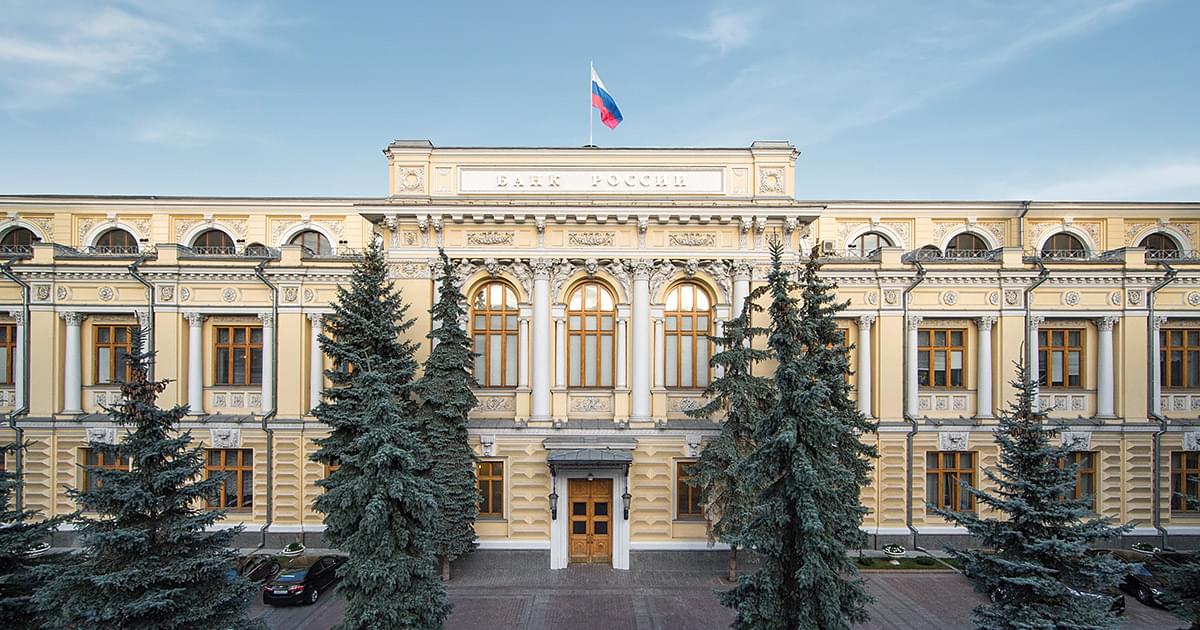 Bank of Russia plans 1% capital cap for banks' own crypto exposure and 50% risk weight on client holdings
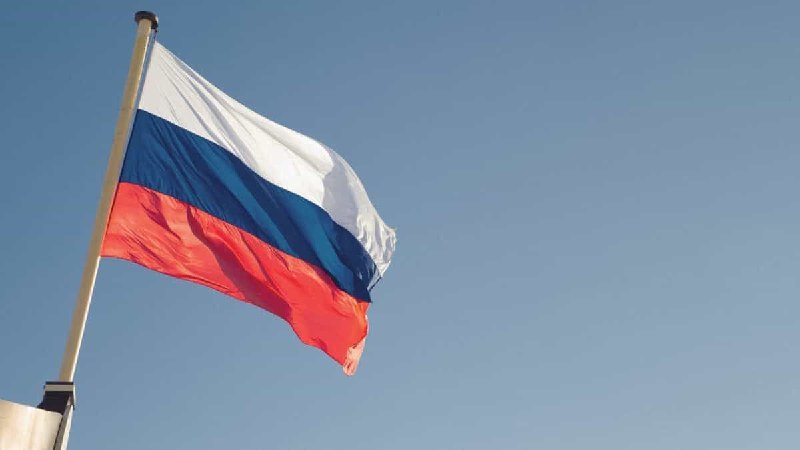 Russia passes crypto bill in first reading, allowing digital assets for foreign trade while banning domestic payments in bid to control circulation
 Russia-linked stablecoin A7A5 says demand for faster settlement, yield products, and regional crypto rails could sustain adoption even if sanctions are lifted
Sources
19 records from 19 domains
lightspark.com
globalgovernmentfinance.com
elliptic.co
gov.uk
euneighbourseast.eu
tradingview.com
trmlabs.com
coinspot.io
leave-russia.org
osfi-bsif.gc.ca
bitget.com
x.com
binance.com
bitcoinmagazine.com
youtube.com
wublockchain.xyz
themoscowtimes.com
justthenews.com
imf.org
Community notes
Spot something off or out of date? Drop a note. Editors review topic notes daily and roll accepted fixes into the explainer — contributors are recognized in the monthly $SQUID drop.
Loading notes…
Help improve this topic
Have a story or tip about this topic? Submit it. See something missing? Leave a note. Editors review daily; accepted submissions and fixes count toward the monthly $SQUID drop.