
In crypto, white papers are foundational documents that define how protocols and tokens work, from Bitcoin to DeFi, stablecoins and AI agents. Learn what they are, how MiCA reshapes them, and how to read them critically to assess risks, incentives and liquidity.
+5 sources across the wider coverage universe
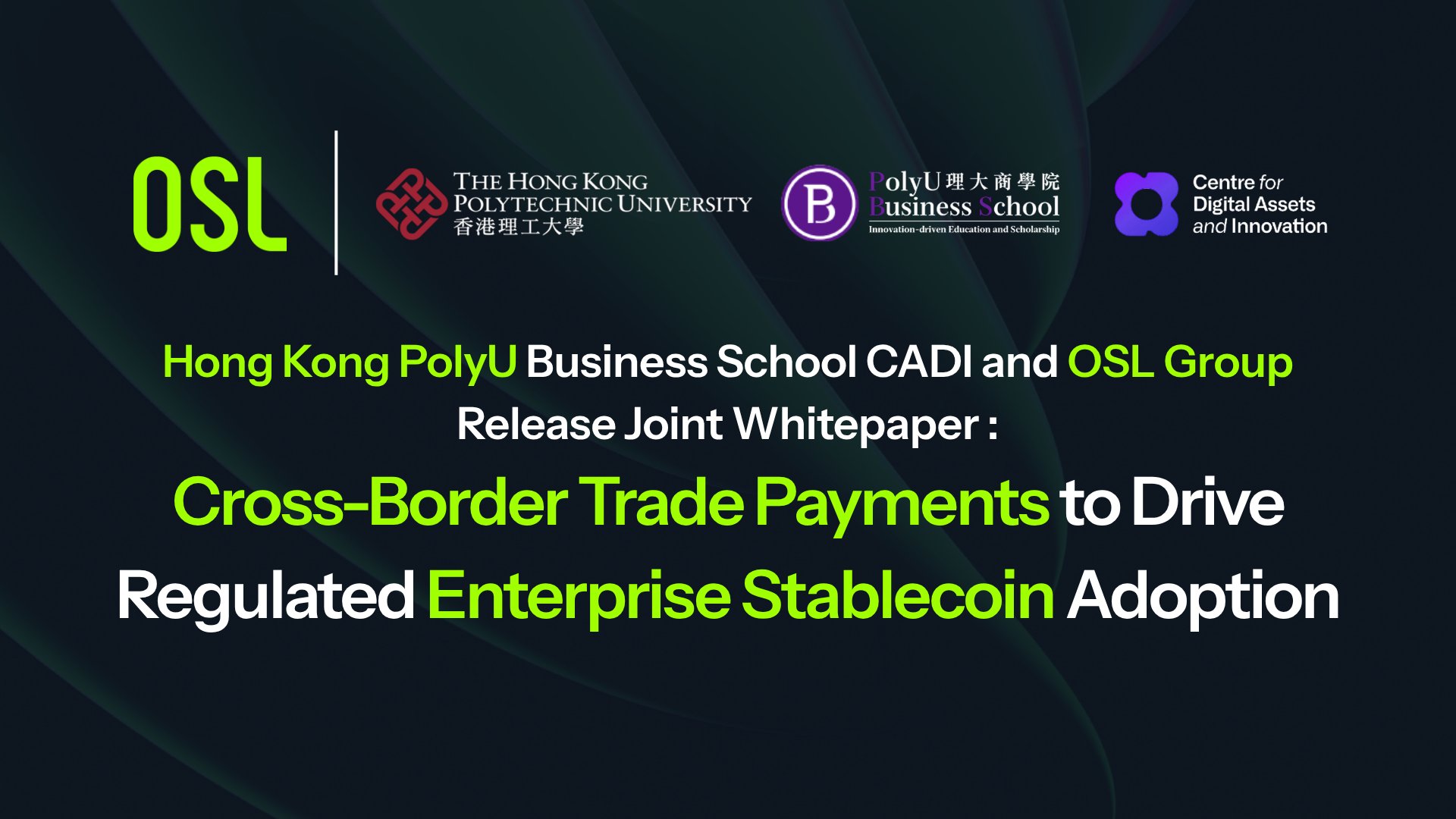 Hong Kong positioned as global stablecoin hub in new PolyU and OSL liquidity whitepaper2026-06
 Circle details post‑quantum security roadmap for USDC and Arc in new whitepaper2026-05
 "Grey Paper" - Pre-Shooting Polaris Whitepaper A new article about Polaris by Alice Rozengarden2026-02
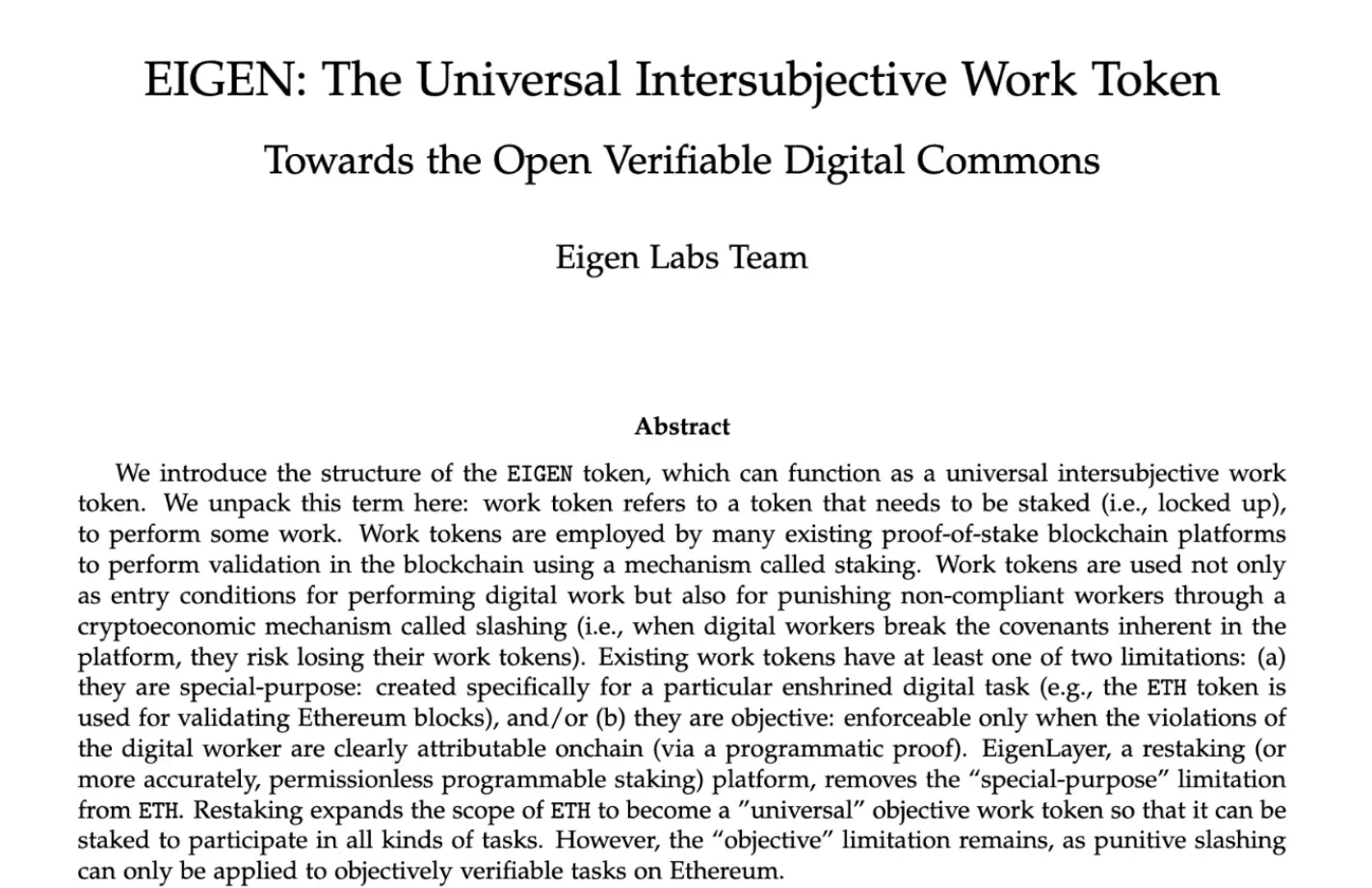 EigenLayer publishes white paper for EIGEN Token, a "universal intersubjunctive work token"2024-04
 China releases web3 white paper, stating the technology is an "inevitable trend for future Internet industry development" 2023-05
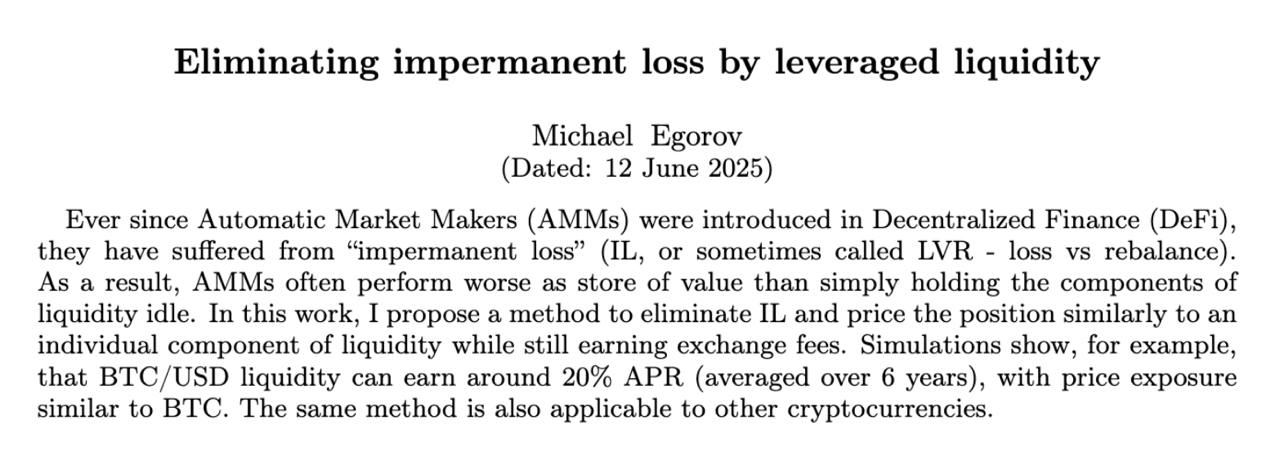 Michael Egorov posts Yield Basis white paper, detailing his method for eliminating impernanent loss and pricing the position similar to an individual component of liquidity while still earning exchange fees2025-06
White Papers in Crypto: Foundations, Functions, and Future Directions
A crypto white paper is a foundational document that explains how a blockchain or token project works, covering both its technical architecture and its economic design so that developers, investors, regulators, and users can evaluate it. In practice, it sits at the intersection of software specification, economic blueprint, and narrative pitch, shaping how markets understand everything from Bitcoin and stablecoins to new staking and AI-agent protocols.
In the years since Satoshi Nakamoto released the Bitcoin whitepaper in 2008, the white paper format has become one of the defining artifacts of the digital asset industry, influencing how projects are launched, how regulators oversee them, and how communities decide what to build or back. The Bitcoin whitepaper did not just describe a system; it framed a philosophy of peer‑to‑peer money, and countless later documents, from the Ethereum whitepaper to today’s DeFi and staking designs, have followed its template as they propose new ways of organizing value and coordination online. As markets have matured, white papers have also moved from lightly edited PDFs to legally constrained disclosures, especially in regions such as the European Union under the Markets in Crypto‑Assets Regulation (MiCA), which specifies format and content requirements for crypto‑asset white papers. At the same time, specialized documents now explore cutting‑edge topics such as Bitcoin’s quantum resilience, self‑custodial Bitcoin staking on Stacks, Lido’s v3 modular architecture, and AI‑driven payments and gaming agents, showing that “white paper” has become a broad genre rather than a single template. For a crypto news audience, understanding what a white paper is, how to read one, and how regulation and market practice are reshaping the format is essential to navigating emerging narratives around Bitcoin, liquidity, stablecoins, agentic finance, and beyond.
Introduction: From Bitcoin’s Manifesto to a Standard Industry Artefact
The modern idea of a crypto white paper is inseparable from the publication of “Bitcoin: A Peer‑to‑Peer Electronic Cash System” by the pseudonymous Satoshi Nakamoto in 2008. That nine‑page document outlined a protocol for sending value over the internet without intermediaries, combining digital signatures, proof‑of‑work, and a distributed timestamp server to solve the double‑spend problem. It was not released as a glossy marketing brochure but as a technical note to a cryptography mailing list, addressed to a small community of experts who could evaluate its claims line by line. Nevertheless, it quickly became the intellectual and symbolic foundation for Bitcoin and, by extension, for the broader cryptocurrency movement, influencing both the language and expectations around later white papers. Today, when market participants refer to “the Bitcoin whitepaper,” they usually mean not only a PDF but the conceptual anchor for an entire asset class and a reference point for many debates about Satoshi’s identity and intentions.
Over time, crypto projects generalized this template into a standard practice: you publish a white paper before, or alongside, a network or token launch, and that document sets out your purpose, architecture, tokenomics, and roadmap. Ethereum, for example, issued its introductory whitepaper in 2013, before launch, to explain a general‑purpose blockchain capable of executing smart contracts rather than only simple Bitcoin‑style transfers. This document, attributed to Vitalik Buterin, framed Ethereum as a decentralized world computer and used the white paper format to argue that more expressive scripting would unlock entirely new applications, from decentralized exchanges to prediction markets. As new categories such as DeFi, liquid staking, omnichain lending, stablecoin settlement layers, and agentic payments emerged, each brought its own wave of white papers, extending the genre far beyond base‑layer consensus mechanisms.
In parallel, experimentation with white paper content and tone has been shaped by market cycles and regulatory responses. During the 2017 initial coin offering (ICO) boom, white papers often skewed toward promotional narratives and aggressive token promises, which later drew criticism and enforcement actions when many projects failed to deliver. Regulators responded by placing increasing emphasis on disclosure and accuracy, culminating in frameworks such as MiCA in the European Union, which explicitly define “crypto‑asset white papers” and prescribe their technical format and content to protect investors and ensure market integrity. At the same time, sophisticated teams have doubled down on rigorous, research‑driven white papers, treating them almost as peer‑reviewed preprints for financial and cryptographic engineering, as seen in the ARK Invest and Unchained paper on Bitcoin and quantum computing or in detailed v3 protocol upgrades like Lido’s.
In this context, white papers sit at the intersection of technology, law, and narrative. They encode design decisions that affect liquidity, governance, and risk; they communicate with regulators and institutional partners; and they shape how communities imagine their own future. For Bitcoin holders weighing self‑custodial yield on Stacks, for traders following Sei’s Mastercard collaboration on on‑chain finance, or for institutions evaluating MiCA‑compliant stablecoin issuances, reading and interpreting white papers is no longer optional—it is central to understanding where crypto is heading. This explainer therefore examines what white papers are, how they have evolved, how regulation is changing them, how to evaluate their claims, and how they are being used to frame the next era of crypto, from stablecoins and agentic payments to quantum‑resistant security.

Standard Reserve publishes whitepaper for experimental onchain central bank, using a Uniswap v4 pool to track ETH flows and adjust its operations.
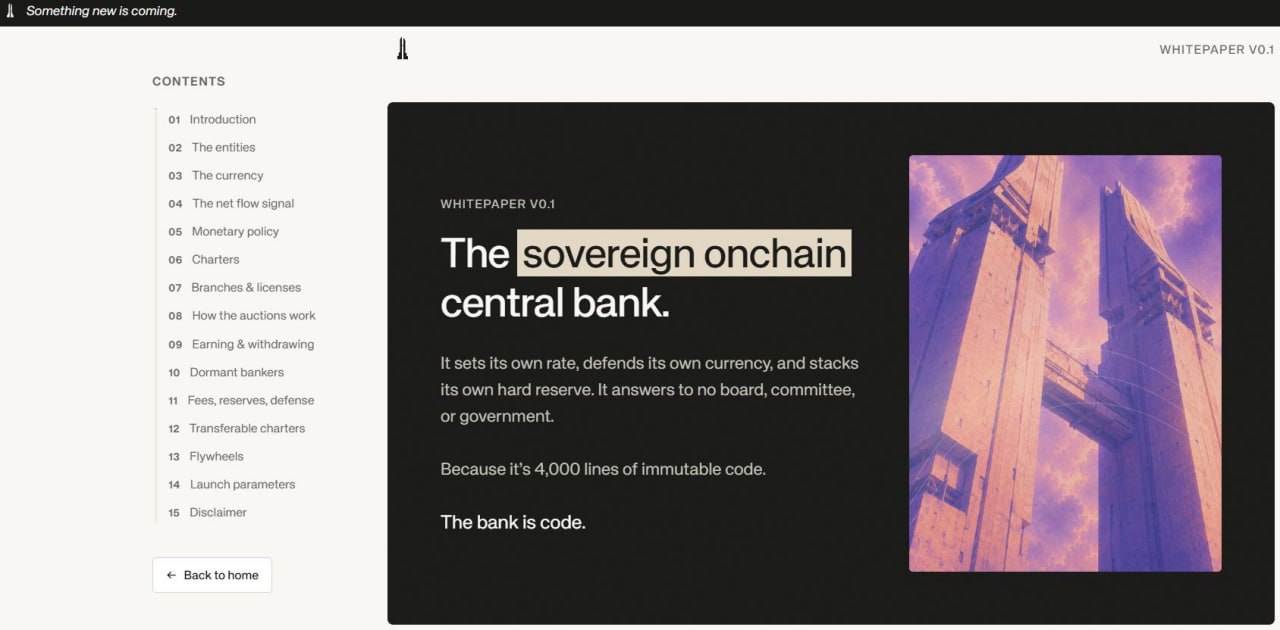

The first onchain flag, '08, was flown to gut the central banks — and now Standard Reserve hoists a 'central bank' on a Uniswap v4 pool than tracks its own ETH tide. An experimental reserve that steers by its own flow: that be quicksand settin' its own danger signs. 🦑
What Is a Crypto White Paper?
At its core, a crypto white paper is a comprehensive document that sets out the technical and economic aspects of a specific cryptocurrency or token‑based project. It is typically written by the project’s development team or core contributors and is meant to serve as a guide for potential users, investors, miners or validators, and ecosystem partners. A standard white paper describes the purpose of the project, explains how the underlying protocol or application works, and details the mechanisms that secure the network and align incentives among participants. Unlike a short marketing brochure, it is expected to include enough detail to allow technically literate readers to judge whether the design is coherent, whether the security assumptions are credible, and whether the token economics make sense. In the crypto industry, this expectation has become a norm: serious projects are expected to publish a white paper, and its absence is often seen as a red flag.
Two dimensions distinguish crypto white papers from generic technical notes. The first is the dual emphasis on both technology and economics. Classic protocol white papers, starting from Bitcoin, usually touch on the consensus mechanism, network architecture, and transaction validation logic, as well as on issuance schedules, incentive structures, and game‑theoretic considerations. Many modern white papers go further, describing token distribution, governance processes, and liquidity strategies such as how tokens will circulate on exchanges or be used as collateral in lending markets. The second dimension is the orientation toward an external audience that may include non‑technical stakeholders such as investors, regulators, or enterprise partners. This audience orientation means that even technically advanced white papers must tell a coherent story about the problem being solved and why the proposed solution is needed, not simply list equations or code.
Crypto white papers also serve as quasi‑constitutional texts in many ecosystems. In some networks, early white papers are invoked in governance debates as evidence of “original intent,” much as constitutional framers’ writings are debated in legal theory. For Bitcoin, the whitepaper’s statements about peer‑to‑peer electronic cash capabilities have been used by both small‑block and big‑block camps to support differing interpretations of scalability and on‑chain usage, illustrating how white papers can have a long afterlife in narratives that go beyond their initial technical content. Similar dynamics can be seen in other protocols when communities argue over whether later upgrades remain faithful to the original design, or when forks adopt different visions while still invoking a shared whitepaper heritage.
Core Purpose and Audience
A single white paper is often expected to speak to several overlapping audiences, each with different expectations. On the one hand, academics and developers may look for a clearly defined problem, a rigorous presentation of the solution, and sufficient detail to reproduce or extend the work, echoing norms from computer science and cryptography. On the other hand, business decision‑makers or investors may focus on the industry context, market opportunity, revenue flows, and practical deployment timelines, seeking to understand how the project fits into existing infrastructure and regulatory regimes. Regulators, especially under frameworks such as MiCA, add another layer, looking for accurate risk disclosures, clear descriptions of rights attached to tokens, and compliant representations of expected returns or governance powers.
Because of this diversity, many white papers are effectively hybrids, combining an introductory narrative, a middle section with technical and economic details, and an appendix or companion document for deeper mathematical or code‑level exposition. Some authors split these concerns explicitly into separate documents: a high‑level problem–solution overview, a deep technical backgrounder with formulas and system diagrams, and a simpler backgrounder describing token creation, revenue flows, and token generation events or other distribution events. This modular approach can help avoid the common pitfall of producing a document that is simultaneously too technical for general readers and too superficial for experts. It also mirrors the broader fragmentation of the crypto stack, where base‑layer protocols, middleware, and applications often have their own specialized documentation.
Respecting the audience also means recognizing their sophistication and constraints. Seasoned market participants are acutely aware of inflated claims from past cycles and may scrutinize evidence for each assertion about market size, competitive advantage, or security assurances. As writing specialists in this domain note, well‑crafted white papers back up their claims with specific names, numbers, dates, expert quotes, trade surveys, and reputable research, not vague language or buzzwords. In a market where liquidity moves quickly and misaligned incentives can lead to overpromising, the tone and evidentiary backbone of a white paper can signal whether a team takes its obligations seriously or treats the document primarily as a marketing tool.
Key Components and Structure
While there is no single canonical structure, certain elements appear repeatedly across credible crypto white papers. One common pattern begins with a problem statement that describes the limitations of existing systems, whether that is Bitcoin’s lack of native yield for self‑custodial holders, the fragmentation of cross‑chain liquidity, or the inefficiency of legacy payment rails for stablecoin‑based settlement. This is followed by a high‑level overview of the proposed solution, which may be a new base‑layer blockchain, a protocol built on an existing chain, a staking mechanism, or an application that orchestrates on‑chain and off‑chain components. Subsequent sections typically delve into technical architecture, security model, tokenomics, governance, and implementation roadmap.
On the technical side, white papers often describe the network architecture, including how nodes communicate, how consensus is reached, and how data is stored and validated. For proof‑of‑stake or similar systems, they may detail staking requirements, slashing conditions, and validator incentives. Protocol‑level white papers like Lido’s v3 paper focus on modular architecture, describing new modules such as staking vaults and how they broaden functionality while also expanding the attack surface, thereby necessitating careful design and security review. Others, such as MultichainZ’s documentation, emphasize composability across chains, explaining how omnichain credit protocols can allow users to borrow against yield‑bearing real‑world assets while offsetting borrowing costs through protocol‑level incentives.
On the economic side, the tokenomics section outlines how tokens are minted, distributed, and used within the ecosystem, as well as how value accrues to different stakeholders. This may include issuance schedules, allocation between team, investors, community, and treasury, and mechanisms such as buybacks, burns, or fee redistribution. For example, staking‑oriented white papers often explain how rewards are sourced, under what conditions they are paid, and what risks (including smart contract and market risks) users bear in exchange. Liquidity design is increasingly central here, as protocols spell out how they expect tokens to trade on exchanges, how liquidity mining or market‑making arrangements will work, and how they will avoid structural issues such as reflexive sell pressure or chronic illiquidity.
White Paper, Litepaper, Yellow Paper, and Grey Paper
Over time, the white paper ecosystem has diversified into related document types. The litepaper is a shorter, simplified version tailored to readers who do not need or want all the technical details. As Bitstamp notes, a white paper typically goes into all the technical and detailed aspects of a project, whereas a litepaper distills the essentials in more accessible language. Litepapers are often used in marketing or community‑facing contexts, serving as a gateway to the full white paper for those who later decide to dive deeper. They may highlight the project’s value proposition, basic mechanics, and tokenomics without extensive proofs or code‑level discussions.
The term yellow paper has been used, following Ethereum’s “Yellow Paper,” to denote a more formal, mathematically rigorous specification of a protocol, often intended primarily for implementers and researchers rather than general audiences. While the original Ethereum whitepaper framed the vision and high‑level design, the yellow paper elaborated the exact protocol rules and virtual machine semantics in a style closer to academic computer science. Some projects adopt a similar split, with a narrative white paper and a separate, more technical yellow or spec paper.
Finally, the ecosystem has experimented with terms such as grey paper to denote early, exploratory drafts that precede a full white paper release. Projects like Polaris have used “grey paper” branding for pre‑shooting or pre‑launch documents that share evolving design thinking without claiming finality, signalling to readers that the content is open for feedback and may change before deployment. Although “grey paper” is not a standardized category, the practice illustrates how teams use documents at different levels of maturity—from conceptual essays to implementation specifications—to engage with community and partners across the release lifecycle.
To clarify these distinctions, it can be helpful to think of whitepapers, litepapers, and technical specs as points along a spectrum from narrative to formal specification. At one end, high‑level white papers and litepapers establish vision, problem framing, and conceptual architecture; in the middle, full white papers blend narrative with significant technical and economic detail; at the other end, yellow papers, protocol specifications, and security analyses spell out exact semantics, algorithms, and threat models. In practice, many projects blur these categories, but for readers and regulators alike, the presence of a well‑structured, comprehensive white paper remains a key signal of seriousness.
Readers click white papers most heavily when the paper claims to abolish a known DeFi tradeoff — impermanent loss, DAO governance lag, cross-chain friction — treating the document as proof-of-concept rather than as routine disclosure.
Historical Milestones: Bitcoin, Ethereum, and the Evolution of Crypto White Papers
The Bitcoin whitepaper is the archetype from which most subsequent crypto white papers derive. Published in 2008 by an author using the pseudonym Satoshi Nakamoto, it proposed a decentralized electronic cash system and introduced the blockchain as a public, append‑only ledger secured by proof‑of‑work. The paper’s concise style and clear problem–solution framing set a standard for later documents: Satoshi defined the double‑spend problem, explained why prior approaches failed, and then outlined a system in which network consensus would emerge from honest nodes controlling the majority of CPU power. It also described the issuance schedule, in which new bitcoins are minted as rewards for miners, thereby aligning economic incentives with network security. In many ways, this was the first comprehensive crypto white paper: a blend of applied cryptography, game theory, and monetary design.
The legal and cultural status of the Bitcoin whitepaper has evolved in tandem with the asset itself. In the United Kingdom, litigation over who authored the whitepaper led to a high‑profile case in which Craig Wright claimed to be Satoshi Nakamoto and sought to assert control over the text. For a period, Wright won an injunction that forced bitcoin.org to remove the whitepaper, raising questions about copyright, open‑source ethos, and control over foundational crypto documents. That decision was later unwound, and the Bitcoin whitepaper returned to bitcoin.org after courts found that Wright had failed to prove that he was Nakamoto, illustrating how legal outcomes can influence public access to core documents. Meanwhile, journalistic investigations, such as a New York Times report pointing to circumstantial evidence that cryptographer Adam Back might be Satoshi—based partly on Hashcash’s citation in the whitepaper—have kept the document at the center of debates about authorship and intent. Regardless of who wrote it, the white paper itself continues to function as a reference point for protocol debates, with phrases and design choices scrutinized by developers, miners, and researchers alike.
Ethereum’s whitepaper marked the second major milestone in the evolution of the genre. Published in 2013, it extended the blockchain concept from a single‑purpose currency into a general‑purpose computation platform capable of running decentralized applications via smart contracts. In contrast to Bitcoin’s relatively narrow focus, the Ethereum whitepaper spent considerable time explaining the broader vision of programmability, describing how a Turing‑complete scripting language could enable decentralized autonomous organizations, name registries, and financial derivatives. This combination of protocol design and platform vision set a pattern for later layer‑one projects, which often use their white papers to articulate not only how the chain works but what kinds of ecosystems and use cases it is meant to enable. Ethereum’s use of a separate “Yellow Paper” for formal specification further encouraged other teams to think in terms of layered documentation, distinguishing between narrative and specification while recognizing that both are important for adoption.
As the industry matured, white papers diversified beyond base‑layer protocols. DeFi, in particular, generated a wave of documents focused on composable financial primitives such as lending markets, automated market makers, derivatives platforms, and staking protocols. Lido’s v3 whitepaper, for instance, is dedicated not to creating a new chain but to re‑architecting a liquid staking protocol to be modular and more flexible, with “stVaults” and other components expanding both functionality and the potential attack surface. It delves into how a modular architecture can support multiple staking strategies while necessitating robust risk management, showing how white papers now often focus on versioned upgrades rather than first‑time launches. Similarly, MultichainZ’s whitepaper outlines an omnichain credit protocol enabling users to borrow against yield‑bearing real‑world assets while offsetting borrowing costs, highlighting how DeFi white papers must explain both smart contract interactions and real‑world asset interfaces.
In parallel, specialized research white papers have emerged that focus on cross‑cutting risks and opportunities. The joint paper by ARK Invest and Unchained on Bitcoin and quantum computing assesses whether advances in quantum hardware pose a significant risk to Bitcoin’s security model. It quantifies the proportion of Bitcoin supply that remains exposed to long‑term quantum risks and discusses potential mitigation strategies such as new cryptographic standards and BIP‑360 proposals. While not tied to a new token release, this whitepaper shows how the format can be used for thematic risk analysis, influencing how investors, developers, and regulators think about systemic threats. Extended beyond Bitcoin, such risk‑focused white papers have been published on topics ranging from stablecoin reserve transparency to cross‑chain bridge security, emphasizing that the genre now covers not only construction of new systems but also audits of existing ones.
More recently, new types of white papers have emerged around Bitcoin itself, especially concerning yield and programmability. The Stacks ecosystem has published a Bitcoin Staking whitepaper proposing a model for earning yield on BTC while maintaining self‑custody, challenging the long‑held narrative that Bitcoin cannot generate returns without centralized intermediaries. This whitepaper, and the roadmap updates surrounding it, describe how Stacks aims to leverage Bitcoin’s security while enabling on‑chain yield opportunities, and they have already sparked debate over whether such designs can reconcile security, decentralization, and liquidity. At the same time, media coverage and community responses to this whitepaper illustrate how such documents can reset expectations in mature markets, especially when they claim to unlock hundreds of millions of dollars in payouts without compromising Bitcoin’s core properties.
From Bitcoin’s original manifesto to Ethereum’s programmable platform vision and today’s detailed DeFi, staking, and risk analyses, the crypto white paper has thus evolved into a flexible but recognizable form. It retains its role as an authoritative statement of a project’s design and intent, while expanding to cover version upgrades, regulatory compliance, quantum threats, and integration with real‑world financial infrastructure. For traders and builders alike, following these documents is a way of tracking how narratives about Bitcoin, liquidity, stablecoins, and crypto more broadly are being rewritten in near real time.
Regulatory Turn: MiCA, Stablecoins, and Compliant White Papers
As digital assets have grown into a significant asset class, regulators have increasingly scrutinized the content and legal status of crypto white papers. In the European Union, this process culminated in the Markets in Crypto‑Assets Regulation (MiCA), which creates a harmonized framework for crypto‑asset issuance and services, including specific provisions for crypto‑asset white papers. MiCA and its associated implementing regulations set out technical format requirements for these white papers and for related disclosures such as order books, aiming to ensure that potential purchasers receive clear, accurate, and non‑misleading information. This moves white papers closer to regulated securities or prospectus disclosures, at least for certain categories of tokens, and changes how teams must approach drafting and release.
Under MiCA, issuers of particular types of tokens, including asset‑referenced tokens and e‑money tokens that resemble stablecoins, must publish a crypto‑asset white paper and, in many cases, notify or obtain approval from a national competent authority before marketing the asset to the public. The white paper needs to include information about the issuer, the project, the rights and obligations attached to the crypto‑asset, and the risks associated with the investment, among other elements. While the precise content requirements vary by token type, the overall effect is to make white papers legally significant documents rather than purely voluntary disclosures. Misrepresentations or omissions in MiCA‑covered white papers can lead to regulatory sanctions, civil liability, or both, aligning the crypto space more closely with traditional financial regulation.
Projects are already adapting to this environment. The AVA Foundation, for example, has publicly emphasized that it has published a MiCA‑compliant white paper for the AVA token, describing this as a strategic step to align its ecosystem with the European Union’s harmonized framework for digital assets. In its communications, AVA frames MiCA compliance as a mark of rigor and transparency, highlighting that the white paper’s content and format meet the regulation’s disclosure standards. This signals a shift in how white papers are marketed: rather than only showcasing technical innovation or tokenomics, teams now also highlight regulatory compliance as part of their value proposition, particularly when courting European exchanges and institutional participants.
MiCA’s influence is not limited to single tokens. Infrastructure providers that plan to support multiple MiCA‑compliant assets, such as exchanges and omnichain protocols, are also referencing the regulation in their own documentation. OpenGradient, for instance, has framed its TGE and exchange listing roadmap in terms of a MiCAR‑compliant whitepaper registered with the European Securities and Markets Authority (ESMA), positioning the document as a legal compass for EU trading. This illustrates how white papers can now function both as technical architectures and as regulatory artefacts, shaping the conditions under which liquidity can form in compliant venues. In turn, this may influence how tokens appeal to liquidity providers and market makers, who often favor assets with clear legal standing.
Stablecoins occupy a central place in this regulatory turn. As tokenized representations of fiat currencies, they sit at the core of on‑chain liquidity and act as a settlement layer for decentralized finance and cross‑border payments. Recent whitepapers and reports have examined how regulated enterprise stablecoins can improve settlement efficiency and liquidity, particularly in regional hubs. A joint whitepaper by OSL and the Hong Kong Polytechnic University Business School’s research institute CADI, focusing on USD‑denominated stablecoins like USDGO and payment solutions such as OSL BizPay, has positioned Hong Kong as a prospective global stablecoin hub. The whitepaper argues that regulated enterprise stablecoins can streamline corporate settlement, reduce counterparty risk, and deepen liquidity in digital asset markets, aligning with local regulatory efforts to attract fintech innovation. Such documents illustrate how white papers can blend technical design with policy analysis, influencing both market participants and regulators.
Beyond regulatory frameworks, stablecoin issuers and partners are using white papers to chart the future of digital payments and agentic finance. A joint whitepaper by Sei and Mastercard, unveiled at NY Tech Week, explores production readiness and the trajectory of on‑chain finance, raising questions for crypto traders about how traditional payment networks and blockchain infrastructure might converge. Similarly, a whitepaper co‑authored with Stable and InterlaceMoney proposes standards and architecture for AI‑agent‑driven payments, with Stable’s role as a stablecoin settlement layer forming a key part of the vision for “agentic payments.” These documents push the white paper format into new conceptual territory, articulating how autonomous software agents might schedule, route, and settle payments using stablecoins in high‑liquidity environments, while also addressing regulatory and safety considerations.
Circle’s own whitepaper on a post‑quantum security roadmap for USDC and Arc adds another dimension, focusing on long‑term cryptographic resilience for stablecoins that already underpin significant on‑chain liquidity. By detailing paths toward quantum‑resistant signatures and migration strategies, such documents underscore how white papers now serve as instruments of technical accountability for critical financial infrastructure. In combination with risk analyses like ARK and Unchained’s Bitcoin‑quantum paper, these efforts show regulators and institutional users that major issuers are proactively addressing systemic security questions, not merely chasing short‑term returns.
Taken together, MiCA’s legal framework, region‑specific stablecoin whitepapers, and institutional collaborations demonstrate that white papers are now instruments of regulatory navigation as much as technological description. They help issuers secure listings on compliant exchanges, position jurisdictions as crypto hubs, and frame the debate over how liquidity, stablecoins, and traditional finance will interconnect. For a crypto news audience, this means that reading white papers is increasingly part of understanding not just protocol mechanics but also regulatory arbitrage, jurisdictional competition, and the geopolitics of digital money.
Everything Protocol whitepaper proposes one liquidity reserve to power swaps, lending, leverage and limit orders

Anatomy of a Strong Crypto White Paper
The difference between a perfunctory white paper and a robust one often lies in its internal coherence: how well the problem, technology, tokenomics, and governance all align. Writing specialists and tokenomics experts emphasize that strong white papers are not simply long; they are structured to build a persuasive, evidence‑backed case for why the project is needed and why its design is sound. They begin with a clear articulation of the problem or opportunity, supported by credible data and references, rather than by sweeping generalities or buzzwords. For example, instead of vaguely claiming that “liquidity is fragmented,” a careful white paper would quantify trading volumes across chains, show slippage statistics, or reference market structure studies. By grounding claims in specific evidence, authors demonstrate both competence and respect for the reader’s critical faculties.
The problem statement should lead logically into the proposed solution’s architecture. In the context of DeFi, this might mean explaining how current lending markets fail to effectively harness yield‑bearing real‑world assets, and then showing how an omnichain credit protocol like MultichainZ can allow users to borrow against such assets while offsetting borrowing costs through protocol‑native mechanisms. For white papers addressing Bitcoin’s limitations, such as the lack of on‑chain yield for self‑custodial holders, the text needs to bridge from the original design constraints outlined in Satoshi’s whitepaper to new constructs like Stacks’ Bitcoin staking or other Layer‑2 solutions, explaining how they interact with Bitcoin’s security model. The best papers make these bridges explicit, acknowledging trade‑offs and alternative approaches rather than presenting their own design as the only possible path.
Technical Architecture and Security Model
Technical sections are where readers can evaluate whether a project’s proposed mechanisms actually solve the problem described earlier. Here, clear explanations of architecture, data flows, and consensus or coordination mechanisms are crucial. For base‑layer projects or rollups, this might involve detailing how blocks are produced, how transactions are ordered, how disputes are resolved, and what assumptions are made about liveness and safety. For application‑level protocols, architecture sections typically describe the contract system, off‑chain components such as oracles or matchers, and the interactions that constitute core user flows.
Lido’s v3 whitepaper is an example of a security‑minded architectural discussion. It introduces a modular architecture built around staking vaults (“stVaults”) and other components that expand protocol functionality but also broaden the attack surface. The whitepaper acknowledges that modularity, while enabling more nuanced strategies and integrations, introduces additional complexity and potential vulnerabilities, requiring rigorous auditing and layered risk mitigations. By explicitly framing modularity as both an opportunity and a risk, the document sets appropriate expectations for users and integrators, illustrating how a strong white paper can avoid the trap of overselling complexity as pure upside.
For omnichain protocols like MultichainZ, the architecture section explains how cross‑chain messaging and collateralization work across multiple networks, making clear what trust assumptions and failure modes exist when users borrow against yield‑bearing real‑world assets. Similarly, for AI‑agent‑driven payments and gaming systems like those described in Stable’s agentic payments whitepaper or CROSS’s AGENTVERSE documentation, technical sections need to clarify how autonomous agents are authorized, how they access funds, and how they interact with smart contracts to delegate tasks or reward human contributors. Given the novelty of such designs, these sections not only explain mechanics but also educate the market on new operational patterns, which can influence both adoption and regulatory scrutiny.
Security models deserve special attention. White papers should articulate the threat model they assume, including what types of adversaries are considered, what resources they might have, and what systemic risks (such as oracle failure, governance capture, or quantum advances) are addressed or left for future work. The ARK Invest and Unchained paper on Bitcoin and quantum computing is a good example of a security‑centric white paper: it estimates that approximately one‑third of Bitcoin’s supply remains exposed to long‑term quantum risks and describes pathway proposals like BIP‑360 for mitigating those risks. By quantifying exposure and proposing concrete steps, the paper goes beyond theoretical concern and becomes a roadmap for protocol‑level and wallet‑level responses. Similar logic applies to stablecoin security whitepapers that outline reserve compositions, risk controls, and contingency plans for depegging events.
Tokenomics, Liquidity, and Economic Design
In crypto, the economics section is often as critical as the technical architecture, because poorly designed incentives can undermine even technically robust systems. Tokenomics explanations should clarify how tokens are created, how they circulate, and what roles they play in the ecosystem, whether as gas, collateral, governance instruments, or fee‑sharing units. They should describe issuance schedules, vesting, and allocation, including how much supply goes to founders, investors, community incentives, and treasuries, and how these allocations align with long‑term network health rather than short‑term speculation. For lending and staking protocols, tokenomics need to show how returns are generated, how sustainable they are, and what sources of yield underlie the promised returns, particularly in light of past experiences with unsustainable liquidity mining schemes.
Liquidity design is a crucial part of this discussion. White papers sometimes underestimate how challenging it is to bootstrap and maintain deep, stable liquidity across centralized and decentralized venues. Strong documents address this by explaining how token utility will drive organic demand, what market‑making arrangements may be in place, and how mechanisms like bonding curves, liquidity mining, or protocol‑owned liquidity might evolve over time. The HTX 2026 Trends White Paper, for instance, frames a “liquidity shift” as unlocking a new era of on‑chain wealth, emphasizing how liquidity migration from centralized to decentralized venues could change yield opportunities and risk profiles. By integrating such analyses, protocols can position themselves within broader structural shifts rather than as isolated projects.
Real‑world asset and omnichain lending projects, such as MultichainZ, must go further by explaining how yield‑bearing assets generate cash flows, how these flows are tokenized, and how borrowing costs are offset or subsidized through protocol incentives. Yield‑engineering whitepapers like Michael Egorov’s Yield Basis paper, which describes methods for eliminating impermanent loss and pricing liquidity positions as individual components, show how economic design can become highly technical in its own right. In such cases, the tokenomics and liquidity sections may need to include formulas, sensitivity analyses, and scenario modeling to convince sophisticated readers that the mechanisms are both innovative and robust, rather than fragile constructions that work only under ideal conditions.
Governance, Roadmap, and Risk Disclosures
Governance design is another area where white papers can distinguish themselves. Many protocols now include sections describing how decisions will be made, how governance tokens function, and what upgrade paths exist. This may involve outlining DAO structures, quorum thresholds, delegation mechanisms, and emergency powers. Strong white papers acknowledge the trade‑offs between flexibility and ossification: fast‑moving projects may need agile governance, but too much centralization or opaque control undermines decentralization claims and can introduce regulatory risk.
Roadmaps should be realistic and anchored in demonstrable progress. Rather than presenting a long list of aspirational milestones, credible white papers describe phased deployments, testing plans, security audits, and performance metrics. They may also reference versioned white papers or grey papers that document earlier stages of design, illustrating a track record of delivery and refinement. Protocols like Lido that release v3 whitepapers after substantial mainnet experience exemplify this iterative approach, updating design descriptions in light of operational realities.
Risk disclosures tie these threads together. Under regulatory regimes like MiCA, white papers must explicitly outline key risks, including technical bugs, regulatory changes, market volatility, and governance failures. Even outside formal requirements, transparent risk sections are best practice. Stablecoin issuers, staking providers, and cross‑chain bridge designers all face complex risk landscapes that cannot be fully summarized in marketing copy. By naming and contextualizing these risks, white papers help users and investors make informed decisions, and they demonstrate that teams understand the difference between prudent risk‑taking and wishful thinking.
Design, Accessibility, and Visual Communication
Finally, the form of a white paper affects how effectively it communicates. Writing experts in the crypto space emphasize that readability, typography, and visual layout matter, especially when targeting decision‑makers who may be older or less comfortable with dense technical text. They recommend using legible fonts, adequate margins, clear headings, and consistent design elements, ensuring that text is in high‑contrast colors for accessibility. Graphics such as flowcharts, system diagrams, and ecosystem maps can clarify complex interactions, particularly for multi‑chain systems or agentic architectures where textual descriptions alone may be hard to follow. Projects often budget significant resources for professional design and original graphics, recognizing that visual clarity can significantly improve comprehension and perceived professionalism.
Accessibility also extends to language choices. Jargon should be minimized or carefully defined, and acronyms spelled out on first use. Where possible, white papers should be translated into the languages of key markets, especially when seeking MiCA compliance in the EU or targeting hubs like Hong Kong for stablecoin adoption. Some teams repurpose whitepaper content into blog posts, FAQs, slide decks with voiceovers, infographics, or explainer videos, giving different audiences multiple entry points into the material. In all cases, however, the core white paper remains the authoritative reference, against which other summaries and promotional materials should remain consistent.
Reading Between the Lines: How To Evaluate a Crypto White Paper
For traders, investors, and developers faced with a constant stream of new releases, the ability to quickly assess a white paper is a crucial skill. One of the first questions to ask is: who is the document written for? As That White Paper Guy notes, white papers aimed at academics or developers tend to focus on formal problem statements and technical solutions, whereas those aimed at business people or investors emphasize industry pain points and market gains. Recognizing this orientation helps interpret what is present and what is missing. A strongly technical white paper might underplay go‑to‑market strategy but excel in security description, while a business‑oriented one might lavish attention on market size estimates but gloss over protocol specifics. Neither is inherently bad, but mismatched expectations can lead to misinterpretation.
Evaluating the evidence behind claims is equally important. White papers that assert unique insights or unprecedented opportunities should substantiate these with data and references. As writing experts emphasize, credible evidence includes specific statistics, expert quotes, trade association surveys, government reports, and articles from respected journals or reputable news outlets. For example, a stablecoin whitepaper that claims to make a jurisdiction a global hub, like the Hong Kong‑focused liquidity whitepaper by OSL and PolyU, can bolster its case by citing local regulatory initiatives, transactional volumes, and case studies of enterprise settlement improvements. Similarly, a paper on AI‑agent‑driven payments should reference research on agent architectures, security vulnerabilities, and prior attempts at automated payments, rather than relying solely on aspirational language.
Red flags often become apparent when reading across sections. In the ICO era, many white papers featured ambitious roadmaps and tokenomics but lacked clear explanations of how technology would be implemented, or they copy‑pasted generic technical descriptions with minimal adaptation. Today, variations of this pattern still appear: for example, a document may propose cross‑chain liquidity solutions without addressing bridge security and message verification, or it may promise high yields on Bitcoin or stablecoins without explaining how these returns are generated and what counterparty risks exist. White papers that gloss over risks, omit discussion of attack surfaces, or avoid mentioning competitors and alternative approaches may signal either naivety or deliberate obfuscation.
Conversely, transparency about limitations and open questions is often a positive sign. ARK and Unchained’s quantum risk whitepaper, for instance, openly acknowledges the uncertainty around quantum timelines while still presenting quantified exposure estimates and proposed mitigations. Lido’s v3 paper is explicit about how modular architecture increases complexity and attack surface, rather than pretending that more components automatically mean more security. Stacks’ Bitcoin Staking whitepaper has sparked both enthusiasm about self‑custodial yield and critical scrutiny of the assumptions and dependencies it introduces, exemplifying how robust documents invite informed debate rather than seeking to shut it down. Readers who encounter a white paper that pre‑emptively addresses likely criticisms and cites opposing viewpoints should see that as a signal of seriousness rather than weakness.
Liquidity considerations deserve special attention for tokens with market ambitions. White papers may outline exchange listings, incentive programs, and liquidity partnerships, but sophisticated readers should also consider structural factors such as token float, unlock schedules, and how the protocol’s design might affect secondary market activity. For example, a token that is heavily locked with steep cliffs for insiders may face significant selling pressure at unlock, regardless of protocol quality. Projects that acknowledge these dynamics and explain how they intend to manage them—potentially referencing trends described in broader market whitepapers like HTX’s liquidity shift report—show a more mature understanding of how tokens live and trade in the wild.
Case studies are helpful anchor points. The Bitcoin whitepaper, despite its age, remains an exemplar of clarity and focus; its relatively short length contrasts with some modern documents that run dozens of pages without adding commensurate substance. Ethereum’s whitepaper shows how to connect a protocol description to a broader platform vision, detailing not only mechanics but also the types of applications imagined on top. Lido, MultichainZ, and Stacks illustrate how contemporary white papers can focus on specific problems—such as liquid staking, omnichain credit, or Bitcoin yield—while still integrating into larger narratives about Ethereum, real‑world assets, and Bitcoin’s evolving role. Meanwhile, newer frontiers like Stable’s agentic payments whitepaper and CROSS’s AGENTVERSE documentation show how white papers can explore AI‑native commerce and open gaming economies, but they also underscore the importance of clear risk and governance frameworks when autonomous agents gain financial powers.
In sum, evaluating a white paper involves synthesizing technical, economic, and narrative cues. Readers should ask whether the problem is clearly articulated, whether the proposed solution plausibly addresses it, whether incentives align with long‑term network health, whether governance and risk are treated seriously, and whether the document situates itself honestly within competitive and regulatory landscapes. The goal is not to find a perfect white paper—few exist—but to distinguish between those that treat the format as a serious commitment to transparency and those that view it as a marketing checklist item.
- 01Novel DeFi primitive mechanics↗
Papers from EigenLayer, Yield Basis, 1inch, and Morpho each promised to retire a canonical DeFi limitation, making the white paper itself the news event rather than a token launch.
- 02Nation-state web3 positioning↗
China's framing of Web3 as 'inevitable' and Hong Kong's stablecoin-hub whitepaper drew readers tracking how regulatory superpowers are officially staking out territory.
- 03DAO governance removal
Morpho Blue's explicit pitch to cut 'DAO bottlenecks' resonated with readers fatigued by slow on-chain governance blocking protocol upgrades.
- 04Yield-bearing stablecoin design↗
Both sDOLA and the Stacks Bitcoin-staking paper addressed the same reader anxiety — earning native yield without sacrificing custody or peg stability.
- 05EU MiCAR compliance race↗
OpenGradient and Circle papers tied white-paper publication directly to regulatory listing eligibility, making EU compliance a concrete commercial trigger readers tracked.
- 06Satoshi identity and IP disputes↗
Craig Wright's failed ownership claim over the Bitcoin white paper framed the document as legal property, pulling readers interested in who controls crypto's founding narrative.
Beyond Base Layers: White Papers Across the Crypto Stack
The scope of white papers has expanded dramatically as crypto has diversified beyond Bitcoin‑like base layers. Infrastructure and smart contract platforms continue to produce foundational documents, but these now coexist with white papers dedicated to DeFi primitives, stablecoin ecosystems, AI‑driven payments, gaming worlds, and cross‑chain credit systems. Each layer of the stack brings different emphases and constraints, and white papers often reflect the distinctive concerns of their domains.
Infrastructure‑level documents, such as those from Ethereum and other layer‑one networks, focus on consensus, security, and programmability. They must convince readers that the chain can achieve sufficient decentralization and throughput while enabling flexible smart contracts. Some, like the TON blockchain’s technical white paper, originated as internal research within large platforms like Telegram, only later evolving into community‑run networks after regulatory headwinds altered launch plans. The TON ecosystem’s subsequent decision to change its native currency’s name from Toncoin back to Gram—reviving the original name from Telegram’s first whitepaper—shows how branding and narrative continuity can matter as much as technical details. Here, the white paper functions as a historical anchor, with naming decisions explicitly referencing its legacy.
DeFi white papers, by contrast, are often more concerned with composability, capital efficiency, and interoperability. Lido’s v3 paper focuses on how to architect liquid staking in a modular way that can support multiple staking strategies and integrations across Ethereum and other networks. MultichainZ’s whitepaper explains how its omnichain credit protocol allows borrowing against yield‑bearing real‑world assets, creating “sovereign” lending where users retain control over their positions while protocols manage cross‑chain risk and offset borrowing costs. 1inch’s intent‑based atomic swaps whitepaper, meanwhile, details how cross‑chain transaction flows can be streamlined by automating routing logic and removing off‑chain complexities, reflecting a broader trend toward more user‑friendly, aggregated liquidity access. In these documents, the white paper acts as a blueprint not only for a single protocol but for its interactions with a broader DeFi ecosystem.
Stablecoin and payment‑oriented white papers occupy a space between protocol design and financial infrastructure planning. As noted earlier, the OSL–PolyU liquidity whitepaper positions regulated enterprise stablecoins as tools for improving settlement efficiency and liquidity in Hong Kong, while MiCA‑compliant white papers like AVA’s aim to meet European regulatory expectations for transparency and investor protection. The Sei–Mastercard whitepaper, presented against the backdrop of NY Tech Week, explores how on‑chain finance might integrate with established payment rails, raising fresh questions for crypto traders about fee structures, settlement risk, and the role of card networks in on‑chain liquidity. Stable’s agentic payments whitepaper goes further, envisioning an architecture where AI agents coordinate payments using stablecoins as the underlying settlement layer, thereby blending stablecoin infrastructure with autonomous software. These documents illustrate how white papers now serve as strategic roadmaps for entire segments of on‑chain commerce, not just for individual tokens.
Gaming and AI‑agent ecosystems provide another frontier. The CROSS gamechain’s whitepaper for its AGENTVERSE describes a future in which AI agents delegate tasks, post bounties, and pay human workers using native tokens such as MOLTZ, creating open gaming economies where autonomous entities and humans interact financially. White papers in this domain must explain not only blockchain mechanics but also game design, incentive structures, and safety mechanisms for AI‑human collaboration. They highlight new questions about consent, labor, and value distribution, showing that crypto white papers increasingly intersect with disciplines such as AI safety and digital ethics.
Security and privacy‑oriented white papers fill out the stack. Aside from ARK and Unchained’s quantum risk analysis for Bitcoin, projects like SureMark have outlined plans for “selective disclosure under user control” rather than absolute privacy, responding to critiques that privacy tokens may be overhyped or ill‑suited to regulatory realities. By articulating nuanced approaches to privacy, these white papers move the conversation beyond simple pro‑ or anti‑privacy token positions, focusing instead on granular control of data sharing for compliance and user protection. Combined with Circle’s post‑quantum roadmap for USDC and Arc, they show how security and privacy white papers can guide long‑term protocol evolution even in the absence of new token releases.
Across this diverse landscape, white papers share a common function: they attempt to freeze a snapshot of complex, evolving designs into a coherent narrative that can be evaluated by multiple stakeholders. Whether the topic is Bitcoin staking, omnichain credit, MiCA‑compliant stablecoins, agentic payments, or quantum‑resistant signatures, the white paper has become the primary site where projects explain themselves to the world. For a crypto news audience, tracking these documents provides a structured way to cut through hype cycles and identify the deeper design trends shaping the industry.
Hong Kong positioned as global stablecoin hub in new PolyU and OSL liquidity whitepaper
The Lifecycle: From Pre‑Release Vision to Living Document
Although white papers are often treated as one‑time releases, in practice they exist along a lifecycle that mirrors a project’s development. Early in a project’s life, teams may release conceptual documents or “grey papers” outlining initial ideas and inviting feedback from communities, partners, or regulators. These documents often emphasize vision and exploratory design rather than finalized specifications, signaling that major decisions are still open. As projects approach token generation events or mainnet launches, more definitive white papers are published, integrating lessons from earlier drafts and feedback while aligning with any applicable regulatory frameworks such as MiCA.
The release of a white paper is often a milestone event. For example, announcements around the Stacks Bitcoin Staking whitepaper framed it as unlocking a new era of self‑custodial Bitcoin yield, prompting community discussions and media coverage about whether and how such yield could be sustained without sacrificing security. Similarly, the debut of the Sei–Mastercard whitepaper at NY Tech Week was positioned as a key moment in the trajectory of on‑chain finance and its integration with traditional payment networks, encouraging traders to reassess assumptions about the boundary between crypto and card‑based systems. In other cases, whitepapers are tied to token listings or regulatory registrations, as with AVA’s MiCA‑compliant white paper supporting exchange trading and OpenGradient’s MiCAR‑aligned document anchoring its ESMA registration. These release moments not only provide information but also function as narrative catalysts for liquidity and public perception.
Post‑launch, white papers often evolve into living documents. Protocols iterate their designs, respond to security incidents, and expand into new chains or use cases, all of which may require updated documentation. Lido’s v3 whitepaper exemplifies this, providing an updated description of its architecture after substantial mainnet experience with earlier versions. Similarly, upgrades to cross‑chain systems or AI‑agent frameworks may necessitate revised white papers or supplementary technical notes, ensuring that the public record remains aligned with the deployed code. In some ecosystems, governance processes explicitly reference whitepaper amendments, requiring community approval for changes to core economic parameters or security models.
The lifecycle perspective also highlights the role of secondary white papers and research reports. Exchanges, custodians, and research firms often publish their own thematic white papers on topics such as liquidity trends, staking risks, or regulatory developments. The HTX 2026 Trends White Paper, for example, frames a shift in liquidity as unlocking new on‑chain wealth opportunities, influencing how traders and protocols alike think about market structure. ARK and Unchained’s joint Bitcoin‑quantum paper similarly informs not only protocol developers but also institutional allocators assessing long‑term risk. These secondary white papers interact with primary protocol documents, sometimes reinforcing their narratives, sometimes challenging their assumptions.
Critically, the lifecycle of a white paper interacts with legal and reputational stakes. Under frameworks like MiCA, once a crypto‑asset white paper is notified or approved, material deviations from its content without appropriate updates or notifications may attract regulatory attention. This encourages issuers to treat white papers as contractual‑like representations, carefully managing revisions and ensuring consistency with marketing communications. In the Bitcoin context, litigation over the whitepaper’s authorship and hosting has shown that even seemingly static documents can become contested territory, with courts asked to adjudicate who has the right to control access and derivative works. As the industry matures, we can expect more formal processes around versioning, archival, and referencing of white papers, including standardized identifiers or on‑chain attestations that link documents to verified issuers.
For readers, recognizing where a white paper sits in this lifecycle is crucial. Early grey papers invite speculation and feedback but should not be taken as firm commitments. Pre‑launch white papers define expectations but may still contain uncertainties or assumptions that reality will later test. Post‑launch or v3‑style white papers often offer the most reliable picture of a protocol’s actual behavior, incorporating real‑world data and iterative design improvements. Understanding this dynamic helps market participants calibrate their trust and avoid treating speculative blueprints as guarantees.
White Papers in Litigation, Branding, and Narrative Control
Beyond their technical and economic roles, white papers are increasingly central to legal disputes, branding strategies, and narrative control in crypto. The most prominent example remains the litigation surrounding the Bitcoin whitepaper. Craig Wright’s attempts to assert copyright and authorship over the whitepaper led to legal action against the operator of bitcoin.org, resulting in a temporary ruling that required the site to remove access to the document in the United Kingdom. This outcome sparked intense debate about whether foundational crypto documents should be subject to proprietary control, especially when the ecosystem has long treated Bitcoin as an open, permissionless protocol. The later unwinding of that decision, and the whitepaper’s return to bitcoin.org after Wright failed to prove he was Nakamoto, reasserted the community’s sense that the document belongs in the public domain, at least in practical terms.
Such cases highlight how white papers can be used as evidence in disputes over authorship, intellectual property, and even personal identity. Journalistic investigations, including those pointing to Adam Back as a possible Satoshi based on linguistic analysis and the prominence of his Hashcash work in the whitepaper, treat the document as a forensic object as much as a technical one. Meanwhile, the whitepaper’s text and design choices are often invoked in debates over scaling, privacy, and Bitcoin’s intended use, with different factions citing it to support sometimes contradictory positions. In this sense, the Bitcoin whitepaper functions like a foundational legal text, with competing “originalist” and “living document” interpretations vying for influence.
Branding decisions also frequently reference white papers. The TON blockchain’s decision to rename its native token from Toncoin back to Gram, reviving the original name from Telegram’s first TON white paper, is a telling example. By re‑aligning the token’s branding with the original whitepaper, TON’s leadership sought to reclaim continuity with the project’s early vision and to tap into the recognition associated with Telegram’s initial plans. This move underscores how whitepapers, especially those tied to well‑known companies or founders, can become part of a project’s brand equity. Similar dynamics can be seen when projects emphasize that their designs are “Satoshi‑compliant” or “Ethereum‑compatible,” leveraging the perceived authority of canonical white papers to bolster their own legitimacy.
Narrative control extends to how teams and ecosystems frame their future through white papers. HTX’s Trends White Paper, ARK and Unchained’s quantum risk analysis, and various stablecoin and agentic payments whitepapers all participate in shaping expectations about where value and risk will move in the coming years. By publishing detailed analyses and roadmaps, these actors influence not only their own user bases but also regulators, competitors, and media narratives. For instance, Circle’s post‑quantum security roadmap for USDC and Arc signals to regulators and institutional partners that the company is proactively addressing long‑term cryptographic vulnerabilities, positioning itself as a responsible steward of dollar‑denominated stablecoin liquidity. Similarly, SureMark’s roadmap, framed against critiques that privacy tokens are overhyped, positions selective disclosure as the future of compliance‑friendly privacy, challenging both maximalist and anti‑privacy narratives.
White papers are also being used to contest or refine narratives around what is possible with Bitcoin and other major assets. The Stacks Bitcoin Staking whitepaper, and the discussions it has generated, directly confronts the long‑held view that Bitcoin cannot offer yield without giving up custody or relying on centralized intermediaries. By proposing a self‑custodial staking model and quantifying potential payouts, the paper reframes Bitcoin’s role in on‑chain finance for many holders. In response, critics and supporters alike produce their own analyses, blog posts, and secondary white papers, which collectively shape the narrative around Bitcoin’s future as a productive asset versus purely a store of value.
For a crypto news audience, this interplay between white papers, litigation, branding, and narrative control underscores why these documents matter far beyond their technical content. They are artifacts around which legal rights, brand identities, and community expectations coalesce. Understanding who writes them, how they are governed, and how they are invoked in disputes and rebrands is part of understanding how power and influence operate in crypto.
Best Practices for Teams Crafting a White Paper Today
For teams considering a token launch, protocol upgrade, or major strategic pivot, the white paper remains one of the most consequential artifacts they will produce. Best practices begin with audience clarity. As writing experts stress, teams should first decide whether they are primarily addressing developers and academics, business decision‑makers and investors, regulators, or some combination thereof. This decision influences not only the level of technical detail but also the tone, structure, and types of evidence emphasized. Projects aiming to attract research contributors may prioritize formal models and security proofs, while those seeking enterprise adoption may foreground integration case studies and compliance considerations.
Research is a critical foundation. Successful white papers typically rest on days or weeks of investigation into market conditions, competitive landscapes, and regulatory frameworks. Authors should gather data from trade associations, government reports, respected journals, and credible news outlets, applying tests of proximity, authority, timeliness, and relevance to filter sources. This research should inform both problem framing and solution design; otherwise, there is a risk of reinventing existing ideas or underestimating known risks. Writing guides recommend that every significant claim be backed by a “pile of evidence,” not merely intuition or anecdote. For MiCA‑exposed projects, legal counsel should be involved early to ensure that representations about rights, returns, and risks align with regulatory expectations.
Structurally, dividing content into modular sections and companion documents can balance depth and accessibility. Teams might produce a high‑level problem–solution document, a deep technical backgrounder with formulas and architecture diagrams, and a simpler backgrounder on token creation, revenue flows, and token event mechanics, as suggested by experienced whitepaper editors. This approach allows different audiences to engage at appropriate levels while maintaining a single canonical core. Visuals should be designed professionally, with clear diagrams of system architecture, transaction flows, and governance structures; budgets for original graphics and layout are often justified by the resulting clarity and perceived professionalism.
Editing and review are equally important. Projects benefit from external reviewers who can identify jargon, logical gaps, and unexplained assumptions. Specialized editors in the ICO and token space emphasize the value of revisions that improve readability, structure, and persuasiveness, even if they require significant time and cost. Security auditors and independent researchers can vet technical sections, while legal and compliance teams review language related to rights, obligations, and risk disclosures. For MiCA‑compliant white papers, alignment with ESMA’s technical format requirements and national competent authorities’ expectations is essential. Publishing draft versions for community review, as grey papers or v0.9 white papers, can also surface issues early and build trust through transparency.
Finally, teams should treat the white paper as a living commitment. Once released, it will be referenced by exchanges, custodians, researchers, and regulators, and deviations from its descriptions must be communicated clearly. Versioning systems, changelogs, and on‑chain attestations can help track updates and provide assurance about which document is authoritative at any given time. Repurposing whitepaper content into blog posts, FAQs, presentations, and explainer videos can broaden reach, but these derivatives should remain faithful to the core document. In an environment where Satoshi’s original whitepaper continues to shape narratives more than fifteen years after publication, teams should write with the expectation that their own white papers may be revisited long after initial launch.
Satoshi Nakamoto publishes Bitcoin white paper
Vitalik Buterin publishes Ethereum white paper
EU Markets in Crypto-Assets (MiCA) regulation enters into force
COPA court rules Craig Wright is not Satoshi Nakamoto; Bitcoin.org white paper restored
MiCA white paper disclosure requirements become fully applicable across EU
Lido v3 white paper published, detailing stVaults architecture
- 2025-04launch
Morpho Blue white paper released, proposing DAO-free permissioned lending markets
- 2025-06launch
EigenLayer publishes EIGEN token white paper introducing intersubjective slashing
Conclusion
Crypto white papers have evolved from the concise, technically focused manifesto that launched Bitcoin into a diverse ecosystem of documents that define protocols, shape markets, and navigate regulation. At their best, they combine rigorous technical and economic analysis with clear narrative framing, allowing readers to understand why a project exists, how it works, and what trade‑offs it entails. They are central to how new layers, from Ethereum’s smart contract platform to Stacks’ Bitcoin staking, present themselves to the world, and they increasingly serve as legal artefacts under frameworks like MiCA, where white paper content carries regulatory obligations. For stablecoins, DeFi protocols, omnichain credit systems, AI‑agent platforms, and quantum‑resilience roadmaps, white papers are the primary language in which design and responsibility are expressed.
For a crypto news audience, understanding white papers means understanding where the industry is heading. By reading these documents critically—examining problem statements, technical architectures, tokenomics, governance designs, and risk disclosures—market participants can distinguish between projects that treat the format as a serious commitment and those that see it as mere marketing. Case studies from Bitcoin, Ethereum, Lido, MultichainZ, Stacks, stablecoin hubs like Hong Kong, and agentic ecosystems like Sei–Mastercard or CROSS’s AGENTVERSE show how white papers frame debates around liquidity, yield, self‑custody, and AI‑native commerce. They also reveal how legal disputes, branding moves, and narrative battles often play out through this documentary medium, from the return of the Bitcoin whitepaper to bitcoin.org after Craig Wright’s claims failed in court to TON’s revival of the “Gram” name from its original whitepaper.
As crypto matures, white papers are becoming more regulated, more specialized, and more interlinked. Regulatory frameworks like MiCA are pushing toward standardized formats and explicit risk disclosures, while institutional collaborations and research houses are using white papers to address systemic issues such as quantum threats and liquidity shifts. At the same time, new frontiers in stablecoins, real‑world assets, AI agents, and gaming economies are expanding what white papers must explain. For builders, this means treating white papers as living commitments that require careful research, drafting, design, and governance. For readers, it means developing the literacy to parse these documents, recognizing both their power and their limits.
Outlook
Looking ahead, the white paper is likely to remain a central artifact of the crypto ecosystem, but its form and function will continue to evolve. Regulatory demands and institutional participation will push many projects toward more formal, MiCA‑style disclosures, while open‑source communities and researcher‑driven efforts will maintain a culture of detailed, technically rich manuscripts. Interactive and on‑chain documentation may increasingly complement static PDFs, providing executable examples and verifiable links between code and claims. As AI tools become more involved in both drafting and interpreting white papers, the challenge will be to preserve human accountability and rigorous review rather than letting automated text generation dilute standards. In a landscape where Bitcoin’s original whitepaper still shapes debates and where new documents on staking, liquidity, stablecoins, and agentic payments can reframe entire narratives overnight, the ability to write, read, and critically evaluate white papers will remain a core skill for anyone serious about crypto.
Latest White Paper news
Standard Reserve publishes whitepaper for experimental onchain central bank, using a Uniswap v4 pool to track ETH flows and adjust its operations.Everything Protocol whitepaper proposes one liquidity reserve to power swaps, lending, leverage and limit ordersHong Kong positioned as global stablecoin hub in new PolyU and OSL liquidity whitepaperCircle details post‑quantum security roadmap for USDC and Arc in new whitepaper Beldex publishes updated BDX MiCA whitepaper reflecting recent protocol changes and roadmap."Grey Paper" - Pre-Shooting Polaris Whitepaper A new article about Polaris by Alice Rozengarden
Sources
18 records from 14 domains
coinmarketcap.com
ethereum.org
esma.europa.eu
coinbase.com
meegle.com
stacks.co
x.com
ark-invest.com
hackmd.io
en.wikipedia.org
twobirds.com
thatwhitepaperguy.com
bitstamp.net
multichainz.com
Community notes
Spot something off or out of date? Drop a note. Editors review topic notes daily and roll accepted fixes into the explainer — contributors are recognized in the monthly $SQUID drop.
Loading notes…
Help improve this topic
Have a story or tip about this topic? Submit it. See something missing? Leave a note. Editors review daily; accepted submissions and fixes count toward the monthly $SQUID drop.