
A deep explainer on what drives acquisitions in crypto — from Bitcoin treasury accumulation and regulatory license buys to DeFi protocol consolidation and AI infrastructure deals — grounded in current market activity.
+21 sources across the wider coverage universe
 Coinbase acquires Hyperliquid's USDH deployer, Native Markets, to switch All USDH into USDC2026-05
 SOL Strategies acquires Darklake Labs to integrate zero-knowledge privacy tech, strengthening Solana’s push toward scalable and secure onchain finance infrastructure2026-04
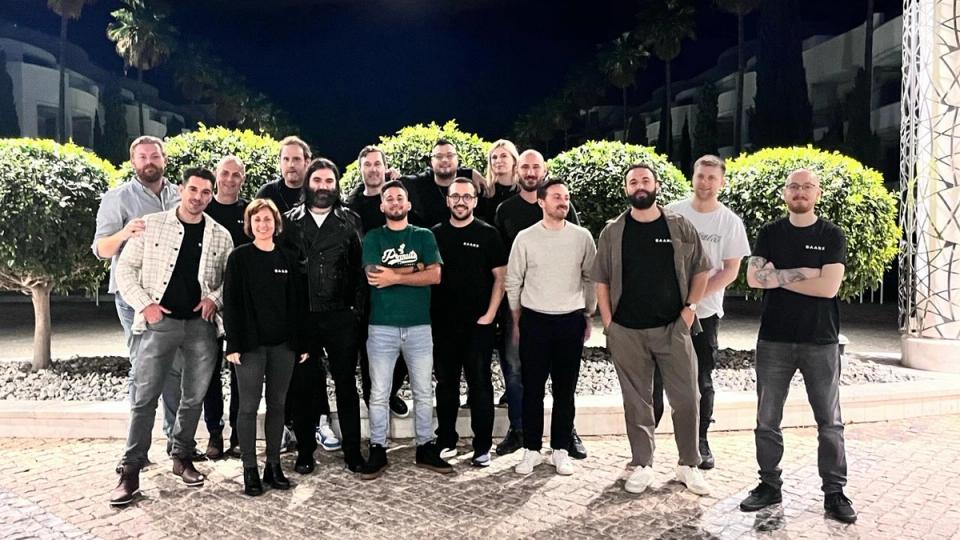 Exodus sues W3C Corp and CEO Garth Howat in Delaware to force $175M Baanx and Monavate acquisition2026-04
 Ondo Finance explores $250M–$500M acquisition as tokenized-asset firm eyes wealthtech targets2026-07
 eToro acquires keyless wallet startup Zengo for $70M, bringing self-custody to its 40M-user platform2026-04
 eole becomes first Japan-listed company to buy HYPE, acquiring 1,078 tokens and planning ¥100 million allocation2026-07
Corporate takeovers and strategic purchases have reshaped the crypto and blockchain industry at an accelerating pace, as companies race to acquire talent, technology, regulatory licenses, and market share rather than build from scratch.
What Drives Acquisitions in Crypto
In traditional finance and technology, acquisitions serve a familiar set of purposes: acquiring engineering talent, eliminating a competitor, entering a new market, or securing intellectual property. The crypto industry operates on those same principles, but with several additional motivations unique to its regulatory and infrastructure environment.
Regulatory licensing is among the most coveted acquisition targets. Obtaining a broker-dealer license, a money transmission license, or a securities registration through organic channels can take years and cost tens of millions of dollars in legal and compliance work. Buying a licensed entity is faster and often cheaper. GSR's FINRA-approved completion of a broker-dealer acquisition is a direct example: rather than navigate the full registration process, the crypto market maker bought its way into a regulated status that gives it access to institutional client flows and broader market participation.
Metaplanet's planned acquisition of Siiibo Securities — a roughly $13 million deal — follows the same logic. The Japan-based company primarily known for its Bitcoin treasury strategy is buying a licensed securities firm specifically to launch Bitcoin-linked yield products. The acquisition is not about the target company's revenue; it is about the regulatory wrapper the target carries.
Data and infrastructure represent a second major category. Blockworks acquiring Messari is a consolidation play in the crypto data and research space. Messari built years of structured on-chain data, token metrics, governance records, and institutional research. Rather than replicate that asset base, Blockworks absorbed it, combining a media brand with a data layer.
Technology and talent acquisition — sometimes called "acqui-hiring" — drives deals like Nebius closing its acquisition of Eigen AI after regulatory approval. The transaction bundles AI engineering capability that would take years to assemble organically. SpaceX's acquisition of Anysphere Inc., the parent company of the AI coding tool Cursor, for a reported $60 billion in stock illustrates just how aggressively capital is flowing toward AI talent regardless of the acquirer's primary business.

Citrea acquires Crest to bring Zcash-style privacy to Bitcoin
Bitcoin Treasury Companies and the Acquisition Framework
One of the most distinctive acquisition patterns to emerge in recent years involves public companies treating Bitcoin not as a traded asset but as a permanent reserve asset around which to build a corporate structure. Strategy (formerly MicroStrategy) pioneered and continues to define this model.
Strategy has continued its programmatic BTC accumulation, acquiring 1,587 BTC for approximately $100 million in one recent purchase and 1,550 BTC for roughly $101 million shortly after, bringing total holdings to over 846,000 BTC with a cost basis averaging approximately $63,024 per coin. The total capital deployed exceeds $64 billion. These are not trades. They are acquisitions of a reserve asset conducted with the discipline of a treasury management program.
The language matters. Strategy does not describe its Bitcoin purchases as "buying" in the speculative sense; the company frames each transaction as an acquisition that deepens a long-term reserve position. This framing has influenced a wave of imitators. Metaplanet in Japan has adopted a similar posture. BitMNR's fund acquired 25,000 ETH for $41 million as part of a three-day accumulation bringing its total to 125,000 ETH, suggesting the treasury-acquisition model is extending beyond Bitcoin to Ethereum.
For these entities, the acquisition logic is straightforward: they believe the scarcity properties and network effects of the underlying asset appreciate over time, and they are deploying available capital — often raised through equity or convertible notes — to acquire as much as possible before the price rises further.
Readers click acquisition stories not for deal mechanics but for power-shift signals — whether a political actor is cornering a treasury asset, a DeFi protocol is eating a competitor's governance votes, or a traditional institution is legitimizing an asset class by buying in.
Mergers and Acquisitions in DeFi and On-Chain Protocols
Decentralized protocols have developed their own version of acquisitions, though the mechanics differ substantially from corporate M&A. When a DAO or protocol foundation acquires another entity, it typically routes the decision through governance and executes via treasury allocation rather than a board vote and share exchange.
Cosmos Labs acquiring Mintscan, the widely used Cosmos blockchain explorer, is a case of a protocol ecosystem internalizing a critical piece of infrastructure that had been operated independently. Mintscan provides data visibility across IBC-connected chains. Bringing it under the Cosmos Labs umbrella alongside Skip:Go, IBC Eureka, and the Hub roadmap centralizes coordination for the ecosystem's technical direction.
Aerodrome's programmatic buyback — purchasing 170,000 AERO tokens and locking them, with over 190 million AERO acquired to date — is a different structure entirely. A protocol governance fund using treasury resources to acquire and lock its own token functions like a corporate share buyback program: it reduces circulating supply, signals confidence in the protocol's long-term value, and concentrates governance power in the hands of long-term aligned participants.
Inveniam's planned acquisition of Mantra reflects the growing appetite for combining real-world asset (RWA) tokenization infrastructure with established blockchain networks. RWA tokenization — the process of representing ownership of physical or financial assets like real estate, private credit, or commodities on a blockchain — requires both legal structuring and technical infrastructure. Acquiring rather than building that infrastructure compresses timelines significantly.

CoinMarketCap acquires CoinGlass, which will keep operating independently and unchanged for users

The Role of Stablecoins and Payments Infrastructure
Stablecoins have become a strategic asset in acquisition logic, particularly as payments companies and crypto exchanges recognize that controlling stablecoin issuance or distribution delivers durable revenue and network lock-in.
Ripple's acquisition of a stake in Flutterwave, valuing the African fintech at $3.3 billion, points toward cross-border payments infrastructure as a priority. Flutterwave operates payment corridors across dozens of African markets. For Ripple, which has long positioned XRP and its payment network as a correspondent banking alternative, gaining exposure to an established payments player in high-growth markets extends its reach without requiring the regulatory licensing battles of building fresh.
Coinbase has historically grown through a mix of organic development and targeted acquisitions of wallets, custodians, and analytics firms. As stablecoin competition intensifies — particularly with USDC issuer Circle remaining a key partner — exchanges and fintech platforms will continue to view payments-adjacent acquisitions as a way to control more of the value chain.
- 01Political treasury crypto grabs
Trump-linked World Liberty Financial buying TRX signaled that political actors were building sovereign-style crypto positions, making acquisitions a proxy for power rather than portfolio management.
- 02Exchange consolidation plays
Robinhood/Bitstamp, Coinbase/FTX Europe interest, Gate/Coin Master, and Kraken/TradeStation showed readers that the post-2022 wreckage was being carved up by survivors hungry for licenses and derivatives access.
- 03DeFi protocol governance mergers
Synthetix targeting Kwenta and Derive, LayerZero proposing to absorb Stargate, and ABC Labs buying sdCRV specifically for Curve DAO voting weight revealed that DeFi acquisitions are fundamentally governance capture dressed as product strategy.
- 04Corporate bitcoin treasury accumulation
MicroStrategy convertible notes, MARA's $700M raise, and a Japanese nail salon's 21,000 BTC target showed readers that the acquisition playbook had jumped from exchanges to balance-sheet maximalism.
- 05TradFi legitimacy acquisitions
MoMA adding NFTs to its permanent collection and DTCC acquiring Securrency told readers that legacy institutions were buying their way into blockchain credibility rather than building it.
- 06Deals that collapsed or soured
BitGo terminating Prime Trust and Ripple backing out of Fortress after a $15M theft disclosure showed readers that crypto M&A due diligence failures carry uniquely catastrophic tail risk.
Regulatory Arbitrage Through Acquisition
The friction between crypto's global, permissionless design and the jurisdiction-specific reality of financial regulation has made regulatory arbitrage through acquisition a consistent strategy.
Kraken, one of the oldest US crypto exchanges, has pursued broker-dealer and traditional finance licensing in part through acquisitions and partnerships that give it the infrastructure to serve institutional clients and expand into equities and other regulated assets. The broader context is an industry shift: as regulatory clarity improves in the United States and Europe, the value of licensed entities rises, because fewer new licenses are being granted in certain jurisdictions and existing ones carry a premium.
Figure's acquisition of Kiavi for $717 million to expand its RWA tokenization network is a large-ticket example. Figure operates a blockchain-native lending platform; Kiavi is a real estate lender. The combination gives Figure both a performing loan book and origination infrastructure to tokenize, creating a vertically integrated RWA stack.
GSR's completion of its broker-dealer acquisition through FINRA approval follows a similar logic at the institutional market-making layer. As crypto markets mature and institutional participation grows, the ability to operate as a registered broker-dealer — executing securities trades, holding customer assets under regulated custodial frameworks — becomes a genuine competitive advantage rather than a compliance burden.
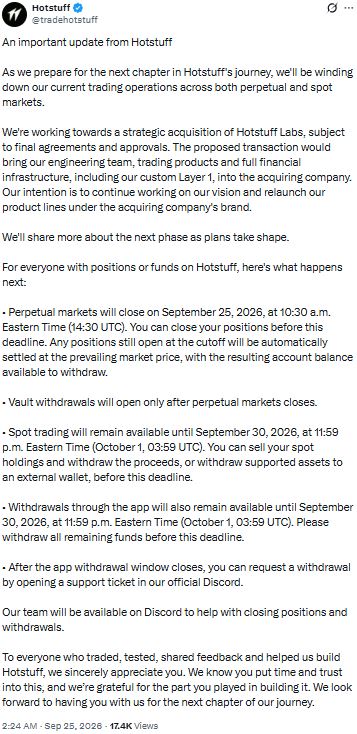
Hotstuff winds down trading ahead of planned Labs acquisition, sets September deadlines for withdrawals
The Funding Lifecycle and the Acquisition Exit
Acquisitions do not only happen at the large-cap end of the market. For early-stage crypto startups, being acquired is often the most realistic exit path, and the lifecycle from founding to acquisition has been compressing.
Analysis from Forkast highlights that the raw timeline from idea to acquisition for crypto startups has shortened materially, raising questions about whether pre-seed funding retains its traditional purpose. If acquirers are moving earlier — buying teams and technology before products reach commercial scale — the traditional venture funding runway changes shape. Founders may optimize for acquisition fit rather than standalone product-market fit, and investors may underwrite deals with acquisition multiples rather than IPO or token-launch valuations in mind.
IREN's acquisition of Nostrum to enter European markets as part of its AI pivot illustrates this at the Bitcoin mining company level. Bitcoin miners that built out significant power infrastructure and hardware procurement capacity are now leveraging those operational capabilities into AI compute — and acquisitions are the fastest way to access European data center capacity, grid connections, and local regulatory relationships without starting from zero.
Forward Industries' letter of intent to acquire both SkyAI and Solana-based HSDT in a single transaction is another example of early-stage acquisition as a strategy for assembling a multi-part capability stack quickly.
- 2023-06regulatory
BitGo terminates Prime Trust acquisition
- 2023-08milestone
Kraken acquires TradeStation Crypto for US licensing
- 2023-11milestone
DTCC acquires Securrency to expand tokenization
- 2023-11milestone
Circle pays $210M in stock for Coinbase's Centre stake
- 2024-05regulatory
Ripple backs out of Fortress acquisition after $15M theft
- 2024-06milestone
Robinhood announces Bitstamp acquisition
- 2024-09governance
Synthetix DAO proposes acquisition of Kwenta via SNX swap
- 2024-11governance
LayerZero Foundation proposes token-swap acquisition of Stargate
Valuation Frameworks in Crypto M&A
Valuing crypto companies and protocols for acquisition purposes presents challenges that do not exist in traditional M&A.
For centralized companies — exchanges, data providers, custodians — conventional metrics apply: revenue multiples, EBITDA, user counts, regulatory license value. Blockworks acquiring Messari can be analyzed through media industry and SaaS data business lenses. Figure acquiring Kiavi involves a loan book with actuarial loss rates, origination volume, and margin analysis.
For protocol-level acquisitions, the framework shifts. Token treasury size, developer activity, total value locked (TVL), fee revenue distributed to stakers, and governance participation rates become inputs. When Cosmos Labs acquires Mintscan, the "price" may be denominated in native tokens, and the "return" is measured in ecosystem health metrics rather than earnings per share.
Treasury company acquisitions of BTC or ETH are valued almost entirely on the asset's price trajectory and the cost of capital used to finance the purchase. Strategy's average acquisition cost of approximately $63,024 per BTC sits below prevailing market prices as of mid-2025; the mark-to-market gain on the portfolio is a function of Bitcoin's price performance, not the operational economics of any underlying business.
Outlook
The pace of acquisition activity across crypto and adjacent AI infrastructure is unlikely to slow. Several structural forces are compounding simultaneously: regulatory frameworks in the US and EU are maturing, creating clearer rules about what licensed entities are worth; AI infrastructure demand is pulling capital into data center and compute acquisitions; Bitcoin treasury adoption is spreading from large US companies to international public companies; and DeFi protocols are consolidating infrastructure that once operated independently.
The most consequential deals in the near term will likely cluster around payments rails and stablecoin-adjacent fintech, RWA tokenization infrastructure combining legal structuring with on-chain settlement, AI compute where miners are pivoting toward GPU and inference capacity, and regulatory licenses in jurisdictions hardening entry barriers. The acqui-hire dynamic in AI will also continue pulling crypto-native engineering talent into larger platforms, with founders and early investors increasingly underwriting that outcome from day one.
Latest Acquisition news
Citrea acquires Crest to bring Zcash-style privacy to BitcoinCoinMarketCap acquires CoinGlass, which will keep operating independently and unchanged for usersHotstuff winds down trading ahead of planned Labs acquisition, sets September deadlines for withdrawals MoonPay to acquire North Capital, a private-markets platform with $8.7B in transaction volume
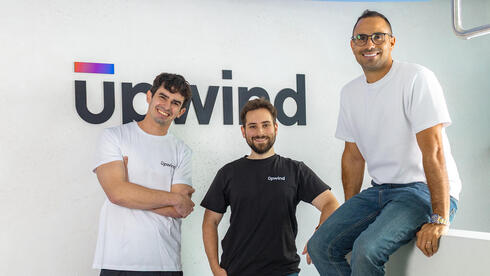 Upwind acquires Israeli AI security startup Aegis, launches cyber research lab
 NetApp announces intent to acquire PEAK:AIO to scale AI storage for trillions of files
Community notes
Spot something off or out of date? Drop a note. Editors review topic notes daily and roll accepted fixes into the explainer — contributors are recognized in the monthly $SQUID drop.
Loading notes…
Help improve this topic
Have a story or tip about this topic? Submit it. See something missing? Leave a note. Editors review daily; accepted submissions and fixes count toward the monthly $SQUID drop.