
In-depth explainer on crypto futures, covering mechanics, perpetuals, margin and liquidations, major venues like Binance, CME, Coinbase and Kraken, regulatory shifts around perps, and how futures link crypto to TradFi and institutional markets.
+34 sources across the wider coverage universe
 Binance Futures to launch USD1-settled BTC perpetual with 100x leverage on May 182026-05
 TX3 Futures rolls out capital funding platform after $35M in payouts, as futures traders face growing competition and platform risk.2026-06
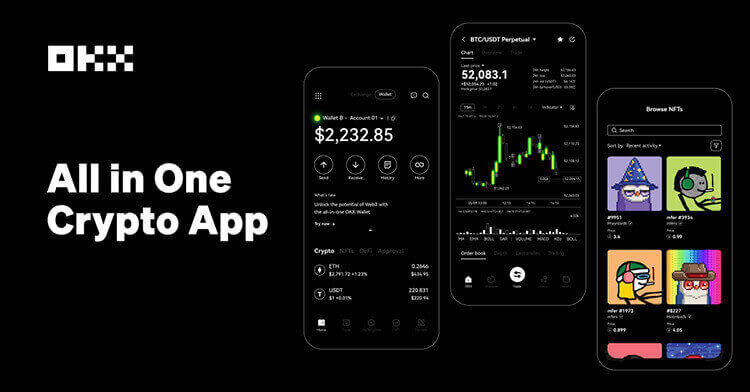 OKX launches perpetual futures for equities including NVDA, AAPL, and META with up to 5x leverage, blurring crypto-TradFi lines2026-03
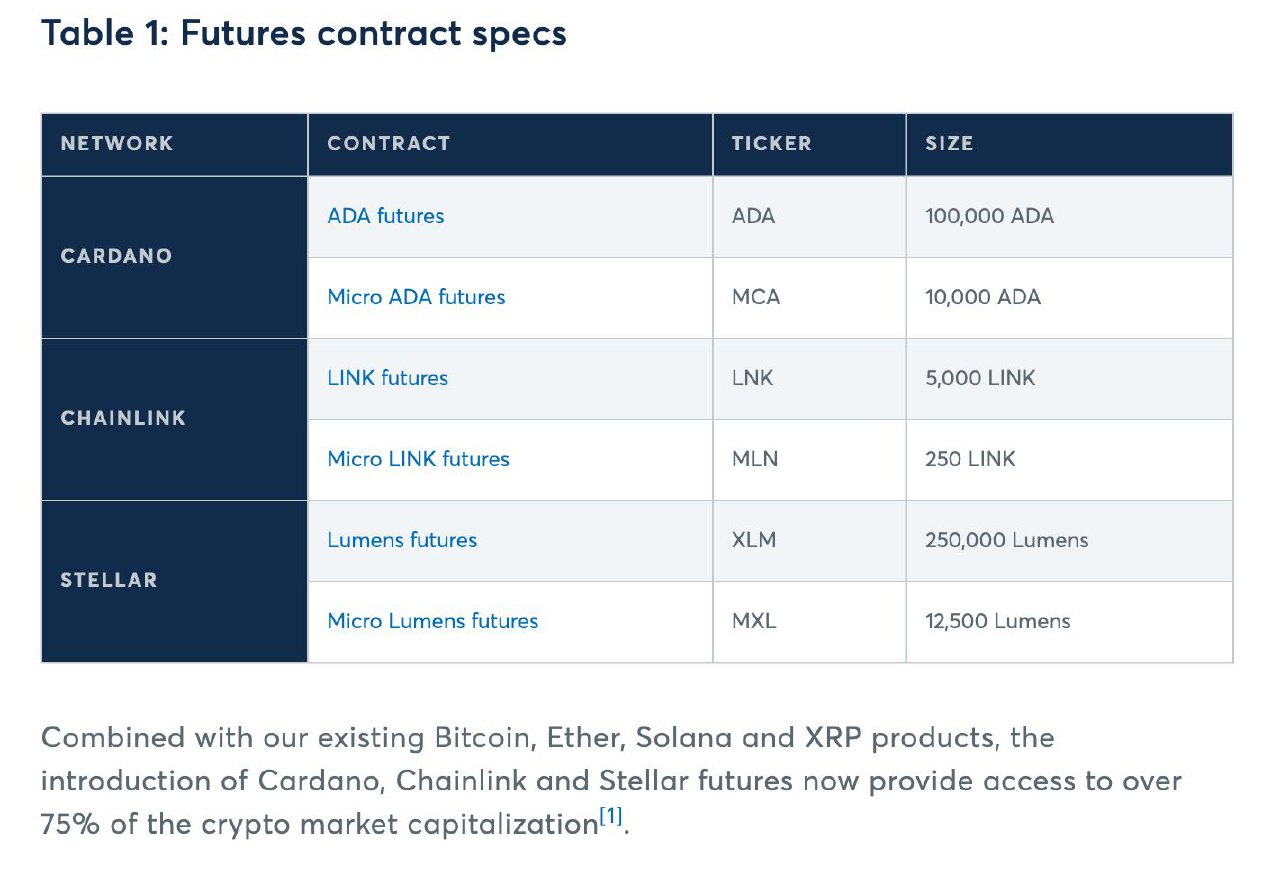 CME Group says crypto futures suite now covers over 75% of total market cap after adding Cardano, Chainlink, and Stellar contracts2026-03
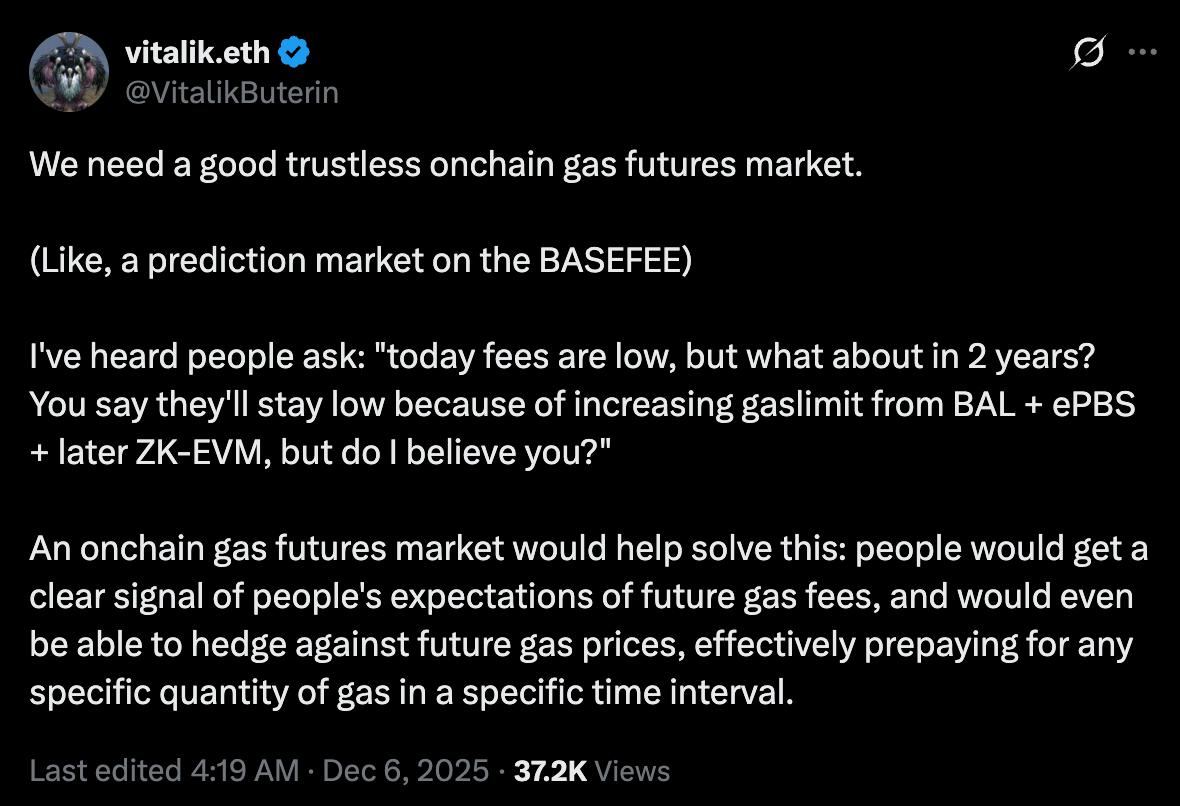 Vitalik proposes a trustless onchain gas futures market to allow hedging against gas price changes2025-12
 Frax jumps 60% as Binance announces they have completed the FXS to FRAX token swap and enabled FRAX markets for their Earn, Buy Crypto, Convert, Margin & Futures products.2026-01
Futures in Crypto: An Evergreen Guide to a Core Derivatives Market
Futures in crypto are standardized derivative contracts that let two parties agree today on a price to buy or sell an asset such as bitcoin at a specified point in the future, without necessarily exchanging the underlying asset itself. In digital-asset markets, futures and their perpetual cousins now anchor price discovery, enable hedging and leverage, and increasingly connect crypto with traditional finance through venues like Binance, CME Group, Coinbase, Kraken and emerging U.S. platforms listing regulated perpetual futures.
Foundations: What Futures Are and Why They Matter in Crypto
At their core, futures are legally binding agreements to buy or sell an underlying asset at a predetermined price on a specified future date, traded on organized exchanges that stand between buyers and sellers as a central counterparty. Unlike spot trading, where a trader pays cash today to acquire or dispose of an asset immediately, a futures contract allows the trader to lock in a price for future delivery, while posting only a fraction of the contract’s notional value as margin. In traditional finance, such contracts emerged in commodities and financial indices to help producers, consumers, and investors manage price risk, but the same structure now dominates institutional access to bitcoin and other digital assets through regulated venues such as CME Group. Because these contracts are standardized in terms of contract size, tick size, and settlement procedures, they can be cleared centrally, which reduces bilateral counterparty risk and allows for deep, anonymous order books that facilitate price discovery across global markets.
In crypto, the appeal of futures goes beyond risk management and extends to market access and capital efficiency. On major offshore exchanges such as Binance, traders can use futures to get exposure to bitcoin, ether and hundreds of altcoins without holding the underlying assets, paying only an initial margin and potentially using significant leverage. This structure amplifies both profits and losses, and it has fostered a culture of high-turnover, leveraged trading that differs markedly from the “buy and hold” ethos of early bitcoin communities. At the same time, regulated futures markets such as CME Group’s bitcoin and ether contracts have become gateways for institutional investors who prefer cash-settled exposure within familiar legal and operational frameworks. As a result, futures prices on these platforms play a central role in the benchmark indices that underlie investment products such as exchange-traded funds, structured notes, and index-linked derivatives that bridge crypto and traditional finance.
The importance of futures is also evident in the ways they now shape the structure and behavior of crypto markets themselves. Futures curves, which map implied prices at different maturities, encode expectations about future volatility, funding conditions, and macroeconomic events that may affect bitcoin and other assets. When futures trade at a premium to spot prices, known as contango, traders can use arbitrage strategies that buy spot and sell futures to earn the spread, while the opposite situation, backwardation, can signal stress or scarcity in spot markets. These dynamics feed back into capital flows across exchanges, influence stablecoin demand, and affect lending and borrowing rates in decentralized finance protocols that interact with centralized derivatives venues. As perpetual futures, volatility futures, and even crypto-linked contracts on traditional equities emerge, the line between “crypto markets” and “TradFi derivatives” is becoming increasingly blurred.
Understanding futures therefore requires a close look at their mechanics and their variations. The traditional model of dated futures with fixed expiries exists alongside perpetual futures that never expire, coin-margined instruments where margin and profit and loss (PnL) are denominated in the underlying cryptocurrency, and USDⓈ-margined products that use stablecoins such as USDT or USDC as collateral. Exchanges like Binance are constantly listing new quarterly contracts and adjusting tick sizes and risk parameters, while regulated platforms like CME Group are expanding from simple price-based futures into volatility futures and crypto index products. At the same time, the United States is now confronting the question of how to regulate perpetual futures domestically, illustrated by the Commodity Futures Trading Commission’s approval of the first U.S.-listed bitcoin perpetual futures and the subsequent legal challenge signaled by CME Group. All of these developments make futures a central pillar for anyone trying to understand where crypto markets are headed.

Catapult Trade completes $6.6M raise across four rounds, with funding supporting Gamified Futures, prediction markets and TradFi-crypto products
Contract Mechanics: How Crypto Futures Actually Work
Basic structure, standardization and settlement
A futures contract specifies several key parameters: the underlying asset, the contract size, the quoted currency, the tick size, the expiry date (if any), and the settlement method, which may be physical or cash-settled. In physical settlement, at expiry the short side delivers the underlying asset to the long side at the contract price, whereas in cash settlement the parties exchange only the difference between the futures price and a reference spot index, denominated in cash or stablecoins. In regulated crypto markets, CME Group’s bitcoin and ether futures are cash-settled in U.S. dollars based on indices that aggregate prices from multiple spot exchanges, allowing institutions to gain exposure without handling digital wallets or on-chain transfers. In contrast, some offshore exchanges offer coin-margined contracts where the underlying cryptocurrency is both the margin collateral and the PnL unit, so that holding the contract effectively means being long or short the coin in both nominal and collateral terms.
Standardization is essential to make these contracts liquid and fungible. Exchanges define contract specifications such as the notional value per contract, minimum price increment, and scheduled expiries, which may be monthly, quarterly, or on a custom calendar relevant to the underlying product. For example, Binance periodically lists new USDⓈ-margined and coin-margined quarterly futures with specific delivery dates, such as “1225” contracts that settle near year-end, providing traders with instruments to express views over defined horizons and to construct calendar spreads between different maturities. These specifications are not static: as liquidity and trading behavior evolve, exchanges may update tick sizes for various contracts to improve order book depth and reduce unnecessary price fragmentation, as seen in recent multi-stage tick-size updates across Binance’s USDⓈ-margined perpetual futures. Such microstructure adjustments illustrate how centrally coordinated design choices can materially affect the trading experience and liquidity in an otherwise decentralized asset class.
The mechanics of daily PnL realization further distinguish futures from simple borrowing and lending transactions. On most exchanges, futures are marked-to-market at regular intervals, meaning unrealized gains and losses are credited or debited from a trader’s margin balance continuously as prices move. This practice ensures that counterparties cannot accumulate large uncollateralized losses, but it also means that traders must manage their margin levels actively, because market movements can trigger margin calls or forced liquidations long before contract expiry. In cash-settled contracts, this mark-to-market process is the primary way value is exchanged, while in physically settled contracts it is supplemented by final delivery or receipt of the underlying. In both cases, the exchange’s clearing house or clearing mechanism stands between counterparties, guaranteeing performance and mutualizing default risk through margin frameworks and default funds.
Margin, leverage and liquidations
Margin is the core risk-management tool that makes leveraged futures trading possible. Instead of paying the full notional value of a contract, a trader posts an initial margin, often a small percentage of the underlying exposure, while a maintenance margin threshold defines the minimum balance that must be preserved to keep the position open. Leverage is simply the ratio of notional exposure to equity capital at risk, so that a trader using 10x leverage controls a position ten times the size of their posted margin. Crypto futures venues widely advertise leverage options ranging from modest ratios such as 2x–5x to levels as high as 50x on platforms like Kraken’s perpetual futures, although effective leverage may be constrained by risk tiers and position limits. The attraction of such leverage lies in magnifying potential returns on capital, but the same mechanism intensifies downside risk, making careful position sizing and margin management indispensable.
When market moves erode a trader’s margin balance below the maintenance threshold, the exchange’s risk engine initiates a liquidation process to protect the integrity of the system. In a forced liquidation, the exchange either closes the position in the market or transfers it to an internal risk portfolio, using the trader’s remaining margin to cover any losses incurred during the close-out. If adverse price moves during liquidation exceed the trader’s margin, some exchanges employ insurance funds built from prior liquidations or clawbacks to socialize residual losses, though robust margining frameworks aim to minimize such occurrences. In crypto markets, liquidation events have become a recurring feature of large, fast price moves, as clustered liquidations can trigger a cascade in which forced selling or buying pushes prices further away from fundamentals, leading to flash crashes or sharp squeezes. Analysts therefore pay close attention to aggregate open interest and estimated liquidation levels when assessing the fragility of the market during periods of high leverage.
The design of margin frameworks also interacts with the choice of margin currency. In USDⓈ-margined futures, collateral is typically posted in stablecoins such as USDT or USDC, so that a trader’s effective margin value is not directly affected by fluctuations in the underlying asset’s price. In coin-margined futures, by contrast, margin is denominated in the underlying cryptocurrency, such as BTC or ETH, and thus the value of the trader’s collateral moves with the market, amplifying both upside and downside risk. For example, in a coin-margined bitcoin future, a trader who is long the contract and whose margin is held in BTC gains both from rising contract prices and from the appreciation of their collateral, but in a sharp downturn they may face rapidly shrinking margin and a higher risk of liquidation. This dual exposure can be attractive for directional long-term holders but is less aligned with delta-neutral or hedging strategies that seek to isolate futures PnL from collateral volatility.
Exchanges and venues: Binance, CME Group, Coinbase, Kraken and Kalshi
Crypto futures exist across a spectrum of venues that reflect different regulatory philosophies and target different user bases. On one end, offshore centralized exchanges such as Binance have built massive derivatives franchises offering perpetual and quarterly futures on hundreds of crypto assets, settled predominantly in USDT or other stablecoins and featuring flexible margin modes, cross-collateral options, and high headline leverage. Binance’s futures business now supports both crypto-native and “TradFi perpetual” contracts, where the underlying reference is a traditional financial asset such as a stock or index but trading and settlement occur in crypto margin currencies, underscoring the growing convergence between traditional markets and digital-native infrastructures. This expansion has also included highly speculative products such as SpaceX perpetual futures, which rapidly climbed to become one of Binance’s most-traded contracts with billions of dollars in daily volume, illustrating both demand for thematic exposure and regulatory differences between offshore and domestic markets.
On the regulated side, CME Group has positioned itself as the world’s leading derivatives marketplace for digital assets, offering cash-settled bitcoin and ether futures and options that are integrated into its broader architecture of futures on equity indices, interest rates and commodities. These contracts are designed for institutional participants who operate under strict compliance and risk-management standards, enabling hedging of bitcoin exposure within regulated portfolios and creating benchmarks that support index products and bank-structured notes. CME has continued to innovate by launching Bitcoin Volatility futures, which settle to the CME CF Bitcoin Volatility Index, a 30-day forward-looking measure of implied volatility derived from options prices, thereby giving traders a direct tool to trade volatility independently of directional price moves. In parallel, CME announced and executed the launch of Nasdaq CME Crypto Index Futures, cash-settled to indices that track the performance of a basket of major cryptocurrencies such as BTC, ETH and SOL, further entrenching regulated futures as a core conduit of institutional engagement with the asset class.
U.S.-domiciled crypto exchanges such as Coinbase and Kraken sit between these worlds, combining spot trading with derivatives offerings that must navigate domestic regulatory constraints. Coinbase has built educational content and infrastructure around advanced trading features including margin and leverage, explaining that leverage allows traders to control larger contract values with smaller upfront capital but also magnifies both gains and losses. Kraken has launched perpetual futures designed to be user-friendly, with up to 50x buying power and no expiry date, specifically marketing them as a way to express directional views on whether a coin’s price will rise or fall without owning it outright. Both firms must carefully design contract structures and access criteria to comply with securities and commodities laws, particularly in the U.S., which until recently had not seen fully regulated perpetual futures contracts.
The most striking regulatory development has come from Kalshi, a prediction market platform authorized as a designated contract market by the CFTC, which secured approval in late May for the first U.S.-listed perpetual futures contract referencing the spot price of bitcoin. The approved product is a cash-settled perpetual derivative that tracks bitcoin spot, marking a significant milestone in the evolution of U.S. digital asset markets and demonstrating that perpetual contracts can be structured to comply with the Commodity Exchange Act when appropriately designed and supervised. Within two weeks of launch, Kalshi reported that its perpetual futures products had generated more than 5.5 billion dollars in trading volume, underscoring pent-up demand for regulated perpetual exposure and sparking debate about the boundary between futures and swaps in crypto derivatives. The CFTC has indicated that additional perpetual contracts tied to other underlying assets will be reviewed on a case-by-case basis, highlighting both the opportunity and the complexity of bringing offshore-style products into the U.S. regulatory perimeter.
Readers use futures headlines as a real-time stress-test dashboard — clicks peak hardest when basis metrics, open-interest extremes, or macro shocks (DeepSeek, Trump win) reveal what institutional players are actually doing, not when new products are announced.
Perpetual Futures: The Crypto-Native Contract
From expiring futures to perpetual swaps
Perpetual futures, often called perpetual swaps or simply “perps,” are a distinctive innovation that emerged from crypto markets rather than traditional finance. Conceptually, a perpetual future is a derivative contract that obligates participants to buy or sell an underlying asset at an unspecified time in the future, but unlike traditional futures, it does not have a set expiry or delivery date. Instead, the contract can be held indefinitely as long as the trader maintains adequate margin, and the economic exposure is adjusted continuously through periodic funding payments exchanged between long and short positions. This design eliminates the need to “roll” positions from one expiry to the next, which in traditional futures markets can be operationally complex, can incur transaction costs, and can create cyclical volatility as large positions are unwound and re-established around expiry dates.
From a settlement perspective, perpetual futures are almost always cash-settled: traders never take delivery of the underlying asset, and instead their accounts are credited or debited based on price changes and funding transfers. Exchanges such as Binance, Coinbase and Kraken explain perpetual futures as instruments that allow speculation on the price of assets like bitcoin or ether without needing to buy or own the underlying asset directly, thereby offering a capital-efficient and flexible way to gain long or short exposure. Perpetual contracts have become a favorite derivative among active crypto traders because they combine continuous trading, typically 24/7, with flexible leverage and the ability to maintain positions over long periods without managing a calendar of expiries. As a result, in many crypto markets, perpetual futures volumes surpass those of dated futures and spot trading combined, and perp prices often lead spot in price discovery for thinly traded tokens.
The distinguishing feature that makes perpetual futures viable is the funding rate mechanism. In the absence of an expiry date, there is no natural convergence between the contract price and the spot price at maturity, so exchanges engineer an economic incentive for the two to remain aligned. At regular intervals, often every several hours, funding payments flow between traders on the long and short side of the contract, with the direction determined by the difference between the perpetual price and the underlying spot or index price. If the perp is trading above spot, indicating net long demand, the funding rate is typically positive, meaning that longs pay shorts; if the perp trades below spot, funding turns negative and shorts pay longs. This mechanism encourages traders to take the side of the trade that brings the perp price back toward spot, as they either receive funding for a contrarian position or must pay funding to hold a crowded position.
Funding rates, basis and market signals
Funding rates have both microstructural and macrostructural implications for crypto markets. On the micro level, the expectation of funding payments is built into traders’ calculations of the cost of holding a position over time, effectively acting as an interest rate on leveraged exposure. For a trader holding a long position in a bitcoin perpetual when funding is strongly positive, the cumulative funding payments can be substantial, eroding profits or deepening losses and incentivizing either position reduction or hedging via alternative derivatives. Conversely, traders willing to short an asset during periods of exuberant long interest may view positive funding rates as a yield opportunity, earning funding income while hedging or otherwise managing directional risk. Because funding is computed based on both price deviations and sometimes prevailing interest rate differentials between cash and margin currencies, it embeds information about both directional sentiment and the supply-demand balance for leverage.
On a macro level, the pattern of funding rates across exchanges and over time functions as a sentiment indicator, analogous to risk premia in traditional markets. Persistently positive funding rates on bitcoin and ether perps, especially when combined with rising open interest, often reflect bullish speculative positioning and can precede either continuation of an uptrend or vulnerability to liquidation cascades if sentiment reverses. Strongly negative funding rates can signal stress, short-covering potential, or hedging demand from large holders protecting downside risk, particularly during periods of regulatory news or sharp selloffs. For trading desks and sophisticated investors, monitoring funding and open interest provides clues about whether a rally is driven mainly by derivative leverage or by spot accumulation, and thus whether it may be more fragile or more durable.
The relationship between perpetual futures and dated monthly or quarterly futures also manifests in the futures basis, defined as the difference between futures prices and spot prices. In traditional markets, well-functioning arbitrage ensures that futures prices reflect the cost of carry, incorporating interest rates, storage costs, and convenience yields, while converging to spot at expiry. In crypto, where storage cost is trivial and interest rates are driven by on-chain lending and centralized exchange funding, the basis often reflects expectations of future volatility and the intensity of leverage demand. Arbitrageurs can construct so-called “cash and carry” trades, buying spot and selling futures when futures trade at a premium to capture the implied yield, provided they can finance and manage the positions; in the perpetual context, they must factor in expected funding payments over the life of the trade. These activities help tether perpetual markets to spot, but structural frictions such as capital controls, regulatory restrictions, and rate differentials across centralized and decentralized lending venues complicate the picture.
Case study: Binance perps, SpaceX futures and TradFi exposure
The rise of perpetual futures is perhaps most visible on Binance, which has built a vast suite of perpetual and quarterly contracts across crypto and, increasingly, traditional financial underlyings. Binance Futures offers both USDT- and USDC-settled perpetual contracts on major assets like bitcoin, ether, and a long tail of altcoins, alongside coin-margined perps that allow traders to post margin in cryptocurrency and denominate PnL accordingly. The platform has also introduced “TradFi perpetual” contracts that reference traditional financial assets but are margined and settled in stablecoins, enabling crypto-native users to trade synthetic exposure to equities, indices or even specific companies around the clock without needing access to traditional brokerage accounts. These products illustrate a bidirectional convergence: crypto traders gain access to traditional markets via digital-native derivatives, while traditional traders can increasingly access crypto via regulated futures and ETFs.
A striking example of speculative demand for thematic exposure is the emergence of SpaceX perpetual futures on Binance. According to recent disclosures, the SPCXUSDT perpetual contract quickly became Binance’s second most-traded product by volume, with more than 5.6 billion dollars traded in a single 24-hour period and over 9 billion dollars of cumulative volume shortly after launch. This instrument, which tracks a synthetic price for SpaceX exposure, highlights both the appetite for leveraged bets on high-profile private companies and the flexibility of crypto derivatives infrastructure, which can spin up synthetic markets far more rapidly than traditional exchanges can list new products. At the same time, it underscores regulatory tensions: while such products can flourish offshore, listing equivalent exposures in U.S. or European regulated markets would require navigating securities laws, disclosure regimes, and issuer consent.
Binance’s continuum of products also showcases how exchanges refine contract design over time to improve market quality. The platform periodically announces new listings for USDⓈ-margined and coin-margined quarterly contracts with defined delivery dates, providing instruments for traders to structure time-bound hedges and basis trades. Alongside these launches, Binance has implemented multiple rounds of tick-size adjustments for a wide range of USDⓈ-margined perpetual contracts, aiming to balance price granularity with order book depth to facilitate large trades with minimal slippage. The exchange has further announced changes such as ending last-price-protected periods for certain contracts, including a USDⓈ-margined HUSDT perpetual, thereby altering how orders are triggered and filled during periods of volatility. These adjustments may seem technical, but they have significant effects on liquidity, execution quality and the behavior of algorithmic strategies that now account for much of futures volume.
The U.S. perpetual futures debate: CFTC, SEC, Kalshi, Coinbase and CME
Perpetual futures have long dominated offshore crypto derivatives trading, but only recently have U.S. regulators begun to grapple with how, and under what legal rubric, such contracts can exist on domestic platforms. In late May, the Commodity Futures Trading Commission approved the listing of the first bitcoin perpetual futures contract on a CFTC-regulated exchange, a cash-settled derivative referencing bitcoin spot prices that operates similarly to offshore perps but within the existing framework of the Commodity Exchange Act. Law firm analyses emphasize that this approval signals the CFTC’s view that perpetual contracts can, under appropriate circumstances, be accommodated within the statutory framework without requiring an entirely new rulebook, provided that contract design, margining, and risk controls meet regulatory standards. The decision immediately attracted industry attention because it opened a potential regulated pathway for crypto perps in the U.S., in contrast with the prior situation where such products were largely confined to offshore venues.
Prediction market platform Kalshi was at the center of this development. Shortly after launch, Kalshi disclosed that its perpetual futures products had generated more than 5.5 billion dollars in trading volume within two weeks, initially across eleven crypto-linked contracts, demonstrating strong market interest in regulated perpetual exposures and challenging the notion that only offshore exchanges can support deep perp liquidity. At the same time, Kalshi’s offerings rekindled an old debate over the boundary between futures, swaps, and contracts for difference, because perpetuals share economic similarities with CFDs, which in many jurisdictions are regulated differently from exchange-traded futures. Regulators indicated that while the bitcoin perpetual approval was a significant step, additional perpetual contracts tied to other underlyings would be subject to case-by-case review, reflecting the need to scrutinize each product’s structure, market impact, and regulatory classification carefully.
The CFTC’s move has also catalyzed broader regulatory coordination and controversy. In a widely discussed speech, Jamie Selway, Director of the SEC’s Division of Trading and Markets, signaled that the SEC is moving toward a more coordinated framework with the CFTC for tokenized securities, perpetual futures, and digital asset trading infrastructure, potentially marking a shift from purely enforcement-based oversight toward a more systematic rulemaking approach. Selway’s remarks highlighted the goal of harmonizing SEC and CFTC policies in areas where the agencies’ jurisdictions overlap or conflict, including perps and extended-hours trading, which are central to crypto markets. At the same time, CME Group’s CEO Terrence Duffy has stated that the exchange will sue the CFTC, arguing that the regulator’s approval of Kalshi’s bitcoin perpetual futures violates the Commodity Exchange Act and undermines CME’s position in U.S. derivatives markets. According to reports, the lawsuit seeks to void the CFTC’s approval, and it reflects concerns that misclassifying or improperly vetting perpetual products could destabilize the broader derivatives ecosystem.
U.S. exchanges such as Coinbase and Kraken, which already offer perpetual futures to users in some jurisdictions, are closely watching this regulatory evolution. Kraken recently rolled out crypto perpetual futures in the U.S., designing them to fit within current rules while emphasizing user-friendly leverage and margin controls. Coinbase, which has invested heavily in educational content around leverage and derivatives, stands to benefit from a harmonized framework that clarifies the boundaries between tokenized securities, commodities, and derivatives on those assets. The combined efforts of the SEC and CFTC to align their approaches suggest that the U.S. is moving, albeit gradually, toward integrating perpetual futures and other crypto-native derivatives into a regulated architecture, though legal challenges and political debates will likely shape the pace and direction of that integration.
Use Cases: How Crypto Futures Are Actually Used
Hedging spot exposure for miners, funds and long-term holders
One of the most economically fundamental uses of futures in crypto is hedging. Bitcoin miners, for example, face revenue denominated in BTC while their operating costs—electricity, hardware, staffing—are largely in fiat currencies. To reduce the risk that a drop in bitcoin’s price will impair their ability to cover costs, miners can short bitcoin futures, locking in a dollar value for a portion of their expected output and thereby stabilizing cash flows. Similarly, funds that hold significant spot positions in bitcoin, ether or other digital assets can use futures to manage risk around events such as protocol upgrades, regulatory announcements, or macroeconomic releases, by temporarily reducing net exposure through short futures while maintaining their underlying holdings. On regulated venues such as CME Group, where bitcoin futures are cash-settled and integrated into traditional margining systems, hedging can be implemented within existing risk and compliance workflows.
Perpetual futures expand hedging possibilities by offering continuous, highly liquid instruments without expiry, especially for assets that lack deep dated futures markets. A long-term ether holder concerned about short-term downside risk might short an ETH perpetual future on Binance or Kraken, adjusting the position dynamically as market conditions change. Because perps are designed to track spot prices closely through funding mechanisms, a delta-hedged position in which the holder’s spot and futures exposures offset can significantly reduce price volatility in the portfolio, although funding payments introduce an additional cost or income stream that must be managed. For institutions constrained from using offshore exchanges, the emergence of regulated perps on platforms like Kalshi offers a new hedge instrument that more closely matches how crypto-native markets manage exposure and can potentially complement CME’s existing futures and options suite.
Futures can also be used to hedge exposures to indices or baskets rather than individual coins. The launch of Nasdaq CME Crypto Index Futures, cash-settled to indices measuring the performance of a group of large-cap cryptocurrencies such as BTC, ETH and SOL, allows investors to hedge or gain exposure to the broader crypto market rather than single assets. This is particularly useful for funds that hold diversified crypto portfolios or for institutions that view crypto as an asset class and wish to manage beta exposure in aggregate. Similarly, as perpetual futures referencing crypto indices or even total-market cap indices emerge on various platforms, hedging and asset allocation can be conducted at a more macro level, aligning crypto portfolio management practices with those long used in equities and fixed income.
Speculation, leverage and directional trading strategies
While hedging is critical for risk management, speculative trading remains the primary driver of volume in many crypto futures markets. Leverage allows traders to control large exposures with relatively small capital, amplifying both profits and losses and encouraging high-frequency, short-term strategies that seek to exploit intraday volatility. Exchanges such as Coinbase emphasize that leverage can increase buying power but warn that losses can exceed initial margin if positions move sharply against traders, underscoring the need for risk controls and position limits. Kraken’s marketing of perpetual futures likens them to placing a bet on whether a coin’s price will go up or down, reflecting the accessibility of directional speculation but also the binary way many retail traders conceptualize futures. Because crypto trades around the clock and reacts quickly to news, regulatory announcements, and macro data, futures markets have become venues for rapid expression of directional views and for nimble risk adjustment.
Beyond simple long and short positions, more advanced strategies use futures to trade the shape of the futures curve or the relationship between futures and spot. Basis trading, as mentioned earlier, involves going long spot and short futures when futures trade at a premium, capturing the implied yield if the spread converges over time. In a perpetual context, a trader might go long spot and short the perpetual to collect positive funding rates, though this requires careful modeling of funding volatility and potential changes in sentiment. Conversely, when futures trade at a discount or funding is negative, traders may construct the opposite trade, shorting spot or proxies and going long futures to earn the implied yield. Market makers and arbitrageurs also deploy cross-exchange strategies, buying futures where they are cheap and selling where they are expensive, or arbitraging price differences between offshore perps and regulated futures like CME’s contracts, thus reinforcing price linkage across venues.
Volatility trading is another dimension where futures are increasingly important. Historically, crypto traders approximated volatility trades via option strategies or via dynamic hedging in futures, but the introduction of CME’s Bitcoin Volatility futures provides a more direct instrument. These contracts settle to the CME CF Bitcoin Volatility Index, a 30-day forward-looking measure of implied volatility derived from options markets, enabling traders to take positions on future volatility levels without having to manage complex options portfolios. In parallel, some exchanges and DeFi protocols are experimenting with perpetual volatility swaps and variance products, though these remain less standardized than price-based futures. As volatility becomes a tradeable asset class in crypto, akin to VIX futures in equities, futures markets will likely see a richer set of strategies focused on hedging volatility risk, capturing volatility risk premia, and constructing correlation and dispersion trades across different crypto assets.
Social and AI-powered futures trading platforms
The maturation of crypto futures is not only about new contract types; it is also about new interfaces and decision-support tools. Platforms like Velvet X, described as an invite-only social trading platform that rolled out full perpetual futures trading and integrated AI deeper into the trading experience, exemplify how derivatives trading is being embedded into social and algorithmic contexts. By allowing users to follow or copy the strategies of more experienced traders, and by using AI to surface “alpha” signals or risk alerts, such platforms lower the barrier to entry for complex instruments like perps, but they also raise questions about herding behavior and the delegation of risk decisions to opaque algorithms. The integration of SocialFi and AI with perpetual futures reflects a broader trend of consumer-facing financial apps blending trading, social interaction, and gamified experiences, which can increase engagement but may also obscure the underlying risks of leverage.
In parallel, institutional desks increasingly employ machine learning models to analyze funding rates, order book depth, liquidation data, and macro variables to inform futures trading strategies. The availability of granular liquidation data across major exchanges, highlighted in educational content that explains how liquidations are triggered when margin falls below agreed thresholds, allows quantitative strategies to anticipate potential liquidation cascades and position accordingly. AI models can detect patterns in funding and open interest that historically preceded large moves, although such models must be robust to regime shifts and structural market changes. As both retail and institutional participants incorporate AI into futures trading, the microstructure of these markets may evolve, potentially reducing some inefficiencies while amplifying others tied to model homogeneity and feedback loops.

Binance Futures to launch USD1-settled BTC perpetual with 100x leverage on May 18
Risk: Where Futures Can Go Wrong
Leverage, liquidations and cascade dynamics
The same leverage that makes futures attractive can also destabilize markets and individual portfolios. As Bookmap’s educational materials note, a liquidation in crypto occurs when a leveraged position is forcibly closed because the trader no longer meets margin requirements, typically after the market moves against their trade. In such events, the position is closed automatically by the exchange’s risk engine, using the trader’s remaining margin to cover losses, and if necessary tapping insurance funds or other mechanisms to handle residual exposures. Because many traders employ high leverage and similar stop levels, price moves can trigger clusters of liquidations, each adding selling or buying pressure that pushes prices further away from equilibrium. When open interest is historically high, some analysts interpret it as a sign that the market may be over-leveraged, and in the presence of a sharp shock—such as a regulatory announcement or a sudden shift in macro conditions—forced liquidations can produce rapid “flushes” or flash crashes.
These cascade dynamics are especially pronounced in perpetual futures markets, where high-frequency leverage and 24/7 trading make it easier for imbalances to build and unwind at any time. Exchanges try to mitigate such risks through tiered margin frameworks, leverage caps that decrease for larger position sizes, and mechanisms such as auto-deleveraging systems that allocate residual risk systematically among profitable counterparties when liquidations cannot be executed cleanly in the market. However, the intrinsic design of leveraged derivatives means that extreme events cannot be eliminated, only managed. For participants, the key risk is not just price volatility but the interaction between volatility and leverage: even a “normal” price swing can wipe out an over-leveraged position, while a low-leverage position might ride out far larger moves. Thus, managing notional exposure relative to capital, stress-testing positions under adverse scenarios, and monitoring aggregate market leverage and funding are crucial practices for anyone using futures.
Counterparty, exchange and regulatory risk
Futures contracts in crypto introduce layers of counterparty and operational risk that differ from spot holdings. On centralized exchanges, users must trust the platform to safeguard their collateral, maintain accurate records of positions and PnL, and operate fair and robust matching engines and risk modules. Events such as exchange hacks, insolvencies, or operational outages can have immediate effects on futures users, potentially freezing their ability to close positions or access margin at critical times. While some of these risks exist in traditional futures markets, where clearinghouses and regulatory oversight provide additional safeguards, they can be more acute on offshore exchanges that operate outside strict prudential regimes. Platforms like CME Group, which operate under U.S. derivatives law and maintain regulated clearinghouses, are structured to mitigate counterparty risk through capital, margin and default fund requirements, but they may not offer the same breadth of products or leverage ratios as offshore venues.
Regulatory risk is particularly salient in the context of crypto derivatives. In the U.S., the legal classification of digital assets as commodities, securities, or something in between has direct implications for which regulator oversees related futures and options, and for which products can be offered to which customers. The CFTC’s approval of a bitcoin perpetual futures contract on a regulated exchange shows that, under current law, perps referencing commodity-like digital assets can be structured to comply with the Commodity Exchange Act, but it does not resolve questions around perps referencing tokens that may be considered securities. The SEC’s movement toward a coordinated framework with the CFTC for tokenized securities and perpetual futures suggests progress, yet the planned lawsuit by CME Group against the CFTC over the approval of Kalshi’s perpetual futures indicates that even within the derivatives community, there is disagreement about how these instruments should be regulated. Changes in policy or enforcement priorities could affect the availability of certain futures products, capital requirements, or cross-border access to derivatives platforms.
Compliance considerations also affect the ability of users in different jurisdictions to access various futures markets. U.S. retail traders may not be able to access high-leverage perpetual futures on offshore exchanges without violating local rules, while institutions are often constrained to trade only on regulated venues such as CME, Kalshi, or approved segments of platforms like Coinbase and Kraken. Conversely, users in other regions may face different constraints or enjoy access to a broader suite of perps and leverage options. As global regulators respond to the growth of crypto derivatives, including through frameworks like Europe’s Markets in Crypto-Assets (MiCA) and regional derivatives reforms, the map of accessible futures venues will likely continue to shift. Traders and firms must therefore treat not only price and leverage as variables but also the evolving legal environment that can alter what products exist and on what terms.
Market structure, tick sizes and microstructure risk
Market microstructure issues such as tick size, order types, and matching priority have tangible implications for futures traders and can introduce subtle forms of risk. Tick size—the minimum price increment at which orders can be placed—affects both the granularity of quotes and the depth of liquidity at each price level. On Binance and other exchanges, tick sizes for many USDⓈ-margined perpetual futures have been updated in recent waves of microstructure changes, with the goal of balancing a smooth price ladder with concentrated liquidity at key price points. If tick size is too small, order books can become excessively fragmented, making it harder for large orders to execute without sweeping numerous levels; if it is too large, spreads may widen and market makers may be less willing to quote aggressively, increasing trading costs. Traders using algorithmic strategies or executing large orders must adapt their algorithms to such changes, or risk incurring higher slippage or being picked off by faster participants.
Other microstructure elements include how last-traded prices, mark prices, and index prices are defined and used in liquidation and order-trigger logic. Binance’s decision to phase out last-price protected periods on certain contracts, such as the USDⓈ-margined HUSDT perpetual, affects how stop orders and liquidation triggers respond to short-term spikes or gaps in last-trade prices, because protection mechanisms that previously dampened reaction to transient trades may no longer apply in the same way. Changes in the composition of index prices, which aggregate quotes from multiple spot exchanges, can also influence funding rates and mark prices for perps, thereby affecting PnL even when the underlying spot market appears stable. For traders, understanding these microstructure rules is as important as analyzing macro trends: profitable strategies can fail or become risky when exchange-level parameters change, and lack of familiarity with contract specifications can lead to unintended liquidations or PnL surprises.
- 01CME basis & OI signals↗
The DeepSeek-driven basis flip to negative and the record OI drop gave readers a rare, data-precise moment to gauge institutional de-risking in real time.
- 02Institutional venue expansion↗
CME quarterly records, SGX perpetuals, and CFTC approvals for Coinbase signaled legacy finance formally absorbing crypto futures infrastructure, which readers track as a legitimacy proxy.
- 03Perpetual futures product launches↗
A steady cadence of new perp pairs from Binance, Coinbase, and Kraken pulled readers who monitor where liquidity and leverage are migrating across venues.
- 04Bitcoin basis trade mechanics
The $7.5B net short record driven by the cash-and-carry basis trade revealed a structural positioning dynamic that retail readers rarely see quantified so explicitly.
- 05ETH futures ETF disappointment
VanEck's thin first-day volume and subsequent fund closure framed ETH's weaker institutional pull versus Bitcoin, a comparison readers found meaningful for portfolio positioning.
- 06DEX perpetuals vs CEX dominance↗
DEX futures share dropping to 3.26% — combined with the Hyperliquid JELLY market manipulation and forced rollback — exposed the structural limits of decentralized perp venues.
Futures, Options and Swaps: Positioning Futures in the Derivatives Universe
Futures versus options
Futures are just one type of derivative among many, and understanding their relationship to options is crucial for holistic risk management. A futures contract imposes a mutual obligation: both the long and the short are required to transact at the agreed terms or settle the difference at expiry or through mark-to-market payments. This symmetry produces a linear payoff profile, where PnL changes proportionally with the underlying asset’s price. In contrast, an option is a right but not an obligation; for example, a call option gives the holder the right to buy the underlying asset at a specific strike price, while the writer of the option is obligated to sell if the option is exercised. This asymmetry leads to nonlinear payoff structures, where option holders have limited downside (the premium paid) and potentially unlimited upside, whereas option writers have limited upside (the premium received) and potentially large downside.
In the context of crypto, venues like CME Group offer both futures and options on bitcoin and ether, enabling more sophisticated strategies such as hedging futures positions with options or constructing volatility trades that combine the two. For instance, a trader holding a long futures position might buy a protective put option to limit downside risk, effectively creating a synthetic call option; alternatively, a trader could sell options and hedge the resulting exposure by adjusting futures positions dynamically, a practice known as delta-hedging. Because options prices embed expectations of future volatility, while futures prices primarily reflect expectations of future spot levels and funding, combining them yields richer information about the market’s view on both price and risk. The introduction of Bitcoin Volatility futures by CME further extends this ecosystem by allowing futures-like trading directly on implied volatility indices, bridging the conceptual gap between futures and options.
From a practical standpoint, futures tend to be more accessible and liquid for many traders, especially in retail-focused crypto venues, because they are simpler to understand and manage. Options require models for pricing and risk, such as the Black–Scholes framework or more advanced stochastic volatility models, and their Greeks—delta, gamma, vega, theta—must be monitored actively. Futures, by contrast, involve only delta exposure, simplifying the risk dimension. This does not make futures less risky, but it makes their risk profile more straightforward to conceptualize: each dollar move in the underlying typically translates into a fixed dollar change in PnL per contract, scaled by leverage. For an ecosystem that has onboarded many participants without traditional financial training, the relative simplicity of futures has contributed to their dominance over options in terms of volume on many exchanges.
Futures, swaps and contracts for difference
Perpetual futures occupy a conceptual space that overlaps with swaps and contracts for difference (CFDs). A swap, in derivatives parlance, is an agreement between two parties to exchange cash flows based on underlying reference rates or prices over time, such as in interest rate swaps or total return swaps. CFDs, commonly used in retail FX and equity trading, allow traders to speculate on price movements of an asset without owning it, with PnL equal to the difference between entry and exit prices times the notional size, and with margin and leverage similar to futures. According to reference material on perpetual futures, perps serve the same function as CFDs in many respects: they provide indefinite, leveraged tracking of an underlying asset or flow, but instead of each contract being a bespoke agreement with a broker, a single uniform perpetual contract is traded on an exchange across all time horizons, leverage levels and position sizes.
This exchange-traded nature of perpetual futures differentiates them from over-the-counter CFDs, which are typically bilateral contracts between a retail trader and a broker who may act as principal. On an exchange like Binance or Kraken, perpetual futures are standardized, centrally cleared instruments where order books match buyers and sellers, and where margining and risk are handled in a transparent, rule-based manner. This model reduces certain types of counterparty risk associated with broker-dealer CFD models, but it introduces its own complexities regarding liquidation mechanisms and funding rates. It also has regulatory implications: in many jurisdictions, CFDs are subject to separate retail investor protection rules due to their track record of losses among inexperienced users, whereas futures fall under broader derivatives regulation; how regulators classify perps influences what protections apply and which agencies oversee them.
The comparison with swaps is particularly salient in the U.S., where the line between futures and swaps determines whether a product must be traded on a designated contract market or on a swap execution facility, and which registration and reporting requirements apply. The debate reignited by Kalshi’s crypto perpetuals centers on whether such instruments are properly viewed as futures, given their perpetual nature and funding mechanisms, or whether they resemble swaps that should be regulated differently. The CFTC’s decision to approve a bitcoin perpetual as a futures contract signals one interpretation, but CME Group’s planned legal challenge suggests that the issue is far from settled. The outcome will shape not only how future perpetual futures are structured and listed but also how market participants conceptualize and manage the risk of these instruments in relation to other derivatives.
Coin-margined versus USDⓈ-margined structures
An additional axis along which futures differ is the currency used for margin and settlement. In USDⓈ-margined futures, such as many Binance contracts, collateral and PnL are denominated in stablecoins like USDT or USDC, providing a reference value tied to the U.S. dollar and insulating margin from movements in the underlying asset’s price. This structure is appealing for traders who think of risk and returns in dollar terms and wish to separate their trading collateral from directional exposure to crypto assets. It also facilitates portfolio accounting and risk management, as the value of collateral is relatively stable and can be integrated into broader cross-asset risk systems. Many exchanges have built unified USDⓈ margin systems that allow users to deploy a pool of stablecoins across multiple futures contracts, enhancing capital efficiency.
In coin-margined futures, margin and PnL are denominated in the underlying cryptocurrency itself, such as BTC or ETH. As Binance educational content explains, this means that the same coin serves as both the contract’s underlying reference and the unit of margin and settlement, so traders may see their margin balance fluctuate not only due to PnL but also due to changes in the coin’s price. For traders who are structurally long a cryptocurrency and measure their wealth in that coin, coin-margined futures can be appealing, as they allow them to use their coin holdings as margin and potentially increase coin-denominated returns. However, for traders who benchmark in fiat, the combined volatility of the underlying and the collateral can complicate risk management. Moreover, in sharp downturns, coin-margined positions can be especially vulnerable to liquidation, as both the value of collateral and the contract’s mark-to-market may move against the trader simultaneously.
Exchanges often offer both margin types and even hybrid modes that allow cross-asset collateral, reflecting the diversity of user preferences. Advanced risk engines must account for correlations between collateral and underlying exposures when computing margin requirements and liquidation thresholds. From a regulatory and systemic perspective, USDⓈ-margined futures may be seen as somewhat less risky in terms of collateral instability, but they introduce dependence on stablecoin issuers and pegging mechanisms, which carry their own risks. Coin-margined futures, by contrast, are deeply intertwined with the endogenous dynamics of the crypto asset being traded, making them a purer expression of crypto-native finance but also more exposed to the extremes of crypto volatility.
Regulatory Landscape and Institutional Adoption
CFTC, SEC and the evolving U.S. framework
The evolution of crypto futures cannot be understood without considering the regulatory landscape, particularly in the United States, where the interplay between the CFTC and SEC shapes what products can exist and how they can be marketed. The CFTC has long asserted jurisdiction over derivatives on commodities, including bitcoin and certain other digital assets that it views as commodities, and has overseen the listing of bitcoin futures on CME Group and other platforms. The SEC, by contrast, regulates securities and their derivatives, including security-based swaps and options, and has increasingly taken the view that many crypto tokens are securities, especially when they are sold in fundraising contexts. This bifurcation of authority becomes complex in the realm of perpetual futures and other crypto derivatives that might reference assets falling under either or both classifications.
Jamie Selway’s recent remarks, as Director of the SEC’s Division of Trading and Markets, suggest that U.S. regulators are moving toward a more harmonized approach to digital assets, including tokenized securities, perpetual futures, and trading infrastructure that operates beyond traditional market hours. Selway indicated that the SEC and CFTC are considering ways to align their rulebooks in areas where they overlap or conflict, recognizing that fragmented oversight can create regulatory arbitrage and uncertainty for market participants. The approval of a bitcoin perpetual futures contract by the CFTC and its implications for other perps underscores the need for such coordination, as products that blur the line between futures and swaps or between commodity and security underlyings challenge existing legal categories.
At the same time, regulatory convergence is not without friction. CME Group’s decision to sue the CFTC over the approval of Kalshi’s bitcoin perpetual futures reflects concerns that the regulator may have overstepped or misapplied its statutory authority, potentially undermining existing market structures and competitive dynamics. According to reports, CME argues that the approval violates the Commodity Exchange Act and seeks to have it voided, raising questions about how new derivatives should be vetted and how incumbents and innovators should compete within the regulatory framework. The case will likely clarify not only the status of specific Kalshi products but also the broader standards that apply to perpetual futures and similar instruments, influencing how other exchanges, including those associated with Coinbase and Kraken, design and seek approval for their own derivatives offerings. For institutional investors, clarity on these issues will affect their ability to allocate capital to futures and perps within compliance frameworks and may determine whether certain strategies remain confined to offshore venues or become accessible domestically.
Global perspectives and offshore venues
Outside the U.S., regulatory approaches to crypto futures vary widely. Some jurisdictions, such as certain Asian financial centers, have historically been more permissive, allowing exchanges like Binance and others to offer high-leverage perpetual futures and a wide range of derivatives to global users, albeit with varying degrees of local licensing and oversight. Others, including parts of Europe, have imposed restrictions on retail access to high-leverage derivatives or have required derivatives providers to comply with securities or investment services regimes akin to those for CFDs and FX products. Emerging frameworks like the EU’s MiCA regulation will further shape how crypto derivatives are categorized and what conduct-of-business rules apply, including leverage caps, marketing restrictions, and disclosure requirements, even if the initial focus is more on spot and stablecoin activity.
Offshore venues have often operated in regulatory gray zones, offering perps and other derivatives to users in multiple jurisdictions while asserting that they restrict access where local laws prohibit such offerings. This has sometimes led to enforcement actions or settlements with regulators, resulting in changes to onboarding procedures, leverage limits, or product offerings for certain regions. At the same time, the flexibility and speed of offshore exchanges in listing new futures, adjusting tick sizes, and experimenting with products like SpaceX perps and TradFi perpetual contracts highlight the innovative potential of less constrained environments. Users and institutions must navigate this landscape carefully, balancing the depth and variety of offshore derivatives markets against regulatory, counterparty, and legal risks associated with trading there.
TradFi integration: CME, Nasdaq and benchmarked futures
The integration of crypto into traditional finance is perhaps most visible in the growth of regulated futures and index products offered by legacy exchanges and benchmark providers. CME Group has steadily expanded its crypto suite, starting with bitcoin futures and growing to include ether futures, options on both, micro contracts for smaller-sized exposures, and now Bitcoin Volatility futures tied to the CME CF Bitcoin Volatility Index. These products settle in cash and are structured similarly to futures on equity indices or commodities, allowing institutions to trade them alongside other derivatives in integrated risk and margin systems. The launch of Nasdaq CME Crypto Index Futures, cash-settled against benchmark indices designed to measure the performance of the largest and most liquid digital assets, further embeds crypto into the institutional toolkit, enabling macro and multi-asset funds to express views on the crypto market as a whole rather than on specific coins.
Benchmark indices like the Nasdaq CME Crypto Settlement Price Index play a crucial role in making these products investable. By aggregating prices from multiple underlying spot markets and applying transparent methodologies, they aim to provide robust, manipulation-resistant reference values for settlement, akin to well-established benchmarks in equities and commodities. Futures and options on these indices can then serve as underlyings for ETFs, structured products, and risk-transfer transactions, allowing exposure to crypto to be sliced and packaged in forms familiar to institutional investors and regulators. As more jurisdictions approve crypto-linked ETFs and structured products, the demand for reliable, exchange-traded futures as hedging and price discovery tools is likely to grow, reinforcing the role of regulated futures markets as bridges between crypto and TradFi.

TX3 Futures rolls out capital funding platform after $35M in payouts, as futures traders face growing competition and platform risk.
Market Microstructure: How Futures Shape Crypto Prices
Price discovery between spot and futures
Futures markets are not merely passive reflections of spot prices; they are active arenas of price discovery that can lead spot, particularly in crypto where derivatives volumes often dwarf spot trading. Perpetual futures are explicitly designed to track the spot price of an asset, with funding mechanisms ensuring that deviations remain bounded over time. However, in the short run, futures prices can move independently as traders respond to leverage costs, margin conditions, and expectations about near-term news or liquidity. For instance, before a major regulatory announcement or macroeconomic release, futures prices may incorporate risk premia that lead spot, as derivative traders adjust exposure based on scenario analysis, while spot markets may lag due to slower-moving capital or less leveraged positioning. The closing of this gap post-event involves flows between spot and futures, often executed by arbitrageurs who buy the cheaper side and sell the richer side.
This interplay is particularly evident when comparing offshore perpetual futures with regulated futures like CME’s bitcoin contracts. Time-zone differences, margin regimes, and participant profiles mean that price moves can originate in one venue and propagate to others via arbitrage. Institutional desks may watch offshore perps for signals about retail and speculative sentiment, while retail traders may watch CME futures for clues about institutional views. When futures prices on one venue diverge materially from others or from spot indices, it may reflect venue-specific factors such as changes in funding rates, liquidity constraints, or even exchange-specific news. The efficiency of cross-venue arbitrage determines how quickly such divergences are corrected; in times of stress, frictions such as capital controls, slow transfers, or risk limits can slow this process, allowing deviations to persist and complicate price interpretation.
Open interest, funding and sentiment indicators
Two key metrics in futures markets—open interest and funding rates—serve as barometers of market sentiment and structural risk. Open interest measures the total number of outstanding contracts that have not been closed or delivered, effectively capturing the amount of leveraged exposure in the market. Rising open interest during a price rally may indicate that new money is entering the market and that leverage is building, which can either reinforce the trend or create vulnerability to a sharp reversal if positions become crowded. Open interest near historically high levels has, in some episodes, preceded liquidation cascades, as a shock triggers forced unwinds of large leveraged books. Traders, analysts, and on-chain researchers often track open interest across exchanges and correlate it with price, funding rates, and liquidation data to assess whether markets are overheated or under-positioned.
Funding rates, as discussed earlier, add a layer of directional sentiment to this picture. Persistent positive funding suggests that long positions are dominant and willing to pay a premium to hold leverage, often coinciding with bullish narratives and price uptrends. Conversely, sustained negative funding can reflect either aggressive shorting or hedging by large holders, often in bearish or uncertain environments. Extreme funding spikes in either direction can act as contrarian signals, indicating overcrowded trades that may be vulnerable to squeezes or unwinds. Platforms and data providers now offer dashboards that visualize funding rates, open interest, and estimated liquidation levels, making these metrics widely accessible. Quantitative strategies may incorporate such signals into models that predict short-term volatility, mean-reversion, or trend persistence, while discretionary traders may use them to size positions or decide when to de-lever.
Interplay with ETFs and other spot-based products
The growing universe of spot and futures-based crypto investment products further complicates the relationship between futures and underlying markets. In some jurisdictions, approval of spot bitcoin ETFs has led to substantial inflows into products that hold physical BTC, while futures-based ETFs hold regulated futures such as CME contracts as their underlying exposure. These vehicles can indirectly affect futures markets as ETF providers roll futures positions or adjust hedges in response to inflows and outflows. For example, a futures-based ETF that tracks bitcoin may systematically buy or sell CME futures near expiry to maintain its exposure, creating predictable flow patterns and influencing the shape of the futures curve. Arbitrage between spot ETFs and futures, or between ETFs and offshore perps, becomes another channel through which institutional and retail capital interacts with futures markets.
Volatility-linked products, such as structured notes that pay returns based on bitcoin volatility or risk-managed allocators that adjust crypto exposure based on realized volatility, may also use futures, including Bitcoin Volatility futures, to hedge or express views. As these products grow, their hedging flows can feed back into both futures and spot markets, sometimes in stabilizing ways and sometimes in ways that accentuate moves, depending on design. Understanding this ecosystem requires viewing futures not just as isolated trading instruments but as components of a broader set of financial products and strategies that mediate investor exposure to crypto.
- 2023-10launch
VanEck ETH Futures ETF launches with only $400k first-day volume
CFTC approves Coinbase to offer US customers access to crypto futures
- 2024-11milestone
Bitcoin futures premium soars post-Trump election win; Paul Tudor Jones adds $160M via BlackRock ETF
DeepSeek AI rout drags BTC -6%, flips CME Bitcoin futures basis negative, record 17,225 BTC OI drop
CME Group launches options on Bitcoin Friday Futures, enabling daily-expiry short-term hedging
CME Group launches cash-settled Solana futures based on CF Solana-Dollar Reference Rate
- 2025-03exploit
Hyperliquid force-closes JELLY market and rolls back all trades after coordinated manipulation attack
CME Group announces launch of Bitcoin Volatility Index futures contracts
Practical Considerations for Futures Users
Choosing venues and product types
For traders and institutions considering futures, the first set of decisions involves venue and product type. Regulated platforms like CME Group, Kalshi, and the derivatives segments of Coinbase and Kraken offer products designed to meet institutional compliance standards, with relatively modest leverage and a narrower product menu focused on major assets and indices. Offshore exchanges such as Binance and others offer far more variety, including perpetual futures on small-cap tokens, thematic perps like SpaceX futures, and TradFi perpetual contracts referencing non-crypto assets, often with higher leverage and more flexible collateral options. The choice between these venues depends on factors such as legal jurisdiction, counterparty risk tolerance, product needs, and capital base. Institutions may prioritize regulatory clarity and clearinghouse strength, while some proprietary trading firms and sophisticated individuals may seek the flexibility of offshore platforms.
Within any venue, there is also a choice between dated futures and perpetuals, between USDⓈ- and coin-margined futures, and between simple price-based futures and more specialized contracts such as volatility futures or index futures. Dated futures may be preferable for strategies that hinge on specific maturities, such as calendar spreads or event-driven hedges around known dates, while perpetuals are often more convenient for long-term directional or hedged positions. USDⓈ-margined futures are generally better aligned with fiat-based risk management, while coin-margined futures may appeal to crypto-native treasuries or users who benchmark in BTC or ETH. Specialized products like Bitcoin Volatility futures are suitable for traders focused on volatility rather than direction, and crypto index futures serve those seeking broad market exposure or hedging. Matching product choice to strategy, time horizon, and risk tolerance is a prerequisite for effective futures usage.
Understanding contract specifications and risk parameters
Regardless of venue, deep familiarity with contract specifications is essential for managing risk. Specifications include not only nominal contract size and tick value but also margin requirements, maximum leverage, funding intervals (for perps), settlement procedures, and special features such as last-price or mark-price triggers for stops and liquidations. Exchanges publish these details in documentation and often update them as conditions change. Binance’s repeated adjustments to tick sizes for numerous USDⓈ-margined perpetual futures illustrate how microstructure evolves, requiring algorithmic and human traders alike to adapt their order placement and execution strategies. Announcements about launching new quarterly contracts or TradFi perps often come with details on margin tiers and leverage caps, which determine how large positions can be before leverage is reduced and margin requirements increased.
Margin and leverage parameters, as explained in educational materials from Coinbase and others, dictate how much capital is needed to open and maintain positions and how sensitive those positions are to price movements. Traders should understand the difference between cross margin, where a pool of collateral backs multiple positions, and isolated margin, where each position has its own collateral, as this affects how losses in one position can drain capital from others. In perps, knowledge of how funding is calculated, whether it is based on mark or index price, and how often it is charged or paid is critical, as cumulative funding can materially affect returns. Understanding liquidation thresholds, including how exchanges estimate bankruptcy prices and how their insurance funds operate, helps traders anticipate liquidation risk and set conservative position sizes. Educational resources such as Bookmap’s guides on liquidations emphasize that forced closure occurs when margin falls below agreed percentages of total trade value, reinforcing the need for buffer capital and active risk monitoring.
Integrating futures into broader portfolios
Futures should ideally be integrated into a broader portfolio strategy rather than traded in isolation. For long-only crypto investors, futures can serve as a flexible hedging overlay, allowing them to reduce net exposure during periods of elevated risk or to lock in profits temporarily without selling underlying holdings, which might have tax or governance implications. For multi-asset portfolios, futures enable dynamic allocation to crypto as an asset class, using instruments like bitcoin and ether futures or crypto index futures to scale exposure up or down based on macro views, risk budget, or volatility targeting models. Futures can also be combined with options to create hedging structures that cap downside while preserving upside, or with spot lending to implement basis and carry strategies that earn yield from futures basis and funding.
Risk management remains central in all such integrations. Position limits, stress tests, scenario analyses, and diversification across venues and products can help mitigate risks of exchange outages, regulatory changes, or extraordinary market moves. As regulated perpetual futures and other innovative products expand in the U.S. and other jurisdictions, institutions will have more tools to incorporate futures into risk-managed frameworks that align with regulatory and fiduciary obligations. For individual traders, education and discipline—understanding leverage, margin calls, funding, and the specifics of each contract—are crucial to preventing futures from becoming a source of unmanageable risk rather than a tool for efficient exposure.
Conclusion
Crypto futures have evolved from a niche extension of traditional commodity and index futures into a central pillar of the digital asset ecosystem, shaping price discovery, enabling hedging, and connecting crypto with mainstream financial markets. Traditional dated futures coexist with perpetual swaps, volatility futures and index futures, each serving different roles in the management of price and volatility risk. Exchanges like Binance, CME Group, Coinbase, Kraken and Kalshi illustrate the diversity of venues and regulatory models, from offshore perps with high leverage and experimental products like SpaceX futures to fully regulated, cash-settled contracts integrated into legacy clearing systems. The design of these instruments—from contract specifications to funding mechanisms and margin frameworks—directly influences market behavior, liquidity, and the interplay between spot and derivatives.
At the same time, the risks inherent in leveraged futures trading—liquidation cascades, counterparty and exchange failures, regulatory shifts, and microstructure changes—highlight the need for robust risk management and careful venue selection. Educational efforts by exchanges and independent providers stress that leverage magnifies losses as well as gains, that liquidations occur when margin falls below agreed thresholds, and that high open interest during periods of exuberance can precede violent unwinds. Institutional adoption has grown alongside the proliferation of regulated futures and options on bitcoin and other major assets, including the introduction of Bitcoin Volatility futures and crypto index futures, which provide sophisticated tools for hedging and for trading volatility and beta. Meanwhile, the U.S. regulatory system is grappling with how to integrate perpetual futures and other crypto-native derivatives into existing frameworks, with the CFTC’s approval of a bitcoin perp and the SEC’s push for harmonization reflecting both progress and tension.
For crypto market participants, understanding futures is no longer optional. Whether one is a miner hedging production, a fund managing multi-asset risk, a retail trader speculating with leverage, or a DeFi protocol interfacing with centralized liquidity, futures markets shape prices, risk premia, and available strategies. As new products emerge, such as TradFi perpetuals, volatility futures, and AI-enhanced social trading platforms, the core economic logic of futures—standardized contracts for transferring and transforming risk across time—remains the anchor. Mastery of this logic, grounded in a clear view of mechanics, risks and regulatory context, is essential for navigating the increasingly intertwined worlds of crypto and traditional finance.
Outlook
Looking ahead, the trajectory of crypto futures points toward deeper integration with both traditional financial infrastructure and on-chain systems, accompanied by more explicit regulatory frameworks. The ongoing effort by U.S. regulators to harmonize SEC and CFTC approaches to tokenized securities and perpetual futures, combined with the legal and competitive dynamics around the first U.S.-listed bitcoin perp, will likely define the contours of permissible derivatives offerings in the world’s largest capital market. Offshore exchanges will continue to innovate with products like TradFi perps and thematic futures, while regulated venues expand ranges of volatility, index and cross-asset contracts. As AI-driven strategies and social trading platforms spread, and as DeFi derivatives mature and potentially interoperate more closely with centralized futures, the core challenge for participants will be to harness the efficiency and flexibility of futures while managing their amplified risks in a landscape where market structure and regulation are still evolving.
Latest Futures news
Catapult Trade completes $6.6M raise across four rounds, with funding supporting Gamified Futures, prediction markets and TradFi-crypto productsBinance Futures to launch USD1-settled BTC perpetual with 100x leverage on May 18TX3 Futures rolls out capital funding platform after $35M in payouts, as futures traders face growing competition and platform risk.OKX launches perpetual futures for equities including NVDA, AAPL, and META with up to 5x leverage, blurring crypto-TradFi linesCME Group says crypto futures suite now covers over 75% of total market cap after adding Cardano, Chainlink, and Stellar contractsVitalik proposes a trustless onchain gas futures market to allow hedging against gas price changesSources
19 records from 13 domains
investopedia.com
coinbase.com
cmegroup.com
binance.com
kraken.com
x.com
proskauer.com
financefeeds.com
prnewswire.com
youtube.com
facebook.com
en.wikipedia.org
bookmap.com
Community notes
Spot something off or out of date? Drop a note. Editors review topic notes daily and roll accepted fixes into the explainer — contributors are recognized in the monthly $SQUID drop.
Loading notes…
Help improve this topic
Have a story or tip about this topic? Submit it. See something missing? Leave a note. Editors review daily; accepted submissions and fixes count toward the monthly $SQUID drop.