
China shapes crypto markets through sovereign digital infrastructure like mBridge, a de facto ban that leaks constantly, Hong Kong as regulated onramp, and an AI race that bypasses Nvidia — all within an intensifying US rivalry.
+19 sources across the wider coverage universe
 Pyth Pro launches 100+ equity feeds across Hong Kong, mainland China, South Korea and Japan, targeting 450+2026-07
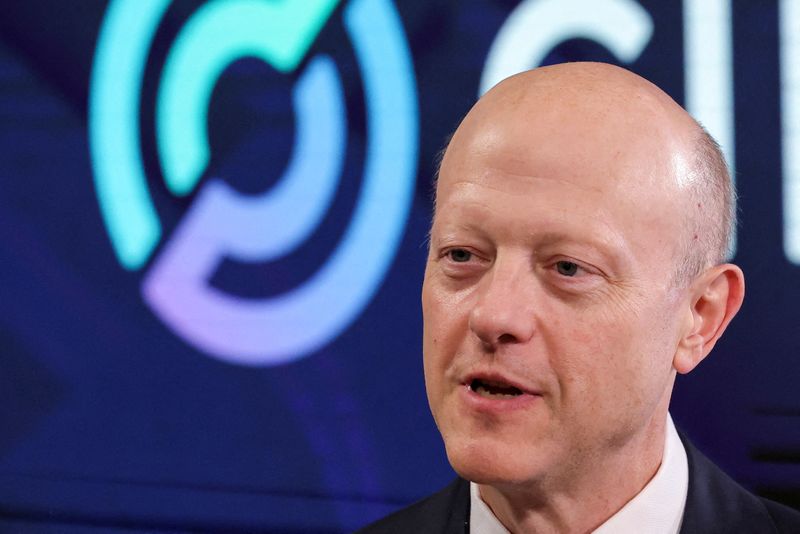 Circle CEO says China could launch a yuan-backed stablecoin within five years2026-04
 Alibaba’s Qwen 3.6 Max tops major benchmarks and boosts reasoning and instruction-following, highlighting China’s growing dominance in the global AI race2026-04
 US crypto policy gridlock could hand China a strategic edge, as stalled CLARITY Act delays regulatory clarity while Beijing advances its digital asset ambitions2026-04
 NVIDIA CEO Jensen Huang says China already has the compute capacity to train Claude Mythos-level AI, raising cybersecurity concerns2026-04
 Asia markets tumble as South Korea’s Kospi suffers record 12% plunge, trading halts hit Kospi and Kosdaq, and Nikkei, Hang Seng and China stocks slide amid Iran-driven oil price surge2026-03
China occupies a paradoxical position in global crypto and technology markets: officially hostile to most cryptocurrency activity on the mainland, yet simultaneously among the most aggressive state actors in building digital financial infrastructure and next-generation AI — with consequences that ripple through every corner of the industry.
The Official Stance vs. the Operational Reality
Beijing's formal relationship with cryptocurrency has hardened steadily since 2013, culminating in the September 2021 blanket ban on crypto trading and mining. The People's Bank of China declared all crypto-related transactions illegal; miners fled to Kazakhstan, the United States, and elsewhere; domestic exchanges shut or relocated. On paper, China is one of the world's most restrictive crypto jurisdictions.
The operational reality is more complicated. Onchain data continues to show significant Chinese-linked activity. Analysts at Chainalysis have consistently ranked China among the top countries by raw crypto transaction volume despite the ban, suggesting enforcement is uneven and capital flight through crypto channels persists. In mid-2026, onchain analyst ai_9684xtpa identified addresses linked to F2Pool co-founder Wang Chun withdrawing 7,650 ETH and 124.18 WBTC from Binance — a single snapshot of the continued involvement of prominent Chinese mining figures in crypto markets even as domestic regulation tightens.
Meanwhile, China's top court placed crypto cases explicitly on its 2026 judicial agenda after courts processed 2.7 million financial cases in 2025, many touching digital assets. The Supreme People's Court is now drafting formal rules for adjudicating crypto and AI-related disputes — a sign that the state is not ignoring crypto so much as working to absorb it into a legal framework that serves state interests.

Circle CEO says China could launch a yuan-backed stablecoin within five years
Bitcoin Mining: Still Relevant, Still Exposed
Before the 2021 ban, China hosted an estimated 65–75% of global Bitcoin hashrate. That dominance evaporated almost overnight as miners relocated equipment at scale. The United States, Kazakhstan, and Canada absorbed most of the capacity.
Yet Chinese capital and technical expertise never fully left the mining sector. F2Pool, one of the largest Bitcoin mining pools globally, continues to operate and route hashrate from international deployments. The broader Chinese mining industry — including firms like Bitmain, which manufactures the majority of the world's ASIC mining hardware — remains structurally central to Bitcoin's infrastructure regardless of where machines are physically plugged in.
The risk calculus for the remaining China-linked mining operations is real. When one of China's largest BTC-holding miners recently warned that a price route to $30,000 would be "manageable" but flagged risks from Strategy (formerly MicroStrategy) liquidation pressure, it illustrated how Chinese miners continue to hold meaningful BTC treasury positions with direct implications for market stability. A forced selling cascade from any large holder — regardless of jurisdiction — affects the same global order books.
Readers click China-crypto headlines not to track a single story but because they sense a unified strategic posture: China is simultaneously deploying CBDC infrastructure to erode dollar dominance, tolerating underground USDT networks it selectively dismantles, and using AI and cyber capabilities to destabilize Western financial systems — clicks cluster wherever those threads converge into a single actor moving multiple levers at once.
The Digital Yuan and Cross-Border Payments Infrastructure
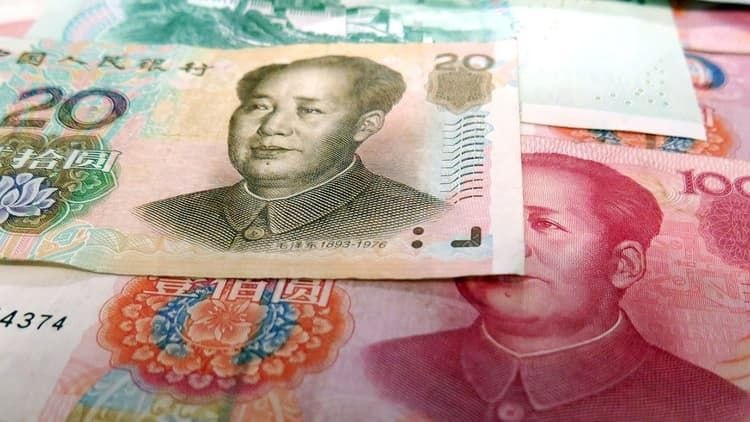
While the West debated whether to ban or regulate crypto, Beijing was building its own sovereign digital money system. The digital yuan (e-CNY) is now in wide domestic circulation across dozens of pilot cities, integrated into transit, retail, and government payment rails.
More consequential for global finance is mBridge — the multi-CBDC cross-border payments platform developed under the auspices of the Bank for International Settlements alongside the central banks of China, Hong Kong, the UAE, and Thailand. The platform has moved out of pilot mode and is preparing for commercial rollout in 2026. China has signed 26 financial institutions onto the network, including Standard Chartered, in a significant signal that Western financial institutions are willing to plug into Chinese-led digital payment infrastructure when the commercial case is compelling.
mBridge matters for crypto markets because it represents a competing vision to dollar-denominated stablecoin dominance. Where USD-pegged stablecoins like USDC and USDT have become the default settlement layer for cross-border crypto flows — particularly in Asia — a mature mBridge network could route institutional and sovereign payments outside that system entirely. Senator Cynthia Lummis made this point directly, warning that if U.S. Congress fails to pass the CLARITY Act establishing a stablecoin and crypto regulatory framework, China will "write the rules" of the new financial era.
The Zetrix AI and Shenzhen Data Exchange partnership to unlock cross-border data flows between ASEAN and China adds another layer: China is not just building payment rails but data infrastructure that connects its digital economy to Southeast Asian markets in ways that could eventually interface with tokenized assets and programmable finance.

Alibaba’s Qwen 3.6 Max tops major benchmarks and boosts reasoning and instruction-following, highlighting China’s growing dominance in the global AI race
AI Without Nvidia: A Strategic Technology Race
The U.S. export controls on advanced semiconductors — specifically Nvidia's H100 and A100 chips — were designed to slow China's AI development. The evidence so far suggests they have complicated but not stopped it.
China's Z.AI released GLM-5.2, a frontier reasoning model that benchmarks competitively with Anthropic's Claude Opus — built entirely without Nvidia chips. Xiaomi's MiMo model has been reported to run inference at speeds significantly faster than comparable ChatGPT and Claude deployments. These are not isolated achievements; they reflect a coordinated state-backed push to develop sovereign AI capability on domestically available or non-U.S. hardware.
Nvidia itself released its best open AI model to date in mid-2026 while acknowledging it still lags behind Chinese counterparts on certain benchmarks — a remarkable admission from the company whose hardware dominance underpinned the first wave of the generative AI boom. The competitive dynamic is now genuinely two-sided.
For crypto markets, the AI-China nexus has produced a specific new instrument: the Shanghai Stock Exchange is drafting AI token futures that would allow firms to hedge exposure to AI compute costs — essentially creating a derivatives market around AI usage as a commodity. This is a novel asset class that sits at the intersection of state industrial policy and financial engineering, and it has no direct equivalent in Western markets yet.
The Chinese government's decision to impose travel restrictions on AI workers at private firms — limiting their ability to leave the country — underscores how seriously Beijing treats its AI talent as a strategic resource, not just a commercial one.
- 01Digital yuan global expansion
Readers tracked the e-CNY's evolution from domestic pilot to foreign-traveler onboarding and Shanghai cross-border trade hub, treating it as a live stress-test of whether a state CBDC could rival dollar-denominated rails.
- 02US-China tariff crypto contagion
Tariff announcements triggered immediate crypto liquidations and BTC drawdowns, making the trade war a real-time volatility signal that readers used to time positions.
- 03AI shocks crossing into crypto markets
DeepSeek's release wiped 6% off BTC and 8.5% off Nvidia in a single session, proving Chinese AI breakthroughs now carry direct crypto market risk — a causal link readers hadn't fully priced.
- 04State-level BTC and reserve positioning
Headlines showing China holds 190,000+ BTC while rotating Treasuries into gold reframed China from a crypto antagonist into a sovereign accumulator, which readers found strategically dissonant and therefore compelling.
- 05Chinese cyber-espionage on financial rails
Treasury breaches and Salt Typhoon telecom hacks landed alongside AI-enabled offensive cyberattack warnings, signaling that Chinese state actors now treat Western financial infrastructure as a persistent target.
- 06Underground USDT banking enforcement
A $1.9B bust using USDT for illicit foreign-exchange illustrated how China enforces capital controls selectively — cracking down on grey channels while the state-run CBDC expands — a contradiction readers found revealing.
Hong Kong as the Regulated Onramp
Mainland China's crypto ban coexists with Hong Kong operating as a regulated crypto hub under a licensing framework that came into force in 2023. The Hong Kong Securities and Futures Commission has issued licenses to exchanges, enabled retail Bitcoin and Ether ETFs (ahead of the United States on ETH products), and positioned the city as the jurisdiction where Chinese capital can access crypto markets through a compliant wrapper.
This bifurcation is deliberate. Hong Kong allows Beijing to observe how regulated crypto markets function, capture some financial activity within the Chinese system's orbit, and maintain optionality — a policy door that can be opened wider or narrowed depending on how the U.S.-China financial rivalry evolves. "China's Buffett" Duan Yongping's disclosed Q1 2026 stake in Circle Internet Group (CRCL) — approximately $19 million at an average cost of $95.41 per share — is a high-profile data point showing that prominent Chinese investors are positioning in the dollar stablecoin infrastructure, even as official policy keeps that infrastructure at arm's length domestically.
China triples its e-CNY network in 2026 as the PBOC adds 20 operators, including eight banks joining the CBDC push this week
Geopolitics: Trade, Taiwan, and the New Financial Order
Ray Dalio's framing of an emerging Asia-centric "tribute system" — in which countries that once aligned primarily with U.S. institutions are recalibrating toward Chinese economic gravity — shapes the macro backdrop for every discussion of China and financial markets. Trade flow restructuring, currency diversification, and the search for settlement mechanisms outside SWIFT and dollar-clearing systems are not hypothetical scenarios; they are live processes.
The Xi-Trump meeting in mid-2026 produced signals of de-escalation in the trade war that had resumed with tariff escalations earlier in the year. Trump's public statement welcoming Chinese and Indian investment in Venezuelan oil — while simultaneously using geopolitical strikes as economic tools — illustrates the transactional character of the current moment. For crypto markets, reduced U.S.-China tension is generally bullish: it lowers the probability of capital controls, secondary sanctions on exchanges handling Chinese flows, or emergency crypto restrictions framed as national security measures.
Conversely, Anthropic's reported cooperation with the NSA on cyber operations targeting China — disclosed alongside the company's simultaneous call for an international AI pause — exemplifies the uncomfortable dual-use character of AI technology and the way in which the U.S.-China rivalry is pulling every technology sector into a national security frame. Coinbase launched thematic perpetuals contracts tracking China, AI, and U.S. national security equity indexes in 2026, creating instruments that let traders directly express views on the geopolitical competition between the two powers.
China's crackdown on major U.S. stock trading platforms operating domestically — confiscating illegal gains and tightening restrictions on foreign financial services — further narrows legal channels for Chinese retail investors to access Western assets, a dynamic that historically has increased pressure toward crypto as an alternative cross-border savings vehicle despite the official ban.
- 2024-09regulatory
Chainalysis reports surge in China-based cybercrime and pig-butchering networks
- 2024-12exploit
Chinese hackers breach US Treasury systems in 'major incident'
- 2024-12regulatory
US federal agencies attribute Salt Typhoon telecom hack to China
- 2025-01milestone
DeepSeek release triggers BTC -6%, Nvidia -8.5% in single session
- 2025-04regulatory
Trump announces 34% reciprocal tariffs on China; crypto liquidations hit $459M
- 2025-05governance
US and China agree to suspend 24% tariffs on $300B in goods
- 2025-06regulatory
China bars Manus AI founders from leaving country amid US acquisition review
Legal and Regulatory Trajectory
The Supreme People's Court's 2026 agenda item on crypto is not a liberalization signal — it is bureaucratic catch-up with a reality the state cannot fully suppress. The questions being studied include how to treat crypto assets in inheritance, divorce proceedings, debt recovery, and criminal confiscation — practical legal plumbing that any jurisdiction handling significant crypto flows eventually must address.
The direction of mainland China crypto law is toward a framework that criminalizes unauthorized trading, enables state confiscation, and gradually standardizes how courts value digital assets — while keeping the ban on private trading intact. This is distinct from the Hong Kong approach and from the direction of U.S. regulation, but it is not absence of law; it is construction of a parallel legal order.
Outlook
The dominant trend is bifurcation with entanglement. China will continue building sovereign digital infrastructure — CBDCs, AI compute, regulated payment corridors — that competes with dollar-denominated systems, while Chinese capital and technical talent remain deeply embedded in global crypto markets through Hong Kong, offshore entities, and informal channels. The mBridge commercial rollout and the maturation of Hong Kong's licensing regime are the near-term catalysts most worth watching.
Geopolitical temperature between Washington and Beijing remains the single largest macro variable for crypto markets with Chinese exposure. A sustained détente reduces tail risk; a renewed escalation — over Taiwan, semiconductors, or financial system access — could trigger capital controls, exchange delistings, or emergency legislation on either side that disrupts markets rapidly. Traders with China-linked positions, and builders relying on Bitmain hardware or Asian liquidity, should treat that risk as structural rather than episodic.
Latest China news
Circle CEO says China could launch a yuan-backed stablecoin within five yearsAlibaba’s Qwen 3.6 Max tops major benchmarks and boosts reasoning and instruction-following, highlighting China’s growing dominance in the global AI raceChina triples its e-CNY network in 2026 as the PBOC adds 20 operators, including eight banks joining the CBDC push this week PayPal expands in-store payments in China, letting U.S. users pay Weixin Pay merchants via QR codes directly through the PayPal appUS crypto policy gridlock could hand China a strategic edge, as stalled CLARITY Act delays regulatory clarity while Beijing advances its digital asset ambitionsNVIDIA CEO Jensen Huang says China already has the compute capacity to train Claude Mythos-level AI, raising cybersecurity concerns
Community notes
Spot something off or out of date? Drop a note. Editors review topic notes daily and roll accepted fixes into the explainer — contributors are recognized in the monthly $SQUID drop.
Loading notes…
Help improve this topic
Have a story or tip about this topic? Submit it. See something missing? Leave a note. Editors review daily; accepted submissions and fixes count toward the monthly $SQUID drop.