
Deep dive explainer on “docs” in crypto—how developer, user, legal and AI‑ready documentation shape trust, integrations, regulation and security, from MiCA whitepapers to LLM‑optimized portals and decentralized Fileverse‑style records.
- x.com7
- docs.yieldbasis.com2
- monad-1.gitbook.io1
- aave.com1
- docs.liquity.org1
- docs.yearn.fi1
- bitdefender.com1
+4 sources across the wider coverage universe
 The "litepaper" era is dead. MiCA turns white papers into machine-readable legal prospectuses. With automated gates and DTI/LEI codes, compliance is now architecture, not marketing. #DeFi #MiCA2026-04
 Malvertising impersonates Claude Code docs, drops macOS backdoor that drains crypto wallets via ClickFix terminal lures2026-04
 Flex releases its docs2026-01
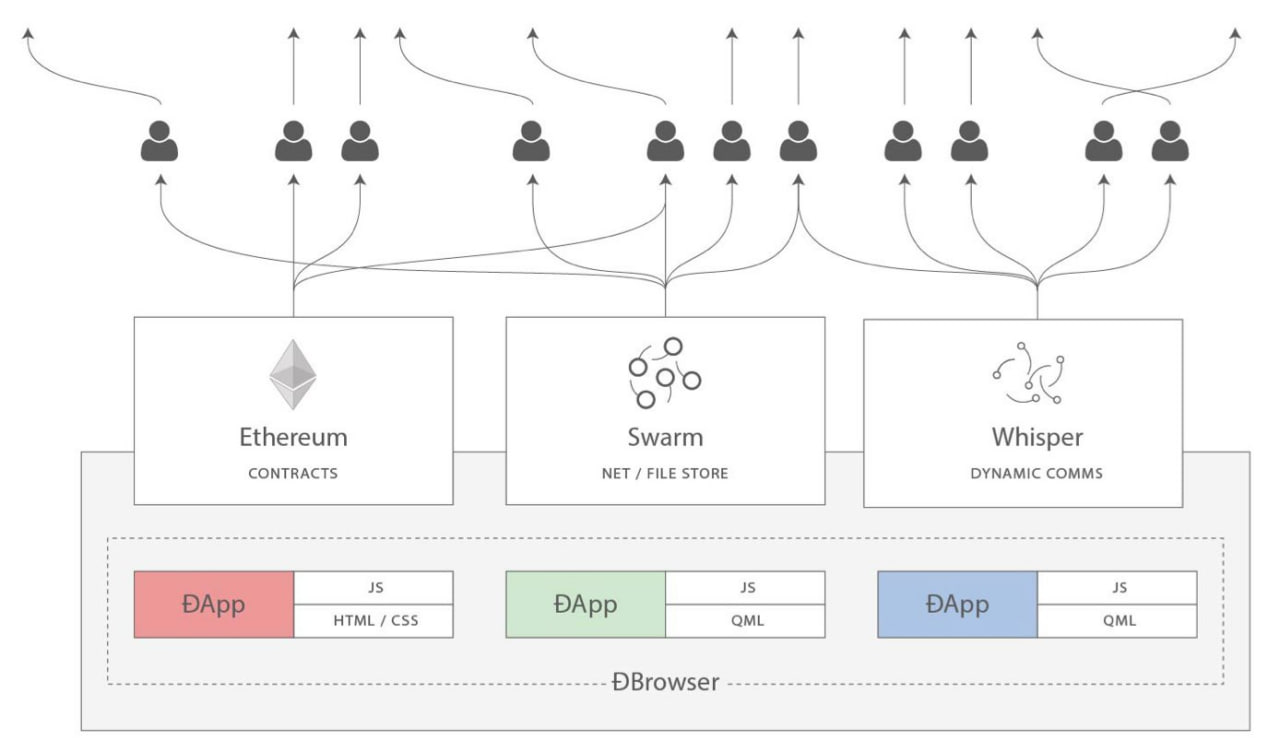 Vitalik Buterin says decentralized web vision is ready to build. In a detailed thread, Ethereum's co-founder recapped the original plan: Ethereum as a world computer for settlement, Waku for messaging, and systems like IPFS and Fileverse for storage. He highlighted key advances like proof-of-stake, ZK-EVMs, PeerDAS on mainnet, and Layer-2 rollups that cut fees and boost speed. Fileverse offers decentralized Docs and Sheets that pass his 'walkaway test'—users can recover files even if developers disappear—contrasting with centralized services prone to shutdowns.2026-01
 Monad, a high-performance Ethereum-compatible L1, stealth releases docs2023-09
- Frax launches Fraxtal, its new L2. Check out the new site at Frax.com and read the docs2024-02
Docs in Crypto: How Documentation Shapes Code, Capital, and Compliance
In crypto, “docs” are the collection of technical, legal, and user-facing materials that describe how a protocol, token, or application works. They are the interface layer between immutable smart contracts, real financial risk, and the humans and AI systems that decide whether to build, invest, or regulate.
Introduction: Documentation As Crypto’s Hidden Infrastructure
Every cycle, new protocols launch with slick landing pages, viral threads, and token incentives, but the real foundation of any serious crypto project is its documentation. Documentation is not just a developer convenience; it is a form of infrastructure that coordinates developers, liquidity providers, governance participants, regulators, and now large language models and autonomous agents. When teams announce a “docs release,” they are signalling that their system is ready to be scrutinized, integrated, and, in many cases, regulated.
Unlike in Web2, where centralized companies can patch bugs quietly or modify terms of service unilaterally, Web3 systems often deploy immutable contracts and delegate control to token-governed DAOs. In that environment, docs become a quasi-constitutional text: they explain what contracts are supposed to do, what risks users bear, and how upgrades will be handled. Misaligned or misleading docs are not merely bad developer experience; they can generate regulatory liability, user losses, and systemic risk. This is why debates around the Liquity V2 docs, YieldBasis’s technical overview, or Yearn’s documentation for new products like yBOLD matter: they are not side notes, but core pieces of market infrastructure.
Today, documentation also sits at the boundary between code and artificial intelligence. Developers increasingly rely on AI coding assistants that learn how to call smart contracts or node APIs directly from protocol docs, OpenAPI schemas, and special files like llms.txt. At the same time, regulators in jurisdictions such as the European Union are turning crypto whitepapers into machine-readable legal prospectuses under the Markets in Crypto‑Assets (MiCA) framework. In other words, both robots and regulators now treat docs as primary sources. Understanding what “docs” are, how they are changing, and what to watch for is becoming part of baseline literacy for anyone serious about crypto.

The "litepaper" era is dead. MiCA turns white papers into machine-readable legal prospectuses. With automated gates and DTI/LEI codes, compliance is now architecture, not marketing. #DeFi #MiCA
he article outlines how the Markets in Crypto-Assets (MiCA) regulation transforms the crypto white paper from a narrative marketing tool (like a GitBook or PDF) into a formal, machine-readable legal instrument. Core Shift: From Pitch Deck to Legal Prospectus Under MiCA, a white paper is now considered a mandatory legal disclosure, similar to a securities prospectus. It is no longer just a technical explanation but a document with attached civil liability and strict formatting requirements.
The Many Faces Of “Docs” In Crypto
The word “docs” is shorthand, but it covers very different artefacts depending on who is speaking. A DeFi protocol like Liquity may use “docs” to refer to a full developer and user documentation portal with integration guides, risk explanations, and governance details. A trading firm may talk about “docs” when it actually means the legal terms governing custody arrangements or derivatives exposure. A lawyer advising on a token launch may mean the MiCA-compliant whitepaper and accompanying legal opinions that define the asset in the eyes of regulators. Meanwhile, an L2 team boasting “agent-ready docs” may be talking about OpenAPI files, llms.txt indices, and Model Context Protocol (MCP) servers built for AI coding agents rather than humans.
Despite this diversity, most crypto documentation falls into three broad families: developer docs, user-facing docs, and legal or policy documents. Each family has its own structure, audience, and failure modes. Developer docs aim to translate abstract protocol design into concrete integration patterns, such as how to call an on-chain contract or query a node API. User docs try to explain complex mechanisms like overcollateralized borrowing, leverage, or staking rewards to non-specialists without overwhelming them. Legal docs attempt to anchor this entire stack in statutory frameworks by defining rights, responsibilities, and risk disclosures in language regulators and courts can interpret. In practice, healthy projects usually maintain all three, even if they emphasize one more heavily.
To make these distinctions more concrete, it can be useful to think of crypto documentation across a few dimensions:
| Doc Type | Primary Audience | Typical Form | Main Risks If Poorly Done |
|---|---|---|---|
| Developer docs | Protocol integrators, infra | Portals, API refs, code examples, repos | Integration errors, lost funds, ecosystem stagnation |
| User docs | Traders, LPs, retail users | Guides, FAQs, risk sections, dashboards | Misunderstood risk, support overload, reputational damage |
| Legal / policy docs | Regulators, courts, institutions | Whitepapers, terms, MiCA docs, governance charters | Regulatory breaches, enforcement, delistings |
Although this table draws clean lines, in reality these categories blur. For instance, a “knowledge hub” that aggregates protocol updates, integration guides, and legal disclosures serves both developers and non-technical users, and it may also feed LLMs used by customer support agents or community moderators. Similarly, governance proposals often double as legal and technical documents: they may specify parameter changes in code while referencing regulatory requirements and risk analyses. The key is that “docs” in crypto are not monolithic; they are a layered system, and understanding which layer you are reading is crucial.
Developer Documentation: From READMEs To Integrated Portals
Developer docs are often the first kind of documentation a project prioritizes, especially for infrastructure protocols such as rollups, RPC providers, or networks like the Canton Network. These docs usually start as GitHub READMEs attached to early prototypes, then evolve into more structured portals once a project approaches public launch. Canton, for example, has consolidated its previously scattered documentation into a single developer docs hub that covers exploration, building, testing, and deployment across the Canton Network, Digital Asset, and Canton Foundation properties. This consolidation reflects a broader trend: treating documentation not as a static manual but as a curated gateway into an ecosystem.
Good developer docs answer a few key questions: what can this system do, how do I call it safely, and what are the edge cases? For protocols like Liquity V2, docs must explain not just function signatures, but also system-wide concepts such as stability pools, redemption mechanics, and protocol invariants. For newer structured products like YieldBasis, technical overview docs need to unpack more exotic arrangements, such as leveraged exposure to Curve LP positions via contracts that maintain compounding leverage at roughly 2x. Missing or ambiguous information at this level can lead to integration bugs, incorrect risk assumptions, or outright losses when integrators mis-handle liquidation edge cases or oracle failures.
In the AI era, developer docs are no longer written only for human readers. Platforms like QuickNode now explicitly brand parts of their documentation as “LLM-optimized,” providing plain-text structures designed to help AI tools and developers using AI find and reference the right content for blockchain development. API documentation platforms like ReadMe advise teams to start from machine-readable OpenAPI specifications, define parameters and responses strictly, and keep endpoint descriptions semantically aligned with actual behavior so that LLMs can reliably call their APIs. This means that developer docs are becoming dual-purpose: they must be readable by humans skimming in a browser and by LLMs parsing JSON or YAML specs.
User-Facing Docs And Knowledge Hubs
User-facing docs sit at the uncomfortable intersection of marketing and risk disclosure. Protocols want to make their products look appealing and simple, but they also need to convey non-trivial risk, such as the liquidation mechanics of a lending market or the peg stability assumptions of a stablecoin. Liquity’s documentation, for example, explains both how to borrow and manage positions and why its design choices, like 0% interest and stability pools, differ from conventional lending protocols. Yearn’s docs for products such as yBOLD aim to show how tokenized stability pools work, what returns might look like, and under what circumstances users can lose funds, all without overwhelming non-specialists.
Some projects organize these materials into “knowledge hubs,” an approach mirrored in enterprise products like NICE CXone’s Knowledge Hub, which connects multiple knowledge sources so that human agents and AI copilots can draw from a unified base of information. In crypto, a knowledge hub might integrate user guides, dev docs, integration examples, security advisories, governance decisions, and FAQ-style content, all accessible to both humans and the LLMs that power chat-based support or interactive docs bots. Curve’s own “knowledge hub” framing, for instance, reflects this convergence: docs, integrations, and updates in one place help users, developers, and automated tools navigate a complex, multi-market ecosystem.
The quality of user docs has direct economic consequences. When YieldBasis released its technical overview, for example, careful readers noticed that the design depended on a special crvUSD mint market housed in an isolated vault, accessible only to YieldBasis rather than to public borrowers. This raised questions about systemic risk and governance control that might have remained obscure if the docs were thinner or more marketing-driven. In this sense, thorough user documentation can both build trust and surface controversy, which is exactly what resilient ecosystems should want.
Legal, Regulatory, And Governance Docs
The third major category comprises legal, regulatory, and governance documents. Historically, crypto projects often treated their whitepapers or litepapers as quasi-marketing documents rather than binding disclosures. Under MiCA, that approach is no longer viable for EU-facing projects. The regulation establishes uniform market rules for crypto-assets not already covered by existing financial legislation and requires that whitepapers be produced in a machine-readable format, making them both legally and computationally structured. An ESMA study on data formats for text-based disclosures highlights that MiCA whitepapers must have machine-processable versions, with standardized fields that can be automatically ingested and analyzed.
This shift turns whitepapers into something closer to prospectuses: legal documents with defined responsibilities and potential enforcement consequences, rather than aspirational manifestos. It also means that legal docs and technical docs are converging. If a MiCA whitepaper asserts that a token grants no profit rights and is strictly a utility token, but the underlying contracts distribute protocol fees, there is a misalignment that regulators can detect both textually and on-chain. As more protocols publish regulatory affairs pages aggregating MiCA documents, compliance resources, and policymaker advocacy materials, “docs” in the broad sense start to function as a public compliance API as much as a technical manual.
Governance documents, including constitutions, DAO charters, and proposal templates, also play a role here. They encode upgrade paths, emergency powers, treasury management rules, and dispute processes. When these governance docs are vague or not kept in sync with on-chain governance mechanics, communities can find themselves in legitimacy crises during contentious votes or emergency interventions. For legal counsel, the interplay between on-chain activity and these textual governance artefacts is increasingly central in assessing risk.
On-Chain Versus Off-Chain Documentation
A final axis cuts across all three doc families: whether documentation lives off-chain, on-chain, or in some hybrid form. Most projects host their docs on centralized web domains backed by git repositories. This makes iteration easy but introduces two problems. First, centralized docs can disappear or be modified silently, undermining trust and making historical analysis difficult. Second, when docs and deployed code diverge, users have no canonical tie-breaker beyond reading the code directly, which is unrealistic for most.
Some ecosystems address this with content-addressable storage and decentralized document platforms. Systems like IPFS and Arweave allow teams or communities to pin specific doc versions, sometimes linked from smart contract storage via hashes. Emerging projects such as Fileverse aim to provide decentralized documents and spreadsheets that pass a “walkaway test”: even if the original developers vanish or shut down their servers, users can still recover their files because they are stored in a decentralized network rather than a single SaaS backend. For protocols, similar approaches—hashing docs, mirroring them to decentralized storage, and referencing them in governance—can turn documentation from a mutable website into part of the protocol’s durable interface.
Of course, not everything needs to be on-chain. Iterative drafts, experimental extensions, and internal notes benefit from the flexibility of off-chain storage. The key is recognizing that for core protocol behavior, system parameters, and legal commitments, treating docs as ephemeral web content is increasingly untenable. Hybrid models, where canonical docs are periodically snapshotted and anchored to chains while working copies remain in traditional repos, are becoming more common.
Readers treat 'docs released' as an alpha signal — clicking not to read documentation but to decode architecture before a launch, flag hidden risks (isolated vaults, leverage mechanics), or front-run community awareness of a new chain or product.
Docs As Trust, Risk, And Market Signaling
In crypto, trust is fragile and reflexive. Token prices, TVL, and integration decisions frequently hinge on perceptions about a protocol’s seriousness, transparency, and operational maturity. Documentation sits at the center of that perception. When a project announces that it has “released docs,” it is often interpreted as a milestone on par with testnet launch or security audit publication. Yearn shipping docs for a new product such as yBOLD, or a protocol like Flex announcing its documentation release, signals to integrators and sophisticated users that the system is sufficiently defined to warrant attention.
This signaling cuts both ways. High-quality docs that clearly articulate design trade-offs, outline risks, and link to audits can boost confidence and accelerate integrations. Conversely, sparse docs full of aspirational language and missing details can be a red flag, especially when combined with aggressive token marketing. Experienced DeFi participants have learned to treat detailed docs as a prerequisite for allocating serious capital. For instance, when Liquity V2’s documentation outlined how its upgrades built on V1’s design while introducing enhancements and new risk considerations, it provided a base for both users and auditors to reason about systemic effects. By contrast, new protocols that launch tokens first and docs later raise obvious concerns.
The reaction to YieldBasis’s docs illustrates another dimension: rigorous documentation can expose design choices that spark legitimate debate. The revelation that YieldBasis relied on a special crvUSD mint market accessible only to the protocol itself led observers to question governance centralization and potential systemic spillovers. The founder’s public response and explanation of how value would accrue back to veCRV holders demonstrated how docs-mediated discourse can drive both accountability and iterative design. In an ecosystem that values “code is law,” this should not be dismissed as drama; it is an essential part of how norms and expectations are negotiated.
Docs also play a role in release choreography. Many teams now coordinate code releases, audits, and docs updates as a single launch process, recognizing that partial information can be harmful. Some L2s and rollups explicitly frame their doc launches as “agent-optimized docs” updates, acknowledging that the next thousand “developers” may actually be AI agents querying LLM-ready portals rather than humans reading markdown. For these teams, shipping docs is not the end of the story but the beginning of a feedback loop in which agents surface ambiguities or missing examples through their failures.
Finally, documentation influences how regulators and institutional players perceive crypto systems. A protocol with organized docs, clear risk disclosures, MiCA-compliant whitepapers, and a visible regulatory affairs page looks much more like a serious financial infrastructure project than a meme-driven token, even if both live on the same chain. Institutions and policymakers may not read every line of code, but they will read—or feed into their own AI systems—your docs.

Malvertising impersonates Claude Code docs, drops macOS backdoor that drains crypto wallets via ClickFix terminal lures
The AI Turn: LLMs, Agents, And Machine-Readable Crypto Docs
The most dramatic shift in the meaning of “docs” over the past few years is the rise of documentation written as much for machines as for humans. Developers increasingly integrate AI coding assistants into their workflows, whether through IDE plugins, browser-based copilots, or autonomous agents that read repos and task descriptions. These systems learn how to use APIs, SDKs, and smart contracts directly from documentation. If docs are vague or misaligned with actual behavior, AI-generated integrations will be fragile or dangerous.
Why AI Cares About Your Docs
Traditional documentation assumed a human reader who could resolve ambiguity through intuition, experimentation, or direct contact with maintainers. LLMs and agents do not have that luxury. They rely on structured cues: function signatures, parameter types, explicit enums, well-defined error codes, and examples. Documentation platforms like ReadMe therefore advise teams to build API references from valid, current OpenAPI specification files whenever possible, since these give AI tools a structured source for endpoints, schemas, authentication, and responses. For public APIs, keeping JSON or YAML source files accessible through stable URLs allows LLMs to fetch and ground their reasoning in authoritative specs rather than scraping prose explanations.
OpenAPI schemas, coupled with strong type definitions and explicit validation rules, also help prevent common AI failure modes. When docs clearly state which fields are required, what data types they accept, and which values are allowed (for example, specific enums such as “active,” “pending,” or “archived”), LLMs are less likely to invent parameters or misuse endpoints. Request and response examples, including error conditions like 429 rate limits, give agents concrete patterns to mimic. This is why some newer projects highlight that their docs are “LLM-ready” or “agent-optimized”: they are not just more verbose; they are structurally friendlier to machine consumption.
LLM-Ready Docs, llms.txt, And MCP Servers
A second layer in the AI-docs stack involves specialized discovery and access mechanisms. QuickNode, for instance, publishes LLM-optimized docs and plain-text resources designed to help AI tools and developers quickly locate relevant blockchain development content. Projects following ReadMe’s guidance add an llms.txt file to the root of their documentation sites, providing structured information about docs organization, versioning, terminology, and hierarchy so that AI systems can crawl and index content intelligently. This file acts as a kind of “robots.txt for LLMs,” pointing agents at canonical sources rather than leaving them to guess.
Beyond static hints, some platforms expose their docs through Model Context Protocol (MCP) servers. An MCP server gives compatible AI tools a structured connection to an API’s documentation, allowing them to query endpoints, schemas, authentication methods, and examples in a standardized way. Dusk Network’s Pituitary project, for example, ships an MCP server so that AI coding agents can gain spec awareness mid-session, helping keep their internal understanding of the repo’s behavior in sync with documentation and code. Similarly, ReadMe allows each project to have its own MCP server, making an API’s docs natively accessible to AI coding assistants.
These access paths formalize something that was previously ad hoc: the way AI systems “see” your documentation. Instead of scraping unstructured HTML, agents can now ask, in effect, “What endpoints exist? What are their parameters? What examples are available? How has this changed between versions?” This has implications not just for developer productivity but also for security and compliance, since mis-specified MCP servers or out-of-date llms.txt files can mislead AI clients even if humans see correct docs.
Agent-Optimized Docs On L2s And Infra
Several crypto projects now explicitly design their docs to serve AI agents as first-class consumers. Layer‑2 networks and appchains, in particular, view agent-friendly docs as a way to onboard a new class of “developers” who will never visit their websites directly. Sei’s documentation, for instance, has been updated with AI optimizations and a dedicated skill page that acts as a single, agent-friendly playbook for end-to-end development on the network. Instead of forcing each AI assistant to piece together disparate guides, Sei presents a coherent path that models can follow to scaffold, deploy, and test applications.
GalaChain has promoted the idea of using AI alongside its docs to structure applications that plug into GalaSwap for swaps, liquidity, and DEX-layer access. Here, docs serve as both an educational resource for humans and a programmatic scaffold for AIs that assemble smart contract interactions. Aztec’s AI tooling documentation similarly focuses on helping developers and AI systems keep context up to date as repositories evolve, making it easy to switch between versions while maintaining accurate understanding of current specs. And SQD’s docs emphasize AI development tools, with LLM-ready docs and OpenAPI schemas designed to help LLMs build correct Portal integrations, underscoring how seriously teams now take agent consumption as a first-order requirement.
The tooling ecosystem around “docs for agents” is also maturing. Promptless AI’s guide on optimizing docs for agents, for example, is grounded in how agents actually access and use documentation today, highlighting patterns like chunking, link resolution, and schema exposure that matter for real-world AI performance. Bundles, a product that lets teams package agents and prompts into single reusable toolkits instead of scattering links and docs, reflects the same trend in reverse: not just docs optimized for agents, but agents distributed with curated docs as part of a complete, shareable package. In both cases, documentation is increasingly seen as data for agents to act upon, not just text for humans to read.
Spec Drift, Knowledge Graphs, And Keeping Docs In Sync
One of the oldest problems in software engineering is “spec drift,” when documentation and specifications gradually diverge from actual code behavior. In AI-native workflows, spec drift is particularly dangerous, because LLMs may continue to generate integrations based on obsolete mental models even after code changes. Dusk Network’s Pituitary tackles this by analyzing repositories to detect and mend AI spec drift when docs, specs, and code clash. By exposing its analysis via an MCP server, Pituitary gives AI coding agents live insight into where the repo has changed and how that affects documented behavior.
Another approach leverages knowledge graphs and abstract syntax trees. In work presented with Neo4j, engineers have shown how to build knowledge graphs of codebases and use graph theory to identify the most important nodes—such as classes or modules with many outgoing edges representing imports and interactions. By extracting those hotspots and linking them to documentation, they can guide LLMs to focus on the most semantically central parts of a codebase rather than treating all files equally. Treesitter-based AST parsing lets these systems locate key artefacts within code files, such as class interactions, and associate them with doc sections. This structured view helps reduce spec drift by making it easier to spot mismatches between the documented and actual call graphs of a system.
Taken together, these approaches suggest that the future of “keeping docs up to date” is less about periodically rewriting prose and more about maintaining a living alignment between code, specs, and doc artifacts. AI agents, knowledge graphs, and spec drift detectors become part of the documentation stack itself, watching for semantic drift and prompting humans to reconcile inconsistencies.
Security And Malvertising: When Docs Become An Attack Vector
The more important docs become, the more attractive they are as an attack surface. Malware campaigns have already begun to exploit this. Bitdefender documented a malicious Google Ads campaign targeting users searching for downloads related to Claude Code, an AI coding assistant. The ads led to fake “Claude Code docs” pages that delivered malware instead of documentation. On macOS, the malware dropped a backdoor capable of draining crypto wallets via so‑called ClickFix terminal lures, demonstrating a direct link between documentation-themed lures and financial theft.
This incident highlights several lessons for crypto. First, the phrase “official docs” should never be accepted at face value; users and developers need to verify domains, certificates, and links via trusted channels such as project announcements or signed messages. Second, AI tooling and crypto are increasingly intertwined, so attacks that target AI-related docs can have cascading effects in crypto ecosystems. Finally, as LLMs become habitual consumers of docs, adversaries may try to poison AI training or retrieval corpora by publishing misleading or malicious “documentation” that agents ingest. Teams that care about security will need to treat documentation not just as content but as infrastructure that must be monitored, authenticated, and defended.
Compliance And The End Of The Litepaper Era
For much of crypto’s history, the term “whitepaper” was used loosely, often referring to high-level conceptual documents that blended technical design with marketing narrative. “Litepapers” went even further in the direction of brevity and hype. Regulators largely ignored these documents or treated them as non-binding. MiCA changes that, at least in the European Union. Under the regulation, issuers of certain crypto-assets must publish whitepapers that satisfy detailed disclosure requirements and are made available in machine-readable formats.
ESMA’s study on data formats for text-based disclosures under MiCA emphasizes that these whitepapers must be machine-processable, with structured fields that allow automated systems to parse and analyze key information such as issuer identity, asset features, risk factors, and rights attached to tokens. MiCA also encourages the use of identifiers like Legal Entity Identifiers (LEIs) and Digital Token Identifiers (DTIs), which help link on-chain instruments to off-chain legal entities in a standardized way. This means that whitepapers and associated documentation become part of a regulatory data pipeline, not just PDFs on a website.
From a documentation perspective, this raises the bar on consistency and traceability. If a MiCA whitepaper describes a token as non-transferable governance-only, but the docs and code reveal active secondary markets and revenue-sharing mechanisms, regulators will have strong grounds to question compliance. Projects increasingly respond by building “regulatory affairs” sections into their documentation portals, where they host MiCA docs, compliance resources, and policy advocacy materials. These pages often double as machine-readable endpoints for institutional due diligence systems and regulatory analytics tools.
This evolution also pushes projects toward “compliance by architecture.” If compliance requirements are expressed in part through machine-readable documentation, then protocols can design their systems so that key parameters and behaviors are aligned with documented constraints. For example, a protocol might enforce certain transfer restrictions or investor eligibility conditions directly in smart contracts, with the docs explaining and referencing the relevant legal provisions. In such a world, “docs” are not separable from system design; they are part of how law and code co‑evolve.

Flex releases its docs

What is Flex -Flex is a fixed-rate money market where borrowers choose their own interest rate. Who is Flex for -Borrowers who want to choose a fixed interest rate instead of accepting a protocol-defined rate. -Lenders who want to earn interest on their tokens while maintaining liquidity through redemptions. Who is Flex not for -Borrowers who are unwilling to have their position redeemed by someone else. -Lenders who are unwilling to pay fees to exit. Flex relies on market mechanisms to function. Risks -Borrowers may have their Troves redeemed -Collateral sold during redemptions or liquidations may execute at unfavorable prices -Lenders exiting during low liquidity periods may incur costs Prices are determined by the market and are not guaranteed.
Decentralized Docs And The “Walkaway Test”
Documentation has traditionally been hosted on centralized servers controlled by project teams. When those teams disappear, pivot, or face legal pressure, docs can vanish, leaving users and historians scrambling for archived copies. This fragility is at odds with the ethos of decentralization, especially for protocols that pride themselves on trust minimization and censorship resistance.
One response is to store critical documentation artifacts on decentralized storage systems like IPFS or Arweave, potentially with hash commitments recorded on-chain. This allows communities to reference canonical versions, even if the original domain goes offline. It also supports the idea that documentation is part of the protocol’s long-term social contract. Hashing docs and anchoring them in governance mechanisms makes it harder to rewrite history or quietly alter risk disclosures without notice.
Beyond static storage, projects like Fileverse aim to provide decentralized docs and sheets applications that satisfy a “walkaway test”: users should be able to recover their documents even if the developers walk away, because the data is stored and retrievable through decentralized infrastructure rather than a proprietary backend. Applied to crypto protocols, the same philosophy suggests that critical docs—especially those tied to funds, governance, and legal commitments—should not depend on a single centralized SaaS or corporate entity.
Decentralized docs also have implications for AI. If llms.txt files, OpenAPI schemas, and other AI-facing documentation artifacts are themselves stored in content-addressable networks, then agents can, in principle, verify that the docs they ingest match the versions referenced by contracts or governance decisions. This opens the door to more robust verification pipelines, in which AI systems not only read docs but also check their integrity.
Of course, decentralization is not a panacea. Maintaining discoverability, versioning, and usability for average users remains challenging in decentralized storage environments. Hybrid architectures that combine centralized frontends with decentralized backends, plus explicit version pinning, are likely to dominate for some time. The key takeaway is that as crypto aspires to long-lived protocols, its documentation strategies must also evolve to support longevity and user self-reliance.
- 01Stealth L1/L2 launches via docs
Monad and Fraxtal both used documentation drops as the primary launch signal, drawing readers who treat docs as an imminent-mainnet indicator rather than a reference artifact.
- 02Isolated vault architecture risk↗
YieldBasis docs surfaced a bespoke crvUSD mint market walled off from public borrowers, triggering scrutiny of whether protocol-exclusive credit lines create hidden systemic risk — and drawing Egorov into a public response.
- 03Stablecoin protocol expansions↗
yBOLD, Fraxtal, Liquity V2, and YieldBasis all clustered around stablecoin infrastructure, signaling readers are tracking the competitive layer of yield-bearing and collateralized stable products through their doc releases.
- 042x leverage on Curve LP positions↗
YieldBasis's compounding leverage mechanic, documented in its technical overview, pulled readers seeking to understand the contract architecture behind the yield promise before committing capital.
- 05MiCA compliance as code architecture↗
The framing that MiCA converts white papers into machine-readable prospectuses with DTI/LEI codes attracted readers recognizing that regulatory structure now dictates technical design, not just marketing.
- 06Malware impersonating protocol docs↗
Fake Claude Code documentation served via Google Ads as a macOS backdoor vector showed readers that the trust heuristic of 'official docs' is itself an attack surface for wallet-draining malware.
How Crypto Teams Build And Maintain Docs Today
Behind every “docs release” tweet lies a complex process that blends technical writing, developer relations, legal review, AI tooling, and community feedback. Understanding this process helps interpret what a documentation update really signals.
Mature teams increasingly treat docs as a first-class workstream parallel to code. For example, Canton’s launch of a consolidated developer docs hub brought together previously fragmented materials from multiple sites into a single entry point, simplifying navigation for developers and making it easier to keep everything in sync. Liquity’s docs for V2 build on the success and lessons of V1, reflecting an iterative approach where documentation evolves alongside protocol upgrades rather than trailing them by months. Projects like YieldBasis and Yearn publish technical overviews and product docs early in their lifecycle, inviting scrutiny and questions even before full production rollout.
AI tooling now permeates this process. Aztec’s AI tooling docs emphasize mechanisms for keeping AI assistants’ context aligned with rapidly evolving repositories, including methods for switching between versions and ensuring that LLMs reference the correct specs. Dusk’s Pituitary integrates directly into AI coding workflows to monitor for spec drift between docs, specs, and code, alerting maintainers when documentation no longer reflects reality. ReadMe and Promptless provide checklists and design patterns for making docs LLM-ready and agent-friendly, recommending clear headings, focused sections, and structured data formats that support retrieval and automated understanding.
Knowledge hubs add another layer. Enterprises like NICE CXone use centralized knowledge hubs to connect multiple knowledge sources to agent copilots, ensuring that human support agents and AI assistants draw from consistent information. In crypto, similar hub concepts are emerging, with some protocols branding their docs sites as knowledge hubs where users, integrators, and even LLMs can explore integrations and updates in one place. This shift reflects a recognition that documentation is not just for developers but for the entire ecosystem, including automated agents.
Developer relations (DevRel) and community feedback loops play a crucial role in maintaining doc quality. TON Foundation’s developer relations efforts, for example, emphasize that fast feedback loops between docs, builders, and protocol teams can accelerate building but also expose developers to unproven paths if documentation races ahead of stable best practices. When teams use docs to chart “risky waters,” as some coverage has put it, they are implicitly asking developers to trust not just the code but the documentation roadmap. In those environments, open channels for correcting and iterating on docs—through GitHub issues, community forums, or direct DevRel engagement—become essential.
Finally, doc releases are increasingly staged, with internal drafts tested against AI agents before public launch. ReadMe recommends running docs through AI coding assistants using realistic developer prompts, then checking whether the agent invents endpoints, uses the wrong authentication header, or omits required parameters. Failures become signals for where docs need clearer descriptions or better examples. Teams that adopt this “agent-in-the-loop” testing treat docs as a living product, refined not just for human readability but for machine correctness.
How To Read Crypto Docs Like A Pro
For all the talk of AI and machine-readable specs, human judgment remains central. Whether you are a builder, trader, or regulator, being able to read crypto docs critically is a key skill.
For builders, the first step is to understand the structure and provenance of the docs you are reading. Are you looking at a unified portal like Canton’s consolidated docs hub, which likely reflects a curated and current view of the ecosystem, or at a stale GitHub wiki last updated years ago? Do the docs link to audits, formal verifications, and governance discussions, or do they exist in isolation? When integrating, pay particular attention to clearly defined APIs or contract interfaces, including parameter types, required fields, and error codes. If the docs mention OpenAPI specs or LLM-ready schemas, actually inspect them; they are often the most precise description of behavior. Where ambiguity exists, test on testnets or sandboxes rather than assuming the prose is complete.
For power users and DeFi participants, reading docs is mostly about understanding risk and governance. Focus on sections that describe liquidation mechanisms, peg maintenance, oracle dependencies, and emergency powers. In Liquity’s docs, for example, the explanation of how stability pools absorb bad debt and how redemptions work is critical to assessing risk, far more than any APR examples. In YieldBasis’s technical overview, the nuanced description of its special crvUSD mint market and isolated vault design is central to evaluating systemic implications. When docs reveal that certain keys or parameters are controlled by a small team or a multisig, that should inform your sizing and expectations.
Regulators, journalists, and analysts face a different challenge: distinguishing between aspirational language and enforceable commitments. Under MiCA, whitepapers and machine-readable disclosures carry legal weight, whereas blog posts and marketing threads may not. When reading docs, it is therefore crucial to identify which parts are formally filed or referenced in regulatory contexts and which are explanatory gloss. Machine-readable formats, LEIs, and DTIs are not mere technicalities; they are hooks that tie documentation to legal entities and instruments. At the same time, cross-referencing docs with on-chain behavior and code repositories can reveal inconsistencies that matter more than any disclaimer.
Across all audiences, one general principle holds: treat docs as a starting point, not an oracle. In well-run projects, documentation, code, and legal artifacts reinforce each other. In shakier projects, they conflict or leave gaps. Asking basic questions—what is not documented, how quickly are docs updated after changes, who approves documentation changes, and how is history preserved—can reveal a lot about maturity and risk profile. AI can help summarize or navigate docs, but it cannot replace the need for critical reading.
- 2024-01launch
Frax launches Fraxtal L2 with new docs site at frax.com
Liquity V2 code goes public ahead of May 19 relaunch; docs available
ESMA publishes MiCA white paper data format study mandating machine-readable prospectuses
- 2024-12milestone
Monad stealth-releases docs for its high-performance EVM-compatible L1
Yield Basis publishes technical overview docs detailing 2x Curve LP leverage architecture
- 2025-06launch
Yearn releases yBOLD docs for BOLD tokenized stability pool product
Malvertising campaign impersonates Claude Code docs via Google Ads, deploys macOS crypto-draining backdoor
Outlook
Documentation in crypto is moving from the margins to the center of the stack. In the coming years, several trends are likely to reinforce this shift. On the technical side, more protocols will adopt LLM-ready documentation patterns, including OpenAPI-based API references, llms.txt files, and MCP servers that expose docs as structured, machine-queryable resources. Agent-optimized docs will become table stakes for infrastructure projects, as autonomous agents and AI copilots take on a larger share of integration work. Tools like Pituitary and knowledge-graph-based doc analyzers will help maintain alignment between code, specs, and documentation, reducing spec drift and making doc quality a monitored metric rather than an afterthought.
On the regulatory front, MiCA’s requirement for machine-readable whitepapers and structured disclosures is likely to influence global norms, pushing projects toward more standardized, analyzable documentation formats even outside the EU. Compliance functions will increasingly intersect with documentation teams, and “regulatory affairs” pages will sit alongside developer portals as first-class sections of project sites. Decentralized storage and platforms like Fileverse will continue to push the idea of docs that users can “walk away” with, reinforcing the ethos that critical information should be as resilient as the protocols it describes.
At the same time, adversarial dynamics around documentation will intensify. Malware campaigns posing as docs sites, phishing through fake “official documentation,” and attempts to poison AI systems with misleading documentation will all grow more sophisticated. Projects that treat documentation as infrastructure—authenticating it, monitoring its integrity, and designing it for both humans and machines—will be better positioned to withstand these pressures. For builders, investors, and regulators alike, learning to see docs not as an afterthought but as a central part of crypto’s technical, economic, and legal architecture will be a durable edge.
Latest docs news
The "litepaper" era is dead. MiCA turns white papers into machine-readable legal prospectuses. With automated gates and DTI/LEI codes, compliance is now architecture, not marketing. #DeFi #MiCAMalvertising impersonates Claude Code docs, drops macOS backdoor that drains crypto wallets via ClickFix terminal luresFlex releases its docsVitalik Buterin says decentralized web vision is ready to build. In a detailed thread, Ethereum's co-founder recapped the original plan: Ethereum as a world computer for settlement, Waku for messaging, and systems like IPFS and Fileverse for storage. He highlighted key advances like proof-of-stake, ZK-EVMs, PeerDAS on mainnet, and Layer-2 rollups that cut fees and boost speed. Fileverse offers decentralized Docs and Sheets that pass his 'walkaway test'—users can recover files even if developers disappear—contrasting with centralized services prone to shutdowns.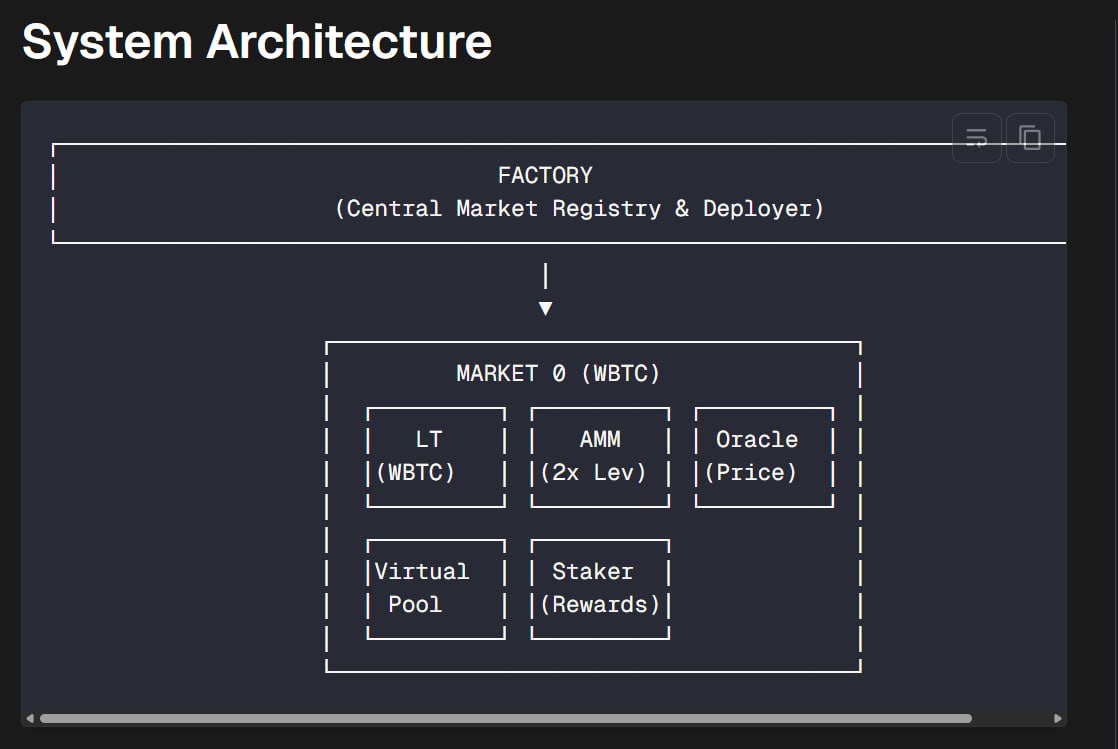 Yield Basis releases technical overview docs.
Each market on YieldBasis provides 2x leverage exposure to Curve LP positions through a sophisticated contract architecture that maintains a compounding leverage at 2
Yield Basis releases technical overview docs.
Each market on YieldBasis provides 2x leverage exposure to Curve LP positions through a sophisticated contract architecture that maintains a compounding leverage at 2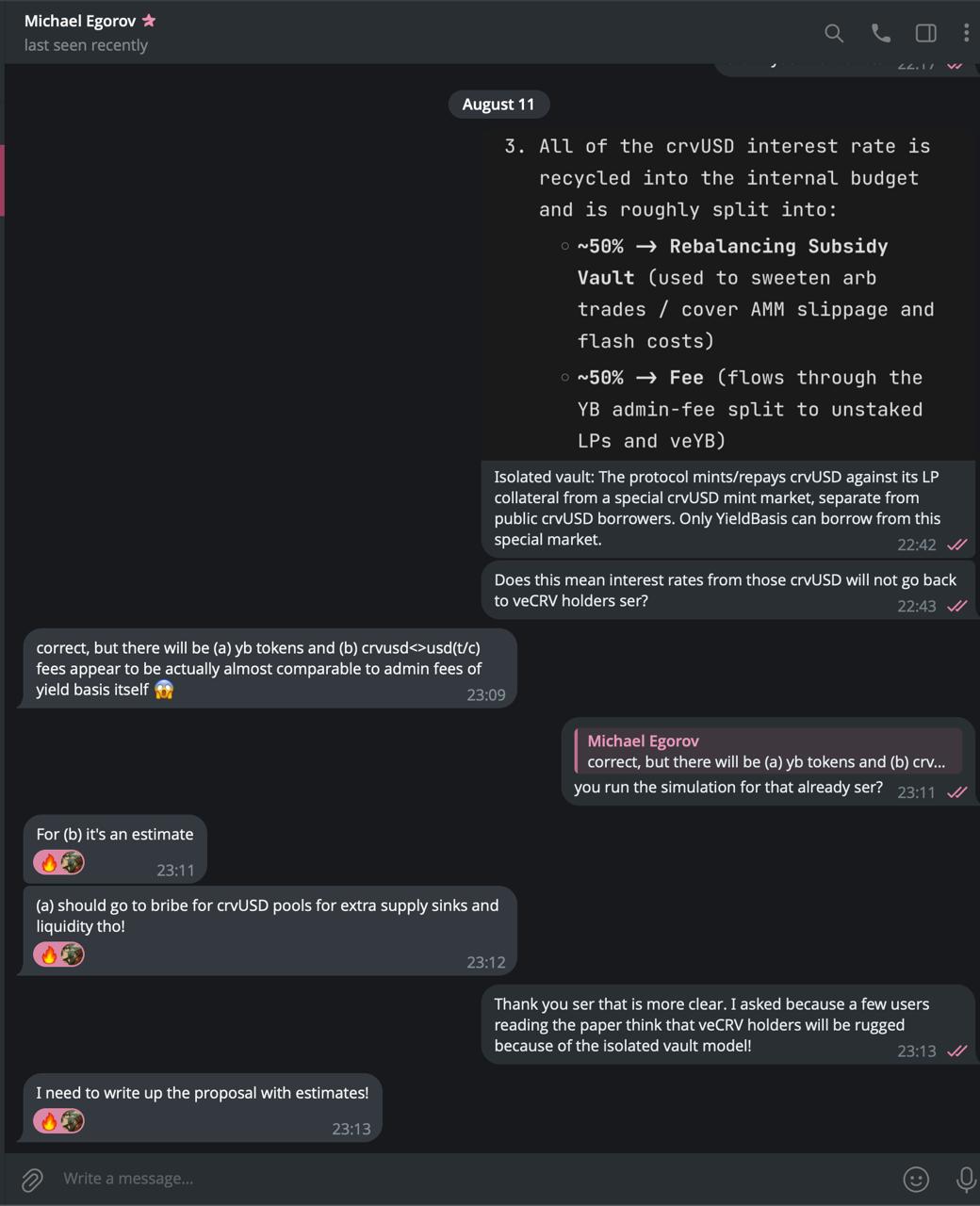 A read through the YieldBasis docs sparks concern over its using crvUSD from an isolated vault: "a special crvUSD mint market separate from public crvUSD borrowers" only available to YieldBasis. Founder Michael Egorov responds and explains the value returned to veCRV holders.
Sources
18 records from 15 domains
quicknode.com
docs.aztec.network
canton.network
bitdefender.com
esma.europa.eu
dusk.network
x.com
readme.com
blog.sei.io
youtube.com
promptless.ai
news.ycombinator.com
help.nicecxone.com
docs.liquity.org
docs.yieldbasis.com
Community notes
Spot something off or out of date? Drop a note. Editors review topic notes daily and roll accepted fixes into the explainer — contributors are recognized in the monthly $SQUID drop.
Loading notes…
Help improve this topic
Have a story or tip about this topic? Submit it. See something missing? Leave a note. Editors review daily; accepted submissions and fixes count toward the monthly $SQUID drop.