
An in‑depth explainer on “defense” in crypto, covering price support, inflation hedges, legal and regulatory battles, cyber and AI security, quantum‑resistant roadmaps and national security ties shaping digital assets’ future.
+17 sources across the wider coverage universe
 Anthropic CEO Dario Amodei sat down with CBS News for an exclusive interview, hours after Defense Secretary Pete Hegseth declared the company a supply chain risk to national security, which restricts military contractors from doing business with the AI giant2026-02
 Anthropic defies Department of War demands to strip AI safeguards on mass surveillance and autonomous weapons amid Defense Production Act threats2026-02
 SEAL Races Ahead of New US Cybercrime Order, Launching Real-Time Crypto Defense Network With Open-Source Frameworks, On-Chain Certifications, 24/7 Incident Hotline, and Safe Harbor Covering Over Half of DeFi TVL.2026-03
 The Pentagon unveiled an AI-first strategy, planning to deploy advanced AI models across classified and unclassified networks as it prepares for future space missions. Defense Secretary Pete Hegseth confirmed xAI’s Grok will join2026-01
 Avi Eisenberg "wasn't borrowing, he was stealing," prosecutor says in opening argument. The defense countered that Eisenberg "risked 13 million of his own dollars" to net $110 million from Mango Markets2024-04
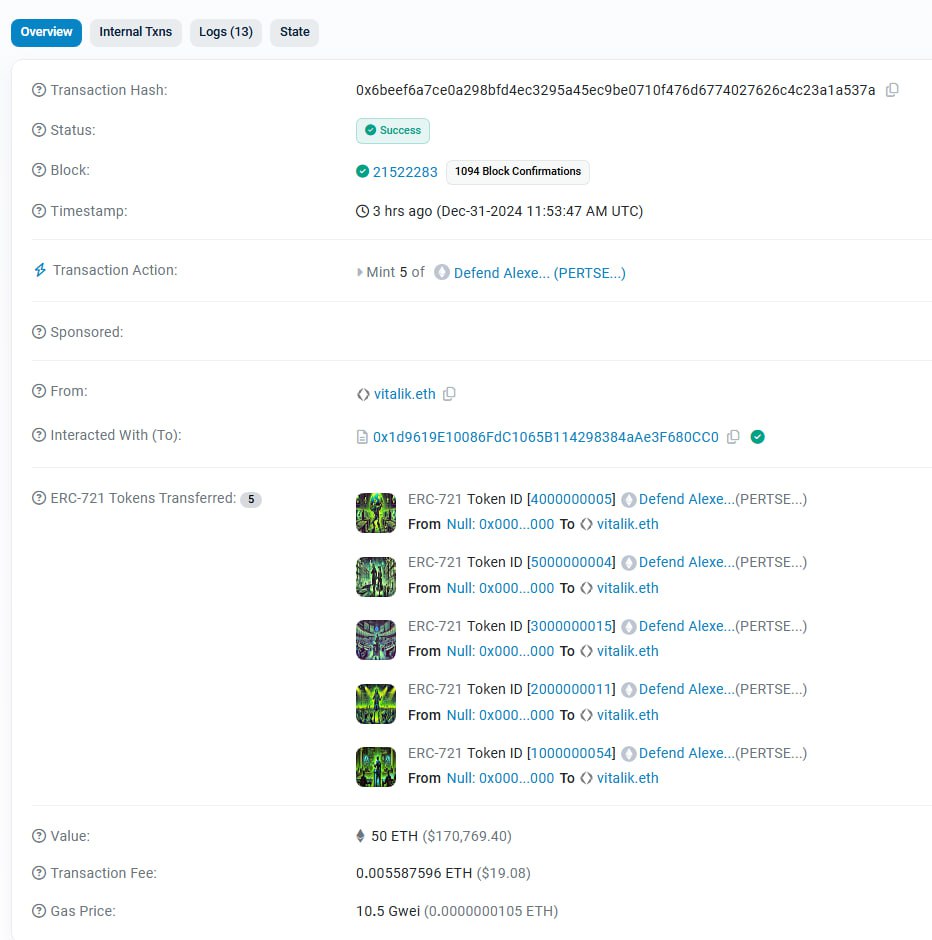 Vitalik donates 50 ETH (approx. $170K) to Alexey Pertsev’s legal fund, Helping raise over 184 ETH for Tornado Cash developer’s defense.2024-12
Defense in Crypto: How Digital Assets Are Protected, Contested and Weaponized
In crypto, the language of defense spans chart patterns, courtroom arguments, protocol security, and even national security strategy. At its core, “defense” in digital assets means the structures and strategies that protect value, infrastructure, rights, and states themselves, from market volatility and hyperinflation to quantum computers, cyberattacks, sanctions and AI-enabled fraud.
Understanding “Defense” In A Crypto Context
Defense is an unusually overloaded term in the crypto ecosystem, because it operates simultaneously at market, technical, legal, social and geopolitical levels. Traders talk about “defending” support levels during sell‑offs, treasurers in fragile economies look to stablecoins as a defense against hyperinflation, protocol teams build security architectures to defend smart contracts from attackers, and governments fold crypto rules into National Defense Authorization Acts as they reframe digital assets as a national security concern. This multiplicity is not accidental; it reflects the way blockchains sit at the intersection of finance, computation and geopolitics. Each layer of defense relies on the others, and weaknesses in one domain quickly propagate into the rest.
One helpful way to parse this ecosystem is to distinguish between defensive strategies that protect private value and those that protect public order. On the private side, investors try to defend portfolios through hedging, diversification and safe‑haven assets, while protocols and custodians build cyber defenses to prevent theft. On the public side, law enforcement, regulators and militaries increasingly view crypto as both a risk and a tool, embedding it into anti‑money‑laundering law, sanctions enforcement and defense supply chains. The resulting tensions create much of the legal and political friction we see around digital assets today.
Legal practitioners have had to adapt rapidly to this environment. Defense attorneys now routinely encounter clients whose alleged conduct hinges on how wallets, mixers, smart contracts or decentralized exchanges function, and their ability to scrutinize blockchain evidence can be the difference between conviction and acquittal. At the same time, protocol developers and entrepreneurs must anticipate the need for legal and regulatory defense years before a case is filed, designing compliance‑aware architectures and documentation that will stand up under scrutiny. In the background, nation‑states debate whether crypto undermines or enhances their own defense posture, experimenting with blockchain for supply‑chain tracking even as they worry about sanctions evasion and capital flight.
To appreciate why “defense” has become such a central organizing metaphor, it helps to examine how the term operates in each of these domains. The following sections move from markets and macroeconomics through law and regulation, cyber and AI security, quantum‑resistant cryptography, and finally the defense of human rights and intellectual property. Across these layers, a common theme emerges: crypto forces traditional actors to rethink what, exactly, they are defending—territory, code, capital, privacy, legitimacy—and what tools are legitimate to use in doing so.

Anthropic CEO Dario Amodei sat down with CBS News for an exclusive interview, hours after Defense Secretary Pete Hegseth declared the company a supply chain risk to national security, which restricts military contractors from doing business with the AI giant

Let them settle it out between each other like adults
Market Defense: Price Floors, Hedges and Safe Havens
Price defense, support and resistance
In trading slang, “defending a level” refers to concentrated buying at or near a key price point to prevent a deeper sell‑off. Technical analysts describe these inflection points as support and resistance zones, where prior order flow, psychology and liquidity cluster to create de facto lines of defense. When a coin’s price repeatedly bounces off a support area, traders say that bulls are “defending” that level, implying coordinated or at least aligned behavior among market participants with an interest in price stability. Conversely, a failure to defend support is often read as capitulation, triggering cascades of leveraged liquidations and stop‑loss orders.
Recent coverage of Ethereum’s “defense” of the \(1{,}650\)–\(1{,}700\) dollar band is a textbook example. As selling pressure intensified coming into June, analysts highlighted \(1{,}695\) dollars as a critical level where buyers had previously stepped in to halt declines. In that framework, the \(1{,}650\)–\(1{,}700\) zone functions as a primary support region, while \(1{,}600\) dollars becomes a kind of last‑ditch floor that has held through multiple tests. The language of “defense” here is not metaphorical; it captures the idea that sophisticated actors—treasuries, funds, large holders—may deliberately add bids at these levels to protect option structures, collateral positions or simply the perceived integrity of the market.
Support and resistance also shape expectations on the upside. For example, Bitcoin traders might identify \(73{,}000\) dollars as a key resistance level; if price breaks above, bulls are said to have “regained control,” whereas repeated failures could presage a sizable drawdown. In this sense, resistance lines are defensive positions for bears, whose short exposure becomes more precarious as price approaches their thresholds. The equilibrium between these opposing defenses generates the choppy, mean‑reverting behavior that dominates many crypto markets between major trend moves, and understanding it is essential for any participant who wants to manage risk rather than simply speculate.
These micro‑level defenses interact with macro narratives and structural flows. When a chain like Ethereum embarks on a multi‑year roadmap, from proof‑of‑stake to rollup‑centric scaling to quantum‑resistant signatures, each milestone reshapes market participants’ willingness to defend particular valuations. If investors believe that an upcoming hard fork will meaningfully reduce long‑term risk, they are more likely to defend downside levels aggressively; if they are uncertain, they may stand aside and let prices clear lower. Thus, price defense is not just an artifact of order books but a real‑time referendum on the credibility of a project’s technical, legal and political defenses elsewhere.
Crypto as a defense against hyperinflation and currency collapse
At the other end of the spectrum from short‑term trading, households and small businesses in fragile economies increasingly use crypto as a defense against currency debasement. Venezuela is perhaps the starkest recent example. As the bolívar has undergone repeated bouts of hyperinflation, residents have turned to dollar‑linked stablecoins traded on global exchanges as a way to preserve purchasing power. A recent report described how so‑called “Binance dollars” effectively replaced the bolívar in everyday transactions, with peer‑to‑peer stablecoin markets providing “financial oxygen” to a population trapped in a failing monetary regime.
Here, defense means survival rather than portfolio optimization. Ordinary people with limited access to foreign bank accounts use mobile apps and OTC brokers to move into dollar‑pegged tokens, relying on the promise that each unit can be redeemed, directly or indirectly, for a roughly equivalent number of U.S. dollars. The blockchain serves as a public ledger that can be audited by anyone, giving some assurance that issuers are not unilaterally inflating supply in the way local central banks have done. To the extent that these tokens are redeemable and liquid, they provide a partial shield against the erosion of wages, pensions and savings.
This form of monetary self‑defense is not without risk. Stablecoin issuers can be frozen out of banking networks, sanctioned, or subject to sudden regulatory changes that impair redemptions or restrict usage in certain jurisdictions. Users who trust a particular centralized platform may find themselves locked out if that platform is pressured by regulators or collapses due to mismanagement. Nevertheless, the persistence of these markets in countries like Venezuela, Argentina and Turkey suggests that the defensive demand for dollar exposure via crypto is robust and not merely speculative. For policymakers, this creates a dilemma: efforts to crack down on illicit flows may inadvertently harm populations using stablecoins as a lifeline, and the distinction between legitimate defense and prohibited evasion becomes contested terrain.
Stablecoins, competition and being “on defense”
Stablecoin issuers themselves spend much time on defense, both commercially and politically. In the United States, Tether and Circle have carved out different strategies for gaining and defending market share, and these strategies shape how each firm navigates regulation. Reporting has described Circle’s “hedge‑and‑expand” approach as putting the company “on defense” in the U.S. market, as it balances lobbying for clear oversight with concerns about user privacy and competitive positioning. Tether, by contrast, has often taken a more adversarial stance toward some regulators while quietly expanding into emerging markets and crypto‑native use cases.
These dynamics illustrate another facet of defense: controlling the narrative and regulatory perimeter in which a business operates. By advocating for specific forms of stablecoin legislation, an issuer can push for frameworks that either entrench its advantages or at least prevent hostile rules that would cripple its model. Critics argue that large issuers may seek to weaponize compliance as a barrier to entry, while defenders counter that rigorous oversight is necessary to protect users and the broader financial system. In any case, the contest is not only about market share but about who gets to define what constitutes a “safe” or “defensive” asset in the eyes of regulators and investors.
Tokenized defense and energy stocks as portfolio tools
A newer frontier of market defense is the tokenization of traditional defensive sectors themselves. Platforms like MEXC have partnered with tokenization specialists such as Ondo Finance to roll out tokenized U.S. defense and energy stocks, allowing crypto users to gain exposure to these equities through on‑chain instruments. In effect, investors can construct portfolios that combine crypto‑native assets with tokenized representations of companies that historically benefit from increased defense spending or commodity volatility.
This convergence blurs lines between “crypto” and “TradFi” defenses. Someone worried about geopolitical tension in the Middle East might hold both Bitcoin, as a censorship‑resistant store of value, and tokenized shares of major defense contractors or energy producers, as a way to hedge specific sectoral risks. The tokenization rails promise faster settlement, 24/7 markets, and composability with DeFi primitives, while the underlying exposure connects directly to the fiscal and strategic decisions embedded in defense authorization bills and energy policy. As defense giants agree to ramp up production of advanced weapons systems, and as defense acts are tweaked to open new economic opportunities, these tokenized exposures may become increasingly relevant for crypto‑native portfolios.
A useful way to summarize these market‑level forms of defense is to juxtapose them, as in the following table.
| Dimension | Primary Objective | Example Mechanism | Illustrative Case |
|---|---|---|---|
| Short‑term price defense | Prevent breakdown of key technical levels | Concentrated bids at support, options hedging | ETH \(1{,}695\) support zone during June sell‑off |
| Inflation and FX defense | Preserve real purchasing power | Dollar stablecoins on exchanges and P2P markets | “Binance dollars” displacing bolívar in Venezuela |
| Issuer/regulatory defense | Protect business model and market share | Lobbying, compliance frameworks, reserve disclosures | Circle’s U.S. “hedge‑and‑expand” strategy |
| Sectoral portfolio defense | Hedge against geopolitical and energy shocks | Tokenized defense and energy equities | MEXC–Ondo tokenized U.S. defense stocks |
Taken together, these examples show that market defense in crypto is multi‑layered. It spans intraday liquidity battles, long‑term hedges against systemic risk, and strategic positioning by corporations anticipating shifting regulatory and geopolitical landscapes. Each of these defenses, however, depends on credible legal and technical infrastructures, to which we now turn.
Readers engage 'defense' not as a technical risk category but as courtroom spectacle and counter-mobilization: the highest-clicked stories are overwhelmingly about developers jailed for writing code and the industry's crowd-funded legal resistance, revealing that crypto's most-watched existential threat is prosecutorial overreach, not exploit mechanics.
Legal and Regulatory Defense: From Courtrooms to Congress
Crypto in criminal defense practice
As cryptocurrencies have seeped into everything from ransomware and romance scams to unregistered securities sales, criminal defense practice has had to evolve. Lawyers representing clients in cases involving digital assets must be able to interpret blockchain forensics, assess the reliability of tracing tools, and challenge government experts on issues like wallet ownership and transaction intent. The National Association of Criminal Defense Lawyers has noted that understanding cryptocurrency fundamentals is now indispensable for many practitioners, as prosecutors increasingly treat on‑chain evidence as central to their theories of liability.
In this context, defense means both protecting individual constitutional rights and preserving the integrity of technical interpretations presented in court. An accused person may face charges related to money laundering, unlicensed money transmission, or sanctions violations, all hinging on how their interactions with exchanges, mixers or smart contracts are characterized. A robust defense requires scrutinizing whether the government has correctly identified wallets as belonging to the defendant, whether the use of privacy tools is inherently suspicious, and whether statutory definitions drafted in a pre‑crypto era can fairly be applied to decentralized protocols.
At the same time, the rise of industrial‑scale online scams and digital extortion has complicated the landscape. Congressional testimony and law‑enforcement briefings describe sophisticated fraud networks spanning multiple continents, using crypto to move proceeds and target millions of victims simultaneously. These operations blend social engineering, platform abuse and cross‑border money flows, creating cases where culpability can be highly distributed. Defense attorneys must distinguish between orchestrators, low‑level money mules, and victims forced under duress, and then map those distinctions onto statutes designed for more centralized criminal enterprises. The result is a complex interplay between technological literacy and traditional principles of criminal law.
Tornado Cash, Roman Storm and the boundaries of liability
Few cases capture the tension between code, law and defense better than the crackdown on Tornado Cash. In 2022 the U.S. Treasury’s Office of Foreign Assets Control (OFAC) sanctioned the Tornado Cash protocol, alleging that the mixer had been used to launder more than 7 billion dollars in virtual currency since 2019, including funds linked to North Korean hacking groups. OFAC’s action meant that all property and interests in property of Tornado Cash in the United States, or in the possession or control of U.S. persons, was blocked, and U.S. persons were generally prohibited from engaging in transactions involving the protocol absent a license. This represented a significant expansion of sanctions practice, targeting not only individuals but a decentralized set of smart contracts.
The subsequent criminal case against developer Roman Storm further pushed the boundaries of liability. Despite a separate federal appeals court narrowing key sanctions authorities, the Department of Justice pursued Storm on conspiracy charges, including allegations that he operated an unlicensed money transmitting business. At trial, jurors could not reach unanimity on two of the three counts, resulting in a partial mistrial, but they convicted him on one count related to the unlicensed transmission theory. The verdict sent shockwaves through the developer community, raising questions about when writing and deploying open‑source code crosses the line into operating a regulated financial service.
From a defense perspective, the Tornado Cash saga encapsulates several key themes. First, it highlights the importance of early compliance planning and governance in protocol design; had the project incorporated more robust controls or interfaces for sanctions compliance, the legal narrative might have been different. Second, it underscores the need for developers to obtain expert legal advice before launching systems that touch user funds, particularly when those systems are marketed as privacy tools in a post‑9/11, AML‑saturated environment. Third, it shows how the meaning of “money transmitter” and related terms is being re‑litigated in real time, with defense arguments focusing on the autonomy of smart contracts, the absence of customer relationships, and the gap between code and business operations.
AML law and the National Defense Authorization Act
Regulation has also shifted at the legislative level, with defense‑oriented bills becoming vehicles for crypto policy. The 2021 National Defense Authorization Act (NDAA) contained some of the most significant anti‑money‑laundering updates in decades, including the Anti‑Money Laundering Act of 2020 and new beneficial ownership reporting requirements. Importantly, the NDAA redefined “currency” to include digital assets for certain AML purposes, signaling a major shift in how lawmakers view crypto within the financial‑crime framework. This integration of crypto into core national security legislation reflected a perception that illicit uses of digital assets, from ransomware to sanctions evasion, could threaten U.S. interests.
That trend has continued. The House’s version of the NDAA for Fiscal Year 2027, H.R. 8800, includes language on “crypto corruption and conflicts of interest,” mirroring provisions in prior bills. This suggests that Congress sees digital assets not only as tools for criminals abroad but as potential vectors of influence and corruption at home, warranting oversight in the context of defense appropriations. Parallel legislation, such as Senate bill 4784, authorizes appropriations for the Department of Defense, military construction and defense‑related activities of the Department of Energy for FY 2027, again underscoring the connection between fiscal planning for hard power and the regulatory apparatus around emerging technologies.
For industry, this legislative entanglement means that crypto policy is increasingly shaped by defense committees, national security staff and intelligence assessments rather than purely financial‑services regulators. AML and sanctions rules are framed as lines of defense against adversaries such as Iran, North Korea or transnational cybercriminals, and proposals to expand surveillance or restrict privacy tools are justified in the language of war and self‑defense. This can make it harder for civil‑liberties advocates and technologists to argue for more permissive regimes, since objections are sometimes cast as undermining national defense rather than as balancing legitimate interests.
Sanctions, self‑defense strikes and crypto flows
Geopolitical crises sharpen these debates. U.S. self‑defense strikes in Iran, Israeli preemptive strikes against Iranian targets, and wider regional conflicts have all intensified focus on how adversarial states and non‑state actors finance operations and circumvent sanctions. When Israel’s defense minister announces a nationwide state of emergency in anticipation of potential Iranian retaliation, analysts immediately ask what role crypto might play in fundraising, capital movement, or sanctions evasion in the days and weeks that follow. Similar questions arose when Russia invaded Ukraine and both sides experimented with on‑chain crowdfunding and sanctions compliance tools.
Sanctioning Tornado Cash was in part a response to intelligence indicating that North Korean hackers were using the mixer to launder stolen crypto and acquire hard currency or goods in violation of U.N. and U.S. sanctions. From the perspective of national defense, shutting down such channels is analogous to interdicting physical smuggling routes. Yet the decentralized, permissionless nature of many crypto systems means that enforcement often ends up targeting interfaces—developers, front‑ends, centralized exchanges—rather than the underlying protocols, which can sometimes persist in a more limited, gray‑market form. The resulting cat‑and‑mouse game drives both innovation and legal uncertainty.
In the United States, presidents of both parties have invoked the rhetoric and legal tools of defense to reshape energy and industrial policy, which in turn affects crypto. Invoking the Defense Production Act to revive offshore oil rigs or accelerate domestic manufacturing of critical components can influence energy prices, grid stability and the economics of Proof‑of‑Work mining. At the same time, defense‑related sanctions and export‑control regimes shape where mining hardware can be sourced and which jurisdictions are attractive for large‑scale operations. In effect, crypto is now entangled in the broader geostrategic contest over industrial capacity, energy security and digital sovereignty.
Against this backdrop, legal and regulatory defense for crypto actors is not only about avoiding prosecution or fines. It is about navigating a world where their products are perceived as strategically relevant by militaries, intelligence agencies and foreign ministries. That raises the stakes for compliance, lobbying and public engagement, since missteps can invite not just financial‑services enforcement, but the full apparatus of national security law.

Anthropic defies Department of War demands to strip AI safeguards on mass surveillance and autonomous weapons amid Defense Production Act threats
Cyber, Protocol and AI Defense in Crypto Infrastructure
Defense‑in‑depth for keys, contracts and infrastructure
Beneath the legal and market layers lies the technical reality that crypto systems are only as secure as their keys and code. Defense‑in‑depth is the principle of deploying multiple, overlapping security controls such that the failure of any single mechanism does not compromise the system. For exchanges, custodians and large DeFi protocols, this typically involves combinations of hardware security modules, multi‑signature schemes, multi‑party computation (MPC) wallets, rigorous code audits, and ongoing monitoring for anomalous activity.
New services like Seal MPC exemplify how this approach is being productized. Seal describes itself as a decentralized secrets‑management platform, offering MPC‑based key management with programmable access controls and integration with storage layers such as Walrus on networks like Sui. By splitting cryptographic key material across multiple parties and requiring coordinated participation to authorize transactions, MPC wallets reduce the risk that a single compromised server, rogue employee or stolen hardware device can lead to catastrophic loss. In this sense, MPC becomes a line of defense not just against external hackers but against insider threats and operational errors.
Defense‑in‑depth also extends to smart contracts and their surrounding infrastructure. Protocol teams increasingly adopt formal verification, bug bounties, continuous integration pipelines, and staged rollouts to reduce the attack surface of core contracts. They invest in redundant RPC endpoints, geo‑distributed infrastructure, and fallback mechanisms to withstand DDoS attacks or cloud‑provider issues. When an exploit does occur, the difference between a contained incident and a systemic crisis often turns on whether such defenses were properly engineered and tested in advance. In that respect, the crypto industry is slowly converging on security practices long familiar in aerospace, defense and critical infrastructure sectors, even as it grapples with unique challenges around composability and on‑chain irreversibility.
DeFi, real‑time reconnaissance and incident response
Decentralized finance has been particularly susceptible to sophisticated exploitation, prompting the emergence of specialized “defense platforms” dedicated to real‑time threat detection and mitigation. One example is Reaper AI, described as a 24/7 enterprise reconnaissance defense platform built for protocols, funds and security leaders to front‑run threats before they become breaches. The idea is to combine AI‑powered monitoring of on‑chain data, mempool activity, governance forums and developer repositories with human incident‑response teams, creating an always‑on early warning system.
Complementary efforts like the SEAL crypto defense network aim to build broader ecosystem resilience by maintaining open‑source frameworks, on‑chain security certifications, real‑time hotlines and safe‑harbor agreements that cover a significant portion of DeFi total value locked. Although details vary, the unifying principle is that security cannot be an afterthought or a purely internal concern. Protocols must cooperate, share indicators of compromise, and coordinate responses to cross‑protocol threats such as oracle manipulation, flash‑loan attacks or bridge exploits. In a permissionless environment, collective defense is often the only realistic way to keep pace with attackers who can rapidly pivot across protocols and chains.
These developments echo long‑standing practices in traditional cybersecurity, where information‑sharing and sector‑specific ISACs (Information Sharing and Analysis Centers) have helped critical industries defend against common threats. What is different in DeFi is the transparency and speed of the underlying systems: on‑chain transactions settle in seconds, exploits can drain hundreds of millions in minutes, and post‑mortems unfold on public forums rather than behind closed doors. Defense platforms must therefore combine technical acumen with crisis communications, legal coordination and, in some cases, negotiation with attackers who position themselves as “whitehat” or “grayhat” actors in search of bounties.
AI, national security and crypto rails
Artificial intelligence itself has become both a tool and a target in the defense of crypto systems. On the one hand, AI models can assist in pattern recognition, anomaly detection and automated triage of security alerts, allowing defenders to sift through vast streams of on‑chain and off‑chain data. On the other hand, large models raise their own security and governance questions, particularly when they are integrated into sensitive domains like national defense or financial infrastructure.
The U.S. Department of Defense has taken an increasingly proactive stance, adopting an AI‑first strategy that envisions deploying advanced models across classified and unclassified networks to support everything from logistics to space operations. At the same time, officials have signaled concern about the security posture of commercial AI providers. Defense Secretary Pete Hegseth, for example, has designated Anthropic, an AI startup, as a national security and supply‑chain risk, denying the company’s request to reconsider that classification and thereby restricting defense contractors from doing business with it. According to reporting, this designation reflects worries about data security, model control and potential misuse in surveillance or autonomous weapons systems.
These debates matter for crypto in several ways. First, AI models used in trading, risk management, or protocol governance can themselves become high‑value targets, and their compromise could have systemic effects on markets. Second, AI‑driven surveillance and anomaly detection tools deployed by regulators or intelligence agencies may rely on blockchain analytics to identify illicit flows, raising questions about privacy, due process and the appropriate limits of state defense. Third, AI companies and defense agencies may look to blockchain for tamper‑evident logging of model training data, parameter changes or decision outputs, especially in sensitive applications where auditability is critical. In all these contexts, crypto rails become part of a broader socio‑technical defense architecture that spans code, policy and ethics.
Blockchain in defense supply chains and operations
Beyond finance, defense establishments are experimenting with blockchain to enhance the security and transparency of their own assets and supply chains. A PwC analysis on blockchain in defense suggests that distributed ledgers can help track high‑value equipment, certify maintenance records, and provide immutable logs of component provenance, thereby reducing fraud, counterfeiting and logistical errors. In complex systems such as fighter jets, naval vessels or integrated missile systems, knowing exactly which components are installed, when they were serviced, and whether they came from trusted suppliers is critical to operational readiness and safety. Blockchain can serve as a shared source of truth across contractors, subcontractors and government agencies.
As U.S. defense giants commit to ramping up production of advanced weaponry, particularly in response to geopolitical tensions and promises to allies, the pressure on supply chains will intensify. On‑chain representations of parts, certifications and contractual milestones could help manage this scaling, providing real‑time visibility into bottlenecks and compliance across a sprawling, globalized industrial base. Combined with IoT sensors and formal verification, such systems could form the backbone of a more resilient defense logistics infrastructure, where deviations from expected patterns are quickly flagged and investigated.
This convergence of blockchain and defense operations underscores a broader theme: the same technologies that underpin crypto markets are being co‑opted by nation‑states to defend their own capabilities. That creates both opportunities and risks for the industry. On the opportunity side, defense use cases can drive investment, standardization and political support for core blockchain infrastructure. On the risk side, the close association with military and intelligence communities may exacerbate public concerns about surveillance, dual‑use capabilities and the militarization of civilian technology. Navigating this balance will require careful governance and open dialogue among stakeholders.
- 01Crypto developer criminal liability↗
The Avi Eisenberg 'wasn't borrowing, he was stealing' framing and Roman Storm's prosecutorial-overreach motions pulled readers into the defining legal question of whether writing or deploying crypto code is itself a crime.
- 02Tornado Cash defense fund mobilization↗
Vitalik's 50 ETH donation, Paradigm's $1.25M pledge, and JuiceboxDAO's proposal turned the Pertsev and Storm cases into a live industry fundraising event readers tracked as a bellwether for developer freedom.
- 03Military and national security meets crypto↗
DARPA's pre-crime AML program, Pentagon's AI-first strategy, and Hegseth designating Anthropic a supply chain risk placed crypto and AI at the center of state threat framing readers found alarming and novel.
- 04Protocol-level DoS and inflation defenses
OpenZeppelin's ERC-4626 inflation attack countermeasure, Vitalik's EIP-7983 gas cap proposal, and SEAL's real-time defense network showed readers that on-chain security is maturing into formal protocol infrastructure.
- 05Governance emergency defensive actions
The Sky/MakerDAO emergency proposal pushed through while key users were banned captured reader interest in how protocols defend themselves when governance itself becomes the attack vector.
- 06NATO and EU geopolitical defense surge
NATO's 5%-of-GDP pledge and the EU redirecting €335B COVID funds to defense gave crypto readers macro-geopolitical context for correlated risk-off selloffs they were already experiencing.
Quantum Defense: Preparing For The Next Cryptographic War
The quantum threat to current blockchains
Most major blockchains today, including Bitcoin and Ethereum, rely on elliptic curve cryptography for their public‑key signatures. Specifically, Ethereum and many others use the Elliptic Curve Digital Signature Algorithm (ECDSA), which is secure against classical computers but vulnerable in principle to sufficiently powerful quantum computers running Shor’s algorithm. A breakthrough paper by Google Quantum AI in 2025 estimated that around 1,200 logical qubits, under realistic error‑correction assumptions, could be enough to break ECDSA, significantly reducing prior estimates of the resources required. Although no such machine exists today, this research shortened the perceived timeline to a potential “Q‑Day”—the moment when quantum attacks become practically feasible.
The implications for crypto are profound. Public keys are often revealed when a user spends from an address, and in some older protocols they may be exposed even before spending. Once an attacker with a capable quantum computer can derive private keys from public keys within operational timeframes, any funds in exposed addresses become vulnerable. For systems like Bitcoin, where many coins sit in addresses whose public keys have been revealed, the risk is that an attacker could preemptively move those coins, undermining property rights and trust in the chain. Even before actual attacks occur, the mere prospect could destabilize markets, as speculators adjust valuations based on perceived quantum readiness.
Ethereum’s 2029 quantum‑resistance roadmap
Ethereum’s leadership has moved relatively quickly to confront this threat. In the wake of the Google paper, the Ethereum Foundation reportedly set an internal target of 2029 to deploy a quantum‑resistant protocol upgrade, transitioning away from ECDSA to a post‑quantum signature scheme, likely based on lattice‑based cryptography. External coverage has echoed this timeline, suggesting that Ethereum is aiming to complete migration to quantum‑secure signatures by around 2029, well before many forecasts for practical large‑scale quantum computers. The goal is to protect not only the value of ETH itself but also the hundreds of billions of dollars in stablecoins, DeFi positions and NFTs that reside on the network.
Implementing such an upgrade is non‑trivial. Post‑quantum signature schemes tend to have larger key and signature sizes, which can increase transaction costs and storage requirements on chain. They may also rely on newer hardness assumptions, such as the difficulty of certain lattice problems, whose long‑term security is less battle‑tested than elliptic curves. Ethereum’s roadmap envisions rolling out new address types and transaction formats that support quantum‑resistant signatures, while providing a migration path for users to move funds from legacy ECDSA addresses. In many cases, users will likely have to initiate transactions to new wallets using the new scheme, or rely on contract‑based mechanisms that wrap old keys with quantum‑safe logic.
A particularly thorny issue concerns coins left in old wallets whose owners have lost keys or are otherwise inactive. As “Q‑Day” estimates move closer, debates have intensified over what to do about these stranded funds, which could be vulnerable to theft once quantum attacks become feasible. Some proposals suggest time‑locked social recovery or protocol‑level sweeps into secure vaults, while others warn that any perceived seizure or reallocation of such coins could undermine property rights and confidence. Ethereum’s internal discussions thus span not only cryptography and engineering but also ethics, law and governance.
Competing approaches: Bitcoin, Cardano and others
Other major chains face similar choices but with different governance structures and political economies. Bitcoin’s community is famously conservative about protocol changes, especially those touching consensus or fundamental cryptographic primitives. Some researchers have explored “quantum hard‑fork” strategies in which Bitcoin would transition to new signature schemes once quantum threats cross certain thresholds, but implementing such a change would require broad consensus among miners, node operators and economic actors. Disagreements over timelines, schemes and trade‑offs could mirror past scaling debates, with factions arguing over whether the risk is urgent enough to justify disruptive upgrades.
In contrast, smart‑contract platforms like Cardano, whose founder Charles Hoskinson has publicly discussed Bitcoin’s quantum vulnerabilities, argue that their more flexible governance models and research‑driven roadmaps position them better to enact timely quantum defenses. The notion that a “Bitcoin quantum hard fork” could create openings for competitors reflects a broader dynamic: chains that move first on quantum readiness may seek to market themselves as safer long‑term stores of value, even if the actual timeline for Q‑Day remains uncertain. The competition thus becomes partly narrative—who can convincingly claim superior defense—rather than purely technical.
Smaller or newer chains face different constraints. They may be able to adopt post‑quantum schemes from inception, avoiding migration headaches but paying higher costs in performance and user friction. However, they may struggle to attract sufficient security review and adoption to validate those schemes at scale. Interoperability protocols must also grapple with a heterogenous world where some chains are quantum‑ready and others are not, raising questions about how to route assets across bridges without degrading overall security. In this environment, standards bodies and open‑source consortia could play an important role in coordinating choices of algorithms, parameter sets and implementation best practices.
Governance, law and markets in a post‑quantum upgrade
Quantum defense is not just a technical problem; it is also a governance and legal challenge. Migrating to new cryptographic primitives will require coordinated action by wallet providers, exchanges, custodians and protocol developers, and users who fail to move may see their assets placed at risk. Regulators may feel compelled to issue guidance or even mandates around key rotations and quantum‑safe custody, particularly for institutional investors or systemically important intermediaries. Courts may have to adjudicate disputes arising from preemptive moves by third parties who claim to be rescuing vulnerable funds, or from protocol‑level decisions that alter the status of dormant accounts.
From a defense‑law perspective, attorneys like those described in NACDL’s work will need to understand not only the basics of crypto but also the implications of quantum‑driven transitions. Clients could be accused of exploiting quantum capabilities to steal funds, or conversely of negligent failure to secure assets in a timely manner. Questions may arise over whether certain actions constitute unauthorized access in a world where cryptographic barriers are known to be weak, and whether longstanding doctrines about “reasonable security” need to be recalibrated. Governments may argue that quantum‑resistant upgrades are necessary for national defense, including the protection of critical infrastructure systems that rely on blockchains for logging or control.
Markets will react in their own way. Assets perceived as lagging on quantum readiness may trade at discounts or experience greater volatility, while those seen as proactive could enjoy “defense premiums.” Derivatives might emerge to hedge specific quantum‑related risks, such as options on the success of certain upgrade proposals or on timelines for practical quantum machines. Ultimately, however, the most effective defense will likely be industry‑wide adoption of robust, standardized post‑quantum cryptography, supported by open research and transparent governance.
To crystallize these differences, consider the following simplified comparison.
| Chain / Ecosystem | Current Signature Scheme | Public Quantum‑Defense Signal | Migration Challenges |
|---|---|---|---|
| Bitcoin | ECDSA | Research and debate about “quantum hard fork”; no firm roadmap | Conservative governance, coordination across global stakeholders |
| Ethereum | ECDSA | Internal target around 2029 for quantum‑resistant upgrade, likely lattice‑based | Technical migration of vast asset base; handling of dormant wallets |
| New PQ‑native L1s | Post‑quantum schemes | Designed quantum‑resistant from inception | Larger keys/signatures; less battle‑tested cryptography |
Although details will evolve, the overarching narrative is clear: quantum defense is becoming a core dimension of due diligence for serious crypto participants, and Ethereum’s explicit timeline has forced the rest of the industry to take the issue more seriously.
SEAL Races Ahead of New US Cybercrime Order, Launching Real-Time Crypto Defense Network With Open-Source Frameworks, On-Chain Certifications, 24/7 Incident Hotline, and Safe Harbor Covering Over Half of DeFi TVL.
This is a really good response. Nice one
Defense of Rights, Reputation and IP in the Crypto Era
Athletes, creators and NIL protection through contracts and blockchain
Defense is not only about money and code; it also encompasses the protection of name, image and likeness (NIL) rights in an age of AI and pervasive digital media. A recent “AI playbook” for sports stars emphasizes that many existing endorsement contracts contain broad grants of rights authorizing use of an athlete’s NIL “across all media and by all technologies now known or hereafter developed.” Courts have not yet definitively resolved whether such language automatically extends to uses in AI training, cloning and the creation of digital replicas, leaving athletes vulnerable to unauthorized exploitation.
The recommended defensive strategies are multi‑pronged. Athletes are advised to audit existing agreements for unintended AI grants, negotiate explicit exclusions or conditions on AI use in new deals, and structure compensation to reflect the commercial value of AI‑generated derivative content. Contracts may require written approvals for any AI‑related use, define time‑limited and geographically constrained licenses, and mandate destruction of AI training data or replicas upon expiration. Robust indemnification and takedown obligations are key, ensuring that commercial partners bear responsibility for unauthorized or harmful AI outputs linked to the athlete’s identity.
Blockchain enters this picture as a potential infrastructure for registering and enforcing NIL rights. Tokenized representations of a person’s IP, combined with on‑chain licenses and royalties, could create more transparent markets for digital likenesses, where AI platforms must obtain and prove license rights before using certain datasets. Smart contracts could automate royalty distributions for AI‑generated content that incorporates protected NIL elements, while public ledgers could support rapid verification and takedown processes. The same technologies that power NFTs and creator economies can thus serve as a defense mechanism against the uncontrolled spread of AI‑driven impersonation.
Privacy, civil liberties and the mixer dilemma
Another axis of defense concerns privacy and civil liberties. For many users, tools like mixers, privacy coins and zero‑knowledge systems are essential defenses against pervasive surveillance by corporations, criminals and governments. They are seen as digital analogues of cash, enabling lawful but sensitive activities such as political donations, health‑related purchases or transactions in oppressive regimes. Yet, as the Tornado Cash case demonstrates, these tools can also be used to obfuscate illicit flows, prompting sanctions and criminal charges.
OFAC’s broad designation of Tornado Cash, which effectively prohibited U.S. persons from interacting with its smart contracts absent a license, raised concerns about collective punishment and the targeting of neutral infrastructure. Civil‑liberties advocates argued that sanctioning a protocol rather than specific individuals stretches the statutory framework and risks chilling innovation in privacy‑enhancing technologies. Regulators countered that when a tool becomes a favored channel for sanctioned actors, failing to act would undermine national defense and the integrity of sanctions regimes. The legal and political tug‑of‑war over mixers will likely continue, especially as zero‑knowledge proofs and other advanced cryptographic techniques make it possible to separate transactional privacy from regulatory compliance.
Debates about transparency in national security echo these tensions. When political leaders promise to release classified documents about topics as sensitive as unidentified aerial phenomena, they tap into public demand for accountability, but they also highlight the constraints of secrecy and the risks of premature disclosure. Some theorists have proposed using blockchains for verifiable logging of access to classified materials, or for timestamping and sealing certain disclosures, thereby providing a cryptographic defense against tampering or selective leaks. While such proposals remain speculative, they underscore how questions of defense, secrecy and transparency are converging in the digital era.
Defending users against scams, fraud and extortion
The human toll of crypto‑enabled scams and extortion has become increasingly visible. Law‑enforcement officials describe what is happening to Americans as an “industrial scale criminal campaign” orchestrated by transnational criminal organizations that operate sophisticated fraud networks across multiple continents. These networks use social media, messaging apps and fake investment platforms to lure victims into sending funds, often in crypto, to addresses controlled by the group, while others are coerced into participating in money‑laundering chains. The scale is such that millions of victims may be targeted simultaneously, overwhelming traditional investigative and victim‑support mechanisms.
In response, the U.S. government has ordered agencies like the Department of Homeland Security to conduct comprehensive reviews of existing operational and regulatory tools and to develop coordinated action plans to identify, disrupt and dismantle these networks. This includes enhancing cross‑border cooperation, improving data sharing with private‑sector platforms, and exploring new approaches to asset recovery and victim compensation. From a defense standpoint, the challenge is not only to harden technical systems against compromise but also to build social and educational defenses that help individuals recognize and resist sophisticated scams.
Crypto firms have a role here as well. Exchanges, wallet providers and DeFi protocols can implement better on‑boarding warnings, transactional risk scoring, and rapid‑freeze mechanisms for suspected fraudulent flows, while balancing these measures against user autonomy and decentralization values. Analytics companies develop tools to flag likely scam addresses and track stolen funds across chains, assisting law enforcement in building cases. Defense lawyers, meanwhile, may represent both alleged scammers and unwitting intermediaries, arguing about intent, knowledge and due care in a rapidly evolving legal landscape. In this sense, the defense of users is a shared responsibility spanning code, policy, education and advocacy.
Narratives, reputational defense and public opinion
Finally, defense extends to the reputational battlefield where narratives about crypto’s legitimacy are contested. When prominent political figures such as former U.K. Prime Minister Boris Johnson label Bitcoin a Ponzi scheme, they frame the entire asset class as inherently fraudulent, inviting stricter regulation or outright bans. Advocates like Michael Saylor respond by emphasizing Bitcoin’s decentralized growth, fixed supply and censorship‑resistant properties as defenses against monetary debasement and political interference. Similar rhetorical battles play out whenever a high‑profile hack, scam or enforcement action hits the headlines.
These narratives influence policy and market behavior. Legislators may feel pressure to “defend” constituents from perceived crypto risks, proposing aggressive restrictions or punitive tax regimes. Industry groups and civil‑society organizations respond with their own defensive campaigns, highlighting success stories such as remittance savings, financial inclusion, or blockchain‑based transparency in charitable donations. The outcome of this discourse shapes not only regulation but also talent flows, capital allocation and the willingness of mainstream institutions to engage with the technology.
Reputational defense is particularly delicate for projects associated with controversial figures or regimes, or those operating at the frontier of legality and decentralization. Decisions by courts in cases like Roman Storm’s, policy moves by administrations from Trump onward, and strategic positioning by allies and adversaries all feed into a global perception map of which projects are safe, which are risky, and which are outright taboo. Managing that perception is a core strategic task for crypto organizations that aspire to longevity in an increasingly securitized environment.
OFAC sanctions Tornado Cash smart contracts
- 2023-10regulatory
Sam Bankman-Fried criminal trial begins in New York
- 2024-04regulatory
Avi Eisenberg trial opens; prosecution calls Mango Markets exploit theft
Alexey Pertsev convicted in Netherlands, sentenced to 5 years and 4 months
Roman Storm trial; mixed verdict reached on Tornado Cash charges
Hegseth designates Anthropic a national security supply chain risk
- 2026-06milestone
SEAL launches real-time on-chain defense network covering 50%+ of DeFi TVL
Integrating Defense: How Crypto, States and Markets Coevolve
When viewed holistically, defense in crypto is an ecosystem property rather than a set of isolated tactics. Market defenses such as support levels and hedging strategies depend on the perceived robustness of legal protections, regulatory frameworks and technical security. Legal defenses in courtrooms and legislatures, in turn, are shaped by public narratives and geopolitical pressures, including how crypto is used in conflict zones, sanctions regimes and defense‑industrial policy. Technical defenses, from MPC wallets to quantum‑resistant signatures, set the baseline for what is possible and what is at stake in these arenas.
This coevolution is evident in how national defense establishments are incorporating blockchain and AI into their own operations while simultaneously seeking to regulate and sometimes punish their civilian counterparts in crypto. As the Pentagon embraces AI‑first strategies and explores distributed ledgers for logistics, it implicitly validates some of the core premises of crypto technology, even as agencies like OFAC and the DOJ clamp down on privacy tools and offshore platforms. Defense acts that once focused purely on weapons systems and troop levels now include provisions on digital assets, AML and crypto corruption, embedding crypto policy into the DNA of national security law.
For market participants, this means that defense strategy must be multi‑layered. A trader focused on defending an ETH support level cannot ignore the implications of Ethereum’s quantum roadmap, regulatory moves in the NDAA, or the risk that a key DeFi protocol might be disrupted by sanctions or cyberattacks. A protocol developer cannot treat security audits as the only line of defense but must also plan for regulatory scrutiny, geopolitical shocks and emerging AI‑enabled threats. A user in a hyperinflationary economy must weigh the defense offered by dollar stablecoins against the vulnerability to platform risk, sanctions and local crackdowns.
At the same time, crypto reshapes how states think about their own defense. Tokenized defense stocks, blockchain‑secured supply chains, and AI‑assisted cyber defenses all blur the boundary between civilian and military technologies. As defense giants explore tokenization and governments consider using blockchains for transparency and accountability, crypto’s future will be increasingly intertwined with the broader trajectory of national security, industrial policy and global governance.
Conclusion: Outlook for Crypto Defense
Looking ahead, defense will remain a central organizing principle for crypto’s maturation. On the market front, as institutional adoption deepens and macro conditions fluctuate, we can expect more sophisticated price‑defense strategies, packaged products that blend crypto with tokenized defense and energy exposures, and faster feedback loops between geopolitical events and on‑chain flows. Stablecoins will continue to serve as a monetary defense for populations facing inflation and capital controls, even as issuers navigate more complex regulatory defenses in jurisdictions like the United States.
Legally and politically, the integration of crypto into defense authorization bills and sanctions regimes suggests that national security framing will increasingly drive policy outcomes. Developers, exchanges and other intermediaries will need to anticipate this trend, investing in compliance architectures and advocacy that can withstand scrutiny not only from financial regulators but from defense and intelligence agencies. Cases like Tornado Cash and Roman Storm’s trial will shape the contours of developer liability and the acceptable limits of privacy tools, influencing innovation trajectories for years to come.
Technically, the race to deploy quantum‑resistant cryptography and robust AI‑enabled cyber defenses will intensify. Ethereum’s 2029 quantum‑defense target, Bitcoin’s ongoing debates, and the emergence of post‑quantum‑native chains collectively signal that cryptographic agility is now part of any credible defense posture. Meanwhile, MPC, formal verification, real‑time defense platforms like Reaper AI, and blockchain‑secured supply chains will become baseline expectations rather than optional enhancements.
Societally, the defense of rights, privacy and reputation will loom large as AI, deepfakes and industrial‑scale fraud proliferate. Athletes, creators and everyday users will look to a combination of contractual safeguards, blockchain‑based IP registries and educational initiatives to protect their identities and assets. Governments will grapple with balancing the defense of citizens against scams and adversaries with the defense of civil liberties and innovation against overbroad surveillance and control.
In sum, defense in crypto is not a single problem to be solved but an ongoing process of adaptation across markets, law, technology and geopolitics. The projects and institutions that thrive will be those that recognize this interconnectedness, building multi‑layered defenses that are technically sound, legally resilient, ethically grounded and responsive to a rapidly changing world.
Latest Defense news
Anthropic CEO Dario Amodei sat down with CBS News for an exclusive interview, hours after Defense Secretary Pete Hegseth declared the company a supply chain risk to national security, which restricts military contractors from doing business with the AI giantAnthropic defies Department of War demands to strip AI safeguards on mass surveillance and autonomous weapons amid Defense Production Act threatsSEAL Races Ahead of New US Cybercrime Order, Launching Real-Time Crypto Defense Network With Open-Source Frameworks, On-Chain Certifications, 24/7 Incident Hotline, and Safe Harbor Covering Over Half of DeFi TVL.The Pentagon unveiled an AI-first strategy, planning to deploy advanced AI models across classified and unclassified networks as it prepares for future space missions. Defense Secretary Pete Hegseth confirmed xAI’s Grok will join Groom Lake is launching Reaper AI - a 24/7 enterprise reconnaissance defense platform. Built for protocols, funds, and security leaders to front-run threats before they become breaches.
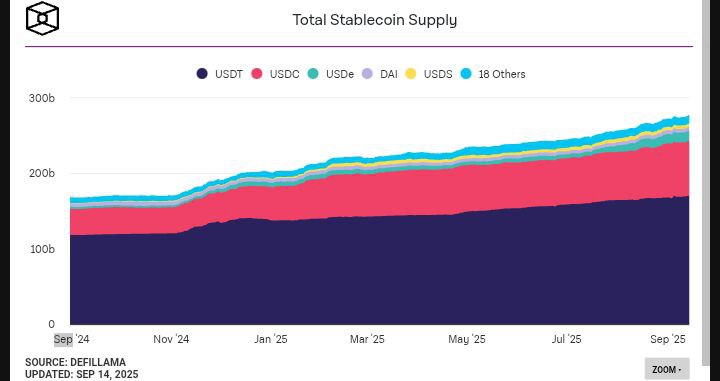 The ‘hedge-and-expand’ strategy by Circle in the United States, has placed them on defense in market shake-up, tests oversight vs privacy, exciting!
Sources
20 records from 18 domains
nacdl.org
tradingview.com
financefeeds.com
trmlabs.com
mayerbrown.com
home.treasury.gov
xt.com
youtube.com
facebook.com
rules.house.gov
govinfo.gov
x.com
politico.com
pryorcashman.com
cryptorank.io
cryptonews.net
binance.com
pwc.com
Community notes
Spot something off or out of date? Drop a note. Editors review topic notes daily and roll accepted fixes into the explainer — contributors are recognized in the monthly $SQUID drop.
Loading notes…
Help improve this topic
Have a story or tip about this topic? Submit it. See something missing? Leave a note. Editors review daily; accepted submissions and fixes count toward the monthly $SQUID drop.