
In‑depth explainer on Joseph Lubin, Ethereum co‑founder and Consensys CEO, covering his role in Ethereum’s evolution, ETH treasuries, wallets, DeFi, AI views, regulatory battles, and how his strategies shape the network’s future.
+7 sources across the wider coverage universe
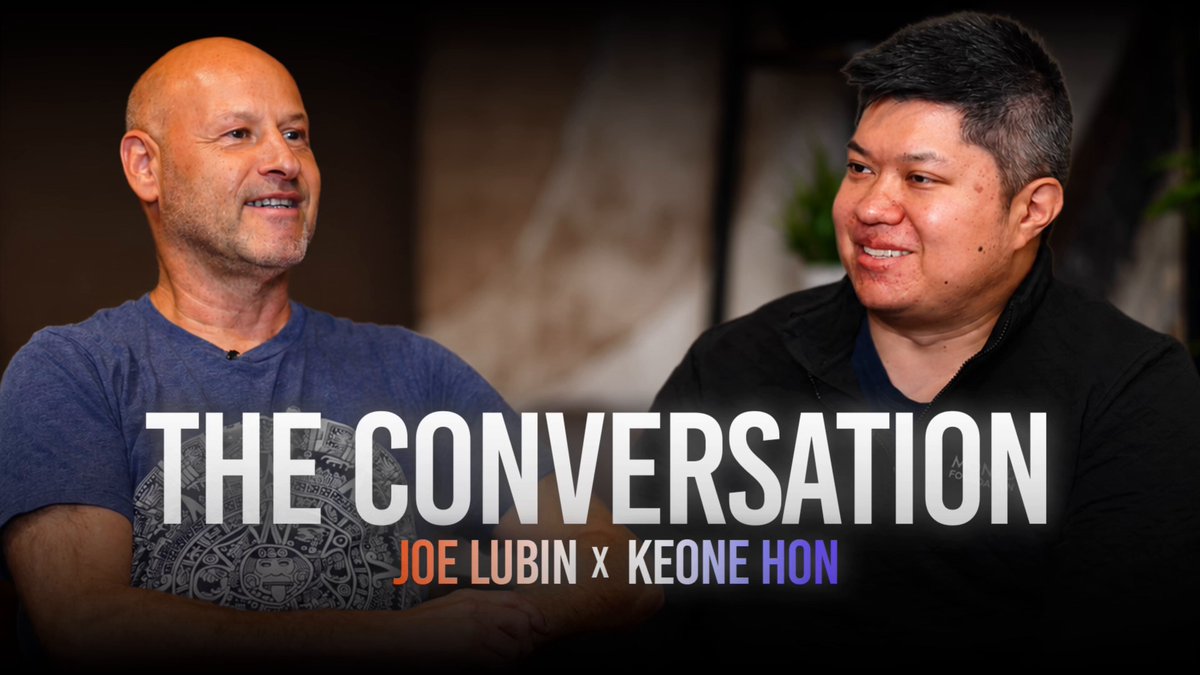 Ethereum co-founder Joseph Lubin and Monad's Keone Hon discuss AI-powered finance, stablecoin adoption, and MetaMask's new Money Account in a wide-ranging interview2026-07
 ConsenSys CEO Joseph Lubin warns of AI centralization risks, cautioning that dominance by big tech firms could threaten innovation and decentralization2026-04
 Consensys founder Joe Lubin dismisses concerns over Ethereum Foundation staff cuts and departures, arguing the organization should remain focused on stewarding Ethereum’s core technology and values2026-06
 Consensys CEO Joseph Lubin backs ETH treasury firms, calling digital asset treasuries “profound innovation” driving long-term capital formation for Ethereum ecosystem2026-05
 Joseph Lubin's optimistic view of the future of Ethereum was clear on his reply to Vitalik2025-01
 Former employees file lawsuit against Joseph Lubin, alleging he cheated them out of valuable shares in Consensys AG by transferring assets, including MetaMask, to a different entity2023-10
Joseph Lubin is a Canadian technologist, entrepreneur, and investor best known as a co‑founder of Ethereum and the founder and CEO of Consensys, a key software company in the Ethereum ecosystem. In crypto markets, “Lubin” has become shorthand for a particular vision of decentralized finance, large‑scale Ethereum treasuries, and a future in which blockchain and artificial intelligence reshape the global financial and information systems.
Who Joseph Lubin Is
Understanding Lubin’s significance in crypto begins with his background as both a technical builder and a macro‑systems thinker. Born and raised in Toronto, Canada, he studied electrical engineering and computer science at Princeton University, giving him formal training that spans hardware, software, and computational theory. His early career included work in software engineering and research environments, as well as roles in finance and technology companies, which exposed him to both cutting‑edge computing and the realities of legacy financial infrastructure. This mix of technical and financial experience helps explain why, once he encountered blockchain technology, he saw it less as a niche payment tool and more as a general‑purpose substrate for rebuilding the internet and capital markets.
In the public imagination, Lubin is often contrasted with Ethereum’s other co‑founder, Vitalik Buterin. Where Buterin is framed as the protocol’s primary architect and theoretician, Lubin is frequently portrayed as a pragmatic operator and ecosystem organizer, focused on funding, building, and commercializing infrastructure that makes Ethereum usable at scale. His founding of Consensys in 2014, before the Ethereum mainnet even launched, reflects this orientation toward execution and ecosystem building. At the same time, Lubin’s speeches, op‑eds, and interviews reveal a strongly ideological streak: he repeatedly positions Ethereum and similar systems as tools to counteract concentrated financial and technological power, and to restore user sovereignty in both finance and data.
Lubin’s public role has evolved over the years. He was deeply involved in Ethereum’s formative period and the creation of the Ethereum Foundation but now holds no formal role at the Foundation, instead operating from the private sector via Consensys and, increasingly, via capital‑markets vehicles such as SharpLink. That separation has allowed him to position himself as both a supporter of Ethereum’s core protocol stewardship and a critic of what he sees as over‑centralized or misaligned structures in Big Tech and traditional finance. As Ethereum has grown into the dominant smart‑contract platform, Lubin has become one of its most visible ambassadors to regulators, institutional investors, and the broader public, even as controversies around corporate structure, employee equity, and regulatory disputes continue to shape perceptions of his legacy.
Early Life, Education, and Pre‑Ethereum Career
Lubin’s upbringing in Toronto situated him in a country with an early and active crypto community, but his most formative educational experiences took place in the United States. At Princeton University, he studied electrical engineering and computer science, disciplines that emphasize both theoretical foundations—such as algorithms and complexity theory—and practical systems design. This dual lens is reflected in how he talks about Ethereum: as both a logically elegant system of consensus and incentives, and as a messy real‑world platform that must handle unpredictable human and economic behavior at global scale.
While detailed public records of his early career are less widely disseminated than his crypto work, Lubin is known to have worked in roles that spanned software development, robotics, and financial technology. This period coincided with the rise of the commercial internet, the growth of proprietary trading and high‑frequency systems, and the consolidation of power among a relatively small group of tech and financial firms. Exposure to these trends appears to have shaped his skepticism of centralized intermediaries, a theme that recurs in his later critiques of Big Tech’s use of artificial intelligence and the structure of modern capital markets.
Like many early crypto adopters, Lubin initially encountered Bitcoin as an intriguing but limited proof of concept. He has described Bitcoin as a crucial first step toward decentralized trust, yet he gravitated toward more expressive, programmable systems that could support complex contracts and application logic beyond simple payments. That search for broader programmability set the stage for his involvement with Ethereum, whose whitepaper proposed a general‑purpose “world computer” secured by a blockchain and powered by the native asset Ether (ETH).
Encountering Ethereum and Joining the Founding Team
Ethereum emerged in 2013–2014 from Vitalik Buterin’s recognition that Bitcoin’s scripting language was too constrained to support the kinds of decentralized applications many developers envisioned. Lubin was among the early group who read the Ethereum whitepaper and recognized its potential for transforming not only digital currencies but entire industries built on contracts, ledgers, and shared databases. Unlike some early supporters who primarily contributed capital or code, Lubin’s contribution centered on organization, funding, and early ecosystem development.
As the project coalesced into a founding team, Lubin became one of Ethereum’s co‑founders, participating in the early debates around governance, funding, and the creation of what became the Ethereum Foundation. His involvement included helping to coordinate the initial Ether sale and positioning Ethereum as a protocol that could attract a global community of developers and entrepreneurs. While the Ethereum Foundation would eventually be established as a non‑profit entity based in Switzerland, Lubin’s trajectory diverged, leading him to found Consensys as a for‑profit software and venture studio dedicated to Ethereum.
Over time, Lubin stepped back from any formal role inside the Ethereum Foundation, a fact he has emphasized in recent discussions about the Foundation’s budget cuts and organizational changes. In interviews about those developments, he has argued that the Foundation should have a relatively narrow scope focused on protocol stewardship, core research, and upholding Ethereum’s values, while other organizations—including Consensys—take responsibility for commercialization, adoption, and institutional engagement. This separation between the public‑goods foundation and private‑sector builders is a central theme in his view of how the Ethereum ecosystem should mature.

Ethereum co-founder Joseph Lubin and Monad's Keone Hon discuss AI-powered finance, stablecoin adoption, and MetaMask's new Money Account in a wide-ranging interview
Lubin’s Vision for Ethereum and Web3
Lubin’s vision for Ethereum extends far beyond a single blockchain or digital currency. He often frames the network as the foundational layer of a new, decentralized internet—commonly referred to as Web3—where users control their data, applications run on open infrastructure, and value flows without relying on traditional intermediaries. This worldview informs his positions on everything from protocol roadmaps to regulatory policy and corporate strategy.
At the core of this vision is an insistence that the internet’s current architecture is structurally flawed. In his writing and interviews, Lubin argues that the existing web has allowed a small number of platforms to capture user data and economic rents, while leaving individuals disempowered and exposed to surveillance and exploitation. Blockchain networks such as Ethereum, in his telling, offer an alternative by embedding trust and programmability directly into the network, making it possible to coordinate complex economic activity without centralized gatekeepers. This perspective underpins his repeated calls for decentralization in both finance and artificial intelligence.
Lubin has also been a prominent advocate of Ethereum’s evolving technical roadmap, especially the shift toward scalability solutions and privacy‑preserving cryptography. In public comments, he has suggested that Ethereum could transform into a fully zero‑knowledge proof–based protocol within three to five years, meaning that many aspects of transaction verification and data availability could rely on advanced cryptographic proofs rather than raw data disclosure. Zero‑knowledge proofs allow one party to convince another that a statement is true—such as “this transaction is valid” or “this user meets KYC criteria”—without revealing the underlying information. For Lubin, this technology is key to reconciling regulatory compliance, user privacy, and permissionless access in global finance.
Another important dimension of his vision concerns the relationship between Ethereum and the broader macro‑financial system. Lubin has argued in op‑eds and podcast appearances that current monetary arrangements, especially in the United States, have produced unsustainable debt dynamics and misaligned incentives among corporations, lobbyists, and legislators. He contends that blockchain‑based systems, by making financial flows transparent and programmable, could help restructure public finance and reduce the scope for opaque, politically driven money creation and debt accumulation. These arguments are controversial and far from universally accepted, but they illustrate how Lubin sees Ethereum as a tool for redesigning not just market infrastructure, but the political economy of nation‑states.
Ethereum’s Path to a Zero‑Knowledge Future
The notion that Ethereum could become a “fully zero‑knowledge proof–based protocol” in three to five years is ambitious even by crypto standards. For Lubin, this trajectory is less about abandoning Ethereum’s existing architecture and more about layering privacy and scalability onto it through rollups, zkEVMs, and validity proofs that can be verified on the base layer. Under such a model, most user activity would occur on layer‑2 networks that generate succinct proofs attesting to the correctness of batched transactions, dramatically reducing the data that must be processed on Ethereum’s main chain.
Lubin’s advocacy for this path aligns with Consensys’ own technical bets. The company operates Linea, a layer‑2 network that uses zero‑knowledge proofs to scale Ethereum while remaining compatible with existing smart contracts and tooling. By investing in both protocol‑adjacent research and commercial infrastructure, Lubin positions himself as a bridge between cutting‑edge cryptography and real‑world applications. He often emphasizes that zero‑knowledge systems are not only about privacy but also about verifiable computation, enabling complex workflows where users and regulators can trust outcomes without having to inspect every detail of the underlying data or code.
This focus on ZK technology also intersects with his concerns about regulatory scrutiny. As governments demand more oversight of crypto activity, privacy‑preserving techniques that still allow selective disclosure and auditability could become crucial for institutional adoption. Lubin presents zero‑knowledge–enabled Ethereum as a platform where compliance, confidentiality, and openness can coexist, potentially making it more attractive to traditional finance than fully transparent or fully opaque systems.
Ethereum Foundation, Decentralization, and Ecosystem Governance
Lubin’s commentary on the Ethereum Foundation’s recent budget cuts, staff departures, and leadership changes provides a window into his views on ecosystem governance. While some community members interpreted the downsizing as a crisis or sign of institutional weakness, Lubin publicly argued that it represents a “necessary evolution” toward a more focused and appropriately scoped Foundation. He notes that he holds no formal role at the Foundation, reinforcing the idea that Ethereum’s core protocol should not be steered by the same entities that profit from its commercialization.
In Lubin’s framing, the Foundation’s job is to steward Ethereum’s core technology and values—such as neutrality, censorship resistance, and credible neutrality of the base layer—while leaving adoption, institutional integration, and user‑facing product development to independent companies, DAOs, and other organizations. “Cleaning up” the Foundation’s remit, as he put it, means clarifying that it is not responsible for business development or marketing, and instead should prioritize long‑term research, security, and coordination of open‑source contributors. This division of labor is meant to reduce perceptions that Ethereum is controlled by a single entity and to encourage a more diversified, competitive ecosystem.
Critics, however, worry that private companies like Consensys and large holders such as digital asset treasury firms could accumulate disproportionate influence over the network’s direction, even if the Foundation remains narrow in scope. Lubin responds to such concerns by highlighting the open, permissionless nature of Ethereum, where anyone can fork the code or build competing infrastructure. Nevertheless, his dual role as a major builder and a large ETH holder means that debates around decentralization often intersect with scrutiny of his companies and personal decisions.
Readers track Lubin as a dual accountability story: his bullish institutional ETH narrative pulls clicks, but the legal allegation that he vaporized employee equity by migrating MetaMask to a new entity — and his backed treasury vehicle crashing 91% — pull nearly equal engagement, revealing readers stress-testing whether Ethereum's loudest evangelist is a trustworthy steward or a repeat beneficiary of entity arbitrage.
Consensys: Lubin’s Ethereum Software Powerhouse
If Ethereum is the protocol layer that underpins much of DeFi and Web3, Consensys is one of the key corporate vehicles through which Lubin has tried to turn that protocol into usable infrastructure and products. Founded in 2014 by Lubin, Consensys has been part of Ethereum’s journey from before the genesis block, incubating projects, funding early teams, and developing software that sits at critical choke points in the ecosystem. Over time, the company shifted from a loose venture‑studio model to a more focused software firm, concentrating on a handful of flagship products.
The most prominent of these products is MetaMask, a self‑custodial wallet and gateway to the Ethereum network and other compatible chains. MetaMask began as one of the first user‑friendly wallets for interacting with dapps, allowing users to hold ETH, manage ERC‑20 and ERC‑721 tokens, and connect to smart contracts through a browser extension and mobile app. As DeFi and NFTs exploded, MetaMask became the default interface for millions of users, giving Consensys significant influence over how people access and experience Ethereum.
Another critical piece of Consensys infrastructure is Infura, a service that provides API access to Ethereum and other networks, allowing developers to build applications without running their own full nodes. By abstracting away node management, Infura lowered the barrier to entry for Web3 developers, but it also raised concerns about centralization, since many dapps rely on a single service provider for blockchain connectivity. Consensys has responded by adding more redundancy and multi‑region infrastructure, and by supporting emerging standards that could decentralize node access over time, but the tension between convenience and decentralization remains.
Consensys has also expanded into layer‑2 scaling through Linea, enterprise blockchain solutions, developer tooling, and security products, positioning itself as what Lubin has called an “infrastructure giant” behind Ethereum. According to reporting, the company has explored the possibility of a public offering, with some coverage suggesting it is eyeing a landmark IPO in the mid‑2020s, though such plans are inherently subject to market and regulatory conditions. Throughout this expansion, Lubin has remained CEO, using Consensys both to drive adoption and to prototype business models that might sustain open‑source ecosystems over the long term.
MetaMask as the Gateway Wallet
For many crypto users, “Lubin” is synonymous with MetaMask because of the wallet’s outsized role in DeFi, NFTs, and Web3 more broadly. MetaMask is a self‑custodial wallet, meaning users hold their own private keys rather than delegating them to a centralized exchange or custodian. This design aligns with the ethos of Ethereum as a permissionless, non‑custodial platform. MetaMask’s browser extension model also made it relatively seamless to embed wallet functionality into web applications, enabling the rapid spread of dapps that could request signatures and transactions directly from a user’s wallet.
Consensys describes MetaMask as the world’s most widely adopted self‑custodial finance platform, securing billions of dollars in digital assets and serving millions of users. Beyond simple storage and transfers, MetaMask now integrates swaps, staking, NFT management, and access to various networks via a single interface, with built‑in transaction security and routing optimizations. For Lubin, the wallet is not just a product but a strategic lever: by controlling a dominant interface layer, Consensys can influence UX standards, security practices, and even how new chains and rollups gain user attention.
However, MetaMask’s scale has also attracted criticism and regulatory scrutiny. Centralized front‑ends can become chokepoints for compliance obligations, and outages or configuration mistakes can temporarily disrupt access for large swaths of users. Lubin has argued that the long‑term goal is not to create a new centralized gatekeeper but to provide tools and standards that can eventually support a more decentralized ecosystem of wallets and agents. Experiments such as the MetaMask “agent wallet,” which allows AI agents to operate with delegated permissions within user‑defined policy constraints, reflect this ambition to embed decentralization not just in protocol design but in the next generation of user interfaces.
Infura, Linea, and Ethereum Infrastructure
Infura is another cornerstone of Consensys’ strategy and a focal point of debates about Ethereum’s degree of centralization. The service provides high‑availability API endpoints that dapps can use to read and write data to Ethereum and other networks, dramatically reducing the operational burden of running nodes. Many of the most popular DeFi protocols, NFT marketplaces, and Web3 applications rely on Infura or similar infrastructure, meaning that issues at this layer can have far‑reaching effects.
Lubin has framed Infura as part of the “plumbing” needed to make Ethereum usable at scale, akin to cloud providers in Web2. At the same time, he acknowledges the importance of moving toward more decentralized and resilient models, whether through distributed node networks, client diversity, or alternative access patterns. Consensys’ work on Linea, a zk‑powered layer‑2 network, underscores this dual commitment to practicality and decentralization: the company is betting that scaling solutions built atop Ethereum, with proofs anchored to the base chain, will allow the ecosystem to support mainstream applications without sacrificing security.
Linea aims to combine Ethereum compatibility with the efficiency and privacy benefits of zero‑knowledge proofs, aligning directly with Lubin’s broader thesis that Ethereum will become a ZK‑centric protocol. By incubating such infrastructure internally, Consensys helps shape the direction of the scaling landscape, but it also exposes Lubin to accusations that he is building vertically integrated stacks that could entrench corporate control within a network that aspires to remain credibly neutral.
Legal Disputes and Corporate Restructuring
Consensys’ growth has not been without controversy. One major dispute centers on a lawsuit filed by more than two dozen former employees, who allege that Lubin deprived them of the value of stock awards in a Swiss holding company called Consensys AG. According to the lawsuit, Lubin and other executives allegedly transferred key assets—including MetaMask—out of Consensys AG into a different entity, leaving the shares held by early employees effectively worthless. The plaintiffs argue that this restructuring violated promises made when they joined the company, and they seek to restore the value of their equity.
From Lubin’s perspective, the restructuring was part of an attempt to rationalize a sprawling enterprise and align assets with the operational reality of Consensys as it evolved from a loose collective into a more conventional software firm. As of the latest reporting, the case remains a live legal dispute, and Lubin has not publicly conceded wrongdoing. For observers, the lawsuit highlights the tension between early crypto’s narrative of community‑driven collaboration and the hard realities of corporate governance, equity allocation, and jurisdictional arbitrage.
Consensys has also faced regulatory pressure, particularly from the U.S. Securities and Exchange Commission. The SEC pursued an enforcement case related to MetaMask and its role in facilitating crypto transactions, raising questions about whether aspects of wallet functionality or integrated services might be treated as securities activity. In a recent public statement, Lubin announced that Consensys and the SEC had agreed in principle that the securities enforcement case concerning MetaMask should be dismissed, framing this as a positive development for both the company and the broader self‑custodial wallet ecosystem. The resolution, while not eliminating all regulatory uncertainties, suggests that regulators may be cautious about directly targeting wallet software as opposed to intermediating custodial platforms.
- 01Lubin-Vitalik Ethereum optimism↗
Readers want signal on internal Ethereum leadership alignment — Lubin publicly endorsing Vitalik's direction functions as a credibility thermometer for the protocol's institutional future.
- 02Consensys AG share vaporization lawsuit↗
The allegation that Lubin stripped employees of valuable equity by transferring MetaMask and other assets to a separate legal entity hit a raw nerve around founder accountability in crypto.
- 03SharpLink ETH treasury collapse↗
A 91% drawdown two weeks after launch turned Lubin's endorsement of corporate ETH treasuries into a live stress test, making it a high-stakes data point for the broader ETH treasury firm thesis.
- 04US crypto regulatory optimism↗
Lubin repeatedly frames US policy shifts as unlocking Ethereum-native finance, and readers click to gauge whether an insider's bullishness on regulators is prescient or promotional.
- 05ETH vs Bitcoin supercycle thesis↗
Claims of ETH 100x potential, Wall Street staking adoption, and ETH outpacing Bitcoin are high-conviction predictions from a co-founder, giving readers a concrete institutional bull case to accept or reject.
- 06SBET scam call and token credibility
Lubin labeling SBET 'a pure scam' surfaced the question of how he adjudicates token legitimacy while simultaneously backing ETH treasury vehicles with volatile track records.
SharpLink and the Ethereum Treasury Thesis
Beyond software, Lubin has become a central figure in the emerging concept of “Ethereum treasuries”—public companies that hold large amounts of ETH on their balance sheets as a core strategic asset. He serves as chairman of SharpLink, a company that has reoriented itself into what it calls a digital asset treasury firm, holding hundreds of thousands of ETH and positioning its stock as a proxy for Ethereum exposure. This role extends Lubin’s influence from building infrastructure to shaping how public markets interface with Ethereum.
SharpLink holds a substantial Ethereum position; reporting indicates that it controls on the order of 860,000–870,000 ETH, valued in the billions of dollars at recent prices. One analysis noted that SharpLink’s holdings made it the second‑largest public Ethereum treasury company, behind BitMine Immersion Technologies. In mid‑2020s index reconstitutions, SharpLink and Forward Industries were set to join the Russell 2000 and Russell 3000 indexes, becoming some of the first major non‑Bitcoin digital asset treasury firms to gain index inclusion. For Lubin, this kind of mainstream financial recognition is part of a broader strategy to normalize ETH as a corporate treasury asset and as a productive, yield‑bearing component of institutional portfolios.
Lubin has described ETH as the “highest octane decentralized trust commodity,” emphasizing its dual role as both the fuel of Ethereum’s computational economy and a collateral asset that can be staked for yield or deployed in DeFi. He argues that as Wall Street increasingly integrates “decentralized rails” for settlement, lending, and tokenization, ETH’s combination of security, programmability, and yield will make it more attractive than non‑yielding assets like Bitcoin. This thesis underpins not only SharpLink’s strategy but also his broader prediction that Ethereum will become the core monetary infrastructure for a tokenized financial system.
Ethereum Treasuries in a Corporate Context
The concept of a corporate “Ethereum treasury” borrows from earlier examples of companies holding Bitcoin on their balance sheets as a macro hedge or reserve asset, but it introduces additional dimensions. While Bitcoin is primarily held as a non‑yielding store of value, ETH can be staked to earn rewards and is deeply integrated into DeFi protocols and tokenization markets. This allows a firm like SharpLink to present its treasury not only as passive exposure but also as an actively managed, yield‑generating portfolio, albeit one subject to significant market and smart‑contract risk.
A simplified comparison of public digital asset treasuries can be illustrated as follows, based on reporting about SharpLink and its peers:
| Company | Primary Asset Focus | Approximate ETH Holdings (where applicable) | Strategic Positioning | Source |
|---|---|---|---|---|
| SharpLink | ETH (and some SOL) | ~868,000 ETH (order of magnitude) | Digital asset treasury firm; Russell index member | |
| BitMine Immersion Technologies | ETH | Larger ETH holdings than SharpLink | Largest public ETH treasury firm by holdings |
SharpLink’s entry into major indexes such as the Russell 2000 and 3000 signals that mainstream asset allocators—who track or benchmark to these indexes—may gain incidental exposure to ETH via equity positions. This can create a feedback loop: as ETH’s market structure matures, more firms may consider treasury positions; as more treasuries emerge, index providers and institutional investors may pay closer attention to Ethereum’s role in the financial system. Lubin has championed this dynamic, calling digital asset treasuries a “profound innovation” for long‑term capital formation in the Ethereum ecosystem.
SharpLink’s Strategy and Planned On‑Chain Integration
Lubin’s ambitions for SharpLink go beyond passive ETH accumulation. In interviews, he has discussed plans to turn SharpLink’s stock (ticker SBET) into an on‑chain token, launch prediction markets, and potentially integrate MetaMask throughout the company’s offerings. This suggests a broader play to blur the line between traditional equity markets and on‑chain assets, using Ethereum as the settlement and coordination layer for corporate governance, treasury management, and new forms of shareholder engagement.
By tokenizing corporate equity and integrating it into DeFi, companies like SharpLink could enable more granular, programmable interactions around dividends, voting, and collateralization. Lubin’s interest in these models fits with his broader argument that Ethereum can serve as the backbone of a tokenized world economy, where everything from bonds and real estate to sports betting platforms and prediction markets operates on interoperable, composable smart contracts. At the same time, he has warned that tokenizing the world’s economy risks “navigating treacherous crypto seas,” emphasizing the need for robust security, clear regulation, and careful design to avoid repeating the excesses and failures of previous speculative bubbles.
SharpLink’s stock has experienced significant volatility, reflecting both the speculative nature of its strategy and broader market swings in crypto‑related equities. Critics question whether public‑company wrappers around volatile digital asset treasuries offer genuine long‑term value or simply amplify risk for retail investors who may not fully understand the underlying exposures. Lubin, by contrast, portrays such vehicles as experimental but important pathways for integrating Ethereum into mainstream capital markets, even as he acknowledges the dangers of poorly structured token incentives and misaligned governance.
ConsenSys CEO Joseph Lubin warns of AI centralization risks, cautioning that dominance by big tech firms could threaten innovation and decentralization

ConsenSys owns Infura — the RPC that took out half of Ethereum in the 2020 outage and still ships as MetaMask's default for 30M+ users. Lubin making the centralization argument from that seat is rich. Decentralized AI infra is live (Bittensor ~$3B, Render, io.net GPU aggregation), but frontier training passed $100M per run and none of these networks have the capital to close the gap before BigTech locks it in.
Lubin, Wallets, and On‑Chain Footprints
In addition to his corporate holdings, Lubin is associated—through on‑chain analysis and reporting—with large personal or affiliated Ethereum wallets. These addresses provide glimpses into how a major ETH holder manages risk, interacts with DeFi, and responds to market or protocol conditions, although attribution is always somewhat probabilistic and subject to interpretation.
Recent analyses have highlighted a wallet linked to Lubin that holds hundreds of thousands of ETH, with one report citing a balance of around 243,300 ETH, worth roughly hundreds of millions of dollars at the time of observation. After more than three years of inactivity, this wallet reportedly transferred out 80,001 ETH—worth over $100 million at contemporaneous prices—prompting speculation that Lubin might be preparing to sell or reposition his holdings. Such large movements inevitably capture market attention, especially in an ecosystem where on‑chain transparency allows anyone to watch whales in real time.
Another episode involved a wallet linked to Lubin moving approximately 110,000 ETH to defend a substantial debt position in the decentralized stablecoin DAI, reportedly backing a roughly $259 million obligation. This suggests that the wallet’s owner was actively managing collateral ratios in MakerDAO or similar DeFi protocols, adding ETH to avoid liquidation as market conditions shifted. From a DeFi perspective, this behavior is textbook risk management: as collateral values decline or volatility rises, sophisticated users add margin or adjust positions to keep vaults safe. From a market‑narrative perspective, it underscores how deeply even the ecosystem’s founders are embedded in on‑chain finance and leverage.
DeFi Mechanics and Large‑Holder Risk Management
To understand the significance of these wallet moves, it is helpful to briefly summarize how systems like MakerDAO work. Users can lock ETH or other approved collateral into smart contracts and borrow DAI against that collateral, subject to over‑collateralization requirements and variable interest rates. If the value of the collateral falls too far relative to the debt, the position can be liquidated, with the collateral auctioned off to repay the DAI plus penalties. For large borrowers, maintaining a comfortable buffer above the liquidation threshold is critical to avoid forced selling during market stress.
A wallet defending a nine‑figure DAI debt position by moving 110,000 ETH is effectively choosing to deploy significant additional capital to maintain solvency and ownership of its collateral rather than allowing the protocol to liquidate it at potentially unfavorable prices. In Lubin’s case, this indicates not only substantial resources but also a willingness to use DeFi protocols at scale, treating them as core components of a treasury and leverage strategy rather than mere experiments. The moves also illustrate one of Ethereum’s recurring themes: builders and early adopters frequently become power users of the very systems they helped create, with their decisions reverberating across both on‑chain metrics and market sentiment.
Attribution of these wallets to Lubin comes from blockchain intelligence services and social‑media analysts who track patterns of funding, interaction with known addresses, and historical context. While such analyses can be highly persuasive, they are not infallible, and responsible observers should treat them as informed inferences rather than legally definitive proof of ownership. Nevertheless, the pattern of large, time‑clustered transactions and the consistency with Lubin’s public persona as a long‑term ETH bull make the association plausible enough that market participants regularly discuss “Lubin wallets” as a factor in on‑chain flows.
Agentic Wallets and AI‑Driven Finance
Beyond traditional wallets, Lubin has been vocal about the impending rise of “agentic finance,” in which AI agents act on behalf of users within explicitly defined constraints. In a recent interview, he discussed the development of a MetaMask “agent wallet,” which uses a delegation framework to allow machine agents to operate via a command‑line interface, executing transactions and strategies that remain strictly within human‑specified policies. The design aims to make it impossible for the agent to act outside the permissions granted by the user, thereby preserving control and mitigating the risk of runaway automation.
Lubin argues that such agentic wallets will become essential as both DeFi and AI grow more complex and intertwined. Human users cannot realistically monitor thousands of markets, protocols, and on‑chain signals in real time, nor can they manually manage positions, optimize yield, or arbitrage across dozens of venues without assistance. By delegating certain tasks to AI agents that operate under rigorous cryptographic and contractual safeguards, users might benefit from machine intelligence without fully surrendering control. This architecture aligns with his broader push to ensure that AI development does not simply entrench the power of Big Tech giants but instead unfolds atop decentralized infrastructure where users set the rules.
ConsenSys founded by Lubin post-Ethereum genesis
MetaMask browser wallet launched under ConsenSys
ConsenSys AG restructuring — MetaMask assets transferred to new entity
Former employees file lawsuit alleging equity vaporization
- 2025-07milestone
Lubin named ceremonial first torch-bearer at ETH 10th anniversary
Lubin backs SharpLink ETH treasury strategy as 'profound innovation'
SharpLink crashes 91% in two weeks amid ETH treasury buying
Wallet linked to Lubin moves 110,000 ETH to defend $259M DAI debt
Views on AI, Trust, and the Future of the Internet
Lubin’s thinking about AI is tightly coupled to his views on Ethereum and the broader “end of trust” crisis he sees in contemporary digital life. In essays and interviews, he has warned that Big Tech companies have already used AI to exploit customers in various ways, from opaque recommendation engines to data extraction and behavioral manipulation. As more powerful models emerge, he fears that a small handful of firms could consolidate control over the tools that shape information, perception, and ultimately political and economic outcomes.
For Lubin, blockchain networks like Ethereum offer a counterweight to this centralization. By embedding verifiable computation, transparent rules, and cryptographic guarantees of data integrity into the infrastructure layer, blockchains can provide an objective substrate against which AI‑generated content and actions can be measured. He envisions ecosystems where AI agents are anchored in on‑chain identities, constrained by smart‑contract‑encoded permissions, and subject to audit via immutable logs and zero‑knowledge attestations. In such a world, AI would still be powerful, but its operations would be more transparent and accountable, and users would have more tools to verify claims and resist manipulation.
Lubin’s “end of trust” framing captures his sense that traditional institutions—governments, corporations, media—have lost credibility as arbiters of truth, while AI threatens to flood the information environment with hyper‑realistic but unverifiable content. Blockchain, in his view, is not a panacea but a critical piece of the solution, enabling new forms of verifiable media, decentralized social networks, and tokenized incentive systems that reward accuracy and integrity rather than engagement at any cost. This is a deeply ambitious vision, and skeptics question whether blockchain and tokenization can meaningfully constrain actors with far more resources and network effects. Still, it illustrates how Lubin situates Ethereum at the intersection of technological, economic, and epistemic challenges.
ConsenSys controls MetaMask (dominant self-custody wallet) and key Ethereum developer tooling, concentrating critical infrastructure in a single founder-led private entity.
ConsenSys has faced SEC scrutiny over MetaMask's broker and securities classification; Lubin's public optimism about regulatory reform is accompanied by ongoing litigation exposure.
The allegation that assets including MetaMask were transferred to a new entity without employee consent raises structural questions about how ConsenSys-affiliated projects handle internal governance and shareholder rights.
SharpLink's 91% crash within two weeks of launch while executing an ETH accumulation strategy illustrates acute market risk for Lubin-affiliated ETH treasury vehicles, particularly under thin liquidity.
A wallet linked to Lubin moved 110,000 ETH to defend a $259M DAI debt position, indicating large leveraged exposure that, if unwound, could represent meaningful ETH sell pressure.
ConsenSys-developed tooling (Infura, MetaMask) sits off-chain or at the RPC layer; direct smart-contract exploit risk to Lubin-affiliated products is lower than to on-chain DeFi protocols.
Market Views: ETH, Bitcoin, and the “Wall Street Token”
Lubin is one of the more outspoken Ethereum founders when it comes to macro and market predictions. He has argued that as Wall Street integrates decentralized rails—using Ethereum for tokenization, settlement, and on‑chain finance—ETH could experience a dramatic re‑rating, potentially surging by orders of magnitude. In one widely cited set of comments, he suggested that ETH could, over time, increase in value by around 100 times from prevailing levels and eventually surpass Bitcoin as the dominant “monetary base” of crypto.
His reasoning hinges on several factors. First, he emphasizes that institutional investors increasingly view ETH as a productive asset: it can be staked to earn yield, used as collateral in DeFi, and deployed in tokenization and real‑world asset (RWA) platforms. Second, he points to metrics such as the supply of stablecoins and RWAs on Ethereum as indicators of the network’s growing centrality in global finance. At one point, data from Token Terminal indicated that stablecoin supply on Ethereum surpassed $160 billion, having doubled since early 2024 and reaching an all‑time high. For Lubin, these flows demonstrate that Ethereum is already functioning as plumbing for a large and growing share of the dollar‑denominated digital economy.
He also draws support from traditional finance figures. Jan Van Eck, CEO of asset manager VanEck, has described Ethereum as “the Wall Street token,” highlighting its role as the preferred platform for institutions exploring tokenization and on‑chain products. Lubin sees such statements as validation of his long‑standing thesis that Ethereum would evolve from a niche smart‑contract chain into the core infrastructure for the financial sector’s digital transformation.
ETH Versus Bitcoin as a Monetary Base
Lubin’s contention that ETH could “flip” Bitcoin as a monetary base is controversial, not least because Bitcoin’s narrative as digital gold remains strong among many investors. He argues, however, that in a world where staking yields, DeFi, and tokenized assets are central to capital markets, a non‑yielding, relatively inflexible asset may be less attractive than a programmable, productive one. In this framing, ETH is not just money but also collateral, bandwidth, and governance weight in a rich ecosystem of applications.
For Lubin, Bitcoin’s strength as a store of value is counterbalanced by its limited expressivity and slower pace of innovation, whereas Ethereum’s design allows for rapid experimentation at the edges while preserving the core protocol’s stability. He points to Ethereum’s history of successful mid‑flight upgrades—changing its consensus mechanism, adjusting monetary policy, and improving scalability—while maintaining continuous operation as evidence that the network can evolve without compromising its integrity. Being honored as the ceremonial first bearer of an ETH “torch” commemorating the protocol’s tenth anniversary, Lubin highlighted this track record of resilience and adaptability, crediting Vitalik Buterin’s design and the community’s collaborative ethos.
Critics respond that Ethereum’s flexibility can also be a liability, introducing governance complexities and potential attack surfaces that Bitcoin’s simpler, more conservative design avoids. Moreover, ETH’s status as a productive asset raises regulatory questions, especially as staking services, restaking protocols, and yield‑bearing tokens blur the line between commodity‑like assets and securities. Lubin remains optimistic that clear regulation and robust infrastructure can resolve these issues, but even he acknowledges that political and legal developments will heavily influence Ethereum’s trajectory.
Consensys founder Joe Lubin dismisses concerns over Ethereum Foundation staff cuts and departures, arguing the organization should remain focused on stewarding Ethereum’s core technology and values
Critiques and Controversies
No profile of Lubin is complete without addressing the major controversies that surround his career. These include the Consensys AG employee lawsuit, broader concerns about centralization in MetaMask and Infura, skepticism toward digital asset treasuries like SharpLink, and ongoing debates about Ethereum’s governance and regulatory posture.
The Consensys AG lawsuit, as noted earlier, alleges that Lubin and other executives moved valuable assets such as MetaMask out of the Swiss entity in which early employees held equity, effectively diluting or eliminating the value of their stock awards. Plaintiffs characterise this as a betrayal of the promises that drew them to the company during its early, risky phases. Lubin and Consensys contest these allegations, portraying the restructuring as a legitimate corporate decision in response to changing business realities. The outcome of this case will not only affect the individuals involved but may also set precedents for how courts view equity arrangements and asset migrations in fast‑moving crypto startups.
Centralization concerns are another recurring theme. Because MetaMask and Infura are operated by a single company, outages or policy decisions at Consensys can temporarily affect a large share of Ethereum users and applications. Critics worry that this introduces a single point of failure and a potential regulatory choke point, at odds with the ethos of decentralization. Lubin has responded by emphasizing efforts to diversify infrastructure, support alternative clients, and encourage the growth of competing providers, while also arguing that some centralization is inevitable in early infrastructure and can be progressively reduced over time.
SharpLink and the Ethereum treasury model also attract scrutiny. Skeptics question whether public‑company wrappers around volatile ETH holdings are primarily vehicles for speculative trading rather than long‑term investment and innovation. SharpLink’s share price volatility has raised questions about the sustainability of its strategy, and about the risks faced by shareholders who may not fully grasp the leverage implicit in a treasury dominated by a single digital asset. Lubin’s view is more sanguine: he sees such experiments as necessary steps in integrating Ethereum with global capital markets, even as he warns about the dangers of poorly governed token projects and the need for investor education.
Regulatory and political dimensions add another layer of complexity. Lubin has been both a critic and an interlocutor of regulators, warning that overly aggressive enforcement and ill‑defined rules could push innovation offshore, while also expressing optimism that recent reforms and court decisions are gradually clarifying the legal landscape for Ethereum and DeFi. He has remained publicly optimistic about the prospects of Ethereum‑aligned companies in ongoing legal battles, including the resolution of the SEC’s MetaMask‑related case and broader disputes around staking and token classification. This optimism often resonates with the Ethereum community but is not universally shared among legal experts, who caution that regulatory risk remains substantial.
How Lubin Shapes Ethereum’s Next Decade
Taken together, Lubin’s roles as co‑founder, software executive, large ETH holder, treasury architect, and public intellectual give him an outsized influence on Ethereum’s evolution. He is not a protocol dictator—Ethereum’s governance is diffuse and contentious—but his views and actions often signal or shape broader trends. For crypto market participants, understanding “Lubin” means understanding a set of interlocking theses about technology, finance, and geopolitics.
One thread is the technical arc toward a zero‑knowledge–centric, rollup‑driven Ethereum that can support mainstream applications without sacrificing security or decentralization. Another is the institutional arc, in which banks, asset managers, and corporates increasingly run validators, deploy smart contracts, and tokenize assets on Ethereum, turning ETH into a core collateral and settlement asset. Lubin envisions banks not merely holding ETH but operating validators, layer‑2 networks, and financial logic directly on‑chain, replacing siloed back‑office systems with interoperable smart contracts.
A third thread is the societal arc, encompassing his belief that blockchain and AI, if built on open, decentralized architectures, can help address systemic problems such as information manipulation, structural debt imbalances, and institutional mistrust. This is an expansive and controversial vision, but it informs his strategic decisions—from Consensys’ focus on infrastructure and wallets, to SharpLink’s treasury strategy, to his advocacy on regulation and public policy.
For traders, developers, and institutions alike, Lubin’s moves—whether a major wallet defending a DeFi debt position, a new product announcement from Consensys, or a sharp op‑ed about financial reform—offer data points about how one of Ethereum’s most influential figures is positioning for the future. They do not determine Ethereum’s destiny, but they signal how a particular, well‑capitalized and well‑connected faction of the ecosystem understands the road ahead.
Outlook
Looking forward, Lubin is likely to remain a central figure in debates about Ethereum’s technical roadmap, regulatory posture, and integration with traditional finance. His prediction that Ethereum could become a fully zero‑knowledge–proof‑based protocol within a few years sets an ambitious benchmark for developers and researchers, and Consensys’ investments in Layer‑2 and privacy technologies suggest he will continue pushing in that direction. Whether Ethereum can deliver that vision without overcomplicating its stack or fragmenting liquidity remains an open question, but Lubin’s influence ensures that ZK and scalability will stay at the forefront of ecosystem priorities.
In capital markets, SharpLink and similar digital asset treasury firms will test the appetite of investors for equity proxies of ETH exposure and on‑chain business models. If these experiments succeed, they could broaden Ethereum’s footprint in index funds, pension portfolios, and corporate treasuries; if they falter, they may prompt a reassessment of how best to bridge public markets and crypto balance sheets. Lubin’s advocacy for ETH as a productive, “high‑octane” trust asset will either be vindicated or tempered by the realities of volatility, regulation, and competition from other platforms.
Regulatory developments will be a decisive factor. Lubin’s optimism about the resolution of enforcement actions and the trajectory of crypto‑friendly reforms reflects his belief that policymakers increasingly recognize Ethereum’s potential as critical infrastructure rather than a purely speculative playground. Yet the path to durable, globally harmonized rules is uncertain, and setbacks in one jurisdiction could influence market structure and innovation elsewhere. His ongoing engagement with regulators, combined with the prominent role of Consensys and other Ethereum‑aligned firms, will shape how that dialogue unfolds.
For the crypto news audience, “Lubin” is therefore not just a surname but a shorthand for a cluster of narratives: Ethereum as programmable money and infrastructure; wallets and agentic finance as the user interface of Web3; large‑scale ETH treasuries as a new corporate archetype; and blockchain plus AI as tools for rebuilding trust in a digitized world. Watching Lubin—his companies, his wallets, his public statements—is one way to track how those narratives evolve, collide with reality, and, over time, either crystallize into enduring institutions or recede as ambitious but unrealized visions.
Latest Lubin news
Ethereum co-founder Joseph Lubin and Monad's Keone Hon discuss AI-powered finance, stablecoin adoption, and MetaMask's new Money Account in a wide-ranging interviewConsenSys CEO Joseph Lubin warns of AI centralization risks, cautioning that dominance by big tech firms could threaten innovation and decentralizationConsensys founder Joe Lubin dismisses concerns over Ethereum Foundation staff cuts and departures, arguing the organization should remain focused on stewarding Ethereum’s core technology and valuesConsensys CEO Joseph Lubin backs ETH treasury firms, calling digital asset treasuries “profound innovation” driving long-term capital formation for Ethereum ecosystem Ethereum co-founder Joe Lubin predicts ETH could 100x and surpass Bitcoin as Wall Street adopts staking and DeFi rails. He says banks will run validators, L2s, and smart contracts as Ethereum replaces siloed infrastructure. VanEck’s CEO calls ETH “the Wall Street token.”
 Ethereum co-founder Joe Lubin says Ether adoption is outpacing Bitcoin and fresh crypto regulations are imminent on Bloomberg.
Sources
19 records from 13 domains
consensys.io
bloomberg.com
facebook.com
youtube.com
coinmarketcap.com
x.com
cryptonews.net
binance.com
thedefiant.io
dlnews.com
51insights.xyz
ethmrc.com
milkroad.com
Community notes
Spot something off or out of date? Drop a note. Editors review topic notes daily and roll accepted fixes into the explainer — contributors are recognized in the monthly $SQUID drop.
Loading notes…
Help improve this topic
Have a story or tip about this topic? Submit it. See something missing? Leave a note. Editors review daily; accepted submissions and fixes count toward the monthly $SQUID drop.