
Deep dive on Consensys, the Ethereum software studio behind MetaMask, Infura and Linea, covering its products, Lubin’s vision, SEC and FDIC battles, stablecoin and tokenization bets, and how it shapes ETH markets and Web3’s future.
+5 sources across the wider coverage universe
 Brix raises $5.5M to bring institutional-grade emerging market yield onchain via MegaETH, backed by Circle Ventures and ConsenSys2026-04
 Consensys delays potential U.S. IPO until fall as $7B MetaMask parent waits out risk-off markets2026-05
 Consensys' Bill Hughes calls UK FCA crypto proposal a 'mother, may I' regime broader than MiCA or US2026-04
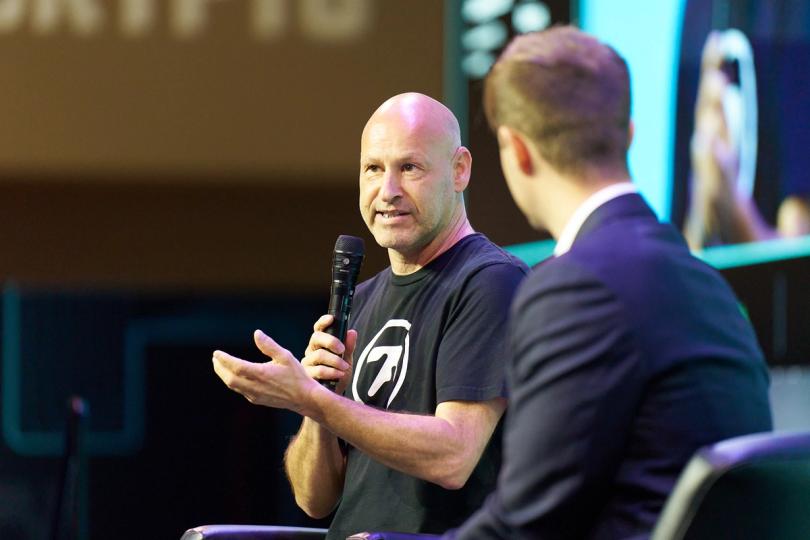 Consensys founder Joe Lubin dismisses concerns over Ethereum Foundation staff cuts and departures, arguing the organization should remain focused on stewarding Ethereum’s core technology and values2026-06
 Consensys confirms North Korea-linked contractor accessed MetaMask code for one month; finds no stolen assets or data2026-07
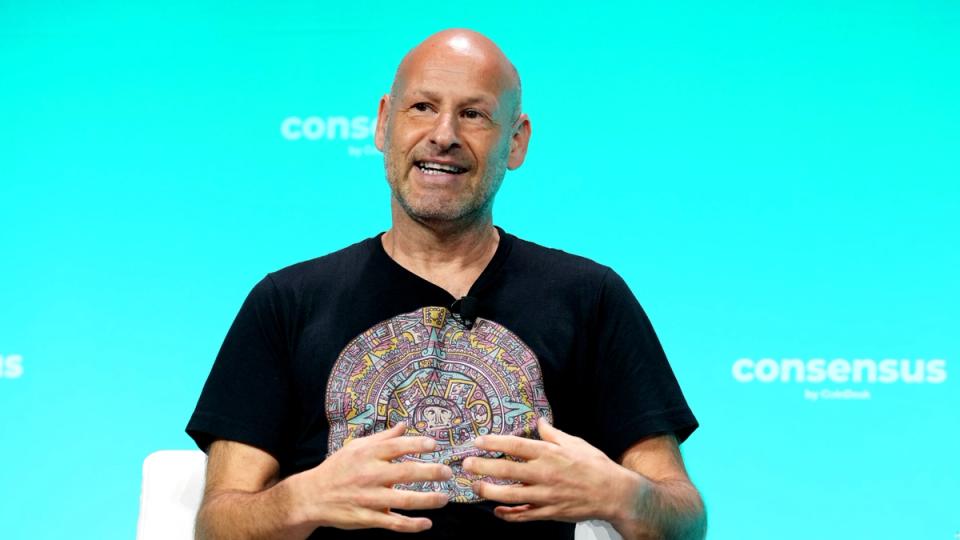 Ethereum's largest corporate backers launch Ethlabs, a new research hub backed by SharpLink, BitMine, and Consensys to accelerate protocol innovation beyond the Ethereum Foundation2026-06
Consensys: Inside Ethereum’s Flagship Web3 Software Company
A leading Ethereum-focused software studio, Consensys builds wallets, infrastructure, and developer tools that sit at the center of decentralized finance, non-custodial custody, and Web3 applications. By operating products such as MetaMask, Infura, and the Linea Layer 2 network, the company has grown into one of the most influential corporate actors in the Ethereum ecosystem, spanning technology, markets, and regulation.
Origins and Evolution of Consensys
Understanding Consensys begins with its roots in the early Ethereum project and the broader vision of a more decentralized internet. Ethereum co‑founder Joseph Lubin, a former Wall Street technologist, founded Consensys after helping launch Ethereum as a programmable blockchain designed for smart contracts and decentralized applications. From the outset, Consensys positioned itself not as a single‑product company but as a studio and software house dedicated to building the tools that developers, enterprises, and end users would need to actually use Ethereum in practice. This orientation toward infrastructure and application tooling shaped every subsequent decision, from launching the MetaMask wallet to operating cloud‑like node infrastructure and, later, building a Layer 2 network.
Over time, Consensys evolved from a loose collective of Ethereum ventures into a more conventional software company with a defined product suite and clearer commercial focus. The firm now describes itself as a leading blockchain and Web3 software company, emphasizing Ethereum and decentralized protocols as its core terrain. Its mission is framed around enabling people and institutions worldwide to build next‑generation applications, modernize financial infrastructure, and access the decentralized web, encapsulating both crypto‑native experimentation and enterprise‑grade use cases. As the Ethereum ecosystem matured, Consensys shifted from experimenting with many small projects to concentrating resources on a few high‑leverage platforms that reached massive scale across the industry.
The company’s strategy has always been tightly coupled to Ethereum’s own technical and economic trajectory. As Ethereum transitioned from proof‑of‑work to proof‑of‑stake and a multi‑layer scaling roadmap, Consensys moved to support these shifts with new infrastructure abstractions and developer experiences. It helped translate Ethereum’s protocol upgrades into usable services and interfaces, while promoting a vision in which Ethereum underpins a new “decentralized internet” of programmable money, identity, and ownership. In this sense, Consensys is less a neutral tool vendor and more an opinionated steward of a particular blockchain paradigm.
Funding and organizational milestones cemented this evolution. In March 2022, Consensys closed a $450 million Series D financing round at a valuation of more than seven billion dollars, more than doubling its valuation from a Series C raise just months earlier. The round, led by ParaFi Capital with participation from investors such as Temasek, SoftBank Vision Fund 2, Microsoft, and others, signaled that public‑market scale expectations were being placed on what had begun as an Ethereum venture studio. That capital has since underwritten major product expansion, acquisitions, and an eventual march toward a public listing, though market cycles have forced the company to adjust the pace of that journey.

Consensys is hiring across multiple roles to support its growth, with openings listed on its careers page
Core Products: MetaMask, Infura, Linea and the Consensys Stack
MetaMask and the Rise of Self‑Custodial Finance
No single product has defined Consensys more than MetaMask, the browser extension and mobile wallet that became the standard interface to Ethereum and many other EVM‑compatible networks. MetaMask was created in 2016 by developers Dan Finlay and Aaron Davis and, over its first six years, grew into one of the world’s leading self‑custodial wallets. Consensys describes MetaMask as the world’s most widely adopted self‑custodial finance platform, securing billions of dollars in digital assets for millions of users who rely on it to send, trade, earn, pay, and connect to Web3 applications. By packaging key management, transaction signing, and dApp connectivity into a single interface, MetaMask transformed interacting with DeFi, NFTs, and on‑chain governance from a command‑line exercise into a mainstream consumer experience.
Over time, MetaMask expanded beyond a basic wallet into a full‑fledged financial application layer. Integrated transaction security tooling, optimized routing for swaps, and cross‑chain infrastructure have been embedded into the product so that users can perform complex DeFi operations without manually navigating multiple protocols. MetaMask also supports in‑wallet swapping and bridge aggregation, effectively operating as a neutral front end over liquidity and infrastructure provided by third‑party protocols, while preserving a non‑custodial security model in which users retain control over their keys. This design both empowers users and raises regulatory questions, particularly around which activities constitute brokerage or securities intermediation, questions that later surfaced in enforcement debates.
Governance and leadership changes inside the MetaMask project underscore the stresses of building such a central piece of crypto infrastructure. In 2026, Dan Finlay, a MetaMask co‑founder and longtime Consensys developer, announced his departure from the company after roughly a decade working on the wallet, citing burnout and a desire to spend more time with his family. His exit marked a significant leadership transition for one of Ethereum’s best‑known wallet products and occurred as MetaMask rolled out “Advanced Permissions,” also known as ERC‑7715, which allows decentralized applications to obtain granular, pre‑approved permissions so they can execute certain transactions without requiring a user signature each time. That feature opens pathways for recurring payments and subscription‑like experiences in DeFi, while also demanding careful attention to user consent and risk disclosure.
MetaMask’s ubiquity has also made it a lightning rod for bug reports and UX criticism. A striking example arose when a user reported that the MetaMask browser extension was constantly writing about five megabytes per second to disk, potentially amounting to hundreds of gigabytes of writes per day and threatening SSD longevity. The problem appeared to stem from excessive writes in the local extension settings folder, and a MetaMask developer acknowledged awareness of the issue, explaining that writes were occurring more frequently than intended and should stop when the user interface was fully closed. While such bugs are part of normal software development, they illustrate the heightened stakes when a single wallet is deployed across millions of machines and is responsible for safeguarding real assets.
Infura and Decentralized Infrastructure
If MetaMask is how many users talk to Ethereum, Infura has long been how many applications talk to Ethereum. Infura began as a hosted infrastructure provider offering developers instant access to Ethereum and IPFS via simple APIs, sparing them from running and maintaining their own full nodes. Over the years, Infura became the de facto backbone for countless wallets, DeFi protocols, and NFT platforms, handling billions of blockchain‑based queries and enabling projects to scale without building bespoke node infrastructure. This convenience, however, exposed the ecosystem to centralization risks, as outages or censorship at Infura could impact large swaths of the Ethereum application layer.
Consensys has responded to these concerns by pushing Infura toward a more decentralized architecture. One manifestation is the Infura Decentralized Infrastructure Network, or DIN, which has launched as an Actively Validated Service (AVS) on EigenLayer, Ethereum’s restaking platform. The DIN now handles requests across a dozen blockchain networks and is designed to distribute infrastructure provision among multiple independent operators, reducing single points of failure and making the network more resilient against outages and policy shocks. By anchoring DIN in EigenLayer, Consensys is also experimenting with new cryptoeconomic incentives for infrastructure reliability, linking RPC performance to Ethereum’s broader restaking ecosystem.
Infura still occupies a complex position in debates over decentralization and censorship resistance. On one hand, its robust infrastructure and developer‑friendly APIs have been critical in enabling mainstream applications to interact with Ethereum at scale. On the other hand, its dominance has triggered concerns that Ethereum’s practical accessibility is mediated by a handful of corporate gateways, of which Infura is the most prominent. DIN can be read as a response to these critiques, an attempt to retain the developer‑experience benefits of Infura while diffusing operational control across a more heterogeneous network of providers.
Linea and Ethereum Layer 2 Scaling
As Ethereum adopted a rollup‑centric roadmap, scaling user activity off the main chain onto Layer 2 networks, Consensys moved to operate its own L2, Linea. Linea is a Layer 2 blockchain solution built by Consensys to improve user experience by offering cheaper and faster transactions, while maintaining the security guarantees of Ethereum. After a period of public testing, the Linea mainnet went fully live in 2023, a launch milestone marked at the EthCC conference and followed by a broader rollout to users and developers. Linea aims to provide a seamless environment for deploying Ethereum‑compatible smart contracts, positioning itself as a natural home for DeFi and NFT applications that already rely on Consensys tools like MetaMask and Infura.
The strategic logic of Linea is straightforward: by operating a Layer 2 network, Consensys can integrate the entire stack from wallet to RPC to execution environment, offering a vertically integrated developer and user experience. MetaMask users can bridge assets into Linea through familiar interfaces, developers can use Infura to access Linea nodes, and Consensys can shape the economic and governance parameters of the network in line with its broader Ethereum thesis. At the same time, Linea exists in a competitive landscape of L2s, including both optimistic and zero‑knowledge rollups, and must differentiate on performance, security, and ecosystem support rather than relying solely on Consensys’s brand.
Linea has also become a venue for experimentation in decentralized exchange and liquidity design. One example is the collaboration between Linea, Consensys, and Nile on a “next‑generation MetaDEX” called Etherex, intended to offer improved capital efficiency and user experience by tightly integrating with the Linea ecosystem. While many details remain fluid, such efforts highlight how Consensys is using Linea not just as a scaling solution but as a sandbox for new DeFi architectures that can be deeply integrated into its wallet and infrastructure stack. In parallel, Linea is expected to form part of Consensys’s broader token strategy, as the company has signaled plans to roll out tokens across MetaMask, Linea, and Infura to create “token‑powered economies” that reward both users and developers.
Additional Platforms and Developer Tools
Beyond its marquee products, Consensys maintains a suite of specialized tools and platforms that flesh out its role as an end‑to‑end Ethereum software provider. Truffle, one of the earliest popular Ethereum development frameworks, offers tooling for compiling, testing, and deploying smart contracts, which helped lower the barrier to entry for building decentralized applications. Quorum provides an enterprise‑focused Ethereum stack designed for permissioned or consortium networks, reflecting Consensys’s bet that large institutions would require tailored versions of Ethereum’s technology to meet regulatory and internal compliance requirements. Codefi focuses on digital assets and financial use cases, supporting tokenization, payments, and capital markets workflows, while Diligence provides security auditing and formal analysis for smart contracts.
Together, these tools underpin Consensys’s ambition to serve developers, enterprises, and end users through different layers of the Ethereum stack. A developer might write and test contracts with Truffle, deploy them to Ethereum or Linea, rely on Infura or DIN for node access, consult Diligence for security audits, and encourage users to interact through MetaMask. An enterprise client might adopt Quorum for internal uses while exploring public‑chain integrations via Codefi and MetaMask Institutional. By building and acquiring across this stack, Consensys has entrenched itself as an almost one‑stop shop for Ethereum development and deployment, albeit at the cost of raising concerns about concentration of influence in a nominally decentralized ecosystem.
Readers click Consensys stories not as company news but as Ethereum sovereignty dispatches — every SEC headline, Lubin equity dispute, and decentralization pivot is being tracked as evidence of whether the most powerful single actor in Ethereum's stack can be trusted to relinquish control of it.
Leadership, Funding, and Corporate Strategy
Joseph Lubin’s Role and Philosophy
At the center of Consensys sits Joseph Lubin, whose biography has become intertwined with Ethereum’s own story. Lubin is recognized as a co‑founder of Ethereum and is the founder and CEO of Consensys, as well as chairman of SharpLink, a publicly listed gaming company that has embraced Ethereum as a treasury asset. He has positioned himself as a vocal advocate for decentralized technology, frequently emphasizing the need to build a world where trust is less dependent on intermediaries and more anchored in verifiable code and open networks. This vision informs Consensys’s focus on non‑custodial products like MetaMask and on infrastructure designed to be widely accessible rather than proprietary to any single institution.
Lubin’s public commentary reveals a nuanced stance on Ethereum’s economic future. At the Consensus 2026 conference, he described Ethereum “Digital Asset Treasury” vehicles, or DATs, as a “profound innovation” because they create listed vehicles that accumulate long‑term, permanent capital in ETH without leverage. He singled out DATs such as Strategy, SharpLink, and BitMine as examples of treasuries that are structurally aligned with Ethereum’s long‑term health, while warning that weak assets and copycat DATs could harm the ecosystem if they pursued short‑term speculative gains rather than disciplined, unlevered ETH accumulation. This framing underscores Lubin’s preference for capital structures that reinforce Ethereum’s monetary premium and security, rather than extracting value through leverage or opaque financial engineering.
Lubin has also weighed in on deep technical questions that bear on Ethereum’s long‑term resilience. In the context of quantum computing, he has argued that Ethereum possesses an embedded roadmap toward quantum‑safe cryptography, owing in part to its account abstraction capabilities and upgrade culture. By contrast, he has suggested that Bitcoin faces more complicated property rights issues in migrating quantum‑vulnerable addresses, which could complicate a smooth transition to quantum‑resistant schemes. Whether one agrees with this comparison or not, it illustrates how Consensys’s leadership situates Ethereum’s technical roadmap within broader narratives about security, innovation, and competition among base layers.
At the same time, Lubin has not shied away from cautionary messages, particularly around the accelerating tokenization of real‑world assets and the global economy. In recent remarks, he has warned that tokenizing the world’s financial system will require navigating “treacherous crypto seas,” a metaphor for systemic risks, regulatory uncertainty, and the potential for speculative excess. This tension between enthusiasm for Ethereum’s transformative potential and concern over the hazards of rapid financial innovation runs through much of Consensys’s public positioning, including in its investments in DATs, stablecoins, and tokenization startups.
Funding, Valuation, and IPO Plans
Consensys’s growth has been fueled by substantial venture funding that pushed the company into the upper tier of private fintech valuations. The 2022 Series D round, raising 450 million dollars, set Consensys’s valuation at over seven billion dollars, more than doubling the valuation from its previous Series C just months earlier. The round’s investor list, including ParaFi Capital as lead, along with Temasek, SoftBank Vision Fund 2, Microsoft, and others, reflected cross‑sector conviction that Ethereum‑centric infrastructure would play a central role in the future of finance and the internet. For Consensys, the capital influx provided resources to scale MetaMask, invest in Linea and Infura, expand enterprise offerings, and pursue acquisitions like Web3Auth.
As the company matured, attention naturally turned to the prospect of an initial public offering. Consensys reportedly engaged JPMorgan and Goldman Sachs as lead banks for a planned U.S. listing and had targeted filing a confidential S‑1 registration statement with the Securities and Exchange Commission around the end of February 2026. A confidential S‑1 is typically the first formal step in the IPO process, allowing a company and regulators to review disclosures away from public markets until closer to listing. This trajectory would have placed Consensys alongside other crypto firms such as Circle and Bullish that are seeking to capitalize on more industry‑friendly regulatory and political environments.
However, deteriorating market conditions have forced Consensys to adjust its timeline. Amid a sustained downturn in crypto prices and a broader “risk‑off” environment in public markets, the company delayed its planned U.S. IPO to at least the fall of 2026. Crypto markets saw a sharp sell‑off in February 2026 as investors pulled back from risk assets, contributing to a slowdown in listing activity by crypto‑related companies. Consensys is not alone in recalibrating; exchange operator Kraken and hardware wallet maker Ledger have reportedly also paused or slowed their IPO preparations in response to the same macro headwinds. The company has not disclosed a revised valuation in connection with the updated IPO timeline, and a spokesperson has declined to comment on market speculation surrounding its fundraising plans.
This interplay between crypto market cycles and Consensys’s corporate strategy highlights the hybrid nature of Web3 infrastructure firms. On one level, their revenues and valuations depend on activity within decentralized networks like Ethereum, which are notoriously cyclical. On another, their access to capital and public‑market liquidity depends on conventional investor risk appetite and regulatory clarity. By postponing its IPO, Consensys is effectively betting that future market conditions will better reflect what it views as Ethereum’s fundamental trajectory and the growing centrality of its own products to that ecosystem.
Acquisitions, Ecosystem Bets, and Strategic Investments
Beyond organic growth, Consensys has used acquisitions and strategic investments to advance its roadmap and influence key segments of the Web3 stack. One notable acquisition is Web3Auth, a key management provider that offers SDKs based on multiparty computation (MPC) and account abstraction, enabling users to create wallets with social logins instead of traditional seed phrases. Web3Auth has reported that roughly 97 percent of its new users create wallets using social logins, underscoring the usability gains of moving away from mnemonic backups. By acquiring Web3Auth, Consensys aims to integrate smoother login and recovery experiences into MetaMask and related products, a move that could make self‑custodial wallets more accessible to mainstream users while maintaining non‑custodial control under the hood.
Consensys has also deployed capital as a strategic investor in projects aligned with its Ethereum‑centric thesis. The company participated in a 5.5 million dollar raise for Brix, an emerging‑markets focused startup that plans to tokenize high‑yielding assets and bring local currencies onchain, beginning with a tokenized Turkish lira. The round, led by Turkish financial institutions Yapi Kredi’s venture arm FRWRD and Isbank’s asset management subsidiary, also included Circle Ventures and Borderless Capital, illustrating how Consensys co‑invests alongside both traditional finance and crypto‑native firms in tokenization plays. This investment positions Consensys at the intersection of stablecoins, emerging market yields, and Ethereum‑based settlement.
Another high‑profile bet involves SharpLink Gaming, a Nasdaq‑listed company that announced a 425 million dollar private placement led by Consensys. The PIPE transaction involved the sale of roughly 69.1 million shares at just over six dollars per share and is intended to fund a strategy under which SharpLink will acquire Ethereum as its primary treasury reserve asset. Upon closing, expected in May 2025, Joseph Lubin is slated to become SharpLink’s chairman of the board, aligning corporate governance with the Ethereum‑centric treasury strategy. Consensys’s leadership role in this deal dovetails with Lubin’s public praise for Ethereum DATs and permanent capital structures that hold ETH without leverage, positioning SharpLink as both a portfolio company and a test case for on‑chain treasury models.
These moves fit into a broader ecosystem strategy in which Consensys backs projects that reinforce Ethereum as a settlement layer for digital assets, from tokenized currencies and yields to corporate treasuries. The company has also provided backing to DeFi projects such as MYX, which is preparing a major V2 launch after a strategic raise, and has supported initiatives like the Enterprise Ethereum Alliance’s privacy working group alongside COTI and Polygon, aimed at driving enterprise adoption of Ethereum with stronger privacy guarantees. While these latter efforts are less publicized than MetaMask or Linea, they illustrate how Consensys seeks to shape both the retail and institutional ends of the Ethereum adoption curve.
Regulation, Policy, and Legal Disputes
SEC Engagement and the MetaMask Securities Case
As Consensys’s products have grown central to crypto markets, regulatory scrutiny has followed, most prominently from the U.S. Securities and Exchange Commission. In June 2024, the SEC filed a civil enforcement action against Consensys Software Inc. in the Eastern District of New York, in a case captioned Securities and Exchange Commission v. Consensys Software Inc., No. 24‑cv‑04578. While the specific allegations are not detailed in the SEC’s later litigation release, industry commentary widely linked the case to MetaMask’s swapping and staking features and broader questions about whether wallet interfaces that route trades or delegate staking constitute unregistered securities intermediaries. The case formed part of a broader pattern of SEC enforcement against crypto firms, including exchanges and lending platforms, around that time.
In a significant development, the SEC later filed a joint stipulation with Consensys to dismiss the civil enforcement action with prejudice, meaning the case cannot be re‑filed on the same claims. The Commission’s litigation release emphasized that the decision to seek dismissal was based on its judgment that doing so would facilitate ongoing efforts to reform and renew its regulatory approach to the crypto industry, rather than any assessment of the merits of the claims alleged in the action. The SEC also stressed that the dismissal did not necessarily reflect its position on any other case, suggesting that the underlying legal questions remain live in other enforcement contexts.
For Consensys, the dismissal removes a major overhang as it contemplates an eventual IPO and continues to expand MetaMask’s feature set. It also signals a possible shift in how U.S. regulators intend to engage with large infrastructure providers, perhaps moving from purely adversarial enforcement toward a more negotiated rulemaking and guidance process. Yet the Commission’s caveats make clear that wallet providers and DeFi interfaces remain in a gray zone, and future litigation or rulemaking could still reshape what services MetaMask and similar products can offer without broker‑dealer or exchange registrations. The resolution of the Consensys case is therefore less an endpoint than a marker of regulatory flux.
Stablecoins, the GENIUS Act, and FDIC Rulemaking
Stablecoins represent another regulatory frontier where Consensys has taken an active policy role. In the United States, the GENIUS Act introduced a framework for “permitted payment stablecoin issuers” supervised by federal banking regulators such as the Federal Deposit Insurance Corporation. To implement the statute, the FDIC proposed amendments to Part 350 of its rules, setting out requirements and standards for FDIC‑supervised stablecoin issuers, including disclosure obligations and restrictions on certain activities. One controversial provision, Section 4(a)(11), prohibits payment stablecoin issuers from paying yield to stablecoin holders, a measure designed to draw a clearer line between payment tokens and investment products.
On May 18, 2026, Consensys filed a formal comment on the FDIC’s proposed rule, focusing in particular on how the GENIUS Act framework might affect DeFi access and third‑party yield opportunities. The company noted that while Section 4(a)(11) bars issuers themselves from paying yield, it does not prohibit independent third parties from offering returns on stablecoins, for example through lending or liquidity provision in DeFi protocols. Consensys argued that regulatory language should be carefully tailored to avoid unintentionally restricting these third‑party activities or cutting off FDIC‑supervised stablecoin issuers from permissionless DeFi ecosystems. In essence, the company sought to preserve the ability of users to deploy regulated stablecoins in on‑chain financial markets, while accepting limits on issuers directly promising yield.
Consensys’s engagement with the GENIUS Act rulemaking illustrates how the company leverages its role as both infrastructure provider and ecosystem advocate. As the developer of MetaMask, which serves as a primary interface for many stablecoin users, and as a supporter of projects that tokenize currencies and real‑world yields, Consensys has a direct interest in ensuring that regulatory frameworks do not ring‑fence stablecoins away from open DeFi protocols. At the same time, its emphasis on clear distinctions between issuer‑paid yield and third‑party yield aligns with regulators’ concerns about investor protection and systemic risk. This balancing act reflects a broader pattern in Consensys’s policy interventions: pushing for regulatory clarity that preserves open access while acknowledging the need for guardrails around certain activities.
Global Regulatory Engagement and Policy Advocacy
Consensys’s regulatory interactions extend beyond the United States. In Europe, the firm has engaged with the Markets in Crypto‑Assets (MiCA) framework both directly and indirectly, including through its partnership with Societe Generale‑FORGE to integrate the MiCA‑compliant USD CoinVertible stablecoin into MetaMask. USD CoinVertible, issued by SG‑Forge, a subsidiary of a major European bank, is positioned as a regulated stablecoin that meets MiCA’s requirements for e‑money tokens. Through its partnership with Consensys, SG‑Forge will see its stablecoin listed among a curated shortlist of stablecoins within the MetaMask wallet on both mobile and web, marking the first time MetaMask’s millions of users gain direct access to a stablecoin issued by a major European bank. This collaboration is framed as a milestone in bridging traditional finance and Web3 infrastructures and reflects Consensys’s willingness to work with regulated institutions to bring on‑chain assets to a wider audience.
In the United Kingdom, Consensys has been critical of some regulatory proposals. Company counsel Bill Hughes has characterized certain Financial Conduct Authority (FCA) crypto marketing and authorization proposals as a “mother, may I” regime that could be more restrictive than either MiCA or current U.S. rules, underscoring concerns that excessive licensing requirements could stifle open‑source development and permissionless access. While these remarks come from industry commentary rather than formal filings, they highlight Consensys’s stance that regulatory frameworks should not require developers or users to obtain case‑by‑case approvals simply to interact with decentralized protocols.
Consensys also participates in multi‑stakeholder initiatives aimed at shaping the regulatory perimeter for enterprise blockchain deployments. Within the Enterprise Ethereum Alliance (EEA), the company has joined a Privacy Working Group alongside projects like COTI and Polygon, focusing on standards and best practices for privacy‑preserving enterprise use of Ethereum‑compatible networks. This work speaks to a central tension in enterprise blockchain adoption: large institutions often require compliance‑compatible privacy features while still wanting to tap into the network effects and security of public Ethereum. By contributing to such working groups, Consensys positions itself as a bridge between open public chains and regulated, privacy‑conscious use cases.
Collectively, these regulatory engagements show that Consensys is not merely a passive subject of rulemaking but an active participant in shaping the legal and policy contours of Web3. From SEC enforcement and FDIC stablecoin rules to MiCA implementation and FCA consultations, the company’s advocacy reflects both its commercial interests and its broader ideological commitment to keeping Ethereum as an open, programmable base for global finance and computation.
- 01SEC vs MetaMask legal war↗
The three-way fight — SEC suing Consensys, Consensys counter-suing the SEC, and the eventual dismissal — gave readers a serialized proxy battle over whether ETH and staking products are securities, with real enforcement stakes each round.
- 02Decentralization or capture↗
The highest-clicked headline directly names the tension: readers want to know whether Consensys' token rollout across MetaMask, Linea, and Infura is genuine decentralization or a monetization pivot that centralizes power further.
- 03Lubin governance legitimacy↗
The former-employee lawsuit alleging Lubin stripped equity by transferring assets including MetaMask to a new entity hit hard because it reframes Consensys' whole decentralization narrative as potentially self-serving restructuring.
- 04MetaMask security incidents↗
A critical SSD-destroying background-write bug and Discord drainer hacks landed back-to-back, undermining the product most retail users trust as their primary Ethereum gateway.
- 05IPO and institutional pivot↗
Tapping JPMorgan and Goldman while delaying for market conditions signals Consensys is positioning for a traditional finance exit, which readers read as a test of whether Web3 infrastructure can stay independent post-liquidity event.
- 06Linea L2 ecosystem buildout↗
Linea's MetaDEX launch, ENS partnership, and Discord hack put Consensys' own L2 under scrutiny as both a growth vector and a centralization risk given who controls the sequencer.
Consensys in the Ethereum and DeFi Ecosystem
ETH Markets, DATs, and Treasury Strategies
Consensys’s influence extends well beyond software into the structure of ETH markets and treasury strategies. Lubin’s praise for Ethereum Digital Asset Treasury vehicles reflects an emerging category of listed entities that accumulate ETH as their primary or sole asset, effectively functioning as permanent capital pools for the Ethereum ecosystem. He has highlighted DATs like Strategy, SharpLink, and BitMine as examples of vehicles that hold ETH without leverage and commit to long‑term accumulation, thereby enhancing Ethereum’s monetary premium and aligning shareholder interests with network health. This stance positions Consensys as a proponent of ETH‑centric balance sheet strategies and cautious leverage use.
SharpLink’s 425 million dollar private placement, led by Consensys, provides a concrete illustration of this philosophy. As part of the PIPE transaction, SharpLink plans to acquire Ethereum as its primary treasury reserve asset, effectively transforming its balance sheet into a large ETH position. Lubin’s anticipated role as chairman of SharpLink’s board underscores the strategic alignment between the company’s treasury strategy and Consensys’s broader vision of permanent ETH capital. The transaction also demonstrates how Consensys uses both capital and governance to support entities that embed Ethereum at the core of their economic design, blurring the line between traditional corporate finance and on‑chain monetary policy.
On‑chain data and market analysis further indicate that addresses associated with or linked to Consensys have played meaningful roles in ETH accumulation. According to reporting based on Arkham Intelligence data, a whale wallet connected to Consensys purchased over 100,000 ETH—roughly 320 million dollars’ worth at the time—from Galaxy Digital. Shortly after the acquisition, the wallet transferred the ETH to a new address and staked approximately 120 million dollars’ worth via the Liquid Collective staking protocol. Analysts interpreted this move as a sign of strong institutional confidence in Ethereum’s long‑term prospects, with some suggesting it could act as a bullish catalyst for ETH prices by affecting demand‑supply dynamics. While causality between single purchases and market trends is hard to prove, such transactions underscore the scale at which Ethereum‑aligned institutions are now operating.
Consensys has also stepped in as a backstop in times of stress within the DeFi ecosystem. In the wake of an exploit affecting KelpDAO’s rsETH product, Aave and DeFi United disclosed that Consensys and Lubin had joined a recovery initiative, committing to provide up to 30,000 ETH to support rsETH’s recapitalization, alongside contributions from Aave, Mantle, Lido, and other protocols. Lubin framed this commitment as part of a broader responsibility to maintain trust in Ethereum‑based liquid staking and DeFi infrastructure, reinforcing his view that robust, unleveraged treasuries and community support mechanisms are crucial for Ethereum’s long‑term stability.
Stablecoins, Tokenization, and Real‑World Assets
Stablecoins and real‑world asset tokenization are central to Consensys’s strategy of bringing the “global economy” onchain. The partnership with Societe Generale‑FORGE around USD CoinVertible exemplifies how the company is enabling regulated stablecoins to reach retail users through familiar interfaces. By integrating USD CoinVertible into MetaMask’s curated shortlist of stablecoins, Consensys allows users to access, hold, and transact with a MiCA‑compliant stablecoin issued by a subsidiary of a major European bank, directly from their self‑custodial wallet. This integration promises to make regulated euro‑area stablecoins more accessible while giving banks exposure to Web3 distribution channels.
Consensys’s investment in Brix pushes tokenization another step further into emerging markets. Brix has raised 5.5 million dollars to tokenize high‑yielding emerging market assets, starting with a tokenized Turkish lira scheduled for launch in April. The round was led by established Turkish financial institutions and included participation from Circle Ventures, Consensys, and Borderless Capital, creating a coalition that spans local banking, global stablecoin expertise, and Ethereum‑native investors. By backing Brix, Consensys is betting that on‑chain representations of local currencies and yields will become key instruments in global DeFi, allowing investors to access diversified yield streams while providing new funding channels for emerging market borrowers.
Lubin’s cautionary remarks about “treacherous crypto seas” in the context of tokenizing the world’s economy highlight the inherent risks of this trajectory. Tokenization promises greater efficiency, programmability, and composability, but also introduces new vectors for speculative excess, regulatory arbitrage, and smart‑contract risk. Consensys, through MetaMask, Infura, Linea, and its investments, is helping to build the rails on which these tokenized assets will travel. That dual role—as both builder and gatekeeper—places a premium on careful design choices, transparent risk disclosures, and proactive engagement with regulators to ensure that the benefits of tokenization do not come at the cost of systemic fragility.
Product‑Level DeFi Integration and Token Incentives
At the product level, Consensys is weaving DeFi functionality into its user interfaces while considering new token incentive structures. MetaMask has long offered integrated swap and bridge capabilities, aggregating liquidity from multiple decentralized exchanges and cross‑chain protocols so that users can trade and move assets without leaving the wallet. These features turn MetaMask into more than a passive key manager; it becomes a transaction router and discovery interface for DeFi, guiding user order flow across protocols. Although this deep integration has made DeFi more accessible, it has also raised questions about fee structures, routing neutrality, and the wallet’s regulatory status, which in part motivated regulatory scrutiny from authorities like the SEC.
Linea, for its part, is positioning itself as a high‑throughput, low‑cost environment where new DeFi protocols can flourish, including advanced DEX designs like Etherex that seek to optimize for capital efficiency and user experience. By anchoring such projects within Linea and integrating them tightly with MetaMask and Infura, Consensys aims to create a cohesive DeFi ecosystem where users can move seamlessly from wallet to Layer 2 to specific protocols. That architectural integration also creates natural points where token incentives can be layered in, for example rewarding users for using particular bridges, liquidity pools, or infrastructure providers.
Recent reporting indicates that Consensys plans to roll out tokens associated with MetaMask, Linea, and Infura, creating “token‑powered economies” that reward early and active users, developers, and potentially infrastructure operators. Early initiatives such as MetaMask’s “Season 1” rewards, reportedly distributing tens of millions of dollars’ worth of value, hint at how the company might use tokens to share economics more broadly with its user base. The challenge will be to design such tokens in ways that avoid the pitfalls Lubin has identified in over‑leveraged or misaligned DATs and that can withstand regulatory scrutiny around securities classification.
Technology, UX, and Security
Wallet UX, Social Logins, and Advanced Permissions
User experience has emerged as a critical bottleneck for Web3 adoption, and Consensys is investing heavily in lowering friction without compromising security. The acquisition of Web3Auth is central to this strategy. Web3Auth provides key management SDKs that leverage multiparty computation and account abstraction to enable login flows based on familiar credentials such as email or social accounts instead of seed phrases. The company reports that approximately 97 percent of new users create wallets using social logins, highlighting the dramatic usability gains compared to mnemonic‑based onboarding. Integrating Web3Auth into MetaMask and related products could allow Consensys to offer recovery options and login experiences that feel closer to Web2, while still keeping keys split across user devices and non‑custodial infrastructures.
At the same time, advanced features like MetaMask’s ERC‑7715 “Advanced Permissions” show how UX improvements can introduce new risk surfaces. By enabling decentralized applications to request specific, ongoing transaction permissions—such as recurring payments with user‑set spending limits—MetaMask moves closer to familiar subscription models seen in traditional fintech. This can greatly improve convenience, particularly for regular DeFi activities like dollar‑cost averaging, protocol fee payments, or NFT subscriptions. However, it also requires robust UI design to ensure users understand what they are authorizing and can revoke permissions easily, as well as careful smart‑contract engineering on the dApp side to prevent abuse. The departure of Dan Finlay, who publicly highlighted Advanced Permissions upon leaving Consensys, underscores that these decisions are both technically and culturally significant within the MetaMask team.
Balancing ease of use with self‑custody principles remains a core design challenge. Seed phrase elimination through technologies like Web3Auth could reduce user error and onboarding friction, but might also concentrate recovery infrastructure in a smaller set of providers. Advanced permissions can streamline recurring transactions but risk normalizing broad approvals if not carefully bounded. Consensys’s approach will likely shape industry norms around what a “modern” self‑custodial wallet looks like, influencing not only MetaMask’s millions of users but also competing wallets that may emulate or react against its design choices.
Bugs, Security, and Operational Risk
Security and reliability are paramount for any company building critical Web3 infrastructure, and Consensys has experienced both successes and public challenges in this realm. The MetaMask abnormal disk‑writing bug surfaced by a user on GitHub is an instructive episode. The user observed that after installing MetaMask on Chromium‑based browsers such as Chrome, Opera, or Edge, the extension continuously wrote about five megabytes per second to disk, amounting to roughly 500 gigabytes per day, even when the wallet was locked. The writes appeared to originate from the browser’s local extension settings folder, raising concerns that prolonged use could significantly shorten SSD lifespans.
A MetaMask developer responded by acknowledging awareness of an issue where writes were occurring more frequently than they should, clarifying that they should cease when the user interface was completely closed. The developer suggested that users experiencing the problem may have left the expanded wallet view open in a browser tab, causing writes to continue. Although this explanation alleviated some concerns, the episode highlighted how performance bugs in widely deployed browser extensions can have unexpected and material impacts on users’ hardware. It also demonstrated the importance of open issue tracking and transparent communication in quickly diagnosing and mitigating such problems.
Beyond bug response, Consensys has invested in formal security practices through its Diligence unit, which provides smart contract audits and security tooling. Diligence’s work spans automated analysis, fuzzing, and manual review, helping developers identify vulnerabilities before deploying contracts to production chains. As Consensys deepens its integration with DeFi protocols, stablecoins, and high‑value tokenized assets, the stakes of any security lapse increase. Attacks on or through MetaMask, Infura, or Linea could have cascading effects across the Ethereum ecosystem, underscoring the systemic importance of robust security posture at the company.
Reliance on infrequent but high‑severity interventions is not enough; operational security must be embedded into daily development and deployment processes. For MetaMask, this includes rigorous testing of new features like Advanced Permissions, careful handling of hardware wallet integrations, and ongoing monitoring for phishing and malicious dApps that target wallet users. For Infura and DIN, it requires redundancy, failover planning, and resistance to censorship or regional outages. For Linea, the focus extends to proving systems, fraud or validity proofs, and bridge security. The breadth of Consensys’s footprint means that security excellence is not optional but foundational to its legitimacy in the ecosystem.
Research, Ethereum Upgrades, and Future Protocols
Consensys also plays a role as a research and thought‑leadership hub within the Ethereum community. The company regularly publishes analyses of major Ethereum network upgrades, translating protocol‑level changes into implications for developers, users, and institutions. In the wake of upgrades like the Merge and Dencun, Consensys has turned its attention to the upcoming “Pectra” upgrade, a combination of the Prague and Electra hard forks that is expected to introduce improvements to the Ethereum Virtual Machine, validator operations, and potentially state management. While the exact contents of Pectra continue to evolve, Consensys’s commentary focuses on how these changes can reduce costs, simplify developer workflows, and inch Ethereum closer to a more scalable and user‑friendly base layer.
Lubin’s remarks on quantum‑safe cryptography highlight another dimension of this research agenda. He has emphasized that Ethereum’s flexible account model and culture of regular, community‑governed upgrades make it better positioned to adopt quantum‑resistant schemes once quantum attacks become a realistic threat. This might involve transitioning to post‑quantum signature algorithms and implementing migration paths that respect existing property rights while hardening security. By contrast, Lubin argues that Bitcoin’s UTXO model and social consensus dynamics could make such a transition more fraught. Whether one agrees with this assessment, it underscores Consensys’s focus on long‑horizon protocol risks rather than only near‑term performance gains.
Outside Ethereum itself, the broader research ecosystem continues to experiment with new consensus mechanisms and scalability approaches. Projects like Sonic Labs have teased new consensus designs that aim to deliver up to twice the throughput and significant memory reductions compared to current protocols, demonstrating the pace of innovation in base‑layer and Layer 2 architectures. While these efforts are independent of Consensys, they form part of the competitive landscape within which Linea and other Ethereum‑aligned scaling solutions must differentiate. Consensys’s challenge is to ensure that its own research and engineering keep pace with these advances while remaining tightly integrated with Ethereum’s canonical roadmap.
Linea mainnet launches
Consensys sues SEC preemptively over MetaMask
SEC sues Consensys; alleges MetaMask is unregistered broker-dealer
SEC closes Ethereum investigation, no enforcement recommended
Infura decentralized infrastructure launches as EigenLayer AVS
Consensys and SEC agree to dismiss MetaMask securities case
Consensys taps JPMorgan and Goldman Sachs to lead IPO
Consensys delays U.S. IPO to fall 2026 amid risk-off markets
Critiques, Risks, and Ongoing Challenges
Centralization of Web3 Infrastructure
Consensys’s success has inevitably raised concerns about centralization within ostensibly decentralized ecosystems. MetaMask’s dominance as a browser wallet means that, for many users, “using Ethereum” is functionally equivalent to “using MetaMask.” Infura’s historical position as the default node provider for many applications further concentrates power, as outages or geofencing at Infura can affect a large share of Ethereum‑based dApps. Linea adds another layer to this concentration, as Consensys now operates a scaling network that can natively integrate with its wallet and infrastructure stack.
Critics argue that this vertical integration, while convenient, risks creating chokepoints where corporate decisions—whether driven by commercial interests, regulatory demands, or technical failures—can have outsized effects on users’ access to decentralized networks. The move to decentralize Infura through the DIN on EigenLayer is one response to these criticisms, distributing infrastructure across multiple providers and networks. Similarly, MetaMask’s support for custom RPCs and alternative providers gives power users the ability to route around Infura if they choose. However, for the majority of less technical users, the defaults set by Consensys will continue to shape their experience of Ethereum.
The challenge for Consensys is to design products and governance structures that mitigate centralization risks while preserving the usability that made its tools successful in the first place. This may involve stronger commitments to open standards, more transparent governance for networks like Linea, and mechanisms for community input on contentious decisions, such as how to handle protocol‑level censorship or regulatory pressure. The company’s participation in decentralized infrastructure initiatives like DIN and in open governance processes within Ethereum suggests an awareness of these concerns, but concrete safeguards will likely be demanded by the community as its influence grows.
Regulatory Capture, Policy Trade‑Offs, and Public Perception
Another challenge lies in how Consensys navigates the line between constructive regulatory engagement and perceived regulatory capture. Its proactive comments on the FDIC’s GENIUS Act, public critiques of UK FCA proposals, and partnerships with regulated entities like SG‑Forge all signal a willingness to work within regulatory frameworks to legitimize and expand Web3. At the same time, some in the crypto community worry that large, well‑funded actors like Consensys may shape regulation in ways that favor their own business models over smaller, more decentralized competitors. For example, rules that implicitly require sophisticated compliance infrastructures could tilt the playing field toward firms with the resources to build them.
The dismissal of the SEC’s enforcement action against Consensys could be interpreted in multiple ways. Supporters might see it as evidence that aggressive enforcement theories around wallet interfaces are giving way to more nuanced regulatory approaches, opening space for responsible innovation. Skeptics might fear that future rules will be negotiated primarily with large incumbents, entrenching their role as intermediaries even in nominally decentralized systems. Consensys’s public messaging, which emphasizes both openness and regulatory pragmatism, will need to address these perceptions by demonstrating that its advocacy seeks to protect permissionless access and developer autonomy, not just corporate interests.
Lubin’s warnings about the dangers of poorly designed DATs and speculative tokenization add another layer to this dynamic. By publicly criticizing leverage and weak treasuries, he positions Consensys as a voice for long‑term sustainability rather than short‑term profit. However, the company’s own involvement in shaping treasury strategies, stablecoin integrations, and token incentive schemes means it will be judged not just on words but on the design of the products and investments it pursues. Transparency about economic incentives, fee structures, and governance rights will be essential to maintaining credibility.
Market Cycles, Business Resilience, and Strategic Risk
Finally, Consensys must navigate the inherent volatility of crypto markets while sustaining long‑term product and research investments. The decision to delay its IPO to at least the fall of 2026 due to weak market conditions underscores how external macro factors can disrupt even well‑capitalized companies’ strategic plans. Crypto price downturns reduce on‑chain activity, compress valuations, and make public investors more skeptical of highly correlated revenue models. For a company whose fortunes are closely tied to Ethereum’s usage and price, this cyclicality is a structural challenge rather than a temporary anomaly.
Consensys has attempted to diversify its revenue sources across multiple products—wallet services, infrastructure APIs, enterprise offerings, and potentially future tokens—so that downturns in one area can be partially offset by strength in others. Investments in stablecoin infrastructure, tokenization, and DATs may also provide relatively more resilient revenue streams if they succeed in tapping into broader macroeconomic activity rather than purely speculative DeFi volumes. Nonetheless, the company’s fate remains deeply intertwined with Ethereum’s long‑term adoption curve and regulatory treatment.
Strategic missteps, whether in token design, acquisition integration, or regulatory engagement, could amplify these market risks. For example, poorly structured token rollouts could attract enforcement attention or alienate users; aggressive leverage in treasury strategies could backfire in a downturn; mismanaged security incidents could erode trust. Conversely, thoughtful product design, transparent economics, and measured regulatory advocacy could allow Consensys to ride out market cycles while consolidating its role as a foundational Web3 infrastructure provider. The coming years, including any eventual IPO and token launches, will be critical in determining which of these paths it follows.
Outlook
Consensys today occupies a unique position at the intersection of Ethereum’s technical roadmap, DeFi’s financial experimentation, and the evolving global regulatory landscape. Through products like MetaMask, Infura, and Linea, and through strategic investments in stablecoins, DATs, and tokenization projects, the company has become a central conduit through which users, developers, and institutions access Web3. Its leadership under Joseph Lubin blends a strong ideological commitment to decentralization with pragmatic engagement in capital markets and policymaking.
The next phase of Consensys’s story will likely be defined by how it executes on three fronts. First, on technology and UX, it must deliver on the promise of more secure, user‑friendly self‑custody through initiatives like Web3Auth integration and advanced wallet permissions, while maintaining robust security and mitigating bugs. Second, on markets and incentives, it will need to design token economies and treasury partnerships that align with Ethereum’s long‑term health rather than short‑term speculation, in line with Lubin’s critique of over‑leveraged structures. Third, on regulation and governance, it must continue to advocate for open, permissionless access while demonstrating that its growing influence does not become a centralizing force in a decentralized ecosystem.
If Consensys can strike this balance, it is positioned to remain one of the defining companies of the Ethereum era, helping to translate the protocol’s technical advances—such as upcoming upgrades like Pectra—into accessible products and robust financial infrastructure. If it falters, either through misaligned incentives, security lapses, or regulatory miscalculations, the consequences will reverberate far beyond its own balance sheet, affecting the everyday experience of millions of Ethereum users. For a crypto news audience tracking the evolution of Web3, watching Consensys is therefore not just following a single company, but observing a major vector through which Ethereum’s future will be shaped.
Latest Consensys news
Sources
18 records from 11 domains
consensys.io
- consensys.io
- consensys.io· blog / metamask-celebrates-its-6th-anniversary-with-6-digit-growth-strategic-upda…
- consensys.io· blog / consensys-launches-linea-mainnet-unlocking-a-new-level-of-user-experience
- consensys.io· blog / infura-decentralized-infrastructure-network-launches-as-eigenlayer-avs
- consensys.io· blog / fdic-genius-act-stablecoin-comment
- consensys.io· about / joseph-lubin-founder-of-consensys
- consensys.io· blog / consensys-raises-450m-series-d-funding
sec.gov
coinmarketcap.com
federalregister.gov
crypto.news
sgforge.com
stocktitan.net
coingape.com
bankless.com
web3auth.io
github.com
Community notes
Spot something off or out of date? Drop a note. Editors review topic notes daily and roll accepted fixes into the explainer — contributors are recognized in the monthly $SQUID drop.
Loading notes…
Help improve this topic
Have a story or tip about this topic? Submit it. See something missing? Leave a note. Editors review daily; accepted submissions and fixes count toward the monthly $SQUID drop.