
In‑depth explainer on Linea, Ethereum’s zkEVM Layer‑2, covering its Lineth stack, zk architecture, staking‑powered Yield Boost, native USDC, institutional adoption, LINEA token incentives, security risks, and how users engage with DeFi.
+5 sources across the wider coverage universe
 Linea contributes its ZK rollup stack to Linux Foundation’s LFDT, shifting governance to an open-source model while aiming to attract enterprise and institutional adoption2026-05
 Linea pivots to RISC-V after 3 years of EVM arithmetization, aiming to simplify zk proving, boost performance, and align with Ethereum’s evolving roadmap2026-03
 Linea goes live across the full Uniswap stack, expanding zkEVM access with lower fees and native staking yield2026-04
 Linea launches Yield Boost, converting bridged ETH into staking-powered liquidity via Lido to deliver sustainable DeFi yields without incentives, rebasing, or new tokens2026-03
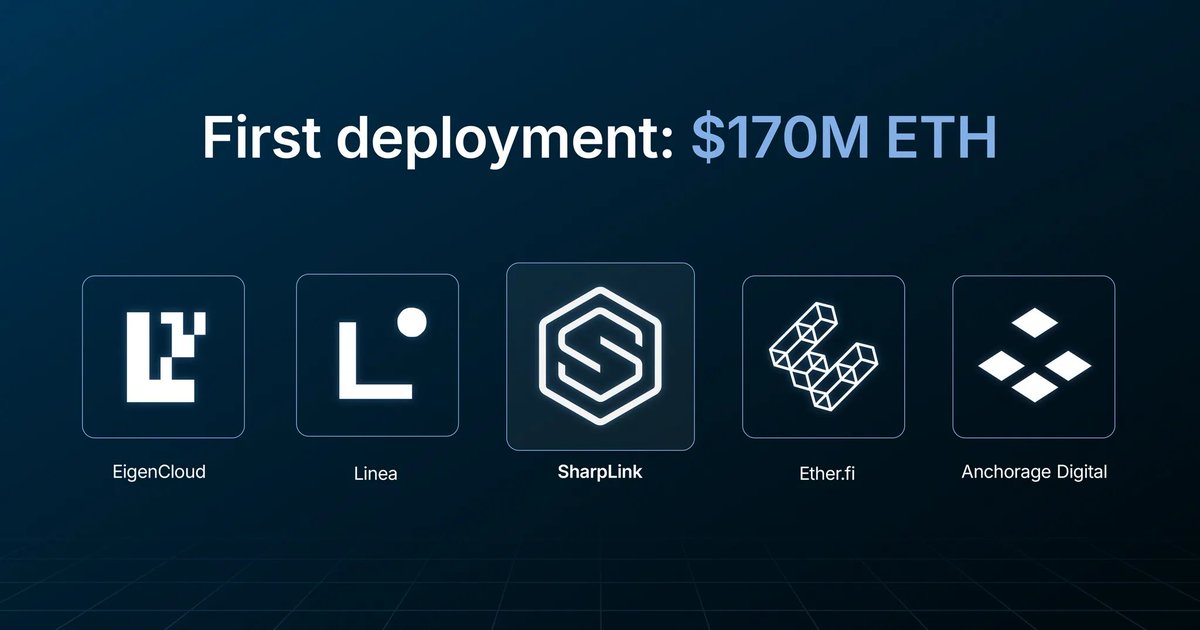 SharpLink Deploys $170M ETH on Linea in First-of-Its-Kind Institutional Strategy Combining Native Yield, Restaking Rewards, and Network Incentives.2026-01
 Linea launches “Linea Insights,” a new series showcasing its cryptography team’s work, offering deeper visibility into protocol design and technical decision-making2026-04
Linea: Ethereum’s zkEVM Layer-2 for DeFi, Institutions, and Staked Liquidity
An Ethereum layer‑2 network built with zero‑knowledge rollup technology, Linea aims to scale smart contracts while preserving Ethereum security, fees, and tooling familiarity. It combines a zkEVM execution environment, an aggressively optimized proving stack, and a growing institutional and DeFi ecosystem that increasingly revolves around ETH staking yield and native stablecoin liquidity.
What Is Linea?
At its core, Linea is a zkEVM rollup that settles to Ethereum mainnet, meaning it batches user transactions off‑chain, proves their correctness with zero‑knowledge cryptography, and periodically submits compact proofs and data back to Ethereum. In practical terms, users interact with Linea much as they would with Ethereum: they use the same wallets, deploy Solidity smart contracts, and rely on familiar infrastructure while benefiting from lower fees and higher throughput. The rollup inherits Ethereum’s security because final settlement and data availability live on L1, even though execution happens on the L2.
Linea was incubated by Consensys, the company behind MetaMask, Infura and enterprise Ethereum tooling, and is explicitly positioned as infrastructure that strengthens Ethereum rather than competes with it. The project describes itself as “Ethereum‑equivalent,” emphasizing compatibility with the full Ethereum client and tooling stack, and markets its prover as an order of magnitude faster than general‑purpose zk virtual machines, at least on benchmarks shared publicly. This focus on equivalence rather than a custom VM is central to Linea’s pitch to both DeFi developers and institutional users who want predictability, tooling reuse, and minimal porting effort.
As a zk rollup, Linea differs from optimistic rollups by using validity proofs instead of fraud proofs to secure state transitions. In optimistic rollups, transactions are assumed valid unless challenged during a dispute window; in zk rollups like Linea, the L2 operator must produce a succinct cryptographic proof that the batched transactions were computed correctly according to the Ethereum state transition function, and this proof is verified on Ethereum. This design delivers faster finality once proofs are accepted on L1 and can reduce the capital and latency overhead involved in withdrawals, although proof generation itself is computationally intensive and has driven Linea’s heavy investment in prover research and engineering.
Linea’s first year of mainnet operation saw rapid ecosystem growth, particularly in DeFi. According to Circle’s case study of the chain’s USDC integration, the network scaled to more than one billion dollars in total value locked at peak, with over 200 applications deployed, before broader market conditions and incentives cycles led to more volatility in TVL. This growth was initially driven by a combination of yield campaigns, airdrop expectations, and the availability of primitives such as DEXs, lending platforms, and liquid staking markets, and has since evolved toward more sustainable yield strategies tied to ETH staking and protocol‑level design choices.
The network’s positioning has increasingly emphasized institutional readiness. Linea underscores Consensys’ decade of work with banks, payment networks, and large enterprises, touting itself as built for tokenization, payments, and on‑chain settlement, and as infrastructure that integrates naturally with custodians and tokenization platforms. That institutional pitch is reinforced by moves such as native USDC issuance with Circle, experimental adoption by Swift, and large ETH deployments by corporate treasuries like SharpLink, all of which frame Linea as more than just another yield‑farm‑driven DeFi chain.

Linea contributes its ZK rollup stack to Linux Foundation’s LFDT, shifting governance to an open-source model while aiming to attract enterprise and institutional adoption
Origins, Governance, and the Lineth Stack
Consensys and the Birth of Linea
Linea’s origins are closely tied to Consensys, one of the earliest and most prominent Ethereum development companies. Consensys has long operated critical infrastructure like MetaMask and Infura, developed enterprise tooling used by banks and payment giants, and contributed actively to Ethereum client and protocol research. Against that backdrop, the company began developing a zkEVM rollup as a way to scale the Ethereum economy without fragmenting it, bringing together its expertise in cryptography, client development, and institutional engagement.
From the outset, Linea’s design philosophy emphasized Ethereum alignment. The network is marketed as “the L2 where Ethereum wins,” signaling a refusal to compete at the base layer or create a parallel ecosystem with incompatible tooling or custom execution semantics. Instead, Linea’s core promise is that smart contracts, wallets, and developer workflows that work on Ethereum mainnet should also work on Linea with minimal or no changes, while leveraging lower fees and higher throughput. This approach contrasts with some zk projects that began with custom VMs or non‑equivalent environments and only later moved toward EVM compatibility.
Consensys also framed Linea as infrastructure for institutions and sophisticated financial use cases from early on. Marketing materials highlight prior work with Mastercard, Visa, JPMorgan, and sovereign banks, and position Linea as “built for tokenization, payments, trading, and onchain settlement,” not only for retail DeFi experimentation. That orientation influences design decisions such as the preference for clear governance structures over token‑voting DAOs, the focus on high audit coverage and security guarantees, and the push for integrations with regulated stablecoins and custodial platforms.
Linea launched on mainnet as a public network in 2023, initially operating under a Consensys‑led governance and development model. Like many rollups, it started with relatively centralized operational controls and upgrade authority, reflecting the complexity of zk systems and the need to ship features and fix issues quickly during the early phase. Over time, the project has articulated a decentralization roadmap that includes stronger protocol‑level guarantees for transaction inclusion, permissionless escape hatches, and a shift of its core stack into neutral open‑source governance.
From Proprietary Stack to Lineth under the Linux Foundation
One of the most consequential governance shifts for Linea has been the decision to contribute its core technology stack to the Linux Foundation’s Decentralized Trust initiative under the new name Lineth. In an announcement with the Linux Foundation, the Linea Consortium, a non‑profit formed to guide the ecosystem’s growth and decentralization, described how the entire zk rollup stack powering Linea would be contributed as an open‑source code project to LF Decentralized Trust. The project positions Lineth as the first major Ethereum Layer‑2 stack to be hosted under a neutral foundation, marking a notable departure from the more vertically integrated models common among L2 providers.
Lineth encompasses the full Layer‑2 pipeline: an EVM‑equivalent execution layer built on the Besu Ethereum client with L2‑specific plugins, batch construction, sequencing logic, proof generation, and on‑chain verification contracts. By placing this full stack into a vendor‑neutral open‑source home, Linea aims to make its technology available for broader community participation and potentially for other networks or consortia that want to build on the same primitives. In effect, Linea becomes both a live network and a reference implementation of an EVM‑equivalent zk rollup maintained under the governance processes of the Linux Foundation.
This move also changes the governance narrative. Rather than relying on a token‑holder DAO from the outset, Linea’s early design emphasized “no DAO governance risk” and “ETH‑aligned economics,” a stance that appealed to some institutions wary of token‑voting volatility or capture. By shifting core code stewardship into the Linux Foundation ecosystem, Linea introduces a different form of decentralization: one anchored in open‑source governance, standards bodies, and nonprofit coordination rather than purely on‑chain voting. That may resonate with enterprises and public institutions more familiar with foundation‑governed open‑source projects than with on‑chain DAOs.
Critically, contributing Lineth does not mean that Linea as a network becomes fully decentralized overnight. Operational control over sequencing, proofs, and upgrade parameters still involves concrete entities, and the process of distributing those responsibilities among multiple operators and stakeholders will take time. However, the open‑source shift provides a framework for more diverse technical contributions, independent audits and forks, and competing implementations, which together can strengthen the resilience and credibility of the stack as a scaling solution for Ethereum.
Decentralization Roadmap and L2Beat Stage 1
Part of Linea’s technical and governance roadmap is framed around the L2Beat staging framework, which classifies rollups based on the degree of trustlessness and decentralization provided at the protocol level. Linea’s Lineth roadmap explicitly targets “L2Beat Stage 1,” which requires protocol‑enforced guarantees that users can get transactions included on L1 and can exit the system without relying on trusted third parties. To reach this stage, Linea plans to ship features such as forced transaction inclusion on L1 and a permissionless escape hatch, giving users cryptographic paths to exit the rollup in adverse conditions.
Forced transaction inclusion allows users to submit transactions directly on Ethereum L1 that the rollup must eventually incorporate into its state, even if the sequencer is censoring or offline. A permissionless escape hatch gives users a way to exit their L2 balances back to L1 using only on‑chain data and proofs, without depending on an off‑chain operator to cooperate. Together, these mechanisms harden the liveness and censorship‑resistance properties of the rollup, moving it closer to Ethereum’s own trust model.
At the same time, the project acknowledges that further stages of decentralization, such as distributed sequencing and multi‑party proving, will require additional engineering, incentive design, and governance work. The Small Fields upgrade to the prover stack, the planned transition to a RISC‑V‑based zkVM, and efforts to reduce hardware requirements are framed as prerequisites for a more decentralized network of provers and possibly sequencers, rather than a single operator with specialized infrastructure. The open‑sourcing of Lineth is intended to facilitate this by allowing multiple organizations to run or modify provers, sequence transactions, and participate in protocol evolution.
In parallel, Linea’s governance structure, centered around the Linea Consortium and Linux Foundation membership, is designed to balance the needs of Ethereum alignment, regulatory compliance, and community participation. While token‑holder governance via the LINEA token may play a role over time, especially around network economics and incentives, the stack’s stewardship now sits within a broader ecosystem that includes enterprises, open‑source contributors, and standards groups. That hybrid model distinguishes Linea from some competitors that lean more heavily on token‑centric DAOs and may make it more legible to traditional institutions weighing their on‑chain strategies.
Readers click Linea not as a generic L2 but as Consensys's strategic monetization play — the LINEA token, MetaMask rewards, institutional ETH staking, and enterprise governance moves reveal that readers sense Linea is where Consensys converts its ecosystem position into revenue, making tokenomics and distribution mechanics the dominant read signal.
Architecture: zkEVM, Prover Design, and the Transition to RISC‑V
EVM Equivalence and Type‑1 Ambition
From a developer’s perspective, one of Linea’s defining characteristics is its commitment to EVM equivalence. Rather than building a new virtual machine with different opcodes or execution semantics, Linea aims to reproduce the Ethereum Virtual Machine environment as faithfully as possible within its zk rollup, so that contracts deployed on Ethereum mainnet can be ported with minimal changes, and tools like Hardhat, Truffle, and MetaMask work natively. The execution engine is built on the Besu Ethereum client, extended with L2‑specific plugins to handle rollup logic, state management, and integration with the proving system.
Linea currently describes itself as an “EVM‑equivalent zk rollup,” but its roadmap aims for full Type‑1 compatibility, a term used in Ethereum’s zkEVM taxonomy to describe systems that can prove the exact same state transition function as Ethereum itself, including the same storage layout, trie structure, and state root format. Achieving this means that the proofs generated by Linea’s stack would attest to exactly the same semantics as an Ethereum L1 client, making it easier to track protocol upgrades like Shanghai, Cancun, and Prague without bespoke translation layers.
This equivalence has several practical advantages. Developers can reuse Solidity contracts and testing frameworks without rewriting logic for a new VM, infrastructure providers can support Linea with minimal extra work, and auditors can rely on familiar execution semantics when assessing risk. For institutions, equivalence reduces the cognitive and operational overhead of running on an L2, since many of the same compliance tooling, transaction monitoring systems, and risk models built around EVM semantics remain applicable.
However, equivalence also constrains some design choices. Provers must handle the full complexity of the EVM, including historically messy features like gas refunds and precompiles, and must keep pace with Ethereum’s protocol upgrades. This has motivated Linea’s shift toward a more flexible proving architecture, including a move from direct EVM arithmetization to a general‑purpose RISC‑V zkVM, which can represent the EVM as a program running on a more regular instruction set. The trade‑off is additional complexity in the proving stack and new security analyses, even as it simplifies tracking L1 changes over time.
The Prover: From Large Fields to Small Fields
Underlying Linea’s zk rollup is a SNARK‑based proving system that must encode Ethereum‑style computation into algebraic constraints over finite fields. Early versions of Linea’s prover used so‑called “large fields” with 252‑bit elements, which are well‑understood and secure but impose heavy memory and computation overhead when running large Fast Fourier Transforms (FFTs) and polynomial operations. To improve performance, Linea’s cryptography team redesigned the prover to use “Small Fields,” specifically a 31‑bit prime field nicknamed KoalaBear, which is SNARK‑friendly and has a 2‑adicity of 24, making it well‑suited for fast FFTs.
In practical terms, switching from 252‑bit to 31‑bit fields enables much more efficient use of modern CPU architectures, where operations on 32‑bit or 64‑bit integers are heavily optimized. The Linea team reports significant reductions in proof generation latency and RAM requirements, framing this as a decisive step toward real‑time proving that could eventually allow proofs to be generated as quickly as blocks are produced. Lower memory footprints also mean that provers can run on more modest, widely available hardware rather than on expensive, high‑memory cloud instances, which in turn supports a more decentralized and competitive prover ecosystem.
Security remains a critical consideration in such transitions. The KoalaBear field is chosen for its SNARK‑friendliness and FFT properties, but any change in the algebraic setting requires careful analysis of soundness, implementation correctness, and potential side‑channel attacks. Linea’s messaging emphasizes that the redesign is a “fundamental re‑architecture” of how it proves Ethereum state “with zero compromise on security,” though independent cryptographic review and real‑world stress testing will ultimately shape community confidence. The introduction of the “Linea Insights” series, where the cryptography team publicly explains its design choices, is part of an effort to increase transparency and invite feedback from the broader Ethereum research community.
The Small Fields upgrade also has ecosystem‑level implications. By making proofs cheaper, faster, and lighter, Linea can lower its operating costs and pass some of those savings on to users in the form of lower fees. Cheaper proving also makes it more feasible to increase proof frequency, which reduces the time window during which users’ funds are exposed to L2 operator risk before being settled on L1. Over time, this can bring Linea closer to a user experience where settlement finality on the rollup closely tracks Ethereum’s own finality, especially once other roadmap items such as real‑time proving and protocol‑level escape hatches are in place.
RISC‑V Transition and Design Controversy
Building on the Small Fields work, Linea plans a major architectural pivot in its proving stack: moving from direct EVM arithmetization to a RISC‑V zkVM. RISC‑V is an open instruction set architecture designed to be simple, modular, and extensible, and it has become a popular target for zkVM projects because its regularity maps well to algebraic circuits and allows reuse of tooling across different applications. In Linea’s design, the EVM will be represented as a program running on a RISC‑V environment, and the prover will generate proofs about the correct execution of that RISC‑V program, rather than directly about EVM opcodes.
The rationale is twofold. First, a RISC‑V zkVM offers a more flexible proving target that can adapt to changing protocol needs, including Ethereum hard forks and new opcodes, without redesigning core circuits every time. Developers can implement EVM semantics as a software layer on top of RISC‑V, and changes to Ethereum can be reflected in updates to that layer, while the underlying zkVM remains largely stable. Second, the RISC‑V approach aligns Linea with a broader ecosystem trend toward general‑purpose zkVMs, which may facilitate shared research, audits, and hardware acceleration efforts across multiple projects.
However, this transition is not without controversy. Critics in the Ethereum research community have warned that moving away from a mature, battle‑tested EVM arithmetization to a new RISC‑V‑based architecture effectively abandons years of specialized cryptographic work and introduces integration hazards and fork uncertainties. Concerns include the complexity of faithfully implementing and maintaining EVM semantics within a RISC‑V environment, the possibility of subtle discrepancies between L1 and L2 behavior, and the need to re‑prove security properties of the new stack. Linea’s own messaging acknowledges that the RISC‑V transition will require careful engineering and phased rollouts but emphasizes its potential to simplify tracking Ethereum protocol upgrades and to align with the “broader Ethereum zkVM direction.”
From a user standpoint, the RISC‑V pivot is largely invisible: wallets, contracts, and dApps should behave the same if the implementation is correct. The stakes are higher for protocol developers and auditors, who must understand the new architecture, verify that the EVM implementation on RISC‑V is faithful, and assess whether any new attack surfaces are introduced. In the medium term, success would mean that Linea can keep pace with Ethereum’s evolution more easily, potentially becoming a long‑lived, Type‑1 compatible rollup that closely shadows L1 without repeated circuit redesigns. A misstep, however, could undermine the trust that users and institutions place in the system’s correctness and safety.
Linea’s strategy appears to be to sequence these upgrades carefully, combining Small Fields, RISC‑V, and other performance improvements with ongoing work on decentralization and governance. The aim is not only to increase throughput and reduce costs, but also to create a proving stack robust enough to be shared, forked, and maintained by a broader community under the Lineth project. This modularity, if achieved, could open the door for multiple networks, enterprise consortia, or application‑specific rollups to adopt the same stack, further entrenching Linea’s technical architecture within the Ethereum scaling landscape.
Finality, Data Availability, and Interoperability
Beyond the proving stack, Linea’s roadmap addresses finality, data availability, and cross‑rollup interoperability, all of which are key to user experience and ecosystem connectivity. On finality, Linea has announced work to reduce its hard finality—the point at which a zk proof is verified on Ethereum L1—from about two hours to under thirty minutes, by accelerating proof generation and optimizing the cadence of L1 submissions. Shorter hard finality windows reduce the time during which users’ funds are subject to L2 operator risk and make the rollup more suitable for high‑value transactions and institutional settlement flows.
At the protocol level, Linea stores transaction data on Ethereum L1, ensuring data availability for users to reconstruct the state and exit in trust‑minimized ways. This is a cornerstone of zk rollup security: even if all off‑chain infrastructure fails or becomes malicious, the on‑chain data and proofs should allow users to recover their funds. Planned features like forced transaction inclusion and permissionless escape hatches are designed to make these guarantees more explicit and user‑driven, moving the network closer to L2Beat’s Stage 1 classification.
On interoperability, Lineth’s roadmap includes “trustless interoperability” based on ERC‑7888, a cross‑rollup messaging standard that embeds L1 state roots and uses cryptographic storage proofs rather than external validator sets to verify messages between L2s. In such a design, a message from Linea to another rollup would be proven by showing, on L1, that it is included in Linea’s state, using the same cryptographic commitments that secure user balances. This reduces reliance on third‑party bridges with their own trust assumptions and aligns with Ethereum’s roadmap for L2 interoperability grounded in shared L1 data. For developers and users, this could eventually mean safer cross‑chain operations, such as moving assets or triggering actions across multiple rollups, with security properties comparable to staying within a single L2.
Linea pivots to RISC-V after 3 years of EVM arithmetization, aiming to simplify zk proving, boost performance, and align with Ethereum’s evolving roadmap
Features for Users and Developers
Full Ethereum Tooling and Developer Experience
Linea presents itself as an EVM‑equivalent public network, and its developer documentation emphasizes seamless integration with the broader Ethereum tooling ecosystem. Developers can use MetaMask to connect to Linea, deploy Solidity contracts using Hardhat or Truffle, and rely on infrastructure providers such as Infura for RPC access, largely reusing existing codebases and workflows. This minimizes the friction of porting DeFi protocols or NFT projects from Ethereum mainnet or other EVM chains and reduces the learning curve for teams already familiar with Ethereum development.
Because Linea’s execution environment is based on Besu, an Ethereum client maintained by Consensys, the network can adopt L1 protocol upgrades relatively quickly, and developers can assume that L2 behavior will track L1 semantics closely. Release notes describe how Linea is implementing several years’ worth of Ethereum hard forks—including the London upgrade and subsequent changes—within a short period, staging these changes carefully to preserve compatibility. This alignment matters for features like basefee calculation, EIP‑1559‑style fee markets, and newer capabilities like account abstraction proposals, which can significantly affect dApp behavior.
For enterprises and institutions, the combination of familiar tooling and Consensys‑backed infrastructure can be appealing. Linea’s marketing highlights “seamless integration with major DeFi protocols, leading custodians, and tokenization platforms,” suggesting a strategy of working with existing infrastructure providers rather than building everything in‑house. Integration with custodians and compliance tooling is particularly important when dealing with regulated entities that must meet reporting, monitoring, and internal control requirements, and this is an area where Consensys’ enterprise experience and the Linux Foundation’s governance framework can complement the on‑chain mechanics.
EIP‑7702 and Smart Account Capabilities
A notable example of Linea’s effort to stay ahead on Ethereum protocol features is its implementation of EIP‑7702‑style capabilities. According to project communications, Linea has activated EIP‑7702 on its network, enabling existing externally owned accounts (EOAs) to execute smart contract logic within a single transaction, without requiring users to migrate to a new account type. In practice, this means that a standard wallet address can temporarily assume smart contract capabilities, enabling features such as transaction batching, sponsored gas payments, and session keys, while retaining compatibility with existing wallet infrastructure.
Linea’s release notes describe this as enabling gasless transactions, batch transactions, and session keys, all without requiring user migration or special action. For users, this can translate into more seamless experiences, such as interacting with multiple DeFi protocols in a single batched transaction or having a third party sponsor gas fees for a session, which is particularly attractive for onboarding new users who do not yet hold ETH. For institutions, session keys and richer account control logic can support workflows like delegated trading, role‑based permissions, and multi‑factor authorization, all within the familiar EOA address format.
Implementing EIP‑7702 ahead of widespread L1 adoption carries some risk, as the proposal’s final form and integration with other Ethereum account abstraction efforts remain in flux. However, it also positions Linea as a testbed for advanced account features that could later be standardized on Ethereum, giving the network a chance to refine UX patterns and security models in collaboration with wallet providers and dApps. The fact that these capabilities are implemented in an L2 environment with lower fees also makes experimentation more accessible to both developers and end users.
Uniswap, DeFi, and the Move to Native USDC
DeFi remains a central pillar of the Linea ecosystem, and one of the most prominent integrations has been with Uniswap, the leading Ethereum‑based decentralized exchange. Linea is live across the full Uniswap stack, including Uniswap v2, v3, and v4, the Uniswap Web App, and the Uniswap API, with support in the Uniswap wallet rolled out on mobile platforms. This means that traders and liquidity providers can access Uniswap’s concentrated liquidity pools and routing logic on Linea with lower fees than on Ethereum L1, while developers can integrate Uniswap liquidity into dApps using the same APIs they rely on elsewhere.
The presence of Uniswap on Linea amplifies the network’s focus on efficient liquidity and yield strategies. Lower transaction costs make it cheaper to rebalance positions, harvest fees, and adjust concentrated liquidity ranges, which can be important for sophisticated LP strategies and automated vaults. At the same time, Uniswap’s deployment provides essential infrastructure for stablecoin swaps, liquid staking token markets, and cross‑asset routing, all of which underpin Linea’s broader DeFi and institutional narratives.
Stablecoin liquidity received a major boost when Circle and Linea executed an in‑place upgrade from bridged USDC.e to native USDC using Circle’s Bridged USDC Standard. Initially, Linea supported a bridged version of USDC, which limited institutions’ ability to mint and redeem directly with Circle and introduced additional trust layers. Recognizing these constraints, Circle and Linea coordinated a transition in which Linea paused its canonical bridge, allowed outstanding transactions to finalize, and then transferred ownership of the bridged USDC contract to Circle. Circle then upgraded the contract so that every USDC.e balance became native USDC, without requiring any user, developer, wallet, or exchange to migrate, swap, or rewrite code.
On‑chain data cited by Circle indicate that more than twenty‑one million dollars’ worth of bridged USDC.e converted to native USDC in this process, with no reported user issues, and that Circle immediately deployed its Cross‑Chain Transfer Protocol (CCTP) v2 on Linea to enable native USDC flows between chains. For DeFi participants, native USDC means more predictable liquidity, direct support from Circle, and fewer concerns about depegs or governance changes in third‑party bridges. For institutions, it addresses compliance and risk management requirements by enabling direct minting and redemption through Circle’s regulated infrastructure, which aligns with Linea’s institutional adoption ambitions.
Yield Boost and Staking‑Powered Liquidity
Linea’s Yield Boost initiative represents a strategic pivot from short‑term token incentives toward more durable, protocol‑level yield generation leveraging ETH staking. Ahead of launching Yield Boost, Linea updated its Terms of Service to clarify how cross‑chain funds would be used, signaling a shift away from purely emissions‑driven liquidity mining. Under this model, most ETH bridged to Linea is staked on Ethereum mainnet via Lido v3, allowing the network to earn staking rewards in the background while users interact with the L2 as usual.
From the user’s perspective, bridging ETH to Linea continues to provide the same cross‑chain experience: funds arrive on the L2, where they can be used in DeFi, traded, or held, while the protocol itself deploys underlying assets into Lido staking on L1. This design aims to create a base layer of yield that can, in principle, support public goods, protocol development, or user incentives without constant token emissions, and that is anchored in Ethereum’s native consensus rewards rather than in inflationary governance tokens. It also underscores Linea’s positioning as an ETH‑centric network, tightly coupled to the economics of Ethereum staking and restaking.
The institutional version of this strategy is exemplified by SharpLink Gaming, a publicly listed company with one of the largest ETH treasuries. SharpLink has announced plans to deploy up to two hundred million dollars’ worth of ETH on Linea, with public filings and exchange reports indicating that approximately one hundred seventy million dollars of ETH have already been staked on the network as part of this strategy. The company’s total holdings are reported to be around 864,800 ETH, valued at roughly 2.7 billion dollars, making its Linea deployment a meaningful portion of its treasury management.
According to SEC filings, SharpLink’s strategy on Linea combines native Ethereum staking yield, restaking rewards from securing EigenCloud Autonomous Verifiable Services (AVSs), and direct Linea incentives, creating a layered yield stack built around ETH collateral. For Linea, such a deployment is a strong signal of institutional confidence but also concentrates risk, as a significant portion of network‑affiliated assets and yield flows may be tied to a small number of large players. For the broader ecosystem, it illustrates how L2s like Linea can serve as staging grounds for complex treasury and restaking strategies that mix protocol‑level yields with network incentives and cross‑chain operations.
Airdrops, Rewards, and the LINEA Token
Beyond protocol‑level yield, Linea has begun to build a token‑driven incentive layer around the native LINEA token and affiliated rewards programs. More than two years after mainnet launch, the network conducted its token generation event (TGE), introducing the LINEA token as the native asset of the ecosystem. Coverage of the launch noted that the token debuted at a market capitalization in the mid‑hundreds of millions of dollars but quickly experienced significant volatility, with the price falling by roughly twenty to thirty percent as airdrop recipients claimed and sold their tokens. Critics pointed to perceived weaknesses in the incentive design and chaotic claim processes, warning new traders not to become “exit liquidity” for early sellers, while optimists argued that the long‑term roadmap and future rewards could support a rebound.
Independent analyses of Linea’s tokenomics highlight a high fully diluted valuation (FDV) relative to circulating supply. One breakdown, for example, cited a market capitalization around 107 million dollars against an FDV of roughly 499 million dollars at a given snapshot, a large number of holders, and a relatively low share of circulating tokens compared to total supply. The vesting schedule is also notably long, with unlocks extending more than a decade into the future, including milestones where half the supply is unlocked by mid‑2027, three‑quarters by 2030, and full unlocks around 2035. This extremely long vesting is framed by supporters as evidence of the team’s long‑term commitment, but it also means that supply overhang and unlock events will remain part of the token’s narrative for many years.
Airdrop campaigns and rewards programs have been central to Linea’s user acquisition strategy. Community tutorials and content show users how to earn airdrop points by providing liquidity on Linea‑based DeFi platforms, bridging assets, and participating in ecosystem quests, reflecting a familiar pattern from other L2 launches. More recently, MetaMask—also part of the Consensys ecosystem—has launched MetaMask Rewards Season 1, a loyalty program that reportedly offers over thirty million dollars’ worth of LINEA tokens to users who trade, swap, bridge, or refer others via the MetaMask interface. The program runs over a limited period and is integrated directly into the MetaMask mobile app under a dedicated rewards tab, making Linea incentives visible to a very large user base.
These incentives intersect with Linea’s broader economic design in complex ways. On one hand, they help bootstrap liquidity, encourage experimentation with new features like Yield Boost, and reward early adopters who take on smart contract and protocol risk. On the other hand, they raise questions about sustainability and alignment: heavy token emissions can depress prices, and if the majority of rewards are harvested by sophisticated farmers rather than long‑term users, the network may struggle to convert incentives into durable engagement. The long vesting schedule and institutional strategies like SharpLink’s suggest a desire for a multi‑decade horizon, but near‑term market dynamics remain sensitive to airdrop expectations, unlock schedules, and perceptions of fairness in distribution.
Security incidents and operational challenges also shape perceptions of the token and ecosystem. For instance, the Astera Finance lending protocol on Linea suffered a security exploit that led the team to pause core functionality and warn users against trading the associated stablecoin until further notice. While this was a dApp‑level issue rather than a fundamental protocol failure, it underscores the risks inherent in DeFi ecosystems on any chain and the importance of rigorous audits, monitoring, and incident response. Similarly, outages affecting Linea and other prominent L2s have highlighted the difficulty of maintaining constant uptime in rollup architectures that rely on off‑chain sequencers and complex proof infrastructure. These events can influence user confidence and, by extension, token markets, particularly when they coincide with major incentive campaigns or unlocks.
- 01LINEA token launch mechanics↗
The airdrop date, Sybil filtering, distribution partners, and post-launch 30% price crash created a multi-chapter story readers followed from announcement through fallout.
- 02MetaMask rewards integration↗
The $30M Season 1 rewards program directly incentivized MetaMask's massive existing user base, making this personally actionable for millions of readers.
- 03Institutional ETH staking via Linea↗
SharpLink's $170M ETH deployment and Lido v3 native staking yield converted Linea from a developer story into an institutional capital story.
- 04Etherex liquidity hub launch↗
Linea's own MetaDEX built with Nile positioned the network as vertically integrating DeFi infrastructure, not just hosting third-party protocols.
- 05Discord security compromise↗
A coordinated hack of both Linea and Consensys discords simultaneously signaled that social engineering risk scales with ecosystem prominence.
- 06RISC-V prover architecture pivot↗
Abandoning three years of EVM arithmetization for RISC-V after prover completeness milestone raised genuine questions about technical direction and sunk costs.
Institutional Adoption and Enterprise Use Cases
Consensys Enterprise Rails and Integration Strategy
Linea’s institutional pitch draws heavily on Consensys’ history with enterprise Ethereum. Consensys has long provided infrastructure and consulting to banks, card networks, and corporates exploring tokenization, blockchain‑based settlement, and digital asset custody. Linea’s own positioning explicitly references work with Mastercard, Visa, JPMorgan, and sovereign banks, framing the network as an extension of this enterprise‑grade infrastructure into the L2 space. For institutions that already rely on MetaMask Institutional, Infura, or Consensys’ compliance tooling, Linea can be presented as another network within a familiar stack rather than as a separate ecosystem requiring new vendor relationships.
The network’s emphasis on “no DAO governance risk” and ETH‑aligned economics is tailored to institutional risk appetites. Many large institutions are wary of governance capture, opaque token voting dynamics, and regulatory uncertainties surrounding DAO decision‑making. By anchoring core stack governance in the Linux Foundation’s LF Decentralized Trust initiative and by keeping final settlement on Ethereum, Linea offers a governance story that is more legible to traditional risk committees and regulators. At the same time, the presence of a native token and rewards programs leaves open the possibility of more granular, on‑chain governance and incentive engineering over time, albeit with institutional‑grade guardrails.
Integration with tokenization platforms, custodians, and compliance tools is a key part of this strategy. Linea’s marketing highlights “seamless integration” with such services, which is essential when dealing with tokenized real‑world assets, regulated stablecoins, and institutional DeFi workflows. For example, the native USDC integration with Circle allows corporate treasuries to mint and redeem stablecoins directly on Linea, while custodians can support Linea assets using existing USDC infrastructure. The Swift experiments with Linea, discussed below, further tie the network into global financial messaging rails, hinting at future on‑chain settlement flows that could involve banks, FMIs, and tokenized securities.
Swift Experiments and Financial Market Infrastructure
One of the most notable signals of potential financial market infrastructure adoption is the reported experimentation by Swift, the global financial messaging network, with using Linea as part of an on‑chain migration strategy. Reports indicate that Swift is exploring Ethereum Layer‑2 solutions, including Linea, as a means of integrating digital asset transactions into its network, with the goal of enabling banks to conduct live trials of such transactions by around 2025.
While details remain limited, the choice of an Ethereum‑aligned L2 like Linea for experimentation reflects several considerations. Using a rollup that settles to Ethereum allows Swift and participating banks to tap into Ethereum’s security and liquidity while avoiding the congestion and cost of L1 for high‑volume or exploratory use cases. An EVM‑equivalent environment simplifies integration with existing smart contract standards for tokenized deposits, securities, or payment instruments, while the Linux Foundation governance of the Lineth stack may reassure stakeholders accustomed to working with open‑source foundations and standards bodies.
For Linea, participation in Swift pilots is less about immediate transaction volume and more about strategic positioning. If Swift and its member banks build and test tokenization or payment flows on Linea, even in a limited capacity, it reinforces the network’s branding as institutional infrastructure and may lead to follow‑on work with custodians, market infrastructure providers, and large corporates. It also exposes Linea’s architecture, documentation, and operational processes to some of the most demanding counterparties in finance, which can drive improvements in observability, incident response, and governance.
Treasury and Corporate Staking Strategies: The SharpLink Example
The SharpLink deployment on Linea provides a detailed case study of how corporate treasuries might use L2s as part of their ETH and staking strategies. SharpLink, one of the largest publicly listed ETH treasury firms, holds hundreds of thousands of ETH and has publicly outlined plans to stake a portion of its holdings on Linea to achieve higher risk‑adjusted returns. Exchange and regulatory filings indicate that SharpLink’s deployment involves roughly one hundred seventy million dollars’ worth of ETH, with a target of up to two hundred million dollars as conditions allow.
The yield stack described in SharpLink’s SEC filings combines several layers. First, ETH deployed on Linea can participate in native Ethereum staking yield, either directly or via protocols like Lido v3 that are integrated into Linea’s Yield Boost mechanism. Second, a portion of the ETH or derivative positions may be restaked to secure EigenCloud AVSs, which provide additional yield in exchange for contributing to the security of auxiliary services and infrastructure. Third, direct Linea incentives, such as rewards tied to Yield Boost or ecosystem campaigns, can augment these returns, at least during promotional periods.
This kind of strategy exemplifies how L2s can become aggregation points for complex yield constructions that blend L1 staking, restaking, network incentives, and possibly DeFi lending or structured products. For Linea, SharpLink’s participation serves as a proof of concept that large, regulated entities are willing to deploy significant capital on the network when the yield, risk, and governance profiles align with their mandates. It also raises important questions about concentration risk, systemic exposure to specific restaking providers or AVSs, and the interplay between corporate treasuries and retail users in a shared DeFi environment.
Circle, Native USDC, and Institutional Plumbing
The transition from bridged USDC.e to native USDC on Linea, executed in coordination with Circle, has implications far beyond retail DeFi. Many institutional use cases rely on direct mint and redeem channels with stablecoin issuers, as well as on assurances around backing, redemption rights, and legal frameworks. Bridged stablecoins, even when well‑designed, can introduce additional legal and technical risk layers that some regulated entities cannot accept.
By using the Bridged USDC Standard, Circle and Linea set up a pathway for upgrade from a bridged representation to a fully native token without disrupting user balances or contract integrations. When the time came, Linea paused its canonical bridge, ensured all pending transactions settled, and then transferred ownership of the bridged token contract to Circle, who upgraded it so that all balances became native USDC. The subsequent deployment of CCTP v2 on Linea enables direct, native USDC flows between Linea and other supported chains at “faster‑than‑finality” speeds, further improving liquidity management and settlement across networks.
For institutions, this means that USDC on Linea can be treated similarly to USDC on other networks where Circle issues natively, simplifying treasury, custody, and risk management processes. For Linea, it strengthens the network’s claim to be institution‑ready plumbing for tokenized cash, collateral, and payments, and positions the network to participate in cross‑chain stablecoin flows that may underpin future tokenized securities, deposits, and on‑chain money markets.
Linea goes live across the full Uniswap stack, expanding zkEVM access with lower fees and native staking yield
Linea just made accessibility much more easier..I guess zkEVM wins again
Security, Risks, and Reliability
Rollup Security Model and Ethereum Alignment
Linea’s security model is that of a zk rollup anchored to Ethereum. Transactions are executed off‑chain, and the resulting state transitions are committed to Ethereum through cryptographic proofs and data availability commitments. As long as Ethereum consensus remains secure and the zk proof system is sound, users should be able to trust that their balances and contract state on Linea reflect valid computations according to Ethereum’s rules, even if off‑chain operators misbehave.
This design offers strong protection against certain risks that plague sidechains or permissioned ledgers, such as wholesale state rollbacks or double‑spends driven by a small validator set. Because Linea posts transaction data on L1 and uses zk proofs to attest to correctness, users have a path to reconstruct state and, in principle, exit the system in a trust‑minimized way. The planned introduction of forced transaction inclusion and permissionless escape mechanisms will make these guarantees more explicit and user‑driven, reducing reliance on social processes or external guardians to resolve disputes.
At the same time, Linea shares some common rollup risks. The security of the zk proof system depends on correct implementation of cryptographic primitives, soundness proofs for the Small Fields and RISC‑V‑based stacks, and robust operational practices for key management and proof generation. Bugs in circuits, constraint systems, or implementations could compromise the integrity of proofs, while misconfigured or malicious sequencers could still censor or delay transactions until escape mechanisms are fully implemented and widely used. Additionally, rollup smart contracts on Ethereum—such as bridges, verifiers, and upgrade managers—constitute critical attack surfaces that must be rigorously audited.
Governance and Decentralization Risk
Linea’s governance model, characterized by a Consensys‑aligned consortium and Linux Foundation stewardship, differs from both fully centralized and fully DAO‑governed systems. On one hand, the absence of an all‑powerful token‑holder DAO reduces the risk of governance capture by short‑term speculators, and the involvement of established organizations and foundations introduces accountability structures familiar to institutions. On the other hand, significant authority still rests with a relatively small set of entities, particularly around protocol upgrades, parameter changes, and emergency responses.
The decision to contribute Lineth to LF Decentralized Trust is an important step toward vendor‑neutral governance of the core technology. By hosting the stack under a neutral foundation, Linea opens the door for multiple stakeholders—ranging from other L2s to enterprise consortia—to participate in development, audits, and standardization. Over time, this could reduce single‑vendor risk and allow alternative implementations or forks to emerge if disagreements arise, thereby strengthening the effective decentralization of the scaling infrastructure that underpins Linea and potentially other networks.
However, governance of the live Linea network itself remains distinct from governance of the Lineth code. Operational decisions about sequencer operators, prover sets, network parameters, and emergency responses are not automatically democratized by open‑sourcing the stack. While tokenholders may gain more influence as the LINEA token’s role evolves, and while the consortium structure may broaden over time, users must still evaluate the trust they place in the current governance arrangement, particularly when deploying significant capital or building critical applications.
Technical Risks: Prover Changes, RISC‑V, and Outages
The aggressive evolution of Linea’s cryptographic stack—through Small Fields, RISC‑V, and performance optimizations—brings both benefits and technical risks. Each major change modifies the underlying assumptions and attack surface of the system. The shift to KoalaBear small fields rewrites how Ethereum state is encoded and proven, while the move to a RISC‑V zkVM alters the architecture of execution proofs. Despite extensive internal testing and the availability of research documentation, these transitions will continue to undergo scrutiny from the cryptographic community, and any subtle bugs or edge cases could have serious consequences.
Operationally, zk rollups are complex distributed systems that must coordinate sequencers, provers, data availability submissions, and on‑chain verification under real‑world conditions. Like other L2s, Linea has experienced operational incidents and outages, as have networks such as Polygon and Starknet, underscoring the difficulty of keeping rollup systems consistently online. Service disruptions can temporarily prevent transactions from being processed or proofs from being posted, leading to delays in withdrawals or DeFi operations and potentially impacting market confidence during sensitive periods such as token launches or major incentive campaigns.
The planned reduction of hard finality times to under thirty minutes, while beneficial for UX, also compresses the window for detecting and responding to issues before proofs are finalized on L1. Faster proving cycles mean that monitoring, alerting, and incident response must be correspondingly robust, and that any automated safeguards or pause mechanisms are carefully designed to avoid becoming centralization choke points. As Linea moves toward more decentralized proving and sequencing, coordinating these operational safeguards across multiple parties will add another layer of complexity.
DeFi Risks: Smart Contracts, Bridges, and Yields
Beyond protocol‑level risks, Linea’s DeFi ecosystem carries the usual smart contract and economic risks associated with open finance. The Astera Finance exploit, which led the protocol to pause operations and advise users against trading its stablecoin, highlights the potential for bugs or design flaws in lending protocols to result in loss of funds or cascading liquidity issues. Even if the underlying L2 remains secure, users interacting with dApps on Linea face contract‑specific risks that must be mitigated through audits, formal verification, and careful composability practices.
Bridges and cross‑chain protocols add another layer of risk. While Linea aims for trustless interoperability via ERC‑7888‑style mechanisms grounded in L1 state roots and storage proofs, many current cross‑chain flows still depend on external bridges, multisigs, or relayer networks with their own trust assumptions. The upgrade from bridged USDC.e to native USDC was carefully engineered to avoid liquidity fragmentation and user friction, but any misstep in such processes could have led to stuck funds or mismatched balances. For other assets without native issuance, bridge risk remains a significant consideration.
Yield strategies such as Yield Boost and SharpLink’s combined staking and restaking deployments introduce economic and systemic risks. Leveraging Lido staking, EigenCloud AVSs, and network incentives can boost returns, but it also creates dependencies on specific staking providers, liquid staking token markets, and restaking protocols whose own risk profiles may be complex and evolving. In adverse conditions, correlated failures—such as issues with a major restaking provider or a depeg of a liquid staking token—could impact multiple layers of the yield stack and propagate through DeFi positions on Linea.
Regulatory and Economic Uncertainties
Linea operates at the intersection of Ethereum staking, DeFi, and tokenized financial services, all of which are under active regulatory scrutiny in many jurisdictions. The use of bridged ETH for staking via Lido, the distribution of LINEA tokens through airdrops and rewards programs, and the integration of restaking via EigenCloud all raise questions about the classification of various activities and assets under securities, commodities, and banking laws. Institutions considering Linea must navigate not only technical and operational risk but also regulatory interpretations that may evolve over time.
Token economics also present long‑term uncertainties. A high FDV combined with a long vesting schedule and substantial allocations to insiders or strategic partners can create extended periods of sell pressure or misalignment between early and late participants. While linearly vesting tokens and lockups signal long‑term commitment, markets may react sharply to unlock milestones or to perceived imbalances in how rewards and governance power are distributed. For Linea, managing these dynamics will be critical to maintaining user and developer confidence, especially as new entrants weigh the network against competing L2s with different token and governance models.
Finally, macroeconomic conditions, ETH price volatility, and shifts in the Ethereum staking landscape can affect the viability of Linea’s ETH‑centric yield strategies. If staking yields compress, or if restaking risk premia change substantially, the economics underpinning Yield Boost and corporate staking strategies like SharpLink’s may need to be recalibrated. This reinforces the importance of building a diversified ecosystem—including payments, tokenization, and non‑yield‑driven applications—so that Linea’s value proposition does not depend solely on a particular yield environment.
Linea mainnet launch
Linea Ignition liquidity incentive program approved
LINEA token airdrop; price drops 30% on launch day
Linea operational setback on token launch day
Swift experiments with onchain transactions via Linea
Linea Yield Boost launches, converting bridged ETH via Lido v3
SharpLink deploys $170M ETH on Linea for institutional staking
Linea pivots prover to RISC-V architecture after achieving prover completeness
Comparing Linea to Other Ethereum Layer‑2s
Linea competes in a crowded field of Ethereum Layer‑2 networks that include optimistic rollups like Arbitrum and Optimism, other zkEVMs such as Scroll and Polygon zkEVM, and zkVM‑based systems like zkSync Era. While each network has its own trade‑offs and design philosophies, comparing key dimensions helps situate Linea’s role within the broader scaling landscape.
The following table provides a high‑level conceptual comparison of Linea with some prominent L2s, focusing on rollup type, EVM compatibility, governance orientation, and institutional focus. The data for other L2s are based on widely known public information rather than the specific sources cited for Linea.
| Feature | Linea | Arbitrum One | Optimism Mainnet | Polygon zkEVM | zkSync Era |
|---|---|---|---|---|---|
| Rollup type | zk rollup (SNARK‑based) | Optimistic rollup | Optimistic rollup | zk rollup (zkEVM) | zk rollup (zkVM) |
| EVM compatibility | EVM‑equivalent, Type‑1 roadmap | EVM‑equivalent | EVM‑equivalent (OP Stack) | EVM‑equivalent | zkVM with EVM‑like abstraction |
| Execution engine | Besu‑based L2 client | Custom Nitro stack | OP Stack | Polygon client with zk circuits | Custom VM |
| Prover architecture | Small Fields + RISC‑V zkVM roadmap | N/A (optimistic) | N/A (optimistic) | Custom zkEVM circuits | zkVM over custom instruction set |
| Governance of stack | Lineth under Linux Foundation | Off‑chain foundation + DAO | Optimism Foundation + Token House | Polygon Labs + community | Matter Labs + community |
| Settlement layer | Ethereum L1 | Ethereum L1 | Ethereum L1 | Ethereum L1 | Ethereum L1 |
| Native stablecoin issuance | Native USDC with CCTP | Native USDC | Native USDC | Native USDC | Native USDC |
| Institutional positioning | Strong, Consensys and Swift pilots | Growing, enterprise pilots | Public goods and identity focus | Polygon’s enterprise partnerships | Focus on zk tech and users |
| ETH staking integration | Yield Boost via Lido, restaking | Third‑party protocols | Third‑party protocols | Third‑party protocols | Third‑party protocols |
For a crypto‑native audience, the most salient distinctions often relate to security assumptions, fees, UX, and ecosystem depth. Linea’s zk rollup design offers validity‑proof‑based security anchored in Ethereum, similar to other zkEVMs, but its emphasis on Ethereum equivalence, Linux Foundation governance of the stack, and deep institutional integrations set it apart from some peers. The Small Fields and RISC‑V roadmap positions Linea at the more experimental end of the zkEVM spectrum, pursuing aggressive performance gains and modularity, whereas some zkEVMs prioritize conservative, incremental improvements.
Relative to optimistic rollups like Arbitrum and Optimism, Linea promises faster withdrawal finality once proofs are verified on L1, at the cost of heavier cryptographic machinery and a more complex prover stack. Fee levels depend on market conditions and implementation details, but zk rollups can, over time, become highly cost‑efficient if proofs are amortized effectively across many transactions. The introduction of features like EIP‑7702 and trustless interoperability further differentiate Linea’s UX and cross‑chain story, though similar innovations may be adopted across the L2 ecosystem as standards mature.
From an institutional lens, Linea’s partnership with Circle for native USDC, experiments with Swift, and significant ETH deployments by SharpLink help substantiate its institutional narrative. Other L2s also court institutional users, but the combination of Consensys’ existing enterprise footprint and Lineth’s Linux Foundation governance structure gives Linea a distinctive angle. For developers and users, the practical implications will depend less on marketing and more on whether these institutional relationships translate into better liquidity, more robust infrastructure, and higher‑quality applications.
Astera Finance exploit on Linea paused all core functionality, and Aave's Linea deployment was operating at a loss, indicating immature on-chain risk parameters.
Consensys controls the sequencer, prover, and multiple ecosystem touchpoints (MetaMask, Infura, Linea); the Linux Foundation governance contribution is nascent and unproven as a decentralization check.
Consensys faces active SEC scrutiny, and Linea's tokenomics are directly tied to Consensys commercial products (MetaMask, Infura), raising unresolved securities classification questions.
LINEA dropped nearly 30% on launch day as airdrop recipients sold immediately, and multiple Aave chain deployments including Linea are operating at a loss, signaling shallow organic liquidity.
The Linea Ignition program distributes 1B LINEA tokens as LP rewards from the ecosystem fund, creating persistent sell-side inflation pressure on the token price.
Linea experienced an operational setback on September 10, 2024 coinciding with the LINEA token launch, at the same time Polygon suffered its own outage, highlighting rollup reliability concerns.
How to Use Linea Today
For everyday users and DeFi participants, interacting with Linea typically begins with bridging ETH or tokens from Ethereum or another supported network. Users connect a wallet such as MetaMask, select Linea as a target network, and use a bridge—often the canonical Linea bridge or a third‑party solution—to transfer assets. Once funds arrive on Linea, they appear in the same wallet address, thanks to the network’s EVM equivalence and shared account model with Ethereum. From there, users can trade, lend, or provide liquidity on dApps much as they would on other EVM chains, but with lower gas fees and faster transactions.
Many DeFi users are drawn to Linea by yield opportunities. Protocols like Uniswap, now fully deployed on Linea across versions 2, 3, and 4, allow users to swap tokens and provide liquidity to earn trading fees, leveraging the lower transaction costs of the L2 to adjust positions more dynamically. Other DeFi platforms on Linea offer lending, borrowing, and structured yield strategies, often featuring liquid staking tokens and restaking derivatives as collateral. Tutorials and community guides demonstrate how to meet the criteria of airdrop quests or rewards campaigns by, for example, providing liquidity in specific pools or completing series of transactions on designated DeFi apps.
Users interested in ETH‑centric yield can take advantage of Linea’s Yield Boost design indirectly. When they bridge ETH to Linea, the protocol stakes much of that ETH on Ethereum mainnet via Lido v3, earning staking rewards in the background. While users maintain control of their L2 balances and can deploy them in DeFi, the underlying staking yields can be used to support ecosystem incentives or protocol operations. For sophisticated participants, strategies that combine ETH deposits, liquid staking tokens, and DeFi positions on Linea can produce layered yields, though they also increase exposure to smart contract, slashing, and liquidity risks.
Developers can build on Linea using familiar Ethereum tools. A typical workflow involves configuring a Hardhat or Foundry project to point at Linea’s RPC endpoints, compiling and deploying Solidity smart contracts, and testing interactions using MetaMask or script‑driven accounts. Because Linea is EVM‑equivalent, most patterns from mainnet—such as proxy contracts, upgradable patterns, and ERC‑20/ERC‑721/ERC‑4626 standards—function as expected, though developers must consider L2‑specific factors like gas costs for storage and the implications of rollup finality when designing protocols.
From a security standpoint, users and developers should treat Linea as a production rollup with evolving infrastructure. Contract audits, bug bounties, and risk disclosures are essential for any DeFi protocol deployed on the network, particularly given the pace of change in the underlying proving stack and the relative novelty of some features like Small Fields and RISC‑V. For high‑value operations, institutions and sophisticated users may choose to monitor rollup contract parameters, proof submission cadence, and governance announcements closely, and to build contingency plans that account for potential outages, paused bridges, or emergency upgrades.
Outlook
Linea occupies a distinctive position in the Ethereum scaling landscape: it is a zkEVM rollup with aggressive cryptographic and engineering ambitions, a governance model rooted in a blend of corporate, foundation, and ecosystem stakeholders, and a clear focus on ETH‑based yield and institutional adoption. The contribution of the Lineth stack to the Linux Foundation’s LF Decentralized Trust marks an important precedent in vendor‑neutral governance for L2 infrastructure and may encourage similar moves by other projects as the ecosystem matures.
In the near to medium term, the network’s trajectory will hinge on successful execution of the Small Fields and RISC‑V transitions, the rollout of trustless interoperability and L2Beat Stage 1 features, and the ability to maintain reliability as proving and sequencing become more decentralized. If Linea can deliver on its targets for near‑real‑time proving, sub‑thirty‑minute hard finality, and Type‑1 EVM compatibility, it will strengthen its claim to be a long‑term, Ethereum‑aligned scaling solution rather than a transient yield venue.
Economically, the balance between token incentives and sustainable yield will remain a central theme. Airdrops, MetaMask Rewards, and liquidity campaigns can catalyze growth but must be managed carefully to avoid undermining token value and user trust. Yield Boost, native USDC, and institutional deployments like SharpLink’s offer a path toward more durable, ETH‑ and cash‑flow‑backed value creation, provided that the associated restaking and DeFi risks are appropriately understood and managed.
For a crypto news audience, Linea is likely to remain a network to watch—not only because of its technological experiments with zk proving and account abstraction, but also because of its efforts to bridge Ethereum’s retail DeFi culture and institutional finance. Whether it ultimately emerges as a dominant zkEVM, a widely adopted institutional rail, or one of several strong L2 contenders will depend on execution, market cycles, and the evolving preferences of users, developers, and regulators across the Ethereum ecosystem.
Latest Linea news
Linea contributes its ZK rollup stack to Linux Foundation’s LFDT, shifting governance to an open-source model while aiming to attract enterprise and institutional adoptionLinea pivots to RISC-V after 3 years of EVM arithmetization, aiming to simplify zk proving, boost performance, and align with Ethereum’s evolving roadmapLinea goes live across the full Uniswap stack, expanding zkEVM access with lower fees and native staking yieldLinea launches Yield Boost, converting bridged ETH into staking-powered liquidity via Lido to deliver sustainable DeFi yields without incentives, rebasing, or new tokensSharpLink Deploys $170M ETH on Linea in First-of-Its-Kind Institutional Strategy Combining Native Yield, Restaking Rewards, and Network Incentives.Linea launches “Linea Insights,” a new series showcasing its cryptography team’s work, offering deeper visibility into protocol design and technical decision-makingSources
19 records from 12 domains
linea.build
docs.linea.build
x.com
vc.ru
linuxfoundation.org
lfdecentralizedtrust.org
youtube.com
phemex.com
blockchair.com
circle.com
l2beat.com
sec.gov
Community notes
Spot something off or out of date? Drop a note. Editors review topic notes daily and roll accepted fixes into the explainer — contributors are recognized in the monthly $SQUID drop.
Loading notes…
Help improve this topic
Have a story or tip about this topic? Submit it. See something missing? Leave a note. Editors review daily; accepted submissions and fixes count toward the monthly $SQUID drop.