
In-depth evergreen explainer on crypto whales, covering how large BTC, ETH and stablecoin holders move markets, key strategies, on-chain tracking, DeFi leverage, altcoin case studies, systemic risks and what retail can learn from whale flows.
+16 sources across the wider coverage universe
 Jupiter launches Spot V2, merging Swap and Terminal into a unified Solana trading hub with live news, whale tracking, heatmaps and market signals2026-07
 Crypto whale sues Coinbase over refusal to return stolen DAI tied to $55M phishing hack, despite exchange freezing funds and demanding court order to verify ownership2026-05
 CryptoQuant warns of heightened volatility as bitcoin exchange deposits near 49,000 BTC, with whale inflows historically preceding major market moves2026-07
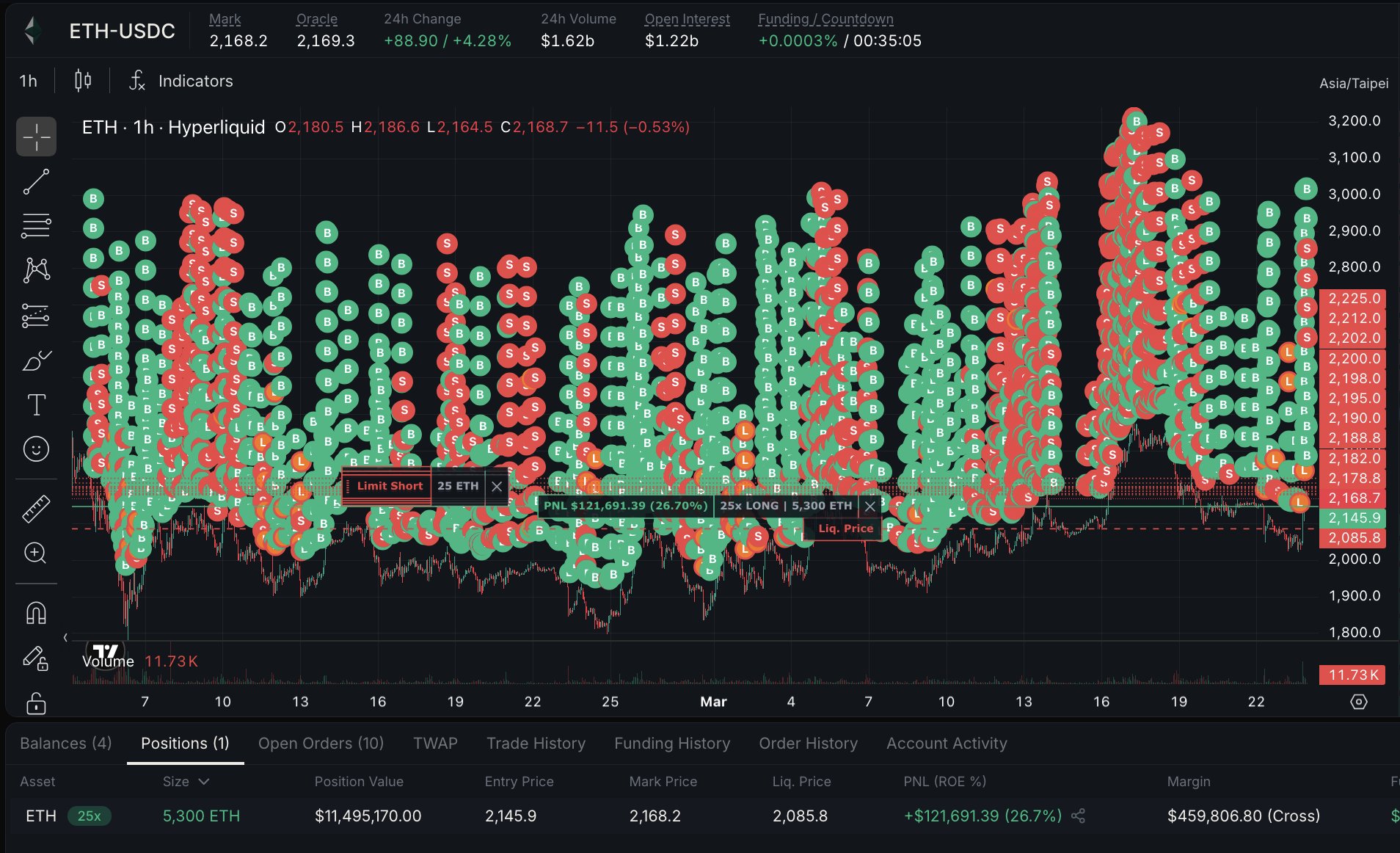 Crypto whale 'Machi Big Brother' adds $500k and reopens $11.5 million ETH long2026-03
 Bitcoin recovery could stretch into 2027 if $60K breaks as whale selling hits 18-month high2026-03
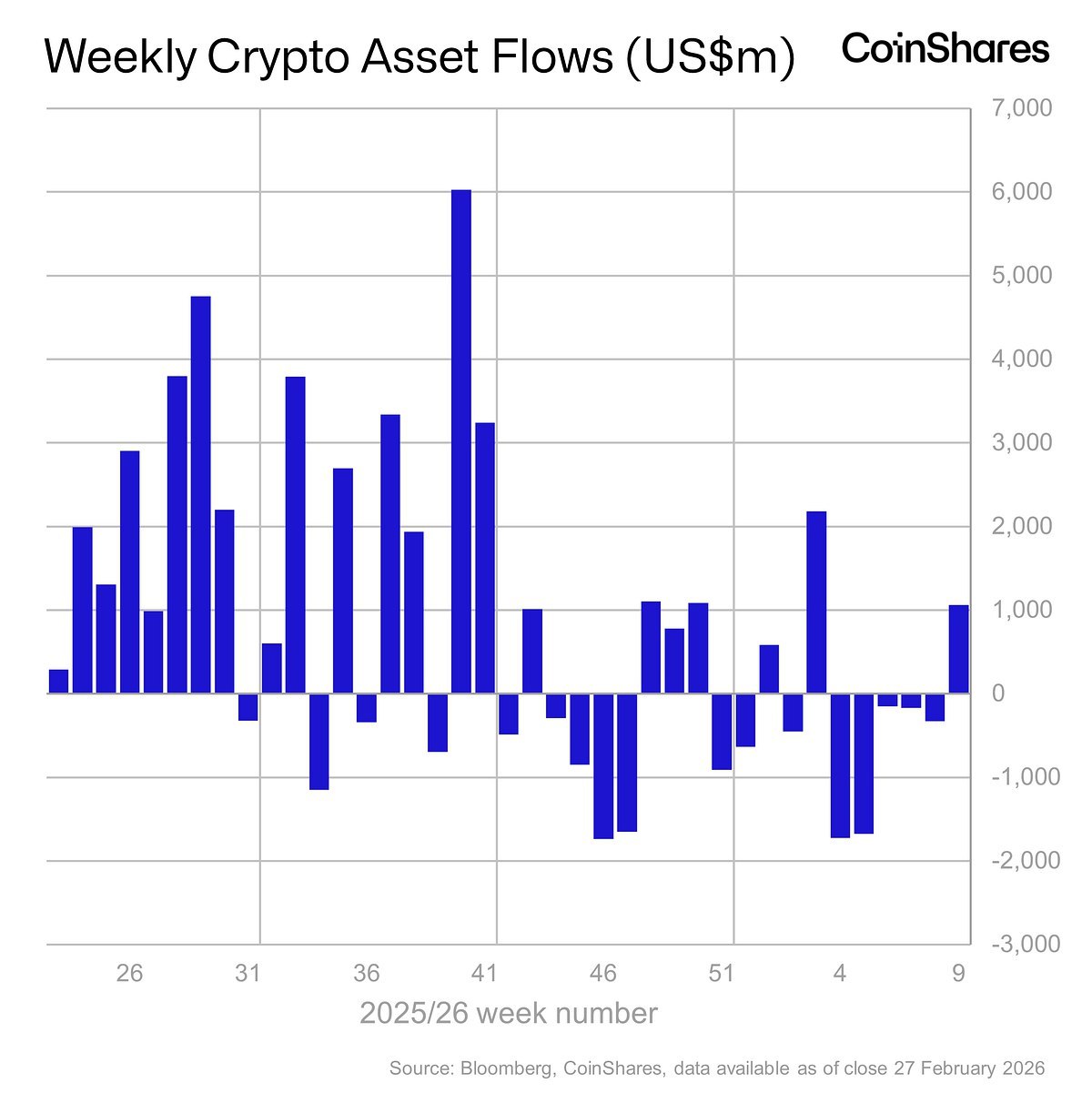 Whale accumulation drives $1B inflows into digital asset funds after five-week outflow streak2026-03
Crypto Whales: How Large Holders Shape Bitcoin, Ethereum, Stablecoins and the Wider Market
In digital asset markets, a whale is a trader, fund, exchange, or other entity that controls a position so large it can materially influence liquidity, volatility, and price with just a few transactions. Because blockchains are transparent, the footprints of these whales—from decades-old Bitcoin wallets to aggressive leveraged Ethereum traders—are visible in on-chain data and increasingly define how participants interpret and trade the crypto markets.
What Is a Crypto Whale?
At its core, the whale concept is about relative size: a whale is any holder with enough of a given cryptocurrency that their decisions to buy, sell, or move coins can move markets or at least move order books in that asset. In Bitcoin, this often means wallets holding thousands of BTC, while in smaller altcoins it can refer to a wallet that controls even a single-digit percentage of the total token supply. Analytics firms describe whales as entities that own a substantial share of a token’s circulating supply or a very large monetary stake, such that a single transaction can shift liquidity conditions or trigger noticeable price action. These entities can be individuals, proprietary trading firms, hedge funds, exchanges, custodians, or early project insiders who received large allocations at launch.
The term first took hold in Bitcoin communities to describe early adopters and miners whose holdings far exceeded those of typical retail participants. Over time, as Ethereum, stablecoins, and thousands of altcoins emerged, the idea of the whale expanded into a multi-chain, multi-instrument phenomenon encompassing spot holdings, derivatives, and even synthetic and prediction-market exposures. Today, the largest Bitcoin holders include not only anonymous early wallets but also institutional vehicles, centralized exchanges, and long-term treasuries, while Ethereum whales operate heavily within DeFi protocols, cross-margining positions and collateral on-chain. Stablecoin whales meanwhile manage huge pools of USDT and USDC that act as dollar liquidity reservoirs, rapidly redeployed into BTC, ETH, SOL and other assets when conditions look favorable.
In practice, there is no single universal threshold that defines a whale, because the relevant metric is the combination of position size and market depth. A wallet with 1,000 BTC may be a whale in Bitcoin, but in an illiquid micro-cap token the whale might be whoever controls two or three percent of supply. On-chain analytics platforms often classify whales by percentile bands of ownership, for example tracking the behavior of the top-tier holder cohorts versus small addresses. These relative definitions matter, because the impact of a whale move depends on circulating float, typical daily volume, and order-book depth across exchanges, not just on absolute dollar value.
The economic roots of whales in crypto lie in how new networks launch and grow. Early miners, pre-sale investors, founders, and venture backers typically receive large allocations long before liquidity is deep or holdings are widely distributed. Over time those positions spread out through OTC deals, exchange sales, and on-chain transfers, but in many tokens, concentration remains high: a small group of wallets may control the majority of outstanding supply, especially in newer or more speculative projects. This can be seen in tokens where a single whale is able to dump 90 percent or more of circulating supply, causing extraordinary price swings but also attracting speculative demand from communities keen to “buy the dip” and reduce that concentration over time.

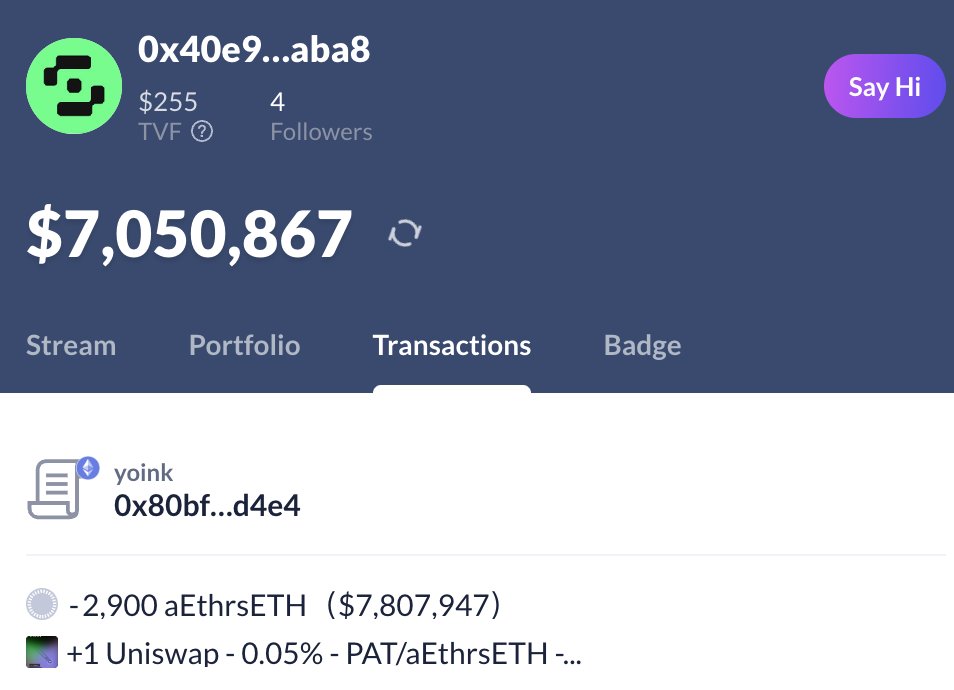
MEV bot front-runs $7.81M rsETH exploit, leaving Gnosis Safe whale with $7.73M loss
How Whales Move Prices, Liquidity and Sentiment
The direct market impact of whales stems from the interaction between their order size and available liquidity. When a whale executes a large market order on a centralized exchange or a big swap in a DeFi pool, the trade consumes multiple order-book levels or a large portion of an automated market maker’s reserves, producing slippage and visible price movement. In thinly traded tokens, a single whale sell can cascade down the book, dragging the price far below the last traded level and triggering algorithmic or stop-loss selling by smaller traders as the move unfolds. Conversely, a large buy from a whale can lift prices quickly, sometimes forcing shorts to cover into rising markets, which further accelerates the move.
The influence of whales is particularly acute in assets where volume and liquidity are fragile. Analytics work shows that when a few large wallets hold a significant share of a token’s supply, markets become vulnerable to sharp swings whenever those whales shift from accumulation to distribution. In such settings, clustering of whale transactions around local highs or lows often marks turning points, because their orders alter both circulating supply and the behavior of other traders who interpret the flows as signals. When whale activity spikes on decentralized exchanges like Uniswap, on-chain data frequently shows a parallel rise in volatility and speculation, as retail traders attempt to front-run or follow perceived “smart money.” This was seen when whale-size transactions in UNI surged to a multi-month high and the number of active whale addresses jumped, feeding narratives about an impending breakout in the token’s price.
Whale flows intersect with leverage to create feedback loops that can magnify volatility. On centralized futures venues and on-chain perpetual protocols, traders often deploy high leverage, using BTC, ETH, USDC or other assets as collateral. When a whale pushes the market through key levels—either by selling spot or opening large short positions—price moves can bring many leveraged accounts to their liquidation thresholds, forcing exchanges or protocols to auto-sell collateral into falling markets. This forced selling becomes additional downward pressure, triggering further liquidations in a self-reinforcing “liquidation cascade.” The same dynamic can work in reverse during aggressive short squeezes if whales drive prices up through heavily shorted levels, compelling short-covering and creating parabolic spikes that may be disconnected from fundamentals.
Beyond pure price mechanics, whales exert outsized influence on sentiment and narrative. Because blockchain data allows observers to see large transfers and wallet patterns, social media feeds and news outlets frequently spotlight individual whale moves. Dedicated accounts such as Whale Alert focus on tracking and broadcasting large on-chain transactions across networks in real time, providing a constant stream of whale-related signals that traders attempt to interpret. When a big Bitcoin holder moves coins from a long-dormant address to an exchange, or when an Ethereum whale withdraws large amounts of ETH to cold storage, commentary about what the whale “knows” often drives sentiment more than any explicit fundamentals. For example, record XRP whale volumes coinciding with ETF inflows and a price rally toward the mid-\(1\) USD range have been framed as a stress test of whether institutional demand can offset broader macro headwinds, embedding whale behavior into the dominant market storyline for that asset.
Whales also engage in more deliberate psychological strategies such as liquidity hunting. In this tactic, large traders attempt to push price just far enough to trigger clusters of retail stop losses, then reverse their positions once that forced liquidity has been captured. Educational content targeted at retail traders highlights how such stop runs can leave seemingly “perfect” entries quickly underwater, reinforcing the perception that whales set traps and individual traders are simply swimming in their wake. This interplay between large, often opaque strategies and the more reactive behavior of smaller participants is part of what makes whale watching such a central feature of crypto market culture.
Readers don't click whale stories for macro analysis — they click for named-individual soap opera: specific personas making outsized public bets, losing dramatically, or moving traceable on-chain capital in ways that feel like exposing hidden power.
Types of Whales Across BTC, ETH, Stablecoins and Beyond
Although “whale” is a generic label, the behavior, tooling, and risk profiles of whales vary substantially across Bitcoin, Ethereum, stablecoins, altcoins, and derivative or synthetic markets. Understanding these segments helps contextualize headlines about individual wallets and on-chain events.
Bitcoin Whales: Legacy Holders and Macro Flows
Bitcoin whales remain the archetype. Early in the network’s history, mining was concentrated, and a relatively small number of participants accumulated vast balances at low cost, giving rise to dormant “Satoshi-era” wallets that still hold significant BTC. Occasionally these addresses awaken after many years, moving coins for the first time in over a decade, which can prompt intense speculation about whether early stakeholders are taking profits or reorganizing custody. When one such early wallet moved coins after roughly fifteen years of inactivity, analysts highlighted it as a reminder that very old capital can still re-enter the market and potentially add to selling pressure if sent to exchanges.
Modern Bitcoin whales include centralized exchanges, OTC desks, ETFs, custodians, hedge funds, and large corporates using BTC as a treasury or macro asset. Because these entities often transact in large blocks, on-chain metrics such as CryptoQuant’s Exchange Whale Ratio track how much of the total BTC flowing into exchanges comes from the top ten largest inflow transactions. A high ratio indicates that whales are dominating exchange inflows, signaling elevated risk of sizable sell orders and potential downside volatility. Conversely, periods of sustained net outflows from exchanges, particularly when dominated by large withdrawals to long-term wallets, are often interpreted as accumulation phases that tighten available supply. Recent coverage of Bitcoin holders withdrawing thousands of BTC from exchanges into fresh bech32 addresses illustrates how such flows are used to argue that large holders are positioning for longer-term upside even in choppy macro environments.
Ethereum and DeFi Whales: On-Chain Leverage and Strategy
Ethereum whales differ from Bitcoin whales in that they operate natively within a programmable environment, actively using DeFi protocols, staking derivatives, and tokenized representations such as wrapped BTC. Large ETH holders often deploy assets as collateral on lending protocols like Aave, borrow against them to gain levered exposure to ETH or stablecoins, and rotate between ETH, staked ETH derivatives, and other assets to manage risk and yield. This makes their behavior more complex to interpret, because a single whale can have multiple interconnected positions spanning spot, lending, and derivatives.
Consider an anonymous whale who borrows tens of thousands of ETH on Aave to expand a short position, amassing more than 35,000 ETH in borrowings, equivalent to tens of millions of dollars. On-chain data shows that such a whale is likely using borrowed ETH to short the asset on centralized or on-chain derivatives venues, effectively turning Aave into prime brokerage funding for directional bets. Similar patterns emerge in reverse during market rebounds, where whales borrow large amounts of stablecoins such as USDT from lending protocols to buy ETH, stacking leverage on top of spot exposure. In one example, a whale borrowed roughly 142 million USDT over a very short timeframe to purchase nearly 90,000 ETH on-chain, leaving the resulting position with a precarious health factor only marginally above liquidation level. These complex loops between borrowing, spot purchases, and perps trading create reflexive risks: a sharp drop in ETH price can both erode collateral value and push leveraged whales toward liquidation, amplifying market moves.
Ethereum whales also engage in more subtle timing strategies. On-chain intelligence firms have documented examples of long-time “Ethereum OGs” selling large tranches of ETH and staked ETH derivatives such as wstETH near local highs, sometimes rotating part of the proceeds into BTC or stablecoins before buying back at lower prices once a broader market selloff unfolds. In one high-profile case, an OG sold tens of thousands of ETH and thousands of wstETH, as well as a sizable stack of wrapped BTC, before a crash, then repurchased assets at significantly lower levels, increasing net holdings. Episodes like this feed the perception that some whales possess superior information or risk management capabilities, but they also highlight how visible and analyzable such behavior has become due to on-chain transparency.
Stablecoin Whales: Dollar Liquidity and Market Ammunition
Stablecoin whales manage large pools of dollar-pegged assets like USDT and USDC, which serve as the primary trading quote currencies and collateral across the crypto markets. For whales, holding stablecoins provides immediate optionality: they can rotate rapidly into BTC, ETH, SOL or other assets on both centralized and decentralized venues without relying on slower fiat banking rails. When blockchain trackers flag the minting of hundreds of millions of new USDC, such as a 250 million USDC issuance reported by Whale Alert, analysts often scrutinize where those tokens move next, parsing whether the liquidity is destined for exchanges, DeFi, or institutional custodians.
Risk considerations shape which stablecoins whales prefer. Research comparing USDC and USDT for institutional use notes that USDC has been assessed as lower risk thanks to more conservative reserves, greater regulatory oversight, and transparent attestations, earning an investment-grade style rating in some analyses. As a result, many institutional whales lean toward USDC as a primary reserve asset, especially within U.S. and European regulatory environments. At the same time, USDT remains deeply embedded in trading infrastructure, particularly in offshore derivatives markets, and is widely used as collateral and quote currency for perpetual futures and high-leverage trading. The choice between these stablecoins can thus signal both risk appetite and jurisdictional constraints: whales heavily using USDT perps on venues without strong regulatory supervision may be engaged in more aggressive, higher-risk strategies than those passively holding USDC as dry powder on regulated platforms.
On-chain examples underscore how stablecoin whales act as shock troops for risk-on positioning. A mysterious address spending almost 18 million USDC to buy over ten thousand ETH at an average entry level well below recent peaks can be read as a whale stepping in to accumulate during weakness, especially if the purchases occur over several days rather than in a single large order. Similarly, a SOL-focused whale known as DAWHnv deploying approximately 16.55 million USDC to accumulate more than 230,000 SOL around the mid-\(70\) USD area shows how stablecoin reserves can be converted into concentrated bets on specific ecosystems or narratives.
Altcoin and Memecoin Whales: Thin Markets, Big Moves
In smaller-cap altcoins and memecoins, whale concentration can be extreme, with a few wallets controlling the vast majority of supply and therefore almost total control over short-term price dynamics. On-chain behavior in such tokens sometimes involves whales accumulating large stakes at low cost, either through private deals, early farming, or team allocations, then gradually or suddenly unloading into liquidity once demand appears on centralized or decentralized venues. Because daily volumes are modest and liquidity pools shallow, these dumps can cause price collapses of 80–90 percent in a matter of hours or days.
Recent examples from the market illustrate both sides of this dynamic. In one token, a whale unloaded roughly 92–94 percent of total circulating supply in a compressed timeframe, sending the price overboard and triggering a drawdown of around 90 percent. Yet the community and opportunistic traders collectively bought up the dumped tokens, arguing that the event, while painful, reduced concentration risk and created a fairer distribution over time. In another case, a whale who had spent about 1.8 million dollars accumulating billions of a different memecoin saw the value of that position collapse by more than 80 percent, leaving the wallet down over 1.5 million dollars even before any realized losses. These episodes offer a counterpoint to the idea that whales always win: while they can dominate order flow, they are far from immune to illiquidity and crowd behavior.
Measured altcoin ecosystems such as Uniswap’s governance token UNI also experience whale-driven cycles. Data showing whale transactions in UNI reaching a seven-month high, alongside a four-month peak in active whale addresses, was interpreted by some analysts as evidence of institutional or large-holder interest ahead of a potential breakout. However, the same concentration that fuels such optimism also raises concerns about post-breakout distribution: if whales sell into strength after the rally they helped spark, latecomers may bear the brunt of the downside once the music stops.
Whales in Derivatives, Synthetic Assets and Prediction Markets
Not all whales express their views through spot holdings. Many instead act primarily in derivatives and synthetic markets, taking large positions in perpetual futures, options, or tokenized exposures that reference assets like Bitcoin, Ethereum, equities, or even pre-IPO shares. On-chain derivatives platforms such as Hyperliquid offer hundreds of perpetual and spot markets across crypto, commodities, and indices, with fully on-chain, non-custodial trading available around the clock, attracting sophisticated whales who value composability and transparent settlement. Whales can open large leveraged positions in such venues without necessarily holding the underlying spot asset on-chain, which complicates traditional whale-watching that focuses solely on token balances.
Synthetic markets have expanded this universe. Some whales express directional views on non-crypto assets via tokenized exposures; for example, opening a tens-of-millions long position in a synthetic SpaceX IPO token, SPCX, at a substantial premium to its reference price reflects a high-conviction bet not on ETH or BTC directly but on the future valuation of a private company. In parallel, whales have been seen shorting synthetic S&P 500 index tokens with massive leverage, using 50x positions worth over 100 million dollars notionally to bet on equity downside. Such trades highlight how crypto-native infrastructure enables whales to take cross-asset views, using stablecoins and crypto collateral to speculate on broader markets.
Prediction markets add another dimension, enabling whales to shape implied probabilities on real-world events. Platforms like Whale.io have launched native prediction markets around major sporting tournaments such as the World Cup, with prize pools in the tens of thousands of dollars and tokenized markets reflecting participants’ beliefs. When a large trader concentrates capital on a particular outcome—say, a specific match or outright winner—they can materially move the odds, which may influence how other participants perceive underlying probabilities. In these contexts, whales are not just influencing prices but also shaping collective forecasts.
How Whale Activity Appears On-Chain and in Market Data
One of the distinctive features of crypto markets is that much of the activity of whales is visible in public data. While identities remain pseudonymous, large transfers, wallet balances, and DeFi positions can be observed and analyzed, enabling a form of open-source market intelligence.
Wallet Tracing, Clustering, and Entity Identification
The foundational layer of whale analysis is wallet-level data. Every transaction on major blockchains like Bitcoin and Ethereum is recorded on a public ledger, which allows analysts to track not only individual addresses but also patterns across multiple addresses that likely belong to the same entity. Firms such as Nansen and Lookonchain specialize in aggregating, labeling, and clustering this data using heuristics and behavioral patterns, categorizing wallets as exchanges, funds, miners, DeFi protocols, or high-performing “smart money.” These classifications are then used to build dashboards that highlight whale behavior, such as net buying or selling by top holders, changes in exchange balances, or flows into and out of specific protocols.
Wallet clustering is particularly important because whales often distribute holdings across numerous addresses rather than a single obvious wallet. By analyzing how these addresses interact—for example, regularly consolidating into a central wallet or moving funds between the same set of DeFi positions—analytics platforms can infer that they belong to a single whale entity. This enables more accurate tracking of whale strategies over time, turning what would otherwise be fragmented data into coherent narratives about how large holders respond to market conditions.
Transaction Monitoring and Flow Analytics
Beyond static balances, whale watchers focus on flows. Large transfers of BTC, ETH, USDC, or other tokens are tracked in real time by services like Whale Alert, which broadcast individual transactions that exceed certain thresholds across social media and APIs. These alerts often include whether the transfer originated from or was sent to a known exchange address, which is crucial context: a large deposit to an exchange suggests potential selling, whereas a withdrawal to an unknown address may signal accumulation or a move to long-term storage.
On-chain data is supplemented by metrics that interpret flows at a higher level. CryptoQuant’s Exchange Whale Ratio, for instance, measures the proportion of exchange inflows accounted for by the top ten largest transactions in a given period, providing a proxy for how dominant whales are in driving current exchange inflows. A rising ratio indicates that a few large players are increasingly responsible for the coins arriving on exchanges, which can presage heightened volatility, especially if those coins are sold. Similarly, net exchange outflow metrics track whether more coins are leaving exchanges than arriving, often interpreted as a bullish sign when driven by whale withdrawals to cold wallets.
Exchanges, Order Books, and Invisible OTC Trades
Not all whale activity is visible on-chain in real time. Many large trades occur via over-the-counter desks that match buyers and sellers off-exchange to avoid slippage and minimize visible market impact. While the actual OTC trade does not show up as a direct price-moving order in an order book, associated on-chain transfers—such as moving coins from a seller’s wallet to an OTC escrow address and then to the buyer’s custodian—can still be tracked. However, distinguishing between OTC settlements, internal exchange reshuffling, and genuine directional flows requires expertise and sometimes proprietary labeling.
Order-book analysis reveals another dimension of whale activity. On centralized exchanges and some on-chain order book DEXs, whales may post large buy or sell walls at specific price levels, creating psychological support or resistance zones. When these walls appear just below or above price, they can influence short-term trading behavior as participants react to the perceived depth. Sudden removal or “spoofing” of such walls can also be used as a tactic to mislead other traders about true intentions, though evidence of illegal spoofing is harder to establish in pseudonymous environments. Analytics teams monitor changes in visible order-book depth alongside on-chain flows to infer whether whales are genuinely accumulating or distributing at certain levels.
Stablecoin Flows as Leading Indicators
Because stablecoins act as the primary quote and collateral assets in much of crypto, tracking stablecoin flows has become central to forecasting whale behavior. Nansen’s research emphasizes that rising stablecoin balances on exchanges can signal that whales have loaded up on “dry powder” and are preparing to buy dips, whereas large transfers of stablecoins from exchanges to wallets can indicate that whales are stepping back from risk or moving funds into DeFi yield strategies. When large new mints of USDC or USDT are observed, such as a 250 million USDC creation event flagged by Whale Alert, analysts scrutinize whether those tokens are quickly sent to trading venues or parked in cold storage, interpreting the former as a potential prelude to aggressive buying.
These interpretations are reinforced by concrete case studies. The SOL whale DAWHnv moving more than 16 million USDC to accumulate over 230,000 SOL near a particular price band indicates a whale deploying stablecoin reserves into a concentrated bet on a specific layer-1 ecosystem. Another pattern involves whales who borrow stablecoins like USDT from lending protocols, then route those funds through decentralized exchanges to accumulate ETH or other tokens, effectively creating leveraged long positions funded by stablecoin liabilities. Such flows show up on-chain as a sequence of borrowing transactions followed by swaps, with the resulting debts leaving whales exposed to both price and interest-rate risks.
DeFi Positions, Health Factors, and Liquidation Risk
DeFi platforms expose much more detail about whale positions than centralized exchanges do. Lending protocols such as Aave maintain publicly readable data structures that include the collateral, borrow amounts, and health factors of each address, making it possible to track the leverage and liquidation thresholds of large borrowers. When a whale borrows tens of thousands of ETH or hundreds of millions of stablecoins, observers can calculate at which price level their health factor will fall below \(1\), triggering liquidations. This creates a form of “open risk map” for the market, as traders know roughly where large forced selling or buying could occur if prices move aggressively.
Educational material from MetaMask, for instance, explains how liquidation cascades arise when price moves push leveraged positions into liquidation, causing automatic sales that further depress price and trigger additional liquidations, in a feedback loop. In the context of whale-dominated DeFi positions, a single large account approaching its liquidation threshold can become a focal point for market attention. When a whale’s health rate drops to around \(1.16\) after borrowing over 140 million USDT to buy ETH, with a liquidation price only a small percentage below spot, traders may anticipate that a sharp move lower could not only imperil that whale but also cascade through the broader market via forced unwinds.
Social Signals and Media Narratives
Data alone does not drive markets; interpretation, narrative, and sentiment do. Whale activity gains much of its impact through the way it is amplified and framed in social feeds and news coverage. Whale Alert’s social media posts provide real-time updates on large transfers, but commentary from influencers, analysts, and trading communities gives those raw events meaning, speculating about whether a transfer signals insider information, profit-taking, or simple reallocation. Ledger’s educational content notes that while following whale alerts can provide valuable clues, traders should always corroborate such signals using more robust on-chain analytics rather than relying solely on social media.
Analytics firms emphasize combining on-chain whale data with broader market indicators. Nansen, for example, highlights the importance of tying large transactions and exchange flows to context such as open interest in derivatives, funding rates, options skew, and social sentiment. A spike in whale deposits to exchanges alongside rising short open interest and negative funding rates paints a different picture than the same inflows occurring during a period of bullish funding and strong spot demand. By integrating these perspectives, traders can avoid overreacting to isolated whale moves and instead view them as part of a richer market mosaic.

Crypto whale sues Coinbase over refusal to return stolen DAI tied to $55M phishing hack, despite exchange freezing funds and demanding court order to verify ownership
Whale Strategies: Accumulation, Leverage and Liquidity Hunting
Whales deploy a wide array of strategies, from slow, multi-year accumulation to rapid-fire, high-leverage trading. Understanding these archetypes helps explain why whale actions sometimes align with long-term trends and at other times look indistinguishable from casino-style speculation.
Long-Term Accumulation and Distribution
Some whales operate as long-term investors, gradually building positions in BTC, ETH, or specific tokens during periods of weakness, then distributing portions into strength as valuations recover or overshoot. Their behavior is characterized by recurring patterns: persistent net withdrawals from exchanges into self-custody during drawdowns, minimal engagement with leverage, and sporadic large deposits back to exchanges when prices have risen substantially. On-chain metrics frequently show such patterns during multi-year Bitcoin cycles, where large cohorts of long-term holders accumulate in bear markets and distribute in bull phases.
In more idiosyncratic tokens, comparable patterns emerge at smaller scale. A large holder might accumulate a governance or ecosystem token over months while price trends sideways, perhaps staking it in protocol contracts, then start depositing to exchanges when positive catalysts or narrative shifts attract new buyers. The Ethereum OG who sold tens of thousands of ETH and staked derivatives before a sharp market correction—and then bought back larger amounts after prices dropped—illustrates how experienced whales can blend long-term conviction in a network with tactical timing, using volatility to compound holdings rather than simply cash out.
Short-Term Trading and Volatility Harvesting
At the other end of the spectrum are whales who behave more like short-term traders or even intraday speculators. Some of the most eye-catching on-chain stories involve whales who make seven-figure profits in hours by timing short-term moves in ETH or other majors. In one instance, a whale captured about 1.2 million dollars in profit within two hours, then continued trading ETH, securing another roughly 600,000 dollars by shorting the asset before flipping to a highly leveraged long position worth close to 60 million dollars notional. Such sequences suggest algorithmic or highly active discretionary strategies that seek to harvest volatility independently of long-term trends.
These whales often operate across both centralized and decentralized venues, using CEX perps for leverage and on-chain activity for collateral management, hedging, and opportunistic spot trading. Their rapid shifts between long and short, combined with high leverage, can produce localized volatility spikes, especially when many participants attempt to copy or front-run their moves based on real-time on-chain tracking. While spectacular when successful, these strategies carry significant blow-up risk; historically, even sophisticated funds have been caught on the wrong side of sudden liquidations when liquidity thinned unexpectedly.
Borrowing, Shorting, and Cross-Margin Leverage
Leverage is a central tool for many whales, and borrowing is the key mechanism. On DeFi platforms, ETH, WBTC, and liquid staking tokens serve as popular collateral assets; whales deposit them to borrow stablecoins, which they can then use to short markets or to lever up long exposure. The earlier example of a whale borrowing 10,000 ETH on Aave, bringing total borrowings to over 35,000 ETH, illustrates how whales can construct sizable synthetic shorts without selling their underlying holdings, effectively maintaining long-term positions while trading around them with borrowed capital. When the market rebounds, such whales may increase leverage, borrowing additional ETH or stablecoins to add to their directional bets.
Centralized exchanges and on-chain perpetual platforms like Hyperliquid further expand leverage options by offering cross-margin accounts and high maximum leverage ratios. Whales have been observed taking 50x leveraged short positions on synthetic S&P 500 tokens, or opening large-percentage-of-open-interest longs on synthetic SPAC- or IPO-linked assets such as SPCX. Because these positions are often collateralized with stablecoins or blue-chip crypto, a severe move in either the underlying or the collateral can stress multiple parts of the whale’s portfolio simultaneously, raising systemic risk.
Liquidity Hunting and Stop-Loss Cascades
Liquidity hunting—intentionally seeking out areas where other traders have placed stop-losses or liquidations—is one of the most controversial whale strategies. Educational reels and commentary aimed at retail highlight how apparently unlucky stop-outs are often the result of whales pushing price just beyond obvious technical levels to trigger clustered stops, then fading the move after capturing that liquidity. In markets with transparent funding and liquidation data, whales can infer where large pockets of forced orders lie and may attempt to nudge price toward those zones via concentrated buying or selling.
On leveraged venues, the line between organic price discovery and deliberate liquidity hunts can blur. If a whale knows that many over-leveraged longs in ETH will be liquidated near a particular price, they may use a combination of spot selling and short perps to push price toward that level, triggering forced selling that helps extend the move. Once liquidations have flushed out many weak hands and funding rates normalize, the same whale might reverse position, buying into the depressed market and riding the rebound. Retail traders who entered or exited around these levels may feel “hunted” even when the whale’s strategy is simply one of rationally exploiting visible order book and liquidation structure.
Cross-Asset Rotation and Risk Hedging
Whales also engage in complex cross-asset rotations, shifting between BTC, ETH, WBTC, staked derivatives, and stablecoins as macro conditions evolve. When uncertainty rises, some whales reduce exposure to volatile tokens and increase stablecoin holdings, while others rotate from altcoins back into blue chips like BTC and ETH, reflecting a flight to perceived quality. Conversely, during exuberant phases, whales may harvest profits from BTC and ETH rallies to fund speculative plays in higher-beta tokens, DeFi governance coins, or memecoins, hoping to capture outsized upside.
On-chain stories of whales who perfectly time crashes by rotating large sums from ETH and WBTC into stablecoins before a selloff, then buying back at steep discounts, show how cross-asset rotation can compound returns if executed well. In other instances, whales double down on concentrated exposures in falling markets, such as a single wallet spending 20 million USDT to buy more of a particular narrative token even as price weakens, thereby increasing concentration risk for both the whale and the token’s ecosystem. These varied outcomes underline that whale strategies, while influential, are not uniformly successful.
- 01Hyperliquid named-whale spectacle↗
James Wynn's cycle of losing millions, publicly begging, receiving crowd funding, and returning to trade turned a perp-DEX position into a character drama readers tracked like a serial.
- 02Leveraged-long liquidation cascades↗
Headlines covering a $276M 40x BTC long, a $13M GMX wipeout, and a 50x ETH long closed in 45 minutes showed readers the mechanics of catastrophic leverage in visceral dollar terms.
- 03Whale accumulation as price signal↗
Stories linking rising large-holder balances directly to ETH eyeing $2.2K or BTC recovery timelines framed whale on-chain data as a forward indicator readers could act on.
- 04Named-whale full exit events↗
Owen Gunden completing a $1.3B BTC exit and Chainlink's 'Oldwhite' cashing $20M through 100+ wallets gave readers identifiable exit prints they could benchmark against their own thesis.
- 05Prediction-market manipulation
A UMA whale bending a Polymarket resolution and 'Spice' spending $1.3M at $0.98 to lock a Fed outcome surfaced how concentrated capital can corrupt decentralized truth mechanisms.
- 06Dormant wallet reactivations↗
An $8B wallet flagged as possibly compromised and a 2,100 BTC resurrection after years of silence turn on-chain archaeology into a real-time security and market-impact story.
Risks for Retail Traders and the Market
The presence of whales introduces structural risks not only for individual traders but also for the health and fairness of crypto markets as a whole.
Concentration, Manipulation, and Centralization Concerns
High concentration of token ownership in a handful of whales creates vulnerability to sharp, seemingly arbitrary price swings. Nansen’s research stresses that when a small group controls a large share of a token’s supply, their buy or sell decisions can meaningfully alter circulating supply and liquidity, potentially destabilizing markets and undermining confidence in the token’s decentralization narrative. In extreme cases, whales may coordinate or act alone to execute pump-and-dump schemes, aggressively promoting a token while quietly distributing their holdings to late-stage retail buyers before exiting, leaving others with steep losses.
These dynamics raise deeper questions about centralization. Even though blockchains are designed as decentralized networks, the economic ownership of tokens can become highly concentrated, giving effective control to a few actors. This can extend beyond price manipulation to governance issues: whales with large governance token stakes may dominate protocol votes, steer treasury allocations, or influence critical decisions in ways that do not align with smaller holders’ interests. While many protocols attempt to mitigate governance capture through mechanisms like delegation, quorum requirements, or non-transferable voting rights, the fundamental tension between economic whales and egalitarian governance remains.
Stablecoins introduce a different vector of centralization risk. Analyses comparing USDC and USDT emphasize that their safety depends on issuer reserves, regulatory oversight, and transparency; if a major stablecoin were to depeg or face legal constraints, whales heavily exposed to it could be forced into disorderly exits, sparking broader market disruption. Institutional preference for more tightly regulated stablecoins like USDC reflects an awareness of this risk and a desire to reduce issuer and jurisdictional uncertainty. Nevertheless, the sheer scale of stablecoin use in leveraged trading means that any instability could have outsized impact.
Misreading Whale Signals
For retail traders, one of the biggest practical risks is overinterpreting or misreading whale activity. While analytics platforms encourage users to follow “smart money,” they also caution that whale transactions can have multiple, sometimes contradictory, explanations. A large deposit of ETH to an exchange might indicate an impending sale, but it could also reflect collateral management, internal transfers, or preparation for participation in a new listing or staking program. Similarly, withdrawals from exchanges may not always signal long-term accumulation; in certain cases, whales move assets into DeFi strategies that entail significant future sell pressure.
Nansen’s guidance stresses that traders should combine whale data with broader context, including trend direction, derivatives positioning, and macro events, rather than reacting mechanically to each large transaction. For instance, heavy stablecoin inflows to exchanges alongside bullish news and rising open interest may be a sign of whales gearing up to buy, but similar inflows amid regulatory uncertainty and negative funding rates might signal hedging or de-risking instead. Failing to integrate these signals can lead to whipsaw trading and losses for those who blindly copy whale moves without understanding underlying strategy or risk.
Liquidation Cascades and Systemic Stress
As leverage has become ubiquitous, the actions of whales increasingly intersect with systemic risk. MetaMask’s breakdown of liquidation mechanics shows how forced position closures can cascade across markets, especially when collateral and borrow assets are closely correlated. If a whale’s heavily leveraged long ETH position starts approaching liquidation due to falling prices, the protocol begins selling into a declining market, pushing prices lower and potentially triggering liquidations for other traders whose positions were safe before the cascade began. This is particularly acute when whales use the same assets for both collateral and trading, creating tightly coupled feedback loops.
On-chain data revealing whales with health ratios barely above \(1\) after borrowing hundreds of millions in stablecoins to buy ETH highlights how narrow the margin of safety can be. Retail traders who see such positions may be tempted to front-run potential liquidations by shorting the asset or withdrawing liquidity; if many do so simultaneously, they can inadvertently accelerate the conditions needed to trigger the very cascade they fear. In extreme cases, this can stress DeFi protocols themselves, testing liquidation bots, oracle reliability, and risk parameters, and raising questions for regulators about systemic resilience in decentralized markets.
Regulatory Backdrop and Market Structure
Regulators are increasingly attentive to the role of large players in crypto markets, particularly where whales intersect with centralized exchanges and high-leverage platforms. Reports from European crypto media have suggested that senior policymakers have expressed concern about the entry of major offshore exchanges into tightly regulated jurisdictions, reflecting worries not only about consumer protection but also about market stability when large-volume derivatives venues meet local capital markets infrastructure. Such concerns dovetail with broader initiatives like the EU’s Markets in Crypto-Assets (MiCA) framework, which aims to bring more transparency and oversight to centralized intermediaries that aggregate large flows from whales and retail alike.
At the same time, the rise of on-chain, non-custodial venues like Hyperliquid complicates traditional regulatory levers. Because these platforms settle trades directly on blockchains and rely on smart contracts rather than centralized order books and accounts, whales can take large positions without interacting with regulated custodians or exchanges in the conventional sense. While this enhances transparency at the protocol level, it also challenges existing regulatory models and raises questions about how to manage risks associated with anonymous or pseudonymous whales whose activities may have systemic implications yet fall outside existing supervisory frameworks.
Case Studies: Whales in Action Across BTC, ETH, Altcoins and Synthetic Markets
Several recent episodes across major and niche tokens illustrate key aspects of whale behavior and its impact on markets.
Bitcoin: Dormant Wallets and Accumulation Waves
The awakening of a Satoshi-era Bitcoin wallet after about fifteen years of dormancy captured global attention, highlighting the lingering influence of early whales. On-chain data showed that the wallet, active only in Bitcoin’s earliest days, suddenly began moving coins, prompting speculation about whether the holder intended to sell, secure coins in new custody, or engage in more complex strategies. Although the absolute amount moved was small relative to Bitcoin’s current market capitalization, the episode underscored how legacy whales remain part of the market’s psychological landscape, capable of sparking fear or curiosity whenever they stir.
In contrast, modern accumulation patterns involve clusters of newer whales steadily withdrawing BTC from exchanges. Data showing a specific bech32 address withdrawing more than two thousand BTC over several days, while three newly created wallets collectively withdrew hundreds more, suggests concerted accumulation by entities positioning for long-term upside or diversification. CryptoQuant’s metrics would capture such behavior as declining exchange balances and possibly lower Exchange Whale Ratios if whales are withdrawing rather than depositing. Traders interpret these patterns as constructive signals when they coincide with muted retail activity, reading them as smart money preparing for future cycles.
Ethereum: DeFi-Leveraged Whales and Timing the Crash
The Ethereum ecosystem offers some of the most intricate whale stories due to its rich DeFi topology. One widely discussed pattern involved an Ethereum OG who sold roughly 60,000 ETH alongside nearly 9,500 wstETH and a substantial amount of wrapped BTC at an average price around 2,040 USD, just before a market crash. By rotating out of risk assets into more defensive positions, this whale avoided a significant drawdown. After the crash, on-chain data showed the same entity repurchasing ETH and possibly other assets at much lower prices, ending up with a larger net stake. For many observers, this was a textbook case of whale timing and risk management, using on-chain liquidity and derivatives to navigate volatility.
At the more aggressive end, multiple whales have recently engaged in high-leverage ETH strategies via Aave and other platforms. In one case, a whale borrowed around 44,000 ETH in total, worth over 80 million dollars, likely to short on exchanges during a market rebound. In another, a whale opened a 20x long position on over 36,000 ETH, worth close to 60 million dollars notional, with a liquidation price around 1,530 USD—only a modest drop below entry. Combined with a separate address borrowing about 142 million USDT to purchase nearly 88,000 ETH, leaving its health factor around 1.16 and a liquidation threshold just under 1,360 USD, the landscape reveals how a handful of whales can collectively hold positions that, if stressed, might trigger sizable liquidations and market turbulence.
Stablecoins: Massive Mints and Concentrated Bets
On-chain whale behavior in stablecoins manifests both as large mints and as deployment into risk assets. The 250 million USDC mint detected by Whale Alert exemplifies how new stablecoin supply enters the ecosystem through large events, often tied to institutional onboarding or major capital inflows. Once minted, these tokens may flow to exchanges, DeFi protocols, or custody providers. Analysts examine whether such mints correlate with rising BTC or ETH prices, interpreting them as potential fuel for rallies when they are quickly deployed into spot or derivatives purchases.
At a more granular level, whales use stablecoins to express concentrated views on specific tokens. DAWHnv’s SOL bet, deploying approximately 16.55 million USDC to buy nearly 235,000 SOL at an average price near 70.5 dollars, is one such example. Here, stablecoins served not just as a neutral store of value but as ammunition for a large directional bet in a single alt-L1 ecosystem. The success or failure of such trades depends on subsequent market performance, but in the short term, they can materially impact order books and sentiment around the targeted asset.
Altcoins and Memecoins: SIREN, ASTEROID and Community Reactions
Thinly traded tokens provide some of the starkest illustrations of whale power and risk. In the SIREN ecosystem, one whale reportedly dumped between 92 and 94 percent of the supply at one point, driving the token down by roughly 90 percent while realizing tens of millions of dollars in stablecoins, including over 60 million USDT across a series of transactions. Yet the community response was surprisingly strong: traders absorbed much of the dumped supply, treating the event as an opportunity to redistribute tokens more widely and reduce the whale’s dominance. In follow-on episodes, the same or related whales continued selling hundreds of millions of SIREN tokens for additional USDT, though significant holdings remained unlrealized, leaving open the possibility of further downward pressure.
The ASTEROID token offers a contrasting narrative. There, a whale spent about 1.81 million dollars accumulating over 4.2 billion tokens, only to see the position’s paper value collapse to roughly 280,000 dollars as price declined, representing an unrealized loss around 84 percent. Unlike in SIREN, community buying did not fully offset the whale’s impact; instead, the debacle served as a cautionary tale that whales can misjudge liquidity and demand just as retail traders can, and that concentration cuts both ways. In both cases, the lack of deep, diverse liquidity and the dominance of a single whale shaped the entire price history of the token over short periods.
Uniswap, SOL and Institutional-Style Whales
On Uniswap, whale activity has periodically reached peaks that correspond with renewed institutional attention. Metrics showing whale transactions hitting seven-month highs, along with active whale addresses climbing to four-month peaks, signaled that larger holders were repositioning in UNI, possibly anticipating governance changes, fee shifts, or broader market rallies. While not all whale activity is institutional, the pattern of sustained, high-value transactions often correlates with larger, more sophisticated players rather than short-term retail speculators.
The SOL ecosystem, meanwhile, has seen distinctive whale profiles like DAWHnv, whose concentrated purchase of hundreds of thousands of SOL with tens of millions in USDC raises both bullish and cautionary flags. On the one hand, such a large commitment at a defined price cluster may serve as a perceived floor for other traders, suggesting that at least one whale views that range as attractive long-term value. On the other hand, if market conditions deteriorate or the whale decides to exit, the same position could become a source of heavy sell pressure, particularly if liquidity hasn’t deepened sufficiently since their entry.
Synthetic and Prediction Markets: SPCX, SP500, and World Cup Odds
Whale behavior in synthetic and prediction markets broadens the scope of whale analysis beyond traditional tokens. The opening of a 22.3 million dollar long position in a synthetic SpaceX IPO asset, SPCX, at a 30 percent premium to its reference price exemplifies how whales speculate on equity-like exposures using crypto-native instruments. These positions can influence implied valuations of private companies and interact with broader market narratives about tech and space exploration.
Similarly, a whale opening a 50x leveraged short on a synthetic S&P 500 index token with a notional value exceeding 100 million dollars shows how whales can use crypto rails to express macro views on traditional equities. In both cases, the positions are collateralized with crypto or stablecoins and can be liquidated if markets move against them, thereby linking crypto and traditional asset volatility through leverage.
On Whale.io’s World Cup prediction markets, whales can sway implied probabilities by staking large amounts on specific match outcomes or tournament winners. Because odds in such markets reflect the balance of capital, a single large bet can significantly alter the visible “consensus,” which in turn influences how smaller participants perceive event likelihoods. Watching these flows can offer insight into how well-informed or risk-tolerant participants view real-world events, though, as with all whale behavior, their bets are not guarantees of outcomes.
Jupiter launches Spot V2, merging Swap and Terminal into a unified Solana trading hub with live news, whale tracking, heatmaps and market signals
Practical Framework for Reading Whale Activity
Given the complexity and diversity of whale behavior, building a practical framework for interpreting whale data is essential for traders and observers.
A first step is distinguishing between structural and tactical flows. Structural flows include events like vesting unlocks for venture investors, long-term holders rebalancing portfolios, or funds moving assets between custodians; these often show up as large, infrequent transfers that may not correlate directly with short-term price action. Tactical flows, by contrast, involve whales actively trading around positions, moving coins onto exchanges prior to selling or withdrawing after buying, and adjusting leverage in response to market moves. Identifying whether a given whale transaction is part of a known vesting schedule, exchange reshuffling, or clear trading pattern can prevent misinterpretation.
Integrating on-chain data with market indicators is the next layer. Nansen emphasizes the importance of combining transaction monitoring, exchange flows, and wallet clustering with derivative metrics such as open interest, funding rates, and options skew. For example, a surge in whale deposits to exchanges accompanied by rising short open interest and negative funding might indicate whales adding to short positions and hedges, potentially foreshadowing downside. Conversely, consistent whale withdrawals, declining exchange balances, and increasing stablecoin holdings in wallets can set up a bullish backdrop, especially if spot volumes begin to rise and funding remains near neutral. By mapping whale flows onto this broader landscape, traders can move beyond headline-driven reactions.
Scenario analysis helps contextualize specific patterns. When whales accumulate ETH or BTC after sharp dips, borrowing stablecoins to add exposure while derivatives markets show extreme fear, this behavior has historically aligned with medium-term bottoms, though not always immediately. In contrast, when whales dump into parabolic rallies, sending large tranches of tokens to exchanges while retail enthusiasm peaks, these distributions can mark local or even cycle tops. Case studies like the Ethereum OG’s pre-crash distributions or the SIREN whale’s large-scale dumps underscore how whale behavior can both reflect and shape these critical turning points.
Finally, it is crucial to treat whales as reference points rather than infallible guides. Whales can be spectacularly wrong, as evidenced by the ASTEROID whale’s 84 percent drawdown, and they often operate under constraints, information sets, and risk profiles different from those of smaller traders. Copying whale trades without understanding those constraints—such as fund mandates, hedging strategies, or time horizons—can lead to misaligned risk and poor performance. Retail traders should use whale data to inform risk management, not to outsource decision-making.
- 2024-10milestone
ETH ICO whale begins $47M two-week sell-off, contributing to 10% ETH price drop
$276M 40x BTC long opened with $95K liquidation price
Ethereum large-holder balances surge; ETH eyes $2.2K macro range
James Wynn fully liquidated on Hyperliquid, publicly solicits crowd funding, receives $5M from degens
- 2025-06milestone
Owen Gunden completes full exit of $1.3B BTC stack with final $230M Kraken transfer
- 2025-07governance
Polymarket whale 'Spice' spends $1.3M at $0.98 to bet on Fed rate hold
- 2025-07milestone
Bitcoin closes month at all-time high of $115,644 despite whale sales
Conclusion
Whales sit at the heart of modern crypto market structure. From early Bitcoin titans and Ethereum DeFi power users to stablecoin treasuries, altcoin barons, and synthetic macro speculators, large holders and traders drive a disproportionate share of liquidity, volatility, and narrative. Their actions can trigger rallies, crashes, liquidation cascades, and governance shifts, while their on-chain footprints provide a uniquely transparent window into the behavior of big capital, unmatched in traditional finance.
At the same time, whales are not a monolith. Some act as steady, long-term accumulators who smooth volatility across cycles; others are highly leveraged, short-term traders who amplify swings; still others are corporate or institutional treasuries using BTC, ETH, and stablecoins as macro hedges. Their influence varies across assets: in deep markets like BTC and ETH, whale moves often need to be coordinated or sustained to have lasting impact, whereas in small-cap tokens a single whale can dominate the entire order book. Stablecoin whales add another layer, serving as both liquidity providers and potential sources of systemic risk if their collateral or issuers come under stress.
For market participants, the key is not to fear whales, but to understand them. On-chain analytics, exchange flow metrics like the Exchange Whale Ratio, and derivatives data offer powerful tools to track whale behavior and anticipate how their moves might interact with broader market conditions. Yet these tools must be used judiciously, with an awareness of their limitations and the dangers of overfitting narratives to noisy data. As crypto markets mature, the interplay between whales, regulators, and increasingly sophisticated analytics will continue to shape how price, liquidity, and risk evolve across BTC, ETH, USDC, and the wider ecosystem.
Outlook
Looking ahead, whale dynamics are likely to become even more central to crypto markets. On one side, institutional adoption of Bitcoin and Ethereum via ETFs, regulated custody, and clearer frameworks like MiCA will bring more large, transparent players into the arena, potentially smoothing some types of volatility while introducing new structural flows tied to traditional markets. On the other, the growth of on-chain derivatives platforms like Hyperliquid and the expansion of synthetic and prediction markets will enable whales to take more complex, cross-asset positions using crypto-native rails, deepening the linkage between digital assets and global macro trends.
As analytics improve, the line between public and proprietary information about whale behavior will blur, with more traders incorporating real-time on-chain data into their strategies. This increased transparency may reduce some informational asymmetries but will not eliminate the core dynamic: markets will remain shaped by the decisions of those with the largest risk budgets. For the broader crypto community, cultivating a nuanced understanding of whale behavior—neither mythologizing nor ignoring it—will be essential to navigating the next chapters of Bitcoin, Ethereum, stablecoins like USDC, and the ever-expanding universe of crypto markets.
Latest Whale news
MEV bot front-runs $7.81M rsETH exploit, leaving Gnosis Safe whale with $7.73M lossCrypto whale sues Coinbase over refusal to return stolen DAI tied to $55M phishing hack, despite exchange freezing funds and demanding court order to verify ownershipJupiter launches Spot V2, merging Swap and Terminal into a unified Solana trading hub with live news, whale tracking, heatmaps and market signalsCryptoQuant warns of heightened volatility as bitcoin exchange deposits near 49,000 BTC, with whale inflows historically preceding major market movesCrypto whale 'Machi Big Brother' adds $500k and reopens $11.5 million ETH longBitcoin recovery could stretch into 2027 if $60K breaks as whale selling hits 18-month highSources
20 records from 17 domains
investopedia.com
facebook.com
markets.financialcontent.com
ledger.com
app.hyperliquid.xyz
cryptorank.io
tradingview.com
nansen.ai
cryptoquant.com
x.com
investing.com
agioratings.io
metamask.io
markets.businessinsider.com
lookonchain.com
instagram.com
binance.com
Community notes
Spot something off or out of date? Drop a note. Editors review topic notes daily and roll accepted fixes into the explainer — contributors are recognized in the monthly $SQUID drop.
Loading notes…
Help improve this topic
Have a story or tip about this topic? Submit it. See something missing? Leave a note. Editors review daily; accepted submissions and fixes count toward the monthly $SQUID drop.