
Explains how long-form crypto guides work as evergreen pillars, covering wallets, USDC, DeFi, market structure and AI, and shows readers and newsrooms how to use and build these guides to navigate onchain markets safely.
+54 sources across the wider coverage universe
 Analyst shares guide on defending against DNS & BGP hijacks in Web3, outlining how attackers exploit domains to drain wallets via malicious frontends2026-04
 The Block releases market maker guide, outlining key frameworks for token projects to evaluate liquidity partners and avoid costly mistakes in volatile markets2026-04
 Uniswap Auctions rolls out guide to Continuous Clearing Auctions, detailing bidding strategy, FDV pricing, and how users can adapt when prices move out of range mid-auction2026-04
 Arkham releases ultimate guide to tracking Zcash transactions but with one major catch2026-04
 CoinGecko unveils guide linking its market data APIs with OpenClaw AI agents for real-time crypto monitoring, automation and custom trading workflows2026-05
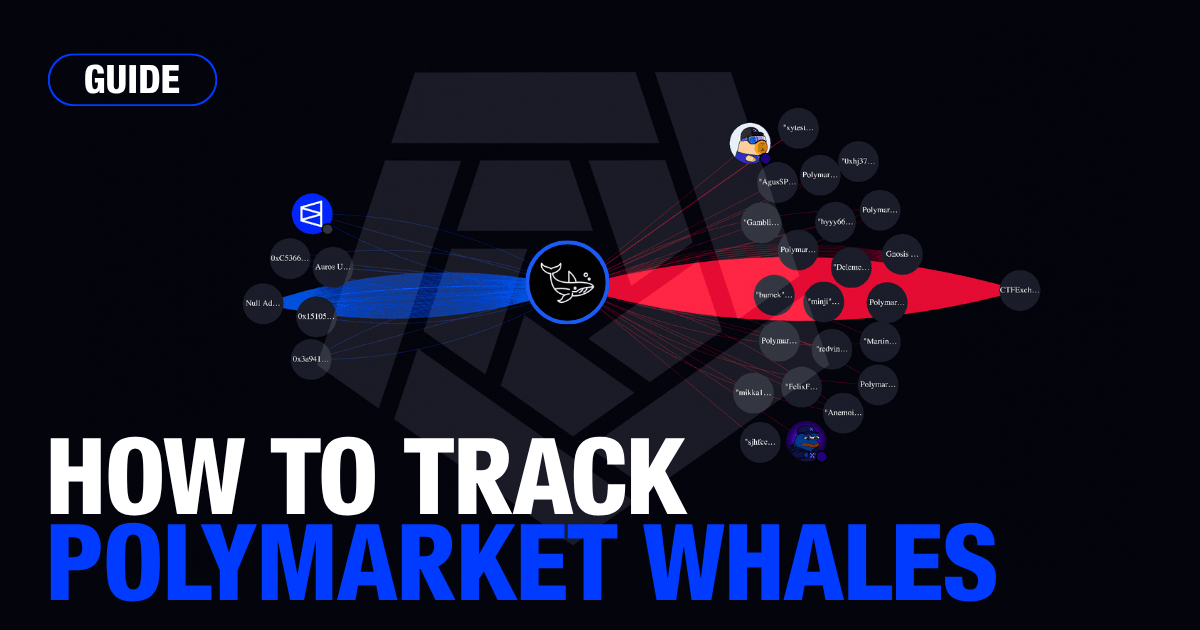 Arkham unveils a new guide showing users how to track Polymarket whales, analyze onchain betting positions, and uncover strategies driving prediction markets2026-05
Guide: How Deep-Dive Explainers Actually Move Crypto Forward
Guides are the backbone of crypto education: long-form, task‑oriented explainers that translate complex onchain systems into repeatable steps and mental models readers can actually use. In a market defined by technical jargon, volatile prices, and fast-moving regulation, high‑quality guides quietly determine who feels confident enough to move funds, try a new protocol, or switch to self‑custody, and who stays on the sidelines.
From Maps To Manuals: What A “Guide” Means In Crypto
In most parts of the internet, a guide is simply a how‑to article. In crypto, the term has taken on a more specific meaning: a guide is a structured, durable, often evergreen explanation that helps readers understand a concept, execute an onchain action, or adopt a new tool while staying mindful of risk. Crypto guides usually sit somewhere between news and documentation. They are more opinionated and narrative than raw docs, but more timeless and educational than a breaking news story about a token listing or a regulatory headline. They exist so that someone encountering crypto for the first time can move from “I have heard of Ethereum and USDC” to “I can safely use them” without needing a personal tutor.
This distinction matters because of how crypto works at a technical level. Cryptocurrencies are digital assets recorded on blockchains, which are distributed databases that maintain a shared ledger of ownership and transaction history without relying on a central authority. Funds do not live in an app or on a server; they live onchain, and access is mediated by cryptographic keys that most people never see in traditional finance. A guide, in this context, is not just explaining a new mobile feature. It is helping someone understand the consequences of signing a transaction, revealing a seed phrase, or swapping one token for another in a market that never closes.
The best crypto guides are intentionally evergreen. Evergreen content is designed to stay useful and relevant over a long time horizon, focusing on foundational concepts and recurring user problems rather than short‑lived trends. In marketing terms, these pieces often serve as “pillar” content: hub articles that cover a broad theme in depth, then branch into more focused sub‑guides that explore specific protocols, chains, or strategies. For example, a “DeFi liquidity” pillar might link out to separate guides on how to read liquidity pool analytics, how to use limit orders on a particular DEX, and how to interpret token unlock schedules. The pillar structure allows readers to enter at different levels of expertise while giving the newsroom a stable spine to update over time.
In crypto media, the word “guide” also carries an implicit promise about tone. Readers expect a guide to be slower and more deliberate than a market recap, more neutral than a protocol announcement, and more practical than an op‑ed. That is why newsrooms consistently label long explainers as guides when they are introducing concepts like self‑custody wallets, DeFi index funds, market structure regulation, or new onchain privacy tools. The tag tells readers that the piece is not trying to generate immediate trading activity but to build durable understanding they can reuse across cycles.

Tempo releases guide on tokenized deposits, bank ledger design and interbank settlement

Why Guides Dominate Crypto Education
Guides loom larger in crypto than in many other technology sectors because there is so little institutional scaffolding for learning. In traditional finance, banks, brokers, and regulated advisors funnel newcomers through account opening flows, risk questionnaires, and disclosure documents. In crypto, a first encounter might be a friend sending a meme coin, a social post about an airdrop, or a token unlock calendar shared in a chat. There is no guarantee that the next link in that chain will be an informed professional. That gap is what guides are meant to fill.
The learning curve is steep even at the most basic level. A newcomer has to understand that a crypto wallet does not physically hold coins but stores private keys, which are secret values used to authorize transactions on the blockchain. They must grasp that a seed phrase is a human‑readable backup for those keys; that anyone who knows those 12 or 24 words can take full control of all derived addresses; and that losing this phrase is usually irreversible. A guide can slow this down, unpack the terminology, and illustrate how self‑custody differs from having an account at an exchange or fintech app where a third party controls keys on the user’s behalf.
On the asset side, guides help readers distinguish between different token types and use cases. A guide to stablecoins, for example, explains why tokens like USDC are designed to track a reference asset such as the U.S. dollar, how reserves are structured, and what redemption rights look like. USDC in particular is issued by Circle as a fully reserved, dollar‑denominated token, with each unit intended to correspond to one dollar held in a segregated reserve of short‑dated U.S. Treasuries and cash deposits at regulated banks. The stablecoin maintains its peg through mint and burn flows between Circle and institutional customers, and through arbitrage on secondary markets that keep prices close to one dollar. A guide can translate those mechanisms into consequences: what happens if the peg wobbles, why reserve transparency matters, and how multichain issuance changes where USDC can move.
Market structure adds another layer of complexity that guides are uniquely well‑placed to address. Crypto markets operate across centralized exchanges, onchain decentralized exchanges, peer‑to‑peer platforms, and derivatives venues, all interfacing with different regulatory regimes. When legislators consider new frameworks for classifying digital assets as securities or commodities, or when they pass stablecoin‑specific laws like the GENIUS Act in the United States, the implications ripple through how platforms are supervised and what protections investors have. A well‑constructed guide can place these changes in historical context, explain which agencies oversee which activities, and clarify what “market structure” even means in practice: essentially, the legal architecture that determines how companies offering crypto assets are categorized and regulated.
Finally, timing and volatility make guides vital. Crypto markets trade around the clock, react to macroeconomic data, and respond to events like major token unlocks, protocol upgrades, or new derivatives listings. While news stories cover these events as they happen, guides interpret the playbook behind them. A guide on tokenomics, for instance, might explain how vesting schedules, unlock cliffs, and emissions programs can create predictable selling pressure, as well as how onchain traders try to front‑run or fade those flows. A guide on liquidity pool analytics can teach readers how to use metrics like total value locked, trading volume, fee APR, and active liquidity ranges to judge whether a pool’s advertised yield justifies its risk. These skills endure even as specific tokens and protocols rotate in and out of the spotlight.
Leviathan's 'Guide' readers are overwhelmingly active builders and operators — the three highest-clicked guides all target founders managing TVL, market-making desks, and AMM deployments — meaning this audience clicks guides for competitive operational edge, not onboarding basics.
Core Types Of Crypto Guides
Although the label “guide” is broad, most high‑quality crypto guides fall into three overlapping categories: conceptual guides, operational how‑tos, and strategy or risk frameworks. Each plays a different role in helping readers navigate what is happening onchain.
Conceptual Guides: Building The Mental Model
Conceptual guides tackle definitions and first principles. They answer questions such as “What is cryptocurrency?”, “How does a blockchain work?”, or “What is crypto market structure?” and aim to give readers a mental model that stays useful even as specific implementations change. A conceptual guide to cryptocurrency typically begins by outlining how digital tokens are created, moved, and secured on distributed ledgers maintained by networks of nodes using consensus algorithms. It may explain how public‑private key cryptography allows users to prove ownership without revealing secret keys, and how transaction histories on chains like Ethereum are collectively validated and recorded.
These guides often draw boundaries between crypto and adjacent technologies. For example, a guide to Web3 might clarify how “onchain” refers to activities directly recorded on a blockchain, while “offchain” refers to supporting infrastructure and services that interact with those ledgers without embedding every operation in a transaction. A guide on AI‑crypto intersections could demystify the difference between using AI models as development tools, such as code‑generating agents, and using crypto tokens to coordinate compute markets or reward open‑source model contributors. When a research lab releases an open‑source coding agent that runs efficiently on a single GPU but produces longer outputs than peers, a guide can place that in a spectrum of design trade‑offs rather than presenting it as an isolated anecdote.
Market structure guides also sit in this conceptual camp. They explain why regulators care whether a token is treated as a security or a commodity, how that classification affects disclosure requirements, and what it means when lawmakers advance multi‑part legislative packages covering stablecoins, trading platforms, and even central bank digital currencies. Instead of focusing on the latest hearing, they show readers how categories like “exchange,” “broker‑dealer,” and “custodian” might map onto crypto firms, and why those labels matter for consumer protection and innovation.
Operational Guides: Step‑By‑Step Onchain Tasks
Operational guides address concrete actions, such as setting up a self‑custody wallet, bridging assets between chains, or using a specific DeFi product. These guides need to be more precise and sequence‑driven than conceptual explainers, because missing or reordering steps can cause losses or failed transactions.
Wallet guides are often a newcomer’s first operational encounter. They walk through installing a software wallet, generating a seed phrase, writing it down offline, and understanding the difference between a custodial account where a third party controls keys and a non‑custodial wallet where the user holds their own keys and bears full responsibility for security. Many wallet guides emphasize that the wallet itself does not hold coins, but rather the keys that can instruct the blockchain to move those coins. They may also compare hardware wallets, which keep keys in dedicated devices, with mobile or browser wallets that trade some security for convenience.
DeFi‑focused how‑tos often revolve around specific interface flows. A guide to using limit orders on a decentralized exchange, for instance, must clarify that a limit order is an instruction to buy or sell a token at a specified price or better, not a guarantee of execution. It explains that users need enough of the sell‑side asset in their connected wallet to cover the order, that they can place multiple orders referencing the same balance, and that they should set realistic expiry times and order sizes relative to onchain liquidity and gas fees. It also details how to monitor and cancel orders, and what it means for an order to remain unfilled if the market never trades at the chosen price.
New protocol launches often come with their own operational guides because they introduce unfamiliar workflows. When a privacy‑focused network like COTI launches a portal for converting public tokens such as wrapped ETH, wrapped BTC, or USDT into private representations, the guide must explain both the high‑level concept and the exact process: connecting a wallet like MetaMask, installing a custom Snap that handles encryption keys, performing a “Portal In” transaction to create a private token whose balance is encrypted onchain, and later using “Portal Out” to return to the public asset. It must also highlight that the system is non‑custodial, meaning the user retains control of keys and that the encryption key used to view private balances never leaves the wallet or passes through the protocol operator.
Strategy And Risk Guides: From Tactics To Frameworks
The third major category, strategy and risk guides, operates at a higher level of abstraction. Instead of telling readers exactly which button to press, these guides provide frameworks for evaluating opportunities and hazards. In DeFi, a strategy guide might cover how to assess whether providing liquidity to an automated market maker is attractive given the expected trading volume, fee rate, price correlation between assets, and potential impermanent loss. It would discuss metrics such as total value locked, historical volume, fee APR, and the proportion of active liquidity within a chosen price range for concentrated liquidity pools.
Index fund guides illustrate similar dynamics in a portfolio context. A guide to crypto index funds explains that these vehicles pool investor capital to hold diversified baskets of digital assets, often weighted by market capitalization, and periodically rebalance to reflect changes in project size, liquidity, or perceived security. It clarifies the differences between private index products, which may require accredited investor status and charge relatively high expense ratios, and onchain tokenized indices like the DeFi Pulse Index, which packages a diversified set of DeFi governance tokens into a single ERC‑20 with rules limiting overconcentration in any one component. Such a guide helps readers understand that index funds can simplify exposure and mitigate idiosyncratic risk but do not remove volatility or smart‑contract risks.
Strategy guides also extend beyond finance into infrastructure and AI. A compute buyer guide might evaluate GPU‑as‑a‑service providers based on metrics such as throughput, latency, reliability, and geographic distribution, helping AI developers choose where to rent H100s or other accelerators. A fine‑tuning budget guide might walk founders through the trade‑offs between training runs, hyperparameter sweeps, and evaluation, relating them to actual dollar spend on cloud GPUs and timelines for shipping models. These guides are indirectly relevant to crypto because the same infrastructure underpins onchain AI assistants, automated trading bots, and analytics systems that parse blockchain data in real time.
Nasdaq launches an Advisor’s Guide to Crypto with Hashdex, giving financial professionals a structured resource for building practical digital asset knowledge

Anatomy Of A High‑Quality Crypto Guide
What separates a reliable crypto guide from a marketing brochure or a loosely assembled blog post is not just length; it is structure, disclosure, and an explicit commitment to evergreen value. For newsrooms, this often starts with thinking in terms of content pillars, where a central guide anchors a cluster of more specific follow‑ups. The pillar might cover “Self‑Custody Wallets,” while sub‑guides address topics like hardware wallets, mobile wallets, multisig setups, and recovery techniques. The architecture allows the newsroom to route readers to appropriate depth levels while updating individual sections as products and best practices evolve.
Clarity of scope is crucial. A good guide states implicitly or explicitly what it will and will not cover, so readers know whether they are looking at a beginner’s overview, an intermediate “power user” manual, or an advanced strategy piece. A beginner’s crypto guide might begin with defining cryptocurrency, describing how blockchains maintain decentralized ledgers, and explaining basic actions like buying, selling, and trading on exchanges. It might also flag exactly what newcomers need to know before committing funds, such as the possibility of losing access through key mismanagement, the lack of deposit insurance on many platforms, and the importance of understanding fee structures.
A robust guide balances steps with reasoning. In a limit order guide, for example, it is not enough to instruct users to “set an expiry time” or “consider gas fees.” The piece should explain why an unrealistically short expiry, such as a minute, dramatically reduces the chance of matching a counterparty onchain, especially on networks where block times and user activity vary. It should discuss how wider time windows expose users to more price drift relative to their expectations, and how minimum recommended order sizes on different chains relate to typical gas costs so that fees do not consume a disproportionate share of any potential profit.
Risk disclosure is another hallmark. Strategy guides in particular need to emphasize that describing a mechanism is not the same as endorsing it. A guide on yield farming should articulate both the upside of fee revenue and token rewards, and the downside of smart‑contract bugs, governance attacks, oracle failures, and regulatory shifts that could impact protocol viability. A guide on privacy tools must note that while encryption and obfuscation can protect legitimate user privacy, they may also attract scrutiny if misused, and that jurisdictional rules on mixing and privacy coins differ.
From a reader’s perspective, one practical way to evaluate guide quality is to look for explicit separation between enduring concepts and time‑sensitive specifics. Evergreen components include definitions, conceptual frameworks, and security best practices. Non‑evergreen components include APY figures, specific protocol incentives, and tentative regulatory proposals. Guides that clearly signal this distinction allow readers to extract what will still be useful in a year while treating the rest as context that may have changed. This is especially important in coverage of token unlocks, macro‑driven market narratives, or short‑lived promotional campaigns.
Finally, high‑quality guides are transparent about data and sources. When a guide states that USDC is fully reserved and redeemable one‑for‑one by certain customers, it should tie that claim to the issuer’s public documentation and regulatory filings. When it discusses the composition of reserves, such as the approximate split between short‑term U.S. Treasury bills held through a dedicated money market fund and cash deposits at regulated banks, it should cite those figures and note that they are subject to change based on updated attestations. When it references upcoming legislation or macro events, it should ground them in primary sources or trustworthy analysis.
- 01Protocol founder growth playbooks↗
The top three headlines by clicks are all founder-facing operational guides (TVL deals, market making, AMM launches), signalling readers actively running or building protocols who need frameworks, not primers.
- 02Crypto OpSec and security hardening
Five distinct security-guide headlines clustered in the top half of clicks — macOS OpSec, Web3 audit/CTF platforms, Solidity contract verification, DNS/BGP hijack defense, and a 9-step OpenClaw guide — showing readers treat security as a recurring, multi-layered practice problem.
- 03On-chain privacy techniques↗
Two privacy-guide headlines drew 196 combined clicks by promising concrete, habit-level tactics (specific Bitcoin/Ethereum tools, traceability reduction) rather than abstract privacy philosophy.
- 04DeFi yield and airdrop farming strategies
Prediction-market arbitrage (12–20% monthly framing) and perp DEX airdrop farming guides both converted well because they offered quantified, repeatable strategies rather than general yield concepts.
- 05Onchain analytics and research tooling↗
Guides on Arkham whale tracking, Etherscan advanced filters, CoinGecko API integration, and a seven-tool research stack all clustered around 47–71 clicks, reflecting readers who treat tool fluency as a core research edge.
- 06Self-custody and wallet onboarding↗
A guide to a child's first crypto wallet and beginner self-custody content both drew 100+ clicks, suggesting a meaningful share of readers are proxies for newcomers or are actively onboarding others.
Guides Across Key Crypto Themes
Because crypto is not a single product but a stack of technologies, financial instruments, and social experiments, guides span multiple thematic layers. Some of the most enduring guide genres are wallets and self‑custody, stablecoins and settlement, DeFi and liquidity, market structure and regulation, and the emerging intersection of AI with onchain systems.
Wallet And Self‑Custody Guides
Wallet guides are arguably the most important category because every onchain action begins with key management. A comprehensive wallet guide does more than compare brand names; it builds a conceptual foundation. It explains that the blockchain itself is the ledger of who owns what, and that a wallet is merely a tool for holding private keys and crafting transactions to update that ledger. It clarifies that private keys are the actual cryptographic secrets authorizing transfers, while public addresses derived from those keys function like account numbers that others can use to send funds.
Good wallet guides also demystify seed phrases. They describe how wallets generate a series of 12 or 24 random words representing a master key from which many individual private keys and addresses can be derived. They stress that anyone who gains access to this phrase can reconstruct the entire wallet on compatible software or hardware and that no reputable service should ever ask users to type their seed phrase into a website or support chat. Some guides may introduce the practice of using separate devices or accounts for cold storage and frequent spending, or the idea of multi‑signature wallets where multiple keys must sign a transaction, increasing resilience against single‑device compromise.
Custodial versus non‑custodial distinctions are another core topic. Custodial wallets delegate key control to a third party, such as an exchange, which manages keys on users’ behalf and exposes balances through a familiar login interface. Non‑custodial or self‑custody wallets place full responsibility on the user to manage their own keys, giving them maximum control and reducing counterparty risk but also making them solely accountable for any mistakes or losses. Guides help readers understand when each model might be appropriate, what features to prioritize, and how regulatory changes or platform failures can affect the safety of custodial arrangements.
In 2026, wallet guides increasingly intersect with privacy and analytics tools. On one hand, privacy portals like the one launched by COTI allow users to convert public tokens into private variants whose balances and transfers are encrypted onchain, requiring guides to explain how such tools work, what “onchain encryption” means, and how non‑custodial privacy infrastructure interacts with compliance expectations. On the other hand, analytics platforms such as Arkham map pseudonymous wallet addresses to real‑world entities, requiring guides that teach readers how to responsibly interpret labeled addresses, monitor entities, and trace transaction flows without over‑relying on any single attribution source. Together, these trends make wallet guides not just about storing value but about navigating visibility in an increasingly transparent yet privacy‑aware onchain ecosystem.
Stablecoin And USDC Guides
Stablecoins occupy a unique role at the boundary of crypto and traditional finance, which is why guides focused on them are perennially relevant. A stablecoin guide typically starts by explaining the basic idea of a token whose value is pegged to a relatively stable reference, often the U.S. dollar, and how issuers attempt to maintain that peg through various reserve or algorithmic mechanisms. It may compare fiat‑backed stablecoins, crypto‑collateralized stablecoins, and algorithmic designs, highlighting the trade‑offs between transparency, capital efficiency, and systemic fragility.
USDC frequently appears in these guides because it is one of the most widely used fiat‑backed stablecoins. Guides describe USDC as a token issued by Circle, a regulated financial technology firm, where each token is intended to represent one U.S. dollar held in segregated reserves. They explain that these reserves currently consist primarily of short‑dated U.S. Treasury securities, held through a dedicated money market fund, complemented by cash deposits at regulated U.S. banks. They note that Circle’s reserve balances are subject to monthly attestations by an external firm such as Deloitte, and that the company is regulated as a money‑services business in the U.S. while its stablecoin operations fall under frameworks like the GENIUS Act domestically and electronic money token rules under the EU’s Markets in Crypto‑Assets regulation.
A detailed USDC guide also clarifies the minting and redemption process. It describes how verified institutional customers, often exchanges or fintech platforms, wire dollars to Circle, receive a corresponding USDC balance once the transfer settles, and can instruct Circle to issue tokens to blockchain addresses on networks like Ethereum, Base, Solana, and others. Conversely, when they redeem, Circle burns the tokens and wires back dollars, keeping the total supply aligned with reserves. Guides emphasize that retail users typically cannot redeem directly with Circle and instead rely on crypto platforms to convert between USDC and dollars, which is why secondary market liquidity and exchange practices matter.
Beyond mechanics, stablecoin guides must address risk and regulatory context. They may discuss what happens if reserves are impaired, how jurisdictional rules affect reserve composition and disclosure, and how cross‑chain transfer protocols allow native movement of USDC between supported blockchains without traditional bridging risks. They also situate stablecoins in the broader market structure debate, where policymakers weigh their role as payment instruments, dollar proxies in emerging markets, and liquidity anchors for DeFi protocols. A thoughtful guide can help readers understand why stablecoins are both a stabilizing force within crypto markets and a focal point for regulators engaging with digital assets.
DeFi, Liquidity, And Yield Guides
Decentralized finance has spawned an entire sub‑genre of guides because it combines complex economics with user‑driven contract interactions. A central topic is liquidity provision. Guides to liquidity pools explain how automated market makers aggregate user deposits of token pairs and allow traders to swap between them at algorithmically determined prices, charging fees that are distributed to liquidity providers. They outline how key metrics such as total value locked reflect the scale of a pool, trading volume indicates demand, and fee APR approximates the return liquidity providers might earn from fees alone over a year.
More advanced liquidity guides delve into concentrated liquidity designs where providers choose specific price ranges within which their capital is active. These guides help readers think through how selecting a narrower price range can boost fee earnings when the market trades within that band but exposes providers to “out of range” risk if prices move beyond it, at which point their liquidity is no longer used and they earn no further fees until rebalanced. They also explore how reward programs, such as additional token incentives on top of trading fees, affect apparent APRs and how to distinguish sustainable yield from short‑term promotional boosts.
Other DeFi guides cover actions like bridging assets between chains, adding liquidity on particular platforms, or using cross‑chain swap tools. A bridging guide, for instance, must walk users through choosing a route between networks such as Arbitrum and a specialized derivatives chain, approving token transfers, understanding bridge security assumptions, and verifying that bridged tokens are accepted by the destination protocol. Similarly, guides to one‑click liquidity provision features like Kyber Zap explain how a DEX can take a single‑token deposit, split it into appropriate proportions, execute underlying swaps, and deposit the resulting tokens into a liquidity pool on the user’s behalf, simplifying what would otherwise be a multi‑transaction process. These guides help users understand convenience features without losing sight of the underlying mechanics and risks.
Strategy‑oriented DeFi guides mirror traditional finance portfolio discussions but with onchain twists. Guides to tokenomics, for example, explain how total supply, distribution schedules, team and investor vesting, and features like buybacks or burn mechanisms influence both short‑term trading dynamics and long‑term value capture. They show readers how to interpret vesting cliffs and linear unlocks, how to estimate potential sell pressure from upcoming unlock events, and how incentive structures align or misalign tokenholders with protocol revenue. When macro data releases, central bank meetings, or derivatives listings on venues like CME affect crypto prices, guides help readers connect these events to DeFi positions, emphasizing that leverage and illiquidity can amplify the impact of seemingly distant macro shifts.
Market Structure And Regulation Guides
As crypto has grown, the line between “tech” and “financial regulation” has blurred, making market structure guides indispensable. These guides define market structure as the set of rules and classifications that determine which regulators oversee which activities, what disclosures are required, and how trading venues, intermediaries, and issuers are permitted to operate. They unpack how existing securities law assigns jurisdiction to the Securities and Exchange Commission for securities offerings, how the Commodity Futures Trading Commission oversees commodity derivatives, and how crypto assets with hybrid characteristics challenge those categories.
Recent legislative efforts illustrate why evergreen guides are important. When the U.S. Congress pursues a three‑part legislative approach addressing stablecoins, trading platforms, and potential central bank digital currencies, a guide can explain the sequence without anchoring too heavily to any single draft’s specific language. It can describe how a stablecoin bill like the GENIUS Act aims to create a federal framework for dollar‑pegged tokens, how an upcoming market structure bill might define when a token is considered a security or a commodity, and how a separate CBDC bill could authorize or constrain a government‑issued digital currency. These guides help readers distinguish between what is law, what is proposed, and what remains speculative, while emphasizing that regulatory outcomes have direct consequences for exchange operations, token listings, and cross‑border flows.
Market structure guides also contextualize institutional products such as crypto index funds and exchange‑traded products. They explain why some index funds are structured as private placements limited to accredited investors, why they may have higher expense ratios than traditional equity index funds, and how onchain tokenized indices and publicly listed ETFs provide different exposure channels for retail investors. They connect these design choices to securities law, tax treatment, and custody requirements, enabling readers to understand not just the marketing pitch but the legal and operational realities under the hood.
AI, Analytics, And Onchain Data Guides
The integration of AI into crypto has spawned a new class of guides focused on infrastructure, agents, and analytics. On the infrastructure side, compute buyer guides help projects building AI‑enhanced onchain tools evaluate GPU‑as‑a‑service offerings based on performance, pricing, and reliability. Fine‑tuning budget guides explain how to scope experiments, choose model sizes, and allocate spend to training, evaluation, and deployment phases. These guides indirectly influence crypto because they shape the cost and feasibility of deploying AI agents that interact with smart contracts, run onchain analytics, or assist users with transactions.
Analytics‑focused guides, such as those explaining how to use platforms like Arkham Intel, teach readers how to navigate large troves of labeled onchain data. They describe how these platforms use both automated clustering and human curation to associate wallet addresses with real‑world entities, how to set up dashboards that monitor specific addresses or entities, and how to interpret flows between wallets and exchanges. They also emphasize methodological caveats: attribution is probabilistic, labels can be wrong or incomplete, and responsible use requires cross‑checking with other sources before drawing strong conclusions about any entity’s behavior.
AI also complicates information consumption itself. As language models become capable of generating plausible‑sounding but potentially incorrect explanations of crypto concepts, guides play a defensive role by anchoring readers in verified, human‑edited content. Newsrooms increasingly publish meta‑guides on how to use AI tools safely in a trading or development workflow, advising readers to treat AI outputs as starting points rather than authoritative instructions and to verify contract interactions and address details independently onchain. In this sense, guides are not only about specific protocols or tokens; they are about teaching a generation how to learn in an environment where automated systems can both assist and mislead.
OpenAI forms independent math advisory group to guide AI research standards, result disclosures and tools for mathematical research and learning

How Readers Should Use Guides
For readers, the key to getting value from guides is to treat them as navigational tools, not prescriptions. A good guide gives you a map of the territory, highlights common hazards, and shows you how to operate the equipment, but it does not tell you which exact path to take or guarantee a particular outcome. This distinction is especially important in markets where yields, incentives, and even legal interpretations can change faster than editorial cycles.
One practical approach is to separate “concepts to internalize” from “parameters to update.” When reading a guide to self‑custody wallets, the concept to internalize is that seed phrases must be kept offline and private, that hardware wallets reduce certain attack surfaces, and that losing a seed can mean permanent loss of funds. The parameters to update include which specific wallet brands are currently recommended, what firmware version is secure, and how each wallet integrates with newer chains or Layer 2 networks. Similarly, in a DeFi guide, the enduring concepts involve how liquidity pools, fees, and impermanent loss work, while APY figures and active reward programs are parameters that may be obsolete within weeks.
Readers should also cultivate a habit of tracing guides back to primary sources. If a stablecoin guide claims that reserves are fully backed by cash and short‑term Treasuries, it should provide or at least reference evidence such as issuer attestations and regulatory filings. If a market structure guide asserts that a particular bill has passed, readers can verify that claim by checking the legislative text or official announcements. This practice not only protects against outdated or inaccurate information but also trains readers to move fluently between narrative explanations and raw documents, a skill that is increasingly valuable in onchain governance and regulatory discourse.
Another dimension is risk management. Strategy guides that describe leveraged yield strategies, complex looping schemes, or sophisticated derivatives should be read through the lens of personal risk tolerance and experience. A guide explaining how to borrow against collateral, use the borrowed funds to farm yield, and then loop that position multiple times might be technically accurate, but readers must evaluate whether they understand the liquidation dynamics, oracle dependencies, and smart‑contract risks well enough to deploy capital. Guides can support this evaluation by clearly labeling sections that describe advanced techniques and by including scenarios where strategies fail, not just when they succeed.
Finally, readers can use guides to identify knowledge gaps. If a guide on bridging from Ethereum to another chain assumes familiarity with gas fees, nonce management, or chain IDs, that is a signal to consult more foundational guides first. If a guide on AI‑assisted coding assumes fluency in a particular programming language, readers may need to supplement with language‑specific tutorials. Pillar pages that interlink guides at different levels of abstraction make this process smoother, allowing readers to branch sideways or backward as needed without getting lost.
- 2024-11milestone
dYdX token migration to dYdX Chain v4 goes live
- 2025-01milestone
Ultimate Ethereum Events 2025 calendar published
Arkham releases onchain Polymarket whale tracking guide
- 2026-01milestone
Stacy Muur Ultimate Guide to Perp DEX Airdrops 2026 published
- 2026-03launch
Uniswap Cap token auction launches with participation guide
- 2026-06launch
CoW Swap launches DeFi learning hub covering DeFi fundamentals
How Newsrooms Build Evergreen Guide Pillars
From the newsroom’s side, guides are not isolated projects but part of a deliberate strategy to structure coverage around enduring user needs. The content pillar approach offers a helpful framework. Editors identify a broad, durable theme—such as “Onchain Self‑Custody,” “DeFi Liquidity Strategies,” or “AI and Crypto Infrastructure”—and commission a flagship guide that covers the core concepts, typical user journeys, and major risks. They then build out a constellation of narrower guides that dive into specific wallets, protocols, chain bridges, or regulatory developments, linking back to the pillar so readers always have context.
Evergreen maintenance is a significant part of this work. While conceptual sections may remain stable for years, operational details and external references need periodic review. For example, a guide on USDC’s mechanics must be updated if the issuer changes its reserve composition, expands to new blockchains, or falls under a new regulatory framework. A DeFi liquidity guide may need revisions as DEXs evolve their fee structures, introduce new pool types, or deploy on additional networks. Newsrooms often balance fully rewriting guides with incremental updates, adding dated notes where necessary while preserving the continuity of the pillar.
Editorial standards also shape guide production. To avoid becoming promotional, reputable outlets institute policies around disclosures, such as stating when a protocol has sponsored educational content and ensuring that analysis sections remain independent. They may enforce internal requirements for multiple source checks on factual claims, especially those involving regulatory status, reserve backing, or security guarantees. In areas such as privacy tools or analytics platforms, where mischaracterization can have reputational implications, editors scrutinize language to avoid overstating what a tool can or cannot do.
Guides also serve as a bridge between news and research. A newsroom tracking monthly Web3 developments might publish a recurring “Hitchhiker’s Guide to Web3” format that distills macro data, protocol launches, token unlocks, and ecosystem shifts into a narrative overview, then link out to deeper guides on any concept that demands more background. When the same outlet covers a cap token auction using a protocol like Uniswap’s auctions module, it may complement the event story with a reusable guide on how such auctions work, what parameters matter, and how onchain traders typically approach them. Over time, this layering builds a library that helps readers follow both real‑time markets and the underlying structures that govern them.
Lastly, guides support internal consistency. When a newsroom has a canonical guide to “What Is a Self‑Custody Wallet?” or “How Does Crypto Market Structure Actually Work?”, reporters can reference those pieces instead of re‑explaining the same concepts in every article. This not only saves space in news stories but ensures that recurring definitions remain coherent across the site. For readers, this means that the first deep dive they encounter becomes a stable reference point they can return to whenever a new product, regulation, or narrative invokes the same underlying ideas.
Outlook
For all the talk of price charts and token unlock schedules, the most durable infrastructure in crypto may be educational rather than technical. Blockchains, wallets, stablecoins, DeFi protocols, AI‑driven analytics, and cross‑chain tools are only as useful as people’s ability to understand and operate them safely. Guides—especially well‑maintained, clearly scoped, and transparently sourced ones—are how that understanding scales beyond the small group of early adopters who are willing to read whitepapers and protocol docs end to end.
As crypto matures, guides are likely to become more specialized and more tightly integrated with onchain experiences. Wallets may embed contextual guides directly into transaction flows, explaining in plain language what a contract call will do. DeFi dashboards may link strategy explanations to live positions, helping users interpret risk in real time. AI agents may synthesize guides across multiple sources to answer user questions conversationally, making editorial quality and source transparency even more important. Through all of this, the core mission of a guide remains constant: to take a moving, often confusing frontier of technology and markets, and render it navigable for anyone willing to learn.
Latest Guide news
Tempo releases guide on tokenized deposits, bank ledger design and interbank settlementNasdaq launches an Advisor’s Guide to Crypto with Hashdex, giving financial professionals a structured resource for building practical digital asset knowledgeOpenAI forms independent math advisory group to guide AI research standards, result disclosures and tools for mathematical research and learningSources
18 records from 15 domains
digitalmarketinginstitute.com
coursera.org
blog.kyberswap.com
ledger.com
bpi.com
panewslab.com
bitcoinfoundation.org
financefeeds.com
bleap.finance
rooseveltinstitute.org
investopedia.com
x.com
coti.news
info.arkm.com
eco.com
Community notes
Spot something off or out of date? Drop a note. Editors review topic notes daily and roll accepted fixes into the explainer — contributors are recognized in the monthly $SQUID drop.
Loading notes…
Help improve this topic
Have a story or tip about this topic? Submit it. See something missing? Leave a note. Editors review daily; accepted submissions and fixes count toward the monthly $SQUID drop.