
Deep dive into 1inch’s DeFi stack: how its DEX aggregation, Fusion intent engine, wallet, Aqua liquidity, and APIs power swaps, RWAs, USDC flows and MEV protection amid exploits, regulation and AI-agent driven Web3 adoption.
+12 sources across the wider coverage universe
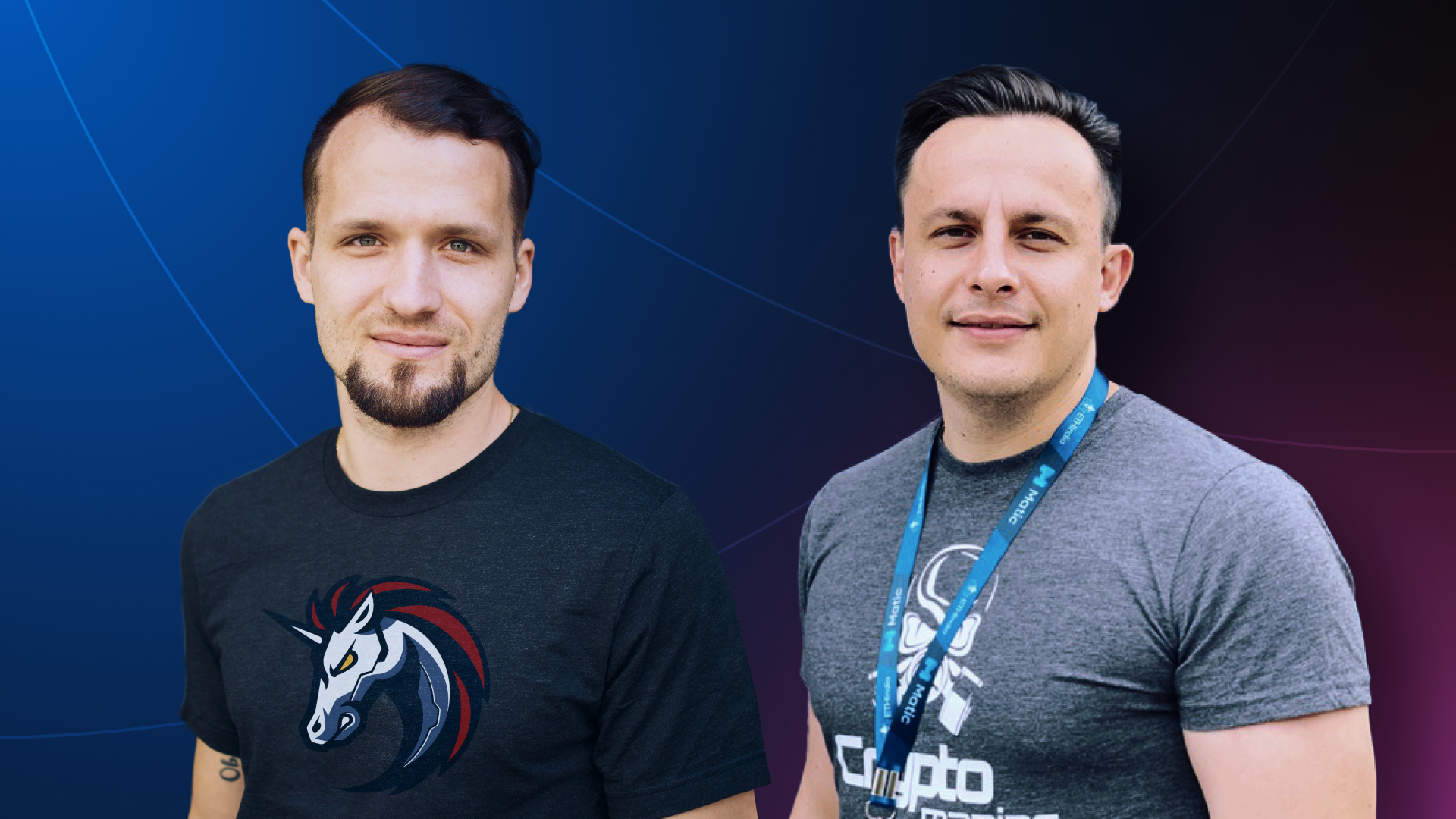 1inch launches Aqua across 13 chains, letting liquidity providers deploy one wallet balance across multiple positions without fragmenting capital or surrendering custody2026-07
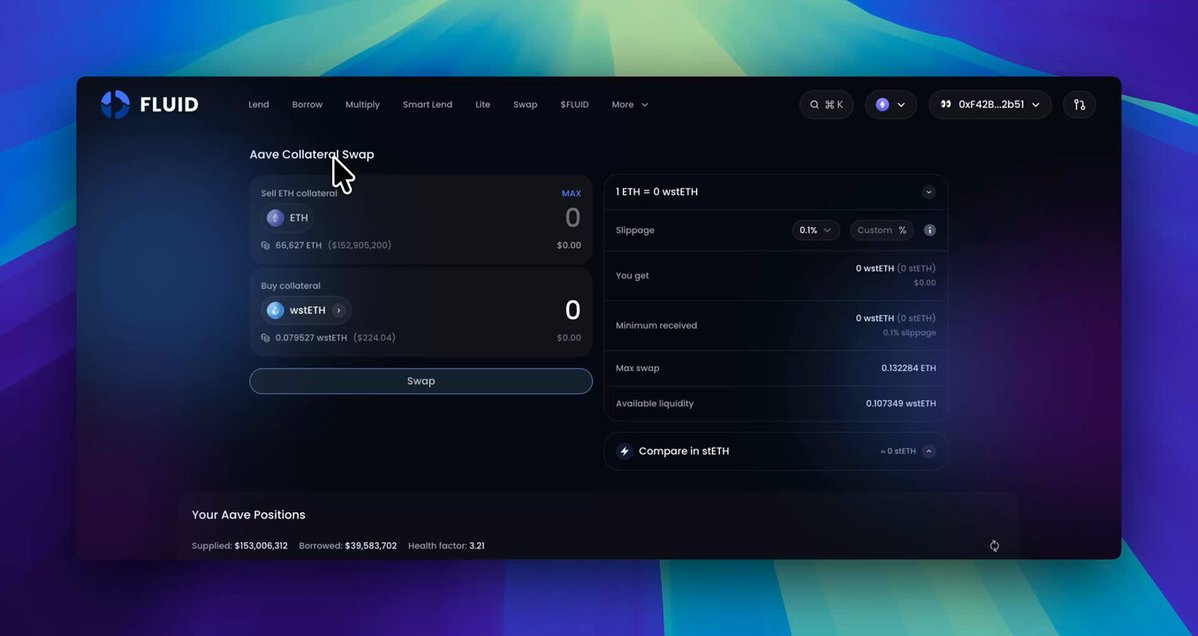 Fluid rolls out $1B-cap aWETH Redemption Protocol with Lido Finance, EtherFi, and 1inch to reduce systemic DeFi risk and unlock trapped ETH liquidity on Aave2026-04
 1inch liquidity provider TrustedVolumes suffers ongoing $5.87M exploit on Ethereum, with Blockaid linking attacker to 2025 Fusion V1 hack2026-05
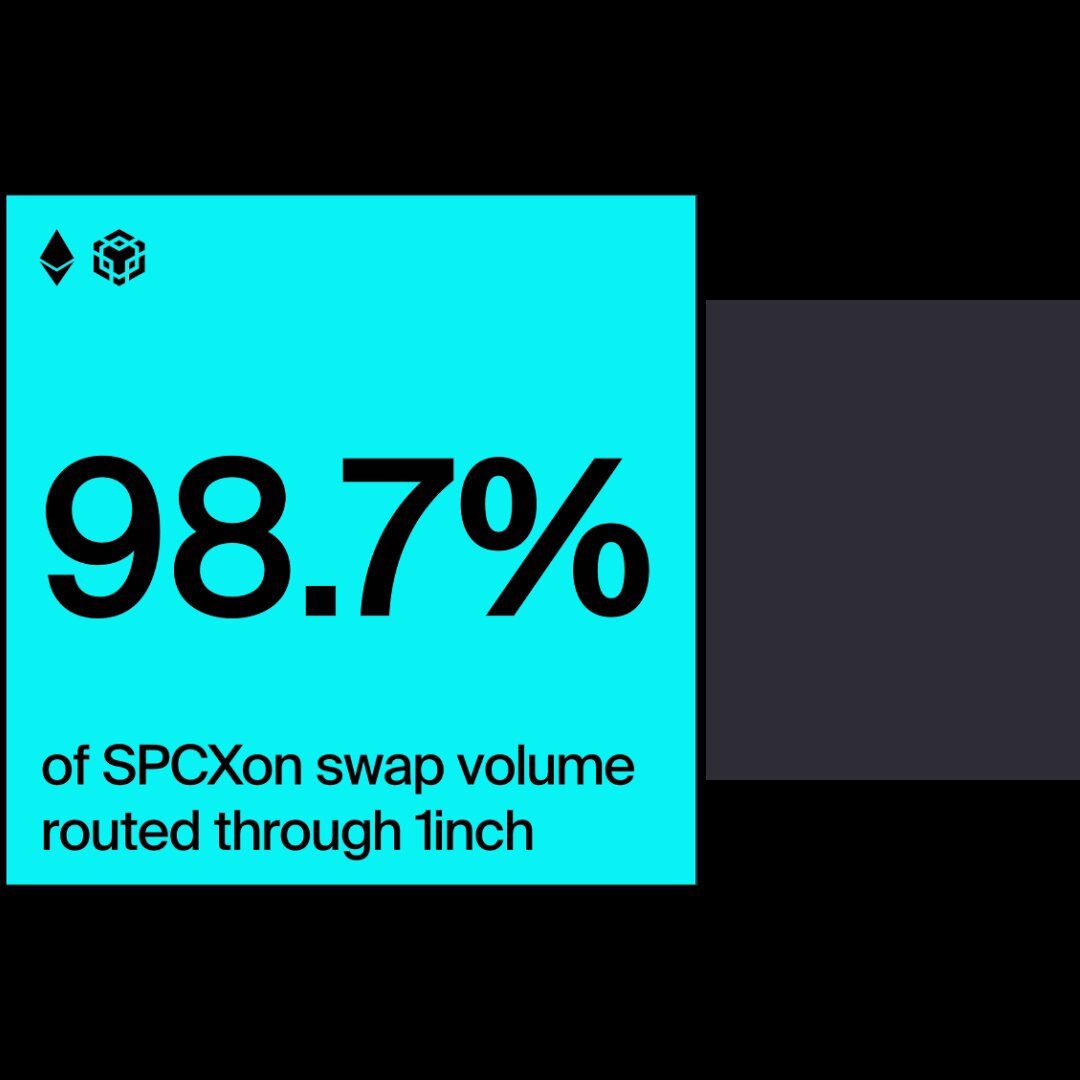 98.7% of all @OndoFinance SPCXon swap volume on @ethereum and @BNBCHAIN has been routed through 1inch.2026-06
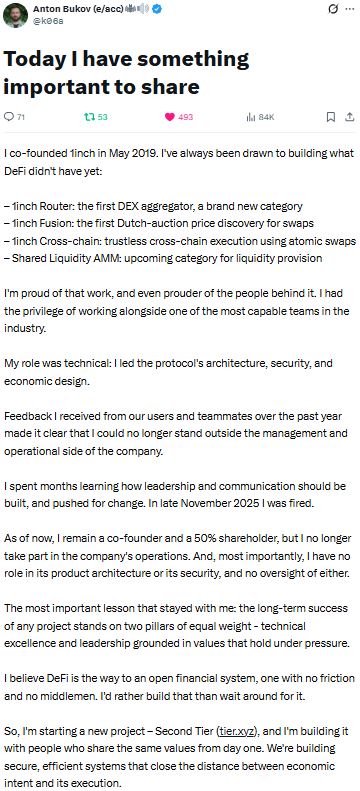 Anton Bukov, co-founder of 1inch, reflects on building the first DEX aggregator and Dutch-auction system, now launches new infrastructure startup Second Tier2026-07
 1inch Business launches model context protocol for agentic DeFi trading .2026-03
1inch: A Comprehensive Guide to the DeFi Aggregator and Liquidity Network
1inch is a decentralized finance (DeFi) protocol that aggregates liquidity across many decentralized exchanges (DEXs) and chains to route users’ swaps at the most efficient available prices, increasingly using an intent-based architecture to deliver gasless, MEV-protected trades. Around that core swap engine, 1inch has developed a broader Web3 stack that includes a self-custodial wallet, shared-liquidity infrastructure, institutional and retail APIs, and governance via the 1INCH token, while facing the same onchain risks, regulatory uncertainty, and infrastructure challenges that shape the rest of DeFi.
1inch in Context: From DEX Aggregator to Liquidity Infrastructure
Understanding 1inch starts with the role it plays in the wider DeFi and Web3 ecosystem. DeFi describes a set of financial services built on public blockchains where transactions are executed by smart contracts rather than centralized intermediaries such as banks or traditional brokers. Within this environment, decentralized exchanges allow users to trade digital assets directly from self-custodial wallets, relying on automated market maker (AMM) pools or onchain order books instead of a centralized order-matching engine. Because liquidity is fragmented across many DEXs, with each pool offering slightly different prices and slippage profiles, DEX aggregators emerged to route orders through multiple venues to reduce price impact, improve execution, and help users avoid overpaying for the same asset.
1inch initially positioned itself squarely as such a DEX aggregator, pulling prices and liquidity from a wide array of onchain sources and computing optimal swap paths across them. While any single AMM pool exposes traders to the conditions of that pool alone, an aggregator like 1inch can split a trade into multiple “legs,” sending proportions to different pools if that yields a better blended rate after fees and slippage. Over time, this path-finding logic extended beyond a single blockchain to multiple networks as DeFi became multi-chain. Today, 1inch supports swaps across more than thirteen different blockchains, offering both onchain and cross-chain trades through a unified interface and routing engine.
The project has also broadened its scope beyond a pure path optimizer. Its homepage now describes 1inch as a gateway to “secure and efficient DeFi,” emphasizing features such as MEV protection, wallet screening, cross-chain functionality, and real-world asset access in addition to token swaps. In practice, that means the aggregator is increasingly embedded in a wider liquidity and risk-management stack that spans the 1inch Wallet, shared-liquidity protocols like Aqua, and business-facing APIs integrated by exchanges, wallets, and institutional trading platforms. As DeFi has matured, 1inch has thus evolved from a useful convenience tool for sophisticated traders into a piece of core liquidity infrastructure for consumer and institutional Web3 applications alike.
This broadening role places 1inch at the intersection of several ongoing trends. The rise of tokenized real-world assets (RWAs), such as onchain treasury bills and bond exposure, has created demand for reliable swap infrastructure that can connect traditional-style instruments with onchain liquidity in assets like USDC, USDT, and ETH. Wallets and super-apps want embedded, gasless swap flows that feel comparable to Web2 payment experiences, yet still settle onchain. At the same time, regulators in major jurisdictions are drafting market-structure rules for digital assets, raising questions about where aggregator protocols sit relative to centralized intermediaries. The rest of this explainer unpacks how 1inch works technically, what products it offers, how it approaches security and regulation, and what its trajectory implies for DeFi users, developers, and institutions.

Fluid rolls out $1B-cap aWETH Redemption Protocol with Lido Finance, EtherFi, and 1inch to reduce systemic DeFi risk and unlock trapped ETH liquidity on Aave
How 1inch Works: Aggregation, Fusion, and Cross-Chain Swaps
Core aggregation logic and best-execution routing
At its core, 1inch is designed to source liquidity from many decentralized exchanges and liquidity sources simultaneously, then select the combination of routes that delivers the most favorable outcome for a given swap. When a user inputs a trade—say, swapping ETH for USDC on a particular network—the 1inch protocol evaluates available DEX pools, automated market makers, and other aggregators to determine how to split the order, taking into account pool depth, fees, and estimated slippage. The goal is to minimize the total cost of the trade, including price impact and gas, while avoiding paths that may expose the user to undue risk.
Unlike centralized exchanges that hold user funds in omnibus accounts and manage order flow internally, 1inch sits as a non-custodial router between the user’s wallet and onchain liquidity pools. The trader signs a transaction that authorizes the 1inch smart contract to spend a specific amount of tokens for a one-time operation, and the contract then executes the planned route atomically onchain. Because the underlying assets remain in the user’s wallet until the transaction executes, and are never held in a custodial account, 1inch’s security model is tightly coupled to the correctness and robustness of its smart contracts and the DEXs it leverages. This non-custodial design is central to how regulators are beginning to distinguish DeFi protocols from custodial intermediaries.
From the user’s point of view, the result is a single “swap” step, even if the underlying transaction is a complex series of operations across multiple DEXs and protocols. The interface surfaces expected price, slippage tolerance, and route details, allowing more advanced traders to inspect what will happen onchain before signing. Because 1inch aggregates liquidity rather than providing it directly, its execution quality is highly dependent on the breadth and depth of liquidity in the wider DeFi ecosystem. In practice, 1inch has been integrated with many leading DEXs across the networks it supports, which helps ensure the pathfinder can usually find a competitive route for mainstream token pairs.
The Fusion protocol and intent-based execution
In 2023–2024, DeFi discourse began shifting from “transaction-based” to “intent-based” paradigms, where users specify the outcome they want rather than a fully defined sequence of steps. 1inch’s Fusion protocol is a prominent implementation of this approach in a live trading system. Instead of sending a standard swap transaction into the mempool, a user defines a swap intent that encodes what they want to achieve—for example, exchanging a certain token for another within specified price and time bounds—and then offchain or semi-offchain “resolvers” compete to fulfill that intent.
Fusion orders are filled by professional market participants, also called resolvers or solvers, who have the tools and capital to route trades optimally across many venues and chains. These resolvers can aggregate liquidity, use private orderflow channels, or tap cross-chain bridges to complete the trade, and they often cover the gas fees themselves as part of the service. From the user’s perspective, this means the swap can appear “gasless,” with no need to hold the native gas token on the origin or destination chain, even though gas is still being paid by the resolver within the transaction. Because the intent is not broadcast as a straightforward mempool transaction until execution, this approach also reduces exposure to common forms of maximal extractable value (MEV) such as front-running and sandwich attacks.
Technically, intent-based architecture separates what the user wants from how it is accomplished. Users specify constraints such as minimum acceptable output, deadlines, and permitted paths, and resolvers find concrete transaction bundles that meet these constraints while still allowing them to earn a spread. 1inch’s Fusion system enforces these constraints at the smart-contract level so that resolvers cannot deviate from the user’s terms even if offchain coordination is involved. This structure introduces a new class of actors into the 1inch ecosystem—resolvers, market makers, and institutional liquidity providers—whose incentives and risk profiles differ from those of retail traders but are central to the protocol’s performance.
Cross-chain swaps and bridging logic
Beyond single-chain swaps, 1inch has invested heavily in cross-chain functionality, letting users move value between different blockchains in a single aggregated flow. Traditionally, moving assets across chains required users to interact with dedicated bridge applications, often involving multiple manual steps, time delays, and smart-contract risk on both sides of the bridge. 1inch’s cross-chain swaps abstract this complexity by letting users select a source token and network and a destination token and network, with the protocol handling routing behind the scenes.
According to 1inch’s documentation, users can perform cross-chain swaps across more than thirteen supported networks via the same interface they use for onchain swaps. The system typically involves a combination of DEX trades and bridging operations, potentially using Fusion-style intents so that resolvers can orchestrate the required sequence atomically. Notably, 1inch emphasizes that users do not need to hold native gas tokens on the destination chain to complete such swaps, since in Fusion mode resolvers can pay gas and be compensated via the swap spread. This makes cross-chain activity more accessible to users who otherwise might be blocked by the need to bootstrap gas on a new chain, particularly when moving into ecosystems such as Layer 2 networks or alternative Layer 1s.
Security-wise, cross-chain swaps inherit the risk properties of whatever bridges or messaging systems are used under the hood. 1inch positions its intent-based MEV protection as an added safety layer against certain onchain adversarial behaviors, but it does not eliminate smart-contract risk or bridge risk in the underlying infrastructure. For institutional users and developers integrating with 1inch via APIs, understanding where cross-chain risk resides—and how it is allocated between 1inch, liquidity providers, and third-party bridge operators—remains a key due-diligence question.
MEV protection and transaction privacy
A central selling point of 1inch’s Fusion and cross-chain offerings is protection against various forms of MEV, including front-running and sandwich attacks that can degrade execution quality. MEV arises when validators, block builders, or sophisticated bots reorder, include, or censor transactions in ways that extract value from regular users, particularly in transparent public mempools. In the context of DEX trades, a classic sandwich attack involves a bot buying a token ahead of a large user trade, letting the user push the price up, and then selling after the user’s transaction, capturing the difference.
1inch mitigates these behaviors in several ways. First, intent-based orders are not exposed as simple swap transactions in the public mempool prior to resolution; instead, resolvers coordinate to fill the intent and typically submit a bundled transaction that is less attractive to sandwich bots. Second, 1inch collaborates with infrastructure providers and uses private or semi-private transaction relays in certain modes, which reduce the surface area for generalized front-running. Third, the platform pairs MEV protection with wallet screening and risk scoring, using tools such as TRM Labs’ APIs to block known malicious actors and high-risk addresses from participating as resolvers or counterparties. None of these measures can fully eliminate MEV in a permissionless environment, but they can materially improve the average user’s execution compared with broadcasting naive swap transactions directly to public mempools.
The trade-offs are complex. MEV protection that relies on trusted relays or curated resolvers may somewhat reduce the “pure” permissionlessness of DeFi, and it redistributes value from opportunistic arbitrage bots to a smaller set of professional actors and end-users. At the same time, large wallets, institutions, and RWA platforms increasingly demand predictable execution and reduced information leakage, pushing aggregators like 1inch toward more structured, quasi-institutional routing models. How this balance evolves will shape the competitive landscape between MEV-aware aggregators, DEXs building their own protection layers, and new architectures such as encrypted mempools.
Readers engage with 1inch not as passive users but as governance watchdogs: the two highest-clicked stories both expose value extraction or liability that the protocol quietly imposed on users and participants, revealing that trust in the DEX aggregator layer is the real stakes.
1inch Products: Wallet, Aqua, APIs, and Business Integrations
1inch Wallet and DeFi Positions
To make its routing and MEV protection accessible to everyday users, 1inch offers a self-custodial wallet application that integrates swaps, portfolio tracking, and position management. Unlike browser plugins that focus primarily on signing transactions, the 1inch Wallet emphasizes in-app trading and analytics, effectively turning the aggregator into a DeFi “home base.” The wallet supports multiple chains, displays token balances, and allows users to interact with DeFi protocols while keeping private keys under their own control.
A key recent addition is DeFi Positions, a feature that aggregates a user’s onchain positions across more than 1,200 supported DeFi protocols and thirteen chains. Instead of forcing users to manually track lending positions, liquidity pool tokens, staking deposits, restaking derivatives, derivatives, and prediction markets separately, DeFi Positions brings this information into a single dashboard. The wallet surfaces metrics such as current value, profit and loss, and rewards, as well as risk signals that can warn users about unhealthy collateralization levels or impending liquidations. For active DeFi participants, this kind of consolidated view is increasingly important, especially as composability chains together multiple protocols in ways that can be difficult to monitor manually.
However, 1inch itself emphasizes that DeFi Positions and the wider wallet tooling do not remove the underlying onchain risk borne by users. Uncollateralized smart-contract risk, oracle failures, governance attacks, and protocol-specific vulnerabilities remain, regardless of how elegantly a wallet presents them. The educational material around DeFi Positions and the relaunched 1inch DeFi Academy stresses the importance of understanding price impact, slippage, yield sources, and counterparty risk before committing assets to any onchain strategy. From an editorial standpoint, the key takeaway is that wallets like 1inch’s can improve transparency and user experience but cannot fully abstract away the complexity and hazards inherent in permissionless, self-directed finance.
Aqua: shared liquidity without pooled deposits
Another significant step in 1inch’s product evolution is 1inch Aqua, an onchain protocol for “shared liquidity” that aims to unlock greater capital efficiency without forcing users to deposit tokens into traditional liquidity pools. Aqua’s core idea is that multiple strategies can share the same token approval from a user’s wallet, allowing those tokens to be mobilized for different purposes without fragmentation. Instead of moving assets into separate pool contracts for each strategy, users approve Aqua contracts to pull tokens under certain conditions, and those tokens remain in the user’s wallet until an atomic transaction executes.
From a structural perspective, Aqua is self-custodial and permissionless: tokens stay under the user’s control, and strategies interact with wallets via atomic “pull and push back” transactions that either fully complete or fully revert. This removes the need for protocols or developers to implement their own deposit and withdrawal logic, potentially reducing smart-contract surface area while still enabling sophisticated onchain strategies. For liquidity providers, Aqua’s shared-liquidity model eliminates the need to split balances across multiple pools, since the same approved balance can serve multiple strategies in parallel, subject to non-conflicting usage.
During ETHGlobal hackathons, teams have already begun building on Aqua, exploring new forms of fee auctions and capital-efficient AMMs that keep liquidity in user wallets rather than centralized pools. Internal coverage has highlighted designs where, for example, the right to set pool fees is auctioned and the winning bidder captures fee revenue, while underlying liquidity never leaves users’ wallets thanks to Aqua’s shared approval model. Such experiments underscore Aqua’s potential as a substrate for innovation around liquidity management, arbitrage, and fee structures, even though it remains early in its lifecycle compared with 1inch’s core aggregator.
Swap APIs and institutional connectivity
Beyond its user-facing dApp and wallet, 1inch exposes its aggregation and intent-based routing logic via APIs that can be integrated by third parties. The 1inch Swap API, powered by the Fusion protocol, allows Web3 platforms, wallets, bots, and other applications to offer 1inch-grade swaps to their own users through a simple programmatic interface. According to 1inch, this API delivers sub-400-millisecond response times in typical conditions, making it suitable for latency-sensitive use cases such as trading interfaces and algorithmic strategies. For many builders, using the 1inch API is more efficient than building and maintaining a bespoke routing engine across dozens of DEXs and chains.
Several high-profile integrations illustrate how this API layer is being used. KuCoin’s Web3 Wallet has integrated the 1inch Swap API to power gasless, MEV-protected swaps for supported crypto assets and tokenized real-world assets within its self-custodial environment. This integration builds on KuCoin’s partnership with Ondo Global Markets to bring hundreds of tokenized RWA exposures into the wallet, using 1inch as the transaction layer for liquidity access, competitive pricing, and built-in MEV protection. In effect, KuCoin delegates the complexity of finding best execution for both crypto and RWA trades to 1inch, while maintaining control over the user interface and broader wallet experience.
On the institutional side, 1inch has integrated with Talos, a prominent digital-asset trading and portfolio management platform used by professional investors. Through this collaboration, Talos clients can access DeFi liquidity via 1inch’s aggregation engine, plugging it into their existing workflows for price discovery, trading, settlement, and portfolio management. For institutions already connected to centralized exchanges, OTC desks, and custodians through Talos, the integration provides an additional venue for sourcing liquidity and executing strategies without directly interfacing with individual DEXs. This is emblematic of a wider trend in which DeFi protocols become “liquidity backends” that institutional platforms tap into on a routed basis.
Media, education, and ecosystem outreach
In addition to technical products, 1inch maintains an active content and education strategy through its blog and DeFi Academy. The relaunched DeFi Academy offers structured learning paths that start from the basics of what DeFi is, how slippage works, and how liquidity functions in crypto markets. Rather than promising risk-free returns, the curriculum explicitly focuses on giving users the knowledge needed to assess price impact, understand where yield originates, and recognize when a transaction may carry extra risk. This aligns with DeFi’s broader ethos of self-custody and personal responsibility: users gain more control over their assets but must also take on more responsibility for risk management.
The 1inch blog also publishes in-depth explainers on topics such as RWA trading and US crypto regulation, often going beyond narrow product updates. Its article on how RWA trading works in 2026, for instance, examines the state of tokenized assets, the drivers of their growth, and the importance of making such assets easier to trade and move through wallets and DeFi infrastructure. Its coverage of the CLARITY Act breaks down a complex legislative proposal into understandable components, explaining potential impacts on centralized platforms, DeFi protocols, and end-users. These editorial efforts position 1inch not only as a liquidity provider but also as a reference point for understanding DeFi’s evolving landscape.
Liquidity, Real-World Assets, Stablecoins, and USDC
Liquidity as a core resource in DeFi
Liquidity—the ease with which an asset can be bought or sold without causing a large price change—is a foundational concept for both traditional finance and DeFi. In onchain markets, liquidity is typically provided either by automated liquidity pools or by onchain order books, and is often fragmented across many protocols and networks. The 1inch team has emphasized in its educational content that liquidity affects price impact, slippage tolerance, and the feasibility of executing large trades without incurring substantial implicit costs. For aggregators, deep and well-distributed liquidity creates more opportunities to construct efficient paths that minimize these costs.
Because 1inch aggregates liquidity rather than offering a single pool, its effectiveness hinges on the breadth and depth of its connections to DEXs and other liquidity sources. According to external analyses and case studies, the network has facilitated hundreds of billions of dollars in cumulative trading volume and serves a user base in the millions, highlighting the scale at which it operates as a DeFi liquidity router. Integrations like Talos and KuCoin’s Web3 Wallet further increase the volume and diversity of flows that pass through the 1inch stack. Internally, 1inch has also explored how liquidity structures can be improved via mechanisms such as Aqua’s shared liquidity, which reduces the need for liquidity providers to split balances across many pools.
The concept of liquidity is particularly important in the context of emerging asset classes such as RWAs and more specialized tokens. Many RWA instruments are issued by a limited number of platforms, with relatively shallow liquidity concentrated on specific networks or DEXs. In such conditions, aggregators like 1inch can mitigate but not fully eliminate slippage and price impact, meaning users must still exercise caution when trading larger sizes. At the same time, routing RWA trades through a widely integrated aggregator can help funnel liquidity from multiple pockets—such as stablecoin pools, RWA-specific pools, and cross-chain bridges—into a more coherent execution experience.
RWA tokens and the role of swap infrastructure
Real-world assets in DeFi typically refer to tokenized representations of instruments such as treasury bills, corporate bonds, real estate interests, or revenue streams that exist offchain. Tokenization can make these assets easier to fractionalize, transfer, and integrate into onchain strategies, but realizing these benefits depends on infrastructure that can connect RWA tokens to the broader liquidity pool of crypto assets. 1inch’s blog notes that RWA adoption is not just about issuing tokens but also about making them easier to trade, move, and access through wallets and DeFi infrastructure. Without reliable swap rails, RWA tokens risk becoming siloed instruments accessible only to a narrow set of participants.
In this context, 1inch has become an important transaction layer for RWA platforms and intermediaries. KuCoin’s Web3 Wallet, for example, uses the 1inch Swap API to enable gasless, MEV-protected swaps of tokenized real-world assets alongside mainstream cryptoassets within its self-custodial environment. This means a user can hold tokenized treasuries or other RWA exposures in the same wallet as stablecoins like USDC and move between them without directly interacting with underlying DEXs or bridges. Internally, coverage has highlighted that for some RWA tokens, such as certain Ondo Finance exposures, nearly all swap volume on specific chains has been routed through 1inch, illustrating the aggregator’s importance as a de facto execution venue.
Bringing RWA trading into mainstream DeFi also raises regulatory and compliance considerations. Many RWA tokens are issued subject to securities or other financial regulations, and platforms that facilitate access to them must navigate complex jurisdictional rules. By design, 1inch provides non-custodial routing and relies on partners like KuCoin and Talos to handle customer onboarding, KYC, and regulatory classification at the user interface and custodial layers. At the same time, 1inch enforces screening of resolver wallets for sanctions and AML risk using TRM Labs’ APIs, helping ensure that its liquidity providers meet basic compliance standards. The long-term interplay between RWA growth, DeFi routing infrastructure, and evolving regulatory frameworks will remain a central theme for market participants.
Stablecoins, USDC, and payment-like flows
Stablecoins such as USDC play a pivotal role in both RWA ecosystems and general DeFi trading. USDC is widely used as a base asset and unit of account, often serving as the core collateral or quote currency in DEX pools. Major corporations and payment providers have shown growing interest in stablecoin payouts, reflecting demand for onchain settlement mechanisms that combine the programmability of crypto with the relative value stability of fiat-pegged assets. 1inch’s own content has noted increasing institutional and corporate attention to stablecoins, positioning them as a bridge between traditional finance and onchain ecosystems.
Within 1inch, USDC frequently appears in routes as an intermediate asset when swapping between more volatile tokens, due to its deep liquidity and widespread availability across chains and DEXs. For example, a user swapping an RWA token for ETH might be routed via an RWA/USDC pool and then a USDC/ETH pool, allowing the aggregator to tap into the deepest available liquidity at each step. In cross-chain contexts, USDC and other stablecoins often serve as the asset that is actually bridged between chains, with 1inch handling the necessary swaps on each side to present the desired token pair to the user. This makes stablecoins central to 1inch’s role as a liquidity router, even when end-users think only in terms of crypto-to-crypto or crypto-to-RWA trades.
Stablecoins also feature prominently in security and risk narratives. In the 2025–2026 period, a 1inch-affiliated market maker, TrustedVolumes, suffered an exploit that resulted in the loss of assets including ETH, USDT, WBTC, and a significant amount of USDC, underscoring that liquidity providers and resolvers can be compromised even if the core aggregator contracts remain intact. For users whose trades are routed through such entities, the impact may manifest as temporarily degraded liquidity or widened spreads, particularly in stablecoin pairs. Incidents like this highlight why DeFi participants should distinguish between protocol-level security and the operational security of independent market makers and liquidity providers that plug into aggregator ecosystems.
1inch launches full product suite on Monad, including intent-based swaps with no gas fees and MEV protection

Security, Exploits, and Regulatory Trajectories
Exploits involving 1inch ecosystem participants
To date, the most significant publicly reported incidents involving 1inch have concerned ecosystem participants such as resolvers and liquidity providers rather than the core 1inch contracts themselves. In 2025, TrustedVolumes, a liquidity provider and market maker that operated as one of 1inch’s Fusion resolvers, was exploited for nearly six million dollars in digital assets. Reports indicate that the attacker targeted a vulnerability in an outdated smart contract controlled by TrustedVolumes, draining funds in assets including ETH, USDC, USDT, and WBTC. Later analysis suggested that the same operator may have been behind an earlier Fusion-related attack in March 2025, though details remain contested.
Crucially, 1inch emphasized that neither the 1inch core protocols nor user funds held via its smart contracts were affected, as TrustedVolumes operated independently as a liquidity provider. This distinction reflects the modular nature of DeFi infrastructure: protocols like 1inch expose interfaces that external entities can plug into, but the risk profiles of those entities are separate from the protocol’s own contract security. For end-users, however, this distinction can feel academic; if a major resolver is compromised or forced to halt operations, liquidity conditions on 1inch may deteriorate temporarily, affecting execution quality.
The TrustedVolumes exploit underlines two broader points. First, DeFi users and integrators must evaluate not only protocol-level audits and security guarantees but also the robustness of market makers and third-party operators who route and warehouse risk on their behalf. Second, as intent-based systems rely more heavily on specialized resolvers, the security and governance of those resolvers become systemic concerns. 1inch’s response, which included clarifying that its own systems remained uncompromised and reiterating resolver verification requirements, reflects growing recognition that “soft” infrastructure—operators, key management, upgrade processes—can be as critical as smart-contract code in protecting DeFi users.
Wallet screening, AML controls, and resolver verification
In parallel with these challenges, 1inch has taken steps to enhance security and compliance within its own domain of control. A case study from TRM Labs describes how 1inch uses TRM’s APIs to screen millions of wallets, flag high-risk addresses, and contribute to a safer DeFi ecosystem. By integrating onchain analytics and sanctions lists, 1inch can identify and block addresses associated with illicit activity from interacting with its services in critical roles. This is particularly important for resolvers and liquidity providers, which handle large volumes of swaps and may be exposed to higher-risk counterparties.
To obtain the right to resolve Fusion mode swaps, 1inch requires resolvers to undergo a verification process that includes customer identification and wallet screening. This effectively establishes a tiered participation model: while end-users can interact with the protocol in a permissionless, non-custodial fashion, entities that play infrastructural roles in routing and settlement are subject to KYC and AML controls. The combination of non-custodial smart-contract logic and curated resolver sets is an example of how DeFi protocols are adapting to growing regulatory expectations without wholly abandoning permissionless principles.
From a user perspective, these practices mean that MEV protection and gasless swaps are provided by resolvers that have passed at least some compliance checks, reducing the likelihood that they are sanctioned entities or repeat exploiters. However, this does not guarantee their operational security, as the TrustedVolumes case demonstrates. In turn, regulators and policymakers may look to such resolver verification frameworks as evidence that DeFi protocols can embed risk-based controls even when smart contracts themselves remain open for anyone to call.
The CLARITY Act and the regulatory perimeter
In the United States, the most consequential legislative proposal for digital asset markets in recent years is the Digital Asset Market CLARITY Act of 2025. 1inch’s blog has covered the bill extensively, emphasizing its potential to provide a clearer rulebook for cryptocurrencies by defining which assets fall under the jurisdiction of the Securities and Exchange Commission (SEC) versus the Commodity Futures Trading Commission (CFTC), setting out registration rules for trading platforms, and strengthening consumer protection standards. The House of Representatives passed the CLARITY Act in July 2025, and by mid-2026 the bill had cleared the Senate Banking Committee with a bipartisan vote, moving it closer to potential enactment.
A key feature of the CLARITY Act is its focus on market structure rather than granular conduct rules. It addresses how customer assets should be protected, how custody should work, what disclosures crypto businesses must provide, and what anti-money laundering and counter-terrorism financing obligations intermediaries must meet. Importantly for DeFi, the latest drafts include carve-outs that exempt non-custodial software, user interface providers, and blockchain developers from being treated as regulated intermediaries, provided they do not control user funds or execute transactions on behalf of others. This aligns with arguments made by DeFi builders, including 1inch and other industry participants, that developers who merely publish code or operate non-custodial interfaces should not be classified as money transmitters.
For 1inch specifically, the CLARITY Act’s final form will influence how its various components are treated under US law. The core DEX aggregation and Fusion contracts, which operate non-custodially and rely on user-signed transactions, likely fall under the bill’s DeFi carve-outs as currently drafted. However, certain business activities—such as running curated resolver sets, offering frontends that direct orderflow, or operating as an institutional liquidity provider—could still implicate registration and compliance obligations depending on implementation details. The bill would also formalize expectations around segregation of customer funds, handling of conflicts of interest, and disclosure practices, echoing lessons drawn from centralized exchange failures like FTX.
The CLARITY Act is not yet law, and its final impact will depend on the reconciliation of House and Senate versions, the outcome of floor votes, and subsequent rulemaking by agencies. Nevertheless, it represents the most concrete attempt to date to delineate the regulatory perimeter for DeFi infrastructures like 1inch in the United States. The bill’s progress, combined with global developments such as the EU’s MiCA framework and UK’s evolving crypto rules, will shape the environment in which aggregators and RWA platforms operate over the coming years.
- 01DAO governance & user extraction↗
The positive-slippage vote exposed that 1inch was capturing surplus trade value from users, making it a concrete governance-accountability story rather than an abstract DAO vote.
- 02DAO legal liability shield
A 50,000 USDC on-chain vote to hire a lawyer made the abstract threat of DAO member liability suddenly tangible and actionable, drawing readers who hold governance tokens.
- 03Fusion protocol & solver exploits↗
The TrustedVolumes hack and Fusion v1 vulnerability revealed that the solver network outsourcing model transfers protocol risk onto third-party resolvers in ways users did not fully understand.
- 04Intent-based & cross-chain swaps↗
The atomic-swap white paper and Solana cross-chain launch represented a genuine architectural shift away from routing aggregation, attracting readers tracking whether 1inch can stay ahead of UniswapX and CoW Swap.
- 05DEX aggregator competitive pressure
CoW Swap's rise to 26% market share and potential dethroning of 1inch framed the aggregator war as a zero-sum race, giving readers a scoreboard to follow.
- 06Token unlock & airdrop sell-pressure
Research showing up to 95% of airdrop proceeds sold within two transfer steps, combined with $750M+ in scheduled token unlocks, gave holders a concrete reason to track price risk.
AI Agents, Agentic Commerce, and the Future of Intent-Based Trading
One of the more forward-looking narratives surrounding 1inch involves the rise of AI agents and “agentic commerce.” Independent research by firms such as HUMAN Security has documented rapid growth in automated agents that perform product research, comparison, and transaction execution on behalf of users in online environments. These agents increasingly act as intermediaries between human preferences and digital marketplaces, raising questions about how they will interact with onchain financial systems.
1inch has positioned its Fusion protocol and intent-based architecture as well-suited to this emerging paradigm. In an intent-based system, a user—or an AI agent acting for that user—can specify desired outcomes, such as “swap up to a certain amount of USDC to a basket of RWA tokens at or below a given price impact,” leaving the details of pathfinding and execution to infrastructure like 1inch. This abstraction aligns closely with how autonomous agents operate: they translate high-level goals into a series of actions, for which they need reliable, composable APIs and protocol-level guarantees.
As AI agents proliferate in Web3, they may increasingly rely on 1inch’s Swap API and Fusion pipeline to perform actions such as rebalancing portfolios, harvesting yields, or moving collateral across chains in response to market conditions. The sub-400-millisecond response times claimed for the Swap API, along with MEV protection and gasless flows, are particularly attractive for automated strategies that need predictable performance and minimal user intervention. At the same time, this raises new concerns around agent-driven exploitation, as malicious or overly aggressive agents might seek to game liquidity conditions or exploit protocol quirks at scale.
The intersection of AI agents, DeFi, and regulation remains highly unsettled. If an AI agent uses 1inch to execute trades on behalf of many users, questions arise about who bears responsibility for KYC, AML screening, and potential market manipulation. 1inch’s reliance on TRM Labs for wallet screening and its resolver verification process partially address these concerns at the infrastructure level, but user-level identity and intent remain largely outside its purview. Going forward, one can expect more explicit standards for how agentic commerce interfaces with DeFi protocols, potentially including metadata standards for intents, rate limits, and shared security frameworks.
Governance, the 1INCH Token, and Ecosystem Development
The 1inch Network is governed via the 1INCH token, which functions as both a governance and utility token across the project’s protocols. When the token was released, the 1inch Foundation framed it as a tool to transition protocol control to a decentralized autonomous organization (DAO), with token holders empowered to vote on key parameters and upgrades. Governance responsibilities include settings for the Aggregation Protocol and Liquidity Protocol, fee structures, incentive programs, and potentially the inclusion or exclusion of certain liquidity sources. This aligns with broader DeFi trends in which governance tokens confer both economic and political rights over protocol evolution.
To reduce friction in governance participation, 1inch introduced an “instant governance” mechanism that allows community members to vote on specific protocol settings through a streamlined interface. Rather than forcing users to engage in complex DAO workflows for each parameter change, instant governance surfaces targeted proposals that users can approve or reject with relatively low overhead. The stated aim is to make governance more transparent, user-friendly, and efficient, recognizing that active participation is essential for aligning protocol settings with user interests over time.
Beyond governance mechanics, 1inch has cultivated an ecosystem that spans educational initiatives, media partnerships, and developer collaborations. The relaunched DeFi Academy, the CLARITY Act explainers, and the RWA trading series demonstrate a commitment to providing context and guidance on broader DeFi issues, not just narrow product updates. Meanwhile, cultural projects such as the animated series “Take My Muffin,” which reached mainstream platforms like Amazon Prime via collaboration with the 1inch team, showcase efforts to broaden crypto’s cultural footprint and familiarize wider audiences with DeFi concepts. While such media ventures are not central to the protocol’s technical operation, they contribute to brand recognition and community engagement.
The governance and ecosystem strategy also intersects with institutional adoption. As platforms like Talos and KuCoin integrate 1inch, their needs and risk appetites may influence governance debates around resolver sets, MEV policies, and cross-chain support. Token holders must navigate the tension between preserving permissionless access and accommodating compliance-oriented partners whose participation can significantly deepen liquidity. How the 1INCH DAO balances these pressures—perhaps through separate governance tracks for institutional-facing features versus retail-facing ones—will shape the network’s future trajectory.
1inch brings limit-order flexibility to tokenized stocks, allowing eligible traders to set prices and expiry times while their RWAs remain in their wallets until an order fills

Using 1inch in Practice: Workflows, Risks, and Best Practices
For end-users, the practical experience of using 1inch begins with selecting a wallet and connecting it to the 1inch dApp or mobile wallet interface. The platform supports swaps across multiple networks, allowing users to choose a source token and network and a destination token and network within the same interface. Once a pair is selected, 1inch displays a quoted rate, estimated output, and fees, drawing on its aggregation logic to calculate the best available path. Users then approve the relevant token for spending by the 1inch contract if they have not done so previously, and subsequently confirm the swap, at which point the transaction is broadcast or intent registered.
In simple swap mode, 1inch defaults to intent-based execution with MEV protection and zero direct gas fees for the user, shifting gas costs to resolvers who factor them into the swap spread. This mode is designed for maximum convenience and protection, giving users best-effort execution without requiring them to fine-tune parameters. More advanced users may choose custom settings, such as specifying slippage tolerances or selecting particular routes, though the platform aims to keep such options accessible rather than overwhelming. When performing cross-chain swaps, the workflow is similar, but 1inch handles additional complexity such as bridging and destination network routing behind the scenes.
Despite these usability gains, users should remain cognizant of the underlying risks. First, swaps involve interaction with multiple smart contracts, including DEX pools and, in cross-chain cases, bridges; vulnerabilities in any of these components can lead to loss of funds, even if the 1inch contract itself is secure. Second, liquidity conditions can change rapidly, particularly in volatile markets or for thinly traded RWA tokens, leading to slippage or failed transactions if quoted prices are no longer available at execution time. Third, while MEV protection mitigates certain attack vectors, it does not eliminate all forms of adversarial behavior; sophisticated actors may still find ways to extract value in edge cases.
Users can partly manage these risks by understanding basic DeFi concepts such as slippage, price impact, and liquidity depth, topics that 1inch’s DeFi Academy and educational blog posts explicitly cover. For example, setting overly tight slippage limits may cause transactions to fail frequently, while setting them too loose can expose users to unexpected price deterioration if liquidity dries up. Similarly, when dealing with RWA tokens or less standardized stablecoins, users should verify the issuing platform’s credibility and regulatory status, recognizing that 1inch’s role is to route trades rather than to vet the underlying asset’s legal structure. For more complex DeFi strategies that involve multiple protocols, 1inch Wallet’s DeFi Positions feature can help users maintain an overview of their exposures and risk levels, but it cannot substitute for independent risk assessment.
From a developer or institutional perspective, integrating 1inch via the Swap API or other business-facing tools involves additional considerations. API integrators must handle edge cases such as rate limits, partial fills, and resolver availability, and they should implement internal monitoring to detect abnormal pricing or route failures. Institutions may also wish to negotiate specific arrangements around resolver sets, whitelisting, or custom routing to meet compliance and risk requirements. As AI agents become more prominent, integrators will need to ensure that agent-driven flows adhere to usage policies and do not inadvertently trigger denial-of-service conditions or market dislocations.
1INCH token launched via airdrop
Fusion swap mode released, introducing intent-based routing via solvers
- 2025-03exploit
Fusion v1 resolver vulnerability identified; no end-user funds lost
- 2025-09milestone
1inch unveils new branding at Token2049
TrustedVolumes solver exploited for ~$5.87M on Ethereum
Aqua shared liquidity layer released
Native cross-chain swaps between Solana and EVM chains launched
1inch Business MCP released for agentic DeFi trading access
Conclusion
Taken together, 1inch has evolved from a focused DEX aggregator into a broader liquidity and infrastructure platform at the heart of DeFi’s multi-chain, RWA-infused landscape. Its aggregation engine and Fusion protocol give users and integrators access to a wide swath of onchain liquidity, while MEV protection and intent-based execution models address some of the most salient challenges in decentralized trading. Products such as the 1inch Wallet, DeFi Positions, and Aqua extend its reach beyond simple swaps into portfolio management and shared-liquidity provisioning, while APIs and integrations with platforms like KuCoin’s Web3 Wallet and Talos embed 1inch liquidity deeper into both retail and institutional workflows.
At the same time, 1inch’s trajectory reflects the unresolved tensions that define DeFi more broadly. Ensuring security and resilience in an ecosystem that depends on independent resolvers and liquidity providers remains an ongoing challenge, as incidents like the TrustedVolumes exploit demonstrate. Balancing permissionless access with AML, sanctions screening, and resolver verification illustrates how DeFi protocols are adapting to regulatory realities without fully abandoning their open, composable roots. The CLARITY Act and similar regulatory initiatives will further shape what kinds of entities can operate within these ecosystems and under what conditions, influencing how aggregators like 1inch structure their governance, compliance, and business models.
Looking ahead, the convergence of DeFi, RWA tokenization, stablecoin adoption, and AI-driven agents suggests that 1inch’s role as an execution and liquidity hub will only grow in importance. Whether users are swapping USDC into tokenized treasuries, rebalancing DeFi portfolios across chains, or delegating trading decisions to AI agents acting on high-level intents, infrastructure that can route orders efficiently and safely across fragmented liquidity venues will remain crucial. The extent to which 1inch can maintain technical excellence, manage ecosystem risks, and navigate shifting regulatory and market dynamics will determine how central it remains to the next phase of onchain finance.
Outlook
Over the medium term, several vectors will shape 1inch’s evolution. The maturation of the CLARITY Act and other regulatory frameworks will likely solidify distinctions between non-custodial protocol infrastructure and custodial or intermediary functions, clarifying which aspects of 1inch’s stack are subject to direct oversight and which remain closer to neutral software. This, in turn, may influence how resolvers are onboarded, how institutional integrations are structured, and how governance allocates responsibility for compliance and risk.
On the market side, continued growth in RWA tokenization and corporate stablecoin usage will amplify demand for robust, MEV-aware execution venues that can seamlessly connect onchain and offchain value systems. If AI agents become more prevalent in DeFi, 1inch’s intent-based architecture and fast, composable APIs position it as a natural backend for agentic commerce, though this will bring new operational and security challenges. Finally, innovations like Aqua’s shared-liquidity model may help alleviate the liquidity fragmentation that has long constrained DeFi’s efficiency, especially if widely adopted by other protocols and wallet builders.
For now, 1inch stands as one of the key pieces of infrastructure underpinning swaps, liquidity access, and RWA integration across the Web3 ecosystem. Users and developers who understand how it works—its capabilities, limitations, and risk contours—will be better positioned to leverage it effectively as DeFi continues to evolve.
Latest 1inch news
Fluid rolls out $1B-cap aWETH Redemption Protocol with Lido Finance, EtherFi, and 1inch to reduce systemic DeFi risk and unlock trapped ETH liquidity on Aave1inch launches full product suite on Monad, including intent-based swaps with no gas fees and MEV protection1inch brings limit-order flexibility to tokenized stocks, allowing eligible traders to set prices and expiry times while their RWAs remain in their wallets until an order fills 1inch Aqua enables self-custodial liquidity by keeping LP tokens in users’ wallets, with assets moving only when a swap fills through atomic execution1inch liquidity provider TrustedVolumes suffers ongoing $5.87M exploit on Ethereum, with Blockaid linking attacker to 2025 Fusion V1 hack
 1inch Business launches x402 API billing for apps and agents, starting at $0.00018 per call in USDC on Base
Sources
16 records from 7 domains
1inch.com
- 1inch.com
- 1inch.com· blog / post / a-deep-dive-into-1inch-fusion
- 1inch.com· blog / post / 1inch-relaunches-defi-academy
- 1inch.com· blog / post / what-is-the-clarity-act
- 1inch.com· blog / post / how-rwa-trading-works-in-2026
- 1inch.com· swap
- 1inch.com· blog / post / 1inch-token-is-released
- 1inch.com· blog / post / defi-positions-arrive-in-1inch-wallet
- 1inch.com· aqua
x.com
bitcoinfoundation.org
prnewswire.com
talos.com
humansecurity.com
trmlabs.com
Community notes
Spot something off or out of date? Drop a note. Editors review topic notes daily and roll accepted fixes into the explainer — contributors are recognized in the monthly $SQUID drop.
Loading notes…
Help improve this topic
Have a story or tip about this topic? Submit it. See something missing? Leave a note. Editors review daily; accepted submissions and fixes count toward the monthly $SQUID drop.