
APIs are the connective layer of crypto — enabling DeFi routing, AI agent payments, prediction markets, and cross-chain bridging. This explainer covers how they work, where they matter most, and what to watch.
+89 sources across the wider coverage universe
 Jupiter launches Express Verification API, letting DEXes, launchpads, and agents integrate instant token verification directly into user flows and streamline onboarding2026-04
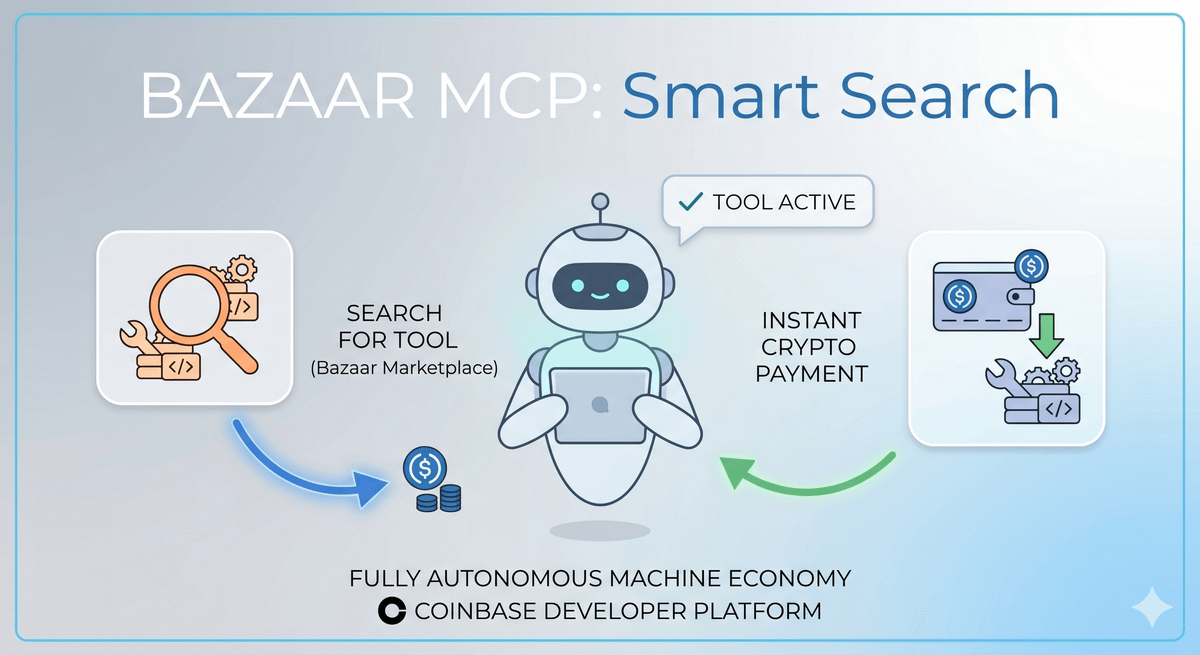 Coinbase launches Bazaar MCP, enabling AI agents to discover, evaluate, and pay for APIs autonomously, unlocking seamless tool usage with trust-based rankings2026-04
 Researchers find 26 LLM API routers secretly injecting malicious code and stealing developer credentials2026-04
 Teneo Protocol joins CoinMarketCap Labs to power AI agents with autonomous API access and workflow execution, processing 1.45M+ requests across Avalanche, Base, and BNB Chain2026-04
 Uniswap launches Developer Platform with AI-first tools, API dashboard, and liquidity endpoints, enabling builders to integrate swaps and LPing across 18+ chains2026-04
 Uniswap adds MegaETH swaps, LPing, and API support with 100,000 TPS and 10ms blocks2026-06
An Application Programming Interface (API) is a defined contract that lets two software systems exchange data and trigger actions without either side needing to understand the other's internal workings — in crypto, that contract has become the connective tissue holding together wallets, exchanges, blockchains, AI agents, and payment networks.
What an API Actually Is
At its most basic, an API is a messenger. One program sends a structured request to a defined endpoint; the other program responds with data or confirms that an action was taken. The requesting program never sees the source code on the other side. It only needs to know the endpoint address, what format the request should take, and what the response will look like.
This separation of concerns — often called loose coupling — is what makes APIs so powerful in a system as heterogeneous as crypto, where a single transaction might involve a user interface, a wallet library, a price oracle, a bridging service, and a settlement layer, all built by different teams in different languages.
REST (Representational State Transfer) APIs, which communicate over standard HTTP, dominate the crypto industry. WebSocket connections are common where low-latency streaming data (orderbook updates, price feeds) is needed. Some protocols expose GraphQL endpoints for flexible querying. A smaller but growing category uses purpose-built binary protocols for high-throughput on-chain reads.

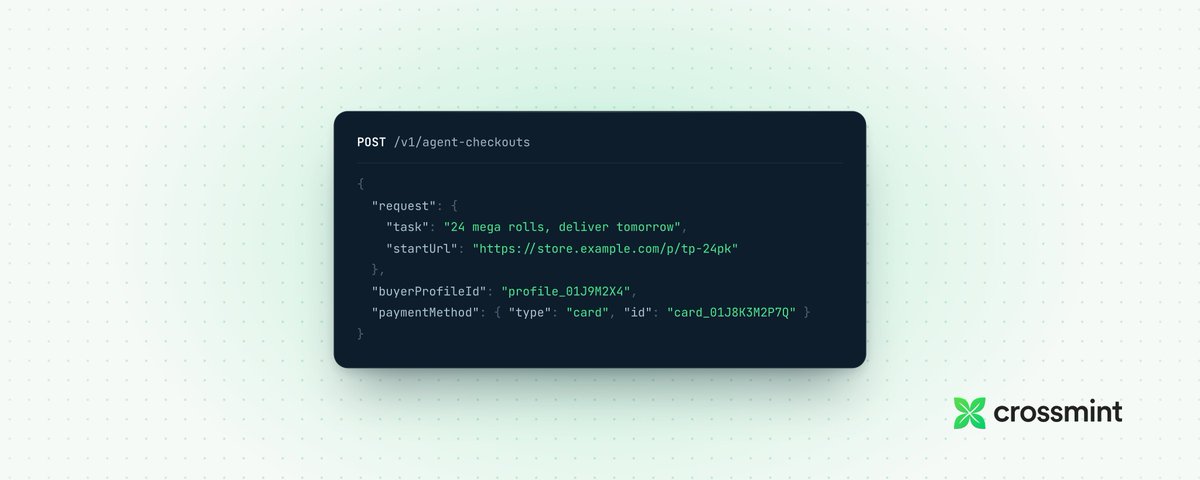
Crossmint launches Agent Checkouts, letting AI agents buy from online stores through one API that handles checkout, payment, and automation
APIs in DeFi: Routing, Aggregation, and Liquidity
Decentralized finance made the programmatic composability of blockchains legible to application developers. Instead of writing raw smart-contract calls, teams query aggregation APIs that abstract routing complexity.
The impact is measurable. Uniswap's routing API won 52.4% of MetaMask's 554,000-plus Ethereum swap routing decisions across all providers combined, outperforming rivals on execution quality and reliability. That figure illustrates something important: in an environment where every basis point of slippage matters to users, the quality of the API layer — not just the underlying liquidity pool — becomes a competitive differentiator.
Swap APIs are now a commodity layer that other projects build on top of. Velvet Capital integrated SushiSwap's API to improve trade execution for its portfolio management users. The 0x Cross-Chain API launched with more than a dozen bridging partners integrated from day one, giving developers a single endpoint that abstracts cross-chain routing complexity. These patterns show how APIs allow protocols to extend their reach without requiring every partner to maintain their own bridging or routing logic.
For businesses, the same logic applies to simpler operations. Payment acceptance, yield strategies, portfolio rebalancing, and token swaps can all be reduced to API calls against battle-tested infrastructure — which is why there is an expanding market for crypto swap APIs that businesses embed directly into their product flows rather than building exchange logic from scratch.
Readers click API stories not for the technology itself but for two high-stakes edge cases: when AI agents start autonomously paying for data on-chain (a new economic actor that bypasses traditional gatekeeping), and when API keys get compromised and eight-figure sums evaporate — revealing that a single credential is now a systemic attack surface in crypto.
APIs as the Payment Rail for AI Agents
The most consequential emerging use case for crypto APIs is autonomous AI agents that need to pay for services and receive payment for work — without human intervention in each transaction loop.
Traditional payment infrastructure was not designed for this. Credit cards require human authorization. Bank wire transfers involve days of clearing. OAuth tokens authenticate humans, not programs. When an AI agent needs to pay for an API call in real time, legacy rails introduce friction that breaks the automation loop.
Stablecoin and Bitcoin infrastructure is filling that gap. USDT0's developers have argued explicitly that legacy payment rails are ill-suited for AI agents, positioning stablecoin infrastructure as a better fit for real-time, API-driven transactions. The argument is structural: stablecoin transfers settle in seconds, are programmable, and carry no chargebacks.
HyperMove's Bitcoin-backed payment SDK takes this further, enabling API payments via BTC collateral, x402 payment rails, and vault-secured transaction signing — without requiring the agent to hold or manage private keys directly. The key innovation is separating signing authority from key custody, which makes agent payment flows auditable and recoverable even when the agent operates autonomously.
Circle's Agent Stack gives developers a practical walkthrough of the full pattern: an agent creates a USDC-funded wallet, discovers services in an agent marketplace, pays for API access through Circle Gateway, and executes actions — all programmatically. This is a template that is being repeated across dozens of emerging agent frameworks.
The x402 payment standard, which embeds HTTP 402 ("Payment Required") payment challenges directly into API responses, is gaining traction as a protocol-level mechanism. An API server returns a 402 with a payment requirement; the client pays on-chain and retries with a receipt. This eliminates the need for pre-negotiated billing relationships and makes metered API access composable with any agent that understands the standard.
BVNK adds native Stellar support, giving customers single-API access to 130+ markets for high-volume stablecoin payments costing less than a cent

APIs in Prediction Markets and Data Products
Prediction markets are another area where open API access is reshaping what developers can build. Binance Wallet launched a Prediction Markets API that gives developers programmatic access to market data, trade execution, and market creation — enabling everything from AI-driven trading bots to automated hedging strategies.
The pattern here mirrors what happened in traditional financial data markets a decade ago: once an exchange exposes machine-readable data and execution APIs, a secondary ecosystem of analytics, automation, and strategy products forms around it. For crypto prediction markets, which are still early, API availability is likely a prerequisite for reaching meaningful liquidity.
Data infrastructure is another API-heavy layer. The cost and architecture of data APIs have become a point of contention in AI development. Google Cloud reportedly charges six times more to move training data than to store it; AWS charges substantial API fees just for a model reading its own data back. Filecoin's proponents argue that open-weight AI models deserve open data infrastructure where retrieval fees are not controlled by a single cloud provider — a debate that is directly relevant to any crypto project building AI features on centralized cloud APIs.
- 01AI agents as API consumers
The highest-clicked stories all share a structural shift: AI is no longer just a tool layered on top of APIs but an autonomous economic agent that calls, pays for, and acts on API data without human intermediation — readers recognize this changes who controls information flow.
- 02API key breach accountability
Three separate incidents — Kronos ($20.3M), OpenSea (third-party key leak), Clipper ($500K) — made readers confront that API keys are bearer instruments indistinguishable from private keys, and the question of who bears liability after a breach is unresolved.
- 03x402 micropayment API monetization
The cluster of x402-linked headlines (XMR402 Monero, SerenAI USDC, Messari USDC, CoinGecko partnership) signals readers tracking whether pay-per-call stablecoin micropayments can replace subscription API keys and eliminate KYC friction for agents.
- 04DEX platform API developer race
Uniswap, Jupiter, and Parsec all opened or expanded developer APIs within a short window; readers followed the competitive dynamic of which liquidity layer becomes the canonical integration point for the next generation of on-chain apps.
- 05TradFi institutions adopting crypto APIs
Google Cloud GCUL and Japan's Project Pax (MUFG/SMBC/Mizuho via SWIFT API rails) showed readers that the question is no longer whether banks adopt blockchain but which API abstraction layer they choose, and what compliance tradeoffs come with it.
- 06AI displacing financial research workflows
The SpaceX IPO memo story resonated because it made concrete a previously abstract threat: a single autonomous system using paid on-chain APIs produced institutional-grade research output, putting a dollar figure on what gets disrupted.
Emerging Agent Marketplaces and API Discovery
As the number of crypto-native APIs grows, a new problem emerges: discovery. An AI agent that wants to pay for on-chain data, execute a swap, and post a result needs to know which APIs exist, what they cost, and how to authenticate with them.
Several platforms are building agent marketplaces that solve this. Swarms Cloud rebuilt its platform to give developers a unified workspace to track every agent built with the Swarms API, deploy multi-agent systems, and explore a growing library of integrations. Portal Studio launched a setup flow allowing agents to connect to inference APIs without requiring separate API key management. These platforms are essentially API directories with built-in payment and authentication handling.
The model economy emerging around AI APIs has its own token mechanics. Projects like FLock are building flywheel structures where users stake tokens representing specific AI models accessed via API, earn rewards from usage revenue, and have that revenue directed back into token buybacks — aligning token incentives with actual API consumption.
Gnosis Pay simplifies branded Visa card launches by consolidating 15+ vendors and regulatory touchpoints into one API covering issuing, KYC, disputes and compliance

Security Considerations for Crypto APIs
API security in crypto carries stakes that do not exist in most other software domains: a compromised API call can drain funds, manipulate prices, or expose private data about wallets.
Several patterns are well-established for mitigating these risks.
Authentication and rate limiting. API keys should be scoped to minimum required permissions. Rate limiting protects against both abuse and accidental runaway loops — important when agent systems can make thousands of calls per minute.
Webhook validation. When an external service pushes data to your API endpoint (price updates, on-chain events), the receiving server must validate that the payload came from the claimed source. Failure to validate webhook signatures is a common vulnerability.
Input sanitization. APIs that accept addresses, token amounts, or transaction parameters must validate inputs rigorously. Type confusion bugs — where a string is interpreted as a number, or a hexadecimal address is truncated — can cause funds to be sent to wrong addresses.
Private key separation. No API call should ever transmit a private key. Systems that need to sign transactions should use a signing service or hardware security module that holds keys and exposes a signing API, similar to the vault-secured architecture HyperMove uses for agent payments.
Dependency on third-party APIs. DeFi applications that depend on a price oracle API, a routing API, or a bridging API inherit the security model of those dependencies. Oracle manipulation attacks — where an attacker moves a price on a low-liquidity venue to corrupt an API reading — are a well-documented attack vector in DeFi.
- 2023-09exploit
OpenSea third-party API key breach prompts mass key rotation
- 2023-11exploit
Kronos Research API breach results in $20.3M theft
- 2024-12exploit
Clipper Exchange exploited via API vulnerability, $500K lost
- 2025-01launch
Venice AI opens public API and launches VVV token on Base
- 2025-02launch
XMR402 stateless Monero API payment protocol announced
- 2025-03launch
Uniswap Labs opens beta developer platform with API key generation
- 2025-04milestone
Messari integrates x402 enabling USDC micropayments for institutional data API access
- 2025-06exploit
Researchers disclose 26 LLM API routers stealing developer credentials via injected malicious code
Building With Crypto APIs: Practical Starting Points
For developers entering the space, a few categories of APIs provide the most leverage.
Node APIs and RPC providers (Alchemy, Infura, QuickNode, Ankr) give raw access to blockchain state and transaction submission. These are the foundation layer that most other crypto APIs build on.
Aggregator and swap APIs (0x, Uniswap, Paraswap, Li.Fi) abstract routing and liquidity across venues. For applications that need swap functionality without building liquidity relationships, these are the standard approach.
Wallet and payment APIs (Circle, GoMining's GoBTC Pay SDK, Coinbase Commerce) enable businesses to accept crypto payments without managing wallet infrastructure directly.
Data and analytics APIs (CoinGecko, Messari, The Graph's subgraph endpoints) supply market data, on-chain analytics, and indexed protocol state for dashboards and research tools.
Agent-native payment APIs (HyperMove's SDK, Circle Agent Stack, x402-compatible endpoints) are the newest layer, purpose-built for programs — rather than humans — that need to pay and get paid in real time.
The governance model of the API also matters. Centralized APIs can change terms, rate limits, and pricing without notice — or shut down entirely. Blockchain-native query layers like The Graph use staked indexers and token incentives to keep data access decentralized and censorship-resistant, which matters for applications that need long-term reliability guarantees.
Outlook
APIs are not a trend in crypto — they are the infrastructure layer that makes every trend possible. AI agents cannot autonomously transact without payment APIs. DeFi aggregators cannot route trades without liquidity APIs. Prediction markets cannot attract bot liquidity without execution APIs. The question is not whether APIs will remain central but how the ownership models, pricing structures, and authentication standards will evolve.
The x402 payment standard and agent-native SDKs suggest a direction: APIs that price themselves in real time, accept on-chain payment without pre-registration, and serve autonomous agents as first-class clients alongside human users. If that model matures, the boundary between "calling an API" and "executing a transaction" will blur significantly — and the infrastructure that survives will be the kind that was built to handle both.
Latest API news
Crossmint launches Agent Checkouts, letting AI agents buy from online stores through one API that handles checkout, payment, and automationBVNK adds native Stellar support, giving customers single-API access to 130+ markets for high-volume stablecoin payments costing less than a centGnosis Pay simplifies branded Visa card launches by consolidating 15+ vendors and regulatory touchpoints into one API covering issuing, KYC, disputes and complianceCommunity notes
Spot something off or out of date? Drop a note. Editors review topic notes daily and roll accepted fixes into the explainer — contributors are recognized in the monthly $SQUID drop.
Loading notes…
Help improve this topic
Have a story or tip about this topic? Submit it. See something missing? Leave a note. Editors review daily; accepted submissions and fixes count toward the monthly $SQUID drop.