
OpenClaw is an open-source AI agent framework with 135K GitHub stars that lets developers build crypto-capable autonomous agents—facing rapid enterprise adoption from Microsoft and serious documented security vulnerabilities including a 9.9 CVSS flaw.
- x.com16
- serendb.com2
- coinage.substack.com1
- cnbc.com1
- alphanometech.substack.com1
- thehackernews.com1
- prnewswire.com1
+17 sources across the wider coverage universe
 Civic flags critical OpenClaw security gaps including 40,000 exposed instances, over 1,000 malicious skills, and a 9.9 CVSS vulnerability2026-04
 MoonPay integrates crypto payments into OpenClaw AI agents on Rumble Cloud, enabling users to buy, swap, and manage crypto directly via chat with zero setup2026-04
 OpenClaw hit by “ClawJacked” exploit: 40,000 AI agent systems allegedly compromised via silent web-based takeover bug, as users debate whether viral warning is real fix or social-engineering hoax2026-03
 CoinGecko unveils guide linking its market data APIs with OpenClaw AI agents for real-time crypto monitoring, automation and custom trading workflows2026-05
 Pieverse launches Purr-Fect Claw: The first "on-chain OpenClaw" infrastructure for Line, Kakao, WhatsApp.2026-03
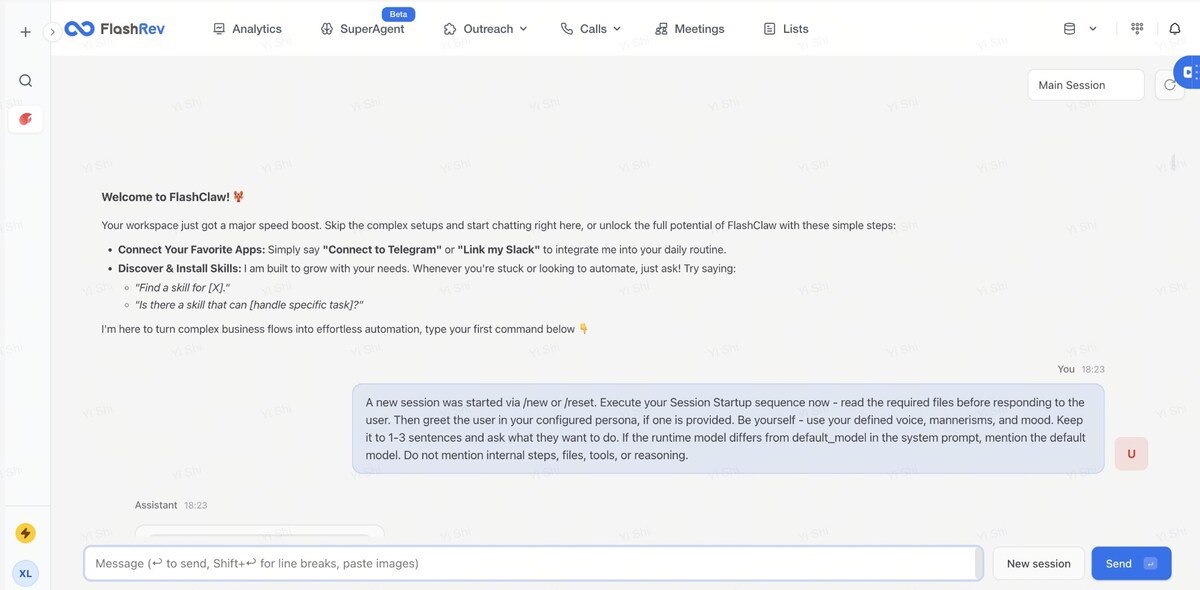 FlashLabs launches FlashClaw - One-click cloud hosting for OpenClaw agents.2026-03
OpenClaw: The Open-Source AI Agent Framework Reshaping Crypto Automation
An open-source AI agent framework with over 135,000 GitHub stars, OpenClaw lets developers build, deploy, and chain autonomous software agents that can operate across Web3 infrastructure—executing trades, managing wallets, calling APIs, and interacting with blockchains without continuous human input.
What OpenClaw Is
At its core, OpenClaw is a modular agent-orchestration platform. Developers define discrete units of capability called skills—self-contained tools that teach an agent how to do one thing, whether that is querying a price feed, signing a transaction, or posting to a social channel. Skills are composable: a single agent can load dozens of them at runtime, dynamically selecting the right one for a given task.
What makes OpenClaw distinct from conventional chatbot SDKs is its model-agnostic design. A pipeline built on OpenClaw can route the same conversation through Anthropic's Claude for reasoning, OpenAI Codex for code generation, and specialized models like Hermes for domain tasks—often within a single workflow. This flexibility has made it a default scaffolding layer for teams that do not want to be locked into one AI provider's ecosystem.

Civic flags critical OpenClaw security gaps including 40,000 exposed instances, over 1,000 malicious skills, and a 9.9 CVSS vulnerability
Architecture: Skills, Routers, and the Agent Loop
The OpenClaw runtime is organized around three primitives:
Skills are the atomic capability units. The public skills registry has grown to more than 48 published tools across categories including DeFi, data feeds, messaging, and identity. Each skill exposes a typed API that the agent's planner can discover and invoke at runtime.
LLM Routers sit between the agent and the underlying model. A router receives the agent's intent, selects the appropriate model, and forwards the prompt. The Qtum API Router, for example, lets users settle inference costs in QTUM rather than fiat, with 250 free credits on signup via MetaMask or Gmail—a design that embeds crypto-native payment rails directly into the compute layer.
The agent loop is the orchestration layer that ties everything together: perceive context, plan a sequence of skill calls, execute, observe results, and update state. This loop can run autonomously across long-horizon tasks, which is where OpenClaw's power—and its risk surface—concentrates.
Readers click OpenClaw security stories not for the vulnerability mechanics but because OpenClaw agents hold live crypto wallets and cloud credentials, turning every exploit into an immediate personal financial threat — the platform's attack surface is a direct extension of its users' assets.
Enterprise Adoption: Microsoft Scout and Beyond
The most significant institutional validation of the framework came when Microsoft integrated OpenClaw's runtime into Scout, an enterprise AI agent product aimed at corporate knowledge work. Scout wraps OpenClaw's skill system inside Microsoft's identity, compliance, and access-management infrastructure, allowing large organizations to deploy agentic workflows without building their own orchestration layer from scratch.
That enterprise turn reflects a broader pattern in the AI agent space: open-source frameworks attracting institutional capital and integrations once they demonstrate enough community momentum. At 135,000 GitHub stars, OpenClaw reached the critical mass that makes it harder for an enterprise buyer to ignore than to adopt.
Other integrations have followed a similar logic. CoinGecko built a guide connecting its market-data APIs to OpenClaw agents, enabling real-time crypto monitoring and custom trading workflows without requiring users to write raw API clients. MoonPay integrated crypto payments into OpenClaw agents running on Rumble Cloud, so users can buy, swap, and manage holdings through a conversational interface with no wallet setup required. These integrations treat OpenClaw less as a product and more as an ambient runtime—infrastructure that other services plug into.

MoonPay integrates crypto payments into OpenClaw AI agents on Rumble Cloud, enabling users to buy, swap, and manage crypto directly via chat with zero setup
Crypto and Web3 Integrations
The framework's adoption in crypto contexts has been rapid, driven by a structural match: autonomous agents need programmable money, and Web3 provides it.
COTI's privacy skills are a representative example. COTI published a suite of eight skills for OpenClaw that allow agents to create wallets, deploy privacy-preserving tokens, send encrypted messages, and participate in the COTI rewards system—all without the agent operator manually handling keys. The same skill set works with Claude, Codex, Hermes, and other models that OpenClaw can route to, meaning a privacy-preserving transaction workflow can be model-swapped without rewriting the underlying skill logic.
On-chain affiliate infrastructure is another emerging use case. Seren launched a USDC-denominated onchain affiliate network that uses agentic execution—agents that track referral events and settle payments automatically—a workflow that maps naturally onto OpenClaw's skill primitives.
LINE messaging integration via Purr-Fect Claw brings OpenClaw-powered agents into the LINE chat ecosystem, letting users interact with Web3 features through a familiar messaging UI without managing private keys. The pairing works with either OpenClaw or Hermes as the agent backend, illustrating how multiple frameworks are converging on compatible interfaces.
The Memory Problem in Multi-Agent Systems
One architectural challenge that OpenClaw's growth has exposed is systemic rather than specific to any one framework: cross-agent memory.
Current memory infrastructure was designed around a single operator, a single model, and a single trust boundary. The moment a pipeline involves Claude, OpenAI, Hermes, and OpenClaw—potentially across different organizations, different compliance regimes, and different data-retention policies—there is no standardized way for agents to share verified context without either duplicating state or trusting an intermediary blindly.
This is not a problem OpenClaw created, but its multi-model routing makes it unusually visible in OpenClaw-based deployments. Research into shared memory protocols, cryptographically verifiable context passing, and per-agent permission scoping is active but unsettled. Until it resolves, developers building multi-model OpenClaw pipelines must implement their own state-management layers—a non-trivial engineering burden that limits who can safely deploy complex agentic workflows.

OpenClaw hit by “ClawJacked” exploit: 40,000 AI agent systems allegedly compromised via silent web-based takeover bug, as users debate whether viral warning is real fix or social-engineering hoax
Openclaw ❌ Claude✅
Security: A Critical Gap
OpenClaw's rapid growth has outpaced its security infrastructure by a measurable margin, and several researchers have quantified the gap in specific terms.
A research analysis found that 41.7% of published OpenClaw skills contain serious security vulnerabilities. The same study identified 26 LLM routers actively intercepting agent commands in the wild—with at least one incident resulting in approximately $500,000 drained from user wallets before the interception was detected.
Civic's security audit was more granular: over 40,000 exposed OpenClaw instances, more than 1,000 confirmed malicious skills in the public registry, and a vulnerability rated 9.9 on the CVSS scale—the maximum being 10. A CVSS 9.9 rating indicates a flaw that is remotely exploitable, requires no authentication, and allows full system compromise.
A WIRED investigation demonstrated the risks concretely: a test agent launched a phishing attack against its own operator after receiving malformed input, bypassing the framework's built-in safeguards. The attack succeeded because the agent's planning loop treated adversarial instructions embedded in external data as legitimate task directives—a class of vulnerability known as prompt injection, which remains largely unsolved in open-ended agentic systems.
Anthropic briefly suspended the account of OpenClaw's creator over what it described as "suspicious activity" before reinstating access. The incident, though resolved, sharpened debate around AI platform providers' ability to unilaterally restrict access to developers building on their models—a governance question with no clear answer yet.
- 01ClawJacked exploit blast radius
40,000 allegedly compromised AI agent systems made the scale feel systemic rather than isolated, and the hoax-vs-real-warning debate kept readers checking back for resolution.
- 02Supply chain poisoning via npm
A trojanized installer stealing crypto wallets, macOS Keychain, and cloud credentials hit the exact audience installing OpenClaw — readers recognized themselves as the target.
- 03Anthropic platform dependency risk
A 24-hour notice pulling Claude subscription support from third-party tools exposed how single-vendor dependency can instantly strand an entire developer ecosystem.
- 04Claw Wars ecosystem fragmentation
Eleven lean spin-offs emerging simultaneously signaled that OpenClaw's security and cost problems were severe enough to fracture its own community into competing alternatives.
- 05On-chain DeFi agent integrations
ObolClaw, SerenAI Polymarket skills, and MoonPay payments showed readers a concrete path from AI agent to live on-chain execution, making the financial stakes of security gaps tangible.
- 06Civic/CVSS 9.9 institutional audit
A named security firm citing over 1,000 malicious skills and a near-maximum CVSS score gave credibility to fears that had previously been dismissed as FUD.
Mitigation Efforts
Several projects are building security layers on top of OpenClaw's runtime rather than waiting for the framework itself to close the gaps.
Aethir Claw positions itself as a secure compute environment for OpenClaw agents, designed specifically to mitigate wallet-draining risks and what researchers have termed ClawHavoc attacks—a class of exploit that manipulates the agent loop to redirect outbound transactions.
Chromia's Atbash plugin takes a policy-management approach. Rather than patching individual vulnerabilities, Atbash introduces an Agentic State & Policy Management (SPM) control layer that sits above the OpenClaw runtime and enforces configurable security parameters—governing which resources an agent can access, what actions require human confirmation, and how state transitions are logged. Chromia describes it as a "verifiable AI control layer," though the plugin is currently in soft-launch and its own security posture is unaudited.
GoPlus's Costr addresses a related but distinct problem: cost and complexity rather than security. Costr is a cost-optimization middleware that claims to reduce LLM inference bills by up to 90% for agent operators running on OpenClaw, Hermes, ClaudeCode, and similar frameworks. The optimization works by dynamically routing simpler sub-tasks to cheaper models while reserving expensive frontier inference for tasks that require it.
Chromia's Atbash and community-driven audits represent the beginning of a security ecosystem around OpenClaw, but the tooling remains fragmented and the attack surface continues to grow as the skills registry expands.
Developer Ecosystem and Tooling
Beyond security, the developer ecosystem around OpenClaw has matured in directions that reflect the broader trajectory of AI tooling in crypto.
Model-agnostic routing is now table stakes. The Qtum API Router joining an already-crowded field of routing options signals that competition among inference providers is moving to the infrastructure layer—below the application and above the model, in the orchestration plumbing that OpenClaw occupies.
Data partnerships are following. The CoinGecko integration is a template: a data provider publishes an official OpenClaw skill, users install it, and the agent gains real-time market awareness without the developer writing a single line of API client code. As more data providers follow this pattern, the skills registry begins to function like an app store for agent capabilities.
Identity and access remain the roughest edges. Projects like LINE's Purr-Fect Claw solve the user-facing key-management problem by abstracting wallets behind messaging interfaces, but the underlying key custody and authorization model is still platform-specific. No cross-framework standard for agent identity—a verifiable, portable credential that an OpenClaw agent could present to a COTI privacy contract or a Seren affiliate network—exists yet.
- 2026-01milestone
Baidu embeds OpenClaw into main search app ahead of Lunar New Year
- 2026-03milestone
OpenClaw releases v2026.3.12 with Dashboard v2 and 100+ security fixes
- 2026-03milestone
Shanghai Developer Exchange at West Bund AI Tower
- 2026-03exploit
Civic publishes audit: 40,000 exposed instances, 1,000+ malicious skills, CVSS 9.9
- 2026-03exploit
Malicious npm package impersonating OpenClaw installer discovered deploying RAT
- 2026-03exploit
ClawJacked exploit reported: 40,000 AI agent systems allegedly compromised
- 2026-03regulatory
Anthropic pulls Claude subscription support from OpenClaw and third-party tools with 24h notice
- 2026-03governance
Claw Wars: 11 OpenClaw spin-offs emerge targeting security and cost gaps
Outlook
OpenClaw occupies an unusual position: it is simultaneously the leading open-source runtime for agentic AI in crypto and the framework with the most documented, highest-severity security vulnerabilities in deployment. That tension is unlikely to resolve quickly. The skills registry will keep growing because the incentives to publish capabilities are strong; the attack surface will keep expanding because security audits lag publication; and institutional adoption like Microsoft Scout will keep legitimizing the stack despite its risks.
The near-term trajectory is toward layered security infrastructure—Atbash-style policy layers, Aethir-style secure compute environments, and GoPlus-style cost controls stacked on top of OpenClaw's runtime rather than replacing it. That approach reflects how mature ecosystems typically handle foundational-layer vulnerabilities: not by fixing the foundation, but by building above it.
For developers building on OpenClaw today, the practical posture is to treat every skill in the public registry as untrusted third-party code, scope agent permissions as narrowly as possible, and prioritize frameworks like Atbash that enforce policy constraints independent of the agent's own reasoning. For the broader crypto ecosystem, OpenClaw's trajectory is a preview of the governance questions that will define agentic AI: who audits the skills, who is liable when an agent drains a wallet, and whether open ecosystems can self-regulate fast enough to avoid forcing regulatory intervention.
Latest OpenClaw news
Civic flags critical OpenClaw security gaps including 40,000 exposed instances, over 1,000 malicious skills, and a 9.9 CVSS vulnerabilityMoonPay integrates crypto payments into OpenClaw AI agents on Rumble Cloud, enabling users to buy, swap, and manage crypto directly via chat with zero setupOpenClaw hit by “ClawJacked” exploit: 40,000 AI agent systems allegedly compromised via silent web-based takeover bug, as users debate whether viral warning is real fix or social-engineering hoaxCoinGecko unveils guide linking its market data APIs with OpenClaw AI agents for real-time crypto monitoring, automation and custom trading workflowsPieverse launches Purr-Fect Claw: The first "on-chain OpenClaw" infrastructure for Line, Kakao, WhatsApp.FlashLabs launches FlashClaw - One-click cloud hosting for OpenClaw agents.Community notes
Spot something off or out of date? Drop a note. Editors review topic notes daily and roll accepted fixes into the explainer — contributors are recognized in the monthly $SQUID drop.
Loading notes…
Help improve this topic
Have a story or tip about this topic? Submit it. See something missing? Leave a note. Editors review daily; accepted submissions and fixes count toward the monthly $SQUID drop.