
Crypto marketplaces have evolved from NFT trading platforms to infrastructure for AI agents, data feeds, and on-chain services — here's how the layers fit together and what's coming next.
+16 sources across the wider coverage universe
 AWS Marketplace integrates Chainlink data standards, enabling developers to connect traditional cloud services with blockchain apps using Data Feeds, Streams, and Proof of Reserve2026-04
 Pineapple Financial starts migrating its $10B mortgage portfolio onchain via Injective. The Canadian fintech has already put data tied to about $412 million in funded mortgages onchain, and aims to migrate more than 29,000 loans over time. Each tokenized mortgage record includes more than 500 data points and will underpin a permissioned data marketplace and a planned product offering onchain mortgage-backed yields.2025-12
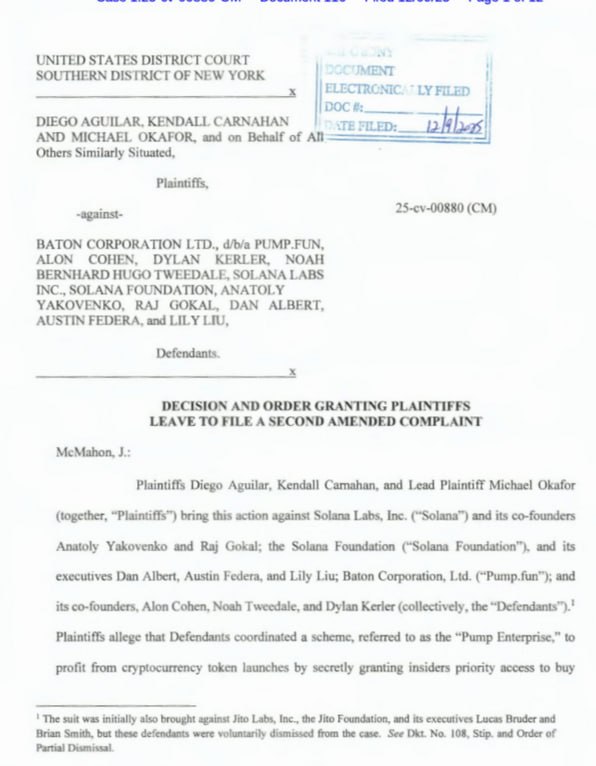 Judge Allows Amended Lawsuit Alleging Pump.fun Marketplace Was Tilted to Favor Insiders on Solana2025-12
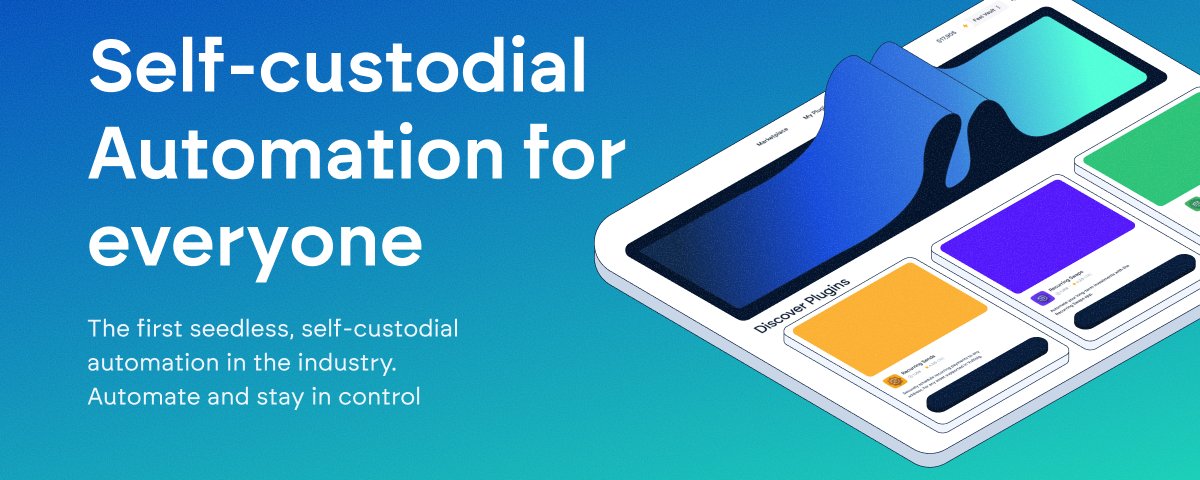 Vultisig launched its Plugin Marketplace, introducing the first fully self-custodial, on-chain automation layer that enables DCA, payroll, and other automated actions across 30+ chains without exposing keys or seed phrases.2026-02
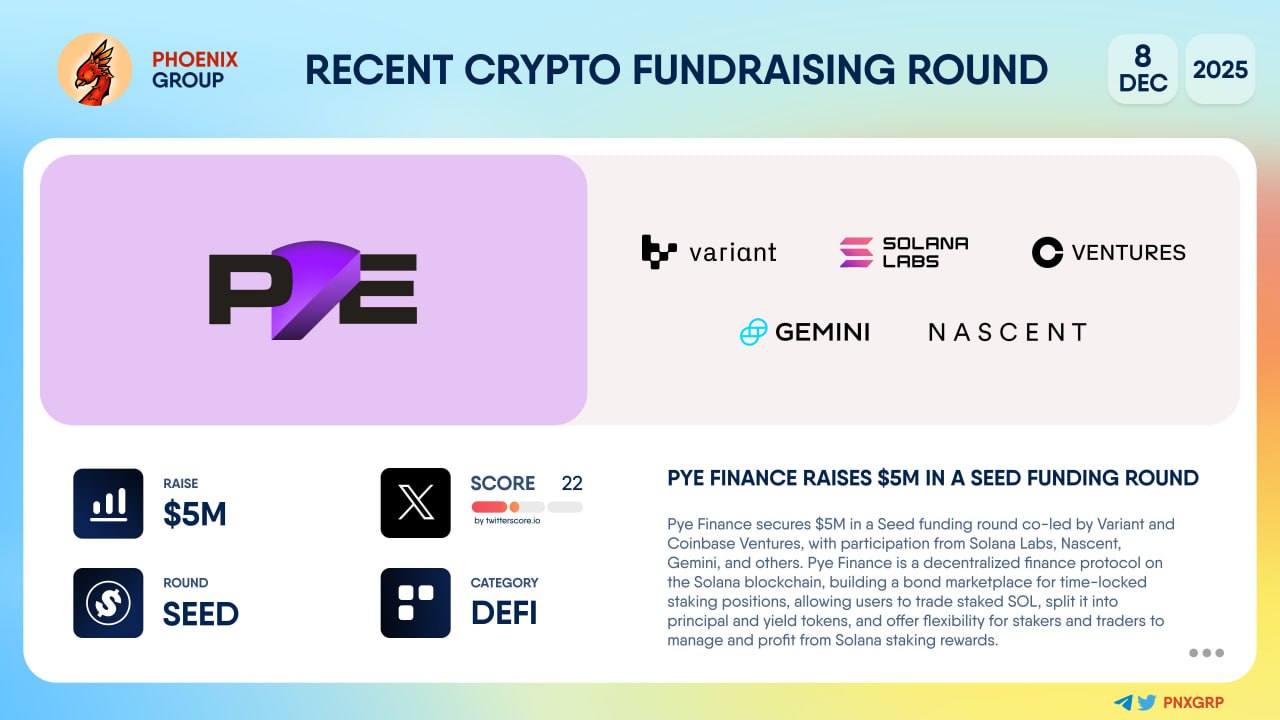 Pye Finance raises $5M seed round led by Variant and Coinbase Ventures. The platform aims to make locked Solana staking positions tradable via an onchain marketplace.2025-12
 Huione, a Telegram-based illicit marketplace that offers personal data and money laundering services has rolled out its own stablecoin, according to report by blockchain security firm Elliptic.2025-01
A crypto marketplace is a platform where digital assets, services, or autonomous agents are listed, discovered, and transacted on-chain — combining the familiar mechanics of e-commerce with the trust guarantees of a public ledger.
Blockchain-native marketplaces have expanded well beyond their original use case of trading tokens. Today they coordinate NFT sales, on-chain financial data, cloud services, and increasingly, AI agents that can autonomously discover and pay for capabilities. Understanding how these layers fit together is essential for anyone building in or investing in the Web3 ecosystem.
What Makes a Marketplace "Crypto-Native"
Traditional digital marketplaces depend on a central operator to custody funds, resolve disputes, and enforce access rules. Crypto-native marketplaces push as much of that logic as possible onto a public blockchain or smart-contract layer, creating properties that are difficult to replicate with conventional infrastructure:
- Non-custodial settlement. Buyers and sellers exchange assets directly through smart contracts; the platform operator never holds funds on their behalf.
- Verifiable provenance. Every listing, bid, sale, and transfer is recorded on an immutable ledger. This is particularly valuable for NFTs, where ownership history is part of the asset's value.
- Programmable conditions. Royalties, auction mechanics, escrow releases, and access gating can be encoded into the marketplace contract itself rather than enforced by policy.
- Permissionless listing. Anyone meeting the contract's conditions can list an asset, which changes the dynamics for price discovery and market liquidity.
These properties come with tradeoffs: smart-contract bugs, front-running, and governance failures are risks absent from centralized alternatives.

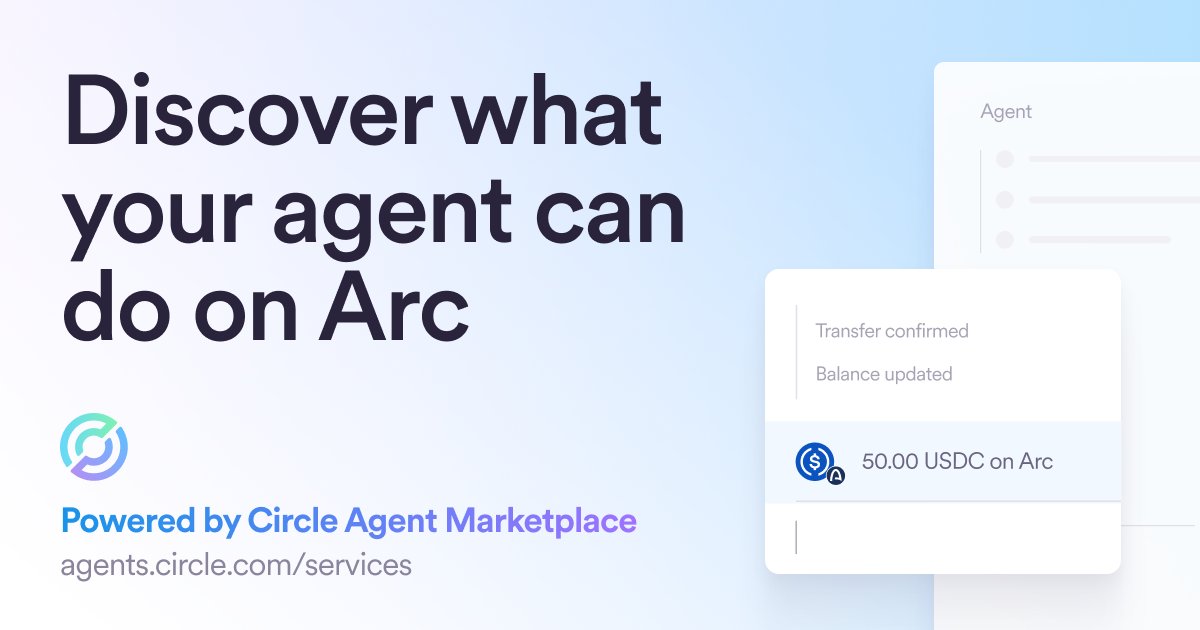
Circle launches Agent Marketplace on Arc, enabling pay-per-call services in USDC
NFT Marketplaces: The First Major Expansion
The first wave of crypto-native marketplace activity centered on non-fungible tokens. Platforms like OpenSea, SuperRare, and Blur demonstrated that secondary markets for digital collectibles could generate billions in volume when the infrastructure matured enough to lower transaction friction.
NFT marketplaces matter for reasons beyond speculation. For gaming ecosystems like Axie Infinity, secondary markets are integral to the core loop: players need to buy, sell, and price axies to participate meaningfully. Third-party tooling — sales dashboards, rarity checkers, portfolio trackers — built on top of marketplace APIs became as important as the marketplace itself, because raw on-chain data is hard to interpret without aggregation.
SuperRare's 2024–2025 redesign illustrates the current direction for high-end NFT platforms: expanded media type support, richer activity feeds with real-time sale and bid tracking, and a dedicated tab for physical-digital paired assets. The move toward "physicals" reflects pressure to connect on-chain provenance to real-world goods, a bridge that has long been promised but is now technically tractable through hardware attestation and custodian partnerships.
Looking at 2026 trends, NFT marketplace volume is being shaped by a few forces: lower-fee L2 chains making sub-$1 transactions viable, improved metadata standards that let buyers preview assets richly before purchase, and renewed institutional interest in on-chain provenance for luxury goods and collectibles.
Readers click marketplace stories not for product mechanics but for the collision of legitimacy and criminality — auditors blessing illicit platforms, dark-web precedents reshaping crypto law, and royalty enforcement debates reveal that the marketplace layer is where crypto's social contract is actually contested.
Data and Financial Marketplaces
A parallel track of marketplace development addresses the demand for structured, verifiable off-chain data delivered on-chain.
Pyth Network launched a dedicated data marketplace backed by six major financial institutions, making institutional-grade price feeds, rates, and volatility surfaces available to DeFi protocols in a commercially licensed format. This is a notable shift: rather than relying solely on decentralized oracle networks, large data providers are treating blockchain delivery as a distribution channel.
AWS Marketplace integrating Chainlink data standards represents a different vector — traditional cloud providers recognizing that their enterprise customers need a bridge between conventional SaaS services and blockchain applications. By supporting Chainlink's Data Feeds, Streams, and Proof of Reserve products natively, AWS reduces the integration surface developers have to maintain manually.
The SEALCOIN Quantum Marketplace, launched by WISeKey, The Hashgraph Group, and Hedera, pushes into a narrower niche: post-quantum security assessment tooling distributed via a blockchain-native marketplace model. Whether quantum-readiness assessments benefit meaningfully from decentralized distribution is an open question, but it illustrates that the marketplace model is being applied to enterprise security services — not just consumer-facing digital goods.
Agent Marketplaces: The Emerging Frontier
The most significant expansion of the marketplace model underway in 2025–2026 is into AI agents. The core premise: if an AI agent can hold a wallet, it can autonomously discover, purchase, and invoke other agents or API services — creating a programmable economy of specialized capabilities.
Circle Agent Stack
Circle's Agent Stack is among the clearest articulations of what agent-native financial infrastructure looks like in practice. An agent built on this stack can:
1. Create a USDC-funded wallet with scoped permissions 2. Discover available services through a dedicated Agent Marketplace 3. Pay for API access through Circle Gateway using stablecoin payments 4. Execute repeatable financial actions via the Circle CLI
The use of USDC as the settlement layer is deliberate. Dollar-pegged stablecoins eliminate the price volatility that would make micro-transactions between agents computationally awkward — if the cost of calling an API swings 10% while the request is in flight, budgeting becomes unreliable. USDC settlement makes agent-to-agent commerce predictable.
Swarms Marketplace
The Swarms ecosystem has moved quickly from concept to operational scale. As of mid-2026, the Swarms Marketplace is approaching 1,000 tokenized agents deployed across multiple industries. Key recent milestones include:
- Vault Mode launch: agents can now hold funds in a secure, permissioned vault structure, separating operating capital from reserves
- 40+ new API guides: reducing the time from discovery to integration for developers building on top of existing agents
- Performance improvements: page load times cut by up to 45%, which matters at marketplace scale where latency reduces conversion
The Swarms Marketplace CLI extends this to command-line workflows — developers and agents alike will be able to discover, deploy, and monetize agents and prompts programmatically, with revenue tracking and payout management built in. This is roughly analogous to npm for agents, but with on-chain payment rails attached.
One tension worth noting: tokenizing agents and prompts as marketplace assets introduces risk. If a monetized agent is embedded in downstream workflows, updates to that agent's behavior become a supply-chain concern. Buyers need to understand what they're purchasing and what guarantees, if any, attach to ongoing behavior.
BitAgent and the ERC-8183 Standard
BitAgent's ERC-8183 Agent Marketplace takes a composability-first approach. Rather than listing monolithic agents, the ecosystem focuses on skills — discrete, reusable capabilities that can be integrated into multiple agents across the ecosystem. Chainbase AI skills, Flap's modular token launch infrastructure, and other providers list their capabilities as skill primitives that agent builders can combine.
The ERC-8183 standard matters because it attempts to make agent capabilities interoperable at the protocol level. Composable skills are discoverable, monetizable, and versioned on-chain — addressing the same problem that ERC-20 solved for tokens: a common interface that any compatible system can interact with.
TRUST Agent Marketplace on VeChainThor
The TRUST marketplace on VeChainThor addresses a different angle: trust and credentialing for for-hire AI agents. Agent identity is anchored on-chain, credibility scores are accumulated through verified work, and the platform provides payment rails between users and specialist agent builders. After ten years of building identity infrastructure, VeChain's TRUST team is applying those primitives to agent-economy use cases — verification that an agent is who it claims to be, and that its past performance is auditable.

Pyth becomes an external distributor of Nasdaq Basic, bringing Nasdaq’s real-time U.S. equity quotes and trade data to the Pyth Data Marketplace
Infrastructure Requirements for Marketplace Scale
Running a performant on-chain marketplace at scale requires infrastructure choices that aren't visible in the UI but determine whether the product works.
Settlement layer selection: High-frequency marketplace activity — NFT bids, agent micro-payments, skill invocations — is not viable on mainnet Ethereum at $10–$50 per transaction. Viable marketplaces operate on L2s (Arbitrum, Base, Optimism) or app-specific chains (VeChainThor, Hedera) where transaction costs are low enough for small-value interactions.
Indexing and APIs: The blockchain itself is a poor query target for marketplace UX. Read performance requires off-chain indexers (The Graph, custom subgraphs, or centralized indexers) that maintain queryable state from on-chain events. Marketplace APIs built on this layer handle search, filtering, sorting, and aggregation.
Payment rails for agents: USDC on Base and similar stablecoin-native chains is becoming the standard for agent payment infrastructure because it combines dollar stability with sub-cent transaction costs. Circle's infrastructure formalizes this with permissioned agent wallets and spending controls.
Security and escrow: Marketplace contracts that hold user funds become high-value targets. Formal verification, audit coverage, and time-locks on admin functions are baseline expectations for platforms handling meaningful volume. The counterfeit Ledger device incident — where fake hardware wallets appeared on Chinese online marketplaces — is a reminder that marketplace trust is also a physical and operational concern, not purely a smart-contract problem.
- 01Illicit marketplace stablecoin adoption
Huione launching its own stablecoin after processing billions in illicit flows showed readers that criminal infrastructure is maturing into self-sufficient financial systems, not just exploiting existing ones.
- 02NFT marketplace royalty wars
Yuga Labs and Magic Eden committing to enforced creator royalties, while OpenSea bled executives and X2Y2 shut down, revealed a high-stakes battle over who controls NFT economics.
- 03Silk Road legal aftermath
Ross Ulbricht's life sentence and successive court rulings on 69K BTC confiscation kept readers tracking how the original dark-web marketplace continues to set regulatory and legal precedents years later.
- 04Audit firms blessing illicit platforms
CertiK auditing a marketplace tied to human trafficking scandalized readers because it exposed how credentialing in crypto can be captured by bad actors.
- 05NFT marketplace consolidation and exits
GameStop's regulatory-driven shutdown and X2Y2's pivot illustrated that NFT marketplaces are consolidating under legal pressure, not just market pressure.
- 06DeFi credit and yield marketplace primitives
Clearpool's undercollateralized lending on Optimism and Marinade's auction marketplace showed readers that the next frontier is marketplaces for risk-priced credit and optimized yield, not just asset trading.
Regulatory and Structural Risks
Crypto marketplaces operate across several distinct regulatory regimes simultaneously:
- Securities law: Whether tokenized agents, NFTs, or marketplace governance tokens constitute securities is unresolved in most jurisdictions and actively litigated in the United States.
- Anti-money laundering: Darknet marketplace investigations — including a recent Australian law enforcement action seizing 52 Bitcoin — demonstrate that regulators treat crypto-native marketplaces as subject to existing AML frameworks, not exempt from them.
- Platform liability: As agent marketplaces grow, questions about liability for agent behavior will become more pressing. If an autonomous agent executes a fraudulent transaction through a marketplace, who is responsible?
The Figure/Kiavi acquisition — a blockchain-native company acquiring a mortgage marketplace — illustrates that regulatory friction is high enough in financial services that blockchain-native infrastructure providers are acquiring licensed incumbents rather than building from scratch. That pattern may extend to agent marketplaces as they handle increasingly high-value transactions.
Marketplace Design Patterns Worth Understanding
Several design patterns appear repeatedly across well-functioning crypto marketplaces:
Atomic swaps: Buyer and seller assets exchange in a single transaction, eliminating counterparty risk without escrow.
Royalty enforcement: On-chain royalty logic ensures creators receive a percentage of secondary sales automatically, though enforcement is only as strong as the contracts involved — some marketplaces have competed on lower royalties, putting creator economics at risk.
Curated versus permissionless listing: SuperRare's curated model prioritizes provenance and quality; Blur's permissionless aggregator model prioritizes liquidity and price discovery. Neither is universally superior — the right model depends on asset type and buyer behavior.
Reputation and credentialing: For agent marketplaces especially, on-chain reputation systems (like TRUST's credibility scores) reduce information asymmetry between buyers and sellers in ways that star ratings on centralized platforms cannot — the history is public and unforgeable.
- 2013-10regulatory
Ross Ulbricht arrested, Silk Road seized
- 2015-05regulatory
Ulbricht sentenced to two life terms
- 2022-11launch
Yuga Labs and Magic Eden launch royalty-enforcing ETH NFT marketplace
- 2023-02regulatory
GameStop shuts NFT marketplace citing regulatory uncertainty
- 2023-09regulatory
Ninth Circuit greenlights U.S. confiscation of 69K Silk Road BTC
- 2024-07launch
Clearpool launches undercollateralized lending on Optimism
- 2024-10milestone
Elliptic report: Huione rolls out its own stablecoin
- 2025-06regulatory
Telegram shuts Huione and Xinbi after $35B in illicit stablecoin flows
Outlook
The marketplace model in crypto is consolidating around two tracks that are beginning to converge. The first is asset marketplaces — NFTs, data feeds, financial instruments — which have matured through several cycles and are now focused on performance, cross-chain interoperability, and institutional-grade compliance tooling. The second is agent marketplaces, which are in an early but fast-moving phase: the infrastructure (stablecoin wallets, skill standards like ERC-8183, discovery layers) is being built in real time.
The convergence point is an economy where autonomous agents are both buyers and sellers in the same marketplace infrastructure that today handles NFTs and financial data. Whether that arrives in two years or five depends heavily on how quickly agent reliability improves — buyers in any marketplace need confidence that what they're purchasing will do what it claims. The infrastructure to support that confidence, from on-chain identity to verifiable agent credentialing, is being built now.
Latest Marketplace news
Community notes
Spot something off or out of date? Drop a note. Editors review topic notes daily and roll accepted fixes into the explainer — contributors are recognized in the monthly $SQUID drop.
Loading notes…
Help improve this topic
Have a story or tip about this topic? Submit it. See something missing? Leave a note. Editors review daily; accepted submissions and fixes count toward the monthly $SQUID drop.