
Do Kwon, the Terraform Labs co-founder behind the $40B Terra/Luna collapse, was sentenced to 15 years in U.S. prison after pleading guilty to fraud. A guide to the case, SEC action and fallout.
+2 sources across the wider coverage universe
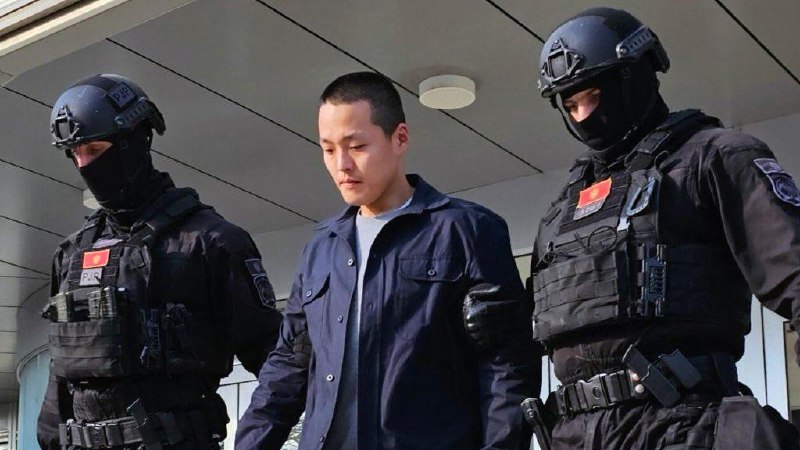 Do Kwon sentenced to 15 years prison, to serve second half of sentence in South Korea2025-12
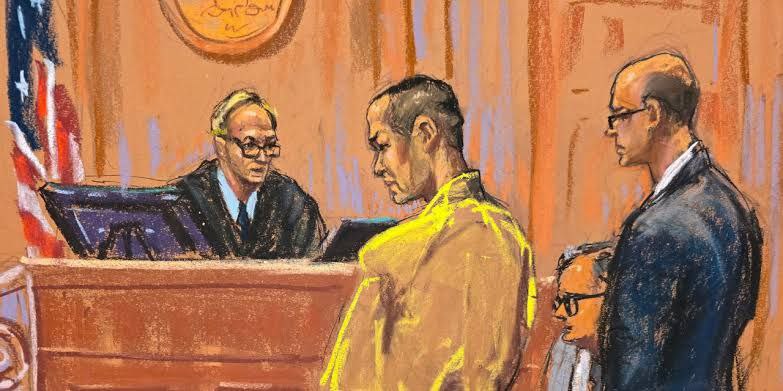 Victims detailed suicides, bankruptcies, and ruined families from Terra’s $40B collapse, with the judge calling their letters “impactful” before delivering a 15-year sentence to Do Kwon.2025-12
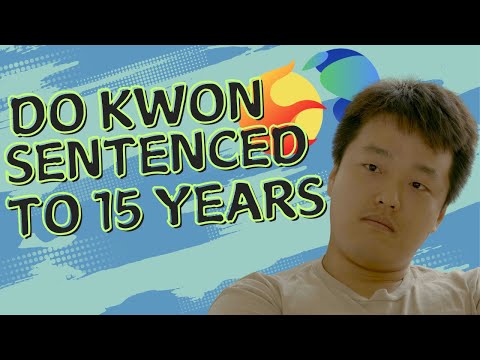 What happened in the courtroom where Do Kwon got sentenced2025-12
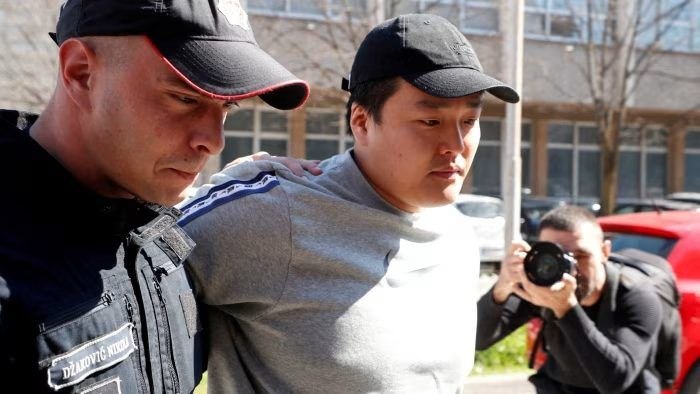 US prosecutors seek a 12-year sentence for Do Kwon over Terra’s $40B collapse, calling his actions colossal fraud that triggered wider market failures and contributed to FTX’s downfall.2025-12
 Do Kwon has allegedly been able to make crypto payments from prison after authorities took 72 days to seize his crypto wallet login details.2024-10
 Terraform labs and Do Kwon have tentatively agreed to settle SEC fraud case2024-05
Do Kwon is the South Korean entrepreneur who co-founded Terraform Labs and built the Terra blockchain ecosystem, whose 2022 collapse erased roughly $40 billion in value and made him one of the most prosecuted figures in crypto history. In December 2025 a U.S. federal judge sentenced him to 15 years in prison after he pleaded guilty to fraud charges.
This page explains who Kwon is, how the Terra system worked and failed, the multi-jurisdiction legal saga that followed, and what remains unresolved.
Who Do Kwon is
Kwon Do-hyung, known publicly as Do Kwon, co-founded Terraform Labs in 2018. The Singapore-based firm developed the Terra blockchain and a family of "algorithmic stablecoins" — most prominently TerraUSD (UST) — alongside a companion token, Luna. A stablecoin is a crypto asset designed to hold a fixed value, usually one U.S. dollar. Most stablecoins back that promise with cash or short-term bonds held in reserve. Terra's design did not.
Kwon cultivated a combative public persona, dismissing critics on social media and projecting confidence in the system's design even as economists and rival developers warned that its mechanics were fragile. That visibility made him a symbol of the 2021 bull market's excesses and, later, a focal point for the prosecutions that followed its unwinding.

Do Kwon sentenced to 15 years prison, to serve second half of sentence in South Korea
Do directly to jail. Do not collect 200 tokens.
How the Terra system worked
UST was an algorithmic stablecoin, meaning it tried to hold its dollar peg through code and market incentives rather than cash reserves. The system relied on a mint-and-burn arbitrage loop with Luna: traders could always swap $1 of Luna for one UST and vice versa. In theory, if UST traded below $1, arbitrageurs would buy it cheaply, redeem it for $1 of newly minted Luna, and pocket the difference — pushing UST back toward its peg.
Demand for UST was driven heavily by Anchor Protocol, a lending platform in the Terra ecosystem that advertised yields of roughly 20% on UST deposits. That return was far above anything available in traditional finance and was effectively subsidized rather than organically earned, which drew billions of dollars in deposits and made Anchor the primary engine of UST demand.
The structural weakness was reflexivity: the stability of UST depended on the market value of Luna, and the value of Luna depended on continued confidence in UST. If both fell at once, the arbitrage mechanism could invert into a self-reinforcing spiral instead of a stabilizing one. Prosecutors and the U.S. Securities and Exchange Commission (SEC) would later allege that the system's resilience was also overstated — that an earlier 2021 de-peg had been quietly rescued by an outside trading firm rather than by the algorithm working as advertised, and that this was concealed from investors.
Readers aren't clicking for the Terra collapse mechanics — they're tracking the accountability machinery itself: whether a sovereign state can be leveraged as a geopolitical bargaining chip, whether prison walls actually contain a crypto founder, and whether a record $4.5B settlement means anything when the company is already bankrupt.
The 2022 collapse
In May 2022, large UST redemptions and withdrawals from Anchor broke the peg. As UST fell below $1, the mechanism minted enormous quantities of Luna, collapsing its price and destroying the collateral value that was supposed to absorb the shock. Within days UST was worth pennies and Luna had fallen from tens of dollars to effectively zero, wiping out roughly $40 billion in combined market value, according to U.S. Department of Justice and court filings (DOJ, SDNY).
The damage extended well beyond Terra holders. Prosecutors later argued the collapse helped trigger a broader 2022 contagion across crypto lenders and funds, and contributed to the cascade of failures that culminated in the bankruptcy of the FTX exchange. At sentencing, the government estimated there may have been as many as a million victims, and the court described losses exceeding the combined frauds of FTX founder Sam Bankman-Fried and OneCoin's Karl Sebastian Greenwood (CNN).
- 01Montenegro extradition tug-of-war
The back-and-forth between US and South Korean extradition requests — including allegations that Do Kwon was traded as a diplomatic chip for airport control — made this feel like a geopolitical thriller, not a legal proceeding.
- 02Prison crypto wallet access
Authorities taking 72 days to seize his crypto login details — during which payments were allegedly made — exposed a concrete gap between legal custody and actual asset control.
- 03SEC settlement and fine scale
A $4.47B settlement that made up nearly all of the SEC's record 2024 enforcement total gave readers a measurable yardstick for the collapse's institutional damage.
- 04Jump Trading institutional role
Jump Crypto's alleged misrepresentation of TerraUSD's stability — and its president invoking the Fifth Amendment — implicated a major market maker and widened the fraud narrative beyond Do Kwon alone.
- 05Guilty plea and 15-year sentence
The pivot from not-guilty to guilty plea, culminating in a 15-year sentence delivered against a backdrop of victim letters describing suicides and bankruptcies, gave readers a rare moment of resolution in a years-long saga.
- 06Human cost and victim impact
Testimonies of suicides, destroyed families, and lost life savings from a $40B collapse shifted the story from regulatory abstraction to documented human harm.
The flight and the arrest in Montenegro
After the collapse, Kwon left South Korea, where prosecutors had opened a criminal investigation and a warrant was issued. His whereabouts became a running subject of speculation as he denied being "on the run."
On March 23, 2023, he was arrested in Montenegro while attempting to travel using a fraudulent Costa Rican passport, according to U.S. authorities (Gherson LLP). The United States submitted a formal extradition request days later. South Korea sought him as well, setting up a prolonged tug-of-war over which country would prosecute him first.

Victims detailed suicides, bankruptcies, and ruined families from Terra’s $40B collapse, with the judge calling their letters “impactful” before delivering a 15-year sentence to Do Kwon.
"Victims, I have heard you and your letters,” the judge said, per Inner City Press. “These are a few: ‘My loss was $62,000, I believed it was low risk.’ K writes: ‘I thought of suicide because I advised my father to invest $100,000, his life savings.’ Another wrote, ‘I can't support children now.’” “The investors were taking a risk,” the judge continued, “but they were not taking the risk of being a fraud victim.”
The extradition tug-of-war
For more than a year, Montenegrin courts weighed competing U.S. and South Korean extradition requests while Kwon served a local sentence on the passport offense. The process was marked by repeated reversals: courts approved extradition, appeals courts cited procedural violations and ordered retrials, and the destination flipped between Washington and Seoul more than once. Montenegro's Supreme Court at one point determined that both countries met the legal requirements, leaving the final choice to the justice minister.
The case also acquired a political dimension. A Montenegrin opposition figure publicly alleged that Kwon's fate had become entangled in unrelated diplomatic bargaining — claims that were never substantiated but underscored how high-profile and contested the decision had become. Ultimately Montenegro's Minister of Justice signed an order sending Kwon to the United States. He was extradited on December 31, 2024 (DOJ).
- 2022-05exploit
TerraUSD/LUNA collapse wipes ~$40B
- 2023-03regulatory
Do Kwon arrested in Montenegro on forged passport
- 2023-06regulatory
Do Kwon convicted, sentenced to four months for passport forgery
- 2024-03regulatory
Terraform Labs and Do Kwon found liable for fraud by SEC jury
- 2024-06regulatory
SEC reaches tentative $4.47B settlement with Terraform Labs
- 2024-12regulatory
Do Kwon extradited to the United States
- 2025-01regulatory
Do Kwon changes plea to guilty on federal fraud counts
- 2025-05regulatory
Do Kwon sentenced to 15 years, second half in South Korea
The SEC case
Parallel to the criminal track, the SEC pursued Terraform Labs and Kwon in civil court, alleging they had orchestrated a multibillion-dollar securities fraud. In April 2024, a Manhattan jury found both the company and Kwon liable for fraud. The parties subsequently agreed to a settlement that the SEC valued at roughly $4.47 billion (SEC litigation record).
That single resolution dominated the agency's enforcement statistics for the period, accounting for the bulk of a multibillion-dollar surge in crypto-related financial remedies and standing as one of the largest figures the SEC has ever obtained in a digital-asset case. Because Terraform Labs entered bankruptcy, the headline figure reflects a legal judgment more than a sum likely to be recovered in full and distributed to victims.
- RegulatoryHigh
SEC secured a $4.47B settlement and fraud liability verdict; Do Kwon ultimately received a 15-year federal prison sentence, marking one of the largest crypto enforcement actions on record.
- MarketHigh
The algorithmic UST/LUNA death spiral erased approximately $40B in market value in days, triggering contagion across leveraged crypto funds and lending desks.
- CentralizationHigh
Do Kwon exercised near-unilateral control over Terraform Labs' public statements about TerraUSD's stability, and co-founder Daniel Shin publicly blamed him solely for the crash.
- Smart-Contract / Algorithmic StablecoinHigh
TerraUSD's mint-burn mechanism with LUNA provided no hard collateral floor, making the peg structurally vulnerable to a coordinated liquidity drain.
- LiquidityHigh
Once the UST peg broke, reflexive LUNA minting to restore it hyperinflated supply and collapsed both assets simultaneously, leaving exit liquidity nonexistent.
- GovernanceMedium
Jump Trading's alleged behind-the-scenes support of the UST peg — never publicly disclosed — illustrates how opaque off-chain agreements can mask on-chain instability.
The guilty plea and 15-year sentence
After arriving in the United States, Kwon initially pleaded not guilty in January 2025 to nine felony counts. In August 2025 he reversed course, pleading guilty to one count of conspiring to commit commodities fraud, securities fraud and wire fraud, and one count of wire fraud — charges that together carried a statutory maximum of 25 years (DOJ, SDNY).
At the December 2025 sentencing before U.S. District Judge Paul Engelmayer in the Southern District of New York, prosecutors sought 12 years while Kwon's defense argued for roughly five. The judge imposed 15 years, describing the scheme as "a fraud on an epic, generational scale" (CoinDesk). Victim impact statements — detailing bankruptcies, ruined families and suicides linked to the collapse — featured prominently, with the court calling the letters "impactful" (Cointelegraph).
What happened in the courtroom where Do Kwon got sentenced

Man is just about to waste 15 years in prison. Sad tho
South Korea, and what comes next
Kwon's U.S. sentence does not necessarily close the matter in his home country. South Korean authorities have pursued their own fraud and capital-markets charges, and reporting around the sentencing noted that he could still face a separate trial in Korea despite the U.S. outcome (Korea Times). How custody might be shared or sequenced between jurisdictions remains a live question, and prior coverage suggesting a fixed split of the sentence between the two countries should be treated cautiously until confirmed by court records.
Several loose threads persist beyond the prison term. Civil and asset-recovery proceedings have surfaced details such as the forfeiture of a multimillion-dollar deposit on a luxury Singapore penthouse after a purchase fell through. Reporting also alleged that Kwon was able to make crypto transactions from custody during a window before authorities secured his wallet credentials — a reminder of how difficult it is to freeze on-chain assets controlled by a sophisticated defendant. And as with other high-profile crypto convictions, periodic speculation about a potential pardon has circulated; absent any official action, such talk remains conjecture rather than a development.
Why the case matters
For the broader industry, the Terra collapse became a stress test of crypto's claims about decentralization and "trustless" design. The episode showed that an algorithmic peg without hard reserves can fail catastrophically under stress, and it accelerated regulatory efforts — in the United States, Europe and Asia — to require that stablecoins be backed by transparent, redeemable reserves. The prosecution also marked one of the first times the line between aggressive product marketing and criminal misrepresentation was tested at scale in the crypto context: the government's theory rested not merely on the fact that the system failed, but on allegations that Kwon misled investors about how it worked and how stable it really was.
Outlook
With the guilty plea entered and a 15-year U.S. sentence imposed, the central criminal question — accountability for the Terra collapse — has been answered in an American courtroom. The unresolved pieces now lie at the margins: potential proceedings in South Korea, the practical recovery of funds for victims from a bankrupt estate, and the long task of tracing and seizing crypto assets. More durably, the case is likely to be cited for years as a defining precedent in how regulators and prosecutors treat stablecoin design, investor disclosures and cross-border crypto enforcement.
Latest Do Kwon news
Do Kwon sentenced to 15 years prison, to serve second half of sentence in South KoreaVictims detailed suicides, bankruptcies, and ruined families from Terra’s $40B collapse, with the judge calling their letters “impactful” before delivering a 15-year sentence to Do Kwon.What happened in the courtroom where Do Kwon got sentencedUS prosecutors seek a 12-year sentence for Do Kwon over Terra’s $40B collapse, calling his actions colossal fraud that triggered wider market failures and contributed to FTX’s downfall. Terraform Labs founder Do Kwon has lost a $15.1M down payment on a luxury Singapore penthouse after failing to complete the purchase, with the court also ordering his wife to pay an extra month’s rent. The 19th-floor Sculptura Ardmore unit was later resold for $26.9M as Kwon faces fraud charges in the U.S. and South Korea.
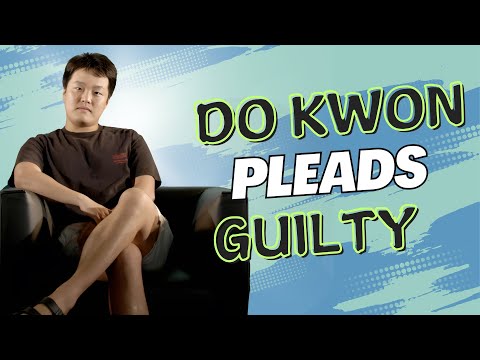 Coinage dives into Do Kwon’s plea deal details and the potential of a Trump pardon
Community notes
Spot something off or out of date? Drop a note. Editors review topic notes daily and roll accepted fixes into the explainer — contributors are recognized in the monthly $SQUID drop.
Loading notes…
Help improve this topic
Have a story or tip about this topic? Submit it. See something missing? Leave a note. Editors review daily; accepted submissions and fixes count toward the monthly $SQUID drop.