
Deep dive explainer on Kaito, an AI-driven attention-fi platform turning social influence into a tradable asset via KAITO tokenomics, NFTs, staking, analytics, and creator–brand markets amid the shifting InfoFi landscape.
+1 sources across the wider coverage universe
 Kaito is sunsetting Yaps and incentivized leaderboards, transitioning to Kaito Studio—a tier-based creator marketing platform focused on quality, analytics, and cross-platform reach beyond Crypto Twitter.2026-01
 InfoFi is officially dead after X revoked API access for reward-based posting, forcing platforms like Kaito and Cookie to pivot. Marketing spend won’t disappear but will shift toward traditional agencies and direct creator deals, favoring quality, relationships, and differentiated content.2026-01
 Claim for $KAITO airdrop is live!2025-02
 Wen Moon joins Kaito2025-04
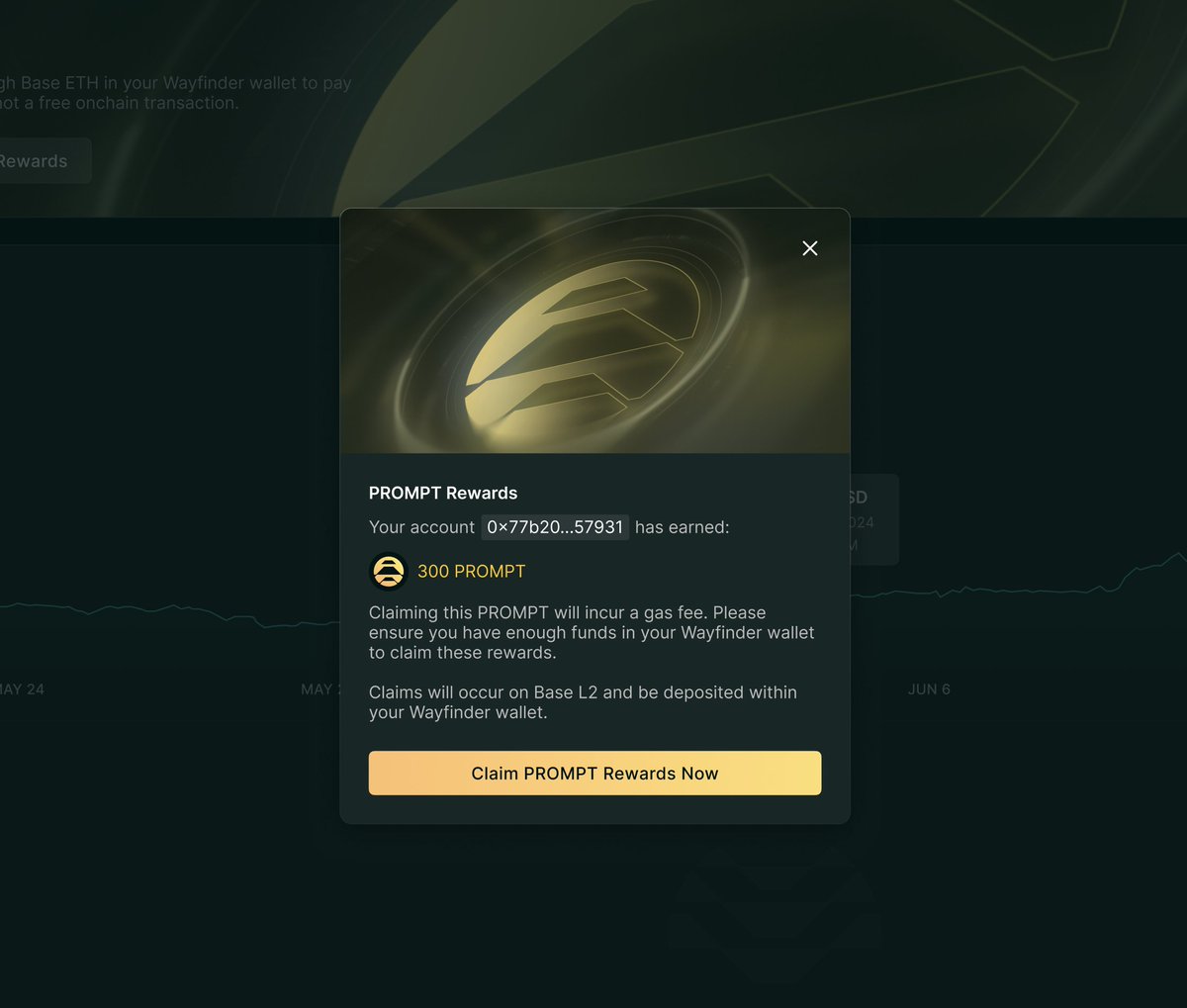 🚨🚨🚨 DO NOT CLAIM, Contract is bugged. Wayfinder (PROMPT) claims now live…2025-04
 Kaito PRO mobile beta is live!2025-03
Kaito: AI, Attention, and Tokenized Influence in Crypto
Kaito is an AI-driven crypto platform that treats attention as an investable asset, combining social data, prediction markets, and a native token to build what it calls “attention capital markets” for brands, creators, and traders. At its core, Kaito’s thesis is that information, influence, and capital can be distributed more fairly and efficiently when market signals—not opaque algorithms alone—decide what deserves attention.
Kaito sits at the intersection of artificial intelligence, social media, and decentralized finance, evolving from early InfoFi experiments like reward-based posting campaigns and on-chain claim tools into a broader suite that includes analytics (Kaito Pro), a creator–brand marketplace (Kaito Studio), NFTs (the Kaito Genesis “Yapybara” collection), and the KAITO token with staking and derivative exposure. Its trajectory mirrors the broader arc of “attention-fi” in crypto: initial enthusiasm for incentivized leaderboards and social airdrops, a sharp reset after platforms like X tightened API access, and an ongoing pivot toward more traditional but data-driven creator marketing, capital launchpads, and prediction-style “attention markets” in partnership with venues such as Polymarket.
What is Kaito?
Kaito describes itself as an “intelligence and financial markets platform for the attention economy,” positioning its products as infrastructure that tracks, prices, and ultimately trades attention across crypto and adjacent sectors. The core idea is that social reach and engagement are no longer just by-products of marketing but a kind of capital that can be measured, allocated, and rewarded using tokens and markets. In practical terms, that has meant ingesting data from platforms like X, TikTok, Instagram, and YouTube, building AI models to rank and cluster it, and then tying those scores to on-chain rewards, NFTs, and campaign budgets.
The platform emerged out of founder Yu Hu’s conviction that crypto needed a more systematic way to filter signal from noise, especially as AI made it easier to generate, remix, and amplify content at scale. In interviews, Hu has framed Kaito’s mission as creating a fairer and more transparent system for distributing information and capital, where users no longer rely solely on biased feeds or manual curation but instead lean on market-based mechanisms to surface the most valuable insights. This is where the concept of InfoFi—short for information finance—enters: using market signals, such as prediction markets or token incentives, to express and aggregate beliefs about which information is true, timely, or important.
From the outset, Kaito focused heavily on Crypto Twitter (now X) as its initial data and distribution surface, reflecting the reality that much of crypto’s narrative and deal flow still runs through a dense network of pseudonymous accounts, founders, funds, and KOLs. In its early InfoFi phase, Kaito built systems that mapped roughly 400,000 “smart follower” accounts, constructed a social graph of influence, and scored posts based on who engaged rather than raw vanity metrics like likes or impressions. Those scores powered features such as “Yaps” leaderboards, social airdrops, and claim tools—mechanisms that rewarded both creators and curators for generating content that attracted high-quality attention from influential nodes in the graph.
Over time, Kaito’s scope expanded beyond X into broader attention markets and enterprise-grade analytics. The public-facing website now emphasizes tracking your “social presence and progress,” hinting at a product that serves not just retail traders chasing airdrops, but also brands and creators who want to understand where they sit in the attention hierarchy and how to allocate marketing capital accordingly. This positioning aligns with Kaito’s newer offerings like Kaito Pro, Kaito Studio, and the forthcoming Capital Launchpad, all of which move beyond pure InfoFi into a more holistic attention infrastructure stack.

Kaito launches Katalyst, a reward layer that lets projects pay creators based on verified impact including mindshare, sign-ups, deposits and user activity
From InfoFi to Attention Capital Markets
Kaito’s earliest conceptual frame—InfoFi—was an attempt to treat information as an asset class, with markets acting as the primary arbiter of truth and relevance. Rather than trusting centralized platforms or editorial gatekeepers, InfoFi proposed that market-based tools could rank and verify information by attaching economic consequences to being right or wrong. In Hu’s own shorthand, InfoFi aimed to “use market signals to distinguish truth and odds,” drawing inspiration from prediction markets like Polymarket where traders express their beliefs by buying and selling outcome tokens.
Practically, Kaito implemented InfoFi through reward-based posting campaigns that tied token rewards to the quality and impact of social content. Yaps—the platform’s early flagship feature—provided an AI and graph-driven scoring layer on top of X posts, rewarding users whose content attracted engagement from accounts identified as “smart” or influential within the crypto social graph. Unlike simple engagement farming, the system attempted to differentiate between low-signal viral content and posts that genuinely influenced key decision-makers or sophisticated participants, thus making the distribution of token rewards more meritocratic.
However, InfoFi’s reliance on third-party social platforms exposed a core fragility. Reward-based posting relied heavily on programmatic access to X’s APIs for data ingestion, scoring, and verification. When X began revoking or restricting API access for reward-centric and incentive-driven posting platforms, Kaito and similar projects like Cookie were forced to reassess their business models. Newsroom coverage has described this shift bluntly as “InfoFi is officially dead,” at least in its original configuration tied to permissionless X-based rewards, even if the underlying idea of using markets to sort information remains alive in other forms such as prediction markets and curated campaigns.
In response, Kaito accelerated a pivot from open-ended, leaderboard-style InfoFi mechanisms toward a more controlled and brand-friendly attention marketplace. The company has framed this transition as a move from pure incentives to attention capital markets—structured environments where attention can be priced, forecast, and allocated with more predictability and less dependence on any single social feed. This includes partnering with Polymarket to launch “attention markets” where users can trade contracts based on social media trends, using multi-platform data from X, TikTok, Instagram, and YouTube as inputs. In such markets, traders effectively bet on the trajectory of public opinion or attention around specific topics, projects, or personalities, turning social momentum into a tradeable asset.
The shift has also driven Kaito to develop more sophisticated analytics and enterprise tools that do not rely solely on paying users to post. Kaito Pro introduces social listening, allowing brands and projects to see who is talking about them, what is being said, and how the conversation compares to competitors or thematic peers. This product sits squarely in the emerging category of “attention analytics,” blending AI-driven sentiment analysis and entity recognition with the specific needs and quirks of crypto communities.
In this way, the end of InfoFi-as-leaderboard has not killed Kaito’s core thesis but instead pushed it into more sustainable and professionalized territory. Rather than subsidizing attention with token emissions alone, Kaito now positions attention as a scarce resource that both sides—brands and creators—can plan around, budget for, and hedge through a mix of campaigns, markets, and data products. InfoFi becomes one component of a broader attention capital market, rather than the entire business model.
Readers treated the 'DO NOT CLAIM' exploit alert almost as urgently as the airdrop claim itself — revealing that Kaito's audience engages with it as a yield-extraction opportunity to monitor for timing and risk, not as believers in the InfoFi thesis.
Product Stack: From Yaps and Wayfinder to Kaito Pro and Studio
The evolution of Kaito’s product stack can be read as a case study in how attention-fi projects adapt to shifting platform rules and market conditions. Early on, Yaps and associated leaderboards were central: users were encouraged to “stop sleeping on your bags and start yapping,” posting content on X that Kaito’s algorithms could score and rank. The system mapped a dense social graph of Crypto Twitter, focusing on roughly 400,000 accounts whose followers exhibited signs of sophistication, and rewarded posts that attracted engagement from this inner circle.
Yaps served multiple functions at once. For creators, it was a path to visibility and potential token rewards, particularly through snapshot-based airdrops that allocated future KAITO tokens based on historical yap performance. For Kaito, it was a data flywheel: each post, engagement, and score enriched the underlying graph and improved the models that powered both analytics and reward mechanisms. And for projects sponsoring campaigns, Yaps offered a way to distribute tokens or exposure to users who could demonstrably influence desirable audiences, rather than random airdrop hunters.
Alongside Yaps, Kaito introduced Wayfinder, an AI-powered “social claim” and discovery tool that guided users through complex airdrop and claim processes. Wayfinder was used, among other things, to facilitate claims for the $PROMPT token, an experiment that ended up revealing some of the pitfalls of on-chain claim logic. A misconfiguration in the Wayfinder claiming contract—specifically, issues with how Merkle roots and eligible addresses were set—allowed a MEV searcher to front-run the airdrop and “yoink” roughly 120 ETH worth of tokens. Kaito and its community quickly warned users not to claim and paused the contract, later reopening it with a commitment to honor all intended $PROMPT claims and provide extra compensation for impacted users.
This incident became an important inflection point in how Kaito approached distribution infrastructure. Wayfinder remained part of the stack, but its role shifted from high-volume, permissionless airdrop tooling toward more controlled and audited flows. It also highlighted the importance of aligning security practices with the speed and experimentation of attention campaigns, especially when smart contracts become integral to social distribution.
As X’s policy changes tightened the screws on reward-based posting, Kaito announced a more decisive transition: sunsetting Yaps leaderboards and launching Kaito Studio, a beta platform described as a data-driven KOL and creator marketing agency. Studio organizes creators into tiers, emphasizes cross-platform reach beyond Crypto Twitter, and focuses on matching brands with creators based on fit, performance data, and campaign goals rather than pure leaderboard rankings. Community posts describing the pivot emphasize that Kaito Studio represents “a new era” that prioritizes quality over quantity, with curated campaigns replacing open-ended reward farms.
Parallel to Studio, Kaito Pro emerged as the analytics and monitoring arm of the ecosystem. Public teasers and social posts highlight features such as a “Social Card” that tracks conversation around stocks, AI, and crypto, and Kaito Pro Mobile beta with direct access to token information, social trends, and other data aimed at traders and analysts. Recent updates introduce social listening for brands, allowing them to see who is talking about them, from key voices and critics to their broader community and competitors. This effectively turns social chatter into a dashboard that can inform both marketing strategy and trading decisions.
Together, Studio and Pro mark Kaito’s maturation from experimental InfoFi tooling to a vertically integrated attention infrastructure. Studio handles the matchmaking and campaign execution between brands and creators; Pro provides the measurement and intelligence layer for both sides; and products like Wayfinder and attention markets sit at the intersection, translating social and market signals into actionable flows of tokens and capital.
Looking ahead, Kaito has also begun teasing Capital Launchpad, a fundraising platform designed as an alternative to first-come-first-served (FCFS) token sale models. The idea is to raise and “embed” communities through more nuanced capital alignment rather than simple speed races, with Launchpad presumably leveraging Kaito’s attention data and creator network to structure fairer and more signal-rich token generation events. In the broader story of Kaito’s product evolution, Launchpad represents the next logical step: if you can measure and trade attention, you can also design primary market offerings that align capital with those who have proven skin in the social game.
The KAITO Token: Launch, Airdrops, Tokenomics, and Staking
The KAITO token is the economic backbone of the Kaito ecosystem, tying together attention incentives, governance aspirations, staking yields, and derivative exposure across different venues. At the most basic level, KAITO has a fixed total supply of one billion tokens, a portion of which was distributed through a mix of direct claims, snapshot-based allocations to Yaps participants and Genesis NFT holders, and exchange-supported airdrops.
One of the most visible milestones in KAITO’s lifecycle was its listing on Binance, accompanied by a “HODLer airdrop” campaign targeted at users staking BNB in Simple Earn. According to Binance’s announcement, 20 million KAITO—equivalent to 2 percent of total supply—were earmarked as airdrop rewards, with eligibility determined by BNB staking activity between February 6 and 11 (UTC). At listing, the circulating supply stood at roughly 241,388,889 KAITO, or about 24.14 percent of the total, highlighting that a significant portion remained locked for future emissions, team allocations, ecosystem incentives, and other purposes.
Beyond Binance, Kaito ran its own native airdrop claim, with a defined launch window and multiple community announcements highlighting claim go-live times and snapshot dates. The “yapshot” for Yaps-based allocations was taken at a specific time, while a separate snapshot captured holders of the Kaito Genesis NFT collection, ensuring that both early content contributors and NFT supporters were included in the initial token distribution. This layered snapshot approach reflects Kaito’s desire to reward different forms of early participation—social, financial, and cultural—rather than a single metric.
Tokenomics details published by analytics sites such as Tokenomist outline a multi-year unlock schedule extending into 2029, with periodic vesting for categories like the team, investors, ecosystem, and treasury. The next significant unlock after launch was scheduled for June 20, 2026, indicative of a relatively long-tail emission curve aimed at sustaining incentives over time rather than front-loading all supply into the first year. This structure is typical for contemporary infrastructure and consumer crypto tokens, balancing the need to bootstrap usage with the desire to maintain long-term alignment among stakeholders.
Staking has emerged as a key use case for KAITO, reinforcing the idea that tokenholders can deepen their economic and reputational alignment with the platform. On-chain analytics dashboards built on Dune track KAITO staking activity in detail, including the amount staked, distribution across wallets, and user behavior patterns. Reports and coverage from early 2025 indicate that the total KAITO staked surpassed 10 million tokens shortly after staking went live, reflecting significant holder interest in locking up tokens for rewards or governance rights. Later updates from newsroom sources suggest that this figure continued to climb, surpassing 16 million as the staking program matured and more airdrop recipients converted liquid allocations into staked positions.
A further layer of sophistication arrived with sKAITO, a staked derivative supported by platforms like Infinex. In June 2025, Infinex announced an sKAITO airdrop and support for KAITO staking within its platform, effectively allowing users to gain exposure to staking yields while potentially unlocking additional DeFi opportunities or liquidity strategies. This mirrors patterns seen with other tokens where liquid staking derivatives (LSDs) or synthetic assets expand the utility of staked positions by making them composable across protocols. In Kaito’s case, sKAITO also underscores the project’s integration into a wider DeFi ecosystem, where attention tokens are not only earned but also rehypothecated, hedged, or used as collateral.
Taken together, KAITO’s tokenomics and staking design reflect a balancing act between experimentation and sustainability. Airdrops and snapshots reward early adopters and content creators, while structured unlocks and staking mechanisms aim to prevent excessive near-term dilution and align incentives over several years. The presence of exchange-based airdrops, native claims, and derivative instruments shows that Kaito views KAITO not simply as a governance token or marketing coupon, but as a multi-purpose asset tied to the evolving architecture of attention capital markets.

Kaito signs data agreement with X to enable diverse applications across its platform

NFTs and Kaito Genesis: Yapybaras and Creator Identity
While tokens and prediction markets handle much of the financial logic of attention, Kaito has also explored the cultural and identity side through NFTs. The Kaito Genesis collection, centered on a mascot called the “Yapybara,” acts as both a symbol of the platform’s early InfoFi era and a potential credential for ongoing participation.
The Genesis collection launched in phases starting on December 20, 2024, with different mint windows for early users and supporters, eligible Yaps participants, and the broader public. The phased rollout reinforced Kaito’s emphasis on rewarding early contribution: users who had engaged deeply with Yaps or other parts of the ecosystem were given priority access before the mint opened more widely. The artwork, created in collaboration with digital artist FroggyCyborg, combines playful aesthetics with the Yapybara theme, visually encoding the project’s focus on “yapping” (posting) as a route to influence and rewards.
From a functional standpoint, Genesis NFTs were not purely decorative. Snapshot mechanics tied to the collection ensured that holders were eligible for portions of the initial KAITO token distribution, aligning NFT ownership with tangible economic upside. This is consistent with a broader trend in crypto where NFTs double as membership passes, reputation markers, or eligibility proofs for future drops, rather than simply collectibles.
In the context of attention capital markets, NFTs like Kaito Genesis can be seen as proto-identity layers. They represent a user’s early belief in or contribution to a given platform, which can later be factored into allocation decisions, campaign eligibility, or even weighting in attention markets. When combined with on-chain and off-chain activity data, such NFTs may evolve into non-fungible “reputation stakes” that complement fungible tokens like KAITO and derivatives like sKAITO.
Culturally, the Yapybara brand helped Kaito differentiate itself in a crowded field of AI and social-fi projects. Where many competitors lean on sterile, data-heavy branding, Kaito’s use of a whimsical mascot and narrative around “yapping” gave it a recognizable identity, especially among Crypto Twitter power users. This matters because in attention markets, branding itself becomes a kind of meta-attention: users are more likely to align with and promote platforms that feel distinctive and coherent, which in turn feeds back into the social graphs and scoring systems that Kaito operates.
- 01Airdrop claim timing and mechanics↗
The live claim announcement was the single highest-clicked headline by a wide margin, with additional clicks on the snapshot, Binance tokenomics, and 'claim tomorrow' previews — readers were actively tracking the exact window to act.
- 02Wayfinder contract exploit and MEV theft
Back-to-back headlines — a 'DO NOT CLAIM' warning and a confirmed 120 ETH MEV front-run — pulled readers in because the exploit directly threatened airdrop proceeds they were already tracking.
- 03InfoFi model and X API death↗
Readers clicked both the original InfoFi vision launch and the later headline declaring InfoFi 'officially dead' after X revoked API access, bookending the full arc of the model's rise and collapse.
- 04$KAITO tokenomics and supply structure↗
Binance's partial tokenomics reveal and the standalone tokenomics announcement drew clicks because readers were calculating dilution and airdrop size before committing.
- 05Market-maker controversy and Web3Port termination↗
The leaked market-making contract and Kaito's disclosure that it terminated Web3Port just 10 days after signing raised credibility questions that informed holders wanted answered.
- 06Yaps sunset and Kaito Studio pivot↗
Readers who had earned via Yaps leaderboards clicked the shutdown announcement to understand how their participation and future earning potential would change under the new tier-based creator model.
Wayfinder, Airdrop Experiments, and Lessons from the PROMPT Exploit
Airdrops and claims have always been double-edged swords: powerful tools for bootstrapping attention and distribution, but also magnets for opportunistic exploitation and technical failure. Kaito’s Wayfinder system, designed as a “social claim” interface guiding users through complex on-chain interactions, exemplifies both the potential and the risks.
The most prominent incident in this context was the PROMPT airdrop. Wayfinder’s claiming contract contained a misconfiguration related to how eligible recipients were encoded in the Merkle root used to verify claims. This oversight created a window for a MEV searcher to intercept and effectively drain roughly 120 ETH worth of value from the airdrop by front-running or manipulating the claim process. Community posts and coverage describe the incident as the airdrop being “yoinked,” highlighting the stark contrast between the intended fair distribution and the actual outcome.
Kaito responded by urgently advising users not to claim through the affected contract and pausing the process. After patching the issue and reviewing the damage, the team reopened the Wayfinder social claim, committing to fulfill all intended PROMPT allocations and provide additional compensation to those impacted by the exploit. This remediation effort, while costly, helped preserve trust among core users and set a precedent for how Kaito handles security incidents.
The PROMPT saga underscores several lessons relevant to anyone building attention-fi infrastructure. First, the attack surface of airdrop contracts is non-trivial, especially when combined with public announcements and social hype that attract MEV actors. Second, the complexity of encoding off-chain social eligibility into on-chain proofs (e.g., via Merkle trees) introduces a category of bugs that is easy to underestimate but potentially catastrophic. Third, in attention markets, reputational damage from an exploit can be as significant as the direct financial loss, because the platform’s entire value proposition hinges on trust in its scoring, allocation, and execution systems.
For Kaito, the incident appears to have reinforced the move toward more tightly controlled and audited distribution mechanics, as well as the pivot away from mass, permissionless social incentive campaigns toward curated, studio-led partnerships. Wayfinder remains part of the toolkit, but its role is now framed more as a guided experience inside a broader ecosystem where tokenomics, NFTs, and analytics share the load of aligning incentives, rather than relying solely on open airdrops as the primary growth engine.
Risks, Controversies, and Governance Questions
As with any project attempting to tokenize an inherently subjective asset like attention, Kaito faces a complex set of risks and controversies. One major structural risk is dependency on centralized social platforms. The effective end of InfoFi’s first iteration came when X revoked or restricted API access for reward-based posting apps, forcing Kaito and peers to shutter or radically redesign incentive campaigns that had been built around Twitter-native mechanics. This episode highlights the fragility of business models that depend on third-party data access, especially when those platforms are themselves experimenting with their own monetization and anti-spam strategies.
Another area of scrutiny is market perception and liquidity management. In the wake of leaked market-making contracts across the industry, Kaito publicly disclosed that it had signed, then terminated, an agreement with Web3Port within ten days due to concerns around execution quality and alignment. This move was framed as a proactive step to ensure KAITO’s market behavior reflected organic trading rather than overly engineered liquidity, but it also drew attention to the opaque role market makers often play in early token trading. Transparent communication about such arrangements is increasingly seen as a litmus test for serious projects, and Kaito’s swift termination and disclosure were intended to preempt speculation.
Security incidents like the Wayfinder PROMPT exploit add another layer of risk. While Kaito’s remediation efforts mitigated some reputational damage, the fact remains that MEV actors are highly incentivized to target any contract that sits at the intersection of social hype and token claims. This reality means Kaito must maintain a strong security posture not just at the smart contract level, but also in its communication and rollout plans, to minimize opportunities for front-running and manipulation.
Regulatory uncertainty also looms over attention tokens. KAITO and related instruments like sKAITO sit in a gray zone between utility, governance, and speculative assets. As regulators around the world scrutinize tokens that confer economic benefits, influence over protocol decisions, or both, projects like Kaito may face questions about whether their tokens constitute securities, especially when used in capital-raising contexts such as the planned Capital Launchpad. The blending of AI-driven scoring with token rewards could also draw attention from consumer protection regulators if users feel misled about how scores are generated or how rewards are allocated.
Finally, there are deeper philosophical questions about how attention should be priced and who gets to define “quality.” Kaito’s models attempt to distinguish meaningful engagement from spam by privileging interactions from “smart follower” accounts and influential nodes. While this may improve signal-to-noise ratios, it also risks reinforcing existing hierarchies and excluding new voices that have not yet been integrated into the graph. Striking a balance between rewarding established influence and discovering emerging talent is an ongoing challenge for any attention market, and one that Kaito’s transition from Yaps to Studio will need to navigate carefully.
Kaito launches Pulse, a new social layer starting with X that surfaces what people build, trade and back beyond traditional timelines

How Users Engage with Kaito Today
Despite the turbulence of the InfoFi reset, Kaito remains a multi-sided platform with distinct value propositions for creators, brands, and traders. Creators now interact with Kaito primarily through Kaito Studio, where they can present their profiles, audience metrics, and platform reach to brands seeking targeted campaigns. Rather than simply farming leaderboard points, creators work with Kaito and partner agencies to design content that aligns with brand goals, often across multiple platforms beyond X. Past participation in Yaps, ownership of Genesis NFTs, and staking of KAITO can all serve as soft signals of commitment and alignment, even if they are no longer the sole determinants of rewards.
Brands and protocols, for their part, use Kaito Pro and Studio to understand and shape their attention footprints. Social listening features allow them to see who is talking about them, track sentiment shifts, and benchmark their presence against competitors or thematic narratives in crypto, AI, and traditional markets. Studio then translates these insights into campaign execution, matching brands with creators whose audiences and content styles fit the desired demographic or narrative goals. In some cases, campaigns may integrate on-chain elements such as token rewards, NFT drops, or participation in attention markets, but the emphasis has shifted toward quality content and relationship-based partnerships rather than pure emission-driven acquisition.
Traders and analysts engage with Kaito primarily through Pro and the emerging attention markets collaboration with Polymarket. Kaito’s data feeds into markets where users can bet on social media trends, trading contracts that reflect the trajectory of public interest in specific topics, projects, or personalities. For instance, early markets focus on AI-related themes, with the plan to expand to thousands of contracts by year’s end. Traders can combine Kaito’s analytics—such as trend velocity, influencer engagement, and cross-platform diffusion—with their own theses to construct strategies that front-run or hedge against narrative shifts.
On the token side, both retail users and more sophisticated participants can stake KAITO, receive sKAITO through platforms like Infinex, and potentially use these assets as collateral or liquidity in DeFi strategies. Airdrop recipients who claimed KAITO through native or exchange-based campaigns often face decisions about whether to hold, stake, or rotate into other assets, and Kaito’s communication around staking yields, unlock schedules, and ecosystem plans plays a crucial role in shaping these choices.
Across all user segments, one constant is the growing importance of mobile access. Kaito Pro’s mobile beta brings token data, social analytics, and attention insights into a form factor geared for always-on trading and content creation. This reflects the reality that attention markets move quickly and often outside traditional market hours; mobile tools are essential if Kaito wants to be the dashboard where users see and act on shifts in real time.
Kaito Genesis NFT minting opens December 20th
$KAITO token claim goes live; yaps and Genesis NFT snapshots taken
- 2025-02exploit
Wayfinder claim contract exploit; MEV bot steals 120 ETH; claim paused
Web3Port market-making agreement terminated 10 days after signing
Total staked KAITO surpasses 16 million tokens
- 2025-05regulatory
X revokes API for reward-based posting; InfoFi model declared dead
Infinex sKAITO airdrop distributed June 12
Kaito sunsets Yaps and incentivized leaderboards; Kaito Studio announced
Kaito in the Broader Attention-Fi Landscape
Kaito’s story is part of a broader wave of projects experimenting with how to tokenize and trade attention. Other initiatives—from OpenSea’s $SEA token drop to RedStone’s $RED token powering modular oracles—reflect a wider market appetite for aligning tokens with usage, data, or influence rather than purely with base-layer infrastructure. Kaito’s differentiation lies in its explicit focus on AI-driven social analytics, market-based truth discovery, and structured creator–brand matchmaking, rather than generic “engagement mining.”
The partnership with Polymarket marks a particularly notable step in this direction. By enabling users to bet on social media trends using data streams from X, TikTok, Instagram, and YouTube, Kaito and Polymarket are effectively turning narrative momentum into a tradeable asset class. In this setup, Kaito provides the analytical backbone—tracking and quantifying attention—while Polymarket supplies the liquidity and trading interface where beliefs about that attention are priced.
Kaito’s pivot from InfoFi to Studio can also be compared to the trajectory of other social-fi projects like friend.tech or platform-native creator marketplaces. Where some of those experiments leaned heavily on speculative tokenization of individual creators—e.g., bonding curves tied to “shares” in a person’s feed—Kaito’s Studio model looks more like a data-driven agency, using AI to inform fairly traditional sponsored-content relationships. This may prove more sustainable in the long run, especially as regulators and platforms scrutinize schemes that blur the line between financial instruments and parasocial relationships.
At the same time, Kaito must continue to prove that its attention analytics and token layer add meaningful value beyond what web2 tools or conventional agencies can offer. If Studio campaigns and Pro dashboards simply replicate what brands can already get from social listening SaaS products, without leveraging the unique composability of tokens, NFTs, and on-chain markets, the project risks losing its distinctive crypto edge. The success of Capital Launchpad, attention markets, and future tokenized experiments will likely determine whether Kaito becomes a core primitive of attention-fi or remains a niche analytics provider with a token.
Outlook
Kaito’s journey from InfoFi leaderboards to attention capital markets encapsulates both the promise and the volatility of building at the intersection of AI, social media, and crypto. The project has already navigated shifting platform rules, a high-profile airdrop exploit, and market-making controversies, while continuing to ship products like Kaito Pro, Kaito Studio, Genesis NFTs, staking, and sKAITO derivatives. Its partnership with Polymarket and plans for Capital Launchpad signal an ambition to anchor not just content discovery but also trading and fundraising around quantified attention.
In the near term, Kaito’s success will likely hinge on three factors. First, its ability to convince brands and creators that Studio offers a more efficient, data-rich alternative to traditional agencies and ad platforms, without sacrificing authenticity or over-financializing relationships. Second, the robustness and utility of its analytics and markets: if attention metrics consistently help traders and projects anticipate narrative shifts, Kaito can cement itself as a key infrastructure provider in crypto’s information layer. Third, prudent governance and risk management around KAITO’s tokenomics, staking, security, and regulatory posture will determine whether the token is seen as a durable asset or just another short-lived attention play.
Longer term, the question is whether attention itself can become a mainstream financial primitive. If Kaito’s thesis proves correct, the future may see portfolios that treat influence scores, narrative momentum, and creator reach alongside more familiar metrics like TVL or protocol revenue. In that world, platforms like Kaito—combining AI, markets, and social data—would not just track culture; they would help price and allocate it. Whether Kaito can lead that shift, or merely foreshadow it, will be one of the more interesting storylines to watch in the evolving intersection of crypto, AI, and the attention economy.
Latest Kaito news
Kaito launches Katalyst, a reward layer that lets projects pay creators based on verified impact including mindshare, sign-ups, deposits and user activityKaito signs data agreement with X to enable diverse applications across its platformKaito launches Pulse, a new social layer starting with X that surfaces what people build, trade and back beyond traditional timelines Axis Robotics partners with Kaito AI to introduce the Axis Content Creator Program to push the frontier of physical AI to new heights. Epoch 1 is now live and runs until September 18th at 12:00 UTC.Kaito is sunsetting Yaps and incentivized leaderboards, transitioning to Kaito Studio—a tier-based creator marketing platform focused on quality, analytics, and cross-platform reach beyond Crypto Twitter.InfoFi is officially dead after X revoked API access for reward-based posting, forcing platforms like Kaito and Cookie to pivot. Marketing spend won’t disappear but will shift toward traditional agencies and direct creator deals, favoring quality, relationships, and differentiated content.
Sources
19 records from 11 domains
docs.kaito.ai
binance.com
x.com
- x.com· xerocooleth / status / 2011883764301910240
- x.com· KaitoAI / status / 1947318905145368945
- x.com· KevinWSHPod / status / 1882088825196786081
- x.com· KaitoAI
- x.com· KaitoAI / status / 1924410369847517205
- x.com· KaitoAI / status / 1928087162114785473
- x.com· KaitoAI / status / 1910642994463600865
- x.com· KaitoAI / status / 1869735749178024421
kaito.ai
opensea.io
infinex.xyz
youtube.com
tokenomist.ai
panewslab.com
forklog.com
dune.com
Community notes
Spot something off or out of date? Drop a note. Editors review topic notes daily and roll accepted fixes into the explainer — contributors are recognized in the monthly $SQUID drop.
Loading notes…
Help improve this topic
Have a story or tip about this topic? Submit it. See something missing? Leave a note. Editors review daily; accepted submissions and fixes count toward the monthly $SQUID drop.