
A clear, evergreen guide to onchain liquidity: how AMMs and order books supply it, why depth and fragmentation matter, the role of stablecoins, and how tokenized Treasuries and real-world assets are reshaping onchain markets.
+1 sources across the wider coverage universe
 Securitize integrates with TRON to expand tokenized real-world assets across one of the largest blockchain ecosystems, unlocking broader access to onchain securities and DeFi liquidity2026-04
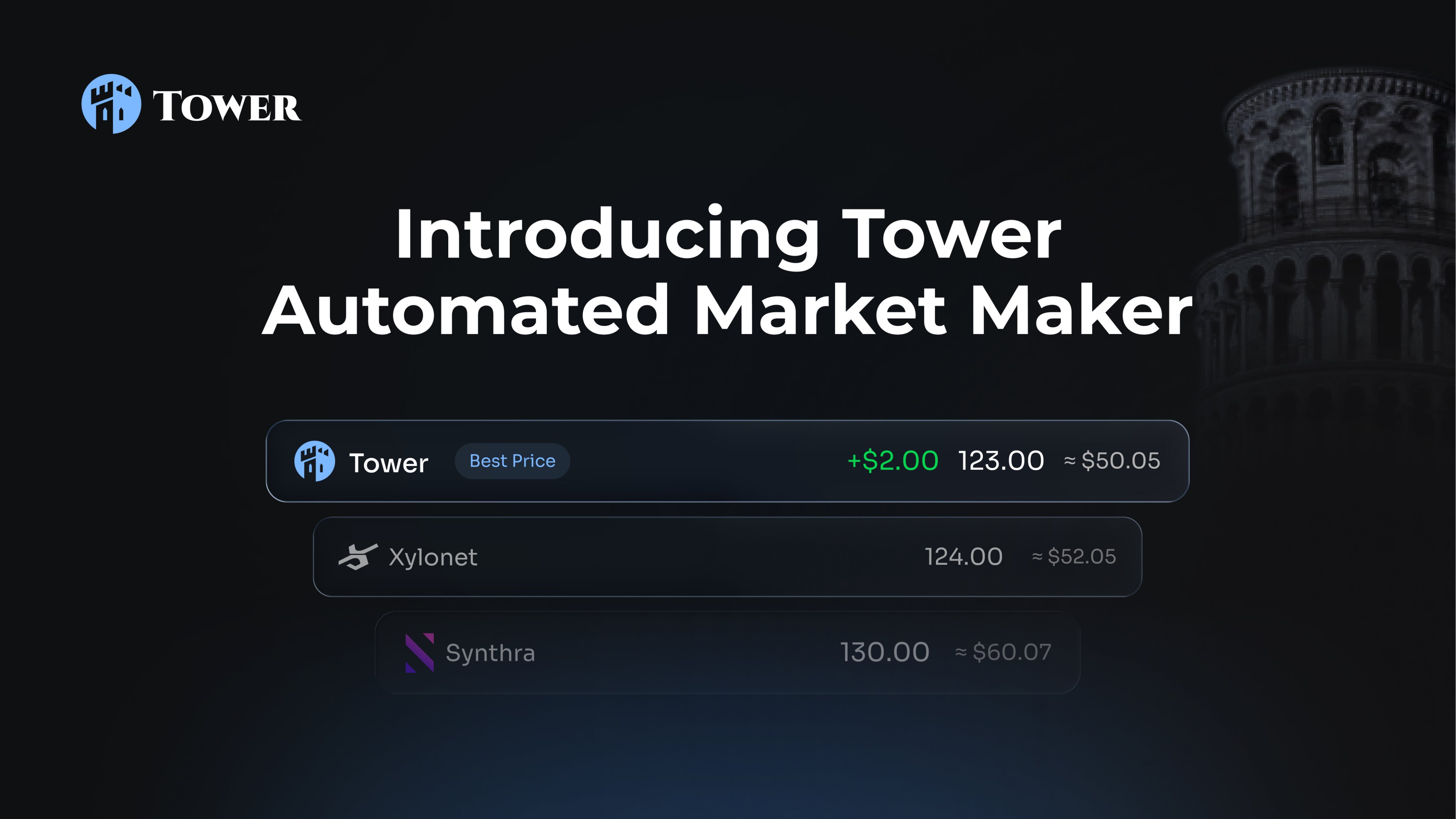 Tower Exchange launches Tower AMM on ARC, boosting onchain liquidity, improving trade execution and laying the groundwork for public liquidity pools2026-07
 a16z-backed OpenTrade raises $17M to expand stablecoin lending platform, bridging onchain liquidity with real-world asset yields for institutional markets2026-05
 Phoenix says atomic composability will let traders use spot assets, tokenized RWAs and shared collateral across spot and perps from a single on-chain liquidity pool2026-07
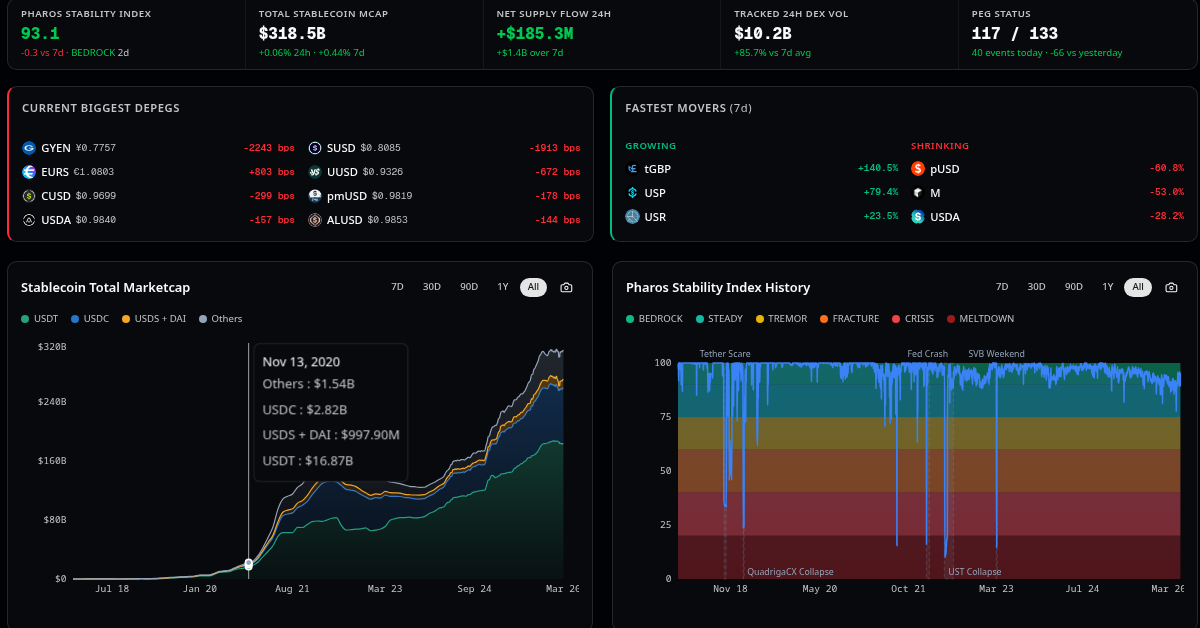 Every stablecoin carries risk. Pharos shows you exactly how much. Peg scores, safety grades, depeg alerts, yield data & on-chain liquidity for 145+ coins. Don't hold blind2026-03
 Polygon, Frax, and Curve deploy six onchain FX liquidity pools with frxUSD as base dollar pair2026-04
Onchain liquidity is the depth of capital available to trade, lend, or settle an asset directly on a blockchain, without routing through a traditional intermediary. It determines how large a transaction can clear, how tight the spread is, and how reliably a token holds its price when buyers or sellers arrive.
In practice, "liquidity" measures how easily an asset converts to another at a stable price. "Onchain" means that the pools, order books, and settlement all live on a public ledger such as Ethereum, Solana, or an L2, where balances and trades are transparent and programmable. Onchain liquidity is the connective tissue of decentralized finance: it is what lets a stablecoin redeem near par, a tokenized Treasury fund change hands at fair value, or a newly launched token find a price at all.
How onchain liquidity is provided
Two dominant market structures supply onchain liquidity. The first is the automated market maker (AMM), pioneered by Uniswap, where liquidity providers deposit pairs of assets into a pool and a pricing formula sets the exchange rate algorithmically. Anyone can trade against the pool, and providers earn fees in exchange for taking on price risk. The second is the onchain order book, which mirrors the bid/ask structure of traditional exchanges; it is increasingly viable on high-throughput chains and purpose-built venues. Recent newsroom coverage of an orderbook DEX launching on the Pharos mainnet "enabling secondary trading, tighter spreads, and deeper on-chain RWA liquidity" reflects a broader push to bring professional market-making and price discovery on-chain rather than off it.
Liquidity does not appear by itself. It is bootstrapped by liquidity providers, professional market makers, and protocol incentives. Newer designs experiment with more active capital allocation; one project describes "Predictive Allocation" for "more responsive capital formation" and "more efficient rewards distribution." The common goal is to keep depth where trading actually happens, rather than stranding capital in pools nobody uses.
A related trend is the consolidation of fragmented liquidity into shared layers. The pitch — "Any frontend. Any trading experience. One liquidity layer" — describes infrastructure that lets multiple applications plug into a single deep pool through developer integrations such as "Builder Codes," so that a swap on one app draws from the same depth as a perpetual trade on another.

Securitize integrates with TRON to expand tokenized real-world assets across one of the largest blockchain ecosystems, unlocking broader access to onchain securities and DeFi liquidity
Why depth and fragmentation matter
The most important property of a liquidity pool is depth: how much can be traded before the price moves materially, a cost known as slippage. Thin liquidity is not a theoretical risk. In one recent incident, an attacker who had minted and dumped a token onto exchanges found that "on-chain liquidity is nearly exhausted," leaving roughly $14 million in tokens difficult to sell without collapsing the price. Depth is what separates an orderly market from one where a single large order causes a cascade.
Onchain liquidity is also chronically fragmented. The same asset can trade across dozens of chains and hundreds of pools, each with its own depth. A Korean won stablecoin "expanding to Solana" to unify "$100B+ in daily KRW liquidity onchain," and Securitize "integrating with TRON to expand tokenized real-world assets," both illustrate the recurring problem: liquidity must be deliberately deployed onto each network, and bridging it between chains adds cost and risk. Fragmentation is the reason aggregators, cross-chain routers, and shared liquidity layers exist.
Readers click onchain liquidity stories not to understand pool mechanics but to track power: who controls the exit, who sells into retail, and who takes the loss when depth is thin — political insiders, institutional entrants, and accidental whales all reveal the same structural asymmetry.
Stablecoins as the base layer
Most onchain liquidity is denominated in stablecoins — tokens designed to hold a fixed value, usually pegged to a fiat currency like the US dollar. Stablecoins such as USDC and USDT serve as the default quote asset: they are the dollar side of nearly every trading pair, the unit lenders denominate loans in, and the settlement medium for payments. The health of stablecoin liquidity therefore underpins almost everything else; if the dollar leg of a market is thin or its peg is in doubt, every pair quoted against it suffers.
The dollar is no longer the only stablecoin currency moving onchain. A MiCAR-compliant euro stablecoin (EURAU) went live on Stellar to bring "euro liquidity onchain... for cross-border payments and institutional-grade settlement," and Polygon, Frax, and Curve deployed "six onchain FX liquidity pools" pairing global currencies against frxUSD as a base dollar. These foreign-exchange pools extend the stablecoin model to a multi-currency world, building the rails for onchain cross-border payments where conversion happens in a single transaction.
Variational launches Swaps, routing onchain RWA exposure to TradFi dealer liquidity with predictable USD-based financing instead of variable perp funding

Real-world assets enter the pool
The most consequential recent shift is the arrival of real-world assets (RWAs) — tokenized representations of off-chain instruments like Treasury bills, money market fund shares, equities, and private credit — as both a source and a consumer of onchain liquidity.
Tokenized Treasuries have become the flagship category. The tokenized US Treasury market has grown to several billion dollars in assets, with BlackRock's BUIDL, Circle's USYC, Franklin Templeton's BENJI, and Ondo's OUSG among the largest funds, generally tracking short-duration government yields (rwa.xyz). Credibility signals have followed capital: Moody's awarded its top AAA rating to tokenized money market funds, "validating the credit quality and liquidity of onchain yield products." Tokenized money market funds are increasingly described as the most capital-efficient way to put idle stablecoin and institutional cash to work, combining Treasury yield with around-the-clock, composable settlement.
The institutional roster has expanded quickly. J.P. Morgan Asset Management launched its second tokenized money market fund, the JPMorgan OnChain Liquidity-Token Money Market Fund (JLTXX), on public Ethereum — investing exclusively in Treasury securities and overnight repurchase agreements, seeded with $100 million and structured to satisfy reserve requirements under the GENIUS Act stablecoin law (J.P. Morgan Asset Management; CoinDesk). UK asset manager Legal & General moved $68 billion of liquidity funds onchain through Calastone's token network, and OpenTrade, an a16z-backed firm, raised $17 million to bridge "onchain liquidity with real-world asset yields for institutional markets."
The thesis driving partnerships in this space is that tokenized assets should not "just sit in a wallet." Bringing tokenized stocks (bStocks) to DeFi on BNB Chain, for example, is framed as adding "deeper onchain liquidity and new ways to put tokenized stocks to work" — turning a static holding into collateral, a tradable position, or a yield source. The same logic underpins new RWA price feeds "boosting onchain capital markets liquidity" and the integration of onchain options into broker platforms like MT4 and MT5.
- 01Insiders dumping into liquidity
Headlines showing political and project insiders selling hundreds of millions into thin markets framed onchain transparency as exposure tool, not just analytics.
- 02Stablecoin liquidity risk grading
Readers engaged with tools and analysis that scored stablecoin depth and depeg risk, signaling demand for a consumer-grade safety layer that doesn't yet exist natively in wallets.
- 03Thin liquidity slippage casualties
The Cardano whale losing $6M on a $6.9M swap made concrete what protocol risk disclosures leave abstract — deep liquidity is not a given even for large-cap assets.
- 04Institutional DeFi liquidity bridges
Aave Horizon, a16z-backed OpenTrade, and Midas collectively signaled that institutional capital is routing toward onchain venues, pulling reader attention toward where the next liquidity wave originates.
- 05RWA tokenization liquidity promise vs. reality
Multiple headlines explored whether tokenized equities, sports revenues, and real-world assets actually deliver tradeable liquidity or just price feeds — readers tracked the gap between marketing and market structure.
- 06DEX design displacing centralized venues
AMM innovations like HOT's intent-centric design and Hyperliquid's perps volume gains framed onchain liquidity as a structural threat to CEX profit models, not merely a DeFi sideshow.
Launching liquidity for new assets
When a token launches, it has no market until liquidity is seeded. The initial deployment — how much capital is committed, at what price, and across which venues — shapes early price discovery and how vulnerable the asset is to manipulation. Thin launch liquidity invites volatility and predatory trading; deep, well-managed launch liquidity supports orderly markets.
This is why newer launches increasingly recruit professional partners from the outset. The Pharos orderbook DEX example is explicit: to "support healthy price discovery from day one," the venue plans to "seed initial liquidity, coordinate with professional market makers." For RWAs and stablecoins especially, credible launch liquidity is a prerequisite for the institutional participation that follows.
Wintermute sees tokenized RWAs as next major crypto liquidity channel after on-chain assets triple to $30B+

Persistent risks
Onchain liquidity carries distinctive hazards. Liquidity-provider risk includes impermanent loss, where AMM providers underperform simply holding the assets when prices diverge. Smart-contract risk means a bug or exploit can drain a pool outright. Concentration and exit risk are acute for assets whose depth depends on a few providers — as the near-exhausted liquidity in the token-dump incident showed, available liquidity can evaporate exactly when selling pressure peaks.
For real-world assets, additional frictions apply. Tokenized fund shares are typically transfer-restricted, redeemable only by whitelisted addresses, which limits the open secondary trading that makes a market deep. Coverage of tokenized private credit warns that "true secondary markets... demand rigorous legal wrappers" and face "risky crosscurrents amid limited on-chain liquidity." Institutional entrants are described as charting "risky onchain waters amid liquidity storms and regulatory fog." The gap between an asset being tokenized and that token actually trading with depth remains wide.
- 2025-01milestone
TRUMP meme token launch; team sells ~$500M into liquidity
- 2025-01regulatory
Trump inauguration; crypto executive orders anticipated including Bitcoin reserve asset designation
- 2025-01launch
Ethena integrates into Spark Liquidity Layer, unlocking up to $1.1B in DeFi yield access
- 2025-03milestone
frxUSD transitions to full fiat backing via Superstate and BlackRock, targeting institutional stablecoin market
- 2025-04launch
Aave Labs launches Horizon to bridge institutional finance with onchain liquidity
- 2025-05launch
Uniswap releases open-source AI Skills suite enabling autonomous agent liquidity management
- 2025-06milestone
Midas raises $50M Series A to build instant liquidity layer for onchain investment products
- 2025-07exploit
Cardano whale loses $6.05M on $6.9M ADA swap due to thin USDA stablecoin pool liquidity
Outlook
Onchain liquidity is consolidating along two tracks. Crypto-native infrastructure is moving toward shared liquidity layers, more active capital allocation, and order books that narrow the gap with traditional venues. In parallel, regulated finance is bringing trillions in Treasuries, money market funds, and FX onto public chains, with stablecoins as the settlement base and clearer rules — such as the GENIUS Act — shaping what qualifies as reserves. The open questions are whether tokenized real-world assets can develop genuine secondary-market depth rather than sitting idle in wallets, and whether fragmented liquidity across chains can be unified without reintroducing the intermediaries that onchain markets were built to remove. The direction of travel is toward more capital onchain; the unresolved work is making that capital reliably tradable.
Latest Onchain Liquidity news
Securitize integrates with TRON to expand tokenized real-world assets across one of the largest blockchain ecosystems, unlocking broader access to onchain securities and DeFi liquidityVariational launches Swaps, routing onchain RWA exposure to TradFi dealer liquidity with predictable USD-based financing instead of variable perp fundingWintermute sees tokenized RWAs as next major crypto liquidity channel after on-chain assets triple to $30B+a16z-backed OpenTrade raises $17M to expand stablecoin lending platform, bridging onchain liquidity with real-world asset yields for institutional marketsPhoenix says atomic composability will let traders use spot assets, tokenized RWAs and shared collateral across spot and perps from a single on-chain liquidity poolTower Exchange launches Tower AMM on ARC, boosting onchain liquidity, improving trade execution and laying the groundwork for public liquidity poolsCommunity notes
Spot something off or out of date? Drop a note. Editors review topic notes daily and roll accepted fixes into the explainer — contributors are recognized in the monthly $SQUID drop.
Loading notes…
Help improve this topic
Have a story or tip about this topic? Submit it. See something missing? Leave a note. Editors review daily; accepted submissions and fixes count toward the monthly $SQUID drop.