
In-depth explainer on stablecoin infrastructure: how USDC and other tokens plus banking, compliance, and payment networks form a new global settlements rail for cross-border payments, cards, treasury, and AI-native finance.
+9 sources across the wider coverage universe
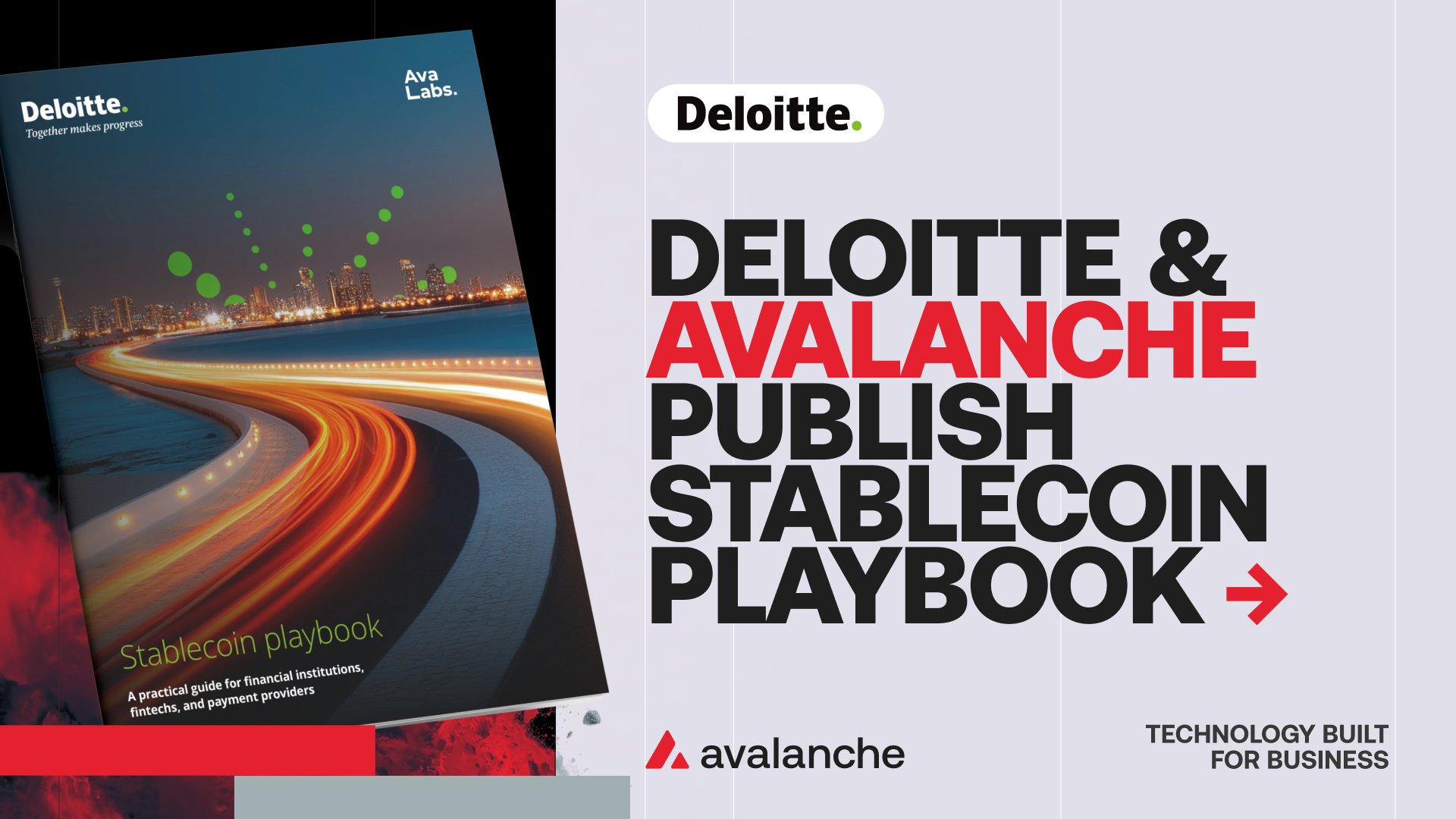 Deloitte and Avalanche have released a stablecoin playbook to help institutions navigate adoption, regulation and execution as stablecoins become core financial infrastructure2026-07
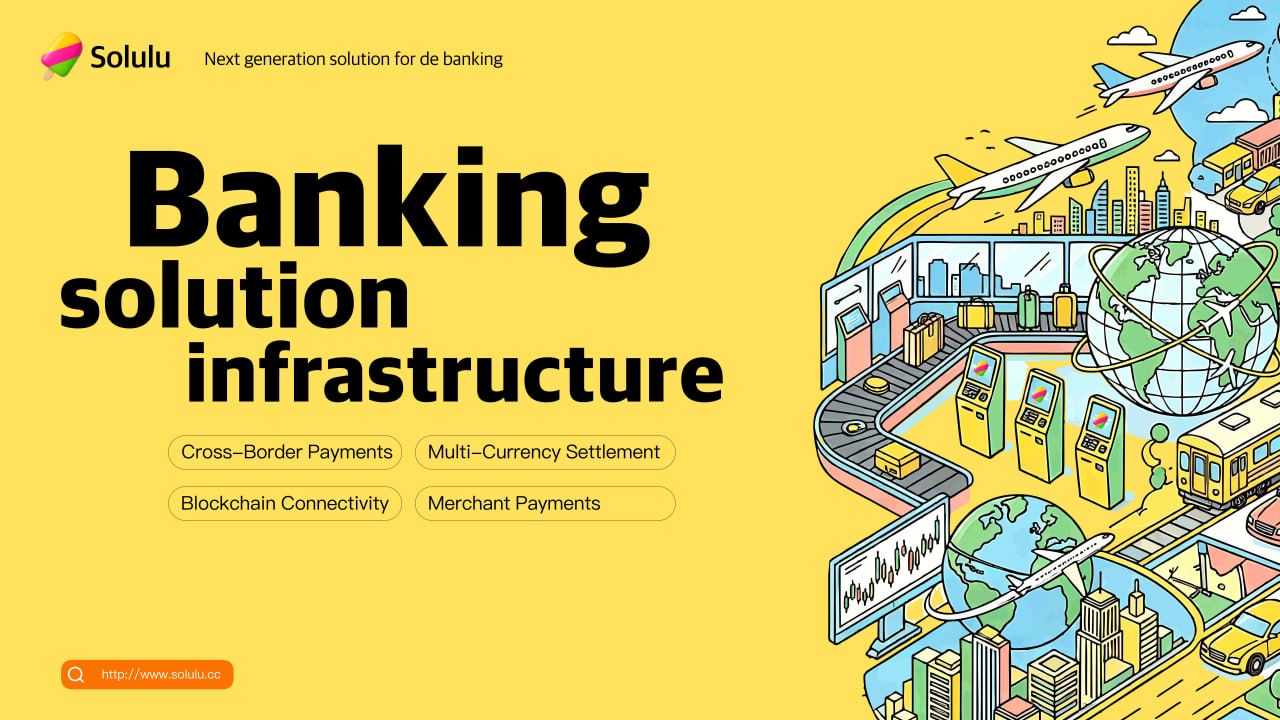 Solulu Tech expands stablecoin infrastructure to support cross-border payments and multi-currency settlement.2026-06
 Aave Labs secures FCA approval for UK crypto exchange operations through Push subsidiaries, expanding regulated stablecoin and payments infrastructure2026-05
 Mastercard secured a New York BitLicense to expand its stablecoin and blockchain settlement infrastructure as traditional finance deepens crypto adoption2026-05
 DeFi Technologies President Andrew Forson says DeFi’s $20B TVL decline is a healthy stress test, arguing stablecoin infrastructure and tokenized Treasury demand remain strong2026-05
 Circle says banks are moving beyond digital asset pilots, with institutions now exploring stablecoins and blockchain as core production infrastructure2026-05
Stablecoin Infrastructure: The New Financial Plumbing Beneath Digital Money
Stablecoin infrastructure refers to the technical, legal, and institutional stack that allows tokenized dollars and other fiat-pegged assets to function as reliable, always-on payment and settlement rails for individuals, enterprises, and financial institutions. As volumes and regulatory clarity grow, this infrastructure is evolving from experimental crypto tooling into core financial plumbing that underpins cross-border payments, card settlement, treasury operations, and even emerging machine-to-machine finance.
Introduction
In less than a decade, stablecoins have moved from being niche “dollar tokens” used mainly for crypto trading to becoming a high-throughput payment and settlement layer that operates at a scale comparable to the largest global payment networks. By 2025, stablecoins processed approximately \(33\) trillion USD in onchain transaction volume, with an estimated \(9\) trillion USD tied to real economic use rather than automated or wash trading, already exceeding PayPal’s annual throughput several times over and reaching over half of Visa’s volume. At the same time, the combined stablecoin market capitalization grew past 300 billion USD, meaning that more than one percent of all U.S. dollar money supply now exists as tokenized dollars on public blockchains. These numbers frame stablecoins not as a speculative sideshow, but as a new infrastructure layer within global finance.
Crucially, this transformation is driven less by the tokens themselves than by the infrastructure that makes them usable. Stablecoins are simple at the surface—a digital asset pegged to fiat currency—but turning them into dependable payment rails requires banking connectivity, compliant on- and off-ramps, institutional-grade custody, risk and compliance tooling, reliable blockchain networks, and developer-facing APIs. Infrastructure firms like Circle, Fireblocks, Crossmint, Trace Finance, and SoFi increasingly position themselves not as “crypto companies” but as providers of digital dollar infrastructure, emphasizing reliability, compliance, and integration with existing financial systems.
At the same time, regulatory frameworks are catching up. In the European Union, the Markets in Crypto-Assets (MiCA) regime has moved from design to enforcement, forcing exchanges to delist non-compliant stablecoins and granting a regulatory moat to issuers that meet stringent reserve, redemption, and disclosure requirements. In the United States, the proposed GENIUS Act is catalyzing a shift from debating whether stablecoins are legal to defining precisely how fiat-collateralized, redeemable, and auditable stablecoins must operate. As one industry analysis framed it, the core question is no longer “Is this legal?” but “How do we build compliant infrastructure at scale?”
This convergence of scale, regulatory legitimacy, and real-world utility is reshaping stablecoins from a tradable asset class into financial infrastructure. Card networks like Mastercard and Visa now use regulated stablecoins such as USDC and PYUSD for intraday, weekend, and holiday settlement, allowing issuers and acquirers to manage liquidity in near real time on supported blockchain networks including Ethereum, Solana, and others. Regulated institutions such as OSL in Australia, Aave Labs in the United Kingdom, and SoFi Bank in the United States are securing licenses and launching their own stablecoin infrastructure offerings, targeting wholesale clients, trading venues, and enterprise payments.
Against this backdrop, understanding “stablecoin infrastructure” means zooming out from any single token to the full stack: the base chains, the wallets and custody systems, the fiat bridges, the compliance and data layers, and the institutional networks coordinating it all. This explainer explores that stack in depth, using recent developments in payments, regulation, and institutional adoption to illustrate how stablecoin infrastructure is becoming the new financial plumbing for both the onchain and offchain economy.

Kakao Pay and Kakao Bank sign MoU with Fireblocks to explore stablecoins and secure digital asset infrastructure for Korea’s emerging onchain market
What Is Stablecoin Infrastructure?
Stablecoins themselves are digital tokens designed to maintain a stable value, usually pegged to a fiat currency like the U.S. dollar or euro. The most widely used stablecoins today are fiat-backed instruments in which the issuer holds a corresponding pool of cash and high-quality liquid assets for every unit of stablecoin in circulation, redeemable on demand at par value. In this model, arbitrage keeps the peg anchored: if a token like USDC trades below one dollar, market participants can buy it at a discount and redeem it with the issuer for one dollar, profiting from the spread and pushing the price back toward the peg. This relatively simple mechanism underpins a multi-hundred-billion-dollar market and has proven more robust than fully algorithmic designs.
However, stablecoin infrastructure refers to a much broader set of components that turn those tokens into usable money. It includes the blockchain networks and consensus mechanisms that record transfers; the smart contracts that handle issuance, burning, and cross-chain movement; the custodial and non-custodial wallets that store keys; and the security modules that protect those keys from theft or loss. It also encompasses the regulated financial institutions that hold reserves and offer redemption, the bank partners and payment systems that provide fiat rails, and the compliance systems that enforce anti-money-laundering (AML) and know-your-customer (KYC) requirements.
From an enterprise or institutional perspective, stablecoin infrastructure can be thought of as a layered stack. At the bottom sits the asset layer, where tokens like USDC, USDT, PYUSD, or bank-issued stablecoins such as SoFiUSD are minted and redeemed against reserves held in regulated financial institutions. Above that lies the settlement layer, the networks—public chains like Ethereum, Solana, or purpose-built Layer 1s such as Circle’s Arc—that process transfers twenty-four hours a day with finality measured in seconds or minutes rather than days. Next comes the access layer, which includes wallets, custody platforms, and payment processors that interface directly with users, businesses, and financial institutions.
Sitting atop these, and increasingly critical, is the compliance and data layer. This layer transforms raw onchain activity into risk signals, regulatory reporting, and real-time dashboards for treasury and risk management desks. For fiat-backed stablecoins, this means tracking issuance and redemption events, reserve composition, sanctions exposure, and transactional patterns that might trigger AML or counter-terrorist financing (CFT) red flags. For institutions using multiple stablecoins, it also involves aggregating data across chains and issuers into a consistent, auditable view that regulators and auditors can inspect.
Finally, there is the integration and user-experience layer, where stablecoins become invisible infrastructure behind familiar products such as cards, mobile apps, payroll platforms, and cross-border payout systems. When Mastercard enables acquirers to settle merchant transactions in USDC or other regulated stablecoins across networks like Ethereum, Polygon, and Solana, the end customer may still see a traditional card statement in local currency, while the underlying settlement occurs via tokenized dollars over blockchain rails. When Trace Finance lets enterprises convert Brazilian real to USDC in under a minute via Brazil’s Pix system and send value across borders through a compliant API, the corporate user experiences a unified interface without needing to understand the underlying blockchain specifics.
These layers can be summarized conceptually as follows:
| Layer | Main Functions | Representative Examples |
|---|---|---|
| Asset and reserve layer | Issuance, redemption, reserve management, peg stability | USDC, USDT, PYUSD, SoFiUSD, bank reserves and money funds |
| Settlement and network layer | Onchain transaction processing, consensus, cross-chain movement, network security | Ethereum, Solana, Arc, other supported networks |
| Access and custody layer | Wallets, custody, key management, user interfaces | Circle Wallets, Fireblocks, Crossmint wallets |
| Banking and fiat rails | Local bank accounts, payment systems, FX, on/off-ramps | Trace Finance, Paga, OSL, licensed banks |
| Compliance and data layer | KYC/AML, sanctions screening, transaction monitoring, onchain analytics, regulatory reporting | Onchain data indexers, AML tools, internal risk systems |
| Integration and UX layer | Cards, payouts, remittances, payroll, merchant tools, API orchestration | Mastercard settlement, Circle Payments Network, SoFi Pay |
In practice, different firms specialize in different parts of this stack, and many are racing to offer “full-stack” solutions. Circle positions itself as a comprehensive platform for the internet financial system, bundling regulated stablecoins like USDC and EURC with wallets, API-based payment tools, cross-chain transfer protocols, and a purpose-built blockchain (Arc) optimized for high-volume, real-time settlement. Crossmint focuses on wallet infrastructure, embeddings, and multi-chain stablecoin orchestration, abstracting blockchain complexity for enterprises that want to send payouts or build digital asset experiences without managing private keys or compliance workflows. Infrastructure firms such as Fireblocks emphasize secure key management, orchestration of high-volume stablecoin flows, and built-in safeguards against fraud and operational risk.
In this way, stablecoin infrastructure is less a single product and more an ecosystem of interoperating components that transform a seemingly simple idea—a digital representation of a dollar—into a programmable, globally accessible payment rail capable of supporting everything from retail remittances to institutional card settlement and treasury operations.
Readers are clicking the picks-and-shovels layer — SCaaS platforms, reserve infrastructure, and oracle rails — not individual stablecoin brands, revealing that the real audience bet is on B2B infrastructure primitives powering a dozen competing issuers rather than any single token winning.
Technical Architecture Of Stablecoin Infrastructure
Issuance, Reserves, And Onchain Ledgers
At the heart of fiat-backed stablecoin infrastructure lies the issuance and reserve mechanism that supports peg stability. Fiat-collateralized models, which regulators in both the United States and Europe are converging on, operate on a straightforward promise: for every one unit of stablecoin in circulation, the issuer holds one unit of fiat currency or high-quality liquid assets like short-term government securities or cash equivalents in reserve. This structure is central to regulatory proposals such as the GENIUS Act, which effectively codifies the requirement that compliant payment stablecoins must be fully backed, redeemable at par, and subject to robust auditing.
Onchain, issuance is recorded as a mint event in the stablecoin smart contract: when a customer wires dollars to the issuer’s bank account or transfers funds via a connected payment network, the issuer credits their address with newly minted tokens, increasing the total supply. Conversely, when tokens are redeemed, the issuer debits the holder’s address and burns the tokens, reducing circulating supply while returning fiat from the reserve pool. While this process can be abstracted behind user-friendly interfaces, its transparency is mimicked by onchain events that regulators, auditors, and risk systems can inspect directly.
Major issuers emphasize transparency and redeemability as core infrastructure features. Circle, for example, describes USDC and EURC as fully reserved, regulated digital dollars and euros, backed one-to-one by cash and cash-equivalent assets, and redeemable at par value. SoFi’s SoFiUSD, launched by SoFi Bank as a fully reserved stablecoin on a public, permissionless blockchain, similarly promises that partners can move funds around the clock with near-instant settlement and fractional-cent pricing while maintaining bank-grade oversight over reserves and risk. These claims are not mere marketing lines; they reflect regulatory expectations around solvency, liquidity, and consumer protection in an emerging asset class now recognized as a legal financial instrument in key jurisdictions.
The reserve structure in turn interacts with onchain liquidity and trading activity. Because secondary-market trading often occurs on decentralized exchanges or centralized crypto platforms, stablecoins can temporarily trade above or below their peg. The promise of par-value redemption by authorized participants, however, creates a powerful arbitrage loop: if USDC trades at \(0.99\) USD, a market participant can buy it on the open market and redeem it with Circle for one dollar, profiting from the \(1\%\) spread and reducing supply until the price normalizes. This mechanism assumes that redemption channels are open and friction is limited, which is why regulatory clarity around redemption rights and liquidity management is crucial for system stability.
Underpinning all this is the blockchain ledger itself. Stablecoins today are issued across multiple networks, from established general-purpose chains like Ethereum and Solana to emerging payment-focused L1s such as Circle’s Arc, which is designed for high performance and reliability tailored to global internet-scale financial flows. Each chain provides a separate accounting system and settlement environment, with cross-chain transfer protocols like Circle’s Cross-Chain Transfer Protocol (CCTP) or similar mechanisms handling interoperability. For infrastructure providers and institutional risk desks, the challenge is to treat these fragmented ledgers as one coherent liquidity pool, which requires sophisticated data aggregation and routing logic.
Wallets, Custody, And Key Management
Stablecoin infrastructure also depends critically on how keys are generated, stored, and used. At the retail end of the spectrum, non-custodial wallets—where users hold their own private keys—embody the crypto ethos of self-sovereignty. However, for enterprises, financial institutions, and regulators, the focus tends to shift toward custodial or semi-custodial solutions that can deliver institutional-grade security, operational controls, and auditability.
Custody platforms like Fireblocks emphasize the ability to manage millions of transactions with high reliability, speed, and security, using techniques such as multi-party computation (MPC) to reduce the risks associated with single-key compromise while still enabling flexible transaction policies and access controls. For stablecoin payment companies managing large transaction volumes, knowing that each transaction is broadcasting and settling correctly is not just a convenience; it is central to their risk, compliance, and customer-experience obligations. Infrastructural resilience at this layer is therefore a key differentiator.
Newer entrants such as Crossmint provide embedded smart contract wallets that can be integrated directly into enterprise applications, allowing end-users to interact with stablecoins and other assets without ever handling seed phrases or understanding blockchain specifics. Developers can invoke wallet creation and fund transfers through APIs, while Crossmint’s backend handles key management, transaction signing, compliance checks, and fraud detection. Circle similarly offers Circle Wallets and Agent Wallets, designed for applications and AI agents to hold and move value programmatically within defined guardrails, integrating directly with USDC and other primitives in Circle’s stack.
For AI-native use cases in particular, the wallet layer is where stablecoins become “machine money”. Despite trillions of dollars in annual stablecoin settlement volume, AI agent transactions account for only a tiny fraction—on the order of \(0.0001\%\) of an estimated \(46\) trillion USD in annual stablecoin settlement, according to one analysis—suggesting significant headroom for growth as AI-native payment flows mature. Infrastructure that offers deterministic APIs, programmable wallets, and fine-grained policy enforcement is central to this emerging segment, allowing agents to transact autonomously while staying within compliance boundaries defined by their human operators.
On- And Off-Ramps And Banking Connectivity
Stablecoins derive much of their economic relevance from the ability to bridge between digital tokens and traditional bank money. This is where on- and off-ramps, local payment systems, and foreign-exchange (FX) infrastructure come into play. Providers like Trace Finance, OSL, and Paga act as connective tissue between blockchain-based settlement and domestic financial systems, especially in emerging markets where cross-border flows constitute a critical use case.
Trace Finance, for instance, offers a regulated infrastructure that connects global stablecoin liquidity with local banking systems across complex and high-growth markets, starting with Brazil and broader Latin America. Through its platform, institutional clients can hold BRL, USD, and EUR accounts and convert Brazilian real to USDC and back in under a minute using Brazil’s Pix instant-payment system, effectively turning Pix into a real-time stablecoin on/off-ramp. The company has processed more than \(10\) billion USD in institutional cross-border volume and reports being the main provider for the top four global payment processors operating in Latin America, including dLocal, underscoring the centrality of such infrastructure for large-scale flows.
A key message from Trace’s leadership is that “stablecoins alone do not solve cross-border payments; stablecoins plus regulated local bank infrastructure does,” highlighting how essential deep integration with domestic payment rails, FX providers, and compliance processes is for real-world adoption. Trace’s platform therefore bundles cross-border payments, banking connectivity, FX, compliance operations, and Pix connectivity into a single API, with automated KYC and transaction monitoring applied to every operation.
In Africa, Crossmint’s partnership with Paga illustrates a similar pattern. Crossmint integrates Paga Engine’s local fiat on- and off-ramps to extend its global enterprise payout network into African markets, while Paga simultaneously integrates Crossmint’s multi-chain stablecoin orchestration and smart contract wallets. This collaboration allows enterprises to send stablecoin-based payouts globally while recipients in African markets can access funds in local currency through familiar rails, with Crossmint abstracting blockchain complexity and handling compliance and fraud protection.
Regulated entities like OSL in Australia expand this pattern to developed markets. OSL Group’s acquisition of an Australian Financial Services Licence from ASIC enables it to offer regulated stablecoin-related payment and custody services, as well as over-the-counter (OTC) transactions for wholesale clients, strengthening the country’s regulated stablecoin and payments infrastructure. By operating within existing financial licensing frameworks, OSL and similar firms help align stablecoin on/off-ramps with established investor-protection and market-integrity standards.
These examples demonstrate that robust, regulation-aligned banking connectivity is not an optional add-on to stablecoin infrastructure; it is a core requirement for turning tokenized dollars into a practicable alternative for cross-border payments, remittances, and corporate treasury operations.
Compliance, Risk, And Data Infrastructure
Compliance infrastructure sits at the crossroads of regulation, risk management, and onchain data. One influential argument from within the Web3 data ecosystem is that compliance infrastructure cannot wait for regulatory clarity; instead, it must lead. As MiCA goes live in the EU and the GENIUS Act advances in the U.S., regulators are beginning to define what a compliant stablecoin looks like: fiat-collateralized, redeemable at par, and auditable, with reserves and transaction histories that can withstand rigorous examination.
For a bank or large financial institution, risk analysis around stablecoins is not limited to balance snapshots. A risk desk needs to know, in near real time, which stablecoins it holds, what assets back those tokens, whether any counterparties or addresses are on sanctions lists, and whether the institution’s transaction history and controls can survive a regulatory audit. For fiat-backed stablecoins, this requires granular tracking of reserve composition, issuance and redemption events, and the flow of tokens across counterparties and jurisdictions. For other models—like collateralized-debt-position (CDP) or delta-neutral stablecoins—it requires monitoring collateral ratios, liquidation activity, and hedging strategies across underlying positions.
The irony is that most of the underlying data is already public: issuance, redemption, and transfer events are all recorded onchain, and many reserve assets, particularly tokenized treasuries or money-market instruments, are themselves verifiable digital assets. The gap lies in infrastructure—the ability to move this raw blockchain data into structured, queryable forms that can plug into bank-grade risk and compliance systems. This is where data indexers, subgraph protocols, and specialized analytics platforms become part of the stablecoin infrastructure stack, even though they may not issue or custody stablecoins directly.
At the transactional level, compliance infrastructure also includes KYC/AML workflows, sanctions screening, and transaction-monitoring tools that flag anomalous patterns. Trace Finance, for example, emphasizes operating in strict alignment with global AML/CFT standards, applying automated KYC and transaction monitoring to every operation and maintaining full audit trails. Crossmint similarly promotes its ability to handle compliance, asset delivery, and fraud protection on behalf of enterprise clients, allowing them to focus on business logic rather than regulatory minutiae. Circle underscores that compliance is “built in” to its payments and stablecoin stack, positioning regulated, fully reserved stablecoins as assets that avoid gray areas and minimize the need for compliance workarounds.
As real-world assets (RWAs) such as tokenized government debt, funds, private credit, real estate, and commodities increasingly serve as backing for stablecoins or as yield-bearing destinations for stablecoin treasuries, verifiable data infrastructure becomes even more important. Solutions like zero-knowledge-enabled databases are being developed to convert RWA data into private, auditable, and verifiable streams, allowing stablecoin issuers and institutional users to prove that underlying assets exist, meet regulatory criteria, and remain within mandated risk limits without exposing sensitive commercial information. This linkage between RWA infrastructure and stablecoin infrastructure is likely to deepen as both categories scale.
In sum, the compliance and data layer transforms stablecoins from opaque digital tokens into transparent, auditable financial instruments that can integrate safely with traditional banking and capital markets. It is here that regulatory legitimacy and systemic-risk management are largely determined.
Stablecoin Infrastructure In Payments And Settlement
Cross-Border Payments And Remittances
One of the clearest demonstrations of stablecoin infrastructure’s value comes in cross-border payments and remittances. Legacy correspondent banking systems often involve multiple intermediaries, opaque FX spreads, and settlement windows measured in days, especially across emerging-market corridors. Stablecoin-based rails can compress this process to minutes or seconds while providing transparent fees and near-real-time traceability.
Stablecoins like USDC and USDT have already become popular for informal cross-border transfers, particularly in markets with capital controls or volatile local currencies. However, institutional adoption is now accelerating. Circle’s stablecoin-powered payments infrastructure is explicitly marketed as a way to power global payments with USDC, enabling financial institutions to achieve seamless, near-instant money movement across previously fragmented networks. The Circle Payments Network connects financial institutions into a real-time, programmable, and compliance-focused network that coordinates cross-border settlements using regulated stablecoins such as USDC and EURC. Rather than simply moving funds, the network acts as a marketplace and coordination protocol that orchestrates global money movement and information exchange under a governance framework tailored for financial institutions.
In Latin America, Trace Finance’s offering illustrates how stablecoins can be paired with local real-time payment schemes. By integrating with Brazil’s Pix and offering BRL-to-stablecoin conversion in under a minute, Trace allows enterprises to route cross-border USD flows via stablecoins while absorbing much of the complexity around FX, local banking connectivity, and regulatory compliance. The company’s institutional focus is reflected in its transaction volumes—over \(10\) billion USD processed—and its role as a primary provider for major global payment processors operating in the region. This model combines always-on stablecoin settlement with trusted local rails, aiming to deliver the speed and cost benefits of onchain transfers without sacrificing regulatory alignment or user familiarity.
The growth in real-economy stablecoin flows underscores the importance of this infrastructure. According to the Transak Stablecoin Playbook, cross-border B2B payments, remittances, treasury operations, payroll, and backend settlement have become leading real-world use cases. Even after excluding automated trading and wash activity, an estimated \(9\) trillion USD in stablecoin volume in 2025 represented genuine economic transactions, many of them related to cross-border flows. In many cases, end users may not even realize that stablecoins are involved: they see local-currency balances and familiar apps, while the underlying settlement hops through tokenized dollars in the background.
Card Networks And Merchant Settlement
The integration of stablecoins into card network settlement is perhaps the clearest sign that they are being treated as infrastructure rather than speculative assets. Mastercard has announced plans to expand its settlement capabilities to include additional intraday, weekend, and holiday card settlement using regulated stablecoins alongside fiat currencies. This expansion allows issuers and acquirers to settle some card-based transactions via onchain rails, giving them more flexibility in managing settlement liquidity and timing, particularly outside of traditional banking hours.
Mastercard’s stablecoin settlement option supports a roster of regulated tokens including Circle’s USDC, Paxos-issued stablecoins such as PYUSD, USDG, and USDP, Ripple’s RLUSD, and SoFi’s SoFiUSD. These stablecoins are enabled across a range of supported blockchain networks, including Arbitrum, Base, Canton, Ethereum, Polygon, Solana, Tempo, and the XRP Ledger, providing partners with a multi-chain settlement environment. Early adopters of this settlement optionality include ARQ (formerly DolarApp), CBW Bank, Cross River, Lead Bank, and Nuvei, with expansion planned across the United States and Latin America and further scaling anticipated over time.
Importantly, Mastercard’s design treats stablecoin settlement as a network-level enhancement rather than a separate system. Partners can access both traditional fiat settlement and digital asset-based settlement through the same global infrastructure they use today, preserving existing protections such as security standards, fraud safeguards, and dispute processes. This approach aims to blend the liquidity and speed benefits of onchain settlement with the consumer-protection and risk-management frameworks that merchants and regulators expect from a mature card network.
Visa, for its part, has reported a rapidly growing stablecoin settlement pilot, with annualized run rates in the billions of dollars and support for settlement across an expanding set of blockchain networks. While the exact mechanisms differ between networks, the shared pattern is that stablecoins are being used as a neutral settlement asset between issuers, acquirers, and payment processors, even as end-users continue to interact with traditional cards and merchant interfaces.
SoFiUSD adds another layer to this story. As a fully reserved U.S. dollar stablecoin issued by a national bank, SoFiUSD is positioned explicitly as infrastructure for card networks, retailers, and businesses that want around-the-clock settlement at lower cost. SoFi envisions SoFiUSD being used not only for internal settlement of its crypto trading business but also as a key component of SoFi Pay for international remittances and everyday consumer point-of-sale purchases, as well as an alternative form of payment for Galileo’s partners processing billions of payments per year. This indicates that some banks see stablecoin issuance as a way to extend their role in the card ecosystem from being purely fiat-settlement institutions to being direct providers of digital settlement assets.
Taken together, these developments suggest that in the card and merchant space, stablecoins are evolving into invisible settlement infrastructure—hidden beneath familiar plastic cards and checkout flows but increasingly central to how funds move between institutions.
Treasury, Cash Management, And B2B Flows
Beyond retail payments and card settlement, stablecoin infrastructure is reshaping corporate treasury, cash management, and B2B settlement. Stablecoins operate on blockchain rails that do not observe weekends or banking holidays, enabling treasurers to move liquidity, fund accounts, and settle obligations twenty-four hours a day. For enterprises that operate globally, this always-on nature is particularly valuable for managing intraday liquidity and reducing counterparty risk.
The Transak Stablecoin Playbook notes that by 2025, business-to-business transfers had become the largest single stablecoin use case, accounting for over \(76\) billion USD in direct B2B flows out of roughly \(122\) billion USD in real-economy stablecoin payments. These flows include supplier payments, trade finance, institutional hedging, and intercompany settlement, often routed through stablecoins because they offer a combination of speed, transparency, and programmable control that legacy payment rails struggle to match.
Circle explicitly positions its payments infrastructure as a way for enterprises to “settle in seconds, not days,” emphasizing that USDC-powered flows can move money around the world with near-instant finality through the Circle Payments Network. The network’s design aims to unify multiple financial institutions into a single programmable system connected by regulated stablecoins, enabling real-time treasury operations across previously fragmented networks.
SoFiUSD offers a bank-led variant of this vision. By moving funds via a bank-issued stablecoin on a public blockchain, partners can achieve near-instant settlement with “fractional-cent” pricing, improving liquidity management and providing faster, more transparent services to customers. SoFi frames its stablecoin infrastructure as a solution to gaps in the current banking system, combining the regulatory strength of a national bank with transparent, fully reserved onchain technology to create a safer and more efficient way for partners to move funds. Institutions integrating SoFiUSD can thus treat it as a programmable cash asset that plugs into their existing treasury workflows.
In the background, stablecoin yield infrastructure and tokenized treasuries are emerging as adjacent layers. While not every corporate treasurer will directly manage onchain investments, the ability to park stablecoin balances in tokenized short-term debt instruments or funds—subject to robust RWA verification and regulatory compliance—creates new options for yielding idle cash without leaving the digital asset ecosystem. As RWA infrastructure matures, more treasurers may use stablecoins as a bridge into tokenized capital markets, blurring the line between payments infrastructure and investment infrastructure.
AI Agents, Machine Payments, And Programmable Money
A growing narrative around stablecoin infrastructure focuses on machine-native finance. As AI agents and automated systems become more capable, they require a form of digital money that can be accessed via APIs, settled programmatically, and governed through transparent, enforceable rules. Stablecoins, especially when combined with programmable wallets and agent-specific infrastructure, are well-suited to this role.
Despite this promise, the current contribution of AI agents to stablecoin flows is vanishingly small. According to a recent compilation of statistics, AI agent transactions currently account for only roughly \(0.0001\%\) of an estimated \(46\) trillion USD in annual stablecoin settlement volume. This suggests that while stablecoin infrastructure is already being used at massive scale for human-driven payments and trading, its potential as “money for machines” remains largely untapped.
Infrastructure providers are nevertheless preparing for this future. Circle’s platform describes Circle Wallets and Agent Wallets as tools that let applications and agents hold and move value within defined guardrails, integrated directly with USDC, EURC, and other primitives. These wallets can be funded, controlled, and audited programmatically, enabling AI agents to pay for services, access tokenized resources, or settle microtransactions according to predefined logic and compliance constraints.
The key advantage of stablecoins for AI-driven use cases is that they run on blockchain rails that operate continuously, expose deterministic APIs for transfers, and provide transparent settlement confirmation. Legacy payment systems—designed primarily for human-initiated transactions and bank business hours—are often ill-suited for real-time, high-frequency, agent-to-agent commerce that may take place across jurisdictions and time zones. Stablecoin rails, in contrast, are already used for billions of dollars in daily settlement today, and extending them to AI agents primarily requires wallet- and policy-layer innovation rather than reinvention of the underlying networks.
As machine-to-machine finance grows, stablecoin infrastructure will therefore need to combine the reliability and compliance of traditional financial systems with the programmability and openness of public blockchains, turning tokenized dollars into a native medium of exchange for AI systems.
- 01Stablecoin-as-a-service primitives
Stably's SCaaS launch, M0 powering Halo and Startale, and Reflect's 'software-as-a-stablecoin' frame all signal readers tracking the infrastructure layer that lets any firm issue branded dollars without building from scratch.
- 02Institutional reserve infrastructure↗
Headlines from BNY, SoFi (first nationally chartered US retail bank issuer), and Citi/BVNK show readers watching Wall Street build the custody and reserve plumbing that underpins issuer credibility.
- 03Yield-bearing stablecoins for AI compute
USD.AI and USDAI both framing GPU-backed on-chain yield as the killer use case pulled readers interested in a new collateral primitive beyond Treasuries.
- 04Regulatory regime compliance rails
MiCA-driven USDT delisting on Binance, Zerohash's Dutch AFM authorization, Hong Kong's HKD-backed JV, and Japan's yen-stablecoin pilot all show readers monitoring how jurisdiction-specific compliance gates market access.
- 05Payment rails at scale↗
Stripe USDC subscription traction, Rain's $250M raise, and Mastercard's settlement expansion represent the reader thread tracking stablecoins crossing from DeFi curiosity into mainstream payment plumbing.
- 06Modular issuance stack unbundling
The MetaMask Dollars analysis arguing issuance, infrastructure, and UX are decoupling resonated as a structural framing for why no single incumbent can own the full stack.
Case Studies: Emerging Stablecoin Infrastructure Providers
Circle And The Circle Payments Network
Circle has emerged as one of the most influential players in stablecoin infrastructure, positioning itself as a “full-stack platform for the internet financial system” built around its regulated stablecoins USDC and EURC. On the asset side, Circle emphasizes that USDC and EURC are fully reserved, backed one-to-one by highly liquid cash and cash-equivalent assets, and redeemable at par for underlying fiat currencies. This reserve model has helped the company achieve regulatory recognition, including compliance with MiCA standards in Europe, and has underpinned the widespread adoption of USDC across exchanges, DeFi protocols, and enterprise applications.
Circle’s infrastructure extends well beyond its tokens. The company offers Circle Wallets and Agent Wallets that enable applications and agents to hold and move value programmatically within defined guardrails, along with APIs, SDKs, and developer tools such as Circle Skills and a CLI for integrating payments and digital assets into applications. Cross-chain liquidity and interoperability are facilitated by tools such as the Cross-Chain Transfer Protocol (CCTP), Gateway services, and Nanopayments, which collectively aim to let users move value across supported chains and rebalance liquidity efficiently.
At the network level, the Circle Payments Network connects financial institutions into a global system for moving money in real time, twenty-four hours a day, powered by stablecoins. Rather than directly moving funds, the network acts as a coordination protocol and marketplace, orchestrating global money movement and information exchange between participating institutions. Circle defines the network’s protocol, provides APIs and SDKs, and operates public smart contracts that govern how institutions interact, with a strong focus on compliance and operational governance. By introducing a new “clearing layer” based on compliant, always-on digital dollars, the Circle Payments Network aims to reduce intermediaries in cross-border settlements and increase transparency and efficiency.
Underpinning this is Arc, Circle’s open Layer 1 blockchain designed to meet the performance, reliability, and liquidity demands of the global internet economy. While details will evolve, the positioning is clear: general-purpose blockchains can support stablecoins, but payment-first L1s like Arc are intended to optimize specifically for fast, predictable, and compliance-friendly stablecoin transactions, serving as foundational infrastructure for a broader stablecoin-based payment ecosystem.
In combination, these components demonstrate how a stablecoin issuer can evolve into a full-stack infrastructure provider, offering not just tokens but the networks, tooling, and governance frameworks that institutions need to treat stablecoins as production-grade settlement infrastructure.
Trace Finance And Latin American Banking Rails
Trace Finance offers a complementary perspective centered on emerging markets, particularly Brazil and Latin America. The firm provides regulated infrastructure that connects global stablecoin liquidity with local banking systems in complex, high-growth markets, focusing on use cases such as cross-border payments, foreign exchange, banking connectivity, and compliance operations.
At the product level, Trace allows clients to hold BRL, USD, and EUR accounts and to settle cross-border payments twenty-four hours a day through a single compliant API. One of its flagship capabilities is a BRL-stablecoin on/off-ramp powered by Pix, Brazil’s instant payment system, enabling conversions between BRL and USDC in under a minute. Trace uses multi-source routing to find optimal execution for every conversion, providing deep liquidity at institutional volumes and ensuring consistent pricing for both small trades and large settlements. Because Pix operates continuously, this model avoids the cut-off times and banking-hour constraints of traditional FX and remittance services.
From a regulatory perspective, Trace emphasizes strict alignment with global AML/CFT standards, applying automated KYC and transaction monitoring to every operation and maintaining full audit trails. This posture, combined with its focus on regulated infrastructure, aligns with Brazil’s evolving regulatory environment, which increasingly recognizes the legitimacy of stablecoin-based settlement when combined with proper oversight. Trace reports having processed over \(10\) billion USD in institutional cross-border volume and serving as the main provider for the top four global payment processors operating in Latin America, including dLocal, indicating its central role in regional payment flows.
Trace’s philosophy encapsulates a key insight about stablecoin infrastructure: while stablecoins can provide a universal, always-on settlement asset, they must be tightly integrated with local banking and payment rails to be truly useful for businesses and consumers. Its oft-cited view that “stablecoins alone do not solve cross-border payments; stablecoins plus regulated local bank infrastructure does” underscores why bridging infrastructure between tokenized dollars and domestic financial systems is emerging as a critical competitive advantage.
Crossmint, Paga, And Multi-Chain Payouts
Crossmint has built its brand around simplifying access to digital assets through embedded wallets and multi-chain orchestration. It describes itself as a leading all-in-one stablecoin and wallet infrastructure platform, trusted by global brands and Fortune 500 financial institutions. Its offering includes embedded smart contract wallets, frictionless on- and off-ramps, and orchestration of multi-chain stablecoin flows through a single API, with Crossmint abstracting blockchain complexity and handling compliance, asset delivery, and fraud protection.
The company’s partnership with Paga in Africa demonstrates how such infrastructure can extend stablecoin-based payout networks into emerging markets. Crossmint integrates Paga Engine’s local fiat on-/off-ramps, allowing enterprises using Crossmint’s API to route payouts into African markets where Paga supports local currency access. In parallel, Paga integrates Crossmint’s multi-chain stablecoin orchestration and wallet infrastructure, enabling users to hold and use stablecoins within Paga-powered experiences while still accessing local fiat rails as needed.
This collaboration illustrates a modular approach to stablecoin infrastructure: Crossmint handles wallet management, multi-chain transaction orchestration, and compliance, while Paga contributes regulatory knowledge, banking relationships, and distribution in target markets. For enterprises, the result is an extended payout network where stablecoins become a neutral settlement asset bridging global senders with local recipients who may prefer or need to receive funds in fiat.
By positioning itself as an infrastructure layer rather than a consumer-facing brand, Crossmint underscores how stablecoin infrastructure providers increasingly operate behind the scenes, powering experiences where end users may not be aware that tokens and blockchains are involved at all.
SoFiUSD And Bank-Issued Stablecoins
SoFi’s launch of SoFiUSD represents a significant milestone in the convergence between traditional banking and stablecoin infrastructure. As a fully reserved U.S. dollar stablecoin issued by SoFi Bank, N.A., SoFiUSD is notable not only because of its reserve design but also because SoFi is the first U.S. national bank to offer open access to its stablecoin on a public, permissionless blockchain. This contrasts with earlier bank experiments that often relied on permissioned ledgers or internal-only tokens.
From an infrastructure standpoint, SoFiUSD is designed to allow SoFi to serve as a stablecoin infrastructure provider for banks, fintechs, and enterprise platforms, enabling them to leverage SoFi’s bank-grade infrastructure to streamline operations with faster and more efficient money movement. Partners can move funds around the clock with near-instant settlement at fractional-cent pricing, improving liquidity management and enabling faster services for their customers. The stablecoin is initially used for SoFi’s own internal settlement activities, including crypto trading, but is intended to be available more broadly to SoFi’s members and external partners over time.
SoFi frames SoFiUSD as a response to perceived gaps in existing payment infrastructure, arguing that combining the regulatory strength of a national bank with transparent, fully reserved onchain technology offers a safer and more efficient way for partners to move funds. It expects SoFiUSD to play a key role in SoFi Pay for international remittances and everyday point-of-sale purchases, and as an alternative settlement asset for Galileo’s partners, who process billions of payments annually.
This bank-issued stablecoin model raises important strategic questions. If more banks follow SoFi’s lead and issue their own fully reserved, onchain dollars, stablecoin infrastructure may increasingly resemble a network of interoperable bank liabilities, with card networks, fintechs, and corporates selecting which bank-issued tokens to hold and use. At the same time, regulatory frameworks like MiCA and the GENIUS Act may nudge issuers toward standardized reserve and disclosure requirements, easing concerns about fragmentation. SoFiUSD thus serves as an early case study in how banks may reposition themselves not just as fiat-settlement institutions, but as direct providers of digital settlement rails.
OSL, Aave, Bakkt, And Regulated Trading Infrastructure
Not all stablecoin infrastructure focuses on payments and remittances. Trading infrastructure—exchanges, OTC desks, prime brokers—is also being reshaped by stablecoins and their regulatory treatment. OSL Group, for example, has secured an Australian Financial Services Licence (AFSL) from the Australian Securities and Investments Commission, strengthening its regulated stablecoin and payments infrastructure in Australia. This license enables OSL to provide payment and custody services, as well as OTC transactions for wholesale clients, under a regulated framework. OSL thus operates as both a trading venue and a stablecoin-related payments provider, bridging institutional investors, issuers, and payment flows within a compliance-first environment.
In the United Kingdom, Aave Labs has received approval from the Financial Conduct Authority (FCA) for two subsidiaries—Push Labs and Push Virtual Assets—to register as crypto exchange providers, supporting Aave’s ability to operate stablecoin payment units and other crypto services under UK regulatory oversight. While Aave is best known for its decentralized lending protocol, these approvals signal that even DeFi-native organizations see value in regulated entities that can interface with fiat systems and support institutional adoption of stablecoin-based payments and trading.
Bakkt, originally established as a digital asset marketplace to facilitate cryptocurrency transactions, has announced a strategic pivot toward stablecoin infrastructure and agentic AI solutions amid a downturn in revenue and trading activity. This shift reflects a broader trend among crypto firms moving away from pure trading models toward infrastructure plays that leverage their expertise in custody, settlement, and onchain operations to support stablecoin-based payment and settlement use cases. As speculative trading volumes fluctuate, stablecoin infrastructure tied to real economic activity and institutional adoption may offer more durable business models.
Together, OSL, Aave, and Bakkt illustrate how regulated trading and exchange infrastructure is increasingly intertwined with stablecoin infrastructure, providing liquidity, market access, and compliance gateways for institutions integrating stablecoins into their workflows.
Networks Like Mastercard, Visa, And Purpose-Built L1s
The role of global payment networks and specialized blockchains highlights how stablecoin infrastructure is becoming multi-layered. Mastercard’s expanded settlement capabilities—supporting regulated stablecoins like USDC, PYUSD, RLUSD, and SoFiUSD across networks including Ethereum, Solana, Polygon, and others—demonstrate that traditional card networks can incorporate digital asset-based settlement alongside fiat using their existing global infrastructure. The result is not a separate “crypto network,” but an enhancement of the existing card ecosystem, with stablecoin settlement options available where regulation and partner readiness allow.
Visa’s ongoing stablecoin settlement pilots, which have achieved multi-billion-dollar run rates and expanded to nine blockchain networks, further illustrate how major payment providers view stablecoins as a neutral, programmable settlement asset that can coexist with traditional currencies and rails. Both Mastercard and Visa emphasize that stablecoin settlement must preserve existing protections and risk controls, reflecting regulators’ insistence that innovation not come at the expense of consumer protection and financial stability.
In parallel, purpose-built payment Layer 1s are emerging to address perceived limitations of general-purpose blockchains for high-throughput, compliance-intensive stablecoin transactions. Circle’s Arc is one example: an open L1 blockchain designed to meet the demands of the global internet economy, particularly for payments that require high performance, reliability, and integrated compliance. The logic is that general-purpose chains optimized for smart contracts and DeFi experimentation may not be ideal for large-scale, low-latency, and highly regulated payment traffic, whereas payment-first L1s can design fee structures, throughput, and compliance hooks specifically around stablecoins and related financial flows.
Tweets and commentary from industry participants frame this transition in striking terms, noting that the most significant stablecoin story is not market capitalization—now above 300 billion USD—but adoption as payment infrastructure on a scale “bigger than nations,” as stablecoin volumes reach tens of trillions of dollars annually. In this framing, the networks that remove friction—whether through better L1 design, stronger compliance integration, or tighter connectivity to card networks and banks—are the ones most likely to dominate the next phase of stablecoin infrastructure.

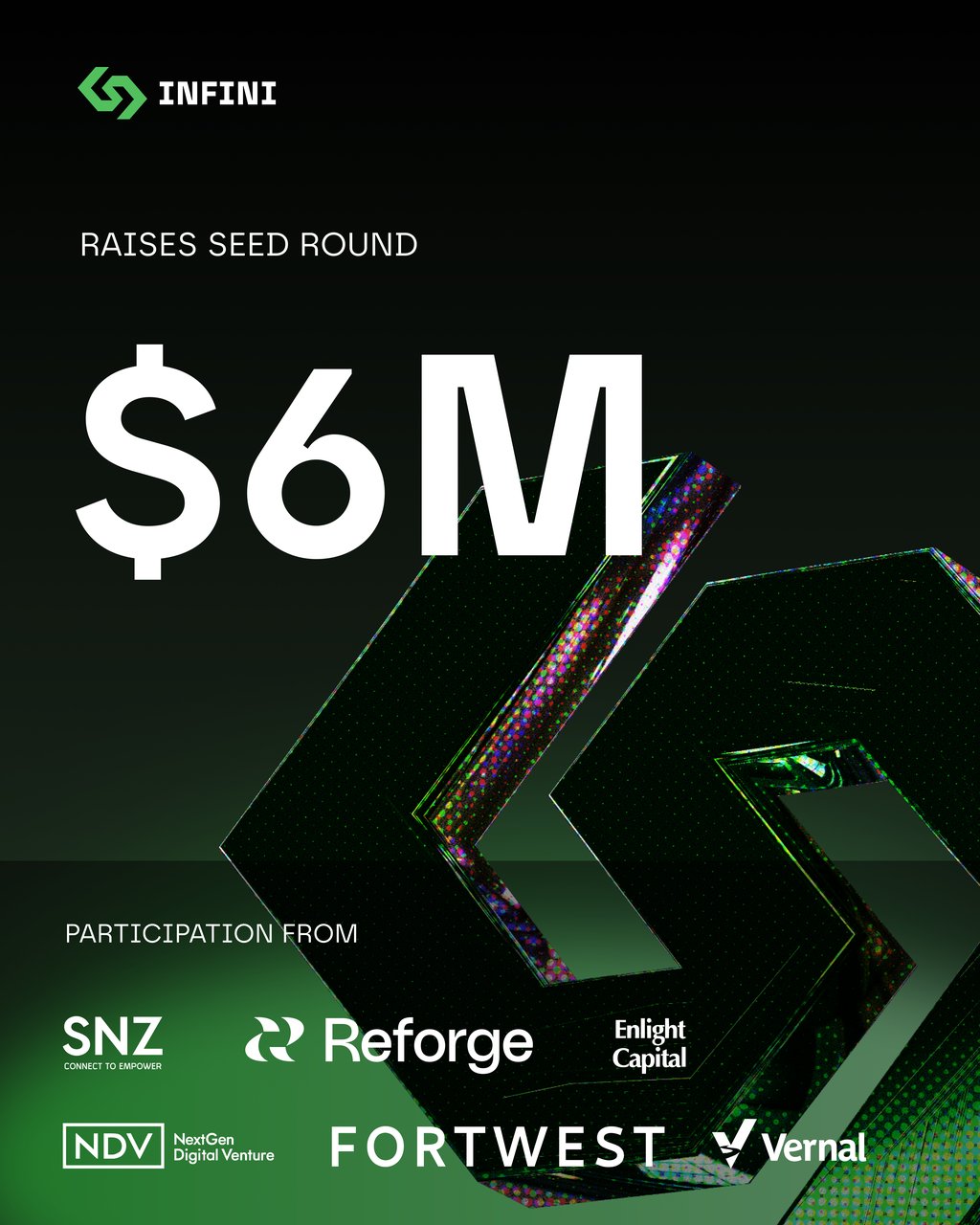
Infini raises $6M seed round to expand global payments and stablecoin infrastructure
Regulatory And Compliance Foundations
From Gray Area To Defined Legal Frameworks
For much of their early history, stablecoins operated in a regulatory gray zone. Issuers offered varying levels of transparency and reserve quality, and regulators struggled to classify tokens as securities, commodities, bank deposits, or something entirely new. This ambiguity constrained institutional adoption, as many banks and large payment providers were reluctant to rely on instruments whose legal status and regulatory obligations were unclear.
That era is rapidly ending. In Europe, the Markets in Crypto-Assets (MiCA) framework has moved from theoretical construct to enforced regulation, establishing clear categories for asset-referenced tokens and e-money tokens, and imposing stringent rules on reserve management, disclosure, and redemption. The result has been a visible restructuring of the European stablecoin market, with exchanges delisting non-compliant tokens and issuers like Circle seeking and obtaining full MiCA compliance for tokens such as USDC and EURC, gaining significant advantages in a market of roughly 450 million people.
In the United States, the proposed GENIUS Act represents the first comprehensive federal framework for payment stablecoins, clarifying who can issue them, how reserves must be managed, and what compliance obligations apply. The Act effectively codifies the fiat-collateralized model—fully reserved, redeemable at par, and auditable—as the gold standard for compliant payment stablecoins. It also seeks to harmonize the regulatory treatment of stablecoins across states, reducing fragmentation and uncertainty for issuers and institutional users.
Industry commentary emphasizes that for the first time, a legal definition of a compliant stablecoin is emerging: a fiat-collateralized, redeemable, and auditable token subject to clear reserve and reporting requirements. The question regulators ask is no longer “Is this legal?” but “Is this specific implementation compliant with the defined model?” This shift has profound implications for infrastructure providers, who must design their systems to support these requirements by default.
MiCA, GENIUS Act, And Jurisdictional Convergence
MiCA and the GENIUS Act, while distinct, share a common trajectory: they legitimize fiat-backed stablecoins as financial instruments while imposing strict conditions on their operation. Under MiCA, issuers must maintain adequately backed reserves, publish regular disclosures, and provide clear redemption rights, with additional requirements for significant tokens that reach systemically important scale. This has already led to a shakeout among stablecoin issuers in Europe, with non-compliant tokens facing delistings and compliant issuers like Circle gaining regulatory endorsements that enhance trust and market share.
The GENIUS Act, meanwhile, is moving through the U.S. legislature with the explicit goal of defining and regulating payment stablecoins at the federal level. It clarifies which entities may issue stablecoins, how reserves must be structured and segregated, and how redemption, disclosure, and supervision should be handled. By codifying the fiat-backed, redeemable, auditable model as the standard, the Act reduces ambiguity around more exotic designs and encourages infrastructure providers to build around a relatively uniform class of compliant stablecoins.
Beyond the U.S. and EU, other jurisdictions are also integrating stablecoins into existing financial licensing frameworks. OSL’s AFSL in Australia allows it to offer stablecoin-related payment and custody services within the regulatory perimeter of an Australian Financial Services Licence, bridging digital assets and traditional finance under familiar rules. In the United Kingdom, Aave’s Push subsidiaries have obtained FCA registration as crypto exchange providers, enabling them to operate stablecoin payment units and other services under UK oversight. Card networks like Mastercard emphasize that their stablecoin settlement capabilities will roll out globally subject to local regulation, with additional regions, partners, and regulated stablecoins expected to be added over time.
While regulatory regimes differ in details, they increasingly converge on three core principles for payment stablecoins: full or near-full reserve backing with high-quality liquid assets, enforceable redemption rights at par, and robust transparency through disclosures and auditable data. This convergence, in turn, shapes the design of stablecoin infrastructure, which must integrate reserve reporting, transaction tracking, and compliance tooling as first-class capabilities rather than afterthoughts.
Compliance Infrastructure As A First-Class Layer
As regulatory frameworks crystallize, compliance infrastructure is becoming a primary locus of innovation and differentiation. The argument that “stablecoin compliance infrastructure cannot wait for regulatory clarity” reflects the reality that by the time rules are fully settled, institutions that have not already built or integrated robust compliance tooling will be at a disadvantage.
On the issuer side, compliance infrastructure must track reserve composition and movements in near real time, documenting the relationship between onchain supply and offchain assets and ensuring that redemption and issuance processes align with regulatory and contractual commitments. For fiat-backed stablecoins, this includes not only total balances but the mix of assets—cash, Treasury bills, repo, and other instruments—that make up the reserves, along with counterparty exposures and maturity profiles. Issuers must be able to demonstrate, on demand, the health and liquidity of their reserve portfolios.
On the user and platform side, compliance infrastructure encompasses KYC/AML, sanctions screening, transaction monitoring, and reporting. Platforms like Trace Finance rely on automated KYC and transaction monitoring for every operation, producing full audit trails that can be reviewed by regulators and partners. Crossmint abstracts compliance workflows for enterprises, allowing them to use its wallet and payout infrastructure while Crossmint handles sanctions screening, fraud detection, and regulatory coordination globally. Circle emphasizes that its stablecoins and payments infrastructure operate under regulated frameworks, enabling institutions to transact with fully reserved, compliant digital currencies without resorting to gray-area workarounds.
Key to all of this is data infrastructure. Because stablecoin transactions, issuance events, and sometimes even reserve-related actions are recorded onchain, the raw data required for compliance and risk management already exists in public ledgers. What is needed is the infrastructure to pull that data into structured, queryable forms that can interface with bank risk systems, regulatory dashboards, and internal controls. Indexing protocols, subgraph providers, and specialized analytics platforms are therefore becoming integral components of the stablecoin infrastructure stack, even for institutions that may not see themselves as “data companies” per se.
As real-world assets become more intertwined with stablecoin reserves and yield strategies, privacy-preserving yet auditable data systems—such as zero-knowledge-enabled databases—will likely play an increasing role. These systems can allow issuers and institutional investors to prove facts about underlying assets, such as compliance with eligibility criteria or adherence to concentration limits, without revealing sensitive details of individual positions. In this way, RWA data infrastructure and stablecoin compliance infrastructure are converging, collectively enabling a more transparent and resilient tokenized financial system.
Stablecoins As Core Financial Infrastructure
Scale And Market Structure
By the metrics that matter for infrastructure—volume, reliability, and integration with other systems—stablecoins have crossed a threshold. The Transak analysis estimates that stablecoins processed roughly \(33\) trillion USD in transaction volume in 2025, up \(72\%\) year-over-year, with about \(9\) trillion USD representing genuine economic activity after adjusting for automated trading and wash transactions. Monthly volumes exceeded \(700\) billion USD by late 2025, with peak months crossing \(1.25\) trillion USD. Circle’s USDC alone facilitated approximately \(18.3\) trillion USD in annual transactions, while Tether’s USDT processed around \(13.3\) trillion USD.
Market capitalization tells a related but distinct story. The total stablecoin market cap grew from roughly \(205\) billion USD in January 2025 to over \(306\) billion USD by year’s end, representing more than one percent of the U.S. dollar money supply in tokenized form on public blockchains. While tweets and headlines sometimes focus on the symbolic threshold of a 322-billion-dollar market “bigger than nations,” the more important story, as observers note, is adoption: stablecoins are being used as payment and settlement infrastructure on a scale that rivals major card networks and remittance providers.
Market structure is also evolving. Fiat-backed stablecoins like USDC, USDT, PYUSD, and SoFiUSD dominate payment-oriented use cases, supported by clearer regulatory treatment and stronger reserve models. Algorithmic and undercollateralized designs have lost favor, particularly in regulated contexts, as policymakers and institutions gravitate toward instruments that can be clearly mapped onto existing prudential frameworks. Within the fiat-backed category, competition increasingly centers on regulatory compliance, reserve transparency, institutional integration, and access to infrastructure such as card settlement networks and bank partnerships.
Most strikingly, stablecoins are becoming invisible infrastructure for many users. As the Transak report notes, by 2025 “most users spent stablecoins without knowing it,” interacting with cards, payout systems, and apps that routed funds through stablecoin rails under the hood. In this paradigm, the token symbol (USDC, USDT, SoFiUSD) and the underlying blockchain (Ethereum, Solana, Arc) matter far less to end-users than the reliability of their balances and the functionality of their apps. Stablecoins recede into the background as plumbing, even as they remain critical to the functioning of payment and settlement flows.
Stablecoins Versus Tokenized Bank Deposits And RWAs
As stablecoins mature into core financial infrastructure, they face both competition and complementarity from related instruments, particularly tokenized bank deposits and real-world assets. Tokenized bank deposits represent digital claims directly on bank balance sheets, rather than on non-bank issuers’ reserves, and may appeal to institutions that prefer exposure to regulated commercial banks over specialized stablecoin issuers. Conversely, stablecoins issued by banks, such as SoFiUSD, blur the line between the two categories, combining bank regulatory oversight with public-chain programmability.
The long-term coexistence of stablecoins and tokenized deposits will likely depend on regulatory frameworks and market preferences. Some regulators may favor tokenized deposits for retail users, given their similarity to traditional bank accounts, while allowing stablecoins to operate as wholesale settlement assets for institutions that can manage the associated risks. Others may push for unified frameworks that treat both as forms of digital money with similar requirements for reserves, disclosures, and supervision.
Real-world assets, meanwhile, intersect with stablecoin infrastructure in two primary ways. First, they can serve as backing for stablecoins themselves—tokenized Treasuries and money-market funds are already used in some reserve portfolios, increasing transparency and potentially enabling new forms of onchain risk management. Second, RWAs represent destinations for stablecoin capital: treasurers and investors may use stablecoins to access tokenized funds, private credit, real estate, and other assets, leveraging the same infrastructure for both payments and investment.
This convergence places new demands on data and compliance infrastructure. For stablecoin reserves, issuers must provide verifiable evidence that RWA holdings meet regulatory criteria and risk constraints, without compromising proprietary information. For investment use cases, platforms must ensure that RWA tokens comply with securities laws, investor restrictions, and jurisdictional rules, while still allowing efficient, programmable interaction with stablecoin capital. Zero-knowledge-enabled data systems, such as zk databases that can attest to facts about underlying assets without revealing raw data, are being developed precisely to address this intersection between privacy, verification, and compliance.
In this sense, stablecoin infrastructure is becoming not only a payment rail but also a routing layer for capital between cash-like instruments and a broadening universe of tokenized financial assets, with RWAs providing yield and risk profiles that complement the transactional stability of stablecoins themselves.
Risks, Failure Modes, And Systemic Considerations
As stablecoins become embedded in financial infrastructure, their risks and potential failure modes take on systemic significance. The most prominent risk is issuer-level: if a stablecoin is not fully reserved, if reserves are held in risky or illiquid assets, or if redemption processes break down, a loss of confidence can trigger runs, depegging, and contagion across markets that depend on the token as a medium of exchange or collateral. Regulatory frameworks like MiCA and the GENIUS Act respond to this by enforcing strict reserve quality, segregation, and disclosure requirements, and by mandating robust redemption rights.
Even fully reserved models must manage liquidity risk. If reserves are invested in instruments that cannot be liquidated quickly during stress—a mismatch between the liquidity of the token and that of the backing assets—issuers may struggle to meet redemptions at par, especially during market turmoil. This is why regulators tend to favor cash and short-dated government securities as reserve assets and scrutinize exposure to longer-duration or riskier instruments. Onchain data can help risk desks monitor issuance and redemption flows, but reserve composition remains partly offchain and reliant on issuers’ disclosures and auditors’ attestations.
Another risk lies in operational and technological failures. Stablecoin infrastructure relies on smart contracts, custody systems, cross-chain bridges, and APIs, any of which can be subject to bugs, hacks, or outages. While public blockchains offer strong security guarantees at the consensus level, higher-layer infrastructure such as bridges and custodial platforms have historically been attractive targets for attackers. Providers like Fireblocks emphasize their security and operational controls, recognizing that failures at the custody or wallet layer can have significant systemic impact if large institutional balances are affected.
Compliance and sanctions risk also loom large. As stablecoins integrate with global payment and banking systems, regulators will expect issuers and infrastructure providers to enforce AML/CFT obligations and sanctions regimes with the same rigor as traditional financial institutions. Failure to do so could result in fines, licensing actions, or restrictions that ripple through the infrastructure stack, affecting users who depend on stablecoins for legitimate business activity. This is why many infrastructure providers invest heavily in KYC, transaction monitoring, and data analytics.
Finally, there is concentration risk. If a small number of stablecoins and infrastructure providers come to dominate cross-border payments, card settlement, and corporate treasury operations, disruptions affecting those tokens or firms could have wide-reaching consequences. Diversification across multiple issuers, networks, and providers may mitigate this, but regulatory regimes will likely need to monitor systemic dependencies as closely as they monitor traditional payment systems and clearinghouses.
Industry observers note that recent downturns in DeFi total value locked (TVL), while painful for speculative projects, can serve as stress tests that highlight the resilience of core infrastructure elements such as stablecoin settlement and tokenized Treasury demand. This suggests that even as speculative layers fluctuate, the underlying stablecoin infrastructure may continue to deepen its role as essential financial plumbing, provided that risks are managed proactively.
- 2025-10milestone
Stripe begins accepting USDC recurring subscription payments
SoFi launches SoFiUSD — first US nationally chartered retail bank stablecoin on a public chain
- 2026-01regulatory
Binance delists USDT under MiCA; USDC share on platform rises from 0.48% to 8.26% YTD
- 2026-03milestone
Stable Summit 2026 convenes in Cannes — first major cross-sector stablecoin policy and infrastructure summit
- 2026-04launch
Standard Chartered, Animoca, and HKT form JV to issue HKD-backed stablecoin under Hong Kong regulatory regime
Rain raises $250M led by ICONIQ at $1.95B valuation, lifting total funding above $338M
Mastercard expands settlement capabilities to include stablecoin (USDC, PYUSD, RLUSD)
- 2026-06regulatory
Stripe's Bridge applies for National Bank Trust Charter to tokenize trillions in stablecoin infrastructure
Conclusion
Stablecoin infrastructure has moved from the periphery of crypto markets to the center of a rapidly evolving global financial system. What began as a mechanism for traders to park funds between volatile assets has grown into a multi-layered stack of blockchains, wallets, banking connections, compliance systems, and institutional networks that collectively enable trillions of dollars in annual payment and settlement flows. This stack is increasingly treated not as experimental technology but as critical financial plumbing that must meet stringent standards for reliability, transparency, and regulatory compliance.
At the asset layer, fiat-backed, fully reserved stablecoins such as USDC, USDT, PYUSD, and SoFiUSD are becoming the dominant models, buoyed by regulatory frameworks like MiCA and the GENIUS Act that define compliant stablecoins as fiat-collateralized, redeemable, and auditable instruments. Their success depends not only on robust reserve design but also on credible governance, transparency, and the ability to integrate into existing financial infrastructures.
At the settlement and network layer, stablecoins operate across a variety of blockchains, from general-purpose platforms like Ethereum and Solana to emerging payment-first L1s like Arc that are optimized for high-throughput, compliance-aware transactions. Multi-chain support, cross-chain transfer protocols, and interoperable data infrastructure are essential to treating this fragmented environment as a coherent global liquidity pool.
Access and custody infrastructure—wallets, custodial platforms, and embedded-wallet solutions—make stablecoins usable for both humans and machines, with products like Circle Wallets, Agent Wallets, Fireblocks, and Crossmint providing secure, programmable interfaces for enterprises, institutions, and AI agents. Banking connectivity and on/off-ramps, exemplified by Trace Finance’s Pix-integrated platform in Brazil, Paga’s African rails, and OSL’s regulated services in Australia, translate onchain settlement into local fiat terms that businesses and consumers can readily understand.
Compliance and data infrastructure has emerged as a critical pillar, transforming publicly available onchain data into structured, auditable information that satisfies regulators, auditors, and risk managers. Platforms that embed automated KYC, AML, sanctions screening, and transaction monitoring—like Trace, Crossmint, and Circle—enable institutions to adopt stablecoins without creating parallel compliance silos. As real-world assets increasingly intersect with stablecoin reserves and yield strategies, verifiable data systems and zero-knowledge proofs are becoming important tools for balancing privacy with regulatory transparency.
Case studies from Circle, Trace Finance, Crossmint/Paga, SoFi, OSL, Aave, and Bakkt illustrate how diverse the stablecoin infrastructure ecosystem has become, spanning payment networks, emerging-market banking rails, wallet platforms, bank-issued stablecoins, regulated exchange infrastructure, and AI-oriented services. At the same time, major card networks like Mastercard and Visa are incorporating regulated stablecoin settlement into their core operations, signaling that stablecoins are no longer a peripheral experiment but an integral part of global settlement architectures.
The scale of this transformation is already visible in the numbers. With tens of trillions of dollars in annual volume, hundreds of billions in market capitalization, and growing integration across payments, remittances, card settlement, treasury operations, and trading, stablecoins are emerging as a new foundational layer of financial infrastructure. While risks remain—in reserve management, operational security, compliance enforcement, and systemic concentration—the direction of travel is clear: stablecoin infrastructure is becoming one of the most important arenas in the future of digital finance.
Outlook
Looking ahead, stablecoin infrastructure is likely to deepen and broaden its role in both onchain and traditional finance. Regulatory frameworks such as MiCA and the GENIUS Act will continue to shape market structure, reinforcing fiat-backed, fully reserved models while pushing issuers toward higher standards of transparency, governance, and risk management. As compliant stablecoins solidify their legal status, more banks and regulated institutions are expected to launch or integrate stablecoins—following the example of SoFiUSD and OSL—blurring the line between traditional bank money and tokenized digital dollars.
On the technology front, payment-first Layer 1s and interoperability protocols will aim to reduce friction in stablecoin flows, enabling faster, cheaper, and more predictable transactions while embedding compliance hooks at the network level. Card networks like Mastercard and Visa are likely to expand their stablecoin settlement capabilities to additional regions, partners, and regulated tokens, making stablecoin-based settlement a standard option in the global card ecosystem rather than a limited pilot. As this happens, billions of consumer and merchant transactions could rely on stablecoin rails without users ever needing to hold or recognize tokens directly.
For enterprises, stablecoin infrastructure will increasingly be framed as a strategic choice rather than an optional experiment. Firms will need to decide where stablecoins outperform legacy rails, whether to issue their own tokens, integrate third-party infrastructure, or partner with banks and networks that provide stablecoin-based settlement and treasury services. With stablecoin volumes expected to reach \(50\) trillion USD by 2030, the opportunity cost of ignoring this infrastructure will grow.
Finally, as AI agents and machine-to-machine finance mature, the programmable, always-on nature of stablecoin rails and agent-specific wallets will become more important, turning tokenized dollars into native money for autonomous systems. Although AI-related flows remain a tiny fraction of overall stablecoin volume today, the infrastructure being built—wallets, APIs, compliance layers—appears well-positioned to support this emerging domain.
In sum, stablecoin infrastructure is transitioning from cutting-edge crypto experiment to foundational financial plumbing. The players that can combine robust regulation, resilient technology, seamless user experiences, and deep integration with existing financial systems are likely to become the “payment rails of the internet,” quietly moving value beneath the surface of everyday economic life.
Latest Stablecoin Infrastructure news
Sources
18 records from 15 domains
pulse2.com
fireblocks.com
circle.com
tradingview.com
mastercard.com
tracefinance.com
crossmint.com
x.com
nevermined.ai
thegraph.com
transak.com
investors.sofi.com
pkriaris.substack.com
seekingalpha.com
bitcoinfoundation.org
Community notes
Spot something off or out of date? Drop a note. Editors review topic notes daily and roll accepted fixes into the explainer — contributors are recognized in the monthly $SQUID drop.
Loading notes…
Help improve this topic
Have a story or tip about this topic? Submit it. See something missing? Leave a note. Editors review daily; accepted submissions and fixes count toward the monthly $SQUID drop.