
A neutral explainer on Cosmos: how IBC, IBC Eureka, EVM support and appchains enable interoperability, plus ATOM inflation reform, USDC standardization, dYdX, security incidents and exchange suspensions.
+8 sources across the wider coverage universe
 Cosmos SDK v0.54.4 ships state-breaking security fixes, urges chains to coordinate upgrades immediately2026-07
 Cosmos Labs acquires Mintscan as Korea unit stewards Skip:Go, IBC Eureka, and Hub roadmap2026-06
 Cosmos Labs snaps up Mintscan and centralizes core infrastructure with new Korea arm, raising ecosystem concentration risks2026-06
 Secret Network proposes SCRT move to Arbitrum on September 1, 2026 as SCRT Labs drops Cosmos L1 support2026-07
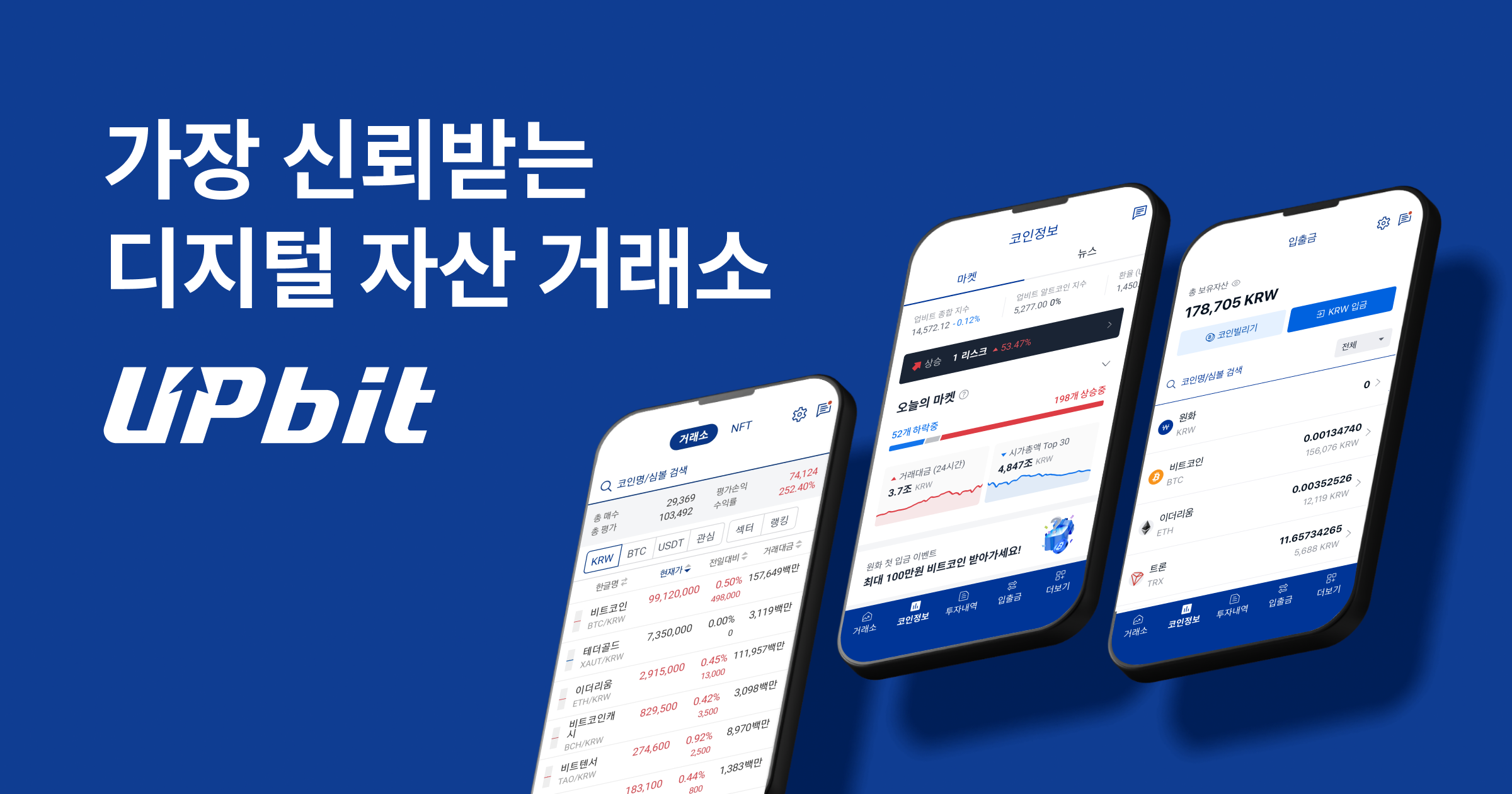 Upbit suspends ATOM deposits, withdrawals, and staking applications from July 8 for Cosmos Hub upgrade2026-07
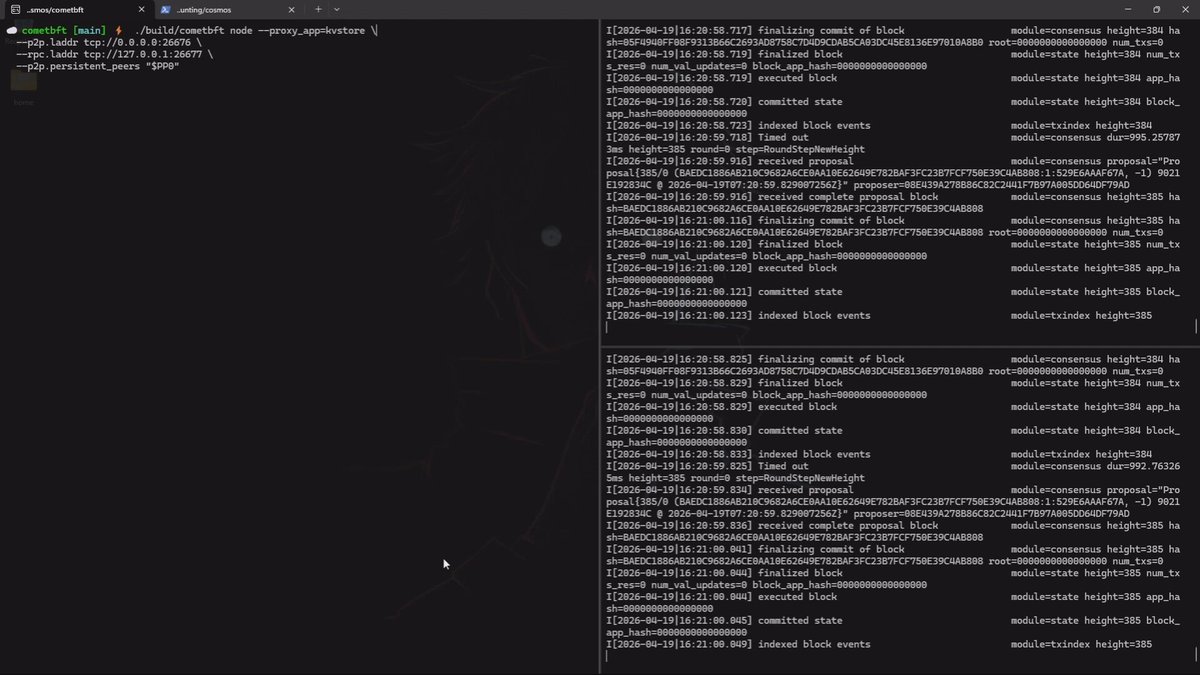 Security researcher Doyeon Park disclosed a 0-day vulnerability in the Cosmos consensus layer. It is a CVSS 7.1 severity issue that can cause nodes to stall during the block synchronization phase.2026-04
An open-source ecosystem of independent, application-specific blockchains designed to communicate through a shared interoperability standard, often described by its backers as the "Internet of Blockchains." Rather than hosting many applications on one chain, this model gives each project its own sovereign chain that can still move tokens and data to every other chain in the network.
What the project actually is
The architecture rests on three pieces of software. The Cosmos SDK is a modular framework for building proof-of-stake blockchains in Go. CometBFT (the successor to Tendermint Core) provides the consensus and networking layer. And the Inter-Blockchain Communication protocol (IBC) is the messaging standard that lets these independently operated chains transfer assets and arbitrary data between one another (Cosmos.network). Chains built with this stack are frequently called "appchains" because each is purpose-built for a single application or vertical.
This design philosophy contrasts with monolithic smart-contract platforms. On Ethereum, thousands of applications share one execution environment and compete for the same blockspace. In this ecosystem, a decentralized exchange, a lending market, or a stablecoin issuer can each run its own chain, tune its own parameters, choose its own validator set, and govern itself, while still tapping shared liquidity through IBC. As of 2026, well over 50 chains have integrated IBC, including Osmosis, Injective, and dYdX (CoinMarketCap).
The native asset of the flagship chain, the Cosmos Hub, is ATOM. It is used to pay fees, secure the Hub through staking, and vote in on-chain governance.

Cosmos Hub validators halt network to contain ATOM losses from Neutron governance exploit

How interoperability works: IBC and IBC Eureka
IBC is the technical heart of the network. It is a trust-minimized protocol that uses light clients—compact, verifiable records of another chain's state—so that two chains can confirm each other's activity without relying on a custodial intermediary. That distinguishes it from many cross-chain bridges, which historically depend on a small multisig or a centralized operator.
The most consequential recent upgrade is IBC Eureka, which launched on April 10, 2025 and extends IBC connectivity beyond the family of Cosmos SDK chains to Ethereum and other ecosystems (CoinDesk). Eureka is built from three components: IBC v2, the Skip:Go routing and execution layer, and the Cosmos Hub itself. Its stated goal is one-click, low-cost transfers between Ethereum and Cosmos chains (Stakely). Networks already wired into Eureka include Babylon Genesis, the Bitcoin liquid-staking projects Lombard and Lorenzo, Injective, dYdX, and MANTRA, with Solana, Base, and Arbitrum slated to follow (StakeCito).
The integration push matters because interoperability is only as useful as the destinations it reaches. Connecting to Ethereum's much larger pool of liquidity and stablecoins is the practical bet behind Eureka, and the published 2026 roadmap targets IBC general message passing, interchain fungible tokens, and broader EVM and layer-2 support over the course of the year (Cosmos.network).
Cosmos readers are drawn to existential friction — every top click is about whether ATOM can hold the center of an ecosystem that keeps fragmenting outward through IBC, appchains, and defecting teams.
EVM compatibility and the appchain DeFi stack
For years the ecosystem's DeFi activity ran on bespoke Cosmos SDK modules and CosmWasm smart contracts rather than the Ethereum Virtual Machine. That created a developer-onboarding gap: the largest pool of Solidity engineers and audited contracts could not deploy here without rewrites. The stack's direction has shifted toward first-class EVM support, letting teams run Ethereum-style execution environments as appchains while retaining IBC connectivity. Injective, for example, operates an EVM-compatible layer, and EVM and layer-2 expansion sit explicitly on the 2026 roadmap.
The DeFi landscape is anchored by a handful of established chains. Osmosis serves as the ecosystem's main automated-market-maker exchange and liquidity hub. Injective focuses on order-book-based trading and derivatives. dYdX migrated from an Ethereum layer-2 to its own standalone Cosmos chain to gain full control over its order book and matching engine—one of the most-cited examples of the appchain thesis in practice. The recurring tradeoff is liquidity fragmentation: spreading activity across dozens of sovereign chains means IBC and routing layers like Skip:Go must do the work that a shared execution layer would otherwise handle automatically.
Stablecoins: USDC and a canonical standard
Stablecoin settlement is central to any serious DeFi ecosystem, and the question of which USDC representation counts as canonical has been a long-running friction point. When the same dollar token exists in multiple bridged forms across chains, liquidity splinters and users face confusing, non-fungible balances. Recent coverage indicates a move to standardize on a single canonical stablecoin across major venues, with reporting that an Injective-issued USDC would be adopted as a shared standard across Cosmos and dYdX. Native USDC issuance by Circle, combined with IBC transfer, is the cleaner long-term path, and Eureka's Ethereum connectivity makes native USDC routing more practical than the older lock-and-mint bridge model.
The strategic logic is straightforward: a single canonical USDC reduces fragmentation, simplifies integration for wallets and exchanges, and makes the ecosystem more legible to institutions evaluating it for tokenized assets.
- 01ATOM tokenomics overhaul
The inflation-cap governance vote drew near-record turnout and directly cut staking yield, making it the single most concrete economic event affecting every ATOM holder.
- 02dYdX Cosmos migration
A flagship DeFi protocol betting its scaling future on a Cosmos appchain validated the IBC thesis while signaling dissatisfaction with EVM L2s.
- 03IBC stablecoin expansion
Native USDC and USDY launching on Noble showed that institutional-grade dollar liquidity was finally entering Cosmos, resolving a long-standing gap versus EVM chains.
- 04ICF governance and leadership crisis
A no-confidence vote over fund mismanagement and a co-founder's North Korea security allegations pointed to deep structural trust problems at the protocol's core steward.
- 05Interchain infrastructure consolidation
ICF acquiring Skip and Cosmos Labs absorbing Mintscan raised concentration alarms — the supposedly decentralized stack was quietly being recentralized under a few entities.
- 06Ecosystem urgency and survival window
Zaki Manian's public '8-9 months' warning crystallized a widespread sentiment that Cosmos had a closing window to differentiate before losing relevance.
Security: bridges, consensus bugs, and recent incidents
Cross-chain infrastructure is a high-value attack surface, and the ecosystem has absorbed several recent shocks. The Gravity Bridge—a long-standing Cosmos-to-Ethereum bridge distinct from IBC Eureka—halted operations after roughly $5.4 million was drained in what researchers describe as a suspected validator key compromise. The incident is a reminder that not all "cross-chain" mechanisms share IBC's light-client security model; classic multisig bridges remain a recurring weak point industry-wide.
Separately, security researcher Doyeon Park disclosed a zero-day in the consensus layer rated CVSS 7.1, capable of stalling nodes during block synchronization. Consensus-layer bugs are particularly sensitive because the same core software secures many chains at once; the published framing noted that 150-plus businesses rely on the network to secure tens of billions of dollars in tokenized assets, raising the stakes for any release. On the application side, the Saga team raced to deploy an ICS-20 patch to close an exploit on SagaEVM. None of these are unique to one ecosystem—bridge hacks and consensus bugs affect the whole industry—but they underscore why security audits increasingly drive institutional adoption decisions.
Exchange suspensions and wallet consolidation
Holders have repeatedly encountered ATOM deposits and withdrawals being suspended around network upgrades. Exchanges including Upbit paused ATOM transfers across several dates in early 2026, typically to avoid fund loss during chain halts or hard-fork transitions ([newsroom coverage]). These suspensions are routine operational caution rather than a sign of protocol failure, but they are a real friction point for users and are worth understanding: during a coordinated upgrade window, sending tokens can risk loss, so custodians freeze movement until the new chain version is confirmed stable.
The wallet layer has also been consolidating. Leap Wallet, a widely used interface for the ecosystem, announced it would cease operations on May 28, urging users to migrate. Consolidation extends to core infrastructure too: in June 2026, Cosmos Labs acquired the Mintscan product suite—the ecosystem's primary block explorer—along with 15-plus team members, forming a Cosmos Labs Korea arm that now stewards Mintscan, Skip:Go, and IBC Eureka under one maintainer (Cryptopolitan). The move centralizes critical tooling and targets South Korea's large retail market, but it also concentrates explorer, routing, and interoperability infrastructure under a single organization—raising governance and single-point-of-failure questions that the ecosystem's decentralized ethos was meant to avoid.
- 2023-06launch
dYdX Cosmos testnet launch with sub-2s block times
- 2023-07milestone
Native USDC launches on Cosmos via Noble and CCTP
- 2023-08launch
dYdX V4 open-source code released ahead of appchain launch
- 2023-09governance
Prop 848: ATOM inflation capped at 10%, staking yield cut to 13.4%
- 2023-10governance
Jae Kwon alleges North Korean developers in liquid staking module via Zaki Manian
- 2024-02governance
ICF no-confidence vote over fund mismanagement; Brian Fabian Crain exits as president
- 2024-05milestone
ICF acquires Skip; Interchain Inc. launched to unify ecosystem stack
- 2024-11milestone
Cosmos Labs acquires Mintscan, raising ecosystem concentration concerns
Tokenomics and the inflation debate
ATOM's monetary policy is the ecosystem's most contested governance topic. The Cosmos Hub has historically used a variable inflation model: the annual issuance rate floats between roughly 7% and 20%, adjusting to push the staking ratio toward a target (CoinMarketCap). When fewer tokens are staked, inflation rises to incentivize staking; when more are staked, it falls. The mechanism secures the chain, but it also means circulating supply grows continuously, creating persistent sell pressure that critics blame for ATOM's price underperformance.
A multi-month reform effort, with analytics firm Gauntlet among the contributors, proposes replacing the staking-driven model with a fee-driven one—tying issuance to actual network revenue and adding 3-, 6-, and 12-month lock-based staking multipliers that reward longer commitments with 25%, 50%, and 100% higher yields respectively (CryptoRank). The stated aim is to reposition ATOM as a "revenue token for the enterprise era." Importantly, this remains a proposal, not a ratified protocol change; governance disputes, low turnout, or implementation delays could dilute or postpone it (Bitget).
Enterprise positioning and partnerships
Beyond retail DeFi, the ecosystem is courting institutional and enterprise use. Cosmos has joined the United Nations Development Programme's Blockchain Advisory Group, a 26-member body exploring blockchain for development challenges, and entered Mastercard's Crypto Partner Program to explore digital-asset integrations. Industry commentary increasingly frames Cosmos against Canton and Hyperledger Fabric as enterprise-grade ledger options, each reflecting different philosophies about how financial infrastructure should be architected. The pitch to institutions leans on sovereignty and customizability—an enterprise can run a permissioned or semi-permissioned appchain tuned to its compliance needs while retaining the option to connect outward via IBC.
Outlook
The ecosystem's near-term trajectory hinges on whether two bets pay off: that IBC Eureka and EVM support can pull Ethereum-scale liquidity and developers into an appchain world, and that the proposed tokenomics overhaul can give ATOM a durable value proposition beyond inflationary staking rewards. Working against that are real headwinds—bridge and consensus security incidents, exchange suspensions during upgrades, wallet shutdowns, and the irony of an interoperability network centralizing core infrastructure under a single Korea-based maintainer. The technology's interoperability story is maturing into one of the most credible in the industry; the open questions are economic sustainability, security hardening, and whether decentralization survives the consolidation. Readers should treat the inflation reform as a proposal in motion rather than settled policy, and watch upgrade calendars closely before moving ATOM on exchanges.
Latest Cosmos news
Community notes
Spot something off or out of date? Drop a note. Editors review topic notes daily and roll accepted fixes into the explainer — contributors are recognized in the monthly $SQUID drop.
Loading notes…
Help improve this topic
Have a story or tip about this topic? Submit it. See something missing? Leave a note. Editors review daily; accepted submissions and fixes count toward the monthly $SQUID drop.