
Comprehensive explainer on the Ethereum Virtual Machine (EVM), covering how it works, why it became the smart contract standard, its multichain expansion, zkEVMs, account abstraction, privacy, DeFi use, and key trade-offs shaping its future.
+13 sources across the wider coverage universe
 Sei v6.4 launches with ability to disable inbound IBC transfers in EVM-only push2026-04
 Evm.now hoists sails with open-source EVM framework, conquering new seas of scalability and consensus2026-04
 LitVM LiteForge testnet launches, bringing EVM smart contracts, DeFi, and Web3 to Litecoin for the first time.2026-04
 Sei to disable inbound IBC in SIP-3 EVM-only transition, warns Wormhole WETH holders to bridge out2026-04
 Tempo ships Zones on testnet: private EVM chains running parallel to mainnet for enterprise stablecoin payments2026-04
 ChainConnect bridge loses $650K after unauthorized access drains contracts across four EVM chains in 23 transactions2026-07
EVM: The Ethereum Virtual Machine and Its Expanding Multichain Ecosystem
The Ethereum Virtual Machine, or EVM, is the execution environment that runs Ethereum smart contracts and keeps a consistent state across thousands of nodes, forming the backbone of the network’s programmable “world computer.” As more blockchains adopt EVM compatibility, this virtual machine has evolved from a single-chain runtime into a de facto standard that underpins a growing, interconnected multichain ecosystem.
Introduction: Why the EVM Matters
Understanding the EVM is increasingly essential for anyone following crypto markets, decentralized finance (DeFi), and blockchain infrastructure. On a technical level, the EVM defines how smart contract code is executed, how state is updated, and how gas fees are measured and charged across Ethereum and EVM-compatible networks. On a market level, it is the common denominator for the majority of DeFi protocols, NFT marketplaces, and on-chain financial primitives, which is why many new layer 1 and layer 2 networks now launch with EVM support or add it shortly after genesis.
This standardization has important practical consequences. Developers can write smart contracts once in Solidity or other EVM-targeting languages and deploy them across many chains with minimal changes, while users can interact with those contracts through familiar wallets and interfaces. Stablecoins such as USDC, which is natively issued on dozens of networks, increasingly treat EVM chains as interchangeable settlement layers, stitched together by cross-chain protocols and messaging standards. The EVM therefore sits at the intersection of three major stories in crypto: the growth of Ethereum, the expansion of EVM-compatible chains, and the rise of cross-chain infrastructure connecting EVM and non-EVM environments such as Solana and Aptos.
From a news perspective, the EVM is no longer just about Ethereum mainnet. Recent developments include the launch of Injective’s native EVM mainnet, supported by Coinbase’s migration of INJ from Ethereum ERC‑20 to the Injective EVM, the rollout of Flow EVM alongside Flow’s original Cadence virtual machine and its integration into Dune’s analytics platform, and the arrival of Litecoin’s first EVM rollup, LitVM, which opens a 14‑year‑old network to DeFi activity. At the same time, upgrades such as IoTeX’s Pectra-compatible hard fork bring Ethereum’s latest EVM changes, including account abstraction, to alternative chains, while networks like Sei and Sonic focus on tuning their EVM-compatible stacks for high throughput and low latency.
Against this backdrop, this explainer aims to unpack what the EVM is, how it works, why it has become a common standard for smart contract platforms, and what its evolution means for developers, institutions, and everyday users in the broader crypto economy.

Sei v6.4 launches with ability to disable inbound IBC transfers in EVM-only push
Sei v6.4 is live on mainnet, adding protocol-level capability to block inbound IBC transfers — though it won't activate until a separate governance proposal passes. The upgrade advances SIP-3, the May 2025 community proposal to deprecate CosmWasm and all native Cosmos functionality in favor of an EVM-only architecture. Users holding Cosmos-native assets like ATOM, USDC.n, or Kava USDT on Sei should swap to EVM equivalents or bridge back to origin chains before governance flips the switch. Future releases will also disable outbound IBC transfers and remove Sei's native oracle.
What Is the Ethereum Virtual Machine?
At its core, the Ethereum Virtual Machine is a decentralized computation engine that defines the rules for executing smart contract code and changing the shared state of the Ethereum network. Every node in Ethereum runs an implementation of the EVM, and when a transaction is included in a block, each node independently executes the same sequence of EVM instructions and updates its local state accordingly. Because all honest nodes must arrive at the same result, the EVM is designed to be deterministic: given the same starting state and transaction, every node will compute the same outcome.
The EVM is often described as a quasi–Turing-complete state machine. In practical terms, this means that it can run arbitrary computations expressed as sequences of low-level opcodes, provided the computation stays within resource limits enforced by gas. Gas is a unit that measures the computational cost and storage impact of each operation, and users pay for gas in the network’s native currency (ETH on Ethereum, but different tokens on other EVM-compatible chains). This gas model serves several purposes at once: it prevents denial-of-service attacks by making very expensive computations costly, it ensures that miners or validators are compensated for executing transactions, and it provides a clear pricing mechanism for blockspace.
Conceptually, the EVM maintains a global state consisting of accounts, their balances, and any code and storage associated with smart contracts. Each transaction triggers a state transition: starting from an initial state, the EVM executes the transaction’s instructions (and any internal contract calls they trigger), and ends in a new state if execution completes successfully or reverts back to the previous state if execution fails. This state machine model is explicit in Ethereum’s formal specification and is what allows different EVM implementations to remain interoperable while maintaining consensus.
While the EVM originated on Ethereum, its specification and execution model have been adopted by many other blockchains, which run their own versions of the EVM but maintain their own consensus and native tokens. These EVM-compatible chains reuse the EVM’s instruction set and gas semantics, allowing them to support the same smart contract languages and tools as Ethereum. This “EVM standard” has arguably become the dominant smart contract runtime in crypto, even as alternative virtual machines like Solana’s Sealevel or Flow’s Cadence environment pursue different performance and programming models.
Leviathan readers click EVM content not to understand Ethereum itself but to track the race to clone, optimize, or replace it — attention concentrates on which new EVM-compatible L1 is winning TVL and developer incentives, and whether ZK-proofs or RISC-V will make the original runtime obsolete.
How the EVM Works Under the Hood
To understand how the EVM executes a transaction, it is useful to look at its building blocks: accounts, the stack-based architecture, and gas metering. On Ethereum and other EVM-compatible chains, there are two main account types: externally owned accounts (EOAs), which are controlled by private keys, and contract accounts, which are controlled by deployed smart contract code. EOAs are the source of transactions; they sign messages specifying recipients, value transfers, and optional data fields that can trigger contract functions. Contract accounts do not initiate transactions themselves; instead, their code runs in response to calls from EOAs or other contracts.
The EVM itself is a stack-based virtual machine, meaning it uses a last-in-first-out stack to store intermediate values during execution. Smart contract bytecode is compiled from higher-level languages like Solidity into a sequence of opcodes, each of which manipulates the stack, memory, or storage. For instance, arithmetic operations pop operands from the stack and push results back, while storage operations write persistent data to a contract’s storage trie. This design makes the EVM relatively simple to implement and reason about formally, which is one reason it has been reimplemented on many chains and used as a target for verification efforts.
Execution is constrained by gas, which is specified in the transaction and consumed as opcodes are executed. Each opcode has a fixed or context-dependent gas cost, and if the computation runs out of gas before completing, the EVM halts and reverts the state changes, while still consuming the provided gas as a fee. This creates a hard upper bound on how much computation a single transaction can perform and allows miners or validators to prioritize transactions based on gas price and local fee policies. On Ethereum, fee mechanics were further refined by EIP‑1559, which introduced a dynamically adjusting base fee and optional priority tips, but the core role of gas as a metering mechanism remains consistent across EVM implementations.
The EVM’s execution model introduces several important security properties and constraints. Because code execution is deterministic and resource-bounded, and because smart contract state is transparent and globally replicated, complex financial logic can be executed in a way that is auditable and resistant to unilateral tampering by any single party. However, this model also exposes developers and users to new risks. Contracts are immutable once deployed, barring upgrade patterns that introduce their own complexity, and bugs in smart contract code can lead to irreversible loss of funds. The EVM’s low-level semantics and gas costs also make it easy to introduce subtle vulnerabilities if contracts are not carefully designed and audited. These trade-offs have shaped the evolution of tooling, formal verification, and better abstractions around the EVM, which we will return to later.
From Single Chain to EVM Standard: Ethereum and Beyond
When Ethereum launched, the EVM was tightly tied to a single blockchain and its mainnet was the sole production environment where EVM smart contracts could run. Over time, however, the EVM specification proved portable, and other projects began to reimplement it as an execution layer on top of different consensus engines and networking stacks. This gave rise to EVM-compatible layer 1s and sidechains, as well as EVM-enabled rollups and appchains, all able to run Solidity contracts and integrate with the existing Ethereum developer toolchain.
On Ethereum itself, the EVM is central not only to mainnet but also to the ecosystem of layer 2 rollups that use Ethereum for settlement and security. Many optimistic rollups and zero-knowledge rollups implement an EVM-equivalent or EVM-compatible execution environment so that contracts can be deployed with minimal modifications. In the zk-rollup space, zkEVMs aim to faithfully emulate Ethereum’s EVM semantics while generating zero-knowledge proofs that attest to the correctness of batched transaction execution. Instead of every Ethereum node re-executing all L2 transactions, Ethereum verifies succinct proofs that the EVM state was updated correctly on the rollup, extending EVM semantics into a more scalable architecture.
Parallel to this, multiple layer 1 blockchains have adopted EVM compatibility as a strategy to attract developers and liquidity. EVM-compatible blockchains are those that support the Ethereum Virtual Machine specification, allowing developers to deploy Solidity smart contracts and reuse tools such as Hardhat, Foundry, ethers.js, and wagmi across chains. This means that a project originally written for Ethereum can expand to new networks quickly, often by redeploying contracts with minimal or no code changes. Networks ranging from generalized layer 1s to specialized DeFi or gaming chains have embraced this model, turning the EVM into a shared execution standard that spans many distinct ecosystems.
Recent network updates illustrate how dynamic this EVM landscape has become. Injective, originally known for its derivatives-focused chain, has launched a native EVM mainnet on the Injective network, with Coinbase supporting the migration of INJ from Ethereum’s ERC‑20 token format to native INJ on the Injective EVM. This move positions Injective to host Ethereum-style smart contracts natively, while integrating them with its existing order book and DeFi infrastructure. Meanwhile, the Sei network has focused its Giga upgrade on higher throughput, faster block times, and quicker finality, enabling its EVM to support high-volume applications such as trading and agentic finance protocols. These examples show how EVM compatibility is being combined with custom base-layer designs to pursue different performance niches.

Evm.now hoists sails with open-source EVM framework, conquering new seas of scalability and consensus
Multichain EVM: New Hosts, New Designs
The spread of EVM compatibility has led to diverse host environments that pair the EVM with different consensus mechanisms, data models, and additional virtual machines. Flow provides an illustrative case: the Flow network, originally built around its own resource-oriented language Cadence, now runs two virtual machines side by side, with both Cadence and Flow EVM fully indexed by analytics platforms such as Dune. Cadence remains the main execution environment, optimized for safe, asset-centric programming, while Flow EVM offers Ethereum-style smart contract support secured by Flow’s fast block production and finalization. This dual-VM design allows Flow to maintain its distinct programming model while tapping into the EVM developer base and tooling ecosystem.
Other chains are coupling EVM compatibility with specialized infrastructure. Sonic, a next-generation layer 1 blockchain built by the Fantom team, uses the Fantom Virtual Machine (FVM), a highly optimized EVM-compatible execution environment engineered to deliver sub-second finality and over 10,000 transactions per second without relying on sharding. This FVM retains EVM compatibility while tuning the implementation for high throughput and low latency, and Sonic complements this with an innovative fee distribution model that directs a large share of gas fees to developers rather than only validators or fee burns. Such design choices demonstrate how EVM semantics can be preserved even as economic incentives and performance characteristics diverge substantially from Ethereum mainnet.
EVM rollups are also extending the standard to older chains. LitVM, a trustless EVM rollup endorsed by the Litecoin Foundation, is built on Arbitrum Nitro and uses Succinct’s SP1 zero-knowledge virtual machine for validity proofs along with BitcoinOS’s Grail Bridge for trustless LTC transfers. Its LiteForge testnet is live, effectively opening Litecoin to DeFi protocols, yield markets, and tokenized assets using EVM smart contracts for the first time. In this architecture, the EVM runs as a rollup environment rather than directly on Litecoin’s base layer, yet from a developer’s perspective, it is still an EVM chain with familiar semantics.
Enterprise-focused and privacy-enhanced environments are likewise adopting EVM semantics. Horizen has restructured as an OP Stack blockchain on Base, centering its architecture around compliant privacy infrastructure, EVM composability, and trusted execution environment (TEE) backed confidential compute. This combination is designed to offer developers the programmability and composability of EVM smart contracts while layering on hardware-based confidentiality guarantees, allowing more privacy-sensitive applications to operate within a regulated framework. Similarly, Tempo, a payments-focused layer 1, has introduced Tempo Zones, which are private EVM chains running parallel to its mainnet and designed for enterprise stablecoin transactions. These zones allow businesses to run private, EVM-based payment rails that still interoperate with a public base chain when needed.
Finally, institutional and regulated networks are experimenting with EVM integration in their own ways. On the Canton Network, every EVM transaction on Zenith routes through Canton's Global Synchronizer as native network activity, contributing to a burn–mint equilibrium that governs the network’s token supply. This design ensures that EVM-based activity is fully integrated into the network’s economic and governance model, rather than treated as an external add-on. Together, these developments underscore that “EVM-compatible” no longer describes a monolithic category; instead, there is a spectrum of EVM-based environments, from public, permissionless chains to highly specialized, private, or regulated networks.
- 01New EVM L1 competition↗
Sonic, Hyperliquid, Berachain, and Converge each launched EVM-compatible chains with distinct differentiation — points programs, native perp DEX integration, Proof-of-Liquidity, and institutional KYC rails — and readers followed the TVL and developer mindshare race.
- 02ZK-EVM and post-EVM roadmap↗
Vitalik's enshrined ZK-EVM proposal and the RISC-V 10,000 TPS pitch put a credible end-date on the current EVM design, pulling readers who want to know what the execution environment looks like in five years.
- 03Developer tooling depth↗
Paradigm's Rivet wallet, the Flood load-testing framework, and a Vyper compiler memory deep dive each attracted builders hungry for actionable, low-level technical content unavailable in surface-level coverage.
- 04Cross-chain EVM abstraction
Frax on NEAR via Rainbow Bridge, Enso's single-transaction LP migrations across any EVM chain, and MetaMask Snaps extending to non-EVM networks showed readers tracking whether EVM compatibility would become a universal runtime rather than an Ethereum-specific property.
- 05EVM performance and parallelization↗
Sonic's 720ms finality, Sei's parallelized execution engine, and the RISC-V throughput comparison drew readers benchmarking whether EVM throughput limits are an engineering problem or a fundamental design ceiling.
- 06Institutional EVM infrastructure
Securitize and Ethena's Converge chain and Integral's PrimeOne prime broker on Codex L1 signaled that regulated capital is selecting EVM-compatible infrastructure, making compliance-grade EVM a distinct competitive product category.
Developer Experience: Languages, Tooling, and Analytics
The EVM’s rise is tightly linked to the tooling and languages built around it. Solidity remains the most widely used language for EVM smart contracts, but the ecosystem has grown to include alternatives such as Vyper, as well as domain-specific languages that compile down to EVM bytecode. EVM-compatible blockchains emphasize that developers can reuse their Solidity skills and Ethereum tooling across different chains, citing the ability to deploy via frameworks like Hardhat and Foundry and to interact with contracts using libraries such as ethers.js and wagmi. This portability lowers switching costs and encourages multi-chain deployments, reinforcing the EVM standard.
On the infrastructure side, wallet providers and smart account frameworks have become foundational. Safe, for instance, has developed a smart account system built as a contract layer deployed and verifiable on each supported EVM chain, accompanied by the Safe{Core} SDK and a transaction service that orchestrates batched approvals and executions. This architecture allows users and organizations to operate multi-signature and modular smart accounts across many EVM networks with consistent semantics. Safe’s growing footprint, including significant DeFi volumes and widespread use in treasury management, illustrates how account-level abstractions can sit on top of the EVM to provide a more flexible security model than single-key EOAs.
Analytics and observability tooling have also expanded to keep pace with the multichain EVM ecosystem. Dune’s integration of Flow means analysts can now query data across both Flow EVM and Cadence, from transactions and contract deployments to DeFi usage and growth, using a single interface. This kind of multi-VM, multi-chain analytics platform reflects the reality that many protocols now operate across various EVM and non-EVM environments and need a unified view of user behavior, liquidity flows, and application performance. On the developer side, AI-assisted integrated development environments, simulation tools, and automated testing frameworks are emerging to reduce the cognitive load of building and auditing complex EVM-based systems.
Security-oriented tooling is becoming particularly important as EVM deployments proliferate. Transaction simulation and validation APIs, such as those used by aggregators and DeFi protocols, now run “dry runs” of EVM transactions to predict execution outcomes, detect transaction tampering, and surface potential failures before a user signs a transaction. These systems aim to protect users from issues like inaccurate swap quotes, unexpected reverts, or malicious approvals by analyzing transactions at the EVM bytecode level. In parallel, DEX aggregators are rolling out smart settlement and more resilient routing that accounts for MEV, just-in-time liquidity, and other adversarial dynamics specific to EVM-based markets, seeking to deliver higher realized swap outputs and fewer failed trades.
Formalization and verification efforts are also advancing. The EVM’s relatively compact instruction set and explicit state transition semantics make it a good candidate for machine-checked proofs of correctness and safety. Language communities and research groups are working on formal semantics and verified compilers for EVM-targeting languages, aiming to bridge the gap between high-level contract code and low-level execution on the EVM. Combined with better fuzzing, symbolic execution, and on-chain monitoring, these efforts are gradually pushing the EVM ecosystem toward more rigorous security practices, although the pace of innovation and the complexity of DeFi protocols continue to present significant challenges.
Advanced EVM Designs: zkEVMs, Account Abstraction, and Privacy
As the EVM standard spreads, significant innovation is happening in how EVM execution is proven, how accounts are modeled, and how privacy is layered on top of otherwise transparent smart contract systems. Zero-knowledge EVMs, often called zkEVMs, are one of the most important developments. A zkEVM is a virtual machine that executes smart contract transactions in a way that is compatible both with zero-knowledge-proof computations and with existing Ethereum infrastructure. In practice, this means that a zkEVM replicates the Ethereum environment inside a zero-knowledge rollup, taking an initial state, computing a batch of transactions, and outputting a new state along with a succinct proof that the computation was performed correctly.
Zero-knowledge proofs allow one party to prove to another that a computation was executed according to the rules, without revealing the full details of the underlying data. zkEVM proving circuits generate proofs that attest to the correct execution of EVM opcodes and state transitions, which can then be verified on-chain with relatively low gas costs. This enables layer 2 rollups that offer high transaction throughput and low fees while still inheriting Ethereum’s security, since Ethereum nodes only need to verify proofs rather than re-execute all rollup transactions. For developers, zkEVMs aim to preserve the Ethereum developer experience, letting existing dApps and smart contracts deploy to a highly scalable environment with minimal changes, while keeping compatibility with common tools and standards.
Account abstraction is another major thread in the EVM’s evolution. Traditionally, EOAs in Ethereum and other EVM chains are simple constructs with a balance and a public key, while smart contract accounts encapsulate code and storage. EIP‑7702 marks a step toward account abstraction by enabling EOAs to have both code and storage, effectively allowing them to function as smart contract accounts. This enhancement unlocks features such as transaction batching, gas sponsorship, and delegated actions, where a user can authorize other addresses to act on their behalf under predefined constraints.
EIP‑7702 is being tested on devnets and testnets such as the Pectra Devnet and Ithaca and is planned for activation on Ethereum mainnet as part of the Pectra upgrade. Some alternative EVM chains are already adopting Pectra-level EVM compatibility. IoTeX, for example, has shipped a Core hard fork that delivers full Ethereum Pectra compatibility, explicitly unlocking account abstraction via EIP‑7702, along with rollup support and cross-chain BLS features. By adopting the latest EVM changes, IoTeX aims to provide parity with Ethereum’s evolving account model, enabling more flexible wallets and smart account patterns while maintaining compatibility with Ethereum tooling and semantics.
Account abstraction interacts naturally with smart account frameworks like Safe. Safe’s contract-based smart accounts give users modular control over authorization, recovery, and transaction policies, and EIP‑7702-like capabilities allow this logic to be embedded at the account level on chains that implement the proposal. Over time, this could make the distinction between EOAs and smart contract accounts less visible to end users, who would simply interact with “accounts” that support features like social recovery, multi-factor authentication, and gas sponsorship, all implemented on top of EVM semantics.
Privacy is the third major axis of innovation. The original EVM was designed for radical transparency, with all contract code and state publicly visible on-chain, which has been described as a “glass house” model of finance. New designs aim to introduce programmable privacy while preserving the composability of EVM-based applications. Horizen’s focus on compliant privacy infrastructure, combined with EVM composability and TEE-backed confidential compute, is one example of this approach. The goal is to allow private computations that still interact with public EVM contracts, enabling use cases such as confidential asset transfers or private order flow under regulatory constraints.
Tempo’s Zones offer another angle, providing private EVM chains for enterprise stablecoin payments that run parallel to a public mainnet. Enterprises can use these Zones to transact in stablecoins with controlled visibility while retaining the option to settle or interact with public DeFi protocols on the base chain. Meanwhile, broader research into programmable privacy on EVM chains explores techniques such as shielded pools, selective disclosure, and secure enclaves combined with on-chain verification. Taken together, zkEVMs, account abstraction, and privacy-enhancing designs signal a shift from the original, one-size-fits-all EVM model to a richer ecosystem of EVM-based runtimes tailored for different performance, security, and compliance requirements.
LitVM LiteForge testnet launches, bringing EVM smart contracts, DeFi, and Web3 to Litecoin for the first time.
EVM in DeFi, Stablecoins, and Real-World Assets
From DeFi’s early days, the EVM has been the primary execution venue for decentralized exchanges, lending markets, derivatives platforms, and asset management protocols. The combination of programmable smart contracts, composability between protocols, and relatively mature tooling made Ethereum and, later, EVM-compatible chains, natural homes for financial experimentation. As liquidity and user bases grew, many projects expanded from a single EVM chain to multiple, deploying on Ethereum mainnet, optimistic rollups, zkEVM rollups, and alternative EVM layer 1s to reach different user segments and capture additional liquidity.
Stablecoins are central to this story. USDC, for example, is natively issued on 34 blockchain networks and can move between subsets of these blockchains via Circle’s Cross-Chain Transfer Protocol (CCTP). Many of these networks are EVM-compatible chains, where USDC functions as a key settlement asset for DeFi and payments. By treating EVM chains as interchangeable substrates for value transfer, stablecoin issuers and users tap into the combined liquidity of multiple networks while using similar smart contract interfaces and tooling. This is one reason why cross-chain protocols have focused heavily on integrating EVM chains and building secure, efficient routes between them.
Cross-chain messaging and bridging solutions like Wormhole illustrate how the EVM sits within a broader, heterogeneous ecosystem. Wormhole’s Executor product expands support to non-EVM chains such as Solana, Aptos, and Sui while lowering gas costs and introducing a quote-based pricing model for cross-chain interactions. This enables applications to route value and messages between EVM and non-EVM chains, treating the EVM not as an isolated island but as one of many execution environments interconnected by middleware. For DeFi users, this can mean swapping assets across Solana and EVM chains or moving liquidity between EVM rollups and alternative virtual machines with a single, abstracted transaction.
Institutional and enterprise adoption further embeds the EVM into financial workflows. Networks like Canton integrate EVM-based activity into a broader settlement fabric governed by their own tokenomics and regulatory frameworks, as seen in how every EVM transaction on Zenith is treated as native network activity that participates in the burn–mint equilibrium of the network’s token. Enterprise-focused chains like Tempo use private EVM Zones to power stablecoin-based payment networks, offering programmable, tokenized cash management with the option to interoperate with public DeFi under controlled conditions. Even in these specialized contexts, the EVM’s semantics and tooling allow developers to port over DeFi primitives, risk engines, and settlement logic originally built for public chains.
Meanwhile, the EVM continues to be the primary environment for sophisticated on-chain trading infrastructure, including aggregators and routing engines that must navigate fragmentation across many EVM chains. As DEX aggregators expand from a single EVM network to routing across dozens, they face increased challenges around fragmentation, security, and execution quality. Smart settlement engines that operate at the EVM level seek to mitigate these challenges by carefully modeling slippage, MEV, and manipulation risks across different liquidity sources and chains, while simulation tools validate user transactions before they hit the mempool. The net result is that EVM-based DeFi is evolving from a collection of isolated protocols into a more interconnected liquidity fabric, albeit one that remains exposed to complex cross-chain risks.
Sei V2 parallelized EVM opens to builders and early adopters
Sonic mainnet launches, rebranded from Fantom, with 720ms finality and $253M TVL
- 2025-02launch
Berachain mainnet launches Proof-of-Liquidity on EVM-compatible L1
- 2025-03launch
Securitize and Ethena unveil Converge, EVM-compatible institutional DeFi blockchain
Ethereum Pectra upgrade activates EIP-7702 smart accounts across EVM
- 2025-05launch
Hyperliquid EVM mainnet launches with atomic composability over native spot and perp primitives
Coinbase x402 protocol adds universal ERC-20 gasless payments via Permit2 across EVM chains
Trade-Offs, Risks, and Competition
Despite its dominance, the EVM is not without significant drawbacks, many of which are becoming more visible as the multichain EVM ecosystem matures. First, the EVM’s design prioritizes determinism and global consensus over raw throughput, which means that EVM chains relying on traditional gas and block models can struggle to achieve the kind of parallel execution and high transaction per second (TPS) rates seen on some non-EVM chains. This has prompted efforts like Sonic’s FVM, which remains EVM-compatible but is engineered for sub-second finality and high TPS, and Sei’s Giga upgrade, which aims for higher throughput, faster block times, and quick finality to support high-volume trading applications. These efforts adjust the host chain architecture around the EVM rather than fundamentally changing the EVM itself.
Second, the EVM’s transparency and composability create fertile ground for MEV (maximal extractable value), front-running, and other adversarial strategies that can degrade user experience and fairness. Because pending transactions and contract state are visible to validators and sophisticated actors, lucrative opportunities exist to reorder, insert, or censor transactions for profit. Aggregators, wallets, and infrastructure providers are responding with tools such as private transaction relays, transaction simulation and validation APIs, and execution-quality dashboards that expose inaccurate quotes or harmful routing behavior. These mitigations operate at the level of EVM transactions and smart contract interactions, but they cannot fully eliminate the economic incentives that produce MEV in the first place.
Third, as more EVM chains launch, fragmentation becomes a structural concern. Liquidity, developer attention, and user activity are spread across Ethereum mainnet, rollups, alternative EVM layer 1s, appchains, and enterprise EVM zones. While cross-chain bridges and messaging protocols help connect these networks, they introduce new attack surfaces and complexity. A DEX that expands from a single EVM chain to “all EVM” must handle a wider range of security models, upgrade cadences, and idiosyncratic behaviors, increasing operational and smart contract risk. At the same time, standardization around the EVM mitigates some of this complexity by allowing reuse of core contract logic, but it cannot erase the underlying heterogeneity of consensus and security assumptions across chains.
Competition from non-EVM virtual machines is also a factor. Solana’s Sealevel runtime, for example, takes a different approach to parallel execution and account-based state, while Aptos and Sui use Move-based VMs with resource-centric semantics distinct from Solidity’s model. Flow continues to promote Cadence as its primary execution environment, emphasizing strong static guarantees around asset ownership and resource management even as it adds Flow EVM for compatibility. These alternative VMs often claim performance, safety, or programming-model advantages over the EVM, but they also face higher barriers to adoption due to the need for new tooling, languages, and developer mindshare.
Finally, regulatory and compliance pressures interact with EVM design choices. The EVM’s openness and composability make it an attractive platform for permissionless innovation but also raise questions around consumer protection, market integrity, and illicit finance. Privacy-enhancing EVM designs attempt to navigate these tensions by enabling confidential transactions that still meet regulatory requirements, as in Horizen’s compliant privacy infrastructure or Tempo’s enterprise-focused Zones. At the same time, institutional networks like Canton must carefully integrate EVM-based programmability into governance and oversight frameworks that differ markedly from the ethos of public, permissionless chains. How these tensions are resolved will shape where and how EVM-based infrastructure is adopted in traditional finance and real-world asset tokenization.
Conclusion
The Ethereum Virtual Machine began as a tightly scoped execution environment for Ethereum’s “world computer” vision and has since become a pervasive standard across the crypto landscape. Technically, it offers a deterministic, gas-metered state machine for executing smart contracts, grounded in a well-understood specification that can be reimplemented on different consensus layers. Economically, it has become the default platform for DeFi, NFT markets, and a wide array of on-chain applications, attracting a robust ecosystem of languages, tooling, wallets, and analytics platforms that collectively lower the barrier to building and deploying decentralized applications.
The EVM’s evolution has created a rich, heterogeneous multichain environment. Ethereum mainnet remains the anchor for high-value settlement and security, while rollups and zkEVMs extend EVM semantics into more scalable architectures that rely on zero-knowledge proofs for integrity. EVM-compatible layer 1s and appchains combine the EVM with distinct consensus and data availability designs, pursuing niches in high-frequency trading, gaming, and specialized DeFi. Older networks like Litecoin are integrating EVM rollups to unlock DeFi use cases, while enterprise and institutional platforms incorporate EVM runtimes inside broader settlement and compliance frameworks. This diversity has made “EVM” a broad umbrella spanning public, permissionless chains, private Zones, and regulated infrastructures.
At the same time, the EVM is undergoing internal innovation. zkEVMs aim to preserve compatibility while enabling succinct proofs of execution, account abstraction proposals like EIP‑7702 blur the line between EOAs and smart accounts, and privacy-enhancing designs seek to move beyond the original “glass house” transparency model of on-chain finance. Tooling has matured from basic compilers and explorers to sophisticated security scanners, formal verification efforts, AI-assisted IDEs, and cross-chain analytics platforms. The result is an environment where developers can target a familiar execution model while choosing from an expanding menu of host chains and runtime variations.
Yet the EVM’s success brings trade-offs. Fragmentation of liquidity across many EVM chains increases the importance—and complexity—of cross-chain bridges and messaging protocols, which in turn introduce new systemic risks. MEV, front-running, and adversarial trading strategies remain deeply rooted in the EVM’s transparent and composable design, spurring the development of mitigations but not eliminating the underlying incentives. Performance ceilings inherent in the EVM’s execution model have led some projects to experiment with alternative virtual machines or heavily optimized EVM-compatible implementations. And regulatory expectations are pushing both public and private EVM networks to reconsider how they approach privacy, identity, and compliance.
For a crypto news audience, the key takeaway is that “EVM” now denotes far more than just Ethereum’s virtual machine. It signifies a shared execution standard that underlies much of the industry’s innovation, from DeFi protocols and stablecoin rails to enterprise payment networks and regulated settlement layers. Following EVM developments means tracking not only Ethereum upgrades but also network launches and upgrades on chains like Sei, Flow, Sonic, IoTeX, Injective, Horizen, and beyond. As EVM compatibility continues to be a central factor in how new infrastructure is designed, the EVM is likely to remain a focal point of both technical evolution and market narratives in the years ahead.
Outlook
Looking forward, the EVM’s trajectory will likely be shaped by three overlapping trends: scaling, abstraction, and differentiation. On the scaling front, zkEVM rollups and other layer 2 designs are poised to absorb a growing share of transactional activity, with Ethereum and similarly structured base layers acting as settlement hubs that verify succinct proofs rather than raw EVM execution. This could shift how users and developers think about “mainnet,” with many interactions occurring on rollups whose EVM semantics are verified rather than directly executed by base-layer nodes.
Abstraction efforts, particularly around accounts and cross-chain interaction, aim to make the underlying EVM complexity less visible to end users. If account abstraction via proposals like EIP‑7702 gains traction across Ethereum and alternative EVM chains, users may increasingly interact with smart accounts that handle gas payments, key management, and policy enforcement behind the scenes, while wallets orchestrate multi-chain EVM transactions as a single user action. Similarly, cross-chain protocols and routing engines may abstract away the differences between EVM and non-EVM chains such as Solana or Aptos, turning the EVM into one part of a broader, chain-agnostic execution fabric.
Differentiation will continue as EVM-compatible hosts compete on performance, privacy, compliance, and economics. Sonic’s high-throughput FVM, Sei’s trading-focused EVM, Flow’s dual-VM architecture, Tempo’s enterprise Zones, and Horizen’s privacy-first OP Stack deployment are early examples of how EVM semantics can be paired with very different design philosophies. For observers and participants, the central question is not whether the EVM will remain relevant—it almost certainly will—but how its evolving implementations and the surrounding ecosystem will balance openness, performance, security, and regulatory integration in a rapidly changing market.
Latest EVM news
Sei v6.4 launches with ability to disable inbound IBC transfers in EVM-only pushEvm.now hoists sails with open-source EVM framework, conquering new seas of scalability and consensusLitVM LiteForge testnet launches, bringing EVM smart contracts, DeFi, and Web3 to Litecoin for the first time.Sei to disable inbound IBC in SIP-3 EVM-only transition, warns Wormhole WETH holders to bridge outTempo ships Zones on testnet: private EVM chains running parallel to mainnet for enterprise stablecoin payments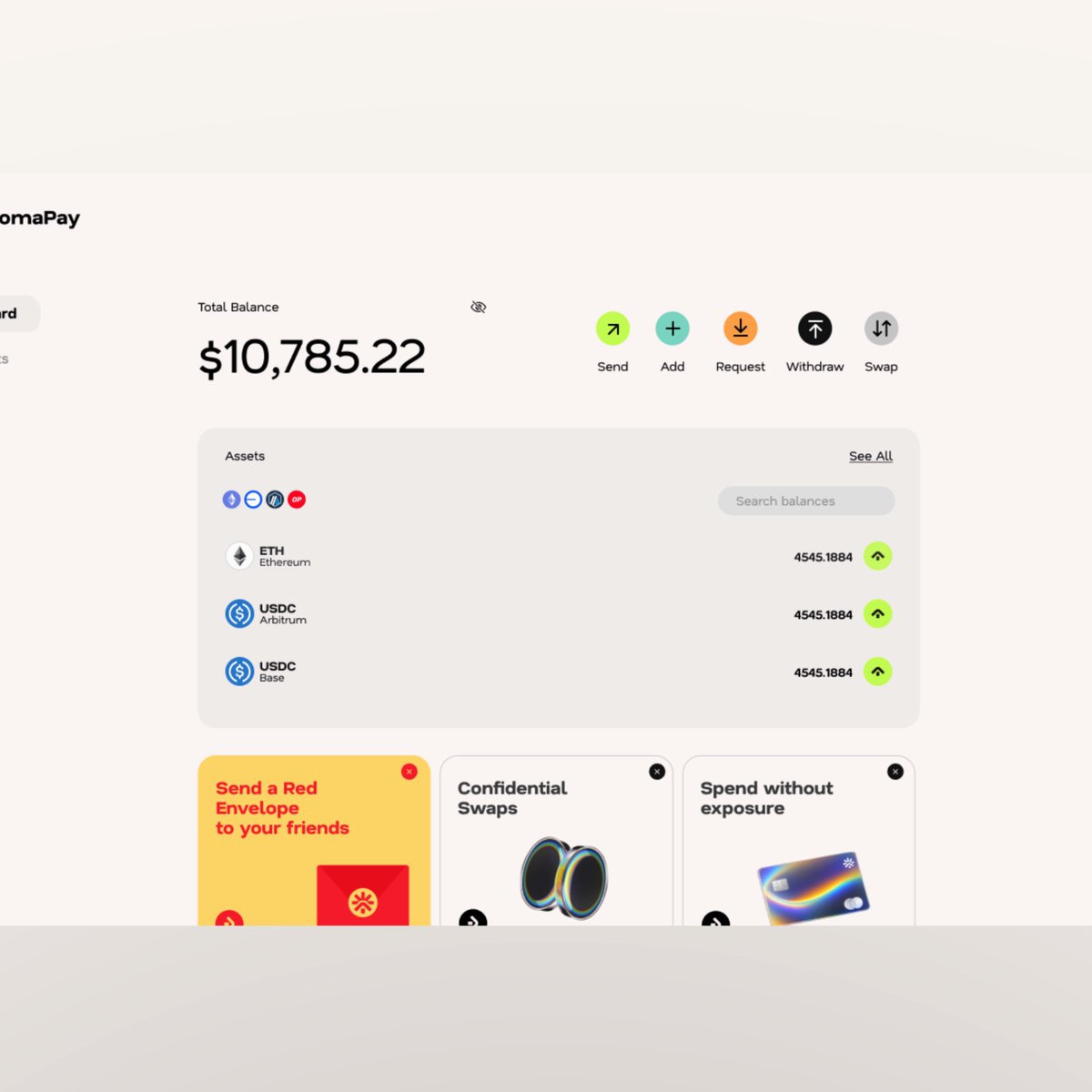 Anoma expands Zcash-style privacy to assets on six EVM chains, with Solana support planned.
Sources
18 records from 13 domains
ethereum.org
vasilkoff.com
chain.link
docs.safe.global
eco.com
diadata.org
x.com
dune.com
mexc.com
thedefiant.io
developers.flow.com
circle.com
rango.exchange
Community notes
Spot something off or out of date? Drop a note. Editors review topic notes daily and roll accepted fixes into the explainer — contributors are recognized in the monthly $SQUID drop.
Loading notes…
Help improve this topic
Have a story or tip about this topic? Submit it. See something missing? Leave a note. Editors review daily; accepted submissions and fixes count toward the monthly $SQUID drop.