
Sei is a parallelized, EVM-only layer-1 blockchain built for trading. Learn about its SIP-3 migration, IBC shutdown, native USDC, the Giga/Autobahn 200K TPS upgrade, and its Mastercard tie-up.
+26 sources across the wider coverage universe
 Visa launches Intelligent Commerce Connect for AI agent payments, Sei-based Sumvin among pilot partners2026-04
 Sei v6.4 launches with ability to disable inbound IBC transfers in EVM-only push2026-04
 Sei to disable inbound IBC in SIP-3 EVM-only transition, warns Wormhole WETH holders to bridge out2026-04
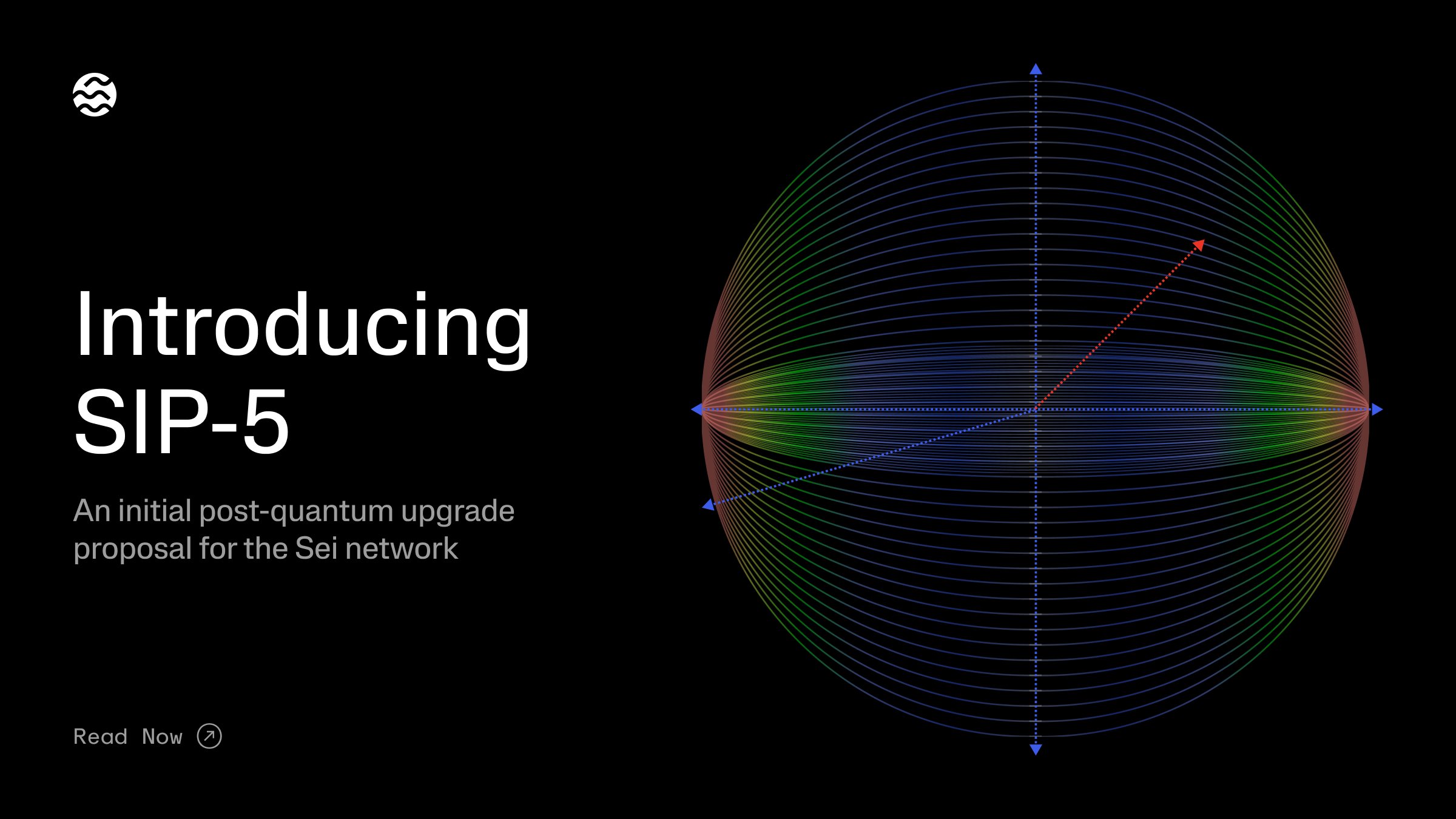 Sei Network introduces SIP-5, creating a pathway for every account to upgrade into quantum-secure protection if future quantum threats emerge2026-07
 ZeroDev smart accounts go live on Sei, enabling gas sponsorship and bundled trading approvals2026-07
 Sei joins Mastercard’s Crypto Partner Program ahead of a joint paper exploring blockchain evaluation frameworks tailored for financial services infrastructure2026-05
Sei is a high-performance, single-purpose layer-1 blockchain optimized for trading and financial applications, distinguished by its parallelized execution and fast finality. In 2026 it is completing a consequential pivot from a dual-stack Cosmos-and-EVM design to a streamlined, Ethereum Virtual Machine (EVM)-only architecture.
What Sei Is and the Problem It Targets
The EVM is the execution environment that runs smart contracts on Ethereum and dozens of compatible chains; building for it means a project can reuse Solidity tooling, wallets, and developer libraries already in wide use. Sei's central wager is that a chain can keep that compatibility while delivering performance closer to a centralized exchange than a typical blockchain.
The technical lever is parallel execution. Most EVM chains process transactions one at a time, in strict sequence. Sei runs transactions concurrently when they don't touch the same state and sequentially only when they must, a design it has marketed as the "parallelized EVM." Combined with its consensus layer, the network advertises sub-400-millisecond finality, meaning a transaction is treated as irreversible roughly half a second after submission. That latency profile is why Sei positions itself specifically for trading—perpetual futures ("perps"), spot markets, and order-book-style applications where settlement speed is a competitive feature rather than a nicety.
SEI is the network's native token, with a fixed maximum supply of 10 billion and roughly 6.7 billion in circulation. It pays transaction fees, secures the chain through staking, carries governance voting power, and is used as collateral across the network's decentralized finance (DeFi) applications. As with most proof-of-stake assets, token holders can delegate to validators and share in staking rewards, while governance proposals—several of which are central to the story below—are decided by token-weighted votes.

Mastercard and Sei survey 40+ leaders on how institutions choose a blockchain
The SIP-3 Pivot: Going EVM-Only
Sei originally shipped with a dual environment: CosmWasm contracts from the Cosmos ecosystem alongside the EVM. In May 2026 the community passed SIP-3, a proposal to deprecate CosmWasm and native Cosmos transactions and converge on a single execution layer. The rationale is partly engineering hygiene—maintaining two virtual machines doubles complexity—and partly strategic, concentrating developer attention and liquidity in the EVM ecosystem where most builders already work. One technical write-up framed the change as Sei deleting hundreds of thousands of lines of code to reduce surface area.
The transition has played out as a sequence of coordinated upgrades rather than a single switch. The conversion of the native SEI asset itself to the EVM has been completed, with sends and receives over the EVM enabled. Centralized exchanges have had to follow suit: Binance announced support for the Sei network migration, and Coinbase has communicated the shift to EVM-only architecture to its users. Such migrations typically involve temporary pauses—Sei deposits and withdrawals were suspended on some venues during the EVM conversion window in spring 2026—so users should expect short freezes around each phased upgrade and confirm timing with their custodian before moving funds.
Sei readers are driven by institutional credibility signals — airdrops, RWA partnerships, and TradFi integrations — revealing that the audience is evaluating Sei as infrastructure for regulated finance, not speculative DeFi yield.
The IBC Wind-Down and Asset Migration
The most user-facing consequence of going EVM-only is the planned shutdown of inbound Inter-Blockchain Communication (IBC). IBC is the Cosmos ecosystem's native cross-chain messaging standard; it is how assets such as USDC, ATOM, and bridged tokens historically arrived on Sei from other Cosmos chains. The v6.4 mainnet upgrade added the protocol-level ability to disable inbound IBC transfers, but—an important nuance—v6.4 did not switch it off by itself. The capability ships first; the actual disabling requires a separate follow-on governance proposal, with advance notice promised before it takes effect.
For holders, the practical implication is a migration deadline. Once inbound IBC is disabled, assets like USDC.n (the Noble-bridged version of USDC) and ATOM can no longer be transferred onto Sei via that route. Sei has urged several cohorts to act:
- USDC holders. Native USDC and Circle's CCTP V2 (Cross-Chain Transfer Protocol) are now supported on Sei, and the Noble-bridged USDC.n is deprecated. Users were directed to swap or migrate USDC.n to native USDC ahead of the SIP-3 timeline. The same guidance extended to USDC originating from Solana.
- WETH holders. Those holding Wormhole-bridged WETH were warned to bridge out before IBC is disabled to avoid stranded balances.
- Other IBC assets. Holders of assets such as Kava-bridged USDT and various IBC-denominated tokens were given similar migrate-or-strand notices.
The recurring theme is that a deprecated bridge route does not automatically convert balances; holders must take an explicit action—swapping into a native equivalent or bridging out—within the announced window. Stablecoins are central here because they are the dominant medium of exchange in on-chain trading, and a clean native-USDC story is a prerequisite for the payments ambitions discussed below. Anyone holding bridged assets on Sei should verify the current native equivalent and confirm deadlines through official Sei channels, since exact governance timing can shift.
- 01Airdrop and token distribution
The first airdrop announcement drew the most clicks, signaling readers tracking SEI token allocation and early-adopter rewards.
- 02RWA and institutional onboarding
BlackRock, Brevan Howard, Apollo ACRED, and Securitize launches showed readers appetite for real-world asset tokenization on Sei.
- 03DeSci and venture capital
The $65M DeSci-focused venture fund was the second most-clicked story, indicating readers following Sei's ecosystem funding strategy.
- 04TradFi and fintech partnerships
Partnerships with Visa, Mastercard, Plaid, Toku/ADP, and Xiaomi signaled Sei's payments infrastructure ambitions to readers.
- 05EVM-only migration and IBC deprecation
Sei's decision to drop Cosmos IBC in favor of EVM-only drew readers concerned about asset migration risk and ecosystem direction.
- 06OTC scam and fraud exposure
The $50M OTC scam involving Sei drew readers tracking crypto fraud risk in emerging L1 ecosystems.
Sei Giga and the Autobahn Consensus
SIP-3's cleanup is the runway for Sei Giga, the network's flagship performance upgrade. The headline targets are aggressive: 200,000 transactions per second and sub-400-millisecond finality, figures Sei frames as roughly a 40-to-50-fold increase over current capacity.
The core innovation is a consensus protocol called Autobahn. Conventional blockchains elect a single leader to propose each block, which creates a throughput ceiling. Autobahn instead lets multiple validators propose blocks simultaneously, drawing on "Narwhal-style" mempool techniques from academic distributed-systems research and pairing them with a 1.5-round Byzantine Fault Tolerant (BFT) pipeline. Multi-proposer designs are how a network gets from thousands to hundreds of thousands of transactions per second.
Giga also separates execution from consensus through asynchronous execution—rather than running every transaction in lockstep inside each block, the chain decouples the two and processes work in parallel. Sei measures the result in "gigagas," a throughput metric for computational work per second; internal devnet tests reportedly sustained around 5 gigagas, equivalent to roughly 200,000–250,000 simple token transfers per second on a 40-validator network. Sei Labs has said Giga is rolling out progressively through 2026 rather than on a single launch date, so capacity is expected to ramp rather than arrive all at once.
These benchmarks come from the project's own testing and should be read as targets, not independently verified mainnet results; sustained real-world throughput under adversarial load is the harder test, and historically TPS claims across the industry have compressed once live.
Sedna: Privacy and Spam Resistance
A known side effect of multi-proposer consensus is duplication: when several validators can propose at once, the same transaction can be submitted multiple times, inflating spam. Sei Labs has previewed a protocol called Sedna to address this. As described by the team, Sedna removes duplicate-transaction spam while adding privacy and resistance to maximal extractable value (MEV)—the profit that block producers or sophisticated actors can capture by reordering or inserting transactions. For a chain courting institutional trading flow, MEV resistance and confidentiality are features that matter to professional participants, though the protocol remains forthcoming and its production behavior is not yet observable.
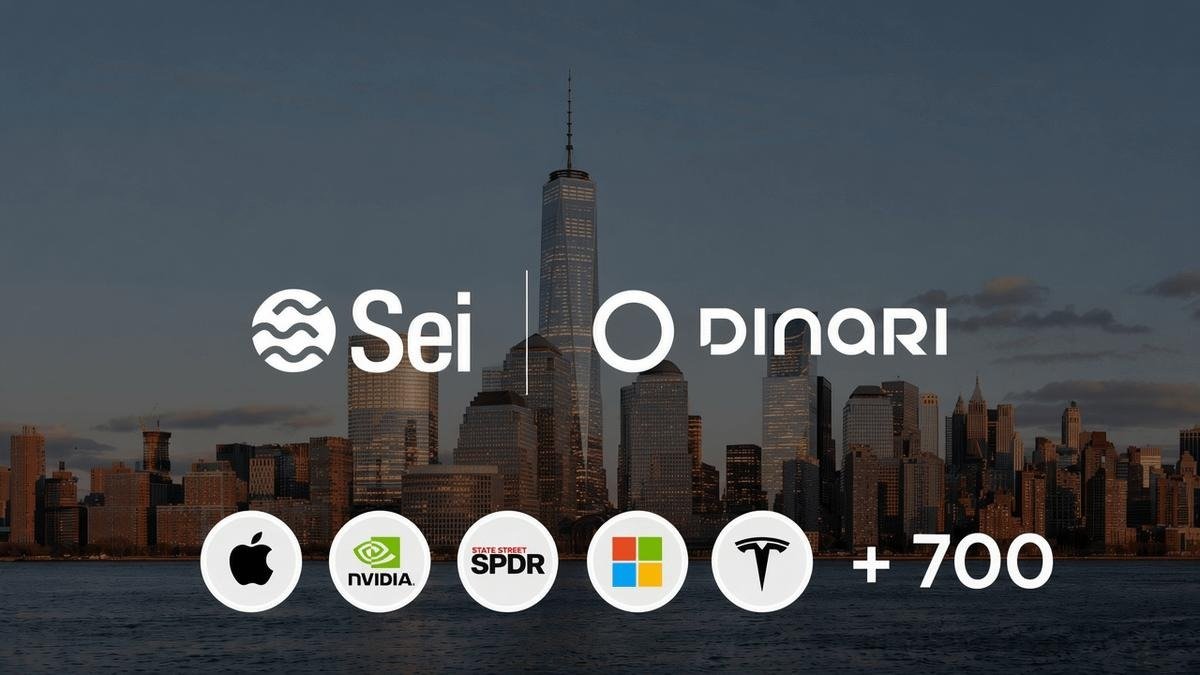
Tokenized S&P 500 stocks for U.S. investors are coming to Sei via DinariGlobal's dShares
Payments, RWAs, and the Mastercard Tie-Up
Sei's 2026 narrative extends beyond raw speed into traditional finance integration. The network joined Mastercard's Crypto Partner Program, a roster of more than 85 companies that also includes Circle, Ripple, PayPal, and others, aimed at connecting blockchain rails to mainstream payments, stablecoin settlement, and cross-border commerce. The two parties have signaled a joint paper exploring blockchain evaluation frameworks tailored to financial-services infrastructure, with a debut tied to industry events. It is worth being precise about scope: as of mid-2026 this is a partnership-and-research arrangement, not a shipped consumer product, and specific timelines have not been announced.
Adjacent to the card-network story, Sei has appeared among pilot partners in agentic-payments experiments—on-ramps designed to let AI agents prove identity, define authorization scope, and settle transactions across major card networks. These integrations slot into Sei's broader pitch that fast finality is useful wherever settlement delay is a cost, a point industry figures have echoed with reference to settlement bottlenecks exposed during high-volatility equity-trading episodes.
The chain has also leaned into real-world assets (RWAs)—tokenized representations of off-chain instruments such as treasuries or funds—with coverage pointing to tokenized assets on Sei climbing toward the hundreds of millions of dollars and rising DeFi deposits. By monthly active wallets, some trackers have placed Sei among the more active EVM chains. As with any single-chain growth metric, these figures should be checked against current dashboards, and concentration is a genuine risk: when stablecoin balances, DeFi deposits, and headline partnerships cluster around a few applications, the ecosystem becomes more sensitive to any one of them faltering.
- 2023-08launch
Sei mainnet launches as parallelized EVM chain
- 2023-09milestone
SEI first airdrop details announced
- 2024-07launch
Sei V2 launches with EVM compatibility; Frax integrates
- 2024-11exploit
$50M OTC scam involving SEI begins targeting investors
- 2025-03milestone
BlackRock and Brevan Howard tokenized funds launch on Sei via KAIO
- 2025-06milestone
Sei Foundation launches $65M DeSci venture fund
- 2026-01regulatory
Wyoming names Sei as candidate blockchain for WYST stablecoin
- 2026-04governance
Sei EVM-only migration via SIP-3; IBC disabled, Coinbase suspends SEI support April 6-8
Risks and Open Questions
Several uncertainties deserve a clear-eyed reading. First, execution risk on Giga: 200,000 TPS is a devnet target, and the gap between benchmark and durable mainnet performance is where many high-throughput chains have stumbled. Second, the EVM-only migration concentrates a lot of moving parts—asset bridges, exchange support, governance timing—into a compressed window, and mistimed user action can strand funds. Third, the partnership-driven thesis depends on integrations maturing from announcements into volume; card-network and RWA tie-ups are promising but unproven at scale. Finally, market structure concentration means that the same factors fueling Sei's momentum could amplify a downturn.
Outlook
Sei in 2026 is a focused bet: shed the multi-VM complexity, push EVM throughput toward exchange-grade speeds with Giga and Autobahn, and convert that performance into real payments and tokenization volume via partners like Mastercard. The migration mechanics—native USDC, IBC wind-down, phased upgrades—are largely playing out as governed and disclosed, which is reassuring. The open question is whether the performance targets and institutional integrations translate into sustained, diversified on-chain activity rather than headline metrics. Readers holding assets on Sei should track governance proposals and migration deadlines closely, and treat throughput claims as goals to be verified on mainnet over time.
Latest Sei news
Community notes
Spot something off or out of date? Drop a note. Editors review topic notes daily and roll accepted fixes into the explainer — contributors are recognized in the monthly $SQUID drop.
Loading notes…
Help improve this topic
Have a story or tip about this topic? Submit it. See something missing? Leave a note. Editors review daily; accepted submissions and fixes count toward the monthly $SQUID drop.