
TradFi (traditional finance) and crypto are converging through tokenization, spot ETFs, stablecoins, and institutional perpetuals — here's how the two systems are merging and what it means for markets.
- x.com48
- archive.ph5
- coindesk.com5
- theblock.co4
- dlnews.com2
- www-coindesk-com.cdn.ampproject.org1
- placeholder.vc1
+21 sources across the wider coverage universe
 Pharos Network raises $44M Series A backed by Sumitomo, Chainlink, and Flow Traders to build financial-grade infrastructure bridging TradFi and DeFi globally2026-04
 Coinbase teams up with US Secret Service and UK NCA to freeze $12M stolen via phishing, identifying over 20,000 victims as blockchain speed outpaces traditional finance response times2026-04
 Variational argues CLOBs fail RWAs, saying onchain perps can’t match TradFi depth as brokerage-style models emerge to tap $30T+ derivatives liquidity2026-05
 SWIFT confirms 25+ banks going live by June with blockchain-based 24/7 cross-border payments2026-03
 a16z’s Eddy Lazzarin says crypto hacks appear worse because blockchain transparency exposes exact losses instantly, while TradFi breaches often bury the true scale of damage2026-05
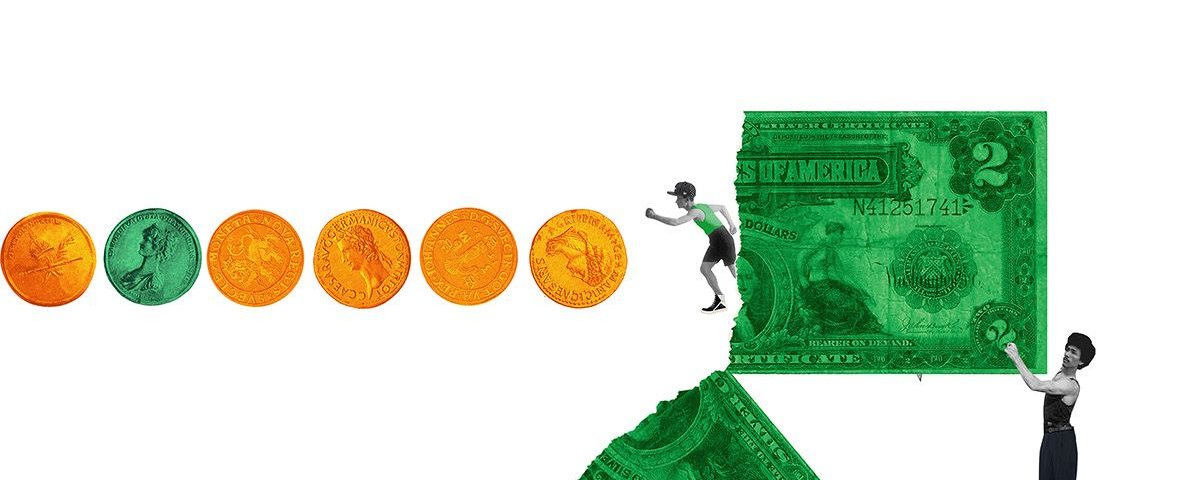 Private credit emerges as the first true bridge between TradFi and DeFi, gaining traction not just through tokenization but by becoming usable collateral across lending markets2026-04
Traditional finance — the regulated ecosystem of banks, brokerages, exchanges, and asset managers that predates blockchain technology — is no longer a passive observer of the crypto industry. It has become an active participant, and the boundary between the two worlds is dissolving faster than most predicted.
What "TradFi" Actually Means
"TradFi" is shorthand for traditional finance: the centuries-old infrastructure of centralized institutions that intermediate the movement of money and capital. This includes commercial and investment banks, stock exchanges, clearinghouses, pension funds, insurance companies, broker-dealers, and the regulators that govern them. When crypto participants use the term, they typically mean it as a contrast — TradFi being the incumbent system that crypto was originally designed to circumvent.
The label carries different connotations depending on who is using it. To a Bitcoin maximalist, TradFi represents rent-seeking intermediaries and monetary debasement. To an institutional allocator, it represents the compliance infrastructure, custody standards, and liquidity depth that make large-scale deployment of capital possible. Both framings contain truth, which is partly why the ongoing convergence of the two systems is so consequential.

Binance expands 24/7 trading with 77 tokenized stocks and 196 TradFi perpetual contracts

The Scale of What TradFi Represents
To understand why crypto's engagement with traditional finance matters, the numbers help. Japan's repo market alone processes roughly $1.5 trillion in transactions daily — the second-largest in the world. Broadridge, one of the infrastructure providers behind such markets, processes between $340 billion and $400 billion in repo transactions on Canton Network daily. Global derivatives notional outstanding runs into the hundreds of trillions. The asset management industry controls north of $100 trillion globally.
Crypto, by contrast, has a total market capitalization typically measured in the low single-digit trillions. The asymmetry explains the logic of institutional adoption: even a fractional reallocation from TradFi portfolios into digital assets moves crypto markets significantly. And increasingly, institutions are not just buying crypto — they are building crypto-native infrastructure to replace or augment existing TradFi rails.
Readers click TradFi-DeFi stories not for abstract convergence narratives but for concrete power struggles: who controls the compliance chokepoint, who captures the yield rails first, and whether DeFi protocols or TradFi incumbents will set the terms of integration.
How Crypto ETFs Became the TradFi Bridge
The approval of spot Bitcoin ETFs in the United States in early 2024 was a structural inflection point. Products from BlackRock, Fidelity, and others gave TradFi investors — retirement accounts, registered investment advisers, institutional allocators — regulated, custodied exposure to Bitcoin without requiring them to touch a self-custody wallet or interact with a crypto exchange directly.
BlackRock's Jay Jacobs has noted that US crypto ETFs are actively pulling Bitcoiners into TradFi workflows: investors who previously held Bitcoin on-chain are now acquiring or supplementing with ETF exposure because of the tax, custody, and advisory-channel convenience. The irony is sharp — a product designed to bring TradFi investors into crypto is simultaneously pulling some crypto-native holders back toward traditional brokerage accounts.
Coinbase occupies a specific structural role here: it serves as the custodian for several of the largest spot Bitcoin ETFs, meaning its regulated custody infrastructure underpins a growing share of institutional Bitcoin holdings even when those investors never open a Coinbase account themselves. Fortune Magazine's inaugural Crypto 100 list named Coinbase the top CeFi platform, a recognition that reflects how deeply it has embedded itself in the institutional stack.
Tokenization: TradFi Assets Going Onchain
The more structural shift is the tokenization of traditional financial instruments. Tokenization means representing ownership of a real-world asset — a government bond, a money-market fund share, a private credit instrument, real estate — as a token on a blockchain, making it programmable, composable, and transferable without legacy settlement infrastructure.
State Street, DBS Bank, and SBI Holdings have all been recognized alongside crypto-native projects on Fortune's Crypto Innovators list, signaling that major TradFi institutions are not just experimenting but deploying production tokenization infrastructure. Japan's financial giants have been particularly active, given the country's advanced regulatory framework for digital assets.
Orca, one of the leading decentralized exchange protocols on Solana, has described its liquidity infrastructure as now serving "crypto-native assets, hybrid assets, and even TradFi assets coming on-chain." The protocol's CEO has stated that Orca "serves the whole spectrum" — a data point that illustrates how DeFi infrastructure originally built for native tokens is being retooled to handle tokenized equities, bonds, and other instruments.
More than $30 billion has migrated from traditional finance into onchain systems, with automated yield strategies increasingly managing those flows without human intermediaries. The GENIUS Act — US stablecoin legislation moving through Congress — is accelerating this: when $5 trillion in institutional AUM begins building GENIUS Act-compliant infrastructure, stablecoins shift from crypto novelty to regulated settlement layer.
Fixed Income and Yield Onchain
One of the longest-standing criticisms of DeFi was the absence of fixed income — structured, predictable yield products that form the backbone of institutional portfolio construction. That gap is narrowing. Pendle Finance, which enables trading of future yield, was named to Fortune's Crypto Innovators list and was recognized alongside TradFi institutions explicitly because it introduced a real fixed-income equivalent onchain for the first time at meaningful scale.
The convergence matters because institutional allocation frameworks require fixed-income exposure. A hedge fund or pension that wants onchain yield but has no mechanism for rate discovery, duration matching, or yield curve positioning cannot deploy serious capital into DeFi. Protocols that solve the fixed-income problem unlock a much larger addressable market.
- 01DeFi protocol TradFi bridge-building
The Sky Aave Force initiative—a named partnership between two marquee DeFi founders explicitly targeting TradFi adoption—signaled readers want to track which DeFi protocols are actively engineering the crossing, not just discussing it.
- 02KYC-compliant onchain yield
Pendle targeting regulated yield products for TradFi audiences crystallized a specific product category readers see as the decisive test of whether DeFi primitives can survive compliance requirements.
- 03TradFi compliance barrier mechanics
The Robinhood headline resonated because it made the regulatory impasse viscerally concrete: even a fully licensed, lawyer-heavy incumbent cannot navigate crypto compliance, exposing the structural problem rather than pointing to bad actors.
- 04Institutional infrastructure going onchain
SWIFT bank blockchain rollouts, Canton Network's privacy-preserving composability, and SOFR rates onchain showed readers that legacy financial plumbing is being re-laid in real time—not hypothetically.
- 05TradFi brokerage crypto fee war
E*Trade, Kraken, OKX, and Interactive Brokers entering or expanding crypto with aggressive fee structures signaled to readers that retail access is about to be commoditized, with consequences for native crypto exchanges.
- 06Yield-bearing stablecoins as convergence wedge
Multiple headlines framing yield-bearing stablecoins as the instrument that simultaneously satisfies TradFi return expectations and DeFi composability pulled readers tracking which asset class wins the bridge role.
Binance Futures and the Perpetuals Bridge
One of the most concrete recent examples of TradFi instruments arriving in crypto markets is Binance Futures' rollout of USDT-margined perpetual contracts on traditional financial assets throughout June 2026. Perpetual futures — a crypto-native derivative with no expiry date — are being applied to instruments that TradFi traders would typically access through regulated futures exchanges or CFD brokers.
This is not a trivial product decision. Offering perpetuals on TradFi underlyings means crypto traders can speculate on or hedge traditional asset prices using crypto collateral, on crypto exchanges, without interacting with a brokerage or futures commission merchant. Dune Analytics has published on-chain data confirming that institutional footprints are deepening: large-trade activity is rising even as overall spot and perpetual volumes normalize, and record TradFi futures open interest on Binance, Gate, and Hyperliquid suggests institutional participants are specifically seeking this kind of synthetic TradFi exposure.
What TradFi Professionals Actually Want
A persistent tension is the gap between what TradFi professionals say they want from crypto and what the crypto industry assumes they want. According to Bitwise research, TradFi advisors are prioritizing stablecoins and tokenization over Bitcoin when they think about digital asset integration. This makes intuitive sense: stablecoins and tokenized assets fit neatly into existing portfolio construction logic, whereas Bitcoin requires a more fundamental rethinking of monetary theory and risk allocation.
At the same time, a consistent finding across industry research is that most TradFi professionals do not fully understand Bitcoin's core value proposition. They understand price performance. They understand ETF mechanics. But the monetary policy arguments — fixed supply, resistance to debasement, censorship resistance — remain unfamiliar territory for most mainstream finance practitioners. This creates an education gap that shapes how products get designed, how regulatory arguments get made, and how institutional adoption actually unfolds in practice.
The Infrastructure Layer
Convergence requires infrastructure, and a distinct set of companies has emerged to serve as the plumbing. Broadridge, Canton Network, LMAX, and similar institutional-grade venues are building the settlement and clearing layers that allow TradFi assets and workflows to operate on distributed ledger infrastructure without abandoning the compliance and auditability requirements that regulated institutions demand.
LMAX CEO David Mercer has argued that "tokenization tomorrow is the derivative of yesterday" — meaning the tokenized asset economy is structurally analogous to the derivatives revolution of the 1980s and 1990s, when standardized contracts allowed risk to be disaggregated, priced, and transferred at scale. The infrastructure buildout required for that revolution — clearinghouses, standardized contracts, electronic trading systems — has a direct parallel in the blockchain middleware being built today.
Binance's investment arm has similarly emphasized this thesis: their CEO of investments, speaking on Binance Square's Inside the Blockchain 100, framed TradFi-on-chain as one of the defining verticals alongside AI-blockchain convergence and GameFi, drawing on lessons from 600-plus investments about what builder-led infrastructure bets look like at the protocol layer.
- 2024-01launch
Voltz Protocol brings SOFR rate benchmark onchain via Avalanche
- 2024-12milestone
Curve Finance closes year with TradFi integrations, CRV inflation cut, scrvUSD launch
- 2025-01milestone
Pantera Capital 2025 Blockchain Letter forecasts Bitcoin DeFi rise and RWA flywheel
- 2025-01launch
Kraken Pro launches TradFi futures alongside crypto from unified account
- 2025-02launch
Pendle announces KYC-compliant yield expansion targeting Solana, Hyperliquid, TON
- 2025-03milestone
SWIFT confirms 25+ banks going live with blockchain-based 24/7 cross-border payments
- 2025-04regulatory
US regulators clear banks to intermediate crypto transactions
- 2025-06launch
Sky Aave Force initiative launched by Rune and Stani to close DeFi-TradFi gap
Regulatory Frameworks as Catalysts
The regulatory environment is moving in one direction across most major jurisdictions: toward recognized frameworks for digital assets rather than prohibition or pure enforcement. The EU's MiCA regulation, US stablecoin and market structure legislation, and Japan's existing digital asset law are creating the compliance on-ramps that TradFi institutions require before deploying material capital.
The GENIUS Act specifically targets stablecoins — the most important interoperability layer between TradFi settlement and onchain systems. If passed and implemented, it would define reserve requirements, redemption rights, and issuer standards for dollar-denominated stablecoins, effectively incorporating them into the regulated financial system. The downstream effect would be to make stablecoin settlement as institutionally acceptable as wire transfers, unlocking a much larger population of TradFi participants who currently cannot touch crypto without regulatory clarity.
Outlook
The TradFi-crypto convergence is not a coming event — it is an ongoing structural process that has already passed several meaningful inflection points. Spot ETFs are live and attracting billions in AUM. Tokenized treasuries and money-market funds are operating on public blockchains. Institutional perpetuals tied to traditional asset prices are trading at record open interest. The repo market is processing hundreds of billions daily through distributed ledger infrastructure.
What remains unresolved is which layer captures the most value: the blockchain protocols providing settlement, the asset managers wrapping instruments in compliant products, or the exchanges and venues providing access and liquidity. The answer likely varies by asset class and jurisdiction. What is clear is that "TradFi" and "crypto" are increasingly inadequate as distinct categories. The more accurate framing is a single, converging financial system built on heterogeneous rails — some legacy, some blockchain-native — with the boundaries shifting in real time.
Latest TradFi news
Community notes
Spot something off or out of date? Drop a note. Editors review topic notes daily and roll accepted fixes into the explainer — contributors are recognized in the monthly $SQUID drop.
Loading notes…
Help improve this topic
Have a story or tip about this topic? Submit it. See something missing? Leave a note. Editors review daily; accepted submissions and fixes count toward the monthly $SQUID drop.