
Multichain explained: how protocols, stablecoins like USDC, and bridges span many blockchains—plus Circle's Interop Labs deal, Chainlink CCIP, and the cautionary 2023 Multichain bridge collapse.
+9 sources across the wider coverage universe
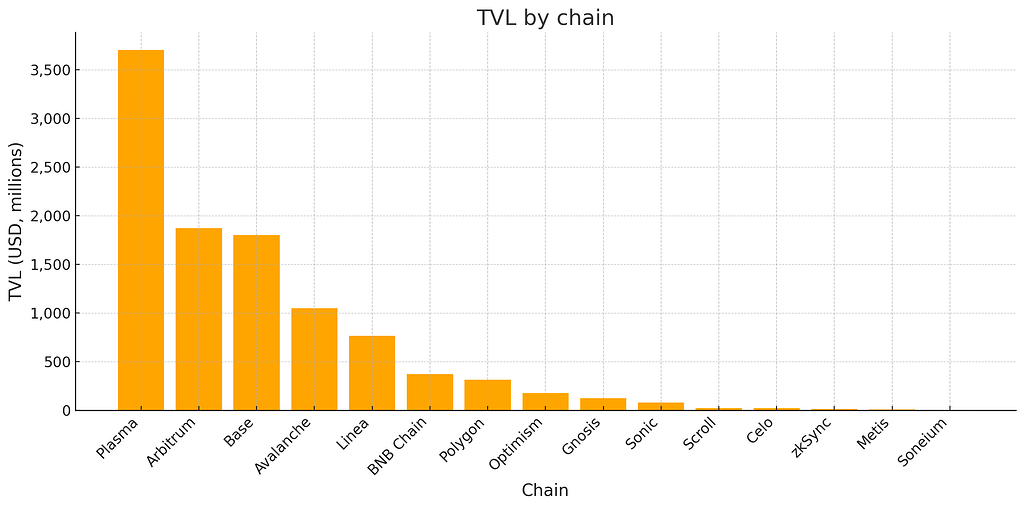 Aave proposes refocusing its V3 multichain strategy by raising reserve factors on weak networks, shutting down low-revenue markets on zkSync, Metis, and Soneium, and requiring at least $2M in annual revenue for any new chain deployment.2025-12
 Circle signs agreement to acquire Interop Labs team & intellectual property to accelerate the next chapter of multichain infrastructure with Arc and CCTP. However, The Axelar Network, Foundation and AXL token are not part of this acquisition and will continue to operate independently under community governance. Tokenholders who funded the team get nothing.2025-12
 Ripple announced plans to expand its $1.3B RLUSD stablecoin to Ethereum layer-2 networks next year, including Optimism, Base, Kraken’s Ink, and Unichain, using Wormhole for interoperability. The move aims to boost DeFi adoption, payments, and on-chain utility as Ripple pushes a multichain strategy, following recent approval to pursue a national trust banking charter.2025-12
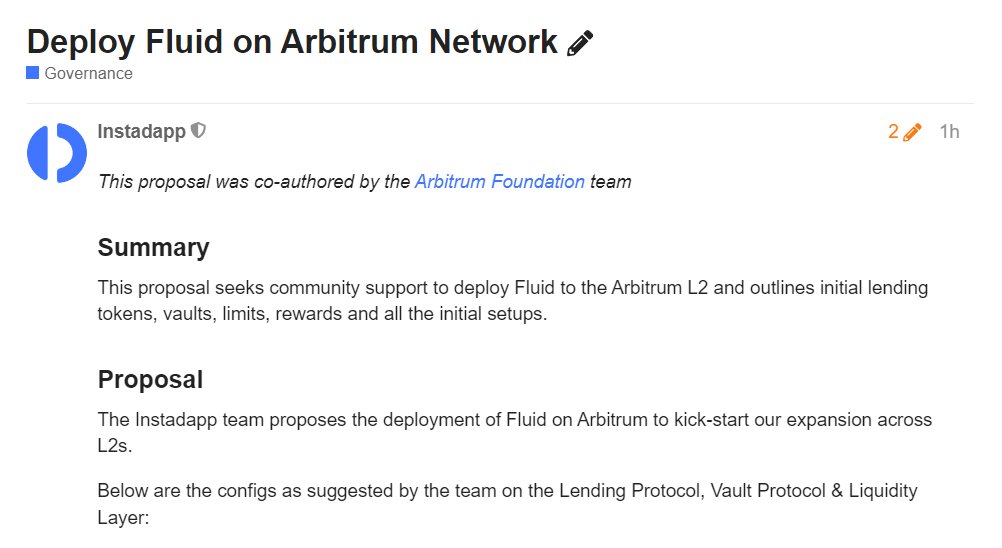 Instadapp Fluid is going multichain.
A new proposal to deploy on Arbitrum is now available on the governance forum. Arbitrum deployment and 400k $ARB incentives.2024-06
Instadapp Fluid is going multichain.
A new proposal to deploy on Arbitrum is now available on the governance forum. Arbitrum deployment and 400k $ARB incentives.2024-06 Fantom Foundation releases official statement regarding Multichain Incident2023-09
 Fantom Foundation awarded $2.2m for losses suffered in the Multichain bridge exploit by court in Singapore2024-07
Multichain refers to the practice of deploying applications, tokens, and liquidity across many independent blockchains at once, rather than confining them to a single network—and to the bridging and messaging infrastructure that lets value and data move between those chains.
The term carries an awkward double meaning in crypto. It describes a broad architectural trend, and it is also the name of a once-prominent cross-chain bridge whose 2023 collapse became a cautionary tale for the entire category. This explainer covers both: the strategy that nearly every serious protocol now pursues, and the hard lessons about why connecting chains is the riskiest part of doing so.
From one chain to many
In Ethereum's early years, a decentralized application lived on Ethereum and nowhere else. That changed as high fees pushed activity toward alternative layer-1 networks and Ethereum layer-2 rollups. Today a typical DeFi protocol may run on a dozen or more networks simultaneously—Ethereum mainnet, Arbitrum, Base, Optimism, and various app-specific or zero-knowledge chains.
"Multichain" describes this fragmentation and the strategies built to manage it. It is distinct from "cross-chain" (the act of moving between chains) and "omnichain" (a marketing term for assets designed to be natively fungible across all chains), though the words are often used loosely. The practical reality is that liquidity, users, and data are now scattered across many ledgers that do not natively communicate, and most of the industry's plumbing exists to paper over that fragmentation.
The strategy has matured from a manual chore into a configuration choice. Where launching on a new network once meant months of custom bridging work, infrastructure providers increasingly let teams add chains through configuration rather than bespoke engineering. Curve contributor Roman Agureev, for instance, has presented a modular, open-source framework for secure multichain messaging—built on storage proofs and bridge-agnostic transport—that is already live across more than 20 networks and available to any team building cross-chain infrastructure.

Altitude helps Multichain convert global USDC revenue into usable funds while reducing fees and conversion costs.

Bridges and messaging: the plumbing
Two related technologies make multichain possible. Bridges move tokens by locking or burning an asset on one chain and minting a representation on another. Cross-chain messaging protocols carry arbitrary data—not just token transfers—so that a contract on one chain can trigger logic on another.
The leading messaging layers include Chainlink's Cross-Chain Interoperability Protocol (CCIP), Wormhole, LayerZero, Axelar, and the Inter-Blockchain Communication protocol (IBC) used across the Cosmos ecosystem. Their designs differ in how they verify that a message is genuine—via external validator sets, optimistic challenge windows, light clients, or cryptographic storage proofs—but they share the same job: letting one chain trust an event that happened on another.
Recent activity shows how central this layer has become. Chainlink has expanded CCIP, Data Streams, and Automation to a wave of additional networks, including ZKsync, Celo, Hyperliquid, and Botanix (Chainlink). Ondo Finance used LayerZero to make its USDY yield-bearing stablecoin fully fungible across Ethereum, Mantle, and Arbitrum. Ripple said it would extend its RLUSD stablecoin to Ethereum layer-2s—Optimism, Base, Kraken's Ink, and Unichain—using Wormhole for interoperability. Cosmos, meanwhile, continues to lean on IBC, with new products like Stride Swap offering IBC-powered multichain trading.
Reader clicks reveal that 'Multichain' functions as two parallel stories that never merged: the specific bridge's collapse driven by a CEO in police custody (accountability, contagion, legal recovery) and a generic DeFi expansion strategy that every major protocol is racing to execute — and readers engage each story on its own terms.
The stablecoin layer goes multichain
Stablecoins—tokens pegged to a fiat currency, most commonly the US dollar—are the asset most aggressively pursuing a multichain footprint, because their value proposition is to be money that works everywhere.
USDC, issued by Circle, is the clearest example. Circle's Cross-Chain Transfer Protocol (CCTP) lets USDC move between chains by burning the token on the source chain and minting a native version on the destination, avoiding the wrapped, bridge-locked representations that proved so fragile in earlier designs. Circle now positions USDC as natively available across many networks rather than as a single-chain asset bridged elsewhere.
The pattern extends across the stablecoin sector. Visa has expanded its multichain stablecoin settlement rails, adding euro-backed EURC alongside USDG and PYUSD support on Stellar and Avalanche. Parallel's stablecoins gained robust pricing through a DIA partnership delivering live oracle feeds on HyperEVM, Base, and Avalanche. The common thread: issuers and payment networks treat single-chain confinement as a limitation to be engineered away, and increasingly rely on trustless oracle feeds and burn-and-mint mechanics rather than custodial bridges.

Aave proposes refocusing its V3 multichain strategy by raising reserve factors on weak networks, shutting down low-revenue markets on zkSync, Metis, and Soneium, and requiring at least $2M in annual revenue for any new chain deployment.
Oracles, data, and developer tooling
Multichain deployment multiplies a protocol's data needs. Each chain requires accurate price feeds, indexed on-chain data, and automation, and those services must be consistent everywhere.
Oracle networks have responded by going multichain themselves. Beyond Chainlink's CCIP rollout, providers like DIA supply trustless price feeds across multiple networks to support stablecoins and DeFi applications that span chains. On the data-indexing side, The Graph's multichain expansion of subgraphs—the open APIs developers use to query blockchain data—has widened the set of networks where builders can ship without standing up custom indexing infrastructure.
Tooling that abstracts gas is another frontier. A persistent friction of multichain life is that each network requires its own native token to pay transaction fees, forcing users to hold small balances of many assets. "Universal gas token" designs aim to let a single asset cover fees across networks, removing one of the most common onboarding hurdles. These conveniences matter because, in practice, the user experience of operating across chains has been the technology's weakest point.
Consolidation and capital discipline
After years of expansion-at-all-costs, the multichain landscape is showing signs of maturation—both consolidation among infrastructure providers and growing financial discipline among the protocols that deploy widely.
The most significant consolidation event is Circle's agreement to acquire the Interop Labs team and its intellectual property, expected to close in early 2026, to accelerate Circle's Arc layer-1 blockchain and CCTP (Circle). Interop Labs was the initial developer of the Axelar Network, and the deal pulls deep cross-chain engineering talent directly inside the largest regulated stablecoin issuer. Notably, the transaction covers only the team and its proprietary IP: the Axelar Network, its foundation, and the AXL token remain independent and community-governed, with another contributor, Common Prefix, taking over open-source development duties (Axelar). The structure underscores a recurring tension in the sector—where the commercial value of a network's core team can diverge sharply from the value accruing to its token holders.
On the discipline side, Aave has proposed refocusing its V3 multichain strategy by raising reserve factors on weak networks, shutting down low-revenue markets on zkSync, Metis, and Soneium, and requiring at least $2 million in annual revenue before any new chain deployment. The proposal is a marker of a broader shift: deploying everywhere is no longer treated as automatically beneficial, and protocols are beginning to prune unprofitable chains rather than chase a longer network list.
Circle signs agreement to acquire Interop Labs team & intellectual property to accelerate the next chapter of multichain infrastructure with Arc and CCTP. However, The Axelar Network, Foundation and AXL token are not part of this acquisition and will continue to operate independently under community governance. Tokenholders who funded the team get nothing.

"Interop Labs has been a leading contributor to Axelar, one of the most advanced frameworks for secure crosschain messaging and token transfer, and has collaborated with a growing community of open-source contributors to Axelar core development. By integrating Interop Labs’ talent and technology directly into Circle, we aim to accelerate key initiatives across Arc, an open L1 blockchain designed to become the Economic OS for the internet, and Circle CCTP."
The cautionary tale: when "Multichain" failed
The word's second meaning is unavoidable. Multichain—formerly Anyswap—was one of the most-used cross-chain bridges before it collapsed in mid-2023.
In May 2023, the protocol's CEO was detained by Chinese authorities, who seized control of the keys and server access underpinning its multi-party computation infrastructure; the team said it lost access to the systems securing user funds, and the protocol ceased operations that July (CoinDesk). Roughly $265 million flowed out, with portions frozen by Circle and Tether (Cointelegraph). The fallout has dragged on for years: Sonic Labs (formerly Fantom) secured a court order to liquidate the Multichain Foundation to recoup losses from the roughly $210 million exploit, the Fantom Foundation was awarded $2.2 million by a Singapore court, and a separate hack later drained another 401 ETH from a Multichain Router V4 contract after users failed to revoke its token approvals.
The episode crystallized the category's central weakness. A bridge that depends on a small set of operators—or, worse, a single individual's keys—concentrates risk in a way that defeats the point of decentralization.
- 01Bridge exploit & fund drainage
Tens of millions drained across Fantom, Moonriver, and Dogechain in real time pulled readers tracking live contagion across multiple ecosystems simultaneously.
- 02CEO arrest, key access crisis
The revelation that operational private keys were controlled by a single person who was then detained by Chinese police crystallized a unique and unprecedented custody failure that readers found both alarming and novel.
- 03Legal recovery & court rulings
Multi-year court battles in Singapore and subsequent liquidation orders showed readers a rare instance of DeFi exploit victims winning legal remedies, making it a landmark accountability story.
- 04Protocol multichain expansion strategy
High-engagement headlines on Instadapp, GMX, Ondo, and Uniswap deploying across chains signal that readers treat multichain rollouts as a competitive signal worth tracking for yield and liquidity opportunities.
- 05Downstream contagion & protocol damage
Alchemix, Hector DAO, and Gesit Finance losses showed readers how a single bridge failure cascades into collateral damage across unrelated DeFi protocols that relied on cross-chain liquidity.
- 06Cross-chain infrastructure buildout
Chainlink CCIP, LayerZero, and Curve's messaging framework attracted clicks as readers sought safer, more decentralized alternatives to custodial bridge models exposed by the Multichain collapse.
Security: the hardest problem
Cross-chain infrastructure has been crypto's most exploited surface. Bridges hold large pools of locked assets and rely on off-chain validation, making them attractive targets and structurally difficult to secure.
The industry's response has pushed in two directions. First, away from custodial lock-and-mint bridges toward burn-and-mint designs (like CCTP) and cryptographically verified messaging that minimizes trusted intermediaries. Second, toward bridge-agnostic and modular transport, where storage proofs verify state directly rather than trusting an external committee—the approach Curve's framework and several newer messaging layers emphasize. Capital-efficiency models are evolving too: Across introduced "Across Prime," a bonded bridging model intended to improve how relayers post collateral. None of these fully eliminates cross-chain risk, but each narrows the trust assumptions that made earlier bridges catastrophic when they failed.
How users and builders experience multichain
For end users, multichain has long meant complexity: juggling networks, holding multiple gas tokens, and tracking positions scattered across accounts. Wallets are now addressing this directly—MetaMask, for example, has rolled out a "Multichain Accounts" UI/UX update aimed at making it less cumbersome to manage many networks from one interface.
For builders, the fragmentation creates demand for aggregation layers that re-unify what multichain splits apart—including the information layer. Tracking what ships on which chain has become its own challenge, which is why news and data ecosystems such as Leviathan News (whose contributors earn the platform's SQUID token for surfacing and curating coverage) and on-chain analytics tools exist to consolidate a story scattered across dozens of ledgers. The communication layer is shifting as well: major expansions are increasingly unveiled through livestreamed events—Aptos Labs, for instance, used ETHDenver's Multichain Day to lay out its roadmap—rather than blog posts alone.
- 2023-03exploit
MEV exploit on Multichain Router V4 via unrevoked approvals
- 2023-07exploit
Tens of millions drained from Fantom, Moonriver, Dogechain bridges
- 2023-07regulatory
CEO Zhaojun confirmed detained by Chinese police; team loses key access
- 2023-07milestone
Circle freezes USDC associated with Multichain hack
- 2023-07governance
Multichain announces shutdown; Fantom Foundation hires legal counsel
- 2024-06regulatory
Singapore court awards Fantom Foundation $2.2M for bridge exploit losses
- 2025-01regulatory
Sonic Labs secures court order to liquidate Multichain Foundation
- 2025-06governance
Instadapp Fluid multichain proposal targets Arbitrum with 400K ARB incentives
Outlook
Multichain is now the default assumption rather than a competitive edge, and the frontier is shifting from "how many chains" to "how safely and how profitably." Expect continued consolidation among interoperability providers, deeper integration of cross-chain transfer directly into stablecoin issuance, and more protocols pruning unprofitable deployments in the name of revenue discipline. The defining open question remains security: until cross-chain messaging can match the trust-minimization of the chains it connects, bridges will stay the industry's softest target—and the name "Multichain" will keep its dual legacy as both a strategy worth pursuing and a failure worth remembering.
Latest Multichain news
Altitude helps Multichain convert global USDC revenue into usable funds while reducing fees and conversion costs.Aave proposes refocusing its V3 multichain strategy by raising reserve factors on weak networks, shutting down low-revenue markets on zkSync, Metis, and Soneium, and requiring at least $2M in annual revenue for any new chain deployment.Circle signs agreement to acquire Interop Labs team & intellectual property to accelerate the next chapter of multichain infrastructure with Arc and CCTP. However, The Axelar Network, Foundation and AXL token are not part of this acquisition and will continue to operate independently under community governance. Tokenholders who funded the team get nothing.Ripple announced plans to expand its $1.3B RLUSD stablecoin to Ethereum layer-2 networks next year, including Optimism, Base, Kraken’s Ink, and Unichain, using Wormhole for interoperability. The move aims to boost DeFi adoption, payments, and on-chain utility as Ripple pushes a multichain strategy, following recent approval to pursue a national trust banking charter. DL Research breaks chronicles the evolution of Yield Optimizers in new report: "Solving the DeFi Yield Maze"
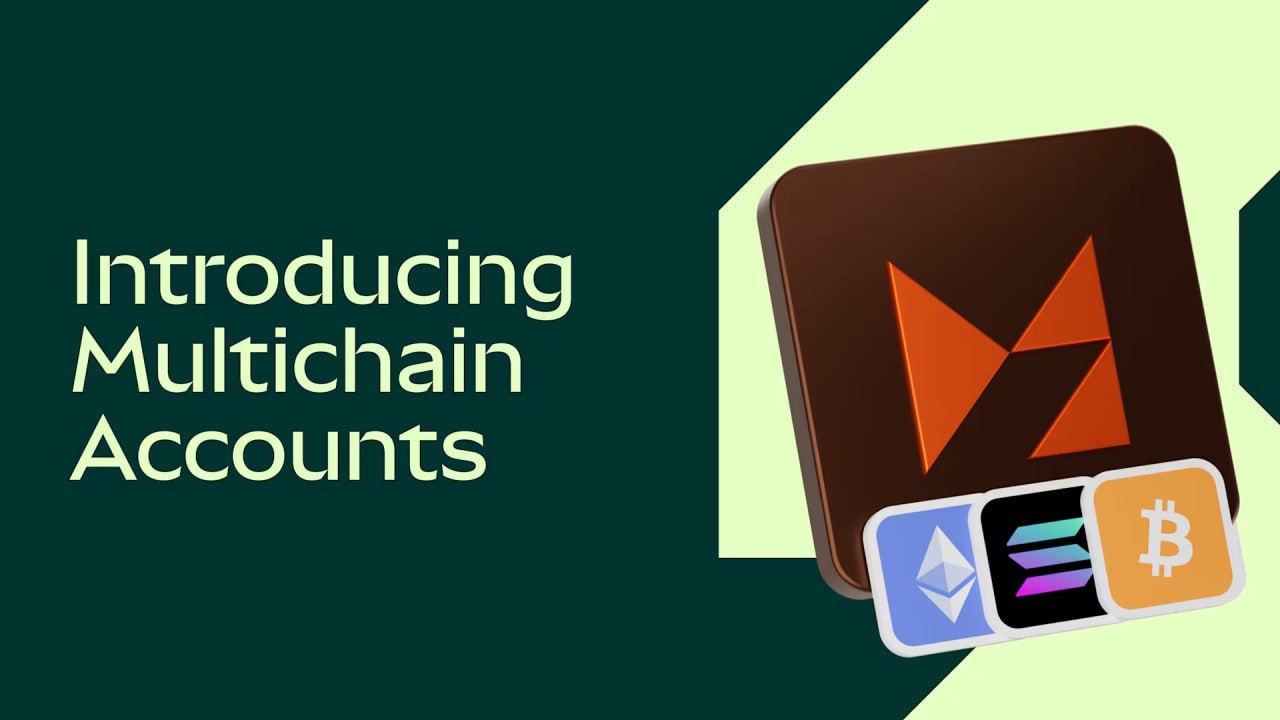 Managing multiple accounts across blockchain networks can become cumbersome or frustrating, Metamask is introducing a major UI/UX update: Multichain Accounts.
Community notes
Spot something off or out of date? Drop a note. Editors review topic notes daily and roll accepted fixes into the explainer — contributors are recognized in the monthly $SQUID drop.
Loading notes…
Help improve this topic
Have a story or tip about this topic? Submit it. See something missing? Leave a note. Editors review daily; accepted submissions and fixes count toward the monthly $SQUID drop.