
The FBI's role in crypto spans record seizures, $11B+ in annual fraud losses, AI-powered crime-fighting, and global pig-butchering busts — here's what investors and industry observers need to know.
+20 sources across the wider coverage universe
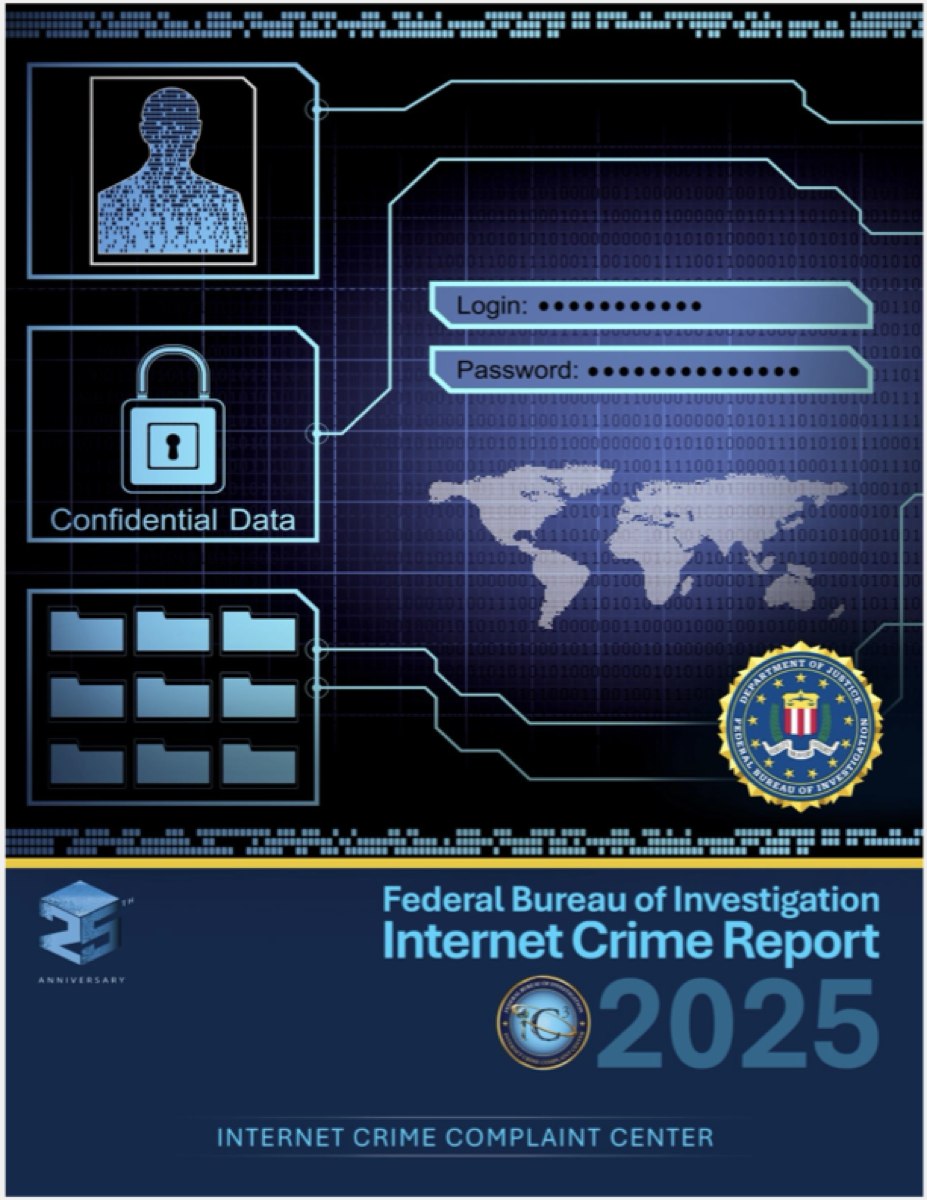 FBI reports Americans lost $11.4B to crypto fraud in 2025, up 22%, as AI-powered scams hit $893M2026-04
 Apple patches iOS bug that let FBI forensically extract deleted Signal messages from iPhone notification cache2026-04
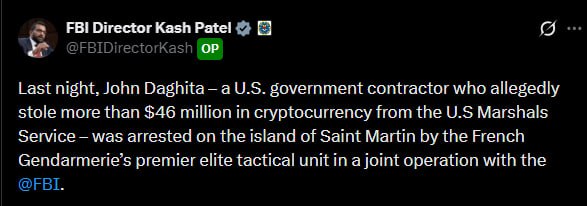 FBI Director Kash Patel announces arrest of contractor John Daghita in Saint Martin for allegedly stealing over $46M in cryptocurrency from the U.S. Marshals Service in joint FBI–French raid2026-03
 FBI arrests ex-Olympian drug 'kingpin' who allegedly used crypto to move proceedsThe U.S. caught a top-ten most-wanted fugitive when they arrested Ryan Wedding, a former top snowboarder who's said to have used digital assets in his crimes.2026-01
 FBI identifies Lazarus Group as responsible for theft of $41 million from Stake.com2023-09
- FBI raids house of former Kraken CEO Jesse Powell2023-07
The Federal Bureau of Investigation is the United States' principal domestic law-enforcement and intelligence agency — and increasingly, one of the most consequential regulators of the global cryptocurrency ecosystem by virtue of its expanding enforcement and asset-seizure authority.
What the FBI Does (and Why Crypto Investors Should Care)
Founded in 1908 and operating under the Department of Justice (DOJ), the FBI handles federal crimes ranging from terrorism to white-collar fraud. For the digital-asset industry, the bureau matters on two distinct levels: as an enforcement body that arrests, seizes, and prosecutes actors who exploit crypto rails, and as an intelligence publisher whose annual Internet Crime Complaint Center (IC3) reports set the baseline narrative regulators, legislators, and institutions use when debating crypto policy.
Those two roles have grown dramatically in scope. The FBI's IC3 division recorded nearly $21 billion in total cyber-enabled losses from U.S. consumers in 2025, with crypto and AI-related fraud among the costliest categories. That figure lands at the top of congressional testimony, enforcement press releases, and mainstream media coverage — shaping how millions of potential crypto adopters first encounter the technology.

FBI reports Americans lost $11.4B to crypto fraud in 2025, up 22%, as AI-powered scams hit $893M
$893M attributed to AI-powered scams out of $11.4B total is a classification problem, not a real ratio — most pig butchering victims can't distinguish a deepfake video call from a real one, so their complaints land under generic investment fraud. Chainalysis independently tracked $16.1B flowing through Chinese-language laundering networks in 2025 alone, meaning FBI complaint data captures maybe half the actual on-chain picture. The 60+ cohort eating $7.7B in losses (up 37% YoY) while getting hit with AI voice clones and deepfake Elon Musk endorsements is exactly the ammo regulators need to push expanded surveillance mandates across crypto rails.
The Scale of Crypto Crime: FBI's 2025 Numbers
The bureau's 2025 Internet Crime Report, released in early 2026, documented $11.36 billion in cryptocurrency-specific fraud losses — a 22% increase over the prior year and a new all-time record. Seniors bore a disproportionate share of losses, consistent with patterns the bureau has flagged in successive reports.
Pig butchering — a long-con romance fraud in which victims are groomed over weeks or months before being guided into fake investment platforms — accounted for a substantial slice of those losses. So did investment fraud broadly, crypto ATM scams targeting elderly users, and increasingly sophisticated AI-assisted impersonation schemes in which deepfake audio or video is used to establish trust before a fraudulent transaction is solicited.
The 22% year-over-year rise is notable because it came after several high-profile enforcement actions. Analysts and advocacy groups have interpreted it as evidence that supply-side crackdowns alone — arrests, seizures — are insufficient without parallel consumer-education efforts.
Readers click FBI-crypto stories primarily when a named individual faces personal legal jeopardy — raids on Jesse Powell, Shayne Coplan, and Ryan Salame collectively outperform abstract fraud-loss tallies and policy warnings, revealing that the audience treats FBI coverage as a live accountability ledger for crypto's power class, not as general law-enforcement news.
Historic Seizures: 127,000 Bitcoin and the Largest Forfeiture in U.S. History
The most consequential enforcement action of the current period came when the FBI and DOJ jointly executed what officials described as the largest asset seizure in U.S. history: recovery of approximately 127,000 Bitcoin — worth roughly $8 billion at prevailing prices — linked to forced-labor scam compounds operating across Myanmar, Cambodia, Thailand, and the United Arab Emirates.
The operation resulted in nearly 300 arrests, according to reporting by Fox News and corroborated by DOJ press releases. The scam compounds at the center of the case represent a relatively recent and particularly disturbing criminal structure: large-scale facilities, often in jurisdictions with weak rule of law, where trafficked workers are coerced into running pig-butchering and related crypto fraud operations against victims worldwide. Human-rights organizations estimate tens of thousands of people have been held in such compounds across Southeast Asia.
That seizure eclipsed prior records, including the 2022 recovery of approximately 94,000 Bitcoin tied to the Bitfinex hack — itself at the time the largest crypto seizure in history. The trajectory illustrates both the growing sophistication of criminal actors using crypto and the FBI's expanding technical capacity to trace, freeze, and recover on-chain assets.
The Pig-Butchering Bust: 276 Suspects, Multiple Countries
Separately from the forced-labor compound case, the FBI and DOJ coordinated a multinational operation that netted 276 suspects in a pig-butchering ring spanning multiple countries. FBI Director Kash Patel, in remarks following the arrests, signaled the bureau's intent to make crypto fraud a sustained priority: "no more," he said, referring to large-scale scam operations targeting American consumers, in a statement covered by The Block.
The geographic spread of the suspects — and the necessity of coordinating with foreign law-enforcement counterparts — underscores a core structural challenge for U.S. enforcement: much of the fraud infrastructure operates outside U.S. jurisdiction. The bureau's ability to act depends heavily on mutual legal assistance treaties, informal intelligence-sharing arrangements, and the willingness of local authorities to cooperate, all of which vary significantly by country.

DOJ reports $560,000 in Hamas-linked crypto seizures as FBI shuts down fundraising sites
Violent Crypto Crime: Armed Robbery and Physical Theft
Not all FBI crypto enforcement involves digital tracing. In one case that drew significant coverage, the bureau charged three individuals in a series of violent home invasions and street robberies targeting cryptocurrency holders, with victims collectively losing approximately $6.5 million. The suspects allegedly used physical force — at gunpoint — to compel victims to transfer digital assets.
Physical crypto theft of this kind has become an identifiable subcategory of violent crime, sometimes called "wrench attacks" in security circles. The FBI's involvement signals that the bureau treats these incidents as federal matters, particularly when the value involved crosses certain thresholds or when interstate commerce is implicated by the nature of digital-asset transfers.
- 01Crypto exec home raids
Three separate FBI raids on named executives (Kraken's Powell, Polymarket's Coplan, FTX's Salame) generated compulsive clicks because each raid signals the FBI has crossed from investigating platforms to personally targeting founders.
- 02Lazarus Group crypto attribution
The FBI publicly naming North Korea's Lazarus Group as the Stake.com thief was the single highest-clicked story, showing readers want state-actor attribution, not just theft mechanics.
- 03Industry insider cooperation
Peter Thiel as FBI informant and Railgun's co-founder voluntarily speaking at an FBI conference tapped reader appetite for who in crypto is quietly cooperating with law enforcement versus resisting it.
- 04Stablecoin surveillance compliance
Tether's CEO announcing FBI and Secret Service integration into its compliance stack, paired with the FBI's MSB registration PSA, showed readers that stablecoin issuers are becoming law-enforcement infrastructure.
- 05Physical crypto crime heists
The Miami $2M abduction-plot interception and Ryan Wedding's drug-laundering-via-Tether bounty attracted readers because they show crypto crime extending into real-world violence and fugitive manhunts.
- 06FBI memecoin entanglement
The FBI running and rugging its own memecoin, plus the HAWK memecoin SEC/FBI probe of Haliey Welch, crystallized reader anxiety that retail token launches are now active FBI honeypots.
AI as Both Threat and Tool
The FBI has issued explicit public warnings about the convergence of artificial intelligence and crypto fraud, describing it as a compounding threat. AI is being used by bad actors to generate more convincing phishing materials, fabricate deepfake video endorsements from celebrities and public figures (a pattern that spiked around major crypto market moves), and automate the early stages of pig-butchering scripts at scale.
At the same time, FBI Director Kash Patel has announced plans to deploy AI internally as part of a broader overhaul of the bureau's crime-fighting infrastructure. The initiative, reported in mid-2026, frames AI as a force multiplier for pattern recognition across large datasets — financial transaction records, communication intercepts, and cross-border payment flows — that would be impractical for human analysts to process manually at the scale required by modern crypto crime. Details of the specific systems and their oversight mechanisms have not been publicly disclosed.
The dual-use nature of AI in this context — threat vector and enforcement tool simultaneously — makes it one of the more consequential longer-term variables in the FBI-crypto relationship.
Kash Patel's FBI and the Political Context
The current FBI director, Kash Patel, was confirmed in early 2025 following the return of the Trump administration. His appointment came after a contentious confirmation process marked in part by ongoing political disputes between Trump allies and the institutional FBI over the bureau's conduct during the Mar-a-Lago search in 2022 — a search that generated substantial public and congressional controversy, including reports of internal DOJ officials raising concerns about its procedural handling.
Those political dynamics are worth understanding as background context, because they influence how the bureau's current enforcement posture is interpreted by different stakeholders. For the crypto industry specifically, the relevant question is less about the internal political disputes and more about whether the enforcement priorities Patel has articulated — a stated focus on crypto fraud, a vow of aggressive international coordination, an AI modernization push — translate into sustained institutional action or represent primarily rhetorical positioning.
Early enforcement data from 2025 and 2026 suggests genuine operational activity: the scale of the Southeast Asia seizures and the pig-butchering arrests required significant inter-agency coordination and are unlikely to have been assembled primarily for press-release purposes.
Former FBI agent accused of stealing $1M in crypto allegedly used ChatGPT to plan investments and a move to Portugal before his arrest
The IC3: The FBI's Fraud Intelligence Function
The Internet Crime Complaint Center, established in 2000 as a partnership between the FBI and the National White Collar Crime Center, is the primary intake mechanism for consumer crypto-fraud reports in the United States. Victims submit complaints through the IC3 portal; the bureau aggregates, analyzes, and publishes findings annually.
The IC3 data has methodological limitations worth noting. It reflects only reported losses — the bureau and independent researchers consistently estimate actual losses are substantially higher, because many victims do not report out of embarrassment, distrust of law enforcement, or simple lack of awareness that a reporting mechanism exists. The data also reflects U.S.-victim losses specifically; global totals, when estimated by international bodies, are considerably larger.
Despite those limitations, the IC3 report is the most authoritative public dataset on crypto fraud in the United States and functions as the primary evidentiary basis for legislative action, regulatory guidance, and industry liability discussions.
- 2023-07regulatory
FBI/CFTC/SEC charge Mashinsky and Celsius Network
- 2023-09regulatory
FBI attributes $41M Stake.com theft to Lazarus Group
- 2024-05regulatory
FBI seizes BreachForums hacking marketplace
- 2024-11regulatory
FBI raids Polymarket CEO Shayne Coplan, seizes devices
- 2025-01regulatory
FBI intercepts Miami $2M crypto abduction plot
- 2025-04regulatory
FBI drops all charges against Kraken founder Jesse Powell
- 2025-06regulatory
FBI arrests Ryan Wedding in Saint Martin for drug-crypto laundering
- 2026-06regulatory
FBI and French police arrest John Daghita for $46M U.S. Marshals crypto theft
What the FBI Can (and Cannot) Do
The FBI's crypto-enforcement toolkit has expanded substantially. The bureau can trace transactions on public blockchains using both proprietary and commercially licensed chain-analysis software; freeze assets at exchanges operating under U.S. jurisdiction through emergency legal orders; coordinate with foreign counterparts for cross-border seizures; and, in some cases, recover funds using private keys obtained from arrested suspects or through technical exploitation of wallet vulnerabilities.
What the bureau cannot reliably do: recover funds sent to non-custodial wallets controlled by actors in non-cooperative jurisdictions, unwind transactions that have been deliberately layered through privacy-enhancing tools or cross-chain bridges to obscure trail, or act faster than the typically months-long legal process required to freeze assets at compliant exchanges — by which point funds have frequently moved.
The result is a structural asymmetry: criminal actors operating in certain jurisdictions can move faster than enforcement can respond, particularly for smaller-scale frauds that don't justify the resource investment of a major multi-agency operation.
The Meta Partnership: Freezing Millions Before Victims Lose Them
One notable recent development was a coordinated effort between the FBI and Meta that, according to reporting from The Block, resulted in the freezing of millions in crypto connected to scam operations. The partnership reportedly involved the bureau identifying scam infrastructure using Meta's platforms — Facebook and Instagram remain among the most common vectors for initial pig-butchering contact — and working with the company to disable accounts and flag associated financial flows before all losses were realized.
The approach represents a shift toward proactive, platform-assisted prevention rather than purely reactive arrest-and-seize enforcement — a model consumer-advocacy groups have argued should be expanded more broadly across social media and messaging platforms.
Outlook
The FBI's role in the cryptocurrency ecosystem is likely to expand in both scale and complexity over the coming years. The record fraud losses documented in the 2025 IC3 report — despite major enforcement actions — suggest that demand for illicit crypto exploitation significantly outpaces current suppression capacity. The planned integration of AI into the bureau's analytical infrastructure could improve throughput on pattern detection, but the core geographic and jurisdictional constraints on enforcement are structural, not technological.
For the legitimate crypto industry, the bureau's posture is a double-edged variable: aggressive enforcement against fraud is broadly positive for long-run adoption, since consumer trust depends partly on the credibility of recourse mechanisms. But the political volatility around the bureau's leadership and its relationship with the DOJ introduces uncertainty into how priorities may shift across administrations. The most durable takeaway from the 2025-2026 enforcement record is that on-chain tracing has matured to the point where large-scale crypto crime is no longer undetectable — only, in many cases, slow to prosecute.
Latest FBI news
FBI reports Americans lost $11.4B to crypto fraud in 2025, up 22%, as AI-powered scams hit $893MDOJ reports $560,000 in Hamas-linked crypto seizures as FBI shuts down fundraising sitesFormer FBI agent accused of stealing $1M in crypto allegedly used ChatGPT to plan investments and a move to Portugal before his arrestApple patches iOS bug that let FBI forensically extract deleted Signal messages from iPhone notification cacheFBI Director Kash Patel announces arrest of contractor John Daghita in Saint Martin for allegedly stealing over $46M in cryptocurrency from the U.S. Marshals Service in joint FBI–French raidFBI arrests ex-Olympian drug 'kingpin' who allegedly used crypto to move proceedsThe U.S. caught a top-ten most-wanted fugitive when they arrested Ryan Wedding, a former top snowboarder who's said to have used digital assets in his crimes.Community notes
Spot something off or out of date? Drop a note. Editors review topic notes daily and roll accepted fixes into the explainer — contributors are recognized in the monthly $SQUID drop.
Loading notes…
Help improve this topic
Have a story or tip about this topic? Submit it. See something missing? Leave a note. Editors review daily; accepted submissions and fixes count toward the monthly $SQUID drop.