
In-depth explainer on crypto hiring: how AI, market cycles and regulation shape jobs across exchanges, DeFi, Wall Street and AI labs, with insights on roles, skills, pay, risks and the future of on-chain and agent-based work.
+14 sources across the wider coverage universe
 DefiLlama is hiring devs, fully async position2026-04
 a16z backs Ethos as startup uses AI voice agents to transform hiring, expert networks and fractional work, with top users already earning over $10K monthly2026-05
 Revolut's crypto product chief says AI isn't reducing hiring needs but expanding ambition, enabling teams to launch more products and pursue opportunities previously out of reach2026-07
 Binance says AI is making its workforce 10x more effective as the exchange ramps hiring with 380+ open roles spanning engineering, compliance, product, and AI research2026-05
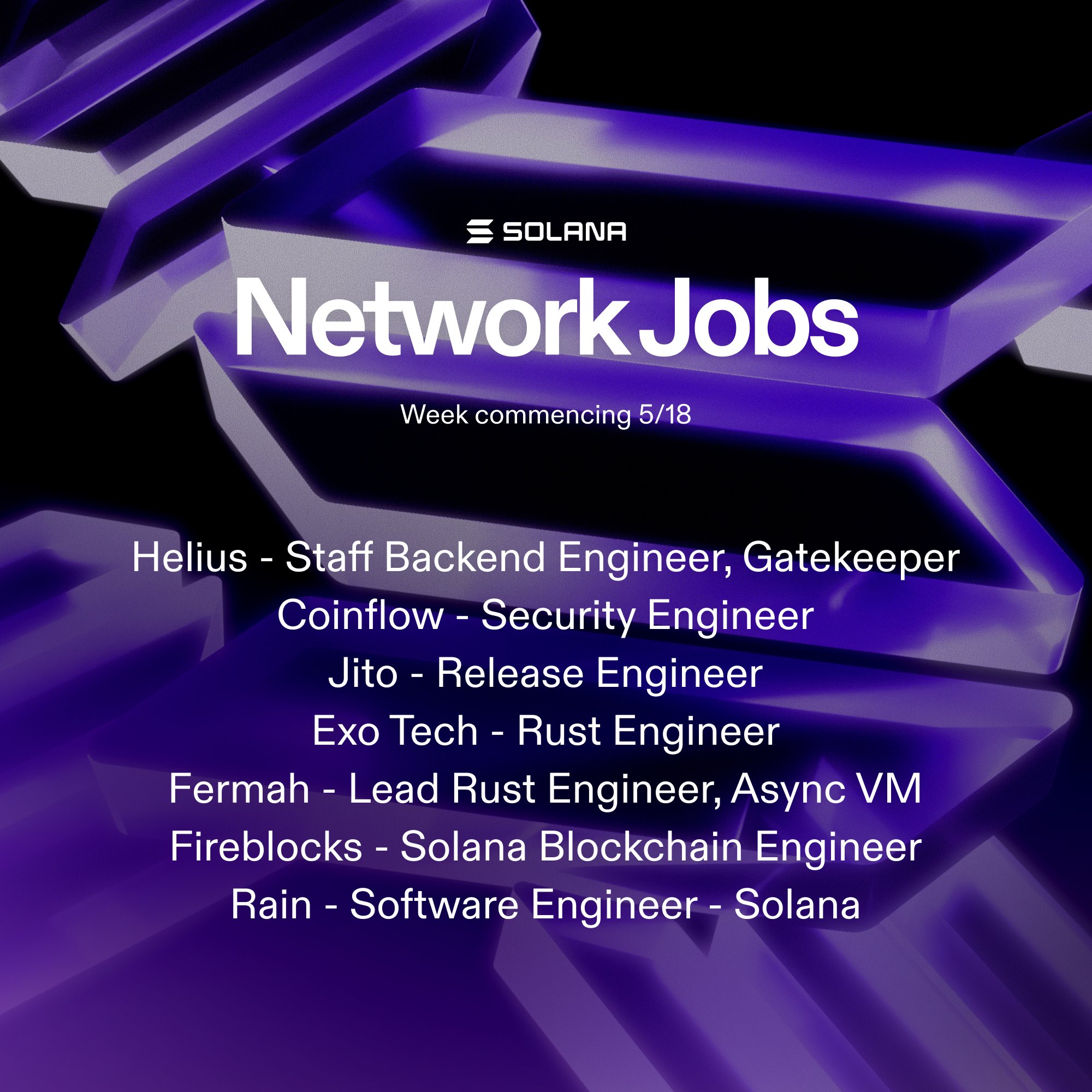 Solana pushes ecosystem hiring spree with 390+ open roles across engineering, product, growth and crypto startups building on the network’s expanding infrastructure2026-05
 Binance's Yi He tweets that Binance is on a hiring spree.2026-07
Hiring in Crypto and AI: How Talent Flows Shape the Digital Asset Economy
In crypto and AI, hiring refers not only to filling traditional jobs but also to coordinating global, often pseudonymous talent and even software agents to build and operate open financial networks. In a sector defined by volatility, regulation and rapid technical change, understanding how hiring works has become one of the best ways to understand where power, capital and innovation are moving.
Hiring in digital assets does not happen in a vacuum, and recent data underlines how exposed it is to broader technological and macroeconomic shifts. In the wider U.S. economy, artificial intelligence was cited as the reason for 38,579 job cuts in a single month of 2026, accounting for about 40% of all layoffs and already surpassing AI-related cuts recorded for all of the previous year. At the same time, specialized crypto job boards report an 80% collapse in new postings compared with early 2025, with barely 85 to 90 new roles listed in the first weeks of 2026 against more than 1,100 a year earlier. Yet even in this chill, islands of aggressive hiring remain: Binance claims AI has made its workforce “10x more effective” and is advertising more than 380 open roles across engineering, product, compliance and AI research, Solana’s ecosystem lists a record 513 open jobs, and trading firms around Polymarket are quietly staffing up quant teams to arbitrage prediction markets. On Wall Street, firms such as BlackRock and Bank of America are posting high-paid digital asset roles while simultaneously cutting headcount elsewhere, and in the background both crypto-native and traditional employers are experimenting with AI-powered hiring tools, on-chain labor marketplaces and trustless agent economies that can “hire, pay and rate” autonomous agents instead of humans. This explainer unpacks what “hiring” means across these overlapping worlds, why the market is so bifurcated, how AI is reshaping both who gets hired and how they are evaluated, and what candidates and employers should watch as the next cycle unfolds.
Defining Hiring in the Crypto Economy
From Filling Jobs to Coordinating Networks
In conventional industries, hiring is primarily about matching a candidate to a clearly defined role inside a single firm. Crypto complicates this picture because networks like Bitcoin, Ethereum or Solana are not companies but open protocols, sustained by thousands of contributors who often move fluidly between salaried work, grants, bounties, trading and independent research. Hiring therefore encompasses not only permanent employment contracts but also the broader allocation of human effort into open-source repositories, DAO governance, validator operations, liquidity provision and community building.
This distinction matters because it changes what counts as a “job.” A developer writing code for a DeFi protocol may contribute under a grant, an independent bounty, or a full-time contract with a foundation or lab; from the outside, the economic function is similar even though the legal wrapper differs. DefiLlama’s careers page, for instance, has historically emphasized an open contribution model in which applicants are encouraged to submit pull requests to their repositories, with hiring decisions heavily influenced by continued contributions rather than traditional interviews. That approach illustrates how, in crypto, “hiring” often starts in public, through GitHub commits, open governance calls or hackathons, rather than in private HR pipelines. It also shows that crypto hiring is deeply intertwined with reputation systems that extend beyond any one employer and are visible on-chain or in public code histories.
At the same time, centralized entities such as exchanges, custodians, market makers and infrastructure providers mirror more conventional hiring practices, running structured recruitment processes for engineers, traders, compliance officers and operations staff. Binance’s announcement of 380 open roles across engineering, product, compliance and AI research, along with its claim that AI is making each employee “10x more effective,” reads very much like a traditional big-tech hiring drive, even if the underlying business is crypto-native. In this sense, the crypto labor market sits at the intersection of Web2-style corporate employment and Web3-style network participation, and understanding hiring in the sector requires tracing how talent moves between these two modes.
On-Chain Labor, DAOs and Agents
Crypto also extends the meaning of hiring into areas that look more like protocol-level coordination than HR. DAOs routinely “hire” contributors to write governance proposals, audit smart contracts, translate documentation or run community events, paying them from on-chain treasuries in tokens or stablecoins. These relationships can be highly fluid and sometimes pseudonymous: a contributor known only by a wallet address may be a core pillar of a protocol’s development efforts without ever signing an employment contract in the traditional sense. Platforms like RareTalent, which our newsroom has covered, attempt to formalize this by matching Web3-native talent to DAO and protocol work, highlighting how hiring can happen around wallets and reputations rather than LinkedIn profiles.
The frontier extends further with AI agents. The Graph recently announced Agent0 Subgraphs indexing every ERC-8004 trustless agent across several networks, including Base, BNB Chain, Ethereum, Monad and Polygon, with the stated aim of enabling millisecond-fast discovery of these agents by developers. The same post frames this as the foundation of an “open agent economy,” in which applications can easily find and interact with agents via subgraphs and a gateway API. In such an environment, hiring may increasingly mean spinning up or integrating an autonomous agent that can execute predefined tasks—research, trading, customer support—while being hired, paid and rated directly on-chain. The concept of a “workforce” thus expands beyond human employees to include software processes that can be programmatically contracted for services.
These developments do not make human hiring obsolete, but they do change the comparative advantage of human talent. As more routine work is automated via smart contracts or AI agents, human roles tilt towards coordination, design, oversight, complex reasoning and relationship-building. Employers that understand this shift will structure their hiring around complementary strengths between humans and agents, rather than viewing automation and recruitment as separate conversations.

Google and Apple are hiring crypto talent as job listings point to potential projects involving stablecoins, tokenized deposits and blockchain infrastructure

Macro Labor Trends: AI, Layoffs and Risk Cycles
AI-Driven Disruption in the Broader Job Market
The current crypto hiring environment cannot be separated from the broader transformation of work driven by AI. According to data cited by the Bitcoin Foundation, AI-related job cuts in the United States reached 38,579 in May 2026 alone, the highest monthly total since tracking began in 2023, and representing around 40% of all layoffs recorded that month. The same report notes that AI has already been responsible for more job losses in 2026 than in all of 2025, highlighting the speed with which generative AI and automation are being incorporated into corporate cost-cutting strategies. These figures underscore a critical point: while AI is enabling new products and increasing productivity, it also provides executives with a rationale and toolkit for reducing headcount, particularly in roles that are perceived as routine or easily automatable.
The effect is uneven across seniority levels. A widely discussed video on the tech job market examined whether AI is “killing” junior developer roles and concluded that many recent layoffs stemmed less from AI itself and more from over-hiring during the pandemic, followed by macroeconomic tightening. Nonetheless, the video argued, AI amplifies pressure on entry-level roles by allowing smaller teams of senior engineers to deliver more, making it harder to justify large cohorts of junior staff. The suggested coping strategies—upskilling quickly toward senior responsibilities, gaining real-world experience even in adjacent roles like QA, support or project management, and maintaining flexibility around job titles and paths—are increasingly relevant for crypto candidates as well. In a world where AI tools can write boilerplate code or summarize documentation, the bar for human contribution rises.
Post-Pandemic Corrections and Wall Street Job Cuts
The pandemic years saw a surge in tech and financial-sector hiring, often driven by optimistic assumptions about perpetual growth. As deal-making slowed and recession risks increased, banks and large financial institutions began to unwind some of that expansion. Reporting around Goldman Sachs, for example, described plans to cut about 3,200 jobs amid a slowdown in global deal-making and a broader reassessment of staffing levels after the post-pandemic hiring spree pushed its headcount to roughly 49,100. These cuts coexist with selective hiring in high-priority areas such as digital assets and AI, producing a two-speed labor market in which some teams shrink while others expand.
Crypto sits in the crosshairs of these dynamics. Traditional financial firms launching or expanding digital asset units frequently recruit from both crypto-native companies and their own internal pools, but their ability to do so depends on broader headcount constraints. A bank that has just announced thousands of layoffs may still post a small number of crypto or AI roles, but internal politics and risk committees will scrutinize each new hire closely. That tension is reflected in coverage of Wall Street firms like BlackRock and Bank of America posting dozens of crypto-related roles, including a director of digital assets at BlackRock with compensation up to about 270,000 dollars before bonus, even as the sector at large faces recession risks and job cuts. For candidates, this creates an environment where digital asset expertise is prized but hiring decisions are cautious and sometimes slow.
Why Macro Labor Trends Matter for Crypto Hiring
For crypto employers and jobseekers, these macro trends influence both the supply of talent and the willingness of investors to fund headcount. When AI-related layoffs are high in the broader economy, more displaced developers, data scientists and product managers may look toward crypto, Web3 or AI-native startups as alternatives, increasing the talent pool. At the same time, risk-off conditions and higher interest rates can limit funding for speculative projects, leading to fewer open roles in early-stage crypto ventures. The 80% drop in new crypto job postings recorded in early 2026 needs to be interpreted against this backdrop. The contraction reflects not only crypto’s own price cycles but also a wider recalibration of risk appetite and productivity expectations in a world of AI-augmented work.
These dynamics also create asymmetries between senior and junior roles. Investors and boards may be more willing to fund a small team of highly experienced engineers, traders and compliance officers than a larger, pyramidal structure with many juniors. Our newsroom’s coverage of platforms like RareTalent points to a growing scarcity of junior Web3 roles, as leading firms such as ConsenSys, Coinbase and Tether prioritize elite senior engineers and AI-augmented productivity over training less experienced staff. This does not mean junior talent is irrelevant, but it does suggest that breaking into crypto may require more self-directed skill-building, participation in open-source projects, and willingness to start in adjacent roles than in previous cycles.
Readers use hiring headlines as macro intelligence, not job leads — the highest-clicked stories treat headcount changes as signals of market cycle position, national-security exposure, and AI's structural toll on the workforce, revealing that hiring data functions as a leading indicator for crypto insiders.
The Current State of Crypto Hiring
Data from the 2026 Hiring Slump
The starkest quantitative snapshot of the current crypto hiring climate comes from a Phemex analysis of job listings across major crypto job portals. According to that report, hiring activity in early 2026 fell by approximately 80% compared with the same period a year earlier, with only 85 to 90 new positions posted in the first two weeks of January 2026, versus 1,192 postings in January 2025. Technical and engineering roles still represented about 60% of demand, but the absolute number of such roles shrank dramatically, indicating a broad-based slowdown rather than a narrow shift away from specific functions. The article characterized the market as cooling sharply, with many firms delaying or cancelling planned hires as they reassessed budgets and growth expectations.
Despite this contraction, the report noted that companies in growth stages, particularly those that had already raised post-Series A funding, remained comparatively active recruiters. Names such as Anchorage and Raincards were singled out as continuing to hire aggressively even as others pulled back, highlighting a classic pattern where better-capitalized or more mature startups take advantage of downturns to acquire talent. The implication is that hiring trends are not uniform across the industry: well-funded, product-market-fit projects may expand headcount in a bear market, while marginal or speculative ventures retrench.
This divergence is echoed in our newsroom’s coverage of layoffs at firms like Algorand, Gemini and Crypto.com, which have cut hundreds of roles in part due to AI integration and the need to streamline operations. At the same time, other firms are in what some founders describe as “fundraise and builder modes,” using fresh capital to open new roles in engineering, business development and ecosystem growth. For candidates, this means that broad headlines about an 80% drop in postings can obscure pockets of opportunity, particularly among infrastructure projects, scaling solutions and specialized service providers that are less exposed to retail market cycles.
Ecosystem Bright Spots: Solana, Binance and Polymarket
Even in a downcycle, certain ecosystems and business models stand out for their hiring activity. The Solana ecosystem, for example, has been actively publicizing job opportunities, with a recent official update touting a “record number of open jobs” and inviting candidates to apply for 513 positions across engineering, product, marketing, socials and other functions. This data point underscores how a major smart-contract platform can act as a magnet for both developers and non-technical talent when its performance, tooling and funding pipelines are perceived as improving. It also reflects a strategic push by the Solana community to compete with Ethereum and other ecosystems for developer mindshare and startup formation.
Binance provides another case study in aggressive hiring amid volatility. The exchange has communicated that AI is making its teams faster and has claimed that it uses AI to make every person “10x more effective,” while simultaneously advertising more than 380 open roles across engineering, product, compliance, AI research and other departments. This combination—investing heavily in AI tools and in human capital—suggests that at least some large exchanges view AI not as a pure cost-cutting tool but as an enabler of more ambitious product and compliance roadmaps. For example, AI can be deployed to monitor suspicious transactions, detect market manipulation patterns, or personalize user interfaces, but those systems still require human designers, auditors and operators.
Prediction markets around platforms like Polymarket form a third bright spot. A CoinDesk report highlighted a “massive hiring wave” among trading firms that no longer view Polymarket as a niche betting tool but as a serious venue for price discovery in binary event contracts. Chicago-based DRW, a well-known derivatives and fixed income trading firm, posted a job requiring candidates to monitor prices across both Polymarket and traditional platforms in real time, identify mispricings and react quickly to capture profits before prices converge. Wintermute, an algorithmic market maker that handles billions in daily crypto volume, is recruiting algorithmic traders with experience in prediction markets, while prop firm IMC is seeking quantitative traders comfortable operating across binary event contracts. Traditional crypto exchanges like OKX and Crypto.com have also posted related roles, reflecting a growing overlap between prediction markets and broader digital asset trading. For jobseekers with quantitative and trading backgrounds, this pocket of hiring activity illustrates how new product categories can spawn specialized employment demand even when the macro picture looks bleak.
Crypto Exchanges, Stability and AI-Driven Restructuring
The hiring behavior of large centralized exchanges arguably sets the tone for much of the sector, as these firms are often among the largest employers in crypto. Binance, as noted, is leaning into AI-augmented growth. Coinbase, by contrast, has faced criticism over its handling of previous hiring expansions and contractions. Reporting in The Information described how CEO Brian Armstrong used language about AI to help explain staffing decisions, framing automation as both a strategic priority and a factor in workforce planning. The article characterized this as a “missed learning” opportunity around hiring, suggesting that the company might have addressed earlier over-hiring and subsequent layoffs more transparently. These episodes matter because they influence how candidates perceive employer risk: a firm that expands headcount aggressively during bull markets and cuts deeply during downturns may struggle to attract top talent without compensating with higher pay or equity.
Smaller exchanges and brokers face their own challenges. Our coverage has documented how some mid-tier platforms, under pressure from regulatory uncertainty and thin margins, have used AI to reduce customer support and back-office headcount while hiring selectively in legal, compliance and security. In parallel, hiring freezes or slowdowns at major exchanges can push engineers and product managers into DeFi, infrastructure startups, or even non-crypto AI companies, reinforcing the porous boundaries between these sectors. OpenAI’s recruitment of forward-deployed engineers focused on AI deployments in financial services, as noted in recent coverage, exemplifies how AI-first companies can attract talent with both finance and crypto experience, even if their core business does not revolve around tokens or blockchains.
Who Is Hiring: From Native Crypto Firms to Wall Street and Big Tech
Centralized Exchanges and Custodians
Centralized exchanges, custodians and brokerages remain among the most visible hirers in crypto because they operate at the intersection of retail users, institutions and regulators. Binance’s current hiring push illustrates the scale and diversity of roles at a leading global exchange. The company’s public statements suggest continued demand for core engineering talent, product managers, compliance professionals and AI researchers, with AI both supporting internal operations and underpinning user-facing features. For candidates, this translates into opportunities to work on large-scale trading infrastructure, risk engines, KYC/AML systems and new AI-driven products, albeit within a highly scrutinized and rapidly evolving regulatory environment.
Other exchanges, including OKX and Crypto.com, are also recruiting, particularly around trading-related functions and specialized products like prediction markets. Their job listings often emphasize quantitative skills, trading strategy development, market microstructure understanding and risk management expertise, reflecting the arms race around liquidity, spreads and product breadth. Custodians and prime brokers similarly seek engineers and operations staff versed in secure key management, settlement workflows and institutional onboarding, as they compete to custody assets for hedge funds, corporates and, increasingly, tokenized funds.
Coinbase occupies a somewhat unique position in this landscape. It has oscillated between rapid hiring and painful layoffs across market cycles, and its approach to workforce management has attracted intense scrutiny from both investors and employees. The recent emphasis on AI in CEO communications suggests a shift toward more automation, but also raises questions about how the firm will balance investment in AI tools with human expertise in areas like policy, security and institutional sales. For prospective hires, Coinbase can offer exposure to a regulated, publicly listed crypto platform with significant scale, but also carries the reputational memory of earlier hiring missteps and the attendant risk of future restructurings.
DeFi, Infrastructure and Open-Source Projects
Beyond centralized platforms, a wide array of DeFi protocols, infrastructure projects and tooling providers are hiring, often with more flexible or unconventional arrangements. DefiLlama’s careers page provides a window into how some of these organizations operate. The project has historically been fully asynchronous, with salaries in the range of 50,000 to 80,000 dollars per year and an additional vested equity grant equal to one year of pay at a relatively low valuation compared to competitors. Rather than relying on standard job applications, DefiLlama invites prospective hires to submit pull requests to its repositories, suggesting specific tasks such as building adapters for requested protocols to be integrated into its analytics platform. Continued contributions after an initial pull request can significantly increase the chances of being hired, effectively using real-world performance as the primary screening mechanism.
Other infrastructure plays adopt similar models. Offchain Labs, which develops the Arbitrum scaling solution, has been recruiting roles such as Solutions Architect Lead, tasked with helping blockchain developers launch on-chain applications and optimizing their infrastructure. Cysic, a company focused on zero-knowledge (ZK) proving infrastructure, announced that it was hiring a Technical Partnerships Lead for a fully remote, full-time position, explicitly seeking candidates with knowledge of ZK, zkVMs, proving infrastructure, technical business development or ecosystem experience, AI-native execution, and the ability to drive integrations. Such job descriptions reveal how DeFi and infrastructure hiring blends deep technical knowledge with ecosystem-building and partnership skills, reflecting the importance of alliances and interoperability in Web3.
The Graph, with its Agent0 Subgraphs indexing ERC-8004 agents, is another example. Although the blog post announcing these subgraphs is aimed primarily at developers, it implicitly signals demand for engineers who can work with subgraph design, indexing, and integration of AI agents into dApps. As more protocols expose their data and logic through subgraphs and standardized interfaces, new roles emerge around indexing, data quality assurance, analytics and developer relations. These positions may not always carry “crypto” in their titles, but they are deeply embedded in the infrastructure that makes Web3 applications usable.
Wall Street and Traditional Finance
Traditional financial institutions have taken a more cautious but increasingly committed approach to hiring in digital assets. A report in Financial Advisor magazine outlined how Wall Street firms have posted dozens of crypto-related jobs, albeit often with significant caveats. BlackRock, for example, has advertised a director of digital assets role with base compensation up to around 270,000 dollars, before bonuses, and similar positions at Bank of America and other large institutions often emphasize the need for traditional finance experience, regulatory knowledge and risk management skills alongside any crypto expertise. These roles tend to sit at the intersection of product development, strategy and compliance, rather than pure trading or speculative activities.
At the same time, these firms face hiring constraints due to broader cost pressures and concerns about regulatory and reputational risk. Our newsroom has reported that some banks view digital asset hiring as both an opportunity and a liability: the right hires can position them to capture upside from tokenization, custody and ETF products, but missteps can expose them to enforcement actions or internal conflicts. As a result, Wall Street tends to move slowly, prioritizing a small number of senior hires who can bridge TradFi and crypto cultures. Candidates with backgrounds in both domains—say, a former crypto exchange engineer who has also worked on regulated trading systems—are particularly sought after.
Proprietary trading firms such as DRW and IMC represent another facet of TradFi’s engagement with crypto. Their recruitment of algorithmic traders to operate across platforms like Polymarket reflects a conviction that crypto-native venues can offer profitable, uncorrelated opportunities when approached with disciplined risk management and technical expertise. Wintermute, though a crypto-native firm, competes in the same talent pool as these prop shops, seeking quants who are comfortable with both blockchain-specific risks and traditional market microstructure. For candidates, this means that a strong quantitative profile, combined with genuine interest in on-chain markets, can open doors across both crypto-native and TradFi-aligned employers.
Big Tech, AI Labs and Adjacent Sectors
The boundary between crypto and broader AI or deep-tech hiring is increasingly porous. Elon Musk’s announcement that SpaceX is actively hiring “world-class engineers/physicists” for its SpaceXAI initiative, even if they have zero prior AI experience, exemplifies how frontier tech companies compete for the same talent pool as crypto projects. The call explicitly encourages “smart humans” who can figure AI out quickly and asks candidates to send an email with three bullet points demonstrating exceptional ability. While SpaceXAI is not a crypto project, its emphasis on physics, AI and exceptional talent mirrors the requirements of many advanced crypto and DeFi teams, especially in areas such as cryptography, MEV research and high-performance computing.
AI labs like OpenAI, as mentioned in recent coverage, are recruiting engineers to deploy AI models in financial services, which can include applications in trading, risk analytics and compliance. Although these roles may not be branded as “crypto,” they are attractive to candidates who want to work on cutting-edge AI while remaining close to financial innovation. Venture-backed startups like Ethos, which a16z has backed to use AI voice agents to transform hiring, expert networks and fractional work, operate at the intersection of AI and labor markets, including those relevant to crypto. Our newsroom has reported that some top users of Ethos’s platform already earn more than 10,000 dollars monthly by offering expertise through AI-mediated channels, suggesting a future where parts of “hiring” involve connecting clients to expert networks through AI agents rather than conventional recruiters.
These adjacent sectors matter because they offer both competition and collaboration opportunities. Crypto employers must compete with AI labs, aerospace firms and other deep-tech companies for top engineers and researchers, while also integrating AI tools developed by those same organizations into their own hiring, trading and customer-service operations. For candidates, the choice is less between “crypto” and “non-crypto” than between different constellations of technologies—blockchains, AI, hardware acceleration—within which career trajectories can unfold.
Consensys is hiring across multiple roles to support its growth, with openings listed on its careers page

Roles, Skills and Compensation in Crypto Hiring
Developers: Senior Scarcity and the Junior Squeeze
Software developers remain at the core of crypto hiring, but the composition of demand is shifting. The Phemex analysis showing that about 60% of open crypto roles in early 2026 were technical or engineering positions indicates that, even in a downturn, code remains the bottleneck resource. However, our newsroom’s reporting and external commentary suggest that within that technical slice, the emphasis has moved strongly toward senior and specialist roles. Platforms like RareTalent have documented a decline in junior Web3 job postings, with major firms such as ConsenSys, Coinbase and Tether focusing their limited headcount on elite senior engineers and protocol specialists rather than entry-level developers.
The YouTube discussion on AI and junior developer jobs sheds light on why. According to the video, many of the layoffs affecting junior engineers are not directly caused by AI but by the unwinding of pandemic-era over-hiring. Nevertheless, AI tools do allow experienced engineers to produce more, making it harder for companies to justify large junior cohorts who require significant mentoring. The advice offered—stay in your job if you have one, upskill toward senior responsibilities as quickly as possible, seek out real-world experience even under titles like QA, support engineer or technical project manager, and consider adjacent roles when pure “developer” openings are scarce—applies directly to would-be crypto engineers. Open-source contributions, hackathon participation and visible on-chain work can also substitute for formal job titles in demonstrating capability.
On the compensation side, data points are scattered but instructive. DefiLlama indicates that its salaries for developers typically range from 50,000 to 80,000 dollars per year, complemented by a vested equity grant equal to one year of pay at a valuation lower than that of its closest competitors. This structure reflects both the constraints and upside of working in a lean, fully remote Web3 project: cash compensation may lag big-tech averages, but equity upside and flexibility can compensate for candidates who believe in the project’s trajectory. At the upper end, roles like BlackRock’s director of digital assets, with base compensation up to 270,000 dollars before bonus, show how senior talent that bridges crypto and TradFi can command packages comparable to traditional leadership positions.
Traders, Quants and Market Microstructure Experts
Trading and quantitative roles form another key pillar of crypto hiring, especially as liquidity and market efficiency become more important to institutional adoption. The hiring wave around Polymarket illustrates this neatly. DRW’s job listing for a role monitoring prices in real time across Polymarket and traditional platforms, identifying mispricings and reacting quickly before prices converge, reflects the firm’s view that prediction markets have matured into venues where sophisticated arbitrage can generate meaningful profits. Wintermute’s recruitment of algorithmic traders with prediction market experience and IMC’s search for quants comfortable with binary event contracts similarly indicate that specialized knowledge of on-chain liquidity, smart contract risk and event-driven trading is increasingly valuable.
Crypto-native exchanges also hire traders and market structure experts to design products, manage risk and interface with market makers. While some of these roles resemble traditional exchange positions, others require fluency in DeFi primitives, cross-chain bridging, MEV dynamics and oracle design. Quantitative developers who can write performant code in Rust, C++ or Go while understanding on-chain data structures are particularly sought after, as they can build systems that interface directly with blockchains without sacrificing latency.
Compensation for trading and quant roles tends to include a significant performance component, aligning incentives with PnL outcomes. However, the volatility of crypto markets and the evolving regulatory landscape mean that candidates must weigh upside against job security and reputational risk. The fact that major firms are willing to hire explicitly for prediction markets around platforms like Polymarket suggests a growing institutional comfort with these products, but regulatory scrutiny may still shift quickly, affecting both business models and hiring plans.
Compliance, Legal and Risk
If engineering and trading are the engines of crypto firms, compliance, legal and risk functions are their stabilizers. As digital asset markets intersect more with traditional finance and regulatory oversight intensifies, hiring in these areas has grown in both volume and strategic importance. The StarCompliance analysis of employee activity in crypto markets, featuring insights from Owen Rapaport, underscores the challenges firms face as more employees hold or trade digital assets. Companies must develop policies regarding employees trading the same tokens their firm lists or researches, handle conflicts of interest, and comply with evolving disclosure rules. That complexity creates demand for compliance professionals who understand both securities and commodities regulation and the technical specifics of on-chain assets.
Wall Street firms posting crypto roles often emphasize this skill set. As noted in the FA Magazine report, many of the digital asset positions at institutions like BlackRock and Bank of America require experience in regulatory engagement, risk frameworks and governance, in addition to any knowledge of blockchain technology. Similarly, centralized exchanges invest heavily in compliance hiring to meet KYC/AML obligations, sanctions screening and licensing requirements in multiple jurisdictions. Recent enforcement actions and investigative reporting around issues like wash trading, market manipulation and inadequate disclosures have only heightened the perceived need for robust internal controls.
Crypto-native firms also face unique risk domains. Smart contract failure, oracle manipulation, bridge exploits and governance attacks all fall partly under the remit of risk teams, which must model scenarios, stress-test systems and coordinate incident responses with engineers and communications staff. Hiring for these roles often targets candidates with cross-disciplinary backgrounds in cybersecurity, DeFi research, legal analysis and sometimes even insurance or actuarial science. As protocols experiment with on-chain insurance, undercollateralized lending and real-world asset tokenization, the need for sophisticated risk expertise will likely grow.
Non-Technical Roles: Policy, Content and Community
Beyond technical, trading and compliance functions, crypto firms hire for a wide range of non-technical roles, including marketing, content, policy advocacy, investor relations, sales and community management. Our newsroom has recently highlighted roles such as a Science Content Writer for an AI scientist platform focused on peptide research, responsible for owning social strategy across platforms like X and LinkedIn, turning research into accessible content and building thought leadership around threads, announcements and explainers. While not purely “crypto,” such roles share many characteristics with positions at Web3 projects that must explain complex technical or financial concepts to mixed audiences.
Policy and advocacy roles have also become central as crypto grapples with regulation. Panel discussions at conferences like Consensus Miami, featuring product, policy and hiring voices, underscore how staffing choices in policy teams can reshape crypto outcomes by influencing which narratives and proposals reach regulators and legislators. These roles require deep familiarity with both the technology and the legislative process, and often involve coordination with industry associations, think tanks and grassroots communities.
Community management remains vital, particularly for NFT projects, gaming platforms and grassroots DeFi protocols. The world’s first NFT-themed restaurants, for example, rely on community managers and event coordinators to translate online enthusiasm into real-world experiences, as highlighted in cultural coverage like “Dining With Apes.” While such roles may not carry the compensation of senior engineering positions, they can provide entry points into the industry for candidates with strong communication skills, cultural fluency and a willingness to learn the underlying technology.
Geography, Remote Work and Regulatory Constraints
Remote-First Models and Asynchronous Teams
Crypto has been a pioneer of remote and asynchronous work, partly because of its global user base and the open-source nature of many projects. DefiLlama exemplifies this approach, describing itself as fully asynchronous and structuring its hiring process around GitHub contributions rather than physical presence. Salaries are denominated in dollars, but work is location-agnostic, with collaboration occurring through code repositories, messaging platforms and on-chain governance rather than in offices. For many candidates, especially those outside traditional tech hubs, this model offers unprecedented access to frontier work, though it also demands a high degree of self-management and comfort with written communication.
Remote-first hiring can broaden the talent pool but also complicates compliance. Employers must navigate labor laws, tax rules and regulatory requirements across multiple jurisdictions, deciding whether to hire directly, use employer-of-record services or treat contributors as independent contractors. Crypto’s history of pseudonymous work further blurs boundaries, raising questions about KYC for employees and contractors who may be paid in tokens from on-chain treasuries. Some firms have responded by narrowing their hiring to a smaller set of “friendly” jurisdictions, while others embrace a more decentralized approach and accept the associated legal complexity.
Immigration, Foreign Workers and Jurisdictional Risk
The global nature of crypto also intersects with immigration and foreign worker policies. Our newsroom has covered concerns about crypto firms hiring foreign IT workers, including questions about export controls, data access and national security. These issues can affect everything from where engineering teams are located to how remote access to production systems is managed. Firms dealing with sensitive financial data or regulated activities may limit certain roles to citizens or residents of specific countries, or require additional screening when hiring abroad.
At the same time, some governments actively court crypto and fintech talent through favorable visa regimes and regulatory sandboxes, hoping to attract entrepreneurs and high-skilled workers. This creates a patchwork of incentives and risks. Candidates may find better opportunities in jurisdictions that balance openness to innovation with clear compliance frameworks, while employers must weigh the benefits of tapping global talent against the operational overhead of managing cross-border teams.
Legal and Political Risks in Hiring: The Bithumb Probe
Hiring can also become entangled in political and legal controversies. A recent report by The Block noted that South Korean police booked the CEO of Bithumb, a major crypto exchange, as a bribery suspect in connection with a lawmaker hiring probe. While details are still emerging, the case underscores how hiring processes, particularly for politically connected roles or advisory positions, can attract scrutiny and potential criminal liability if handled improperly. Even the perception that a role is being used to curry favor with regulators or legislators can damage a firm’s reputation and invite investigations.
Such incidents illustrate the broader principle that hiring in crypto is not merely an internal matter but part of a firm’s public and regulatory footprint. High-profile appointments, especially of former regulators or politicians, may be seen as attempts at regulatory capture unless accompanied by transparent governance and clear role definitions. Conversely, failure to vet hires for conflicts of interest or past misconduct can lead to compliance failures down the line. As the sector matures, robust hiring governance—background checks, conflict-of-interest policies, and transparent job descriptions—will become as important as technical security in maintaining trust.
- 01DefiLlama code-first recruiting↗
Four separate DefiLlama hiring posts accumulated the largest combined click volume, driven by reader fascination with its 'submit code, not resume' model as a credible alternative to credential-based hiring.
- 02North Korean engineer infiltration
Kraken's deliberate exposure of a DPRK operative mid-interview pulled readers in because it named the specific social-engineering playbook nation-states use to embed agents at crypto firms.
- 03Bull-run exchange hiring sprees↗
Binance and Coinbase adding 1,200+ roles in a single wave — with BlackRock framing 2024 as the right moment to staff up — confirmed that crypto headcount tracks price sentiment almost linearly.
- 04AI displacement of crypto jobs↗
Multiple converging stories — an AI hiring freeze, Binance citing 10x productivity gains, and crypto postings falling 80% YoY — fused into a single reader anxiety that AI, not the bear market, is structurally eliminating roles.
- 05Junior roles vanishing, skill gap widening↗
Stories showing ConsenSys, Coinbase, and Tether concentrating on elite senior engineers while entry-level postings dry up tapped into reader fear that the on-ramp into Web3 careers is closing permanently.
- 06Wall Street absorbing crypto talent↗
BlackRock, Revolut, and Robinhood racing to hire in crypto under lighter 2026 regulation signaled to readers that TradFi is capturing the talent pool that DeFi built.
AI Inside Crypto Companies: Productivity, Downsizing and New Job Categories
AI as a Productivity Multiplier
Many crypto firms view AI primarily as a productivity enhancer, allowing lean teams to handle complex workloads. Binance’s claim that AI makes its teams “10x more effective” epitomizes this mindset. Internally, AI can assist with code generation, bug detection, documentation, risk monitoring, fraud detection, customer support and even governance analysis. Externally, it enables more personalized user interfaces, smarter order routing, and sophisticated analytics, all of which can differentiate an exchange or protocol in a crowded market.
When AI significantly boosts productivity, firms face a strategic choice: hold headcount constant and expand output, or maintain output and reduce headcount. The broader economy’s experience, in which AI-related job cuts have spiked and already exceed the previous year’s totals, suggests that many organizations opt for the latter, at least initially. Crypto is no exception. Our coverage of layoffs at various exchanges and protocols indicates that AI-assisted automation in support, operations and even parts of engineering can justify downsizing, particularly under investor pressure to improve margins.
AI as a Driver of Restructuring and Role Recomposition
AI adoption not only reduces some roles but also reshapes others. In companies like Coinbase, where leadership has publicly highlighted AI as a factor in workforce decisions, restructuring often involves combining previously separate functions or redefining job descriptions to emphasize AI literacy. A product manager who once focused mainly on UX and business metrics may now be expected to understand model capabilities and limits, work with AI engineers, and design human-in-the-loop systems. A compliance officer might need to evaluate AI-driven transaction monitoring tools, understanding both their statistical behavior and their regulatory implications.
The YouTube discussion on junior developer jobs emphasizes that, even if AI is not the primary cause of layoffs, it changes how juniors must position themselves. Instead of competing at tasks that AI can easily assist with, such as boilerplate code or simple UI components, junior engineers may benefit from specializing in integration work, reliability engineering, or domains where human judgment remains critical. For crypto specifically, that could mean focusing on smart contract security, protocol design, cryptography or on-chain data analysis, areas where domain expertise and careful reasoning still trump automated code generation.
AI-Native Roles and Cross-Sector Hiring
As AI becomes more central to crypto business models, dedicated AI roles proliferate. Binance’s list of open positions includes AI research and engineering roles, while other exchanges and DeFi platforms seek machine learning experts for risk scoring, recommendation systems and fraud detection. These roles often require familiarity with both AI frameworks and blockchain data formats, creating a hybrid skill set that is still relatively rare.
Cross-sector hiring further blurs boundaries. SpaceXAI’s call for world-class engineers and physicists who can learn AI quickly indicates that frontier tech firms value raw problem-solving ability and scientific training as much as prior AI experience. Crypto firms with strong treasury positions may adopt a similar philosophy, recruiting talented mathematicians, cryptographers or distributed systems researchers and trusting them to acquire the necessary AI and blockchain domain knowledge. AI labs like OpenAI, recruiting for financial services deployments, may in turn hire professionals with crypto experience to help them understand on-chain data and risk factors. The result is a talent market where AI and crypto are not separate silos but overlapping communities.
AI Platforms Transforming Hiring Itself
AI is not only changing who gets hired but how hiring is conducted. Startups like Ethos, backed by a16z and covered by our newsroom, use AI voice agents to transform hiring, expert networks and fractional work. By automating parts of the interview and matching process, such platforms can reduce friction in connecting candidates and employers, potentially expanding access to specialized talent. Reports of top users already earning more than 10,000 dollars monthly through these networks highlight the economic significance of AI-mediated work.
Within traditional hiring processes, AI tools already assist with resume screening, coding assessments, and even video interview analysis. In crypto, where candidates may have rich on-chain and open-source footprints, AI can help employers analyze GitHub histories, transaction patterns and governance participation for signals of competence and alignment. However, these tools raise concerns about bias, transparency and over-reliance on automated judgments. Firms that deploy AI in hiring must consider fairness, explainability and the risk of excluding non-traditional candidates who may not fit standard data patterns but possess valuable skills.
On-chain agent economies like those envisioned by The Graph’s Agent0 Subgraphs take this further, enabling applications to programmatically “hire” AI agents to perform tasks, pay them via smart contracts, and rate their performance. In such a world, the distinction between hiring a human and contracting an AI agent becomes blurred, and human workers may increasingly focus on orchestrating agents, verifying outputs and handling edge cases. This suggests that future crypto hiring will emphasize meta-skills: the ability to design systems that integrate human and machine contributions effectively.
StonkBrokers launches Pager, an encrypted hiring and payments tool on Robinhood Chain

Hiring Infrastructure: Job Boards, On-Chain Markets and Prediction Venues
Centralized Job Boards and Data Visibility
Traditional job boards, including specialized crypto platforms, remain important conduits for hiring. The Phemex report leveraged data from major crypto job portals to quantify the 80% drop in hiring activity, highlighting how such platforms provide visibility into sector-wide trends. The steep decline from 1,192 job postings in January 2025 to only 85–90 in early January 2026 underscores the sensitivity of job posting volume to market sentiment and funding conditions. However, these figures likely undercount roles filled through informal networks, direct outreach or open-source contribution pathways.
As some firms pull back from public postings, they may rely more heavily on referrals, private Discord servers, hackathons and embedded talent networks such as RareTalent. For candidates, this means that simply monitoring job boards may provide an incomplete picture; actively participating in ecosystems, contributing to codebases and attending community events can surface opportunities that never appear in formal listings.
On-Chain Resumes and Reputation Systems
On-chain identity and reputation systems offer an alternative infrastructure for hiring. Instead of or in addition to resumes, candidates can present verifiable records of past activity: contributions to DAOs, participation in governance votes, deployment of smart contracts, provision of liquidity, or delivery of tasks funded by on-chain grants. Employers can query this data directly on-chain or through indexing services like The Graph. Agent0 Subgraphs, for example, index trustless agents across multiple networks, making it easier for dApps to discover and interact with them. Similar subgraph-driven approaches could index human contributor activity, enabling richer, permissionless reputation profiles.
DAOs have already experimented with contributor reputation scores, bounties tied to past performance and multi-round grant processes that use on-chain signals to guide funding decisions. As these systems mature, they may provide a more granular and transparent basis for hiring than traditional credentials, particularly in a global, remote-first context where educational backgrounds and former employers may be hard to verify. At the same time, privacy and the right to move on from past mistakes become important considerations; immutable on-chain records can be a double-edged sword if not contextualized.
Prediction Markets and Labor Signaling
Prediction markets like Polymarket primarily serve to aggregate beliefs about future events, but their growth has labor implications. The hiring wave among trading firms engaging with Polymarket demonstrates that as new markets gain liquidity and informational relevance, they create demand for specialized talent. Traders, researchers and engineers who understand the nuances of binary event contracts, regulatory risk and on-chain settlement are increasingly sought after. In this sense, prediction markets can be both a source of employment and a signaling mechanism for which topics and sectors are perceived as economically important.
Beyond direct trading roles, prediction markets may also inform hiring decisions by providing market-based forecasts about regulatory outcomes, technology adoption or macroeconomic conditions. Firms deciding whether to expand a particular product line or geographic presence could consult prediction markets for probabilistic input, indirectly shaping headcount planning. While this remains speculative, the integration of prediction markets into corporate decision-making would further entangle crypto-native tools with traditional business processes.
DAOs, Grants and Bounties as Hiring Alternatives
Grants, bounties and retroactive funding mechanisms offer alternatives to traditional hiring, especially in early or decentralized projects. Instead of posting a job for a “developer,” a DAO might publish a grant for implementing a specific feature, with payment released upon completion and community approval. Contributors who repeatedly deliver on such tasks effectively build an employment-like relationship with the protocol, even if no formal contract is signed. Over time, this can evolve into core contributor status or a salaried role at a foundation or labs entity.
These mechanisms can be more flexible and inclusive than traditional hiring, allowing contributors from any jurisdiction and background to participate. However, they also place more risk on individuals, who may lack legal protections, benefits or stable income. For hiring managers and DAO governors, the challenge is to design grant and bounty systems that provide sufficient compensation and clarity while preserving the agility of open-source collaboration.
Governance, Ethics and Compliance Risks in Hiring
Bribery, Influence and Political Exposure
The Bithumb hiring probe in South Korea illustrates the reputational and legal risks that can arise when hiring intersects with politics and influence. In that case, police reportedly booked the exchange’s CEO as a bribery suspect related to a lawmaker hiring probe, suggesting that employment decisions may have been used as a conduit for improper benefits or influence. Regardless of the eventual legal outcome, the investigation highlights how hiring high-profile individuals, particularly those connected to government or regulatory bodies, can trigger scrutiny.
Crypto firms navigating these waters must develop clear policies on political appointments, lobbying and the recruitment of former regulators. Transparency around job descriptions, compensation and the decision-making process can help mitigate perceptions of impropriety. Internal governance structures, such as independent boards or ethics committees, may be warranted for larger organizations. DAOs face additional challenges, as their diffuse decision-making can make it unclear who is responsible for compliance and oversight. As crypto’s political footprint grows, expect regulators to pay more attention to the intersection of hiring, lobbying and policy influence.
Employee Trading and Conflicts of Interest
Employee participation in crypto markets poses another compliance challenge. The StarCompliance article on employees in crypto markets, featuring insights from Owen Rapaport, emphasizes that as more staff at financial firms buy, sell or hold digital assets, companies must grapple with conflicts of interest, insider trading risks and disclosure obligations. For instance, a research analyst who covers a particular token for clients may also hold that token personally, potentially biasing their analysis. An engineer working on a protocol upgrade may have advance knowledge of features or vulnerabilities that could impact token price.
Financial firms and exchanges address these issues through codes of conduct, preclearance requirements, blackout periods and monitoring of employee trading activity. However, the pseudonymous and decentralized nature of many crypto markets complicates enforcement. Employees may trade through multiple wallets, DeFi protocols or offshore platforms that are difficult to link to their identity. Tools that monitor on-chain activity at scale, possibly augmented by AI, will likely play a growing role in compliance—but they raise their own privacy and governance questions.
Instability, Retrenchment and Talent Risk
Hiring in crypto also carries significant volatility risk. Our newsroom has reported on episodes where firms aggressively hire high-profile teams only to reverse course months later, as in the case of Tether abandoning starboard gold recruits hired from HSBC amid turbulent conditions. Such reversals can damage employer brands, erode trust and make future hiring harder. They also highlight the importance of sustainable workforce planning: recruiting based on short-term market exuberance without a clear long-term strategy can lead to painful restructurings and legal disputes.
Similarly, the “Wall Street hiring spree” in digital assets—featuring firms like BlackRock, Goldman and Citi—has been accompanied by broader job cuts and recession concerns, masking the fragility of some of these roles. When macro conditions worsen, experimental or non-core business lines, including crypto initiatives, may see budget cuts or staff reductions even if the long-term thesis remains intact. Candidates should factor this into their assessment of offers, especially when moving from stable roles into newly formed digital asset units.
Illicit and Grey-Market “Hiring”
At the fringes of crypto, hiring can take darker forms. Reports of a “crypto revenge network” recruiting crews for “vengeance hits” on Telegram reflect how the same tools that enable decentralized collaboration can also facilitate illicit activities. While these activities represent a small and extreme subset of the ecosystem, they underscore the importance of due diligence for both employers and candidates. Being associated, even unwittingly, with projects that engage in harassment, market manipulation or other illegal activities can carry legal and reputational consequences.
Regulators may increasingly scrutinize not just what firms do, but whom they hire and empower. Background checks, reference verification and ongoing monitoring become more important as projects scale and touch real-world assets or regulated activities. For decentralized communities, governance mechanisms that can rapidly disavow malicious actors and reassign responsibilities may help mitigate risk, though such mechanisms are still evolving.
Strategies for Candidates and Employers in a Volatile Market
Navigating the Market as a Candidate
For jobseekers, the current environment combines fewer postings with more intense competition, particularly for coveted senior roles. The advice from the YouTube analysis of junior developer jobs—stay in your current role if possible, focus on gaining experience that moves you toward senior responsibilities, and consider adjacent positions when pure developer roles are scarce—is especially apt. In crypto, adjacent roles might include protocol support, developer relations, QA, analytics, community management or technical writing. These positions can provide exposure to the technology and networks that matter, while building a track record that can later be leveraged to secure engineering or research roles.
Contributing to open-source projects, participating in DAO governance and building small but real products can differentiate candidates in a crowded field. DefiLlama’s emphasis on hiring through GitHub pull requests underscores how visible contributions can substitute for traditional credentials, especially in infrastructure and analytics projects. Similarly, hackathons and grants offered by ecosystems like Solana, which currently lists hundreds of open roles across its network, can serve as both income sources and audition stages. Candidates who treat each grant or bounty as an opportunity to demonstrate reliability, communication and technical skill may find that offers start coming to them, rather than the other way around.
Evaluating Employers and Offers
Given the sector’s volatility, candidates should evaluate potential employers not only on compensation but also on funding, governance, product-market fit and historical behavior during previous cycles. A project that has navigated multiple market turns without drastic layoffs or governance crises may be a safer bet than one with a history of boom-and-bust hiring. Compensation structures also warrant careful scrutiny. DefiLlama’s combination of moderate salaries and significant equity grants at relatively low valuations offers one model, while roles like BlackRock’s director of digital assets provide high base pay but may involve less upside and more corporate constraints.
Candidates should also consider regulatory and reputational risk. Working for a firm under active investigation, or one that operates in regulatory grey areas without clear compliance strategies, can affect future employability. The Bithumb bribery probe is a reminder that association with a scandal—even without personal wrongdoing—can carry collateral damage. Conversely, firms that invest heavily in compliance and transparent governance may offer more stability, even if their products evolve more slowly.
Building Resilient Teams as an Employer
For employers, the challenge is to build teams that can withstand market and regulatory volatility while delivering on ambitious roadmaps. Over-hiring during bull markets, followed by painful layoffs, erodes morale and employer brand. Instead, firms might prioritize hiring a smaller number of high-impact individuals, as suggested by the market’s tilt toward senior roles, and augment their capacity with AI tools, contractors, grants and DAOs. Binance’s combination of AI investments and broad hiring illustrates one approach, though its long-term sustainability will depend on how effectively the company integrates these elements.
Clear role definitions, growth paths and feedback loops can help retain talent in a competitive market. Providing opportunities for employees to work on meaningful problems, contribute to open-source projects, and engage with the wider ecosystem can also enhance job satisfaction. Employers should be transparent about the use of AI in their operations and hiring processes, including what it means for role expectations, performance metrics and job security. Engaging employees in decisions about automation and reskilling can mitigate fear and resistance.
Integrating AI and Human Talent Strategically
Finally, both candidates and employers must think strategically about the division of labor between humans and AI. Routine, repetitive tasks are natural candidates for automation, but some functions—creative design, nuanced negotiation, long-term relationship-building and ethical judgment—are harder to replace. Crypto’s unique combination of open-source code, financial incentives and public ledgers provides fertile ground for experimentation with AI agents, on-chain automation and hybrid workflows. Firms that thoughtfully design these systems, with clear guardrails and human oversight, can gain productivity without sacrificing trust.
For candidates, developing fluency with AI tools, even if not specializing in AI research, will increasingly be table stakes. Understanding how to prompt models effectively, validate outputs, and integrate AI into daily workflows can boost productivity and make them more attractive hires. At the same time, cultivating deep domain expertise—in protocol design, cryptography, compliance, community dynamics or quantitative research—provides an anchor that is less vulnerable to commoditization.
- 2023-11milestone
Nansen lays off 30% of workforce citing over-hiring and crypto bear market
BlackRock and Coinbase declare 2024 the right time to grow, launch coordinated hiring push
Binance and Coinbase collectively add 1,200+ roles riding post-election bull-run momentum
- 2025-05regulatory
Kraken exposes North Korean operative posing as engineering applicant during live hiring process
Crypto job postings drop 80% YoY; compliance overtakes engineering as second-largest hiring category
Wall Street firms — BlackRock, Revolut, Robinhood — accelerate crypto hiring under Trump-era light-touch regulation
Solana ecosystem posts 390+ open roles in a coordinated hiring push across engineering, product, and growth
Conclusion
Hiring in crypto and AI-rich industries is more than a snapshot of job openings at a given moment; it is a moving pattern that reveals how capital, technology and regulation shape the future of finance and the internet. The current landscape is characterized by sharp contrasts: an 80% drop in crypto job postings on major portals alongside record hiring sprees in select ecosystems like Solana and Binance; AI-related job cuts in the broader economy reaching record highs while AI-native roles and companies like SpaceXAI, OpenAI and Ethos compete aggressively for frontier talent; Wall Street institutions both cutting thousands of jobs and quietly building digital asset teams that demand high compensation and rare hybrid skill sets.
At the human level, these dynamics translate into both anxiety and opportunity. Junior candidates face a tougher path as AI and post-pandemic corrections compress entry-level roles, but open-source work, DAOs, grants and adjacent functions provide alternative routes into the ecosystem. Senior engineers, quants, compliance experts and ecosystem builders remain in high demand, especially when they can bridge crypto, AI and TradFi. Employers, for their part, must balance the lure of rapid expansion with the need for sustainable workforce planning, avoiding the boom-and-bust hiring cycles that have damaged reputations in past cycles.
Governance and ethics loom large in this picture. From the Bithumb bribery probe to concerns about employee trading conflicts, to the specter of illicit “hiring” for malicious activities, the way firms staff themselves is increasingly a matter of public and regulatory interest. AI amplifies both the potential and the risks, enabling more efficient hiring and operations while raising new questions about bias, transparency and job displacement. On-chain agent economies, as envisaged by The Graph’s Agent0 Subgraphs, hint at a future where hiring extends beyond humans to include autonomous software agents, further blurring the boundaries of work and organization.
In sum, hiring in crypto is not a peripheral concern but a central axis along which the industry’s evolution unfolds. It shapes which technologies are built, which jurisdictions lead, which communities thrive and which narratives prevail. For a crypto news audience, tracking hiring trends—who is hiring, for what roles, in which locations, at what pay, using what tools—is one of the most powerful ways to understand where the next wave of innovation and conflict will arise.
Outlook
Looking ahead, crypto hiring is likely to remain bifurcated but gradually expand as regulatory clarity improves, institutional adoption deepens and new application categories—prediction markets, real-world assets, AI-agent economies—gain traction. Ecosystems that provide robust developer tooling, funding pipelines and clear governance, like Solana’s current push to list hundreds of roles, will continue to attract both startups and individual contributors. Large exchanges and custodians will likely keep investing in AI and compliance talent, even if overall headcount grows more slowly than in past bull runs, while Wall Street’s digital asset units will expand cautiously, constrained by macro and regulatory concerns.
AI’s role will intensify on multiple fronts. It will accelerate productivity and enable smaller teams to achieve more, further privileging senior, hybrid-skilled talent; it will underpin new products and services, from AI-driven trading and risk analytics to AI-mediated hiring platforms; and it will challenge both employers and regulators to rethink how work is measured, rewarded and safeguarded. On-chain identity, reputation and agent systems will provide new infrastructure for matching talent to tasks, but will also require careful design to balance transparency with privacy.
For candidates, the path into and through crypto will demand more self-direction, cross-disciplinary learning and resilience than ever. For employers, competitive advantage will depend not only on technology and capital, but on the ability to assemble and retain teams—human and machine—that can navigate uncertainty while building credible, compliant, user-centric products. As cycles unfold, hiring will remain one of the most revealing stories in crypto, a barometer of where conviction is strongest and where risk is being quietly reassessed.
Latest hiring news
Google and Apple are hiring crypto talent as job listings point to potential projects involving stablecoins, tokenized deposits and blockchain infrastructureConsensys is hiring across multiple roles to support its growth, with openings listed on its careers pageStonkBrokers launches Pager, an encrypted hiring and payments tool on Robinhood ChainSources
18 records from 13 domains
bitcoinfoundation.org
phemex.com
facebook.com
x.com
instagram.com
theinformation.com
fa-mag.com
starcompliance.com
youtube.com
github.com
moomoo.com
thegraph.com
info-reader-production.herokuapp.com
Community notes
Spot something off or out of date? Drop a note. Editors review topic notes daily and roll accepted fixes into the explainer — contributors are recognized in the monthly $SQUID drop.
Loading notes…
Help improve this topic
Have a story or tip about this topic? Submit it. See something missing? Leave a note. Editors review daily; accepted submissions and fixes count toward the monthly $SQUID drop.