
Comprehensive explainer on Hong Kong’s role as a regulated hub for crypto, stablecoins, tokenized bonds, AI and Web3, covering SFC/HKMA rules, stablecoin law, Ethereum pilots, regional context and what it means for builders and investors.
+21 sources across the wider coverage universe
 Hong Kong issues first stablecoin licenses to HSBC and Anchorpoint Financial2026-04
 Morpho signs its first major Hong Kong partnership with HashKey Group and HSK Chain to expand compliant onchain credit infrastructure across APAC2026-07
 Pyth Pro launches 100+ equity feeds across Hong Kong, mainland China, South Korea and Japan, targeting 450+2026-07
- Hong Kong banks score 2.3/10 on quantum readiness as HKMA targets full preparedness by 20302026-07
 Hong Kong's Flow Capital to tokenize $150M private credit fund on DigiFT, targets $250M by year-end2026-04
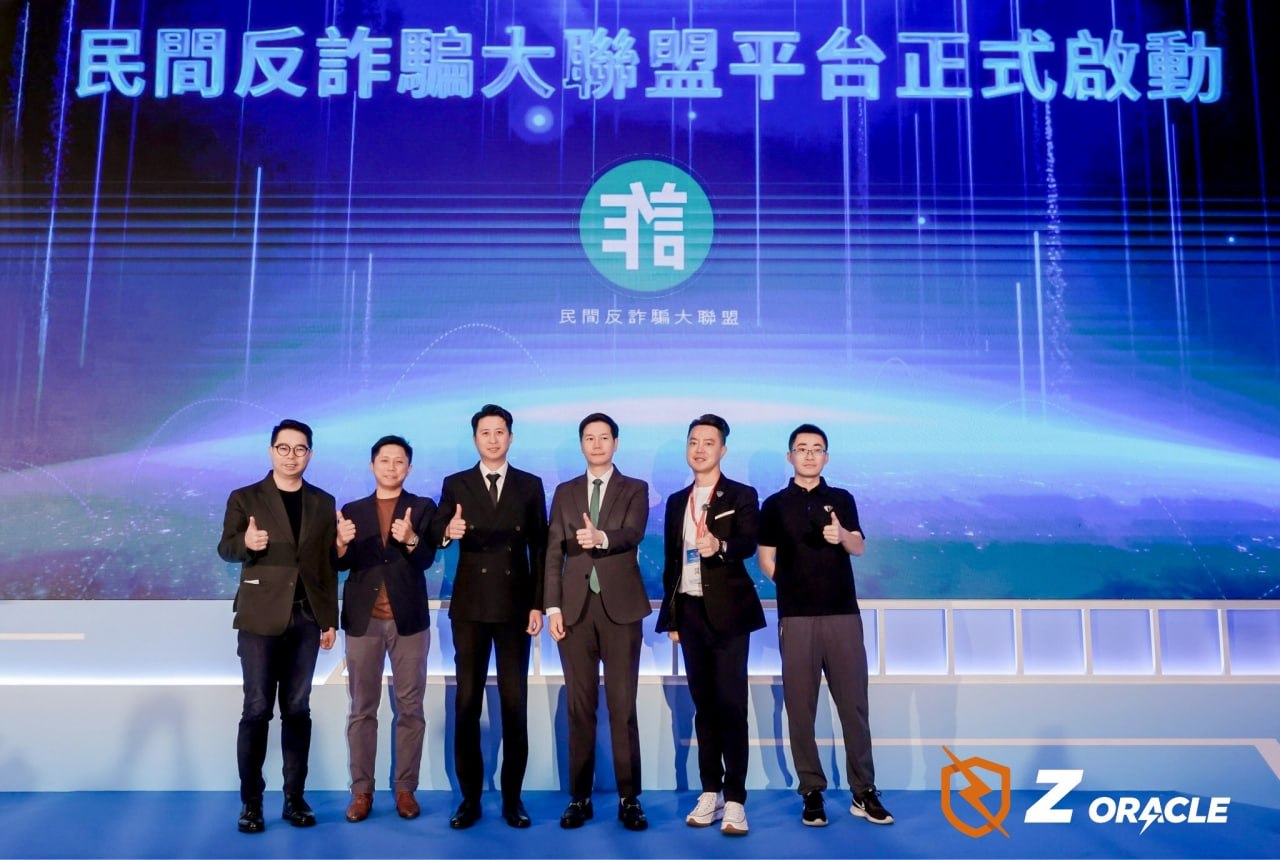 Hong Kong unveils AI-blockchain platform to shield users from fraud losses.2026-05
Hong Kong as a Regulated Hub for Crypto, Stablecoins, Web3, and AI
As a global financial centre with a common-law system and deep capital markets, the Hong Kong Special Administrative Region has spent the past several years rebuilding its digital-asset strategy around a tightly regulated, institution-friendly model. Rather than chasing unrestrained growth, policymakers have combined a mandatory licensing regime for exchanges, a purpose-built stablecoin law, and new reporting rules with active promotion of Web3, tokenized bonds, and AI-driven innovation, positioning the city as one of the most closely watched crypto laboratories in Asia.
1. From “Gray Area” to Structured Crypto Regime
1.1 Hong Kong’s pivot on digital assets
Hong Kong’s approach to crypto has evolved from treating tokens as a largely unregulated “virtual commodity” market to a layered framework that explicitly recognises digital assets as part of its financial system. In the early years, regulators mostly applied existing laws to crypto on an ad hoc basis, focusing on fraud and anti-money laundering rather than on the underlying technology. That changed after the boom-and-bust cycles of global crypto markets and regional policy shifts, including mainland China’s 2021 ban on commercial crypto trading and mining, which sharpened the contrast with Hong Kong’s more open, finance-centric orientation.
Under the “one country, two systems” arrangement, Hong Kong maintains its own legal and regulatory regime, and local policymakers have increasingly framed digital assets as both a risk and an opportunity within that system. The city’s leadership has set an explicit goal of becoming a global digital-asset hub, but one grounded in the rule of law and institutional safeguards rather than in permissive experimentation. This ambition is reflected in the way crypto is now squarely integrated into the responsibilities of the Securities and Futures Commission (SFC) and the Hong Kong Monetary Authority (HKMA), rather than being handled at the margins. As a result, crypto is legal but tightly supervised, with licensing and compliance obligations designed to resemble those faced by traditional financial intermediaries.
1.2 Why Hong Kong matters to a crypto audience
For a crypto and Web3 audience, Hong Kong matters for several overlapping reasons. First, it is one of the few major financial centres attempting to bring retail investors, banks, token issuers, and Web3 startups into a single policy framework that covers spot trading, stablecoins, and tokenized securities. The implementation of a mandatory virtual asset service provider (VASP) licensing regime for centralized trading platforms marked a decisive shift away from the “light touch” era; unlicensed platforms can no longer legally target Hong Kong investors. Second, Hong Kong’s new Stablecoins Ordinance gives the city one of the world’s first dedicated legal schemes for fiat-referenced stablecoins, directly supervised by the HKMA.
Third, Hong Kong’s regulators and industry have treated tokenized bonds, enterprise stablecoins, and real-world asset (RWA) tokenization as core use cases, not side experiments, and have convened global banks such as JPMorgan and HSBC to help scale tokenized bond markets in and through the city. Finally, Hong Kong is positioning itself as a convergence point for crypto, AI, and broader digital transformation. Its Web3 festivals, AI-focused demo days, and high-profile events with figures like Magnus Carlsen and technology entrepreneur Yat Siu underscore how digital assets are being framed as part of a larger innovation narrative, not an isolated speculative niche.

Hong Kong SFC and AFRC expand financial reporting oversight to licensed crypto firms under new MoU
2. The Regulatory Architecture: SFC, HKMA, and Legal Treatment of Crypto
2.1 The role of the Securities and Futures Commission
The SFC is the primary conduct regulator for Hong Kong’s securities and futures markets, and it now plays the central role in licensing and supervising virtual asset trading platforms (VATPs). Under Hong Kong’s model, crypto-assets are not given a single, catch-all legal label. Instead, tokens that meet the definition of “securities” or “futures contracts” fall under the Securities and Futures Ordinance, bringing them into the SFC’s traditional regulatory perimeter. This functional approach means that the same token might be regulated differently depending on its features and how it is marketed, especially in the case of tokenized securities, structured products, or interest-bearing arrangements that resemble collective investment schemes.
The SFC’s VATP regime became mandatory for centralized platforms serving Hong Kong-based clients in mid-2023, closing a previous gap in which some exchanges could operate or advertise into the city without holding a full license. Licensed platforms must demonstrate robust governance, risk management, and asset-segregation practices, and they are subject to ongoing supervision that includes periodic reporting and inspections. Client assets must be segregated from the platform’s own funds and held under strict custody arrangements, and the SFC generally prohibits outsourcing custody to entities outside its supervisory reach, reflecting a concern about cross-border legal and operational risk. In addition, trading venues are constrained in the types of products they can offer to retail users, particularly when it comes to complex derivatives, which the SFC classifies as higher-risk financial products.
2.2 The Hong Kong Monetary Authority and the banking interface
The HKMA, Hong Kong’s de facto central bank and banking supervisor, plays a complementary role. Where the SFC focuses on trading venues and securities-like assets, the HKMA’s remit covers banks, payment systems, and, increasingly, stablecoins and digital settlement instruments. For years, the HKMA has run pilots and experiments in areas such as wholesale central bank digital currency and cross-border payment systems, often in partnership with other central banks and international consortia. It has also issued guidance to authorized institutions on dealing with crypto-assets, emphasizing risk management, customer due diligence, and prudential safeguards when banks interact with exchanges, stablecoin issuers, or digital-asset custodians.
The Stablecoins Ordinance (Cap. 656), which took effect on 1 August 2025, formalised the HKMA’s role as the licensing and supervisory authority for fiat-referenced stablecoin issuers. This framework sits alongside the existing banking and payment system rules, essentially treating systemically relevant stablecoins as part of the monetary and payment infrastructure rather than as unregulated private tokens. The HKMA also oversees redemption standards, reserve adequacy, and governance expectations for licensed stablecoin issuers. Together, the SFC and HKMA effectively divide responsibility for Hong Kong’s crypto landscape: trading platforms and securities-like instruments on the one side, and payment, banking, and fiat-linked stablecoins on the other.
2.3 Legal status, taxation, and classification questions
Hong Kong does not have a single “crypto law” that covers all digital assets. Instead, tokens are treated based on their economic characteristics, which determines which regulator and statute apply. Crypto-assets that qualify as securities fall under the Securities and Futures Ordinance, while others are treated as “virtual assets” subject to the Anti-Money Laundering and Counter-Terrorist Financing Ordinance (AMLO) where they are traded on licensed platforms. Non-security tokens such as native payment coins or many utility tokens may not be regulated as securities but are still caught by AML, consumer protection, and advertising rules, especially if they are traded or marketed by licensed firms.
From a tax perspective, Hong Kong’s long-standing policy of not imposing capital gains tax is a significant point of interest for long-term crypto investors. Gains from genuine long-term investment holdings are generally not taxed, whereas profits from frequent or professional trading may be classified as business income and subject to profits tax. This distinction matters for active traders, market makers, and crypto funds that may be conducting business in Hong Kong rather than passively holding assets. On the product side, crypto derivatives are broadly treated as complex financial products and fall squarely under SFC oversight, while non-fungible tokens (NFTs) are assessed case by case to determine whether they function as securities or as simple digital collectibles.
This functional classification creates both clarity and residual gray zones. It allows Hong Kong to plug crypto into existing legal categories, but it also means that borderline Web3 constructs—such as governance tokens that confer revenue rights, or DeFi liquidity pool tokens that resemble securities—can raise interpretive questions. Market participants therefore tend to engage closely with legal counsel and, where possible, seek feedback from regulators when structuring new offerings, especially if they might trigger SFC or HKMA licensing requirements.
Readers click Hong Kong stories not for generic 'Asia crypto hub' narrative but for the live tension between its government actively building tokenization infrastructure while simultaneously enforcing privacy and licensing crackdowns — the same regulator is both incubator and enforcer.
3. Stablecoins: From Private Tokens to a Licensed Monetary Layer
3.1 Stablecoins as rails of value in an Asian context
Stablecoins have shifted from niche instruments used primarily on centralized exchanges to core infrastructure for global value transfer, especially for cross-border flows and DeFi settlement. Industry data cited by market participants such as Binance CEO Richard Teng suggests that nearly two-thirds of stablecoin payment volume now originates from Asia, with Singapore, Hong Kong, and Japan identified as leading centres. This concentration reflects both demand and policy: Asian markets are heavily involved in cross-border trade and remittances, and several jurisdictions in the region have moved quickly to clarify how stablecoins can be used within their financial systems.
Against this backdrop, Hong Kong’s regulators have come to view fiat-referenced stablecoins not just as speculative instruments but as alternative payment rails that should be subject to prudential standards similar to those applied to deposit-takers and payment system operators. Policymakers have framed the stablecoin regime as a way to harness the efficiency benefits of on-chain settlement, including real-time cross-border transfers and programmable money, while mitigating risks related to run dynamics, reserve management, and financial crime. In this sense, stablecoins sit at the intersection of crypto and traditional finance in Hong Kong’s vision, serving both Web3 native users and institutions seeking to modernise treasury and settlement workflows.
3.2 The Stablecoins Ordinance and fiat-referenced stablecoins
The Stablecoins Ordinance applies specifically to fiat-referenced stablecoins (FRS), defined as tokens that aim to maintain a stable value with reference solely to one or more fiat currencies. Under this law, a license from the HKMA is required for any entity that issues an in-scope stablecoin in Hong Kong, as well as for foreign issuers of tokens referencing the Hong Kong dollar. Entities that actively market such stablecoins to the Hong Kong public are also brought within the licensing net, meaning that simply being based offshore is not enough to avoid the regime if tokens are promoted into the city.
Licensed issuers must satisfy a series of eligibility and prudential requirements. They must generally be incorporated in Hong Kong or be an authorized institution such as a bank; foreign issuers that are not banks are expected to set up a local subsidiary that will hold the license. Minimum paid-up capital of at least HK$25 million is required, again with some flexibility for authorized institutions. Licensees are broadly restricted to “licensed stablecoin activities” unless the HKMA explicitly approves additional lines of business, and the regulator may refuse permission if it believes those activities create excessive risks or unmanageable conflicts of interest. Senior management and key personnel are expected to be fit and proper, with relevant expertise and, in general, a physical presence in Hong Kong, reinforcing the desire to anchor real operational substance in the jurisdiction.
Redemption is a central pillar of the regime. Licensed issuers must provide stablecoin holders with the right to redeem their tokens at par value against the reference fiat currency. Redemption requests from onboarded users must be processed within one business day, a standard designed to reduce the risk of destabilising runs by reassuring holders that they can exit at face value. The HKMA’s supervisory guidelines also address reserve composition, segregation, and disclosure, aligning Hong Kong with emerging best practices that prioritise high-quality, liquid assets backing stablecoins and regular, independent verification. Transitional provisions give pre-existing stablecoin issuers a limited window to apply for licensing or wind down their in-scope activities, with those failing to apply by set deadlines required to enter a closing-down period and cease relevant business within a specified timeframe.
3.3 Comparing Hong Kong’s stablecoin rules with Singapore, the EU, and the US
Hong Kong’s stablecoin framework does not exist in a vacuum. Regulators globally have moved toward dedicated regimes, including the European Union’s Markets in Crypto-Assets (MiCA) Regulation, Singapore’s Monetary Authority of Singapore (MAS) stablecoin framework under the Payment Services Act, and the United States’ GENIUS Act, which establishes requirements for “permitted payment stablecoin issuers.” While each regime has local nuances, they share common themes such as reserve quality, par-value redemption rights, governance standards, and anti-money laundering controls.
The table below offers a high-level comparison of several key aspects, focusing on the elements most relevant to a crypto and DeFi audience. It is not exhaustive and does not substitute for legal advice, but it highlights how Hong Kong’s design choices position it within the wider regulatory landscape.
| Aspect | Hong Kong (HKMA Stablecoins Ordinance) | Singapore (MAS Framework under PS Act) | EU (MiCA) | US (GENIUS Act) |
|---|---|---|---|---|
| Scope of in-scope stablecoins | Fiat-referenced stablecoins referencing fiat currencies, including HKD, issued in or marketed into Hong Kong | Single-currency stablecoins pegged to SGD or a G10 currency and issued in Singapore; others treated as digital payment tokens | “Asset-referenced tokens” and “e-money tokens,” including many fiat-pegged stablecoins | “Payment stablecoins” issued by permitted issuers, focused on US dollar and systemically important stablecoins |
| Licensing of issuers | Mandatory HKMA license for issuers and certain marketers; incorporation or local subsidiary required | Issuers of in-scope SCS must be licensed; issuance must occur from Singapore | Authorization for issuers of asset-referenced and e-money tokens; passporting within EU | Federal licensing regime for permitted payment stablecoin issuers, alongside state-level rules |
| Redemption requirement | Par-value redemption within one business day for onboarded users | Par-value redemption with specified timelines and disclosure requirements | Redemption and reserve rules differ by token type; e-money tokens closely tied to e-money rules | Focus on safeguarding reserves and honoring redemption, with standards for asset custody and transparency |
For builders and institutions choosing where to issue or list stablecoins, these differences shape how products are structured and marketed. Hong Kong’s emphasis on local incorporation, rapid redemption, and HKMA-led supervision will appeal to firms seeking regulatory clarity in an Asian time zone, particularly those integrating stablecoins into cross-border trade, treasury, and tokenized securities workflows.
3.4 Regulated fiat tokens, Ethereum, and enterprise stablecoins
Hong Kong’s stablecoin ambitions are not purely theoretical. One of the most closely watched experiments has been the launch of the Hong Kong Regulated Fiat Token, tracked under the institutional ticker HKDAP, which completed its first mainnet transaction sequence on the public Ethereum network under HKMA oversight. This token, described as Hong Kong’s first officially approved fiat-linked stablecoin, validated that a sovereign-pegged digital currency can interact safely with an open, permissionless blockchain while remaining compliant with regional anti-money laundering thresholds. The trial focused on stress-testing the conversion mechanisms governing the minting and burning of the token—essentially, the on- and off-ramps between fiat and Ethereum—and demonstrated flawless settlement in a transparent, public environment.
The administrative roadmap for this fiat token envisions a phased public rollout starting by the end of the second quarter of the calendar year in which the trial concluded, with the goal of offering a fully compliant, risk-managed alternative to traditional offshore dollar settlement tokens. For corporates, this means they could use a regulated Hong Kong stablecoin not just on private or permissioned ledgers but within the wider Ethereum DeFi and Web3 ecosystem, enabling new forms of liquidity management, automated treasury, and cross-border capital flows. This experiment also signals Hong Kong’s willingness to treat public blockchains as viable settlement infrastructure when coupled with robust regulatory controls, rather than insisting on closed, permissioned systems.
In parallel, a growing body of work is examining the role of regulated enterprise stablecoins in Hong Kong’s financial plumbing. A whitepaper from The Hong Kong Polytechnic University and licensed exchange OSL, for instance, frames Hong Kong as a potential “global stablecoin hub” and analyzes how enterprise-focused stablecoins such as USDGO and OSL BizPay could improve settlement efficiency, address payment frictions, and deepen on-chain liquidity between corporates and financial institutions. Meanwhile, asset-linked tokens such as USDKG, a gold-backed stablecoin issued by a state entity in Kyrgyzstan, have begun entering Hong Kong’s regulated market via listings on SFC-licensed platforms like OSL, illustrating how non-fiat tokens fit into the broader ecosystem. Together, these developments illustrate how stablecoins—whether fiat-referenced or asset-backed—are increasingly embedded in Hong Kong’s strategy for Ethereum-based finance and tokenized markets.
4. Market Infrastructure: Exchanges, Tokenized Bonds, and Institutional Adoption
4.1 Licensed exchanges and the HashKey–OSL axis
At the heart of Hong Kong’s digital-asset market structure are licensed virtual asset trading platforms such as HashKey Exchange and OSL. Under the SFC’s VASP regime, these platforms must be formally licensed to operate in Hong Kong or to actively market their services to Hong Kong investors, and they must comply with strict AML, KYC, and investor-protection rules. Requirements include comprehensive customer due diligence, ongoing monitoring, and a “travel rule” that mandates the collection and sharing of customer information for virtual asset transfers exceeding HK$8,000. Licensed platforms must segregate client digital assets from the company’s own funds and adhere to rigorous custody standards; outsourcing critical custody functions to entities outside SFC jurisdiction is generally prohibited, reflecting a preference for local oversight.
HashKey is often cited as an example of a platform that positioned itself early for this environment. The group’s operating entities hold a bundle of SFC licenses, including securities dealing and asset management permissions, alongside a VATP license under Hong Kong’s AMLO framework. Industry observers note that a significant majority of Hong Kong brokerages that offer crypto trading do so by plugging into HashKey’s infrastructure on the back end, effectively making it a key piece of the routing and settlement layer between traditional brokerages and the on-chain market. OSL, another SFC-licensed exchange, has taken a similarly institutional approach, focusing on compliant access to major cryptocurrencies and, increasingly, regulated stablecoins and asset-linked tokens such as USDKG.
Exchange listing activity provides a window into Hong Kong’s regulated altcoin markets. In May 2026, for example, HashKey Exchange listed Hyperliquid (HYPE), a token associated with a derivatives-focused DeFi protocol, and began offering OTC trading services for professional investors. The listing of a derivatives-ecosystem token on a fully licensed platform underscores both the opportunities and constraints of Hong Kong’s model: specialized assets can obtain regulated secondary markets, but distribution is framed through suitability assessments and product-risk classifications rather than unfettered retail access.
4.2 Tokenized bonds and the role of global banks
Beyond spot crypto trading, Hong Kong has placed particular emphasis on tokenized bonds and digital securities as flagship real-world asset use cases. The government has issued several tokenized green bonds and has continued to refine the legal and technical infrastructure for digital debt issuance, often using consortium blockchains or permissioned versions of public chains as settlement layers. To accelerate this work, Hong Kong has convened an expert group that includes global banks such as JPMorgan and HSBC to scale tokenized bond markets, signalling an intent to move from pilots to repeatable, institutional-scale issuance programmes.
The broader East Asian region has also seen important tokenized bond milestones that inform and complement Hong Kong’s approach. South Korea’s KB Kookmin Bank, for instance, issued the country’s first blockchain-powered digital bond by a domestic lender, raising US$100 million through a two-year dollar-denominated instrument. While that issuance took place under Korean rules, it illustrates how regional banks are using blockchain for foreign currency funding and how Hong Kong’s bond markets—already a major offshore funding venue—could serve as a natural extension for such experiments. By marrying tokenized bonds with regulated stablecoins and bank connectivity, Hong Kong aims to create a continuum from issuance to trading and settlement that is largely on-chain but embedded in the conventional regulatory perimeter.
For institutional investors, tokenized bonds offer potential operational efficiencies, including atomic delivery-versus-payment, 24/7 secondary market access, and more granular control over settlement cycles. At the same time, Hong Kong’s insistence on subjecting tokenized bonds to existing securities laws—rather than inventing a separate category—means that familiar investor-protection and disclosure norms still apply. This approach is designed to reassure traditional bond investors and issuers that tokenization is an incremental, not revolutionary, change to the legal nature of their instruments, even as it opens the door to more seamless interaction with stablecoins, Ethereum-based infrastructure, and Web3-native investors.
5. Web3 Ecosystem, Culture, and Community
5.1 Web3 Festival and the convergence with AI
Hong Kong’s Web3 Festival has become a barometer for the city’s evolving digital-asset ecosystem. The 2026 edition, covered by both regional media and industry vloggers, highlighted the convergence of Web3 technologies with artificial intelligence, drawing in participants from crypto, traditional finance, and the broader tech community. Panels and exhibitions explored themes such as AI agents executing on-chain strategies, tokenization of real-world assets, and the future of digital identity and gaming, with government officials and regulators using the event to signal ongoing support for innovation within a regulated framework.
Field reports from the festival emphasised that while there is genuine excitement around the potential of Web3 in Hong Kong, there is also a recognition of regulatory uncertainty and operational challenges, especially when bridging DeFi with heavily regulated financial institutions. This tension is part of what makes Hong Kong an instructive case study: the city is simultaneously courting global Web3 projects and reminding them that they must fit within licensing and compliance structures that bear more resemblance to bank regulation than to the laissez-faire ethos of early crypto markets. At the same time, the visible presence of AI companies and research groups at Web3 events reflects Hong Kong’s strategic bet that the next generation of digital finance will be heavily AI-native, with agentic systems interacting directly with blockchains, order books, and tokenized assets.
5.2 Cultural adoption: On-chain ticketing, events, and lifestyle
Hong Kong’s role as an events and nightlife hub has also intersected with Web3 adoption in more experimental ways. One example is the partnership between RaveDAO, Thugshop in Singapore, and FAYY in Hong Kong to support electronic music duo Joyhauser across two of Asia’s key club markets. The collaboration saw more than a thousand attendees across both cities, with hundreds interacting with on-chain ticketing and digital experiences for the first time, using NFTs and other Web3 tools as access passes and engagement layers. These kinds of cultural pilots matter because they expose new demographics to blockchain without leading with trading or speculation, instead embedding tokens into experiences that already have strong communities.
Local meetups, hackathons, and cross-border projects further weave Web3 into Hong Kong’s creative and entrepreneurial fabric. Venture funds like Cyannova Capital have chosen Hong Kong for strategic receptions and launch events, aiming to establish credibility both within the local market and across Asia’s broader Web3 ecosystem. This reflects a broader pattern: funds, infrastructure providers, and consumer-facing projects treat Hong Kong as both a gateway to mainland China and a platform for engaging Southeast Asian markets such as Singapore, Vietnam, and Indonesia. In this sense, Hong Kong’s Web3 scene is less an isolated ecosystem and more a node in a dense regional network of developers, DJs, traders, and founders experimenting with new ways to blend digital ownership, identity, and culture.
5.3 Strategy, gaming, and public narratives
High-profile events that blend culture, strategy, and technology have also helped position Hong Kong as a place where the future of digital systems is debated in public. Ahead of the FIDE World Team Rapid and Blitz Chess Championships in Hong Kong, five-time World Chess Champion Magnus Carlsen joined technology entrepreneur Yat Siu for an event titled “Checkmate: The Future of Strategy,” hosted as a business leaders’ luncheon. The conversation explored parallels between chess, long-term strategic thinking, and technology, touching on themes such as how globalisation and the spread of knowledge make it harder to stay at the top, and how increasingly sophisticated tools—AI among them—are changing the way people learn and compete.
While not a crypto event per se, the optics of a world chess champion discussing the future of strategy alongside one of Hong Kong’s most prominent Web3 investors reinforce a narrative in which digital assets, AI, and gaming are part of a shared strategic frontier. Local gaming and metaverse projects, many incubated or backed by firms like Animoca Brands, tie this narrative back into practical experiments using NFTs, play-to-earn mechanics, and decentralized governance. At the same time, serveral Hong Kong-based Web3 startups and AI trading projects have secured spots in regional competitions such as the Startup World Cup’s Hong Kong region, pitching decentralized AI trading layers and “agentic hedge fund operating systems” to global investors. Taken together, these developments suggest that Web3 in Hong Kong is as much about strategy, game design, and cultural experimentation as it is about exchange listings and token prices.
- 01Tokenization infrastructure push
HKMA's Project Ensemble Sandbox, HSBC Gold Token, and UBS tokenized warrant showed readers a government-backed RWA pipeline materializing in real time, not just policy talk.
- 02BTC sovereign reserve debate
A Hong Kong legislator publicly floating Bitcoin for financial reserves signaled a potential policy shift that readers tracked as a leading indicator for Asia-wide reserve conversation.
- 03Worldcoin biometric enforcement
Back-to-back stories — regulator halt order then police raids — showed readers Hong Kong was willing to enforce privacy law against a high-profile global project, not merely issue warnings.
- 04Licensing exits and fraud warnings↗
Gate.io's license withdrawal and the MEXC fraud warning illustrated the real cost of Hong Kong's VASP regime: compliant players exit rather than comply, while bad actors exploit regulatory gaps.
- 05Spot BTC/ETH ETF approvals
Hong Kong green-lighting retail spot ETFs for both Bitcoin and Ethereum simultaneously — ahead of most jurisdictions on Ethereum — gave readers a concrete milestone in the hub-building narrative.
- 06Stablecoin and CBDC policy↗
Proposals for a Hong Kong-issued stablecoin and the HK–UAE digital currency working group showed readers the city targeting monetary infrastructure, not just exchange licensing.
6. AI, Agentic Systems, and the Digital Finance Stack
6.1 Build East and Hong Kong’s agentic AI builders
The intersection of AI and crypto in Hong Kong is not limited to conferences. Minds by Animoca Brands and the Hong Kong Science and Technology Parks Corporation (HKSTP) have launched an initiative called “Build East,” a demo day focused on showcasing local talent in agentic AI. Scheduled to take place at Hong Kong Science Park, the event will feature eight standout Hong Kong-based teams pitching their projects, with the potential for access to the Minds Investment Programme. Applications are open to local developers, founders, and early-stage teams leveraging Minds’ tools, with an application deadline in late June and the event itself taking place in early July.
Agentic AI refers to systems that can autonomously pursue goals, making decisions and taking actions in dynamic environments—exactly the kind of capability that, when combined with smart contracts and DeFi protocols, could enable automated trading strategies, risk management bots, and AI-driven treasury operations. Hong Kong’s support for agentic AI builders thus sits squarely within its vision of becoming a hub for next-generation digital finance, where AI agents might one day interact with regulated stablecoins, Ethereum-based liquidity pools, and tokenized bonds under a clear set of legal constraints. By co-hosting Build East at a public innovation campus, Hong Kong is also signalling that AI and Web3 experimentation are not fringe activities, but part of its wider science and technology strategy.
6.2 AI listings and capital markets: beyond pure crypto
Hong Kong’s interest in AI is visible not only in startup programmes but also on the main board of the Hong Kong Stock Exchange (HKEX). Recent initial public offerings have included AI-focused biotech and “TechBio” companies that use machine learning to optimise drug delivery and discovery, with some described by commentators as the “SpaceX of pharmaceuticals” and seeing sharp price gains on debut. These listings underscore investor appetite for AI-driven business models and demonstrate how Hong Kong’s capital markets are increasingly comfortable with deep-tech narratives that overlap with, but are not limited to, crypto and Web3.
For crypto market participants, these AI listings matter in two ways. First, they broaden the pool of AI expertise, data infrastructure, and investor capital present in the city, creating opportunities for cross-pollination between AI research and on-chain finance. Second, they help normalise the idea that AI-augmented financial strategies—whether in public equities, derivatives, or DeFi—are a legitimate segment of the market rather than a fringe experiment. AI-centric Web3 projects that position themselves as “decentralized AI trading layers” or “agentic hedge fund operating systems,” some of which have become finalists in regional startup competitions, fit naturally into this environment, treating Hong Kong as both a test market and a gateway to global capital.
6.3 Web3, AI, and the future of market microstructure
The convergence of AI and Web3 in Hong Kong raises questions about how market microstructure might evolve. In a world of licensed exchanges, regulated stablecoins, and tokenized securities, AI agents could play roles across the stack: route orders between venues, manage collateral in real time, arbitrage price discrepancies between HKMA-approved stablecoins and offshore tokens, or optimise the financing of tokenized bonds via lending protocols. Hong Kong’s regulatory model, with its emphasis on fit-and-proper management and robust risk frameworks, suggests that at least in the near term, such AI-driven systems will likely operate under the supervision of licensed institutions rather than as fully autonomous on-chain entities.
Nonetheless, by fostering both AI research and Web3 infrastructure, Hong Kong is effectively laying the groundwork for hybrid models in which AI tools are built and tested in one domain and then deployed in another. For example, agentic AI systems developed in the context of logistics or gaming could later be adapted to manage order execution or liquidity provision on Ethereum-based platforms that interoperate with Hong Kong’s regulated stablecoins. Similarly, data streams from tokenized bond markets, stablecoin flows, and NFT-based cultural experiences provide rich training grounds for AI models that seek to understand and predict human behaviour in digital markets. How regulators will respond to the widespread use of AI agents in trading and compliance remains an open question, but Hong Kong is clearly intent on being one of the places where that question is worked out in practice.
7. Regional Context: Mainland China, Singapore, and Asian Markets
7.1 One country, two systems and the mainland contrast
Any discussion of Hong Kong’s crypto landscape must take into account its relationship with mainland China. While mainland authorities effectively banned commercial crypto trading and mining in 2021, Hong Kong has used its separate legal system to pursue a more permissive—but tightly regulated—path. Industry voices at events like the Web3 Festival have described Hong Kong as a “beachhead” from which Chinese capital and talent can engage with global crypto markets within a lawful, supervised environment. Companies such as HashKey, which trace their roots to mainland-focused blockchain initiatives, have pivoted to Hong Kong as an operational base precisely because of this duality.
This arrangement creates both opportunities and sensitivities. On one hand, Hong Kong can act as a conduit for capital, technology, and ideas between China and the rest of the world, leveraging its role as an international financial centre. On the other hand, policymakers must ensure that the crypto activities they permit do not undermine mainland policy objectives or create financial stability risks that spill over into the broader Chinese system. The stablecoin regime, tokenized bond initiatives, and strict licensing requirements can be understood in part as tools for managing this balance, allowing innovation while retaining close oversight of systemically important functions such as payments, funding, and market infrastructure.
7.2 Singapore, Tokyo, and regional competition
Hong Kong’s most direct competitors and collaborators in the digital-asset space are other Asian financial centres, particularly Singapore and, to a lesser extent, Tokyo. Singapore’s MAS has long overseen digital payment token services under the Payment Services Act, and it is now finalising a stablecoin framework that will regulate single-currency stablecoins pegged to the Singapore dollar or a G10 currency as a distinct category, with specific reserve and redemption requirements. Non-qualifying stablecoins, including those pegged to baskets of assets or issued outside Singapore, remain within the broader digital payment token regime rather than receiving the “MAS-regulated stablecoin” label.
In practice, this means that Hong Kong and Singapore offer different but overlapping value propositions to stablecoin issuers and Web3 projects. Hong Kong’s Stablecoins Ordinance focuses on fiat-referenced stablecoins tied to fiat currencies, with particular attention to HKD-linked tokens and issuers with a strong local presence. Singapore’s framework is more narrowly tailored to certain single-currency stablecoins issued out of Singapore, while other tokens are subject to more general DPT rules. Meanwhile, both jurisdictions emphasise reserve quality, par-value redemption, and transparent disclosure, and both see regulated stablecoins as part of their broader strategies to capture a share of Asia’s growing role in global stablecoin payment volume.
Japan, for its part, has enacted legislation clarifying the treatment of stablecoins as “electronic payment instruments,” and has permitted banks and trust companies to issue them under strict conditions, further contributing to Asia’s prominence in the stablecoin landscape. Data indicating that nearly two-thirds of stablecoin payment volume now originates from Asia, led by Singapore, Hong Kong, and Japan, underscores how regional policy choices have turned stablecoins into de facto rails for cross-border value transfer. For traders and builders, this means that Asian market hours, infrastructure, and regulatory decisions increasingly shape the tempo of global crypto and DeFi markets, with Hong Kong playing a central role alongside its regional peers.
8. Compliance, Reporting, and Investor Protection
8.1 AML, KYC, and the travel rule
Compliance is not an afterthought in Hong Kong’s crypto regime; it is a central organising principle. Under the AMLO-based framework for virtual asset service providers, licensed exchanges and related businesses must implement comprehensive anti-money laundering and counter-terrorist financing programmes, including detailed customer due diligence at onboarding, ongoing monitoring, and robust sanctions screening. The “travel rule” requires the collection and exchange of originator and beneficiary information for virtual asset transfers above HK$8,000, aligning Hong Kong with global Financial Action Task Force (FATF) standards and adding friction to fully anonymous flows.
These requirements impose tangible costs and design constraints on Web3-native businesses that might prefer pseudonymous or non-custodial models. However, they also open the door for banks, asset managers, and listed companies to participate in the digital-asset market under a level of regulatory comfort that would be difficult to achieve in a largely unregulated environment. For retail investors, the SFC couples AML controls with investor-protection measures such as suitability assessments, requiring platforms that serve non-professional clients to assess whether products are appropriate and whether clients understand the associated risks. Retail access to complex derivatives and leveraged products is restricted, and platforms must maintain clear disclosures regarding custody arrangements, fees, and potential conflicts of interest.
8.2 Tax transparency and the OECD Crypto-Asset Reporting Framework
While Hong Kong does not tax capital gains on long-term crypto holdings, it is moving to align with international tax transparency standards for digital assets. In this context, the government has introduced a bill to implement the OECD’s Crypto-Asset Reporting Framework (CARF), with measures expected to take effect in the near term to strengthen cross-border tax cooperation. CARF is designed to ensure that tax authorities receive standardized information on crypto-asset transactions and holdings from service providers, similar to existing frameworks for bank accounts and securities.
For exchanges, wallet providers, and stablecoin issuers operating in Hong Kong, CARF implementation will likely translate into expanded reporting obligations, enhanced customer identification requirements, and new systems for capturing and transmitting transaction data to tax authorities. While the details are still being worked out, the direction of travel is clear: Hong Kong intends to remain a low-tax jurisdiction in terms of rates and capital gains, but not a jurisdiction where crypto activity is invisible to foreign tax authorities. This approach is consistent with the city’s broader strategy of coupling market-friendly policies with high standards of international compliance, in order to preserve its status as a trusted financial centre.
8.3 Residual uncertainty: NFTs, DeFi, and cross-border products
Despite the extensive frameworks now in place, there remain areas of uncertainty and active policy development. NFTs, for example, are regulated on a case-by-case basis, depending on whether their structure and marketing resemble securities, collective investment schemes, or simple digital collectibles. This means that NFT-based projects in Hong Kong must carefully consider whether features such as revenue-sharing, fractionalisation, or embedded financial guarantees might trigger SFC jurisdiction. Similarly, crypto derivatives and structured products are categorised as complex products, which limits retail distribution even when they are offered on licensed platforms.
DeFi protocols, DAOs, and cross-border token offerings present additional challenges that have not yet been fully resolved in regulatory guidance. Many DeFi activities, such as liquidity provision in automated market makers or staking in yield-bearing vaults, can resemble regulated activities when viewed through the lens of traditional financial law. However, their decentralised and open-source nature makes it difficult to apply entity-based licensing frameworks directly. Hong Kong has so far focused more on centralised venues and identifiable issuers than on fully permissionless DeFi, but the increasing use of Ethereum by regulated fiat tokens and tokenized bonds suggests that this boundary will become harder to maintain over time. How Hong Kong chooses to treat DeFi-native activities that intersect with regulated stablecoins or tokenized securities is therefore a key area to watch.
- 2023-11launch
HKMA launches Project Ensemble for asset tokenization
- 2024-01regulatory
SFC begins retail spot crypto ETF consultation
- 2024-02regulatory
PCPD orders Worldcoin to halt biometric data collection
- 2024-04milestone
Hong Kong approves spot BTC and ETH ETFs; trading begins April 30
- 2024-05launch
HSBC launches Gold Token, first bank-backed RWA on blockchain in HK
- 2024-06regulatory
Gate.io affiliate withdraws VASP license application, exits market
Stablecoin licensing framework enters into force
- 2026-06governance
HK legislator Johnny Ng raises BTC sovereign reserve proposal
9. Practical Considerations for Builders, Issuers, and Investors
9.1 Why projects choose Hong Kong
For crypto exchanges, stablecoin issuers, and Web3 startups, Hong Kong offers a combination of advantages and trade-offs. On the positive side, the city provides access to deep pools of institutional capital, a sophisticated legal system, and a regulatorily recognised path to serving both professional and, under certain conditions, retail investors. Licensed status from the SFC or HKMA can confer reputational benefits, especially for firms seeking to partner with banks, brokerages, or corporates that require compliance with stringent internal risk standards. The presence of global banks, tokenized bond initiatives, and regulated fiat tokens on Ethereum further enhances Hong Kong’s appeal as a venue where on-chain products can plug directly into off-chain finance.
On the trade-off side, the cost and complexity of obtaining and maintaining a license are non-trivial. Applicants must demonstrate adequate capital, robust governance, and fit-and-proper management, and they must submit independent assessment reports on their compliance with applicable requirements, particularly in the case of stablecoin issuers. The HKMA has established processes under which prospective stablecoin licensees are expected to signal their interest, discuss their business models, and, where applicable, submit full applications by specified deadlines in order to be considered for early batches of licenses. Entities that were already conducting regulated stablecoin activities prior to the Ordinance’s commencement enjoy transitional provisions but must apply within a defined three-month window and face the prospect of having to wind down activities if their applications are unsuccessful. For smaller or more experimental projects, these demands may be prohibitive, making Hong Kong more attractive to well-capitalised and institutionally oriented players than to lean startups.
9.2 Considerations for stablecoin issuers and tokenized bond sponsors
Stablecoin issuers evaluating Hong Kong must consider not only whether their token is fiat-referenced and thus in scope of the Stablecoins Ordinance, but also how their governance, reserve management, and redemption processes map onto HKMA expectations. Issuers of fiat-referenced stablecoins with material business in or exposure to Hong Kong may need to decide whether to pursue a full HKMA license, restructure their offerings to limit Hong Kong nexus, or confine access to professional investors under certain conditions. They will also need to plan for operational requirements such as maintaining local management, ensuring timely redemption, and demonstrating that their reserves meet prudential standards. For asset-backed tokens that do not qualify as fiat-referenced stablecoins, questions of classification under securities law and the SFC’s product regime become central.
Tokenized bond sponsors face a different but related set of issues. They must ensure that the legal terms of their bonds are compatible with tokenization, that the chosen blockchain infrastructure meets regulatory and operational requirements, and that the custody and settlement arrangements are acceptable to both regulators and investors. When tokenized bonds are combined with regulated stablecoins for settlement, coordination with both the SFC and HKMA may be necessary, especially if bonds are offered to retail investors or if the stablecoin used is itself systemically significant. Nevertheless, the presence of a policy-backed expert group on tokenized bonds, active involvement by global banks, and positive experiences from early pilots suggest that Hong Kong is moving toward a repeatable playbook for such issuances.
For investors—whether retail, high-net-worth, or institutional—the primary considerations involve counterparty risk, regulatory coverage, and product complexity. Engaging through licensed exchanges, using HKMA-regulated stablecoins where available, and participating in tokenized bond offerings that are structured as traditional securities with on-chain wrappers are all ways to benefit from Hong Kong’s evolving digital-asset ecosystem while staying within the bounds of its protective regulatory architecture.
Conclusion and Outlook
Hong Kong has moved from a loosely regulated crypto environment to one of the most structured digital-asset regimes in the world, combining SFC-licensed exchanges, HKMA-supervised stablecoin issuers, and tokenized bond pilots into a coherent, if evolving, framework. By explicitly integrating crypto into its mainstream financial regulatory architecture, the city aims to harness the efficiency and programmability of blockchains—Ethereum in particular—while preserving its reputation as a trusted, rules-based financial centre. The emergence of regulated fiat tokens such as HKDAP on Ethereum, the positioning of Hong Kong as a potential global stablecoin hub in academic and industry whitepapers, and the listing of asset-backed tokens like USDKG on licensed venues all underscore this direction of travel.
At the same time, Hong Kong is cultivating a broader digital innovation ecosystem that encompasses Web3, AI, gaming, and cultural experimentation. Events like the Web3 Festival, the “Checkmate: The Future of Strategy” luncheon with Magnus Carlsen and Yat Siu, and the Build East demo day for agentic AI builders reflect an ambition to make the city a testing ground for how AI agents, tokenized assets, and human communities will interact in the decades ahead. Regional dynamics—with mainland China’s stricter stance on crypto, Singapore’s competing stablecoin framework, and Japan’s own regulatory innovations—ensure that Hong Kong’s choices will be closely scrutinised by both policymakers and market participants across Asia and beyond.
Looking forward, several trends bear watching for anyone following Hong Kong from a crypto, stablecoin, or Web3 perspective. The first is the rollout and adoption of HKMA-licensed fiat-referenced stablecoins, including the granting of the first batch of licenses and the scaling of regulated tokens like HKDAP across public blockchains and enterprise use cases. The second is the expansion of tokenized bond issuance from pilot projects to mainstream funding tools, potentially involving more foreign issuers and cross-border investors. The third is how regulators and industry will grapple with DeFi and agentic AI systems that interact with regulated stablecoins and tokenized securities, raising new questions about supervision, accountability, and systemic risk.
If Hong Kong succeeds, it could emerge as one of the first jurisdictions where regulated stablecoins, tokenized bonds, AI-driven trading, and Web3 cultural products coexist at scale within a single, integrated regulatory and market infrastructure. For crypto builders and investors, the city offers both an opportunity and a test: an opportunity to plug into institutional-grade markets in Asia, and a test of whether the promise of open, programmable finance can be reconciled with the demands of high-stakes, real-world financial regulation.
Latest Hong Kong news
Sources
18 records from 13 domains
lightspark.com
davispolk.com
x.com
upi.com
financefeeds.com
opengovasia.com
gibsondunn.com
crowdfundinsider.com
support.hashkey.com
youtube.com
animocabrands.com
tradingview.com
bvnk.com
Community notes
Spot something off or out of date? Drop a note. Editors review topic notes daily and roll accepted fixes into the explainer — contributors are recognized in the monthly $SQUID drop.
Loading notes…
Help improve this topic
Have a story or tip about this topic? Submit it. See something missing? Leave a note. Editors review daily; accepted submissions and fixes count toward the monthly $SQUID drop.