
In-depth explainer on Safe (Wallet), the Ethereum-based smart-account and multisig platform securing major DeFi and DAO treasuries, covering its Gnosis origins, security model, exploits, account abstraction role, and place in crypto’s “safe” narrative.
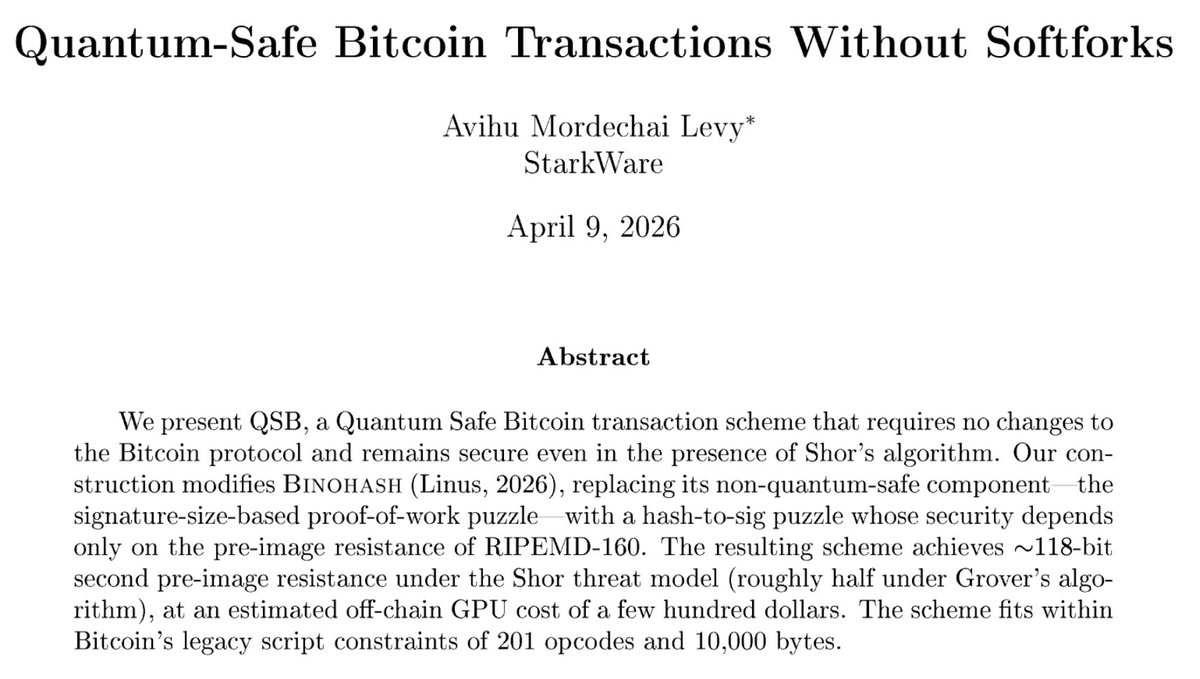 Bitcoin developer proposes quantum-safe transaction method without a soft fork2026-04
 UPDATE: Bybit’s $1.4B hack traced to signer failure as malicious DELEGATECALL transaction rewrote Safe proxy logic after hardware wallet verification was skipped.2026-03
 Trezor says Safe 7 funds stay secure after Ledger audit finds TROPIC01 chip flaw2026-06
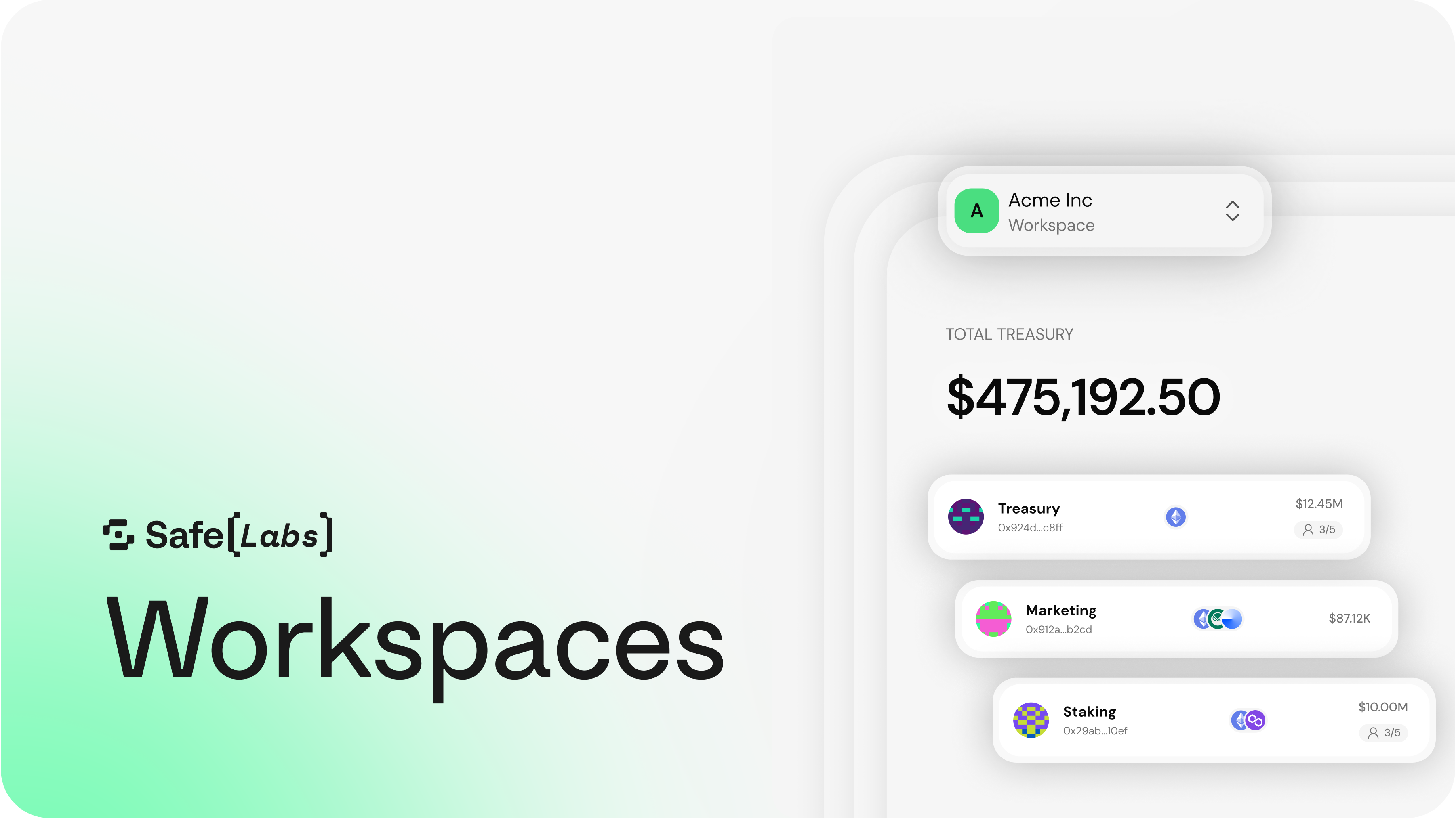 Safe launches Workspace with email login and unified dashboards for treasury teams2026-06
 Safe secures one-third of EVM DeFi TVL at $35B across 61M accounts as Q1 volume climbs 25%2026-04
 A hacker controlling a compromised Gnosis Safe multisig has withdrawn another 1,000 ETH from Aave and laundered funds through Tornado Cash as a $27M exploit unfolds. Total laundering hits 6,300 ETH ($19.4M), while the attacker maintains a risky leveraged ETH long.2026-01
Safe (Wallet): Smart-Account Infrastructure For Secure On-Chain Asset Management
A leading Ethereum-based smart-account and multisig platform, Safe (Wallet) is used by DAOs, protocols, and organizations to custody and manage tens of billions of dollars in digital assets through programmable smart contracts rather than single private keys. By combining multi-signature control, modular extensions, and emerging account abstraction standards, Safe has become core infrastructure for the DeFi ecosystem while also facing the same security, governance, and regulatory challenges that shape the broader crypto landscape.
What Safe (Wallet) Is And Why It Matters
Safe, formerly known as Gnosis Safe, is a smart-contract wallet system that allows users and organizations to control crypto assets with multiple keys and custom logic instead of a single externally owned account (EOA) private key. At its core, each Safe is an on-chain smart contract that can hold ETH, ERC‑20 tokens, and NFTs, and that enforces rules about who can move those assets and under what conditions. This architecture makes Safe a smart account rather than a traditional wallet, meaning that the account’s behavior is defined by on-chain code, while front-end interfaces merely orchestrate interactions with that code. In practice, this allows Safe to support features such as multisignature approvals, role-based access control, batched transactions, and programmable spending policies that are difficult or impossible to implement securely with a single-key wallet.
Safe’s importance is underlined by the scale at which it operates in the Ethereum and EVM ecosystem. Safe is widely described as the largest smart-wallet provider, securing more than 100 billion dollars in on-chain assets for organizations such as Aave, ENS, and 1inch, and supporting tens of millions of accounts and DAO treasuries. In Q1 reporting during a broader market downturn, Safe highlighted that cumulative transaction volume processed through its infrastructure had exceeded 10 billion dollars, underscoring that it is a central conduit for DeFi and organizational flows even in bear-market conditions. More recent industry coverage has noted that Safe now secures on the order of a third of EVM DeFi total value locked (TVL), roughly 35 billion dollars, across around 61 million accounts, with quarterly volume growing by double digits, suggesting both deep integration and growing systemic importance in DeFi’s financial plumbing.
For a crypto news audience, Safe is best understood as a foundational layer for institutional-grade self-custody in the Ethereum ecosystem. While Bitcoin’s security culture has traditionally focused on hardware wallets and multisig setups designed for long-term cold storage, Safe brings a similar “multi-key, no single point of failure” mindset to the programmable world of Ethereum and EVM chains. Its contracts are open-source, heavily audited, and built for composability, which has made Safe the default choice for many DAOs and DeFi teams that need to manage complex treasuries, on-chain governance actions, and cross-protocol operations. At the same time, this deep integration into the DeFi stack means that weaknesses in Safe configurations, or in third-party modules attached to Safes, can become focal points for exploits and governance failures in an ecosystem where “staying safe” is an ongoing and dynamic challenge rather than a static guarantee.
The term “safe” also carries rhetorical weight in broader crypto discourse. It is frequently invoked in debates about whether Bitcoin or gold function as safe-haven assets during geopolitical crises, in marketing around products like restaking platforms that promise “safe” yield, and in geopolitical experiments such as Iran’s proposed Bitcoin-settled maritime insurance platform “Hormuz Safe.” In that context, Safe (Wallet) is not simply one more product in a crowded wallet market; it is a key piece of infrastructure that shapes what “safety” can realistically mean for users and institutions who are increasingly exposed to crypto-denominated balance sheets, cross-chain risk, and smart contract attack surfaces.

New Safe Contract Live: v1.5.0 Now the Default for New Wallets
From Gnosis Safe To Smart-Account Standard
Origins In The Gnosis Ecosystem And The Rise Of Multisig
Safe was originally launched as Gnosis Safe, a project within the broader Gnosis ecosystem, which was itself focused on prediction markets and other Ethereum-native financial primitives. Early on, the team recognized that organizations and high-net-worth users were uncomfortable entrusting large amounts of ETH and tokens to single-key EOAs, which are vulnerable to phishing, malware, and simple operational mistakes. Drawing on the Bitcoin community’s experience with multisignature arrangements, Gnosis Safe implemented a generalized Ethereum multisig using smart contracts, allowing a configurable number of signers to collectively control a shared treasury.
The appeal of this model became apparent as DAOs and on-chain governance experiments proliferated. Rather than relying on ad hoc, opaque arrangements where one or two individuals held the keys to a protocol’s funds, Gnosis Safe allowed teams to formalize and codify their treasury rules on-chain. Multi-signature setups could require, for example, three out of five signers to approve a transaction, or impose higher thresholds for especially sensitive actions such as contract upgrades. This shifted security assumptions from “trust this one person to keep their hardware wallet safe” to “assume some subset of signers may be compromised, but not enough to meet the threshold,” aligning more closely with long-standing principles of fault tolerance and Byzantine resilience in distributed systems.
As DeFi infrastructure matured, Gnosis Safe’s design also benefited from its smart-contract foundation. Because each Safe is itself a contract, it can be extended by other contracts that add features such as spending limits, role-based transfer permissions, or integrations with specific protocols. This made Safe not only a wallet but also a platform on which other developers could build treasury tooling, signers dashboards, payroll automation, and governance integrations. This composability proved critical as DAOs sought to automate recurring payments, manage liquidity positions, and coordinate complex actions across multiple protocols without sacrificing the core security of multisignature control.
Rebranding To Safe And The Creation Of The Safe Foundation
In 2023, Gnosis Safe rebranded simply to Safe, accompanied by the creation of the Safe Foundation as a dedicated entity stewarding the smart-account standard and its ecosystem. The rebrand reflected two strategic shifts. First, Safe’s usage had expanded far beyond the Gnosis ecosystem into the broader EVM landscape, including Ethereum mainnet, rollups, and other compatible chains. Second, the team increasingly viewed Safe not just as one product among many, but as a smart-account standard around which wallets, dApps, and infrastructure providers could converge.
The Safe Foundation was established to provide neutral governance and support for this growing ecosystem, including responsibility for the core smart contracts, SDKs, audit processes, and ecosystem development programs. By separating Safe’s stewardship from Gnosis’ other activities, the reorganization aimed to reassure institutional users and independent developers that the contracts underpinning billions in assets would be maintained in an open, transparent, and vendor-neutral way. This governance orientation is analogous to how open-source foundations steward critical internet infrastructure, and it fits into a broader trend of “protocolization” within crypto, where key building blocks are maintained by foundations or DAOs rather than tightly controlled corporate entities.
The rebrand also clarified Safe’s identity at a time when “wallets” were evolving from simple key-management tools into more complex front-end and account abstraction systems. Safe began to emphasize that it provides infrastructure for smart accounts rather than a monolithic wallet application. This includes not only the contracts and SDKs but also initiatives such as Safe{Core}, which offers developers standardized building blocks for account abstraction on EVM chains, and Safe{Wallet}, the flagship interface that most users associate with the brand. In marketing and documentation, Safe presents itself as “the gold standard for smart account infrastructure,” positioning its contracts as the reference implementation for secure on-chain asset management at scale.
Safe’s Role In DeFi And Institutional Adoption
Safe’s rise has mirrored the growth of DeFi and on-chain governance as a whole. As total crypto market capitalization rebounded strongly in 2024, with CoinGecko reporting a 64.5 percent rally in Q1 and a high near 2.9 trillion dollars in March, DeFi protocols saw renewed inflows and increased activity despite facing growing competition from centralized yield products and alternative on-chain ecosystems. Within that environment, Safe emerged as the default treasury and governance wallet for many of the ecosystem’s most prominent projects. Industry coverage and Safe’s own materials highlight that major protocols such as Aave, ENS, and 1inch use Safe for treasury management, upgrade keys, and other critical functions.
Safe’s quarterly reporting and external coverage provide a sense of the scale involved. Even in periods described as bear markets or risk-off regimes, Safe reported more than 10 billion dollars of transaction volume flowing through its infrastructure in a single quarter, signaling that operational flows such as payroll, liquidity management, and governance execution continue regardless of price cycles. More recent data points from news coverage suggest that Safe now secures approximately 35 billion dollars in on-chain value, amounting to roughly one-third of the EVM DeFi TVL, and that it is used by roughly 61 million accounts, many of them smart contracts or organizational wallets rather than individual retail users. This makes Safe not just another wallet option but a form of systemically important infrastructure whose failure or compromise would have ecosystem-wide ramifications.
Institutional adoption has further reinforced this systemic role. As crypto-native funds, trading firms, market makers, and corporate treasuries have moved away from fully custodial solutions towards more granular, policy-enforced self-custody, Safe has often been the system of choice for on-chain operations. Its multi-owner design aligns with internal control requirements and audit trails familiar from traditional finance, while its open-source contracts and composable modules integrate with DeFi protocols, trading systems, and reporting tools. Safe’s position has been strengthened by the rise of on-chain treasuries not only at DeFi protocols but also at infrastructure projects, L2 ecosystems, and even non-crypto-native companies experimenting with tokenized assets and stablecoin holdings.
Readers click Safe stories not for wallet mechanics but for institutional stakes — when a $1.4B exchange is drained through a DELEGATECALL signing exploit or a DAO treasury manager moves $4.5M to a personal Safe, the real question is who controls the keys and who absorbs the loss, not how multisig cryptography works.
How Safe Works: Smart Accounts, Multisig, And Modules
Multisig Smart Contracts And Smart Accounts
The foundational building block of Safe is the multisignature smart contract, which replaces the role of a single private key with a programmable contract that only executes a transaction when certain conditions are met. In a typical configuration, a Safe is deployed with multiple owner addresses and a signature threshold: for example, three out of five owners must sign any outgoing transaction before the contract will execute it. Each owner is usually an EOA controlled by a different individual, hardware device, or even a separate smart contract, and the Safe enforces that no transaction can be finalized unless the required number of valid signatures is provided.
This architecture yields several security advantages over single-key wallets. An attacker must compromise multiple independent keys or signers to drain the funds, making targeted phishing or device theft significantly less effective. Operationally, organizations can distribute keys across teams, geographies, or hardware security modules, mapping their on-chain controls onto off-chain governance structures. Crucially, because the Safe is a smart contract, its logic is not fixed at the protocol level; new features can be added through upgrades or extensions, provided that the owners agree and that upgrade mechanisms are carefully designed to avoid centralization or backdoor risks.
Safe’s smart-contract design also means it is natively compatible with account abstraction, an Ethereum design pattern where accounts are implemented as smart contracts with custom validation logic rather than as EOAs with built-in signature verification. While Safe predates the standardization of account abstraction under ERC‑4337, it effectively behaves as a smart account: transactions originate not from the Safe itself but from EOAs or bundlers that assemble and submit the necessary data to the contract, which then validates the signatures and executes actions according to its internal logic. This has allowed Safe to become both a pioneer and a beneficiary of the broader shift towards smart-contract-based accounts on Ethereum and EVM chains.
Modules, Guards, And Extensibility
Beyond its core multisig logic, Safe’s design is intentionally modular. The core contracts provide basic functionality such as owner management, threshold enforcement, and execution of arbitrary calls, while additional behavior is supplied through components such as modules and guards. Modules are separate smart contracts that a Safe can enable in order to add specific behaviors or policy frameworks. For example, a module might enforce spending limits per address, automate recurring payments, or integrate with specific DeFi protocols to manage liquidity positions or collateralized loans. Guards, by contrast, intercept and validate transactions before they are executed, allowing additional checks such as whitelisting, blacklisting, or sanity checks on destination addresses and values.
This modularity allows Safe to function as a kind of operating system for on-chain treasuries. Rather than hard-coding every possible feature into the core, the system lets users and third-party developers compose the functionality they need by attaching audited extensions. This has given rise to an ecosystem of tools for payroll, streaming payments, governance automation, and integrations with protocols such as Aave or Uniswap, all built around Safe’s contract interfaces. From a UX perspective, front-end applications can expose these modules as features in dashboards, while under the hood they remain separate contracts that can be independently upgraded, audited, or disabled.
However, this same extensibility introduces an additional layer of risk. Because modules are often built and deployed by third parties, their security posture may vary. A vulnerability in a module, or in the way it is authorized to act on behalf of a Safe, can expose the Safe to exploit even if the core contracts remain sound. The ecosystem thus faces a familiar tension between composability and security: the more powerful and flexible the platform, the more careful users must be in choosing which extensions to trust and how to configure them. Recent exploit incidents involving third-party modules linked to Gnosis Safe wallets underscore the importance of rigorous auditing, permission management, and community scrutiny for anything that can execute transactions from a Safe.
Account Abstraction, ERC‑4337, And EIP‑7702
The evolution of account abstraction on Ethereum has significant implications for Safe’s future, because it formalizes patterns that Safe has effectively been implementing for years. ERC‑4337, introduced via a higher-layer mechanism without requiring consensus-layer changes, defines a standard by which smart accounts can receive “pseudo-transactions” called UserOperation objects instead of traditional transactions. Users or wallets send these UserOperations into a separate mempool, and specialized actors known as bundlers package them into actual Ethereum transactions that call a common EntryPoint contract, which in turn executes the validation logic of the target smart accounts.
Under this framework, a smart account can define arbitrary validation logic: it might require multiple signatures, use different signature schemes, implement social recovery mechanisms, or even authorize actions based on off-chain attestations. This logic is encoded directly in the smart contract, rather than being tied to Ethereum’s built-in ECDSA signature mechanism for EOAs. Account abstraction wallets often implement recovery flows that resemble traditional financial account recovery, such as guardians, time-delayed recovery, or multi-factor setups, thereby narrowing the UX gap between crypto wallets and conventional fintech apps.
Safe is well-positioned within this landscape because its smart-account architecture already uses programmable validation logic and multi-signature enforcement. While the precise technical integration with ERC‑4337 varies across implementations, Safe accounts can be managed through ERC‑4337-compatible infrastructure, and bundlers can help abstract gas payment or transaction sponsorship for users interacting with Safe-based applications. As EVM chains increasingly adopt ERC‑4337 and related standards, Safe can serve both as a reference implementation for secure multisig smart accounts and as infrastructure powering other account-abstraction wallets and applications.
The Ethereum Pectra upgrade pushed this further by introducing EIP‑7702, which extends account abstraction directly to EOAs. EIP‑7702 defines a new Type 4 transaction format that allows an EOA to delegate its execution to smart contract code specified in an authorization_list, including chain IDs and contract addresses. This means that an EOA can temporarily become a smart account for the duration of a transaction, executing arbitrary contract logic while the private key owner retains ultimate control and can revoke delegations at will. EIP‑7702 transactions are designed to be fully compatible with ERC‑4337 infrastructure and can delegate access to 4337 smart accounts, including those implemented using Safe’s contracts.
In practical terms, this convergence of EOAs, ERC‑4337, and EIP‑7702 opens the door to seamless transitions between traditional wallets and smart accounts. A user might start with a familiar EOA, then delegate specific actions to a Safe-based smart account for complex operations or higher-security flows, without deploying entirely separate wallets. Rollup ecosystems and EVM-compatible networks are beginning to integrate Pectra-like capabilities, as seen for example in IoTeX’s adoption of Pectra EVM and EIP‑7702-compatible account abstraction features, which suggests that Safe’s smart-account paradigm will increasingly operate in a multi-chain, cross-rollup context.
Security Model, Strengths, And Known Risks
Core Smart-Contract Security And Audits
Safe’s core security model rests on two pillars: open-source smart contracts and multi-key control. The core Safe contracts are publicly available, have been extensively audited by third-party security firms, and are subject to ongoing review by the Safe Foundation and the broader community. Native multisig capability is built in at the contract level, meaning that multi-signature enforcement is not a UI or off-chain feature but part of the on-chain logic that directly controls asset transfers. This reduces the risk that a compromised client or interface could misrepresent transaction details; even if a front-end is malicious or buggy, the underlying contract will still enforce the threshold rule and require valid signatures from multiple owners.
Audits, while never a guarantee of bug-free code, serve to increase confidence that the core contracts do not contain obvious logic errors, unchecked calls, or permission misconfigurations that could lead to catastrophic loss of funds. Safe’s prominence has also created a strong incentive for ongoing, independent scrutiny by security researchers and white-hat hackers, because any vulnerability in the core could be immensely valuable to attackers. The fact that Safe’s core contracts have not been the root cause of major losses to date, despite securing tens of billions in assets, is often cited as evidence of their robustness, though the risk of previously undiscovered vulnerabilities remains non-zero by definition in any non-trivial codebase.
Safe also benefits from the broader security ecosystem that has emerged around Ethereum and DeFi. Tools such as formal verification frameworks, fuzzers, and AI-assisted vulnerability scanners are increasingly applied to critical infrastructure. For example, Anthropic’s internal “Mythos” system has reportedly identified thousands of high-severity vulnerabilities across major software ecosystems, illustrating how AI-driven analysis can help surface subtle security issues in complex code. While Mythos is not specific to Safe, the broader trend of combining automated scanning with human review is likely to continue shaping how foundational contracts are tested, monitored, and updated over time.
Multisig As Defense-In-Depth
At the user level, Safe’s multi-signature design embodies the principle of defense-in-depth. Whereas a conventional single-key wallet fails catastrophically when the key is compromised or lost, a properly configured multisig can tolerate the compromise or loss of individual keys without exposing the entire balance. For example, if a treasury is controlled by a five-of-seven Safe and one signer’s hardware wallet is stolen, the attacker cannot unilaterally drain the funds; at worst, they can participate as one signer among several, and the organization has time to rotate keys and update the Safe’s owner set.
This is conceptually similar to how Bitcoin multisig arrangements work, where multiple keys are required to spend coins locked in a script, and where setups such as two-of-three or three-of-five are common for both personal and institutional storage. In both Bitcoin and Ethereum contexts, multisig also facilitates separation of duties: different individuals or teams can hold keys with differing roles, and policies can be enforced socially or procedurally in addition to the raw cryptographic rules. For example, a project might require sign-off from both a finance lead and a technical lead for large transfers, thereby reducing the risk of unilateral decisions or key-person failure.
Safe’s implementation adds additional layers of control by allowing owners to be not only EOAs but also other smart contracts or contract-based accounts. This makes it possible to embed more complex logic within the ownership structure itself. For instance, a Safe owner could be an account-abstraction wallet with social recovery, or an on-chain governance contract representing tokenholder votes. Such arrangements can combine the resilience of multisig with the flexibility of smart contracts, though they also increase complexity and must be carefully designed to avoid unexpected interactions between different components’ security assumptions.
The SquidRouter Exploit And Third-Party Module Risk
In mid-2026, a notable exploit drew attention to the risk of third-party modules associated with Safe. Reports indicated that a vulnerability in an external module, commonly referred to as the SquidRouterModule, enabled an attacker to siphon approximately 3.2 million dollars from Safes that had enabled the affected contract. Analysis by security firms such as GoPlus described the issue as a permission vulnerability: the module was granted broad authority to act on behalf of the Safe, and a flaw in its internal logic allowed the attacker to trigger unauthorized transfers.
Crucially, both Safe Labs and Squid emphasized that the exploit did not stem from Safe’s core contracts. The compromised component was a third-party module that Safes had explicitly enabled, rather than part of the canonical Safe codebase. This distinction is important from a technical perspective, because it means that Safes which had not enabled the vulnerable module were not directly exposed to the bug. However, from a user perspective, the nuance is less reassuring: funds were drained from Safes, and many users do not differentiate between “core” and “module” when evaluating whether a platform is safe to use.
The incident illustrates the trade-off inherent in Safe’s extensible design. By allowing arbitrary modules to be attached, Safe gives users powerful options to automate and customize their treasury management, but it also opens a pathway for poorly designed or malicious modules to gain significant control. The SquidRouter exploit underscores the need for stringent permissioning, such as limiting modules’ capabilities to the minimum necessary, and for clear signaling about which modules are officially supported, audited, or recommended by the Safe Foundation versus those that are purely third-party experiments.
It also reinforces a general lesson from DeFi: many high-profile “protocol hacks” are not due to failures in the most battle-tested core components but in peripheral contracts, integrations, or configuration errors. The Safe ecosystem has responded with increased emphasis on module vetting, security disclosures, and user education about the risks of enabling powerful extensions. Nonetheless, as long as Safe remains deeply composable, users and organizations must treat any module that can execute transactions from a Safe with the same caution they would apply to entrusting a third party with partial control of a major bank account.
Oracles, Infrastructure, And The Wider DeFi Security Stack
Safe does not exist in isolation; it sits within a broader DeFi stack that includes oracles, bridges, rollups, and other smart contracts whose security can indirectly affect Safe users. Oracles such as RedStone provide off-chain data, especially price feeds, to on-chain contracts. In many DeFi protocols, a malicious or faulty oracle can cause cascading failures: liquidations, mispriced collateral, or protocol insolvency. RedStone, for example, emphasizes a decentralized model in which multiple independent nodes pull data from distinct sources, sign it cryptographically, and combine their answers to deliver resilient price feeds across more than 110 networks. If a Safe-controlled treasury is providing liquidity or collateral in a DeFi protocol that relies on such an oracle, the safety of its assets depends not only on Safe’s multisig logic but also on the oracle’s ability to withstand manipulation and outages.
Similarly, the security posture of bridges and rollups influences how safely Safe can be used in a multi-chain context. Many exploits in recent years have targeted cross-chain bridges or rollup infrastructure, prompting projects to halt swaps, pause gateways, or emphasize that user funds remained “safe” despite upstream vulnerabilities. Incidents such as the KelpDAO-related disruptions, where various projects stressed that their own contracts or bridges had no direct exposure, highlight how interconnected the system has become even when individual components function correctly. When a Safe treasury interacts with restaking platforms, cross-chain liquidity pools, or leveraged strategies, it inherits the risk profile of those external protocols.
Hardware security also intersects with Safe’s model. While Safe itself is contract-based, many owners use hardware wallets such as Trezor to safeguard their individual keys. Recent disclosure of chip-level vulnerabilities in certain secure elements, such as the TROPIC01 flaw in chips used by devices like Trezor Safe 7, illustrate that even hardware designed for security can contain exploitable bugs. In that case, audits by competitors and follow-on statements emphasized that funds remained secure under realistic threat models and that layered protections mitigated the practical risk, but the episode underscores that Safe’s multi-key architecture is only as strong as the weakest key management practice among its owners.
Staying Safe With DeFi Wallets: UX, Recovery, And Human Factors
A recurring theme across wallet security is that human factors often matter as much as cryptography. Safe’s design can reduce the blast radius of individual failures, but it cannot fully protect users from social engineering, poor recovery planning, or lax operational discipline. Guides to account abstraction wallets emphasize that while new recovery mechanisms can mimic traditional account security, users still need to understand best practices, such as distributing keys across independent devices, keeping secure backups of seed phrases or recovery shares, and using hardware wallets where appropriate.
Account abstraction opens possibilities for more user-friendly recovery, such as guardian-based systems or time-locked changes in ownership, which can be integrated into or layered on top of Safe-style multisig. For DAOs and organizations, Safe setup often includes careful key assignment, documented emergency procedures, and simulation of failure scenarios such as loss of one or more keys. For retail power users, the question is often one of calibration: using Safe for every small wallet may be overkill, but for significant holdings or for on-chain operations such as running a validator or managing a DeFi strategy, the additional friction of multisig may be justified by the reduction in single-point-of-failure risk.
Education initiatives such as “Top tips to stay safe with DeFi wallets” typically converge on a few core messages: do not sign transactions you do not understand, verify contract addresses, use hardware devices for key storage, and avoid concentrating too much power in any single key or device. For Safe users, these principles translate into choosing a sensible threshold, avoiding shared devices for keys, and carefully reviewing any modules or guards before enabling them. As user interfaces improve and account abstraction standardizes flows like paying gas in ERC‑20 tokens or using third-party paymasters, some of the rough edges that have historically led to mistakes may be smoothed over. Yet the fundamental reality remains that signing a transaction is equivalent to authorizing a potentially irreversible financial action, making vigilance and operational maturity permanent cornerstones of Safe usage.
- 01Bybit signing exploit accountability
Aggregating over 300 clicks across multiple articles, the revelation that Safe's proxy logic could be rewritten via DELEGATECALL after hardware wallet verification was skipped forced readers to confront how institutional-grade infrastructure becomes an attack surface.
- 02Safe as integrated DeFi product layer↗
The single top-clicked story — native swaps via CoW Swap — signals readers see Safe evolving from a security primitive into a full DeFi app layer with swaps, portfolio dashboards, and batch transactions.
- 03DAO treasury control and drama
The 0xPauly story drew 266 clicks because it crystallizes a core tension: multisig wallets are trustless by design, but who holds the keys to a community treasury is an inherently political question with no on-chain enforcement.
- 04$SAFE token governance and speculation
Speculation around token transferability and a $3B+ FDV launch attracted readers tracking how infrastructure protocols monetize via governance tokens and what DAO control actually means in practice.
- 05Cross-chain expansion and real-world payments↗
Safenet and the Monerium Euro payments partnership collectively drew readers watching Safe move beyond Ethereum mainnet security into cross-chain asset management and fiat settlement infrastructure.
- 06Institutional adoption as legitimacy signal↗
The Ethereum Foundation setting up a 3-of-5 Safe multisig and Safe securing one-third of EVM DeFi TVL confirmed to readers that Safe is the de facto standard for on-chain institutional treasury management.
Using Safe: From DAO Treasuries To Personal Finance
Setting Up And Governing A Safe
Creating a Safe effectively means deploying a new smart contract to an EVM chain with a specific configuration of owners and thresholds. In the standard flow, a user connects an existing wallet, selects the network, defines the set of owner addresses, and sets the number of required confirmations. Once deployed, the Safe contract’s address becomes the treasury or account address, and assets can be sent there like any other wallet. The difference arises when moving funds out: any transaction from the Safe must be proposed, signed by the required number of owners, and then executed, often via a front-end interface that coordinates the signing and submission steps.
Governance of a Safe is largely a matter of managing keys and policies over time. Owners can be added or removed, the threshold can be raised or lowered, and modules or guards can be enabled or disabled. Many organizations use on-chain governance mechanisms to control these parameters, for instance requiring tokenholder votes to authorize changes to the Safe that holds protocol funds. Others maintain an off-chain governance process, with board approvals or multi-team sign-offs mirrored in the composition of the multisig. In either case, governance failures—such as allowing a single party to quietly gain control over enough keys to meet the threshold—can be as dangerous as technical exploits.
Upgrades introduce further governance complexity. Some Safe deployments are immutable, while others can be upgraded to newer contract versions via mechanisms such as proxy patterns. Upgradability allows security improvements and feature additions but also introduces the risk that an upgrade function could be misused to deploy malicious logic. Recognizing this, Safe’s ecosystem has developed migration tools and best practices for moving from older contract versions to newer ones, and the Foundation plays a role in signaling which versions are considered stable and recommended.
Safe For DAOs, Protocols, And Corporate Treasuries
For DAOs and DeFi protocols, Safe is often the primary custodian of treasury funds, governance tokens, and upgrade privileges. Protocol fee revenue, token reserves, and liquidity management funds are commonly held in Safes, with different accounts for distinct purposes such as operational spending, risk reserves, or liquidity mining incentives. Governance contracts may be authorized as owners or modules within these Safes, enabling tokenholder votes to trigger treasury actions or contract upgrades under carefully constrained conditions.
Examples from major protocols help illustrate these patterns. Aave, as a large lending protocol, holds significant reserves and safety modules designed to backstop losses; these assets are managed via Safes to which core contributors and governance bodies have carefully structured access. ENS, which manages the Ethereum Name Service, similarly uses Safes to coordinate its treasury and operational funds. 1inch, as an aggregator and liquidity protocol, must manage rewards and treasury allocations across multiple EVM chains; Safe offers a consistent model across these networks. In each case, Safe acts as a neutral, well-understood substrate upon which protocol-specific governance and financial strategies are implemented.
Corporate treasuries and crypto-native funds use Safe to map internal controls to on-chain constraints. A trading firm might require two signatures from the trading desk and one from compliance for large withdrawals, while routine operational transfers are handled via a smaller Safe with lower thresholds. A project that has completed a token sale may use Safe to ensure that vesting contracts, market-making funds, and operational budgets are managed under different policies, with distinct signers and limits. In some cases, external administrators or trustees may hold keys as a check on internal misbehavior, approximating the separation of duties seen in traditional finance.
Safe Workspace: Operational Layer For Treasury Teams
As Safe’s user base has grown more institutional and operationally complex, the project has introduced higher-level tools aimed at treasury teams rather than individual signers. One such initiative is Safe Workspace, described as an on-chain operating environment that gives treasury teams a shared home inside Safe, including unified dashboards and streamlined workflows for managing multiple accounts and networks. Workspace aggregates views of assets, transactions, and signers across Safes, helping teams avoid fragmented monitoring and manual reconciliation of multiple wallets.
A notable feature of Safe Workspace is its support for passwordless email login alongside traditional wallet-based authentication via Sign-In With Ethereum (SIWE). With email login, team members can access Workspace using a one-time passcode sent to their email, easing onboarding for non-crypto-native participants such as accountants, auditors, or executives who may not be comfortable managing keys directly. This does not give them direct signing authority over Safes; rather, it grants access to dashboards and operational tooling, while actual transaction approvals still require signatures from designated keys.
From a security perspective, this dual model balances usability and control. By segregating data access from signing authority, Safe aims to allow broader organizational participation in treasury management without expanding the attack surface of the multisig itself. Nonetheless, any system that introduces additional authentication methods must consider phishing, account takeover, and insider threats. Email accounts are often less secure than hardware-backed wallets, and organizations must ensure that Workspace permissions and internal processes prevent email compromise from becoming a vector for social engineering or unauthorized operational changes.
Retail And Power Users: When Does Safe Make Sense?
Although Safe is strongly associated with institutional and DAO use, it is also used by retail power users and high-net-worth individuals who want more robust self-custody. For an individual managing meaningful ETH or DeFi exposure, setting up a two-of-three Safe with keys distributed across multiple hardware devices and recovery options can significantly reduce the risk of a single catastrophic loss event. The trade-offs include increased complexity, the need to maintain multiple devices and backups, and the risk of misconfiguring the threshold or losing too many keys.
Account abstraction and smart account UX improvements may lower these barriers over time. For example, future wallet interfaces could transparently manage multiple keys and recovery mechanisms behind the scenes, presenting a user experience closer to a familiar banking app while preserving the underlying multisig guarantees. In such a scenario, Safe could serve as the account backend, while consumer-facing brands provide the front-end and support. Already, some multi-party custody services and family-office-oriented solutions use Safe under the hood to implement more nuanced signing and recovery policies than a simple single-key cold wallet can offer.
For everyday small balances, many users will continue to prefer simpler wallets, including browser-based or mobile EOAs, especially for low-stakes DeFi experimentation. However, as narratives around “safe” DeFi participation emphasize prudence in light of recurring exploits, it is likely that more retail users will at least segregate funds, keeping their primary savings in more secure setups such as Safe multisigs while using hot wallets only for operational spending and experimentation. In that sense, Safe can be viewed as part of a broader maturation of crypto self-custody, akin to the practice of using hardware wallets and multisig for Bitcoin holdings while leaving smaller amounts on exchanges or in hot wallets for trading.
Bitcoin, Cross-Chain Usage, And Naming Collisions
One recurring point of confusion for newcomers is that “Safe” is both a brand and a widely used adjective in crypto. Safe (Wallet) is a specific Ethereum-based smart account system, while phrases such as “safe yield,” “funds are safe,” or “safe-haven asset” refer to broader ideas about security and risk. In Bitcoin, multisig wallets that protect coins with multiple keys serve a similar purpose conceptually, but they are distinct from Safe’s smart-contract architecture. For example, a Bitcoin multisig might use a two-of-three setup across hardware wallets to secure long-term cold storage, with no smart-contract programmability beyond the Bitcoin script defining the multisig conditions.
Safe itself does not natively manage Bitcoin on the base layer, because Bitcoin does not support the same kind of general-purpose smart contracts as Ethereum. Instead, Bitcoin exposure within Safe is typically achieved via wrapped Bitcoin (wBTC) or similar tokenized representations on Ethereum and EVM chains. These instruments introduce their own trust and custodial risks, because they depend on external custodians or decentralized mechanisms to hold the underlying BTC. For users contemplating Safe as a vehicle for Bitcoin-denominated strategies, it is crucial to distinguish between the security of the Safe contract and the security and solvency of any wrapped BTC issuer.
The naming collision extends into geopolitical experiments such as Iran’s proposed Hormuz Safe plan, which envisions a Bitcoin-settled maritime insurance system for ships transiting the Strait of Hormuz. According to reports, shipping companies would pay premiums in Bitcoin, receive cryptographically verifiable digital insurance certificates, and then supposedly obtain safe passage through strategically sensitive waters. The scheme aims to monetize a geostrategic chokepoint without direct tolls, leveraging blockchain-based proofs to coordinate insurance and passage. Despite sharing the word “Safe,” Hormuz Safe is conceptually and technically unrelated to Safe (Wallet); it is a policy and infrastructure proposal focused on Bitcoin-denominated risk management at a national and maritime scale.
For a crypto news audience, the key takeaway is that brand-specific safety tools such as Safe (Wallet) operate at the micro level of key management and contract logic, while macro narratives about safe havens, safe passage, and safe yield operate at the level of market behavior, geopolitics, and regulatory constraints. Safe the wallet can help secure assets, including Bitcoin proxies, but it cannot by itself make Bitcoin behave like a safe-haven asset in global markets, nor can it insulate users from the legal and geopolitical ramifications of participating in schemes like Hormuz Safe.
Safe In A Volatile World: Safe-Haven Narratives, Systemic Risk, And Regulation
Safe Wallets Versus “Safe-Haven” Assets
The idea of safety in crypto is often framed through the lens of safe-haven assets such as gold or, increasingly, Bitcoin. During periods of geopolitical tension or macroeconomic uncertainty, it is common to see narratives around Bitcoin reversing upward amid chaos, signaling “safe-haven opportunity,” or discussions of gold and Bitcoin forming a new diversification playbook. At the same time, skeptics such as Ray Dalio have argued that Bitcoin has not consistently behaved like a safe-haven asset, citing its correlation with technology stocks, lack of deeply entrenched legal protections, and vulnerability to monitoring or restriction by states.
Safe (Wallet) intersects with these narratives in a more infrastructural way. If an investor holds Bitcoin exposure via wrapped tokens or tokenized funds on Ethereum, and stores those tokens in a Safe, the account can provide robust protections against theft or operational loss, but it does not change the underlying asset’s market volatility or regulatory status. A Safe-secured position in a Bitcoin ETF-like token is still subject to price crashes, liquidity crises, and regulatory responses; the Safe merely reduces the probability that private key compromise will be the primary failure mode. In that sense, Safe contributes to operational safety rather than macro safe-haven stability.
The distinction matters because crypto market discourse can blur lines between different kinds of risk. Investors may assume that because an asset is held in a “safe wallet” or protected by “institutional-grade custody,” it is somehow insulated from broader market declines or systemic shocks. In reality, Safe and similar tools manage idiosyncratic technical risk (key loss, contract bugs, signer compromise) but cannot fully mitigate systematic financial risk (market crashes, stablecoin depegs, protocol-wide insolvency). Understanding this distinction is a prerequisite for mature risk management in DeFi and on-chain investing.
DeFi TVL Concentration And Systemic Implications
As Safe’s share of EVM DeFi TVL has grown—reportedly to around one-third of all value locked—it has taken on properties of systemic importance. The concentration of tens of billions in assets under a common contract architecture raises questions familiar from traditional finance: what happens if a latent bug is discovered in a core component? How does the ecosystem handle a need for emergency upgrades or migrations? Which entities bear responsibility for coordination and communication in the event of a major incident?
Safe’s open-source and foundation-governed model distributes some of these responsibilities, but the sheer scale means that decisions about upgrades, deprecations, or dangerous modules can have far-reaching consequences. As seen in the SquidRouter module exploit, even issues in peripheral modules can affect millions of dollars in user funds. If a vulnerability were ever discovered in a widely used module or older version of the core contracts, the urgency of migrating assets could strain network capacity, governance processes, and user understanding.
At the same time, Safe’s ubiquity also facilitates standardization of best practices. Because many protocols and treasuries use Safe, security auditors, monitoring tools, and insurance underwriters can focus effort on a common substrate, potentially improving detection of anomalies and speeding up coordinated responses. The existence of canonical, well-audited contract versions reduces the proliferation of bespoke, lightly tested multisig implementations that might otherwise fragment security knowledge. In this sense, Safe can be seen as both a concentration of risk and a consolidation of security effort.
Geopolitics, Censorship Resistance, And On-Chain Control
Safe’s design also intersects subtly with geopolitical and regulatory dynamics. Because Safe is a programmable smart account, it can be integrated into systems that enforce sanctions, whitelisting, or other compliance rules at the contract level. For instance, a regulated entity might use a Safe module that restricts transfers to addresses that have passed KYC checks or that comply with jurisdiction-specific constraints. Such configurations can help organizations reconcile on-chain operations with legal obligations, but they also introduce powerful levers for censorship and control within infrastructures that are often assumed to be neutral.
At the other end of the spectrum, experiments like Iran’s Hormuz Safe proposal highlight how states may try to use crypto rails to circumvent sanctions and monetize strategic chokepoints. By settling maritime insurance premiums in Bitcoin and issuing cryptographically verifiable certificates on a blockchain, Tehran could attempt to sidestep traditional financial channels and offer ships a legally ambiguous but operationally convenient form of insurance coverage. In such a system, Bitcoin’s censorship resistance is deployed not just by individual dissidents or capital-flight seekers but by a state actor seeking strategic leverage.
Safe (Wallet) is not directly involved in Hormuz Safe, but the broader trend is that on-chain infrastructure—whether for custody, insurance, or payments—is increasingly entangled with geopolitical strategies. As regulators grapple with questions about sanctions enforcement, compliance in permissionless systems, and the status of smart-contract-controlled treasuries, tools like Safe will likely be drawn into debates about how to reconcile self-custody and programmability with legal and political constraints.
Regulation, KYC, And Organizational Controls
For organizations using Safe, regulatory and governance considerations are becoming as important as cryptographic design. Corporate treasuries managing stablecoin reserves, tokenized securities, or DeFi strategies must often comply with KYC/AML rules, internal audit requirements, and external accounting standards. Safe’s multi-owner, on-chain transaction history, and integration capabilities with reporting systems make it a natural fit for such contexts, but they also impose expectations about controls and documentation.
Tools like Safe Workspace may help bridge this gap by providing dashboards that facilitate segregation of duties, audit trails, and role-based access within organizations. Email-based logins for read-only or limited operational roles can enable compliance teams, auditors, and executives to gain visibility without holding signing keys, aligning with separation-of-duties principles. However, regulators may still raise questions about ultimate responsibility and recourse in the event of mis-signed transactions or governance failures. Unlike traditional banks, Safe cannot reverse transactions or freeze assets on its own; any such behavior must be encoded in contracts or imposed externally at the infrastructure or legal level.
As tokenization of real-world assets and stablecoin adoption expand, regulators may grow more interested in how on-chain treasuries are structured. Guidance on multi-signature arrangements, key management policies, and the use of smart contracts for corporate funds may become formalized in industry standards or regulatory frameworks, and Safe’s prominence means that its design is likely to be used as a reference point. This could lead to both increased confidence in Safe-style architectures and greater scrutiny of their configuration and governance in enterprise and institutional settings.
Gnosis Safe v1 deployed on Ethereum mainnet
Gnosis Safe spins out and rebrands as Safe
- 2023-04governance
$SAFE governance token becomes transferable after DAO vote
- 2024-03milestone
Safe acquires French treasury startup Multis for L2 expertise
Safenet launched as cross-chain transaction processor network
- 2025-02exploit
Bybit $1.4B hack via malicious DELEGATECALL rewriting Safe proxy permissions
- 2025-03milestone
Safe and Mandiant forensic probe confirms state-backed attacker behind February breach
Safe reaches $35B TVL across 61M accounts, one-third of EVM DeFi
Ecosystem And Future Directions
Safe Foundation, SDKs, And Ecosystem Growth
The Safe Foundation plays a central role in coordinating development, governance, and ecosystem support. It maintains the core smart contracts, publishes documentation, and curates SDKs that allow developers to integrate Safe into their applications. Safe’s SDKs abstract away much of the complexity of interacting with multisig contracts, letting dApp developers add support for Safe accounts as easily as for EOAs. This has encouraged wallets, DeFi front-ends, and governance tools to treat Safe as a first-class citizen rather than a special-case integration.
Ecosystem growth is further supported by grants, hackathons, and partnerships that encourage experimentation with Safe-based applications. Developers have built tools for continuous streaming payments, on-chain payroll systems, NFT vaults, and governance dashboards that assume a Safe at the center. As account abstraction standards mature, Safe’s SDKs are evolving to interoperate with ERC‑4337 infrastructure, bundlers, and paymasters, enabling more flexible gas payment and transaction sponsorship flows for smart accounts.
Governance of Safe’s own roadmap involves balancing stability with innovation. On the one hand, institutions depend on Safe’s contracts as “boring” infrastructure that should change slowly and predictably. On the other hand, the account abstraction landscape is shifting rapidly, and new security techniques such as advanced signature schemes, threshold cryptography, or AI-assisted access policies may justify incremental upgrades. The Foundation’s role is to coordinate these changes, communicate deprecations and migrations clearly, and maintain a strong audit pipeline to ensure that new features do not compromise the security properties that made Safe attractive in the first place.
Integration With L2s, Rollups, And Non-EVM Chains
Safe’s architecture is inherently EVM-centric, but the Ethereum ecosystem is increasingly multi-layered and multi-chain. Rollups such as optimistic and zk-rollups host growing portions of DeFi activity, and many EVM-compatible L1s and sidechains compete for liquidity and applications. Safe has expanded to several of these networks, offering consistent multisig and smart-account capabilities across them, which simplifies treasury management for multi-chain protocols and DAOs.
The adoption of account abstraction-friendly upgrades like Pectra and EIP‑7702 on Ethereum, and Pectra-compatible environments on chains such as IoTeX, further reinforces the idea of a common account abstraction substrate. In such a world, accounts can delegate execution to smart contracts, and chains can support similar UserOperation flows, making it easier for tools like Safe to provide a unified experience across L1 and L2 contexts. This could enable, for example, a cross-rollup Safe that coordinates treasuries on multiple rollups via standardized governance processes and bridging mechanisms, though such designs must be carefully secured to avoid introducing brittle cross-chain dependencies.
Non-EVM chains pose a more complex challenge. Bitcoin, Solana, and other ecosystems have distinct account and contract models, making direct reuse of Safe’s contracts impossible. Instead, Safe-like functionality either relies on higher-level multisig constructs native to those chains or uses wrapped assets and bridges to bring exposure into EVM environments. Over time, there may be opportunities for cross-chain coordination tools that expose a Safe-like UX across heterogeneous chains by orchestrating multiple underlying multisig or contract systems, but such approaches will need to navigate the compounded risk of multiple consensus and scripting models.
Competition, Complementarity, And Account-Abstraction Wallets
Safe operates within a competitive landscape of account abstraction and smart-wallet solutions. ERC‑4337 has spurred a wave of new wallets that implement features such as social recovery, session keys, and gas sponsorship, targeting mainstream users who might be uncomfortable with seed phrases and hardware devices. Some of these wallets are lighter-weight than Safe, focusing on per-user accounts rather than large treasuries, and may use different contract architectures optimized for consumer UX.
Rather than displacing Safe, many of these solutions are likely to be complementary. A DAO might use Safe for its core treasury while enabling members to interact via ERC‑4337 wallets that support easy onboarding and recovery. A protocol might integrate Safe for its upgrade keys and system-level funds, while offering user-facing wallets that abstract away Safe’s complexity. EIP‑7702’s ability to delegate EOA execution to smart contracts further blurs the line, allowing hybrid approaches where EOAs temporarily act like smart accounts for specific operations.
Competition also arises from other multisig implementations and custody platforms that offer similar multi-key guarantees with different trade-offs around governance, upgradeability, or integration. Some large institutional custodians provide proprietary multi-party computation (MPC) systems that aim to replicate or improve upon multisig without relying on on-chain contract logic, while others wrap Safe or similar contracts with additional compliance and support layers. For users and organizations, the decision between Safe and alternatives involves considerations of openness, auditability, ecosystem integration, vendor lock-in, and regulatory comfort.
AI, Automation, And The Future Of Treasury Management
Looking forward, one of the more intriguing frontiers is the intersection of AI and on-chain treasury automation. As smart contracts and oracles gain richer data inputs and capabilities, it becomes feasible to imagine AI agents that propose or even execute certain classes of transactions under strict constraints. For instance, an AI system might monitor market conditions and propose rebalancing of a protocol’s treasury across stablecoins, ETH, and BTC proxies, with human signers using Safe to approve or reject the proposals.
AI-assisted security tooling, as exemplified by systems like Mythos that have discovered large numbers of vulnerabilities in mainstream software, may also be applied more systematically to smart contracts and account abstraction logic. Continuous automated scanning of Safe-related modules, guards, and integration contracts could help identify misconfigurations or dangerous patterns before they are exploited in the wild. Combining AI’s pattern recognition with human domain expertise holds promise for enhancing the resilience of complex, composable systems like the Safe ecosystem.
However, integrating AI into treasury operations introduces new risks around model errors, adversarial inputs, and opaque decision-making. Safe’s multi-signature model provides a natural check on overly automated behavior: AI agents may assist in preparing or simulating transactions, but final execution remains gated by human-controlled keys. Striking the right balance between automation and human oversight will be a central governance question for organizations that wish to leverage AI while maintaining robust control over their on-chain assets.
Outlook
Safe (Wallet) has evolved from a Gnosis-affiliated multisig tool into a de facto standard for smart-account-based treasury management in the Ethereum and EVM ecosystem. Its open-source contracts, battle-tested multisig architecture, and modular extensibility have made it foundational infrastructure for DAOs, DeFi protocols, and crypto-native institutions managing tens of billions of dollars in assets. As account abstraction frameworks like ERC‑4337 and EIP‑7702 mature and propagate across L1 and L2 environments, Safe’s smart-account model is well positioned to remain central to how complex on-chain identities and treasuries are represented and governed.
At the same time, Safe’s prominence creates heightened responsibility and scrutiny. Third-party module exploits such as the SquidRouter incident demonstrate that composability can introduce significant risk if extensions are not carefully designed and vetted. Systemic implications of Safe’s large share of DeFi TVL mean that governance decisions, upgrades, and security practices around the core contracts and ecosystem modules are consequential not just for individual users but for the stability and resilience of EVM finance as a whole.
In a broader crypto environment where “safety” is debated in terms of safe-haven assets, geopolitical tensions, and regulatory uncertainty, Safe (Wallet) occupies a distinct but vital niche. It cannot turn Bitcoin or ETH into risk-free stores of value, nor can it shield users from market crashes or geopolitical shocks. What it can do is provide robust, programmable, and transparent control over keys and policies, narrowing the gap between cryptographic assurance and organizational governance. For a crypto news audience tracking the evolution of DeFi, Bitcoin’s role in turbulent times, and experiments like Iran’s Hormuz Safe, understanding Safe (Wallet) is essential to understanding how serious actors are actually securing and managing their on-chain wealth today.
Latest Safe (Wallet) news
Sources
16 records from 15 domains
safe.global
safefoundation.org
ethdaily.io
mexc.com
anthropic.com
crowdfundinsider.com
zoomex.com
cobo.com
eips.ethereum.org
youtube.com
assets.coingecko.com
blog.redstone.finance
x.com
trezor.io
turnkey.com
Community notes
Spot something off or out of date? Drop a note. Editors review topic notes daily and roll accepted fixes into the explainer — contributors are recognized in the monthly $SQUID drop.
Loading notes…
Help improve this topic
Have a story or tip about this topic? Submit it. See something missing? Leave a note. Editors review daily; accepted submissions and fixes count toward the monthly $SQUID drop.