
A comprehensive guide to crypto airdrops — how eligibility, points systems, HODLer programs, vesting, and scam risks work, with examples from Binance, Solana, EigenLayer, and current market practices.
+18 sources across the wider coverage universe
 Backpack launches $BP on Solana, airdrops 25% to users with zero insider allocation2026-03
 The Solana VM-based Layer 1 ditched its planned presale, choosing to airdrop tokens instead to reward early users and points farmers ahead of its January mainnet launch.2025-12
 Lighter DEX launches LIT token with 25% airdrop. The LIT token supply is split evenly between the ecosystem and team/investors, with a portion airdropped to early participants.2025-12
 Man snipes 70% of $WET presale using 1,000+ wallets, demands refund; HumidiFi cancels bot allocations, issues pro-rata airdrop, and announces new audited token launch to protect legitimate investors.2025-12
 Uniswap emphasizes robust technical design and product-focused approach as other crypto projects repeatedly fail, blaming users for exploits, airdrop sniping, and oracle manipulation2025-12
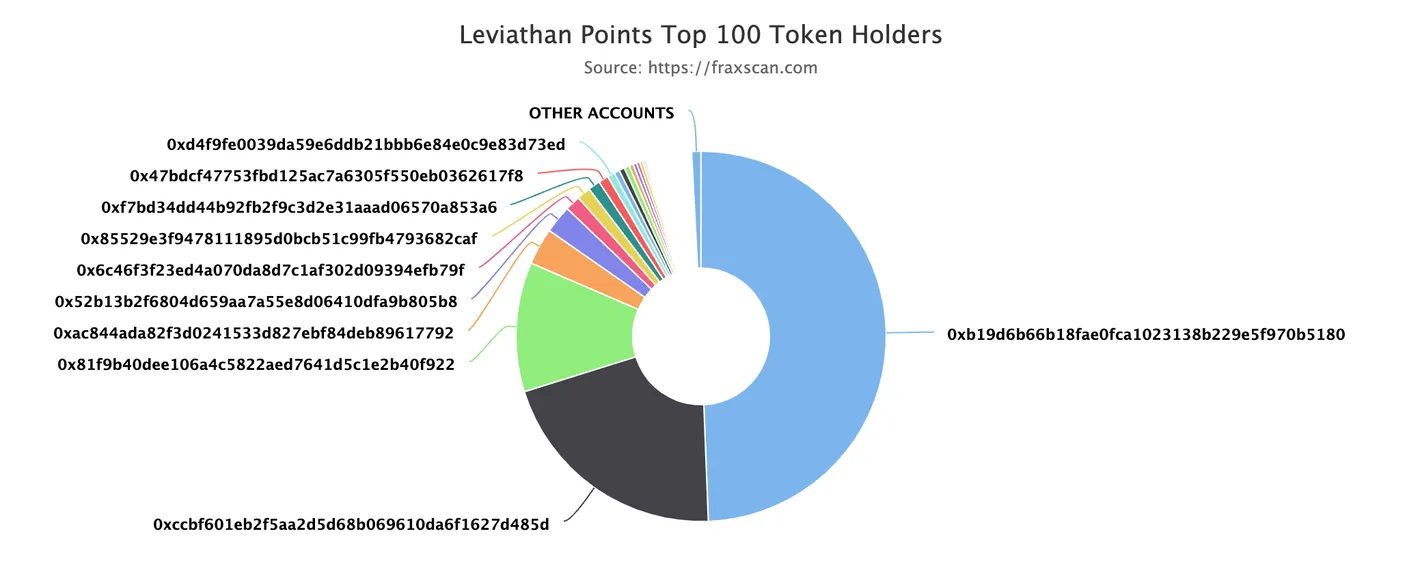 Leviathan Points ($SQUID) first airdrop live. Check your wallet to confirm on Fraxtal:
0x6e58089d8e8f664823d26454f49a5a0f2ff697fe
Thanks for your help in building Leviathan!2024-04
Leviathan Points ($SQUID) first airdrop live. Check your wallet to confirm on Fraxtal:
0x6e58089d8e8f664823d26454f49a5a0f2ff697fe
Thanks for your help in building Leviathan!2024-04
A crypto airdrop is a token distribution event in which a project sends digital assets directly to eligible wallet addresses, typically at no direct cost to recipients — though always with strings attached.
Few mechanisms in crypto have generated as much excitement, controversy, and outright fraud as the airdrop. What began as a simple marketing tactic has evolved into a sophisticated tool that shapes how protocols launch, how communities form, and how billions of dollars move between early adopters and project treasuries. Understanding how airdrops actually work — and where they routinely go wrong — is essential for anyone navigating on-chain markets.
What an Airdrop Is (and Isn't)
At its core, an airdrop distributes a project's native token to a set of wallet addresses based on criteria defined by the issuing team. The recipient does not pay the market price for those tokens; instead, eligibility is earned through prior on-chain activity, holding a related asset, participating in a testnet, or accumulating points in a loyalty program.
The word "free" is frequently misapplied. Recipients absorb real costs: gas fees to claim, opportunity cost of locked capital during qualification periods, tax liability in most jurisdictions where airdropped tokens are treated as ordinary income at fair market value on the date of receipt, and — increasingly — vesting schedules that delay when tokens can actually be sold.

Backpack launches $BP on Solana, airdrops 25% to users with zero insider allocation

No insider allocation is actually one crazy move I didn't expect
A Brief History: From Marketing Stunt to Market Mover
Early airdrops were crude. Projects mailed small amounts of tokens to any wallet that submitted an email address or held a specific coin, hoping to seed liquidity and name recognition. Stellar (XLM) airdropped tokens to Bitcoin holders in 2016; Uniswap's retroactive UNI drop in September 2020 — 400 tokens to every address that had ever used the protocol — remains the canonical example of a well-executed retroactive airdrop. That event distributed roughly $1,200 per wallet at launch prices and catalyzed a wave of copycat programs.
The model matured considerably after 2021. Protocols began designing airdrops deliberately rather than as afterthoughts: announcing qualification criteria in advance (or keeping them secret to prevent gaming), using snapshot-based eligibility checks, introducing cliff-and-vesting schedules, and tying distributions to continued protocol participation.
Readers click airdrop stories not for the free tokens themselves but for the distribution drama — who got excluded, who gamed it, and whether the allocation was fair — revealing that perceived legitimacy of the drop matters more than the dollar amount.
How Modern Airdrops Work
Snapshot and Eligibility
A snapshot captures the state of the blockchain — which wallets hold which assets, which addresses have interacted with a contract — at a specific block height. Eligibility is then calculated against that static record. Spacecoin's SPACE Airdrop Season 2, for instance, explicitly flagged snapshot timing as a risk variable for participants trying to optimize late-stage entry.
Points Systems
The points-to-airdrop pipeline has become the dominant on-chain loyalty model. Users accumulate off-chain or on-chain points by depositing assets, trading, referring others, or completing specific actions. Those points are later converted into token allocations at a rate the project sets unilaterally.
EigenLayer's early restaking campaigns popularized points as a structured pre-airdrop engagement tool, attracting billions in TVL before any token existed. The model has since been replicated across dozens of protocols. River's Dynamic Airdrop Conversion 3.0, for example, explicitly links points conversion to holding duration — patient holders can unlock conversion multipliers reportedly reaching 270x compared to immediate claimers. That mechanic is designed to reduce sell pressure at token launch by incentivizing delayed conversion rather than immediate liquidation.
Bluwhale's Season 2 takes the points concept further by weighting allocation toward power users of specific agent products, signaling a shift from pure holding or trading volume toward product engagement metrics as the qualifying criterion.
HODLer Airdrops via Exchange Earn Products
Centralized exchanges have created their own airdrop rails. Binance's HODLer Airdrop program distributes tokens to users who subscribe BNB to Simple Earn or On-Chain Yields products during a defined window. The 61st project under this program was Midnight (NIGHT), with eligibility based on BNB subscriptions between February 16–18, 2026; the 62nd was Fabric Protocol (ROBO). Binance Alpha separately manages token launches with associated airdrop events, including supporting rebranding and distribution plans for projects like UTK.
This model creates a captive distribution network: participating projects gain instant access to Binance's user base, while BNB holders receive additional yield-like rewards for keeping assets in earn products. It is a materially different proposition from on-chain airdrops — recipients never custody the distributed tokens in a self-sovereign wallet during the qualification phase.
USDC and Stablecoin Prize Pools
Some campaigns bypass native token distribution entirely, instead offering established stablecoins as rewards. Binance's MENA Nations Cup promotion offered a share of 60,000 USDC distributed via a fan points system, combining brand partnership mechanics with crypto distribution. USDC rewards remove token price risk for participants but also eliminate the asymmetric upside that makes high-effort farming economically rational.
Solana Ecosystem Launches
The Solana ecosystem has become a particularly active venue for airdrop launches given the network's low transaction costs and fast settlement. Backpack Exchange launched its $BP token on Solana, airdropping 25% of total supply to users with — notably — zero insider allocation, a structure the project positioned as an explicit counter-narrative to the insider-heavy distributions that attracted criticism during earlier market cycles. Orochi's collaboration with Bybit to distribute 250,000 ON tokens reflects the broader pattern of exchange-partnered launches that use airdrops as the primary initial distribution mechanism.
The Solana VM-based Layer 1 ditched its planned presale, choosing to airdrop tokens instead to reward early users and points farmers ahead of its January mainnet launch.

"“The original goal of the presale was broad distribution to the current users and loyalists, but we determined there are better ways to do that while we focus on the launch of public mainnet,” Fogo Foundation Director Robert Sagurton told The Block in a direct message. Fogo will now instead airdrop that 2% allocation, a project representative confirmed in a message to The Block. "
Concentration and Gaming: The Persistent Problems
Airdrops routinely fail their own stated goal of broad decentralization. The $ROBO launch saw a single entity capture approximately 40% of the airdrop — worth roughly $8 million at launch prices — highlighting how sophisticated actors systematically identify and exploit eligibility criteria at scale before smaller participants can react.
Sybil attacks remain the central technical challenge. A Sybil attacker creates hundreds or thousands of wallets, funds them minimally, and performs exactly the qualifying actions across all addresses to multiply allocation. Projects respond with increasingly complex heuristics: minimum transaction counts, diversity of on-chain interactions, balance thresholds, behavioral clustering analysis, and KYC requirements. None of these are perfect filters.
The arms race between Sybil detection and Sybil execution has raised the cost of legitimate participation. Genuine users who interacted naturally with a protocol sometimes score worse on anti-Sybil metrics than professional farmers who study the scoring rubric in advance.
Vesting, Lockups, and Token Economics
The era of instant fully-liquid airdrop claims is largely over for significant distributions. The $EDGE distribution allocated 141 million tokens — 14% of supply — to secure lockup wallets, with a one-year vesting schedule enforced through an audited OpenZeppelin contract. This structure converts what would be an immediate sell event into a year-long steady release, moderating price impact while introducing counterparty risk tied to the vesting contract's integrity.
Cliff-and-vest schedules create a secondary decision layer: recipients must assess whether holding through the vesting period is worth the opportunity cost versus claiming immediately (where instant claim is available) and redeploying capital. River's DAC 3.0 structure makes this calculus explicit by directly rewarding patience with higher conversion multipliers.

Lighter DEX launches LIT token with 25% airdrop. The LIT token supply is split evenly between the ecosystem and team/investors, with a portion airdropped to early participants.
"The token is allocated between the ecosystem (50%) and team/investors (50%). Points seasons 1 and 2 that ran in 2025 have yielded 12.5M points that will be immediately airdropped, equating to 25% of the fully diluted value. The remaining 25% of the ecosystem allocation will be used for future points seasons and, to a lesser degree, partnerships and growth initiatives. The team and investors all have a 1-year unlock and 3-year linear vesting after. The breakdown is 26% team, 24% investor."
Scam Risk: The Structural Vulnerability
Every high-profile airdrop generates a wave of phishing campaigns that can be difficult to distinguish from official communications. The S4 deadline coverage explicitly warned users to wait for official details amid active scam risks circulating on social media. The bRON launch similarly cautioned participants about phishing sites and malware delivered through fake wallet-checking tools.
The attack surface is wide. Fake airdrop sites steal wallet approvals via malicious contracts. Impersonator accounts on social platforms post fraudulent claim links that go live within minutes of a real announcement. "Wallet checker" tools distributed before or after a snapshot prompt users to paste seed phrases or sign transactions that drain funds.
Standard defensive practices: verify claim contracts against project documentation published on official domains; never interact with a claim site found through social media links alone; use a dedicated wallet for airdrop claims separate from your primary holdings; and check that contract addresses match what is published in the project's official GitHub or docs before approving any transaction.
- 01Airdrop eligibility exclusions
EigenLayer excluding US and VPN users sparked outrage over gatekeeping in ostensibly decentralized protocols.
- 02Farming and Sybil spam
Readers tracked how airdrop hunters gamed GitHub contributions and spammed low-quality activity to qualify, exposing structural flaws in points-based distribution.
- 03Distribution fairness disputes
Projects like AltLayer, Renzo, and RedStone all faced community backlash over allocations perceived to favor insiders or quietly reduce promised amounts.
- 04EigenLayer restaking airdrop meta
Pendle, Kelp DAO, and YieldNest all attracted clicks as secondary plays on EigenLayer points, showing readers were actively hunting the derivative airdrop metagame.
- 05Own-community airdrop stakes
Leviathan's own $SQUID airdrop drove the highest clicks, confirming readers are most engaged when they have direct financial skin in the story.
- 06Project collapse post-airdrop
Friend.Tech shutting down after a lackluster airdrop illustrated the existential risk of token launches that fail to sustain user engagement.
Tax and Regulatory Considerations
In most major jurisdictions, received airdrop tokens are treated as ordinary income at fair market value on the date they become available to the recipient. A subsequent sale triggers a separate capital gains or loss event based on the difference between the claim-day value (the cost basis) and the sale price.
The IRS issued guidance on this in 2023 (Revenue Ruling 2023-14), and similar frameworks apply in the UK, Australia, and the EU. Unclaimed tokens present an open question in most frameworks — tax events are generally tied to the moment of constructive receipt, which courts and regulators have not uniformly defined for blocked or vesting distributions.
Projects and participants operating in regulated markets increasingly need to consider whether an airdrop constitutes a securities offering, particularly where tokens carry economic rights, profit expectations, or governance over pooled assets.
The Role of Airdrops in Token Launch Strategy
Airdrops are fundamentally a token launch mechanism, not a standalone event. Their design encodes assumptions about who the project wants holding its token, how liquid the market should be at launch, and what behaviors the team wants to reward.
A retroactive airdrop to historical users rewards those who took early risk with no guaranteed return — arguably the most defensible distribution from both a community-building and regulatory standpoint. A points-farming campaign can efficiently bootstrap TVL or usage metrics, but attracts mercenary capital that exits immediately post-claim. An exchange HODLer program like Binance's guarantees reach but concentrates initial holders within a single platform's user base.
Protocols like SQUID that are building community-first token economies watch these design choices closely, because the initial holder distribution shapes secondary market dynamics, governance participation rates, and long-term token velocity for years after the launch event.
- 2024-01governance
Airdrop farmers spam GitHub ahead of Starknet and Celestia drops
- 2024-02governance
AltLayer $100M airdrop faces insider favoritism accusations
- 2024-04regulatory
EigenLayer airdrop excludes US and VPN users
- 2024-04milestone
Pendle surges 74% on EigenLayer airdrop speculation
- 2024-06launch
ZKsync airdrops 3.6B ZK tokens to 695,232 wallets
- 2024-10governance
Friend.Tech shuts down after failed airdrop and V2 launch
- 2024-11governance
Scroll GitHub flooded with low-quality airdrop farming contributions
- 2025-01launch
Jupiter Jupuary airdrop checker goes live on Solana
Outlook
Airdrop mechanics will continue to evolve in response to the cat-and-mouse dynamic between farming behavior and distribution design. The trend toward longer vesting schedules, points-based systems with opaque conversion rates, and product-engagement weighting — rather than pure TVL or transaction count — reflects project teams' growing sophistication about what kinds of on-chain behavior they actually want to reward.
Regulatory pressure is the most significant external variable. If securities regulators in the US or EU formally classify certain token distributions as securities offerings subject to registration requirements, the compliance cost could push projects toward jurisdiction-specific eligibility restrictions, KYC-gated claims, or abandonment of the public airdrop model in favor of private sales and exchange listings.
For participants, the calculus remains the same as it has always been: the asymmetric upside of early protocol use is real, but so are the scam risks, tax obligations, and opportunity costs embedded in points-farming strategies. The most durable returns have historically gone to those who used protocols because they found them genuinely useful — and received tokens as a secondary consequence.
Latest Airdrop news
Backpack launches $BP on Solana, airdrops 25% to users with zero insider allocationThe Solana VM-based Layer 1 ditched its planned presale, choosing to airdrop tokens instead to reward early users and points farmers ahead of its January mainnet launch.Lighter DEX launches LIT token with 25% airdrop. The LIT token supply is split evenly between the ecosystem and team/investors, with a portion airdropped to early participants.Man snipes 70% of $WET presale using 1,000+ wallets, demands refund; HumidiFi cancels bot allocations, issues pro-rata airdrop, and announces new audited token launch to protect legitimate investors.Uniswap emphasizes robust technical design and product-focused approach as other crypto projects repeatedly fail, blaming users for exploits, airdrop sniping, and oracle manipulation Polymarket Confirms POLY Token and Airdrop as $2B ICE Investment Fuels Prediction Market Surge.
Community notes
Spot something off or out of date? Drop a note. Editors review topic notes daily and roll accepted fixes into the explainer — contributors are recognized in the monthly $SQUID drop.
Loading notes…
Help improve this topic
Have a story or tip about this topic? Submit it. See something missing? Leave a note. Editors review daily; accepted submissions and fixes count toward the monthly $SQUID drop.