
Avalanche is a high-throughput Layer-1 built around customizable application chains. Its case rests on institutional settlement, tokenization, and consumer deployments, balanced against liquidity fragmentation, bridge risk, competition, and uncertain token demand.
+11 sources across the wider coverage universe
 SkyMapper taps Avalanche to secure global telescope data, launching blockchain network to turn astronomical observations into immutable, verifiable records2026-04
 Avalanche gains Wall Street access as Bitwise Asset Management lists AVAX ETF on NYSE, unlocking institutional exposure and staking yields2026-04
 South Korean payments provider NHN KCP charts risky waters building custom Layer 1 on Avalanche amid regulatory storms.2026-04
 Teneo Protocol joins CoinMarketCap Labs to power AI agents with autonomous API access and workflow execution, processing 1.45M+ requests across Avalanche, Base, and BNB Chain2026-04
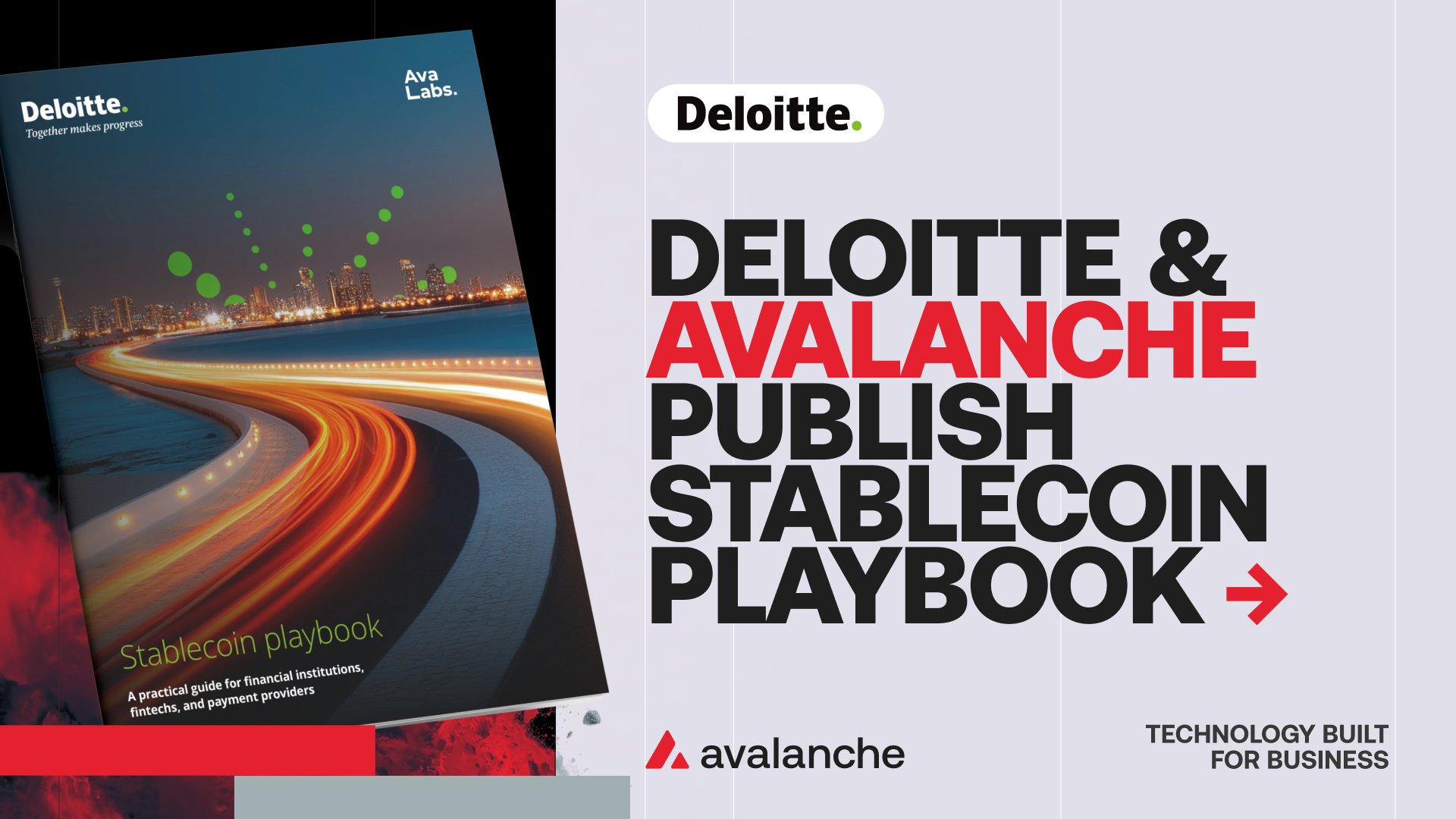 Deloitte and Avalanche have released a stablecoin playbook to help institutions navigate adoption, regulation and execution as stablecoins become core financial infrastructure2026-07
 Bitwise CIO Matt Hougan says stablecoins and tokenization now generate more advisor interest than Bitcoin, with Ethereum, Solana, Chainlink and Avalanche among top beneficiaries2026-06
Avalanche (AVAX) is a high-throughput Layer-1 blockchain network designed for fast, low-cost smart contract execution. Its defining feature is not simply transaction speed, but a multi-chain architecture that lets institutions and developers deploy purpose-built blockchains within a broader interoperable ecosystem.
What Is Avalanche?
Launched in September 2020 by Ava Labs, which was co-founded by Cornell computer science professor Emin Gün Sirer, Avalanche was designed to address the trade-off among scalability, security, and decentralization that constrained earlier smart-contract platforms. Where Ethereum historically accepted lower base-layer throughput to protect security and decentralization, Avalanche pursued all three through a probabilistic consensus protocol. Avalanche consensus allows a large validator population to reach finality quickly without relying on coordinator nodes.
The network is structured around three interoperable chains:
- X-Chain, or Exchange Chain, handles asset creation and peer-to-peer transfers using a directed acyclic graph structure.
- C-Chain, or Contract Chain, is Ethereum Virtual Machine-compatible and hosts most of the network's DeFi protocols, NFT marketplaces, and decentralized applications.
- P-Chain, or Platform Chain, coordinates validators and manages the creation of subnets, now called Avalanche L1s. These are sovereign, customizable blockchains connected to the wider Avalanche architecture.
AVAX is the native token. It pays transaction fees, supports staking, and acts as a reserve asset across the multi-chain system. Its supply is capped at 720 million tokens, while transaction fees are burned rather than redistributed. That creates a usage-linked deflationary mechanism, although burning fees does not automatically make circulating supply decline: issuance, unlocks, and activity all affect the result.

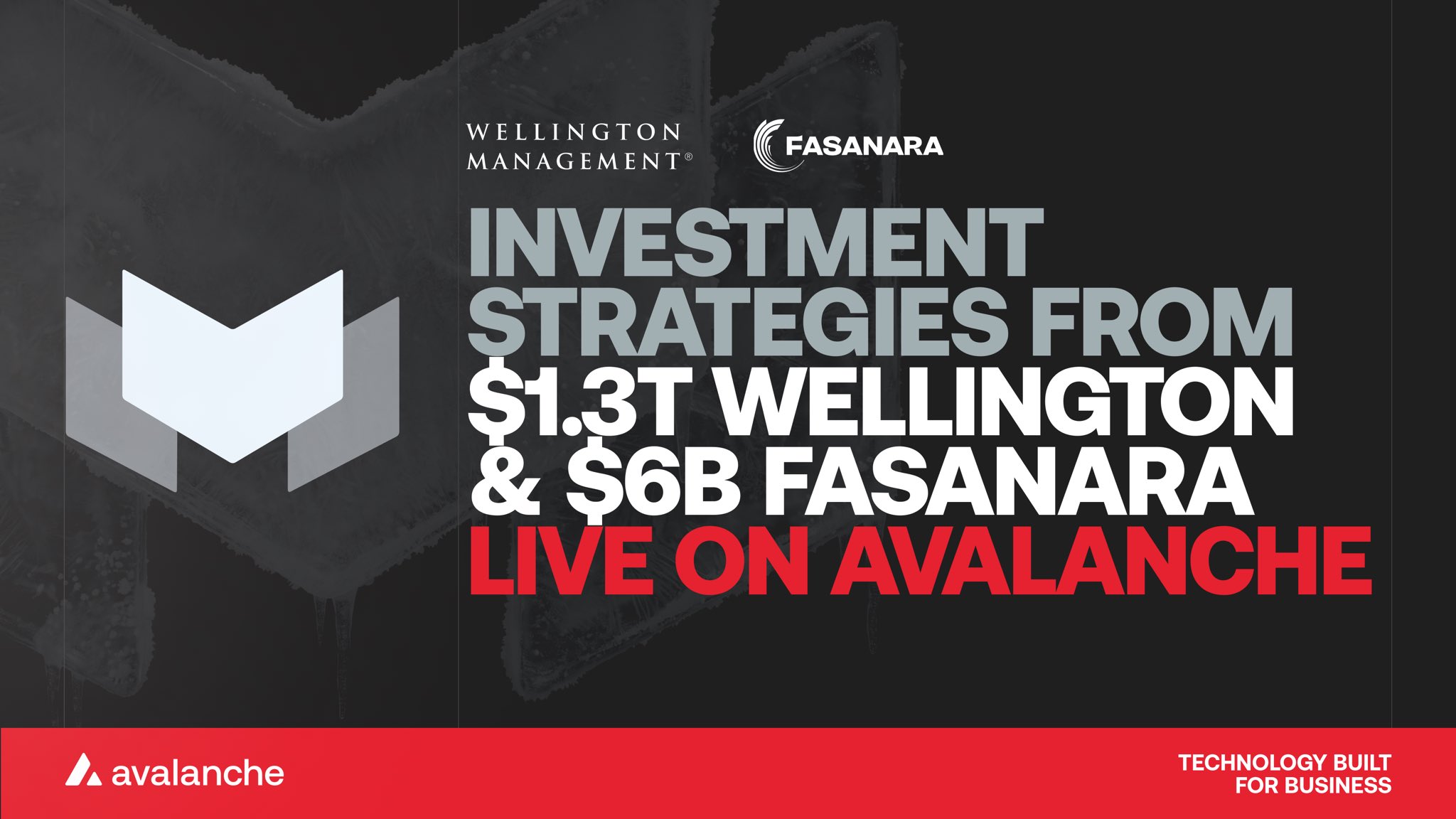
Wellington and Fasanara institutional strategies go live on Avalanche through Midas
Avalanche L1s: The Subnet Strategy
The feature that most clearly separates Avalanche from competing Layer-1s is its L1 framework. Developers can create application-specific blockchains with customized gas tokens, fee structures, privacy rules, validator requirements, and virtual machines.
This reclassifies Avalanche from a single general-purpose chain into infrastructure for operating multiple specialized chains. The closest analogy is configurable cloud infrastructure: users share an underlying technology stack but can establish environments suited to their own workloads and constraints.
The flexibility is a double-edged sword. It allows a regulated financial institution, game developer, or payments operator to avoid forcing every application onto the same execution environment. It can also scatter users and liquidity across separate chains, increase dependence on bridges, and weaken the composability that makes a unified smart-contract network valuable. The gain is customization; the cost is potential isolation.
A useful test is therefore not merely how many Avalanche L1s launch. Readers should watch whether those chains retain active users, attract applications beyond their initial sponsor, and move assets safely between their own environments and the C-Chain.
The risks are not theoretical. According to DeFi Kingdoms' announcement, DeFi Kingdoms sunsets DFK Chain August 28, migrates player assets to Avalanche C-Chain and plans third-party SDK. That move does not invalidate the application-chain model, but it demonstrates that sovereignty creates an additional operating decision: a project must maintain enough activity and infrastructure to justify its own chain. Returning assets to the C-Chain can restore shared liquidity and reduce operational overhead, but it also surrenders some application-specific control.
Avalanche readers click hardest on institutional legitimacy signals — ETF filings, gaming IPs, RWA funds, and enterprise partnerships — revealing that AVAX's audience is betting on adoption credibility, not DeFi yield innovation.
Institutional Adoption: Payments, Tokenization, and Settlement
Avalanche's most consequential strategic direction is its attempt to become settlement infrastructure for institutional finance. Stablecoins, tokenized assets, private credit, and payments fit the L1 architecture because institutions often want configurable rules and controlled environments without abandoning public-chain interoperability entirely.
The Avalanche Payments Collective launched in 2026 with 28 founding participants spanning stablecoins, treasury management, asset management, and settlement infrastructure. Its stated ambition covers 150 countries, 96 currencies, and billions of consumer endpoints. The breadth of the coalition matters more than the headline alone: Avalanche is trying to coordinate the issuers, custodians, asset managers, and payment providers needed for a usable financial network rather than selling blockspace to each in isolation.
Trad.Fi and W3 separately announced a $650 million private-credit initiative on Avalanche using AI-assisted underwriting designed to process loans in a single day. Japan's tokenized-securities market, valued at approximately $2.9 billion in the standing evidence, has also converged on Avalanche infrastructure, alongside payment-related deployments involving PYUSD and Shopify.
These examples support the idea that Avalanche is competing as configurable financial infrastructure, sometimes described as a crypto analogue to Amazon Web Services. The analogy is useful but limited. Cloud customers pay directly for compute capacity; blockchain adoption only creates durable value for AVAX holders if applications generate fees, require the token, or otherwise connect their economic activity to AVAX demand.
That distinction is central to evaluating institutional announcements. A pilot proves that an organization was willing to test the infrastructure. A production deployment with continuing transaction volume establishes something more valuable: that the chain has become part of an operating workflow. The observable test is recurring settlement activity, not the number of recognizable logos in an announcement.
Public Infrastructure and Credential Verification
Avalanche's configurable-chain thesis also extends beyond finance. According to Avalanche's account, Kenya anchors 30M+ academic credentials on Avalanche for instant, forgery-resistant verification. Compared with a payment pilot, credential anchoring belongs to a different category: blockchain is being used as verification infrastructure rather than as a venue for trading or capital formation.
The figure describes meaningful document scale, but it does not by itself establish how frequently credentials are checked, what information remains offchain, or how institutions handle errors and revocations. The practical test is whether employers and schools can reliably validate records while authorized administrators retain workable processes for correcting them. Immutability helps prevent silent alteration; it does not remove the need for sound data governance before a record reaches the chain.
FIFA, Gaming, and Consumer Adoption
Institutional finance is one adoption vector. Consumer-facing applications in sports and gaming provide another test because their users may care about tickets, rewards, or digital items without caring which blockchain processes them.
FIFA selected Avalanche infrastructure for ticketing and fan-experience initiatives associated with the FIFA World Cup. The integration includes testing Rights Tickets, described as RTBs and RTTs, as a blockchain-based ticketing standard intended to verify authenticity and support secondary-market controls. Reported volumes exceeded $25 million with more than 100,000 RTBs issued.
The important reclassification is that ticketing is not primarily a speculative-token use case. It is a rights-management problem involving authenticity, transfer restrictions, and access. Blockchain infrastructure is valuable here only if it reduces fraud or administrative friction without making the purchasing and transfer experience worse for ordinary fans.
Gaming provides a related but distinct test. Kite launched an Avalanche-powered mainnet with chain ID 2366 and an Agent Passport system intended for AI-agent spending. That illustrates how customization can support application categories that require their own execution or identity rules. The corresponding cost is the same one facing every dedicated chain: specialized infrastructure must attract enough activity to justify the operational and liquidity separation.
- 01spot ETF filing race
Multiple ETF filings and SEC delays drew the top clicks, signaling readers are tracking regulatory gatekeeping as the key price catalyst for AVAX
- 02gaming and IP deployments
MapleStory's Avalanche Subnet confirmation and FIFA's proprietary blockchain partnership pulled readers seeking proof that major IPs chose AVAX over competitors
- 03DeFi exploits and losses
Platypus, StarsArena, and Elixir's deUSD losses collectively drew readers who track Avalanche's DeFi security record and protocol risk
- 04RWA and institutional tokenization
Galaxy's CLO fund, Blackrock's sBUIDL on Euler, Homium's HELOC raise, and Keyring's zkVerified markets signal a distinct thread of institutional capital entering via Avalanche rails
- 05token unlock and supply pressure
Readers clicked on AVAX appearing in major August unlock schedules exceeding $900M, connecting macro supply events to price risk
- 06ecosystem credibility disputes
The Monad founder's non-denial of Andre Cronje's Avalanche fork accusations drew readers interested in whether AVAX's codebase is being quietly copied by rivals
Staking and Yield
AVAX holders can participate in network security as validators or delegators. A full validator node requires a minimum stake of 2,000 AVAX, while delegators can commit smaller amounts to existing validators. Staking periods range from two weeks to one year. Annualized rewards have historically varied with delegation fees, tokenomics, and participation rates, and should not be treated as fixed income.
Kraken launched managed AVAX staking for eligible clients in 2026, abstracting the technical work of operating or selecting infrastructure. CME Group launched regulated AVAX futures during the same period, with initial block trades completed by FalconX and G-20 Group.
Together, managed staking and regulated futures broaden the ways investors can obtain economic exposure. They also create different risk packages. Direct staking involves token-price risk, validator selection, lockups, and protocol conditions. Managed staking adds platform and custody exposure. Futures replace direct custody with leverage, basis, margin, and contract-roll considerations. More access is useful, but it does not make the instruments interchangeable.
Investment Vehicles and the Exchange-Traded Fund Question
Bitcoin and Ethereum have spot exchange-traded products in the United States, while no equivalent standalone product for AVAX was established in the standing article. Grayscale holds AVAX exposure within diversified crypto trust products, offering brokerage-account access through an indirect vehicle.
AVAX ONE, listed on Nasdaq as AVAT following a $675 million merger, represents another approach: equity-style exposure to the Avalanche ecosystem rather than direct ownership of AVAX. Its shares fell 38% on their Nasdaq debut, and the company also executed a reverse stock split.
That distinction matters because an operating-company share, a diversified trust, a futures contract, and a directly held token answer different investment questions. Equity holders assume corporate governance and execution risk. Trust investors face fees and possible tracking differences. Futures traders manage margin and contract structure. Direct token holders bear custody and protocol exposure. A familiar brokerage wrapper does not erase the underlying structural differences.
Whether a standalone spot exchange-traded fund for the token follows the Bitcoin and Ethereum precedents remains a regulatory question. AVAX's treatment under U.S. law is not settled in the standing evidence. The useful test is not speculation about an application, but the appearance of a concrete filing, its proposed market-surveillance and custody arrangements, and the regulator's response.
Network Performance and Competition
Avalanche has emphasized rapid finality and throughput of thousands of transactions per second on the C-Chain since its mainnet launch. In practice, its competitive proposition is not raw speed alone. The C-Chain provides an EVM-compatible environment, while Avalanche L1s let applications create separate execution domains under a sovereign Layer-1 architecture.
Solana offers higher raw throughput and a more unified liquidity environment. Ethereum retains deeper developer mindshare and DeFi liquidity, supported by a large rollup ecosystem. Sui competes for the high-performance Layer-1 category, while Hyperledger Fabric, Polygon CDK, and zero-knowledge rollup frameworks compete for enterprise and application-specific deployments.
Avalanche's advantage is the combination of EVM compatibility, customizable chains, and relationships in tokenized assets and institutional finance. Its disadvantage is that customization can weaken network effects. A single busy chain concentrates developers, liquidity, and users; a collection of specialized chains can serve divergent requirements but must repeatedly solve interoperability and distribution.
- 2023-02exploit
Platypus DeFi protocol exploited on Avalanche
- 2023-09launch
GMX V2 beta goes live on Avalanche mainnet
- 2023-10exploit
StarsArena SocialFi exploit, ~$3M drained
- 2023-11milestone
Snowtrace block explorer discontinued
- 2024-03governance
Avalanche Foundation repurchases 1.97M AVAX from Luna Foundation Guard
- 2024-09regulatory
VanEck registers Avalanche ETF in Delaware, files S-1
- 2024-10milestone
Animoca Brands invests in Ava Labs for ecosystem growth
- 2025-01launch
MapleStory confirms Avalanche Subnet deployment
Onchain Metrics and Ecosystem Health
The Avalanche Foundation's Team1 community program has grown to more than 450 members focused on education, events, and builder support. The Foundation received more than 150 applications for its latest research-proposals cohort. The Avalanche Summit was scheduled for New York on September 16–17, 2026, with an audience spanning institutions and developers.
Community membership and proposal applications indicate attention, but they are upstream indicators. The more decisive measures are C-Chain active addresses, transaction fees, stablecoin balances and flows, the creation and retention of active Avalanche L1s, bridge usage, and total value locked in native protocols.
Fee burning connects activity to AVAX tokenomics, but the relationship should be bounded carefully. More transactions can increase burns; it does not follow that every institutional deployment creates substantial AVAX demand. The demand path depends on which token pays fees, how an application chain is configured, and whether its activity touches the shared network.
Risks and Structural Considerations
Avalanche's main risks follow directly from its strengths:
- L1 fragmentation: Custom environments can scatter users and liquidity, making cross-chain coordination harder.
- Bridge risk: Moving assets among chains introduces contracts and operational components that can expand the attack surface.
- Regulatory exposure: Uncertain legal treatment could affect access, listings, and institutional participation in the United States.
- Competitive pressure: Solana's performance, Ethereum's rollups, and enterprise-chain frameworks compete for overlapping users and workloads.
- Token unlocks: Vesting schedules for early investors and team allocations can create periodic supply pressure.
- Adoption-to-token leakage: An application can use Avalanche technology without generating AVAX demand proportional to its business activity.
These risks do not negate the architecture; they identify the conditions under which it works. Avalanche must make specialized chains easier to operate without allowing specialization to dissolve the shared economic network.
Outlook
Avalanche enters the latter half of the 2020s with a clearer institutional and application-infrastructure thesis than many general-purpose Layer-1 competitors. Its architecture offers organizations control over execution rules while retaining access to familiar EVM tooling and a broader ecosystem.
The central question is whether deployments become sustained economic activity that accrues to AVAX. Fee burning matters only when usage is large and persistent relative to issuance and circulating supply. Dedicated chains matter only when they retain users and connect product activity to the wider network. Institutional relationships matter only when pilots turn into recurring settlement.
If Avalanche L1s can preserve customization while maintaining liquidity, interoperability, and a meaningful role for AVAX, the network can establish itself as durable infrastructure for specialized financial and consumer applications. If deployments remain isolated or migrate back to shared execution because dedicated chains cannot justify their overhead, the architecture will have demonstrated technical flexibility without proving equally strong economic cohesion.
Latest AVAX news
Sources
2 records from 1 domain
Community notes
Spot something off or out of date? Drop a note. Editors review topic notes daily and roll accepted fixes into the explainer — contributors are recognized in the monthly $SQUID drop.
Loading notes…
Help improve this topic
Have a story or tip about this topic? Submit it. See something missing? Leave a note. Editors review daily; accepted submissions and fixes count toward the monthly $SQUID drop.