
Bittensor (TAO) is a decentralized AI network where subnets compete to produce machine intelligence for token rewards. A guide to dTAO, Alpha tokens, Conviction governance, Grayscale's GTAO filing, and the risks.
+11 sources across the wider coverage universe
 Covenant AI exits Bittensor, alleges single actor controls the "decentralized" network2026-04
 Bittensor founder Const says the network remains intentionally centralized for now, arguing rapid AI innovation outweighs governance decentralization as it targets full autonomy within 18 months2026-06
 DCG-backed Yuma launches Bittensor fund for institutional TAO and AI subnet exposure2026-06
 Bittensor’s TAO pitched as “Bitcoin of AI,” rewarding real machine intelligence over hash power as subnets drive revenue, enterprise partnerships, and decentralized compute markets2026-05
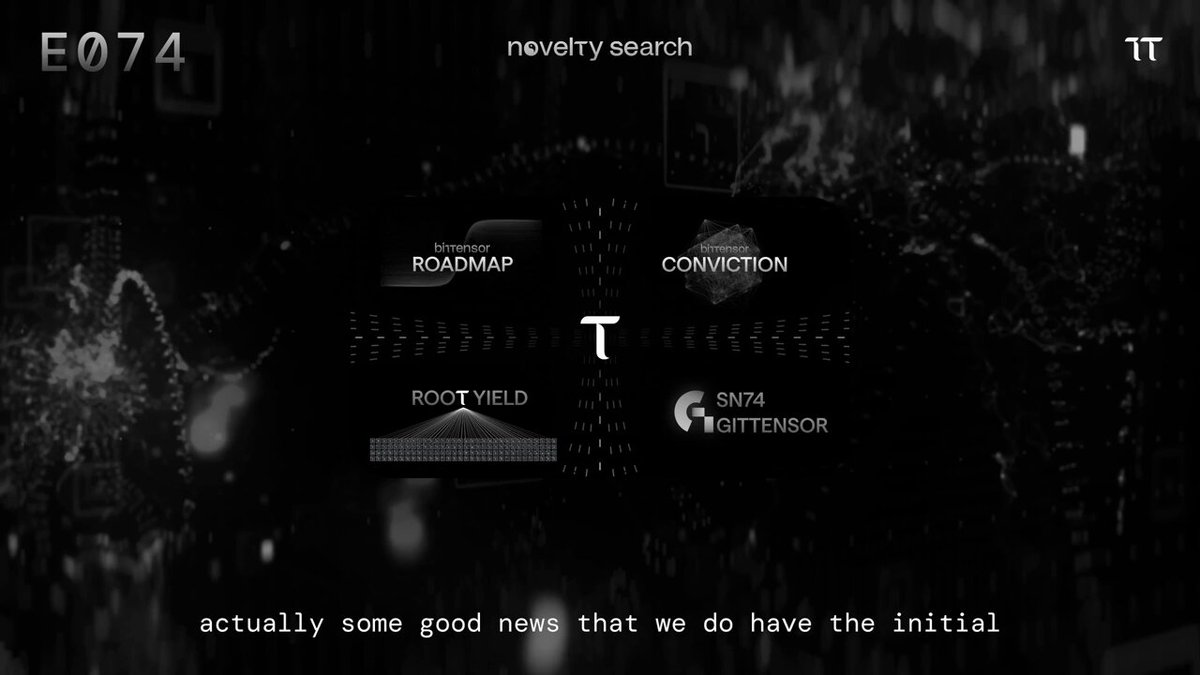 Bittensor outlines governance shift away from Opentensor as Conviction ties subnet control to staked ALPHA2026-05
 Safello lists staked TAO ETP on Nasdaq Stockholm with ~18% annual yield, first for Nordic investors2026-03
Bittensor is a decentralized network that aims to turn the production of machine intelligence into an open marketplace, where independent operators compete to provide AI services and earn the network's native token, TAO, in return.
Launched on mainnet in January 2021 by the Opentensor Foundation, Bittensor reframes a question that has otherwise been answered by a handful of large corporate labs: who gets to build, own, and profit from artificial intelligence? Its answer is a blockchain-based incentive system that rewards participants for contributing useful computation rather than for staking capital or solving arbitrary hashes (Bittensor docs).
What Bittensor Is Trying to Solve
Most modern AI is produced inside closed companies. Models are trained on private infrastructure, served through proprietary APIs, and governed by a small number of decision-makers. Bittensor's premise is that this concentration is both an economic problem—value accrues to a few firms—and a resilience problem. The network's proponents argue that centralized providers are more exposed to single points of failure and to government intervention, pointing to episodes in which large labs restricted or suspended services, and positioning permissionless, open-source AI as a structurally different alternative.
Whether decentralized AI can match the quality and cost of centralized labs remains an open question, and Bittensor's own founders have acknowledged adoption headwinds even with token incentives in place. The network is best understood as an ongoing experiment in coordinating AI work through markets rather than a finished product.

Covenant AI exits Bittensor, alleges single actor controls the "decentralized" network
Steeves already stepped down as Opentensor CEO and dTAO was supposed to move emission allocation to market-based mechanisms — but Covenant claims a founder can still unilaterally suspend subnet emissions and time token dumps to pressure operators. Losing the team that delivered your best proof-of-concept (72B model, Jensen Huang endorsement, three high-emission subnets) while TAO drops 18% is a different category of problem than some anon calling you centralized on CT. If the protocol's architecture actually prevents unilateral emission suspension, show the on-chain proof; if it doesn't, the "decentralization theatre" label sticks.
How the Network Works: Subnets and TAO
Bittensor is organized into subnets—independent competitive marketplaces, each dedicated to a specific task such as text generation, image synthesis, data scraping, prediction, video encoding, or financial modeling. Within a subnet, two roles matter most. Miners perform the actual work (running models, producing outputs), and validators evaluate that work and score its quality. The protocol uses those scores to distribute TAO emissions, rewarding miners who produce the most useful output as judged by validators. The network currently supports 128 active subnets, with planned expansion toward 256 (CoinGecko).
TAO is the network's base asset. It is used to register new subnets and miners, to stake toward validators, and as the settlement currency across the ecosystem. TAO's monetary policy deliberately echoes Bitcoin: a capped supply of 21 million tokens and periodic halvings of the emission rate. A December 2025 halving cut daily emissions from roughly 7,200 to 3,600 TAO, with the next halving projected for December 2026 (CoinGecko). This is the basis for the recurring "Bitcoin of AI" framing—the idea that TAO rewards real machine intelligence the way Bitcoin rewards hash power. The analogy is a marketing device, not a technical equivalence; Bittensor's consensus and reward mechanics differ substantially from Bitcoin's proof-of-work.
Readers click Bittensor not for the AI technology itself but for the governance paradox: the network markets itself as decentralized AI infrastructure while its own founder admits intentional centralization, and its most prominent subnet operator publicly accused a single actor of controlling the whole system.
Dynamic TAO and Alpha Tokens
The most consequential change to Bittensor's design came with Dynamic TAO (dTAO), activated in February 2025. Before dTAO, a relatively centralized process—heavily influenced by validators on the "root" network—determined how emissions were split among subnets. Critics argued this concentrated power and rewarded reputation over output.
Under dTAO, every subnet issues its own Alpha token and maintains an automated market maker (AMM) liquidity pool pairing that Alpha token with TAO (Bittensor docs). When a participant stakes TAO into a subnet, they are effectively swapping TAO for that subnet's Alpha token. The flow of TAO into and out of these pools becomes a continuous, market-driven signal of which subnets the community believes are producing genuine value, and emissions are weighted accordingly. In effect, capital "votes" on subnet quality in real time rather than relying on a fixed validator hierarchy.
The result is a layered economy. By March 2026, the combined market capitalization of subnet Alpha tokens reached roughly $1.12 billion, equal to about 27% of TAO's own market capitalization (CoinGecko). This created a new asset class within Bittensor and drew institutional interest in subnet tokens alongside TAO itself. It also created new failure modes: validators have begun "super-burning" subnets seen as having weak mechanisms, self-mining patterns, or no clear commodity output, and some subnets face efficiency questions when their economics do not beat existing cloud providers. The market-driven model rewards demonstrable production and punishes hype, but only as well as validators can distinguish the two.

Axis Robotics partners with OpenRoboto to supply over 3 million trajectories for Bittensor's robotics AI subnet
Governance in Transition
Bittensor's governance has historically been transitional rather than fully decentralized. Documentation describes a "Triumvirate" of Opentensor Foundation members holding root permissions alongside a Senate, a structure intended as a bootstrapping phase rather than a permanent arrangement (IQ.wiki). The network is now actively moving authority away from the foundation, and co-founder Jacob Steeves ("Const") has stepped down as Opentensor CEO, with co-founder Ala Shaabana also stepping back from his executive role (SimplyTao).
Several mechanisms are central to this shift:
- Conviction introduces contested ownership of subnets. By locking roughly 10% of a subnet's outstanding Alpha supply for about two months, outside capital can signal long-term commitment and, in some cases, take over subnets judged to be abandoned or underperforming. Conviction applies only to subnets at least one year old, shielding newer teams from early destabilization (SimplyTao). The aim is to tie governance influence to staked, locked Alpha and to keep productive subnets from stagnating.
- Root yield reform revisits whether simply staking TAO on the root network should generate passive yield at all. Proposals collectively framed as "Root Reborn" would push validators to reinvest staking yield into AI subnets, redirecting capital from passive returns toward productive subnet economies and easing the sell pressure that passive emissions can create.
The intended philosophy, as described by participants, is a system that can move quickly when consensus is clear and slow down when proposals warrant scrutiny. The transition is contested: at least one prominent team, Covenant AI, publicly exited the network citing "decentralization theatre," and TAO's price fell sharply on the news—a reminder that governance changes carry real reputational and market risk (TradingView).
- 01Covenant AI centralization exit
An insider defection with a named allegation — that one actor controls the supposedly decentralized network — provided the kind of accountability story readers find irresistible, especially paired with the co-founder's denial.
- 02Conviction governance overhaul
Readers tracked the concrete mechanism Bittensor proposed to transfer subnet control away from Opentensor Foundation, signaling that governance capture was already a live concern before Covenant AI went public.
- 03Institutional TAO products
The Safello staked TAO ETP on Nasdaq Stockholm and Grayscale's amended S-1 framed TAO as an investable asset class, attracting readers watching for regulated on-ramps to AI-adjacent tokens.
- 04'Bitcoin of AI' investment thesis
The framing of TAO as proof-of-intelligence rather than proof-of-work gave readers a narrative hook to evaluate the token as a macro bet on decentralized compute, not just a DeFi yield play.
- 05Founder centralization admission
Const's on-record statement that the network is intentionally centralized for now — with an 18-month autonomy target — directly contradicted marketing claims and validated the Covenant AI allegations in readers' eyes.
- 06Decentralized 72B model training
The Covenant-72B milestone offered rare technical proof that distributed AI training could compete with centralized supercluster results, anchoring NVIDIA CEO endorsement and a TAO price surge.
Institutional Access and the Grayscale Filing
For most of its history, exposure to TAO required interacting directly with crypto exchanges and self-custody. That is beginning to change. Grayscale operates a Bittensor Trust trading over the counter under the ticker GTAO, and on December 30, 2025 the firm filed an S-1 registration statement with the U.S. Securities and Exchange Commission for what would be the first U.S.-listed exchange-traded product offering TAO exposure (CoinDesk).
Disclosures from the trust illustrate both the demand and the volatility involved. As of December 31, 2025, the trust held roughly 0.3% of circulating TAO; between December 12 and 31, 2025 its closing price traded at a premium to net asset value that peaked at 124% and averaged 65% (SEC S-1). Net assets rose to about $11.7 million as of March 31, 2026, up from $8.0 million at year-end, driven largely by a rebound in TAO's price (StockTitan). A filing alone is not an approval, and an over-the-counter trust is not an exchange-traded fund; the regulatory path for a spot TAO ETP remains unresolved.
Bittensor founder Const says the network remains intentionally centralized for now, arguing rapid AI innovation outweighs governance decentralization as it targets full autonomy within 18 months
Investment Considerations and Risks
TAO is among the more volatile assets even by crypto standards, and any discussion of price should be read in that light. Analyst projections cited in 2026 have ranged widely—from roughly $400–$850 under stable conditions to above $1,000 in optimistic scenarios tied to ETP approval—but such forecasts are speculative and frequently wrong (CoinStats). Several categories of risk are worth weighing before treating TAO as an investment:
- Adoption risk. The core thesis depends on decentralized subnets producing AI output that is competitive with centralized providers on quality and cost. Bittensor's own founders have flagged adoption as a genuine headwind.
- Mechanism and incentive risk. Market-driven emissions can be gamed. Self-mining, hollow subnets, and hype-chasing all threaten the integrity of the reward signal, and validator "super-burns" are a corrective rather than a guarantee.
- Governance risk. The network is mid-transition away from foundation control. High-profile exits and the open question of how much power the Opentensor Foundation truly cedes create uncertainty.
- Liquidity and access risk. Some custodians and exchanges have at times suspended TAO deposits and withdrawals during turbulent periods, which can strand holders temporarily.
- Regulatory risk. TAO's classification, the fate of the Grayscale filing, and broader crypto regulation all remain unsettled.
- Subnet token risk. Alpha tokens are newer, thinner, and more speculative than TAO itself, and their AMM-based pricing can move violently.
None of this constitutes financial advice; it is context for understanding why TAO behaves the way it does.
- 2023-03launch
Bittensor mainnet launch with subnet architecture
- 2024-01milestone
TAO surges 100%+ on decentralized AI demand narrative
- 2024-06regulatory
Grayscale opens GTAO Trust to accredited investors
- 2024-07milestone
Subnet 3 trains Covenant-72B model fully decentralized; NVIDIA CEO endorses
- 2025-03governance
Conviction on-chain commitment mechanism proposed for subnet operators
- 2025-06governance
Bittensor outlines governance shift away from Opentensor Foundation
- 2025-09regulatory
Safello lists staked TAO ETP on Nasdaq Stockholm
- 2026-01governance
Covenant AI exits Bittensor, alleges single-actor network control
Outlook
Bittensor's central bet—that machine intelligence can be produced and rewarded through an open market rather than inside closed labs—remains unproven but increasingly well-capitalized. The near-term storylines to watch are concrete: whether dTAO's market signals consistently reward real output over hype, whether Conviction and root-yield reform genuinely decentralize control without fracturing the community, and whether the Grayscale filing converts into the first regulated U.S. vehicle for the asset. Each could meaningfully reshape the network. For now, Bittensor is best read as a serious, volatile experiment at the intersection of crypto incentives and AI, worth following closely and judging by output rather than narrative.
Latest Bittensor news
Covenant AI exits Bittensor, alleges single actor controls the "decentralized" networkAxis Robotics partners with OpenRoboto to supply over 3 million trajectories for Bittensor's robotics AI subnetBittensor founder Const says the network remains intentionally centralized for now, arguing rapid AI innovation outweighs governance decentralization as it targets full autonomy within 18 monthsDCG-backed Yuma launches Bittensor fund for institutional TAO and AI subnet exposureBittensor’s TAO pitched as “Bitcoin of AI,” rewarding real machine intelligence over hash power as subnets drive revenue, enterprise partnerships, and decentralized compute marketsBittensor outlines governance shift away from Opentensor as Conviction ties subnet control to staked ALPHACommunity notes
Spot something off or out of date? Drop a note. Editors review topic notes daily and roll accepted fixes into the explainer — contributors are recognized in the monthly $SQUID drop.
Loading notes…
Help improve this topic
Have a story or tip about this topic? Submit it. See something missing? Leave a note. Editors review daily; accepted submissions and fixes count toward the monthly $SQUID drop.