
BNB is Binance's native token powering BNB Chain's DeFi, AI agent, and real-world asset ecosystem. With ~135M circulating supply, quarterly burns exceeding $1B, a pending US spot ETF, and a 20,000 TPS 2026 roadmap, it's a top-5 asset navigating centralization trade-offs.
+19 sources across the wider coverage universe
 Teneo Protocol joins CoinMarketCap Labs to power AI agents with autonomous API access and workflow execution, processing 1.45M+ requests across Avalanche, Base, and BNB Chain2026-04
 SilentSwap is now live on BNB Chain, bringing private, non-custodial cross-chain swaps and transfers to the ecosystem.2026-07
 BNB Chain adopts 6 Ethereum EIPs in Osaka/Mendel hard fork, pivots from speed gains to network stability2026-04
 Binance's Yi He tweets that Binance is on a hiring spree.2026-07
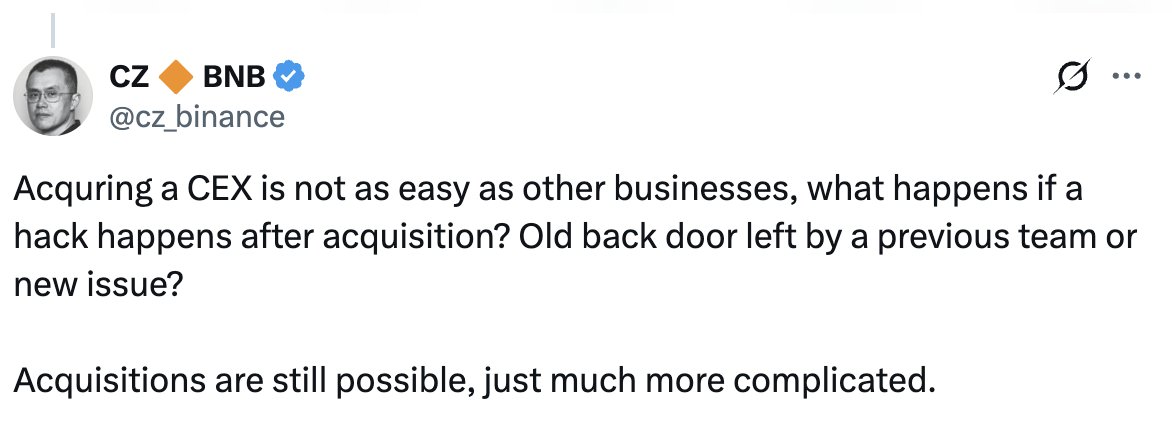 Binance founder CZ warns acquiring small crypto exchanges poses hidden security risks after BitMEX and BitMart shut down.2026-07
 BNB Chain moves BEP2 and BEP8 recovery to local self-service tool as Beacon Chain sunset enters Phase 32026-07
The native token of the Binance ecosystem, BNB powers transaction fees, staking, governance, and a growing array of financial services across one of the most active smart contract networks in crypto.
BNB began life in 2017 as an ERC-20 token issued on Ethereum during Binance's initial coin offering, raising roughly $15 million to fund the exchange's launch. The original pitch was straightforward: holders received a 50% discount on trading fees at Binance, with discounts stepping down over five years. Supply was fixed at 200 million tokens, with 100 million sold in the ICO, 80 million retained by the founding team, and 20 million allocated to angel investors.
From Exchange Token to Layer-1 Fuel
In 2020, Binance launched Binance Smart Chain (BSC) — an Ethereum-compatible proof-of-authority network using BNB as its native gas token. The move transformed BNB from a discount coupon into infrastructure currency. BSC's low fees and fast blocks attracted a wave of DeFi protocols and retail users priced out of Ethereum mainnet congestion, establishing BNB Chain as Ethereum's most direct competitor by transaction volume.
The network underwent a significant architectural consolidation in 2024, merging the original Binance Chain (now BNB Beacon Chain) into BNB Smart Chain and adopting the unified "BNB Chain" branding. The merger simplified the dual-chain model that had fragmented liquidity and developer tooling since 2020.
Today, BNB trades at roughly $580 with a market capitalization near $78 billion, placing it consistently among the top five crypto assets by market cap. Circulating supply sits around 135–136 million tokens — a figure that continues to fall.

Anoma launches private tokenized stocks on Anomapay for BNB Chain bStocks

The Burn Engine: Deflationary by Design
BNB's most structurally distinctive feature is its burn program, which targets a final supply of 100 million tokens — half the original issuance.
The mechanism has two components. First, a Real-Time Burn routes a portion of gas fees paid on BNB Chain directly into a burn address with every block. Second, a Quarterly Auto-Burn destroys additional tokens on a schedule calibrated to BNB's price and the number of blocks produced that quarter: when price rises, the quarterly burn quantity decreases; when price falls, it increases. This counter-cyclical design keeps the dollar value of burned tokens relatively stable regardless of market conditions.
Quarterly burns have accelerated as BNB's price has risen. The 33rd burn (Q3 2025) destroyed approximately 1.44 million BNB worth $1.2 billion. The 34th burn (Q4 2025/Q1 2026) removed 1.37 million BNB valued at $1.29 billion. The 35th burn (Q1 2026) crossed $1 billion again with 1.56 million BNB destroyed. Cumulatively, over $1.2 billion in BNB value has been permanently removed from supply, structurally tightening float as ecosystem usage grows.
Readers click BNB stories not for protocol mechanics but because every major angle—Telegram deals, SEC lawsuits, memecoin chaos, treasury accumulation—reduces to a single question: how much does one person's decisions control this network's fate.
CZ, Regulatory History, and Governance
Changpeng Zhao — widely known as CZ — co-founded Binance in 2017 and served as CEO until November 2023, when he stepped down as part of a $4.3 billion settlement between Binance and the U.S. Department of Justice. CZ pleaded guilty to Bank Secrecy Act violations and served a four-month sentence, completing it in 2024. Richard Teng succeeded him as Binance CEO.
BNB governance is overseen by the BNB Foundation, which manages burn schedules, ecosystem grants, and protocol upgrades. Validator governance on BNB Chain involves a set of 21–45 active validators selected by stake weight, with BNB holders delegating tokens to influence validator selection. The model is more centralized than proof-of-work chains but achieves substantially higher throughput and lower fees in return.
Network Performance and the 2026 Roadmap
BNB Chain ended 2025 with strong operating metrics: zero downtime, 31 million peak daily transactions, block times of 0.45 seconds, and fees running roughly 20x lower than Ethereum mainnet. Total value locked grew approximately 40.5% year-over-year, while daily transaction volume grew 150% YoY, according to BNB Chain's own reporting.
The 2026 technical roadmap targets a further step-change in throughput, aiming for 20,000 transactions per second with sub-second finality. The plan involves software-level consensus optimization, reduced network latency, and continued gas fee reduction — positioning BNB Chain explicitly as a "high-performance EVM trading chain" competing on execution speed rather than decentralization breadth. Blockworks Research cited sub-second finality, sub-cent fees, booming stablecoin activity, and rising real-world asset adoption as primary drivers of the network's 2026 growth thesis.

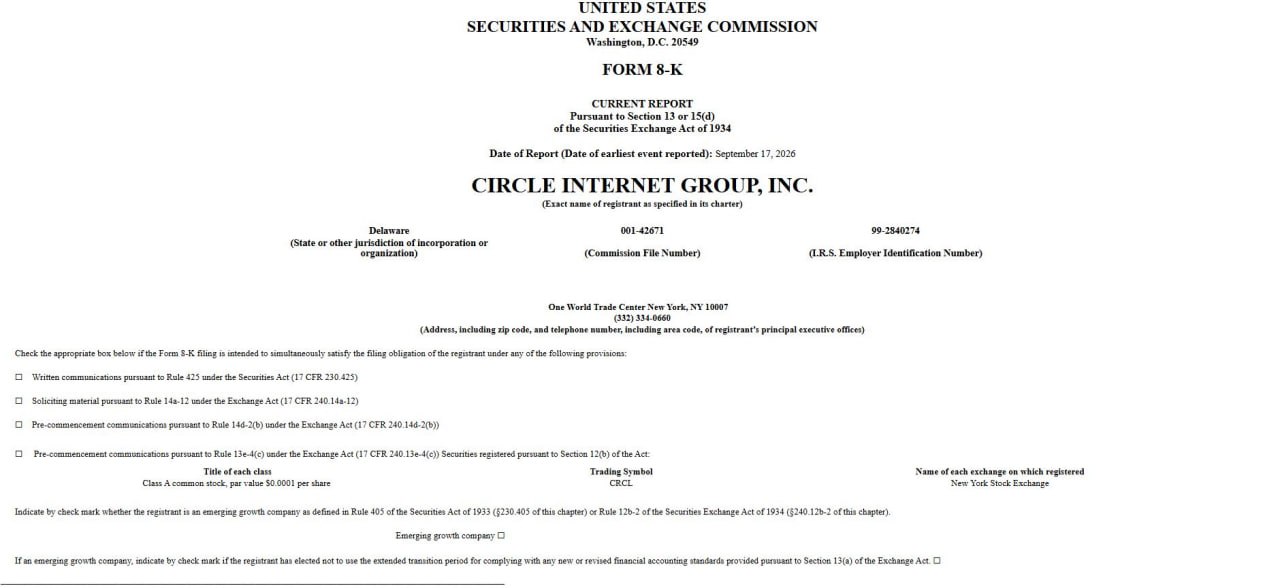
Binance takes $100 million stake in Circle as part of five-year USDC partnership
DeFi Ecosystem: PancakeSwap, Venus, and the Risks Within
PancakeSwap remains the dominant decentralized exchange on BNB Chain and among the highest-volume DEXs in all of crypto. Its concentrated liquidity V3 pools and governance token (CAKE) represent the anchor of BNB Chain's DeFi stack.
Venus Protocol is the chain's leading lending market. In mid-2026, Venus launched bStocks — tokenized stock positions usable as collateral within the Venus Core Pool — marking the first tokenized equity collateral market on the protocol. The integration uses Ondo Global Markets infrastructure, which brought 438 tokenized U.S. stocks and ETFs to BNB Chain (alongside Solana and Ethereum), backed by regulated custodians and inheriting public-market liquidity. Separately, Binance announced plans to let non-U.S. users trade more than 7,000 U.S. stocks and ETFs with zero commission using USDT, USDC, BNB, and other crypto, further blurring the line between traditional equities and on-chain finance.
Venus also launched a Fixed-Term Vault in 2026, an ERC-4626-compliant product offering transparent fixed-duration participation in DeFi yield — targeting users seeking defined-term returns rather than floating-rate exposure.
These developments come alongside ongoing security incidents inherent to any active DeFi ecosystem. In 2026, a PancakeSwap V2 pool was exploited for $1.1 million via a vulnerability in a OLPC/LABUBU meme token pairing, serving as a reminder that low-fee, high-throughput environments attract both builders and attackers. Due diligence on token pairings, pool audit history, and protocol age remains essential for participants.
- 01Telegram mass-adoption partnership
Routing BNB Chain into Telegram's billion-user base represented the most concrete 'next billion users' thesis readers had seen, making it the single most-clicked story in this set.
- 02Bridge exploit accountability
The AlexLab XLink compromise pulled readers hungry to know who absorbed the $4.3M loss and whether BNB's cross-chain infrastructure had a systemic gap, not just a one-off incident.
- 03SEC securities classification fight
Multiple SEC actions explicitly naming BNB as an unregistered security put existential legal risk on the table, and readers tracked every court motion to see whether the label would survive judicial scrutiny.
- 04Memecoin congestion and CZ culpability
A 400% gas spike driven by memecoin mania, paired with a widely-read critique of CZ's knowing role in fostering that environment, framed a story of network exploitation with a named protagonist.
- 05RWA and institutional tokenization
BNB Chain's repeated appearance alongside Ondo's tokenized U.S. equities and IPO-access deals surprised readers who associated the chain primarily with retail speculation, positioning it as a serious institutional settlement layer.
- 06Corporate and sovereign treasury bets
A nicotine company, a Kyrgyzstan reserve proposal, and a $500M convertible-note BNB acquisition collectively signaled that the Bitcoin corporate-treasury playbook was migrating to BNB, which readers found both novel and alarming.
Stablecoins and Liquidity Infrastructure
Stablecoin activity on BNB Chain has been a key driver of its resurgence. USDC and USDT are both natively supported on BNB Smart Chain, with regulated U.S. exchanges such as CoinZoom formally adding BNB Smart Chain as a supported network for USDT transfers in 2026. High stablecoin throughput enables low-friction on/off ramps and deep liquidity for DeFi protocols — a meaningful advantage over chains where dollar-denominated activity must cross bridges.
AI Agents and the Programmable Economy
A newer frontier for BNB Chain is autonomous AI agent infrastructure. The network's Agent SDK and the ERC-8183 standard enable agent-to-agent commerce directly on-chain: a standardized createJob → fund → submit → settle lifecycle that allows autonomous software agents to hire, pay, and receive payment from each other without human intermediaries. The complementary ERC-8004 standard provides on-chain agent identity.
Projects like Pieverse are deploying agents-as-a-service on BNB Chain, running campaigns such as Agent Survival Quest to onboard users into agent ecosystems through social identity and real AI usage. Prediction market integration — allowing agents to query live odds and market context through tools like the Polymarket Skill — illustrates the emerging pattern of agents operating as autonomous market participants. This mirrors broader AI agent development across Ethereum and Solana but with BNB Chain's lower fee environment offering an operational cost advantage for high-frequency agent interactions.
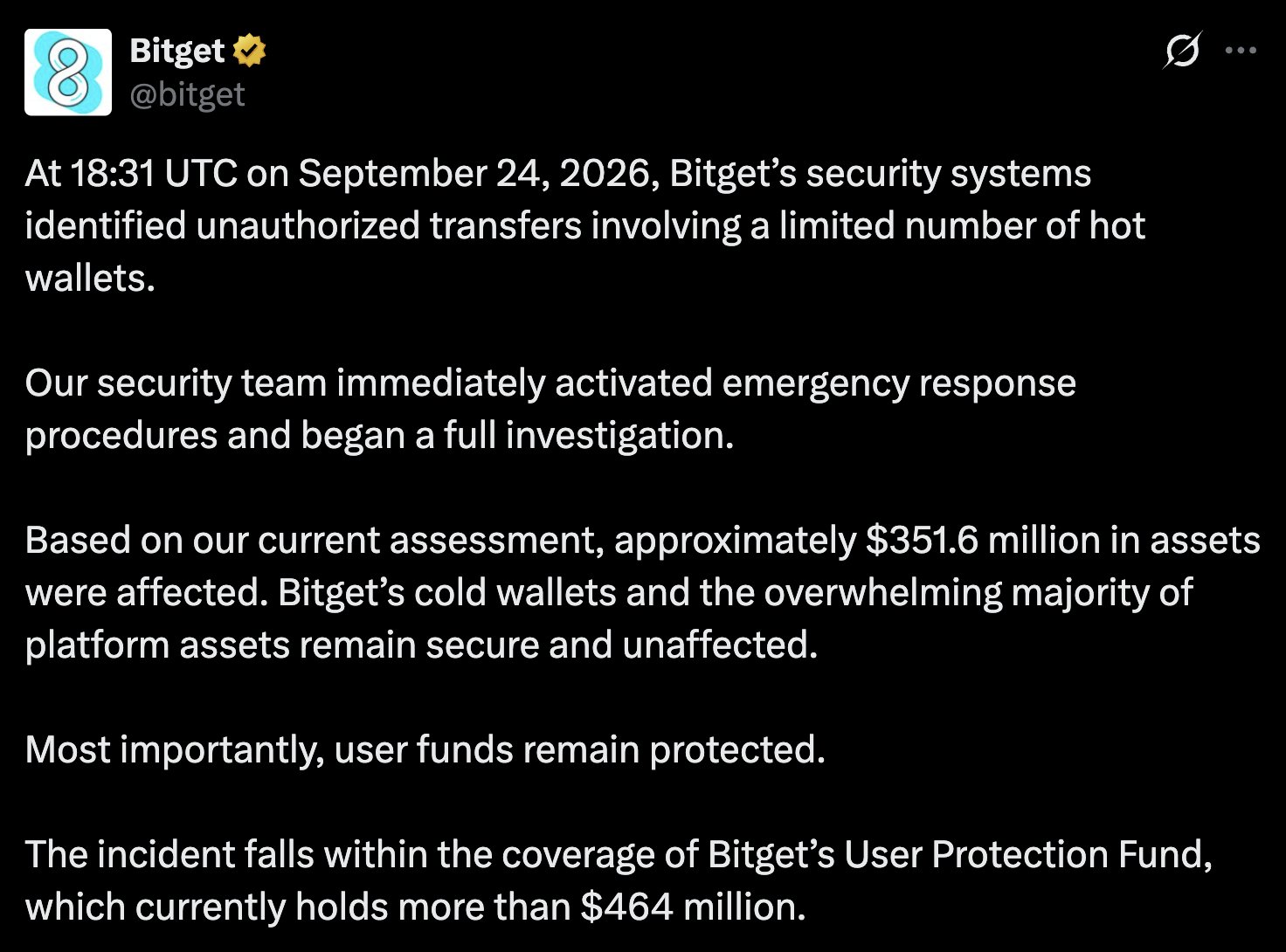
CZ pledges support, says Binance alongside BNB Chain and community will help Bitget after tough day
Institutional Recognition: ETFs and Derivatives
In 2026, VanEck filed for the first U.S. spot BNB ETF (ticker: VBNB), citing BNB Chain's $160 million in on-chain revenue and 33 million monthly active users as the fundamental investment case. The filing followed the precedent set by spot Bitcoin and Ethereum ETF approvals and represents a significant step toward institutional BNB exposure through regulated vehicles.
Coinbase Derivatives simultaneously launched monthly and perpetual-style BNB futures on its regulated platform, giving institutional and retail traders new tools for hedging and directional exposure without holding the underlying token directly.
These products signal that BNB is moving from exchange-native utility token toward a recognized institutional-grade asset — a trajectory that tracks Ethereum's own multi-year transition.
- 2023-06regulatory
SEC sues Binance; BNB named as unregistered security
- 2024-05exploit
AlexLab XLink bridge exploit: $4.3M drained on BNB
- 2024-06milestone
BNB Beacon Chain deprecated; native liquid staking enabled on BSC
- 2024-11launch
BNB Chain + Telegram partnership for in-app Web3 access announced
- 2025-03regulatory
Judge denies Binance motions to dismiss; drops secondary BNB sales claim only
- 2026-06governance
Maxwell upgrade deploys June 30; BSC block times cut to 0.75s
Use Cases: How BNB Is Actually Used
BNB's utility spans several categories:
- Gas fees: Every transaction on BNB Chain consumes BNB, making it the fuel for all DeFi, NFT, and agent activity on the network.
- Trading fee discounts: Binance still offers BNB-denominated fee reductions on its centralized exchange — the original use case, still active.
- Staking and delegation: BNB holders delegate to validators, earning staking rewards while contributing to network security.
- Payments and collateral: BNB serves as collateral in lending protocols (Venus, Radiant), payment in sponsored ad auctions, and as accepted currency for Binance's stock-trading product.
- Governance: BNB stake weight influences validator selection and, through on-chain governance mechanisms, protocol parameter changes on BNB Chain.
Risks and Considerations
BNB's concentration risk is real. A single entity — Binance — controls the chain's validator set composition, burn schedule methodology, and primary demand driver (exchange fee discounts). Regulatory action against Binance directly affects BNB's utility and value. The 2023 DOJ settlement demonstrated this correlation clearly: BNB's price fell sharply on settlement news before recovering as operations continued.
The network's delegated proof-of-stake model with 21–45 validators is materially more centralized than Ethereum's proof-of-stake or Bitcoin's proof-of-work, a deliberate trade-off for throughput. Validators must be approved, creating a permissioned layer at the network's foundation.
Security incidents — protocol hacks, meme-token exploits, oracle manipulation — recur on BNB Chain at rates consistent with any high-activity EVM chain, and sometimes at higher rates given the large volume of unaudited tokens and new pools.
Outlook
BNB enters the second half of 2026 with structural tailwinds: a deflationary supply approaching its 100 million target floor, growing RWA and stablecoin activity, institutional products (spot ETF, futures) opening new capital channels, and a 2026 performance roadmap targeting 20,000 TPS with sub-second finality. The AI agent infrastructure build-out on BNB Chain represents a genuine differentiation attempt — one that leverages low fees to make autonomous on-chain commerce economically viable at scale.
The key uncertainties are regulatory (any material action affecting Binance cascades to BNB), competitive (Solana and Ethereum Layer 2s compete directly for DeFi TVL and developer attention), and structural (centralization trade-offs limit BNB Chain's appeal to applications requiring credible neutrality). How the network navigates those tensions as tokenized real-world assets and AI agents become larger shares of on-chain activity will determine BNB's long-term position in the ecosystem hierarchy.
Latest BNB news
Anoma launches private tokenized stocks on Anomapay for BNB Chain bStocksBinance takes $100 million stake in Circle as part of five-year USDC partnershipCZ pledges support, says Binance alongside BNB Chain and community will help Bitget after tough day Binance Wallet now lets users pay gas fees with USDT on BNB Chain, Ethereum, Solana and TRON
 Binance to list Hyperliquid's HYPE token with Seed Tag applied
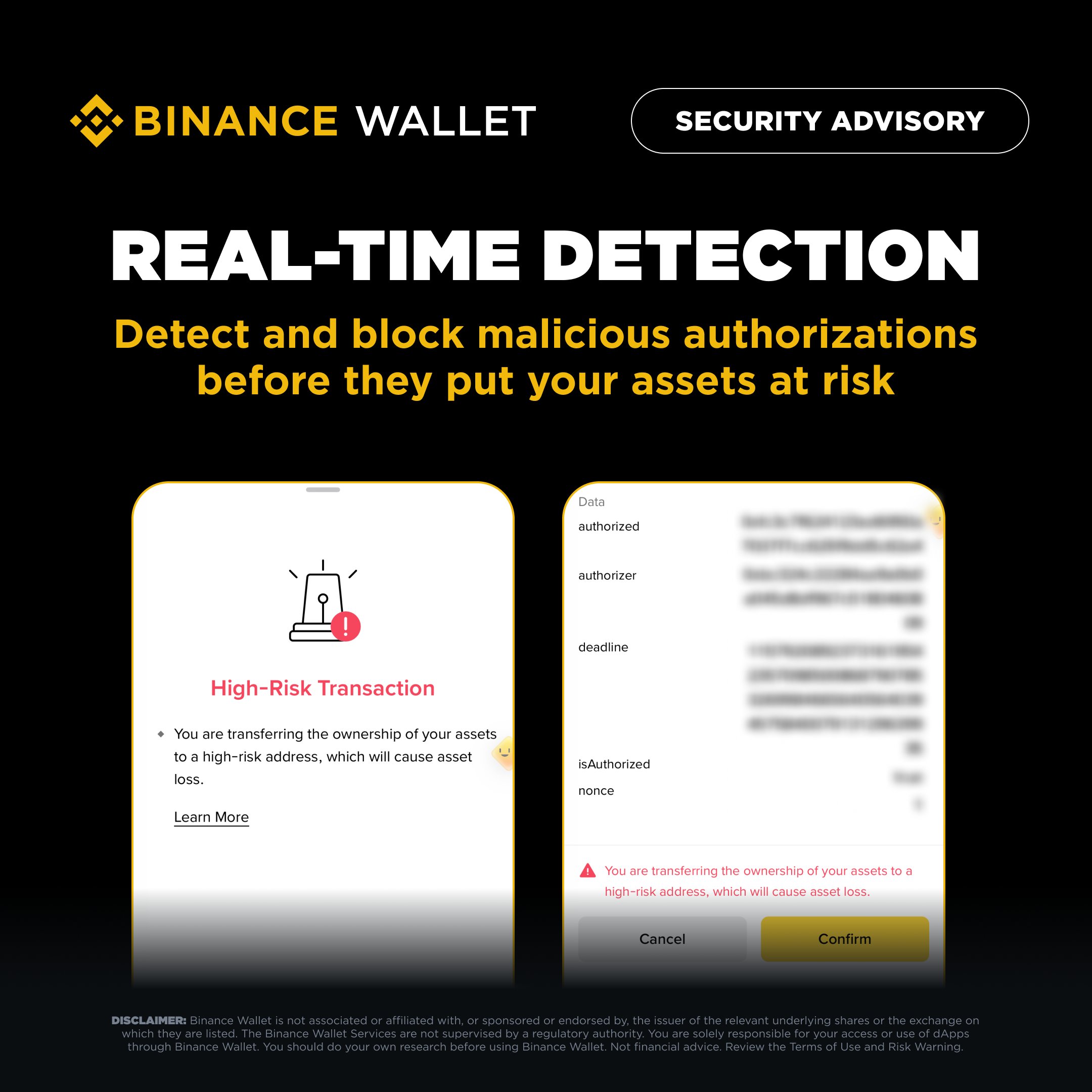 Binance Wallet adds real-time detection to intercept high-risk signing scenarios as phishing attacks targeting DeFi authorizations continue to rise
Community notes
Spot something off or out of date? Drop a note. Editors review topic notes daily and roll accepted fixes into the explainer — contributors are recognized in the monthly $SQUID drop.
Loading notes…
Help improve this topic
Have a story or tip about this topic? Submit it. See something missing? Leave a note. Editors review daily; accepted submissions and fixes count toward the monthly $SQUID drop.