
Cannes has become a key crypto hub, where EthCC, Stable Summit, WalletCon, Vault Summit and RWA events converge to shape DeFi, stablecoin, wallet and tokenization roadmaps through launches, sponsorships and concentrated builder‑investor dealmaking.
+6 sources across the wider coverage universe
 DeFi’s UX problem takes center stage as blocmates hosts Cannes roundtable with LI.FI, Lido, Gearbox, and Jumper to tackle fragmentation and user friction2026-04
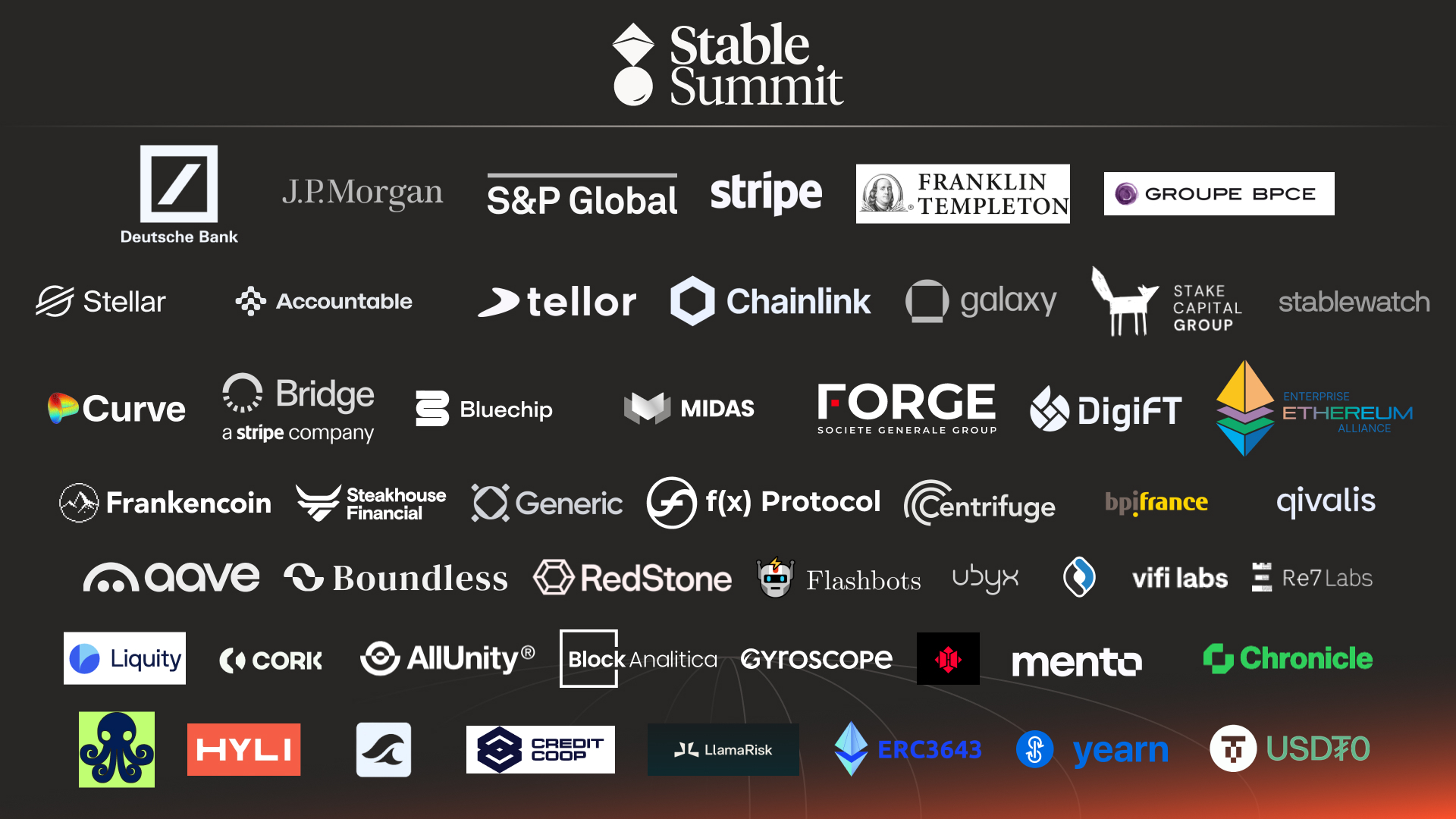 Our friends and partners at Stable Summit 2026 in Cannes (March 27th-28th) bring together leaders across payments, policy, capital markets, and onchain infrastructure to explore the future of stablecoins, FX, tokenized cash, RWAs, liquidity, and credit — don't miss it, get your tickets!2026-03
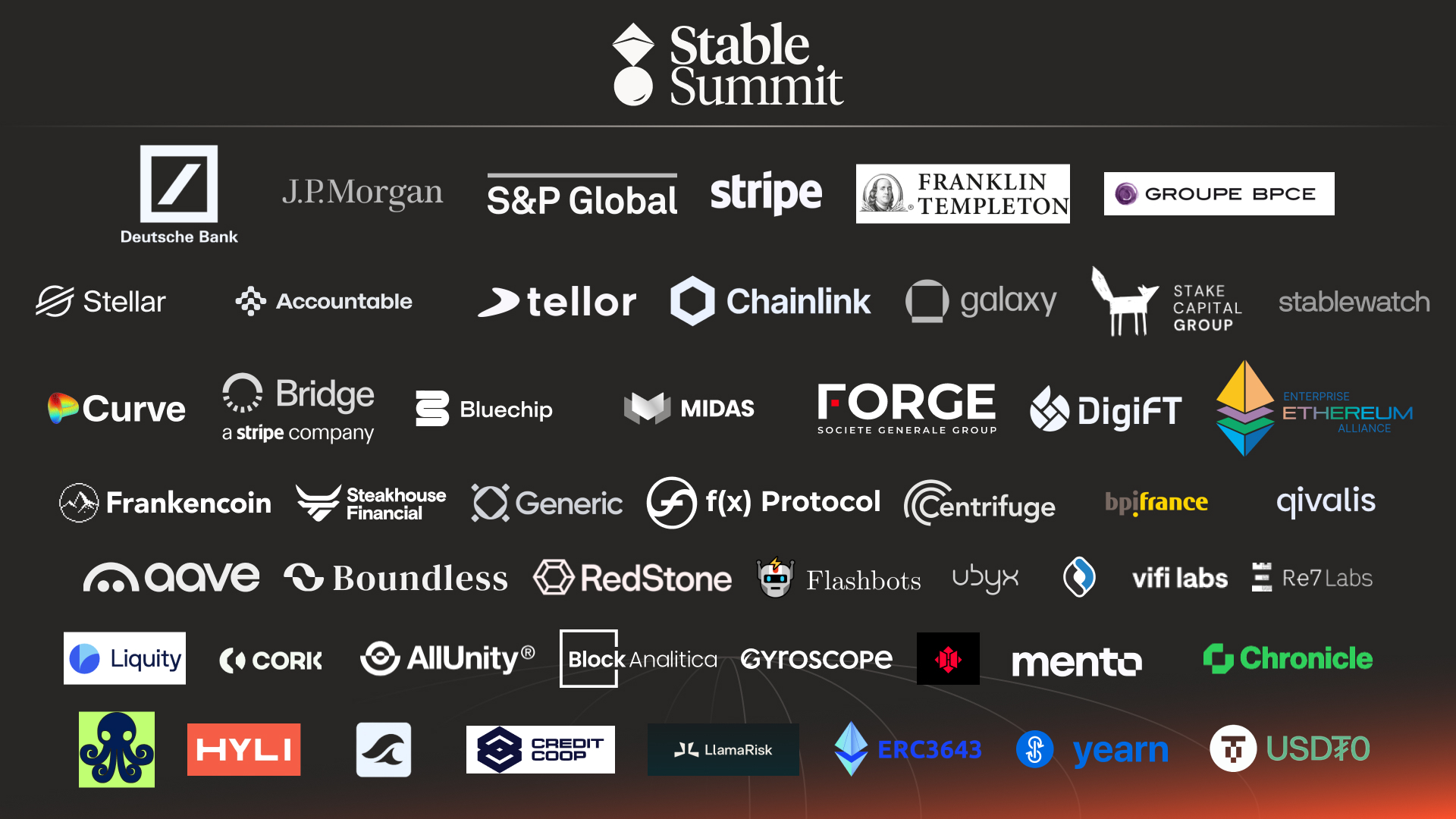 Stable Summit 2026 convenes builders and allocators in Cannes to discuss stablecoins in payments, policy and capital markets. 27-28 March at JW Marriott.2026-03
 Stable Summit, March 27-28, Cannes2026-03
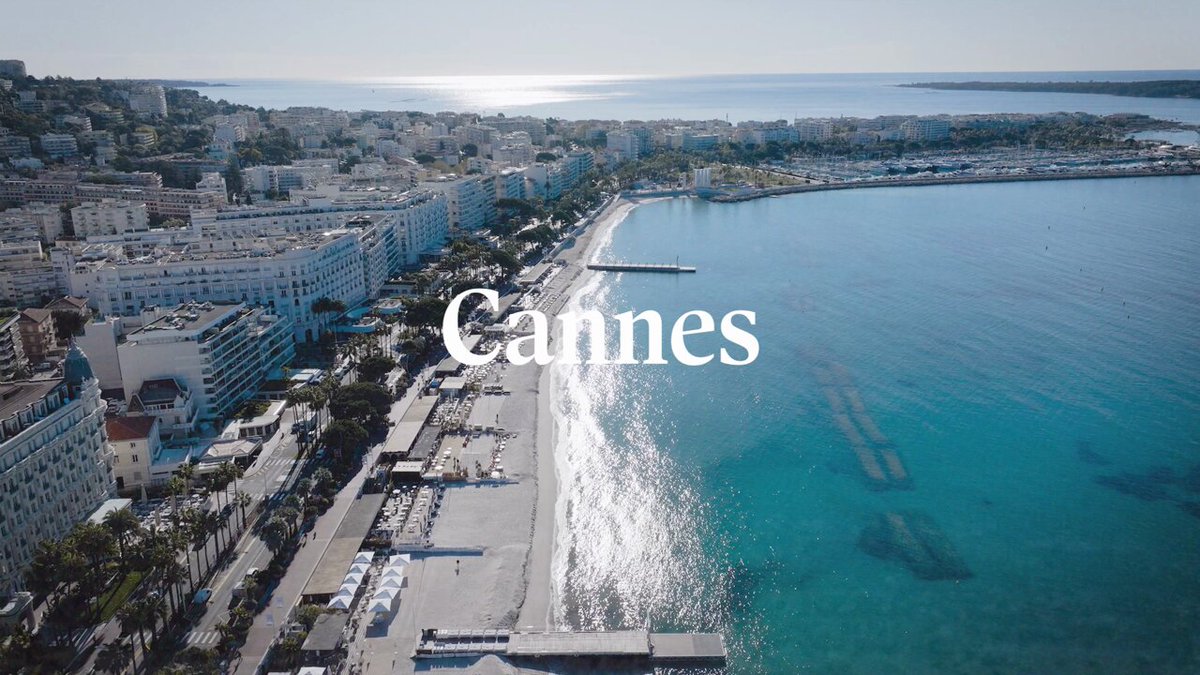 505 attendees. 75 speakers. 33 sessions. 1 future of finance.
Stable Summit Cannes 2026 was incredible!2026-03
505 attendees. 75 speakers. 33 sessions. 1 future of finance.
Stable Summit Cannes 2026 was incredible!2026-03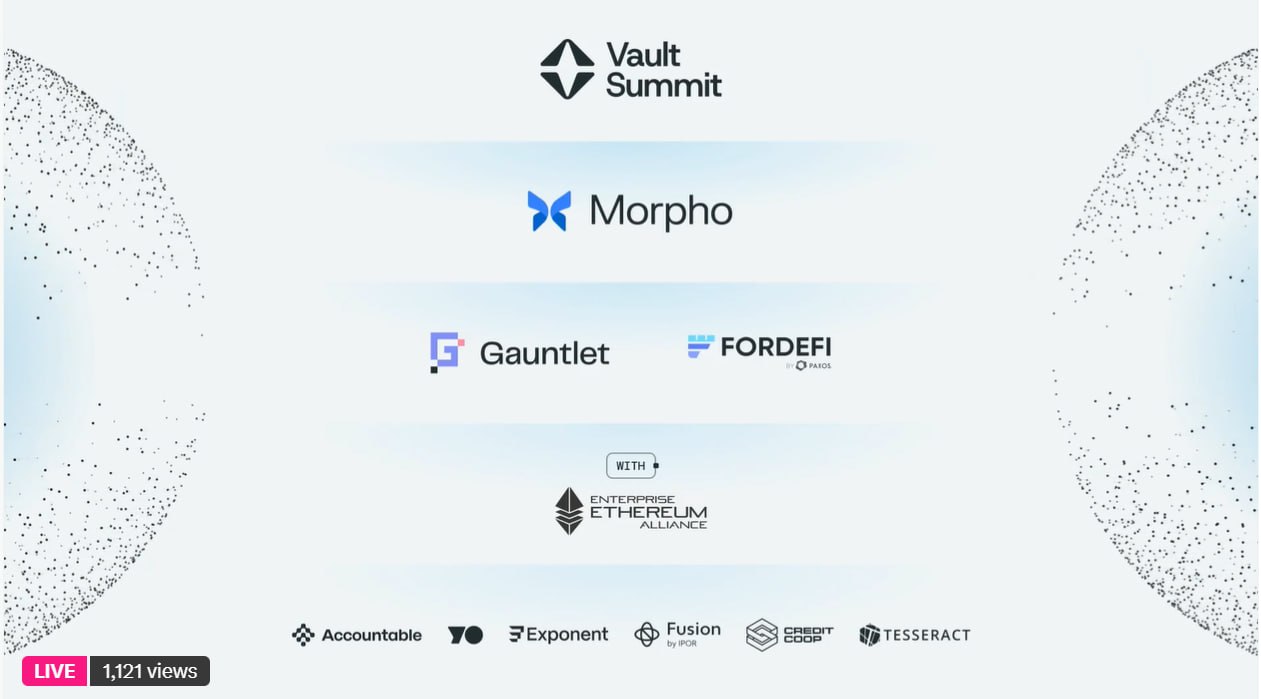 Vault Summit 2026 live in Cannes2026-04
Along the French Riviera, a former fishing village turned festival capital has quietly become one of crypto’s most concentrated hubs for DeFi, stablecoins, real‑world assets, and wallet infrastructure, with a dense cluster of conferences, hackathons, and side events now shorthand in the industry as simply “Cannes.” For a crypto audience, the name increasingly denotes not just a city, but a recurring season of launches, sponsorships, and strategic meetings that shape the narrative and capital flows of the onchain economy.
From film capital to crypto meeting point
Long before crypto ever booked a conference room on La Croisette, Cannes was known for its transformation from a modest fishing village into an international city of festivals and luxury tourism. The city’s modern identity is inseparable from its role as host of the Cannes Film Festival and a dense calendar of global industry gatherings anchored on its beaches, hotels, and the Palais des Festivals. This legacy matters for crypto because it established Cannes as a place where relatively small geographic footprint and high venue density produce an unusually efficient environment for business, media, and networking. The same compact streets that once concentrated film producers, actors, and journalists now see protocol founders, wallet teams, and allocators walking from hotel lobbies to beach-side side events within minutes, compressing months of video calls into a few days of in‑person interaction.
The city also offers logistical advantages that appeal to a global crypto cohort. Its location on the Mediterranean coast makes it reachable from much of Europe within a few hours, while remaining attractive enough that teams can justify the travel costs as part business, part offsite retreat. This blend of accessibility and aspirational branding is important in an industry where conferences compete not only on content but also on their ability to draw senior decision‑makers, investors, and institutional partners. As crypto has matured from purely grassroots gatherings to a layered ecosystem of developer summits, institutional forums, and invite‑only deal rooms, Cannes has emerged as a natural stage for that evolution, building on its history as a neutral ground where global industries come to coordinate.
Over time, a kind of path dependence has taken hold. Once a few flagship crypto events committed to Cannes, others followed, because being there when the rest of the industry is in town offers compounding network effects. Hotels and venues gained familiarity with crypto organizers’ needs; local service providers became accustomed to wallet-themed branding and last‑minute schedule changes; and the city’s tourism infrastructure adapted to accommodate a tech‑heavy calendar alongside its legacy film and advertising festivals. The result is that “Cannes week” for crypto now functions less like a single conference and more like a multi‑track festival of its own, with overlapping agendas and a shared sense that this is where important conversations about DeFi’s trajectory, stablecoin infrastructure, and real‑world asset markets happen.

DeFi’s UX problem takes center stage as blocmates hosts Cannes roundtable with LI.FI, Lido, Gearbox, and Jumper to tackle fragmentation and user friction

$20B routed through LI.FI across 62 chains and 23 bridges — the cross-chain plumbing mostly works now. Yet every protocol at that table is independently building the same product: Jumper launching Earn with personalized yield discovery across 60+ chains, Lido shipping Vaults as staking yields compress, Gearbox offering composable leverage into stETH without touching a DEX. They're sitting together to diagnose UX fragmentation at the infrastructure layer while simultaneously creating a new fragmentation at the product layer — four competing "deposit here, we handle everything" frontends targeting the same user.
Why crypto picked Cannes
To understand why the crypto industry, and especially the DeFi segment, has clustered so heavily in Cannes, it helps to look at the strategic context. Through the mid‑2020s, European regulation, particularly the EU’s Markets in Crypto‑Assets (MiCA) framework, gave Europe an emerging reputation for regulatory clarity relative to some other regions. That created an incentive for global teams and investors to gather on European soil when discussing topics like stablecoins, tokenized securities, and onchain credit, which are highly sensitive to legal and compliance constraints. Holding these conversations in a European venue that is both prestigious and well‑versed in hosting financial and media delegates made Cannes a logical anchor.
The city’s tourism and conference infrastructure also complements crypto’s hybrid identity as both a technology and financial industry. While developer‑centric events have historically gravitated toward university towns or tech hubs, the more capital‑focused and institutional side of crypto increasingly prefers locations that can accommodate private meetings, sponsor suites, and curated networking in a polished environment. Cannes offers a compact ecosystem of high‑end hotels, meeting spaces, and beach clubs that can be fully taken over by crypto brands for a week, creating a sense of immersion that is harder to achieve in larger cities. This concentration allows sponsors to maximize visibility and meet a disproportionate share of their target audience within a small radius.
Another factor is the growing overlap between crypto, travel, and experiential marketing. Crypto‑friendly travel platforms have highlighted Cannes among upcoming destinations not only for leisure but also for events where users can spend digital assets on flights and hotels while attending industry conferences. That crossover reinforces the narrative of crypto as a lived ecosystem rather than a purely online phenomenon, with Cannes functioning as a physical manifestation of onchain culture. When wallets, card issuers, and payment protocols want to showcase that paying with stablecoins or crypto cards “just works” in the real world, doing so on the French Riviera during a high‑profile week offers both symbolic and practical advantages.
Finally, Cannes has become attractive because it is already familiar to adjacent industries with which crypto increasingly interacts. Asset managers, fintech executives, advertising agencies, and film producers are used to doing business there, and some now find their Cannes calendar expanded to include crypto‑focused sessions alongside their traditional engagements. That crossover adds to the sense of Cannes as a bridge between onchain and offchain finance, and between crypto‑native narratives and the broader capital markets they increasingly seek to access.
Readers clicked Cannes coverage not for speculative DeFi alpha but to watch TradFi-adjacent institutions publicly commit to stablecoin payments and tokenized credit infrastructure — Stable Summit's policy-and-capital-markets framing outperformed every other Cannes angle combined, revealing that the institutional on-ramp narrative is the real draw.
EthCC and ETHGlobal: the developer anchor in Cannes
The turning point in Cannes’ crypto story came when one of Ethereum’s flagship community events, the Ethereum Community Conference (EthCC), chose the city for its ninth edition, scheduled from March 30 to April 2, 2026. EthCC is widely regarded as the largest and longest‑running annual Ethereum event in Europe, with a strong focus on technology and grassroots community organizing rather than purely commercial exhibition. Bringing that ethos to Cannes anchored the city firmly in the developer and researcher calendar, not just the business circuit. EthCC’s presence also signals that Cannes is not merely a backdrop for sponsorships and brand activations, but a serious venue for protocol design debates, client team coordination, and long‑term roadmap discussions.
EthCC typically emphasizes multi‑track technical talks, workshops, and hallway conversations where core developers, infrastructure teams, and application builders cross‑pollinate ideas. In Cannes, that orientation has been complemented by a dense layer of side events, hackathons, and independent gatherings. Among them, ETHGlobal’s hackathon presence at Cannes has been particularly significant, providing a structured environment for builders to launch prototypes and experiment with new stacks in the days surrounding EthCC. Hackathons create a different energy from main‑stage conference talks: one centered on shipping, team formation, and the pressure of fixed submission deadlines.
Within that hackathon ecosystem, the 0G Builder Hub has emerged as a prominent example of how infrastructure providers use Cannes to catalyze activity. According to 0G Labs, the Builder Hub at build.0g.ai was rebuilt from the ground up to accommodate growing demand, with 173 projects shipped on 0G across ten events by the time ETHGlobal Cannes participants were submitting their final projects. Many of those builds leaned on 0G’s compute and storage capabilities, as well as emerging standards for agentic contracts such as ERC‑7857, underlining how Cannes weeks function as proving grounds for new primitives. In practice, that means developer teams can meet protocol maintainers in person, receive hands‑on support, and then showcase working integrations within a matter of days.
The presence of Lido, Aave, and other major DeFi protocols at EthCC Cannes has reinforced this builder‑first narrative. Dedicated “Lido Day” programming, for instance, gathered builders, stakers, node operators, and institutional stakeholders to discuss the future of Ethereum staking and liquid staking token design in a focused environment. Meanwhile, Aave’s own Cannes week was marked by both community‑facing sessions and product launches, including the unveiling of Aave V4 and an institutional‑oriented Aave Pro offering. These moves demonstrate how teams now treat Cannes as a synchronized moment to announce roadmap milestones, aligning shipping schedules with the concentrated attention that EthCC and ETHGlobal bring.
For Ethereum and DeFi more broadly, this convergence of deep technical content, hackathon output, and high‑signal side events makes Cannes a kind of mid‑year checkpoint. At a time when the DeFi space is grappling with questions about scalability, MEV, restaking, and security, having a recurring venue where the core community can work through these issues face‑to‑face adds an important layer to the online governance and research pipeline. That makes “Cannes” shorthand not just for spectacle, but for the serious business of iterating the protocol and application stack that underpins much of onchain finance.

Our friends and partners at Stable Summit 2026 in Cannes (March 27th-28th) bring together leaders across payments, policy, capital markets, and onchain infrastructure to explore the future of stablecoins, FX, tokenized cash, RWAs, liquidity, and credit — don't miss it, get your tickets!
C'mon, Leviathan 🔥🔥🔥
The surrounding ecosystem: Stable Summit, WalletCon, Vaults, RWAs, and ecosystem weeks
Although EthCC provides the gravitational center for developers, the broader Cannes crypto orbit consists of specialized conferences and invite‑only gatherings that speak to different layers of the stack. What distinguishes Cannes from many other locations is the way these events have clustered across a single week or fortnight, turning the city into a multi‑venue campus for DeFi, stablecoins, real‑world assets, and wallet infrastructure.
WalletCon and the wallet renaissance
One of the most prominent satellites around EthCC in Cannes is WalletCon, a gathering explicitly focused on building the future of onchain finance through wallet experiences and infrastructure. WalletCon brings together wallet providers, protocol teams, and payment rails to explore topics like interoperability, user experience, and new payment primitives, with a particular emphasis on how wallets can serve as the primary interface to DeFi and Web3 applications. The 2026 edition in Cannes has been framed around WalletConnect’s ecosystem, including the rollout of WalletConnect Pay and discussions of how hundreds of wallets can interoperate more seamlessly. According to event materials, the program includes keynotes and sessions from WalletConnect itself, underlining its role as connective tissue between disparate wallets and dapps.
Beyond interoperability, WalletCon Cannes has been a focal point for experiments in onchain payments and checkout flows. In particular, the Trezor x WalletConnect Pay pilot, launched in conjunction with WalletCon and EthCC Cannes, illustrates the trend toward integrating hardware security with seamless fiat‑to‑crypto or crypto‑native payment experiences. The aim is to reduce the friction of paying with crypto while preserving strong key management and reducing exposure to phishing or drainer schemes. At the same time, WalletCon 2026 coverage has highlighted an emerging risk vector: the rise of AI‑powered agent wallets that can execute transactions autonomously on a user’s behalf. While these agents promise convenience and better execution, they also raise concerns about loss of user control, misaligned incentives, and amplified damage if an agent’s logic or permissions are compromised.
Those debates sit against a backdrop of broader wallet‑UX critiques. Crypto veterans often describe DeFi as “figure it out yourself finance,” a phrase that blocmates amplified during a Cannes roundtable with LI.FI, Lido, Gearbox, and Jumper, where fragmentation and user friction took center stage. WalletCon offers the complementary vantage point: rather than treating wallets as thin signing tools, it treats them as orchestrators of user journeys across chains, protocols, and asset types. In that sense, Cannes weeks are becoming environments where wallet teams, protocol maintainers, and users collectively pressure‑test how far wallet abstractions can go in hiding complexity without undermining transparency and safety.
Stable Summit and the stablecoin layer
Stablecoins are a foundational layer of DeFi, serving as units of account, collateral, and settlement instruments, and Cannes has become one of the key venues where their future is debated. Stable Summit, branded as a global stablecoin conference, operates as a neutral and technically rigorous forum focused on real‑world deployment, risk, and infrastructure rather than token marketing. Its stated mission is to provide a global platform for in‑depth discussion of topics such as reserve transparency, issuer risk management, cross‑border payments, and interoperability between different stablecoin designs.
In its Cannes editions, Stable Summit has attracted hundreds of attendees, dozens of speakers, and sessions that drill into both public‑chain and permissioned contexts. The event’s positioning as a neutral forum is important in a space where stablecoins often compete fiercely for market share and regulatory favor. Instead of hosting purely issuer‑centric keynotes, Stable Summit tends to feature panels with regulators, traditional finance risk managers, and infrastructure providers who work on settlement, custody, and compliance. That mix reflects the reality that stablecoins sit at the intersection of DeFi’s composability and the legal requirements of fiat‑linked instruments.
Cannes coverage has underscored a shift in stablecoin discussions from retail adoption narratives toward institutional use cases. Closed‑door sessions have increasingly focused on treasury deployment, private credit, and how stablecoins can bridge onchain strategies with offchain balance sheets. At the same time, Cannes‑week reporting has noted an emerging theme of “curation,” with capital allocators and treasury managers concentrating their deployments in a smaller set of teams and strategies rather than spreading funds widely. In that context, Stable Summit functions as a hunting ground for allocators seeking credible stablecoin‑related risk, whether in the form of onchain money markets, payment corridors, or tokenized cash equivalents.
Vault Summit and the rise of onchain credit
If Stable Summit addresses the “cash” layer of the onchain economy, Vault Summit in Cannes focuses on the structured credit and yield layer. Vault Summit brings together protocol teams, asset managers, and financial institutions to explore real vault implementations, risk frameworks, and compliance considerations. Its stated goal is to map out how different vault structures—ranging from automated DeFi strategies to tokenized private credit pools—can safely intermediate capital between LPs and borrowers. The Cannes edition explicitly emphasizes risk, credit, and capital allocation, signaling a move away from yield‑chasing toward durability and regulatory compatibility.
Sessions at Vault Summit often delve into how onchain vaults can hold real‑world assets such as treasuries, invoices, or secured loans while still benefiting from DeFi’s transparency and programmability. That includes discussions on NAV calculation, oracle design, redemption mechanics, and how to handle defaults or restructuring in a smart‑contract context. The presence of institutional asset managers and compliance officers reflects a growing recognition that onchain vaults, if designed well, can compete with traditional fund structures for certain asset classes. At the same time, Cannes coverage notes that even among DeFi natives, there is heightened sensitivity to counterparty risk and the dangers of opaque yield, informed by previous cycles’ blow‑ups.
Many of these vault‑focused conversations tie into Maple and similar onchain credit platforms, which have used Cannes weeks and EthCC side events to talk about onchain credit’s “bright horizon” and the integration of RWA strategies into their products. These initiatives sit at the intersection of Stable Summit’s focus on cash‑like tokens and TokenizeThis’s focus on real‑world assets, forming an emerging stack of permissioned and semi‑permissioned onchain credit markets that aim to attract institutional liquidity without sacrificing too much of DeFi’s openness.
TokenizeThis and the real‑world asset frontier
TokenizeThis, another Cannes‑week fixture, zeroes in on the tokenization of real‑world assets (RWAs), bringing together service providers, issuers, and DeFi teams to explore how offchain assets can be represented and traded onchain. Event materials highlight topics such as trending asset classes, DeFi integration of RWAs, and broader market trends around tokenization. That includes tokenized treasuries, real estate, private credit, trade finance, and even more esoteric assets like art or intellectual property. In practice, tokenization is less about novelty and more about improving settlement, transparency, and fractional ownership, but the legal and technical complexity is significant.
Cannes has proven a useful venue for these discussions because it brings together not just crypto teams but also lawyers, custodians, and traditional issuers interested in testing tokenization pilots. Sessions at TokenizeThis examine questions like how to reconcile onchain transferability with securities regulations, how to embed compliance checks into smart contracts, and how to manage the operational interfaces between blockchain ledgers and legacy systems. At the same time, Cannes‑week coverage has emphasized that tokenization is not immune to market cycles: capital flows into RWA strategies ebb and flow with macro conditions, and some sessions have grappled with the reality of uncertain demand and the need for sustainable fee models.
In more recent Cannes cycles, the tokenization conversation has intersected with privacy and confidential computing. As RWAs often involve sensitive data and identity information, there is growing interest in confidential tokens and zero‑knowledge proofs that can allow investors to prove eligibility or risk parameters without revealing full positions. That trend connects directly to privacy‑focused content elsewhere in Cannes, including confidential token unveilings and sessions on privacy pools, underscoring how the city’s event cluster serves as a connective tissue between seemingly separate innovations.
TezDev, River Sessions, and ecosystem‑specific gatherings
In parallel with Ethereum‑centric and multi‑chain events, Cannes also hosts ecosystem‑specific conferences that use the city as a stage to showcase their own progress. TezDev, the flagship Tezos ecosystem event, has held its 2026 edition at the Hôtel Martinez on Cannes’ Boulevard de la Croisette, explicitly positioning the gathering as a showcase of a shift toward real‑world products and adoption. The event brought together developers, enterprises, and community members to highlight use cases ranging from payments to digital collectibles to enterprise blockchain deployments on Tezos. However, some commentary has noted the risk that a flashy Cannes setting can tilt priorities toward marketing and spectacle over genuine adoption metrics, reflecting broader tensions in the industry about how to balance branding with substance.
Alongside chain‑specific events, curated founder gatherings such as River Sessions have brought hundreds of builders and founders to Cannes in more intimate formats. These sessions often eschew formal stages in favor of roundtables, workshops, and networking designed to connect early‑stage teams with potential partners, investors, and senior operators. While their details are less public, their presence contributes to the sense that Cannes weeks are increasingly about concentrated “deal flow” as much as about public talks. Teams like Enso, for instance, have positioned their Cannes presence as an opportunity to meet builders and partners “serious about building the future of this industry,” emphasizing the city’s role as a filter for signal over noise.
In aggregate, the proliferation of these ecosystem‑specific gatherings means that for many teams, “Cannes” is not a single event but a week‑long sequence of overlapping commitments. A founder might spend one day immersed in EthCC’s technical sessions, another at TokenizeThis discussing RWAs, a morning at WalletCon exploring wallet integrations, and an evening at River Sessions or vault‑focused salons discussing capital allocation. This density creates both opportunities and challenges: it maximizes serendipity but also demands discipline to avoid being pulled into a whirlpool of meetings without clear outcomes.
- 01Stable Summit stablecoin policy↗
Six separate Stable Summit headlines — ticket launches, live day-by-day coverage, and a post-event recap citing 505 attendees — dominated the click chart, showing readers tracked the full stablecoin-payments-policy arc, not just a single moment.
- 02Vault Summit risk capital↗
Vault Summit's explicit focus on vault architecture, credit, and institutional capital allocation drew readers who wanted the risk-and-yield infrastructure conversation that Stable Summit's payments angle left aside.
- 03DeFi UX fragmentation roundtable↗
The blocmates-hosted closed-door session with LI.FI, Lido, Gearbox, and Jumper surfaced a concrete builder debate on whether intent-routing and account abstraction can resolve multi-chain user friction at the product layer.
- 04Allocator concentration thesis
A low-click but structurally significant Cannes dispatch observed that allocators are concentrating around fewer teams and fewer theses, with 'curation' emerging as the dominant protocol distribution strategy.
- 05RWA tokenization institutional push↗
EthCC's RWA Summit and TokenizeThis brought onchain credit and tokenized-asset liquidity discussions to Cannes, attracting readers tracking whether institutional tokenization moves from pilot to infrastructure.
- 06AI wallet security WalletCon↗
WalletCon 2026's focus on AI agent-controlled wallets raised unresolved security and user-control risks that readers flagged as an emerging threat surface with no mature mitigation standard yet deployed.
Themes emerging from Cannes weeks
As Cannes has cemented itself on the crypto calendar, certain themes recur across conferences, side events, and informal conversations. These themes are not unique to Cannes, but the city’s concentrated event schedule amplifies them, allowing patterns to emerge more clearly.
DeFi UX and fragmentation
One of the most consistent threads across Cannes‑week coverage has been DeFi’s persistent user‑experience problem. Protocol designers and aggregators alike openly acknowledge that for all the talk of financial inclusion, interacting with DeFi still feels like “figure it out yourself finance” for many users. The complexity of bridging assets across chains, managing approvals, monitoring risk, and understanding protocol mechanics continues to deter mainstream participation. In Cannes, this reality is not just discussed in panels but embodied in live product demos and hackathon projects that attempt to smooth the rough edges.
The blocmates‑hosted roundtable in Cannes with LI.FI, Lido, Gearbox, and Jumper captured this tension by focusing on fragmentation and friction as core obstacles to growth. Aggregators like LI.FI, which route swaps and bridges across multiple chains, and leveraged strategies like Gearbox all struggle with exposing power without overwhelming users. Panels and workshops have explored approaches such as “intent‑based” architectures, where users specify desired outcomes and systems handle execution, and “account abstraction,” which allows for smart‑contract wallets with programmable security and gas models. These discussions are deeply technical yet grounded in the practical goal of making DeFi less intimidating without turning it into a black box.
In hackathon tracks tied to Cannes, many projects have tried to implement these insights in concrete form. Some build unified dashboards that aggregate positions across chains; others design “safe default” vaults that optimize for risk‑adjusted yield rather than chasing maximum APY. The 0G Builder Hub’s support of projects involving agentic contracts and off‑chain compute illustrates another angle: delegating more orchestration to infrastructure, so frontends can remain simpler for users. Whether these experiments make it into long‑term production remains to be seen, but Cannes offers a concentrated laboratory to test them.
Wallet security, AI agents, and control
Another Cannes theme sits at the intersection of wallets, automation, and security. WalletCon has been a primary venue for these debates, especially around WalletConnect Pay and the integration of payment flows directly into wallet experiences. The goal is straightforward: make paying with crypto or stablecoins feel as smooth as conventional card transactions, while leveraging the composability of DeFi in the background. Yet achieving that without sacrificing security is complex, particularly as wallet teams experiment with AI‑powered “agents” that can initiate transactions based on user‑defined policies or goals.
Cannes‑week coverage has highlighted both the promise and the peril of this direction. On the one hand, autonomous agents could monitor yield opportunities, rebalance portfolios, or execute risk‑management actions faster and more consistently than human users. On the other hand, handing signing authority to agents magnifies the consequences of bugs, misaligned incentives, or adversarial prompting. The shift from direct user clicks to delegated policy enforcement raises new questions about how much control users should retain, what types of transactions require explicit confirmation, and how to audit agent behavior ex post.
Solutions discussed at Cannes include hardware‑backed approvals, like those explored in the Trezor x WalletConnect Pay pilot, where certain high‑risk actions may still require physical confirmation on a hardware wallet. Another line of thought involves granular permissioning, where agents receive narrowly scoped rights for specific protocols or time windows. In parallel, there is growing interest in monitoring and anomaly‑detection tools that can alert users or custodians to unusual agent activity, echoing fraud‑detection approaches in traditional finance. While consensus on best practices is far from settled, Cannes has become a place where the contours of this next generation of wallet security are being drawn.
Stablecoins, payments, and onchain commerce
Stablecoins form the backbone of much of the economic activity discussed in Cannes, and Stable Summit sits at the center of those conversations. As DeFi researchers have noted in broader work, stablecoins play multiple roles at once: they function as medium of exchange, unit of account, and collateral within lending protocols, AMMs, and derivatives. Cannes discussions build on this by examining how stablecoins are moving beyond DeFi into payments, remittances, and onchain commerce. Crypto‑enabled travel and event platforms, for example, experiment with accepting stablecoins directly for bookings and sponsorship settlements, using Cannes as a real‑world testing ground.
One recurring theme at Stable Summit and related side events is the distinction between centralized, fiat‑backed stablecoins and decentralized or overcollateralized alternatives. Panels weigh the trade‑offs between regulatory clarity, capital efficiency, censorship resistance, and integration with traditional banking. There is also substantial focus on how stablecoin issuers manage reserves, conduct attestations, and interface with payment networks. These issues are not purely theoretical; they directly affect the risk profiles of vaults and credit products discussed at Vault Summit, as many strategies rely on stablecoins as base assets.
Cannes also surfaces emerging use cases in B2B payments and treasury management. Companies exploring onchain solutions discuss using stablecoins for vendor payments, payroll in certain jurisdictions, or cross‑border settlement where traditional rails are slow or expensive. In that context, conferences like WalletCon and Stable Summit become venues where product teams can gather feedback from potential enterprise users, while regulators and compliance officers observe with increasing interest. The overall tone is cautiously optimistic, with recognition that while stablecoin adoption is growing, the infrastructure for compliance and risk management must keep pace.
Real‑world assets and private credit
TokenizeThis and Vault Summit collectively highlight how onchain finance is stretching beyond crypto‑native assets into real‑world assets and private credit. RWAs encompass a wide range of instruments, from tokenized treasuries and money‑market funds to commercial loans, real estate, and revenue‑sharing agreements. Their appeal lies in offering yield that is less correlated with crypto markets while still benefiting from onchain settlement and transparency. However, as Cannes panels repeatedly emphasize, RWAs also introduce legal complexity, jurisdictional fragmentation, and new types of counterparty risk.
In private credit, platforms explore how to structure tokenized loan pools, underwrite borrowers, and handle defaults or restructurings in a programmable way. Vault Summit sessions dissect how to design vault mechanics that align incentives for borrowers, underwriters, and LPs, while complying with securities and investor‑protection laws. TokenizeThis complements that by showcasing issuer case studies and infrastructure tools, such as tokenization platforms that manage KYC, transfer restrictions, and reporting. The intersection of these events in Cannes allows participants to move from high‑level narratives to granular operational discussions across a few days.
Importantly, Cannes coverage acknowledges the risks and uncertainties in this area. TokenizeThis 2026, for instance, has been framed as taking place amid RWA and DeFi risks and uncertain capital flows, reflecting broader macro headwinds and investor caution. This honesty differentiates the emerging RWA discourse from earlier cycles’ unbridled optimism: participants recognize that tokenization will not magically solve credit risk, and that sustainable products must compete on transparency, cost, and robustness, not just on the novelty of being onchain.
Privacy, confidential tokens, and compliance
A newer but rapidly intensifying theme in Cannes revolves around privacy in DeFi, particularly the introduction of confidential token standards and privacy‑preserving payment mechanisms. Industry coverage has described “Cannes buzz” around the unveiling of confidential token proposals, which aim to provide stronger privacy guarantees for balances and transfers without replicating the opaque dynamics of early mixers. These innovations draw on a broader wave of research into zero‑knowledge proofs and privacy‑enhancing technologies in blockchain systems.
Conceptually, two main categories of privacy protocols are often contrasted in Cannes sessions: confidential tokens and privacy pools. Confidential tokens typically encrypt balances and transaction amounts while allowing users to prove correctness through zero‑knowledge proofs, so counterparties and auditors can verify certain properties without seeing raw data. Privacy pools, by contrast, function more like mixers but with structured association sets and gatekeeping, so that only assets with known or compliant provenance can enter and exit. This model aims to preserve a degree of anonymity while enabling stronger assurances against illicit finance, potentially satisfying regulators more than fully permissionless mixers.
Talks drawing on work in networks like Stellar have argued for implementing privacy at the application layer, rather than enshrining specific schemes at the protocol level, to maintain agility as cryptography evolves. In that view, base‑layer transparency is preserved, but applications can leverage features like specialized elliptic curves or zero‑knowledge verifier integration (for example, via upgrades akin to “X‑ray” on Stellar) to build privacy‑preserving payment tools. Cannes has become a proving ground for these ideas, not only in theoretical presentations but also in the launch of confidential token initiatives that promise configurable privacy and compliance controls. The presence of privacy‑focused altcoin advocates, including those highlighting assets like Zcash that leverage advanced cryptographic techniques for anonymity, further enriches these debates.
The regulatory dimension is never far from view. Panels and closed‑door sessions grapple with questions about how to provide usable privacy while enabling lawful investigations and complying with AML regimes. Proponents of privacy pools argue that gated association sets and operator oversight can strike a balance, while critics worry about centralization and censorship risks. Cannes’ unique mix of protocol teams, regulators, and institutional allocators makes it a rare venue where these opposing viewpoints can be aired in person, contributing to a more nuanced discourse than purely online forums often permit.

Stable Summit 2026 convenes builders and allocators in Cannes to discuss stablecoins in payments, policy and capital markets. 27-28 March at JW Marriott.
The business of Cannes: sponsorships, launches, and narrative shaping
Beyond its role as a technical and conceptual crucible, Cannes has become a marketplace for attention, sponsorships, and narrative shaping. For many teams, the primary reason to invest in a Cannes presence is not simply to attend talks, but to secure visibility with a highly targeted audience of builders, investors, and institutional partners. Sponsorship packages, from conference stages to beach club takeovers, allow protocols, exchanges, wallets, and RWA platforms to imprint their brands across the city’s venues. This has created a parallel economy in which marketing budgets and sponsorship ROI are themselves topics of strategic discussion.
Product launches are increasingly timed to coincide with Cannes weeks. Aave’s Cannes campaign, featuring the launch of Aave V4 and Aave Pro, illustrates how teams leverage the concentrated media and influencer presence to amplify announcements. Similarly, new primitives like confidential tokens or cToken‑style assets have been unveiled in Cannes, framed as heralding privacy revolutions in DeFi or promising new paths for RWA integration. Infrastructure teams such as 0G have used Cannes milestones like ETHGlobal hackathons to showcase the robustness of their compute and storage stacks, citing the number of projects built on their rails as social proof.
Sponsorships and launches in Cannes also reflect deeper shifts in how protocols think about distribution. Rather than chasing mass retail acquisition at all costs, many teams now emphasize “curated distribution,” seeking to align with a smaller number of high‑conviction allocators, integrators, and institutional partners. Cannes, with its concentration of funds, DAOs, and corporate delegates, is well suited to this strategy. Stable Summit and Vault Summit, for example, function as environments where stablecoin issuers and vault managers can court treasury managers and credit committees, while TokenizeThis connects tokenization platforms with potential issuers and underwriters.
However, this commercialization also invites criticism. Observers of events like TezDev in Cannes have warned that the city’s glitz can encourage teams to prioritize flashy productions over concrete adoption metrics, risking a misalignment of incentives. The cost of sponsoring prominent venues or extravagant side events can be high, and in bear‑market conditions those expenses are scrutinized by token holders and governance forums. This tension is part of a broader debate in DeFi about how much to invest in brand and narrative versus engineering and risk management.
For teams that navigate it well, Cannes can be more than a marketing expense. It can serve as a forcing function to finalize features, documentation, and partnerships in time for high‑stakes demos and meetings. It can also catalyze internal alignment, as teams converge in person to refine roadmaps and strategy. The challenge is to ensure that the energy invested in “winning Cannes” translates into tangible product improvements and sustainable adoption once the banners come down.
Stable Summit IV, Cannes — JW Marriott, 27–28 Mar; 505 attendees, 75 speakers, 33 sessions
Vault Summit 2026, Cannes — vaults, credit, and institutional capital allocation
WalletCon 2026, Cannes — 31 Mar; AI agent wallet security and account abstraction focus
EthCC9, Cannes — DeFi UX roundtable, RWA Summit, Lido Day for Ethereum staking
TokenizeThis Cannes — tokenization outlook and RWA/DeFi risk sessions alongside EthCC9
Critiques, risks, and making Cannes useful
No serious discussion of Cannes as a crypto hub is complete without addressing its limitations and risks. One of the most obvious critiques is accessibility. Cannes is not a cheap destination, especially during festival‑heavy periods, and the cost of flights, accommodation, and tickets can be prohibitive for independent builders, researchers, and community members. Organizers and sponsors have partially addressed this through scholarship programs and competitions that fund travel and passes for selected builders, but the underlying socioeconomic skew remains. That raises questions about whose voices are represented in Cannes‑week debates, and whether decisions made there fully reflect the broader global user base of DeFi and crypto.
Another risk is security, both digital and physical. Large‑scale crypto gatherings inevitably attract phishing attempts, social‑engineering schemes, and opportunistic attackers. The same dense social fabric that makes Cannes efficient for legitimate networking can also increase exposure to scams, impersonation, or malicious QR codes. Coverage of broader crypto news cycles has shown that exploits and wallet breaches continue to plague the industry, often exploiting lapses in operational security. Cannes sessions on wallet security, hardware integrations, and AI agent risk are partly a response to these realities, but attendees must still practice vigilance in a setting that can blur the line between socializing and sensitive business discussions.
There is also a more conceptual critique: that Cannes, with its yachts and beachfront parties, might symbolize a drift away from crypto’s original ethos of permissionless access and grassroots experimentation. Critics warn that if key decisions about protocol directions, allocations, and partnerships are made in closed rooms in Cannes, the industry risks replicating the exclusivity of traditional finance rather than transcending it. Events like Vault Summit, Stable Summit, and invite‑only founder salons are particularly susceptible to this perception, even as they provide valuable forums for complex discussions that are hard to conduct in open‑mic settings.
At the same time, it would be reductive to dismiss Cannes as mere spectacle. The presence of ETHGlobal hackathons, 0G’s Builder Hub, and deeply technical EthCC tracks indicates that significant engineering and research work is done in and around Cannes. Many early‑stage projects form there, and collaborators who meet in person often subsequently ship products and protocols that benefit users far beyond the Riviera. For participants, the key is intentionality: approaching Cannes with clear goals, whether that is to test a prototype, close a partnership, gather user feedback, or understand evolving regulatory expectations.
For individual builders and teams, making Cannes useful means resisting the temptation to treat it as a passive content consumption experience. Instead, it is more productive to view it as a concentrated sprint of meetings, demos, and learning, anchored around a few core events—EthCC, Stable Summit, WalletCon, Vault Summit, TokenizeThis—and augmented by carefully chosen side gatherings. Teams that derive lasting value from Cannes tend to pre‑schedule key conversations, allocate time for reflection, and follow through after the week ends. Those that do not risk being swept up in a blur of panels and parties that leave little lasting impact.
Ultimately, Cannes is neither salvation nor scourge for crypto. It is a tool—a particular configuration of people, place, and time—that can either accelerate or distract from the industry’s deeper work. The onus falls on participants to use that tool thoughtfully.
Outlook
Looking ahead, Cannes appears poised to remain a fixture in the crypto and DeFi calendar, at least as long as the current combination of events and ecosystem momentum persists. EthCC’s choice of Cannes for a major edition has anchored the city in the developer psyche, while the continued presence of Stable Summit, WalletCon, Vault Summit, TokenizeThis, TezDev, and curated founder gatherings has reinforced its status as a multi‑layered hub spanning protocol research, infrastructure, and institutional engagement. These events may evolve in format and branding, and some may rotate to other European cities over time, but the model they embody—dense, theme‑clustered weeks of technical and financial discourse—is likely to endure.
Several forces will shape how Cannes’ role evolves. Regulatory developments in Europe and globally will influence how much stablecoin, RWA, and privacy innovation can be openly championed on such stages. Market cycles will determine how much sponsorship capital and institutional interest flows into conferences, affecting their scale and tenor. Technological advances, from account abstraction and AI agents in wallets to more mature confidential token standards, will gradually shift the content of Cannes‑week discussions, hopefully in the direction of more usable, safer products. And community sentiment will continue to scrutinize the balance between substance and spectacle.
For crypto practitioners and observers, treating “Cannes” as a living barometer rather than an endpoint is the most useful stance. The city’s conference cluster offers a periodic snapshot of where DeFi, stablecoins, RWAs, wallets, and privacy stand—what problems dominate minds, what experiments are gaining traction, and where the gaps between narrative and reality remain widest. Engaged with critically and constructively, Cannes can help steer the industry toward a more mature, interoperable, and user‑centric future, even as it reflects the tensions and contradictions that such a future entails.
Latest Cannes news
DeFi’s UX problem takes center stage as blocmates hosts Cannes roundtable with LI.FI, Lido, Gearbox, and Jumper to tackle fragmentation and user frictionOur friends and partners at Stable Summit 2026 in Cannes (March 27th-28th) bring together leaders across payments, policy, capital markets, and onchain infrastructure to explore the future of stablecoins, FX, tokenized cash, RWAs, liquidity, and credit — don't miss it, get your tickets!Stable Summit 2026 convenes builders and allocators in Cannes to discuss stablecoins in payments, policy and capital markets. 27-28 March at JW Marriott.Stable Summit, March 27-28, Cannes505 attendees. 75 speakers. 33 sessions. 1 future of finance.
Stable Summit Cannes 2026 was incredible!Vault Summit 2026 live in CannesSources
17 records from 12 domains
ethcc.io
youtube.com
walletcon.com
stablesummit.xyz
x.com
tokenizethis.redstone.finance
travala.com
tezos.com
en.cannes-france.com
icc-ccs.org
cryptonomads.org
wifpr.wharton.upenn.edu
Community notes
Spot something off or out of date? Drop a note. Editors review topic notes daily and roll accepted fixes into the explainer — contributors are recognized in the monthly $SQUID drop.
Loading notes…
Help improve this topic
Have a story or tip about this topic? Submit it. See something missing? Leave a note. Editors review daily; accepted submissions and fixes count toward the monthly $SQUID drop.