
Deep dive explainer on Enso, an intent‑centric execution and chain‑abstraction layer for DeFi and RWAs. Covers architecture, APIs, cross‑chain routing, simulation (Shield, Quote Simulator), Checkout, ENSO token, CoinList auction, and future outlook.
+10 sources across the wider coverage universe
 Enso has released its Quote Simulator
For the last 2+ years, Enso has simulated every transaction routed through its stack before execution. Now that infrastructure is available as a standalone API, helping wallets, aggregators, protocols, and trading apps preview balance changes, simulate routes, and validate transactions before users sign.2026-05
Enso has released its Quote Simulator
For the last 2+ years, Enso has simulated every transaction routed through its stack before execution. Now that infrastructure is available as a standalone API, helping wallets, aggregators, protocols, and trading apps preview balance changes, simulate routes, and validate transactions before users sign.2026-05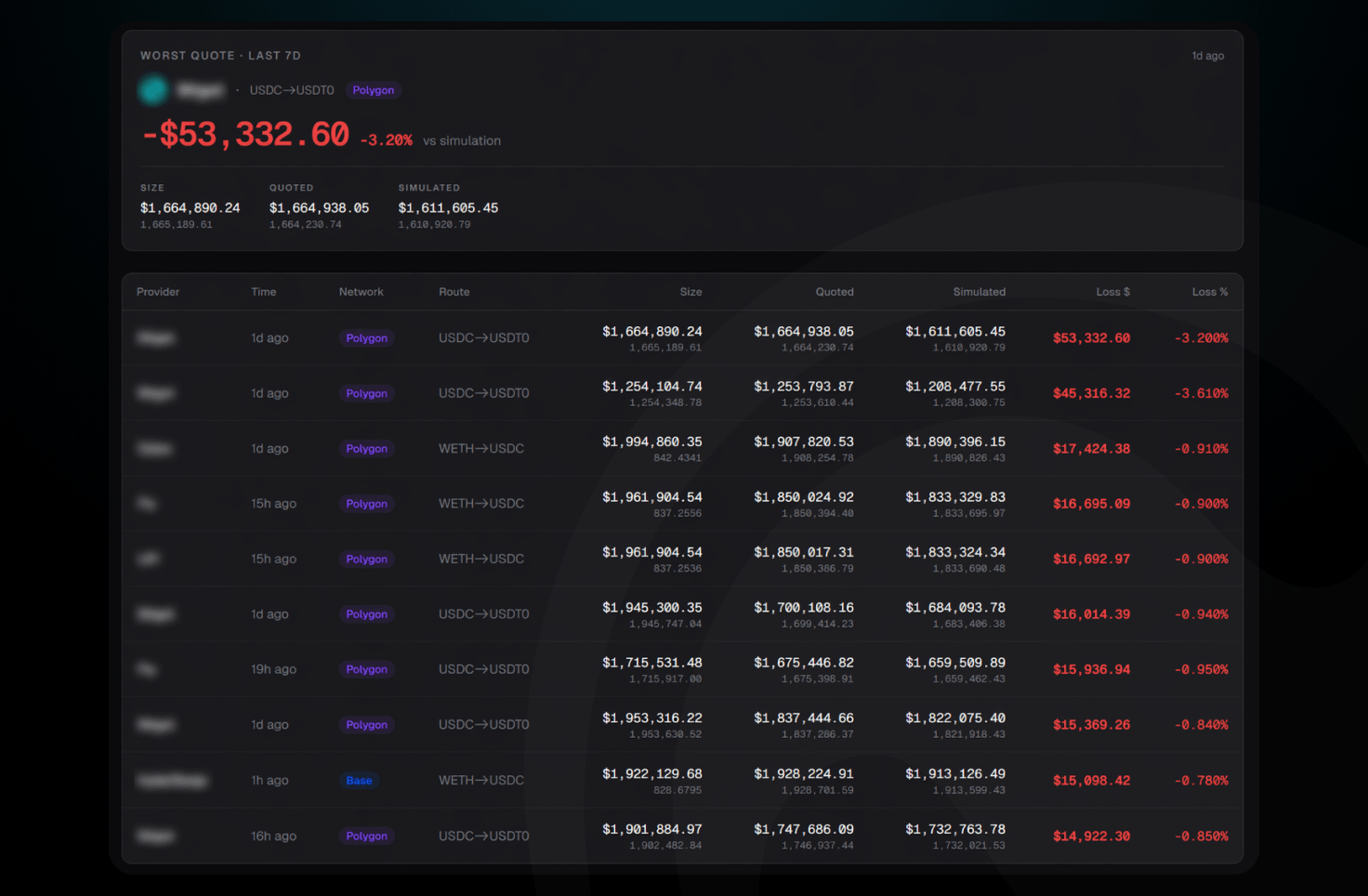 Enso has launched Shield, a transaction simulation and validation API that predicts execution outcomes and detects transaction tampering before signing, alongside a live execution quality dashboard exposing inaccurate swap quotes across major DEX aggregators. Shield works with any EVM transaction source, including aggregators, DeFi protocols, custom contracts, and Enso’s own routing API.2026-04
 Sony files patent for AI-powered censorship tech to alter video game content as part of its push to future-proof PlayStation as it prepares for the next console generation Playstation 6 era. Sony’s approach could allow players to customize what they see and hear without developers creating separate game versions.2025-12
 Enso announced TGE on Coinlist, first auction to be conducted as an auction in 3 years.2024-06
 Enso introduces the intent engine enabling any interaction type to be executed by solvers. The tooling has already processed $11b in volume.2024-06
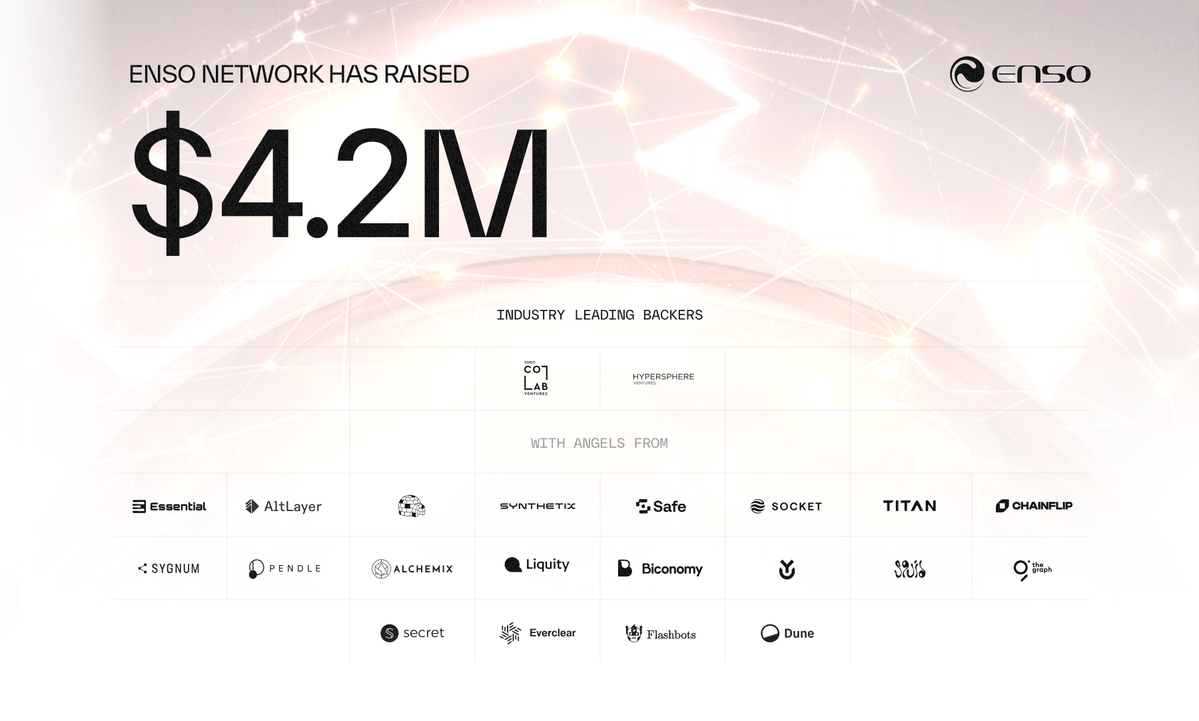 Enso secures additional $4.2M from Ideo Ventures, Hypersphere, and Angels. Plans L1 Cosmos chain launch focused on intent-centricity and chain abstraction solutions.2024-06
Enso: An Intent‑Centric Infrastructure Layer For Onchain Finance
An emerging class of so‑called blockchain shortcuts is reshaping how developers and institutions interact with DeFi, and Enso sits at the center of this shift as an intent‑centric execution and orchestration layer that abstracts away multi‑chain complexity. By unifying smart‑contract interactions across networks into a single programmable fabric, and pairing that with deep transaction simulation, universal payments, and cross‑chain routing, Enso aims to become the connective tissue that both consumer applications and institutional finance use to access onchain liquidity, real‑world assets, and DeFi strategies.
What Is Enso?
Enso is a blockchain infrastructure network that describes itself as providing blockchain shortcuts and positioning as the execution and orchestration layer for institutional onchain finance. Rather than being a single DeFi protocol or a monolithic exchange, it functions as a connective platform that integrates hundreds of decentralized applications and blockchains, offering developers a unified way to read from and write to smart contracts across different chains through a standardized interface. In practice, this means that an application integrating Enso can route swaps, bridge assets, enter yield strategies, or distribute real‑world assets (RWAs) across multiple networks without custom, per‑protocol integrations each time. The project reports that more than one hundred enterprises and over a hundred integrated applications use its stack, with cumulative onchain settlement volumes in the tens of billions of dollars, underscoring its orientation toward high‑volume, production‑grade execution.
At the conceptual level, Enso is built around an intent‑based paradigm. Instead of forcing developers or users to specify low‑level transaction sequences per chain, they express desired outcomes—such as acquiring a particular asset, entering a vault, or minting a cross‑chain stablecoin—and Enso’s engine compiles those intents into workflows that interact with multiple smart contracts across one or more blockchains. This intent engine underpins features such as cross‑chain deposits, checkout flows, automated vault onboarding, and DeFi position migrations, all of which are designed to feel like “one‑click” experiences even though many contracts are invoked behind the scenes. That abstraction is particularly salient for institutional and RWA distribution use cases, where operational teams often prefer deterministic, predictable flows over bespoke scripting for each venue or chain. By combining intent expression with programmable workflows and third‑party solvers, Enso aspires to become a general execution fabric for both DeFi and tokenized traditional assets.
The Enso brand also includes related initiatives that can create some confusion. There is, for example, an “Enso” programming language and its associated API reference, which is a separate project focused on data processing and visualization tools and not directly related to the DeFi infrastructure described here. In the crypto context, however, “Enso” generally refers to the intent‑centric network operated under the Enso Build and Enso Network banners, backed by investors such as Polychain Capital and Multicoin and marketed as the fastest way to build and launch onchain products. The network is progressively decentralizing around its native ENSO token, which is used for protocol settlement and staking, and which has been distributed in part through a community auction on CoinList after an initial listing on major centralized exchanges. This token‑driven architecture is meant to align the interests of builders, execution providers, and validators as the network evolves from a hosted infrastructure service into a more fully permissionless protocol.
Core Value Proposition
The principal value proposition of Enso lies in abstraction: it aims to hide the messy, heterogeneous details of multi‑chain DeFi and RWA markets behind stable, high‑level primitives that developers and users can trust. At the user experience layer, this shows up as “one‑click” interactions in wallets, dapps, and agent interfaces, where a single command can trigger swaps, bridges, approvals, and deposits across different EVM chains. At the infrastructure layer, Enso provides routing engines, simulation APIs, execution dashboards, and orchestration contracts that allow capital to move from a source chain to a specific destination strategy with deterministic behavior and safety guarantees, even when cross‑chain messaging and multiple protocols are involved. The company underscores that its stack has been built from day one with pre‑simulated execution, meaning every transaction routed through its system is simulated before submission to mitigate slippage, reverts, and tampering.
For institutional users and RWA issuers, this abstraction can be particularly powerful. Tokenized assets, whether tokenized stocks, ETFs, or private credit, must often be distributed across many chains and venues to reach global liquidity, which historically required complex operational setups, separate deployments, and manual bridging. Enso positions itself as the orchestration layer for onchain RWA distribution, promising that a single integration gives access to “every chain, every venue,” while allowing issuers to mirror hub‑and‑spoke models familiar from traditional finance. In such models, assets can be minted on a primary network and programmatically deployed to other ecosystems only when demand appears, keeping liquidity concentrated and operations more manageable. That same orchestration logic applies to non‑RWA DeFi products as well, from vault strategies to stablecoin issuance, which explains why Enso has been involved in powering cross‑chain stablecoin minting protocols such as OneStable alongside partners like Reservoir, Stargate, and LayerZero.
Positioning In The DeFi Stack
Within the broader DeFi stack, Enso can be understood as sitting between application frontends and the sprawling universe of onchain protocols. A wallet, exchange, or asset‑management interface can call Enso’s APIs to obtain an optimal route for a desired action, such as moving a user from one asset on Base to a yield vault on another chain, and then rely on Enso’s execution layer to perform the bridging, swapping, and deposit transactions. This model resembles the role played by traditional software development kits or middleware platforms, but translated into an onchain context where each step must be executed via smart contracts, cross‑chain messaging, and potentially off‑chain solvers. It also bears similarities to DEX aggregators, which search across liquidity venues to find the best swap price, but extends that logic beyond simple token swaps into more complex pipelines that can span entire product categories and chains.
The project’s intent‑centric framing also places it in the same conceptual family as other “intent layers” and “solver networks,” which seek to separate the expression of user goals from the selection of specific transactions that achieve them. Enso’s approach is notably pragmatic: rather than being a theoretical intent standard alone, it is tightly coupled to concrete infrastructure such as cross‑chain routing contracts, Chainlink CCIP receivers, and deep integrations with bridges like LayerZero’s Stargate. This emphasis on real‑world execution is reinforced by the presence of tools such as the Shield transaction simulation and validation API, as well as a live execution quality dashboard that publicly exposes inaccurate swap quotes across major DEX aggregators. By combining routing, simulation, and orchestration, Enso aims to offer not merely an intent‑expression layer, but a full stack that can take responsibility for delivering the desired outcome reliably onchain.
Ether.fi taps Enso to bring tokenized stocks and metals to its 110k users
Architecture And Core Components
Enso’s architecture can be understood as a layered system comprising intent expression, routing and orchestration, transaction simulation, and user‑facing entry points such as checkout flows and cross‑chain widgets. Each layer is exposed through APIs and composable smart contracts, allowing different categories of developers—from wallets and aggregators to institutional platforms—to plug in at the point most relevant to their use case. Across these components, a recurring theme is that the network seeks to convert what used to be multi‑step, user‑driven sequences into programmable flows driven by deterministic workflows and pre‑execution analysis. The following subsections unpack the main elements of this architecture and explain how they interrelate.
The Intent Engine And Shortcuts
At the heart of Enso’s system is its intent engine, which provides the conceptual and technical foundation for what the team calls “shortcuts.” In this context, a shortcut is a high‑level description of a desired onchain outcome, such as “bridge USDC from Ethereum to Arbitrum, swap to a governance token, and stake it in a specific contract,” which Enso maps to a set of concrete smart‑contract interactions and cross‑chain messages. The intent engine maintains a unified representation of smart contracts and their relationships across many blockchain frameworks, effectively building what the project describes as a universal map of smart contracts and their interconnections. This map is continuously enriched by action providers, graphers, and other contributors who help encode contract interfaces and permissible interactions into Enso’s network state.
From a technical perspective, intents expressed to Enso can be translated into workflows that specify the contracts to call, the calldata to send, and the expected state transitions on each chain involved. These workflows are then executed through Enso’s underlying smart contracts, often with the help of external solvers or relayers that can handle gas, order submission, and cross‑chain messaging. Because Enso abstracts many chains and protocols behind a single interface, developers can focus on describing what should happen, rather than writing bespoke code to connect to each protocol or implementing complex bridging logic. This reduces integration overhead, simplifies maintenance when protocols or chains change, and makes it easier to introduce new functionality by composing existing shortcuts into more complex workflows.
The “shortcuts” concept is not only an engineering convenience but also a user‑experience primitive. For example, Enso’s cross‑chain DeFi widget allows users to select an input token on their current chain and a target protocol or vault on another chain, after which the system finds an optimal route that bundles bridging, swapping, and deposit actions into a flow that feels like a single transaction from the user’s perspective. Behind the scenes, Enso creates a bundle using its shortcuts API, simulates the route, and coordinates with cross‑chain messaging infrastructure so that approvals, swaps, and deposits occur in the right sequence and either complete atomically or revert safely. In aggregate, this demonstrates how the intent engine and shortcuts layer can be used both to power “one‑click” UX in consumer dapps and to implement deterministic, policy‑driven flows for more sophisticated institutional workflows.
Routing And Execution Layer
Above the intent engine, Enso operates a routing and execution layer that determines which path a given intent should take across the available networks, bridges, and liquidity venues. Much like a traditional DEX aggregator, this routing engine must weigh factors such as onchain liquidity, slippage, gas costs, and latency when choosing between possible execution paths for a swap or a multi‑step route. However, Enso’s scope is broader than swaps alone, because its workflows may include additional actions such as entering vaults, minting tokens, or depositing into liquidity pools, each of which introduces further constraints and integration points. This means the routing logic must be capable of composing multiple protocols and, in cross‑chain cases, orchestrating the timing of operations on both the source and destination chains in coordination with messaging layers like LayerZero and Chainlink CCIP.
The routing logic is exposed to developers primarily through APIs, sometimes referred to as the Route API or Shortcuts API, which can be queried by wallets, aggregators, and trading applications. These APIs return a description of the proposed route, including the contracts to be called, the expected balance changes, and any intermediate tokens or bridges to be used. Because Enso also operates its own execution infrastructure, developers can choose to let Enso handle the entire process end to end, from simulation and routing to transaction submission and cross‑chain execution, rather than building custom transaction bundlers themselves. This model transforms Enso into an “execution as a service” layer for DeFi and RWA applications, much as traditional payment processors handle card and bank payment flows for ecommerce platforms.
Cross‑chain execution is particularly central to this routing layer. Enso has integrated with technologies such as LayerZero and its Stargate bridge, as well as Chainlink’s Cross‑Chain Interoperability Protocol (CCIP), to ensure that assets can be moved safely between chains and that destination‑chain actions are triggered deterministically when funds arrive. To coordinate this, Enso deploys contracts like the Enso CCIP Receiver on destination chains, which can receive tokens and payloads via CCIP and immediately execute Enso workflows atomically. This allows the routing and execution layer to offer guarantees that, for example, either the full cross‑chain route completes—including any minting, swapping, or vault deposits on the destination chain—or the bridging operation reverts and funds are returned to the source chain. For users and institutions, this kind of deterministic behavior can be essential for risk management and reconciliation.
Transaction Simulation: Quote Simulator And Shield
A defining feature of Enso’s stack is the tight integration of transaction simulation and validation into every step of its routing and execution pipeline. The project has highlighted that hidden costs, misleading quotes, and failed executions are pervasive problems in DeFi, especially when users rely on DEX aggregators or complex multi‑step transactions whose final state is difficult to predict at signing time. To address this, Enso has spent over two years simulating every transaction sent through its routing infrastructure before execution, using an internal framework to preview balance changes, detect slippage or route failures, and catch tampering. This infrastructure is now being opened up as standalone products, notably the Enso Quote Simulator and Enso Shield, which are exposed as APIs that any EVM‑compatible wallet, aggregator, or protocol can integrate.
The Enso Quote Simulator is described as a high‑performance API that allows applications to simulate transactions and quotes before users sign them, including support for automatic balance overrides to reflect expected post‑execution states. This means, for instance, that a wallet can show a user a realistic preview of the tokens they will hold after completing a complex route, rather than relying solely on the output provided by a third‑party aggregator or DEX. Because the simulator is built on the same infrastructure that Enso uses for its own routing, it can also be used to validate whether a quoted route is likely to succeed, or whether it is vulnerable to issues such as MEV, low liquidity, or incompatible contract interactions. In this way, the Quote Simulator functions as both a UX enhancement and a defensive tool against misleading or incomplete quotes.
Enso Shield builds on similar simulation capabilities but focuses more explicitly on security and execution integrity. It is presented as a transaction simulation and validation API that can be applied to any EVM transaction source, including third‑party DEX aggregators, DeFi protocols, custom smart contracts, or Enso’s own routing API. Shield simulates the outcome of a transaction in a controlled environment, checking for discrepancies between expected and actual behavior, detecting potential tampering between quote and signature, and flagging transactions that are likely to fail or produce materially different results than advertised. Enso has complemented this with a live execution quality dashboard that surfaces data on inaccurate swap quotes and failed executions across major DEX aggregators, thus shining light on the structural frictions and risks users face when interacting with DeFi. Taken together, Quote Simulator and Shield reflect Enso’s thesis that robust onchain infrastructure must be built around pre‑execution verification, not just post‑trade analytics.
Checkout And Embedded Wallet
Another core component in Enso’s architecture is Checkout, a universal crypto payment solution framed as a “Stripe of Web3” and designed to bring the next wave of users onchain. Checkout combines a non‑custodial wallet with support for multiple funding sources, with the aim of allowing dapps to accept payments and deposits from a broad range of origins through a single integration. In practice, Checkout is designed to allow users to deposit from any chain into any protocol, to use funds held on centralized exchanges such as Binance, Bybit, and OKX onchain, and eventually to on‑ramp directly from fiat via cards and bank transfers at competitive rates. The experience is meant to be as seamless as possible: in one click, users can convert fiat to crypto, acquire their desired asset, and start interacting with DeFi applications, while developers benefit from higher conversion rates and fewer integration headaches.
Technically, Checkout sits atop Enso’s routing and execution layer, meaning that the same shortcuts and workflows used for cross‑chain DeFi routing can be applied to payment and onboarding flows. When a user initiates a Checkout transaction, Enso’s engine can handle the necessary swaps, bridges, and deposits, while the non‑custodial wallet layer ensures that users maintain control over their assets. For developers, integrating Checkout can replace the need to separately integrate with multiple on‑ramps, centralized exchanges, and cross‑chain bridges; instead, they rely on Enso’s API to abstract those integrations and keep pace with new networks. Because Checkout leverages the same simulation and Shield infrastructure, it can also help reduce failed deposits and unexpected slippage on the first interaction, which is critical for user trust during onboarding.
Checkout is particularly relevant in the context of Web2‑native products and fintech apps that want to expose onchain functionality without becoming full‑blown DeFi interfaces themselves. Such applications can integrate Checkout as a payment rail, enabling users to fund positions, subscribe to services, or purchase tokenized assets while keeping the complexity of chain selection, routing, and execution hidden under the hood. By combining payments, chain abstraction, and non‑custodial custody, Enso is effectively trying to remove one of the largest barriers to mainstream DeFi adoption: the friction of moving from fiat or centralized exchange balances into usable onchain assets and positions.
APIs, Widgets, And Developer Tooling
All of these components—intent engine, routing, simulation, Checkout—are exposed through APIs and self‑contained widgets that form the developer experience of Enso. The company emphasizes that its platform is built as an open, extensible network where developers, AI engines, and other participants can contribute data feeds and contract abstractions that enrich the network’s understanding of onchain actions. Developers can interact with Enso via RESTful APIs to request route computations, simulation results, or transaction bundles, and can embed these capabilities into their own frontends, backends, or agent systems. This approach aligns Enso with the broader trend of infrastructure‑as‑a‑service in Web3, where sophisticated functionality such as indexing, execution, or cross‑chain messaging is consumed via APIs rather than rebuilt from scratch by each application.
A prominent example of Enso’s developer tooling is the Cross‑Chain Route Widget, a React component and hosted web application that delivers cross‑chain routing and deposit flows with minimal integration work. Developers can drop this widget into an existing dapp to give users the ability to select an input asset and chain, view a preview of the full route, and execute a combined bridge‑swap‑deposit flow, all while the Enso backend handles approvals, bundling, simulation, and coordination with bridges such as Stargate. Because the widget is configurable, integrating teams retain control over its look and feel and can tune parameters such as slippage tolerances or supported chains while still enjoying Enso’s execution infrastructure. Similar patterns apply to Checkout, where a single integration can unlock multi‑chain, multi‑source payments, and to the Shield and Quote Simulator APIs, which can be integrated into wallet signing flows or aggregator UIs.
Developer adoption is further supported by Enso’s focus on chain abstraction and modularity. By centering its design on abstract smart‑contract interactions instead of chain‑specific logic, Enso enables applications to “embed the whole ecosystem” through intents, without having to integrate each individual smart contract and framework manually. This is particularly attractive for emerging sectors like AI agents, which may require programmatic access to many protocols and chains simultaneously, and for institutional asset managers that seek to build programmable strategies across multiple DeFi venues. From this perspective, Enso’s suite of APIs and widgets forms not just a convenience layer but a strategic abstraction that lowers the cost and complexity of building multi‑chain products.
Readers clicked Enso's token-access events (TGE, Coinlist auction) at nearly the same rate as its infrastructure proof ($11-12B volume), revealing an audience trying to determine whether the token launch is justified by genuine protocol traction rather than narrative alone.
Cross‑Chain Infrastructure And Chain Abstraction
Cross‑chain infrastructure is a defining concern for modern DeFi, as capital and users are spread across dozens of L1s, rollups, and app‑specific chains. Enso’s thesis is that networks have multiplied faster than capital can keep up, leading to fragmented liquidity, manual asset shuttling, and operational complexity for issuers and protocols that want to be present across ecosystems. Each new chain promises lower transaction costs, novel primitives, or better user experiences, but it also introduces new integration overhead and risk. Enso’s role in this environment is to convert cross‑chain transport into deterministic, outcome‑driven execution by orchestrating the entire lifecycle of assets as they move between chains, from bridging and minting to routing and strategy deployment.
From Fragmented Liquidity To Deterministic Execution
Traditional cross‑chain interactions typically involve users manually bridging assets using one or more bridges, then performing swaps or deposits on the destination chain once the funds arrive. This process is error‑prone and labor‑intensive, often requiring users to keep track of multiple wallet interfaces, token representations, and protocol risks. Enso’s approach is to abstract this multi‑step journey into a single route that is computed in advance, simulated for safety, and then executed via a combination of bridging infrastructure and destination‑chain workflows. For example, a user might want to move funds from a stablecoin on Ethereum to a structured product on a rollup; Enso’s route engine can decide which bridge to use, which DEXes to tap for swaps on both sides, and how to call the structured‑product contracts, all wrapped into a single user‑facing action.
To achieve determinism in this process, Enso embeds simulation and validation at every stage. By pre‑simulating the entire cross‑chain route, the system attempts to predict final balances and outcomes before any signatures are collected, reducing the chance of unpleasant surprises caused by liquidity shifts or contract failures mid‑bridge. In addition, integrating technologies like Chainlink CCIP allows Enso to coordinate cross‑chain messages and token transfers securely, ensuring that destination‑chain actions are only executed when the necessary assets and payloads have been delivered. This stands in contrast to naive bridging setups where users bear the burden of manually reconstructing their intended actions on the destination chain and can easily mis‑route funds or interact with incorrect contract addresses.
The emphasis on deterministic execution has implications for both retail and institutional use cases. Retail users benefit from a more streamlined, “one‑click” experience, while institutional operations teams gain more predictable flows for settlement, reconciliation, and risk management. Enso argues that this model enables issuers to adopt hub‑and‑spoke architectures where assets are minted on a primary chain and programmatically distributed to other ecosystems as demand appears, rather than being statically deployed everywhere in advance. This can keep liquidity more concentrated, reduce idle capital, and simplify compliance and monitoring, all of which are key concerns as more real‑world assets and regulated institutions move onchain.
Integration With LayerZero, Stargate, And Chainlink CCIP
Enso’s cross‑chain capabilities are built on integrations with several leading interoperability technologies, most notably LayerZero’s messaging stack and its Stargate bridge, as well as Chainlink’s Cross‑Chain Interoperability Protocol. Stargate, built on top of LayerZero, provides liquidity pools and messaging channels that allow assets to be bridged between supported chains, while LayerZero’s underlying protocol handles the delivery of cross‑chain messages in a generalized way. Enso leverages this combination for many of its cross‑chain deposit flows, such as those enabled by the Cross‑Chain Route Widget, where the bridge handles asset locking and liquidity provisioning, and LayerZero delivers payloads that specify what actions should be taken on the destination chain.
Chainlink CCIP plays a complementary role in Enso’s architecture. Through the deployment of an Enso CCIP Receiver smart contract on destination chains, Enso can accept ERC‑20 tokens and accompanying execution payloads delivered via CCIP and immediately trigger its internal workflows to mint, route, swap, and deploy assets into liquidity or strategies in a single atomic transaction. This means that tokens sent from a source chain via CCIP can arrive “pre‑wired” to enter specified strategies or pools, eliminating the need for users or issuers to manually orchestrate those steps on arrival. By uniting secure cross‑chain messaging with simulation‑backed workflows, Enso and Chainlink effectively establish a higher‑level standard for how capital is meant to operate across multiple networks.
The connection to LayerZero also brings Enso into the broader conversation around interoperability tokens such as ZRO, LayerZero’s governance and utility token. While Enso itself is powered by its own ENSO token, its use of LayerZero for cross‑chain messaging means that some of its cross‑chain flows will be indirectly dependent on the security and economic incentives of the LayerZero network, which are in turn mediated in part by ZRO. As more DeFi infrastructure projects build on LayerZero, the interplay between protocol‑specific tokens like ENSO and shared infrastructure tokens like ZRO may become a significant theme in how governance, fees, and risk are distributed across the multi‑chain ecosystem. For developers and users, the key point is that Enso’s chain abstraction and deterministic execution are supported by a layered stack of interoperability protocols, each with its own trust assumptions and token economics.
Cross‑Chain Widget And Deposits
A concrete manifestation of Enso’s cross‑chain infrastructure is the Cross‑Chain Route Widget developed in partnership with Stargate and LayerZero. This widget has been described as the first embeddable shortcut that allows any DeFi protocol to accept deposits from any chain without building custom bridging logic or rewriting their frontends. Integrated as a React component or via a hosted application, it lets users select a token on their current chain, choose a target protocol or position on another chain, and then executes the necessary bridge, swap, and deposit actions through a single, seemingly unified flow. From the user’s perspective, the process looks like a single transaction, even though two onchain transactions and many intermediate actions may in fact be involved; this complexity is fully abstracted by Enso’s infrastructure.
Under the hood, the widget relies on Enso’s Route API to compute optimal execution paths and uses the Stargate bridge plus LayerZero messaging to transfer assets and payloads between chains. Before execution, the widget bundles all required steps into a route via Enso’s /shortcuts/bundle endpoint, simulates the route using Enso’s simulation infrastructure, and handles any necessary token approvals. Once the bridging step completes, Stargate unpacks the payload on the destination chain and calls the appropriate Enso execution contracts, which then perform the swaps and deposits on behalf of the user. If any part of the route fails due to slippage, revert conditions, or execution errors, Stargate and Enso’s workflows are designed to revert the bridge and return funds, thus preserving user capital and avoiding situations where assets are stranded mid‑route.
This Cross‑Chain Route Widget has been used to power features such as cross‑chain deposits into specific protocols, and it forms the basis for more complex use cases like cross‑chain LP migrations. For instance, Enso’s shortcuts have been applied to enable Uniswap liquidity providers to migrate positions from any EVM chain to pairs on Unichain in a single transaction, effectively bundling what would otherwise be multiple manual steps into a single workflow. In a similar vein, cross‑chain deposits have gone live on partner platforms like YO, highlighting how Enso’s infrastructure can be embedded into third‑party products to unlock multi‑chain functionality without requiring each team to build and secure their own cross‑chain stack. These integrations underscore the core thesis that chain abstraction should be a service consumed by applications, not a bespoke engineering effort repeated by every protocol.
Enso As Connecting Layer For RWAs And Stablecoins
Beyond generic DeFi routing, Enso has positioned itself as an execution and orchestration layer specifically for onchain RWA distribution, reflecting the growing importance of tokenized real‑world assets in crypto markets. Through integration into wallets like Bitget Wallet, which serves tens of millions of self‑custodial users, Enso’s routing infrastructure powers access to tokenized stocks, ETFs, and other RWAs directly from user wallets, effectively turning those interfaces into gateways to traditional asset exposures with onchain settlement. The ability to route orders and deposits across multiple chains and venues is particularly important in RWA markets, where issuers may choose to deploy on specific chains for regulatory, liquidity, or technical reasons, and yet still need to reach users on other networks.
Enso’s infrastructure has also been used in more specialized contexts such as OneStable, a cross‑chain stablecoin minting protocol developed in partnership with Reservoir, Stargate, and LayerZero. OneStable illustrates how Enso’s intent‑centric execution can be harnessed to coordinate minting and redemption flows across chains, ensuring that stablecoin supply is managed consistently while allowing users to interact from different networks. More broadly, Enso’s integration with Chainlink CCIP allows RWA issuers to adopt the hub‑and‑spoke models familiar from traditional markets: assets can be minted on a primary chain, and Enso‑powered workflows can then deploy tokens into liquidity or strategies on other chains only when demand warrants, keeping core liquidity concentrated and operations more controllable. This approach helps reconcile the competing desires for multi‑chain reach and operational simplicity.
As the RWA market heats up and more real capital flows onchain, deterministic cross‑chain execution becomes more than a convenience; it becomes a requirement for institutional adoption. Enso’s focus on pre‑simulated execution, tamper detection, and execution‑quality transparency resonates strongly with this trend, as institutions are less willing to tolerate opaque slippage, failed trades, or complex manual bridging steps. Reports of Enso outperforming RWA rivals by several percentage points through superior execution, for instance, highlight how meaningful routing and simulation advantages can be when applied at scale. In this context, Enso’s cross‑chain infrastructure serves as a critical backbone for the next generation of tokenized asset distribution.
Security, Simulation, And Execution Quality
In DeFi, the boundary between UX and security is thin: the same mechanisms that make a route seem seamless can either protect users from hidden risks or expose them to opaque failures. Enso’s strategy has been to treat simulation, validation, and execution quality as first‑class concerns, tightly integrating them into every layer of its stack and then exposing those capabilities to the wider ecosystem through APIs and dashboards. This focus reflects a recognition that onchain infrastructure must grapple with hostile conditions, from MEV and sandwich attacks to misconfigured contracts and incorrect aggregator quotes, and that consumer interfaces alone cannot shoulder the burden of risk management.
Why Quotes Often Diverge From Execution
A central problem Enso has highlighted is the divergence between quoted outcomes and actual execution results in DeFi. When users interact with DEX aggregators or complex contracts, the quote they see at signing time is often based on stale or idealized assumptions about onchain liquidity, prices, and gas, all of which can change between signature and inclusion in a block. Market volatility, front‑running, MEV bots, and concurrent flows from other users can all erode the accuracy of these quotes, leading to worse‑than‑expected prices, partial fills, or outright transaction reverts. In cross‑chain contexts, these issues are compounded by settlement delays and the need to coordinate actions across multiple networks, which can further increase the scope for divergence.
Enso’s internal data and public dashboards have shown that such inaccuracies are not rare edge cases but rather systemic phenomena across major DEX aggregators. This reality undermines user trust and complicates institutional adoption, where execution quality is often a key metric for evaluating infrastructure providers and trading venues. Furthermore, inaccurate quotes can act as a vector for malicious behavior: if an attacker can manipulate the conditions under which a quote is generated or delivered, they may be able to induce users to sign transactions whose actual execution is significantly worse than advertised. This is particularly concerning when users rely on offchain interfaces or APIs that might be tampered with en route.
By foregrounding these issues, Enso sets the stage for its simulation‑centric approach. The claim is not that perfect prediction is possible but that robust pre‑execution analysis can significantly narrow the gap between quote and reality, surface anomalous routes, and provide a basis for transparent reporting on execution quality. This aligns with best practices in traditional finance, where transaction cost analysis and pre‑trade modeling are standard tools for both traders and regulators.
Enso Shield And Quote Simulator As Security Primitives
Enso’s Shield and Quote Simulator APIs are designed to operationalize simulation and validation as security primitives that any application can adopt. Shield, the transaction simulation and validation API, takes arbitrary EVM transactions—from aggregators, protocols, custom contracts, or Enso itself—and simulates their execution to predict outcomes and flag issues. By running transactions in a controlled environment that mirrors current onchain state, Shield can identify likely failures, large slippage, or unexpected balance changes before users sign, effectively acting as a filter between quote providers and user wallets. Because Shield is source‑agnostic, it can be embedded into wallets or interfaces that aggregate routes from multiple providers, enabling them to independently validate what they receive.
The Quote Simulator focuses more specifically on quoting and routing scenarios. It allows applications to preview final balances and route behaviors in a high‑performance manner, including advanced capabilities like automatically overriding balances to reflect expected post‑transaction states. This is crucial for complex workflows where multiple intermediate steps might change token holdings before the ultimate outcome is realized. For wallets and trading apps, integrating the Quote Simulator means they can present users with more accurate, simulation‑backed previews, and potentially compare the expected outcomes of routes from different providers under similar conditions. This introduces a form of market discipline, as aggregators and executors whose quotes consistently underperform simulations can be detected and deprioritized.
Enso has augmented these APIs with public dashboards that expose execution quality across platforms, effectively shining a light on where the ecosystem falls short and where improvements are being made. By coupling APIs that help individual applications protect their users with transparency tools that inform the broader market, Enso is attempting to create a virtuous cycle where better data leads to better routing and, ultimately, to more trust in onchain execution. For institutional players, these tools can support internal risk frameworks, best‑execution policies, and audit requirements, making it easier to justify routing flows through Enso‑powered pathways.
Institutional‑Grade Safeguards And Compliance Use Cases
Enso’s focus on simulation and validation is closely tied to its ambition to be the execution and orchestration layer for institutional onchain finance and RWA distribution. Institutions typically require not only strong security but also demonstrable controls and reporting around how trades are executed, how counterparties are selected, and how failures are handled. By pre‑simulating routes, verifying transaction integrity, and providing dashboards on execution outcomes, Enso can offer data that supports transaction cost analysis and best‑execution evaluations akin to those used in traditional markets. This layer of reporting is particularly important when dealing with regulated products, large RWA issuances, or client‑fund flows managed under fiduciary duty.
Moreover, the use of deterministic, simulation‑backed workflows may facilitate certain compliance and operational risk controls. For example, an institution might configure policies around acceptable slippage thresholds, allowed counterparties, or approved chains and venues, and then rely on Enso’s engine to enforce those constraints at the routing level. If Shield or the Quote Simulator detects that a proposed route violates these constraints or deviates materially from expected performance, the transaction can be blocked or rerouted before it reaches the chain. This pattern reflects a broader shift toward programmable compliance and risk management in DeFi, where rules can be encoded into the same workflows that handle execution.
In a market where execution risk, MEV exposure, and cross‑chain complexity often deter institutional participation, Enso’s security‑centric design is a key differentiator. It transforms what could be a purely performance‑driven execution engine into a more holistic infrastructure layer that addresses the intertwined concerns of UX, security, and compliance.
- 01Coinlist TGE mechanics↗
The first Coinlist auction in three years gave the token launch scarcity framing that drove the highest click volume in the dataset.
- 02Intent engine volume proof↗
Readers wanted to validate the $11-12B settlement claim as a credibility signal before the token went live.
- 03Funding and L1 Cosmos roadmap↗
The $4.2M raise paired with a planned intent-centric Cosmos L1 signaled a pivot in ambition that readers found worth tracking.
- 04Cross-chain execution via LayerZero↗
Single-transaction LP migrations and cross-chain deposits with named partners (LayerZero, Stargate, Unichain) gave readers a concrete use case for the abstraction pitch.
- 05Transaction simulation and safety↗
Shield and the Quote Simulator addressed a real gap — pre-sign outcome prediction and DEX quote manipulation detection — drawing readers interested in execution quality.
- 06Fiat-to-DeFi onboarding product↗
Checkout's one-click fiat-to-crypto flow represented Enso moving from B2B infrastructure into a consumer-facing onboarding wedge, which readers flagged as a strategic shift.
Enso For Developers
Developers are Enso’s primary audience, and the network’s long‑term success depends heavily on whether it can serve as a compelling default infrastructure choice for wallets, dapps, aggregators, and institutional platforms. To that end, Enso has invested in building a developer experience centered on unified APIs, composable widgets, and a rich network of contract abstractions that can power a broad range of use cases. The goal is to make it possible for developers to build sophisticated, multi‑chain products with minimal integration overhead while retaining enough control to differentiate their user experiences and risk postures.
Unified APIs And SDKs
Enso’s unified API surface allows developers to interact with many parts of the stack through a consistent set of endpoints and data structures. Whether they are requesting a route, triggering a checkout flow, simulating a transaction, or validating a third‑party quote, developers communicate with Enso’s infrastructure via HTTP APIs that encapsulate the underlying complexity of chain selection, contract calling, and cross‑chain messaging. This design reduces the cognitive load associated with multi‑chain development, as developers no longer need to maintain separate integration code for each supported chain’s RPC endpoints, bridges, and major protocols.
These APIs are complemented by higher‑level abstractions in the form of widgets and SDKs. For instance, the Cross‑Chain Route Widget can be plugged into a frontend to immediately unlock cross‑chain deposit functionality, while Checkout can be integrated into an application’s onboarding and payment flows. Shield and Quote Simulator can be embedded into wallet signing processes or aggregator backend logic, providing pre‑execution security checks without requiring developers to maintain their own simulation infrastructure. The network’s open nature, where developers and AI agents can contribute smart‑contract data and abstractions, further enriches the API layer by adding new contract types and interactions over time.
The relationship between Enso’s APIs and its underlying network is reminiscent of how cloud providers abstract infrastructure in traditional software development. Developers can choose between more “managed” experiences, like using widgets that handle both UI and execution, or more granular control where they build custom interfaces atop the raw APIs. In either case, they benefit from a shared, evolving infrastructure that incorporates new chains, protocols, and features as Enso grows.
Building With Intents Versus Direct Calls
A key conceptual shift Enso encourages is moving from direct contract calls toward intent‑based development. In a direct‑call model, developers must know exactly which contracts to interact with, on which chains, and in what sequence, and then hard‑code those interactions into their applications. This approach works for simple, single‑chain scenarios but scales poorly as products expand to new networks or integrate with more protocols. By contrast, Enso’s intent engine lets developers express desired outcomes—defined in terms of end‑state positions, asset holdings, or strategy entries—while delegating the choice of specific contracts, bridges, and routes to Enso’s workflows.
This does not mean developers relinquish control entirely. Intent specifications can include constraints, preferences, and policy rules that shape how Enso’s engine constructs routes and executions. For example, a developer might restrict intents to certain whitelisted protocols, disallow certain bridges, or impose minimum liquidity and maximum slippage requirements. Within these bounds, Enso is free to evolve routes as market conditions change, new protocols emerge, or chains gain traction, without requiring applications to be rewritten. This decoupling of high‑level behavior from low‑level integration is central to Enso’s promise of future‑proof infrastructure.
For AI agents and algorithmic systems, intent‑based development is particularly appealing. Agents can issue human‑readable or machine‑generated intents describing desired portfolio states or trade outcomes, and Enso can translate those into executable workflows while ensuring safety through simulation and Shield. This pattern is already emerging in early experiments where Enso powers “instant‑click agent UX,” where a single command covers multiple bridges and deposits, opening up DeFi opportunities that would be unwieldy for human users to orchestrate manually.
Use Cases: Wallets, Aggregators, Agents, Asset Managers, RWA Issuers
Enso’s developer stack serves multiple categories of builders. Wallet teams can integrate routing, simulation, and checkout capabilities to offer users best‑execution swaps, cross‑chain deposits, and seamless on‑ramps without building their own aggregation, bridging, or simulation systems. The integration with Bitget Wallet, for example, demonstrates how Enso can power access to tokenized stocks, ETFs, and RWAs for a very large user base, effectively turning a wallet into a multi‑asset, multi‑chain distribution hub. Wallets can also adopt Shield to validate transactions from third‑party aggregators, adding an extra layer of safety for their users.
Aggregators and trading interfaces can use Enso’s routing and Quote Simulator APIs to improve their own execution quality or to benchmark their routes against Enso’s simulations. This allows them to either route flow through Enso when it offers better outcomes or to use Enso’s tools to enhance their own logic. Asset managers and vault platforms, meanwhile, can rely on Enso’s shortcuts and cross‑chain infrastructure to create products that automatically allocate capital across chains and protocols, rebalancing as needed while preserving deterministic execution. Partnerships with platforms like ConcreteXYZ, where Enso powers “one‑click” entry into ERC‑4626 vault positions with routing, simulation, approvals, and deposits handled under the hood, illustrate how these institutions can focus on strategy design while Enso handles execution.
RWA issuers and institutional players stand to benefit from Enso’s orchestration capabilities and cross‑chain infrastructure. By integrating Enso, they can distribute tokenized assets across multiple networks while centralizing key operations and maintaining reconciliation on a primary chain. Stablecoin issuers, as seen in the OneStable collaboration, can orchestrate cross‑chain minting and redemption flows in a consistent, simulation‑backed manner. In each of these cases, Enso’s developer tooling acts as a bridge between complex, multi‑chain infrastructure and the specific needs of different application verticals.
Tokenomics, Governance, And CoinList Auction
Like many Web3 infrastructure projects, Enso is anchored by a native token, ENSO, which plays roles in network settlement, security, and governance. Understanding this token’s design and distribution is essential for evaluating Enso’s long‑term decentralization trajectory and economic incentives.
ENSO Token Overview
ENSO is the native asset of the Enso Network, used for protocol settlements and for securing the network through staking. The total supply is 100 million tokens, a relatively low figure by industry standards, which can simplify mental accounting for valuation and supply dynamics. At launch, a portion of the supply was listed on centralized exchanges such as Binance and Bitget, while the remainder is allocated to team members, investors, community incentives, and ecosystem development, including an airdrop reserve. Circulating supply at early stages represented a minority of total supply, with detailed allocations subject to vesting schedules and programmatic distributions.
The design goal is for ENSO to align the interests of developers, execution providers, and validators as Enso evolves from a largely centrally operated infrastructure platform into a more decentralized network. Staking mechanisms are envisioned to secure the network’s intent processing, execution, and data contribution layers, while token‑based governance can steer protocol upgrades, fee structures, and incentive programs. The specifics of these mechanisms continue to evolve, but the broad pattern mirrors other infrastructure‑oriented tokens where participants who contribute to the network’s reliability and utility are rewarded with token emissions or fees.
Token Launch, TGE, And CoinList Auction
Enso’s token launch followed a staged approach that combined centralized exchange listings with a community sale via CoinList. The project conducted its Token Generation Event (TGE) and secured listings on exchanges including Binance and Bitget, giving ENSO immediate liquidity and price discovery. Subsequently, Enso announced a $5 million community token round on CoinList, structured as a public sale that makes 4% of the total supply available to the community at a fully diluted valuation of around $125 million. This valuation represented a discount relative to a previous venture round, signaling an intent to give community participants access at more favorable terms than some early investors.
The CoinList round was notable as the first auction‑style token sale conducted on the platform in several years, highlighting both the maturity of Enso’s product and the appetite for infrastructure‑oriented tokens. Community members could register to participate and, upon meeting eligibility requirements, purchase ENSO in the auction period, with the sale unfolding under CoinList’s established compliance framework. This structure allowed Enso to broaden its ownership base, involve a wider set of users and developers, and raise capital to further develop its infrastructure, including plans for more advanced chain‑abstraction features and potential L1 developments.
Role Of ENSO In The Network
Beyond fundraising, ENSO serves as a coordination and incentive mechanism within the Enso Network. As the network transitions toward more open participation, action providers who contribute smart‑contract abstractions, graphers who build call data, and validators who secure the system’s operations can be rewarded in ENSO for their contributions. In some designs discussed by the project, participants might be able to stake ENSO to signal trust in specific action providers or executors, creating a market for reliable execution and data that is underpinned by the token’s economic value. At the same time, ENSO can be used to pay for certain services or to obtain preferential access to features, though the balance between token and non‑token pricing models remains an area of experimentation.
From a governance perspective, ENSO holders are expected over time to gain more influence over protocol parameters, including fee structures, supported chains, security policies, and incentive programs. This could extend to decisions about how Enso integrates with underlying interoperability stacks like LayerZero and Chainlink CCIP, or how it handles relationships with external partners and RWA issuers. As with other infrastructure tokens, the challenge will be to design governance processes that are both effective and not easily captured by narrow interests, especially given the high stakes associated with controlling a cross‑chain execution fabric used by institutional actors.
Community Round, Incentives, And Alignment
The community round on CoinList and subsequent incentive programs represent attempts to align Enso’s token distribution with its user and developer base. By selling a meaningful portion of the supply to the public and reserving tokens for ecosystem and airdrop programs, Enso aims to ensure that those who build on and route volume through the network have a stake in its success. This is particularly important for an infrastructure project, where network effects depend not only on technical sophistication but also on the number and diversity of applications integrated.
At the same time, early venture backing from firms such as Polychain and Multicoin means that ENSO’s initial ownership is anchored by professional investors who may bring both capital and governance expertise to the table. Balancing the interests of these stakeholders with those of the broader community will be an ongoing challenge, especially as Enso’s token transitions from being primarily a funding and incentive tool to a core component of its security and governance apparatus. How this balance is struck will likely influence the network’s ability to maintain trust among both institutional and retail participants.
Enso Shortcuts routing infrastructure launched
$4.2M raise from Ideo Ventures, Hypersphere; Cosmos L1 roadmap announced
Cross-chain deposits go live with LayerZero and Stargate
Shield transaction simulation API publicly released
Checkout universal crypto payment product launched
$5M community token round opened on Coinlist
Mainnet launch and $ENSO token go live
TGE via first Coinlist auction in three years; $12B+ cumulative settlement reported
Market Context, Competition, And RWA Focus
Enso operates in a crowded and rapidly evolving segment of the crypto market, competing and collaborating with DEX aggregators, cross‑chain bridges, intent layers, and specialized RWA platforms. Its positioning as a “blockchain shortcuts” provider and execution layer for institutional finance reflects both the opportunities and the challenges inherent in this landscape.
Positioning Versus Aggregators, Bridges, And Intent Layers
In one sense, Enso competes directly with DEX aggregators and bridges, as it offers routing and cross‑chain capabilities that can substitute for or improve upon those services. However, Enso differentiates itself by aiming to be a more comprehensive execution fabric that encompasses not only swaps and bridging but also vault entries, LP migrations, stablecoin minting, and RWA distribution workflows. This breadth allows Enso to be a one‑stop infrastructure provider for applications that might otherwise have to combine multiple aggregators, bridges, and protocol‑specific integrations.
Compared to other intent layers and solver networks, Enso’s emphasis on production‑grade deployment and institutional partnerships stands out. While some intent projects are still in conceptual or early experimental stages, Enso already reports billions of dollars of settlement volume and integration with over a hundred enterprises across domains such as AI agents, restaking, asset management, and cross‑chain infrastructure. Its stack is also unusual in how tightly it couples intent expression with concrete infrastructure integrations like Chainlink CCIP receivers and Stargate‑based bridging. This pragmatic focus may be appealing to builders who prioritize reliability and immediate utility over purely theoretical elegance.
At the same time, Enso’s success will depend on its ability to maintain neutrality and openness in a competitive environment. Aggregators, bridges, and protocols may be wary of ceding too much control to a single execution layer, especially if its routing decisions can materially affect their volumes. Enso’s commitment to transparency, via execution dashboards and open APIs, may mitigate some of these concerns, but governance and incentive design will be crucial in ensuring that the network remains a credible, neutral piece of shared infrastructure.
RWA Distribution And Institutional DeFi
A major theme in Enso’s narrative is the rise of RWAs and institutional onchain finance. Tokenized treasuries, credit, equities, and alternative assets are increasingly being launched on public blockchains, with issuers seeking to reach both crypto‑native and traditional investors. However, distributing these assets across multiple chains, ensuring compliance, and maintaining operational control pose non‑trivial challenges. Enso’s proposition as an orchestration layer for RWA distribution is that a single integration can allow issuers to tap liquidity and users across many ecosystems while keeping core operations centralized and deterministic.
Integrations with wallets like Bitget Wallet highlight how Enso can extend RWA reach to large retail user bases, enabling tokenized stocks, ETFs, and other assets to be accessed directly from self‑custodial interfaces. For institutions, the ability to operate hub‑and‑spoke deployment models using Enso and Chainlink CCIP provides a way to reconcile multi‑chain distribution with centralized risk management. As more RWAs go live and regulatory scrutiny intensifies, infrastructure that can demonstrate strong execution controls, transparent reporting, and robust security will likely become a key differentiator. Enso’s focus on pre‑simulated execution and transaction validation positions it well in this regard.
Partnerships, Ecosystem, And Conferences
Enso’s strategy extends beyond technology to active engagement with the builder ecosystem. The project’s presence at conferences such as EthCC, Dappcon, and industry gatherings in Cannes reflects an effort to position itself as a central meeting point for developers, partners, and institutional prospects. These events serve as venues to showcase infrastructure capabilities, discuss industry developments, and deepen relationships that can lead to integrations and joint products. Coupled with collaborations like the OneStable stablecoin, cross‑chain deposit features on partner platforms, and integrations into wallets and RWA platforms, these efforts contribute to a network effect where each new integration increases Enso’s value as a shared execution layer.
The announcement of future roadmap items, such as intent‑centric chain‑abstraction solutions potentially built as a Cosmos‑based L1, also signals that Enso is thinking beyond its current EVM‑focused footprint. While details continue to evolve, the general direction suggests a desire to embed intent processing and chain abstraction more deeply into the base layer of a blockchain, rather than operating purely as a middleware service. How this interacts with existing EVM integrations, and how ENSO token economics adapt to a multi‑environment future, will be important questions for the ecosystem.
Future Directions And Research Questions
Looking ahead, Enso’s trajectory sits at the intersection of several emerging trends: intent‑centric architecture, AI‑driven agents, cross‑chain RWA markets, and programmable compliance. Each of these raises open questions about how execution layers should be designed, governed, and integrated into the broader crypto and financial systems.
One area of likely growth is the integration of AI agents with Enso’s intent engine. As agents become more capable of interpreting user goals and market conditions, they will need reliable infrastructure to translate high‑level instructions into safe, efficient onchain actions. Enso’s simulation and Shield APIs are well‑suited to act as guardrails for such agents, ensuring that their proposed transactions are validated before hitting the chain. Research into human‑in‑the‑loop oversight, agent alignment, and multi‑agent coordination in trading and portfolio management could all build on Enso‑like infrastructure as a substrate.
Another frontier is deeper chain abstraction, potentially through dedicated L1 designs that bake intent processing, solver competition, and execution validation into the consensus and fee mechanisms. Enso’s plans around intent‑centric L1 designs, possibly leveraging Cosmos‑style modularity, point in this direction. Such designs raise complex questions about how to balance general‑purpose smart‑contract functionality with opinionated execution paths, how to incentivize honest solvers, and how to interoperate with existing ecosystems like Ethereum and LayerZero‑connected chains.
Regulatory and risk considerations will also loom large. As Enso powers more RWA flows and institutional strategies, it will face demands for transparency, auditability, and possibly direct regulatory oversight, especially if its execution decisions have material financial consequences. Designing governance processes that can respond to these pressures while preserving the network’s openness and neutrality will be a delicate task. The relationship between ENSO and other infrastructure tokens like ZRO may also influence how responsibilities and risks are shared across layers of the multi‑chain stack.
Routing across multiple external protocols (LayerZero, Stargate, Uniswap) multiplies attack surface; Shield simulation mitigates but does not eliminate composability risk.
The intent engine relies on a solver network whose decentralization and liveness guarantees are not yet publicly documented at the level of a live permissionless protocol.
Checkout's fiat on-ramp and the Coinlist token sale both intersect with money-transmission and securities-offering scrutiny in key jurisdictions.
The $5M community round and auction-format TGE create concentrated early unlock risk if large Coinlist participants rotate out shortly after listing.
Enso competes directly with 1inch, LI.FI, and Socket for the DeFi routing and cross-chain aggregation market, all of which have larger token liquidity and established integrations.
Conclusion
Enso occupies a distinctive position in the evolving DeFi and RWA landscape as an intent‑centric execution and orchestration layer that aims to turn the complexity of multi‑chain finance into programmable, deterministic workflows. By abstracting smart‑contract interactions across many blockchains into a unified network state, and by exposing that state through APIs, widgets, and a powerful intent engine, Enso enables developers to build products that interact with virtually any smart contract on any supported chain through a single integration. This approach echoes the role of middleware and cloud providers in traditional software development, but adapted to the onchain world where every action must be precisely executed and verifiable.
The project’s emphasis on simulation and validation, embodied in products like Shield and Quote Simulator, reflects a sober understanding of DeFi’s risks and a commitment to improving execution quality across the ecosystem. By simulating every transaction before execution and providing public dashboards on aggregator performance, Enso both protects its users and contributes to broader market transparency. Its integration with cross‑chain technologies such as LayerZero, Stargate, and Chainlink CCIP allows it to coordinate complex, cross‑chain routes that encompass bridging, swapping, minting, and strategy deployment, all underpinned by pre‑execution analysis.
Through products like Checkout and the Cross‑Chain Route Widget, Enso translates this infrastructure into tangible UX improvements: one‑click onboarding from fiat or centralized exchanges into DeFi, seamless cross‑chain deposits into vaults and protocols, and automated migrations of LP positions across chains. For builders, Enso’s unified APIs, open network of contract abstractions, and intent‑based development paradigm lower the barrier to creating sophisticated, multi‑chain products, while for institutions and RWA issuers, its deterministic workflows and reporting capabilities provide a foundation for compliance‑aware onchain operations. The ENSO token, launched through a combination of exchange listings and a CoinList community auction, anchors this ecosystem economically and is poised to play growing roles in security and governance as the network decentralizes.
Enso’s ultimate significance will depend on its ability to maintain technical excellence, neutrality, and openness while navigating competitive pressures from other execution layers, aggregators, and cross‑chain protocols. Its success would mean that a large share of onchain activity—whether swaps, deposits, RWA distributions, or agent‑driven strategies—flows through a shared, intent‑centric infrastructure that emphasizes safety and determinism. Its failure would underscore the difficulty of building such a unifying layer in a fragmented, rapidly changing environment. For now, Enso represents one of the most ambitious attempts to answer a central question of the multi‑chain era: how to make onchain finance feel simple, without sacrificing the robustness and transparency that define blockchains.
Outlook
For a crypto news audience, Enso is likely to remain a key project to watch in the broader story of chain abstraction, intent‑centric design, and institutional DeFi. As more RWAs come onchain and as AI agents begin to interact directly with DeFi, the demand for reliable, simulation‑backed execution layers will only increase. Enso’s integration with major interoperability stacks, its growing ecosystem of partners and conference presence, and its token‑driven decentralization roadmap suggest that it is positioning itself not as a niche protocol but as foundational infrastructure for the next phase of onchain finance. How effectively it can scale, govern, and secure this role will be one of the more consequential narratives in DeFi infrastructure over the coming years.
Latest Enso news
Sources
17 records from 8 domains
x.com
blog.enso.build
docs.enso.build
thedefiant.io
binance.com
finbold.com
help.enso.org
coinlaunch.space
Community notes
Spot something off or out of date? Drop a note. Editors review topic notes daily and roll accepted fixes into the explainer — contributors are recognized in the monthly $SQUID drop.
Loading notes…
Help improve this topic
Have a story or tip about this topic? Submit it. See something missing? Leave a note. Editors review daily; accepted submissions and fixes count toward the monthly $SQUID drop.