
Hedera is a hashgraph-based public ledger targeting tokenization, AI agents, and real-time payments, blending enterprise governance with EVM tools, stablecoins like USDC, and RWA pilots while navigating decentralization, regulatory, and AI-safety risks.
+10 sources across the wider coverage universe
 Hedera-based Bonzo Lend loses $9M after attackers exploited a flaw in Supra's oracle verifier to inflate SAUCE prices and drain protocol liquidity2026-07
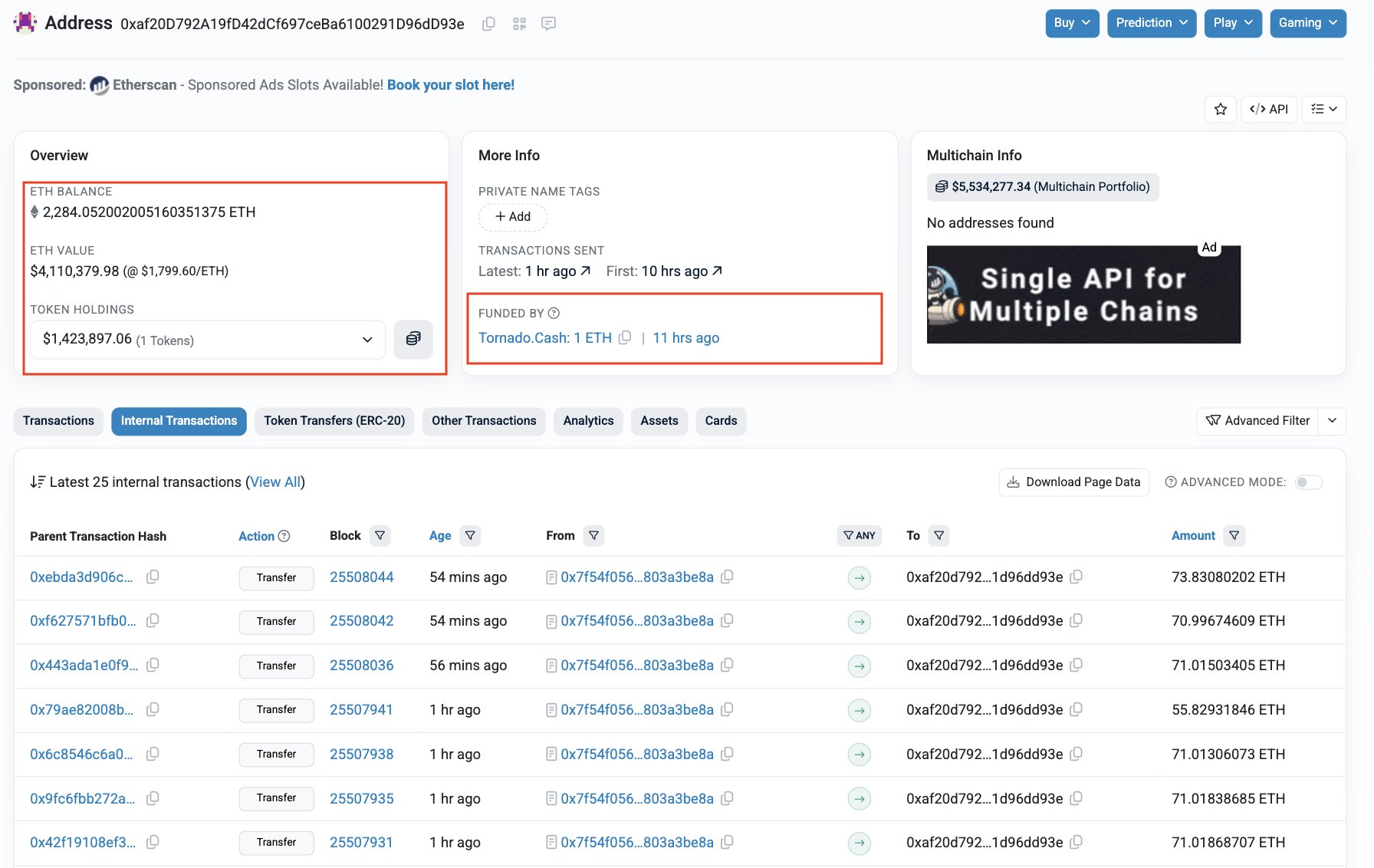 Hedera faces apparent $5.25M exploit as attacker bridges stolen funds to Ethereum2026-07
 Hedera proposes Hooks in HIP-1195: Solidity logic on accounts, enabling limit orders and escrow without smart contracts2026-04
 Georgia has signed an MoU with Hedera to explore moving its land registry on-chain. The plan also considers real estate tokenization to boost transparency and property rights.2025-12
 Sirio Finance introduces AI-powered lending and borrowing protocol on the Hedera network2024-12
 Stāder Labs partners with Hedera Foundation for Liquid Staking rewards on HBAR via HBARx in DeFi 2.0 initiative.2024-05
Hedera: Hashgraph, Tokenization, and the Rise of Agentic Payments
Hedera is a public distributed ledger that uses the hashgraph consensus algorithm rather than a traditional blockchain, aiming to offer fast, low-cost, and fair transaction ordering for enterprise and Web3 applications. Built around a corporate-style governing council and a technical stack optimized for tokenization, AI agents, and real‑time payments, it targets the emerging intersection of real‑world asset markets, stablecoins like USDC, and programmable, machine‑driven finance.
What Is Hedera?
At its core, Hedera is an open, public network that lets developers build decentralized applications and tokenized assets on top of a shared ledger, but it is structurally different from most layer‑1 blockchains. Instead of arranging transactions in blocks chained together over time, Hedera’s underlying hashgraph data structure uses a directed acyclic graph and a “gossip‑about‑gossip” protocol to spread information efficiently among nodes. The network supports a range of services—native tokenization, smart contracts via an Ethereum‑compatible virtual machine, a high‑throughput consensus service, and file storage—exposed through standard APIs and SDKs. From the outset it has targeted enterprise‑grade requirements such as predictable fees, regulatory compliance tooling, and strong governance, which shape both its technical design and its economic model.
Hedera’s performance characteristics are one of its main selling points for builders focused on payments and tokenization. Hashgraph consensus enables parallel processing of transactions, and the Hedera team claims throughput above ten thousand transactions per second on the main network with low and stable transaction fees. Finality is achieved within seconds, and the consensus algorithm is mathematically proven to be asynchronously Byzantine fault tolerant (ABFT), which means it can tolerate up to one‑third of nodes behaving maliciously or failing while still guaranteeing agreement on transaction ordering. These features are particularly relevant for use cases like micropayments, streaming interest, and AI‑driven agents that require both speed and security.
From an application developer’s perspective, Hedera looks similar to other smart contract platforms, with EVM‑compatible contracts and standard wallet flows, but it also exposes higher‑level native services such as the Hedera Token Service (HTS) and Hedera Consensus Service (HCS). Many of the most prominent deployments on the network—such as tokenized securities, enterprise loyalty points, and supply‑chain data systems—use these services rather than complex on‑chain business logic, which can simplify compliance and reduce smart contract risk. This design aligns with Hedera’s focus on regulated institutions and large enterprises, which often prefer predictable, auditable infrastructure over highly experimental DeFi primitives.
Hashgraph versus blockchain
Understanding Hedera starts with understanding how hashgraph differs from conventional blockchain architectures. In a typical blockchain, nodes propose blocks of transactions, compete or coordinate to add them to a linear chain, and rely on various consensus mechanisms—proof‑of‑work, proof‑of‑stake, or delegated variants—to agree on the canonical history. Hedera’s hashgraph replaces the chain of blocks with a graph of events: each node continually “gossips” about the transactions it knows to randomly selected peers, including metadata about who it heard from and when. Over time, this “gossip‑about‑gossip” creates a shared view of how information flowed through the network, which lets nodes infer a globally consistent order of transactions without needing to exchange explicit votes on every event.
The mechanism used to derive consensus from this gossip graph is known as virtual voting. Instead of broadcasting votes, each node predicts how every other node would vote based on the structure of the gossip history it has observed, which avoids the communication overhead and latency of traditional Byzantine fault tolerant protocols. The result is an algorithm that can achieve ABFT—often described as the strongest form of consensus security for distributed systems—while remaining practical at high throughput in a geographically distributed, permissioned‑validator network. Hedera argues that this combination of fairness (transactions are ordered roughly in the order they reach the network) and speed makes hashgraph better suited than many blockchains for applications such as real‑time payments, trading, and data logging.
A simplified comparison of the two paradigms can be useful:
| Feature | Typical blockchain | Hedera hashgraph |
|---|---|---|
| Data structure | Linear chain of blocks | Directed acyclic graph of events |
| Consensus | PoW/PoS/DPoS + block proposals | ABFT virtual voting from gossip graph |
| Finality | Probabilistic or delayed | Rapid, deterministic ABFT finality |
| Transaction ordering | Influenced by block proposers | More strongly tied to network arrival time |
These differences are not merely academic. In practice, they affect everything from fee economics to how easily an AI agent can reason about settlement guarantees. For instance, a machine‑driven trading bot or an automated treasury agent using the Hedera Agent Kit can treat finality as effectively instant for most purposes, which simplifies risk management and policy design.
Core network architecture
The public Hedera network is operated by a set of permissioned validator nodes that are, at least for now, largely run by members of the Hedera Governing Council and their partners. While the hashgraph algorithm itself is designed to be open and permissionless, Hedera has deliberately coupled it with a governance model that relies on known, vetted entities to operate consensus nodes, with a roadmap toward broader decentralization over time. The network also supports “mirror nodes” that replicate transaction history for indexing and analytics without participating in consensus, enabling third‑party explorers, compliance tools, and data services to be built on top.
On top of this node infrastructure, Hedera exposes several primary services. The Hedera Token Service lets issuers create fungible and non‑fungible tokens with configurable properties such as supply controls, KYC flags, and custom fee schedules, without writing smart contracts. The Hedera Consensus Service provides a way to submit arbitrary messages that are ordered by hashgraph consensus and recorded immutably, which can be used to anchor logs, coordinate off‑chain systems, or power cross‑network bridges. An Ethereum‑compatible smart contract service built on the EVM allows developers to deploy and interact with Solidity contracts, while the file service offers basic distributed file storage for configuration and governance artifacts.
This layered approach—consensus, core services, and optional smart contracts—has important implications for tokenization and AI agents. Issuers of regulated real‑world assets, such as tokenized money market funds, can use HTS to model their instruments and rely on off‑chain transfer agents or agents with embedded compliance policies to enforce regulations, rather than encoding everything on‑chain. Meanwhile, AI agents using the Hedera Agent Kit can mix and match services depending on their tasks, for example, using the token service for payments while logging decisions via the consensus service.

Hedera open-sources CLPR cross-ledger protocol, contributes codebase to Linux Foundation labs
Governance, Council, and Ecosystem Partners
One of Hedera’s most distinctive features is its governance model. Instead of relying solely on token‑weighted voting or anonymous validators, Hedera is overseen by a Governing Council of up to 39 global organizations drawn from sectors such as technology, finance, logistics, and energy. Council members typically run validator nodes, contribute to strategic and technical decisions, and operate under fixed, staggered terms designed to prevent any single entity from exerting outsized influence over time. This model is intended to balance decentralization with accountability by putting known institutions “on the hook” for network reliability and regulatory engagement.
Over the past few years, the Council has added high‑profile names that underscore Hedera’s enterprise ambitions. Technology and consulting giant Accenture joined to help design transparent, scalable infrastructure for enterprise AI use cases, including agentic systems in finance and government. McLaren Racing came on board to explore fan engagement and digital collectibles, while global logistics leader FedEx is working with the network to test digital supply chain infrastructure that can track shipments and documents across borders. Energy company Repsol has engaged with Hedera to investigate decentralized digital identity standards for the energy sector, signaling interest in on‑chain identity and credentialing systems beyond pure finance.
Hedera Council model
The Hedera Council’s remit spans both technical and economic governance. It sets and approves key parameters such as staking reward algorithms, fee schedules, and network upgrades, often informed by dedicated committees like the Treasury Management & Coin Economics Committee (CoinCom). For example, when the staking environment changed across the broader proof‑of‑stake landscape, CoinCom conducted a review and proposed adjustments to Hedera’s staking reward structure to keep it aligned with industry norms. Council members also oversee the onboarding of strategic and community partners and support initiatives such as developer grants, ecosystem marketing, and standards work.
In addition to the core Council, Hedera has introduced a partnership program with two tiers: Strategic Partners and Community Partners. Strategic Partners, such as the Global Blockchain Business Council (GBBC) and The Institutes RiskStream Collaborative, bring domain expertise and institutional reach in areas like insurance, policy, and Web3 standards. Community Partners, including wallet providers and ecosystem hubs like HashPack, Hashgraph Online, KabilaApp, xenitravel, and Genfinity, help grow grass‑roots adoption and provide infrastructure for everyday users. This layered governance and partnership model is unusual in the crypto space, but it aligns with Hedera’s aim of positioning itself as a sort of digital public utility co‑managed by major stakeholders.
The trade‑off, of course, is that governance is more centralized than in many permissionless networks, and ordinary HBAR holders have limited direct influence over protocol‑level decisions. While Hedera emphasizes the diversity and global distribution of Council members to mitigate collusion risks, its governance design remains a recurring topic of debate among decentralization advocates and is a material consideration for investors and builders weighing platform risk.
Strategic partnerships in tokenization, payments, and supply chains
Hedera’s governance structure has made it an attractive partner for regulated financial institutions exploring tokenization and modernized payment rails. A prominent example is Archax, a UK‑regulated digital asset platform that has built tokenized securities infrastructure on Hedera. Archax recently introduced real‑time yield payments for tokenized securities, allowing interest generated by assets such as tokenized funds to be distributed on a near second‑by‑second basis directly into investors’ wallets using Circle’s USDC stablecoin on Hedera. This showcases not just tokenization, but truly programmable cash flows where the payment leg and the asset live on the same ledger.
In parallel, Lloyds Banking Group and abrdn (Aberdeen Investments), in collaboration with Archax, executed what has been described as the UK’s first foreign‑exchange trades using tokenized real‑world assets as collateral, with tokenized units of money market funds and UK government bonds issued and settled on Hedera. This use case demonstrates how tokenized collateral can support capital markets operations such as FX trading, potentially improving settlement efficiency and collateral mobility across different trading venues.
Beyond capital markets, Hedera has been used in insurance and property risk data via The Institutes RiskStream Collaborative, an industry consortium building shared infrastructure for carriers, brokers, and reinsurers. RiskStream’s projects, such as modernizing property risk data exchange, leverage Hedera’s consensus and tokenization capabilities to create tamper‑evident records and interoperable data models across institutions. Meanwhile, initiatives like the HashSphere‑powered Digital Receipt System deployed with the Qatar Financial Centre’s Digital Asset Lab illustrate how Hedera can underpin digitized documentation and receipts in regulated environments, providing a foundation for more complex financial and compliance workflows.
Hedera has also featured in central bank and wholesale digital money experimentation. The Reserve Bank of Australia and the Digital Finance CRC selected Hedera as part of Project Acacia, a pilot exploring digital money and tokenized asset markets. In this context, Hedera and the Hashgraph Group’s HashSphere infrastructure were used to support issuance and settlement of a wholesale central bank digital currency in controlled environments, while maintaining interoperability with the public network. The inclusion of Hedera in such pilots reflects both its technical capabilities and the comfort institutional actors have with its governance and legal framework.
Custody, compliance, and institutional rails
For tokenized assets and stablecoin payments to gain institutional traction, robust custody is as important as consensus algorithms. Asia‑focused digital asset custodian Hex Trust partnered with Hedera to offer enterprise‑grade custody solutions for HBAR and other network‑based assets, integrating Hedera into its regulated infrastructure. Hex Trust emphasizes features such as multi‑level security, regulatory compliance, and integration with trading venues, which are critical for banks, asset managers, and corporates considering significant on‑chain exposure.
Custody and compliance rails complement Hedera’s tokenization tooling, making it possible for regulated issuers to lock down asset flows within whitelisted entities while still benefiting from on‑chain settlement. For example, a tokenized fund issued via Hedera’s Token Service, managed through the Asset Tokenization Studio, and held in institutional custody can, in principle, support same‑day settlement and precise interest distribution while staying within the confines of securities regulations. However, these setups are complex, and custody arrangements must be carefully audited and managed, particularly when tokenization touches retail investors or cross‑border markets.
Readers click hardest on Hedera's emerging DeFi layer (AI lending, liquid staking) and institutional validation signals (ETF filings, bank pilots, government MoUs), revealing that the HBAR bull case is being tested not on retail speculation but on whether enterprise-grade infrastructure can bootstrap credible on-chain yield and real-world asset flows.
Technology Stack: Services, Smart Contracts, and Hooks
Hedera’s technology stack is structured around a set of core services rather than a monolithic smart contract layer. This design choice reflects both its hashgraph roots and its focus on regulated tokenization and high‑volume data logging. Developers can choose between feature‑rich native services such as the Hedera Token Service, which handles much of the lifecycle management for assets, and the EVM‑based smart contract service when they need custom logic.
Hedera Token Service and Asset Tokenization
The Hedera Token Service (HTS) is Hedera’s native tokenization engine. It allows issuers to define fungible tokens, non‑fungible tokens, and more specialized asset representations directly at the protocol level, specifying attributes such as treasury accounts, supply keys, freeze and KYC keys, and custom fee structures. Because these features are built into the network rather than implemented as contract code, HTS tokens can be more gas‑efficient and less error‑prone than tokens created via smart contracts, which is particularly appealing in regulated contexts where a bug can have severe legal and financial consequences.
To streamline the creation and management of tokenized assets, Hedera has released an open‑source Asset Tokenization Studio, hosted on GitHub. This toolkit provides configurable workflows to define, issue, and administer tokenized securities and equities on Hedera, with a focus on compliant issuance of real‑world assets, stablecoins, and regulated tokens. Developers and issuers can use the studio to model instruments, set up roles and permissions, and integrate with external systems without building everything from scratch, reducing both development time and regulatory risk. The studio is designed to be enterprise‑ready but remains open source, allowing customization and auditability.
Hedera positions tokenization as a multi‑trillion‑dollar opportunity, particularly in areas like private markets, money market funds, real estate, and short‑term credit. The combination of HTS and the Asset Tokenization Studio is intended to make launching and operating these assets a matter of minutes rather than months, at least on the technical side, even though regulatory approvals and legal structuring still impose real‑world timelines. Case studies such as the Archax tokenized securities platform, Lloyds and abrdn’s tokenized collateral trades, and institutional pilots like Project Acacia suggest that this stack is gaining traction with major financial players.
Smart contracts and EVM compatibility
While HTS covers many tokenization needs, Hedera also offers a smart contract platform based on the Ethereum Virtual Machine, which enables developers to deploy Solidity contracts and reuse tooling from the Ethereum ecosystem. This EVM‑compatible layer allows for more complex DeFi logic, on‑chain governance systems, and application‑specific protocols that go beyond what native services provide. For example, a protocol might use HTS for its tokens but manage lending, derivatives, or structured products through smart contracts that encode detailed business rules.
Hedera’s EVM implementation benefits from the same hashgraph consensus layer, meaning smart contract transactions share the same finality and performance characteristics as other network operations. However, as on any EVM platform, smart contract developers must grapple with familiar risks: reentrancy bugs, oracle failures, and governance attacks, among others. To address some of these challenges, the Hedera community has proposed enhancements like HIP‑1195, which introduces “hooks”—Solidity snippets attached to accounts that can enforce rules such as spending limits, limit orders, or escrow‑like conditions at the account level, potentially reducing the need for separate complex contracts. While HIP‑1195 is still being refined, it reflects an ongoing effort to blend native services, EVM logic, and usability for both human and AI‑driven actors.
Consensus Service and data integrity
The Hedera Consensus Service (HCS) is a lower‑level building block that turns hashgraph into a global ordering engine for arbitrary messages. Applications can submit messages to HCS topics and receive back a timestamped, cryptographically verifiable record of their order, without directly exposing the content of the messages to all network participants if they choose to encrypt. This allows developers to use Hedera as a trust anchor for off‑chain systems, such as supply‑chain databases, inter‑bank messaging, or AI decision logs, while keeping sensitive data in private environments.
Enterprise and public sector projects have used HCS to create audit trails and transparency mechanisms. For example, supply‑chain partners exploring digital customs documentation in Southeast Asia have looked to Hedera to anchor document hashes and status updates, ensuring that customs authorities, logistics providers, and merchants share a consistent view of events without relying on a single central database. Insurance consortia like RiskStream use similar patterns to align claims and policy data across carriers, reducing reconciliation overhead and disputes. This kind of infrastructure is also relevant for AI governance: an AI agent making payment or trading decisions can log signed records of its actions to an HCS topic, providing an immutable record for compliance and risk teams to review.
AI, Agents, and Programmable Payments
One of the most active themes around Hedera today is the convergence of AI agents and on‑chain payments. As large language models and autonomous agents become more capable, there is growing interest in letting them control on‑chain wallets, execute microtransactions, and interact with tokenized assets under strict policies. Hedera has leaned into this trend with dedicated tooling, events, and partnerships.
Hedera Agent Kit and AI Studio
The Hedera Agent Kit is an open‑source framework that makes it easier for AI agents—typically powered by LLMs or multi‑agent orchestration systems—to interact directly with the Hedera network. It provides a set of plugins and abstractions that let developers equip their agents with capabilities such as creating and funding accounts, sending HBAR or tokens, managing HTS tokens, publishing messages via the Consensus Service, and calling smart contracts on the EVM layer. Under the hood, the kit integrates with frameworks like LangChain and supports multiple AI providers, allowing developers to combine natural‑language reasoning with on‑chain actions.
Recently, Hedera introduced a Python SDK for the Agent Kit, expanding beyond earlier JavaScript‑focused tooling and making it easier for data scientists and AI researchers comfortable in Python to prototype agentic workflows. The SDK’s documentation walks through setting up a virtual environment, configuring Hedera testnet credentials, and wiring in an AI provider API key, so that developers can prompt an agent in natural language and watch it execute real payments or token operations on testnet. Beyond the SDK, Hedera has launched an AI Studio and an Agent Lab to foster experimentation, along with campaigns such as an AI Studio Agent Bounty that reward builders for creating agents capable of managing payments and tokenized assets safely.
These efforts culminate in broader ecosystem events like the Agentic Society conference, which Hedera has co‑hosted to bring together experts in AI, cryptography, and digital assets. There, topics such as “agentic payments,” policy‑driven wallets, and AI‑governed treasuries have taken center stage, highlighting how infrastructures like Hedera can serve as a programmable settlement layer for autonomous software. The release of Agent Kit v4, with expanded policy controls, modular packages, and plugin updates, underscores a shift from mere capability to governance: the question is no longer just whether AI agents can pay, but under what constraints and with what auditability.
Agentic payments and microtransactions
Hedera’s performance profile—a combination of high throughput, low fees, and fast finality—makes it a natural testbed for micropayments and streaming payments, which are especially relevant for machine‑to‑machine and agent‑to‑agent interactions. For example, an AI assistant might pay per‑document or per‑API‑call fees to data providers, or machine agents in an IoT network might settle usage‑based charges in real time. The low and predictable fees on Hedera lower the barrier for such use cases, which are often uneconomical on congested, high‑fee blockchains.
Archax’s real‑time yield payments for tokenized securities, delivered via USDC on Hedera, illustrate how streaming cash flows can be implemented in production. Instead of paying out interest monthly or daily, Archax’s infrastructure enables near continuous interest distribution, with stablecoin streams updating investor balances second by second. While the primary beneficiaries are currently human investors, there is nothing to stop AI agents from acting as the “operators” of these wallets, automatically reallocating assets, sweeping yields, or adjusting positions in response to changing conditions. By combining the Asset Tokenization Studio for issuing compliant securities with the Agent Kit for policy‑defined agents, Hedera aims to create an environment where both asset and agent lifecycles are programmable.
In practice, agentic payments require robust policy frameworks. Agent Kit v4 incorporates policy modules that let developers specify constraints such as spending limits, allowed counterparties, and time windows, which can be enforced before an agent signs a transaction. These policies, together with tools like HIP‑1195 hooks, provide defense‑in‑depth against prompt injection and misbehavior: even if an AI model is coerced into attempting an improper payment, the surrounding policy layer should block or flag it. For financial institutions considering agent‑run operations, such safety infrastructure is crucial.
AI, quantum, and security posture
Security is a recurring theme when combining AI and on‑chain assets. Hedera’s hashgraph consensus offers strong guarantees via ABFT, meaning that as long as fewer than one‑third of validator nodes are compromised or faulty, honest nodes will agree on the ordering and timestamps of transactions. This is particularly important when AI agents might be interacting at scale: even if they are making many small payments, the underlying ledger must remain resistant to censorship, double‑spends, and order manipulation. Hedera’s virtual voting mechanism also provides a form of fairness by tying transaction ordering more closely to when messages reach the network, mitigating certain forms of miner extractable value (MEV) common on other chains.
Looking ahead to quantum risk, Hedera has engaged with partners such as WISeKey and the Hashgraph Group on initiatives like the QAIT Q‑Day Security Assessment Platform, launched on WISeKey’s SEALCOIN Quantum Marketplace. These efforts explore how post‑quantum cryptography and risk assessment frameworks can prepare infrastructures like Hedera for a future where quantum computers might threaten existing signature schemes and key management practices. In interviews and ecosystem updates, Hedera’s HEAT (Hedera Economic and Addressable Treasury) leadership has framed quantum preparedness, AI agent governance, and institutional tokenization as intertwined pillars of the network’s long‑term strategy.
- 01AI-powered DeFi lending
Sirio Finance's AI-driven lending protocol dominated clicks by a wide margin, showing readers see Hedera transitioning from a permissioned enterprise ledger to a live DeFi destination with novel yield primitives.
- 02Liquid staking HBARx yield↗
Stāder Labs' HBARx partnership with the Hedera Foundation framed native staking rewards as a DeFi 2.0 primitive, attracting readers tracking whether HBAR holders can earn yield without leaving the ecosystem.
- 03Grayscale ETF entity filings
Grayscale registering a Hedera Trust entity in Delaware signaled a potential spot ETF bid, drawing readers monitoring institutional access vehicles as a near-term price catalyst.
- 04Government and bank real-world pilots
Georgia's land registry MoU and South Korea's Shinhan Bank stablecoin test represent sovereign and TradFi validation that readers treat as price-relevant proof of enterprise staying power.
- 05Cross-chain stablecoin integration↗
USDT0 and Axelar integrations attracted readers watching whether Hedera's historically closed ecosystem was finally opening up to multi-chain liquidity and interoperability.
- 06AI agent infrastructure launch↗
Hedera Agent Lab and the AI Studio bounty campaign drew readers weighing whether enterprise-grade agentic payment rails on HBAR represent genuine technical differentiation or early-stage hype with safety gaps.
HBAR, Tokenomics, and Staking
HBAR is Hedera’s native cryptocurrency, used to pay transaction fees, compensate nodes for securing the network, and participate in staking. The network has a capped total supply of 50 billion HBAR, with distribution schedules managed under the oversight of the Governing Council. Tokenomics has evolved over time as Hedera has moved from early bootstrapping toward more mature, usage‑driven economics, including updates to staking rewards and circulating supply plans.
HBAR utility and economics
Every transaction on Hedera—whether it is a simple HBAR transfer, an HTS token mint, a smart contract call, or a consensus message—requires a small fee paid in HBAR. These fees serve multiple purposes: they compensate node operators, deter spam, and provide predictable cost accounting for applications. Because Hedera targets enterprise adoption, fee schedules are designed to be stable and denominated in fiat equivalents, so that business users can model costs without worrying about volatile gas prices.
HBAR also functions as the staking asset in Hedera’s proof‑of‑stake security model. Users and institutions can stake their HBAR to network nodes to support consensus and earn rewards in return, although only approved nodes currently participate directly in block production. Over time, the network’s tokenomics and staking mechanisms are expected to evolve in tandem, with adjustments reflecting usage levels, security needs, and market conditions. Recent communications from Hedera’s economic teams have outlined updated circulating supply plans that aim to balance ecosystem incentives, development funding, and market liquidity in a more transparent manner.
Staking model and recent changes
Hedera’s staking system has undergone notable changes as the network has matured. In a recent update approved by the Governing Council, the maximum staking reward rate was reduced from 6.5% to 2.5%, and the portion of the total HBAR supply eligible for the full reward rate was capped at 13% of the 50 billion maximum supply—that is, 6.5 billion HBAR. The change was motivated in part by a desire to align Hedera’s staking returns with adjusted reward rates across top proof‑of‑stake networks, which CoinCom estimated at around 1.4% on average.
The update also introduced more explicit algorithmic controls on staking rewards. Hedera uses a designated treasury account, 0.0.800, to hold HBAR earmarked for rewards, and the reward rate is now dynamically adjusted based on this account’s balance. When the balance, excluding rewards already accrued but not yet paid out, is above 85 million HBAR, the reward rate is set at the 2.5% maximum; if the balance falls below that threshold, the maximum reward rate is automatically reduced to preserve the reward pool. Additionally, individual stakers may receive lower effective rates if they delegate to nodes where the staked amount exceeds certain maxima or if overall network staking levels fall below minimum thresholds, which are meant to encourage a healthy distribution of stake across nodes.
These changes do not affect rewards already accrued but not yet distributed in accounts, but they do alter the forward‑looking yield profile for HBAR staking. For token holders, the net effect is a lower but potentially more sustainable staking yield that reflects both competitive pressures and the network’s goal of prioritizing long‑term security over short‑term incentives. For institutional participants, predictable and conservatively managed staking economics can be preferable to outsized, variable yields that might attract regulatory scrutiny or drive speculative volatility.
Fees, sustainability, and environmental profile
Because Hedera does not rely on energy‑intensive proof‑of‑work mining, its energy consumption per transaction is significantly lower than that of legacy PoW networks. The hashgraph consensus algorithm’s efficiency, combined with a relatively small, permissioned validator set, allows the network to process transactions with modest resource requirements, which Hedera positions as a sustainability advantage for enterprises under pressure to reduce their carbon footprints. The project has also supported environmental initiatives and carbon accounting use cases on‑chain, though these remain a subset of its broader focus on tokenization and payments.
Fee design is closely tied to sustainability and user experience. Hedera advertises low, predictable fees that are effectively independent of network congestion, in contrast to auction‑based gas markets where fees can spike under heavy load. For AI agents and machine‑to‑machine workflows, this predictability is critical: a payment policy encoded in an agent that relies on micro‑fees would be brittle if fees fluctuated wildly. By anchoring fees and adjusting staking rewards algorithmically, Hedera aims to keep its economic environment stable enough for automation while still flexible enough to respond to market and security realities.

Hedera joins UK taskforce on wholesale digital markets backed by HM Treasury
Payments, Stablecoins, and USDC
Payments are a central pillar of Hedera’s value proposition, and stablecoins are at the heart of that story. While HBAR is used for fees and staking, most institutional and consumer‑facing payment flows are likely to be denominated in fiat‑pegged stablecoins and tokenized bank money, which reduce volatility and simplify accounting. Hedera has positioned itself as an enterprise‑grade platform for such assets, with Circle’s USDC playing a prominent role.
USDC on Hedera
USDC on Hedera is a regulated, fiat‑backed stablecoin issued by Circle, integrated into the Hedera network as part of the broader multichain USDC ecosystem. Like USDC on other chains, each token is intended to represent a claim on a dollar‑denominated reserve of high‑quality liquid assets managed under U.S. regulations, and Circle regularly publishes attestation reports regarding these reserves. On Hedera, USDC benefits from the network’s high throughput, low fees, and fast finality, making it suitable for both retail payments and institutional settlement.
Hedera frames USDC as a piece of “enterprise‑grade digital dollar infrastructure,” emphasizing its compatibility with compliance requirements and its role as a trusted settlement asset for tokenized securities, trade finance, and corporate treasury operations. Archax’s real‑time yield payments rely on USDC as the payout currency, demonstrating how a stablecoin can serve as the programmable cash leg for sophisticated capital markets workflows. As more banks, fintech firms, and corporates experiment with on‑chain money, the existence of a well‑regulated stablecoin on a performance‑oriented network like Hedera becomes a key enabler.
Real-time and programmable cash flows
Streaming payments are one of the more novel payment patterns emerging on Hedera. Archax’s integration enables interest from tokenized securities to be distributed to investors on a near second‑by‑second basis, with USDC trickling into wallets as time passes rather than arriving in periodic lumps. Technically, this can be implemented using smart contracts or native token and transfer primitives that periodically adjust balances according to pro‑rated interest calculations, but the conceptual shift is what matters: cash flows become continuous and programmable.
This pattern has several implications. For investors, it can improve visibility into returns and potentially support more dynamic portfolio strategies, as yields become observable and reallocatable in near real time. For issuers and intermediaries, it can simplify cash management by aligning inflows from underlying assets and outflows to investors on a more granular basis, reducing idle balances. For AI agents, streaming payments offer a natural fit: an agent tasked with optimizing treasury management or liquidity provisioning can monitor inflows continuously and respond quickly, for example, by sweeping funds to other protocols, rebalancing currency exposure, or adjusting hedging strategies.
More broadly, programmable cash flows on Hedera extend beyond interest. Loyalty programs, such as the microfinance‑focused program launched by Enda Tamweel and The Hashgraph Association, can use Hedera to issue and redeem points in real time based on customer behavior, while travel‑sector partners like xenitravel can tailor dynamic rewards and fees for bookings. Combined with AI agents, these systems can become adaptive, adjusting rewards, prices, or risk parameters based on user histories, market data, and regulatory rules.
Cross-border, retail, and niche payment use cases
Hedera’s low fees and fast settlement also lend themselves to cross‑border remittances and B2B payments, particularly when coupled with regulated stablecoins like USDC and tokenized bank deposits. Banks and payment providers can use HTS to model multi‑currency instruments and the Consensus Service to log payment metadata, creating interoperable payment rails that reduce reliance on legacy messaging systems. Projects like Teleport’s digital customs documentation system for Southeast Asian trade hint at how payments, documentation, and logistics data might converge on shared infrastructure, with Hedera acting as the underlying trust layer.
On the retail and niche side, Hedera has seen experiments in in‑game economies, content micro‑tipping, and pay‑per‑use APIs, where traditional card rails are either too expensive or ill‑suited to machine‑to‑machine interactions. AI agents can serve as the front‑end for such systems, making decisions about which content or services to pay for and how much, while encoded policies ensure that spending stays within budget and complies with relevant regulations. While many of these use cases remain early, they illustrate the breadth of payment scenarios that Hedera aims to support.
Real-World Asset Tokenization and Institutional Adoption
Real‑world asset (RWA) tokenization is arguably the narrative where Hedera is most aggressively positioning itself. The idea is to represent claims on off‑chain assets—such as funds, bonds, real estate, or trade receivables—as tokens on a ledger, enhancing transparency, settlement speed, and composability. Hedera’s combination of native token services, enterprise governance, and institutional partnerships has made it a preferred platform for several high‑profile RWA pilots and deployments.
Why tokenization on Hedera?
Tokenization is not unique to Hedera; many blockchains support token standards and have RWA experiments. What differentiates Hedera is the way its technical and governance stack aligns with institutional requirements. The hashgraph consensus provides ABFT security and rapid finality, which are important for institutions unwilling to tolerate probabilistic settlement or extended confirmation times. The Hedera Token Service and Asset Tokenization Studio offer feature‑rich, auditable token constructs with configurable keys for supply control, KYC, and compliance, reducing reliance on bespoke contracts.
Governance by a council of global enterprises and organizations, rather than anonymous validators, provides a form of institutional comfort, especially when regulators or internal risk committees demand clear lines of accountability. For asset managers and banks, knowing that network operators include firms like banks, consultancies, logistics giants, and energy majors can make it easier to justify using a public ledger as core infrastructure. Hedera’s work with partners like RiskStream, FedEx, and Repsol also signals cross‑sector buy‑in that can be important for multi‑party tokenization projects spanning finance, insurance, and supply chains.
Case studies: capital markets and funds
Archax’s activities on Hedera provide some of the clearest examples of tokenized securities moving beyond proof‑of‑concept. By issuing tokenized units of funds and other securities on Hedera and integrating them into its FCA‑regulated trading and custody platform, Archax has shown how traditional financial products can be mirrored on a public ledger while remaining within existing regulatory frameworks. The real‑time yield streaming feature demonstrates how tokenization can enable novel functionality—continuous interest distribution—that would be difficult or cumbersome with conventional registries and payment systems.
The collaborative FX trades involving Lloyds Banking Group, abrdn, and Archax illustrate another dimension: using tokenized RWAs as collateral in capital markets workflows. In this setup, units of tokenized money market funds and UK gilts issued on Hedera were used as collateral in FX transactions between institutional counterparties, with settlement instructions and asset movements recorded on the network. Tokenized collateral can, in principle, be re‑used across different trading venues and lending arrangements more efficiently than traditional collateral, thanks to programmability and near real‑time settlement, though legal and risk management frameworks must adapt to these new capabilities.
Tokenized funds and private markets more broadly are another area of focus. Hedera’s messaging emphasizes the potential for its tokenization infrastructure to unlock multi‑trillion‑dollar RWA markets by providing the rails for on‑chain private fund shares, credit instruments, and structured products. At the same time, coverage has highlighted that legacy risks, high legal costs, and compliance hurdles remain significant: even if issuance and transfer can be technically accomplished in minutes, regulatory approvals, investor protections, and operational integration still require substantial time and expense. Hedera’s strategy has increasingly leaned on partnerships with asset managers, custodians, and regulators to address these challenges rather than assuming that technology alone will suffice.
Beyond finance: insurance, supply chain, identity
Outside of traditional finance, Hedera’s tokenization and consensus services have been applied to insurance, supply chain, and identity use cases. The Institutes RiskStream Collaborative, the insurance industry’s large emerging technology consortium, has used hashgraph‑based infrastructure to modernize property risk data sharing among carriers, brokers, and reinsurers. By tokenizing data rights or anchoring policy and claims events on Hedera, RiskStream’s projects aim to reduce friction and fraud, and to create interoperable data models that multiple insurers can rely on.
Supply‑chain initiatives, including those involving FedEx and logistics partners, explore how tokenized documents and tracking events can flow through complex trade networks. Teleport’s work on a digital customs documentation system for Southeast Asian e‑commerce, built on Hedera, demonstrates how trade documents, declarations, and approvals can be represented as tokens or consensus messages, improving transparency and coordination among customs authorities, logistics firms, and merchants. In the energy sector, Repsol’s engagement with Hedera around decentralized digital identity underscores the importance of tokenized credentials and attestations in enabling new business models and regulatory compliance in emissions tracking, grid management, and beyond.
Taken together, these non‑financial applications highlight that tokenization on Hedera is not limited to financial claims. Tokens can encode rights to data, proofs of compliance, or even algorithmic policies, all of which can be relevant for the emerging AI‑driven economy, where agents must prove their identity, permissions, and actions across organizational boundaries.
Hedera mainnet launched with governing council governance model
USDC issued natively on Hedera network by Circle
Stāder Labs HBARx liquid staking partnership with Hedera Foundation announced
- 2025-02regulatory
Grayscale registers Hedera Trust ETF entity in Delaware
- 2025-06milestone
Georgia signs MoU with Hedera to pilot on-chain land registry and real estate tokenization
Archax launches real-time streaming yield payments for tokenized securities on Hedera
Hedera Agent Lab and AI Studio Agent Bounty Campaign launch
Risks, Criticisms, and Open Questions
No assessment of Hedera would be complete without considering its risks and criticisms. While the network offers compelling technology and strong institutional partnerships, it also faces trade‑offs related to governance centralization, regulatory complexity, technical risk, and the uncertain implications of AI‑driven finance.
Governance and decentralization
The most commonly cited concern is Hedera’s governance structure. By design, control over consensus nodes and protocol‑level decisions resides primarily with the Governing Council, a relatively small group of large organizations. Although this model provides clear accountability and may comfort regulators, it runs counter to the fully permissionless ethos that many in the crypto community consider foundational. Critics worry that a council‑managed network could be more susceptible to regulatory capture, coordinated censorship, or politically motivated changes to rules, especially if governments or powerful stakeholders exert pressure on member organizations.
Hedera’s response has been to emphasize diversity and rotation: Council members are geographically distributed, drawn from different industries, and subject to term limits, with safeguards meant to prevent any single member from dominating decision‑making. The project has also signaled long‑term intentions to expand node participation beyond Council members, though timelines and specifics remain a subject of debate. For users and builders, the key question is whether the current governance model aligns with their risk tolerance and philosophical preferences, and whether Hedera’s governance evolution will keep pace with the decentralization expectations of the broader ecosystem.
Regulatory, compliance, and tokenization headwinds
While Hedera’s focus on tokenized RWAs positions it well for institutional adoption, it also entangles the network with the complex realities of financial regulation. Tokenized funds, securities, and deposits remain subject to the same regulatory regimes as their off‑chain equivalents, and simply placing them on a distributed ledger does not eliminate the need for KYC, AML, investor protections, and tax compliance. Industry coverage has noted that tokenized funds promising on‑chain private markets still face legacy risks, high costs, and compliance hurdles, and that these constraints can limit the near‑term scalability of RWA platforms.
Hedera’s strategy of working closely with regulated firms, custodians, and policymakers mitigates some of these challenges but does not remove them. Indeed, by embedding itself deeply into the existing financial system, Hedera arguably becomes more exposed to regulatory changes and enforcement actions that could alter the viability of certain tokenization models. For crypto‑native users used to open, borderless DeFi, the network’s strong compliance orientation can be both a strength and a limitation.
Technical and ecosystem risks
On the technical side, Hedera faces many of the same risks as other smart contract platforms, plus some unique to its architecture. Smart contracts deployed on its EVM layer are susceptible to coding bugs, governance errors, and oracle failures. Tokens managed via HTS must be configured carefully to avoid mis‑set keys that could freeze assets or prevent necessary administrative actions. AI agents interacting with the network must handle key management securely, as compromised keys could lead to asset loss even if the underlying ledger remains sound.
Hashgraph’s virtual voting and ABFT properties rest on assumptions about node honesty and network connectivity; while the algorithm has been mathematically analyzed, real‑world implementations can still harbor software bugs or misconfigurations. Hedera’s relatively small validator set, while beneficial for performance, means that any compromise or collusion among Council members could have larger effects than in more widely distributed networks. Ecosystem risk is another factor: Hedera competes with numerous layer‑1s and layer‑2s for developers and liquidity, and network effects in DeFi and NFT ecosystems can be hard to overcome. The success of its tokenization and AI‑agent strategies will depend not just on technology, but on sustained builder engagement and liquidity inflows.
AI-specific and agentic risks
The emergence of AI agents with on‑chain capabilities introduces new categories of risk. Agents that can sign transactions or move assets must be protected against prompt injection, model manipulation, and data poisoning that could trick them into violating policies or draining funds. Policy frameworks like those in Agent Kit v4 and proposed hooks like HIP‑1195 help by imposing guardrails around agent behavior, but they are only as good as their configuration and the underlying security of key storage.
There are also broader concerns about accountability and governance. If an AI agent makes a payment that violates sanctions, misallocates client funds, or triggers cascading liquidations, who is responsible—the model developer, the user who configured the policies, the platform hosting the agent toolkit, or some combination? Regulators are still grappling with these questions, and networks like Hedera that actively promote agentic payments may find themselves at the center of emerging policy debates. The interplay between quantum risk, AI‑driven automation, and tokenized RWAs further complicates the picture, underscoring the need for ongoing research and multi‑stakeholder engagement.
Getting Started Building on Hedera
For developers and institutions interested in exploring Hedera, the network offers a growing set of tools, documentation, and community resources. While the learning curve includes both hashgraph‑specific concepts and familiar EVM patterns, the ecosystem has matured to a point where both crypto‑native builders and enterprise teams can find suitable on‑ramps.
Accounts, networks, and developer tools
Developers can begin by creating a Hedera account on the public mainnet or testnet, with the latter available for free via Hedera’s developer portal. Once an account is created, developers receive an account ID and private key, which can be managed through wallets such as HashPack or programmatically via SDKs. Hedera provides official SDKs in languages including Java, JavaScript/TypeScript, and, more recently, Python, which allow developers to construct, sign, and submit transactions to the network.
The Python SDK introduced alongside the Hedera Agent Kit demonstrates how to integrate account management and transaction flows with AI frameworks. Developers typically set up a virtual environment, install the necessary packages (including the Agent Kit and an LLM provider library), and configure environment variables for their Hedera credentials and AI API keys. From there, they can write scripts in which an AI agent receives natural‑language prompts, decides on actions such as “create a new token” or “send 1 HBAR to this account,” and uses the SDK to execute those actions on testnet, with appropriate safeguards.
Asset Tokenization Studio and Agent Kit in practice
For tokenization workflows, the Asset Tokenization Studio provides a higher‑level entry point. Hosted on GitHub, it can be cloned and run locally, offering a web‑based interface to configure, issue, and manage tokenized securities on Hedera. Instead of writing HTS calls manually, issuers can define attributes such as token name, symbol, supply, and governance keys through the studio’s configuration panels, then deploy them to testnet or mainnet once finalized. This is particularly useful for compliance teams and business stakeholders who may not be comfortable with raw code but need to review and approve token structures before launch.
In more advanced setups, the Asset Tokenization Studio can integrate with existing back‑office systems, registries, and KYC providers, turning Hedera into the settlement and record‑of‑truth layer for tokenized instruments while the bulk of business logic remains off‑chain. An AI agent built with the Hedera Agent Kit could then act as an automated operator for these instruments, handling routine tasks such as recording subscription orders, initiating redemptions, or updating interest payments, all within predefined constraints. For example, a Python‑based agent might monitor a database of investor instructions and, at regular intervals, convert them into HTS token transfers or USDC yield distributions on Hedera.
A simplified agent loop might look like this:
```python from hedera_agent_kit import HederaAgent
agent = HederaAgent(account_id="0.0.xxxxx", private_key="...") policy = { "max_daily_spend_hbar": 100, "allowed_tokens": ["0.0.12345"], # example HTS token }
while True: instruction = agent.next_instruction() # from off-chain system or LLM if agent.policy_allows(instruction, policy): agent.execute(instruction) agent.log_to_hcs(instruction) ```
While real‑world implementations are more complex and must incorporate thorough error handling and security controls, this pattern shows how an agent can combine on‑chain operations with policy enforcement and audit logging via Hedera’s services. Builders experimenting with such integrations should treat them as financial software from the start, subjecting them to code review, penetration testing, and compliance checks.
Ecosystem resources and community
Hedera’s ecosystem offers multiple channels for staying informed and getting support. The official Hedera documentation covers core concepts such as hashgraph, virtual voting, ABFT, account and token management, and staking, as well as solution‑specific guides for AI, tokenization, and enterprise use cases. The Hedera Council site provides insight into governance, Council membership, and strategic partnerships, including updates on initiatives like Project Acacia, new Council partners, and ecosystem collaborations.
Community engagement happens through regular general community calls, developer meetups, and content such as the “Gossip About Gossip” podcast, which features discussions with ecosystem participants, Council members, and technical contributors. For builders, this mix of formal and informal channels can help surface best practices, partnership opportunities, and early warnings about risks or breaking changes. As with any crypto ecosystem, due diligence is essential: developers and users should independently verify protocols, custody arrangements, and regulatory claims before committing significant assets or relying on them for critical operations.
Outlook
Hedera occupies an intriguing position in the digital asset landscape. Its hashgraph consensus and ABFT security provide a technically robust foundation; its focus on tokenization, stablecoins, and AI‑driven payments aligns with emerging institutional and technological trends; and its governance model, while controversial in some crypto circles, offers a level of accountability that appeals to regulated entities. Recent developments—from Archax’s real‑time streaming cash flows and Project Acacia’s wholesale CBDC pilots to the growth of the Asset Tokenization Studio and the Hedera Agent Kit—suggest that the network’s strategy is resonating with at least a subset of banks, asset managers, and enterprises.
At the same time, key questions remain unresolved. Governance centralization, regulatory complexity, and the nascent state of AI‑agent safety all introduce risks that must be carefully managed. Tokenized funds and RWAs still face significant non‑technical hurdles, and competition from other layer‑1s and tokenization platforms is intense. The long‑term success of Hedera’s “trust as infrastructure” vision will depend on whether it can sustain developer interest, deepen its regulatory and institutional relationships, and evolve its technology and governance in step with the rapidly changing AI and digital finance landscape.
For a crypto news audience, Hedera is less a speculative meme play than a case study in how public ledgers are being woven into mainstream financial and industrial systems. Its trajectory will offer insights into whether enterprise‑governed networks can coexist—and interoperate—with permissionless DeFi, and how AI agents and quantum‑resilient security might reshape what it means to move value, data, and rights on‑chain. Watching Hedera over the coming years will therefore be less about short‑term price moves and more about the maturation of tokenization, agentic payments, and institutional Web3 infrastructure.
Latest Hedera news
Sources
18 records from 10 domains
hashgraph.com
github.com
hedera.com
- hedera.com· blog / introducing-the-python-sdk-for-the-hedera-agent-kit
- hedera.com
- hedera.com· product / asset-tokenization-studio
- hedera.com· blog / hedera-governing-council-votes-to-approve-changes-to-staking-algorithm
- hedera.com· case-study / usdc
- hedera.com· blog / hex-trust-asias-leading-digital-asset-custodian-announces-partnership-with…
- hedera.com· learning / what-is-asynchronous-byzantine-fault-tolerance-abft
- hedera.com· use-cases / asset-tokenization
tradingview.com
docs.hedera.com
archax.com
hederacouncil.org
x.com
podcasts.apple.com
youtube.com
Community notes
Spot something off or out of date? Drop a note. Editors review topic notes daily and roll accepted fixes into the explainer — contributors are recognized in the monthly $SQUID drop.
Loading notes…
Help improve this topic
Have a story or tip about this topic? Submit it. See something missing? Leave a note. Editors review daily; accepted submissions and fixes count toward the monthly $SQUID drop.