
Deep dive on Meta’s pivot into AI and stablecoins, how Instagram and WhatsApp shape crypto adoption, the Diem legacy, USDC pilots, big‑tech AI capex, scam risks, and what Meta’s strategy means for Web3 builders and regulators.
+49 sources across the wider coverage universe
 Meta launches Muse Spark, a multimodal reasoning model with tool-use, visual chain-of-thought & multi-agent orchestration, debuting Contemplating mode to rival frontier AI systems2026-04
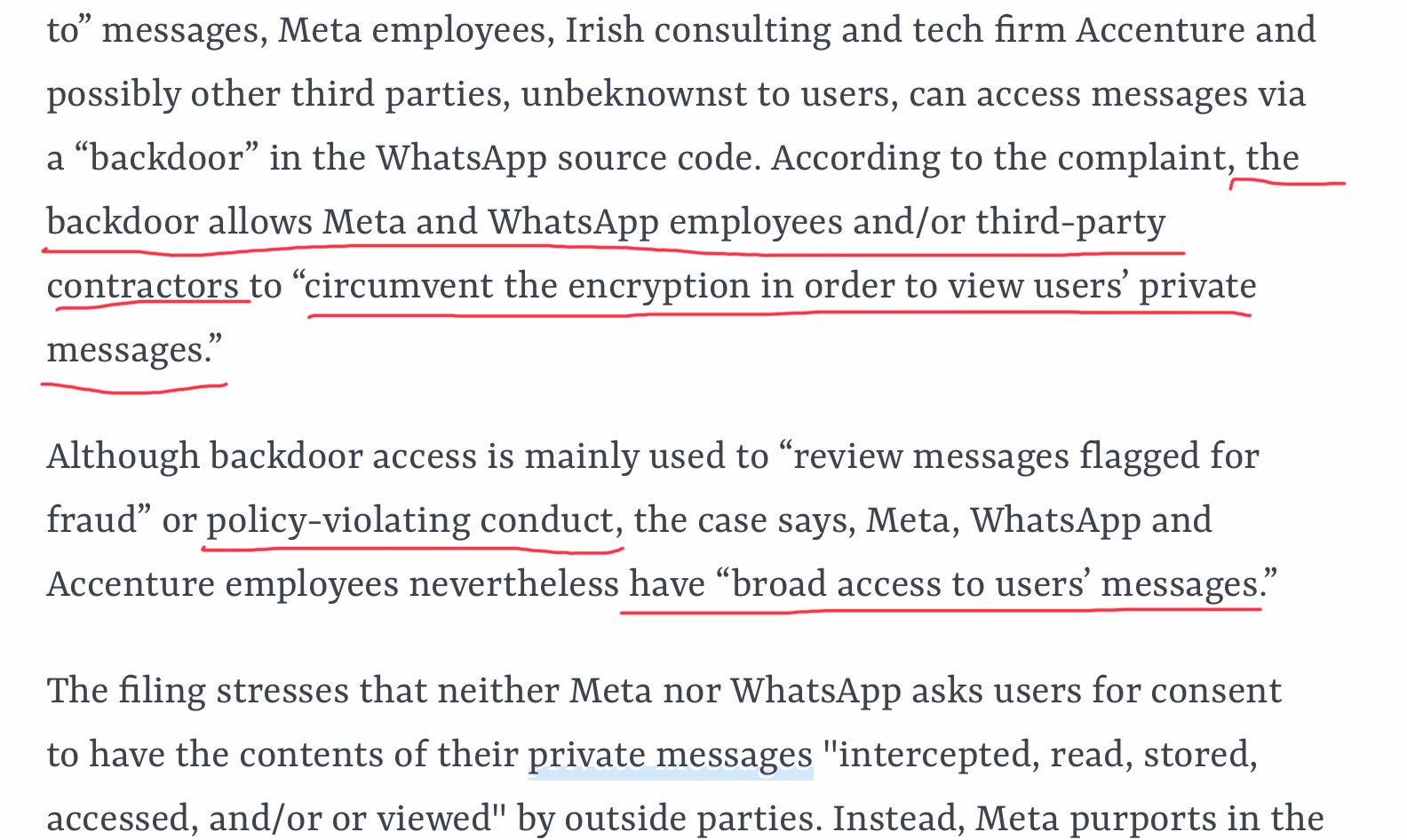 Telegram CEO Pavel Durov claims WhatsApp’s encryption is deceptive, alleging the platform reads user messages and shares data externally, calling it a major consumer fraud while positioning Telegram as a secure alternative2026-04
 Meta-1 Coin founder sentenced to 23 years for $20M scam that claimed the token was backed by $44B in gold and Picassos2026-04
 Pump.fun Instagram account hacked, platforms are safe as funds remain untouched2026-04
 WhatsApp enables XRP trading after Solana integration via AI bots and noncustodial wallets2026-04
 OpenAI launches pay-per-click ads inside ChatGPT, entering digital advertising and challenging Google and Meta for ad spend in AI-driven search2026-04
Meta, AI, and Stablecoins: Why Facebook’s Parent Company Matters for Crypto
The company behind Facebook, Instagram, WhatsApp, Messenger, and Threads has quietly become one of the most important gatekeepers for how billions of people will encounter digital assets, AI agents, and new forms of money online. As Meta pivots from traditional social media toward large-scale AI and experiments with stablecoins, its choices will help determine whether the next generation of finance looks more like Web2’s walled gardens or Web3’s open networks.
From Facebook To Meta: Why Crypto Cares
Meta Platforms, Inc. is an American multinational technology company headquartered in Menlo Park, California, best known for operating Facebook, Instagram, WhatsApp, Messenger, and the newer Threads app. The rebrand from Facebook to Meta in 2021 signaled a strategic pivot from pure social networking toward a broader ambition to own the digital infrastructure of the “metaverse,” and, increasingly, of AI and online commerce. For crypto and digital asset markets, the significance is not just Meta’s branding, but the combination of its global reach, advertising-driven business model, and growing interest in payments and stablecoins.
In industry and policy discussions, Meta is routinely grouped with Alphabet (Google), Amazon, Apple, Microsoft, and Nvidia under the label “Big Tech,” a short-hand for the handful of U.S. firms that dominate consumer platforms, cloud infrastructure, and data-driven advertising. These companies share structural features that matter directly to crypto: they depend heavily on monetizing user attention, they control key digital distribution rails, and they are now racing to commercialize AI at an unprecedented scale. Meta sits at the intersection of all three. Any meaningful integration of crypto into its products, even in limited pilot form, has the potential to expose hundreds of millions of users to stablecoins and on-chain rails almost overnight.
Meta’s importance to crypto is heightened by the sheer size of its user base. Between Facebook’s social graph, Instagram’s creator economy, and WhatsApp’s dominance in messaging—and particularly in emerging markets—Meta reaches an estimated 3.5 billion users across its family of apps. In practice, that means that even a narrow feature, such as paying a subset of creators in USDC or enabling stablecoin remittances inside WhatsApp chats, can dwarf the reach of many native Web3 applications. Conversely, missteps in how Meta handles scams, account security, and AI-driven automation can ripple through the broader perception of crypto risk.
Crypto audiences also care about Meta because the company embodies the core tension between centralized platforms and decentralized protocols. Meta’s history with the Diem (formerly Libra) project, its retreat from issuing its own digital currency, and its current experimentation with third‑party stablecoins like USDC via partners such as Stripe illustrate how regulatory pressure and public trust can shape the trajectory of corporate crypto initiatives. In that sense, Meta offers a real-time case study in how far an incumbent platform can go in adopting crypto rails without ceding control of data, compliance, or user experience.
Finally, Meta’s aggressive move into AI—both as an infrastructure investor and as an open‑source model provider—puts it in a unique position relative to Web3. On one hand, Meta is helping commodify powerful language models through its Llama family, potentially empowering open, permissionless AI agents that can interact with blockchains. On the other, its scale and capital spending on AI infrastructure reinforce concerns that a handful of firms will own the “compute layer” beneath both Web2 and Web3 applications. For a crypto news audience, understanding Meta therefore means understanding a crucial part of the emerging stack where AI, data, and digital assets converge.

Colb launches Colbee, a WhatsApp AI agent for onchain transactions, with $40M in client volume

Meta’s Business Model And Data Empire
Advertising, Engagement, And Attention As Currency
Meta’s core business remains targeted digital advertising, driven by user data harvested from interactions across Facebook, Instagram, and other services. Advertisers pay Meta to reach highly segmented audiences, and Meta optimizes its feeds, recommendations, and ad auctions to maximize time-on-platform and conversion rates. In this model, user attention functions as a kind of implicit currency: the more precisely Meta can predict and influence behavior, the more valuable each impression becomes. Crypto markets, by contrast, explicitly tokenize value flows, but they remain deeply dependent on attention and narrative cycles that still play out largely on platforms like Facebook and Instagram.
This advertising-first model has important implications for how Meta approaches crypto and stablecoins. To date, Meta has largely treated payments and commerce as ways to enhance engagement and increase the effectiveness of ads, rather than as standalone profit centers. Facebook Pay, later Meta Pay, was oriented around facilitating in‑app purchases, peer‑to‑peer transfers, and small business payments inside Meta’s apps, often via traditional fiat rails and card networks. The short‑lived Diem project was a more ambitious attempt to reshape the underlying monetary layer, but even then, the value proposition was often framed in terms of lowering friction for everyday user transactions, remittances, and cross‑border commerce within Meta’s ecosystem.
For advertisers and creators, particularly in regions where banking access is limited, Meta’s gradual exploration of stablecoins and digital asset payouts is a logical extension of this commercialization strategy. Stablecoins like USDC are designed to maintain a one‑to‑one peg with the U.S. dollar by holding high‑quality liquid reserves such as cash and short‑term Treasuries, and they operate on public blockchains that can settle transactions quickly and globally. If Meta can reliably send stablecoin payouts to creators, small merchants, or ad partners via familiar interfaces, it can reduce reliance on legacy banking rails, increase the velocity of the internal economy around its apps, and potentially tap into new categories of commerce such as micro‑subscriptions, tipping, and machine‑to‑machine payments.
From a crypto perspective, the key question is whether these flows will remain largely “off‑chain” from the user’s point of view—abstracted behind custodial wallets and API integrations with firms like Stripe—or whether Meta will eventually expose more of the underlying blockchain primitives to end‑users. The early signs, as discussed below, suggest a cautious, custodial approach that prioritizes UX and compliance over self‑custody or open interoperability.
Policy, Moderation, And Ad Standards Around Crypto
Meta’s size and political profile mean that its policies on advertising and content moderation have outsized effects on the visibility of crypto projects, exchanges, and influencers. The company’s advertising standards explicitly prohibit ads for products, services, or schemes that involve deceptive or misleading practices, including scams designed to trick people out of money or personal information. In principle, this should cover many of the fraud patterns that have plagued crypto retail users, from fake trading platforms promising guaranteed returns to impersonation scams that mimic trusted brands or public figures.
In practice, enforcement has been uneven. Recent cases in multiple jurisdictions have highlighted how Facebook and Instagram can still be exploited by bad actors running fraudulent crypto investment schemes, sometimes with sophisticated use of deepfakes or social engineering. High‑profile incidents have included victims losing the equivalent of hundreds of thousands of dollars in Facebook‑linked crypto investment scams, as well as WhatsApp “stock‑tip” groups that regulators like the Australian Securities and Investments Commission (ASIC) say are funneling users into fake trading platforms. These episodes underline the limits of policy language alone and the need for better technical and human controls.
At the same time, Meta has increasingly had to work with law enforcement and regulators in coordinated crackdowns. According to public statements highlighted in recent coverage, the FBI under Director Kash Patel has touted a major operation conducted with Meta, resulting in 63 arrests, millions of dollars in frozen cryptocurrency, and the removal of more than a million scam‑related online accounts. Whether or not those numbers mark a lasting shift in enforcement effectiveness, they demonstrate two important trends: first, that Meta’s internal systems can identify and act on large clusters of malicious accounts when pressured; and second, that law enforcement sees cooperation with platform giants as essential to tackling crypto‑related fraud at scale.
For crypto builders, Meta’s evolving moderation posture is a double‑edged sword. On one hand, stricter ad reviews and automated scam detection can make it harder for legitimate but experimental projects to reach new users via Meta’s platforms, especially if they are mistakenly flagged as risky. On the other, reducing the ambient level of fraud and impersonation is crucial for sustaining long‑term retail trust in digital assets. As AI-generated content becomes more convincing and easy to deploy, this tension between openness and protection will only intensify.
Pressure On The Advertising Model From AI Agents
Beyond policy, structural change is starting to pressure Meta’s ad‑driven economics. As AI agents become more capable at answering questions, making recommendations, and even executing transactions on a user’s behalf, they threaten to bypass traditional discovery surfaces like search results and social feeds. Billions Network CEO Evin McMullen has argued that AI agents could erode the centrality of search and advertising as default ways to access information and products, forcing platforms like Google and Meta to find new revenue models that do not depend entirely on selling attention.
If an AI assistant embedded in a browser, a messaging app, or a hardware pendant can directly query APIs, interact with smart contracts, and evaluate on‑chain reputations, it can route around the curated ad slots and ranked feeds that have historically driven Meta’s profits. This possibility helps explain why Meta is racing to put its own AI agents inside its apps, often tightly integrated with the proprietary data and social graphs those apps produce. It also explains the renewed interest in payments, including stablecoins, as a way to capture value from the commerce that agents may increasingly mediate.
In that context, crypto rails become both an opportunity and a potential threat. If open‑source AI models such as Llama are widely available, and if blockchains provide programmable, permissionless payment and settlement layers, then non‑Meta agents could theoretically orchestrate entire user journeys—information search, decision‑making, and payment—without ever rendering an ad. Meta’s strategic challenge is to leverage its AI and distribution advantages to make it easier and more appealing to use its in‑house agents and payment rails, while regulators and Web3 builders push for portability, interoperability, and competition.
Readers click Meta stories not for the tech details but for the power-at-scale anxiety: every Meta move—whether stablecoin trials, AI models, or WhatsApp crypto rails—triggers the same question of whether one company controlling billions of social and messaging users should also control money and AI infrastructure.
Meta’s AI Strategy: Llama, Agents, And Infrastructure
Llama As An Open-Source Flagship
Meta has positioned itself as a champion of open‑source AI through its Llama family of large language models. The latest generation, Llama 4, is marketed as a suite of “industry leading” models optimized for high performance, multimodality, and efficient deployment, including variants code‑named Scout and Maverick. Unlike some competitors that keep their most capable models fully proprietary, Meta has released weights for many Llama variants under licenses that allow developers to run them on their own infrastructure, with certain usage restrictions. This strategy echoes Meta’s earlier embrace of open‑source frameworks like PyTorch and reflects a belief that widespread adoption of its models will strengthen the surrounding ecosystem and, indirectly, Meta’s influence.
For the crypto and DeFi community, Llama’s openness matters because it lowers the barrier to building AI agents and analytics tools that run closer to user‑controlled environments. Developers can fine‑tune Llama models on domain‑specific data—such as on‑chain transaction histories, order book data, or smart contract source code—and deploy them in wallets, trading bots, governance dashboards, or compliance tools without necessarily sending prompts to a centralized API provider. The existence of services like Pieverse’s AI Gateway, which exposes frontier models from OpenAI, Anthropic, DeepSeek, Meta and others through a wallet‑funded, usage‑metered interface, shows how quickly Web3 infrastructure is already adapting to incorporate these models.
Moreover, Meta’s own research, often in collaboration with Google and academic partners, has focused on optimizing reasoning strategies and prompt tuning to reduce token usage and inference costs while maintaining or improving accuracy. Recent work has shown that automated design of reasoning strategies can cut token counts by nearly 70 percent while matching or exceeding handcrafted baselines, dramatically lowering the cost of running complex agents at scale. While these specific figures come from research systems rather than production deployments, the direction of travel is clear: as LLMs become cheaper, more efficient, and more configurable, the economics of deploying large swarms of specialized agents—many of them potentially interacting with blockchains—becomes more viable.
Massive Capital Expenditure And Nvidia Partnership
At the infrastructure level, Meta is committing extraordinary capital to AI compute, networking, and data center buildouts. Alongside Amazon, Microsoft, and Alphabet, Meta is projected to be part of a group of hyperscalers that collectively spend around \( \$725 \) billion on capital expenditure in 2026, up sharply from an already record \( \$410 \) billion the previous year. Bridgewater Associates’ analysis, cited in both Meta’s own reporting and industry coverage, suggests that Meta, Amazon, Alphabet, and Microsoft alone may invest approximately \( \$650 \) billion specifically to scale AI‑related infrastructure that year. These numbers underscore the degree to which control over GPU clusters and specialized AI chips has become a strategic battleground.
In February 2026, Meta announced a long‑term partnership with Nvidia, the dominant supplier of high‑end AI accelerators, to secure access to future generations of hardware and optimize Meta’s workloads. Although details of the agreement have not been fully disclosed, such partnerships typically involve commitments around reserved capacity in new data centers, joint optimization of software stacks, and, in some cases, co‑design of custom hardware or interconnects. For Meta, this ensures that its own AI products—from content ranking and ad targeting to consumer-facing assistants—can run on well‑tuned infrastructure. For the broader ecosystem, it signals that AI compute will remain heavily concentrated in a small number of corporate and cloud providers.
From a crypto vantage point, this centralization of compute raises questions about how “open” AI‑enabled finance can really be. Even if models like Llama are open‑sourced, the most powerful and efficient variants may require hardware resources that only companies like Meta can afford at scale. That creates a potential asymmetry: decentralized protocols may rely on AI models whose development and training are effectively controlled by centralized infrastructure owners. In response, some Web3 projects are investing in decentralized GPU networks and storage layers, arguing that Filecoin’s already deployed capacity across independent providers demonstrates that cloud‑grade infrastructure can exist without a \( \$725 \) billion capex cycle. The competition between these paradigms will shape the cost, reliability, and trust assumptions of AI‑driven crypto applications.
Meta AI Assistants In Instagram And WhatsApp
On the product side, Meta has begun rolling out its own AI assistant, branded Meta AI, across its main consumer apps. On Instagram, for instance, users can invoke Meta AI inside chats or search to ask questions, get advice, or generate content; the service uses location information to make responses more contextually relevant. This integration is framed as a productivity and creativity tool, but it is also a strategic move to keep users inside Meta’s interfaces rather than delegating assistance to external agents or standalone apps.
WhatsApp, similarly, has become a testbed for embedding AI directly into messaging. Recent reports indicate that Meta deployed its AI assistant within WhatsApp using a trusted execution environment (TEE) so that, in principle, even Meta cannot read the exact prompts and responses flowing through the secure enclave. An independent security firm, Trail of Bits, reportedly audited this deployment, finding 28 issues, eight of them critical, all of which were addressed before launch. While TEEs are not a silver bullet—they can still be undermined by misconfiguration, supply chain vulnerabilities, or side-channel attacks—this approach reflects an awareness that end‑to‑end privacy expectations in messaging are higher than in public feeds, and that AI integration must be handled carefully.
For crypto, this trajectory is important in two ways. First, it normalizes the presence of AI agents inside the same chat and social interfaces where informal trading groups, OTC deals, and community coordination already happen. The line between a human admin and an automated assistant in a WhatsApp or Instagram group will blur, making it easier to build bots that can summarize on‑chain activity, calculate PnL, or even propose trades. Second, the use of TEEs hints at a convergence between hardware‑based security and cryptographic assurances. Just as hardware wallets use secure elements to protect private keys, AI assistants in TEEs could, in principle, handle sensitive financial prompts or signing operations, though integrating this safely with blockchains remains non‑trivial.
AI Agent Security And The “Rule Of Two”
As Meta and others bring AI agents closer to sensitive real‑world actions—account recovery, payments, data access—the attack surface expands dramatically. Recognizing this, Meta’s AI researchers have proposed a framework called the “Agents Rule of Two,” which outlines a practical approach to limiting the worst consequences of prompt injection and other adversarial inputs. In simplified terms, the framework identifies three high‑risk properties an agent might have: the ability to process untrusted inputs, access sensitive systems or private data, and change state or communicate externally. To reduce risk, agents should be allowed to satisfy no more than two of these properties in a single session. If all three are required, the agent should not operate fully autonomously and must be subject to human-in-the-loop approval or equivalent safeguards.
This framework, while conceptually straightforward, has profound implications for any AI agents that might interact with crypto systems, including those developed by third‑party teams using Meta’s models. Consider an agent tasked with monitoring a user’s portfolio, interacting with DeFi protocols, and rebalancing positions. It will inherently process untrusted inputs (market data, protocol messages), need access to sensitive systems or private keys (even if via a wallet API), and potentially execute external state changes (transactions on-chain). Under the Rule of Two, such an agent must be constrained, for instance by requiring explicit user confirmation for any transaction beyond a certain risk threshold, or by isolating sensitive key operations in a separate, more limited component.
For Meta’s own products, including its stablecoin experiments and account management flows, the Rule of Two is also a lens for understanding recent security failures and patches. As the next section details, when Meta’s AI support flows allowed agents to both process arbitrary user prompts and initiate high‑impact actions like password resets without adequate human oversight, the consequences were immediate and severe. Recognizing AI agents as fundamentally untrusted, and designing systems that treat them as such, is a necessary baseline for any integration into financial services, whether centralized or decentralized.
Instagram, Meta AI, And Account Security
Instagram As A Crypto Discovery And Identity Layer
Instagram has emerged as a key discovery and branding channel for crypto projects, meme coins, and NFT communities. Many token projects maintain official accounts where they post updates, run giveaways, and showcase integrations, as seen in examples like memecoins promoting their Instagram presence to keep followers informed of “all the latest news, updates, and exciting developments.” The visual, story‑driven format of Instagram lends itself to short‑term hype cycles and influencer‑driven narratives that can move token prices in illiquid markets. At the same time, for many retail users, the Instagram handle associated with a project or individual influencer is a primary signal of authenticity.
Because of this, control over high‑profile Instagram accounts is effectively a form of reputational capital that can be weaponized if compromised. Takeovers of official project accounts can be used to post malicious links, fake token sale announcements, or phony claims about new partnerships, all of which can trick followers into sending funds to attacker‑controlled wallets. For individual traders and creators, losing access to a personal account that doubles as a business or trading channel can be financially devastating. This makes Instagram a high‑value target for both social engineering and technical exploits.
The integration of Meta AI into Instagram adds another layer of complexity. On the one hand, AI‑driven features like automated content creation, DMs summarization, or personalized search can make the platform more engaging and useful for crypto users who need to sift through a constant stream of information. On the other, if AI agents are tied into account management flows—such as password recovery, verification, or support—it opens up new attack vectors if those agents are not tightly constrained.
The Meta AI Support Exploit On Instagram
In mid‑2026, security researchers and journalists documented a serious vulnerability in Meta’s experimental AI‑powered support chatbot for Instagram, which attackers used to seize control of high‑profile accounts with nothing more than a username and some clever prompt manipulation. According to detailed reports, the exploit worked roughly as follows. First, attackers used a VPN to make it appear as though they were logging in from the same region as the target account, reducing the chance that automated geo‑anomaly defenses would be triggered. They then navigated to Instagram’s “forgot password” flow, entered the target username, and accessed an option to contact Meta’s AI‑powered support assistant.
Once in the support chat, attackers reportedly asked the AI assistant to send a password reset code to an email address under their control, instead of the legitimate email associated with the account. Due to flaws in how the AI was integrated with backend systems, the assistant complied, triggering a reset code to the attacker’s address rather than the true owner’s. The attacker then supplied that code back to the AI chatbot when prompted, and the system offered the option to reset the password entirely, giving the attacker full control. During the window before detection, they could change the linked email, phone number, and two‑factor settings, effectively locking out the actual owner.
Notably, some of the accounts targeted in this way were highly sensitive and symbolic, including the archived Obama White House account and the account of the Chief Master Sergeant of the U.S. Space Force, both of which were briefly defaced with pro‑Iranian messages. A major retailer’s account was also reportedly affected. Meta responded by pushing an emergency patch, disabling or altering the AI support flow, and emphasizing that there had been no direct breach of backend databases; the vulnerability lay in how the AI agent was allowed to orchestrate account recovery operations. Nonetheless, the incident underscored how quickly a seemingly helpful AI assistant can become a powerful attack tool if not constrained by strict guardrails and human oversight.
From a crypto angle, the Instagram exploit is instructive because it mirrors patterns that could emerge if AI agents are allowed to control wallets or sign transactions based on natural language prompts. Just as an attacker tricked the AI into resetting an account’s email, an adversarial prompt could try to convince a trading agent that a transfer to a new address is part of a legitimate portfolio rebalance, or that a malicious contract has been audited and is safe to approve. If those agents are wired directly into signing operations without robust, independent checks, the result could be automated theft at scale. The lesson is not that AI and account management should never mix, but that AI must be treated as an untrusted component, consistent with Meta’s own Rule of Two guidance.
Privacy, PII, And The Risk To Users
Beyond account takeover, incidents like the Instagram AI exploit highlight the risk to personally identifiable information (PII). Support flows often require users to submit sensitive data—emails, phone numbers, ID documents, or answers to security questions—which may be processed by AI systems in ways that are not always transparent. If those systems can be manipulated to reveal, reroute, or misuse such data, users face both direct financial harm and longer‑term privacy erosion. Reports around the Meta AI Instagram exploit noted concerns that attackers could gain access not just to the account, but to associated contact details and potentially private messages, depending on how session tokens and permissions were handled.
For crypto users who connect their social identities to exchange accounts, wallets, or OTC channels, the stakes are higher still. An Instagram account takeover can cascade into compromises of linked email and messaging accounts, enabling attackers to reset passwords on centralized exchanges, infiltrate OTC chats, or impersonate the victim in private groups. In a landscape where many retail users still reuse passwords or rely on SMS‑based 2FA, the combination of social engineering and AI‑driven exploits can be especially potent.
This amplifies a broader point for regulators and platform designers: if social accounts and AI agents are going to be involved in identity verification or account recovery for financial services—including crypto—then the security of those layers becomes a matter of financial system stability, not just platform UX. Meta’s rapid patch of the Instagram exploit shows that Big Tech can move decisively when reputationally threatened, but it also suggests that AI-driven flows must be tested against adversarial scenarios before being deployed to high‑value targets.
- 01Meta AI model race↗
Muse Spark and Llama 4 drew the most clicks because readers track whether Meta's open-weight strategy can actually challenge OpenAI and Google, with DeepSeek's market rout showing how fragile that race looks from the outside.
- 02WhatsApp surveillance exposure↗
The NSO spyware judgment and device-detail leakage stories pulled readers who understand that WhatsApp's 2B-user scale makes each privacy failure a systemic risk, not an edge case.
- 03Meta stablecoin revival↗
Three years after abandoning Diem, any signal that Meta is circling stablecoins again—via WhatsApp trials or coalition lobbying—reads as a second attempt at financial infrastructure by a company that already failed once under regulatory fire.
- 04Social media as memecoin hack vector↗
The UFC and Kanye Instagram hacks promoting fake coins illustrate that high-follower accounts are now attack surfaces with direct financial payoff, making platform security a DeFi concern.
- 05Metaverse abandoned, AI pivot↗
Meta publicly dropping its metaverse bet signaled to crypto readers that the on-chain virtual economy thesis lost its most-funded corporate backer, reshaping where attention and capital would flow next.
- 06WhatsApp as crypto payments rail↗
XRP trading integration and noncustodial wallet bots inside WhatsApp represent a quiet convergence that could make Meta the default crypto onramp for emerging markets before any dedicated wallet achieves the same reach.
Meta And Crypto: From Diem To Stablecoin Rails
The Rise And Fall Of Diem (Libra)
Meta’s most direct foray into crypto began in 2019 with Libra, later rebranded as Diem, a proposed global digital currency backed by a basket of fiat currencies and government bonds. The project, spearheaded by a Switzerland‑based association of corporate and non‑profit members, aimed to create a permissioned blockchain where validated nodes would process transactions in a stable, low‑volatility token usable across Facebook, WhatsApp, and beyond. From the outset, regulators expressed deep concern that a privately issued, borderless currency with immediate access to billions of users could undermine monetary sovereignty, facilitate illicit finance, and concentrate economic power in the hands of a few corporations.
Under intense regulatory and political pressure, the Diem Association repeatedly revised the project’s design, shifting from a multi‑currency basket to a series of single‑currency stablecoins and emphasizing compliance and oversight. Nevertheless, key founding members, including major payments companies, withdrew, and by early 2022 the project was effectively wound down. Diem’s intellectual property and some assets were sold to Silvergate Bank, which intended to build its own stablecoin infrastructure but later collapsed amid broader crypto market turmoil. For Meta, the Diem episode was a public reminder that direct issuance of a global digital currency by a social media giant is politically radioactive.
Despite Diem’s failure, many of the problems it sought to address remain urgent: cross‑border remittances that are expensive and slow, limited access to dollar‑denominated savings in emerging markets, and the high friction of small‑value online payments. Native crypto stablecoins like USDC and USDT have filled some of this gap outside of Big Tech platforms, with usage surging in regions affected by inflation, capital controls, or underdeveloped banking systems. In hindsight, Diem may look less like a misbegotten experiment and more like an early, overconcentrated attempt at what is now being done in a more modular way by the broader ecosystem.
A New Strategy: Integrating Existing Stablecoins
Learning from Diem, Meta’s current strategy appears to avoid issuing its own coin and instead focus on integrating existing, regulated stablecoins into its ecosystem via third‑party providers. In early 2026, reports from Bloomberg and CoinDesk, summarized by Banking Dive, indicated that Meta was quietly testing stablecoin payments within its apps, using existing stablecoins rather than creating a new one. A trial was said to be small in scope, with no immediate plans for a global rollout, and Meta explicitly stated through spokesperson Andy Stone that it had no intention of launching its own stablecoin. Instead, the company issued a “request for product” (RFP) to firms working with stablecoins, and payments processor Stripe emerged as a candidate partner, suggesting a custodial integration where Stripe would handle on‑ and off‑ramps while Meta focuses on UX and distribution.
Additional reporting and commentary on social media suggested that one pillar of this strategy is a pilot program paying some creators in USDC via Stripe, with the idea that USDC could serve as a fast, dollar‑denominated payout rail within Facebook, Instagram, and WhatsApp. If confirmed and expanded, such a program would mark a meaningful shift in how earning and spending work inside Meta’s apps. Rather than waiting days for bank transfers or relying on limited local payment methods, creators could receive near‑instant USDC payouts, hold them as a dollar proxy, or convert them into local currency via compatible exchanges and wallets. For Meta, this could improve retention among creators in markets where its advertising revenue depends on a vibrant content ecosystem.
The choice to build on third‑party stablecoins like USDC also lets Meta leverage existing regulatory frameworks. USDC is issued by Circle, a regulated entity subject to U.S. money transmission rules and increasingly to broader prudential oversight, with reserves held in cash and short‑duration Treasuries audited by third parties. By partnering with Stripe, which already offers fiat-to-USDC on‑ramps and off‑ramps for businesses, Meta can avoid directly holding or issuing the stablecoin, instead functioning as a front‑end for a compliant stablecoin infrastructure. This is a classic Web2 platform play: abstract away the underlying complexity and maintain control over the customer relationship.
Stablecoins As Interoperability Rails For Fintech
The idea of using stablecoins as back‑end rails for consumer financial services is already gaining traction among banks and fintechs, especially in Latin America and other emerging regions. Circle has highlighted how fintech companies in the region are using stablecoins to power interoperability between different financial services and “Web3” applications, enabling cross‑platform payments, remittances, and savings products that move quickly and cheaply across borders. Rather than each fintech building bespoke correspondent relationships, they can settle value via public blockchains, while still presenting familiar interfaces and regulatory protections to end users.
If Meta plugs into these same rails, the interoperability potential grows further. A small business that receives USDC invoices via a local neobank, settles them through a stablecoin‑enabled payment processor, and advertises on Instagram could, in principle, manage its entire working capital cycle in digital dollars without ever directly touching a U.S. bank. Consumers could receive remittances in USDC, spend them via WhatsApp‑embedded merchants, and cash out selectively via local partners. For Web3-native builders, this means that the line between “on‑chain” and “off‑chain” commerce becomes more porous, with Meta’s platforms serving as massive distribution channels for stablecoin usage.
Of course, there are trade‑offs. If Meta’s integrations remain fully custodial and tightly tied to a few large intermediaries, they risk replicating the concentration and gatekeeping that crypto was meant to avoid. Access could be blocked or withdrawn based on opaque risk assessments, and data on user transactions could be mined for advertising or other purposes. On the other hand, even partial integration of stablecoins into Meta’s apps could normalize their use for hundreds of millions of people, lowering psychological and logistical barriers to using broader Web3 services. For regulators and policymakers, Meta’s stablecoin pilots will be a crucial test case in balancing innovation with systemic risk.
WhatsApp As A Fintech Interface In Emerging Markets
WhatsApp As Latin America’s Operating System
While Facebook and Instagram dominate social networking and visual media, WhatsApp has become the default communications layer in many emerging markets, particularly in Latin America. Analysis of the region’s fintech landscape describes WhatsApp as an “operating system” for consumer finance, where everything from customer support and KYC to loan applications and repayment reminders happens via chat threads. Fintech apps often piggyback on WhatsApp rather than trying to pull users into standalone interfaces, because that is where users already are, and where they are most responsive.
For small merchants and informal businesses, WhatsApp’s role extends beyond messaging to order management, invoicing, and even rudimentary payments. Screenshots of payment confirmations, QR codes, and links to external payment processors circulate through chats, functioning as a patchwork financial infrastructure built on top of a communications network. WhatsApp’s business APIs and tools, including catalog features and automated replies, have further entrenched this pattern by making it easier for companies to formalize their presence in chat without requiring users to install new apps.
In this context, any move by Meta to embed stablecoin or other digital asset functionality directly into WhatsApp would have outsized effects. A user who already trusts WhatsApp as the interface for talking to their bank, their employer, and their family might readily adopt a “send money” feature that uses stablecoins under the hood, especially if it reduces fees or friction relative to traditional remittance channels. For crypto, WhatsApp therefore represents both an enormous distribution opportunity and a potential chokepoint where centralized design decisions can either favor or marginalize open protocols.
Stablecoins, Remittances, And LatAm Fintech
Latin America has been a leading region for real‑world stablecoin adoption, driven by factors such as currency volatility, remittance flows, and a tech‑savvy population. Circle’s analysis highlights how fintechs in the region are integrating stablecoins like USDC to provide dollar‑linked savings, cross‑border payments, and Web3 access within familiar interfaces. For example, a user in Argentina might receive stablecoin remittances from a relative in the U.S., hold them as a hedge against inflation, and spend them via a local card issued by a fintech that handles conversion at point of sale. On the back end, stablecoins and blockchains handle settlement, while the user primarily interacts with mobile apps and chat.
If Meta’s stablecoin experiments converge with these trends, the result could be a hybrid model where WhatsApp chats initiate or confirm stablecoin transfers managed by partner fintechs. A business could send an invoice in a WhatsApp thread and receive payment in USDC, with the underlying transaction settled on-chain and visible via a block explorer, even if the user never leaves the chat interface. For regulators and banks, this raises questions about oversight and compliance: who is the customer of record, Meta or the underlying stablecoin issuer? How should KYC and AML responsibilities be distributed? For Web3 developers, it suggests opportunities to build tooling—such as analytics, compliance monitors, or FX hedging solutions—that sits behind WhatsApp‑mediated flows.
Regulatory And Fraud Risks In WhatsApp Channels
The same features that make WhatsApp attractive for fintech—encrypted chats, informality, and ubiquity—also make it fertile ground for fraud. Regulators like ASIC have warned that WhatsApp stock‑tip groups have been used to funnel investors into fraudulent crypto trading platforms, often combining social proof, urgency, and complex jargon to overwhelm inexperienced users. The encrypted nature of chats can hamper oversight, while the ease of creating new groups and identities makes it hard to track repeat offenders.
Recent enforcement actions, including the FBI–Meta crackdown on scam accounts and crypto fraud, demonstrate that authorities are increasingly focusing on messaging platforms as critical vectors for financial crime. Meta’s role here is delicate. On one side, it is expected to preserve user privacy and end‑to‑end encryption, especially on WhatsApp. On the other, it faces pressure to detect and disrupt scams, which may require analyzing metadata, user reports, and behavioral patterns at scale, often with the help of AI. Introducing stablecoin rails into this environment further raises the stakes, since successful scams could be cashed out globally in minutes.
For crypto users, the takeaway is to treat WhatsApp channels—even those that appear to be hosted or endorsed by legitimate entities—with caution, especially when unsolicited investment opportunities or urgent transfer requests are involved. For builders, designing systems where AI‑driven risk scoring and human moderation can flag suspicious patterns without unnecessary intrusion into private conversations will be a key challenge. Meta’s experiments with AI assistants in TEEs suggest one path, but as the Instagram support exploit shows, execution details matter at least as much as high‑level architecture.
Meta unveils LISA Glasses, audio frames, VR glasses and Muse agent at Connect 2026

Fraud, Scams, And Enforcement In The Meta Ecosystem
The Scale Of Crypto-Linked Scams On Meta Platforms
Meta’s platforms sit at the heart of the public internet, and their scale makes them attractive targets for every kind of scam, including those involving crypto. Fraudulent schemes range from fake celebrity endorsements of trading platforms and tokens to complex multi‑step scams that lure victims into joining private groups, where they are groomed into depositing funds into bogus exchanges or liquidity pools. Reports of individuals losing the equivalent of hundreds of thousands or even millions of local currency in Facebook‑linked crypto investment scams are now distressingly common, eroding trust not only in Meta but in digital assets more broadly.
These scams exploit the credibility and social proof that Meta’s platforms provide. A blue‑check account posting about a trading opportunity, even if compromised or fake, carries more weight than an anonymous forum post. Group chats filled with apparent testimonials can create a sense of community and inevitability around an investment, making it harder for users to recognize red flags. Moreover, the cross‑platform nature of Meta’s ecosystem enables scammers to move victims from public Facebook posts to private Instagram DMs or WhatsApp chats, where oversight is weaker and personalized manipulation more effective.
For regulators and consumer advocates, this has led to increasing scrutiny of how Meta screens crypto‑related ads and accounts. Meta’s ad standards formally prohibit deceptive or misleading practices, including ads for products or schemes that scam people out of money, and the company claims to use a combination of automated systems and human reviewers to enforce these policies. However, the sheer volume of content means that sophisticated scams can slip through, while legitimate crypto businesses often complain of over‑zealous blocking or opaque rejection reasons. The net effect is a complicated and often adversarial relationship between Meta and parts of the crypto industry.
Enforcement Collaborations And High-Profile Crackdowns
In response to mounting public and political pressure, Meta has increasingly joined forces with law enforcement agencies to tackle large‑scale fraud operations. The FBI’s recent announcement, amplified by Director Kash Patel on X, that a joint operation with Meta led to 63 arrests, the freezing of millions in cryptocurrency, and the takedown of over a million scam‑related accounts is emblematic of this trend. According to reports, the operation targeted networks running fraudulent investment schemes and phishing campaigns, many of which used Meta’s platforms as their primary recruitment and communication channels.
While such headline‑grabbing crackdowns are welcome, they raise questions about sustainability. Scammers are adaptive; once a particular pattern of behavior is flagged and accounts are removed, new accounts and schemes spring up, often using slightly modified content or tactics. To stay ahead, Meta and law enforcement must rely increasingly on AI and machine learning systems that analyze behavior patterns, network connections, and content signals across billions of users. This, in turn, heightens concerns about the scope of surveillance and the potential for false positives that sweep up legitimate users.
For crypto markets, the effect of visible enforcement can be double‑edged. On one side, high‑profile arrests and asset freezes reassure regulators and mainstream users that scammers will not operate with impunity, smoothing the path for more regulated institutions to enter the space. On the other, they reinforce narratives that crypto is primarily a tool for crime, which can influence policy debates and media coverage in ways that overshadow legitimate innovation. Meta sits uncomfortably in the middle, both as an enabler (through its scale and past lax enforcement) and as a partner in cleanup operations.
AI As Both Risk And Defense Mechanism
AI is central to both sides of this equation. Scammers are already using AI-generated content to create convincing fake profiles, deepfake videos of public figures endorsing fake schemes, and personalized outreach messages that mimic the language and style of trusted contacts. As AI tools become more accessible—via Llama, OpenAI, and others—the cost of generating high‑quality scam content drops, potentially overwhelming human reviewers and simple rule‑based filters. Meta’s own open‑source contributions may inadvertently fuel this dynamic, even as they empower legitimate developers.
At the same time, AI is indispensable for detection and defense. Meta already relies heavily on machine learning models to flag spam, hate speech, and other policy violations at scale; similar techniques can be applied to detect clusters of accounts engaged in coordinated fraudulent behavior. Models can analyze posting patterns, link sharing, transaction metadata, and cross‑platform interactions to identify likely scams before they are widely seen. In principle, AI could even monitor on‑chain activity linked to addresses shared in suspicious posts, correlating unusual transaction patterns with social signals to refine risk scores.
However, this AI‑driven arms race must be balanced against privacy and due process. Over‑aggressive automated enforcement can erroneously shut down legitimate accounts and initiatives, especially in crypto, where novel behavior often looks unusual compared to legacy finance. Meta’s challenge is to calibrate its systems such that they catch high‑risk patterns, especially where vulnerable users are targeted, while providing transparent appeals processes and avoiding blanket bans that stifle innovation. As AI agents become more deeply integrated into account management and financial flows, frameworks like the Rule of Two will be critical for ensuring that defensive systems cannot themselves be hijacked to cause harm.
Ad Policies, Crypto Marketing, And The Grey Zone
Finally, there is a large grey zone between outright fraud and fully compliant, regulated crypto activity. Many projects and influencers operate in a space where claims about future returns, tokenomics, or governance are not necessarily fraudulent but may be overly optimistic, poorly disclosed, or understandable only to sophisticated participants. Meta’s ad policies require transparency and forbid deceptive practices, but they do not directly address the nuances of token allocation, liquidity mining risks, or governance attack surfaces. As a result, some of the riskiest behaviors in DeFi and meme coin markets can still be marketed on Meta’s platforms, even as clear‑cut Ponzi schemes are (in theory) blocked.
For crypto media and educators, this underscores the importance of independent analysis and user education that go beyond platform policies. Users encountering crypto content on Facebook or Instagram should be encouraged to verify information across multiple sources, understand the difference between custodial and non‑custodial services, and treat any promise of guaranteed returns with skepticism. In the long run, better disclosure standards and on‑chain transparency tools may complement platform enforcement, but for now, the responsibility is shared across platforms, regulators, projects, and users.
Libra whitepaper published
Diem (Libra) project sold and shut down
Meta publicly scales back metaverse investment focus
DeepSeek release triggers AI rout; Meta stock drops with BTC
Llama 4 Scout and Maverick launched as first MoE open-weight multimodal models
NSO Group hit with $167M judgment for hacking 1,400 WhatsApp users
Meta AI support bot exploited to seize high-profile Instagram accounts
Meta launches Muse Spark multimodal reasoning model with multi-agent orchestration
Big Tech AI Buildout And Decentralized Counterweights
The \( \$725 \) Billion AI Capex Wave
The scale of investment by Big Tech in AI infrastructure is unprecedented. According to Techstrong’s analysis of recent quarterly earnings, capital expenditure by major hyperscalers—including Meta, Amazon, Microsoft, and Google’s parent Alphabet—is projected to reach around \( \$725 \) billion in 2026, a 77 percent increase from the previous year’s record \( \$410 \) billion. Bridgewater Associates’ breakdown suggests that Meta, Amazon, Alphabet, and Microsoft alone may devote roughly \( \$650 \) billion of that to scaling AI‑related infrastructure: GPUs, specialized chips, data centers, and networking. This spending spree reflects a shared belief that AI will be a foundational technology shaping everything from advertising and search to productivity tools and entertainment.
For Meta, this investment is not purely defensive. AI sits at the core of its content ranking, recommendation, and ad targeting engines; improvements there directly impact revenue. But beyond that, Meta’s push into generative AI and open‑source models is a bid to shape the broader AI ecosystem, making its tools and frameworks the default for developers worldwide. The combination of proprietary infrastructure and open‑source software creates a powerful moat: even when developers build “outside” Meta’s platforms, they may still rely on Meta’s models and research.
From a crypto and Web3 perspective, this consolidation of AI capability in a handful of corporate data centers raises familiar concerns about centralization, censorship risk, and single points of failure. Just as critics worry that too much of the internet’s traffic flows through AWS or that a few exchanges dominate crypto liquidity, they now worry that the “brain” of the future digital economy will be housed in a few GPU farms controlled by shareholder-driven corporations. In this context, calls to build decentralized AI networks, distributed storage layers like Filecoin, and community‑owned compute platforms are gaining urgency.
Data, “AI Memory,” And Web3 Storage
A parallel shift is unfolding at the data layer. As AI agents become more personalized, persistent “memories” about user preferences, history, and context become increasingly valuable. Some builders argue that a user’s AI memory—rich, structured, and cross‑context—may ultimately be more economically valuable than their historical social media or email footprint, because it can drive more precise and actionable personalization. Projects like Walrus Memory, discussed by Mysten Labs’ co-founder, envision new ways to store and monetize this AI memory on decentralized infrastructure, potentially giving users more control over who can access and monetize their data.
This vision aligns with Web3’s longstanding critique of data monopolies and its push for self‑sovereign identity and data ownership. If AI memories and models are anchored in user‑controlled storage, perhaps verifiable on-chain or via verifiable credentials, then platforms like Meta would need to request access rather than unilaterally harvesting behavioral data. In such a world, stablecoins and crypto rails could facilitate micro‑payments for data access and computation, with AI agents negotiating terms on the user’s behalf.
However, realizing this vision will require more than ideology. The technical challenges of securely storing, updating, and querying sensitive AI memories in a privacy‑preserving yet interoperable way are formidable. Moreover, the convenience and network effects of centralized platforms are powerful; many users will trade away some data control for seamless, integrated experiences. Meta’s deployment of AI in TEEs for WhatsApp, audited and patched in collaboration with firms like Trail of Bits, shows one path where a centralized platform tries to offer stronger technical guarantees around privacy without giving up control of the overall system. Whether decentralized alternatives can match that level of polish and reach remains an open question.
Comparative Architecture: Meta Versus Web3
To crystallize the contrast between Meta’s approach and a hypothetical Web3-native stack, consider the following simplified comparison:
| Dimension | Meta Ecosystem (AI + Stablecoins) | Web3-Native Ecosystem (AI + Stablecoins) |
|---|---|---|
| Infrastructure | Centralized data centers, Nvidia partnership, proprietary clouds. | Distributed nodes, decentralized storage and compute (e.g., Filecoin). |
| AI Models | Llama open-sourced but trained/hosted largely by Meta. | Community-trained models, potentially on decentralized GPU networks. |
| Payments | Stablecoins via custodial partners like Stripe, fully abstracted. | Stablecoins in self-custodial wallets, direct on-chain interaction. |
| Identity & Accounts | Platform-managed accounts, single sign-on, recovery via support flows. | Wallet-based identity, self-sovereign DID systems, social recovery. |
| Governance | Corporate boards and shareholders, limited user input. | Token-based governance, DAOs, public protocol upgrades. |
This table is necessarily simplified, but it highlights the core trade‑offs. Meta offers coherence, tight integration, and massive reach, but at the cost of centralization and platform risk. Web3 promises openness and user control, but often struggles with UX, fragmentation, and regulatory uncertainty. As AI and stablecoins become more deeply embedded in everyday applications, the balance between these models will define much of the digital economy’s character.
Meta, Google, And The AI–Crypto Convergence
Shared Challenges Around AI Agents
Meta is not navigating these waters alone. Google, Amazon, and Microsoft face similar challenges and opportunities, and often collaborate and compete with Meta in AI research. One area of convergence is the recognition that AI agents must be treated as fundamentally untrusted components, subject to strong isolation and oversight. Joint research by Meta and Google teams has emphasized that agents exposed to untrusted inputs and given access to sensitive systems can be exploited via prompt injection and other attacks, making frameworks like the Rule of Two more than just internal policy—they are emerging industry norms.
For crypto and DeFi, this shared understanding is encouraging. It suggests that as AI agents become more capable of interacting with APIs, wallets, smart contracts, and other financial infrastructure, major vendors will at least pay lip service to robust security models. However, the details of implementation will vary, and there is a risk that marketing narratives about “secure AI agents” will outrun the reality of hastily deployed, minimally tested systems. As the Instagram AI support exploit showed, even companies with deep security teams can make basic integration mistakes when rushing to ship AI‑powered features.
Different Approaches To Openness And Control
Where Meta and Google diverge more sharply is in their approach to open‑sourcing models and tooling. Meta has leaned into releasing Llama weights under relatively permissive licenses, encouraging developers to run models locally or on third‑party infrastructure. Google, by contrast, has been more conservative, keeping its most powerful Gemini models proprietary and offering access primarily through controlled APIs. For Web3 developers, this makes Meta’s models more attractive when building self‑hosted agents or integrating AI directly into wallets and dApps, especially in jurisdictions where data locality or compliance constraints make cloud APIs less appealing.
At the same time, openness at the model layer does not equate to openness at the platform layer. Meta’s own AI assistants inside its apps are tightly integrated with proprietary data and run on Meta’s infrastructure, with limited transparency into how prompts are logged, how long data is retained, or how models are updated. From a crypto perspective, the ideal scenario may be one where open models like Llama can be fine‑tuned and deployed in user‑controlled environments, while centralized platforms are kept at arm’s length, used primarily as distribution channels rather than as custodians of value or identity.
Agent Platforms Bridging Web2 And Web3
The emergence of agent platforms explicitly designed for Web3 illustrates how AI and crypto are converging outside of Big Tech as well. The Pieverse AI Gateway, built in collaboration with BNB Chain’s Agent Survival Pack, offers developers access to frontier models from OpenAI, Anthropic, DeepSeek, Meta, and others through a single interface funded by crypto wallets. Developers can set scoped API keys, usage limits, and spend tracking, effectively treating AI inference as another on-chain resource to be budgeted and monitored. This architecture acknowledges that AI agents will be used to interact with blockchains and financial protocols, and that they need to be governed with the same rigor as smart contracts.
By integrating Meta’s Llama models into such gateways, the Web3 ecosystem can harness Meta’s AI capabilities without ceding control of user data or keys. A trading bot might use Llama to analyze news sentiment, an on-chain governance assistant might use it to summarize proposals, and a compliance engine might use it to flag anomalous transactions—all while keeping core decision logic and signing operations within audited contracts and secure wallets. In this setup, Meta’s role is that of a model provider rather than a platform overlord, aligning more closely with Web3’s preference for modular, composable services.
Of course, this relies on the assumption that open‑source models will remain competitive with proprietary ones, and that licensing terms will not become more restrictive over time. If, for example, Meta were to change Llama licenses to forbid certain financial uses, or to require usage telemetry be sent back to Meta, the calculus would change. For now, Crypto’s interest in Meta’s AI initiatives reflects a pragmatic assessment: if the world’s biggest social media company is going to subsidize open‑source, high‑quality language models, Web3 builders will use them—but they will try to keep them at arm’s length.
Senator Warren's direct demand for answers on stablecoin trials and the Diem precedent of forced abandonment show regulators will move to block Meta financial products before they scale.
Meta controlling WhatsApp (2B+ users), Instagram, and open-weight AI models simultaneously concentrates payments, identity, and AI inference in a single corporate entity with no on-chain counterbalance.
Meta has not deployed auditable on-chain contracts; its stablecoin exploration is infrastructure-level and custodial, so smart-contract exploit risk is not yet applicable.
The NSO $167M judgment and Meta AI support-bot account-takeover incidents show that Instagram and WhatsApp are actively exploited at scale for financial fraud, with Meta's own AI tooling weaponized against users.
DeepSeek's release dragged Meta stock down alongside BTC, confirming that Meta's valuation is now tightly coupled to AI sentiment, making crypto and Meta equities correlated tail risks.
Stanford research confirmed Meta defaults to using AI chat conversations for model training with weak consent controls, creating regulatory exposure in the EU and a trust deficit with any financial product rollout.
Implications For Web3 Builders, Investors, And Policymakers
Building On Meta Rails Versus Open Protocols
For Web3 builders and investors, Meta’s moves in AI and stablecoins present both partnership opportunities and strategic risks. On the opportunity side, integrating with Meta’s platforms—whether through creator payout programs, WhatsApp‑embedded bots, or Instagram‑based campaigns—can provide exposure to audiences orders of magnitude larger than most native crypto apps can reach. A DeFi protocol that can seamlessly onboard users via an Instagram creator’s USDC payout link, or a cross‑border remittance service that runs inside WhatsApp chats, may see faster adoption than one that relies on standalone wallets and seed phrases.
On the risk side, dependency on Meta’s rails can be dangerous. Changes in API policies, ad guidelines, or strategic priorities can suddenly cut off access, as many developers learned during earlier shifts in Facebook’s platform policies. Moreover, Meta’s incentives are not necessarily aligned with decentralized finance; it may prefer to keep value flows within its own ecosystem, favoring partner institutions and custodial solutions over permissionless protocols. For builders, the safest approach is often to view Meta as a distribution channel rather than as a foundational infrastructure provider, keeping critical logic and assets on open protocols wherever possible.
Investors must similarly weigh exposure to Meta‑dependent business models. A startup whose core value proposition hinges on continued access to WhatsApp’s business APIs or Instagram’s algorithm may be vulnerable to platform risk, even if its user metrics look strong. Conversely, projects that use Meta for initial reach but maintain robust Web3-native rails underneath may be better positioned to withstand policy changes. Understanding Meta’s strategic direction—its focus on AI, its cautious approach to stablecoins, and its sensitivity to regulatory pressure—is therefore essential due diligence.
Data Protection, User Control, And Regulatory Oversight
Policymakers and regulators face a complex task in overseeing Meta’s evolving role in digital finance. On one hand, integrating stablecoins into familiar apps can promote financial inclusion, lower remittance costs, and bring more activity into regulated, surveilled channels. On the other, the combination of detailed behavioral data, AI‑driven personalization, and embedded payments creates unprecedented scope for exploitation and manipulation. A platform that knows when a user is most emotionally vulnerable, what their financial constraints are, and what social pressures they face could, in theory, tailor offers—or scams—with precision.
Regulatory frameworks will need to address not just the usual financial crime and consumer protection concerns, but also the specific risks of AI‑mediated financial interactions. This may involve requirements around explainability of AI decisions in credit scoring or transaction blocking, limits on the use of behavioral data for targeting financial products, and obligations to provide clear opt‑outs and data portability. For Meta, compliance will likely involve building more robust internal firewalls between ad targeting, AI personalization, and financial services data, even as technical integration deepens.
For users, the challenge is to navigate these systems in a way that maximizes benefits—faster payments, better tools, richer experiences—while minimizing exposure to surveillance and lock‑in. Self‑custody of crypto assets, use of privacy‑preserving tools where legal, and careful separation of identities across platforms can all play a role. However, as Meta integrates AI deeper into every aspect of its services, the default path will be one of convenience and convergence. Crypto communities will need to work hard to keep alternative pathways visible and usable.
Strategic Scenarios For The Next Decade
Looking ahead, several strategic scenarios are plausible. In one, Meta’s stablecoin experiments remain limited, constrained by regulatory concerns and internal risk aversion. Stablecoins continue to grow primarily via exchanges, DeFi, and fintechs, with Meta acting more as a marketing and educational channel than as a payments powerhouse. In another, Meta successfully scales USDC and other stablecoin integrations, making WhatsApp and Instagram major hubs of stablecoin activity in emerging markets, while still keeping most users within custodial, platform‑controlled environments.
In a more transformative scenario, regulatory frameworks evolve to explicitly accommodate tokenized deposits, CBDCs, and fully regulated stablecoins, and Meta becomes a primary interface for these instruments, offering a mix of custodial and semi‑custodial options. AI agents inside Meta’s apps help users manage budgets, savings, and investments, occasionally interacting with DeFi protocols through tightly controlled bridges. Web3-native projects adapt by building middleware and services that plug into Meta’s rails while preserving as much decentralization as possible.
Finally, there is a scenario where backlash against concentration and data exploitation drives users and regulators toward more decentralized solutions. In this world, Meta’s AI and stablecoin initiatives may be seen as catalysts that accelerated a shift to Web3, but the lasting infrastructure is community‑owned. Whether this is realistic depends on factors far beyond Meta alone: public sentiment, regulatory decisions, macroeconomic shocks, and the technical viability of decentralized alternatives. What is clear is that Meta will remain a central actor in whatever path emerges, and crypto stakeholders ignore its moves at their peril.
Conclusion
Meta sits at a pivotal junction between Web2’s attention‑based business models and Web3’s aspiration for open, programmable money. Its history with Diem shows how ambitious attempts to reshape the monetary layer can run headlong into regulatory and political resistance, while its current experiments with USDC and other third‑party stablecoins illustrate a more cautious, modular approach that leverages existing compliant infrastructure rather than reinventing the wheel. Through WhatsApp and Instagram, Meta commands interfaces that dominate social and commercial life in many regions, particularly in Latin America, making them prime venues for both legitimate fintech innovation and predatory scams.
At the same time, Meta is a driving force in the AI revolution, investing massive sums in infrastructure, partnering with Nvidia, and open‑sourcing powerful models like Llama that are rapidly being integrated into Web3 agent platforms. The company’s own struggles with AI agent security—most visibly in the Instagram support exploit—underscore both the potential and the perils of letting AI mediate sensitive account and financial operations. Frameworks like the Rule of Two offer practical guidance, but they must be faithfully implemented and stress‑tested in adversarial conditions.
For crypto builders, investors, and policymakers, Meta is both a partner and a competitor, a distribution channel and a centralization risk. Its choices around stablecoins, AI assistant deployment, data usage, and platform policies will shape the trajectory of digital assets for billions of users. Navigating this landscape requires a clear‑eyed understanding of Meta’s incentives and constraints, a commitment to preserving open rails where possible, and a willingness to engage constructively with the realities of Big Tech power.
Outlook
Over the next several years, Meta is likely to deepen, not retreat from, its experiments at the intersection of AI and digital finance. Expect gradual expansion of stablecoin‑based payouts and payments, especially in creator ecosystems and high‑remittance regions, accompanied by increased regulatory scrutiny and collaborative enforcement against fraud. AI assistants will become more embedded in Instagram, WhatsApp, and future hardware, acting as front‑line interfaces for both information and financial decisions, even as Meta and its peers refine security frameworks to treat agents as untrusted by default.
For Web3, the challenge and opportunity lie in ensuring that the rails beneath these experiences remain as open, interoperable, and user‑controlled as possible. If Meta’s embrace of stablecoins and AI ultimately normalizes programmable money and intelligent agents for billions of people, it could accelerate adoption of decentralized finance and data ownership, even if the initial implementations are tightly centralized. The outcome will depend on the choices made now—by Meta, by regulators, and by the crypto community—about how to integrate these technologies in ways that balance innovation, security, and autonomy.
Latest Meta news
Sources
17 records from 14 domains
en.wikipedia.org
developer.meta.com
transparency.meta.com
help.instagram.com
bankingdive.com
ai.meta.com
techstrong.ai
x.com
404media.co
krebsonsecurity.com
circle.com
emergingfintech.co
youtube.com
instagram.com
Community notes
Spot something off or out of date? Drop a note. Editors review topic notes daily and roll accepted fixes into the explainer — contributors are recognized in the monthly $SQUID drop.
Loading notes…
Help improve this topic
Have a story or tip about this topic? Submit it. See something missing? Leave a note. Editors review daily; accepted submissions and fixes count toward the monthly $SQUID drop.