
A plain-English guide to crypto and DeFi surveys: what they measure, how adoption, tax-awareness, institutional and AI sentiment studies differ, and how to read survey headlines critically before trusting the numbers.
+13 sources across the wider coverage universe
 American Bankers Association survey argues consumers prefer financial stability over stablecoin yield risks, backing claims deposits could be threatened2026-06
 Deutsche Bank survey shows US crypto adoption rebounding with Bitcoin held by 74% of crypto owners2026-04
 IYKYK uses AI to survey members on key journalism and media questions2026-03
 Anthropic survey of 81K users shows AI boosts productivity while raising job loss fears, with early-career workers and high-exposure roles reporting strongest displacement concerns2026-04
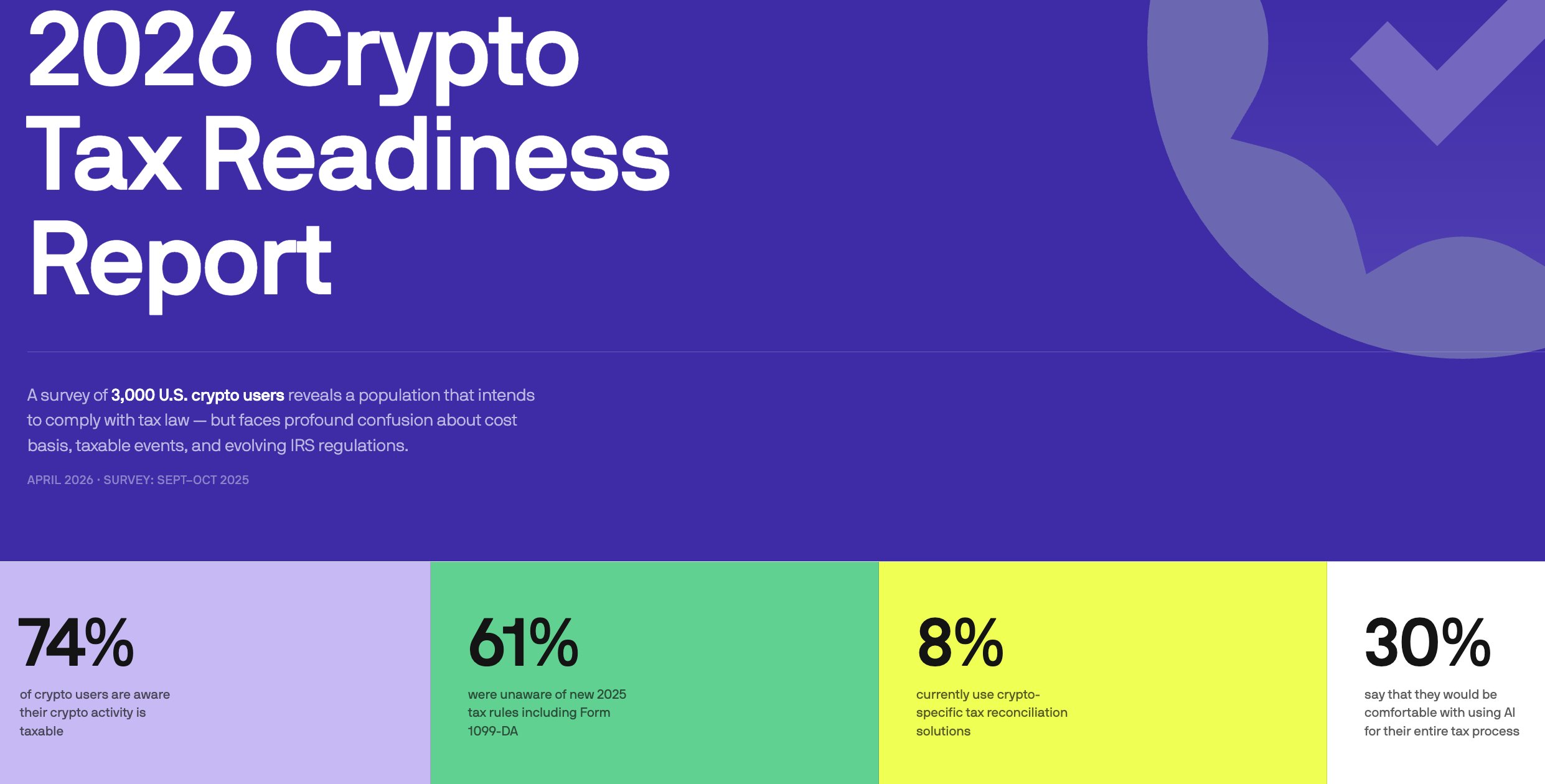 Survey of 3,000 users shows only 74% of US crypto users know taxes apply but 61% unaware of new 2025 rules like Form 1099-DA as confusion around cost basis and reporting persists2026-03
 1inch partners with OpenUX on DeFi user survey: share your views in 10 minutes2026-05
A survey is a structured method of collecting self-reported data from a defined population—typically through standardized questionnaires delivered online, by phone, or in person—and then generalizing the results using statistical sampling. In crypto and decentralized finance, surveys have become one of the most frequently cited tools for measuring adoption, sentiment, regulatory awareness, and institutional intent.
Because digital-asset markets move on narrative as much as fundamentals, survey data fills a recurring gap: blockchains record on-chain activity but say nothing about why people hold tokens, whether they understand the tax rules, or what institutions plan to do next year. Surveys attempt to answer those questions, and their headline numbers regularly shape coverage, policy debates, and product roadmaps.
What a survey actually measures
A survey produces estimates, not census counts. Researchers question a sample—a subset of a population—and use weighting to project findings onto the whole. Three concepts determine how much trust a result deserves:
- Sampling frame and method. A "nationally representative" survey draws from a panel designed to mirror the broader population by age, income, geography, and other traits. The U.S. Federal Reserve's Survey of Household Economics and Decisionmaking (SHED), for example, polled nearly 13,000 adults in October 2025 using a representative panel—very different from an opt-in poll promoted on social media.
- Margin of error. Larger, well-constructed samples yield tighter confidence intervals. A 3,000-person consumer study can be reliable; a self-selected community poll of token holders cannot be generalized beyond the people who chose to answer.
- Question framing. Wording, ordering, and answer options shape responses. The difference between asking "do you own crypto" and "have you used crypto for any reason" can move a headline number by several percentage points.
These distinctions matter acutely in crypto, where the same word—"adoption"—can mean holding an asset, transacting with it, or simply being aware of it.

Mastercard and Sei survey 40+ leaders on how institutions choose a blockchain

Adoption and sentiment surveys
The most widely circulated crypto surveys track how many people own digital assets and how they feel about them. They are a useful counterweight to price-driven hype because they sample the broader public rather than the already-converted.
The Fed's 2025 SHED data found roughly 10% of U.S. adults used or held cryptocurrency, up from 7% in 2024 and the highest share since 2022—though still below the 12% peak of 2021 (crypto.news). The same data revealed a persistent split: about 7% held crypto as an investment, while payments use has stayed below 3% since 2021. That gap is one of the most durable findings in adoption research—crypto is largely a store of value and speculative asset in the United States, not a medium of exchange.
Bank-led surveys add nuance. A Deutsche Bank survey reported U.S. adoption rebounding, with Bitcoin held by roughly three-quarters of crypto owners, underscoring Bitcoin's continued dominance among retail holders. Meanwhile, a global BITmarkets survey showed Bitcoin price expectations cooling after a 2025 peak—a reminder that sentiment surveys capture mood, which can shift faster than ownership.
Surveys also illuminate who uses crypto. The Fed data showed concentration among adults under 45 and higher-income households, alongside notably higher transactional use among the unbanked (6%, versus 2% of banked adults)—a recurring data point in financial-inclusion debates.
Readers click survey content not for the data itself but for two opposite reasons: agency (when a survey lets them shape a protocol or governance decision) and validation (when institutional data proves that traditional finance still treats crypto participants as second-class).
Tax and regulatory awareness
A second, fast-growing category measures whether users understand the rules they are subject to. These surveys often double as product marketing for the firms commissioning them, so their framing deserves scrutiny—but the underlying knowledge gaps they document are real and consequential.
A joint Coinbase–CoinTracker study of 3,000 U.S. users (the 2026 Crypto Tax Readiness Report) found that while about 74% knew crypto activity is taxable, roughly 61% were unaware of new 2025 reporting rules, including the IRS's Form 1099-DA (CoinDesk). Only 49% correctly understood that selling crypto is a taxable event, and just 8% used crypto-specific tax tools. Form 1099-DA, which brokers began issuing for the 2025 tax year to report gross proceeds, is precisely the kind of regulatory change that survey data flagged as poorly understood before filing season (Thomson Reuters).
Compliance surveys extend to the operational side too. According to Fenergo's 2025 global KYC survey, a single identity check—document and biometric verification, analyst labor, and false-positive remediation—can cost a platform up to roughly $130 per user, a figure regularly cited in arguments about onboarding friction and the economics of regulated crypto businesses.
These studies share a pattern: high awareness of whether something is regulated, low awareness of how. That gap is the recurring story compliance-focused surveys tell.
Bitwise survey asks 15 of the world's largest investment firms how they allocate to crypto

Institutional adoption surveys
Surveys of banks, asset managers, and corporate finance leaders carry outsized weight because their respondents control large capital flows. They are read as forward indicators of where institutional money is headed.
A Nomura survey found institutional investors increasingly eyeing DeFi and stablecoins, signaling that interest is broadening beyond spot Bitcoin exposure. A Ripple survey of finance leaders reported that a large majority view digital assets as a competitive differentiator and a similar share see stablecoins as useful for cash-flow management—findings the company uses to argue that tokenization and stablecoin rails are moving from pilot to production.
Tokenization-specific research strikes a more cautionary note. A "Tokenization Outlook 2026" survey warned that operators are prioritizing riskier non-financial assets over straightforward financial ones, amid cybersecurity and regulatory hazards—an example of survey data being used to flag overreach rather than cheerlead. Institutional surveys, in other words, are not uniformly bullish; the better ones surface the friction points alongside the enthusiasm.
A critical caveat applies to all of them: surveys commissioned by a vendor with a commercial stake in the answer—a payments company asking about stablecoins, a custody firm asking about tokenization—should be read with that incentive in mind. The American Bankers Association survey arguing that consumers prefer financial stability over stablecoin yield, for instance, aligns neatly with bank concerns that yield-bearing stablecoins could draw deposits out of the lending system. The finding may be sound, but the framing reflects the sponsor's interests.
- 01stablecoin governance token selection
The top-clicked piece invited readers to directly influence which governance tokens enter a decentralized stablecoin basket, making the survey a live participation mechanism rather than passive reading.
- 02banking access friction for crypto
FDIC data showing crypto skews toward unbanked and underbanked households, paired with 75% of hedge funds facing banking challenges, confirmed a structural exclusion story readers wanted evidence for.
- 03central bank CBDC engagement pace
The BIS finding that 94% of central banks were actively working on CBDCs in 2023 reframed government crypto activity as near-universal rather than fringe, shifting the regulatory risk calculus.
- 04protocol community input surveys
Surveys from Curve, 1inch, Andre Cronje, and Reserve Protocol drew readers who treat participation as a form of soft governance, signaling that community voice surveys function as informal on-chain precursors.
- 05retail crypto adoption demographics
Data points on South Korean adoption rates, CoinGecko's altcoin-first entry finding, and Deutsche Bank's Bitcoin ownership figures gave readers concrete benchmarks to compare their own market against.
- 06crypto tax awareness gaps
Finding that 26% of US crypto users still don't know taxes apply, and 61% are unaware of new 2025 Form 1099-DA rules, flagged a compliance liability that readers with holdings needed to act on.
AI surveys intersecting with crypto
As artificial intelligence reshapes both labor markets and crypto tooling, AI-focused surveys increasingly appear in digital-asset coverage. They matter to crypto audiences for two reasons: many crypto users are early AI adopters, and AI agents are being built directly into wallets, trading bots, and on-chain analytics.
A widely cited Anthropic survey of roughly 81,000 users found that AI boosts productivity while simultaneously raising job-loss fears—with early-career workers and those in high-exposure roles reporting the strongest displacement concerns. A separate Anthropic survey of Americans captured the same ambivalence: fear of AI-driven job losses paired with hope that AI accelerates cures for cancer and Alzheimer's. Other studies echo the tension—one Gen Z survey found respondents believe AI is "rotting their brains" yet cannot stop using it, and psychologists report patients are now bringing AI tools into therapy sessions.
For crypto, the throughline is that public sentiment toward automation is deeply mixed, which has direct implications for how AI-powered DeFi agents and trading tools will be received.
Visa survey: stablecoin adoption intent jumps to 56% when bank-level protections are offered

How to read a crypto survey critically
Given how often survey headlines drive narratives, a short checklist helps separate signal from noise:
- Who paid for it? Vendor-sponsored surveys can be rigorous, but watch for framing that flatters the sponsor's product.
- Who was sampled? A representative national panel (Fed SHED) generalizes; a Twitter/X poll or opt-in community survey does not. A "second annual community survey" of a project's own token holders measures its base, not the market.
- How big and how recent? Note sample size, fielding dates, and whether results are weighted. Sentiment data ages quickly in volatile markets.
- What's the exact question? "Used crypto for any reason" and "currently invest in crypto" are different measurements that get conflated in headlines.
- Is the number plausible against on-chain reality? Self-reported data can diverge from observable behavior; cross-checking against on-chain metrics or other surveys guards against outliers.
Polls such as the DCG/Harris survey of registered U.S. voters on digital assets and the 2026 elections, or 1inch's DeFi user survey with OpenUX, can be genuinely informative—but each should be weighed on these criteria rather than its headline alone.
- 2023-11regulatory
FDIC unbanked survey flags crypto skew toward financially excluded households
- 2023-12governance
ETHDenver ReGov summit publishes DAO governance survey from Reserve Protocol
- 2024-05regulatory
BIS annual survey: 94% of central banks engaged in CBDC work covering 2023 activity
- 2024-09milestone
Bitwise & VettaFi survey: 61% of financial advisors forecast BTC reaching $100K–$250K by 2025
- 2024-10regulatory
South Korea FSC survey records 6.45 million crypto trading users, 12.9% of population
- 2024-11milestone
CoinGecko survey finds nearly 1 in 10 crypto users have never held Bitcoin as altcoins become primary entry point
- 2025-01regulatory
US crypto tax awareness survey: 26% unaware taxes apply, 61% unaware of new Form 1099-DA rules
- 2025-03milestone
Deutsche Bank survey shows US crypto adoption rebounding with Bitcoin held by 74% of crypto owners
Outlook
Surveys will remain a fixture of crypto coverage precisely because on-chain data cannot explain motivation, awareness, or intent. Expect continued growth in three areas: regulatory-readiness studies as rules like Form 1099-DA take full effect, institutional surveys tracking the migration into stablecoins and tokenized assets, and AI-sentiment research as automated agents move deeper into trading and finance. The durable signal across all of them is a widening gap between adoption and understanding—people increasingly own and use digital assets faster than they grasp the tax, security, and regulatory implications. Readers are best served by treating survey headlines as starting points: useful for spotting trends, but only as trustworthy as their method, sample, and sponsor allow.
Latest Survey news
Community notes
Spot something off or out of date? Drop a note. Editors review topic notes daily and roll accepted fixes into the explainer — contributors are recognized in the monthly $SQUID drop.
Loading notes…
Help improve this topic
Have a story or tip about this topic? Submit it. See something missing? Leave a note. Editors review daily; accepted submissions and fixes count toward the monthly $SQUID drop.