
A deep look at how "too long; didn't read" summaries became essential infrastructure in crypto — covering their role in security alerts, protocol roadmaps, governance, and institutional communication.
+1 sources across the wider coverage universe
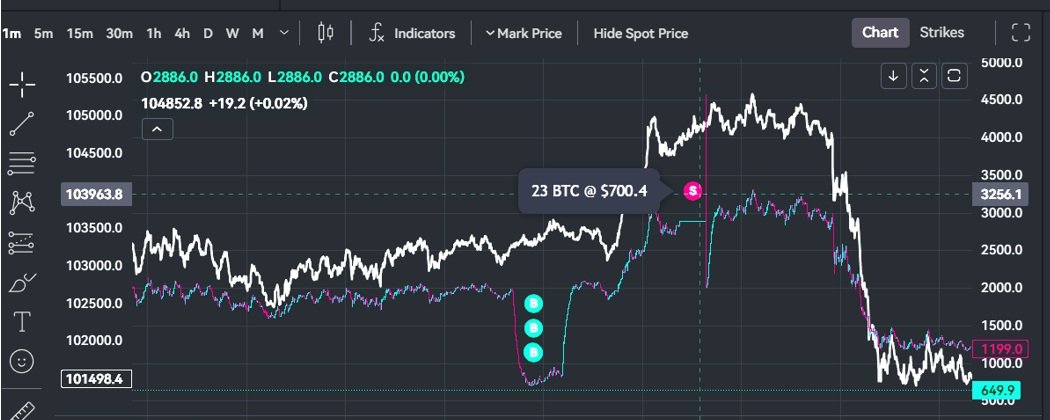 Paradex (a ‘decentralized’ perp DEX) just stole $218,922 from a user and now calls the user an exploiter.2025-12
 Putin aide Maxim Oreshkin says crypto should be counted in Russia’s balance of payments, arguing it already influences imports and FX markets. He also calls Bitcoin mining an undervalued export as Russian firms invest over $1.3B in infrastructure.2025-12
 Sony's blockchain partner launches institutional-grade stablecoin as the default settlement currency for Ethereum layer-2 platform Soneium alongside a rewards program called STAR Points that incentivizes transactions through the Startale App. Stablecoin platform M0 is providing the underlying infrastructure for Startale USD (USDSC). The launch follows Japan's financial regulator approving a yen-stablecoin pilot from the country's three megabanks earlier this month.2025-12
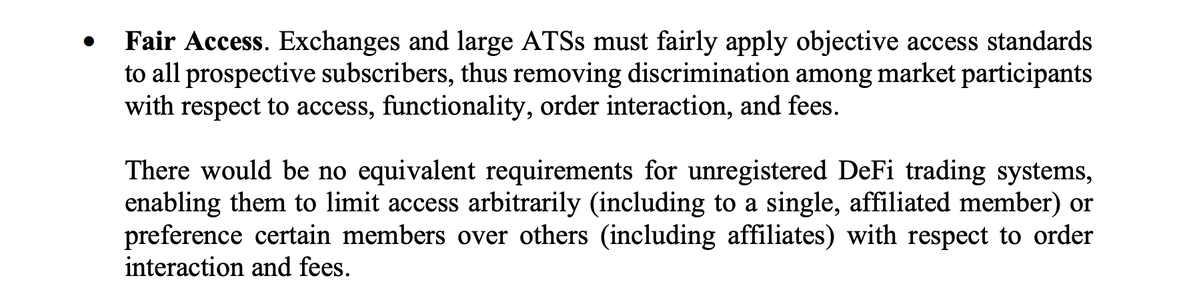 Ken Griffin Urges SEC to Regulate DeFi Developers as Intermediaries, Arguing the Sector Can’t Provide “Fair Access.”2025-12
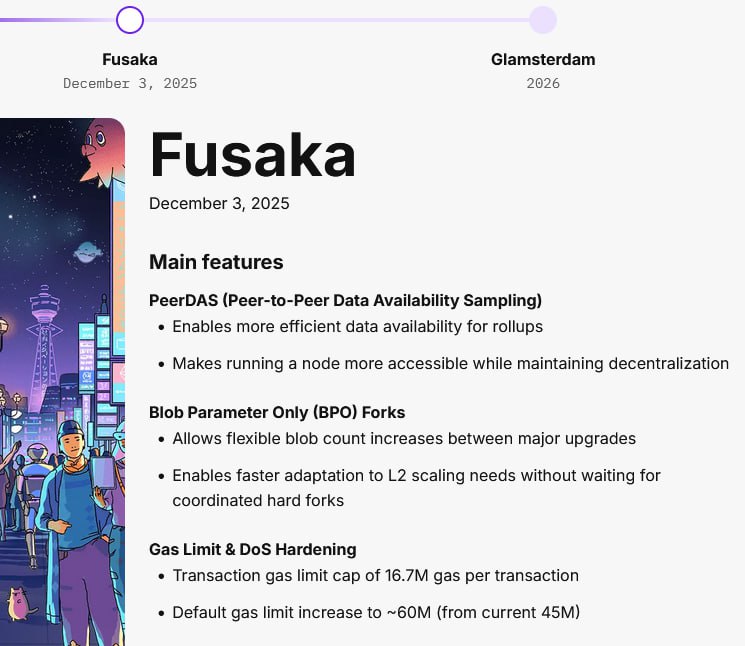 Ethereum’s Fusaka Upgrade Lands Tomorrow: an 8× Data Boost and Cheaper Rollups2025-12
 Ledger’s Donjon team uncovered an unpatchable boot ROM flaw in MediaTek’s Dimensity 7300 chip, showing it can be fully compromised with electromagnetic attacks. The finding highlights why secure-element hardware wallets remain essential for safe self-custody.2025-12
Crypto's shorthand for compressed clarity: a "too long; didn't read" summary distills complex on-chain events, governance proposals, and security alerts into a handful of sentences, making dense information accessible to a community that moves faster than most financial markets.
The crypto and Web3 ecosystem produces a staggering volume of technical documentation every day — protocol upgrade proposals, incident post-mortems, tokenomics papers, audit reports, DAO governance votes, and regulatory filings. Keeping pace requires a shared compression layer. That layer, informal but nearly universal, is the TLDR.
What TLDR Actually Means in Crypto
TLDR ("too long; didn't read") originated as internet slang in the early 2000s to flag that a post was too long, often self-deprecatingly at the end of a wall of text. In crypto communities it evolved into something more deliberate: a structured summary format placed at the top of complex communications so that time-pressed readers can absorb the essential claim before deciding whether to read further.
The format is deceptively demanding to write well. A good crypto TLDR must compress technical content — say, a Solidity exploit vector or a multi-collateral staking redesign — into plain language without losing enough precision to mislead. A bad one creates its own risks: oversimplification of a security disclosure, for example, can cause users to underestimate the urgency of an incident and lose funds.

Paradex (a ‘decentralized’ perp DEX) just stole $218,922 from a user and now calls the user an exploiter.

"Morale of the story: If you trade on Paradex, they can reverse any trade if it hurts them enough, then dig up TOS excuses."
Readers click hardest when 'decentralized' infrastructure behaves like a centralized authority — the Paradex seizure, Griffin's SEC push, and Connecticut's stop-orders all expose the same fault line: who actually controls the kill switch when DeFi goes wrong.
Why Crypto Culture Made TLDR Its Own
Several structural features of crypto make condensed summaries especially valuable:
Global, asynchronous audiences. A protocol's community might span Bangkok, Berlin, and Buenos Aires. When a critical incident breaks at 2 a.m. UTC, contributors reaching for their phones need a thirty-second read before they can decide whether to move funds, pause integrations, or vote on an emergency governance action.
Technical heterogeneity. A single governance forum thread might be read by a PhD cryptographer, a retail holder who learned about Ethereum last year, a journalist on deadline, and a DAO contributor who specialises in tokenomics, not code. A layered document — dense technical body, accessible TLDR up top — serves all of them without condescending to any.
Speed of events. Protocol incidents, price dislocations, and regulatory actions can compound within hours. The THORChain incident that surfaced in 2026 is representative: contributors posted a structured update to the developer Discord that led with a TLDR naming the probable attack vector — a newly churned node linked to what appeared to be a compromised GG20 threshold signature scheme implementation — before the full technical post-mortem was available. That summary let integrators and liquidity providers make time-sensitive decisions without waiting for the complete analysis.
Fragmented distribution channels. News breaks simultaneously on Telegram groups, Discord servers, X (formerly Twitter), governance forums, and Farcaster casts. A well-crafted TLDR travels across all of them intact. A 4,000-word technical report does not.
TLDR in Security Alerts and PSAs
Nowhere is the quality of a crypto TLDR more consequential than in public security advisories. When a scam campaign or exploit is active, the window between disclosure and user harm can be measured in minutes.
A recurring pattern in Web3 security communications involves a PSA (public service announcement) structured as: a one-line statement of the threat, a TLDR block identifying the attack method, then the full detail for those who need it. The Gitcoin community experienced this directly when scammers began targeting Gitcoin Grants participants via Telegram and LinkedIn direct messages. The advisory leading with a clear TLDR — scammers are referencing real wallet addresses associated with previous Gitcoin Grants distributions to lend credibility to their approach — allowed community members to identify and dismiss solicitations before engaging. A buried description in paragraph four of a long forum post would have arrived too late for many recipients.
The same principle applies to hardware security disclosures. When Ledger's Donjon research team reported an unpatchable boot ROM flaw in the MediaTek Dimensity 7300 chip — demonstrating that the chip could be fully compromised via electromagnetic fault injection — the finding needed to reach both security researchers and everyday users. The TLDR ("secure-element hardware wallets remain essential; software-only custody on affected chips carries this risk") shaped headlines and social posts across the ecosystem within hours of publication.
Regulatory stop-orders follow the same pattern. When Connecticut regulators issued orders to Kalshi, Robinhood, and Crypto.com for allegedly operating unlicensed prediction market platforms, the relevant TLDR — platforms must halt services in Connecticut pending licensing review — circulated on Telegram and X well before most users had read the full regulatory filing. For prediction market participants with active positions, those seconds mattered.

Putin aide Maxim Oreshkin says crypto should be counted in Russia’s balance of payments, arguing it already influences imports and FX markets. He also calls Bitcoin mining an undervalued export as Russian firms invest over $1.3B in infrastructure.
- 01Decentralized DEX accountability gap
Paradex unilaterally seizing $218K and labeling the victim an exploiter crystallized the contradiction between decentralization branding and protocol-level centralized control.
- 02Stablecoin infrastructure land grab
Sony/Soneium, BlackRock, Opera/MiniPay, and the Venezuela analogy all landed within the top 30 clicks — readers are tracking which rails will underpin the next financial layer, not whether stablecoins win.
- 03DeFi regulatory reclassification
Ken Griffin's call to treat DeFi developers as intermediaries and Connecticut's stop-orders against prediction markets signal a coordinated push to reframe protocol builders as licensed financial actors.
- 04Geopolitical crypto normalization
Putin aide framing Bitcoin mining as an undervalued Russian export and calling for crypto inclusion in balance-of-payments data shows state actors formally embedding crypto into sovereign economic doctrine.
- 05Hardware custody unpatchable flaw
An unpatchable boot ROM vulnerability in a mainstream MediaTek chip raised the stakes for secure-element hardware wallets as the only viable self-custody defense.
- 06Ethereum L2 scaling milestone
The Fusaka upgrade's 8× data throughput boost directly lowers rollup costs, giving readers a concrete benchmark for Ethereum's competitive position against Solana and alt-L1s.
TLDR in Protocol Roadmaps and Governance
The roadmap TLDR has become something of an art form in DeFi. Projects face a recurring challenge: their communities want confidence about the future, but genuine technical roadmaps are complex, conditional on external factors, and often written in engineering language. A roadmap TLDR serves as the community-facing translation layer.
The Synthetix 2026 roadmap communication illustrates how this works under pressure. The TLDR block — summarising sUSD peg restoration efforts, risks around buyback mechanisms, delayed timelines for multi-collateral trading, and uncertainty about H2 upgrade paths — communicated both ambition and honest constraint in a handful of lines. For token holders deciding whether to hold or rotate capital, that distillation was the operative document; the full roadmap was corroborating evidence.
Ethereum's upgrade cadence demonstrates similar dynamics. The Fusaka upgrade, which delivered roughly an eight-times increase in data availability and meaningfully reduced costs for rollups, was described in its public communications with a TLDR that focused on user-observable outcomes — cheaper transactions on Layer 2 networks — rather than the underlying EIP specifications. The approach is deliberate: Ethereum's developer community reads EIPs; the broader ecosystem reads summaries.
Solana's SKR token launch planning followed the same compression discipline. The essential points — ten billion token supply, with 30% directed to airdrops, 25% to growth initiatives, and 10% for liquidity and launch support — appeared in every significant coverage piece because they had been written as a TLDR in the original announcement and were therefore quotable, linkable, and repeatable.
TLDR as a Distribution Format in Apps and Newsletters
The concept has also become a product category. Several crypto-adjacent media properties have built entire audiences around systematic TLDR delivery — daily newsletters, Telegram channels, and mobile apps that ingest firehoses of protocol news and governance activity and emit structured summaries. For a segment of the market that wants signal without noise, these products function as essential infrastructure.
The Telegram channel format is particularly well-suited to crypto TLDR delivery. Telegram's combination of group messaging, channel broadcasting, pinned messages, and bot integration makes it natural infrastructure for rapid advisory distribution. A community channel with pinned TLDR updates for ongoing incidents allows participants to orient themselves in seconds after being away from their screens.
Mobile-first prediction market apps like Polymarket — which launched its iOS application in 2026 following CFTC approval, with Android support to follow — have integrated market summaries that function as implicit TLDRs: the current probability, the resolution criteria, and the key upcoming event in a single card. When a user opens the Polymarket app to check the status of a macro event market, they are consuming a TLDR: the probability implied by the market, the resolution date, and the key open question, all in a glanceable format.
Sony's blockchain partner launches institutional-grade stablecoin as the default settlement currency for Ethereum layer-2 platform Soneium alongside a rewards program called STAR Points that incentivizes transactions through the Startale App. Stablecoin platform M0 is providing the underlying infrastructure for Startale USD (USDSC). The launch follows Japan's financial regulator approving a yen-stablecoin pilot from the country's three megabanks earlier this month.
"M0 provides the underlying infrastructure that powers the creation of application-specific digital dollars like Startale USD (USDSC). Its modular platform connects issuance, application logic, and liquidity into a single programmable system, giving builders control over how their digital dollars behave while relying on a shared foundation of transparency and interoperability."
- 2022-01regulatory
Polymarket banned from U.S. market by CFTC
- 2025-12launch
Singularity Compute launches enterprise NVIDIA GPU cluster in Sweden
- 2026-01launch
Solana Mobile announces SKR token with 10B supply and airdrop allocation
- 2026-06regulatory
Japan megabanks receive FSA approval for yen-stablecoin pilot
- 2026-06milestone
Ethereum Fusaka upgrade delivers 8× data boost and cheaper rollups
- 2026-06regulatory
Polymarket relaunches U.S. mobile app under CFTC oversight
- 2026-06regulatory
Connecticut issues stop-orders to Kalshi, Robinhood, and Crypto.com over unlicensed prediction markets
- 2026-06exploit
Paradex seizes $218,922 from user and labels them an exploiter
Common TLDR Failure Modes
Not all TLDRs are created equal. Several failure modes recur in crypto communications:
False precision. A TLDR that says "funds are safe" before a full incident investigation is complete creates a liability and potentially causes harm if that assessment later proves wrong. The responsible formulation during the THORChain investigation was "current evidence points toward a single malicious actor; investigation is ongoing" — not an all-clear.
Jargon compression. Replacing a paragraph of jargon with a sentence of different jargon does not help most readers. A TLDR should be legible to someone two levels below the primary audience's technical depth.
Missing the action item. Security PSAs and protocol incidents often require users to take specific actions — revoke an approval, withdraw funds, update a client. A TLDR that conveys the threat without the required action fails the people who need it most. The Gitcoin scam advisory was effective precisely because the action item (do not respond to unsolicited DMs referencing Gitcoin Grants wallet addresses) was embedded in the summary, not buried later.
Recency bias in "evergreen" summaries. A TLDR written for a specific incident can become misleading when shared out of context months later. This is a particular hazard in Telegram where old messages resurface. Protocol teams that want their summaries to age well often date them explicitly and note their scope.
TLDR and Institutional Readability
As institutional capital increasingly engages with crypto markets — Deutsche Bank-backed Taurus offering staking services, BlackRock calling stablecoins a growing pillar of global finance, Harvard-incubated companies raising Series A rounds for DeFi derivatives infrastructure — the demands on crypto communication have shifted. TLDRs written for crypto-native retail readers often do not meet the readability bar for compliance teams, risk committees, or asset managers.
This has created a secondary market for "institutional translation" of crypto communications: rewriting existing TLDRs in the language of traditional finance, clarifying that "yield" refers to staking rewards rather than a fixed income security, that "liquidation" means margin closeout rather than corporate bankruptcy, and so on. Ken Griffin's public position that DeFi developers should be regulated as intermediaries — a stance that turns in part on whether DeFi protocol communications are transparent enough for regulators to evaluate — underlines how high the stakes of this translation work have become.
- CentralizationHigh
Paradex's unilateral fund seizure on a self-described decentralized perp DEX demonstrates that admin key or guardian authority can override user ownership without on-chain governance.
- RegulatoryHigh
Simultaneous pressure vectors — SEC DeFi developer reclassification, Connecticut stop-orders to Kalshi/Robinhood/Crypto.com, and CFTC-conditional Polymarket re-entry — indicate U.S. regulators are actively contesting the DeFi legal boundary.
- Smart-contract / ProtocolMedium
sUSD peg instability and buyback risks flagged in Synthetix's roadmap illustrate that synthetic asset pegs remain fragile under low-incentive or multi-collateral transition conditions.
- Hardware / CustodyMedium
An electromagnetic exploit against MediaTek's Dimensity 7300 boot ROM is unpatchable via firmware, permanently elevating risk for any self-custody device not built on a dedicated secure element.
- LiquidityMedium
Fragmentation across competing stablecoin standards (USDSC on Soneium, USDT0 on Tether's ULP, MiniPay's USDC/cUSD) creates cross-chain liquidity silos that can gap under stress.
- Geopolitical / SanctionsMedium
Russia's $1.3B mining infrastructure investment and official calls to count crypto in balance-of-payments data increase the probability of Western secondary sanctions targeting crypto infrastructure operators.
How to Write a Good Crypto TLDR
For practitioners writing these summaries, a few principles hold up:
1. Lead with the outcome, not the cause. "Bridge funds are at risk; withdraw now" before "a reentrancy vulnerability was discovered in the withdrawal contract." 2. Be specific about scope. "Affecting Ethereum mainnet deposits only; Arbitrum and Optimism pools are unaffected" is more useful than "some users may be affected." 3. Name numbers where they matter. Approximate dollar values at risk, token supply changes, and timing windows orient the reader faster than adjectives. 4. Match urgency to the situation. An emergency security disclosure TLDR should feel different from a roadmap update TLDR. Treating everything as urgent desensitises readers to genuine alerts. 5. Include the source link. A TLDR without a link to the full document is a rumour, not a summary.
Outlook
TLDR as a format will not become less important as the crypto ecosystem matures — if anything, the opposite. The volume of on-chain activity, regulatory filings, protocol upgrades, and governance proposals is increasing faster than the average participant's available reading time. AI-assisted summarisation tools are beginning to automate first drafts of TLDRs from governance forum posts and incident reports, but the editorial judgment required to write a responsible, accurate, non-misleading summary of a live security incident or a conditional protocol upgrade remains a human skill. Communities and protocol teams that invest in that skill — treating the TLDR as a first-class deliverable rather than an afterthought — will communicate more credibly, retain more trust during crises, and reach more of the people who need to act on what they are saying.
Latest tldr news
Paradex (a ‘decentralized’ perp DEX) just stole $218,922 from a user and now calls the user an exploiter.Putin aide Maxim Oreshkin says crypto should be counted in Russia’s balance of payments, arguing it already influences imports and FX markets. He also calls Bitcoin mining an undervalued export as Russian firms invest over $1.3B in infrastructure.Sony's blockchain partner launches institutional-grade stablecoin as the default settlement currency for Ethereum layer-2 platform Soneium alongside a rewards program called STAR Points that incentivizes transactions through the Startale App. Stablecoin platform M0 is providing the underlying infrastructure for Startale USD (USDSC). The launch follows Japan's financial regulator approving a yen-stablecoin pilot from the country's three megabanks earlier this month.Ken Griffin Urges SEC to Regulate DeFi Developers as Intermediaries, Arguing the Sector Can’t Provide “Fair Access.”Ethereum’s Fusaka Upgrade Lands Tomorrow: an 8× Data Boost and Cheaper RollupsLedger’s Donjon team uncovered an unpatchable boot ROM flaw in MediaTek’s Dimensity 7300 chip, showing it can be fully compromised with electromagnetic attacks. The finding highlights why secure-element hardware wallets remain essential for safe self-custody.Community notes
Spot something off or out of date? Drop a note. Editors review topic notes daily and roll accepted fixes into the explainer — contributors are recognized in the monthly $SQUID drop.
Loading notes…