
Comprehensive explainer on audits in crypto, covering smart contract security, proof of reserves, compliance, formal verification, and AI tools, with guidance for users and builders on interpreting and integrating audits across the ecosystem.
+32 sources across the wider coverage universe
 CertiK opens AI Auditor to public testing after internal success hitting 88.6% accuracy across real 2026 exploits, aiming to reduce audit noise and speed up vulnerability detection2026-04
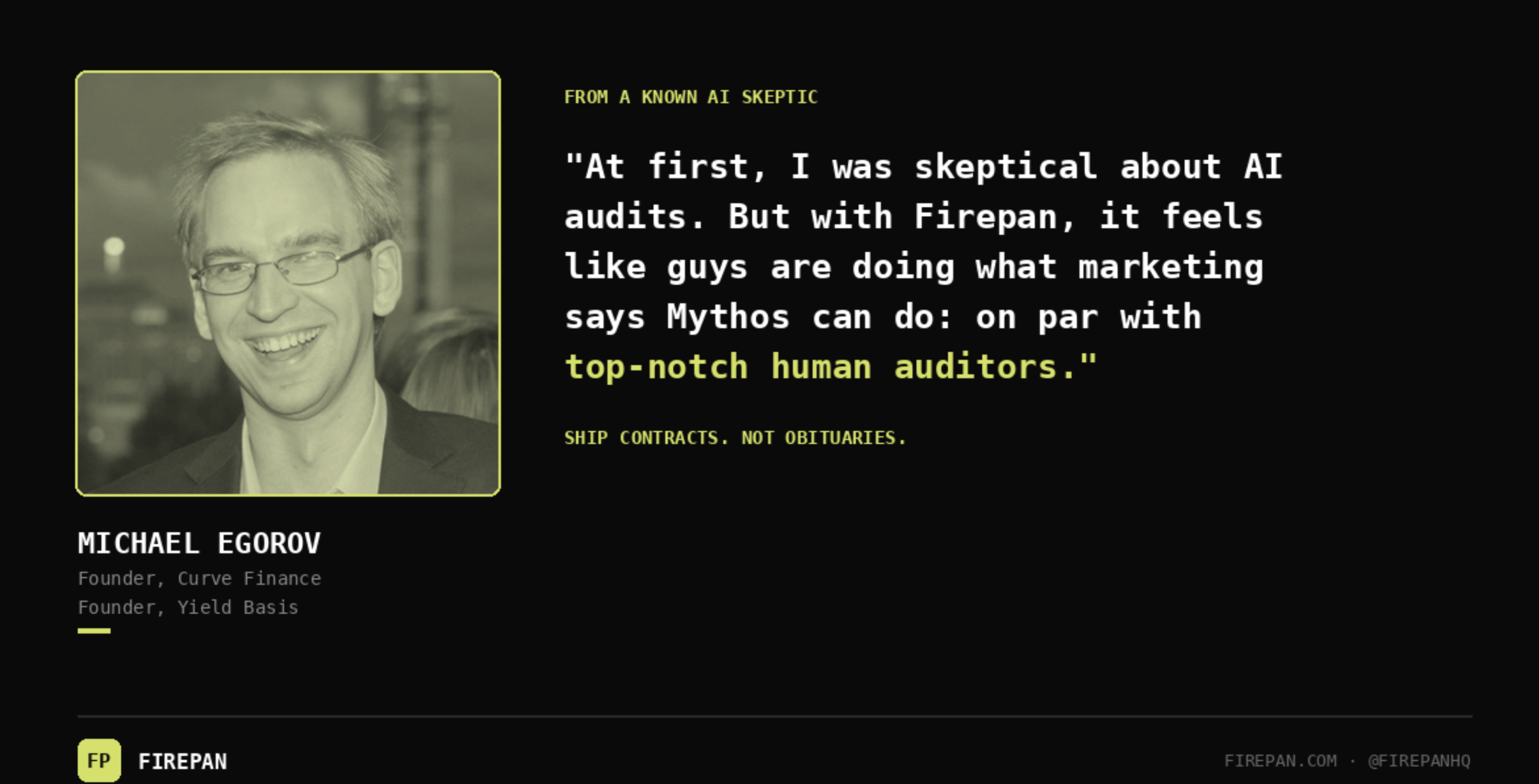 Yield Basis selected Firepan to perform an AI-powered security review of its live mainnet FeeDistributor contract, identifying 18 findings across 22 attack surfaces, including a previously undocumented MEV vector.2026-05
 Aave Labs unveils Aave Checkpoint, a verification tool that audits governance proposals by cross-referencing onchain data with forum specs before execution2026-04
 Ethereum Foundation Launches Audit Subsidy Program to Lower Security Costs for Developers2026-04
 Just 1 of 150+ crypto protocols discloses market-maker terms as Novora audit exposes industry-wide transparency gap2026-04
 Matterhorn and ASI Alliance launch Vibe-Audit to catch vulnerabilities in AI-generated smart contracts2026-04
Audit in Crypto: From Smart Contracts to Verifiable Finance
Audits in crypto are structured, independent reviews of code, collateral, or processes designed to answer a simple but hard question: does this system behave the way it claims, under the rules it has promised, in a way that others can verify. In an ecosystem built on Ethereum, Bitcoin, and other public ledgers, “audit” now spans smart contract security, proof of reserves, regulatory compliance, and AI-driven continuous monitoring, turning trust from a marketing word into something closer to measurable assurance.
What “Audit” Means in Crypto
In traditional finance, an audit usually invokes an image of accountants poring over balance sheets and bank statements to confirm that a company’s financials are fairly stated. In crypto, the term has broadened and fragmented: the same word is now used for deep reviews of Solidity code, reserve attestations for stablecoins, formal verification proofs for new virtual machines, and even assessments of AI models that search for bugs in protocols like Zcash. The unifying theme is that an audit is an independent, time-bounded exercise aimed at producing evidence about whether a system—technical or financial—conforms to explicit rules and constraints. Because so much of crypto infrastructure is deployed onchain and cannot be easily rolled back, audits play an outsized role around launch moments, when teams lock in contract logic, collateral structures, and compliance flows that may later secure billions of dollars.
Public blockchains add a unique twist to this story because they are intrinsically auditable in a way that traditional private ledgers are not. Bitcoin, for example, has been described as a form of “digital capital” that is scarce, global, programmable, and crucially, auditable by anyone with an internet connection and a node. Every transaction in Bitcoin or Ethereum is recorded in an immutable ledger, meaning that any observer can, at least in principle, reconstruct balances, flows of funds, and contract interactions without asking permission. This property creates a baseline of transparency that traditional auditors rarely enjoy, but it also raises the bar: in a world where data are visible by default, stakeholders expect not just transparency but high-quality explanations, attestations, and controls built on top of those raw traces.
In practice, this has given rise to several distinct families of audits in crypto. Smart contract and protocol security audits focus on vulnerabilities in code, such as reentrancy, access-control flaws, or oracle manipulation, that could let attackers drain funds or corrupt state. Financial and reserve audits, including proof-of-reserves systems, are concerned with whether tokenized assets such as stablecoins or real-world asset (RWA) tokens are properly backed by offchain collateral held in verifiable custody structures. Compliance and process audits examine whether protocols and intermediaries are following legal rules, internal policies, and investor mandates, often with help from zero-knowledge proofs and programmable compliance frameworks. Finally, a growing set of AI and formal verification “audits” apply automated reasoning tools, like the Aptos Move Prover or AI smart-contract analyzers, to mathematically prove properties about code or to search much more widely for defects than human reviewers could.
The result is that a single launch on Ethereum or another chain may now involve several layers of assurance that would each be called an “audit” in marketing materials but are conceptually quite different. A lending protocol might complete a traditional smart contract security audit, a formal verification pass over its core vault logic, a proof-of-reserves integration for its onchain stablecoin collateral, and a compliance framework for institutional users, all while integrating AI-based runtime monitoring that flags anomalies after deployment. This complexity is one reason recent coverage has emphasized that a single PDF report can no longer define what a DeFi audit is: assurance has become a continuous, multi-signal process rather than a one-off rite of passage before going live.
From Traditional Assurance to Onchain Transparency
To understand why audits look different in crypto, it is useful to compare the information environment of traditional finance to that of public blockchains. In conventional settings, auditors are often fighting information asymmetry: management controls the books, and auditors negotiate access to samples of transactions, internal systems, and third-party confirmations to infer the state of the whole. The resulting opinions are necessarily limited by this selective visibility and by batch reporting cycles, such as quarterly or annual statements.
Blockchains flip this dynamic. In systems like Bitcoin and Ethereum, all executed transactions and state transitions are recorded on a shared ledger that anyone can validate independently. In theory, this provides perfect traceability; in practice, the data are dense, highly technical, and often pseudonymous, which means that specialized tools and expertise are needed to extract the insights auditors care about. The move from “can we see the data” to “can we make sense of the data” has pushed the industry toward onchain analytics platforms, specialized block explorers, and data warehouses designed for compliance and disclosure. Frameworks such as Space and Time’s CLARITY compliance system explicitly aim to provide issuers and intermediaries with verifiable infrastructure to meet new disclosure and reserve requirements using onchain and offchain data together.
This environment also changes expectations about timeliness. Instead of waiting weeks for financial statements, onchain proof-of-reserves systems and oracle-based attestations can update with every block, giving real-time signals about whether collateral pools match token supply. FinanceFeeds, for example, has highlighted how decentralized oracle networks like Chainlink can feed reserve and compliance data onchain, where it becomes both machine-readable and independently auditable by users, regulators, and counterparties alike. This shift from periodic to continuous assurance underpins many emerging practices in crypto audit, including automated anomaly detection and timelocked governance that exposes planned contract upgrades for public review before execution.
Types of Audits in the Crypto Ecosystem
Within this onchain-first context, the word “audit” captures several overlapping but distinct practices. Smart contract security audits remain the most visible, particularly around high-profile DeFi launches. Firms such as Cyfrin and Cecuro describe these engagements as time-boxed, security-focused code reviews where one or more researchers inspect a protocol’s codebase to identify vulnerabilities, suggest mitigations, and educate teams about safer patterns going forward. These reviews typically blend automated static analysis and fuzzing with intensive manual reasoning, culminating in reports that categorize findings by severity and outline recommended fixes.
Financial and reserve audits, by contrast, tend to revolve around questions of asset backing and custody rather than code correctness. Stablecoin issuers, centralized exchanges, and RWA platforms commission third-party firms to verify that onchain liabilities are matched by offchain assets held with qualified custodians, sometimes supplemented by cryptographic proof-of-reserves schemes that publish Merkle-tree attestations or oracle-fed reserve balances onchain. The Re insurance protocol, for example, has emphasized “verifiable asset backing,” combining reserve reporting, audits, and operational controls to give anyone enough data to check that its tokenized reinsurance portfolios are genuinely backed by real-world assets.
Compliance audits sit at the intersection of regulation and cryptography. As non-custodial protocols face more stringent expectations around know-your-customer (KYC), sanctions screening, and investor protections, many are exploring zero-knowledge proof systems that can attest to compliance without exposing individual user data. FinanceFeeds notes that such systems can prove that users hold verified credentials or clear sanctions lists and that protocol transactions follow predefined rules, all while keeping personal information offchain and private. Chains like Kaia are leaning into this idea of “programmable compliance” and “composable privacy,” building infrastructure to make certain forms of regulatory reporting and auditing possible at the protocol level.
Finally, formal verification and AI-based audits are emerging as specialized forms of assurance that complement, rather than replace, traditional reviews. Adevar Labs’ work on the Move Prover for Aptos vaults illustrates how formal verification tools can compile Move code to bytecode, translate developer-written specifications into logical formulas, generate verification conditions across all execution paths, and then use solvers like Z3 to mathematically prove that key invariants hold for every possible input. AI tools such as ChainGPT’s Smart Contract Auditor and Anthropic’s Claude models, in turn, demonstrate how machine learning systems trained on historical exploits and audit reports can rapidly scan Solidity contracts or consensus code for patterns associated with known vulnerabilities.
Understanding which type of audit is being referenced—and what exactly it covers—is essential for anyone evaluating the risk profile of a crypto project, whether they are a retail user bridging funds into a new DeFi protocol or an asset manager allocating capital into tokenized real-world credit.

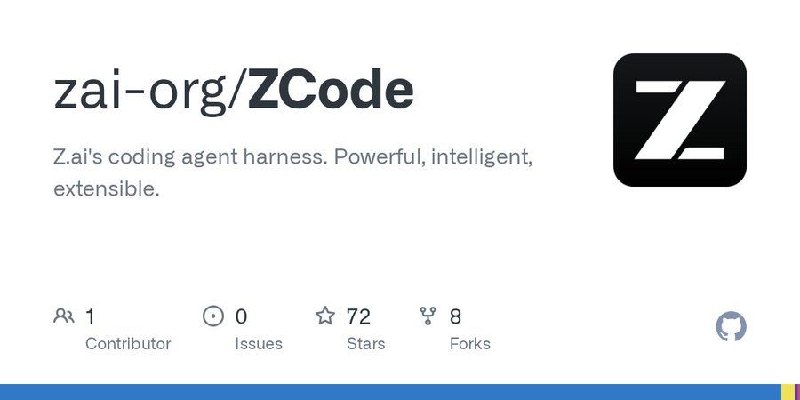
ZCode open-sources code and apologizes after security issues, citing CAICT and NSFOCUS audits
Smart Contract and Protocol Security Audits
Security audits of smart contracts and protocols remain one of the most visible—and sometimes misunderstood—rituals in crypto. On Ethereum and other programmable chains, core logic for lending markets, perpetuals exchanges, stablecoin systems, bridges, and staking protocols is embodied in contracts that, once deployed, can be extremely difficult or politically costly to change. A security audit is designed to stress-test this logic and the surrounding architecture before and after launch, identifying ways an attacker might subvert the system or drain funds.
Cyfrin defines a smart contract security audit as a time-bounded, security-focused code review of a smart contract or protocol, where auditors aim both to uncover as many vulnerabilities as possible and to educate the client on improving security practices in the future. Typically, a protocol engages an audit firm once its codebase is reasonably stable, at which point the auditors request the exact Git commit hash to ensure that the version they are reviewing matches what will eventually be deployed. The duration of the engagement—and hence the price—is driven primarily by the size and complexity of the codebase, with experienced firms often charging anywhere from roughly \( \$5{,}000 \) to \( \$60{,}000 \) per week, and more for very complex systems.
How Security Audits Work
Security audits usually proceed in several phases, though the specifics vary by firm. Once the scope is agreed and the code is frozen to a specific commit, auditors begin with automated tooling and test harnesses to catch low-hanging fruit such as obvious arithmetic errors, unsafe external calls, or basic misconfigurations. Tools may include static analyzers, symbolic execution engines, and fuzzers that generate random or adversarial inputs to probe how functions behave under unusual conditions. This automated pass serves two purposes: it weeds out trivial issues early and helps auditors triage where to focus their finite manual review time.
The heart of the audit is a holistic, human-led examination of the protocol’s design and implementation. Auditors at firms like Cecuro emphasize that effective reviews blend top-down threat modeling—asking what an economically rational attacker might try to do—with bottom-up code reading that traces how state can be mutated across functions and contracts. Modern audits examine not only classic DeFi vulnerabilities like reentrancy and price oracle manipulation but also more complex risks associated with flash loans, cross-chain bridges, and upgradeable proxy patterns. FinanceFeeds notes that a multi-layer review today often includes checks for access-control flaws in admin functions, unexpected interactions between modules, and whether contract assumptions about external data sources, like oracle feeds, are robust under market stress.
Once an initial review is complete, auditors produce a draft report that classifies findings by severity—often labeled high, medium, low, informational, or gas-optimization—and explains both the impact and the conditions under which each issue could be exploited. The protocol team then enters a mitigation phase, during which they patch code, refactor logic, or otherwise address the issues identified. After the fixes are implemented, the audit team performs a re-review, sometimes limited to the changed portions of the codebase, and publishes a final report that focuses on whether the original findings have been resolved or remain outstanding. Best practice, as highlighted by FinanceFeeds, is for protocols to make these reports public rather than merely claiming that an audit occurred, since burying negative findings undermines the trust that audits are meant to build.
Beyond Checklists: Formal Methods and the Move Prover
While traditional audits are powerful, they are ultimately sampling processes constrained by time, human attention, and the specific scenarios auditors think to test. Formal verification aims to go further by mathematically proving that a program satisfies certain properties under all possible inputs and execution paths, within a defined model. Adevar Labs’ work on the Move Prover for Aptos showcases how this can work in practice for smart contract-like modules.
In their example of an Aptos vault, developers write specifications expressing invariants such as “the vault can only be initialized once,” “deposits increase assets under management,” “withdrawals decrease assets without going negative,” and “view functions always return non-negative balances.” The Move Prover then compiles the Move code to bytecode, translates these specifications into logical formulas, and automatically generates a set of verification conditions covering all execution paths that the program could take. These conditions are passed to a solver like Z3, which attempts to either prove that they hold or produce counterexamples that violate them. In Adevar’s case, the prover checked eight verification conditions across their specifications and was able to show that, for every possible input within the model’s bounds, the vault maintained the stated properties.
The difference between this and conventional testing is stark. Traditional unit and integration tests might cover, as Adevar puts it, “100 cases,” which is reassuring but leaves an infinite space of untested scenarios. A successful formal verification run, by contrast, means that no sequence of valid operations can violate the specified invariants, at least within the constraints of the model and the underlying logic solver. Of course, formal verification is not a magic bullet: it only proves what has been specified, and specifications can be incomplete or incorrect. Nevertheless, when combined with manual audits, it can significantly raise the bar for critical components like vaults, bridges, and consensus rules, which need stronger guarantees than ordinary application code.
AI-Powered Security Tools
A parallel development in crypto audit has been the rapid rise of AI-powered security tools designed to analyze smart contracts and protocol logic at scale. ChainGPT’s AI Smart Contract Auditor is one prominent example: it is an AI-based tool trained on extensive historical audit data, industry best practices, known vulnerabilities, previous exploits, and current ecosystem standards, and is capable of evaluating Solidity contracts with high speed and accuracy. According to its documentation, the auditor can support both rapid audits during development and more comprehensive, production-ready assessments, helping teams identify risks, strengthen security, and meet compliance expectations more efficiently.
Under the hood, such systems typically parse contract code into abstract syntax trees, extract relevant patterns (such as authorization checks, external calls, and arithmetic operations), and then apply machine learning models to flag constructs that resemble known vulnerability types. Because they can run in seconds or minutes across large codebases, AI auditors are particularly useful as continuous companions during development, surfacing issues before human auditors ever see the code. Some security firms have begun experimenting with multi-agent AI setups, where different models specialize in detecting different categories of bugs and cross-check each other’s findings, an approach highlighted in commentary on the evolving DeFi audit landscape.
Recent case studies suggest that AI can complement, but not fully replace, traditional audits. In the Zcash ecosystem, for instance, a researcher using Anthropic’s Claude Opus model uncovered a critical vulnerability in the protocol’s Orchard component, which was subsequently patched. A follow-up AI-assisted review, described as an audit by Zcash’s founder, reportedly found no additional serious bugs in the patched system, underscoring AI’s potential role as a second set of eyes even after expert teams have examined the code. Similarly, observers have noted that one of Curve’s automated market maker designs passed through conventional audits only for an AI-based tool from Firepan to later spot a critical vulnerability before it was exploited, illustrating both the limits of human reviews and the promise of AI as an ongoing guardrail.
Limits of Security Audits
Despite their sophistication, neither human-led audits, formal verification, nor AI tools can guarantee that a protocol is free of bugs or immune to exploitation. Cyfrin itself emphasizes that audits are time-boxed reviews rather than open-ended proofs of perfection; their goal is to find as many vulnerabilities as possible in the allotted period, but there is always the possibility that subtle or novel attack vectors remain undiscovered. Cecuro similarly frames blockchain security auditing as a response to an ever-evolving threat landscape, where new exploits and cross-protocol interactions constantly create fresh risks that past experience may not fully anticipate.
This reality underpins the argument, echoed in analysis by Bitget and others, that a single clean audit report should no longer be treated as a definitive seal of safety. Projects may commission multiple independent audits to reduce the chances that any one firm misses a critical issue, layer formal verification on top of those reviews, and then deploy continuous monitoring agents to track onchain behavior for anomalies after launch. Even so, bugs may be discovered months or years later as protocols integrate with new systems, attackers invent new strategies, or AI tools uncover patterns humans overlooked.
The limits of audits are not an argument against them but a reminder of what they represent: a snapshot of expert opinion about the risk posture of a specific codebase under a defined set of assumptions and constraints. For users, the key is to treat “audited” as one signal in a broader due-diligence process rather than a binary indicator of safety. For builders, the lesson is that security must be approached as a lifecycle, not a milestone: audits should be coupled with rigorous internal testing, formal specifications, bug bounty programs, staged rollouts, and clear incident response plans so that when issues do surface, they can be addressed in a controlled and transparent way.
Readers click audit coverage not to learn what audits catch, but to interrogate why audits keep failing — the dominant pull is the credibility gap between 'audited' as a trust signal and the reality of eight- and nine-figure exploits on audited code.
Financial, Reserve, and Proof-of-Asset Audits
Beyond code, crypto’s other major audit axis is the question of backing: when a token claims to represent a dollar, a share of reinsurance risk, or a portfolio of real-world loans, how can outsiders verify that the promised assets truly exist, are not double-counted, and remain accessible under stress. This is especially salient for stablecoins, centralized exchanges, and RWA tokenization platforms, where failures can trigger systemic contagion that undermines trust in the broader ecosystem.
Stablecoins, Reserve Reporting, and Tether
Stablecoins like Tether’s USDT or other fiat-pegged tokens are, in principle, straightforward: for every token in circulation, there should be at least one unit of equivalent value held in reserves. In practice, the composition of those reserves, the jurisdictions and entities involved, and the transparency of reporting all influence how much trust users and regulators place in the instrument. Stablecoin issuers often rely on external attestations or audits from accounting firms to confirm that reserves match liabilities, sometimes releasing proof-of-reserves dashboards that show snapshots of assets and liabilities at specific points in time.
Over the years, questions about the adequacy and clarity of stablecoin reserve disclosures have pushed issuers toward more formal and frequent reporting structures. Governance developments, such as Tether filling additional seats on its audit committee and acquiring stakes in treasury firms holding large Bitcoin reserves, reflect a broader pattern: as stablecoins grow in systemic importance, their backers are expected to institutionalize internal oversight and strengthen external scrutiny of their reserve management. While the specific arrangements vary, the underlying aim is similar to that of traditional financial audits: provide third parties with enough information and assurance to evaluate whether the token is, in fact, fully backed under the terms advertised.
At the same time, onchain communities have become more skeptical of one-off attestations that offer only periodic snapshots, especially given how quickly market conditions can change. This skepticism is one reason why proof-of-reserves mechanisms that integrate onchain and offchain data via oracles have gained traction, and why some analysts argue that stablecoin audits should move toward more granular, continuous disclosures rather than annual or quarterly reports.
Real-World Assets and Verifiable Backing
The rise of tokenized real-world assets has intensified attention on the question of verifiable backing. Unlike purely onchain systems, RWA platforms must bridge blockchain representations with legal claims on offchain assets such as treasury bills, credit portfolios, or insurance risk. In these systems, failures in custody, documentation, or operational controls can render onchain tokens effectively worthless, even if their smart contracts are perfectly secure.
Re, a protocol focused on tokenized reinsurance, offers a case study in what “verifiable asset backing” looks like when taken seriously. The project has emphasized that simply asserting backing is not enough; instead, issuers must provide detailed reserve reporting, undergo independent audits, and implement operational controls that make it possible for outside observers to trace how tokens map to underlying reserves. This includes documenting custody arrangements, describing how cash and securities are held and segregated, and disclosing how losses and payouts flow through the system. By aligning onchain tokens with real-world audit and regulatory frameworks, RWA protocols seek to give both crypto-native and traditional investors confidence that their tokenized exposures are grounded in enforceable claims.
From a technical perspective, tutorials such as Patrick Collins’ Chainlink-based guide to tokenizing real-world assets illustrate the mechanics of representing offchain assets onchain. In one pattern, a synthetic token tracks the price of a stock or other asset using Chainlink price feeds; in another, the protocol actually purchases the underlying asset, holds it in custody, and uses Chainlink Functions to govern the smart contract that issues and redeems tokens, ensuring that onchain supply reflects offchain holdings. In both cases, robust backing requires more than code: it depends on custody arrangements, auditors, and data providers working together to maintain a coherent “audit proof chain” from the physical or traditional financial world to the onchain representation.
Proof of Reserves and Onchain Attestations
Proof-of-reserves (PoR) systems attempt to bring some of the rigor of financial audits directly into the onchain domain. Instead of relying solely on PDF attestations, PoR frameworks publish cryptographic or oracle-based evidence that reserves match obligations. FinanceFeeds describes how decentralized oracle networks, such as Chainlink, can enable smart contracts to autonomously verify that collateral backing an onchain asset matches its supply in real time. If reserves fall below a defined threshold, the system can automatically pause minting or trigger other protective mechanisms, reducing the reliance on lagging human oversight.
Merkle-tree based attestations extend this concept by allowing platforms—particularly centralized exchanges and custodial services—to prove that they hold assets equal to or greater than the total of their user liabilities, without revealing individual account balances. In a typical scheme, user balances are hashed into a Merkle tree whose root is published, and an auditor verifies that the assets held in custodial wallets match the sum of these liabilities. Users can then confirm inclusion of their own balance in the tree without learning others’ data, achieving both privacy and verifiability.
Compliance attestations form a related category. Regulated institutions can push signed statements of compliance—such as confirmation that certain wallets or counterparties meet KYC and sanctions requirements—onto the blockchain, where smart contracts can read and enforce them. This allows protocols to incorporate offchain regulatory information into onchain logic, and it creates an auditable trail of how compliance decisions were made. The CLARITY framework extends this idea to staking rewards, giving asset managers tools to trace what staking positions earned, where each component of yield came from, and how the math behind each component connects back to verifiable data. Taken together, these PoR and attestation approaches show how financial and compliance audits are being rearchitected for a world where onchain and offchain data interact continuously.
When Numbers Meet Code: Launch Risks for RWA Protocols
For RWA protocols, launching a product is inherently a multi-dimensional audit problem. Developers must secure smart contracts and bridges, ensure that oracle feeds are trustworthy, and simultaneously establish that offchain reserves are properly structured and independently verified. A failure in any one of these domains—code, collateral, or compliance—can undermine the entire enterprise.
This makes pre-launch audit strategy more complex and more expensive than for purely onchain protocols. It is not unusual for major ecosystems to spend substantial sums on security and financial reviews. The Cardano founder, for example, has publicly defended the use of roughly 1,096 BTC on audit costs during 2016 and 2017 as an investment in long-term ecosystem transparency, even amid disputes over those expenditures. That scale of spending reflects a belief that robust audits are not optional overhead but foundational to the credibility of a system that aspires to handle large flows of value over many years.
For RWA platforms, the challenge is to produce a coherent story that links the technical and financial layers of their design. Users should be able to see, for example, how a vault contract’s formally verified invariants map onto reserve reports from custodians, and how both relate to legal agreements and regulatory filings. Bridging these gaps requires coordination among smart contract auditors, financial auditors, compliance teams, and oracle providers. When done well, the result is not just a token that tracks an offchain asset, but a structure whose claims can be tested and re-tested by different kinds of auditors throughout its lifecycle.
Compliance, Privacy, and Programmable Auditability
As crypto systems mature and attract more institutional capital, audits are increasingly about more than just security and balance sheets. They are also about demonstrating compliance with a growing web of regulations and investor mandates, while respecting the privacy and competitive constraints of participants. This tension has given rise to the idea of “auditable finance”: a paradigm in which confidentiality is preserved by default, but cryptographic proofs and programmable rules make it possible to selectively reveal or attest to information when needed.
From Transparent DeFi to Auditable Finance
Early DeFi protocols leaned heavily into radical transparency. Positions, liquidations, and governance decisions were visible onchain, and many projects made their code open source, inviting informal “audits” from the community. While this ethos remains powerful, it has run into practical limits as institutional players with fiduciary duties and regulatory obligations enter the space. Large asset managers may be unwilling to expose the full details of their portfolios or trading strategies on a public chain, yet they must still provide auditors, regulators, and clients with evidence about what they are doing and why.
The emerging concept of “auditable finance,” articulated by projects like iExec, seeks to square this circle by building confidentiality as an infrastructural feature while maintaining verifiability. In this paradigm, systems are confidential by default—meaning that sensitive data are encrypted, offchain, or otherwise shielded—but they are also designed so that specific properties about that data can be proven to outsiders when necessary. Rather than being “transparent” in the sense of revealing everything, such systems aim to be “auditable” in the sense of supporting precise, controlled disclosures aligned with regulatory and contractual requirements.
Programmable compliance is a related idea. Chains like Kaia have discussed building “auditable” environments that combine programmable compliance with composable privacy, allowing applications to encode compliance rules directly into smart contracts while controlling who can see which data. By integrating these capabilities at the protocol level, Kaia and similar ecosystems hope to make it easier for developers to build applications that are compliant by design, and for auditors to verify that compliance without needing privileged access to raw user data.
Zero-Knowledge Proofs and Privacy-Preserving Compliance
Zero-knowledge proofs (ZKPs) are a key cryptographic building block for this new audit landscape. As FinanceFeeds explains, ZKPs enable protocols to verify that certain conditions hold—for example, that a user has passed KYC checks or is not on a sanctions list—without requiring the user to reveal their full identity or for the protocol to store sensitive personal data onchain. In practice, a user might obtain a credential from a regulated identity provider and then use a ZKP circuit to prove, to a smart contract, that this credential satisfies specific attributes, such as “over 18” or “not in a restricted jurisdiction,” without exposing anything else.
Beyond individual identity proofs, ZKPs can also be used to create privacy-preserving audit trails. For instance, a protocol might show that all transactions in a given period complied with predefined rules—such as limits on position sizes or counterparty risk—without revealing each transaction’s details. The resulting proofs, being compact, can be published onchain, creating verifiable and timestamped compliance records that regulators or auditors can inspect. This approach is particularly attractive for institutional DeFi, where counterparties need assurance that their trading venues observe relevant regulations but are reluctant to expose sensitive trading data.
These techniques blur the line between cryptography and compliance auditing. Instead of auditors manually sampling transactions and checking them against policies, protocols can use ZKPs to enforce and prove compliance programmatically as part of their core logic. Auditors, in turn, may shift from re-performing checks on raw data to verifying the correctness of the ZKP circuits and the integrity of the underlying credential systems. This pushes some of the traditional auditing burden into the domain of code review and formal verification, reinforcing the idea that reliable audits in crypto often require both legal and technical expertise.
Programmable Compliance and Auditable Platforms
At the infrastructure level, projects like Kaia and data platforms like Space and Time are exploring how to make compliance and auditability programmable. Kaia’s notion of an “auditable” chain with programmable compliance and composable privacy suggests that certain regulatory requirements—such as ensuring that only whitelisted wallets can participate in a given pool, or that certain trades are restricted to accredited investors—can be encoded as reusable modules that applications can plug into. By standardizing these primitives, ecosystems hope to reduce the compliance burden on individual developers and give auditors clear, well-defined components to examine.
Space and Time’s CLARITY compliance framework takes a complementary approach focused on data and reporting. For example, in the context of liquid restaking, an asset manager may need to tell its limited partners what a position earned over a quarter, where each component of the yield came from (base staking rewards, re-staking incentives, protocol emissions, fees), and how each figure is derived mathematically from underlying transaction and state data. CLARITY aims to provide verifiable pipelines that trace these outputs back to raw onchain and offchain data, producing audit-ready reports that can satisfy both investor due diligence and regulatory disclosure requirements. In effect, it seeks to make the “math behind the yield” auditable in a rigorous, reproducible way.
These platforms illustrate a broader trend: audits are increasingly being “designed in” to crypto systems rather than bolted on at the end. By building compliance rules, data provenance tracking, and proof systems into the core architecture, projects make it easier for outside auditors to verify behavior and for internal teams to demonstrate that they followed their own policies. This is particularly important as AI agents begin to automate more trading, lending, and governance actions on crypto rails; without strong audit trails and verifiable execution guarantees, it will be difficult for humans to trust that these agents are acting as intended.
Regulatory Audits and Institutional Adoption
As regulators sharpen their focus on digital assets, formal regulatory audits are becoming a prerequisite for institutional adoption. Traditional asset managers, banks, and insurers are accustomed to regimes where operations and controls are periodically reviewed by regulators or independent auditors, and where failures can lead to fines, license suspensions, or criminal liability. When these institutions interact with crypto, they bring expectations that similar standards will apply, even if the underlying technology is new.
In practice, this means that crypto-native teams aiming for institutional capital must not only undergo smart contract security audits but also align their operations, disclosures, and governance with recognized frameworks. The CLARITY example highlights how this can look in staking and restaking contexts, where firms must provide detailed, auditable breakdowns of returns. Meanwhile, guidance from sources like FinanceFeeds suggests that regulators are starting to view stale or incomplete audit reports as red flags, implying that protocols may need to re-audit code after material changes and maintain ongoing bug bounty and monitoring programs to demonstrate “continuous compliance.”
The combination of onchain transparency, cryptographic proofs, and traditional audit practices offers a path toward reconciling crypto’s open, programmable ethos with regulatory expectations. However, this path also creates new challenges, as both regulators and industry participants must learn to interpret and trust novel forms of evidence, from Merkle proofs to formal verification certificates. Auditors themselves may need to develop multidisciplinary expertise, bridging accounting, law, and computer science, to credibly evaluate complex crypto systems.
- 01Audits failing post-exploit↗
Headlines showing $128M lost past 11 audits and every major 2025 DeFi hack hitting audited protocols directly challenge the foundational assumption that an audit equals safety.
- 02AI auditors replacing humans↗
Firepan catching a critical Curve vulnerability that traditional audits missed, plus CertiK's 88.6% accuracy AI auditor going public, signals a structural shift readers are tracking closely.
- 03Tether reserve transparency
138 clicks on Big Four audit talks and 105 on the CFO appointment show sustained reader demand for accountability on USDT's $140B+ backing — a single unresolved trust question spanning years.
- 04Continuous onchain monitoring↗
The $2.9B lost across 160 attacks in 2025 framing — with runtime exploits audits can't catch — positions real-time monitoring as the next mandatory security layer, not a supplement.
- 05Competitive audit contests
Liquity V2's $350K Cantina prize pool draws readers interested in crowdsourced security as both a funding model and a signal of protocol confidence.
- 06On-chain audit verification standards↗
ERC-7512's top click count reveals readers want infrastructure that makes audit results machine-readable and verifiable on-chain, not just PDF reports.
How Audits Actually Happen: Workflows, Costs, and Stakeholders
Understanding audits in crypto also means understanding how they are organized in practice: who is involved, when they occur relative to a project’s launch, how much they cost, and how findings are communicated. While specific workflows vary by firm and protocol, common patterns have emerged across the industry.
Scoping, Code Freeze, and Kickoff
Every serious audit engagement begins with scoping. For a smart contract audit, this involves defining which contracts will be reviewed, what roles and access controls exist, how upgrade mechanisms work, and whether external dependencies like oracles or bridges are in scope. FinanceFeeds emphasizes the importance of documenting all contract logic, access controls, and upgrade mechanisms before bringing auditors in, so they have a clear picture of the system they are evaluating. Misaligned expectations at this stage can lead to dangerous gaps, where critical components go unaudited because they were not explicitly included.
Once the scope is set, auditors typically request a code freeze: the protocol team must provide the exact Git commit hash of the version to be reviewed and agree not to make changes during the audit window. Cyfrin notes that this discipline is essential, because if code changes mid-review, auditors can no longer be confident that their findings apply to the deployed system. In practice, teams sometimes discover issues during internal testing and patch them during the audit, which requires careful coordination to ensure that auditors re-check modified areas before finalizing their report.
Scheduling is another critical element, particularly when audits are tied to launch timelines. Security firms with strong reputations often have waitlists, and comprehensive reviews can take one to several weeks depending on the size and complexity of the codebase. As a result, teams planning token launches or major upgrades must budget audit time well in advance. Projects positioning themselves as “institutional-grade,” like various DeFi infrastructure platforms, frequently highlight the completion of full audit rounds by respected firms as milestones on the path to launch, reinforcing the idea that serious products do not shortcut this process.
Reviewing Code: Tools, Techniques, and Human Judgment
During the review phase, auditors rely on a combination of automated tools and manual analysis. Cecuro’s discussion of a “battle-tested audit workflow” underscores that tools alone are not sufficient; they must be embedded within a methodology that accounts for real-world exploits and adversarial behavior. Static analyzers can flag patterns known to be risky, such as unbounded loops, unchecked external calls, or arithmetic segments prone to overflow, while fuzzers bombard functions with random or structured inputs to explore edge cases.
However, many of the most damaging bugs in DeFi involve subtle interactions between contracts or assumptions about external systems that are difficult for tools to detect. Auditors must therefore reason manually about questions like: What happens if an oracle suddenly returns a stale or manipulated price? How might a flash loan be used to manipulate collateralization ratios in a single block? Could an admin function be misused to drain funds or alter governance parameters in ways users do not expect? By stepping through functions line by line and simulating adversarial scenarios, auditors can uncover vulnerabilities that arise from the protocol’s economic design as much as from any coding error.
FinanceFeeds notes that modern audits routinely consider reentrancy, access control, oracle manipulation, flash loan attack vectors, and cross-chain bridge security as core elements of their checklist. Yet even comprehensive checklists remain starting points rather than endpoints. The most effective auditors also draw on a library of real exploits and near misses, applying lessons from incidents across chains and protocols. This is one reason why experienced firms and researchers remain in demand despite the rise of automated tools: their judgment about where to focus, what patterns look “off,” and how attackers think often makes the difference between catching a critical bug and missing it.
Reporting, Remediation, and Re-Verification
Reporting is where audit work becomes legible to outsiders. Cyfrin describes a process in which auditors produce an initial report listing all findings, categorized by severity and often including contextual information such as affected lines of code, conditions required for exploitation, and suggested fixes. These reports frequently distinguish between security issues that threaten funds or system integrity, informational issues that reflect best-practice deviations without direct exploit vectors, and gas-optimization suggestions that might reduce transaction costs.
Once the initial report is delivered, protocol teams enter a remediation phase. They may patch vulnerable functions, refactor modules, change access-control architectures, or introduce new checks and invariants based on auditor recommendations. After these changes are implemented, auditors perform a re-review focused on verifying that issues have been addressed correctly and that new problems have not been introduced in the process. The final report often includes a table or narrative indicating which findings are resolved, partially resolved, or unresolved, giving users and investors insight into how seriously the team treated the audit.
Best practice, according to FinanceFeeds, is for projects to publish these reports in full, rather than simply asserting that an audit occurred. Public reports allow independent researchers to evaluate both the severity of the original issues and the quality of the fixes. They also make it possible for future auditors or AI tools to build on prior work, further reducing the risk that known problems resurface. Given the pace of change in crypto, FinanceFeeds also stresses the importance of re-auditing code whenever there are material changes or upgrades, since stale audit reports that do not reflect the current codebase can be dangerously misleading.
Bitget’s analysis of DeFi auditing goes further, arguing that a single report can no longer define what it means to be “audited.” Instead, it suggests that projects should view audits as one layer in a multi-layer security strategy that includes bug bounty programs, AI-driven cross-checkers, runtime monitoring, and ongoing community review. This broader perspective reflects a maturing understanding that security is not a one-off deliverable but a continuous discipline.
Economies of Security: Pricing and Trade-Offs
Audits are expensive, especially for complex protocols, and the economics of security can influence both technological and governance decisions. Cyfrin notes that smart contract audit pricing is primarily determined by duration, with auditors charging on the order of \( \$5{,}000 \) to \( \$60{,}000 \) per week depending on code size and complexity. For large ecosystems or infrastructure projects, total audit spend can reach into the millions of dollars, particularly when multiple firms, formal verification specialists, and AI tools are brought in. The Cardano founder’s disclosure of spending 1,096 BTC on audits during the network’s early years illustrates just how significant these costs can be at scale.
From a builder’s perspective, these expenditures must be weighed against both budget constraints and risk tolerance. Skimping on audits can create hidden liabilities that emerge later as exploits, leading to far larger economic losses and reputational damage than the savings achieved. On the other hand, over-investing in audits relative to other critical functions—such as internal security engineering, monitoring, or incident response—may yield diminishing returns if not properly integrated into a broader security strategy.
Advances in formal verification and AI aim, in part, to change this cost curve by making some forms of assurance cheaper and more scalable. Once a specification and verification framework are in place, tools like the Move Prover can automatically re-verify invariants after code changes, providing strong guarantees at compile time without needing to engage external auditors for every small modification. Similarly, AI auditors like ChainGPT’s system can run continuously during development, catching a class of common vulnerabilities early and reducing the load on human auditors. Still, these tools require upfront investment in tooling, training, and integration, and they do not eliminate the need for expert review of complex economic designs or novel protocol architectures.
For smaller teams and startups, mid-tier audit firms and community-driven bug bounty platforms offer more accessible pathways to security. FinanceFeeds notes that while top-tier firms like Trail of Bits, OpenZeppelin, ConsenSys Diligence, and Certora offer deep expertise, there are also competent mid-sized firms that can provide valuable coverage at lower cost. Additionally, bug bounty platforms such as Immunefi enable protocols to tap into a global community of security researchers, paying only for valid vulnerabilities discovered, which can be a cost-effective complement to formal audits.
Hardware, Wallets, and Infrastructure Audits
Not all critical crypto infrastructure lives in smart contracts. Hardware wallets, validator clients, consensus implementations, bridges, and oracle networks all form part of the broader attack surface and increasingly subject themselves to audit-like scrutiny. When a hardware wallet manufacturer develops a new device or integrates a new secure element chip, for instance, it may commission external security researchers or competing wallet providers to analyze the design, probe for vulnerabilities, and conduct responsible disclosure processes.
Recent industry news has highlighted cases where one vendor’s audit of another’s hardware uncovered flaws in specific chips, prompting detailed public discussions about the severity of the issue and the mitigations in place. These episodes underscore that “audit” in crypto is not confined to code that runs on Ethereum; it also encompasses embedded systems, supply chains, and physical security models. The stakes are high: a flaw in a hardware wallet’s key storage or random number generation can compromise user funds across many protocols, regardless of how well those protocols have been audited.
Similarly, infrastructure providers responsible for Ethereum clients, rollup sequencers, or cross-chain messaging systems often undergo both internal and external reviews to validate their correctness and resilience. Given the complexity of consensus algorithms and the difficulty of modeling all possible network scenarios, some teams are exploring formal verification for components of their implementations, while others rely on extensive testing, canary deployments, and external audits. As with smart contracts, the combination of human review, formal methods, and AI tools is becoming more common, especially for components whose failure could affect the entire network.
Continuous Assurance: Onchain Analytics, AI Agents, and Community Oversight
A defining theme of modern crypto audit practice is the shift from static, point-in-time reviews to continuous assurance. Because blockchains are always on and always generating new data, it is increasingly possible—and expected—to monitor systems in real time for evidence that they are behaving as promised. This has implications for how audits are designed and how users interpret them.
Onchain Data as a Public Audit Log
Public blockchains function as global, append-only audit logs, recording every transaction and state change. Michael Saylor’s framing of Bitcoin as “digital capital” emphasizes that this capital is not only scarce and programmable but also auditable: anyone can download the chain, verify every block, and confirm the total supply and ownership distribution without trusting any central party. Ethereum extends this idea to smart contracts, where not only value transfers but also arbitrary computations and state transitions are publicly recorded.
In principle, this means that the behavior of DeFi protocols is fully observable. A perpetuals exchange like MYX V2, for example, can credibly claim that every transaction is onchain and governed by transparent, auditable rules that guarantee fairness, because the entire matching and liquidation logic is implemented in contracts whose execution traces are recorded on the ledger. Users, researchers, and regulators alike can inspect these traces to reconstruct how positions evolved and how profits and losses were allocated.
In practice, however, the sheer volume and complexity of onchain data make direct inspection difficult. This is where onchain analytics platforms, data warehouses, and specialized explorers come in, transforming raw transaction logs into higher-level metrics and reports. These tools effectively act as lenses through which the public audit log can be interpreted. For auditors, having access to both raw data and structured views simplifies tasks such as tracing funds, verifying protocol invariants post-deployment, or analyzing whether a protocol’s behavior matches its documented rules.
Real-Time Monitors, Forta-Style Agents, and Incident Response
Continuous monitoring systems take onchain analytics a step further by actively watching for deviations from expected behavior. FinanceFeeds points to tools like Forta and Tenderly as examples of anomaly-detection infrastructure that can alert teams when discrepancies arise between published data and actual onchain actions. These systems deploy agents—scripts or services that listen to blockchain events and state changes—to track metrics such as reserve ratios, governance parameter changes, or unusual transaction patterns.
When a monitor detects something unusual, such as a sudden drop in reserves relative to token supply or an unexpected change in a contract’s configuration, it can trigger alerts, pause certain operations, or even initiate automated protective actions, depending on how the protocol is designed. This real-time feedback loop adds an operational dimension to audits: instead of waiting for an annual review, protocols can continuously test whether their real-world behavior aligns with their audited design.
Effective incident response hinges on these capabilities. In the case of serious bugs, such as the Zcash Orchard flaw that led to counterfeit coins being minted, communities have praised responses that combine rapid detection, emergency mitigation, transparent disclosure, and post-incident audits to restore confidence. AI tools, traditional auditors, and protocol teams all play roles in such “masterclass” responses, which now serve as templates for other projects facing similar crises. Over time, incident reports themselves become inputs to future audits, as firms update their checklists and threat models based on what went wrong elsewhere.
AI Co-Pilots and Multi-Agent Review
As AI systems become more capable, they are not only subjects of audit but also key participants in the auditing process. ChainGPT’s AI smart contract auditor encapsulates this dual role: it is a tool that analyzes code, but its own training data, inference patterns, and failure modes may themselves become objects of scrutiny. Trained on historical audit findings, common vulnerabilities, and evolving ecosystem standards, the model can highlight risky patterns and provide natural-language explanations of potential issues, accelerating both development and human review.
Beyond static analysis, AI agents can operate as continuous co-pilots, monitoring contracts in production, suggesting test cases, or even auto-generating patches for simple issues. The Zcash bug discovery using Anthropic’s Claude demonstrates that AI models can spot non-trivial vulnerabilities in complex consensus code, not just in application-level contracts. Similarly, Firepan’s AI catching a critical vulnerability in Curve’s audited AMM shows that machine learning systems can sometimes see attack vectors that escaped human attention during formal audits.
Looking forward, many observers anticipate a world where billions of AI agents execute transactions, manage portfolios, or participate in governance on crypto rails. In such a world, the “trust gap” between human users and autonomous agents will be a major adoption barrier. Addressing it will require not only better agents but also robust audit trails, digital identity frameworks, and escrow mechanisms that let humans verify that AI agents completed tasks as promised. The same crypto primitives used for PoR and compliance attestations—Merkle proofs, ZKPs, and onchain logs—may become building blocks for AI accountability, allowing auditors to reconstruct and verify AI-driven decision processes after the fact.
Community Review, Open Source, and Social Audits
Finally, community oversight remains a distinctive feature of crypto auditing. Open-source codebases invite informal audits from independent security researchers, hobbyists, and rival teams, many of whom participate in bug bounty programs or simply enjoy the challenge of breaking systems. FinanceFeeds highlights platforms like Immunefi, where protocols can post bounties for vulnerabilities and share a portion of the value preserved with those who find them. This creates a market for security research that supplements formal audits and can surface issues missed by contracted firms.
Social media and community forums amplify this process. Disputes over audit spending, such as the Cardano community debates around multi-hundred-BTC budgets, often spur deeper public conversations about what constitutes adequate security and how much projects should invest in it. Similarly, when critical vulnerabilities are discovered—whether by AI tools, white-hat hackers, or auditors—communities scrutinize not only the bug itself but also how the team responds, including whether they had appropriate audits and monitoring in place.
Over time, this social auditing shapes reputations. Firms that consistently produce high-quality audits, respond quickly to incidents, and engage constructively with researchers build trust, while those that treat audits as box-ticking exercises or hide negative findings erode it. For users and investors, tracking these reputational signals is as important as reading any single audit report.
- 2024-01exploit
Abracadabra $13M exploit on singly-audited contracts
Balancer V2 $128M exploit slips past 11 audits
ERC-7512 on-chain audit verification standard proposed
Guardrail research: $2.9B lost across 160 attacks in 2025
- 2026-03regulatory
Tether appoints CFO to lead first full financial audit
CertiK AI Auditor opens to public at 88.6% accuracy on real exploits
- 2026-05milestone
Firepan AI catches critical Curve AMM vulnerability missed by traditional auditors
- 2026-06launch
Liquity V2 launches $350K competitive audit on Cantina
Interpreting Audits as a User or Builder
Given this complex landscape, how should users and builders interpret audits in practice. Understanding both the power and the limits of different audit types can help avoid false confidence and guide better decision-making.
What an Audit Can and Cannot Tell You
At a high level, audits are about evidence, not guarantees. A security audit provides evidence that experts have searched for vulnerabilities in a codebase and either found or failed to find certain classes of bugs. A formal verification proof provides evidence that a program satisfies explicit properties under all modeled inputs, but says nothing about properties that were not specified. A financial or reserve audit provides evidence that certain assets existed and were controlled by specific entities at particular times, but it cannot predict future solvency or market dynamics.
Adevar’s Move Prover example offers a useful contrast between testing and formal verification: testing exercises a finite number of scenarios, while the prover can, within its model, reason about all possible execution paths. Yet even here, the assurance is bounded by the correctness and completeness of the specifications. If a critical property is left unspecified, the prover will not check it. Similarly, a PoR system that proves reserves match liabilities at minute-level intervals may still fail to protect users if legal agreements allow those reserves to be rehypothecated or encumbered in ways the onchain system cannot see.
For users, the bottom line is that “audited” should never be interpreted as “risk-free.” Instead, audits reduce uncertainty by closing specific knowledge gaps. A well-audited protocol is one where many eyes—human and machine—have looked for common and some uncommon problems, where major economic invariants have been tested or proved, and where issues found have been addressed transparently. But residual risk always remains, particularly at integration boundaries and in the face of novel attack strategies.
Evaluating the Quality of a Security Audit
Not all audits are created equal. When evaluating a security audit, users and investors should consider both the auditor and the process. Reputable firms like those mentioned by FinanceFeeds have earned trust through deep expertise and a track record of catching serious issues before they are exploited. Mid-tier firms can also be effective, particularly when paired with internal security teams and complementary tools. AI-based auditors and formal verification specialists add further layers, but they should augment, not replace, human judgment.
The content of the report is equally important. Detailed reports that explain vulnerabilities, outline realistic attack scenarios, and describe the reasoning behind severity classifications are more informative than superficial certificates that merely state that an audit was performed. Users should pay attention to how many high- and medium-severity issues were found, whether they were fully resolved, and whether the protocol team has published follow-up reports or onchain evidence of fixes. The presence of a robust bug bounty program and ongoing monitoring can also signal that a project views security as a continuous commitment rather than a one-time checkbox.
Timing matters too. An audit conducted months before launch, followed by substantial code changes, may no longer be relevant. FinanceFeeds warns that stale audit reports are red flags, especially for regulators and institutional users. Ideally, protocols will re-engage auditors after major upgrades or at regular intervals, and they will clearly label which report covers which version of the code.
Reading Reserve and Compliance Attestations
For financial and compliance audits, users must interpret a different genre of evidence. In reserve attestations, key questions include: What assets back the token, and where are they held? Who conducted the attestation, and what procedures did they follow? How frequently are reports produced, and do they align with onchain PoR systems if those exist? Re’s emphasis on documenting custody infrastructure, reserve reporting, and operational controls illustrates how detailed such disclosures can be when done well.
Onchain PoR dashboards provide additional signals but also require interpretation. Users should consider whether the oracles feeding reserve data are decentralized and trustworthy, whether Merkle proofs are used to validate liabilities without exposing user data, and whether there are mechanisms to automatically halt minting or trigger safeguards when reserve ratios fall below thresholds. Over-reliance on a single oracle or custodian can create concentrated risk, just as over-reliance on a single auditor can.
Compliance attestations and frameworks like CLARITY require yet another interpretive lens. Here, the focus is on process: how do protocols ensure that their activities meet legal and contractual obligations, and how do they document and prove that compliance. Users may look for evidence that the protocol has integrated ZKP-based KYC or sanctions screening, published audit trails for key activities, and undergone external reviews of its compliance architecture. For institutional users, alignment with familiar frameworks and regulatory guidance can be as important as technical elegance.
Integrating Audits into Your Launch Strategy
For builders, audits should be woven into the fabric of launch planning from the earliest stages. After initial design and internal testing, teams can use AI auditors and static analyzers to catch straightforward issues, then engage external security firms for deeper manual reviews. For critical components, formal verification tools like the Move Prover or Solidity-focused frameworks can provide mathematical assurances that complement these audits.
On the financial and compliance side, RWA projects and regulated entities should coordinate early with custodians, accountants, and legal counsel to design reserve reporting and audit processes that are compatible with both onchain proof systems and offchain regulatory requirements. Building PoR, ZKP-based compliance, and programmable rules into the architecture from the beginning reduces the risk of expensive redesigns later.
Importantly, audits are not only external obligations; they are also feedback mechanisms that can improve design and engineering practices. Teams that treat audit findings as learning opportunities—refactoring not just the specific buggy function but also the processes that allowed it to be written—tend to improve more quickly over time. Coupled with post-mortems on incidents and continuous monitoring, this learning loop helps projects evolve toward more robust, transparent, and verifiable systems.
Conclusion
In the crypto ecosystem, “audit” has evolved from a narrow term of art into a multi-dimensional concept that touches almost every aspect of how value is created, transferred, and secured. Smart contract security audits, financial and reserve attestations, compliance frameworks, formal verification proofs, and AI-driven analyses all contribute different forms of evidence to a central question: can users, investors, and regulators reasonably trust that a system behaves as advertised, and can they independently verify that behavior when it matters.
Public blockchains like Bitcoin and Ethereum provide an unusually fertile ground for auditing because they record all transactions and state changes on shared, immutable ledgers. This inherent transparency makes it possible to build advanced PoR systems, real-time monitoring agents, and data-driven compliance frameworks that would be difficult or impossible in traditional financial settings. At the same time, it raises the bar: because data are so widely accessible, stakeholders expect more than marketing claims; they expect verifiable proofs, detailed reports, and robust operational controls.
The growing sophistication of audit practices reflects both hard lessons from past exploits and a maturing understanding of risk. Incidents in DeFi, RWA tokenization, and consensus-level bugs have underscored that clean audit reports are not guarantees but snapshots, and that security and compliance must be treated as continuous processes rather than one-off events. In response, projects are layering traditional audits with formal verification, ZKPs, AI tools, bug bounty programs, and continuous monitoring, creating richer mosaics of assurance.
Yet the ecosystem is far from settled. Standards for what constitutes a “good” audit in crypto remain in flux, as do expectations around how frequently audits should be performed and how deeply they should probe. Regulators are still learning to interpret novel forms of evidence, while auditors themselves are grappling with the need to build multidisciplinary teams that span accounting, law, cryptography, and software engineering. As more institutional capital flows into crypto and as AI agents begin to mediate larger shares of onchain activity, these questions will only grow more salient.
What is clear is that audits—broadly conceived—will remain central to crypto’s story. They are the mechanisms by which promises about security, backing, and compliance are tested against reality. They are also the bridges between cryptographic guarantees and human trust, transforming raw onchain data and mathematical proofs into narratives that investors, regulators, and everyday users can understand and act upon.
Outlook
Looking ahead, the landscape of audits in crypto is likely to become more integrated, more automated, and more demanding. On the integration front, we can expect security, financial, and compliance audits to be increasingly linked, with shared data pipelines and common proof systems underpinning them. A single RWA protocol’s assurance stack might soon include formally verified vault logic, real-time PoR oracles, ZKP-based KYC, programmable compliance modules, and AI monitors that watch for deviations across all these layers, with auditors reviewing the combined system rather than isolated pieces.
Automation, driven by both formal methods and AI, will continue to reshape how audits are conducted. Tools like the Move Prover show that certain types of correctness can be checked mathematically at compile time, while AI auditors like ChainGPT and large language models such as Claude demonstrate that machines can meaningfully assist in both code review and incident analysis. As models improve and training data expand, these systems may become standard components of CI/CD pipelines and runtime monitoring dashboards, continuously scanning for issues and providing structured reports to human auditors. At the same time, the models themselves will need to be audited, creating a recursive loop where AI both conducts and is subject to audits.
Demand, finally, will likely grow on multiple fronts. Regulators are unlikely to relax expectations around disclosure, reserve adequacy, and risk management; if anything, they will push for more frequent, detailed, and standardized audit practices as digital assets become more systemically important. Institutional investors will continue to require robust assurance before entrusting capital to protocols, particularly those involving complex RWAs or experimental mechanisms. Retail users, armed with better tools and more experience, will increasingly distinguish between projects that treat audits as marketing and those that embrace them as core governance functions. In this environment, teams that design their systems to be auditable from first principles—leveraging onchain transparency, cryptographic proofs, and independent review—are likely to be better positioned to earn and retain trust over the long term.
Latest Audit news
Sources
17 records from 11 domains
cyfrin.io
cecuro.ai
docs.chaingpt.org
x.com
blog.kaia.io
binance.com
youtube.com
financefeeds.com
adevarlabs.com
bitget.com
instagram.com
Community notes
Spot something off or out of date? Drop a note. Editors review topic notes daily and roll accepted fixes into the explainer — contributors are recognized in the monthly $SQUID drop.
Loading notes…
Help improve this topic
Have a story or tip about this topic? Submit it. See something missing? Leave a note. Editors review daily; accepted submissions and fixes count toward the monthly $SQUID drop.