
In‑depth explainer on Trust Wallet’s evolution from self‑custody wallet to multi‑chain trading and automation hub, covering keys and security, perps and prediction markets, tokenized stocks, AI agents, and developer tooling.
+7 sources across the wider coverage universe
 Trust Wallet launches AgentKit to give AI agents self-custodial wallets across 30+ chains2026-07
 Trust Wallet integrates Hyperliquid's HIP-4 prediction markets with no KYC, no leverage, and zero platform fees2026-05
 Kaspersky flags 26 fake wallet apps on iOS App Store mimicking MetaMask, Ledger, and Trust Wallet — Apple removes all2026-04
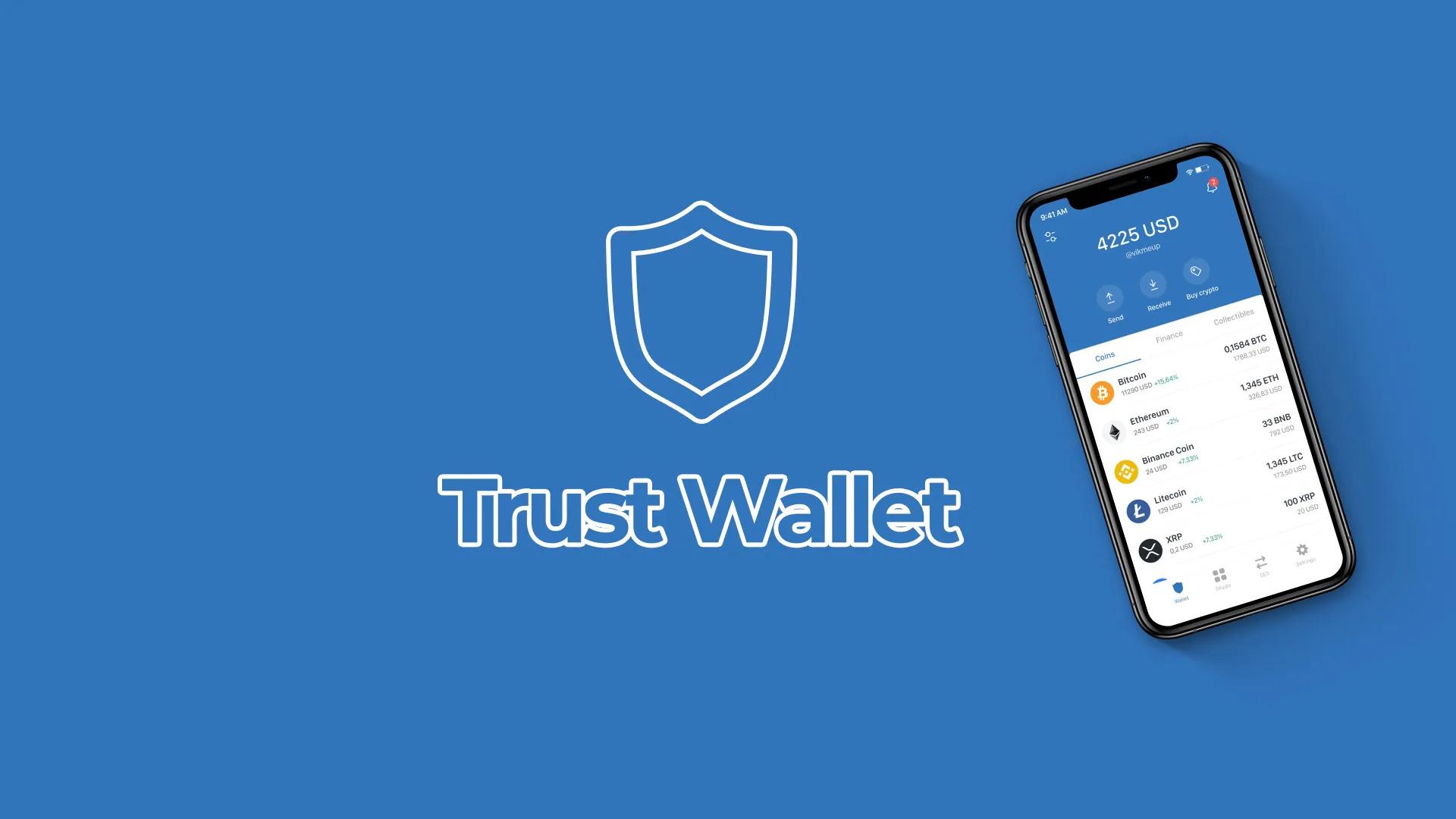 Trust Wallet deploys AI trading agents to 220M users as agentic wallet race heats up2026-03
 Trust Wallet launches Cash Deposits, enabling users to convert physical cash into crypto.2026-02
 Trust Wallet confirmed a security incident affecting Chrome extension version 2.68 after reports of unauthorized withdrawals following a recent update, with over $6M drained so far; users are urged to disable and upgrade immediately.2025-12
Trust Wallet: A Deep Dive into the Self‑Custody Super‑App
This self‑custodial, multi‑chain wallet has evolved from a simple crypto storage app into a full on‑chain trading and automation hub, combining spot swaps, derivatives, tokenized stocks, and AI agents under one interface. By emphasizing private key ownership while layering in advanced trading and developer tooling, Trust Wallet illustrates how consumer wallets are becoming the main operating system for on‑chain finance.
What Is Trust Wallet?
At its core, Trust Wallet is a non‑custodial cryptocurrency wallet that lets users store, send, receive, and swap digital assets while keeping full control over their private keys. In a non‑custodial design, the wallet provider never holds user funds or seed phrases; instead, keys are generated and stored on the user’s device, and only the wallet owner can authorize transactions on‑chain. Trust Wallet positions itself as a self‑custody, multi‑chain wallet that supports more than one hundred blockchains and millions of assets, including major networks like Ethereum, BNB Smart Chain, Bitcoin, Solana, Tron, and others. With hundreds of millions of downloads reported across mobile and browser extension, it has become one of the most widely used entry points into the crypto ecosystem.
The project is framed around the ethos often summarized as “your keys, your crypto,” reflecting the idea that holding private keys is the only way to truly own digital assets on a permissionless network. Trust Wallet originated as an independent wallet before becoming associated with Binance’s ecosystem; more recent coverage stresses that it is a digital wallet linked to Binance founder Changpeng Zhao while still functioning as a self‑custody product rather than a centralized exchange account. That distinction matters for both security and regulation, since unlike an exchange account, funds in a self‑custody wallet are not pooled and can neither be rehypothecated nor frozen by a third party. The wallet app instead acts as a user interface to blockchains, creating and signing transactions that the user then broadcasts on‑chain.
Trust Wallet’s architecture reflects this separation between interface and control. The wallet generates private keys locally on the user’s device and never transmits those keys to Trust Wallet’s servers, meaning the company cannot access or recover a user’s funds if the recovery phrase is lost. The app manages multiple chains through separate addresses derived from a hierarchical deterministic (HD) wallet, but for users this is abstracted into a single portfolio view that can show balances and activity across numerous networks simultaneously. Because the wallet is non‑custodial, the underlying assets always reside on their respective blockchains; Trust Wallet is essentially a key manager and transaction signer that makes this multi‑chain reality usable on a phone or desktop browser.
From a feature perspective, Trust Wallet has moved far beyond simple storage. Users can buy certain assets via integrated fiat on‑ramps, receive tokens from exchanges or other wallets, send and swap coins between networks, and connect to decentralized applications (dApps) across DeFi, NFTs, and gaming. Swaps are presented through a streamlined in‑app interface that emphasizes speed and simplicity, allowing users to choose an asset pair, enter an amount (even in fiat terms), review pricing, and confirm a trade in a single flow. The wallet also acts as a bridge into external protocols, enabling users to stake or provide liquidity on various networks by connecting via WalletConnect or the TrustConnect SDK, while still keeping keys on their own device.
Over the last few years, however, Trust Wallet has increasingly blurred the line between “wallet” and “trading venue.” It now offers direct access to perpetual futures markets via Hyperliquid and Aster DEX, prediction markets built on Hyperliquid’s HIP‑4 outcome contracts, tokenized stocks and pre‑IPO assets through bStocks and PreStocks integrations, and even AI‑powered automation through the Trust Wallet Agent Kit. This layered feature set positions Trust Wallet less as a passive storage tool and more as an on‑chain finance super‑app, where users can move from holding USDC to margining perps, trading tokenized SpaceX exposure, or delegating rebalancing strategies to AI agents, all while remaining in self‑custody.

Trust Wallet adds cross-chain trading via MoonPay Trade across seven networks

Self‑Custody, Keys, And Security Model
Non‑Custodial Design Explained
The defining characteristic of Trust Wallet is its non‑custodial design, which fundamentally differs from the experience of using a centralized exchange account or hosted wallet. In a custodial setup, a third‑party platform controls the private keys and effectively owns the on‑chain assets, while the user has a claim on those funds recorded in the provider’s database. By contrast, a non‑custodial wallet like Trust Wallet ensures that only the user holds the private keys, meaning only they can sign transactions, move funds, or interact with smart contracts. Trust Wallet emphasizes that it never has access to user keys or seed phrases, cannot freeze accounts, and cannot restore wallets if the user loses their recovery phrase, because it simply does not hold that information.
This architecture offers both empowerment and responsibility. On the positive side, users are not exposed to counterparty risks such as exchange insolvency, withdrawal freezes, or unilateral account closure, which have historically affected custodial platforms. Self‑custody also aligns with the permissionless ethos of public blockchains, where anyone can transact without asking for approval, provided they can sign transactions with the correct key. On the other hand, non‑custodial wallets remove the safety net that many mainstream users are accustomed to with banks or fintech apps, such as password resets or customer support that can reverse mistaken transfers. If a user loses their recovery phrase or signs a malicious transaction, there is usually no centralized operator capable of undoing the damage.
For this reason, using Trust Wallet effectively requires at least a basic understanding of how public‑key cryptography, addresses, and on‑chain transfers work. The wallet tries to abstract much of this complexity behind a familiar interface, but at a conceptual level the app is not holding the assets for the user. Instead, it is creating, signing, and broadcasting transactions to decentralized networks where settlements are final and irreversible. This self‑custody paradigm is what enables Trust Wallet to serve users across jurisdictions without requiring KYC for basic wallet functionality, since the company is not taking possession of funds or offering custodial services.
Private Keys, Recovery Phrases, And Backups
Under the hood, control of a Trust Wallet account ultimately comes down to the private key or, more commonly, the recovery phrase that encodes it. A private key is a long cryptographic string of letters and numbers, comparable to a very strong password, that grants direct control over the funds at a corresponding public address. Anyone who obtains this key can sign transactions and move assets, regardless of whether they have access to the original device or app. Because private keys are difficult for humans to manage safely and accurately, modern wallets rarely expose them directly to users.
Instead, Trust Wallet and similar products rely on a recovery phrase, also known as a seed phrase or backup phrase, which is a set of typically twelve randomly generated words shown to the user during wallet creation. This phrase acts as a human‑readable master key that can regenerate all of the private keys in the wallet, including those for different blockchains and accounts. If a device is lost, stolen, or reset, entering the recovery phrase into a compatible wallet app on a new device will restore access to all associated addresses and funds. This convenience comes with high stakes: anyone else who learns the recovery phrase can also restore the wallet and drain its contents.
Trust Wallet’s guidance, echoing best practices across the industry, is that users must never share their recovery phrase with anyone and should never enter it into any website, form, or application other than a trusted wallet during an intentional recovery process. The phrase should be written down, preferably on paper or another offline medium, and stored in a secure location such as a safe or safety deposit box rather than on a cloud drive or internet‑connected device. Because Trust Wallet does not store or know the recovery phrase, it cannot help users recover access if this backup is lost, which makes disciplined backup practices essential for anyone relying on the wallet as a long‑term store of value.
Beyond key storage, Trust Wallet also encourages broader digital hygiene. Strong, unique passwords for device access and any associated accounts, changed regularly and managed with a password manager, reduce the risk that an attacker can compromise the phone or computer on which the wallet runs. Where possible, enabling two‑factor authentication on related services, such as email and exchange accounts, adds another layer of protection against account takeovers that could lead to social‑engineering attempts targeting the wallet. Regular backups of wallet data and careful testing of restoration processes can further reduce the risk of losing access due to hardware failure or accidental deletion, although the recovery phrase remains the ultimate fallback in a non‑custodial setup.
Threats, Scams, And User Responsibilities
Because self‑custody wallets hold real assets under the user’s exclusive control, they are an attractive target for scammers and malware authors. Common attack vectors include phishing websites that mimic popular interfaces, fake support agents who try to trick users into revealing their recovery phrase, malicious browser extensions, and “drainer” smart contracts that obtain broad token approvals and then empty wallets. In all of these cases, the attacker is not breaking blockchain cryptography; they are persuading users to sign harmful transactions or disclose secrets that allow them to sign on the user’s behalf. Once those transactions are confirmed on‑chain, there is rarely any recourse.
Trust Wallet’s non‑custodial design means that the company cannot unilaterally reverse fraudulent transfers or freeze compromised accounts, which places the burden of vigilance squarely on the user. Users must develop habits such as double‑checking URLs, bookmarking official sites, and verifying that any dApp they connect to via Trust Wallet is the legitimate version rather than a spoofed clone. Cross‑checking token contract addresses from authoritative sources rather than relying on name searches in explorers or interfaces can help avoid fake tokens designed to impersonate popular assets. Being skeptical of unsolicited messages or links, especially those that claim urgent security issues or time‑limited opportunities, remains one of the simplest and most effective defenses.
Mobile app stores introduce another layer of risk, as malicious developers sometimes publish counterfeit wallet apps that imitate the branding of established products to capture seed phrases from unsuspecting users. Security researchers have repeatedly documented such fake apps across major platforms, prompting periodic clean‑ups by store operators. From a Trust Wallet user’s perspective, the safest practice is to install the app via links on the official Trust Wallet website or to verify the developer name and reviews carefully before downloading anything that claims to be a wallet. Keeping the operating system updated, avoiding jailbroken devices, and using built‑in security features like biometric locks can further harden the environment in which the wallet runs.
Ultimately, self‑custody transfers many responsibilities that would traditionally belong to a bank, broker, or exchange directly to the individual. Trust Wallet can provide guidance, in‑app warnings, and secure defaults, but it cannot protect users from every risky decision or social‑engineering attempt. The same qualities that make on‑chain finance open and censorship‑resistant also mean that mistakes are often permanent. Anyone using Trust Wallet, especially for larger balances or leveraged trading, should treat operational security as a core part of their strategy rather than an afterthought.
Readers engage with Trust Wallet primarily as a personal threat surface — the iMessage zero-day warning drew 2.8× more clicks than the next headline (cash deposits), revealing that readers treat Trust Wallet news as a real-time security feed rather than a product discovery channel.
Multi‑Chain Support, Stablecoins, And Core Flows
Chains And Assets Supported
One of Trust Wallet’s core selling points is its broad multi‑chain support. The wallet is designed to handle more than one hundred different blockchains, from major smart‑contract networks like Ethereum, BNB Smart Chain, Solana, and Tron to Bitcoin and various other EVM and non‑EVM chains. This breadth means that users can manage a wide range of coins and tokens, including ERC‑20s, BEP‑20s, NFTs, and native coins like BTC or SOL, from a single interface. Instead of juggling multiple wallet apps for each network, a user can view and control their entire portfolio in one place, even as the underlying assets reside on different chains.
This multi‑chain capability has become increasingly important as liquidity and innovation fragment across ecosystems. A DeFi participant might hold governance tokens on Ethereum, stablecoins on BNB Chain, NFTs on Solana, and gaming assets on sidechains or alternative L1s. For such users, a wallet that only supports one or two networks quickly becomes a bottleneck. Trust Wallet’s positioning as a “wallet for every chain” speaks to this reality and makes it attractive both to retail users exploring new protocols and to developers who want their dApps to be accessible from a single, widely adopted wallet. The TrustConnect SDK further reinforces this by offering a standard way for dApps to connect to Trust Wallet across EVM chains, Solana, and Bitcoin, reducing integration friction for developers.
At a technical level, managing multiple chains requires the wallet to handle different address formats, transaction types, and fee models. Trust Wallet abstracts most of this complexity, presenting a unified send/receive interface while configuring each transaction to conform to the relevant network’s rules. When users switch between networks, the wallet derives the appropriate addresses and keys from the underlying seed phrase using standardized derivation paths. For advanced users, the ability to view and manage assets across many chains within one app can significantly reduce operational overhead, especially when combined with features like in‑app swaps and cross‑chain bridging that move liquidity between ecosystems.
Stablecoins And USDC Management
Within this multi‑chain environment, stablecoins—and USDC in particular—play a central role as the base asset for payments, DeFi strategies, and derivatives margin. Trust Wallet emphasizes its multi‑chain stablecoin support, enabling users to manage stablecoins like USDC across networks such as Ethereum, BNB Chain, Solana, and Tron from a single interface. Because USDC is issued on multiple chains, users often hold balances on several networks simultaneously, depending on which DeFi protocols or exchanges they are using. The ability to see and move those positions inside one wallet, rather than tracking separate addresses for each chain, simplifies daily operations.
This cross‑chain stablecoin management connects directly to Trust Wallet’s trading features. For example, the integration with Hyperliquid’s HIP‑4 outcome markets and perpetual futures often relies on USDC as the primary margin or settlement asset. Inside Trust Wallet, assets that users deposit into Hyperliquid’s prediction markets can be converted into USDC in a single step, meaning that the user does not need to manually swap into USDC on an external exchange and bridge funds across chains before participating. Similarly, for perps trading, Trust Wallet supports deposits of tokens like ETH, BNB, USDC, and SOL from across its 100‑plus supported chains, with funds available on the destination protocol in seconds. This reduces friction and makes USDC feel like a truly chain‑agnostic liquidity layer rather than a fragmented set of separate tokens.
Stablecoins also matter for less speculative use cases. Users may hold USDC as a dollar‑pegged store of value, use it to pay other users globally, or park proceeds from volatile trades while staying on‑chain. Trust Wallet allows users to receive USDC from centralized exchanges or other wallets by generating a receive address on the appropriate network and presenting it through a QR code or text string. Because USDC exists on multiple chains, users must pay close attention to the network they select when withdrawing from an exchange; sending USDC on the wrong chain to an address that does not support it can result in loss of funds. Trust Wallet’s interface helps mitigate this by clearly labeling networks and segregating addresses by chain, but the underlying responsibility still lies with the user.
Swapping, Buying, And Moving Funds
Beyond simply holding assets, most Trust Wallet users quickly interact with its built‑in swap functionality. The wallet offers a streamlined swapping interface that aims to make token‑to‑token trades faster and more intuitive, consolidating the process into a single screen. Users can select the asset they want to swap from, choose the asset they want to receive, enter the amount—optionally in fiat terms—and then review pricing, estimated output, and fees before confirming the swap. Popular tokens are surfaced based on real swap activity to reduce search friction, while the backend aggregates liquidity across integrated providers to obtain competitive rates and route trades efficiently.
Swaps are not limited to a single chain. Through integrations with cross‑chain swap partners, Trust Wallet enables scenarios such as swapping USDC on Ethereum to USDC on Solana within the wallet’s interface, rather than manually bridging and trading across separate platforms. In practice, such flows may involve bridging protocols or liquidity routers behind the scenes, but from the user’s perspective it is expressed as a simple “from network” and “to network” selection combined with a token pair. This kind of cross‑chain swap functionality is particularly important as DeFi strategies and trading venues span multiple ecosystems, and as stablecoins like USDC operate across chains.
For users entering crypto for the first time, Trust Wallet also integrates fiat on‑ramps that allow them to purchase tokens directly with traditional payment methods via third‑party providers. In educational materials, Trust Wallet uses the example of buying an “AI token” such as FET: the user selects “Buy” from the home screen, chooses the token, specifies their fiat currency and purchase amount, picks a preferred on‑ramp provider and payment method, and completes the transaction through that provider’s flow. The purchased tokens are then deposited into the user’s Trust Wallet address on the relevant chain. This pattern abstracts away the need for a centralized exchange account for users who simply want to acquire certain tokens and immediately hold or use them on‑chain.
Moving funds into Trust Wallet from other sources follows a more traditional wallet pattern. The app allows users to select an asset, view a receive address and QR code, and share that information with the sender, whether it is another wallet or a centralized exchange. To deposit Bitcoin, for example, users can copy their BTC address from Trust Wallet and paste it into the withdrawal form of an exchange, or use integrated features that streamline deposit flows from certain platforms. Once funds arrive on‑chain, Trust Wallet detects and displays the balances without needing further user input. For users who treat Trust Wallet as their primary self‑custody hub, this deposit‑and‑withdrawal cycle, combined with swaps and on‑ramps, forms the backbone of their on‑chain activity.
Trading, Derivatives, And On‑Chain Markets In Trust Wallet
From Wallet To Trading Terminal
Historically, most crypto wallets focused on basic storage and simple transfers, leaving trading and complex financial products to exchanges and specialized DeFi interfaces. Trust Wallet is one of the projects pushing against that separation, embedding increasingly sophisticated trading capabilities directly inside the wallet while keeping users in self‑custody. In addition to spot token swaps, users can now access perpetual futures, prediction markets, tokenized stocks, and pre‑IPO tokens without leaving the app, effectively turning the wallet into a cross‑asset trading terminal.
This convergence reflects a broader trend: wallets are becoming platforms rather than mere key managers. For active users, the ability to move from holding USDC to opening a leveraged BTC perpetual position, to taking a view on an election outcome, to rotating into tokenized shares of a tech company, all within the same self‑custody environment, is highly attractive. It reduces the cognitive load of juggling multiple logins and UIs, and it keeps capital on‑chain where it can be deployed flexibly instead of being siloed across custodial platforms. At the same time, these features increase the complexity and risk profile of what it means to “use a wallet,” especially for newcomers who might not fully understand derivatives or the obligations associated with tokenized securities.
Trust Wallet’s integrations with external protocols are structured to preserve its non‑custodial model. When a user trades perps via Hyperliquid or Aster DEX through the Trust Wallet interface, they are effectively interacting with those decentralized exchanges using their own wallet, rather than handing funds to Trust Wallet itself. Similarly, when users trade prediction markets via HIP‑4 outcome contracts or buy tokenized stocks like SPCXB, the assets they receive are on‑chain tokens held in their wallet and governed by the underlying protocols. Trust Wallet’s role is to surface these markets in a user‑friendly way, facilitate deposits and withdrawals across chains, and provide a coherent UX for monitoring positions and balances.
Perpetual Futures With Hyperliquid And Aster DEX
Perpetual futures, or perps, have become one of the dominant trading instruments in crypto because they allow traders to speculate on price movements with leverage and no fixed expiry date. Trust Wallet integrates perp trading via two main partners: Hyperliquid and Aster DEX, both accessible directly from within the wallet. Through these integrations, users can trade perpetual contracts on major assets like BTC, ETH, and SOL, as well as a broad range of altcoins and even real‑world assets, using their Trust Wallet as the custodian of margin funds.
Hyperliquid, in particular, plays a central role in Trust Wallet’s perp offering. It is described as a decentralized layer‑one blockchain best known for its perpetual futures and spot trading, and has reportedly processed over four trillion dollars in trading volume, making it one of the largest and most liquid decentralized exchanges. By integrating Hyperliquid, Trust Wallet gives its user base access to deep liquidity and a wide market selection, including RWA perpetuals tied to commodities such as oil and precious metals. Aster DEX complements this by offering its own perp markets, with Trust Wallet surfacing both as options for users who want to compare liquidity, fees, or asset coverage.
From a user experience perspective, the perps integration is designed to be straightforward. Inside Trust Wallet, users can navigate to the perps section, select an asset, choose their leverage, and open a long or short position via Hyperliquid or Aster DEX, all without leaving the wallet. Funding the account is equally streamlined: Trust Wallet allows users to deposit tokens such as ETH, BNB, USDC, SOL, or other supported assets from more than one hundred chains, which are then available as margin on the selected perp venue, often in under two seconds. When users close their positions—either taking profit or cutting losses—funds are returned to their wallet automatically. This structure reinforces the idea that the wallet is both the control center and the custodian of capital, while Hyperliquid and Aster DEX provide the matching engines and contract infrastructure.
The integration of RWA perpetuals further broadens the scope of what Trust Wallet users can trade. Through Hyperliquid, Trust Wallet users can access perpetual futures on assets such as oil and precious metals, giving them synthetic exposure to traditional markets from within a crypto‑native, self‑custodied environment. This blurs the lines between crypto trading and traditional commodities speculation, and dovetails with Trust Wallet’s support for tokenized equities like SPCXB, which we will discuss below. For sophisticated traders, the ability to trade both crypto and RWA perps alongside spot tokens and tokenized stocks, using the same wallet and margin capital, offers powerful cross‑market opportunities, but also adds layers of complexity and risk that must be managed carefully.
Prediction Markets And HIP‑4 Outcome Contracts
Prediction markets offer a different way to take views on future events, using binary or multi‑outcome contracts that pay out based on whether a particular outcome occurs. Trust Wallet has integrated Hyperliquid’s HIP‑4 outcome contracts directly into its app, giving users access to native prediction markets from the same interface they use for other on‑chain activities. These markets allow users to trade positions on questions that can range from crypto price milestones to macroeconomic events, using outcome tokens that represent different possible results.
The HIP‑4 integration is surfaced in Trust Wallet via the Markets tab, under a dedicated Predictions section where users can browse available outcome markets and choose positions. Markets can be binary, offering yes/no outcomes, or multi‑outcome, allowing users to allocate across several possible results within a single market. Once a user selects a market and outcome, they can specify position size and confirm the transaction, with Trust Wallet handling the interaction with Hyperliquid’s contracts while keeping the user’s assets in self‑custody. Importantly, this functionality is offered without additional KYC from Trust Wallet and without leverage, differentiating it from the higher‑risk perp trading experience.
A notable convenience feature is that assets deposited into the prediction markets can be converted into USDC within Trust Wallet in a single click, simplifying the funding process. Rather than manually swapping into USDC and then bridging, users can deposit supported tokens and have the conversion handled as part of the flow, allowing them to focus on the market rather than on logistics. Trust Wallet also emphasizes that it currently charges zero platform fees for access to HIP‑4 outcomes, while Hyperliquid’s own fees for outcome markets are presently set to zero as well. This makes prediction markets an accessible on‑ramp for users who want to experiment with outcome trading without incurring additional wallet‑level costs, though they still face normal market risk.
Because prediction markets can touch on sensitive topics, they carry regulatory and ethical nuances that vary by jurisdiction. Trust Wallet’s role as a self‑custody interface means that it is not directly operating the markets but rather connecting users to Hyperliquid’s decentralized contracts, yet users must still ensure that their participation complies with local laws. From a product design standpoint, the inclusion of prediction markets alongside perps and tokenized stocks shows how Trust Wallet is positioning itself as a neutral access layer to a wide array of on‑chain financial primitives, letting users choose which risk profiles and instruments suit their goals.
Tokenized Stocks, SPCXB, And Pre‑IPO Assets
Perhaps the clearest example of crypto and traditional finance converging inside Trust Wallet is its support for tokenized stocks and pre‑IPO assets via bStocks and the Pre‑IPO collection. bStocks are tokenized representations of real U.S. stocks on BNB Smart Chain, where each token is backed one‑to‑one by actual shares held in custody, enabling on‑chain trading of equity exposure. These tokens reflect the economic performance of the underlying stocks, including price movements, dividends, and corporate actions, while trading on‑chain as standard BEP‑20 tokens that users can hold and transfer from their self‑custody wallets.
SPCXB is a prominent example within this ecosystem. It is a tokenized security on BNB Smart Chain designed to provide economic exposure to SpaceX (SPCX), which is described as being publicly listed on Nasdaq. Like other bStocks, SPCXB tracks the underlying stock’s economic performance and packages it into a BEP‑20 token that can be traded 24/7 directly from Trust Wallet, using the same send, receive, and swap flows as any other token. Inside the Trust Wallet app, users can access SPCXB through the Markets section by navigating to the bStocks list, searching for SPCXB, viewing available trading pairs and quotes, and confirming transactions in‑app. Balances appear immediately in the wallet once the transaction is confirmed on‑chain.
An important interoperability feature is that SPCXB can be converted back into the underlying equity through Binance’s 1:1 conversion feature, which is free and available at all times. This means that on‑chain holders of SPCXB have a clear path to redeem their tokens for actual shares of SpaceX stock, subject to the rules of the conversion program, bridging the gap between on‑chain liquidity and traditional brokerage infrastructure. Users can also sell or swap SPCXB back into other tokens directly within Trust Wallet, treating it like any other BEP‑20 asset when they want to exit or rebalance. This combination of 24/7 on‑chain trading, self‑custody, and redeemability for underlying equities illustrates a hybrid model of tokenized securities that is likely to expand over time.
In parallel, Trust Wallet has introduced a curated Pre‑IPO token collection within its Trending tab, powered by a platform called PreStocks that specializes in tokenized pre‑IPO assets. This collection allows users to explore and trade tokens that represent economic exposure to private‑stage companies before they go public, again without leaving the Trust Wallet app. By opening the Trending tab and selecting the Pre‑IPO collection, users can browse a list of available tokens, review details about each, and then trade them directly in‑app using the wallet’s existing infrastructure. No new accounts or external platform connections are required, making pre‑IPO exposure feel like just another category of on‑chain asset.
These tokenized stock and pre‑IPO integrations do not exist in isolation. Ecosystems like Venus Protocol, a lending platform on BNB Chain, have begun to accept tokenized stock positions as collateral, allowing users to borrow against their bStocks holdings while retaining exposure to the underlying stock price movements. Trust Wallet’s role here is as a primary access point to those tokenized assets; users can acquire SPCXB or other bStocks and then deploy them into DeFi strategies such as collateralized borrowing, all from a self‑custody wallet. This merges elements of securities markets, lending, and spot trading into a continuous on‑chain experience—one that promises flexibility but also introduces additional layers of smart contract, counterparty, and regulatory risk.
- 01Zero-day and exploit alerts
The iMessage zero-day warning (229 clicks) and Chrome extension $6M breach (42 clicks) dominated engagement because readers needed to know whether their funds were at immediate risk — urgency and asset-loss potential drove clicks far above any product launch.
- 02Fake wallet app impersonation
Kaspersky's discovery of 26 fake iOS apps mimicking Trust Wallet, MetaMask, and Ledger (51 clicks) tapped a persistent self-custody anxiety: that the wallet download itself is the attack vector.
- 03Fiat cash onramp access
Cash deposit support (82 clicks) attracted readers seeking a bridge from physical cash to crypto without relying on exchanges, positioning Trust Wallet as a banking alternative.
- 04Tokenized RWA self-custody↗
The ability to swap USDC for Apple, Amazon, and Tesla stock with no broker and no KYC (65 clicks) signaled a regulatory arbitrage that readers recognized as structurally significant for the wallet's scope.
- 05Hyperliquid perp DEX on mobile↗
Two Hyperliquid integration headlines (43 + 38 clicks) showed readers tracking whether mobile self-custody could match the UX of centralized perpetuals trading platforms.
- 06AI agent trading automation↗
The agentic wallet race headline (36 clicks) pulled readers curious about whether autonomous on-chain agents represent a genuine usability shift or a new class of smart-contract risk for 220M users.
AI Agents And The Trust Wallet Agent Kit
From Apps To Autonomous Agents
As crypto markets and DeFi protocols proliferate, the complexity of managing on‑chain activity has grown far beyond what most users can comfortably handle manually. AI agents have emerged as a potential solution, and Trust Wallet has been an outspoken participant in this shift. In the crypto context, AI agents are advanced software systems that leverage artificial intelligence to perform tasks autonomously within the blockchain ecosystem, such as analyzing data, making predictions, and executing transactions. Unlike traditional scripts or bots that follow fixed instructions, AI agents can adapt to changing conditions and operate with a degree of independence from continuous human input.
In educational materials, Trust Wallet describes AI agents as capable of managing portfolios, trading on decentralized exchanges, and interacting with a variety of blockchain protocols efficiently. This could involve scanning multiple DEXs for arbitrage opportunities, rebalancing portfolios based on volatility and correlation metrics, or systematically executing pre‑defined strategies like dollar‑cost averaging and grid trading. While many of these activities have historically been the domain of sophisticated traders and quants, AI agents promise to make them more accessible by encapsulating expertise in software that can be deployed on behalf of any user willing to define goals and risk parameters.
Industry discussions, including those involving Trust Wallet and infrastructure provider Mesh at events like Consensus in Miami, have framed this evolution as a redefinition of what a wallet is. Rather than being purely a human tool—a user interface that waits for a person to click buttons and sign transactions—wallets are increasingly becoming orchestration layers for autonomous economic agents. In this vision, the user expresses high‑level preferences and constraints, such as desired asset allocation, risk tolerance, or income targets, and one or more agents handle the low‑level details of interacting with protocols, rebalancing, and executing trades. The wallet’s role is to mediate this relationship, providing security, visibility, and control over what agents are allowed to do.
Architecture Of The Trust Wallet Agent Kit
To support this agent‑centric future, Trust Wallet has launched the Trust Wallet Agent Kit (TWAK), an infrastructure layer that gives AI agents the ability to read, transact, and automate across more than twenty‑five chains without ever holding user keys. The Agent Kit consists of an MCP server, command‑line interface (CLI), and software development kit (SDK) that encapsulate common wallet operations—such as querying balances, constructing and signing transactions, and interacting with protocols—behind simple, programmable interfaces. Developers can integrate TWAK into AI frameworks, IDEs, and agents, including tools like Claude, Cursor, and Codex, allowing those agents to operate directly on live crypto portfolios subject to user‑defined rules.
TWAK supports two primary operating modes. In the first, an AI agent is given its own dedicated wallet, created through the Agent Kit, where it can execute trades and transactions automatically based on predefined rules or strategies. Users can fund this wallet with a limited amount of capital, define what the agent is allowed to trade and under what conditions, and then let it operate autonomously within those constraints. In the second mode, referred to as a WalletConnect‑style approach, the AI agent does not hold keys or operate an independent wallet but instead analyzes the user’s existing portfolio in Trust Wallet, proposes transactions, and then relies on the user to review and approve those transactions via standard signature prompts. This keeps the user in the loop for every action while still leveraging the agent’s analytical capabilities.
Setting up the Agent Kit is designed to be relatively straightforward for developers. Trust Wallet provides an installation script that downloads and configures the CLI, prompts for API credentials such as an Access ID and HMAC secret obtained from the Trust Wallet portal, and then connects the Agent Kit to selected harnesses like code assistants or AI agents. During setup, developers can choose whether to create a new non‑custodial agent wallet for signing, connect via WalletConnect to an existing wallet, or operate in a read‑only mode that only inspects balances and activity. Once configured, the Agent Kit exposes wallet operations as tools that AI agents can invoke programmatically, effectively turning agents into first‑class clients of the Trust Wallet ecosystem.
Over time, TWAK has been extended with features that align closely with what real users want AI agents to do. One major addition is support for automated dollar‑cost averaging (DCA) and limit orders, letting agents execute recurring buys on a schedule or place conditional orders that fill only when prices hit predetermined levels. Rather than manually logging in to buy crypto every week or watch price charts to time entries, users can set rules once and have their agent handle execution while they remain in control of funds and parameters. More recently, the Agent Kit has also introduced on‑ramp and off‑ramp integrations, giving agents a programmatic surface to move value between fiat and crypto rails, again subject to explicit user configuration. This combination of on‑chain and off‑chain control pushes TWAK closer to being a full financial automation layer.
Security And Control In Agent‑Driven Trading
Bringing AI agents into direct contact with self‑custodied wallets raises novel security questions. Trust Wallet’s design philosophy for TWAK is to extend the core principle of “your keys, your crypto” into the age of AI, ensuring that agents never gain unrestricted, opaque control over user funds. In WalletConnect mode, agents can help users research, model scenarios, and propose transactions—such as swaps, deposits into DeFi protocols, or rebalancing trades—but they cannot execute those transactions without the user explicitly approving them in the Trust Wallet interface. This preserves a clear separation between analysis and action, with the user retaining final say over every signature.
When users opt to give an AI agent its own dedicated wallet, TWAK still encourages a compartmentalized model where that wallet is funded with limited amounts of capital and constrained by user‑defined rules. If the agent’s strategy fails, or if the agent is compromised, the blast radius is restricted to the funds in that specific wallet rather than the user’s entire portfolio. Because the agent wallet is itself non‑custodial, governed by keys generated and stored according to Trust Wallet’s standard practices, users can also monitor and regain full control of it at any time, including revoking the agent’s access or draining funds back to a primary wallet. This structure balances the desire for automation with the need for safeguards appropriate to high‑value, programmable money.
Despite these controls, agent‑driven trading introduces new attack surfaces and failure modes. An adversarial prompt or model exploit could cause an AI agent to propose harmful transactions that a user might approve without fully understanding, especially in fast‑moving markets or complex DeFi protocols. Bugs in agent logic could lead to unintentional over‑leveraging, repeated losses, or exposure to poorly audited contracts. The integration of on‑ramps and off‑ramps adds compliance and fraud‑detection layers that must interact safely with autonomous strategies. Trust Wallet’s approach—keeping keys with the user, limiting agent permissions, and making all transactions transparent and revocable at the wallet level—mitigates some of these risks, but it does not eliminate the need for caution, education, and robust testing.
From a broader perspective, TWAK signals a shift in how wallets see their role. Rather than just offering UI conveniences, Trust Wallet is building infrastructure for an emerging class of agentic applications that treat crypto wallets as programmable endpoints in an automated financial stack. If successful, this could make sophisticated strategies and cross‑chain operations accessible to a much wider audience, but it will also require careful UX design to ensure users understand what they are delegating, to whom, and under what constraints.

Trust Wallet teases Robinhood Crypto stock tokens for onchain finance

Developer Ecosystem And Integrations
TrustConnect SDK And dApp Connectivity
For developers building decentralized applications, connecting to users’ wallets is a critical step in enabling interactions like swaps, staking, governance voting, and NFT minting. Trust Wallet addresses this with the TrustConnect SDK, a free, open‑source wallet connection library designed to work across EVM chains, Solana, and Bitcoin. TrustConnect abstracts the details of communication between dApps and Trust Wallet, providing standard methods for requesting connections, obtaining user addresses, and sending transaction payloads for signing. This allows developers to integrate Trust Wallet as a connection option alongside or instead of other wallet connectors, with minimal additional code.
The SDK is positioned as a multi‑chain connector “for every chain,” reflecting Trust Wallet’s broad network support and its desire to help developers reach its large user base through a consistent interface. When a user visits a dApp that has integrated TrustConnect and chooses to connect via Trust Wallet, the SDK handles opening the wallet (or extension), relaying the connection request, and establishing a secure channel for subsequent operations. The user approves the connection in their wallet, granting the dApp visibility into selected addresses and the ability to request signatures, but not direct control over funds. This pattern is familiar from WalletConnect‑style flows, but TrustConnect is optimized for Trust Wallet’s specific capabilities and multi‑chain reach.
For dApp teams, integrating TrustConnect offers several advantages. It ensures compatibility with Trust Wallet’s mobile app and browser extension, which is important because many users now treat their wallet as their primary browser for Web3 interactions. It also taps into Trust Wallet’s branding and distribution, potentially increasing user trust and conversion rates when they see an explicit “Connect with Trust Wallet” option. Because the SDK is open source, developers can audit its behavior, adapt it to their needs, or contribute improvements, fostering a more transparent and community‑driven infrastructure layer. As the agentic ecosystem grows, TrustConnect also provides a bridge between traditional dApps and agent‑driven workflows that rely on the same underlying wallet connections.
Building Agent‑Native Experiences
The combination of TrustConnect and the Agent Kit opens up possibilities for a new generation of agent‑native applications that treat on‑chain actions as programmable primitives. Developers can use TWAK to give AI agents controlled access to wallet operations, while using TrustConnect to integrate those agents’ outputs into dApp interfaces or back‑end services. For example, a DeFi dashboard might integrate an AI agent that analyzes a user’s positions across multiple protocols and proposes a series of optimization transactions; the Agent Kit could handle the transaction construction and signing logic, while TrustConnect manages the connection between the dashboard and the user’s Trust Wallet.
Potential use cases include portfolio rebalancing bots that maintain target allocations, yield‑maximizing agents that shift liquidity between lending markets, NFT strategies that automate floor‑sweeping or trait‑based sniping under budget constraints, and cross‑chain arbitrage agents that exploit temporary price discrepancies across DEXs. In each case, the agent can operate either in a simulation mode—proposing actions that the user must approve—or in an autonomous mode with a dedicated wallet and explicit limits. Because TWAK exposes wallet operations as a programmable surface, it can be wired into a variety of AI frameworks and orchestration tools, from chat‑based assistants to fully automated back‑end systems.
Commentary from industry events suggests that leading wallet providers, including Trust Wallet, see this agentic layer as a key differentiator in the coming years. Wallets that can safely host and coordinate multiple agents, each specializing in different tasks or protocols, may become the primary interface through which both retail and institutional users interact with on‑chain finance. By investing early in infrastructure like TrustConnect and the Agent Kit, Trust Wallet is positioning itself as both a consumer product and a developer platform—a place where agent builders can test, deploy, and scale their creations against a live user base that spans many chains and asset classes.
Of course, building agent‑native experiences also raises governance and ethical questions. Developers must think carefully about how much autonomy to grant agents, how to communicate risks and limitations to users, and how to handle edge cases such as protocol exploits or oracle failures. Trust Wallet’s emphasis on self‑custody and user control provides a foundation, but the application layer will need its own best practices, standards, and possibly even regulatory frameworks as agentic finance matures.
User Profiles, Use Cases, And Practical Workflows
Everyday Users And Long‑Term Holders
For many people, Trust Wallet will first be encountered as a simple way to store crypto securely on a phone or laptop. Everyday users who primarily want to hold tokens, send payments, or occasionally swap into new assets can treat Trust Wallet as a familiar mobile banking app, with balances, transaction histories, and a straightforward send/receive interface. The key difference is that instead of trusting a bank or exchange, they are trusting the combination of open blockchains, their recovery phrase, and the security of their device. For long‑term holders, this self‑custody model is appealing because it avoids counterparty risk and allows them to opt out of exchange custody while still having easy access to funds when needed.
A typical low‑frequency workflow might involve buying stablecoins or blue‑chip assets through an exchange or an integrated fiat on‑ramp, withdrawing them to Trust Wallet, and then simply holding or occasionally rebalancing via in‑app swaps. Stablecoins like USDC can serve as a digital cash balance, used to pay friends, receive income, or as dry powder for future investments across different chains. When everyday users want to experiment with newer narratives, such as AI‑related tokens, they can use Trust Wallet’s buy flow—searching for a token like FET, selecting a fiat amount, and completing the purchase through a partner provider—without setting up separate exchange accounts. This makes thematic investing more accessible while keeping assets in a non‑custodial environment.
For long‑term holders, operational security becomes a core part of the use case. Trust Wallet’s emphasis on securely backing up the recovery phrase, using strong device passwords, and storing backups offline aligns with the needs of users who might not trade frequently but do care deeply about preserving capital over many years. Because the wallet supports a broad range of chains and tokens, long‑term holders can also consolidate multi‑chain portfolios into a single app, reducing fragmentation and making periodic portfolio reviews easier. The fact that Trust Wallet is widely supported as a connection option on dApps means that even casual users can occasionally stake, lend, or participate in governance without learning a new wallet interface for each protocol.
Active Traders And On‑Chain Power Users
For more active traders and DeFi power users, Trust Wallet’s value proposition looks quite different. This cohort is drawn to the wallet not only for its self‑custody but also for its embedded access to perps, prediction markets, tokenized stocks, pre‑IPO tokens, and multi‑chain liquidity. From their perspective, Trust Wallet is a mobile‑friendly trading workstation that allows them to manage positions across spot, derivatives, and tokenized securities while maintaining control over collateral and avoiding centralized exchange custody. The integration of Hyperliquid and Aster DEX for perps trading, combined with HIP‑4 outcome contracts and bStocks, means that many of the most actively traded on‑chain markets are available from a single app.
A practical workflow for such a user might involve depositing SOL or ETH from another chain into Hyperliquid via Trust Wallet, where the app automatically converts the deposit into USDC margin, allowing them to open leveraged positions quickly. They might hedge those positions by taking views in HIP‑4 prediction markets or by trading RWA perps tied to commodities that correlate with their crypto holdings. Simultaneously, they could allocate part of their portfolio to tokenized equities like SPCXB or to curated pre‑IPO tokens, using Trust Wallet’s Markets and Trending tabs to discover and trade these assets without leaving the app.
AI agents add another layer of sophistication to this power user workflow. Traders can use the Trust Wallet Agent Kit to set up DCA strategies that automatically accumulate positions over time, or to place limit orders that execute when assets hit target prices, without babysitting charts. More advanced setups might involve agents that monitor funding rates, volatility, and cross‑exchange spreads, proposing or executing rebalancing trades to optimize performance. Because all of this occurs in a self‑custodial context, traders retain flexibility in how they allocate capital between manual and automated strategies, and they can adjust risk boundaries by moving funds between their primary wallet and agent‑controlled wallets.
Developers, DAOs, And Institutions
Developers, DAOs, and institutional participants represent a third important user profile for Trust Wallet, though they might interact with it more through its APIs and SDKs than through its consumer UI. For protocol teams and dApp developers, integrating TrustConnect ensures that their applications are easily accessible to millions of Trust Wallet users across EVM chains, Solana, and Bitcoin, increasing potential liquidity and engagement. For DAOs, using Trust Wallet for treasury management—possibly combined with multisig setups or agent‑driven automation—allows them to hold assets in self‑custody while still benefiting from a familiar interface and broad integration support. Institutions experimenting with on‑chain finance may similarly use dedicated Trust Wallet instances or agent wallets to manage test portfolios, interact with DeFi, or explore tokenized asset strategies.
The Agent Kit, in particular, is attractive to developers building AI‑driven financial products or internal tooling. By exposing wallet operations in a programmatic way, TWAK allows them to prototype and deploy agents that operate on real capital under controlled conditions. For example, a DAO might build an internal agent that monitors treasury positions, proposes rebalancing trades based on governance decisions, and then executes those trades once authorized, all using Trust Wallet as the signing and custody layer. Institutions might build compliance‑aware agents that enforce portfolio constraints, monitor for abnormal activity, and create audit logs of all on‑chain actions, leveraging the transparency of blockchains for risk management.
Moreover, the intersection of Trust Wallet’s support for tokenized stocks, DeFi protocols like Venus that accept those tokens as collateral, and AI agents opens up complex, composable strategies. An institution could, for instance, hold tokenized equity exposure via bStocks in a Trust Wallet, use some of those tokens as collateral on Venus to borrow stablecoins, and deploy an AI agent to manage the resulting leverage and yield strategies within predefined risk limits. While many of these use cases are still experimental, the underlying tools provided by Trust Wallet—non‑custodial storage, multi‑chain access, trading integrations, and agent infrastructure—make them technically feasible.
- 2023-04exploit
Chrome extension v2.68 breach; $6M+ drained from users
- 2023-12exploit
Kaspersky identifies 26 fake iOS wallet apps; Apple removes all
- 2024-04exploit
Trust Wallet issues high-risk iMessage zero-day warning for iOS users
Trust Wallet becomes first major self-custodial wallet to support tokenized RWA stock swaps
Hyperliquid perp DEX integration brings mobile perpetuals trading to 220M users
Hyperliquid HIP-4 prediction markets go live in-app with no KYC and zero platform fees
AI Agent Kit launched, enabling DCA automation and limit orders via on-chain agents for 220M users
Developer Portal grants AI agents read-only cross-chain access across 100+ chains
Risks, Limitations, And Regulatory Considerations
Self‑Custody Is Not For Everyone
Although self‑custody is a foundational principle of crypto, it is not necessarily the right choice for every user at every stage. Trust Wallet’s non‑custodial design means that if a user loses their recovery phrase and does not have a backup, there is no centralized provider who can restore access to the funds. This is a feature from a decentralization standpoint but a risk from a usability perspective, particularly for newcomers who may not yet appreciate the importance of safeguarding their seed phrase. Users accustomed to bank accounts with password reset options and customer support may find this level of responsibility unfamiliar and challenging.
Mistakes in transaction execution can also be more costly in a self‑custody environment. Sending funds to the wrong address, using the wrong network for a token, or signing a malicious transaction can each result in irreversible loss. While Trust Wallet offers UI cues and may integrate protective checks, it cannot override the underlying rules of the blockchain, which treat all validly signed transactions as final. For some users, especially those handling large amounts of capital or operating in high‑risk environments, a hybrid approach that combines self‑custody with institutional‑grade security measures or third‑party oversight might be more appropriate than using a single hot wallet on a mobile device.
On the other hand, relying solely on custodial solutions carries its own set of risks, including exchange insolvencies, withdrawal freezes, and compliance‑driven account restrictions. Trust Wallet gives users an alternative that avoids these counterparty risks but demands greater operational discipline. Understanding where one sits on this spectrum—what risks one is willing to accept in terms of personal responsibility versus counterparty exposure—is critical when deciding how central a role Trust Wallet or any self‑custodial wallet should play in one’s overall financial setup.
Trading, Leverage, And Complexity
Integrating perps, prediction markets, tokenized stocks, and pre‑IPO assets into a wallet significantly increases the product’s complexity and the potential for user harm if these tools are misused. Perpetual futures allow leverage of up to 100x on some venues, which means that small price movements can wipe out entire positions. Prediction markets, while typically unleveraged in Trust Wallet’s HIP‑4 integration, still require a nuanced understanding of probability, liquidity, and event resolution. Tokenized stocks and pre‑IPO tokens introduce idiosyncratic risks related to underlying company performance, market structure, and, in some cases, additional counterparty arrangements.
For sophisticated traders, these instruments are useful tools for expressing views, hedging portfolios, and pursuing advanced strategies. For inexperienced users, however, they can be dangerous if treated as simple extensions of spot trading. The convenience of accessing these markets from a familiar wallet interface may obscure the fact that they entail very different risk profiles, particularly when leverage is involved. Liquidations on perps platforms can occur rapidly, and price or data feeds for RWA perps and tokenized assets may behave differently from those in centralized, regulated markets. Users must educate themselves on how these instruments work before committing significant capital.
Trust Wallet’s role in this ecosystem is to provide access, not to act as a risk manager or financial advisor. While the wallet can surface warnings, limit default leverage settings, and encourage responsible trading practices, it cannot prevent users from taking aggressive positions or making speculative bets they do not fully understand. As the line between “wallet” and “trading platform” continues to blur, the importance of user education, clear disclosures, and possibly standardized risk labeling across protocols will only grow.
Tokenized Securities And Compliance Questions
The integration of tokenized stocks and pre‑IPO tokens introduces additional layers of regulatory and compliance complexity. Tokens like SPCXB are explicitly described as tokenized securities designed to provide economic exposure to specific publicly listed stocks, reflecting price, dividends, and corporate actions while trading as on‑chain BEP‑20 tokens. These structures rely on underlying custodial arrangements where real shares are held and mapped to tokens on BNB Smart Chain, and on conversion mechanisms such as Binance’s 1:1 conversion feature that allow holders to move between on‑chain tokens and off‑chain equities.
Such arrangements inevitably raise questions about jurisdiction, investor eligibility, disclosures, and the regulatory status of the token issuers and intermediaries involved. Trust Wallet, as a self‑custody wallet and access interface, is not itself issuing these tokens, but it is prominently surfacing them in its Markets and Trending tabs, which may influence user perceptions. Users who trade tokenized stocks or pre‑IPO tokens via Trust Wallet must therefore consider not only market risk but also legal and compliance risk, including how these assets are treated in their home jurisdiction and what rights or protections they actually confer.
The use of tokenized stocks as collateral in DeFi platforms like Venus adds further complexity. When a user deposits bStocks into Venus to borrow stablecoins, they are effectively stacking the risk of the tokenization structure, the DeFi protocol, and any downstream uses of borrowed funds. While this composability is a hallmark of DeFi’s innovation, it also creates chains of dependency that can fail in unexpected ways if any component behaves unpredictably or is subjected to regulatory action. Trust Wallet’s integration makes such strategies technically straightforward, but users must still do their own due diligence on each component protocol and the legal status of the assets involved.
AI Agents And New Attack Surfaces
Finally, the embedding of AI agents into self‑custodial wallets introduces novel risks that the industry is only beginning to grapple with. Giving AI agents the ability to analyze portfolios, propose transactions, and in some cases execute trades autonomously means that errors or misaligned incentives can have direct financial consequences. A flawed model might chase momentum into illiquid tokens, misinterpret oracle data, or over‑optimize for short‑term performance at the expense of long‑term risk management. An adversarial prompt or exploit could cause an agent to propose malicious transactions, which inattentive users might approve, or to act against the user’s interests within the boundaries of its permissions.
Trust Wallet’s design for the Agent Kit—keeping keys with the user, supporting separate agent wallets with limited funds, and requiring explicit approvals in WalletConnect mode—mitigates some of these concerns. However, as agent ecosystems grow more complex, it may become harder for users to understand the full implications of the strategies they are delegating, especially when multiple agents operate in parallel or interact indirectly through shared liquidity pools and protocols. Transparency around agent behavior, clear logging of actions, and tools for simulating and auditing strategies will be important components of a safe agentic ecosystem.
Regulators are likely to take an interest in this area as well, particularly when agents operate across on‑ramps, off‑ramps, and tokenized securities. Questions about accountability—who is responsible if an agent causes losses due to negligence, poor design, or misrepresentation—will become more pressing. Trust Wallet’s stance as a provider of infrastructure rather than a fund manager gives it some distance from these issues, but the way it designs and promotes agent features will still influence how regulators, courts, and users perceive responsibility and risk in agent‑driven finance.
Outlook
Trust Wallet’s trajectory illustrates the broader evolution of crypto wallets from simple key managers into multi‑chain, multi‑asset financial operating systems. By combining non‑custodial storage with integrated spot swaps, access to perps via Hyperliquid and Aster DEX, prediction markets through HIP‑4 outcome contracts, tokenized equities like SPCXB, curated pre‑IPO tokens, and now AI‑driven automation through the Agent Kit, Trust Wallet has turned its wallet into a full‑stack on‑chain trading and investing environment. At the same time, it has invested in developer tooling like TrustConnect and TWAK to make the wallet a first‑class platform for dApp and agent builders.
For users and the broader crypto ecosystem, this convergence brings both opportunities and challenges. On the opportunity side, self‑custodial wallets like Trust Wallet can offer access to a wider range of assets and strategies than many traditional brokerages, often with lower barriers to entry and around‑the‑clock markets. Stablecoins and cross‑chain bridges make it easier to move liquidity to where it is needed, while AI agents promise to democratize sophisticated strategies and reduce operational burdens. On the challenge side, the increased complexity of products, the risks of leverage and tokenized securities, and the new attack surfaces introduced by agents and cross‑chain infrastructure all demand higher levels of user education, security awareness, and regulatory clarity.
As the industry moves forward, Trust Wallet’s choices—how it balances feature expansion with safety, how it structures permissions for agents, how it communicates risks around tokenized assets and perps, and how it collaborates with developers on open standards—will likely shape expectations for what it means to be a modern crypto wallet. Whether wallets ultimately become the primary interface for AI‑driven, on‑chain finance or cede that role to specialized agent platforms, Trust Wallet’s current strategy positions it near the center of that conversation. For now, it stands as a prominent example of how self‑custody, trading, tokenization, and AI are converging in a single, user‑facing product.
Latest Trust Wallet news
Sources
18 records from 8 domains
trustwallet.com
- trustwallet.com· glossary / non-custodial-wallet
- trustwallet.com· blog / stablecoins / the-importance-of-multi-chain-stablecoin-support-in-trust-wa…
- trustwallet.com· blog / security / private-key-vs-recovery-phrase
- trustwallet.com· blog / announcements / hyperliquid-hip-4-outcome-contracts-now-live-on-trust-wallet
- trustwallet.com· blog / announcements / pre-ipo-tokens-now-live-in-trust-wallet-trending
- trustwallet.com· blog / announcements / your-ai-agent-can-now-run-your-crypto-strategy-introducing…
- trustwallet.com· blog / trading / what-are-ai-agents
- trustwallet.com· blog / announcements
- trustwallet.com· swap
- trustwallet.com· perps
- trustwallet.com· blog / announcements / access-spcxb-on-trust-wallet-tokenized-space-x-exposure-on…
portal.trustwallet.com
developer.trustwallet.com
binance.com
mexc.com
globenewswire.com
instagram.com
x.com
Community notes
Spot something off or out of date? Drop a note. Editors review topic notes daily and roll accepted fixes into the explainer — contributors are recognized in the monthly $SQUID drop.
Loading notes…
Help improve this topic
Have a story or tip about this topic? Submit it. See something missing? Leave a note. Editors review daily; accepted submissions and fixes count toward the monthly $SQUID drop.