
The U.S. Treasury shapes crypto through sanctions enforcement, stablecoin legislation, tokenized T-bill infrastructure, and cybersecurity intel sharing — making it central to how digital assets intersect with dollar dominance.
+12 sources across the wider coverage universe
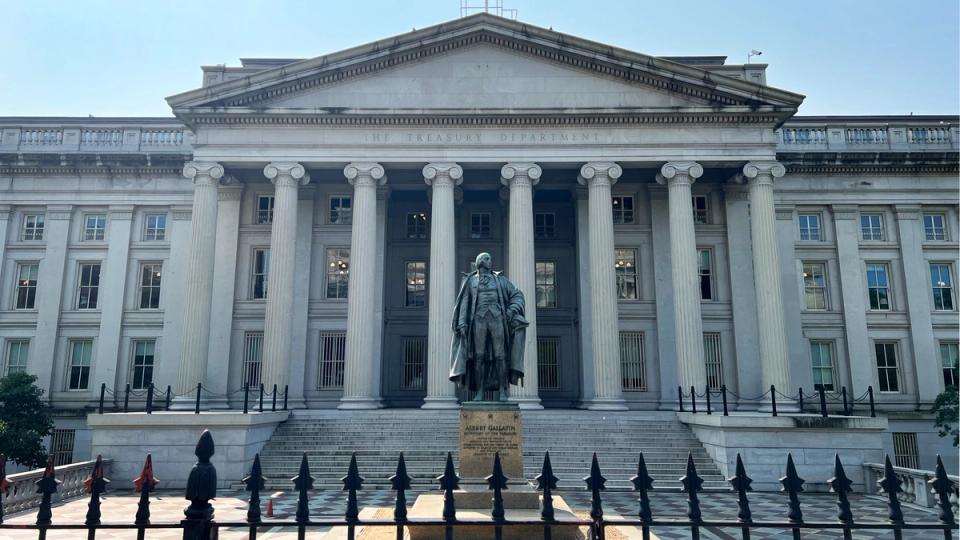 U.S. Treasury extends cyber threat alerts to crypto firms, closing gap with traditional finance2026-04
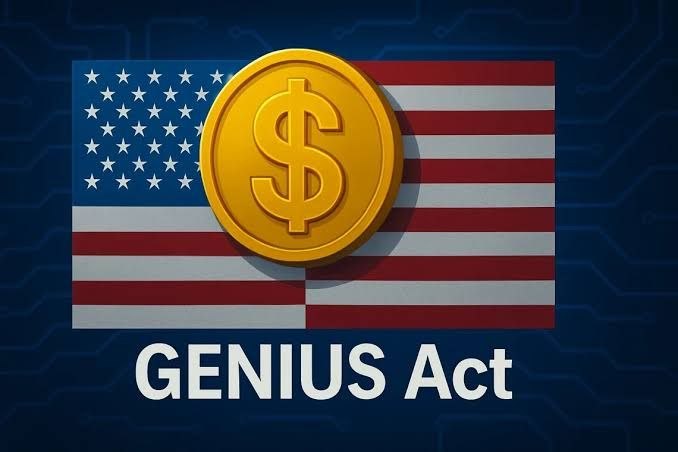 U.S. Treasury proposes first GENIUS Act rule, seeking public input on allowing smaller stablecoin issuers to operate under state-level oversight frameworks2026-04
 US Treasury crosses $1 billion in seized Iranian crypto under Operation Economic Fury, mostly USDT on Tron2026-05
 Tradeweb executes first real-time onchain U.S. Treasury trade on its platform against USDCx via Canton2026-07
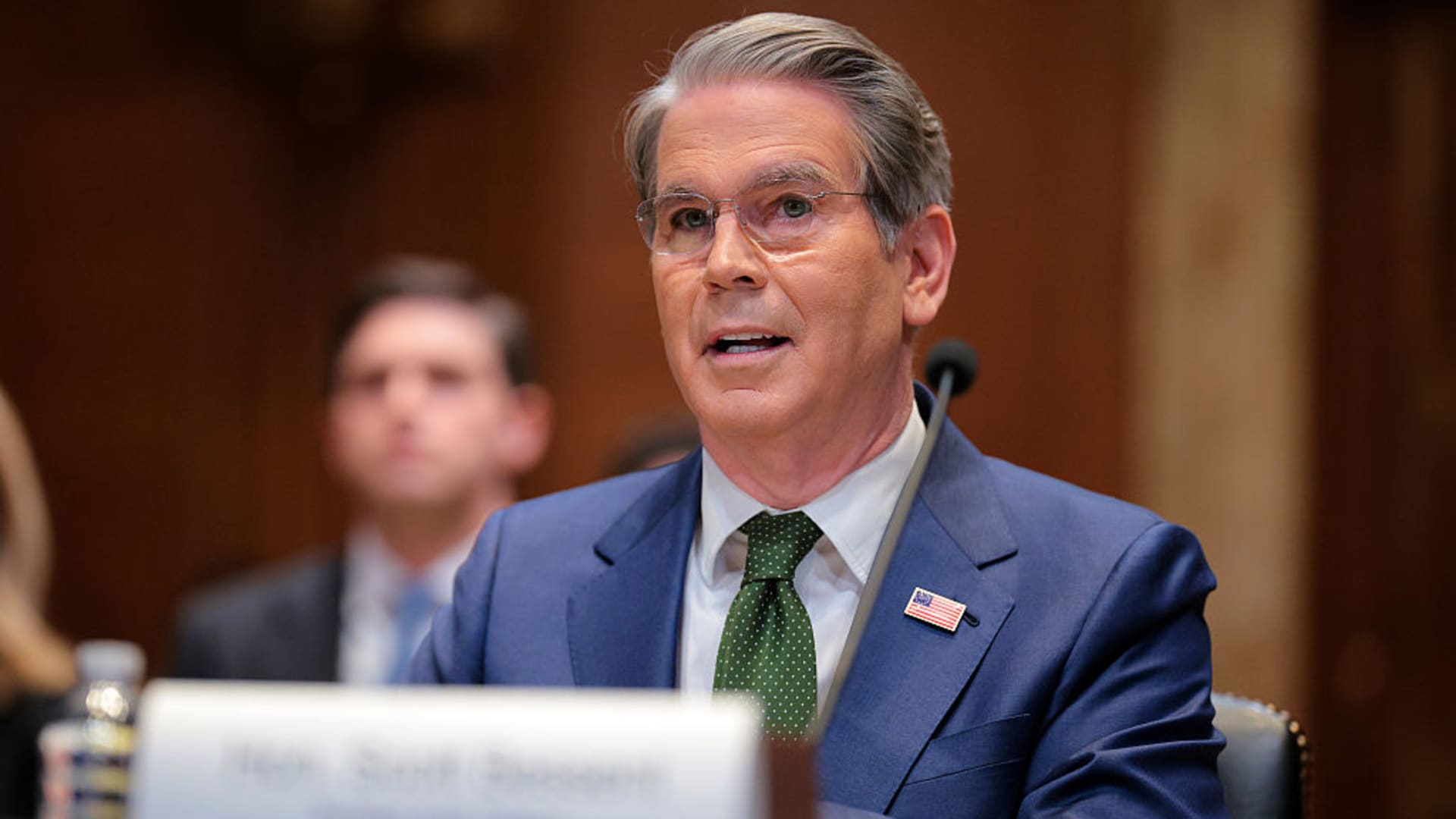 US Treasury’s Bessent says many Gulf and Asian allies seek dollar swap lines as Iran war roils markets, while Washington debates politically sensitive UAE support and protection of dollar dominance2026-04
 US Treasury reportedly pressured Binance to fully comply with its 2023 monitoring deal after claims the exchange processed $1B tied to Iran-linked entities2026-05
The U.S. Department of the Treasury is the federal agency responsible for managing government revenue, enforcing financial law, and maintaining the stability of the dollar — roles that place it at the center of nearly every major development in the crypto industry today.
What the Treasury Actually Does
Founded in 1789, the Treasury is far more than a printing press for dollars. It issues government debt (including T-bills, T-notes, and T-bonds), collects taxes through the IRS, enforces economic sanctions through the Office of Foreign Assets Control (OFAC), monitors financial crime through the Financial Crimes Enforcement Network (FinCEN), and sets the regulatory tone for emerging asset classes. For crypto markets, this broad mandate means the Treasury touches everything from stablecoin legislation to exchange compliance to geopolitical asset freezes.
The Secretary of the Treasury — currently Scott Bessent — sits in the Cabinet and advises the President on fiscal and monetary policy. In practice, Treasury decisions about crypto regulation, sanctions, and dollar policy have downstream effects on asset prices, exchange operations, and the legal structure of the entire digital asset industry.

U.S. Treasury extends cyber threat alerts to crypto firms, closing gap with traditional finance
T-Bills: The Bedrock Asset Crypto Is Building On
U.S. Treasury bills are short-term government debt instruments maturing in four weeks to one year. They are considered among the safest, most liquid assets in the world — backed by the full faith and credit of the United States government and denominated in the global reserve currency. Yields on T-bills track the federal funds rate, making them a reliable benchmark for risk-free return.
For crypto, T-bills have become foundational in two ways.
Stablecoin reserves. The largest stablecoins by market capitalization hold significant portions of their backing in T-bills and other short-term Treasury instruments. Circle's USDC, for example, maintains reserves primarily in short-dated Treasuries held through regulated money market funds. This structure makes stablecoins like USDC effectively dollar-denominated wrappers around government debt — giving holders some exposure to the risk-free rate while preserving peg stability. MetaMask's newly launched mUSD takes this model further, marketing itself explicitly as a wallet-native stablecoin backed by T-bills.
Tokenized Treasuries. The more transformative trend is the on-chain representation of Treasury instruments themselves. Ondo Finance's OUSG and similar products tokenize access to short-term government debt, allowing holders to earn T-bill yields without traditional brokerage accounts. In mid-2026, a landmark transaction illustrated how far this infrastructure has matured: J.P. Morgan's Kinexys blockchain unit, partnering with Mastercard, Ripple, and Ondo Finance, completed the first near-real-time cross-border redemption of a tokenized U.S. Treasury fund — settling on the public XRP Ledger. Separately, J.P. Morgan filed to launch JLTXX, the JPMorgan OnChain Liquidity-Token Money Market Fund, investing exclusively in Treasury securities and overnight repurchase agreements collateralized by Treasuries.
The persistent friction in tokenized Treasury adoption has not been the creditworthiness of the underlying asset but settlement infrastructure. Traditional Treasury products operate on T+1 settlement timelines. Projects like the Kinexys-Mastercard-Ripple-Ondo collaboration aim to bring that closer to 24/7 near-instant finality across borders — a capability the legacy financial system cannot offer.
Readers engage US Treasury content from two opposing directions simultaneously: as yield infrastructure (T-bills powering stablecoin reserves and RWA protocols) and as regulatory adversary (surveillance mandates, mixer bans, sanctions), revealing that DeFi's deepest entanglement with tradfi is also its most existential political vulnerability.
Sanctions: The Treasury's Sharpest Crypto Tool
OFAC sanctions are legally binding prohibitions on transactions with designated individuals, entities, or jurisdictions. For crypto businesses, an OFAC designation is existential: it blocks U.S. persons and entities from transacting with the target and can freeze assets on compliant exchanges globally.
The Treasury has deployed sanctions aggressively against crypto actors enabling state adversaries and criminal networks.
Iran. The most significant recent escalation targets Iran's use of cryptocurrency to circumvent dollar-denominated sanctions. The Treasury has sanctioned multiple Iranian crypto exchanges, most notably Nobitex — Iran's largest — for facilitating transactions tied to terrorist financing. Under what officials have called "Operation Economic Fury," the U.S. government has seized over $1 billion in Iranian crypto assets, predominantly USDT on the Tron blockchain. The scale of the operation reflects both the sophistication of Iranian evasion tactics and the Treasury's growing technical capacity to trace and seize on-chain assets.
Treasury Secretary Bessent has publicly framed these actions as part of broader efforts to protect dollar dominance amid Middle East tensions, noting that Gulf and Asian allies have sought dollar swap lines as regional instability roils markets. The implication is explicit: the U.S. will use its financial tools — including crypto seizures — as instruments of geopolitical leverage.
The Binance episode adds another dimension. The Treasury reportedly pressured Binance to fully comply with a 2023 monitoring agreement after claims emerged that the exchange processed approximately $1 billion in transactions tied to Iran-linked entities. The case illustrates that Treasury enforcement reaches not just directly sanctioned parties but also intermediary platforms that facilitate prohibited flows.
Drug trafficking networks. Iran is not the only target. The Treasury has sanctioned crypto wallets linked to the Sinaloa Cartel's fentanyl supply operations and designated drug traffickers for laundering proceeds through digital assets. These actions signal that Treasury views crypto not as a uniquely dangerous medium but as one channel among many requiring the same anti-money-laundering (AML) discipline applied to traditional finance.
North Korea. Though not the focus of the most recent enforcement wave, North Korean state-sponsored hacking groups — particularly Lazarus Group — remain a persistent OFAC concern. The Treasury has previously sanctioned Tornado Cash and other mixers used to launder North Korean crypto theft proceeds, and that enforcement framework remains active. North Korea's crypto theft operations, estimated to have netted billions of dollars over several years, are treated by Treasury as a national security issue as much as a financial crime.

U.S. Treasury proposes first GENIUS Act rule, seeking public input on allowing smaller stablecoin issuers to operate under state-level oversight frameworks
Regulatory Architecture: Stablecoins and the GENIUS Act
Beyond enforcement, the Treasury is shaping the long-term legal structure of crypto markets through its role in legislative drafting and rulemaking.
The GENIUS Act — Guiding and Establishing National Innovation for U.S. Stablecoins — represents the most significant congressional effort to date to establish a federal stablecoin framework. Treasury's input into the bill's construction has been substantial, with business stakeholders steering the department toward positions that align broadly with OECD guidelines while accommodating U.S. market realities. The bill's core architecture would require stablecoin issuers to hold 1:1 reserves in high-quality liquid assets (primarily T-bills and central bank deposits), submit to federal or state prudential supervision, and comply with AML/BSA obligations.
For existing large issuers like Circle (USDC), compliance with GENIUS Act requirements would largely formalize what they already practice. For newer entrants and algorithmic designs, the reserve and supervision requirements would be disqualifying without structural changes. The Treasury's influence on the final shape of stablecoin rules will determine whether the U.S. consolidates dollar-backed stablecoins as a tool of reserve currency dominance or creates a fragmented patchwork of state and federal oversight.
Treasury's crypto regulatory posture also extends to tax reporting infrastructure. FinCEN's beneficial ownership rules and the IRS's crypto broker reporting requirements — both flowing from Treasury — have significant compliance implications for DeFi protocols and centralized exchanges alike.
- 01Tokenized T-bills as DeFi collateral
BlackRock BUIDL being proposed as a reserve asset for Frax and integrated into MakerDAO and Aave's GHO module made readers realize that US Treasuries had become the de facto risk-free layer underpinning major DeFi protocols.
- 02Crypto reporting rule churn
Treasury repeatedly proposing, delaying, and partially withdrawing digital asset reporting requirements created a sustained reader anxiety loop around what compliance would actually cost and when it would land.
- 03DeFi privacy crackdown
Proposals for KYC at the contract level, mixer bans under the PATRIOT Act, and the 'DeFi ID' surveillance framework alarmed readers who saw these as existential threats to permissionless finance.
- 04Treasury sanctions enforcement reach
Sanctions against Tron wallets linked to Houthis, the Huione group tied to North Korean hackers, and the Tornado Cash legal saga showed readers that Treasury's OFAC arm was actively mapping and targeting crypto infrastructure.
- 05Stablecoin reserve yield mechanics
Circle, Tether, Mountain Protocol, and FDUSD all holding T-bills as reserves turned stablecoin backing into a high-stakes yield trade that readers tracked as both a solvency and macro interest-rate story.
- 06Dollar dominance geopolitics
Arthur Hayes speculating on Japan dumping T-bonds and Bessent's comments on Gulf and Asian swap lines connected crypto readers to the macro question of whether dollar hegemony itself could unravel.
Cyber Intelligence Sharing
A less publicized but operationally significant Treasury initiative involves sharing cyber threat intelligence directly with the private crypto sector. Amid a surge in exchange hacks, protocol exploits, and state-sponsored theft, the Treasury has begun distributing threat indicators — IP addresses, wallet addresses, malware signatures, and attack patterns — to crypto firms in near-real-time.
This represents a shift from a purely punitive enforcement posture toward a more collaborative security model. The intelligence sharing program draws on inputs from the intelligence community and overlaps with existing information-sharing frameworks used in traditional banking. For crypto firms, access to government threat intelligence can meaningfully shorten response times when attacks are identified early. The practical value depends heavily on how actionable and timely the shared indicators are — a known limitation of government threat-intel programs in the past.

Hayes predicts euro-yen drop to 140 or below by mid-2027, citing US Treasury strategy to boost dollar liquidity

Dollar Dominance and the Crypto Nexus
Running beneath all of these specific actions is a coherent strategic logic: the Treasury views crypto as simultaneously a threat to and an instrument of dollar hegemony, and its policies attempt to manage both dimensions.
On the threat side, crypto infrastructure — particularly privacy-preserving tools and stablecoins denominated in non-dollar currencies — can erode the Treasury's ability to enforce sanctions and monitor capital flows. OFAC's aggressive action against Iranian exchanges and Tornado Cash reflects this concern.
On the instrument side, dollar-denominated stablecoins running on public blockchains effectively extend dollar reach into markets that lack access to the traditional banking system. A Tron-based USDT holder in a sanctioned jurisdiction or an unbanked market is still, from the Treasury's perspective, participating in a dollar-denominated asset — one that can be frozen at issuance, monitored on-chain, and subject to OFAC action in a way that physical cash is not.
Treasury Secretary Bessent's comments about allies seeking dollar swap lines as Middle East tensions rise underscore that Treasury sees stablecoin proliferation as broadly aligned with U.S. geopolitical interests, provided the underlying issuers are compliant, U.S.-incorporated entities subject to American law.
- 2023-08regulatory
Treasury proposes digital asset broker reporting rules under IIJA
- 2023-09milestone
MakerDAO approves $700M T-bond purchase, holdings reach $1.2B
- 2024-03launch
BlackRock launches BUIDL tokenized Treasury fund on Ethereum
- 2024-10regulatory
Treasury finalizes mixer rule under PATRIOT Act targeting privacy tools
- 2024-11regulatory
Fifth Circuit rules Tornado Cash smart contracts cannot be sanctioned by OFAC
- 2024-12exploit
Chinese hackers breach Treasury systems in major incident
- 2025-02regulatory
Treasury withdraws proposed unhosted wallet reporting requirements
- 2025-05regulatory
Treasury proposes first GENIUS Act rule on state-level stablecoin oversight
Outlook
The Treasury's footprint in crypto will only grow. Several converging trends guarantee it. Tokenized Treasuries are moving from proof-of-concept to institutional product, embedding government debt into on-chain financial infrastructure in ways that will require ongoing regulatory guidance. Stablecoin legislation — whether the GENIUS Act or a successor — will give Treasury expanded supervisory authority over issuers holding trillions in potential reserves. And geopolitical use of crypto by sanctioned states, particularly Iran and North Korea, will continue to drive OFAC enforcement actions that directly affect exchange compliance and wallet policy globally.
The net effect for crypto markets is a closer, more institutionalized relationship with the U.S. government's primary financial authority — one that offers legitimacy and access to the dollar system in exchange for compliance with the legal and sanctions architecture the Treasury has built over decades.
Latest US Treasury news
U.S. Treasury extends cyber threat alerts to crypto firms, closing gap with traditional financeU.S. Treasury proposes first GENIUS Act rule, seeking public input on allowing smaller stablecoin issuers to operate under state-level oversight frameworksHayes predicts euro-yen drop to 140 or below by mid-2027, citing US Treasury strategy to boost dollar liquidityUS Treasury crosses $1 billion in seized Iranian crypto under Operation Economic Fury, mostly USDT on TronTradeweb executes first real-time onchain U.S. Treasury trade on its platform against USDCx via CantonUS Treasury’s Bessent says many Gulf and Asian allies seek dollar swap lines as Iran war roils markets, while Washington debates politically sensitive UAE support and protection of dollar dominanceCommunity notes
Spot something off or out of date? Drop a note. Editors review topic notes daily and roll accepted fixes into the explainer — contributors are recognized in the monthly $SQUID drop.
Loading notes…
Help improve this topic
Have a story or tip about this topic? Submit it. See something missing? Leave a note. Editors review daily; accepted submissions and fixes count toward the monthly $SQUID drop.