
In‑depth explainer on Wintermute, the algorithmic trading firm and crypto market maker powering liquidity across exchanges, DeFi, OTC, prediction markets, ETFs and tokenized credit, with a focus on BTC, USDC, BNB and evolving market structure.
+8 sources across the wider coverage universe
 Wintermute Ventures highlights shift toward vaults, on-chain FX, and privacy DeFi as builders focus on real products over tokens, with VCs backing traction-driven startups post-EthCC2026-04
 Wintermute's Hammond puts Clarity Act passage at just 30%, half the odds crypto markets are pricing2026-04
 Wintermute commits $200K to Ethereum security funding, arguing censorship resistance and decentralization mean nothing if the base layer can be exploited2026-05
 Wintermute brings two-sided liquidity to prediction markets.2026-05
 Retail investors now treat crypto and equities as substitutes, with equity inflows draining momentum from altcoins according to Wintermute data.2026-02
 Wintermute explores whether crypto still has room for innovation, questioning what's left to build after years of L1s, L2s, DeFi and stablecoin growth2026-07
Wintermute: The Liquidity Engine Behind Crypto Markets
Wintermute is a London‑based algorithmic trading firm and crypto market maker that provides liquidity across centralized exchanges, DeFi protocols, and over‑the‑counter (OTC) venues in digital assets and related markets. By standing between buyers and sellers in assets like Bitcoin (BTC), stablecoins such as USDC, and long‑tail tokens, Wintermute has emerged as one of the core institutions shaping price discovery, spreads, and market structure across the crypto ecosystem.
What Is Wintermute?
Wintermute describes itself as a crypto‑native market maker focused on building efficient, liquid, and transparent markets for the emerging digital financial system. In practice, that means the firm runs algorithmic strategies that continuously quote bid and ask prices for hundreds of tokens on dozens of trading venues, allowing other participants to enter and exit positions with minimal slippage. Pantera Capital, one of its early backers, has characterized Wintermute as a leading provider of liquidity across DeFi, CeFi, and OTC spot markets, and highlighted that the firm handled around \(30\) billion dollars of monthly trading volume in late 2020. By March 2023, Wintermute’s cumulative trading volume across platforms had climbed into the trillions of dollars, reflecting the scale at which it operates in crypto markets.
The firm’s footprint spans centralized exchanges such as Binance and Coinbase, large derivatives venues, and decentralized exchanges like Uniswap and other automated market maker (AMM) platforms. In a widely cited interview, a Wintermute co‑founder noted that the company made markets in roughly 250 to 350 tokens across about 80 venues and commanded double‑digit market share in spot crypto trading at the time. That reach gives Wintermute significant insight into flows in BTC, stablecoins, and altcoins, which it increasingly shares through public market commentary on Bitcoin’s cycles, ETF flows, and macro‑driven volatility. Recent house views have ranged from warnings that BTC’s rebounds from the low‑\(60{,}000\) dollar region do not yet signal a durable bottom, to skepticism that rallies above \(80{,}000\) dollars are driven by healthy spot demand rather than short squeezes.
Wintermute’s business is organized around three broad pillars: exchange market making, OTC trading and derivatives, and on‑chain liquidity provision and products. On centralized exchanges, it acts as a traditional high‑frequency market maker, using sophisticated algorithms to quote tight spreads, rebalance inventory, and hedge risk. In OTC markets, Wintermute operates a desk that provides large blocks of liquidity in BTC, ETH, USDC, BNB and hundreds of other assets, including options, forwards, and structured products tailored to institutional counterparties. On‑chain, the firm supplies liquidity to DeFi protocols, experiments with new automated market making designs, and, more recently, curates DeFi vaults and tokenized credit exposures through initiatives like Armitage and collaborations with partners such as Morpho, Pendle, and Agra.
That combination of CeFi and DeFi capabilities positions Wintermute as an important bridge between traditional finance, centralized crypto exchanges, and the rapidly evolving on‑chain market infrastructure. Its recent move into prediction markets, participation in ETF market structure, and expansion into non‑crypto derivatives such as West Texas Intermediate (WTI) crude oil contracts for difference (CFDs) suggest that Wintermute sees itself less as a niche crypto shop and more as a multi‑asset liquidity provider for a tokenized, always‑on financial system.

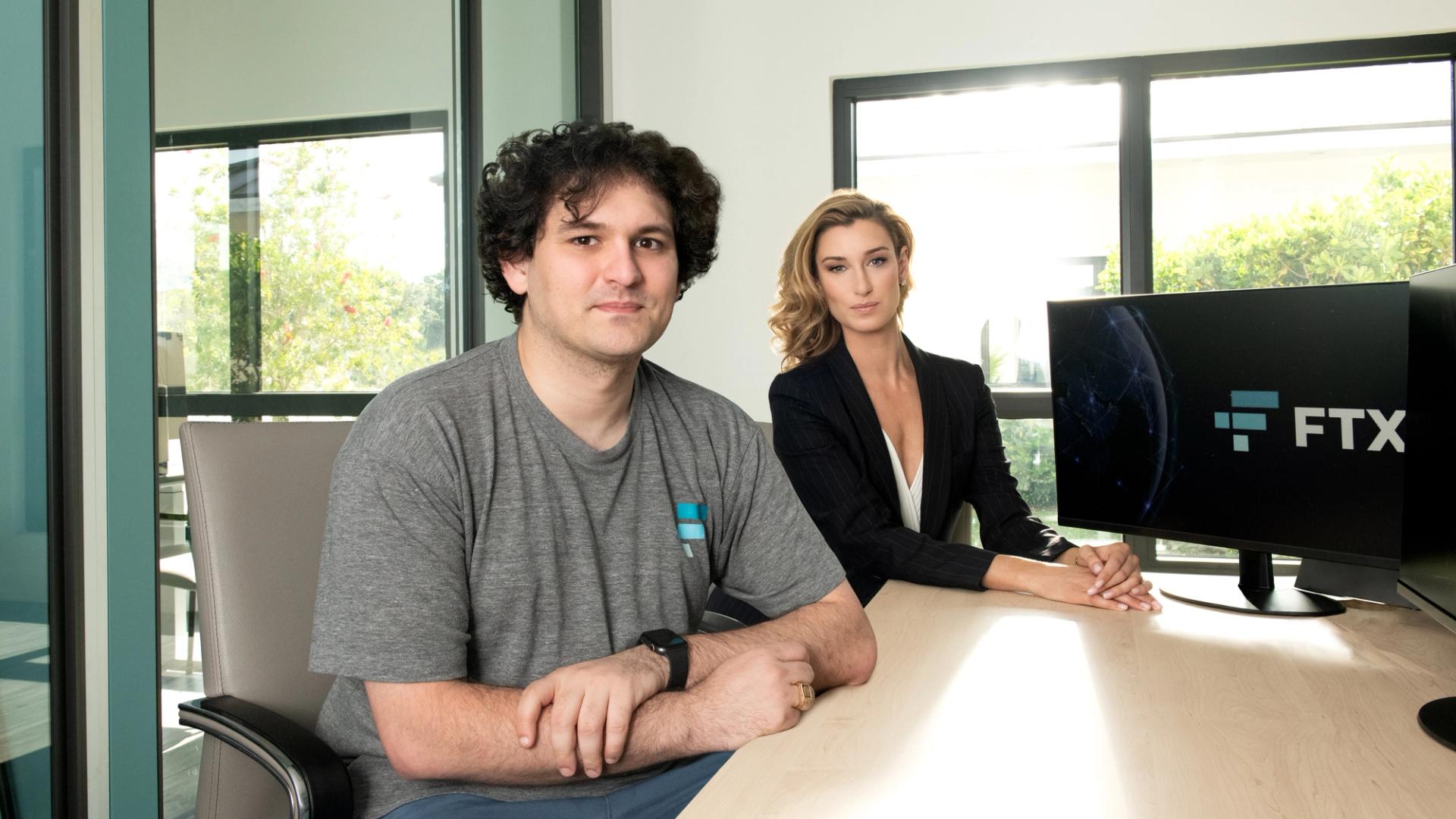
FTX and Alameda-linked wallets sent up to $75 million in ether to Wintermute, onchain data shows
How Wintermute Makes Markets In Crypto
Algorithmic Market Making On Centralized Exchanges
At its core, Wintermute is an algorithmic trading firm built around automated market‑making strategies. On centralized exchanges, this involves continuously posting buy and sell orders for assets like BTC, ETH, USDC, and BNB at multiple price levels, aiming to earn the bid‑ask spread while managing inventory and risk. Market makers like Wintermute play a crucial role in ensuring that order books remain deep and orderly, especially for less liquid tokens where natural two‑sided flow is sparse. Without such intermediaries, spreads tend to widen, slippage increases for large trades, and price discovery becomes noisy and fragmented.
Wintermute’s edge lies in its ability to deploy sophisticated quantitative models and low‑latency infrastructure across many venues simultaneously, calibrating prices to reflect global order flow, derivatives basis, funding rates, and cross‑asset correlations. Because it operates on both major exchanges and long‑tail platforms, the firm can arbitrage price discrepancies and remove inefficiencies between, say, BTC/USDC on a large spot exchange and BTC/USDT on a smaller venue. Over time, this arbitrage compresses spreads and aligns prices across the market, benefiting both retail and institutional traders who rely on consistent pricing between venues.
The firm’s presence is particularly important in moments of stress, when volatility spikes and many participants pull back. In sharp BTC selloffs or during altcoin deleveraging, Wintermute’s algorithms adjust quotes, widen spreads when necessary, and dynamically hedge exposures, but they continue to provide two‑sided markets that prevent complete order‑book vacuums. When Wintermute publicly notes, for example, that a Bitcoin rebound may not signify a structural bottom and that ETF and stablecoin flows have yet to reverse, it is drawing on its vantage point across these exchange venues and OTC flows. Those observations are grounded in what its systems see in the microstructure: thinly supported rallies, muted spot demand, or persistent selling pressure from institutional desks.
Because Wintermute is active in both spot and derivatives markets, it also plays a central role in maintaining the link between futures and spot prices. When the BTC basis deviates materially—say, futures trade at a steep premium to spot—it can arbitrage the spread by shorting futures and buying spot, or vice versa, compressing mispricings and stabilizing the curve. Over time, such activity makes it more feasible to build products like BTC ETFs or structured notes that depend on reliable hedging in futures and swaps. This is one reason why issuers such as Bitwise have turned to Wintermute as a designated trading counterparty for token‑linked ETFs.
DeFi Liquidity Provision And The Rise Of PropAMMs
Beyond centralized exchanges, Wintermute has become a prominent DeFi liquidity provider, supplying capital and active strategies to AMMs, lending markets, and newer on‑chain trading primitives. Unlike traditional order‑book venues, automated market makers rely on pools of liquidity that quote prices algorithmically as a function of the pool’s token balances. Market makers in these systems can be passive LPs providing capital to a pool with a fixed curve, or they can run more active strategies that resemble centralized‑exchange market making, adjusting their ranges and inventory in response to market conditions.
A recent trend that Wintermute has embraced is the concept of proprietary market‑making AMMs, or propAMMs, where a professional liquidity provider runs an active strategy on‑chain, often behind a streamlined user interface. On BNB Chain, Wintermute partnered with Genius Terminal, a trading interface backed by Binance’s former CEO, to route USDT–BNB trades through what was billed as the first live propAMM on that network. According to public statements, this integration aimed to offer USDT–BNB swaps at roughly 70 percent lower cost than competing decentralized exchanges, by combining Wintermute’s professional pricing algorithms with an on‑chain execution layer.
PropAMMs illustrate how the line between centralized market making and DeFi is blurring. Instead of passively depositing USDC or BNB into a pool and hoping for fees to offset impermanent loss, users can route trades through professional liquidity providers who manage risk more actively, while still benefiting from on‑chain settlement and composability. For Wintermute, these structures offer a way to scale its liquidity across EVM chains like BNB Chain while preserving some of the controls and sophistication of its centralized strategies. They also create a template for future on‑chain foreign exchange (FX) or stablecoin corridors, where deep liquidity in pairs like USDC/USDT or USDC/EURC is maintained by a handful of expert market‑making firms rather than thousands of passive LPs.
OTC Trading, Structured Products, And Real‑World Assets
Wintermute’s OTC business is the other major pillar of its operations, offering deep, relationship‑driven liquidity to institutions, miners, funds, and high‑net‑worth clients. The OTC desk supports spot trades, options, forwards, and bespoke structured products across hundreds of assets, including BTC, ETH, a wide range of altcoins, and multiple stablecoins like USDC and USDT. Counterparties can trade bilaterally via chat, API, or integrated node connectivity, often at sizes that would be difficult to execute cleanly on public order books without significant market impact.
In 2026, Wintermute extended this OTC expertise into energy markets by launching 24/7 WTI crude oil CFDs through its Singapore‑based derivatives arm, Wintermute Asia. These CFDs allow institutional clients to gain leveraged exposure to the world’s key oil benchmark outside of traditional market hours, including weekends and holidays when volatility can be heightened by geopolitical events. The launch was partly motivated by a sharp 13.5 percent swing in WTI prices over a recent weekend, underscoring the gap between always‑on crypto trading and the limited hours of legacy commodity markets.
The oil CFDs also feed into Wintermute’s cross‑asset research on the relationship between energy prices and Bitcoin. Academic work has suggested that BTC can sometimes act as a safe‑haven or diversifier against oil‑related uncertainties, especially during crises. Wintermute has echoed this cross‑asset lens in its market reports, suggesting, for example, that if traffic through the Strait of Hormuz normalizes and oil stabilizes near \(100\) dollars per barrel, BTC might test resistance in the \(74{,}000\) to \(76{,}000\) dollar band, whereas renewed shipping disruptions could send BTC back toward the mid‑\(60{,}000\) range. This type of analysis, grounded in both macro conditions and microstructural flows, reflects Wintermute’s positioning as not just a liquidity provider but also a cross‑market risk house.
On the credit side, Wintermute has been expanding into tokenized real‑world assets by providing continuous liquidity for private credit tokens. In collaboration with Agra, the firm now offers active two‑way quotes for tokens such as wmtUSDC and wmtUSDT, with reported spreads in the 25 to 30 basis point range. This arrangement gives holders of these tokenized credit instruments a more reliable path to liquidity, reducing the liquidity premium that often plagues private credit markets and making it more feasible to use these positions as collateral in DeFi.
Readers click Wintermute not for its market-making mechanics but because the firm sits at the collision point of institutional legitimacy and recurring controversy — its founders' unfiltered commentary, a $160M exploit, manipulation allegations, and billion-dollar legal fallout make it crypto's most-watched test case for whether elite market makers are architects of stability or participants in instability.
Key Business Lines And Emerging Products
Spot, Derivatives, And Cross‑Asset Liquidity
Wintermute’s core commercial offering remains the provision of spot and derivatives liquidity in BTC, ETH, and a wide spectrum of altcoins and stablecoins. In spot markets, it stands ready to buy or sell at quoted prices on centralized exchanges and OTC, enabling institutional clients to rebalance portfolios, hedge exposure, or execute trades linked to ETF creations and redemptions. In derivatives, it prices options and forwards for hedge funds and corporates that need to manage BTC or ETH price risk, often structuring customized payoffs that combine options, lending, and basis trades.
The addition of WTI crude oil CFDs indicates that Wintermute is increasingly comfortable treating crypto and traditional assets as part of a unified risk book. This is consistent with its broader positioning: BTC is no longer just a niche asset traded against USDT; it is a macro instrument whose correlations with equities, oil, and gold shift over time. The ability to hedge commodities alongside BTC allows Wintermute to serve clients looking to express views on, for instance, the impact of energy prices on Bitcoin mining margins or on broad risk sentiment. Academic findings that BTC may provide a sheltering role against oil‑related uncertainty give analytical support to this multi‑asset approach.
Across both CeFi and DeFi, Wintermute’s liquidity in stablecoin pairs is especially important. Pairs like BTC/USDC, ETH/USDC, and BNB/USDT are key rails for capital movement, and their tight spreads underpin everything from OTC block trades to collateral rebalancing in DeFi vaults. By actively quoting in these pairs, Wintermute not only facilitates trading but also contributes to the stability of USDC and other stablecoins as transactional media and units of account within the crypto economy.
DeFi Vaults And The Armitage Strategy On Morpho
A significant evolution in Wintermute’s business is its move from pure liquidity provision into vault curation and on‑chain portfolio management. Through its Armitage initiative, the firm has begun designing and managing DeFi vaults that allocate deposits across yield strategies and collateral types that many other curators cannot easily support. One flagship example is the Wintermute USDC Select vault on Morpho, a lending and yield optimization protocol.
The Morpho interface describes the Wintermute USDC Select vault as offering a higher yield than Morpho’s “Prime” offering while maintaining a balanced risk profile. Total deposits in the vault have reached tens of millions of USDC, reflecting growing interest from users in delegating strategy selection and risk management to professional firms like Wintermute. Armitage incorporates exposures to more complex yield sources, including tokenized yield from Pendle Finance such as PT‑reUSD and PT‑USDat, according to recent coverage of the vault’s composition. This allows depositors to indirectly participate in sophisticated fixed‑yield and interest‑rate trades without having to interact with Pendle or similar protocols directly.
Wintermute Ventures has described this broader shift succinctly: “vaults are the new perps,” a phrase that captures how on‑chain vaults are becoming the primary way many users gain structured exposure to DeFi yields, much as perpetual futures once became the dominant instrument for leveraged crypto trading. Under this view, Wintermute’s move into vault curation is not just a side business but a natural extension of its expertise in risk management and liquidity provision. Instead of only making markets in BTC/USDC, the firm is now also packaging and distributing risk‑managed USDC strategies to the broader market.
Private Credit Liquidity And Tokenized Yield
Wintermute’s collaboration with Agra on tokenized private credit is a concrete example of how its liquidity services are being applied to real‑world assets. Holders of wmtUSDC and wmtUSDT—credit tokens representing exposure to off‑chain lending arrangements—can now access live, tight spreads via Wintermute’s continuous quotes, reportedly in the range of 25 to 30 basis points. This level of liquidity is unusual in private credit markets, where secondary trading is often sparse and investors must lock up capital for long periods.
By standing ready to buy and sell these tokenized credit positions, Wintermute makes it easier for investors to enter and exit, which in turn can lower the illiquidity premium demanded for such assets. It also opens the door for these tokens to be used more broadly in DeFi, whether as collateral in lending protocols or as components in structured yield products. In a sense, Wintermute is importing the market microstructure of BTC and USDC into a historically illiquid asset class, leveraging on‑chain rails to create a more continuous market for credit risk.
This initiative dovetails with Wintermute Ventures’ stated interest in on‑chain FX and privacy‑preserving DeFi, signaling a thesis that real‑world assets, stablecoins, and cross‑currency flows will increasingly coexist on public blockchains. Liquidity providers that can price both BTC volatility and corporate credit spreads, and do so in USDC or tokenized dollars, will be well‑positioned in such an environment.
Prediction Markets: Polymarket, Kalshi, And Event Risk
One of Wintermute’s most high‑profile expansions in 2026 has been into prediction markets, where it now serves as a two‑sided liquidity provider on platforms like Polymarket and Kalshi. These platforms list event contracts on outcomes ranging from elections and macroeconomic data to crypto‑specific milestones, and they have seen explosive growth in trading volume. Combined global monthly trading volume on Kalshi and Polymarket reportedly grew from less than \(5\) billion dollars in September 2025 to around \(24\) billion dollars within about a year, with cumulative 2026 volumes surpassing \(60\) billion dollars.
Wintermute’s role is to stand in the middle of these event markets, quoting both sides so that traders can buy or sell exposure to outcomes like “BTC above \(100{,}000\) dollars by year‑end” or “a spot ETH ETF is approved by a certain date.” In its commentary on this move, Wintermute has argued that prediction markets are evolving from niche forecasting tools into a broader venue for trading event risk, where participants express views on discrete, binary catalysts rather than continuous price paths.
From a market‑structure perspective, the firm’s involvement is significant. Liquid prediction markets could, over time, become important inputs into risk management for funds holding BTC, ETF products, or large USDC balances. If one can hedge regulatory or macro events cheaply via Polymarket or Kalshi, that could change how portfolios are constructed. Wintermute’s entry helps bootstrap the depth needed for such markets to be efficient and attractive to institutional players. It also underscores the firm’s strategy of embedding itself wherever meaningful crypto‑related risk is traded, whether that is BTC spot, USDC vaults, WTI CFDs, or political event contracts.
ETFs, HYPE, And Institutional Market Structure
Wintermute’s importance extends into ETF and token‑linked fund products as well. Bitwise Asset Management, for example, has named Wintermute as one of the approved trading counterparties for its proposed spot ETF tied to Hyperliquid’s native HYPE token. In its latest amendment to the registration statement, Bitwise identified both Wintermute and Flowdesk as market‑making partners, signaling that it expects these firms to facilitate secondary market liquidity and assist in the creation and redemption processes that keep ETF prices anchored to underlying token markets.
The proposed ETF, expected to trade on NYSE Arca under the ticker BHYP if approved, illustrates how market makers like Wintermute become critical infrastructure once tokens enter regulated fund wrappers. The ETF’s ability to track HYPE accurately depends on the existence of robust spot liquidity and on the capacity of trading counterparties to handle large orders without undue slippage. Arkham’s on‑chain analytics have suggested that an address believed to be linked to a major asset manager has accumulated tens of millions of dollars worth of HYPE via exchanges and OTC desks, including Wintermute, FalconX, and Coinbase, underlining how OTC market making can interact with ETF positioning and accumulation over time.
Wintermute’s vantage point on ETF flows also informs its broader market commentary. When it notes that BTC rebounds have not yet been accompanied by a clear reversal in ETF inflows or stablecoin and digital asset trust (DAT) flows, it is drawing on this institutional order‑flow data. The firm’s analysis that miners must continue to monetize BTC holdings to cover operating costs, and that this supply interacts with ETF demand and macro risk sentiment, feeds into its framework for evaluating whether a given BTC rally is sustainable or merely a short squeeze driven by derivatives positioning.
Wintermute As Market Analyst And Policy Voice
Reading Bitcoin’s Cycles: Flows, Miners, And Short Squeezes
Because Wintermute sits at the intersection of exchanges, OTC desks, and DeFi protocols, it has become an influential voice on the state of the BTC market. In recent commentary, the firm has repeatedly urged caution in interpreting price action without reference to underlying flows. After a rebound from the low‑\(60{,}000\) dollar region, Wintermute argued that there were “no clear signs of capital returning” and that it was too early to call a market bottom, pointing to ongoing ETF outflows and subdued stablecoin inflows.
Similarly, when BTC later rallied above \(80{,}000\) dollars and briefly traded near prior highs, Wintermute framed the move as being driven more by a short squeeze than by robust spot demand. The firm highlighted that U.S. equities indices like the Nasdaq and S&P 500 had been in multi‑week uptrends, and that crypto’s move appeared to be an extension of that risk‑on sentiment rather than a BTC‑specific structural shift in flows. In this view, short‑term rallies without a corresponding pickup in ETF creations, USDC inflows, or DAT subscriptions are vulnerable to reversal once short covering exhausts.
Wintermute has also emphasized the role of miners in shaping BTC’s supply‑demand balance. With block rewards halving over time and mining margins compressed by competition and energy costs, the firm argues that miners must still monetize a meaningful share of their BTC holdings to finance operations and capital expenditures. This steady source of sell pressure needs to be absorbed by new capital flowing in via ETFs, OTC purchases, or stablecoin on‑ramps for price appreciation to be sustained. In the absence of such inflows, even short‑term squeezes above \(80{,}000\) dollars may not mark the beginning of a prolonged uptrend.
For a crypto‑news audience, these perspectives matter because they remind traders to look beyond price charts and consider structural flows. Wintermute’s stance also underscores why the firm closely monitors ETF flows, USDC issuance trends, and on‑chain stablecoin velocity alongside traditional indicators such as funding rates and realized volatility. In its role as market maker, Wintermute must decide daily how aggressively to quote BTC, how much inventory risk to accept, and how to hedge long or short positions—decisions that hinge on how it interprets these underlying signals.
Macro, Oil, And Cross‑Asset Narratives
Wintermute’s launch of 24/7 WTI CFDs and its market reports linking oil dynamics to BTC price paths highlight its growing focus on macro and cross‑asset narratives. For example, the firm has outlined scenarios where normalization of shipping traffic in the Strait of Hormuz and stabilization of oil prices near \(100\) dollars per barrel could support a constructive outlook for BTC, enabling a test of resistance in the mid‑\(70{,}000\) dollar range. Conversely, renewed conflict or shipping restrictions that push oil prices higher or inject fresh uncertainty into energy markets could weigh on BTC, driving it back into the mid‑\(60{,}000\) dollar zone.
This framework aligns with academic studies suggesting that BTC can sometimes function as a hedge or safe haven against oil‑related uncertainty, although the relationship is complex and time‑varying. For a market maker like Wintermute, understanding these cross‑asset linkages is not just an academic exercise. It informs how aggressively to price BTC options around known macro events, how to size WTI CFD exposures against BTC positions, and how to advise clients who view Bitcoin as part of a broader macro portfolio that may include equities, commodities, and FX.
More broadly, Wintermute’s macro commentary reflects the maturation of crypto itself. BTC is no longer simply a speculative instrument traded in isolation against USDT; it is part of global risk markets. When a market maker that also quotes WTI, tokenized private credit, and major stablecoins draws attention to the interaction between oil supply shocks and BTC price levels, it signals that crypto liquidity providers are increasingly thinking like macro multi‑asset desks.
Policy Engagement, Ethereum Security, And Regulatory Odds
Wintermute has also begun to articulate its views on regulatory developments and protocol‑level security, leveraging its position as a major liquidity provider to advocate for policies that it believes are critical to crypto’s long‑term viability. The firm’s head of policy, Ron Hammond, has publicly estimated that the U.S. “Crypto Clarity Act” has only about a 30 percent chance of passing in 2026, a probability notably lower than what he believes markets are pricing in. This view, framed as a contrarian take relative to optimistic market expectations, has been presented as a potential entry opportunity for investors who think that regulatory clarity, when it eventually arrives, will re‑rate the sector higher.
By assigning explicit odds to major legislative efforts, Wintermute signals that it takes regulatory risk as seriously as price volatility in BTC or ETF flows. For an OTC desk serving institutions that must navigate securities law, custody rules, and capital requirements, the passage or failure of a clarity bill can materially change business prospects. Wintermute’s public commentary on such matters helps shape how the broader market prices legal and political risk into token valuations.
Separately, the firm has made a point of supporting base‑layer security on Ethereum. In 2026, Wintermute announced a 200,000 dollar contribution to an Ethereum Security quadratic funding round, emphasizing that censorship resistance and decentralization are effectively meaningless if the underlying protocol is vulnerable to exploitation. This donation underscores a pragmatic stance: as a market maker that runs significant capital on Ethereum and EVM chains, Wintermute has a direct economic interest in ensuring that the base layer is robust. Its liquidity provision in USDC, BTC‑wrapped tokens, and other assets on these chains depends on smart contracts and consensus mechanisms functioning reliably.
Through these policy and security engagements, Wintermute is signaling that it sees itself not only as a commercial actor but also as a stakeholder in the broader crypto ecosystem. Its voice carries weight because it is deeply embedded in markets for BTC, ETF‑linked tokens, stablecoins, and DeFi vaults; when such an actor argues that base‑layer security is non‑negotiable, or that lawmakers are less likely than markets believe to deliver clean regulatory frameworks on a specific timetable, those positions tend to resonate.
- 01Hack accountability and stolen-fund laundering↗
The $160M exploit and the hacker's subsequent emergence as a top Curve Finance liquidity position created an ongoing narrative about whether DeFi's permissionless rails make on-chain accountability impossible.
- 02Gaevoy's blunt market commentary
The CEO's willingness to deliver unfiltered reality checks on crypto's state — and to dismiss market manipulation accusations as 'flattering' — functions as a rare, credible insider signal that readers treat as a macro tell.
- 03Market manipulation and class-action exposure
Allegations of wash trading in the Celsius lawsuit and scrutiny over extreme price anomalies in the October 2024 crash tied Wintermute to retail losses at a scale that makes legal accountability feel plausible rather than theoretical.
- 04Liquidity provider governance power↗
Wintermute's governance proposals for Ethena's fee switch and dYdX's v4 migration reveal how a single off-chain market maker can reshape on-chain protocol economics, concentrating influence that most DeFi users assume is decentralized.
- 05Sonic Labs termination fallout
A five-year market-making relationship ending abruptly and publicly raised a structural question readers find compelling: when a top market maker exits, does the token ecosystem absorb the shock or collapse under it.
- 06Regulatory odds and policy positioning↗
Wintermute's head of policy pricing Clarity Act passage at just 30% — well below market consensus — signals that the firm's inside view on U.S. crypto legislation is more bearish than the industry narrative, which readers clock as actionable divergence.
Risk Management, Security, And The 2022 Hack
No profile of Wintermute is complete without addressing the firm’s most serious operational setback: the September 2022 hack that resulted in a loss of approximately 160 million dollars. The breach targeted Wintermute’s DeFi operations and was ultimately traced to a vulnerability in a third‑party tool used to generate vanity Ethereum addresses. Specifically, the team had used “Profanity,” a tool that generated addresses with custom prefixes but was later found to have a critical weakness that allowed attackers to reconstruct private keys.
On September 20, 2022, an attacker exploited this vulnerability to compromise a hot wallet associated with Wintermute’s DeFi operations, draining funds across multiple protocols. The incident drew significant attention because Wintermute was widely regarded as a technically sophisticated firm, raising questions about how such a basic key‑management error could occur. Subsequent analyses highlighted the dangers of relying on vanity address generators and the need for robust key‑generation practices, particularly for entities managing large pools of on‑chain liquidity.
Wintermute publicly acknowledged the hack, worked with protocols and counterparties to manage downstream impacts, and stressed that its centralized and OTC operations remained solvent. In the aftermath, the firm indicated that it had moved to more secure wallet setups, including increased use of multi‑signature arrangements and hardware‑backed key management, although specific implementations were not fully disclosed. For many in the industry, the episode served as a reminder that even leading algorithmic trading firms are not immune to basic operational risks on public blockchains, and that security hygiene must evolve as quickly as trading strategies.
From a market‑structure perspective, the 2022 hack also underscored the systemic importance of major market makers. Had Wintermute suffered existential damage, significant portions of DeFi and centralized exchange liquidity could have degraded, especially in long‑tail tokens and certain stablecoin pairs. That scenario did not materialize, but the possibility highlighted how dependent crypto markets are on a handful of large liquidity providers. The incident likely intensified regulatory and counterparty scrutiny of such firms, pushing them toward more formal risk controls, better disclosures, and diversified revenue streams such as prediction markets, vault curation, and WTI CFDs.
Wintermute Ventures And The Future Of DeFi Infrastructure
Wintermute is not only a market maker and OTC desk; through Wintermute Ventures, it also invests in the next generation of DeFi and on‑chain infrastructure. The ventures arm has articulated a thesis that builders are increasingly focusing on “real products” rather than purely speculative tokens, with venture capital gravitating toward teams showing genuine traction post‑EthCC. In public highlights, Wintermute Ventures has singled out areas like vaults, on‑chain FX, and privacy‑oriented DeFi as key themes shaping the next cycle of innovation.
The emphasis on vaults ties directly back to the Armitage initiative and the broader trend of users seeking managed exposure to complex DeFi strategies rather than operating them manually. If vaults are the new perps, then platforms like Morpho and Pendle become the on‑chain equivalents of derivatives exchanges, and firms like Wintermute become the primary intermediaries designing, hedging, and distributing these products. The ventures arm’s investments in this area suggest that Wintermute expects the line between trading and asset management to blur further on‑chain.
On‑chain FX is another logical focus. As stablecoins like USDC and tokenized fiat currencies proliferate, there is a growing need for deep, efficient markets in crypto‑denominated foreign exchange pairs. Providing liquidity in EURC/USDC, GBP‑pegged tokens, or even regional stablecoins requires expertise in both traditional FX and crypto microstructure. Wintermute is well‑positioned to bridge this gap, and venture bets in this sector can both create future trading partners and inform its own product roadmap.
Privacy‑preserving DeFi completes the triangle. For institutional participants who might trade BTC, ETH, and tokenized securities or ETFs on public chains, privacy is not a luxury but a regulatory and business necessity. Ventures‑backed projects in this area could eventually provide infrastructure that allows Wintermute and its clients to execute large trades or manage positions without revealing sensitive information, while still benefiting from the transparency and composability of public blockchains. Together, these themes sketch a vision in which Wintermute is a central node in an on‑chain financial system that encompasses vault‑based yield products, tokenized credit, FX, and privacy‑enhanced trading.
$160M hot-wallet exploit via Profanity vanity-address key vulnerability
Hacker deploys stolen funds as top liquidity position on Curve Finance
- 2023-09governance
dYdX community votes on Wintermute proposal to upgrade to v4 and migrate $DYDX token to dYdX Chain
- 2025-05milestone
Wintermute flags EIP-7702 in Ethereum Pectra upgrade as wallet-draining exploit vector; commits $200K to Ethereum security
- 2025-12milestone
Sonic Labs terminates five-year Wintermute market-making deal; announces replacement partnership with GSR
Wintermute launches 24/7 WTI crude oil CFD trading via OTC desk following 13.5% weekend price swing
Wintermute enters prediction markets as two-sided liquidity provider as event contract volumes top $60B
Named as trading counterparty in Bitwise Hyperliquid ETF amendment alongside Flowdesk
How Wintermute Fits Into The Crypto Market Ecosystem
Wintermute’s activities span a wide array of roles within the crypto ecosystem, from exchange market maker and OTC counterparty to DeFi strategist, credit‑market liquidity provider, and policy commentator. One way to conceptualize its position is through a simple mapping of domains and functions:
| Domain | Wintermute’s Role | Example Assets / Platforms |
|---|---|---|
| Centralized exchanges (CeFi) | Algorithmic market maker | BTC, ETH, long‑tail tokens on Binance, Coinbase, etc. |
| DeFi / AMMs | Liquidity provider and propAMM partner | USDT–BNB propAMM on BNB Chain with Genius Terminal |
| OTC and derivatives | Block liquidity, options, forwards, CFDs | BTC, USDC, WTI crude oil CFDs via Wintermute Asia |
| Vaults and yield strategies | Vault curator and risk manager | Armitage USDC Select vault on Morpho, Pendle PT tokens |
| Tokenized private credit | Continuous liquidity provider | wmtUSDC, wmtUSDT credit tokens with Agra |
| Prediction markets | Two‑sided liquidity provider | Polymarket and Kalshi event contracts |
| ETFs and tokenized funds | Trading counterparty and liquidity partner | Hyperliquid HYPE‑linked ETF (BHYP) with Bitwise |
| Policy and ecosystem security | Advocacy and funding | Clarity Act odds, Ethereum Security QF donation |
This breadth of activity means that when a new token launches, a BTC ETF sees inflows, USDC vaults grow, or BNB trading patterns change on BNB Chain, Wintermute is likely involved at some layer of the liquidity stack. For centralized exchanges, the firm helps bootstrap order books for newly listed tokens and keeps spreads tight in established pairs like BTC/USDC. For DeFi protocols, it can act as an anchor LP, a strategic partner in rollouts (as with the propAMM on BNB Chain), or a curator of vault strategies that drive TVL and user engagement.
For institutional traders, Wintermute is often the interface between traditional portfolio construction and on‑chain execution. A fund that wishes to rotate from a BTC‑heavy position into a mix of BTC, USDC vaults, and a prediction market hedge on macro outcomes might touch Wintermute at multiple points: via an OTC BTC/USDC block, via the Armitage USDC vault on Morpho, and via Polymarket event contracts where Wintermute supplies liquidity. Similarly, asset managers launching ETFs linked to on‑chain tokens, such as Bitwise’s proposed HYPE product, rely on market makers like Wintermute to ensure that primary and secondary markets function smoothly.
This centrality also raises questions about concentration and systemic risk. If a handful of large market makers dominate liquidity in BTC, USDC, BNB, and long‑tail tokens, the failure or withdrawal of one such player could have outsized effects on spreads and volatility. The 2022 hack dramatized this possibility, even though Wintermute weathered that shock. From a regulatory and ecosystem‑design standpoint, increasing the resilience of crypto markets may require both diversification of liquidity providers and continued improvements in the operational security of firms like Wintermute.
At the same time, Wintermute’s role as an ecosystem funder and policy voice creates feedback loops. Its donation to Ethereum’s security initiatives and its public assessment of regulatory odds reflect a recognition that the health of the underlying protocols and legal environment directly affects its ability to provide liquidity profitably. In that sense, Wintermute is a bellwether not just for the state of BTC or USDC markets, but for the broader maturation of crypto as an asset class where market structure, regulation, and base‑layer security converge.
Outlook
Looking ahead, Wintermute is likely to remain a key fixture in crypto markets as they continue to evolve from speculative arenas into a more integrated component of global finance. Its trajectory—from spot BTC and USDC market making to DeFi vault curation, prediction markets, tokenized private credit, and WTI oil CFDs—suggests a strategic bet on a world where assets of all kinds trade around the clock on interoperable infrastructure, with liquidity provided by a small number of technologically sophisticated firms.
For BTC specifically, Wintermute’s cautious messaging on market bottoms and short squeezes indicates that it will continue to emphasize underlying flows over price levels. As ETF products proliferate, miners adjust to new halving regimes, and macro volatility in oil and equities persists, Wintermute’s cross‑asset lens—now backed by direct participation in both commodity and event‑risk markets—will likely shape its trading and public commentary. Its perspective on the interaction between ETF inflows, USDC issuance, and DAT flows will remain a useful barometer for whether BTC rallies are driven by durable capital or by transient positioning.
On the structural side, the expansion of Armitage vaults, collaborations with protocols like Morpho, Pendle, and Agra, and continued experimentation with propAMMs on chains such as BNB Chain point toward a deeper integration between professional market makers and on‑chain financial primitives. If vaults do become the new perps, and if tokenized credit and on‑chain FX volumes rise as expected, Wintermute will be positioned not only as a liquidity engine but also as a portfolio architect for a wide range of crypto and real‑world asset exposures.
Regulation and security will remain pivotal. Wintermute’s bearish odds on near‑term passage of the Clarity Act suggest that the firm expects continued uncertainty in the U.S., even as other jurisdictions refine their approaches. Its proactive funding of Ethereum security initiatives shows that it does not take protocol robustness for granted and is willing to allocate capital to safeguard the platforms on which it trades. How these regulatory and technical dimensions evolve will shape not only Wintermute’s business but also the broader trajectory of crypto markets in BTC, ETFs, stablecoins, and beyond.
In sum, Wintermute occupies a unique position at the nexus of crypto liquidity, macro markets, and DeFi infrastructure. For traders and institutions navigating BTC price cycles, USDC flows, ETF launches, and emerging venues like prediction markets, understanding Wintermute’s role and incentives offers a clearer view into how modern crypto markets actually function—and how they may evolve in the years ahead.
Latest Wintermute news
Sources
20 records from 13 domains
wintermute.com
numencyber.com
thedefiant.io
app.morpho.org
x.com
crowdfundinsider.com
binance.com
pmc.ncbi.nlm.nih.gov
bitcoinfoundation.org
tradingview.com
blog.panteracapital.com
youtube.com
facebook.com
Community notes
Spot something off or out of date? Drop a note. Editors review topic notes daily and roll accepted fixes into the explainer — contributors are recognized in the monthly $SQUID drop.
Loading notes…
Help improve this topic
Have a story or tip about this topic? Submit it. See something missing? Leave a note. Editors review daily; accepted submissions and fixes count toward the monthly $SQUID drop.